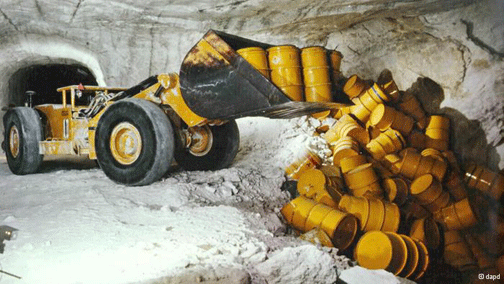
In Germany , a new dispute over the old abandoned Gorleben nuclear waste site
16 October 2020 Pledge Times (India/Germany)
New dispute over Gorleben
In an interview, the President of Germany’s Federal Office for the Safety of Nuclear Waste Management says it was problematic that Gorleben (current interim but beleaguered radwaste site) has been ruled out in the first review stage of the process to identify a geological repository site. The Green Party responded that the President “did not understand the procedure for which he is in charge. The search for a repository follows scientific criteria.”
USA aiming to beat Russia, China etc, in marketing nuclear reactors to Poland
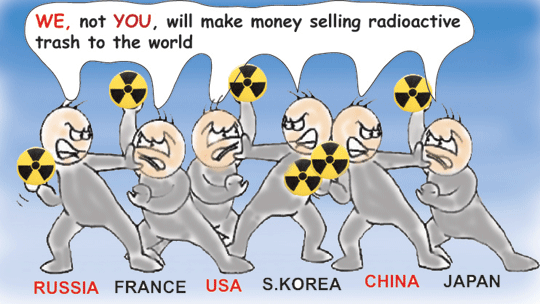 US to cooperate on Poland’s nuclear plans, Argus 9 October 2020, The US and Poland are set to sign an agreement to co-operate on Poland’s nuclear development programme, envisaging construction of 6-9GW of nuclear generation capacity, with the first unit to start in 2033.US secretary of energy Dan Brouillette and Poland’s secretary of energy infrastructure Piotr Naimski today agreed to sign a long-term agreement between the governments of both countries to co-operate on Polish nuclear development. The agreement, which had been already signed by the US side and is to be signed by Poland in the near future, provides that over the next 18 months the countries will work together on a financial and technical report on Poland’s nuclear power programme. This report will be the basis for US long-term involvement and for the Polish government to take final decisions on construction of nuclear power plants in the country, the US Department of Energy said……….. Earlier this year a Polish nuclear consortium led by government-controlled PGE sold its stakes in the PGE EJ 1 subsidiary, which initially was to be developing nuclear plants. In 2009 PGE said it planned to develop 6GW of nuclear capacity. Since then the company has struggled to come up with a financing model, and it recently opted to abandon its nuclear plans and focus on renewables. Under the current financing model, Poland plans to set up a joint venture with strategic foreign investors for development of the plants, with the Polish government maintaining at least 51pc. Tentative partners, beyond US companies, include firms from France and South Korea. https://www.argusmedia.com/en/news/2151529-us-to-cooperate-on-polands-nuclear-plans |
|
The very genuine promise of cheap electricity – solar power
 Nuclear power never delivered on its promise, but will solar? John Quiggin, Canberra Times, 19 Oct 20,

The International Energy Agency attracted attention recently when executive director Fatih Birol declared that solar would be “the new king of electricity markets.” Long known for its conservative view of renewables, the IEA’s latest Global Energy Review marked a radical change. Instead of growing slowly over time, solar (along with wind and other renewables) is now seen as meeting all new electricity demand, with coal set for a sharp decline. …….
The prospect of electricity this cheap might seem counter-intuitive to anyone whose model of investment analysis is based on concepts like “present value” and payback periods. But in the world of zero real interest rates that now appears to be upon us, such concepts are no longer relevant. Governments can, and should, invest in projects whenever the total benefits exceed the costs, regardless of how those benefits are spread over time.
- John Quiggin is a Professor of Economics at the University of Queensland and a columnist with Inside Story, where this article also appears. https://www.canberratimes.com.au/story/6974708/energy-that-is-too-cheap-to-meter/
France’s anti nuclear activists to train citizen scientists to measure radioactivity levels around a nuclear site
La Depeche 17th Oct 2020, The actinists who have been mobilizing on the ground for years against the
Orano-Malvesi plant (conversion and enrichment of uranium ore), want to
train citizens to take samples themselves to measure the radioactivity
around the nuclear site.
Britain’s zero emissions policy will bring many 1000s of jobs, investing in green infrastructure
help to achieve Boris Johnson’s national renewal mission, a report
published today says. Investment in green infrastructure and technologies
will prevent long-term scarring of the labour market in the wake of the
Covid-19 crisis, the report by the London School of Economics adds.
this summer to “build back better, build back greener, build back
faster” after GDP collapsed by a record 19.8 per cent as a result of a
national lockdown.
government investment would create the maximum number of jobs while also
helping to achieve the UK’s commitment of carbon neutrality, including
renewable energy infrastructure, electric vehicle production and home
energy efficiency retrofits. The UK was the world’s first major economy
to enshrine in law a commitment to reach net zero carbon emissions by 2050.
https://www.thetimes.co.uk/edition/business/net-zero-goal-will-be-ally-of-recovery-w09wcx7hn
A green recovery from the pandemic will bring more jobs, more economic success
 Business Green 19th Oct 2020, Analysis published by We Mean Business coalition recommends policymakers
reject traditional stimulus programmes that focus on VAT reductions and
boosting household spending in favour of targeted support for green
technologies and solutions.
In the latest addition to the library of
studies that has underscored the benefits of a ‘green recovery’ to the
coronavirus pandemic, economists have today published a new research
detailing how stimulus packages that invest in low carbon technologies and
infrastructure will generate more income, jobs, and GDP than traditional
recovery measures.
Economies around the world stand to benefit if
governments opt to invest in energy efficiency improvements, tree planting,
and electricity grid upgrades, while supporting an acceleration in the roll
out of wind and solar power capacity and introducing car scrappage schemes
that boost sales of electric vehicles, according to a report published this
morning by the We Mean Business Coalition.
After modelling a ‘green
recovery’ plan against a ‘return-to-normal’ plan across the UK, Germany,
Poland, US, India, and globally, researchers from Cambridge Econometrics
concluded the impact of a green recovery strategy would be “consistently
larger” than that delivered through a standard stimulus package.
“This report confirms what many companies already know – investing in the zero
carbon future is the best way to ensure business success,” said Maria
Mendiluce, chief executive of the We Mean Business coalition. “For
governments, spending and tailoring policies in a way that boosts green
technologies and innovation brings benefits to businesses, economies and
people as well as cutting emissions. To invest in any other way would be to
set the world on course for economic and environmental disaster at a time
when we need to build resilience.”
Swedish council votes in favour of nuclear waste disposal facility
China’s world-leading push for solar and wind energy
capacity each year than any other country, with over 760GW installed so
far. By contrast, the EU has only managed 500GW, the USA 250 GW.
capacity additions in China are expected to fall by over 16% to 19 GW from
2020 to 2021, given the Chinese government’s decision to end subsidies,
say analysts Wood Mackenzie.
250 GW of wind capacity to be added, with repowering opportunities onshore
and growth potential offshore. Indeed, some see the latter booming
dramatically. So, while wind subsidies will fall by 3.2%, wind capacity
will still grow, and PV solar seem likely to do even better: incentives for
PV will rise by 14%, with some seeing solar as the major growth area longer
term, helping China get 62% of its power from non-fossil sources by 2030.
https://renewextraweekly.blogspot.com/2020/10/china-renewables-to-expand-even-more.html
Geological disposal of nuclear waste – a focus of interest in the coming months
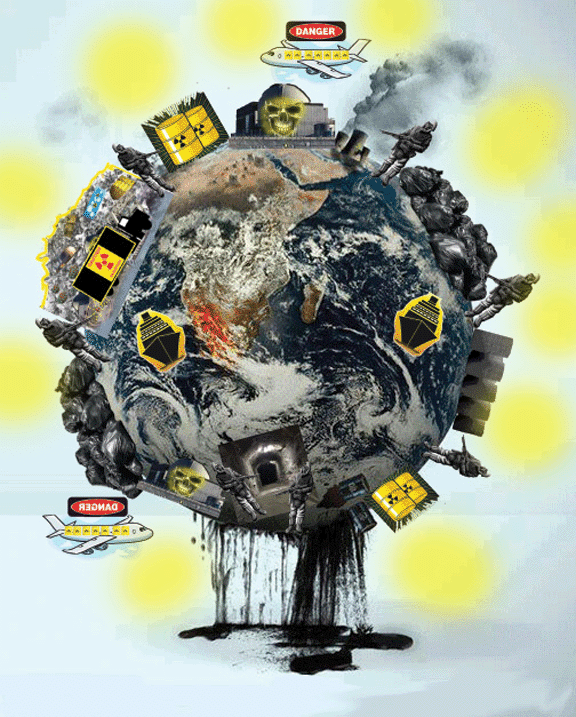 GDF Watch 18th Oct 2020, Just when you thought 2020 couldn’t get any weirder, geological disposal
programmes around the globe are making significant steps forward, all at
the same time.
More seems to have happened, in sociopolitical terms, in the
past month than perhaps in the rest of this Century combined: Swedish
community voting to host their nation’s geological repository; Two
Japanese communities choose to enter into initial discussions; expectation
in UK that at least one community will come forward; Germany publishes
geological analysis identifying potential host areas; Canada completes
acquisitions of land that could host a repository; Hungary Opposition
leader wants public debate on radwaste disposal;
Country situations are analysed in more detail below, but taken together, it seems clear that
geological disposal will become a feature of media and political focus in
countries around the world over the coming 18-24 months.
http://www.gdfwatch.org.uk/2020/10/18/geological-disposal-is-go/
To 20 October – coronavirus, climate and yes, NUCLEAR, news

Covid-19 cases across the globe hit 40 million Monday with the United States leading the world with the highest numbers of infections and deaths. World round-up of coronavirus. cases and restrictions.
Climate change just keeps on – cycloone, floods and landslides.– Vietnam, India. It becomes important to devlop strategies to adapt to global heating.
Nuclear news items stress the need for international agreements on arms control.
But , on the ”peaceful nukes” scene, it is quite extraordinary that propaganda has ramped up enormously, even while the pandemic has actually slowed down nuclear building and other activities, as well as the demand for electricty.
What we’re seeing is a frenzy of small nuclear reactor (SMR) propaganda handouts masquerading as real journalism. In English language news, it’s all about America selling these uneconomic and pretty useless gimmicks to their own population and to overseas countries. The most often praised model, NuScam’s reactor, is even now being touted as ”foreign development aid”. No doubt the global industry is doing the same confidence trick in Russian and Chinese. They need a global burst of tax-payer funded SMR building, to stave off the collapse of the industry.
Some bits of good news –We’ve had so many wins’: why the green movement can overcome climate crisis. International Monetary Fund recommends a carbon price, for the economy as well as for the climate. Solar energy is here with a vengeance – look at South Australia.
The attack on journalism – launched with the persecution of Julian Assange.
On climate: instead of denial or despair, there’s determined resolve. Carbon emissions are deeply embedded in our lifestyle – the challenge post-pandemic. Climate disasters – Earth is becoming uninhabitable for millions of humans.
Elimination of nuclear weapons is vital to the “survival of life on this planet”.
Nuclear waste – a danger for countless generations to come.
Resisting nuclear colonialism on Indigenous Peoples’ Day
Offshore Wind Energy, Not Nuclear, Is the Future. Study shows that renewable energy is clearly better that nuclear at cutting greenhouse emissions.
Book review: GAMBLING WITH ARMAGEDDON.
Thorium not likely to revive the nuclear energy industry.
NEW ZEALAND. Climate and clean energy leaders win big in New Zealand, ACT elections.
ARCTIC. Global heating is unravelling the Arctic, much faster than expected. Climate change: Arctic Circle teens call for help to save their homes. Reopening of a Cold-War era submarine base, as USA struggles to beat Russia to control the Arctic.
JAPAN. Japan’s government is appealing the landmark ruling about its responsibility for Fukushima nuclear accident. Japan’s government planning to dump into the sea, the radioactive water from Fukushima No. 1 nuclear reactor. Fukushima ‘blank spaces’ in limbo, left out of decontamination plan.
Struggling Japanese towns look to nuclear waste storing and the money associated. Mansion without a toilet: Towns in Japan seek to house, store nuclear waste out of necessity. 800-meter-long seawall being constructed, as Japan plans to reopen damaged Onagawa nuclear complex.
Japan’s government ignores U.N. nuclear ban treaty, puts out feeble anti-nuclear weapons resolution.
SOUTH ASIA. Neighbouring countries oppose Japan’s plan to release nuclear waste water into the Pacific.
RUSSIA. Putin suggests extending the START nuclear weapons control treaty for another year.
USA.
- Anti-science in America – climate denial to coronavirus denial. USA spends taxpayers’ money on weapons, endless wars, not health – coronavirus chaos is the result.
- Donald Trump’s erratic behaviour revives the debate on the President’s unchecked nuclear authority. What to do about the USA President’s sole authority to launch a nuclear pre-emptive strike? Donald Trump’s pre-election plan for nuclear deal with Russia has fizzled out badly. US rejects Putin’s proposal on nuclear disarmament treaty as ‘nonstarter’.
- ‘Fracking’ with its environmental harms, now acceptable to U.S. Democrats, to help win the election?
- Ohio lawmakers likely to repeal the tainted nuclear bailout law, after November 3. Bribery probe into a nuclear plant bailout examines facilities’ owner. Ask pro-HB 6 lawmakers seeking reelection what they plan to do about the nuclear bailout bill .
- Exelon to offload its nuclear power stations?
- Los Alamos National Laboratory nuclear waste is potentially explosive.
- Groups urge New Mexico governor to take stand against nuclear waste plan. Bankrupt Mallinckrodt company faces large liabilities in radioactive trash cleanup.
- USA starts off $3.2 billion subsidy program with $80 million each for “next generation” nuclear reactors. Washington State touted for ”new generation” nuclear power – (some time in the distant future) Inadequate Emergency Planning Zones for small modular nuclear reactors. USA marketing NuScam small nuclear reactors to Africa. Hypocrisy prize to U.S. International Development Finance Corporation (DFC), for pretending that NuScam’s Small Nuclear Reactors are ”foreign aid”. Small Nuclear Reactors on the moon– desperate hope for the failing nuclear industry.
- The biggest radioactive spill in US history.
UK.
- 35 crew on secretive HMS Vigilant £3billion nuclear submarine tested positive for Covid.
- UK: consultation with 2300 people about low level radioactive waste dump – only 13 people supported it.
- In Scotland, UK’s old nuclear submarines are left to rot.
- Dangerous radiation levels from fracking.
- Sizewell nuclear project: EDF messes Suffolk communities about, with yet another public consultation, after 1200 responses already. French nuclear company EDF disdains the Suffolk community with its cavalier change of plans.
CANADA. Nuclear industry stagnates, renewables thrive- small nuclear reactors will be a terrible mistake for Canada. Small modular nuclear reactors create intensely radioactive wastes. Divisive nuclear waste programme mapped out in South Bruce, Ontario. Canada’s government caught up in the Small Nuclear Reactor Ponzi Scheme.
NORTH KOREA. North Korea, with its new intercontinental-range ballistic missile makes it clear that it is a nuclear weapons nation. New North Korean missile will prove a big diplomatic headache for US, expert warns.
SOUTH KOREA. After 23 yearrs and huge expense, South Korea is to close down its efoort to develop nuclear spent fuel reprocessing .
MIDDLE EAST. Policy of no uranium enrichment, no reprocessing, essential for Middle East to prevent nuclear arms proliferation.
FRANCE. France has more nuclear waste than shown in official inventory, reports the nuclear regulator. France’s nuclear company EDF promises a new design pressurised water nuclear reactor (EPR).
INDIA. India’s young anti-nuclear protestors still in trouble, police cases pending, 10 years after teir demonstration. Cybersecurity concerns about India’s nuclear reactors.
BULGARIA. USA to market nuclear reactor to Bulgaria.
TUVALU. Tuvalu – the 47th nation to ratify the Treaty on the Prohibition of Nuclear Weapons.
SOUTH AFRICA. South Africa the first sucker to get American experimental nuclear reactor + $billions
AUSTRALIA. USA election result, and Australia’s response– the world’s climate in the balance. Australia a leader in the worst sense – biodiversity loss and risk of ecosystem collapse. Morrison government’s devastating cuts to Environmental research and teaching.
The frenzy to promote small nuclear reactors – shown in Google news headline articles today when you search ”nuclear”
 Google nuclear headlines today pointed to 96 articles on nuclear issues
By far the topic most covered most was the ”need” for new generation nuclear reactors for energy. – 24 articles in all, mostly enthusing about small nuclear reactors. Several of these involved the marketing of USA reactors to other countries.
The next most popular pro nuclear topic was nuclear fusion . (7 articles.) Other prominent pro nuclear themes were claims on safety, and action on climate. There were 50 pro nuclear articles in all.
There were 21 anti-nuclear articles. A few denied the claims on nuclear safety, and action on climate. Others dealt with the Fukushima nuclear waste water to be released into the Pacific ocean, with questions on nuclear economics.
There were 13 articles that didn’t ‘take sides’ – basically factual articles about nuclear wastes, safety, and international politics.
On the subject of nuclear weapons all of the articles opposed them, although one could be interpreted as suggesting that there’s a need to counteract China’s developments.
Nuclear industry stagnates, renewables thrive- small nuclear reactors will be a terrible mistake for Canada
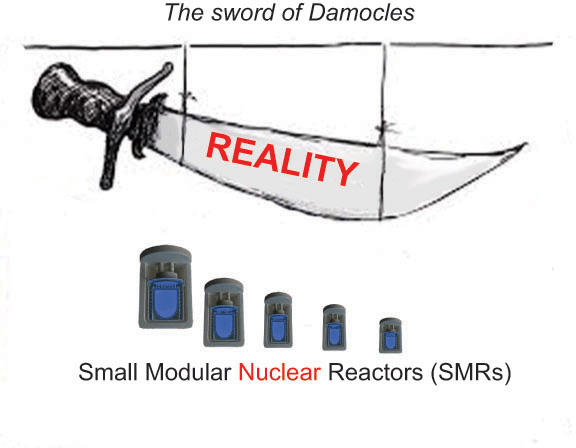 WORLD NUCLEAR INDUSTRY LOSES GROUND TO CHEAP RENEWABLES AS CANADA CONSIDERS SMALL MODULAR REACTORS, The Energy Mix SEPTEMBER 27, 2020 MITCHELL BEER @MITCHELLBEER The world nuclear industry “continues to be in stasis,” with power plants shutting down at a faster rate in western Europe and the United States, the number of operating reactor units at a 30-year low, and the few new construction projects running into “catastrophic cost overruns and schedule slippages,” according to the latest edition of the annual World Nuclear Industry Status Report (WNISR), released last week. “Some 408 nuclear reactors were in operation in 31 countries as of July 2020, a decline of nine units from mid-2019 and 30 fewer than the 2002 peak of 438,” Reuters writes, citing the report. “The slow pace of new projects coming onstream also increased the overall age of the global fleet to around 31 years.” “Overall, in terms of the cost of power, new nuclear is clearly losing to wind and photovoltaics,” with the two renewable technologies now receiving about 10 times the investment, write Jungmin Kang, former chair of South Korea’s Nuclear Safety and Security Commission, South Korea, and Princeton University Professor Emeritus Frank von Hippel, in their foreword to the 361-page report. That meant new nuclear projects “were struggling to secure finance amid competition from renewables, with reported investment decisions for the construction of new nuclear plants at around US$31 billion in 2019,” Reuters says. One of the problems facing nuclear plants is that their high capital cost “requires that they operate almost continually to bring down the capital charge per kilowatt-hour,” Kang and von Hippel explain. “They must therefore compete directly with renewables most of the time or store their output to be used during cloudy, windless periods.” But “storage does not relieve the competition with wind and solar” since, “as renewables expand and storage costs come down, they too will have increasing incentives to store their excess output.” The report focuses in on COVID-19 as the first pandemic to have a significant, direct impact on the global nuclear industry, with large numbers of infections reported by the few operators that released precise figures. The WNISR says the pandemic has led to degraded safety and security and critical staffing issues at operating nuclear plants that also faced a tough economic hit when crashing electricity demand drove down power prices. In 2019, Russia had a hand in 15 of the 52 new nuclear construction projects around the world, and electricity generation from nuclear facilities grew 3.7%, with half of that total attributable to a 19% increase in China. But 33 of the 52 projects were behind schedule, and eight had been delayed by 10 years or more, “including two units that had construction starts 35 years ago and one unit that goes back 44 years,” WNISR notes. Of the 13 reactors scheduled for start-up last year, “only six made it,” including three in Russia, two in China, and one in South Korea—and no new nuclear facilities went online in the first half of 2020. Meanwhile, non-hydro renewables installed 184 gigawatts of new capacity in 2019, and “comparisons between nuclear and solar options show a large and widening gap,” the report states. “For example, a contract for 1.2 GW of solar power at US$24.20 per megawatt-hour, signed in 2017 and connected to the grid in 2019, is five to eight times cheaper than the international cost estimate for nuclear of US$118 to $192 per MWh.” [And that’s before the cost overruns that seems to be inevitable with most nuclear projects—Ed.] While “the biggest social argument for nuclear power plants is that their carbon emissions are low,” Kang and von Hippel write, that line of thought leads more toward refurbishing existing reactors—an area where the industry is also struggling. “In some major countries such as the United States, even 30-year-old plants whose capital costs have been paid off cannot compete economically with new renewable power plants, whose capital costs have been declining. The operating costs of nuclear plants are high in part because one to two hundred workers and guards are required onsite per reactor at all times in case of accident or terrorist attack.” And earlier this month, an incident in South Korea raised concerns about the reliability of nuclear generation in an era when climate change will make severe weather events more common and severe. The Kori nuclear plant was supplying 7% of the country’s electricity until it went into an automatic shutdown “because of typhoon impacts on their power transmission lines,” the two reviewers state. “Experts are concerned that, under different circumstances, the sudden shutdowns could destabilize South Korea’s grid and cause large-scale blackouts.” Paris-based consultant and lead WNISR author Mycle Schneider said the long-term headwinds facing nuclear development are even more daunting than the annual snapshot. Don’t just look at the photograph. Look at the movie,” he told The Energy Mix in an interview last week. “It takes an average of roughly 10 years to build a nuclear power plant from official construction start to grid connection,” even when a project isn’t delayed—which raises a particularly tough series of questions in the midst of a global climate emergency. “If I’m spending a dollar or a Euro or a yuan, I have to spend it in a way that allows me to reducogical renaissance through small modular reactors (SMRs). But “the industry is actually selling PowerPoint reactors, not detailed engineering, and it’s not the first time. They’ve been doing this for decades,” Schneider said. “Nobody, not even industry, pretends they can produce anything before 2030. That’s the earliest,” when 2050 is the latest possible deadline to decarbonize the entire global economy. Which means that, when it comes to SMRs, “it’s already very simple—it’s much too late, and we don’t know if it’ll work or what it’ll cost.”……….. “If I’m spending a dollar or a Euro or a yuan, I have to spend it in a way that allows me to reduce GHG emissions the most per dollar invested, the fastest.” Schneider said. But “if you look at nuclear power, it’s not only the most expensive, but it’s by far the slowest.” With even French nuclear giant EDF bidding against its own legacy technology to supply lower-cost solar projects, “do we really have to discuss what the future is or where this goes?” Schneider asked. “It’s obvious.” More recently, the nuclear industry has been promising a technological renaissance through small modular reactors (SMRs). But “the industry is actually selling PowerPoint reactors, not detailed engineering, and it’s not the first time. They’ve been doing this for decades,” Schneider said. “Nobody, not even industry, pretends they can produce anything before 2030. That’s the earliest,” when 2050 is the latest possible deadline to decarbonize the entire global economy. Which means that, when it comes to SMRs, “it’s already very simple—it’s much too late, and we don’t know if it’ll work or what it’ll cost.”……….. “Betting on nuclear as a climate solution is just sticking our heads in the sand because SMR technology is decades away, extremely expensive, and comes with a nasty pile of security and waste headaches,” Gibbons writes. “That our government would be this gullible is distressing, especially given the havoc already being wreaked by a changing climate.” Against concerns about intermittency of solar and wind, “it is fortunate that in Ontario we live beside a giant battery,” he adds. OCAA has long been an advocate for cross-border hydropower imports from Quebec to Ontario, and in the Sun, Gibbons notes that “Quebec has an enormous water power reservoir system that Hydro-Québec is keen to integrate with renewable sources for its out-of-province customers. When we have surplus solar and wind, Quebec stores water. When not, it produces hydropower for export.” The two provinces already “have the connections necessary to make this system work and can expand them, at a cost that looks like spare change next to what it costs to rebuild a nuclear reactor or get an SMR prototype built,” he adds. https://theenergymix.com/2020/09/27/world-nuclear-industry-loses-ground-to-cheap-renewables-as-canada-considers-small-modular-reactors/ |
|
Anti-science in America – climate denial to coronavirus denial
 America re-discovers anti-science in its midst, Environmental Health News,16 Oct 20
Fauci, Birx, Redfield & Co. are in the middle of a political food fight. They could learn a lot from environmental scientists.
Let’s start with the story of a scientist who beat back a powerful global denial movement without any help from social media or modern, sophisticated organizing campaigns.
It took Galileo 359 years to wrangle an apology out of the Vatican for his heretical belief that the Earth revolved around the sun.
I’m glad he didn’t take it personally. Science denial is neither new nor purely American—but we sure are finding ways to make it lethal and lasting.
Climate scientists have been dealing with anti-science, largely unnoticed by the general public, for 20 years. Doctors face a growing wave of anti-vaccination zealots. Now a pandemic with a seven-figure global death toll and a stranglehold on the world’s economy has opened the doors wide for some multi-front anti-science blowback.
Americans, many refusing to wear masks and ignoring social distancing guidelines, appear to be gathering at frat parties, raves, political rallies, nightclubs and more in defiance of what credentialed experts say are the most vital ways to restrict the spread of COVID-19.
Major sporting events, notably college football, are backing down from previously self-imposed restrictions.
And, lo and behold, positive test rates are going back up in a big way.
Past is deadly prologue
Here are a couple recent, high profile examples of anti-science fervor in the U.S.:………
But nothing in science can quite match the decades-long assault on climate science and climate scientists. On the high end, there are PR campaigns backed by fossil fuel money, well-heeled litigation, and unhinged attacks from national pols and pundits. Then, there are the confounding, face-palming antics of the Coal Rollers—pickup truck owners who modify their rides with “Prius Repellent”—thick sooty black smoke intended to make a bizarre anti-science, pro-climate denial statement. Yes, people do this.
Penn State’s Michael Mann is arguably the highest-profile climate scientist in the U.S. Let’s make a minor leap of faith and say Mann’s climate stature is the closest equivalent to Dr. Anthony Fauci’s standing on coronavirus.
Right now, Dr. Fauci’s main public tormentor is President Trump. Their conflicts are tame compared to the deniers’ gang-up on Mann, which has lasted more than a decade and may offer Fauci a few tips on being a scientist in the middle of a political peeing match…….
Make no mistake, Fauci’s a heroic public servant in an awful bind who, as far as I know, may not even be interested in the killer tell-all book that now resides in his head.
But after COVID-19 is finally conquered, Mike Mann and a thousand others will still be getting bashed, and the worst impacts of climate change will still be ahead of us.
Peter Dykstra is our weekend editor and columnist and can be reached at pdykstra@ehn.org or @pdykstra.
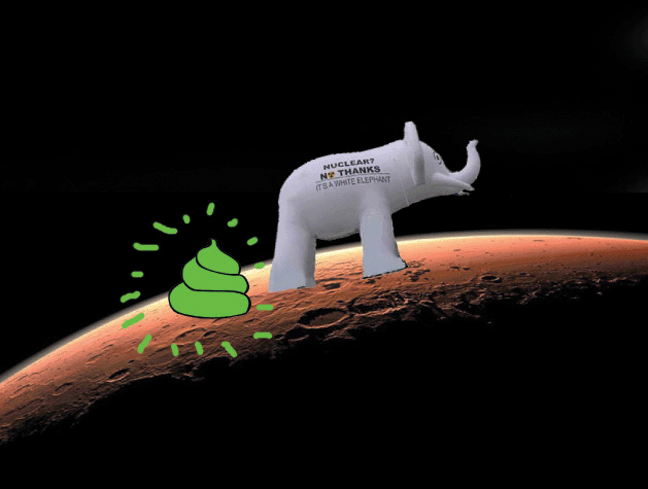
Small Nuclear Reactors on the moon- desperate hope for the failing nuclear industry
While our species’ insatiable scientific curiosity has undoubtedly led to some beneficial inventions, it has also drawn us inexorably towards our own downfall. Our zeal to create the atomic bomb ignored logic, ethics, consequences and the fundamentals of human rights.
The bomb brought us so-called civil nuclear power reactors, the ugly and irresponsible spawn of a weapon that leaves us perched perpetually on the precipice of extinction. But there is nothing “civil” about nuclear power.
At the dawn of the nuclear energy age, not a thought was given to the legacy of deadly radioactive waste it would produce. That can was kicked summarily down the road. Now we are far down that road and no solution has been arrived at, while we ignore the one obvious one: stop making more of it!
So now comes the news that the US wants to put nuclear power reactors on the Moon.
In the news stories that followed the announcement, replete with the usual excitement about space exploration (never mind the cost and bellicose implications) there was not one single mention of the radioactive waste these reactors would produce.
The problem, like the waste itself, will simply be kicked into some invisible crater on the dark side of the Moon.
NASA, the US Department of Energy and assorted nuclear labs are pushing the small modular reactor for nuclear projects on the 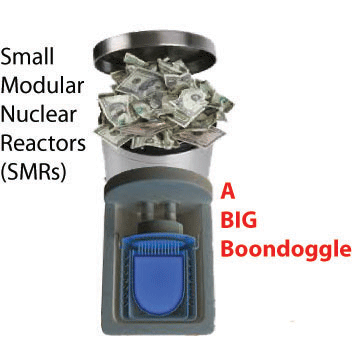 Moon and Mars. Desperate to stay relevant and to continue gobbling up taxpayer dollars, this is music to the failing nuclear industry’s ears. Financially disastrous and technically unresolved on Earth, the SMR, say these “experts”, is ideally suited to the needs of humans living for extensive periods in space.
Since each of these mini-reactors will likely have an uninterrupted output of only 10 kilowatts, it will take multiple reactors on the Moon or Mars to fulfill the necessary functions for their human inhabitants.
Needless to say, so far there is no certified design, no test reactor, no actual reactor, and no fool-proof way to send such a reactor to the Moon. (Rockets have an unfortunate habit of sometimes blowing up on — or shortly after — launch.) Nevertheless, the year 2026 is the ambitious target date for all systems go. In keeping with the theme, “pie in the sky” springs to mind.
While no reactor design has been identified, it will most likely need to use highly enriched uranium (HEU) which puts the reactor firmly in violation of non-proliferation standards. As Dr. Edwin Lyman of the Union of Concerned Scientists told PBS Newshour, “This may drive or start an international space race to build and deploy new types of reactors requiring highly enriched uranium.”
Given the utility of HEU for nuclear weapons use, and the probes currently being sent to the Moon and Mars by “unfriendly” countries such as China and the United Arab Emirates, it does not take much of an imagination to envisage the temptation for theft by force. Will the US deploy guards around its lunar reactors.? Will we see terrorism on the Moon, even war?
What is this really all about? Profit? Prestige? Proliferation? The Idaho National Laboratory, which is eager to develop the lunar SMR prototype, sees this as an opportunity to emphasize “the United States’ global leadership in nuclear innovation,” the lab’s John Wagner told Newshour.
This echoes the mantra parroted by almost every federal institution and corporation seeking to justify some new and exorbitant nuclear expense: we cannot let China and Russia take over; the US must retain — or regain — pre-eminence in the nuclear sector and in space. And so on.
It’s not being cute to call this lunacy. With the ever-expanding crises on Earth, caused by the ravaging effects of climate change as well as the current pandemic, spending exorbitant sums to stick reactors on the Moon or Mars is more than madness; it is morally irresponsible. It abandons most of us on Earth to our fate, while, just maybe, possibly, someday, a handful of people will head off to the Red Planet. Never to return.
Yet undeterred by immorality and expense, and apparently without the slightest concern for the radioactive dirt pile these reactors will produce, NASA and the Department of Energy are eagerly soliciting proposals.
And what will these lunar reactors do? They will enable “capability for a sustained lunar presence, particularly for surviving a lunar night,” NASA’s Anthony Calomino told Space News. “The surface of the moon provides us an opportunity to fabricate, test and flight qualify a space fission system,” he said.
The Moon is seen as our launchpad to Mars. Now, it seems, it will also become our latest nuclear dustbin. If there is a meltdown, or a cascade of accidents among the cluster of small identical reactors there, all of which could suffer the same failure at the same time, it will become our next nuclear wasteland.
I am happy to say “goodnight moon.” But I don’t wan’t to say “goodbye.”
USA spends taxpayers’ money on weapons, endless wars, not health – coronavirus chaos is the result
 The US Chose Endless War Over Pandemic Preparedness. Now We See the Effects. C.J.  Polychroniou, Truthout, October 18, 2020 United States has the longest record of war-fighting in modern history. Why that is the case is not a question that has an easy answer; suffice to say, however, that militarism and violence run like a red thread throughout U.S. political history, with enormous costs both for the domestic economy and the world at large, as a recently published book by David Vine makes plainly clear. In fact, the militarist mentality is strongly reinforced by the Trump administration in spite of the fact that the current president claims to have an aversion to “endless wars.” In this exclusive Truthout interview, Vine, a professor of anthropology at American University in Washington, D.C., addresses critical questions about U.S. war culture and Trump’s own contribution to the violence that has always been foundational to U.S. culture. C.J. Polychroniou: Your latest book, The United States of War: A Global History of America’s Endless Conflicts, from Columbus to the Islamic State, is a detailed survey of the U.S.’s obsession with militarism and war. Have you come to a definite conclusion or explanation as to why the United States has been at war for about 225 of the 243 years since its independence?
David Vine: There is, of course, no simple answer to this incredibly important question. According to my research, the U.S. military has been at war or engaged in other combat in all but 11 years of U.S. history — 95 percent of the years the United States has existed. My book shows how the huge collection of U.S. military bases abroad provides a key — or a kind of lens — to help understand why the United States has been fighting almost without pause since 1776. . Bases abroad, bases beyond U.S. borders show how U.S. political, economic and military leaders — shaped by the forces of history, capitalism, racism, patriarchy, nationalism and religion — have used taxpayer money to build a self-perpetuating system of permanent, imperialist war revolving around an often-expanding collection of extraterritorial military bases. These bases have expanded the boundaries of the United States, while keeping the country locked in a state of nearly continuous war that has largely served the economic and political interests of elites and left tens of millions dead, wounded and displaced. To be clear, my argument is not that U.S. bases abroad are the singular cause of this near-endless fighting. Indeed, my book shows how the answer to why the U.S. government has fought so constantly lies in the capitalist profit-making desires of businesses and elites, in the electoral interests of politicians, and in the forces of racism, militarized masculinity, nationalism and missionary Christianity, among other dynamics. U.S. bases abroad, however, have played a key and long overlooked role in the pattern of near-constant U.S. fighting: that is, since independence, bases that U.S. leaders have built beyond the borders of the United States not only have enabled wars but also have made offensive imperialist wars more likely. While U.S. leaders often portray bases abroad as defensive in nature, the opposite is generally the case: bases built on the territory of other peoples have tended to be offensive in nature, providing a launchpad for yet more wars. This has tended to create a pattern in which bases abroad have led to wars that have led to the construction of new bases abroad that have led to new wars that have led to new bases and so on. Can you offer us a quick assessment of the overall costs of the “global war on terror?” It’s impossible to capture the immensity of the catastrophe that the so-called “global war on terror” has inflicted……….. Alongside the human damage, the financial costs of the so-called war on terror are so large, they’re nearly incomprehensible. As of October 2020, the U.S. government has spent or obligated a minimum of $6.4 trillion on the post-2001 wars, including the costs of future veterans’ benefits and interest payments on the money borrowed to pay for the wars. The actual costs are likely to run hundreds of billions or trillions more, depending on when we force our politicians to bring these seemingly endless wars to an end. While it’s incredibly hard to fathom $6.4 trillion in taxpayer funds vanished, the catastrophe is compounded when we consider how else the U.S. government could have spent such incredible sums of money. What could these trillions have done to provide universal health care, to rebuild public schools, to build affordable housing, to end homelessness and hunger, to rebuild crumbling civilian infrastructure, to prepare for pandemics? In addition to the 3-4 million who have likely died in the wars the U.S. government has fought since 2001, how many more have died because of the investments the U.S. government did not make? These are questions that, I have to say, should make us weep……….. Clearly there is a deep connection between the war machine and the U.S. government’s failure to protect the country against COVID. ………….. President Eisenhower was exactly right when he called this kind of diversion of funds a “theft.” He said, “Every gun that is made, every warship launched, every rocket fired signifies, in the final sense, a theft from those who hunger and are not fed, those who are cold and are not clothed.” Today, every gun that is made signifies a theft from those with COVID, from those who might contract COVID, from all of us……… https://truthout.org/articles/the-us-chose-endless-war-over-pandemic-preparedness-now-we-see-the-effects/?eType=EmailBlastContent&eId=89a28ac1-0d1a-4b33-ab5b-4666e96877f5 |
|
1 This Month

Tell Congress: Prevent Nuclear Catastrophe in Iran

Tell Congress: Prevent Nuclear Catastrophe in Iran

Read the Public Inquiry Report, the Commissioners’ report, Surrendering Australia: The AUKUS Deception is available to download for free at aukuspublicinquiry.com. Or just watch the replay of the National Press Club Luncheon.


Shut down the radiation-damaged Heysham nuclear reactors now
To see nuclear-related stories in greater depth and intensity – go to https://nuclearinformation.wordpress.com

Say No to NASA’s Reckless Nuclear Reactor on the Moon
Say No to NASA’s Reckless Nuclear Reactor on the Moon
-
Archives
- November 2026 (269)
- October 2026 (302)
- September 2026 (339)
- August 2026 (330)
- July 2026 (355)
- June 2026 (287)
- May 2026 (306)
- April 2026 (356)
- March 2026 (251)
- February 2026 (267)
- January 2026 (308)
- December 2025 (358)
-
Categories
- 1
- 1 NUCLEAR ISSUES
- business and costs
- climate change
- culture and arts
- ENERGY
- environment
- health
- history
- indigenous issues
- Legal
- marketing of nuclear
- media
- opposition to nuclear
- PERSONAL STORIES
- politics
- politics international
- Religion and ethics
- safety
- secrets,lies and civil liberties
- spinbuster
- technology
- Uranium
- wastes
- weapons and war
- Women
- 2 WORLD
- ACTION
- AFRICA
- Atrocities
- AUSTRALIA
- Christina's notes
- Christina's themes
- culture and arts
- Events
- Fuk 2022
- Fuk 2023
- Fukushima 2017
- Fukushima 2018
- fukushima 2019
- Fukushima 2020
- Fukushima 2021
- general
- global warming
- Humour (God we need it)
- Nuclear
- RARE EARTHS
- Reference
- resources – print
- Resources -audiovicual
- Weekly Newsletter
- World
- World Nuclear
- YouTube
-
RSS
Entries RSS
Comments RSS

