Exceedingly high radiation levels found inside Fukushima’s crippled reactor buildings
Asahi Shimbun 30th Dec 2020, Exceedingly high radiation levels found inside crippled reactor buildings
at the Fukushima No. 1 nuclear plant were labeled by nuclear regulators as an “extremely serious” challenge to the shutdown process and overall decommissioning of the site.
The Nuclear Regulation Authority (NRA) said a huge amount of radioactive materials apparently had attached to shield
plugs of the containment vessels in the No. 2 and No. 3 reactors. Radiation levels were estimated at 10 sieverts per hour, a lethal dose for anyone who spends even an hour in the vicinity, according to experts.
The finding would make it exceptionally difficult for workers to move the shield plugs, raising the prospect that the plan to decommission the reactors will have to be reassessed.
In Indonesia – small nuclear reactors as a prelude to nuclear weapons?
How the USA and Soviet Union planned to use nuclear radiation as a weapon.
 This was initially seen as a great idea – you could kill all the people while leaving the omfrastructure intact for your own use.
For decades, the thought of radiological weapons has conjured terrifying images of cities covered in “death dust.” Classified as a weapon of mass destruction — alongside chemical, biological, and nuclear weapons — it has remained a point of mystery as to why these devastatingly indiscriminate weapons were not pursued in earnest by more state and non-state actors alike.
What did early radiological weapons (RW) programs look like? How and why did they arise, and what accounts for their ultimate demise? Aside from a handful of known cases, why have RW programs not proliferated with the same alacrity as other weapons programs?
Thanks to the rigorous and rich historical work of Samuel Meyer, Sarah Bidgood, and William Potter of the Middlebury Institute of International Studies at Monterey, we now have more answers. Focusing on the United States and Soviet Union in the 1940s and 1950s, the authors, in a recent study published in the journal International Security, trace the unique origins of these RW programs, as well as explain why they were subsequently abandoned. Their study, “Death Dust: The Little-Known Story of U.S. and Soviet Pursuit of Radiological Weapons,” reveals a fascinating web of causes, including organizational and bureaucratic politics, international competition, economic and technological constraints, and even the powerful initiatives of well-placed individuals.
While the authors’ work examines the past, it speaks directly to the present and future trajectory of RW programs. If you are interested in military innovation, the history of weapons of mass destruction, the sociology of technology, and science fiction (yes, science fiction!), the exchange featured below is for you.
Samuel Meyer, Sarah Bidgood, and William C. Potter: We define a radiological weapon as one intended to disperse radioactive material in the absence of a nuclear detonation. ……..
……….. May 1941 — the first reference to RW appeared in a U.S. government document: the Report of the Uranium Committee. The report identified three possible military aspects of atomic fission, the first of which was “production of violently radioactive materials … carried by airplanes to be scattered as bombs over enemy territory.” (The other two possible applications noted in the report were “a power source on submarines and other ships” and “violently explosive bombs.”) ………
Technological advances were among the major drivers of RW programs in both the U.S. and the Soviet Union, and RW were initially pursued in tandem with nuclear weapons and chemical weapons (CW) programs. The anticipated promise of RW as a weapons innovation, however, never materialized in either country due to a combination of factors, including technical difficulties in the production and maintenance of the weapons, diminution in the perceived military utility of RW relative to both CW and nuclear weapons, and low threat perceptions about adversary RW capabilities. ……..
the parallelism in many respects between the rise and demise of the U.S. and Soviet RW programs; and (5) the serious but ultimately unsuccessful effort by the United States and the Soviet Union to secure a draft convention at the Conference on Disarmament prohibiting radiological weapons.
MK: Are radiological weapons a thing of the past or do they remain an attractive option for some countries and non-state actors today?
The authors: We are encouraged that no country has either used RW in war or has incorporated them into a national military arsenal. We are concerned, however, that the Russian Federation, despite its own unsuccessful history with RW, has shown renewed interest in advanced nuclear weapons that seek to maximize radioactive contamination. We also worry that some countries may conclude that RW serve their perceived national interests, especially in the absence of international legal restraints. It therefore is important, we believe, to revive U.S.-Russian cooperation to ban radiological weapons and strengthen the norm against their use.
Morgan L. Kaplan is the Executive Editor of International Security and Series Editor of the Belfer Center Studies in International Security book series at the Belfer Center for Science and International Affairs at the Harvard Kennedy School. https://thereader.mitpress.mit.edu/death-dust-the-little-known-story-of-radiological-weapons/
How the nuclear industry avoids a proper safety analysis
 The Nuclear Industry’s Really Bad Safety Analysis, Clean Technica. December 31st, 2020 by George Harvey
Before we allow small modular reactors, mini reactors on barges, reactors for making hydrogen, reactors to be set up on the Moon, or just about any nuclear reactors to be built, we should get an explanation from the nuclear industry of why some of its calculations have been so bad. I am talking about numbers that are so bad, off by an order of magnitude, that they are functionally deceptive. And if they are not intentionally deceptive, that is not an excuse. They fool people into thinking things are true when they are not, and they are very much to the advantage of the nuclear industry.
In my experience, nuclear industry numbers come in three flavors. The first of these is just about spot-on, just about 100% of the time. These numbers relate to such things as calculations of energy potentials. If a company says a reactor can provide 1,000 MW of power, you can count on it that the output of that plant will be 1,000 MW.
There is a second type of calculation that the industry provides. This relates to the costs and timelines for construction of new reactors. Calculations in these areas seem to underestimate both by about half. If the figure for a new reactor is $5 billion and its construction is to take 5 years, I would figure on a $10 billion cost and a 10-year timeline. I acknowledge that I have not done a careful study of this, but I have often noted that real world results that were double what was estimated, and I only remember one that was correct. (I am speaking of US and UK reactors here, not those that are built in China, with which I am much less familiar.)
It is the third type of number that really bothers me, however, and this is something I have studied since the Fukushima Disaster. For some purposes regarding safety, the industry numbers are off by an order of magnitude, with its calculations appearing to make the reactors ten times as safe as they are.
I admit that some safety numbers are controversial. There is huge disagreement about how many people died as a result of the Chernobyl Disaster, for example. I will start with that.
got an email some time back from a nuclear industry advocate. In it he said the explosion of a reactor at Chernobyl proved that nuclear energy was safer than coal or other fossil fuels. I will grant you that our use of coal has caused a large number of deaths, both in the mines and among the general public. But the email was revealing in its very specific number. How it was calculated, I don’t know, but the figure given was 17 deaths.
Though that was the lowest I have seen, other figures from nuclear advocates are equally specific. A list at Wikipedia says provides the old Soviet Union’s official list of 31 people who were killed. I have seen that figure used recently. Elsewhere in the same article, however, it is stated that a total of 60 people died, according to a later source, including later deaths of radiation-induced cancer. Again, the same article speaks of UN estimates of 4,000 people who might have died of health effects in the Ukraine, Belarus, and Russia, with a total of 16,000 when other parts of Europe are factored in, and maybe as many as 60,000 when worldwide effects are considered. Greenpeace has projected death tolls possibly going up to a million.
So what are we to believe? To answer that question, I will say we should not believe any specific figure, but instead note that the low figures from the nuclear industry and the high figures from anti-nuclear activists differ by over four orders of magnitude.
I would also note that the figures from the nuclear industry are not believable, because they do not even admit the possibility of more deaths than the low numbers they specify. And I will not say the high figures are unbelievable in quite the same way, though I would not believe them just because they come from Greenpeace. The point is that the differences themselves are disturbing…………..
The Fukushima Daiichi plant was protected by a 5.7 meter (18.7 feet) sea wall. The Tohoku tsunami that hit it, which arose from the most powerful earthquakes ever recorded in Japan, was 14.5 meters (47.6 feet) tall at the plant. To get a grasp on what this means, remember that a tsunami of this type is not an ordinary wave that quickly crashes and withdraws, it is a rise in the water level than keeps going on for a period of time, possibly several minutes. So for a period that must have felt terrifyingly long to those who witnessed it, water kept rising until it was nearly 8.8 meters (28.9 feet) higher than the sea wall. Videos of the Tohoku tsunami show the effect.
The nuclear industry’s response to this could be summed up in the question: Who could have predicted such a thing? But that fails utterly to recognize some facts. The sea wall was clearly too low, based on the region’s history.
To start with, the earthquake was the most powerful on record, but the records only go back to 1900. The 14.5-meter wave at Fukushima Daiichi was not the highest that the tsunami produced. The highest wave it had was 40.5 meters (133 feet) in Iwate Prefecture. But we should recognize this was not really the unique event it seemed. Limiting our look to other tsunamis on the northeastern coast of Japan, we could count the 1896 Sanriku Earthquake, which had waves of up to 30 meters (100 feet), and the 1933 Sanriku Earthquake, which had waves of up to 28.7 meters (94 feet).
Both of these events happened less than 100 years before the Fukushima power plant was designed in the early 1970s. They should have been taken into account for construction of sea walls. In fact, they were taken into account for building a 15.5-meter (51 feet) flood gate at Fudai, Iwate, a village of roughly 2,600 people. The waves were higher there than at Fukushima Daiichi, but they barely topped the flood gate, and no one it protected was killed.
So why did Fukushima Daiichi have a 5.7-meter sea wall? I would say it was clearly a matter of human failure. Though I have to admit that reality might have been very different, I can picture someone walking into a room with a group of engineers in it, and asking how tall the sea wall was going to be. And the answers comes back as a question, “What is the budget?”
I have never seen the nuclear industry address the question of why their safety analysis calculations are off by an order of magnitude. Until they do, and I think it should include a gigantic mia culpa, my own choice would be not to allow any of their fantastical designs to be built. https://cleantechnica.com/2020/12/31/the-nuclear-industrys-really-bad-safety-analysis/
New delay in planning decision for £16bn Wylfa nuclear development on Anglesey
months for talks with potential new investors to continue. Japanese
multi-national Hitachi announced in September they were pulling out of
funding the £16bn nuclear development on Anglesey. At that point BEIS
Secretary of State Alok Sharma delayed the Development Consent Order (DCO)
decision for the application to December 31. Now following a letter from
Duncan Hawthorne, chief executive of Wylfa developer Horizon Nuclear Power,
that date has been extended to April 30.
Sisters, aged 9 and 11, plead to UK PM to save environment from Sixewell C nuclear project
East Anglian Daily Times 31st Dec 2020,’I will never see the stars again’ – Sizewell sisters ask PM to stop
construction of power station. Two young girls have written to the Prime
Minister with their concerns about the creation of a new nuclear power
station in Suffolk. Eleven-year-old Evelyn Fairhurst and her nine-year-old
sister Merran wrote letters to Boris Johnson about the proposed £20billion
project. The sisters live in Sizewell hamlet and are concerned about the
impact that Sizewell C could have on their surroundings, including RSPB
Minsmere, where their mum Katie works. The girls were asked by local
campaigners if they would like to voice their concerns by writing a letter
to Mr Johnson. “The kids were really keen to do it,” said Mrs Fairhurst.
https://www.eadt.co.uk/news/sizewell-sisters-say-no-to-sizewell-c-6876800?s=09
Non violent anti-nuclear action – the Clamshell Alliance model for success
Know Your Nonviolent History: In 1976 Clamshell Alliance Launches Mass Demonstrations https://www.riverasun.com/know-your-nonviolent-history-in-1976-clamshell-alliance-launches-mass-demonstrations/August 18, 2016, by Rivera Sun On August 1st, 1976, the first nonviolent mass demonstration of the Clamshell Alliance took place at the proposed site of the Seabrook Nuclear Energy Facility in New Hampshire. The Clamshell Alliance was a group of anti-nuclear activists who worked to stop nuclear power plant construction at a time when President Nixon’s “Project Independence” had proposed the construction of over 1,000 nuclear power plants throughout the nation. Although the Clamshell Alliance was only partially successful in halting the Seabrook facility, their mass mobilizations deterred the plans for other plants and changed the landscape of nuclear energy forever. If not for the Clamshell Alliance, it is possible that we would be living in the nuclear nightmare of President Nixon’s vision of a thousand plants by the year 2000.
|
The Clamshell Alliance used a model of affinity groups of 6-20 people, and a spokes council system that functioned on consensus decision-making by all members. In July 1976, the Clamshell Alliance adopted a Declaration of Nuclear Resistance and by August 1st had mobilized their first protest of 200-600 people. Later in August, a second protest and civil disobedience action occupied the Seabrook construction site for 75 minutes, singing songs and planting trees. Nearly all of the 200 participants were arrested. In April of 1977, the Clamshell Alliance mobilized 2,000 people for a demonstration. 1,400 participants were arrested, most refusing to post bail. They were held in jails and National Guard armories for up to two weeks. The activists used this time for training and networking, and subsequently, the detention of the activists was seen as a blunder on the part of Governor Meldrim Thomson. In 1978, the Clamshell Alliance successfully organized another series of mass demonstrations and arrests. From June 23-26th, the alliance accepted an agreement to legally protest on the site for three days. Some sources claim this protest was one of the largest on-site protests in the history of the anti-nuclear movement, citing over 20,000 participants and very few arrests. On March 29th, 1979, the meltdown of the Three Mile Island reactor in Harrisburg, Pennsylvania, propelled the dangers of nuclear power to the forefront of national concern. In collaboration with other groups, a huge anti-nuclear energy rally was organized in Washington, D.C. on May 6, 1979. Between 50,000 and 120,000 people gathered to protest nuclear power and demand safe alternatives. These demonstrations played a major role in slowing and stopping the rush toward nuclear energy. Although Unit 1 of Seabrook Power Plant went online in 1990, Unit 2 was cancelled altogether. The project cost seven times the original billion-dollar estimate and was completed 14 years later than anticipated. In that time, hundreds of other proposals were dropped, due to the high social and fiscal costs encountered by the Seabrook Power Plant. For decades after the inception of the Clamshell Alliance and other similar groups, no new nuclear power facilities were proposed or constructed. The Clamshell Alliance left a lasting legacy in its organizing structure, movement practices, consensus model, and strategies for change. These are all tools and resources that can be used by current movements for change. This article is from Rivera Sun’s book of nonviolent histories that have made our world. Click here for more information. |
|
December 31 Energy News — geoharvey

Opinion: ¶ “If We Want Hydrogen To Live Up To Its Promise, Let’s Get It Right From The Start” • There is broad consensus that “green” hydrogen will be needed to avoid even more dangerous climate change, and it can help us achieve a net-zero emissions global economy by midcentury. But hydrogen has its limits. […]
December 31 Energy News — geoharvey
Never give up! 95 year old Hibakusha welcomes the UN nuclear ban treaty
 Hibakusha: A-bomb survivor, 95, never giving up the battle to eliminate nuclear weapons https://mainichi.jp/english/articles/20201229/p2a/00m/0na/032000c
December 30, 2020 (Mainichi Japan) Following news that the Treaty on the Prohibition of Nuclear Weapons would enter into force early in 2021, some 200 people including atomic-bomb survivors, or hibakusha, gathered in front of the Atomic Bomb Dome in the western Japan city of Hiroshima on Oct. 25, 2020 and shared their joy.
But one “face” of the city bombed during World War II, who four years earlier had smiled as he shook hands with Barack Obama, the first U.S. President to visit Hiroshima while in office, was not able to take part. The following hibakusha report, coming 75 years after the atomic bombing of Hiroshima, focuses on the life of this figure, 95-year-old Sunao Tsuboi, who has stood at the forefront of hibakusha activities with an indomitable spirit.
Tsuboi has served as chairman of the Hiroshima Prefectural Confederation of A-bomb Sufferers Organizations (Hiroshima Hidankyo) for the past 16 years. He now spends his days at his home in Hiroshima’s Nishi Ward, where a decorative card bears his creed in calligraphic ink: “Futo Fukutsu — Never give up!”
From around the time the imperial year changed from Heisei to Reiwa in May 2019, Tsuboi’s legs became extremely weak, and he was unable to do without his wheelchair. He has been receiving intravenous drips once a fortnight for cancer, heart disease and anemia. This year he received at least 30 blood transfusions, and it has not been easy for him to get out of bed.
On the day of the atomic bombing on Aug. 6, 1945, Tsuboi suffered burns over his entire body, and he remained unconscious for over 40 days. His sight became impaired in his left eye, and he became critically ill three times. To repay his feeling of indebtedness for being able to live, he became a teacher, and continued to share his experiences with students for over four decades, becoming known as “Pikadon Sensei” — a reference to the flash (pika) and boom (don) of the atomic bomb.
After he retired, he continued to share his experiences both in Japan and overseas, visiting 21 countries including Britain, France, China, India, Pakistan and North Korea, which possess nuclear weapons.
“The color of our skin doesn’t have to be the same. We don’t need borders. Humankind won’t be happy unless we help each other,” Tsuboi says. With his fist raised high, he has continued to call for a world without nuclear weapons.
Tsuboi released comments expressing his joy after he learned that the Treaty on the Prohibition of Nuclear Weapons would enter in force.
“I am filled with excitement, thinking, ‘At long last. This is great.’ It is a major step toward my long-held, earnest desire for nuclear weapons to be banned and eliminated,” he said. At the same time, he noted that states with nuclear weapons, as well as Japan, had not ratified the treaty and said, “The road hereafter may be rough.”
Still, each time I have met Tsuboi, he has repeatedly stated, “I won’t give up until there are zero nuclear weapons. Never give up!”
(Japanese original by Naohiro Yamada, Osaka Photo Group)
Nuclear Numnutz of the Year SPECIAL for 2020!

by Libbe HaLevy | Dec 31, 2020
This Week’s Feature SPECIAL: Listen at http://nuclearhotseat.com/2020/12/31/nuclear-numnutz-of-the-year-special-for-2020/?fbclid=IwAR3lgPpi0ALsJr2aQEjUlZSQIa9arY95KZs_Xdf_uctE_MAmK4TT6CAOeno
NUCLEAR NUMNUTZ 2020 – Numnutz of the Week is Nuclear Hotseat’s most popular feature – always good for a laugh, a head-shake, or a deep sigh at some freshly revealed nuclear absurdity, or to provoke a sense of outrage at how a single industry has been allowed to play so loose and fast with all our futures.
2020 – a year that will live in infamy – was especially rich in nuclear numnutzery, from Japan’s attempted use of the Olympics as propaganda to get us to forget about Fukushima to US officials proclaiming nuclear weapons are responsible for “the betterment of society” to just basic stupidity all the way from politicians to tourists seeking selfies with Chernobyl.
So come travel with us back in time for a year of highlights from some of the worst, most absurd, insane, short-sighted, or just jaw-droppingly stupid nuclear stories from 2020, culminating in NUMNUTZ OF THE YEAR 2020! (Remember: All nuclear decisions are made top-down, not grassroots-up!)
Highlights will include:
- Cancelled treaties
- Fukushima foodstuffs (mmm mmm GAK!)
- Radioactive Waste Follies
- Nuclear recycling – the kind you don’t really want to have.
- The (Radioactively) Green New Deal
- How/why Star Trek‘s George Takei terminally ticked me off!
- …and much much more!
Come join us for our annual look back upon a year filled with… well, Nuclear Numnutz!
Small modular reactor plan – a dangerous distraction from climate change action

 Feds’ Small Modular Reactor Action Plan is a dangerous distraction from climate change mitigation, Corporate Knights BY RICK CHEESEMAN, December 29, 2020
Canada can be a world leader in this promising, innovative, zero-emissions energy technology, and this is our plan to position ourselves in an emerging global market,” Natural Resources Minister Seamus O’Regan said in a statement.
The governments of New Brunswick, Ontario, Saskatchewan and Alberta, together with the federal government, advocate that small modular reactors (SMRs) are essential if Canada is to achieve a net-zero economy by 2050. According to the feds’ 2018 Call to Action report on the mini nuclear reactors, “SMRs are a reliable, clean, non-emitting source of energy, with costs that are predictable and competitive with other alternatives.”
The first problem with these claims is that SMRs don’t yet exist and aren’t expected to exist for a decade, making these claims dubious. It’s not the only questionable claim made by proponents.
Are SMRs a clean, zero-emission source of power?
Nuclear reactors emit much lower concentrations of carbon than fossil fuels, so one could claim they are zero-emission. But they have their own, uniquely harmful, emissions. From thousands of tonnes of spent fuel to hundreds of thousands of tonnes of mine tailings, nuclear power leaves a radioactive trail that is an immediate threat to waterways and water tables and is lethal for hundreds of thousands of years. SMRs will only add to that.
In 2010, Ad Standards Canada ruled that an ad claiming CANDU reactors were emission-free was “inaccurate and unsupported.” The Power Workers’ Union was expected to remove all ads containing the “emission-free” statement and to qualify any future claims. ……
After 70 years, the nuclear industry still hasn’t found a way to keep habitable environments safe from spent fuel for anything close to the time frames required for it to be harmless. There have been many plans in the past and there are current plans but all have one thing in common: they are unfit for purpose.
Some SMR technologies promise to use CANDU spent fuel in the SMR, claiming this will reduce both the radioactivity and quantity of the spent fuel. This claim is theoretical, based on proprietary data, and a report published by the Bulletin of the Atomic Scientists said doing so would be “playing with fire,” noting that the process, called pyroprocessing, will exacerbate the spent fuel storage and disposal challenges, not mitigate them.
Will SMRs be safe?
A range of power-generation and storage technologies that are clean, emissions-free, safe and low cost, is imminent. Within 10 years, these technologies will be widespread, fully incorporated into all levels of society, and deployed to all regions – all before the first SMR comes online. In all likelihood, by the time an SMR comes to market, there will be a more economical and environmentally responsible alternative in place.
While the rhetoric is persuasive, the case for SMRs doesn’t stand up to objective scrutiny. Allocating climate-change funds to them is a travesty.
Pandemic, climate, nuclear weapons – lessons for survival in 2021
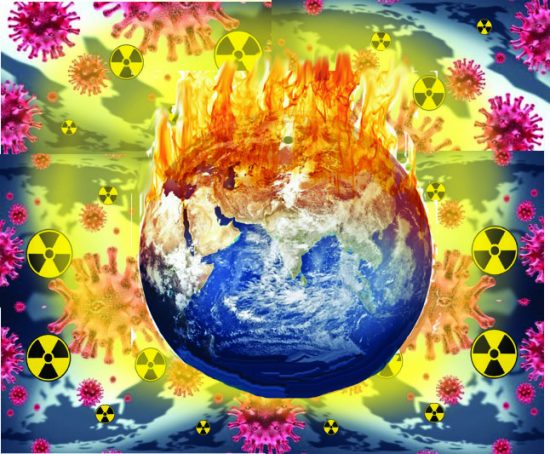
Lessons from pandemic-nuclear weapons nexus for survival in 2021 http://www.koreatimes.co.kr/www/opinon/2020/12/197_301593.html By Peter Hayes, 30 Dec 20,
As Earth hurtled around the Sun at over 100,000km per hour, humans were rudely reminded in 2020 by the COVID-19 pandemic that no-one is in charge ― or rather, nature is in charge.
Humanity faces many intertwined global problems in 2021. The short list includes climate change, habitat loss, biodiversity loss, biochemical pollution, overpopulation, demographic aging, food insecurity, water scarcity, disease and pandemics. These problems are both cause and effect of extreme poverty, inequality, forced migration, and social conflict that leads to war.
Hovering above all these inter-twined global problems is the truly existential threat of nuclear war. Nuclear war is the most immediate and direct extinction trap into which the species could fall.
Yet unlike other global problems, nuclear weapons are uniquely and 100 percent human-made. The RECNA Nuclear Warhead Data Monitoring Team at Nagasaki University estimates that as of June 2020, nine nuclear armed states maintain 13,410 nuclear warheads ― enough for about one ton of TNT-equivalent explosive power for every human alive today.
By the same token, the threat of nuclear war is one global problem that can be solved, relatively quickly, and ultimately, forever. Northeast Asia, where the pandemic likely increases the risk of nuclear war, is a case in point. COVID-19 may destabilize nuclear commands and ravage nuclear and conventional forces and, destabilize nuclear-prone conflicts at a time when tension should be reduced, not increased.
To reduce this risk, the Nagasaki 75th Anniversary Pandemic-Nuclear Nexus Scenarios project concluded that leaders in this region must, among many other urgent measures,
― Slow and reverse nuclear force developments and operations in the Northeast Asian region, including through nuclear-weapon-free zones and nonproliferation treaties
― Develop a secure, reliable nuclear hotline network for communicating in a nuclear crisis
― Launch public health security initiatives in the Northeast Asian region to respond to pandemics
― Engage younger generations in the nuclear disarmament movement and mobilize a broader base of potential stakeholders in nuclear issues
― Enlarge existing city networks such as Mayors for Peace and establish new city/regional cooperation networks to play a more direct role in reducing nuclear risk and pushing for nuclear disarmament
Rather than merely increasing the velocity of existing change and bringing underlying conflicts to the surface, the pandemic heralds an epochal, global, and systemic transformation that will lead to a new distribution of power capacities in geopolitical, geoeconomic, and geoecological dimensions.
In this permanent pandemic world, the effective governance of global problems in an era of permanent pandemics may rise bottom-up from “first responder” cities, provinces, corporations, and civil society organizations, driven by sheer necessity to create a global mosaic of networked responses and shared solutions.
This is a world that might adopt the Treaty on the Prohibition of Nuclear Weapons as the foundation of nuclear governance, not the old legal order that approves of the existence and even the use of nuclear weapons.
Cutting across this hopeful image is a darker portrayal of how humans may respond to multiple existential threats in an epoch defined by pandemics. In this 21st century feudalism, great powers are weakened relative to each other, and small and medium powers acquire symmetric and ultra-modern means of military power projection designed to maintain control and keep the other outside borders during protracted pandemics.
Thus, today’s Cold Peace struggling to manage COVID-19 may degenerate into a new Cold War with more states and even non-state actors armed with nuclear weapons.
Although humans can make nuclear weapons to destroy life on a massive scale, they can’t make even a simple life form, let alone a single ant or an ecosystem. Arguably, humanity’s best bet for survival is to reduce its global footprint, anticipate the impacts of global change, and adapt rapidly while nature restores itself.
That task begins with making all humans safe from pandemic infections because no human can be safe while other humans are infected. This is the equivalent of delivering one ton of TNT-equivalent of destructive power in the form of a vial of vaccine ― surely achievable even if revolutionary in principle. From this simple proposition flows a revolution in global governance in all affairs, without which humans will likely face a dire, dark, and bleak future.
As we enter 2021, therefore, states and people must ask themselves whether there are better ways to prepare for the uncertain futures created by the COVID-19 pandemic than to rely on primitive nuclear weapons, and which of these is most robust.
Peter Hayes is honorary professor at the Center for International Security Studies, Sydney University, Australia and director at the Nautilus Institute in Berkeley, California. He is also a research director of the Asia-Pacific Leadership for Nuclear Non-Proliferation and Disarmament (APLN). His article was published in cooperation with the APLN (www.apln.network).
Extending the operating licences on nuclear reactors to 60, 80, 100 years – a recipe for disaster
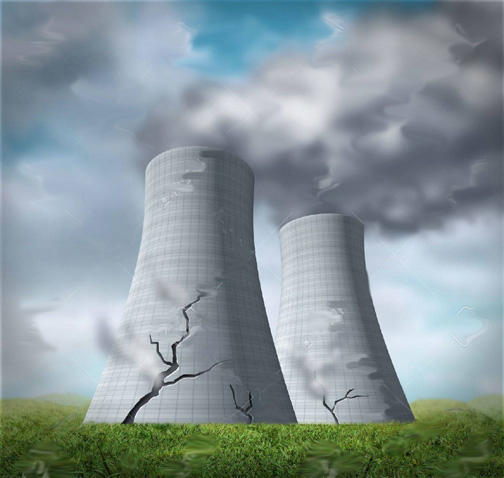 Inviting Nuclear Disaster Counterpunch BY KARL GROSSMAN 30n Dec 20, Nuclear power plants when they began being constructed were not seen as running for more than 40 years because of radioactivity embrittling metal parts and otherwise causing safety problems. But in recent decades, the U.S. Nuclear Regulatory Commission has extended the operating licenses of nuclear power plants from 40 years to 60 years and then 80 years, and is now considering 100 years.
“It is crazy,” declares Robert Alvarez, a former senior policy advisor at the U.S. Department of Energy and a U.S. Senate senior investigator and now senior scholar at the Institute for Policy Studies and is an author of the book Killing Our Own: The Disaster of America’s Experience with Atomic Radiation.
No reactor in history has lasted that long,” commented Alvarez. The oldest nuclear power plant in the U.S. was Oyster Creek, five miles south of Toms River, New Jersey, which opened in 1969 and was shut down 49 years later in 2018.
The move is “an act of desperation in response to the collapse of the nuclear program in this country and the rest of the world,” he declares.
The nuclear industry and nuclear power advocates in government are “desperately trying to hold on,” says Alvarez. With hardly any new nuclear power plants being constructed in the U.S. and the total number down to 94, they seek to have the operating licenses of existing nuclear power plants extended, he says, to keep the nuclear industry alive.
It’s a sign of “the end of the messy romance with nuclear power.”
The NRC will be holding a webinar on January 21 to consider the extending of nuclear plant operating licenses to 100 years. As its announcement is headed: “PUBLIC MEETING ON DEVELOPMENT OF GUIDANCE DOCUMENTS TO SUPPORT LICENSE RENEWAL FOR 100 YEARS OF PLANT OPERATION.”
Nuclear power plant construction has been in a deep depression for some time. Vogtle Units 3 and 4 in Georgia are “the first new nuclear units built in the United States in the last three decades,” notes on its website Georgia Power, one of the companies involved in that project. The cost projection in 2008 to build the two nuclear plants was $14.3 billion. “Now, updated estimates put the total project cost at roughly $28 billion,” states Taxpayers for Common Sense, and construction is more than five years behind schedule.
It’s not just the gargantuan price of nuclear power, and the preferability economically today of green, renewable energy led by solar and wind. Nuclear plant construction in the U.S. and much of the world has been in the doldrums because of the Three Mile Island, Chernobyl and Fukushima nuclear power plant catastrophes. People not only don’t want to waste their money–they don’t want to lose their lives to nuclear power.
“There is no empirical evidence” to support the notion that nuclear plants can have a century-long life span, says Alvarez. There “is no penciling away the problems of age” of nuclear power plants which operate under high-pressure, high-heat conditions and are subject to radiation fatigue. “The reality of wear-and-tear can’t be wished away.”
“Who would want to ride in a 100 year-old car?” he asks.
Paul Gunter, director of the Reactor Oversight Project of the organization Beyond Nuclear, says: “The new construction of nuclear power plants is proving to be more expensive and more dubious than ever before. So, the nuclear industry and the NRC are in the process of developing a plan to get these existing aging and inherently dangerous machines to run for 100 years.”
“This raises all kinds of problems that have never been addressed,” says Gunter.
And the NRC and the U.S. Department of Energy don’t want to address them…………….
an AP review of historical records, along with an interview of an engineer who helped develop nuclear power, shows that … Reactors were made to last only 40 years. Period.”
Further, the piece—”Aging Nukes: NRC and industry rewrite nuke history”—said “the AP found that the relicensing process often lacks fully independent safety reviews. Records show that paperwork of the U.S. Nuclear Regulatory Commission sometimes matches word-for-word the language used in a plant operator’s application.”
Getting operating license extensions “is a lucrative deal for operators,” said AP.
Priscilla Star, director of the Coalition Against Nukes, said of extending the operating licenses of nuclear power plants to 100 years: “There is no sane argument to perpetuate the lifespan of our already decrepit nuclear reactors other than the NRC seeking to perpetuate the endless profits to its licensees.”
“All kinds of technical foul-ups occur in the daily operations of a nuclear power plant,” she continued. ‘It’s a crapshoot running any of them safely on any given day because human error plays such a big part of operational safety. More frequent cyber hacking will also put hs at greater risk if this form of energy production is not abolished in favor of renewables. It’s time for a presidential administration to curb the noblesse oblige appetite of the NRC and once and for all consider it unsafe and unsound as a regulatory agency putting profit before public safety.”
What the NRC has also done extending nuclear power plant licenses to 60 and then 80 years is to allow the plants to be “uprated” to generate more electricity—to run hotter and harder increasing the chance of accidents. It is asking for nuclear disaster. ……..https://www.counterpunch.org/2020/12/30/inviting-nuclear-disaster/?fbclid=IwAR1YQ614qqcsQZ3mwVCo9UV2JlqCfVBgmS358L7DCCwcShjKDJFtzH-nZ0k
USA is not facing up to the climate threats to its nuclear wastes
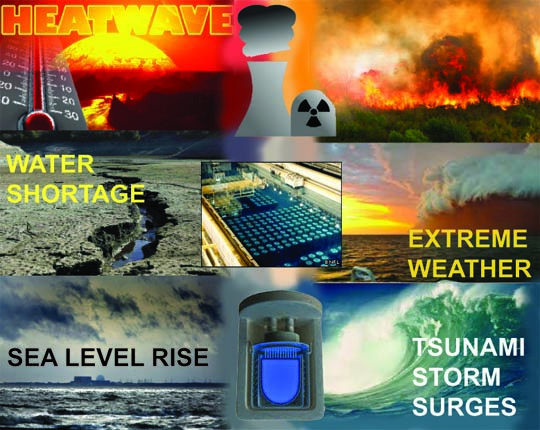 US is Ill-Prepared to Safely Manage its Nuclear Waste from Climate Threats. More than 150 sites across the country have to be managed for radioactive waste for centuries or millennia. But there’s no plan in place for how this will be done, says GAO report. Earth Island Journal , CHARLES PEKOW, December 29, 2020 The Cold War never erupted into the nuclear nightmare that the world feared for decades. But the legacy of the never-used nuclear weapons remains a ticking time bomb that could endanger countless people and lead to environmental catastrophe any time.
The GAO report, “Environmental Liabilities: DoE Needs to Better Plan for Post-Cleanup Challenges Facing Sites” (pdf), issued earlier this year, found, among other things, that the DoE doesn’t have a plan for how to address challenges at some sites that may require new cleanup work that is not in the scope of LM’s expertise.
some of these sites have already been creating serious problems.
Among the many other problem sites, the Legacy Management office is struggling to figure out what to do with contaminated groundwater at the Shiprock nuclear waste dump on the Navajo Nation Indian Reservation in northwest New Mexico. Contaminated water, the legacy of uranium mining for nuclear power plants and weapons, is being pumped to an evaporation pond there.
nuclear watchdog groups aren’t satisfied with the slow progress on this front. The nation needs “a reverse Manhattan project,” to figure out how to safely diffuse the radioactive waste, says Schaeffer of the Alliance for Nuclear Accountability. https://www.earthisland.org/journal/index.php/articles/entry/us-is-ill-prepared-to-safely-manage-its-nuclear-waste-from-climate-threats
1 This Month

Tell Congress: Prevent Nuclear Catastrophe in Iran

Tell Congress: Prevent Nuclear Catastrophe in Iran

Read the Public Inquiry Report, the Commissioners’ report, Surrendering Australia: The AUKUS Deception is available to download for free at aukuspublicinquiry.com. Or just watch the replay of the National Press Club Luncheon.


Shut down the radiation-damaged Heysham nuclear reactors now
To see nuclear-related stories in greater depth and intensity – go to https://nuclearinformation.wordpress.com

Say No to NASA’s Reckless Nuclear Reactor on the Moon
Say No to NASA’s Reckless Nuclear Reactor on the Moon
-
Archives
- November 2026 (269)
- October 2026 (302)
- September 2026 (339)
- August 2026 (330)
- July 2026 (355)
- June 2026 (287)
- May 2026 (306)
- April 2026 (356)
- March 2026 (251)
- February 2026 (267)
- January 2026 (308)
- December 2025 (358)
-
Categories
- 1
- 1 NUCLEAR ISSUES
- business and costs
- climate change
- culture and arts
- ENERGY
- environment
- health
- history
- indigenous issues
- Legal
- marketing of nuclear
- media
- opposition to nuclear
- PERSONAL STORIES
- politics
- politics international
- Religion and ethics
- safety
- secrets,lies and civil liberties
- spinbuster
- technology
- Uranium
- wastes
- weapons and war
- Women
- 2 WORLD
- ACTION
- AFRICA
- Atrocities
- AUSTRALIA
- Christina's notes
- Christina's themes
- culture and arts
- Events
- Fuk 2022
- Fuk 2023
- Fukushima 2017
- Fukushima 2018
- fukushima 2019
- Fukushima 2020
- Fukushima 2021
- general
- global warming
- Humour (God we need it)
- Nuclear
- RARE EARTHS
- Reference
- resources – print
- Resources -audiovicual
- Weekly Newsletter
- World
- World Nuclear
- YouTube
-
RSS
Entries RSS
Comments RSS

