Lancaster City Council will call on government to join nuclear weapons ban
City councillors have voted in favour of writing to the government to urge it to sign up to the United Nation’s Treaty on Prohibition of Nuclear Weapons, which came into force last month. Lancaster Guardian, By Nick Lakin, Monday, 15th February 2021, The motion was brought to council by Green Councillor Mandy Bannon, who represents Marsh ward.
South Lakeland and Lancaster District Campaign for Nuclear Disarmament (CND), has praised the council for its decision.
The motion brought to council was in response to a global campaign organised by the International Campaign for the Abolition of Nuclear Weapons (ICAN) which was awarded the Nobel Peace Prize in 2017………
Regulatory Harmonization: An Upcoming Hurdle for SMRs?
Nuclear developers may have problems selling small modular reactors abroad. GreenTech Media JASON DEIGN FEBRUARY 15, 2021 The nuclear industry is betting on small modular reactors (SMRs) to regain its competitive edge in markets such as the U.S. and Canada. Proponents say the reactors can be built cheaply once multiple units start being ordered and can even lead to lucrative export opportunities.There’s just one problem. If you build an SMR in the U.S., for example, you can’t sell it in Canada until Canadian regulators have approved the design. And the same goes for every other nuclear market in the world. Even nuclear insiders recognize that this could be a big issue for SMRs.
Regulatory harmonization has a lot to do with whether or not SMRs are going to be able to achieve cost competitiveness,” stated John Gorman, president and CEO of the Canadian Nuclear Association, in an interview.
… national regulations cover everything from food safety to vehicle emissions.
But the hyper-safety-conscious nuclear industry takes regulation to a whole new level. The SMR manufacturer NuScale, for example, claims to have spent more than $500 million, plus 2 million labor hours, in the process of passing its U.S. Nuclear Regulatory Commission Design Certification Application…….
National regulations are not just highly detailed but also wildly divergent. The differences between the regulatory regimes in the U.S. and the U.K., for example, reflect not just different jurisdictions but entirely different safety philosophies.
Iranian Intelligence Minister Mahmoud Alavi says his officers had “recognized and foiled” several alleged attempts by Israel to eliminate Iranian officials in the wake of last year’s hit on the country’s nuclear mastermind – who he says was killed by a disgruntled co-worker, not Israel.
Iranian Intelligence Minister Mahmoud Alavi claimed Sunday that Israel had planned to carry out “many operations” seeking to undermine the Islamic republic’s efforts to develop nuclear capabilities, saying these efforts have ” all been prevented by Iranian security.”
These efforts, he told the state-run ISNA news agency, included planned assassinations of officials in the nuclear program, which were to follow the November elimination of Mohsen Fakhrizadeh, believed to be head of the Iranian military nuclear program.
“After Fakhrizadeh was killed, the Zionists attempted to carry out additional acts of terrorism and evil in the country, including more assassinations. These attempts were recognized and foiled by Iranian intelligence,” he said.
While the ayatollahs’ regime has consistently blamed Israel for Fakhrizadeh’s death, Alavi told ISNA on Sunday that the country’s nuclear mastermind was not, in fact, killed by Israel rather “by a disgruntled co-worker.”
“The man responsible for the assassination of Mohsen Fakhrizadeh was fired from the intelligence service and left the country shortly before it [the hit] actually took place. He is now wanted by Iranian authorities,” the minister said.
He did not elaborate as to whether Iranian authorities think the suspect was working with Israel.
Intellinews 13th Feb 2021, Bulgaria’s prosecution has filed charges against former energy ministers Rumen Ovcharov and Petar Dimitrov over mismanagement that led to a loss of around BGN500mn (€250mn) related to the project to build the Belene nuclear power plant, the Anticorruption Fund NGO said in a statement on February 12.
There was no official statement from the prosecution, but the NGO has published a photo of the documents. The accusations against the two former ministers and two former executive directors of the state-owned National Electricity Company (NEC), Mardik Papazyan and Lyubomir Velkov, were raised back in 2016 when the prosecution launched an investigation. It
claims the two former ministers failed to exercise sufficient control over the executive directors of NEK when they allowed them to sign a deal with Atomstroyexport on the nuclear power plant at Belene.
Nor was the potential for cracked or corroded canisters to leak radiation studied
proposal only addresses a new destination for the high-level nuclear waste – not the removal and transport of the fuel storage canisters from nuclear power plants
Even transport casks with canisters that are not damaged will release radiation as they are transported from nuclear power plants to the storage facility, exposing populations along the transport routes in a majority of states and tribal communities in New Mexico to repeated doses of radiation.
If the Nuclear Regulatory Commission’s (NRC) conclusion that it’s safe to move spent nuclear fuel from nuclear power plants across the country to a proposed storage facility in Lea County sounds vanilla-coated, it’s because the draft environmental impact statement for a Consolidated Interim Storage Facility submitted by Holtec International did not address how the casks containing the spent fuel would be transported to New Mexico.
It’s likely the casks would be transported primarily by rail using aging infrastructure in need of constant repair. But our rail systems were not built to support the great weight of these transport casks containing thin-wall fuel storage canisters.
Nor was the potential for cracked or corroded canisters to leak radiation studied because an earlier NRC Generic EIS for the Continued Storage of Spent Nuclear Fuel assumed damaged fuel storage canisters would be detected during an intermediary dry transfer system or a pool.
But Holtec’s proposal only addresses a new destination for the high-level nuclear waste – not the removal and transport of the fuel storage canisters from nuclear power plants to New Mexico.
Even transport casks with canisters that are not damaged will release radiation as they are transported from nuclear power plants to the storage facility, exposing populations along the transport routes in a majority of states and tribal communities in New Mexico to repeated doses of radiation.
Other issues not considered in the draft EIS were the design life of the thin-wall canisters encasing the nuclear fuel rods and faulty installation at reactor sites like San Onofre, or the self-interest of the Eddy-Lea Energy Alliance in using the land it acquired for a consolidated interim storage site.
Thin-wall canisters cannot be inspected for cracks and the fuel rods inside are not retrievable for inspection or monitoring without destroying the canister. NRC does not require continuous monitoring of the storage canisters for pressure changes or radiation leaks. The fuel rods inside the canisters could go critical, or result in an uncontrolled nuclear chain reaction, if water enters the canisters through cracks, admits both Holtec and the NRC. None of us are safe if any canister goes critical.
Yet a site-specific storage application like Holtec’s should have addressed NRC license requirements for leak testing and monitoring, as well as the quantity and type of material that will be stored at the site, such as low burnup nuclear fuel and high burnup fuel.
Irradiated nuclear fuel is safer (but not safe) stored at the reactor site rather than transported thousands of miles to New Mexico. (Image: U.S. Nuclear Regulatory Commission)
With so many deficiencies in the draft EIS, a reasonable alternative is to leave this dangerous radioactive nuclear waste at the nuclear plants that produced it in dry cask storage rather than multiply the risk by transporting thousands of containers that could be damaged across many thousands of miles and decades to southeastern New Mexico, then again to a permanent repository.
Interim storage of spent nuclear fuel at existing nuclear plant sites is already happening – there are 65 sites with operating reactors in the United States and dry cask storage is licensed at 35 of these sites in 24 states. But since the thin-wall canisters storing the fuel rods are at risk for major radioactive releases, they should be replaced with thick-walled containers that can be monitored and maintained. The storage containers should be stored away from coastal waters and flood plains in hardened buildings.
Attempting to remove this stabilized nuclear waste from where it is securely stored across hundreds or thousands of miles through our homelands and backyards to a private storage facility also raises some thorny liability issues, since the United States will then be relieved of overseeing the spent nuclear fuel in perpetuity.
The states and nuclear plants that want to send us their long-lived radioactive waste will also be off the hook, leaving New Mexico holding a dangerously toxic bag without any resources to address the gradual deterioration of man-made materials or worse, a catastrophic event. It’s a win/win, however, for Holtec International and the Eddy-Lea Energy Alliance.
Ironically, just a few years ago, the US Environmental Protection Agency had expressed opposition to mass transportation of another kind of radioactive waste. In a classic example of environmental injustice, the EPA balked at removing uranium mine waste on the Navajo Nation, because, it said, “Off-site disposal, because of the amount of waste in and around these areas, means possibly multiple years of hundreds and hundreds and hundreds of trucks going in and out of the community and driving for miles”.
The agency told the affected communities, during discussion about digging up the uranium mine waste and transporting it to a licensed repository in different states outside the Navajo Nation, that this option, also the Nation’s preference, was the most expensive. But now New Mexico is the destination for precisely the reverse, with hundreds and thousands of transports from different states coming to deposit the country’s nuclear waste site radioactive debris on Native soil.
Laura Watchempino is with the Multicultural Alliance for a Safe Environment/Pueblo of Acoma. A version of this article first appeared in the Albuquerque Journal and is republished with kind permission of the author
Consent will be key to nuclear waste storage, The Chronicle Journal, BY CARL CLUTCHEY, NORTH SHORE BUREAU, 15 Feb 21, The incoming executive in charge of overseeing site selection regarding a potential underground storage facility for spent nuclear-fuel rods says consultation with affected neighbouring communities will be paramount.The potential facility “cannot and will not go forward without the informed and willing consent of potential host communities,” Lise Morton said on Jan. 29, in a Nuclear Waste Management Organization (NWMO) news release………
One of two sites remaining in Nuclear Waste Management Organization’s search for a potential underground storage facility will permanently house three million spent nuclear-fuel rods.
One candidate site is in South Bruce in southwestern Ontario near an existing nuclear station; the other is located about 35 kilometres west of Ignace, south of Highway 17 and on the traditional lands of Wabigoon Lake First Nation.
The Nuclear Waste Management Organization wants to announce a site for its so-called deep geological repository by 2023.
By Mwangi 15 Feb 21, Githahu Cape Town– Energy experts and commentators are speculating on the the significance of the omission of any mention of nuclear energy by President Cyril Ramaphosa in his State of the Nation address, with one suggesting this might be a sign that the government may have dropped its commitment to the nuclear power option.
In his speech on Thursday night, Ramaphosa said: “The fourth priority intervention of the recovery plan is to rapidly expand energy-generation capacity.
“Over the last year, we have taken action to urgently and substantially increase generation capacity in addition to what Eskom generates. The Department of Mineral Resources and Energy (DMRE) will soon be announcing the successful bids for 2 000 megawatts of emergency power.
“Government will soon be initiating the procurement of an additional 11 800 megawatts of power from renewable energy, natural gas, battery storage and coal in line with the Integrated Resource Plan 2019.”
Mark Swilling, Distinguished Professor of sustainable development at the School of Public Leadership, Stellenbosch University, said: “It is significant that nuclear wasn’t mentioned. It’s not like government forgot about nuclear.
“The DMRE has after all been pushing nuclear power very hard. What is more likely is that the department failed to get its way, and that can only be a good thing, as nuclear is expensive and risky, especially when there are cheaper alternatives.
“What the president announced is a very good start, but not enough. Instead of the procurement of an additional 11 800 megawatts, what we need is at least 20 000MW if we are to be free of load shedding by 2025.
“There is a problem if the 11 800 includes coal because it’s not as though you can build a new coal mine. Nobody is funding them anymore. Around the world even new coal stations are shutting down. The 11 800MW should be strictly from renewables.”
Executive director of the Southern African Faith Communities’ Environment Institute (Safcei), Francesca de Gasparis, said: “The president’s speech was silent on nuclear power, yet we know from recent developments that the government has been pushing on with its nuclear plans, despite more nuclear not being needed and being one of the most costly electricity generation options.
“In terms of the Integrated Resource Plan (IRP), which lays out our energy choices, this risky and outdated technology is not even identified as a necessary part of the solution to the country’s ongoing energy crisis. Renewable energy is significantly quicker to install and a more cost-effective choice.”
The Climate Justice Charter Movement lobby group said in a statement: “The economic recovery plan calls for more off-shore extraction of oil and gas. If the president is serious about the climate crisis he would make it clear that nuclear energy plans are also off the national agenda. In this context, we would have taken his climate change commission more seriously.”
The Julian Assange extradition case is back in the news, As Joe Biden pushes for extradition, What did we really expect from a Biden win? I am reminded of an old English comedian, who explained America’s political parties:
” Well the Republican Party is the same as our Conservatives, whereas the Democratic Party is the same as our Conservatives”
In nuclear news, Japan is alerted by a 7.3m earthquake all too close to Fukushima nuclear plant wreck. The systemic corruption in the industry is highlighted this week,, with the continuing saga of political crookedness in Ohio.
RUSSIA.Crimea to demolish dangerous, (and never operational), nuclear power station. Despite punishment by the government, Russia’s ‘‘Eco-Defense’ has helped to stop construction of a nuclear power plant.
INDIA. Amidst the trauma of the Chamoli flash floods, people recall an old lost nuclear device.
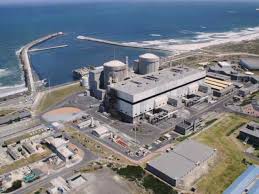
SOUTH AFRICA. Koeberg Nuclear Power Station containment buildings damaged by prolonged exposure to sea air.– Koeberg has suffered severe damage, according to Koeberg Alert Alliance.
Biden administration files appeal pressing for Assange extradition, Yahoo News, Sat, 13 February 2021 The administration of US President Joe Biden has appealed a British judge’s ruling against the extradition of WikiLeaks founder Julian Assange, a Justice Department official said Friday.
A brief filed late Thursday declared Washington’s desire to have Assange stand trial on espionage and hacking-related charges over WikiLeaks’ publication of hundreds of thousands of US military and diplomatic documents beginning in 2009.
The Justice Department had until Friday to register its stance on Judge Vanessa Baraitser’s January 4 ruling that Assange suffered mental health problems that would raise the risk of suicide if he were sent to the United States for trial.
“Yes, we filed an appeal and we are continuing to pursue extradition,” Justice Department spokesman Marc Raimondi told AFP.
After Baraitser’s decision, which did not question the legal grounds for the US extradition request, Donald Trump’s administration moved to appeal.
But Biden’s stance was not clear, and he was pressured by rights groups to drop the case, which raises sensitive transparency and media freedom issues.
After WikiLeaks began publishing US secrets in 2009, then-president Barack Obama, whose vice president was Biden, declined to pursue the case.
Assange said WikiLeaks was no different than other media constitutionally protected to publish such materials.
Prosecuting him, too, could mean also prosecuting powerful US news organizations for publishing similar material — legal fights the government would likely lose.
But under Trump, whose 2016 election was helped by WikiLeaks publishing Russian-stolen materials damaging to his rival Hillary Clinton — the Justice Department built a national security case against Assange.
In 2019 the native Australian was charged under the US Espionage Act and computer crimes laws with multiple counts of conspiring with and directing others, from 2009 to 2019, to illegally obtain and release US secrets……….
Assange has remained under detention by British authorities pending the appeal.
Earlier this week 24 organizations, including Human Rights Watch, Amnesty International USA and Reporters Without Borders, urged Biden to drop the case.
“Journalists at major news publications regularly speak with sources, ask for clarification or more documentation, and receive and publish documents the government considers secret,” they said in an open letter.
“In our view, such a precedent in this case could effectively criminalize these common journalistic practices.”
Assange’s fiancée Stella Moris said in a statement that Baraitser’s January decision that Assange was a high risk for suicide and that US prison facilities were not safe remained a strong reason to deny extradition.
Baraitser “was given clear advice by medical experts that ordering him to stand trial in the US would put his life at risk,” she said.
“Any assurances given by the Department of Justice about trial procedures or the prison regime that Julian might face in the US are not only irrelevant but meaningless because the US has a long history of breaking commitments to extraditing countries,” she said https://au.news.yahoo.com/biden-administration-files-appeal-assange-171637702.html
Military officials were unaware of potential danger to Pence’s ‘nuclear football’ during Capitol riot, By Barbara Starr and Caroline Kelly, CNN, February 12, 2021 Military officials overseeing the authorization process to launch nuclear weapons were unaware on January 6 that then-Vice President Mike Pence’s military aide carrying the “nuclear football” was potentially in danger as rioters got close during the violent Capitol insurrection, according to a defense official.
US Strategic Command became aware of the gravity of the incident after seeing a video played at the Senate impeachment trial Wednesday showing Pence, his Secret Service agents and a military officer carrying the briefcase with classified nuclear launch information running down a flight of stairs inside the Capitol to get to safety, the official said.
“As the rioters reached the top of the stairs, they were within 100 feet of where the vice president was sheltering with his family, and they were just feet away from one of the doors to this chamber,” Del. Stacey Plaskett, one of the impeachment managers, explained in the senate trial on Wednesday. In one video, the crowd can be heard chanting “Hang Mike Pence” as they stand in an open doorway of the Capitol.
It is not clear if other national security elements of the government such as the National Security Council or top officials at the Pentagon were aware of the gravity of Pence’s position and those of his team.
On January 6 the military officer was able to maintain control of the backup “football” at all times and the President was inside the White House, the official said. Even if the rioters had gotten hold of it, they could not have used any of the information because of the security controls on the system, the official said.
Since they never lost control of the “football” and then-President Donald Trump was safe, they didn’t have to deactivate Pence’s system. But the incident raises the question of whether the “football’s” status was sufficiently accounted for at all times.
“The risk associated with the insurrectionists getting their hands on Pence’s football wasn’t that they could have initiated an unauthorized launch. But had they stolen the football and acquired its contents, which include pre-planned nuclear strike options, they could have shared the contents with the world,” Kingston Reif, an expert on nuclear weapons policy at the nonpartisan Arms Control Association, told CNN.
“Such an outcome would have been a security breach of almost incomprehensible proportions,” Reif added. “And it ought to raise further questions about the rationale for the anachronism that is the football.”
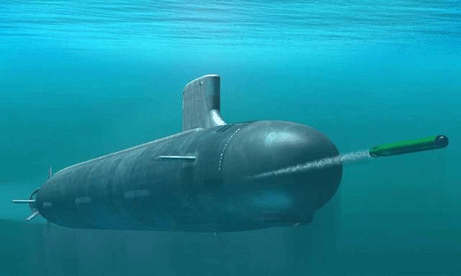
‘HELL’ AT SEA Sailors on Royal Navy nuclear submarine come through ‘patrol from hell’ after Covid outbreak at sea, The Sun, Jerome Starkey, 12 Feb 2021,
SAILORS on a nuclear sub have come through the patrol from hell after a Covid outbreak at sea.
A source said: “Imagine being cooped up underwater and breathing the same air when a killer virus is on the loose. It really was the patrol from hell.”
Algerian Foreign Minister said nuclear tests were three to four times the size of US bombing of Hiroshima in Japan, Abdul Razzaq Bin Abdullah |13.02.2021 ALGIERS
France’s nuclear experiments in the Algerian desert in the 1960s were three to four times equal to the Hiroshima bombing in Japan, Algerian Foreign Minister Sabri Boukadoum said on Saturday.
In a Twitter post on the occasion of the 61st anniversary of the first French nuclear explosion in the Algerian desert, on Feb. 13, 1960, Boukadoum described the impacts of the tests as “catastrophic”.
“On this day in 1960, imperialist France carried out the first nuclear explosion in the Reggane region in the Algerian desert, in a process code-named ‘Gerboise Bleue’ (Blue Desert Rat),” Boukadoum said.
He added that the French nuclear explosion yielded a force of 70 kilotons (kt) and its catastrophic radiological repercussions still persist.
The first atomic bomb dropped 75 years ago by the United States leveled Hiroshima on Aug. 6, 1945, and killed an estimated 140,000 people with many more dying in the following years from the effects of radiation. Three days later, Washington dropped another atomic bomb on Nagasaki, killing around 70,000 people and forced Japan to surrender six days later.
According to French officials, the colonial authorities carried out 17 nuclear experiments in the Algerian desert in the period between 1960 and 1966. Algerian historians, however, put the number at 57.
On Feb. 13 1960, France conducted its first nuclear test, code-named “Gerboise Bleue” (Blue Desert Rat) in the Sahara Desert, southwest of Algeria.
The French nuclear experiments have caused the death of around 42,000 Algerians and injured thousands due to nuclear radioactivity, in addition to the extensive damage to the environment.
France has rejected Algerian demands to reveal the location of the nuclear waste as well as compensating the victims and those suffering from permanent disabilities due to the harmful effects of nuclear radioactivity.
During the course of the struggle for independence, nearly five million Algerians were killed, while hundreds of thousands more injured. *Ibrahim Mukhtar in Ankara contributed to this report
Strong Earthquake in Japan 10 years after the devastating tsunami in 2011
7.3 strong, the earthquake reports little damage
A leak in a nuclear plant and widespread power outage are initial concerns
The 7.3 magnitude quake which hit near Fukushima on Saturday night 11.04 pm local time hit off of Fukushima just weeks before the 10th anniversary of a quake on March 11, 2011 that devastated northeast Japan…………
, most concerning are reports of a leak at Fukushima Daini Nuclear Power plant, according to public broadcaster NHK – though this has been denied by the facility owners.
Pool water used for storing spent nuclear fuel may have leaked and contaminated the surrounding area, the outlet said.
Koeberg Nuclear Power Station has suffered substantial damage to its containment building, according to Koeberg Alert Alliance (KAA).
The containment building is designed to contain the escape of radioactive steam or gas in an emergency.
A nuclear accident at Koeberg will have devastating consequences for hundreds of thousands of people who live close nearby.
Eskom says it is aware of “deterioration” and that it is managing the issue by implementing a modification.
Like all other nuclear power plants around the world, we do get deterioration… We’re managing this issue… Recent tests show… It’s leak-tight. The building works…
Sea air has severely damaged the concrete structure, highlighting the significant risk the facility poses to nearby residents, according to KAA.
A concerned insider at Koeberg brought the alarming structural problems to the attention of KAA.
The insider informed KAA of a crack so large it goes right around the entire 110-metre circumference of the containment dome.
The community group says it is struggling to access information from Eskom about the damaged containment dome.
KAA claims that a 31-page Eskom report (about the damage), has eleven pages entirely blacked out while various other sections, photos and tables were censored because, claims Eskom, it contained “sensitive technical information”.
Lester Kiewit interviewed Peter Becker, a spokesperson for KAA.
The salt in the sea air… has caused accelerated rust in the rebar in the concrete of the containment structures… which caused cracking… About 10% of the surface of the containment building has delaminated [split into layers] …
Peter Becker, spokesperson – Koeberg Alert Alliance
Eskom blacked out about half of the report before releasing it to us…
Peter Becker, spokesperson – Koeberg Alert Alliance
Eskom is surprised by the speed at which it’s deteriorating… Koeberg was not well constructed, and the effect of sea-air was not well understood.
Peter Becker, spokesperson – Koeberg Alert Alliance
Koeberg is far too close to densely populated areas. If they tried to get approval to build it in that location today, it would be refused…
Peter Becker, spokesperson – Koeberg Alert Alliance
Koeberg was designed to last for 40 years… We get to that in 2024… but Eskom wants to keep it going. It’s a really bad idea…
Peter Becker, spokesperson – Koeberg Alert AllianceThis problem will remain. We’re implementing a modification… which will retard the deterioration.
FUKUSHIMA 2021, International Uranium Film Festival
March 11, 2021. Ten Years Fukushima Nuclear Disaster: Rio de Janeiro International Uranium Film Festival Free Online Screening and Debate.
The first International Uranium Film Festival event 2021 is scheduled for Thursday, March 11, to remember the ongoing Fukushima nuclear disaster. A free seven day online screening in cooperation with the Cinematheque of Rio de Janeiro’s Modern Art Museum (MAM Rio)(link is external). We will show two awarded documentary movies about the Fukushima nuclear accident: a poetic short film by photographer Alessandro Tesei and a feature documentary by science journalist Ranga Yogeshwar. The films can be watched online from March 11 to March 17.
After the screening the audience can chat with Fukushima expert, Professor Dr. Alphonse Kelecom from the Laboratory of Radiobiology and Radiometry of the Institute of Biology at Universidade Federal Fluminense, Rio de Janeiro. Since March 2011, Kelecom visited several times Fukushima. Of course non portuguese speakers are also invited. Prof. Alphonse Kelecom speaks Portuguese, English and French as well. Moderator is Márcia Gomes de Oliveira, director of the International Uranium Film Festival who visited Fukushima in 2015 by invitation of Peace Boat Foundation.
Tell Congress: Prevent Nuclear Catastrophe in Iran
Read the Public Inquiry Report, the Commissioners’ report, Surrendering Australia: The AUKUS Deception is available to download for free at aukuspublicinquiry.com. Or just watch the replay of the National Press Club Luncheon.