The massive tax-payer funding for security of nuclear reactors – and this will be just as bad for Small Nuclear Reactors
This article us well worth reading in its full version. Due to problems with WordPress, (the free provider of this site), itis harder to publish this in a ‘viewable size
Nuclear Security Represents $4 Billion Annual Subsidy In US, Trillion For Fleet For Full Lifecycle
This equates to a roughly $4 billion annual subsidy to the US nuclear industry, in addition to the $1.6 billion in permanent tax breaks in the US federal tax code.
Clean Technica, By Michael Barnard 30 Mar 21,The nuclear industry requires, but doesn’t pay much of the price of, several overlapping layers of security on its international and national supply chains, generation sites, and waste management. It’s spread across a hard to fathom number of budget lines, and there doesn’t appear to have been any attempt to consolidate the costs prior to this article. This was covered recently in a CleanTech Talk with Paul Werbos, formerly with the US National Science Foundation, and he agreed that the costs were large and mostly under the radar.[1]
Per reactor annual costs appear to be in the range of $50 million USD per year, with half or less of that paid by the nuclear operator. This equates to a roughly $4 billion annual subsidy to the US nuclear industry, in addition to the $1.6 billion in permanent tax breaks in the US federal tax code.
For this analysis, the expenditures are broken into international fuel and components supply chain security, national/state/municipal security, and finally generation site security.
This will be put in context of costs across the 135 US nuclear reactors that include 94 in operation, 2 in construction, and 39 no longer operating.[2] Nuclear power plants take an average of 10 years to be constructed, operate for 40 years, and are currently taking 100 years to decommission.[3] While these are US costs, they should be reasonably easy to extend to other countries with nuclear generation.
International Costs
There are international security costs for nuclear supply, waste, and materials chains, coordinated through the International Atomic Energy Association (IAEA). The US provides the majority of the IAEA’s annual budget, about $200 million USD.[4] That turns into roughly $1.5 million per reactor per year, or about $220 million for the full lifecycle of each reactor .
The Department of Defense (DOD) undoubtedly spends part of its $637 billion annual peacetime base budget on security for the global nuclear supply chain.[5] Bernie Sanders’ campaign estimated that $81 billion of DOD’s annual budget was effectively oil and gas security forces globally, with a strong concentration in the Middle East.[6] The nuclear war ships and armaments of the us military share supply chains with civilian nuclear reactor fuel and many components. ………….
US international expenditures on security total $1.1 billion annually, or about $8 million per reactor per year, or about $1.2 billion over the full lifecycle of the reactor.
National, State, & Municipal Security
Nuclear energy is the only form of energy with its own regulatory agency in most countries, and with specific call outs in budgets of other agencies. ……….
adds up to about $1.5 billion more per year for security provisions for nuclear power generation in the US. That money is not recovered from operators, but should be considered a complete subsidy for nuclear generation in addition to the nuclear tax code permanent tax breaks of $1.6 billion annually.
Over the 135 reactors in operation, that turns into a per reactor cost borne by US taxpayers of $11.3 million, and a full 150-year lifecycle cost of about $1.7 billion………….
Nuclear Generation Site Security
Only now do we get to the specific site’s annual costs. The budgets are even less transparent for individual reactors. There are aggregated numbers, but not individual budgets as the companies running them are private and not required to disclose that level of detail………..
There are three levels of security for any nuclear reactor site, and the security is shared across the reactors at the site.[22]
“The large outer perimeter, called the “owner-controlled area,” is far enough from the reactor that only minimal security is needed. Other than signs, the security measures in place for the owner-controlled area are not always visible to the public. The “protected area” is fenced and protected by sophisticated security systems and armed security officers. The innermost circle is called the “vital area.” It contains the reactor and associated safety systems, the control room, the used fuel pool, and the main security alarm stations. Access to the vital area is limited and protected by locked and alarmed security doors.”
Then there are the cybersecurity measures on top of that.
AEA best practices staffing guidelines suggest 20% of staff at nuclear generation facilities are security staff.[23] Plants have 500–1000 staff.[24] For an average facility then, there might be 750 staff and 150 security staff. ……..
Given that the site pays for 90% of NRC licensing costs and its site security, nuclear operators are paying roughly $24 million of the annual $53 million in security costs. The rest, roughly $30 million, can be considered uncounted subsidies of nuclear generation per reactor. That amounts to a $4 billion dollar indirect annual nuclear subsidy in addition to the $1.6 billion in direct tax breaks for the nuclear industry……..
Small Modular Reactors
There is nothing about small modular reactors (SMRs) which would indicate that they would have lower security costs than full sized reactors. They would have to be grouped in reactor sites, but with more SMRs per site, in order to spread the operational costs and the like across the reactors economically. They would still require full international, national, state and municipal overlapping layers of protection. They would still require high levels of site security. There is no evidence that decommissioning them will take less time. https://cleantechnica.com/2021/03/29/nuclear-security-represents-4-billion-annual-subsidy-in-us-trillion-for-fleet-for-full-lifecycle/
New Mexico sues US over proposed nuclear waste storage plans
New Mexico sues US over proposed nuclear waste storage plans, Sacramento Bee
BY SUSAN MONTOYA BRYAN ASSOCIATED PRESSMARCH 29, 2021 ALBUQUERQUE, N.M. New Mexico sued the U.S. Nuclear Regulatory Commission on Monday over concerns that the federal agency hasn’t done enough to vet plans for a multibillion-dollar facility to store spent nuclear fuel in the state, arguing that the project would endanger residents, the environment and the economy.
New Jersey-based Holtec International wants to build a complex in southeastern New Mexico where tons of spent fuel from commercial nuclear power plants around the nation could be stored until the federal government finds a permanent solution. State officials worry that New Mexico will become a permanent dumping ground for the radioactive material.
The complaint filed in federal court contends the commission overstepped its authority regarding Holtec’s plans and that granting a license to the company could result in “imminent and substantial endangerment” to New Mexico. The state cited the potential for surface and groundwater contamination, disruption of oil and gas development in one of the nation’s most productive basins and added strain on emergency response resources.
The state also raised concerns about a similar project planned just across the state line in West Texas.New Mexico has accused the commission of colluding with Holtec in “rubber-stamping” the proposal. The state argues that almost every interested party that has filed a challenge has been denied standing and an opportunity to meaningfully participate.The NRC’s mandate does not include policy setting or altering the public debate and emphatically cheerleading nuclear industry projects. Yet it is doing both to the detriment of New Mexico,” the complaint says……….
According to the U.S. Energy Department, nuclear reactors across the country produce more than 2,000 metric tons of radioactive waste a year, with most of it remaining on-site because there’s nowhere else to put it.
In all, there’s roughly 83,000 metric tons of spent fuel sitting at temporary storage sites in nearly three dozen states. The fuel is either enclosed in steel-lined concrete pools of water or in steel and concrete containers known as casks.
The first phase of the proposed New Mexico project calls for storing up to 8,680 metric tons of uranium, which would be packed into 500 canisters. Future expansion could make room for as many as 10,000 canisters of spent nuclear fuel over six decades.New Mexico’s complaint highlights a legal quandary for the federal government. Both license applications call for the Energy Department to take ownership of the spent fuel at a future date and contract with the developers of the facilities to store it until a permanent repository becomes available.
However, the Nuclear Waste Policy Act doesn’t allow the Energy Department to take ownership until a permanent repository is in place.”It is fundamentally unfair for our residents to bear the risks of open ended uncertainty,” New Mexico Attorney General Hector Balderas said in a statement……..The state first objected to federal regulators’ preliminary recommendation that a license be granted to Holtec in comments submitted to the commission last fall. Aside from New Mexico’s other concerns, state officials have said regulators failed to consider environmental justice concerns and have fallen short of other requirements spelled out by federal environmental laws. https://www.sacbee.com/news/article250292530.html
NRC considers nuclear reactors running for 100 years (saves the big costs of decommissioning)
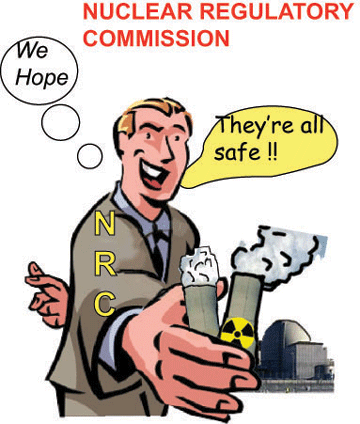
How long can a nuclear plant run? Regulators consider 100 years, Utility Dive , 29 Mar 21,
@MatthewBandyk
This fall, This fall, Exelon plans to retire the Dresden nuclear power plant in Illinois after more than 51 years in operation, one of the longest life spans any commercial nuclear power reactor has ever achieved. The only older operating power reactor in the country, unit 1 at Exelon’s Nine Mile Point plant, came online in 1969, a few months before the older of the two units at Dresden.
Now, nuclear regulators, industry groups and power plant owners have begun talking about the possibility of doubling these record run times and operating some U.S. nuclear plants for up to 100 years.
The discussions cut quickly followed the 2019 and 2020 Nuclear Regulatory Commission approvals of the first licenses for reactors in Florida and Pennsylvania to operate for 80 years, which would themselves be unprecedented milestones. According to industry experts, with state governments, utilities and corporations setting emissions reductions targets 20 to 30 years out into in the future, the nuclear industry is experiencing pressure to tackle the technical challenges around long life extensions sooner rather than later……..
Replacing nuclear plants before their licenses expire may not be on the table at all, due to high costs and competitive pressures from other power sources………
From 80 to 100?
The NRC has been tackling technical questions and research around the long-term aging of nuclear reactor components as part of its review of requests from plants to operate for 80 years………..
Four reactors — two at NextEra Energy subsidiary Florida Power & Light’s Turkey Point plant and two at Exelon’s Peach Bottom plant in Pennsylvania — have already received approval from the NRC to operate for up to 80 years, while six more — four at Dominion Energy’s North Anna and Surry plants in Virginia and two at NextEra Energy’s Point Beach plant in Wisconsin — have asked for license extensions to 80 years.
But all of these nuclear plants, like Oconee, would have to retire in the early 2050s if the NRC does not allow operation beyond 80 years. ……….
Unknown unknowns”
If the NRC decides to push forward with developing guidance for 100-year licenses, some of the most complicated questions that will have to be tackled are around how nuclear plants can safely operate at advanced ages……..
[Some] are skeptical, about how certain regulators can be about safety if they are looking so far out into the future. “Would you get on a 747 that is 100 years old?” asked Allison Macfarlane, who served as chairman of the NRC from 2012 to 2014 and now directs the School of Public Policy and Global Affairs at the University of British Columbia. Her concerns are with the number of “unknown unknowns” — safety issues that regulators and plant operators are not even aware could pose problems — that may surface as parts of a nuclear plant are exposed to radiation at lengths of time never before observed. For example, a nuclear plant typically has miles of buried cables and piping, and inspecting them can be difficult due to the costs of digging to access them, Macfarlane said……. https://www.utilitydive.com/news/how-long-can-a-nuclear-plant-run-regulators-consider-100-years/597294/
U.S. Democrats introduce Bill to stop nuclear missile funding, switch funding to universal Covid vaccine development
Democrats call for $1bn shift from weapons of mass destruction to ‘vaccine of mass prevention’
Democrats call for $1bn shift from weapons of mass destruction to ‘vaccine of mass prevention’ Guardian, Julian Borger in WashingtonSat 27 Mar 2021
Investing in Cures Before Missiles Act would stop funding on ballistic missile and help develop a Covid vaccine Congressional Democrats are introducing legislation to transfer $1bn in funding from a controversial new intercontinental ballistic missile to the development of a universal Covid vaccine.
The Investing in Cures Before Missiles (ICBM) Act, introduced in the House and Senate on Friday, would stop funding on the proposed new missile, known as the ground-based strategic deterrent (GBSD) which is projected to cost a total of $264bn over its projected lifespan, and discontinue spending on a linked warhead modification program.
Instead, the life of the existing US intercontinental ballistic missile, the Minuteman III, would be extended until 2050, and an independent study commissioned on how best to do that.
“The United States should invest in a vaccine of mass prevention before another new land-based weapon of mass destruction,” Senator Edward Markey of Massachusetts, co-author of the bill, said.
“The ICBM Act makes clear that we can begin to phase out the cold-war nuclear posture that risks accidental nuclear war while still deterring adversaries and assuring allies, and redirect those savings to the clear and present dangers presented by coronaviruses and other emerging and infectious diseases.”
Arms control experts say static intercontinental ballistic missiles, of which the US has 400 in silos across the northern midwest, are inherently destabilizing and dangerous, because a president would have just a few minutes to launch them on the basis of early warning signals of an impending enemy attack, or risk losing them to a pre-emptive strike. They point to a history of near-launches based on defective data, and the risk of cyber-attacks distorting early warning systems.
“With all of the global challenges we face, the last thing we should be doing is giving billions to defense contractors to build missiles we don’t need to keep as a strong nuclear deterrence,” Ro Khanna, Democratic congressman from California and the bill’s co-author in the House, said.
In September 2020, Northrop Grumman was awarded an uncontested bid for the $13.3bn engineering, manufacturing and development phase of GBSD, after its only rival for the vast contract, Boeing, pulled out of the race complaining of a rigged competition……… https://www.theguardian.com/us-news/2021/mar/26/democrats-missile-funds-vacccine-development
U.S. nuclear weapons are aging quickly. With few spare parts, how long can they last?
U.S. nuclear weapons are aging quickly. With few spare parts, how long can they last?, McClatchy
BY TARA COPP MARCH 29, 2021, MINOT AIR FORCE BASE, N.D.
When hundreds of land-based nuclear armed ballistic missiles were first lowered into underground cement silos spread across the vast cornfields here in 1970, the weapons were only intended to last a decade before a newer system came in.
Fifty years later, these missiles — called the Minuteman III — are still on alert, manned by members of the U.S. Air Force in teams of two who spend 24 hours straight below ground in front of analog terminals from the 1980s, decoding messages and running tests on the missiles’ systems to check if they could still launch if needed.
But it’s not the age of weapons or the decades-old technology that troubles their operators. It’s that the original manufacturers who supplied the gears, tubes and other materials to fix those systems are long gone………….
THE PRICE TO MODERNIZE
Next month Chairman of the Joint Chiefs of Staff Army Gen. Mark Milley and Defense Secretary Lloyd Austin will seek billions to keep the 50-year-old land based missiles running while a debate begins on whether they should be replaced.
It’s a difficult ask: At the same time, the Pentagon is also in the middle of the most expensive nuclear modernization effort in its history.
All three legs of the nuclear triad — air, land and sea defenses launched from silos, overhead strategic bombers or nuclear submarines — are getting replaced with newer weapons systems, simultaneously.
The next-generation replacement bombers, missiles and submarines now under development have a price tag topping $400 billion and are expected to be a primary topic of questioning during hearings next month as lawmakers debate whether modernizing all three legs is necessary…………… https://www.mcclatchydc.com/news/nation-world/national/national-security/article250187880.html
Fusion nuclear reactors – a boondoggle run by bureaucrats
The Week 28th March 2021, Proponents believe fusion reactors could solve the climate-change crisis by providing inexhaustible energy with zero emissions and no chance of a meltdown. But the challenge of creating fusion reactions is enormous:
Scientists and engineers essentially have to create a small star. Hydrogen must be heated to about 100 million degrees Celsius — six times hotter than the sun’s core. At that temperature, hydrogen is no longer a gas but a plasma, a soupy mix of charged particles that is incredibly difficult to sustain. Scientists have been trying to contain the plasma using a tokamak, a doughnut-shaped structure with an extremely strong magnetic field, but thus far have been successful only for seconds.
Several retired fusion physicists, including Ernesto Mazzucato and Daniel Jassby of Princeton’s Plasma Physics Lab, have described ITER as a boondoggle run by bureaucrats that is likely to waste its potential cost of up to $65 billion.
Book review: Post Growth, by Tim Jackson — The Earthbound Report

Tim Jackson’s Prosperity Without Growth is one of the most influential books on the postgrowth bookshelf, written in the wake of the financial crisis and clearly articulating the limits of economic growth as a measure of success. This book also comes in the wake of crisis, a time when “alongside an uncomfortable reminder of what […]
Book review: Post Growth, by Tim Jackson — The Earthbound Report
The week in nuclear news
While the world struggles with the problems of virus and vaccines, the nuclear industry, along with many others, is in something of a stalemate. But, as with last week, the industry’s propaganda about small nukes and climate action goes on relentlessly. At the same time, a number of articles have contradicted this propaganda, stressing the long delay in getting nuclear reactors up and running, their costs, and unsoved waste problem.
What it will take to vaccinate the world against COVID-19.
Climate Change Must Be Tackled as a Global Security Risk.
Beyond the pandemic, the priority should be the elimination of nuclear weapons.
The nuclear weapons issue is a women’s issue. Facts on who has nuclear weapons, and who might have, now or in the future.
3 governments join in USA’s promotion of conflict with China.
Small nuclear power plants no use in climate crisis. Natural Resources Defense Council (NRDC) says advanced nuclear reactors are not a viable option to combat climate change, Nuclear power costs – from the CATO Institute – a reality check for those who imagine nuclear as a climate solution.
Investment advice? Some big worries against investing in nuclear power. No market for small nuclear reactors, so no justification for setting up factories to make them. Nuclear industry in decline, lobbies hard to portray itself as ”green”.
JAPAN. “Amid a pandemic, the Tokyo torch relay risks sacrificing public health on the altar of Olympic pageantry”. Tokyo Olympic Games torch relay starts, but most Japanese want it cancelled. Infamous Fukushima town sign praising nuclear energy to become permanent museum display . Delay in removal of debris from Fukushima nuclear plant. Longterm clean-up at least a century.
Japan’s nuclear regulator bans Tepco from restarting Kashiwazaki-Kariwa plant due to safety flaws. Unprecedented decision by Japan’s nuclear regulator to stop restart of the giant Kashiwazaki Kariwa plant. Japan seeks international support for Fukushima tank water release.
UK. UK nuclear weapons announcement ‘shocking and alarming’ warn the Elders . Scottish government firmly opposed to nuclear weapons and demands complete withdrawal of all nuclear weapons from Scotland. UK’s decision to expand nuclear weapons – destabilises the fragile world order.
Alarming safety lapse at Hunterston nuclear site. Covid-19 causes more delays and costs for Hinkley Point C nuclear projects. Biased pro nuclear report on UK’s Sizewell project ignores the negative economic impacts. UK new coal mine – to pave the way for a radioactive waste dump?
USA.
The folly of USA provoking war with China. Delay in construction of Vogtle nuclear station – every day extra means additional costs to customers. US Nuclear Corp signs agreements with Chinese nuclear corporation. Ohio Senate votes to remove nuclear power subsidies. Physicians for Social Responsibility challenge the 20 year license extension for old enbrittled Point Beach nuclear station. New solar farm to replace Iowa’s only nuclear power plant: will supply more energy, and many jobs.. Community group created to advise cleanup of Three Mile Island nuclear site .
IRAN. Iran wants sanctions lifted first: USA wants Iran to back down first, and reverse uranium enrichment.
NORTH KOREA. Kim Jong-un wants ”arms control talks” with USA, not denuclearisation in the short term.
PACIFIC ISLANDS. New research into the effects of nuclear bomb tests on Montebello islands.
GERMANY. German government settles disputes with nuclear plant operators.
FRANCE. France’s nuclear reactors in state of disrepair, reducing electricity output. France nuclear safety authority finds safety deviations in Flamanville plant . Iodine tablets to be givento 64 municipalities near France’s Paluel nuclear power plant in Normandy. No operating nuclear reactor in France is up to the required safety standard.
CANADA. Canada’s nuclear regulator extended licence for Pickering nuclear plant despite the need for its aging pressure tubes to be replaced. New nuclear is NOT the path to net zero.
CHINA. China’s push for advanced nuclear reactors will produce much weapons grade plutonium. Report on the military implications of China’s new fast-breeder nuclear reactor plans – ‘‘Plowshares to Swords ?”
CZECH REPUBLIC. Czech secret services warn against involvement of Russia in nuclear tender .
NEW ZEALAND. New Zealand speaks out against UK’s expansion of nuclear weaponry..
New nuclear is NOT the path to net zero
 No plan that gets us to net zero in a reasonable time frame includes new nuclear reactors. Nuclear is far too slow and expensive to deal with the climate emergency. Just like fossil fuel energy, nuclear produces wastes that pose unacceptable health hazards and economic costs. Radioactive wastes from nuclear power plants have been piling up for over 70 years. Canada still has no long-term strategy to deal with either nuclear or fossil fuel wastes. Building Canada back better means major investments in conservation and renewable energy, providing hundreds of thousands of good green jobs. |
Global investment in renewable energy and newly-installed renewable capacity has far surpassed nuclear in recent years. Investors are smart: they put their money where it will yield good returns.
In 2015, the Harper Government handed over operation of Canada’s federally-owned nuclear labs to an American-led multinational consortium, currently composed of two Texas-based companies (Fluor and Jacobs) and SNC-Lavalin. The U.S. military-industrial complex is driving the push for new nuclear, hoping Canadian taxpayers will subsidize risky, expensive and largely untried “small modular” reactor designs, including plutonium-fuelled reactors.
In a CBC interview aired on September 19th, Natural Resources Minister Seamus O’Regan said, “We have not seen a model where we can get to net-zero emissions by 2050 without nuclearnuclear.”
O’Regan also claimed that net zero “needs oil and gas.”
There seems to be some confusion about time frames here. Transportation and home heating across Canada are heavily reliant on oil and gas. Electricity production in two provinces – Ontario and New Brunswick – is heavily reliant on large nuclear reactors. But implying that this can or should be the status quo until 2050 defies logic.
The 2018 Intergovernmental Panel on Climate Change (IPCC) report says limiting global warming to 1.5°C requires “rapid and far-reaching” transitions in land, energy, industry, buildings, transport, and cities. Human-caused emissions of carbon dioxide need to fall by about 45 percent from 2010 levels by 2030, reaching ‘net zero’ around 2050.
New nuclear reactors cannot be part of a rapid transition. The 2019 World Nuclear Industry Status Report says the average construction time of 63 reactors started since 2009 (37 in China) was 9.8 years. Small modular reactors (SMRs) have been long delayed. NuScale – the leading U.S. design – was supposed to generate power in 2015-16, but latest estimates are that it will be 2029-30 at the earliest.
O’Regan also said: “There are models that we’re looking at that would reduce the amount of nuclear waste. There are other models that would recycle nuclear waste.”
Whatever the models predict, the inescapable fact is that all nuclear reactors produce radioactive waste. “Reducing” or “recycling” radioactive waste only creates more radioactive waste, passing the buck to future generations. Worse still, some SMR wastes would be difficult to deal with. SMR designs that use recycled fuel require extraction of plutonium, creating serious national security risks associated with nuclear weapons proliferation.
The only way to deal with wastes from fossil fuels and nuclear is to phase out these technologies.
Canada is dragging its feet on creating a realistic climate plan. We already provide more fossil fuel subsidies per capita than any other G-20 nation. Let’s not compound this by subsidizing the pipe dream of new nuclear technologies.
If you agree that new nuclear is not part of the path to net zero, please sign your letter below [on original] to Minister O’Regan and your Member of Parliament. Call upon the federal government to minimize the generation of radioactive waste and to cease all support and taxpayer funding for small modular nuclear reactors.
Thank you for taking action.Dr. Ole HendricksonVice-President and Conservation ChairSierra Club Canada Foundation https://www.sierraclub.ca/en/new-nuclear-is-not-part-of-path-to-net-zero
There is new hope for freedom for Julian Assange
| JULIAN ASSANGE COULD FINALLY WALK FREE—IF WE SEIZE THE MOMENT https://arena.org.au/julian-assange-could-finally-walk-free-if-we-seize-the-moment/ |
ARENA ONLINE, SCOTT LUDLAM, 27 MAR 2021
For the first time in more than a decade there’s cause for hope. The tortuous chain of cause and effect that saw Australian publisher Julian Assange go from global news sensation to a freezing cell in a London prison may at last be ended if the Biden administration decides to make a principled break with the fateful decisions of President Donald Trump.
Trump’s decision in 2019 to prosecute Assange for espionage placed Assange at risk of a maximum prison sentence of 175 years. It crossed a line that President Obama’s administration had been unwilling to step over—not through any love of WikiLeaks but for the simple reason that accusing publishers of espionage ran headfirst into the principle of press freedom enshrined in America’s First Amendment. The ‘New York Times’ problem, they called it: if Assange goes to jail then so should the editor of the New York Times. The leaks at the centre of the case led to dozens of public interest stories in the Times and other publications around the world, including this one.
In January 2021 there was an unexpected turn: a London Magistrate’s Court decided to reject Trump’s request to extradite Assange from the United Kingdom to the United States. The election result and the court’s decision provide the circuit breaker this terrible miscarriage of justice so desperately needs.
Trump, and his accomplices in the Department of Justice and Department of State, are gone. On their way out the door they filed an appeal in the UK courts—a matter of routine, according to most observers—and there the matter rests.
President Biden’s pick for US attorney general, Merrick Garland, told the Senate judiciary committee of his commitment to the protection of rights, to fair treatment of the press, and to the exercise of prosecutorial discretion. It is impossible to reconcile any of these priorities with the continuation of the former president’s dangerous conflation of journalism and espionage.
President Trump relished open hostility to the media, treating the press as ‘the enemy of the people’. He had an ally in Prime Minister Scott Morrison, who showed zero interest in stepping up to help an Australian citizen in trouble. But now, far from Canberra, the ground is shifting.
In the United States, moves are afoot across civil society, the press and the legal profession to bring this dangerous episode to a close. Organisations with global reach, including Amnesty International, Reporters Without Borders and Human Rights Watch, have recognised the threat of this prosecution and stepped up a lobbying campaign to ensure the Biden administration drops the case. There is renewed energy around the world, from the Media, Entertainment & Arts Alliance—Assange’s union here in Australia—to the remarkable work the US-based Courage Foundation is doing to help focus the mind of the incoming attorney general. Now is the time to raise our voices, to demand lawmakers here urge their American counterparts to let Julian Assange walk free and reunite with his family after more than ten years.
‘Transparency in government remains a vital national interest in a democracy, Garland has said. On 29 March his justice department is due to publish more details on its grounds for appeal. That’s how long we have to ensure that these words mean something.
—
3 governments join in USA’s promotion of conflict with China
Biden, alongside Morrison, Modi and Suga, continues conflict with China, Independent Australia, By Vijay Prashad | 29 March 2021 The U.S. is determined to maintain its dominance over the world and is unlikely to forfeit that without a fight, writes Vijay Prashad.
ON MARCH 12, the heads of government of four countries, Australian Prime Minister Scott Morrison, Indian Prime Minister Narendra Modi, Japanese Prime Minister Yoshihide Suga and the United States President Joe Biden, met for a virtual meeting of the Quadrilateral Security Dialogue, better known as the Quad.
Modi’s opening remarks illustrate the emptiness of the public agenda; he called the Quad “a force for global good” with no details beyond a list of areas of collaboration, which were “vaccines, climate change and emerging technologies”. There was no direct mention of China during the meeting.
In the details relating to the launching of “an ambitious new joint partnership that is going to boost vaccine manufacturing,” a more disturbing agenda revealed itself. The vaccines are meant for Southeast Asia, which is a core area of U.S. contest against China, and the “emerging technologies” refers to the U.S. desire to substitute products from its own high-tech firms and supplant the attractiveness of the Chinese high-tech industry.
The goal of the Quad is to deepen the military and economic pressure against China.
The Quad was created in the aftermath of the tsunami of 2004 and then deepened by President Barack Obama as central to his “pivot to Asia“. But it did not take off until the U.S. Administration of Donald Trump began to rely upon this grouping to tighten pressure on China. It is for that reason that in late 2020, Trump gave the heads of governments of Australia, Japan and India the highest U.S. military decoration, the Legion of Merit.
These three partners are key players in the U.S. Government’s pressure campaign against China.
U.S. primacy in the region
In early January 2021, the U.S. Government declassified a 2018 document prepared for the Trump Administration, called the ‘U.S. Strategic Framework for the Indo-Pacific’. The text clearly states that the U.S. objective in Asia is to:
‘Maintain U.S. primacy in the region.’
The idea of “primacy” has a long history in U.S. foreign policy, going back to the early days after World War II. The United States government, in a series of documents, stated that it would seek to be the leading power in the world and it would shape the creation of global institutions to benefit the United States above all else.
The drafters of the 2018 policy from the U.S. National Security Council noted that the “threat” from China was not from its military.
Rather, the United States worried about Chinese developments in:
‘… cutting-edge technologies, including artificial intelligence and bio-genetics.’
The U.S. Government’s objective, according to the document, was to maintain ‘American industry’s innovation edge vis-à-vis China,’ which does not mean only to enhance U.S. industry, but also to prevent China from getting access to technology and finance.
The war in the Pacific promoted by the U.S. is not irrational.
As this document further points out:
‘Loss of U.S. preeminence in the Indo-Pacific would weaken our ability to achieve U.S. interests globally.’
President Joe Biden’s Administration, which inherits this document, will not set it aside.
All signs show that Biden will continue to push the general line that the U.S. must undermine Chinese scientific and technological development; this goal will be achieved not by the encouragement of U.S. industry but by military threats and by the attempted use of U.S. alliances to exclude Chinese firms from doing business in other countries……… https://independentaustralia.net/politics/politics-display/biden-alongside-morrison-modi-and-suga-continue-conflict-with-china,14939
The folly of USA provoking war with China
| Dragon’s threat real or imagined, but nuclear war will be a folly! The Pioneer, Monday, 29 March 2021 | Gwynne Dyer After a prolonged absence, the tradition of raising a bogey is back, though now it’s a Chinese threat in the Pacific, not a Russian threat in the Caribbean. In the early decades of the Cold War, this was the season when the North Atlantic Treaty Organisation (NATO) defence chiefs would announce their spending plans for the next year and they would almost always “discover” some new threat from the erstwhile Soviet Union to justify the money. In the US, for instance, the Intelligence services traditionally found a Soviet armoured brigade hiding in Cuba every February or March. After a prolonged absence, the tradition is back, though now it’s a Chinese threat in the Pacific rather than a Russian threat in the Caribbean. Last week, Admiral Philip Davidson of the US Navy told the Senate Armed Services Committee that the Chinese were getting ready to invade Taiwan within the next six years. “I worry that they’re accelerating their ambitions to supplant the US and our leadership role in the rules-based international order…by 2050,” said the Admiral. “Taiwan is one of their ambitions before that, and I think the threat is manifest during this decade — in fact, in the next six years.” Then, should we expect a war with China by the 2027? Since the US Navy could not stop a Chinese amphibious invasion of Taiwan by conventional weapons alone — it’s too far from the US, too close to China and Beijing has lots of ship-killing missiles — it would necessarily be a nuclear war, or else America would just have to abandon its not-quite-ally………………….. By the final stage of the Cold War the political and military establishments on both sides had sobered up and were very careful in their choice of words. They didn’t make idle threats, they stopped fabricating “spring surprises”, and they did not assume that the other side would know when they were just chest-thumping for domestic political purposes.That generation, which eventually managed to turn the monstrous doomsday machine off, is gone now. In their place is a generation of senior politicians and military officers who don’t truly fear major war. It hasn’t happened within living memory, and they do not really believe it still could. Their counterparts in China and Russia are less vocal, but almost certainly the same.Compared to those who held their jobs on both sides at the end of the Cold War, they are little boys at play, but it’s the same old game. War between nuclear-armed powers would be insane, but it is not impossible. And they are doing this in the midst of a global pandemic. Moreover, they are talking like this in the opening phase of a huge climate and environmental crisis that will require a high level of global cooperation to survive. There is a cycle of learning and forgetting again in both military and political affairs and we are hitting the “forgetting” phase at just the wrong time.Gwynne Dyer’s new book is ‘Growing Pains: The Future of Democracy and Work’. The views expressed are personal. https://www.dailypioneer.com/2021/columnists/dragon—s-threat-real-or-imagined–but-nuclear-war-will-be-a-folly-.html |
Facts on who has nuclear weapons, and who might have, now or in the future
| Nuclear Nations Fast Facts https://localnews8.com/news/2021/03/28/nuclear-nations-fast-facts/ Here’s a look at nuclear nations.Information about nuclear stockpiles varies from source to source. The information below is sourced to the Nuclear Threat Initiative.Countries with confirmed nuclear weapons China – 290 warheads, approximately 90 nuclear-capable intercontinental ballistic missiles (ICBMs). France – Approximately 290 warheads. India – 150 nuclear warheads.Pakistan – 90-110 nuclear warheads. Russia – 1,444 warheads on 527 ICBMs, submarine-launched ballistic missiles (SLBM), and warheads designated for heavy bombers. United Kingdom – Approximately 225 strategic warheads. United States – 3,822 nuclear warheads.Countries with unconfirmed nuclear weaponsIsrael – Suspected to have enough plutonium for 100-200 nuclear weapons. North Korea – Has conducted at least six nuclear tests since 2006. Claimed, in 2017, to have successfully conducted their first test of an ICBM. Countries suspected of developing nuclear weapons Iran – World powers, including the United States, want to curb Iran‘s nuclear program to keep it from developing a nuclear bomb. For more details on Iran’s program, visit Iran’s Nuclear Capabilities Fast Facts. July 14, 2015 – After 20 months of talks, negotiators finalize a landmark nuclear deal between Iran, the United States and five other countries. The Joint Comprehensive Plan of Action (JCPOA) states “Iran reaffirms that under no circumstances will (it) ever seek, develop or acquire nuclear weapons.” The agreement, which has a 15-year time frame, requires Iran to reduce its centrifuges by two-thirds. It also bans enrichment at key facilities. In exchange, the country will get relief from economic sanctions and permission to continue its atomic program for peaceful purposes. May 8, 2018 – US President Donald Trump announces that the United States is officially withdrawing from the Iran nuclear deal.Countries that have the ability to build nuclear weapons, but claim not to have any nuclear ambitions Japan – On November 30, 2006, Japanese Foreign Minister Taro Aso stated that Japan possesses the knowledge and ability to produce nuclear weapons but has no plans to do so.Countries that have abandoned nuclear weapons or weapons programs in recent years Belarus – Still has a civilian nuclear research program. Kazakhstan – Although it inherited nuclear warheads after the collapse of the Soviet Union, Kazakhstan transferred the inventory back to Russia. Ukraine – After the collapse of the Soviet Union, Ukraine had the third largest arsenal of nuclear weapons. The weapons were transferred back to Russia.South Africa – Became a non-nuclear weapons state in 1991. |
Unprecedented decision by Japan’s nuclear regulator to stop restart of the giant Kashiwazaki Kariwa plant
Nuclear Intelligence Weekly 26th March 2021, In an unprecedented step this week, Japan’s Nuclear Regulation Authority (NRA) banned Tokyo Electric Power Co. Holdings (Tepco) from moving nuclear
fuel into and within its giant Kashiwazaki Kariwa plant, effectively
preventing it from restarting KK-6 and -7, the plant’s two 1,315 megawatt
advanced boiling water reactors (ABWRs).
The decision, described by the NRA’s chairman as the most serious since the agency was formed in 2012,
follows the use and subsequent cover-up of a false ID card by a utility
employee to enter the plant, and the discovery of numerous vulnerabilities
in systems designed to prevent terrorists from gaining access to the plant.
https://www.energyintel.com/pages/eig_article.aspx?DocID=1101578
ARTIFICIAL INTELLIGENCE, AUTONOMY, AND THE RISK OF CATALYTIC NUCLEAR WAR
ARTIFICIAL INTELLIGENCE, AUTONOMY, AND THE RISK OF CATALYTIC NUCLEAR WAR, Modern War Institute,
James Johnson | 03.18.21 Editor’s note: The following is based on an article by the author recently published in the Journal of Strategic Studies, entitled “‘Catalytic Nuclear War’ in the Age of Artificial Intelligence & Autonomy: Emerging Military Technology and Escalation Risk between Nuclear-Armed States.”
In 2016, the AWD News site reported that Israel had threatened to attack Pakistan with nuclear weapons if Islamabad interfered in Syria. In response, Pakistani Defense Minister Khawaja Muhammad Asif issued a thinly veiled threat. On Twitter he warned Israel to remember that Pakistan—like Israel—is a nuclear-armed state. Luckily, the report was false, and it was subsequently debunked as fictitious by the Israeli Ministry of Defense.
This incident puts a modern, and alarming, spin on the concept of “catalytic nuclear war”—in which third-party (a state or nonstate actor) actions provoke a nuclear war between two nuclear-armed powers—and demonstrates the potentially severe damage caused by the misinformation and manipulation of information by a third party. During the Cold War, the main concern about “catalytic nuclear war” centered on the fear that a small or new nuclear power would deliberately set a major exchange in motion between the United States and the Soviet Union. As its name suggests, the concept was inspired by chemical reactions where the catalyzing agent (a third-party actor) would remain unscathed by its initiated process. As we know, however, a catalytic nuclear war never occurred.
In the digital era, the catalyzing chain of reaction and counter-retaliation dynamics set in motion by a third-party actor’s deliberate action is fast becoming a more plausible scenario. The concept of catalytic nuclear war—considered by many as unlikely given the low probability of a terrorist group gaining access to nuclear weapons—should be revisited in light of recent technological change and improved understanding of human psychology. Specifically, the human propensity for making fast, intuitive, reflexive, and heuristic judgments (known as “System I” thinking), which is exacerbated when information overload and unfamiliar technologies are more prominent features of decision making. In short, emerging technologies—most notably cyber, AI technology, and drones—are rapidly creating new (and exacerbating old) low-cost and relatively easy means for state and nonstate actors to fulfill their nefarious goals. This is compounded by the exponential rise in data emerging from today’s information ecosystem—and in the speed with which it does so—which will create novel attack pathways to manipulate and propagate misinformation and disinformation during crisis times.
Emerging Technology and Nuclear Stability……………….
Risk of Catalytic Nuclear War in the Digital Age
Three features of the digital age—information complexity; greater automation of nuclear command, control, and communication systems; and mis- and disinformation—make nuclear crisis management more difficult than in the past. These variables do not, however, constitute mutually exclusive risk scenarios. Rather, the interplay between these conditions might allow them to feed into one another with uncertain and potentially self-reinforcing effects. In short, these conditions are a function of the confusion and uncertainty created by the sociotechnical complexity generated in the digital age.
Information Complexity
As nuclear states (notably the United States, Russia, and China) modernize and overhaul their outdated nuclear command-and-control systems there are a multitude of challenges to consider, including information warfare, information manipulation, comingled nuclear and conventional weapons systems, and the risks posed by cyberattacks.…………..https://mwi.usma.edu/artificial-intelligence-autonomy-and-the-risk-of-catalytic-nuclear-war/
1 This Month
Tell Congress: Prevent Nuclear Catastrophe in Iran

Tell Congress: Prevent Nuclear Catastrophe in Iran

Read the Public Inquiry Report, the Commissioners’ report, Surrendering Australia: The AUKUS Deception is available to download for free at aukuspublicinquiry.com. Or just watch the replay of the National Press Club Luncheon.


Shut down the radiation-damaged Heysham nuclear reactors now
To see nuclear-related stories in greater depth and intensity – go to https://nuclearinformation.wordpress.com

Say No to NASA’s Reckless Nuclear Reactor on the Moon
Say No to NASA’s Reckless Nuclear Reactor on the Moon
-
Archives
- November 2026 (255)
- October 2026 (302)
- September 2026 (339)
- August 2026 (330)
- July 2026 (355)
- June 2026 (287)
- May 2026 (306)
- April 2026 (356)
- March 2026 (251)
- February 2026 (267)
- January 2026 (308)
- December 2025 (358)
-
Categories
- 1
- 1 NUCLEAR ISSUES
- business and costs
- climate change
- culture and arts
- ENERGY
- environment
- health
- history
- indigenous issues
- Legal
- marketing of nuclear
- media
- opposition to nuclear
- PERSONAL STORIES
- politics
- politics international
- Religion and ethics
- safety
- secrets,lies and civil liberties
- spinbuster
- technology
- Uranium
- wastes
- weapons and war
- Women
- 2 WORLD
- ACTION
- AFRICA
- Atrocities
- AUSTRALIA
- Christina's notes
- Christina's themes
- culture and arts
- Events
- Fuk 2022
- Fuk 2023
- Fukushima 2017
- Fukushima 2018
- fukushima 2019
- Fukushima 2020
- Fukushima 2021
- general
- global warming
- Humour (God we need it)
- Nuclear
- RARE EARTHS
- Reference
- resources – print
- Resources -audiovicual
- Weekly Newsletter
- World
- World Nuclear
- YouTube
-
RSS
Entries RSS
Comments RSS

