The cows died — Beyond Nuclear International

But filmmaker’s message is about an even greater loss
The cows died — Beyond Nuclear International
Even nuclear executives must be embarrassed at the pro nuke propaganda aimed at young women

ISABELLE BOEMEKE IS THE NUCLEAR INFLUENCER THE WORLD NEEDS , High Society, BY PHILIP MAUGHAN 24 Apr 21,
”……… I think humans are the coolest thing, after nuclear energy
”New studies have shown how much cheaper it will be to build even expensive reactors than to secure the batteries needed to decarbonize the grid. The EU said it would label gas (not actually clean) and nuclear (actually very clean) as green energy for the purposes of investment — though that decision has now been deferred until later this year. ”
”If I had one PSA for Highsnobiety readers, it would be that we should stop shutting down nuclear plants, because when we do that, emissions always go up. And build more, so we can decarbonize our economy and move to a 100 percent clean energy future. To me, it’s a no brainer.”
And so Isodope was born, a glitchy vaporwave cyborg who spreads scientific knowledge of nuclear energy.
Extinction Rebellion exposes Zion Lights as yet another nuclear propaganda front

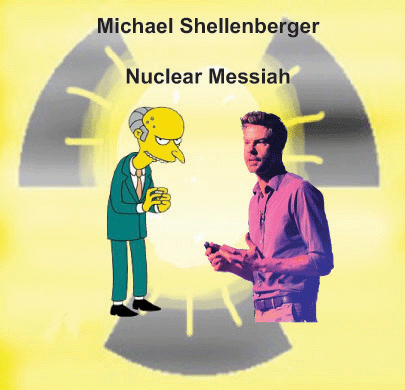
Extinction rebellion 16th Sept 2020, There have been a number of stories in the press in the last few weeks with criticisms about Extinction Rebellion by Zion Lights, UK director of the pro-nuclear lobby group Environmental Progress. It appears that Lights is engaged in a deliberate PR campaign to discredit Extinction Rebellion.
lobbyists such as The Global Warming Policy Foundation and the Genetic Literacy Project (formally funded by Monsanto). The founder of Environmental Progress, Michael Shellenberger, has a record of spreading misinformation around climate change and using marketing techniques to distort the narrative around climate science. He has a reputation for downplaying the severity of the climate crisis and promoting aggressive economic growth and green technocapitalist solutions.
France’s EDF imposes conditions on India, re massive nuclear station planned for Jaitapur. EDF will be “Neither investor in the project nor responsible for construction”.
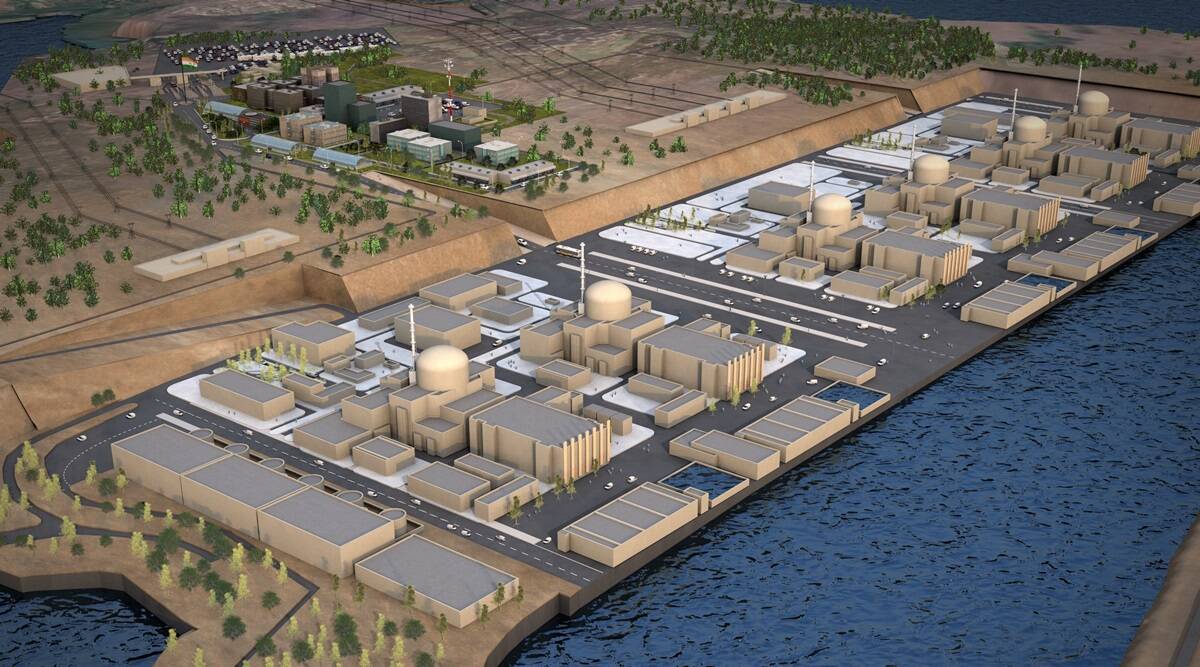
World Nuclear News 23rd April 2021, French company EDF has submitted to Nuclear Power Corporation of India Ltd (NPCIL) its binding techno-commercial offer to build six EPRs at Jaitapur in Maharashtra. The offer is the culmination of work that began with the 2018signature of an agreement between the two companies and paves the way for discussions towards a binding framework agreement.
https://world-nuclear-news.org/Articles/EDF-submits-offer-for-Jaitapur-project
Le Monde 23rd Aprilo 2021, It is believed to be the largest civilian atomic infrastructure in the world, with an installed capacity of 9,600 megawatts. This offer should initially have been submitted at the end of 2018 to the Nuclear Power Corporation of India Limited (NPCIL) group, the future operator of the plant.
But the approach of India’s spring 2019 general elections had made it untimely in the eyes of nationalist Prime Minister Narendra Modi, who is a candidate for his return to power. If the drafting of the document, more than 7,000 pages, finally took much longer than expected, it is also because of the sensitivity of its central subject: the distribution of responsibilities between the French corporation and the public operator. Indian.
In this case, EDF intends to impose its conditions. While the company chaired by Jean-Bernard Lévy originally said that it would build the entire Jaitapur plant, it now proposes to provide only “engineering studies and equipment”,
without being “Neither investor in the project nor responsible for construction”.
Events to remember the Chernobyl nuclear disaster and its warning
The UK & Ireland Nuclear Free Local Authorities (NFLA) will be commemorating the 35th anniversary of the Chernobyl disaster which takes place on Monday 26th April. It was the world’s worst nuclear disaster whose impact can still be seen in Ukraine and Belarus.
As part of commemorating the 35th anniversary of Chernobyl, NFLA are actively supporting two events. On Sunday 25th April at 5pm, NFLA are cooperating with Beyond Nuclear International, Greater Manchester & District CND and
Chernobyl Children’s Project UK to hold a special webinar entitled ‘Living with Chernobyl’. Following on from this event, on the 26th April,
NFLA are supporting a full day online conference hosted by the European office of the German Lander of Baden-Württemberg, in association with the Alliance of Regions for the Phasing-out of Nuclear Power in Europe
(who NFLA partners with) and the International Nuclear Risk Awareness Group (INRAG).
The conference will focus on an INRAG report on the ‘Risks of Lifetime Extensions of old Nuclear Power Plants’ and the ongoing concerns around a range of aging nuclear reactors across Europe and the world. 125 nuclear reactors in Europe alone have an average age of 33.4 years. The susceptibility to accidents naturally increases with the age of the
reactors, which immensely increases the risk for people and the environment in Europe.
| NFLA 23rd April 2021 https://www.nuclearpolicy.info/news/as-the-world-remembers-the-35th-anniversary-of-the-chernobyl-nuclear-disaster-nfla-supports-two-important-events-held-around-it/ CND 24th April 2021,The news of a massive disaster at the Chernobyl nuclear power station rocked the world in 1986. As information gradually emerged about the scale of the catastrophe – and its impact on all forms of life – we were shaken and fearful of the consequences, no matter how far we were from the blast site. I am delighted that Dr Ian Fairlie – an internationally acknowledged expert on Chernobyl – is contributing a guest blog about what happened. This anniversary must surely reinforce our commitment to a world without nuclear power. https://cnduk.org/disaster-at-chernobyl-35-years-on/ |
Two Somerset Councils call for a public inquiry into EDF’s plans to dump Hinkley Point C construction’s radioactive mud into the Bristol Channel
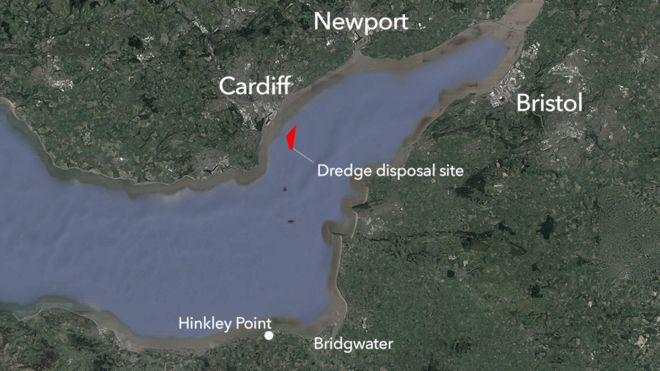
Nation Cymru 23rd April 2021, Two councils in Somerset are calling for a public inquiry to be held into plans by EDF Energy to dump sediment from the construction of the Hinkley Point C nuclear power station into the Bristol Channel. EDF has applied for licenses to dump the mud in the Cardiff Grounds, two miles off the Welsh coast and a private disposal site off Portishead in Somerset. In 2018 E were granted permission to dump waste at the Cardiff inshore disposal site despite fierce opposition and a debate in the Senedd. https://nation.cymru/news/news-in-brief-councils-join-fight-against-hinkley-c-mud-dump/ |
What do we remember about Chernobyl? — Beyond Nuclear International

35 years on, is it just the memory of a mistake, or more?
What do we remember about Chernobyl? — Beyond Nuclear International
UK govt has a ”contingency plan”, in case Scotland becomes independent, and wants removal of nuclear weapons bases.
UK nuclear subs could leave Scotland for Devon as Indy referendum fears rise
MINISTRY of Defence planners have re-examined a contingency plan to move the Navy’s nuclear deterrent submarines from Scotland to Devon, according to senior sources last night.
EXPRESS, UK, By MARCO GIANNANGELI 25 Apr 21, It comes as the SNP prepares to fight next month’s Scottish Parliament elections on a manifesto that promises a fresh referendum on independence from the UK. Britain’s nuclear weapons system, made up of four Vanguard-class submarines which carry Trident strategic missiles, has been based at HM Naval Base Clyde on Scotland’s west coast since the 1960s. The base is made up of two sites – Faslane on Gareloch, where the submarines are based, and Coulport on Loch Long two miles away, where the warheads are stored.
Last month’s Integrated Review announced the most significant change to its nuclear weapons policy in at least two decades with the decision to abandon a self-imposed cap of 225 warheads, increasing it to 260.
In 2014 the Government ruled out moving the location of its nuclear deterrent bases ahead of Scotland’s referendum, citing the large costs involved, and still outwardly holds to that line.
But the SNP continues to pledge that it would ban nuclear weapons on Scottish soil, should it become independent…….
One senior Whitehall source confirmed last night: “A contingency plan is now in place should circumstances change and an independent Scottish government decide it no longer wants to host Britain’s nuclear deterrent.”
While the SNP is not expected to have a majority at next month’s Holyrood elections, support from Scottish Greens would still ensure a mandate to seek independence…….https://www.express.co.uk/news/politics/1427576/UK-nuclear-submarines-Scotland-devon-faslane
April 25 Energy News — geoharvey

Opinion: ¶ “Battery Rush Is 21st Century’s New Gold Rush – And Tesla’s Big Future Revenue Source?” • I believe we are about to enter into another gold rush of a sorts. Batteries. In a recent article by Yahoo! Finance, the author pointed out that the real money may not lie in Tesla’s cars, but […]
April 25 Energy News — geoharvey
Is the US nuclear community prepared for the extreme weather climate change is bringing?

Is the US nuclear community prepared for the extreme weather climate change is bringing? https://thebulletin.org/2021/04/is-the-us-nuclear-community-prepared-for-the-extreme-weather-climate-change-is-bringing/?utm_source=Newsletter&utm_medium=Email&utm_campaign=ThursdayNewsletter04222021&utm_content=NuclearRisk_NuclearExtremeWeather_04202021 By Susan D’Agostino | April 20, 2021
In May 2000, a planned burn to remove dead, dried underbrush on New Mexico’s drought-stricken Cerro Grande peak in the Bandelier National Monument grew out of control. As the sky darkened with smoke, a wall of flames fueled by high winds burned through tens of thousands of acres of land where people, elk, and bald eagles made their homes. The monstrous blaze escaped the monument’s containment line and headed to the forested birthplace of the atomic bomb—Los Alamos National Laboratory. There, it raced over soil, rocks, and trees contaminated from decades-old nuclear weapons testing, releasing radioactive particles into the air and setting 47 buildings ablaze. As the devastation unfolded, the wildfire inched close to, but stopped short of, a facility containing tritium, a radioactive form of hydrogen.
In May 2000, a planned burn to remove dead, dried underbrush on New Mexico’s drought-stricken Cerro Grande peak in the Bandelier National Monument grew out of control. As the sky darkened with smoke, a wall of flames fueled by high winds burned through tens of thousands of acres of land where people, elk, and bald eagles made their homes. The monstrous blaze escaped the monument’s containment line and headed to the forested birthplace of the atomic bomb—Los Alamos National Laboratory. There, it raced over soil, rocks, and trees contaminated from decades-old nuclear weapons testing, releasing radioactive particles into the air and setting 47 buildings ablaze. As the devastation unfolded, the wildfire inched close to, but stopped short of, a facility containing tritium, a radioactive form of hydrogen.
The US response to potential climate impacts on the country’s various nuclear activities has, in the eyes of many experts, fallen far short of what it needs to be.
“All of these [nuclear] structures were built on the presumption of a stable planet. And our climate is changing very rapidly and presenting new extremes,” Hill said. “There’s harm that stems from that.”
Drought and spent nuclear waste. When forests are drier for long periods of time, they act as kindling for wildfires. Extreme drought exacerbated by climate change is a key driver of wildfires in the Western United States, which are increasing both in frequency and in size. For nuclear infrastructure in the heart of wildfire territory, this trend spells trouble.
Continue readingThe Chernobyl story continues
Chernobyl: The next phase https://www.ebrd.com/news/2021/chernobyl-the-next-phase.html By Axel Reiserer, 23 Apr 2021
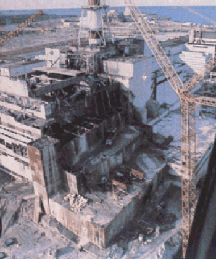
At 01:23:40 on 26 April 1986, the failure of a routine test at the Chernobyl Nuclear Power Plant in Ukraine, then part of the Soviet Union, caused reactor 4 to explode, releasing parts of its radioactive core. It was the worst nuclear accident the world had ever seen, with far-reaching political, economic and ecological consequences. Thirty-five years on, Chernobyl is still as well-known as it was a generation ago.
Fires broke out, causing the main release of radioactivity into the environment. Wind carried contaminated particles over Ukraine, Belarus and Russia, as well as parts of Scandinavia and wider Europe. The 50,000 inhabitants of the adjacent town of Pripyat were evacuated, never to return.
The accident destroyed reactor 4, killing 30 operators and firemen within three months and causing numerous other deaths in weeks and months that followed. To this day, it remains the only accident in the history of the civil use of nuclear power when radiation-related fatalities occurred. The precise number of short- and longer-term victims remains heavily disputed.
By 06:35 on 26 April, all fires at the power plant had been extinguished, apart from the fire inside reactor 4, which continued to burn for many days. Some 5,000 tonnes of boron, dolomite, sand, clay and lead were dropped from helicopters in a bid to extinguish the blaze. When the destroyed reactor was later enclosed in a provisional structure – the so-called sarcophagus – these fuel-containing materials were also walled in.
The sarcophagus was built under extremely hazardous conditions and unprecedented time pressure. By November 1986, a steel and concrete shelter was in place to lock away the radioactive substances inside the ruined reactor building and to act as a radiation shield. It was always intended as a temporary measure, with an estimated lifespan of 20-30 years
The search for a long-term solution started soon after, alongside the massive challenge of cleaning up the accident site. By the end of 1991, the Soviet Union had dissolved and newly independent Ukraine had been left with the Chernobyl legacy. Following a G7 Action Plan to improve nuclear safety in central and eastern Europe, the Nuclear Safety Account was set up at the European Bank for Reconstruction and Development (EBRD) in 1993. Two years later, the scope of the programme was extended to include Chernobyl.
A breakthrough came with the Shelter Implementation Plan in 1997, which provided a road map of how to the tackle the immediate and longer-term tasks. In the same year, the G7 officially invited the EBRD to set up and manage the Chernobyl Shelter Fund, which became the main vehicle for all efforts to ensure that the destroyed reactor 4 remained in an environmentally safe and secure state.
Emergency repairs in 1998 and 1999 prevented the imminent collapse of the sarcophagus, as well as a vent stack that was endangering the adjacent turbine hall over reactor 3, which was still in operation. It was only at the end of 2000 that all nuclear power generation in Chernobyl ceased. The following year saw a landmark decision to build an arch-shaped steel structure, called the New Safe Confinement (NSC), to seal off reactor 4.
In the subsequent years, several tasks were carried out simultaneously. Detailed technical work on the NSC started. The site had to be stabilised and prepared for the construction work. The first project the EBRD managed was the construction of a liquid radioactive waste treatment plant (LRTP) to handle some 35,000 cubic metres of low- and intermediate-level liquid waste at the site. Meanwhile, the safe storage of the spent fuel assemblies from reactors 1, 2 and 3 came into focus.
All this has been achieved. The LRTP has been operational since 2014. A new interim storage facility for the treatment and storage of spent fuel has been built and, after successful hot tests, is currently awaiting a permanent licence from the Ukrainian regulator. The NSC, the most visible Chernobyl project, was slid into position in late 2016 and then handed over to the Ukrainian authorities.
In total, the Bank has managed close to €2 billion in donor funds through the Chernobyl Shelter Fund and Nuclear Safety Account. Of this, the EBRD provided €715 million of its own resources to complete the Interim Storage Facility and New Safe Confinement.
Today, the New Safe Confinement dominates the skyline over Chernobyl, as the sarcophagus once did. The steel structure is 108 metres high and 162 metres long, with a span of 257 metres and a lifetime of at least 100 years. It was assembled in two stages in a cleaned area near the accident site and, despite its size and weight of 36,000 tonnes, was pushed 327 metres into position. It is the largest moveable structure ever built.

This is not where the story ends, however. The fact that the NSC has a lifespan of 100 years means that the next phase of work now has to be planned, agreed and implemented. The estimated 200 tonnes of radioactive nuclear fuel inside reactor 4 are now shielded by the New Safe Confinement. However, parts of the sarcophagus are becoming unstable and will have to be removed at some point. Once this is done, work will come closer to the reactor’s interior.
The EBRD remains a key partner in these efforts. Following a request by Ukraine, in November 2020, the Bank established the new International Chernobyl Co-Operation Account, aimed at creating an integrated plan for the site to serve as the basis for developing and implementing longer-term projects. The new fund will hold it first assembly meeting on Tuesday – fittingly one day after the 35th anniversary. The Chernobyl story continues.
At climate summit, Biden pleases Republicans, includes support for the nuclear industry

Nuclear, carbon capture, technology jobs: Biden hits on climate-change words Republicans like to hear, MarketWatch, April 23, 2021 , Rachel Koning Beals ”……
Addressing the final day of the virtual Leaders Summit on Climate, Biden’s punch list of what he believes are economic benefits in shifting from fossil fuels CL00, +0.99% to renewables and embracing technology to curb emissions included GOP-favored initiatives like modernizing nuclear energy and scaling up carbon capture.
……A diverse “clean” energy portfolio typically includes spending to modernize nuclear energy, and Biden included nuclear in a brief mention Friday. Republican plans have included measures seeking to establish a uranium reserve and speeding up nuclear power plant permits and reactor environmental reviews. …….. https://www.marketwatch.com/story/nuclear-carbon-capture-technology-jobs-biden-hits-on-climate-change-words-republicans-like-to-hear-11619192720
Rising threat of nuclear war is barely noticed. Corporate media likes it that way.
Rising Threat of Nuclear War Is Barely Noticed, Consortium news, By Caitlin Johnstone
CaitlinJohnstone.com 23 Apr 21, U.S. Strategic Command, the branch of the U.S. military responsible for America’s nuclear arsenal, tweeted the following on Tuesday:
“The spectrum of conflict today is neither linear nor predictable. We must account for the possibility of conflict leading to conditions which could very rapidly drive an adversary to consider nuclear use as their least bad option.”
STRATCOM called it a preview of the “posture statement” it submits to U.S. Congress every year. It was a bit intense for Twitter and sparked a lot of alarmed responses. This alarm was due not to any inaccuracy in STRATCOM’s frank statement, but due to the bizarre fact that our world’s increasing risk of nuclear war barely features in mainstream discourse.
STRATCOM has been preparing not just to use its nuclear arsenal for deterrence but also to “win” a nuclear war should one arise from the (entirely U.S. -created) “conditions” which are “neither linear nor predictable.”
And it’s looking increasingly likely that one will as the prevailing orthodoxy among Western imperialists that U.S. unipolar hegemony must be preserved at all cost rushes headlong toward America’s plunge into post-primacy.
The U.S. has been ramping up aggressions with Russia in a way that has terrified experts, and it looks likely to continue doing so. These aggressions are further complicated on increasingly tense fronts like Ukraine, which is threatening to obtain nuclear weapons if it isn’t granted membership to NATO, either of which would increase the risk of conflict.
Aggressions against nuclear-armed China are escalating on what seems like a daily basis at this point, with potential flashpoints in the China Seas, Taiwan, Xinjiang, Hong Kong, India and any number of other possible fronts………
The fact that those in charge of U.S. nuclear weapons now see both Russia and China as a major nuclear threat, and the fact that U.S. cold warriors are escalating against both of them, is horrifying.
The fact that they’re again playing with “low-yield” nukes designed to actually be used on the battlefield makes it even more so. This is to say nothing of tensions between nuclear-armed Pakistan and nuclear-armed India, between nuclear-armed Israel and its neighbors, and between nuclear-armed North Korea and the Western empire.
The Bulletin of the Atomic Scientists has the 2021 Doomsday Clock at 100 seconds to midnight, citing the rising threat of nuclear war:……………
As I all too frequently find myself having to remind people, the primary risk here is not that anyone will choose to have a nuclear war, it’s that a nuke will be deployed amid heightening tensions as a result of miscommunication, miscalculation, misfire, or malfunction, as nearly happened many times during the last Cold War, thereby setting off everyone’s nukes as per Mutually Assured Destruction.
The more tense things get, the likelier such an event becomes. This New Cold War is happening along two fronts, with a bunch of proxy conflicts complicating things even further. There are so very many small moving parts, and it’s impossible to remain in control of all of them.
Thousands of Starter Buttons
People like to think every nuclear-armed country has one “The Button” with which they can consciously choose to start a nuclear war after careful deliberation, but it doesn’t work that way.
There are thousands of people in the world controlling different parts of different nuclear arsenals who could independently initiate a nuclear war. Thousands of “The Buttons.” It only takes one. The arrogance of believing anyone can control such a conflict safely, for years, is astounding.
A 2014 report published in the journal Earth’s Future found that it would only take the detonation of 100 nuclear warheads to throw 5 teragrams of black soot into the Earth’s stratosphere for decades, blocking out the sun and making the photosynthesis of plants impossible. This could easily starve every terrestrial organism to death that didn’t die of radiation or climate chaos first. China has hundreds of nuclear weapons; Russia and the United States have thousands.
This should be the main thing everyone talks about. There is literally no more urgent matter on earth than the looming possibility that everyone might die in a nuclear war.
But people don’t see it.
On a recent “Tucker Carlson Tonight” appearance, former Congresswoman Tulsi Gabbard did a solid job describing the horrors of nuclear war and the very real possibility that it could be inflicted upon the U.S. due to America’s insane brinkmanship with Russia. She spoke earnestly about how “such a war would come at a cost beyond anything we can really imagine,” painting an entirely accurate picture of “hundreds of millions of people dying and suffering, seeing their flesh being burned from their bones.”
Gabbard is correct, and was right to give such a confrontational account of what we are looking at right now. But if you read the replies to Gabbard’s tweet in which she shared a clip from the interview, you’ll see a deluge of commenters accusing her of “hyperbole,” saying she’s being soft on Russian President Vladimir Putin and admonishing her for appearing on Tucker Carlson. It’s like they can’t even hear what she’s saying, how real it is, how significant it is.
Normalcy Bias & Media Malpractice
People’s failure to wrap their minds around this issue is a testament to the power of normalcy bias, a cognitive glitch which causes the U.S. to assume that because something bad hasn’t happened in the past, it won’t happen in the future. We survived the last Cold War by the skin of our teeth, entirely by sheer, dumb luck; the only reason people are around to bleat “hyperbole” is because we got lucky. There’s no reason to believe we’ll get lucky in this New Cold War environment; only normalcy bias says we will. Believing we’ll survive this Cold War just because we survived the last one is as sane as believing Russian roulette is safe because the guy passing you the gun didn’t die.
It’s also a testament to the power of plain old psychological compartmentalization. People can’t handle the idea of everything ending, of everyone they know and love dying, of watching their loved ones die in flames or from radiation poisoning right in front of them, all because someone made a mistake at the wrong time after a bunch of imperialists decided that U.S. planetary domination was worth putting every terrestrial organism at risk.
But mostly it’s testament to the ubiquitous malpractice of the Western media. It’s inconvenient to the agendas of the imperial war machine to have people protesting these insane Cold War games of nuclear brinkmanship, so their media stenographers barely touch on this issue. If mainstream journalism actually existed, this flirtation with nuclear war would be front and center in everyone’s awareness and people would be flooding the streets in protest against their lives being toyed with as casino chips in an insane all-or-nothing gamble.
This is so much bigger than any of the petty little things we spend our mental energy on from day to day……….The rising threat of nuclear war is the most urgent matter in the world and it’s absolute madness that we’re not talking about it all the time. https://consortiumnews.com/2021/04/23/rising-threat-of-nuclear-war-is-barely-noticed/
Attachments areaPreview YouTube video Tulsi Gabbard issues warning about potential war with RussiaTulsi Gabbard issues warning about potential war with RussiaPreview YouTube video Vasili Arkhipov: HeroVasili Arkhipov: Hero
USA: Small nuclear reactors cannot meet the critical climate need – now, or ever

The critical need for deep carbon pollution reductions this decade calls on us to focus on the low-carbon technologies we have now. And those are wind and solar. SMRs will be a dollar short and a day too late. They cannot meet critical climate deadlines, not by 2030 or 2035, and likely never.
Advanced Nuclear Dreaming in Washington State, CounterPunch, PATRICK MAZZA 19 Apr 21, It was once known by one of the most inadvertently appropriate acronyms ever, WPPSS, the Washington Public Power Supply System. “Whoops!,” as they called it, in the early 1980s brought on what was then the worst municipal bond default in U.S. history trying to build five nuclear reactors in Washington state at once, completing only one.
But faith in the nuclear future lives on at “Whoops!,” today rebranded as Energy Northwest. On April 1, the day perhaps also inadvertently fitting, the consortium of Washington state public utilities announced a move aimed at the first advanced nuclear reactor deployment in the U.S. Energy Northwest will partner with Grant County Public Utility District, a member utility serving a desert county in the center of the state, and X-energy, a leading developer of the nuclear industry’s bright shining hope, the small modular reactor (SMR)…………….
The WPPSS default was part of the first wave of nuclear failures in the U.S. In the wake of the 1979 Three Mile Island accident, approximately 100 proposed nuclear plants were cancelled. Recent years have seen a second round of failures. The Energy Policy Act of 2005 put $25 billion in nuclear subsidies on the table. That jumpstarted all of four nuclear reactors, two each in Georgia and South Carolina. The only way Wall Street would touch the projects was to make ratepayers carry the risk by paying for “work in progress” before the first watt is delivered. South Carolina ratepayers won’t even see that. Cost overruns killed the project there in 2017 after $9 billion was thrown away, setting up a political and court fight over whether ratepayers will continue to be soaked. The last two standing, Georgia’s Vogtle plants, were to have cost $14 billion and come on line in 2016-17. Now costs have doubled to $28 billion and scheduled completion this year and next is considered unlikely.
IS THE SMR A SOLUTION?
SMRs are the nuclear industry’s answer to avoid such failures in the future. Instead of being custom-built and individually licensed, SMRs are intended to cut costs by licensing a single design manufactured at a plant and sent for final assembly to their operating site. Smaller than the 1,000-megawatt-plus plants with which we’re familiar, SMRs are 100 MW or less, and designed with safety features to prevent meltdowns such as experienced at Japan’s Fukushima plant in 2011. Though there are questions about that, as covered below…………..
CAN THE SMR SAVE THE CLIMATE?

For now, the question is whether SMRs such as X-energy’s can really revive the nuclear industry, and most importantly, provide a climate solution with low-carbon electrical power in a meaningful timeframe. The answer, by simple logic, is no
…………Though deep carbon cuts must start quickly, the Washington state partnership gives a completion date for its SMR pilot project as 2027-28. Considering the nuclear industry’s track record, delays and cost overruns are likely. And that would only be the beginning of a long-process to create the entire manufacturing supply chain needed to make SMRs an economical alternative. If they can be. The key issue is economies of scale.
“Power generation scales on volume of the reactor vessels,” notes Arjun Makhijani, who has a Ph.D. in electrical engineering, with a specialization in nuclear fusion, from the University of California at Berkeley. “The materials and labor scale more slowly. That’s a basic reason that there are economies of scale and big reactors were built.”
The Union of Concerned Scientists (UCS) cites a study which shows that a reactor with 1,100 MW capacity would cost three times as much to build as a 180 MW plant, but produce six times the electricity, “so the capital cost per kilowatt would be twice as great for the smaller plant.”
SMRs lose those economies of scale, but proponents hope to make that up with mass manufacturing and licensing, avoiding costs of custom-built plants.
ROCKY ROAD TO MASS PRODUCTION
“The road to such mass manufacturing will be rocky,” Makhijani and M.V. Ramana write in a recent article, “Why Small Modular Reactors Won’t Help Counter the Climate Crisis.” “Even with optimistic assumptions about how quickly manufacturers could learn to improve production efficiency and lower cost, thousands of SMRs, which will all be higher priced in comparison to large reactors, would have to be manufactured for the price per kilowatt for an SMR to be comparable to that of a large reactor.”
That sets up “a chicken-and-egg economic problem,” they write. “Without the factories, SMRs can never hope to achieve the theoretical cost reductions that are at the heart of the strategy to compensate for the lack of economies of scale. But without the cost reductions, there will not be the large number of orders to stimulate the investments needed to set up the supply chain in the first place.”………….
WE DON’T NEED NUCLEAR
The world is running out of time to address all the concerns facing SMRs and advanced reactor designs in general.
“If you look at the cold facts from a climate point of view we have a shortage of time and money. New reactors cannot help materially,” Makhijani told The Raven. “How are we going to have a carbon-free electricity system by 2035 in which SMRs will play a significant role when the first one isn’t even supposed to come on line till the late 2020s? Those who are advocating new nuclear reactors should address the time constraint, and whether we can do it without nuclear. If we could not do it without, that would be another question. But we can. So there should be no question.”
Many studies document the capacity of wind and solar to replace fossil fuel electricity. The challenge of varying sunlight and wind speeds is met with a smart grid that can adjust energy demand to available supply and link diverse geographies. So when the wind is blowing on the Great Plains, it can supply juice while clouds block sunlight in Chicago. For times when none of that is sufficient, storage in many forms can be used, from batteries to pumped storage reservoirs. Even household water heaters. If all else fails, backup generators fueled with stored hydrogen can be brought into play. Hydrogen can be electrolyzed from water through solar and wind energy that would otherwise go unused because generation exceeds the demands of the grid.
Mark Jacobson of Stanford has done many studies documenting the capacity of wind, water and solar to meet all energy needs. A NOAA study showed carbon pollution from electricity could be cut up to 80% from 1990 levels by 2030, largely with wind and solar, needing no new nuclear and energy storage, while actually cutting electricity costs. That would require building a continental grid with efficient high-voltage DC lines to link diverse geographies. A study done by Makhijani for the Institute for Environmental and Energy Research, of which he is president, lays out a path to zero carbon electricity in Maryland.
ANOTHER WHOOPS?
Despite towering obstacles facing SMRs, from economic chicken-and-egg problems of ramping up production, to unsolved waste and proliferation issues, to remaining safety questions, the nuclear faithful at Energy Northwest soldier on. Yes, they now have operated a nuclear plant successfully since the 1980s, though questions have been raised about earthquake hazards in light of emerging seismic knowledge. Washington state has enacted a goal of 100% clean electricity by 2045, and nuclear advocates see it filling a role. In any event, new nuclear power from SMRs will be incapable of supplying a significant portion of low-carbon energy until well into the 2030s, even if economic and other issues are resolved.
All that time, any new nuclear reactors will be facing continuing cost declines in wind, solar and storage, as well as increasing deployment of smart grid technologies and advanced long-distance power transmission. If the Washington state partnership’s SMR installation actually is built and operated, with the 2027-8 timeline likely to be stretched out and the projected $2.4 billion cost figure likely to be exceeded, it could well be a costly white elephant, a relic of faith in a technology whose time has passed. The critical need for deep carbon pollution reductions this decade calls on us to focus on the low-carbon technologies we have now. And those are wind and solar. SMRs will be a dollar short and a day too late. They cannot meet critical climate deadlines, not by 2030 or 2035, and likely never. https://www.counterpunch.org/2021/04/19/advanced-nuclear-dreaming-in-washington-state/
New research on papillary thyroid cancer confirms the accepted science on the harmful effects of ionising radiation.

Our work provides a foundation for further investigation of radiation-induced cancer, particularly with respect to differences in risk as a function of both dose and age, and underscores the deleterious consequences of ionizing radiation exposure.
Radiation-related genomic profile of papillary thyroid cancer after the Chernobyl accident, Science Magazine, Lindsay M. Morton, Danielle M. Karyadi et al. 23 Apr 21,
Abstract
The 1986 Chernobyl nuclear power plant accident increased papillary thyroid cancer (PTC) incidence in surrounding regions, particularly for 131I-exposed children. We analyzed genomic, transcriptomic, and epigenomic characteristics of 440 PTCs from Ukraine (359 with estimated childhood 131I exposure and 81 unexposed children born after 1986). PTCs displayed radiation dose-dependent enrichment of fusion drivers, nearly all in the mitogen-activated protein kinase pathway, and increases in small deletions and simple/balanced structural variants that were clonal and bore hallmarks of non-homologous end-joining repair. Radiation-related genomic alterations were more pronounced for those younger at exposure. Transcriptomic and epigenomic features were strongly associated with driver events but not radiation dose. Our results point to DNA double-strand breaks as early carcinogenic events that subsequently enable PTC growth following environmental radiation exposure.
The accidental explosion in reactor 4 at the Chernobyl (Chornobyl in Ukrainian) nuclear power plant in April 1986 resulted in the exposure of millions of inhabitants of the surrounding areas of Ukraine, Belarus, and the Russian Federation to radioactive contaminants (1). Epidemiologic and clinical research in the ensuing decades has demonstrated increased risk of papillary thyroid carcinoma (PTC) with increasing thyroid gland exposure to radioactive iodine (131I) from fallout, which was deposited on pastures with grazing cows and ingested through milk and leafy greens, particularly during early childhood (2). Together with data from populations exposed to other types of radiation, compelling evidence indicates that PTC risk increases following childhood exposure to ionizing radiation, a recognized carcinogen (2–5)……….
The majority of individuals with PTC were female (n = 335, 76.1%), resided in the Kiev (Kyiv in Ukrainian) region at the time of the accident (n = 286, 65.0%), and were diagnosed during young adulthood (mean = 28.0 years, range: 10.0-45.6),,……..
The pronounced evidence of radiation-related damage that we observed for individuals exposed at younger ages is consistent with epidemiologic analyses that have identified higher thyroid cancer risks with radiation exposure at younger ages …………
our data are consistent with a linear dose-response for the key molecular characteristics associated with radiation dose in the range examined in our analysis (≤1 Gy), which aligns with the extensive radiobiological literature and other epidemiologic evidence regarding DNA damage and cancer risk following ionizing radiation exposure………….
Our work provides a foundation for further investigation of radiation-induced cancer, particularly with respect to differences in risk as a function of both dose and age, and underscores the deleterious consequences of ionizing radiation exposure. https://science.sciencemag.org/content/early/2021/04/21/science.abg2538.full
1 This Month
Tell Congress: Prevent Nuclear Catastrophe in Iran

Tell Congress: Prevent Nuclear Catastrophe in Iran

Read the Public Inquiry Report, the Commissioners’ report, Surrendering Australia: The AUKUS Deception is available to download for free at aukuspublicinquiry.com. Or just watch the replay of the National Press Club Luncheon.


Shut down the radiation-damaged Heysham nuclear reactors now
To see nuclear-related stories in greater depth and intensity – go to https://nuclearinformation.wordpress.com

Say No to NASA’s Reckless Nuclear Reactor on the Moon
Say No to NASA’s Reckless Nuclear Reactor on the Moon
-
Archives
- November 2026 (255)
- October 2026 (302)
- September 2026 (339)
- August 2026 (330)
- July 2026 (355)
- June 2026 (287)
- May 2026 (306)
- April 2026 (356)
- March 2026 (251)
- February 2026 (267)
- January 2026 (308)
- December 2025 (358)
-
Categories
- 1
- 1 NUCLEAR ISSUES
- business and costs
- climate change
- culture and arts
- ENERGY
- environment
- health
- history
- indigenous issues
- Legal
- marketing of nuclear
- media
- opposition to nuclear
- PERSONAL STORIES
- politics
- politics international
- Religion and ethics
- safety
- secrets,lies and civil liberties
- spinbuster
- technology
- Uranium
- wastes
- weapons and war
- Women
- 2 WORLD
- ACTION
- AFRICA
- Atrocities
- AUSTRALIA
- Christina's notes
- Christina's themes
- culture and arts
- Events
- Fuk 2022
- Fuk 2023
- Fukushima 2017
- Fukushima 2018
- fukushima 2019
- Fukushima 2020
- Fukushima 2021
- general
- global warming
- Humour (God we need it)
- Nuclear
- RARE EARTHS
- Reference
- resources – print
- Resources -audiovicual
- Weekly Newsletter
- World
- World Nuclear
- YouTube
-
RSS
Entries RSS
Comments RSS

