French company EDF’s Plan A – Britain to legislate finance for Sizewell nuclear plant: there is no Plan B.
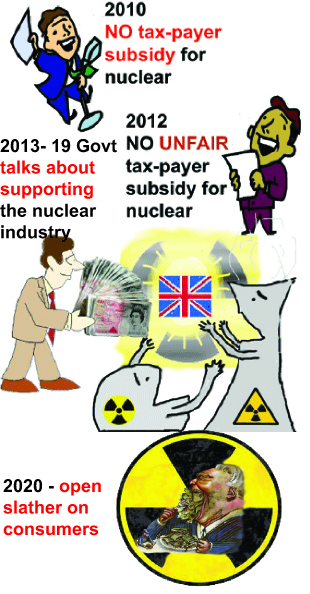
REUTERS EVENTS EDF calls for funding legislation for new UK nuclear power plant, Kate Holton LONDON, June 23 (Reuters) – France’s EDF (EDF.PA) called on the British government to deliver the legislation that would underpin the financing of a new nuclear plant, Sizewell C, saying it was now essential………
Asked if his company had a Plan B in the event the government did not advance with the legislation, Simone Rossi, the UK head of EDF, said: “We do not really. I have to say that would be for the UK government to consider.”………
China General Nuclear Power Corporation (CGN) which holds a 20% share in the pre-construction phase of the Sizewell C project, is on a U.S. government list of companies Washington deems are acting contrary to U.S. interests………….https://www.reuters.com/business/energy/reuters-events-edf-calls-uk-produce-sizewell-funding-legislation-2021-06-23/
Australia’s collective voice should silence the ‘drums of war’

Australia’s collective voice should silence the ‘drums of war’ Independent AustraliaBy Barbara Hartley | 24 June 2021, With Australia raising its hand to be part of joint naval exercises in the South China Sea, its departure from the G7 in Cornwall continues the “down-under” tradition of following U.S. foreign policy.
Although the beat of war drums is currently more muffled, anti-China rhetoric still echoes down the chilly halls of Federal Parliament as the winter sitting takes place.
In 2003, without parliamentary oversight, Australia followed the U.S. into Iraq. The given purpose was to initiate action against what then-U.S. President George W. Bush called the “axis of evil”: initially Iraq, Iran and North Korea, and later expanded to Cuba, Libya and Syria. This axis was in fact quite shaky.
One consequence of that unconscionable invasion was the toll on young Australian defence personnel, and others such as journalists, in terms of moral injury and stress. The compulsive loop of the Federal Government supporting U.S. wars with no direct relation to Australia – Korea, Vietnam, Iraq, Afghanistan – and those wars damaging Australian lives, has played non-stop since its entry into the ANZUS agreement.
Some, especially weapons trade profiteers and their political lackeys, want conflict with China to continue that unhappy pattern.
It is imperative that the now muted “drums of war” are silenced once and for all.
Readers are therefore urged to respond to the People’s Inquiry for a Peaceful and Independent Australia being conducted by the Independent Peaceful Australia Network (IPAN).
The inquiry’s purpose is to examine the impact of involvement in U.S.-led wars and the U.S.-Australia Alliance on everyday Australians. The current obsession with China and the inexplicable desire to face off with the world’s greatest military power is arguably a result of our alliance with the U.S.
The Inquiry Chairperson is Kelly Tranter, one of Australia’s leading authorities on the growing influence of weapons manufacturers on government policy in Australia.
There are also several panels addressing the various ways in which involvement in U.S.-led wars impacts our lives.
In addition, an IPAN website questionnaire can be completed in a very short time. Both submission and questionnaire suggestions will inform the Inquiry’s final report. Possible submission talking points are raised below………………………….. https://independentaustralia.net/politics/politics-display/australias-collective-voice-should-silence-the-drums-of-war,15219
China’s plans for a huge nuclear waste bunker
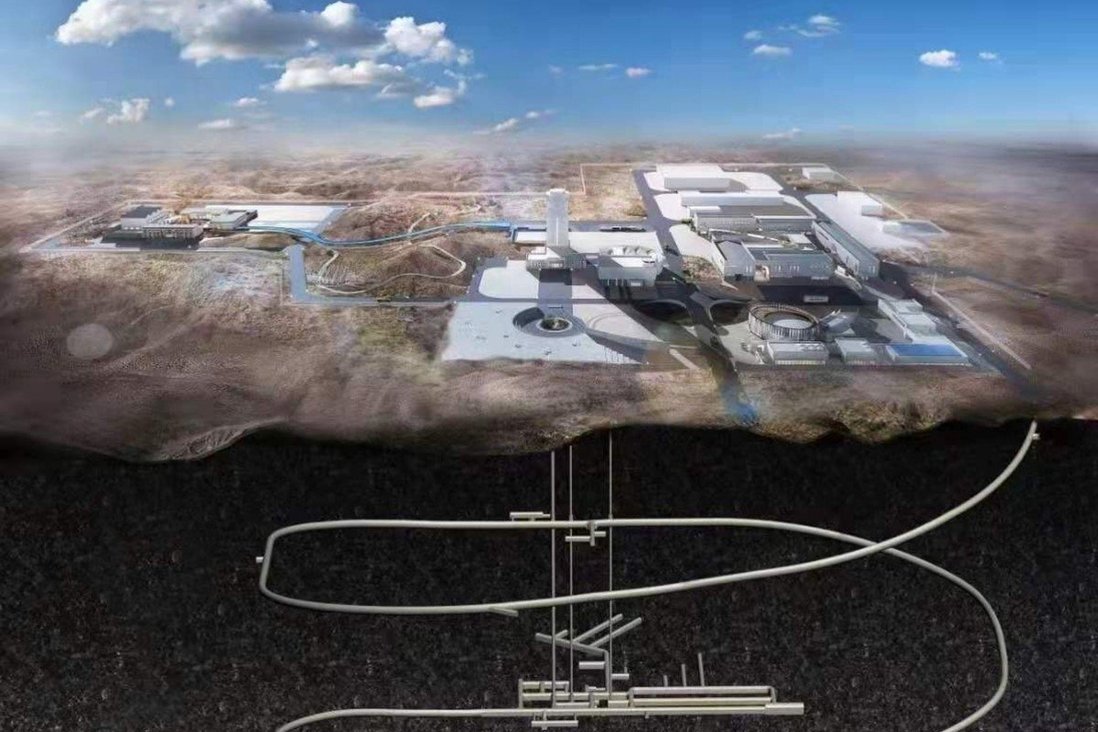
China builds bunker to test whether nuclear waste can be dumped underground, SCMP
Lab more than 500 metres underground in the Gobi Desert will be the world’s largest of its kind
If research there is successful, a long-term underground dump for high-level radioactive waste could be built, helping to address a global problem
China has started building a laboratory deep underground in the Gobi Desert to assess whether it would be a suitable location for a nuclear waste dump, amid moves to expand its nuclear power capacity.
The Beishan Underground Research Laboratory in the northwestern province of Gansu will be used to research long-term storage of high-level radioactive waste. With its deepest level to be built 560 metres (1,837 feet) below ground, it will be the world’s largest lab of its kind, according to the ChinaNuclear Energy Association, which promotes nuclear power.
- The world has about a quarter of a million tonnes of highly radioactive waste, all kept in “temporary” storage. No country has found a solution for permanent deep geological storage, with public opposition often a factor.
- China’s attempt to find an answer comes at a time when it plans to build a fleet of new reactors. Disposal of high-level radioactive waste is becoming more critical as it uses more nuclear power and tries to become carbon neutral
……. It is estimated that the lab will cost over 2.7 billion yuan (US$400 million), take seven years to build and operate for 50 years. If research proves the site to be suitable, a long-term underground repository for high-level radioactive waste will be built nearby by 2050, Wang Ju, chief designer of the lab, told state media in April………. https://www.scmp.com/news/china/science/article/3138484/china-builds-bunker-test-whether-nuclear-waste-can-be-dumped
Britain facing a massive series of nuclear decommissioning
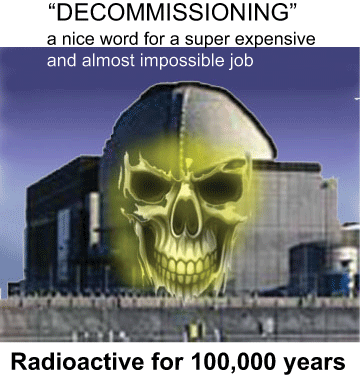
Britain prepares for new wave of nuclear decommissioning
Sceptics of the fuel argue the plans demonstrate why no new plants should be built, Ft.com Nathalie Thomas in Edinburgh 23 June, 21, At Dungeness B nuclear power station on a remote stretch of the Kent coast in south-east England, workers are making preparations to carefully remove thousands of radioactive fuel elements from its reactors and transfer them to a purpose-built pond for at least 90 days for cooling. The spent fuel will later be packed into 53-tonne “flasks” fortified with 39cm-thick steel walls before being transported across country by train to Sellafield in Cumbria.
The nuclear facility in north-west England is host to most of the radioactive remnants of Britain’s civil nuclear programme that dates back to the 1950s. These include highly toxic waste that will remain there until a suitable site is found for an underground repository where it will have to be stored for more than 100,000 years to make it safe.
Preparations for the “defuelling” of Dungeness B started with “immediate effect” on June 7 when its majority owner, French state-controlled utility EDF, announced it would close the plant seven years early. It had not been operational since September 2018 as engineers tried to fix problems, including corrosion and cracks in its pipework.
The 1.1GW plant is the first of seven built in the UK between the mid-1960s and late-1980s using advanced gas-cooled reactor (AGR) technology to come out of service. It will kickstart a decommissioning process spanning generations, which sceptics argue strikes at the heart of why no new nuclear plants should be built.
The remaining six AGR plants are due to be retired by the end of this decade at the latest, leaving the more modern Sizewell B plant in Suffolk, which uses pressurised water reactor technology, as the only one operational out of the existing fleet
. “[Decommissioning of] many of these facilities will continue well into the 22nd century,” said Paul Dorfman of University College London’s Energy Institute. “The problem with decommissioning is it always turns out to be more complex than one had imagined.”
Critics also point out that the decommissioning of Britain’s 17 earliest atomic power sites has been extremely costly. The latest clean-up bill for those sites, which include a generation of nuclear plants known as the “Magnox” stations, is estimated at more than £130bn over 120 years. ……
Climate activists, such as E3G and Greenpeace, have long argued that the debate over building costly, complex new nuclear plants detracts from investment in cheaper, climate-friendly technologies……….
The exact arrangements for the decommissioning of Dungeness and the six other AGR plants are subject to negotiation between EDF and the government. It will be financed via a £14.5bn fund set up in 2005.
The French utility is expected to take at least three years to remove all fuel from each site and potentially carry out some early demolition work before handing them over to the UK state-owned Nuclear Decommissioning Authority. EDF declined to comment. The next stage will probably involve the treatment and removal of waste and demolition of facilities that are no longer needed. Some facilities will be left untouched for 85 years — to allow residual radioactive materials to decay — before demolition. …….. https://www.ft.com/content/0381e567-d088-4802-a2e4-e125c8099605
Sabotage attempt on Iran nuclear reactor
‘Sabotage attack’ on Iranian nuclear building foiled
The attack was halted ‘before causing any damage to the building’, news agencies said. A sabotage attempt against a building belonging to the Iranian Atomic Energy Organization has been foiled, Iranian media reported.
An Iranian news site close to security services said authorities thwarted a “sabotage attack” on the country’s civilian nuclear programme on Wednesday, without providing further information…….
Iran’s English-Language Press TV reported “the hostile attempt occurred on early Wednesday, but did not result in any casualties or damage owing to tight security precautions adopted following similar acts of sabotage against Iranian nuclear sites and scientists”.
Alarm at Japan’s plan to restart Kansai’s ageing No.3 nuclear reactor
As Japan reboots ageing Mihama nuclear reactor, experts express concern, Reuters, Aaron Sheldrick 23 June 21
- Reactor restarted after sitting idle for 10 years
- First of four old reactors to get exceptions
- For an interactive graphic on the status of Japan’s nuclear reactors, click https://tmsnrt.rs/2OTpNfA
– The head of a major inquiry into Japan’s nuclear disaster and a former senior Cabinet adviser have sounded alarms over plans this week to restart a 44-year old reactor, saying the industry and government have not taken on board the lessons from Fukushima.
Kansai Electric Power (9503.T), which serves Osaka and its industrial environs – an area with roughly the same economic output as Mexico – said it restarted the No. 3 reactor at its Mihama station in western Japan earlier on Wednesday.
The reactor is the oldest to be restarted since the 2011 Fukushima disaster and needed special approval to have its lifetime extended beyond the standard 40-year limit. Most reactors in Japan remain shut after the accident highlighted failings in regulation and oversight.
Tatsujiro Suzuki, a former deputy chairman of the Cabinet Office’s Atomic Energy Commission, told Reuters he has misgivings over how approval for the restart was obtained.
- He said he was concerned about a lack of transparency and the use of subsidies to sweeten local opinion to get the necessary restart approval…….
- It looks like the industry and the government have not learned the lessons of Fukushima,” said Suzuki, who is on the advisory board of a parliamentary committee on nuclear safety.
Bureaucrats from the Ministry of Economy, Trade and Industry (METI), which supports nuclear energy to power Japan’s industrial economy, went to Fukui prefecture 110 times over a two-year period until early this year.
The visits to Fukui by officials including the head of the powerful natural resources agency were raised at a recent hearing of the parliamentary committee.
A subsidy of 2.5 billion yen ($23 million) was agreed for local communities before the Fukui governor signed off on the restart…….
- Five workers died at Mihama power station in 2004 after a pipe that had not been inspected for nearly a decade burst, releasing high pressure steam and hot water.
- In 2019, Kansai Electric executives admitted to receiving cash and gifts worth 360 million yen from an official from a town hosting one of its other nuclear plants.”They haven’t changed, that’s my impression, despite the scandal involving kickbacks,” Suzuki said……..
A silo mentality among executives and a collectivist mindset among bureaucrats, which puts organisational interests ahead of public duties on safety are still prevalent in Japan, Kurokawa said.
“It’s always important to ask what are the sanctions for bad corporate behaviour. If there are none, and in Japan there are none, then oversight is meaningless,” he said, adding he was concerned about the restart.
Mihama is one of 16 reactors that have received either preliminary or final approval to restart…………https://www.reuters.com/world/asia-pacific/japan-reboots-44-year-old-nuclear-reactor-experts-sound-alarm-2021-06-22/
Duke Energy planning for a fleet of 80 year-old nuclear reactors
Duke Wants to Run Its Nuclear Plants Until They’re 80 Years Old, 22 June 2021,
- Joins Exelon, Dominion, NextEra to run world’s oldest fleet
- Duke has 11 reactors at six sites in North and South Carolina
One of the biggest power companies in the U.S., is planning to run its fleet of 11 nuclear reactors until they’re 80 years old.
The company filed an application with the U.S. Nuclear Regulatory Commission to renew the license for its Oconee power plant for 20 years, Charlotte-based Duke said in statement Monday. The South Carolina facility began producing power in 1973 and the extensions would keep the three reactors in service until 2053 and 2054.
The company plans to submit similar extension requests for its five other nuclear plants in the Carolinas, which all went into service in the 1970s and 1980s. Duke is part of a growing number of U.S. nuclear owners that are planning to keep their reactors in service for eight decades. Exelon Corp., Dominion Energy Inc. and NextEra Inc. have already been granted similar extensions, creating what will eventually be the world’s oldest nuclear fleet……….
New UK energy report – need for investment in wind and solar, no need for new nuclear.
The UK should grow its solar capacity to 210GW by 2050, unlocking a low
cost transition to net zero, a new report has found. Wind and solar will
need increased investment to grow to generate 98% of the electricity mix,
up from 27% in 2020, according to the report, published by energy provider
Good Energy with modelling from the Energy Systems Catapult (ESC).
Solar Power Portal 22nd June 2021
This will require over 200GW of solar, as well as 150GW of wind and 100GW of
lithium-ion battery energy storage, the Renewable Nation: Pathways to a
Zero Carbon Britain report has said. A substantial amount of that growth is
possible by the end of this decade, with 100GW of solar and 70GW of wind
needed to produce 84% of the country’s electricity by 2030.
The report – which is the first to use the ESC’s Storage and Flexibility model,
which itself combines long-term investment planning with hour-by-hour grid
balancing – found that no new nuclear beyond that under construction
currently was needed for net zero.
Yet another incident of stolen nuclear materials in India
In yet another incident of the capture of nuclear-related materials from
unauthorized persons in India has made headlines in the Indian media but
largely ignored in the international media.
On 4th June 2021, as reported in the Indian media, the authorities arrested seven people possessing
approximately 6.4 kilograms of Uranium in the Eastern State of Jharkhand.
This is the second time in less than a month where Indian authorities have
captured such a gang in an attempt to sell uranium illegally.
An incident of the same nature was reported just a few days ago in May 2021 where
authorities apprehended unauthorized persons, who were trying to sell
nearly 7 kilograms of natural uranium on the black market. Notably, Indian
authorities themselves believe that these events might be linked to a
“national gang involved in illegal uranium trade”.
Modern Diplomacy 12th June 2021
Incidents of Uranium Theft in India: Depleting Nuclear Safety and International Silence
China’s Taishan nuclear reactor has 5 damaged fuel rods
There are likely five damaged fuel rods in the 1,750 MW Taishan-1 EPR in
China, which have led to an increase in radiation levels within the reactor
coolant, the Chinese Ministry of Ecology and Environment said in a
statement June 16, providing the first official explanation for the nuclear
reactor’s recent technical problems.
French power company EDF, a minority
owner of the Taishan plant, said in a statement June 14 that Taishan-1 had
seen an increase in the concentration of radioactive gases in its primary
circuit. The environment ministry added that “at present, the radiation
activity of [Taishan-1’s] reactor circuit coolant … is still within the
scope of allowing stable operation as stipulated in the technical
specifications for the operation of the nuclear power plant.”
The meeting
of technical specifications, which define the licensed operating parameters
or a reactor, and operational safety of the Taishan plant are guaranteed,
the ministry added. It also said the increase in radioactivity in
Taishan-1’s primary circuit is related to fuel-rod damage.
S&P 16th June 2021
Justice demanded for the ‘Atomic Marines’ of America’s botched Bikini Atoll nuclear test
The ‘Atomic Marines’ of America’s botched Bikini Atoll nuclear test demand justice. After being sworn to secrecy about their Cold War mission, the men are now finally speaking out ahead of ‘Burning Sky’, a documentary which premieres on PBS America on Wednesday 23 June. As part of a series of top-secret nuclear tests codenamed Operation Castle, on 1 March 1954 the US military carried out a trial known as “Castle Bravo”, detonating a 15-megaton hydrogen bomb on Bikini Atoll in the Marshall Islands. Delivered to the West Pacific on the USS Curtiss by marines who had taken an oath of secrecy, the device was 1,000 times more powerful than the bomb dropped on Hiroshima in 1945 – and, due to an error in calculation, two-and-a-half times more destructive than expected. iNews 23rd June 2021 https://inews.co.uk/news/long-reads/the-atomic-marines-of-americas-botched-bikini-atoll-nuclear-test-demand-justice-1066321 |
The dangersof transporting nuclear weapons and other nuclear materials
Nuclear Transports**
The UK & Ireland Nuclear Free Local Authorities (NFLA) today publishes a
detailed analysis considering the wide range and large number of transports
of nuclear materials around the UK and Europe, and from the UK to other
countries.
The report highlights nuclear transports are continuing to
increase and remain a concern from the perspective of an accident or
malicious incident taking place with one of them. Nuclear transport is of
particular concern to the NFLA as radioactive materials are at their most
vulnerable when they are being transported off site, as they are away from
dedicated safe storage facilities and are in an ‘uncontrolled’
environment where they face a greater level of risk.
The report considersin detail the following transports: The safety of nuclear weapon road
convoys – it considers recent reports by the Nuclear Information Service,
ICAN UK and Nukewatch Scotland. The future transport by road of vehicles
containing redundant submarine reactors from Rosyth and Devonport to
Capenhurst by road. The report highlights the sheer number of road
transports involving nuclear materials as well.
The transport by rail of spent nuclear fuel from existing and decommissioned reactors, with
particular focus on the rail transports of radioactive materials from
Dounreay to Sellafield. It also highlights learning points from recent
conventional rail transport accidents. The transport of radioactive
materials by sea around the British Isles and globally to fulfil
international contracts. The transport of highly enriched uranium materials
stored at Dounreay by air to a site in South Carolina, United States.
Thereis also reference to a historical list of accidents involving planes with
nuclear weapons.
NFLA 22nd June 2021
UK government’s fantasy of a nuclear fusion energy plant at Bradwell
**Fusion** The announcement by the Government that Bradwell is on the long list of
fifteen possible sites for the UK’s prototype fusion energy plant has
come out of the blue. Chair of the Blackwater Against New Nuclear Group
(BANNG) Professor Andy Blowers, described the idea to develop fusion
(essentially the process that goes on inside the sun and in hydrogen bombs)
to produce electricity as ‘yet another nuclear fantasy, like the
philosopher’s stone full of golden promise but impossible to realise.
Bradwell is not a soft touch for such speculative and dangerous
experimentation’.The Government has committed £400M to the fusion
programme and the UK Atomic Energy Authority (UKAEA) put out a call for
sites to host STEP (the Spherical Tokamak for Energy Production), the
prototype fusion plant. The fifteen sites include the usual suspects –
Sellafield, North Wales, Dounreay – together with other nuclear sites,
former coal-fired power station sites and, at the end of the list, Bradwell
nominated by Belport Ltd., an entrepreneurial property and asset management
company.
BANNG 22nd June 2021
30,177 Global War on Terror veterans have died by suicide, compared to 7,057 who have died while deployed — limitless life
Sort of dispels that myth that war is natural. Leah Bolger President, World BEYOND War Past President, Veterans For Peace leah@worldbeyondwar.org worldbeyondwar.org On Tue, Jun 22, 2021 at 5:45 PM Gar Smith wrote: Thanks, Don This shocking statistics in this article, prompted a thought: Has anyone proposed honoring all the “unknown soldiers” who […]
30,177 Global War on Terror veterans have died by suicide, compared to 7,057 who have died while deployed — limitless life
Hersey helped Hiroshima survivors tell and preserve their stories — IPPNW peace and health blog

Hiroshima author John Hersey [This book review was originally published in IPPNW’s designated journal, Medicine, Conflict and Survival.] In 1946, John Hersey wrote a magazine article that changed the world. On the 75th anniversary of the events he described so vividly in Hiroshima, journalist Lesley M. M. Blume has given us Fallout, a timely reminder that Hersey’s courageous […]
Hersey helped Hiroshima survivors tell and preserve their stories — IPPNW peace and health blog
1 This Month
Tell Congress: Prevent Nuclear Catastrophe in Iran

Tell Congress: Prevent Nuclear Catastrophe in Iran

Read the Public Inquiry Report, the Commissioners’ report, Surrendering Australia: The AUKUS Deception is available to download for free at aukuspublicinquiry.com. Or just watch the replay of the National Press Club Luncheon.


Shut down the radiation-damaged Heysham nuclear reactors now
To see nuclear-related stories in greater depth and intensity – go to https://nuclearinformation.wordpress.com

Say No to NASA’s Reckless Nuclear Reactor on the Moon
Say No to NASA’s Reckless Nuclear Reactor on the Moon
-
Archives
- November 2026 (246)
- October 2026 (302)
- September 2026 (339)
- August 2026 (330)
- July 2026 (355)
- June 2026 (287)
- May 2026 (306)
- April 2026 (356)
- March 2026 (251)
- February 2026 (267)
- January 2026 (308)
- December 2025 (358)
-
Categories
- 1
- 1 NUCLEAR ISSUES
- business and costs
- climate change
- culture and arts
- ENERGY
- environment
- health
- history
- indigenous issues
- Legal
- marketing of nuclear
- media
- opposition to nuclear
- PERSONAL STORIES
- politics
- politics international
- Religion and ethics
- safety
- secrets,lies and civil liberties
- spinbuster
- technology
- Uranium
- wastes
- weapons and war
- Women
- 2 WORLD
- ACTION
- AFRICA
- Atrocities
- AUSTRALIA
- Christina's notes
- Christina's themes
- culture and arts
- Events
- Fuk 2022
- Fuk 2023
- Fukushima 2017
- Fukushima 2018
- fukushima 2019
- Fukushima 2020
- Fukushima 2021
- general
- global warming
- Humour (God we need it)
- Nuclear
- RARE EARTHS
- Reference
- resources – print
- Resources -audiovicual
- Weekly Newsletter
- World
- World Nuclear
- YouTube
-
RSS
Entries RSS
Comments RSS

