Illinois nuclear stations kept alive as Senate approves Bill to subsidise Exelon

Illinois Senate approves bill designed to keep three nuclear power plants running Chicago Sun Times, 14 Sept 21,
The Illinois Senate carried a massive piece of energy legislation over the finish line Monday, sending the bill to Gov. J.B. Pritzker’s desk just in time to avoid the shuttering of an Exelon nuclear plant.
In a 37 to 17 vote — with three voting present — state senators passed the legislation, which Pritzker said he plans to sign “as soon as possible.”
A spokesman for Exelon said in a statement the energy company plans to refuel its Byron and Dresden nuclear plants “as a result of the action taken by the Illinois legislature to enact a comprehensive energy bill.”
The Byron plant was slated for defueling and closure beginning Monday. The Dresden plant was slated to be taken off line in November………. https://chicago.suntimes.com/2021/9/13/22672372/illinois-senate-advances-energy-legislation-pritzker-exelon-byron
The Cold War near disasters at RAF Lakenheath could have left Suffolk as a nuclear wasteland

The Cold War near disasters at RAF Lakenheath could have left Suffolk as a nuclear wasteland https://www.suffolknews.co.uk/mildenhall/go-anywhere-just-get-away-from-here-how-suffolk-almost-9215663/ By Dan Barker – dan.barker@iliffepublishing.co.uk , 13 September 2021 During the height of the Cold War nuclear bombs were dotted across the country, ready to wipe the USSR off the face of the map at a moment’s notice: but, on two separate occasions, Suffolk almost became victim to the very weapons which were meant to protect it.
July 27, 1956 was like any other summer’s day. Across the country attention was glued to the Ashes fourth test at Old Trafford, and four American airmen were in a B-47 bomber, on a routine training mission from RAF Lakenheath. But, as they were practising touch-and-go landings, their bomber careered out of control and went off the runway.
it ploughed into an igloo containing three Mark-6 nuclear weapons, tearing the building apart.
The plane then
exploded, killing all four men on board, and showered the world-ending weapons with burning aviation fuel.
Most of A/C [Aircraft] wreckage pivoted on igloo and came to rest with A/C nose just beyond igloo bank which kept main fuel fire outside smashed igloo. “Preliminary exam by bomb disposal officers says a miracle that one Mark Six with exposed detonators sheared didn’t go. Firefighters extinguished fire around Mark Sixes fast.” – Telegram from RAF Lakenheath to Washington DC
Fortunately the atomic power of the bomb was missing that day, with the cores un-installed in all three for storage, but the explosives needed to trigger the deadly nuclear reaction were still in place.
With 8,000 pounds of high explosives combined with depleted uranium-238, they were a nuclear ticking time bomb as firefighters fought to put out the blaze.
Had they exploded the radioactive uranium would have been scattered over a wide area, and, depending on the wind, tens of thousands of people would have been at risk from the toxic dust across Suffolk.
Knowing the enormity of the situation base fire chief Master Sgt L. H. Dunn ordered his crew to ignore the burning wreckage of the bomber, and the airman inside, and douse the flames engulfing the nuclear storage building.
At the time it had been shrouded in secrecy, but decades later one senior US officer made it very clear how lucky Suffolk was to have narrowly missed out on a nuclear disaster. “It is possible that part of Eastern England would have become a desert,” the then former officer told Omaha World Herald in Nebraska, who revealed the potentially catastrophic incident in November 1979.
Another said that “disaster was averted by tremendous heroism, good fortune and the will of God”.
A top secret telegram sent to Washington DC from the base, which has since been revealed, told of the near miss. “Most of A/C [Aircraft] wreckage pivoted on igloo and came to rest with A/C nose just beyond igloo bank which kept main fuel fire outside smashed igloo.
Suffolk was lucky this time, but the incident caused great alarm in the British government, and it was decided it would try and block US authorities from ordering base evacuations because of the concern of causing mass panic in the country.
But what would happen if word got out that its most important ally had, almost, accidentally, made a huge part of the United Kingdom a nuclear wasteland?
Simple: Its policy for decades, if the press ever caught wind of the near miss, was to just deny it. After the news was broken in the American press in 1979, only then was it acknowledged something happened.
On November 5 that year the US Air Force and the Ministry of Defence would only admit the B-47 did crash.
In fact it took until 1996, some four decades after the near disaster, for the British state to accept the true scale of the accident in public.
But that near miss wasn’t the only one.
For on January 16, 1961, an F-100 Super Sabre, loaded with a Mark 28 hydrogen bomb caught on fire after the pilot jettisoned his fuel tanks when he switched his engines on.
As they hit the concrete runway the fuel ignited and engulfed the nuclear weapon – a 70 kilotons – and left it “scorched and blistered”.
Suffolk was saved again by the brave work of base firefighters who brought the blaze under control before the bomb’s high explosive detonated or its arming components activated.
T
errifyingly it was later discovered by American engineers that a flaw in the wiring of Mark 28 hydrogen bombs could allow prolonged heat to circumvent the safety mechanisms and trigger a nuclear explosion.
Had it gone, thousands of people would be dead within seconds, and thousands more would have been injured. As with the first incident, as well as the immediate blast, radioactive debris could have fallen in towns as far away as Ipswich and Lowestoft, given the right wind direction, spreading the toxic dust across Suffolk.
Since Clement Attlee ordered the scientists to investigate the creation of a nuclear bomb in August 1945, the British state has known that being a nuclear power comes with risk as well as reward.
It also knew it paid to be part of a nuclear alliance,
NATO, and with it came American nuclear bombs and the risk they brought.
Beyond the maths of working out how large the explosion would have been, it is impossible to know the true implications.
RAF Lakenheath was listed as a probable target for Soviet attack according to now released Cold War era documents, and intelligence agencies and war planners expected two 500 kiloton missiles to hit the site if the West was under attack.
Disaster creates uncertainty. Nobody would have known it was an accident within the minutes and hours after a blast, they would have just been dragged into a nuclear bunker and told of a large explosion at an airbase in Suffolk.
Where would that have left a British prime minister, an American president, and the rest of NATO, thinking they have come under attack?
In July 1956, and again in January 1961, those firefighters didn’t just save Suffolk … they might have saved the world.
Responses to Candidate Questionnaire: Radioactive Waste in the Ottawa Valley — Concerned Citizens of Renfrew County and Area

September 13, 2021 We asked federal candidates from all parties in 13 ridings in West Quebec, Eastern Ontario and Ottawa the following questions: Will you oppose the current plans for a radioactive waste disposal facility at Chalk River and reactor entombment at Rolphton, Ont.? Will you ensure that decisions on radioactive waste disposal in the […]
Responses to Candidate Questionnaire: Radioactive Waste in the Ottawa Valley — Concerned Citizens of Renfrew County and Area
Earthquakes Stopped Fracking – So Why the Monstrous Silence On “Likely” Induced Seismicity Five Miles From Sellafield? Exactly Who is Protecting Who? — RADIATION FREE LAKELAND

Originally posted on Keep Cumbrian Coal in the Hole: The following letter has been sent to Cumbria County Council and the Planning Inquiry. Our trembling earth was the reason fracking was halted – the siesmic impacts from the Cumbrian Coal Mine are set to be far worse than that from fracking and yet there is…
Earthquakes Stopped Fracking – So Why the Monstrous Silence On “Likely” Induced Seismicity Five Miles From Sellafield? Exactly Who is Protecting Who? — RADIATION FREE LAKELAND
Illinois approves $700 million in subsidies to Exelon, prevents nuclear plant closures
By Timothy Gardner Sept 13 (Reuters) – The Illinois Senate on Monday saved two Exelon Corp nuclear power plants from closure by passing a bill that will provide $700 million in subsidies to the company over five years for generating virtually carbon-free power…… (subscribers only) https://www.reuters.com/world/us/illinois-senate-close-providing-lifeline-3-nuclear-power-plants-2021-09-13/
Nuclear ballistic missile submarine meltdown, 1961
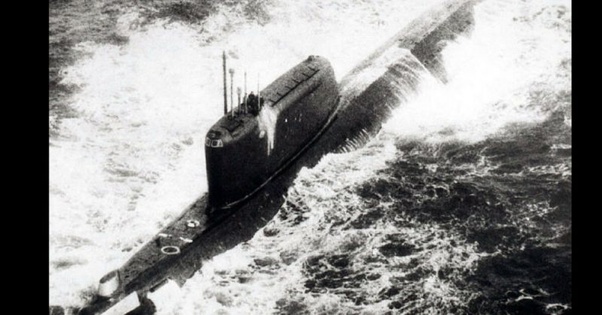
August 24, https://www.quora.com/Has a nuclear submarine ever had a meltdown? Laurence Schmidt, Worked at Air Liquide America (1975–2010,
In the early Cold War Era, many Russian nuclear submarines had catastrophic engineering plant failures. These failures were caused by the soviet’s rush to equal the USN in its nuclear submarine ballistic missile program; they were poorly design and constructed, lack safety system redundancy and had haphazardly trained crews. But the crews of these boats were heroic in risking their lives to save their boats in stark life and death emergencies at sea.
One example is the case of the K-19, the first Russian nuclear powered ballistic missile submarine, nicknamed the “Hiroshima” boat, because of her numerous incidences.
On July 4, 1961, while at sea, one of its two nuclear reactors SCRAMMED. The primary cooling system had failed, flooding the reactor spare with radioactive water, and there was no backup system to cool the reactor core. As the reactor rods overheated, the engineering staff try a desperate plan to improvise a cooling system; to tie into the sub’s drinking water system. But it would require several men entering the highly radioactive reactor compartment to weld new piping to pumps and valves. The first jury-rigged attempt failed with 8 crewmen being horribly burnt by the high temperatures and exposed to lethal doses of radiation. They all soon died. After other attempts, the jury-rigged system finally worked, but other crew members too close to the reactor compartment would also soon die. The crew was evacuated to a nearby submarine, and the K-19 was towed back to base for repair. In total, 22 of the crew of 139 died of radiation sickness.
A section of the radiation contaminated hull was replaced, and a new power reactor unit was installed. The two original reactors, including their fuel rods, were dumped in the Kara Sea in 1965. A favorite dumping ground for Russian navy nuclear waste, including damaged nuclear reactors to whole ships.
Did the K-19 reactor meltdown? I would say yes.
China still way behind USA in nuclear weaponry: time for diplomacy and negotiations on arms control
China’s nuclear build-up: The great distraction, The Hill, BY ROSE GOTTEMOELLER, — 09/13/21 President Biden is reviewing America’s nuclear posture. By January, we should know what he thinks about U.S. nuclear weapons, what policies should govern them and how many we need. Congress is watching closely, and the Senate and House of Representatives are sure to debate the results; they always do.
But this year will be different. A new player has entered the field — China.
China is modernizing its nuclear forces. The recent discovery of three intercontinental ballistic missile (ICBM) silo fields in remote regions west and north of Beijing point to a big build-up of weapons and a different strategy for their use. Since acquiring nuclear weapons from the Soviets, the Chinese have taken the stance that they would not build up a large and highly alert force but instead would be ready to retaliate. This “second strike deterrence posture” has served them well, but now the Chinese seem to have decided it is not enough.
Which is why it is urgent that the Biden administration (and the Kremlin) get them to the table to ask them. Chinese nuclear force posture and strategy should be an equal concern in Washington and Moscow.
We can ask the Chinese separately, or together, but ask them we should. All three countries might even agree to take some early steps, such as exchanging deployment plans and information about nuclear doctrine. Such confidence-building measures would build mutual predictability and may stave off a nuclear arms race.
Most importantly, we must not panic. Even if the Chinese deploy intercontinental ballistic missiles in each of their new silos, the U.S. will still have a large and capable nuclear force structure and many more nuclear warheads. Some authorities have predicted that the Chinese may be able to quadruple their warhead numbers in coming years. If one goes by the Stockholm Peace Research estimate of 350 Chinese warheads, then China would end up with 1,400 total warheads. That compares with over 4,000 warheads available for deployment in both the United States and Russia. We need to keep a sharp eye on what they are doing but not rush into making rash changes in our own nuclear forces. ………………..
Most importantly, we must not panic. Even if the Chinese deploy intercontinental ballistic missiles in each of their new silos, the U.S. will still have a large and capable nuclear force structure and many more nuclear warheads. Some authorities have predicted that the Chinese may be able to quadruple their warhead numbers in coming years. If one goes by the Stockholm Peace Research estimate of 350 Chinese warheads, then China would end up with 1,400 total warheads. That compares with over 4,000 warheads available for deployment in both the United States and Russia. We need to keep a sharp eye on what they are doing but not rush into making rash changes in our own nuclear forces. https://thehill.com/opinion/international/571973-chinas-nuclear-build-up-the-great-distraction
Push for nuclear power in Pueblo unlikely to succeed: renewables win favour.
Pueblo’s Comanche Coal Plant Is Closing Earlier Than Expected. Is Its Future With Nuclear, Or Renewables? CPR News, By Miguel Otárola, September 13, 2021 ”………………. Faced with a shortened deadline, Pueblo’s leaders are plotting what the city will look like when it loses the largest source of greenhouse gas emissions in Colorado — and a significant source of local tax revenue.
County commissioners are excited about the potential of generating nuclear energy in the community. Other leaders, including Pueblo Mayor Nick Gradisar, are banking on other ways to power the local economy.
“There’s no reason why Pueblo can’t be the renewable energy capital of the world,” Gradisar said.
……… Researchers say Pueblo is already moving in this direction, much of that due to Xcel’s expiration dates for Comanche.
A 2019 study by the Colorado School of Mines suggested the city’s shift to solar and wind could lower electricity costs and bring more private investment and jobs to Pueblo.
One of those projects is currently underway. Workers are installing hundreds of rows of solar panels on a wide expanse of land just south of the Comanche plant.
There have been previous attempts to bring nuclear to Pueblo, but safety was and still is a concern for many…….. Don Banner, a local attorney in 2011 had come to the county with plans to build a nuclear power plant on the outskirts of town. … Banner said his [nuclear] proposal attracted resistance from local residents and out-of-state protestors. The county board voted against the project a month after a nuclear plant was destroyed in an earthquake and tsunami in Fukushima, Japan.
There are other roadblocks — namely, a lack of political support and the cost.
Other Pueblo leaders are cautious of nuclear power.
Gradisar said he is worried the plant wouldn’t provide any electricity to Pueblo, similar to the current arrangement with Xcel at Comanche.
State Rep. Daneya Esgar, who represents the area, called it “an idea of a few” and hoped it wouldn’t gain traction……
Nuclear energy faces another practical hurdle: The cost. Nuclear plants cost billions of dollars to build, with costs rising as safety standards have tightened.
Banner, now 76, said the only way to make nuclear energy a reality in Pueblo is strong political support. It didn’t exist when he pitched his plan 10 years ago, and he questioned whether it exists now…. https://www.cpr.org/2021/09/13/pueblo-comanche-coal-plant-closing-early-nuclear-renewable-energy/
NRC issues license to store ‘spent nuclear fuel’ in Andrews
NRC issues license to store ‘spent nuclear fuel’ in Andrews
Midland Reporter-Telegram Sep. 13, 2021 The Nuclear Regulatory Commission reported Monday that it has issued a license to Interim Storage Partners LLC to construct and operate a consolidated interim storage facility for spent nuclear fuel in Andrews.
The license authorizes the company to receive, possess, transfer and store up to 5,000 metric tons of spent fuel and 231.3 metric tons of Greater-Than-Class C low-level radioactive waste for 40 years, according to a NRC release. The company has said it plans to expand the facility in seven additional phases, up to a total capacity of 40,000 metric tons of fuel. Each expansion would require a license amendment with additional NRC safety and environmental reviews.
nterim Storage Partners is a joint venture of Waste Control Specialists LLC and Orano USA. ISP intends to construct the storage facility on property adjacent to the WCS low-level radioactive waste disposal site already operating under a Texas license. Information about the license application and the NRC staff’s reviews is available on the NRC website, according to the news release. The licensing documents will be available on this page as well.
The NRC’s announcement Monday came days after Texas Gov. Greg Abbott signed legislation to ban high-level nuclear waste from the state of Texas. Odessa Republican Brooks Landgraf was the author of House Bill 7, which was filed in response to an effort to bring the nation’s high-level radioactive waste to a low-level radioactive material disposal facility in Andrews County.
Landgraf, in a statement, offered the following about the NRC’s issuing of the license:
“The Biden administration, through the NRC, would cause a violation of Texas law if their license results in the storage or disposal of spent nuclear fuel or any other high-level radioactive waste. I expect that the State of Texas will deploy our available resources to enforce our laws. Prior to the passage of HB 7, the State of Texas had no leg to stand on if it became necessary to fight back against the Biden administration. HB 7 is our weapon against high-level waste.”
The spent fuel and waste must be stored in canisters and cask systems, the NRC stated. The canisters and cask systems must meet NRC standards for protection against leakage, radiation dose rates, and criticality, under normal and accident conditions. The canisters are required to be sealed when they arrive at the facility and remain sealed during onsite handling and storage activities….
This is the second license issued by the NRC for a consolidated storage facility for spent nuclear fuel, according to the NRC. The first, Private Fuel Storage, was issued in 2006, but the facility was never constructed. The agency is currently reviewing an application from Holtec International for a similar facility proposed for Lea County, New Mexico. A decision on that application is currently expected in January 2022 https://www.mrt.com/news/local/article/NRC-issues-license-to-store-spent-nuclear-16455955.php
N.Korea tests first ‘strategic’ cruise missile with possible nuclear capability
N.Korea tests first ‘strategic’ cruise missile with possible nuclear capability https://www.reuters.com/world/asia-pacific/nkorea-test-fires-long-range-cruise-missile-kcna-2021-09-12/ By Hyonhee Shin and Josh Smith
- Tests involved new, long-range cruise missiles – KCNA
- New missiles represent serious capability for N.Korea – analysts
- U.S. military: Launches highlight threat to N.Korea’s neighbours
- Tests came before meeting by U.S., Japan, S.Korea to discuss N.Korea
- SEOUL, Sept 13 (Reuters) – North Korea carried out successful tests of a new long-range cruise missile over the weekend, state media said on Monday, seen by analysts as possibly the country’s first such weapon with a nuclear capability.Reporting by Hyonhee Shin and Josh Smith; Additional reporting by Idrees Ali in Washington; Editing by Daniel Wallis, Peter Cooney and Lincoln Feast.
September 13 Energy News — geoharvey

Opinion: ¶ “Australia Is Shaping Up To Be The Villain Of COP26 Climate Talks” • If Australia’s allies were worried that the country might cause them problems at upcoming climate talks in Glasgow, the events of the past week should leave little doubt in their minds. Australia made clear that it plans to pursue a […]
September 13 Energy News — geoharvey
This week’s nuclear news

NUCLEAR. While the pandemic goes on, not much physically is happening. But on the lobbying scene, it’s at fever pitch. The target is the European Commission. The goal is to get the Commission to declare nuclear power as clean, green and sustainable in the European Taxonomy. And then on to inclusion in the COP 26 Climate Summit in November, so that the nuclear industry can get the money that goes with that acceptance. Even more beneficial- by saving this failing industry, they’ll be able to keep old reactors going for longer, thus avoiding the huge costs of demolishing them, and thus kicking that problem down the road, for our grandchildren to solve.Delay in climate change action helps, too, as nuclear power is depicted as ”transitional” from fossil fuels.
Coronavirus: What’s happening in Canada and around the world .
Climate change: Fossil fuels must stay underground, scientists say
A bit of good news – New data shows vaccines are cutting the risk of serious COVID-19.
We need global action on climate, just like global action on pandemic – Jane Goodall. Jane Goodall still has hope for humanity. Here’s why.
Vested interests — controlling the news about nuclear safety.
UN General Assembly President calls for halt to nuclear tests.
BRICS countries (Brazil, Russia, India, China, South Africa) reaffirmed commitment to preventing an arms race in space.
Nuclear ”ethics” – fatally ill man kept alive against his will, in the cause of nuclear research. Irradiated man kept alive .
British Scientist discovers the cause of cancer in the Hiroshima Black Rain survivors -2021.
Thorium nuclear fuel has risks.
‘‘Fossil Free Media’‘ aims to redress the balance of well-funded press that opposes action on climate change.
EUROPE.
Nuclear sharing must end in Europe .
The nuclear lobby gears up to take ”green” nuclear energy spin to the European Commission and on to COP26. Expert response to the pro nuclear report by the Joint Research Centre.:
Extracts from Expert response to pro nuclear JRC Report.
- Small nuclear reactors, uranium mining, nuclear fuel chain, reprocessing, dismantling reactors.
- Radiation, nuclear wastes, transportation, uncertainties.
- Future generations, participative decision-making, proliferation, uranium mining.
USA.
- Pentagon taps industry for nuclear-powered propulsion for its satellites.
- 29 Democrats demand Biden cut exorbitant spending on new nuclear weapons. Dispute in U.S, Congress over costly nuclear weapons modernisation. How America’s war machine is bankrupting us, both financially and morally.
- San Onofre’s nuclear waste buried under the beach – the best example of the failure of the nuclear industry and its poor outlook for the future. Texas Legislature passes Bill to prevent import and storage of high level nuclear waste. Texas bans storage of highly radioactive waste, but a West Texas facility may get a license from the feds anyway.
- Prison sentence for corrupt nuclear executive.
- Exelon Corp hanging on in hope that Illinois government will bail out 2 nuclear power stations.
- Iodide tablets offered as precaution to residents living near nuclear plants.
- Reflecting on 9/11: How the attack upped safety at nuclear power plants throughout Carolinas.
- USA Bill to protect journalists – EXCEPT FOR JULIAN ASSANGE
RUSSIA. Russia aims to dominate the Arctic, with nuclear ice-breakers.
IRAN. Iran blocking UN atomic agency access to nuclear-related sites, IAEA says
FRANCE. Protests as France sends latest shipment of used nuclear fuel to Japan .
UK. Nuclear weapons out of Scotland within three years of independence, SNP agrees, The real-life anti-nuclear peace camp that is the subject of BBC drama ”Vigil”. Earthquake risks for proposed coal mine in Cumbria, all too close to Sellafield nuclear site. Planned UK-Australia trade deal – a dangerous precedent for climate change policy. Merthyr Tydfil County Borough Council supports Treaty on Prohibition of Nuclear Weapons.
JAPAN. Japan’s Liberal Democratic Party hopes that presidential contender Taro Kono will drop his anti nuclear stance. Energy Markets Bet Against Nuclear As Election Nears In Japan. IAEA Seeks Japan Transparency in Release of Fukushima Water. Media Coverage of Fukushima, Ten Years Later. Pharyngeal cancer recognized as work-related injury for two convergence workers after Fukushima Daiichi nuclear accident.
NEW ZEALAND. Mururoa nuclear test veterans fight for their children and grandchildren.
SOUTH KOREA. U.S., Japan, S.Korea to meet over N.Korea nuclear standoff.
SPAIN. Radioactive water leak in Valencia.
RUSSIA. Russia aims to dominate the Arctic, with nuclear ice-breakers.
IRAN. Iran blocking UN atomic agency access to nuclear-related sites, IAEA says.
FRANCE. Protests as France sends latest shipment of used nuclear fuel to Japan .
NEW ZEALAND. Mururoa nuclear test veterans fight for their children and grandchildren.
SOUTH KOREA. U.S., Japan, S.Korea to meet over N.Korea nuclear standoff.
SPAIN. Radioactive water leak in Valencia.
AUSTRALIA. News Corpse’s climate change shame. News Corpse’s new snide approach on climate change – to help Morrison win next election?
Vested interests — controlling the news about nuclear safety

Who controls the truth about a nuclear disaster?
The end of the monopoly of these experts would allow a proper debate on the risks of nuclear energy. At a time when many voices are speaking out in favor of the development of atomic energy as the lesser evil in the face of climate change, such a debate is urgent.
How monolithic institutions decide what is safe for the rest of us, Beyond Nuclear, By Christine Fassert and Tatiana Kasperski, 12 Sept 21,
In December 2020, twenty years after the final closure of the Chernobyl nuclear power plant, the Ministry of Culture of Ukraine announced its intention to prepare an application to include certain objects in the exclusion zone around Chernobyl in the UNESCO World Heritage List….
The Chernobyl site would symbolize the long history of accidents that have marked the atomic age, from Kychtym and Windscale (1957), to Three Mile Island (1979) and Fukushima (2011), whose tenth anniversary we commemorated this year.
Moreover, the Chernobyl accident constitutes a particular moment in this history, namely the beginning of the institutionalization of the international management of the consequences of nuclear accidents, whose impact became fully apparent at the time of the Fukushima accident.
A small group of organizations
If the origins of accidents are most often explained by factors related to the development of the nuclear industry and its regulatory bodies at the national level, the “management” of their consequences gradually extends beyond national borders
In this respect, Chernobyl established the monopolization of the authoritative knowledge of ionizing radiation by a small group of organizations — the International Atomic Energy Agency (IAEA), the International Commission on Radiological Protection (ICRP) and the United Nations Scientific Committee on the Effects of Atomic Radiation (UNSCEAR).
Through a series of alliances and co-options, these organizations formed a monolithic bloc on the issue of radiological risk.
Relegated to a militant marginality
From that moment on, divergent points of view were de-legitimized and relegated to a form of militant marginality. These included the positions of such individuals as “dissident” scientist Keith Baverstock who directed the radiation protection program at the World Health Organization’s Regional Office for Europe, and those of such organizations as the International Association of Physicians for the Prevention of Nuclear War (IPPNW).
This monopoly translates into an internationalization of accident management that relies on a series of tools designed to establish a “normalization” of the post accident situation through the depoliticization of the management of risks related to radioactive fallout. They enshrine the power of experts close to international nuclear organizations to determine what sacrifices in terms of health and the environment are acceptable.
As physicists Bella and Roger Belbéoch point out:
“Far from calling into question the power they have secured for themselves in society, the nuclear disaster allows them to constitute themselves into a unified international body with even greater powers. It is at the moment when the scientific experts can no longer promise anything other than disaster management that their power inevitably takes hold.”
Fukushima
This monopoly over knowledge and management of an accident was very much present in Japan in 2011, when the Japanese authorities put in place measures, which, by largely referring to international standards, warded off objections: the accident was dealt with by the experts.
However, a shift occurred in this monopoly when a UN rapporteur, Anand Grover, severely criticized Tokyo’s management of the disaster.
At the same time, new conceptual tools proposed by the social sciences, such as the “production of ignorance”, offer a framework for analysis that makes it possible to extend the criticisms beyond the domain of a purely expert debate, opening the way to a re-politicization of the accident and its consequences.
Making nuclear accidents manageable
But, first of all, how can you make a nuclear accident manageable when, as was the case at Chernobyl and Fukushima, it causes very large releases of radioactive particles, spreading around the globe and causing long-term contamination of tens of thousands of square kilometers?
Hundreds of thousands of people have been evacuated or relocated from these territories, and hundreds of thousands of others continue to live in an environment affected by radioactivity.
Zoning, that is, the division of these territories into several “zones” according to the density of contamination and the necessary protective measures, was the first instrument that made it possible, in Japan and in the former Soviet Union, to make the accident manageable……
This zoning mechanism set up by the Japanese government is part of a regulatory framework established by the two major international nuclear institutions, the IAEA and the ICRP. The ICRP sets the dose limit for the public at 1 millisievert (mSv)/year. Since 2007, the ICRP has authorized government authorities to raise this threshold (from 1 to 20 mSv/year) in the case of a nuclear accident.
When the Japanese authorities, like the Soviet authorities in 1986, chose to raise the threshold following the accident, they justified it in terms of the virtual absence of any health risks.
The radiological threshold
The mechanism is based in particular on the choice of a radiological threshold from which the population will be evacuated.
In Japan, government officials consider that the risk of developing cancer from exposure to a dose of 100mSv or less is so low according to “the international (scientific) consensus, (that) it is made undetectable by the carcinogenic effects of other factors.”
Limiting evacuations and compensations
The sociologist and historian of science Sezin Topçu shows how this zoning mechanism, which has become an indispensable element of nuclear accident management, is above all a way of limiting evacuation and compensation for damage caused by an accident, since its costs (economic, political or social) would be prohibitive for the nuclear industry and the State.
This optimization approach is also enshrined at the international level in the recommendations issued by the IAEA and the ICRP.
For example, in the case of Japan, the threshold of 20 mSv/year appears to have been chosen in part to avoid evacuating the Naka Dori region and its major cities: the established zone borders made it possible to exclude such cities in the center of the prefecture, including Fukushima, from evacuation orders…………………………..
Mechanisms of ignorance production
More recently, however, various social scientists have proposed an analysis of the promotion of a reassuring stance on these dangers as part of the mechanisms of ignorance production.
The production of ignorance, which can be both involuntary and intentional, was initially studied for a number of risks, such as tobacco.
Approaching radiological risks in terms of the production of ignorance makes it possible to break with the “exceptionalism” with which the nuclear issue has long been associated, and to consider the dangers of ionizing radiation within the broader field of health risks and its banal issues of power.
Minimizing gravity
The internationalized management of nuclear disasters is in fact based on various mechanisms of ignorance production. For instance, the sociologist of science, Olga Kuchinskaya,- describes the “politics of invisibility” that were adopted after the Chernobyl disaster.
She points out that the public visibility of the effects of ionizing radiation depends on the existence of material infrastructures – such as measuring devices, information systems and equipment — but also institutional infrastructures (for example, following a cohort of people in order to make health effects visible depends on this articulation between material and institutional elements).
This infrastructure is very costly and, in the case of Chernobyl, has not been maintained over time. Moreover, the assessment of the effects of radiation was essentially taken care of by international institutions, while local doctors and researchers, for their part, revealed a completely different and much more alarming picture of the health situation.
Kate Brown describes how various international bodies, primarily the IAEA and WHO, worked to redefine the health effects of Chernobyl, to minimize their severity, and thus actively to produce “ignorance” about the impact of the disaster.
This non-knowledge was in fact a crucial instrument that made the disaster “manageable” and allowed, as Adriana Petryna points out, “the deployment of authoritative knowledge, especially when applied to the management of the exposed population”.
The monopoly of international experts, until when?
By addressing the “exceptional” character of nuclear energy and ionizing radiation, these criticisms, whether they are made within UN bodies or by social science researchers, open the way to questioning the monopoly of international nuclear institutions in assessing radiological risk and framing so-called “post-accident” policies.
A re-politicization of the management of accident consequences that brings the “management” of a nuclear accident into the broader framework of human rights therefore becomes possible.
When the next nuclear accident occurs, it is not a given that citizens will accept the “inevitability” of the power of international experts to decide, on their behalf, what constitutes an acceptable risk.
The end of the monopoly of these experts would allow a proper debate on the risks of nuclear energy. At a time when many voices are speaking out in favor of the development of atomic energy as the lesser evil in the face of climate change, such a debate is urgent.
This article was first published in The Conversation in French on April 26, 2021, as well as on Beyond Nuclear International. English translation provided by the authors.
Christine Fassert is a social anthropologist at Université Paris 1 Panthéon-Sorbonne. Tatiana Kasperski is a research associate– Department of Humanities at Universitat Pompeu Fabra https://beyondnuclearinternational.org/2021/09/12/vested-interests/
Expert response to the pro nuclear report by the Joint Research Centre

Any major expansion of nuclear energy would delay the decommissioning of fossil-fired power plants, as the latter would have to remain in operation during this period and therefore make it hard to achieve the climate change mitigation objective. It is even possible to argue that nuclear energy hinders the use of other alternatives with low CO2 emissions because of its high capital intensity. Otherwise this capital could be used to expand alternative energy sources like sun, wind and water
While nuclear power generation in the electricity generation phase has been associated with relatively low greenhouse gas emissions from a historical perspective, the lions’ share of greenhouse gas emissions in the nuclear fuel cycle is caused by the front-end and back-end processing stages. Based on estimates, the CO2 emissions can be broken down into the construction of nuclear power plants (18%), uranium mining and enrichment (38%), operations (17%), processing and storing nuclear fuel (15%) and decommissioning activities at the power plant (18%) (BMK, 2020, p.6)
Generating huge quantities of dangerous waste is being continued for decades without any effective disposal solution being available. The JRC itself says that the primary and best waste management strategy is not to generate any radioactive waste in the first place. However, this assessment is not consistently applied within the report.
The draft of the delegated legal act is based on the recommendations of the so-called Technical Expert Group (TEG). …..The TEG did not recommend that nuclear energy should be included in the EU taxonomy register at that time and recommended an in-depth study of the DNSH criteria (TEG, 2020b).
It is clear that the JRC barely touched on some environment-related aspects of using nuclear energy or did not consider them in its assessment at all.
.… Questions must also be raised about the ageing process and the brittleness of materials and therefore the long-term behaviour of nuclear power plants beyond the original design period.
This very positive presentation of future prospects for nuclear energy, which is shown in the JRC Report, must be viewed critically………..this presentation by the JRC is suspect from a professional point of view and possibly indicates a lack of adequate independence .
Expert response to the report by the Joint Research Centre entitled “Technical assessment of nuclear energy with respect to the ‛Do No Significant Harm’ criteria in Regulation (EU) 2020/852, the ‛Taxonomy Regulation’” Particularly considering the suitability of criteria for including nuclear energy in EU taxonomy The Federal Office for the Safety of Nuclear Waste Management (BASE) with support from the Federal Office for Radiation Protection (BfS) June 2021
Summary
The Federal Office for the Safety of Nuclear Waste Management (BASE) with support from the Federal Office for Radiation Protection (BfS), acting on behalf of the Federal Ministry for the Environment, Nature Conservation and Nuclear Safety (BMU), has examined the report by the Joint Research Centre (JRC) of the European Union (EU) entitled “Technical assessment of nuclear energy with respect to the ‘Do No Significant Harm’ criteria of Regulation (EU) 2020/852 (‘Taxonomy Regulation’)” to see whether the JRC has used expertise that is complete and comprehensible when determining whether the use of nuclear fission to generate energy can be included in the taxonomy register.
The Taxonomy Regulation defines criteria that determine whether an economic activity (and therefore investments in this activity) can be viewed as ecologically sustainable. The JRC, the EU’s research centre, concludes in its report dated March 2021 that the conditions for including nuclear energy in EU taxonomy are met in terms of the “Do No Significant Harm” criteria (DNSH). Prior to this, the Technical Expert Group (TEG) had not yet recommended the inclusion of nuclear energy in EU taxonomy and advised the EU Commission to review the DNSH criteria more closely.
This expert response finds that the JRC has drawn conclusions that are hard to deduce at numerous points. Subject areas that are very relevant to the environment have also only been presented very briefly or have been ignored. For example, the effects of severe accidents on the environment are not included when assessing whether to include nuclear energy in the taxonomy register – yet they have occurred several times over the last few decades. This raises the question of whether the JRC has selected too narrow a framework of observation. The aspects mentioned and others listed in this expert response suggest that this is true.
This expert response also points out that the JRC mentions topics, but then fails to consider them further or in more detail, although they must be included in any assessment of the sustainability of using nuclear energy. The need to consider them is partly based on the fact that certain effects on the other environmental objectives in the Taxonomy Regulation must be expected if the matter is viewed more closely or at least cannot be excluded. In other cases, this need results from the fact that the Taxonomy Regulation refers to the UN approach in its 2030 Agenda in its understanding of sustainability – and the latter, for example, contains the goals of “considering future generations” and “participative decision-making”. Any sustainability, particularly for future generations, can only be guaranteed if attempts are made at an early stage to achieve acceptance in the population, enable future generations to handle the use of nuclear energy and its legacy or waste appropriately and ensure that information and knowledge are maintained in the long term. Generally speaking, it should be noted that the problem of disposing of radioactive waste has already been postponed by previous generations to today’s and it will ‘remain’ a problem for many future generations. The principle of “no undue burdens for future generations” (pp. 250ff) has therefore already been (irrevocably) infringed, while the DNSH-hurdle “significant[ly] harm” has also been infringed.
Continue readingSmall nuclear reactors, uranium mining, nuclear fuel chain, reprocessing, dismantling reactors – extract from Expert Response to pro nuclear JRC Report
.

………… If SMRs are used, this not least raises questions about proliferation, i.e. the possible spread of nuclear weapons as well as the necessary nuclear technologies or fissionable materials for their production. ………..
By way of summary, it is important to state that many questions are still unresolved with regard to any widespread use of SMRs – and this would be necessary to make a significant contribution to climate protection – and they are not addressed in the JRC Report. These issues are not just technical matters that have not yet been clarified, but primarily questions of safety, proliferation and liability, which require international coordination and regulations.
The volume of waste arising from decommissioning a power plant would therefore be significantly higher than specified in the JRC Report in Part B 2.1, depending on the time required to dismantle it
Measures to reduce the environmental impact The JRC Report is contradictory when it comes to the environmental impact of uranium mining: it certainly mentions the environmental risks of uranium mining (particularly in JRC Report, Part A 3.3.1.2, p. 67ff), but finally states that they can be contained by suitable measures (particularly JRC Report, Part A 3.3.1.5, p. 77ff). However, suitable measures are not discussed in the depth required ……..…
Expert response to the report by the Joint Research Centre entitled “Technical assessment of nuclear energy with respect to the ‛Do No Significant Harm’ criteria in Regulation (EU) 2020/852, the ‛Taxonomy Regulation’” 2021
”…………………3.2 Analysing the contribution made by small modular reactors (SMRs) to climate change mitigation in the JRC Report
The statement about many countries’ growing interest in SMRs is mentioned in the JRC Report (Part A 3.2.1, p. 38) without any further classification. In particular, there is no information about the current state of development and the lack of marketability of SMRs.
Reactors with an electric power output of up to 300 MWe are normally classified as SMRs. Most of the extremely varied SMR concepts found around the world have not yet got past the conceptual level. Many unresolved questions still need to be clarified before SMRs can be technically constructed in a country within the EU and put into operation. They range from issues about safety, transportation and dismantling to matters related to interim storage and final disposal and even new problems for the responsible licensing and supervisory authorities
The many theories frequently postulated for SMRs – their contribution to combating the risks of climate change and their lower costs and shorter construction periods – must be attributed to particular economic interests, especially those of manufacturers, and therefore viewed in a very critical light.
Today`s new new nuclear power plants have electrical output in the range of 1000-1600 MWe. SMR concepts, in contrast, envisage planned electrical outputs of 1.5 – 300 MWe. In order to provide the same electrical power capacity, the number of units would need to be increased by a factor of 3-1000. Instead of having about 400 reactors with large capacity today, it would be necessary to construct many thousands or even tens of thousands of SMRs (BASE, 2021; BMK, 2020). A current production cost calculation, which consider scale, mass and learning effects from the nuclear industry, concludes that more than 1,000 SMRs would need to be produced before SMR production was cost-effective. It cannot therefore be expected that the structural cost disadvantages of reactors with low capacity can be compensated for by learning or mass effects in the foreseeable future (BASE, 2021).
There is no classification in the JRC Report (Part A 3.2.1, p. 38) regarding the frequently asserted statement that SMRs are safer than traditional nuclear power plants with a large capacity, as they have a lower radioactive inventory and make greater use of passive safety systems. In the light of this, various SMR concepts suggest the need for reduced safety requirements, e.g. regarding the degree of redundancy or diversity. Some SMR concepts even consider refraining from normal provisions for accident management both internal and external – for example, smaller planning zones for emergency protection and even the complete disappearance of any off-site emergency zones.
The theory that an SMR automatically has an increased safety level is not proven. The safety of a specific reactor unit depends on the safety related properties of the individual reactor and its functional effectiveness and must be carefully analysed – taking into account the possible range of events or incidents. This kind of analysis will raise additional questions, particularly about the external events if SMRs are located in remote regions if SMRs are used to supply industrial plants or if they are sea-based SMRs (BASE, 2021).
Continue reading1 This Month
Tell Congress: Prevent Nuclear Catastrophe in Iran

Tell Congress: Prevent Nuclear Catastrophe in Iran

Read the Public Inquiry Report, the Commissioners’ report, Surrendering Australia: The AUKUS Deception is available to download for free at aukuspublicinquiry.com. Or just watch the replay of the National Press Club Luncheon.


Shut down the radiation-damaged Heysham nuclear reactors now
To see nuclear-related stories in greater depth and intensity – go to https://nuclearinformation.wordpress.com

Say No to NASA’s Reckless Nuclear Reactor on the Moon
Say No to NASA’s Reckless Nuclear Reactor on the Moon
-
Archives
- November 2026 (246)
- October 2026 (302)
- September 2026 (339)
- August 2026 (330)
- July 2026 (355)
- June 2026 (287)
- May 2026 (306)
- April 2026 (356)
- March 2026 (251)
- February 2026 (267)
- January 2026 (308)
- December 2025 (358)
-
Categories
- 1
- 1 NUCLEAR ISSUES
- business and costs
- climate change
- culture and arts
- ENERGY
- environment
- health
- history
- indigenous issues
- Legal
- marketing of nuclear
- media
- opposition to nuclear
- PERSONAL STORIES
- politics
- politics international
- Religion and ethics
- safety
- secrets,lies and civil liberties
- spinbuster
- technology
- Uranium
- wastes
- weapons and war
- Women
- 2 WORLD
- ACTION
- AFRICA
- Atrocities
- AUSTRALIA
- Christina's notes
- Christina's themes
- culture and arts
- Events
- Fuk 2022
- Fuk 2023
- Fukushima 2017
- Fukushima 2018
- fukushima 2019
- Fukushima 2020
- Fukushima 2021
- general
- global warming
- Humour (God we need it)
- Nuclear
- RARE EARTHS
- Reference
- resources – print
- Resources -audiovicual
- Weekly Newsletter
- World
- World Nuclear
- YouTube
-
RSS
Entries RSS
Comments RSS

