AUKUS and the Philippines – sleepwalking into military-nuclear entanglements

From peaceful, nuclear-free Asean to battle-ready Indo-Pacific? Manila Times, By Dan Steinbock, October 18, 2021As the Duterte era is gradually ending, new arms races and nuclear proliferation cast a dark shadow over Southeast Asia. The Philippines may be sleepwalking into military-nuclear entanglements.
ACCORDING to the new trilateral security pact between the United States, the United Kingdom and Australia (Aukus), Washington and London will “help” Canberra to develop and deploy nuclear-powered submarines.
The highly controversial $66-billion deal is expected to trigger arms races and nuclear proliferation in Asia. It violates the Southeast Asian Nuclear-Weapon-Free Zone Treaty (SEANWFZ, 1995), effective since 1997. It would seem to violate the Philippine Constitution. And it is strongly opposed by China.
Yet, right after the Aukus, when Asean began to build consensus on the nuclear pact, Philippine Foreign Affairs Secretary Teodoro Locsin Jr. welcomed the pact.
PH policies, Asean concerns
According to Locsin, the Philippines “welcomes Australia’s decision to establish” the Aukus. And he added: “Asean member states, singly and collectively, do not possess the military wherewithal to maintain peace and security in Southeast Asia.”
According to this logic, Asean is irrelevant in matters of regional peace and security and therefore each Asean should align with one or another major military power, irrespective of collective consequences.
Such logic shuns and could derail, inadvertently or purposefully, the ongoing work by the Asean and China on the Code of Conduct for the South China Sea by 2022. Most importantly, the logic opens the door to the nuclearization of the region at the expense of the SEANWFZ treaty and the aspirations of the Asean community. That’s why Malaysia’s veteran statesman Mahathir Mohamad blasted the Aukus statement: “You have escalated the threat.”
The first reaction of both Malaysia and Indonesia was to warn of an impending arms race unleashed by such a pact. Australia’s nuclear decision prompted the Indonesian foreign ministry’s official note that it was “deeply concerned over the continuing arms race and power projection in the region.” So, why did Locsin choose to break ranks with the Asean?
ADRi: China the issue of 2022
The plan to drag the Philippines into the Indo-Pacific containment front against China seems to have evolved in the mid-2010s, but fell apart with the Duterte election triumph and the meltdown of the Liberal Party.
To avoid a déjà vu, former Foreign Affairs secretary Albert del Rosario recently called on the Philippines to choose a leader who will reverse President Rodrigo Duterte‘s policy of “loving and embracing” China after the “’22 polls.”
In this quest, a key supportive role belongs to the Stratbase Albert del Rosario Institute (ADRi), embedded with US business and national security interests. Through its board members and executives, Rosario’s ADRi is joined with its parent, Stratbase, an “advisory and research consultancy,” and Bower Group Asia led by Ernest Z. Bower 4th. Stratbase is the Philippine partner of Bower Group Asia.
Until the 2000s, Bower led the US-Asean Business Council. He is an ADRi board member and Southeast Asia advisor at the Center for Strategic and International Studies (CSIS), a leading US think-tank close to the State Department, Pentagon, defense contractors and Wall Street.
The maritime dispute with China, said ADRi’s president Victor Manhit, is what “we will make an issue in the 2022 elections.” Due to interlocking leaderships, Manhit himself heads Stratbase and Bower Asia Group‘s Philippine branch.
The goals go back to the Benigno “Noynoy” Aquino 3rd government (2010 to 2016).
As the Duterte era is gradually ending, new arms races and nuclear proliferation cast a dark shadow over Southeast Asia. The Philippines may be sleepwalking into military-nuclear entanglements.
ACCORDING to the new trilateral security pact between the United States, the United Kingdom and Australia (Aukus), Washington and London will “help” Canberra to develop and deploy nuclear-powered submarines.
The highly controversial $66-billion deal is expected to trigger arms races and nuclear proliferation in Asia. It violates the Southeast Asian Nuclear-Weapon-Free Zone Treaty (SEANWFZ, 1995), effective since 1997. It would seem to violate the Philippine Constitution. And it is strongly opposed by China.
Yet, right after the Aukus, when Asean began to build consensus on the nuclear pact, Philippine Foreign Affairs Secretary Teodoro Locsin Jr. welcomed the pact.
Such logic shuns and could derail, inadvertently or purposefully, the ongoing work by the Asean and China on the Code of Conduct for the South China Sea by 2022. Most importantly, the logic opens the door to the nuclearization of the region at the expense of the SEANWFZ treaty and the aspirations of the Asean community. That’s why Malaysia’s veteran statesman Mahathir Mohamad blasted the Aukus statement: “You have escalated the threat.”
The first reaction of both Malaysia and Indonesia was to warn of an impending arms race unleashed by such a pact. Australia’s nuclear decision prompted the Indonesian foreign ministry’s official note that it was “deeply concerned over the continuing arms race and power projection in the region.” So, why did Locsin choose to break ranks with the Asean?…………..
Conflicts of interest, military entanglements…………..
…….. the Aukus pact does contribute to the ongoing arms races in Southeast Asia. It will foster nuclear proliferation in the region. It violates the goals of the nuclear-free Southeast Asia treaty. It is not in line with the Philippine Constitution.
President Duterte has pledged to end the bilateral military deal with Washington if US nuclear weapons are found in the Philippines. But his term will end by next summer.
Obviously, Australia, the US and UK seek to calm Asean members, arguing that nuclear weapons are not really for military purposes. But since 1945, assurances have not been reliable in nuclear matters. During the Cold War, US nuclear warheads were secretly stockpiled in the Philippines. Moreover, in the 1965 Philippine Sea A-4 crash, a US Skyhawk attack aircraft fell into the sea off Japan. Coming from the US Naval Base in Subic Bay, it was carrying a nuclear weapon with 80 times the blast power of the Hiroshima explosion.
It wasn’t until 1989 that the Pentagon disclosed the loss of the 1-megaton hydrogen bomb.
New policy? Two policies? No policy?
Today, the destructive power of these weapons is far greater, as stressed by the International Campaign to Abolish Nuclear Weapons (ICAN). In January, the Philippines ratified the ICAN’s legally binding Treaty on the Prohibition of Nuclear Weapons (TPNW). On May 19, Locsin stated that the Philippines welcomes the Aukus nuclear pact.
Only two days later, Locsin reaffirmed the Philippines’ “principled policy and commitment toward the complete prohibition of nuclear weapons as enshrined in the relevant provisions of the Philippine Constitution and the Treaty.”
The Philippines’ principled policy is crystal clear: The country definitely welcomes nuclear proliferation in Southeast Asia. And the country is absolutely committed against nuclear-free Southeast Asia. Where will that “principled policy and commitment” take us after the 2022 election?
 |
Keep space for peace – opposition to New Zealand’s space industry and its military connections
NZ’s $1.7 billion space industry rockets away, but a law review sparks more debate about controversial military payloads, Stuff Amanda Cropp, Oct 17 2021 ”……………….. how far and how fast the New Zealand space industry has come since Rocket Lab’s first test launch blasted off in 2017 from its Māhia Peninsula launch site, with millions being invested by the Government and the private sector.A review of the Outer Space and High-Altitude Activities Act that regulates launches and payloads received only 17 responses last month, but consultation on the “peaceful, sustainable and responsible” use of space, delayed until next year because of Covid-19, is likely to get a much more heated reception.
Peace groups, the Green Party and members of the Māhia community have already been vocal about their opposition to Rocket Lab’s military work in the wake of the controversial Gunsmoke-J satellite it launched for the United States Army Space and Missile Defence Co………….
…… The Outer Space and High-Altitude Activities Act outlaws payloads that contribute to nuclear weapons programmes or capabilities, harm, interfere with or destroy other spacecraft or systems on earth; support or enable specific defence, security or intelligence operations that are contrary to government policy, or are likely to cause serious or irreversible harm to the environment…………….
Space for Peace
In March, 17 peace groups wrote an open letter to Prime Minister Jacinda Ardern saying the Gunsmoke-J launch appeared to breach both the New Zealand Nuclear Free Zone, Disarmament and Arms Control Act and the Cabinet-approved to payload assessments.
They argued that because US military strategy was increasingly using satellite systems to control and direct nuclear, as well as non-nuclear, weapons, it was extremely difficult to determine whether any given satellite was contributing to supporting this weapons system.
……… In mid-September the Anti-Bases Campaign had about 100 attendees at a Keep Space for Peace webinar, and organiser Murray Horton says they were primarily concerned Rocket Lab’s Auckland and Māhia operations effectively constituted a US base in New Zealand, albeit a privately owned one.
Sonya Smith of the Māhia’s Rocket Lab Monitoring Group says they want future regulations to include a clause outlawing payloads that will “assist in the operation of a weapon”.
Professor Kevin Clements is a member of the Peace Foundation International Affairs and Disarmament Committee, which was a signatory to the letter to the prime minister, and he does not believe MBIE is the appropriate agency to vet payloads.
“They have a vested interest in seeing [space] is a thriving industry bringing dollars into the New Zealand economy. This needs to be handled by the prime minister’s department.”…….. https://www.stuff.co.nz/business/126560061/nzs-17-billion-space-industry-rockets-away-but-a-law-review-sparks-more-debate-about-controversial-military-payloads
Many businesses urge UK government to incentivise the uptake of genuinely clean energy

The government is facing yet more calls to slash VAT rates on domestic renewable energy and clean technology systems so as to incentivise the uptake of green solutions that can reduce household carbon emissions and
shield consumers from volatile gas prices.
In a letter to the government yesterday, nearly 30 companies and organisations from across the energy
sector argued steps needed to be taken to bring down the cost of a number of clean technologies, arguing that domestic zero carbon energy systems remained “unaffordable” for many households.
The coalition – which includes the Association for Renewable Energy and Clean Technology (REA), EDF, Nissan, and Ovo Energy – called on the government to slash VAT on a range of domestic energy saving materials, including energy storage systems, domestic EV chargers, heat pumps, and solar PV installations.
Business Green 15th Oct 2021
https://www.businessgreen.com/news/4038700/energy-players-vat-scrapped-green-home-solutions
Catholic Archbishop at UN urges immorality of nuclear weapons, and of militarising space
UN nuncio denounces nuclear weapons, other weapons of mass destruction, Oct 15, 2021by Catholic News Service, UNITED NATIONS — The world’s leaders “cannot allow” themselves to be “spectators to violence and war, to brothers killing brothers, as if we were watching games from a safe distance,” Archbishop Gabriele Caccia told a U.N. committee session discussing nuclear weapons and other weapons of mass destruction Oct. 13.
“The lives of peoples are not playthings. We cannot be indifferent onlookers,” the Vatican’s permanent observer to the United Nations added.
The archbishop, quoting Pope Francis’ encyclical “Fratelli Tutti, on Fraternity and Social Friendship,” also stressed that world leaders should never forget the people who “who have suffered the effects of atomic radiation or chemical attack
He also reiterated the pope’s assessment about the immorality not only of using, but also of possessing nuclear weapons, “since the intrinsic intentionality of having nuclear weapons is the threat to use them.”
It is time for nuclear weapon stockpiles to “be definitively capped,” he emphasized.
“Our world is so interconnected that all nuclear weapons, wherever they may be, must be eliminated in the shortest feasible time, lest accident or miscalculation lead to catastrophic humanitarian and environmental consequences,” he said. ……………
He also stressed the need to not lose sight of the threat of “dirty bombs” or radiological weapons and the need for measures to prohibit the use of radiological materials as weapons.
In his final remarks, he emphasized that “the Holy See wishes to state its conviction that outer space should remain the peaceful domain that it has been thus far in human history. While certain military uses of that environment have been deployed, such as communications, navigation and monitoring, these are also critical for peaceful purposes.”
He said that to weaponize space, “either by deploying weapons, or by attacking space objects from the ground, would be extremely dangerous” and urged the negotiation of measures “so that the outer space environment remains safe for all of us.”………..
The archbishop also noted the needs of island countries for help — and the urgency of listening to their appeal — in protecting their environment and ecosystems from the effects of climate change. https://www.ncronline.org/news/justice/un-nuncio-denounces-nuclear-weapons-other-weapons-mass-destruction
European Commission urges member states to speed up solar energy deployment
The European Commission (EC) has urged member states to accelerate solar
deployment in order to tackle Europe’s rising electricity prices and has
released a ‘toolbox’ to address the short-term impact of prices and
strengthen resilience against future shocks.
Speaking at a press conference
earlier this week (13 October), the EC Energy Commissioner, Kadri Simson,
called the current situation in Europe, which has pushed energy prices up
to record levels, “exceptional” but urged member states to future proof
their countries from further shocks.
PV Tech 15th Oct 2021
Opposition to UK’s plans for nuclear fusion
ANTI-NUCLEAR campaigners have hit out at the UK Government’s plan to
create a prototype nuclear fusion power plant that is being developed with
hopes to sustain moves away from fossil fuels.
The Scottish Campaign for Nuclear Disarmament (CND) has said that this latest effort to extol the
virtues of nuclear fusion as a “low carbon” source of energy is to keep the
industry “alive” due to the UK being a “nuclear weapon state”.
The National 15th Oct 2021
UK to push for nuclear power: households to pay up long before the reactors are built
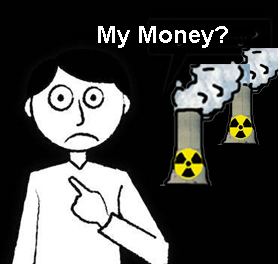
UK to put nuclear power at heart of net zero emissions strategy. British
ministers will put nuclear energy at the heart of Britain’s strategy to
reach net zero carbon emissions by 2050 in government documents due as
early as next week, along with new details on its funding model.
Kwasi Kwarteng, business secretary, is due to unveil the “Net Zero Strategy”,
as well as a “Heating and construction strategy” and an assessment of
the Treasury of the cost to reach the 2050 target. The main strategy will
be heavily focused on the long overdue and slow British nuclear program.
The country’s existing reactors are expected to be phased out by 2035,
with construction of a single large plant, Hinkley Point C, already
underway.
The creation of a “regulated asset base” (RAB) model will be
the key to the delivery of a future fleet of large nuclear power plants.
Under this program, households will be billed for the cost of the plant via an energy
tax long before it starts producing electricity, which could take a decade
or more from the time. where the final investment decision is made.
FT 16th Oct 2021
https://www.ft.com/content/e6426194-21e6-49c4-9520-97c337b350fd
Japan’s new pro nuclear push – and for small nuclear reactors
Japan’s Carbon Goal Is Based on Restarting 30 Nuclear Reactors, Bloomberg, By Isabel Reynolds 17 October 2021, Japan’s goal of reducing carbon emissions by 46% by 2030 is based on the assumption it will restart 30 of its nuclear reactors, a top ruling party executive said.
Akira Amari, secretary general of the Liberal Democratic Party, made the remarks Sunday in a televised debate broadcast by NHK ahead of the Oct. 31 general election.
Much of Japan’s nuclear capacity has been offline since the 2011 Fukushima disaster and Amari said only nine reactors are currently in service. Surveys generally show the electorate is against restarting the plants.
The LDP has also been promoting the idea of building small modular reactors, saying they are safer than Japan’s existing atomic plants……..https://www.bloomberg.com/news/articles/2021-10-17/amari-says-japan-s-carbon-goal-based-on-restarting-30-reactors
French President Macron now goes for small nuclear reactors – with vision of an exporting bonanza
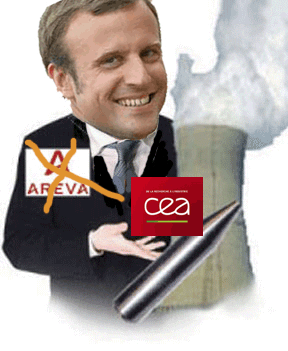
France unveils nuclear power overhaul – with an eye on China, French President Emmanuel Macron announced a shift to small modular nuclear reactors on Tuesday as he unveiled his €30 billion, five-year strategy to bolster France’s high-tech sectors, building on the country’s history as a pioneer of nuclear energy. France 24, 17 Oct 21,
Macron announced that the “number one priority” for his industrial strategy was for France to develop “innovative small-scale nuclear reactors” by 2030.
This marks a sea change in France’s approach to nuclear energy……………“The small modular reactors each generate less than 300 megawatts (MW) of energy; far less than most reactors currently in service, which tend to produce between 950 and 1300 MW, with some of them including the Flamanville plant [on the English Channel] capable of as much as 1600 MW,” said Giorgio Locatelli, an expert on the engineering of nuclear power stations at Milan Polytechnic.
……… In the grand sweep of the history of French nuclear power, the shift towards smaller reactors looks like a step back, Locatelli suggested, because France “started with small reactors in the 1960s before switching to larger ones to develop economies of scale”.However, this trend has now reached its limited, he continued. “Reactors like the one at Flamanville are not only very expensive, but also it’s a long and complex process to build them.” It takes billions to create such plants, and often it is difficult for governments to find investors willing to wait up to a decade before their returns start coming in.
Competition with China
Most countries lack the means to pull of these massive reactors, noted Nicolas Mazzucchi, an energy specialist at France’s Foundation for Strategic Research: “The financing models they require – not to mention the capacity to really mobilise a country’s savoir-faire in this domain – are increasingly rare, except in nations like Russia and China where energy companies have total state backing.”
Consequently, switching to small modular reactors is a strategic pivot to allow France to deal with competition from countries like China, which has increasingly big ambitions when it comes to nuclear power.
France’s change of approach could also allow it to win lucrative new markets. “By 2025, nearly a quarter of the world’s existing nuclear capacity will be exhausted because the reactors will have become too old,” Mazzucchi continued……………..
‘Lack of experience’………. The people in charge of reactors using cutting-edge technology “will have to justify their safety”, Herviou said. So far, the theoretical advantages of small modular reactors have not been confirmed in practice. Some 70 such reactors are currently in development throughout the world – and the vast majority of these projects are still in the early stages. “The main concern with this technology is the lack of a track record,” said Locatelli. What is more, he continued, nuclear power’s “chicken-and-egg problem is still there: Is it better to start building reactors first to win over buyers or is it best to find the investors first?” …………. https://www.france24.com/en/france/20211013-france-unveils-nuclear-power-overhaul-with-eye-on-china
October 17 Energy News — geoharvey

Opinion: ¶ “Electrification And Energy Reduction Go Hand-In-Hand To Reduce Household Impacts” • The status quo of getting energy from natural gas, water service, and even sewer service is baked into many if not most homes, and it’s hard for the owner (and harder for a renter) to get out of that rut. Here, I […]
October 17 Energy News — geoharvey
Passing the torch — IPPNW peace and health blog

The creation of nuclear weapons has resulted in a permanent threat to civilization that will require management by all future generations. Our meeting today of new and senior physician-activists, in Moscow and in Boston, is an essential component of our duty to train each new generation of health professionals.
Passing the torch — IPPNW peace and health blog
Prime Minister Kishida makes first inspection of Fukushima Daiichi Nuclear Power Plant after taking office

October 17, 2021
Prime Minister Fumio Kishida made his first inspection tour of the Fukushima Daiichi Nuclear Power Plant (Okuma and Futaba towns, Fukushima Prefecture) after assuming office on March 17. The Tokyo Shimbun’s nuclear power coverage team flew over the nuclear power plants by the Oozuru helicopter on March 11, and found that even a decade and a half after the accident, the reality is far from being “under control.
On the south side of the site, around the reactor buildings of Units 1-4, there are many cylindrical tanks for storing water that has been purified from contaminated water. On the north side of the site, containers filled with rubble and debris were piled up. Since the accident, the amount of waste contaminated by radiation at the Fukushima Daiichi Nuclear Power Plant has only increased. There is no way to even begin full-fledged containment work, such as removing the nuclear fuel (debris) that has melted down inside the reactor.
No progress in cutting high-dose vent pipes
The only progress that can be seen from the outside is that the exhaust pipes between the No. 1 and No. 2 reactors, which were 120 meters high, will be cut in half in 2020, reducing the risk of collapse. According to TEPCO’s plan, the removal of the pipes connecting the exhaust stack to the reactor buildings should have started, but the area around the pipes was quiet.
This pipe was highly contaminated during the accident by the venting process to reduce the pressure inside the reactor. Since it was dangerous for people to get close to the pipes, TEPCO planned to remove the pipes by remote control and was scheduled to start in early October. However, the mock-up test has been prolonged and there is still no way to start it. The fact that the process is not proceeding as planned has become the norm.
The construction site of a shaft for storing treated water for discharge into the ocean
Looking at Units 5 and 6, which did not have serious accidents, there were cranes and other heavy equipment along the sea. In this area, a shaft will be dug to release the treated water into the ocean. From there, an underground tunnel will be dug about one kilometer to the sea floor, and the treated water mixed with seawater will be released offshore. TEPCO is aiming to start releasing the treated water around spring 2011, and will continue to explain the plan to the local community, but there is strong opposition, especially from the fishing industry.
Some tanks under construction
At the southern end of the site, new tanks were being constructed in preparation for the oceanic release. Four tanks were visible before their lids were attached. TEPCO says it will secure a total of 23 tanks (about 30,000 tons) by November 2010.
A gaping hole in the underground drainage channel.
A gaping hole was found near the building of the ALPS (Advanced Radionuclide Purging System), which purifies and treats contaminated water. They were working on the construction of an underground drainage channel to drain rainwater when it rains heavily. Beside the heavy machinery, we could see a circular tube that appeared to be a tunnel member. The underground tunnel will be connected to the sea by next year’s typhoon season.
Unplanned debris “temporary accumulation” drastically increases in 9 months
In the northern part of the site, many containers were piled up. This is a “temporary accumulation site” where debris from the work was placed in an unplanned location. Because the planned debris storage area did not take into account slopes and other factors, there were fewer places to place containers than initially expected, and we were forced to rearrange the way we arranged the containers. In January of this year, they stopped the delivery of containers to the planned site and started to organize them, but in March, water containing radioactive materials leaked from one of the containers. However, in March, water containing radioactive materials leaked from one of the containers, and the number of temporary accumulations has been increasing rapidly due to delays in inspections.
The number of inadequately managed temporary accumulation sites is scattered at about 150 locations, and the total amount of debris is unknown. The Nuclear Regulation Authority (NRA) has pointed out the inadequate management of these sites, and TEPCO has been on the back foot in its response.
In January, there were only a few containers at this site in the northern part of the city, but over the past nine months, it has become densely packed. TEPCO has explained that they will minimize the number of temporary storage areas, but it is doubtful that they will be able to move such a large amount to the planned site.
Even from the air, it is obvious that the situation has gone astray, and there is still much work to be done to bring the accident under control. The Liberal Democratic Party has pledged to restart nuclear power plants in the House of Representatives election, but we must not turn our backs on the reality that once an accident occurs, even after a decade and a half, it is impossible to control.
https://www.tokyo-np.co.jp/article/136565?fbclid=IwAR1ExIyeyHbEi8CdZshXWhEoZMBorNbuYDnpZV1hLdnm2XYr5grar6-iEuA
Lethal radiation levels detected in Fukushima nuclear plant reactor lid

Lethal radiation levels detected in Fukushima nuke plant reactor lid https://www.asahi.com/ajw/articles/14440765
By TSUYOSHI KAWAMURA/ Staff Writer
September 15, 2021 The operator of the crippled Fukushima No. 1 nuclear plant could be forced to reconsider the plant’s decommissioning process after lethal radiation levels equivalent to those of melted nuclear fuel were detected near one of the lids covering a reactor.
The Nuclear Regulation Authority said Sept. 14 that a radiation reading near the surface of the lid of the No. 2 reactor’s containment vessel was 1.2 sieverts per hour, higher than the level previously assumed.
The discovery came on Sept. 9 during a study by the NRA and Tokyo Electric Power Co., the operator of the plant.
TEPCO plans to insert a robotic arm into the No. 2 reactor’s containment vessel from its side in a trial planned for the second half of 2022 to retrieve pieces of melted nuclear fuel.
“We will consider what we can do during the trial on the basis of the detection of the concentration of contamination” in the upper area of the containment vessel, a TEPCO official said.
The round concrete lid, called the shield plug, is 12 meters in diameter and about 60 centimeters thick.
The shield plug consists of three lids placed on top of each other to block extremely high radiation emanating from the reactor core.
Each lid weighs 150 tons.
When operators work on the decommissioning, the shield plug will be removed to allow for the entry into the containment vessel.
The NRA said a huge amount of radioactive cesium that was released during the meltdown of the No. 2 reactor in March 2011 remained between the uppermost lid and middle lid.
In the Sept. 9 study, workers bored two holes measuring 7 cm deep each on the surface of the uppermost lid to measure radiation doses there by deploying remotely controlled robots.
One radiation reading was 1.2 sieverts per hour at a location 4 cm down from the surface in a hole near the center of the lid.Prior to the study, the NRA estimated that the dose from a contamination source that existed beneath the lid was more than 10 sieverts per hour, a level lethal to humans if exposed to it for about an hour.
But the finding suggested that the actual dose would likely be dozens of sieverts per hour, thus far more dangerous.
While it is expected to be a huge challenge to dismantle the lids, TEPCO has yet to decide what to do with them during the decades-long cleanup work.
The NRA also mentioned the possibility that radioactive cesium is also concentrated between the middle lid and the lowermost lid.
But there is no way at the moment to confirm whether that is the case, according to NRA officials
There are Much More Powerful Greenhouse Gases than CO2 and EDF’s Nuclear Reactors are Spewing Them Out (Apart from Toxic Radioactive Emissions!!)

EdF finally admit that operational nuclear power station discharges of Sulfur hexafluoride gas make massive contributions to Global warming/Climate change Flamanville nuclear power plant has exceeded the threshold for discharging SF6. In nine months, the quantity of SF6, the most powerful greenhouse gas, released by the Flamanville nuclear power plant in La Manche, has already […]
There are Much More Powerful Greenhouse Gases than CO2 and EDF’s Nuclear Reactors are Spewing Them Out (Apart from Toxic Radioactive Emissions!!) — RADIATION FREE LAKELAND
There are Much More Powerful Greenhouse Gases than CO2 and EDF’s Nuclear Reactors are Spewing Them Out (Apart from Toxic Radioactive Emissions!!) https://mariannewildart.wordpress.com/2021/10/15/there-are-much-more-powerful-greenhouse-gases-than-co2-and-edfs-nuclear-reactors-are-spewing-them-out-apart-from-toxic-radioactive-emissions/
ON OCTOBER 15, 2021 BY MARIANNEWILDARTEdF finally admit that operational nuclear power station discharges of Sulfur hexafluoride gas make massive contributions to Global warming/Climate change
Flamanville nuclear power plant has exceeded the threshold for discharging SF6. In nine months, the quantity of SF6, the most powerful greenhouse gas, released by the Flamanville nuclear power plant in La Manche, has already exceeded the annual declaration threshold. This threshold was reached on September 27, 2021, as confirmed by EDF on Thursday, October 14, 2021.
The Flamanville nuclear power plant (Manche) declared a “significant environmental event” after having emitted a cumulative quantity of SF6, the most powerful greenhouse gas, above the declaration threshold, we learned from EdF on Thursday October 14th.
“On September 27, 2021, the cumulative annual quantity of SF6 gas emissions reached 100.37 kg, exceeding the declaration threshold of 100 kg,” said EDF in a press release posted on the plant’s website. SF6, targeted as early as 1997 by the Kyoto Protocol on the climate, has a warming potential 23,000 times that of CO2 and remains in the atmosphere for up to 3,000 years. It is the most potent of greenhouse gases, even though it represents a small part of it.
The campaign group Sortir du Nuclear criticized EdFs pollution, saying : “Letting 100 kg of this gas escape is like emitting more than 2 million kg of C02 into the atmosphere. In just nine months, the Flamanville site has already exceeded (the 100 kg threshold). And the year is not over. Each year, each of the 18 nuclear power plants in France has this right to pollution and thus actively contributes to global warming, not to mention refrigerant leaks.”
Sortir de Nuclear further states that until 2018, EDF did not report any of these emissions. Sulfur Hexafluoride (SF6) gas “is used to ensure the electrical isolation of high voltage equipment. On the Flamanville site, SF6 gas is used as insulation for the energy evacuation stations and the supply stations for auxiliary transformers “, stated EDF.
Ouest France 14th Oct 2021
https://www.ouest-france.fr/normandie/flamanville-50340/la-centrale-nucleaire-de-flamanville-a-depasse-le-seuil-de-rejet-d-un-puissant-gaz-a-effet-de-serre-4ef83064-2cdc-11ec-9285-f388b2ea32b0
What Does Building A Nuclear Power Station Mean for CO2 Emissions As We Near COP26 ?

ON OCTOBER 14, 2021 BY MARIANNEWILDART The Following Extract is from The Ecologist’s Nuclear Dossier of 2006 – What Has CONveniently Been Unlearnt About Nuclear New Build Since Then? Quite a Lot!
What Does Building A Nuclear Power Station Mean for CO2 Emissions As We Near COP26 ? — RADIATION FREE LAKELAND
Many thanks to The Ecologist for their 2006 Nuclear Dossier written by Jon Hughes – the following extract relates to CO2 emissions from construction – which although mind numbingly enormous are the least worst thing about nuclear.
“Think nuclear power and you probably think of small amounts of highly radioactive material, safely encased in vast concrete bunkers, generating an endless and constant supply of clean electricity. Yes it’s expensive and clearly there is a problem with nuclear waste, but if it is the answer to climate change then why not?”Stop Hinkley C – then…..
and now…the largest concrete pour in the UK ever is just the beginning – Stopping Hinkley C is more important than ever.
BUILDING A NUCLEAR POWER STATION
During construction climate change is the only thing nuclear power fuels – to the tune of 20 million tonnes of C02 for each reactor
Once a decision has been taken to build a nuclear power station, the question of location arises. Firm foundations are required for a building that has to surpass an ‘Acts of God’ insurance policy for at least 100 years. It also pays for it to be built close to a plentiful water supply, as it requires 30 million gallons daily to act as a coolant to stop generators overheating and prevent catastrophic meltdown. This is a fundamental problem. Sea levels are predicted to rise by half a metre by the end of the century, according to the the ultra-cautious International Panel on Climate Change. It could be less, but it could easily be more. Such a rise threatens every coastline in Britain and around the world, as it brings with it unpredictable weather patterns.
Late last year, a confidential report from Nirex, the then government agency on radioactive waste management, warned that all the UK’s current reactor sites are at risk of flooding or erosion under such conditions. If the Greenland and Western Antarctic ice sheets start melting away, as some experts now predict, sea levels could eventually increase by as much as 12 metres.
Given this, it would not be possible to construct new reactors on old sites, which has been viewed as the ideal option. The ‘piggy backing’ would have circumvented the need for new planning permissions and a public inquiry. As it is, new sites will have to be developed further inland.
To find the right location, geological surveys are undertaken to assess the long-term viability of the land, and answer questions like will it buckle in the event of a long-term drought or sink in the event of an excessive wet period…………………….
It can be assumed from the EPR that scheduled build time for any new reactor will be set at an ambitious five years.
(One year in, Olikuoloto is nine months behind schedule.) During the construction period, greenhouse gases will be spewing into the atmosphere, fuelling nothing other than
climate change. Much of the £2bn it is conservatively estimated a nuclear power station will cost is spent on sourcing the raw materials, their manufacture and their supply, all of which are processes that use energy and cause C02 emissions to rise. If the UK government opts to keep nuclear power supplying 20 per cent of the country’s energy needs, then it is probable
that 10 such reactors would have to be built. (Worldwide, 80 new reactors are envisaged.) This is environmental damage that can’t be repaired, and will only intensify the process of climate change now. https://mariannewildart.wordpress.com/2021/10/14/what-does-building-a-nuclear-power-station-mean-for-co2-emissions-as-we-near-cop26/
1 This Month
Tell Congress: Prevent Nuclear Catastrophe in Iran

Tell Congress: Prevent Nuclear Catastrophe in Iran

Read the Public Inquiry Report, the Commissioners’ report, Surrendering Australia: The AUKUS Deception is available to download for free at aukuspublicinquiry.com. Or just watch the replay of the National Press Club Luncheon.


Shut down the radiation-damaged Heysham nuclear reactors now
To see nuclear-related stories in greater depth and intensity – go to https://nuclearinformation.wordpress.com

Say No to NASA’s Reckless Nuclear Reactor on the Moon
Say No to NASA’s Reckless Nuclear Reactor on the Moon
-
Archives
- November 2026 (238)
- October 2026 (302)
- September 2026 (339)
- August 2026 (330)
- July 2026 (355)
- June 2026 (287)
- May 2026 (306)
- April 2026 (356)
- March 2026 (251)
- February 2026 (267)
- January 2026 (308)
- December 2025 (358)
-
Categories
- 1
- 1 NUCLEAR ISSUES
- business and costs
- climate change
- culture and arts
- ENERGY
- environment
- health
- history
- indigenous issues
- Legal
- marketing of nuclear
- media
- opposition to nuclear
- PERSONAL STORIES
- politics
- politics international
- Religion and ethics
- safety
- secrets,lies and civil liberties
- spinbuster
- technology
- Uranium
- wastes
- weapons and war
- Women
- 2 WORLD
- ACTION
- AFRICA
- Atrocities
- AUSTRALIA
- Christina's notes
- Christina's themes
- culture and arts
- Events
- Fuk 2022
- Fuk 2023
- Fukushima 2017
- Fukushima 2018
- fukushima 2019
- Fukushima 2020
- Fukushima 2021
- general
- global warming
- Humour (God we need it)
- Nuclear
- RARE EARTHS
- Reference
- resources – print
- Resources -audiovicual
- Weekly Newsletter
- World
- World Nuclear
- YouTube
-
RSS
Entries RSS
Comments RSS

