‘It’s the protests which are giving me hope’: activists descend on Glasgow
‘It’s the protests which are giving me hope’: activists descend on Glasgow
Campaigners from around the world are uniting to disrupt the Cop26 conference and put pressure on political leaders
Cop26 will be whitest and most privileged ever, warn campaigners
Cop26 will be whitest and most privileged ever, warn campaigners
Thousands from frontline communities in global south have been excluded, activists claim
If COP26 fails, it could mean mass migrations and food shortages – Boris Johnson
A failure by world leaders to commit to tackling the climate emergency at
the Cop26 summit in Glasgow could prompt “very difficult geopolitical
events” including mass migration and global competition for food and
water, Boris Johnson has said. Speaking before the start of a gathering of
leaders from the G20 industrialised nations in Rome, where he will push for
countries to arrive in Glasgow with fixed plans to cut emissions, Johnson
said the chances of success hung in the balance.
Guardian 30th Oct 2021
The myth of “newer, safer, less expensive” nuclear power to fix the climate

Denise Duffield, – associate director of Physicians for Social Responsibility-Los Angeles 30 Oct 21.
The myth of “newer, safer, less expensive” nuclear power has promised for decades to deliver a magical climate solution.
Unfortunately, despite billions of dollars in research and development, subsidies, loan guarantees and liability waivers, and countless promises that next-generation technology was “just around the corner,” nuclear power is not and will never be that solution. It is far too slow and costly to impact the climate crisis, and it presents insurmountable threats to public health that will worsen as the climate crisis grows.
Radioactive waste generated by nuclear power will remain dangerous for thousands of years, burdening future generations for our short-sighted gain. We need to stop wasting precious resources on false solutions that prop up uneconomical and polluting industries and invest instead in truly sustainable, community-driven solutions.
LA Times 30th Oct 2021
https://www.latimes.com/opinion/story/2021-10-30/nuclear-power-climate-change
UK’s new nuclear financing plan is a nightmare

Tax-and-spend budgets can be dispiriting. But at least Kwasi Kwarteng
squirrelled out a “£30 billion” consumer windfall this week.
Apparently, we’re going to be that much better off on “each new
large-scale” nuclear power plant he’s planning for Blighty.
And all
thanks to “a new funding model” — the regulated asset base, or RAB.
Where the business secretary has plucked his figure from is not exactly
clear. But it’s all part of his conversion to a new nuclear nirvana —
one all the more crucial, too, “in light of rising global gas prices”.
Yes, it’s debatable whether gas prices will still be on the up in, say,
2035 when a new Kwasi nuke might actually be built. But who cares about
that? Buried in the budget was the news ministers have set aside “£1.7
billion to enable a final investment decision” this parliament on a new
reactor (who else spends that sort of sum making a decision?) and is in
talks with EDF over Sizewell C in Suffolk.
On top, Kwarteng has dusted off
Wylfa on Anglesey, the project Hitachi spent four years trying to fire up
before jacking it in and writing off £2.1 billion. Apart from the
decade-long delays in getting built, construction cost overruns are
nuclear’s forte: France’s Flamanville, up from the initial €3.3
billion to €19.1 billion; Finland’s Olkiluoto, up from €3 billion to
€11 billion; and our very own Hinkley Point C, up from £18 billion to
£23 billion.
Kwarteng knows all that. But he’s calculated that the RAB
model, where consumers “contribute to the cost of new nuclear power
projects during the construction phase”, can not only attract private
investors but also allow lower electricity prices in the long run: his
so-called “£30 billion” saving.
For him, it beats the
“contracts-for-difference” template of Hinkley Point C. Both models are
deeply flawed. But the RAB is worse. First, because developers, and their
backers, have no incentive to keep costs down. Sure, there’d be an
independent regulator to rule on cost overruns.
But with investors making
their return on the size of the RAB, the more cost they can get past the
regulator, the better. And, second, because if the project keels over,
consumers are still left with the bill. “Nukegate” in America is proof
of that: two reactors in South Carolina built by Westinghouse that blew up
the company after costs ballooned from $9.8 billion to $25 billion. The
plants were never completed: a scandal leading to criminal lawsuits. But
consumers are still paying for the nukes: billions of dollars of costs,
making up 18 per cent of their electricity bills.
Guess what, too? Fresh
from Chapter 11 bankruptcy, it’s Westinghouse that Kwarteng fancies for
another go at Wylfa.
Times 30th Oct 2021
https://www.thetimes.co.uk/article/new-nuclear-plan-is-a-nightmare-63schq6ks
| R |
USA in talks with allies on getting Iran to agree to nuclear deal- Blinken
 | |||
| |||
|
U.S. in talks with allies on getting Iran to agree to nuclear deal -Blinken, By Kanishka Singh and Jonathan Landay Oct 31 (Reuters) – U.S. Secretary of State Antony Blinken said on Sunday that the United States was “absolutely in lock step” with Britain, Germany and France on getting Iran back into a nuclear deal, but added it was unclear if Tehran was willing to rejoin the talks in a “meaningful way.”
Blinken’s remarks in an interview with CNN on Sunday come a day after the United States, Germany, France and Britain urged Iran to resume compliance with a 2015 nuclear deal in order to “avoid a dangerous escalation.”……….
ran’s foreign minister said separately on Sunday that if the United States was serious about rejoining Tehran’s 2015 nuclear deal with world powers, President Joe Biden could just issue an “executive order,” the state-owned Iran newspaper reported.
“It is enough for Biden to issue an executive order tomorrow and they (U.S.) announce they are rejoining the pact from the point where his predecessor left the deal,” Iranian Foreign Minister Hossein Amirabdollahian said…….
Talks between Iran and world powers aimed at salvaging the deal, which started in April, are slated to resume at the end of November, the Islamic Republic’s top nuclear negotiator said on Wednesday.Reporting by Kanishka Singh in Bengaluru and Jonanthan Landay in Washington; Editing by Matthew Lewis and Bill Berkrot https://www.reuters.com/world/middle-east/blinken-says-us-talks-with-allies-getting-iran-agree-nuclear-deal-2021-10-31/
US should announce ‘no first use of nuclear weapons,’ with no strings attached
US should announce ‘no first use of nuclear weapons,’ with no strings attached: https://www.globaltimes.cn/page/202110/1237769.shtml Global Times editorial, Oct 31, 2021 The US plans to finalize the Nuclear Posture Review as soon as the end of this year. It is reported that the Biden administration is discussing whether it should put some limits on the use of nuclear weapons, such as the announcement of “no first use of nuclear weapons,” or a declaration of “sole purpose” that means nuclear weapons can be used under certain circumstances, including responding to a nuclear attack.
According to media reports, US allies, including the UK, Germany, France, Japan and Australia, have strongly opposed the US’ adjustment to its nuclear policies. They believe such a move will weaken the US’ protection of its allies. This possible adjustment also means the US would offer a courtesy to China and Russia.It has long been discussed whether the US should put limits on its use of nuclear weapons. The US was about to nail the adjustment during former president Barack Obama’s tenure. The Obama administration considered adopting a “no first use” pledge and laid out a vision for a world without nuclear weapons. Obama’s plan was soon abandoned after being rejected by US allies including Japan.
When Donald Trump was in the Oval Office, the US accelerated the modernization of its nuclear arsenal. The Trump administration’s fiscal 2018 budget included $60-90 billion for nuclear weapons programs. Now it’s the turn of the Democratic administration led by Biden to control the nuclear button, and it is completely possible that it thinks about reducing the nuclear risks in the world. If Biden can really take the step to announce “no first use” of nuclear weapons or take pragmatic measures to restrain US nuclear policies, the move will be widely welcomed across the globe.
However, Biden obviously continued with the strategy of enhancing major power competition adopted by the Trump administration. Great power relations nowadays are much tenser than during the Obama administration. Biden stresses coordinated action with its allies and fierce competition with China and Russia. It is highly doubtful whether Biden has the courage to take real steps in restricting the use of nuclear weapons.
The reactions from the US’ allies, as reported by the media, are pretty much disappointing. In particular, countries like Japan which once suffered from nuclear strikes oppose restricting the use of nuclear weapons. The anti-nuclear doctrine the US allies have advocated is entirely deceitful. On the contrary, what they pursue is unilateral nuclear security. They want to expand their own right to use nuclear power, but have tried every possible means to squeeze the right of the others to use nuclear power.
China has announced the “no first use” nuclear policy at a very early phase. It has adhered to this policy since the first day it owned nuclear weapons. US allies should think this way: If China walks away from this policy, how much pressure will it add to regional security? Similarly, if the US, as the world’s No.1 military power, announced restrictions on the use of nuclear weapons, it will without doubt create constructive opportunities to global security, with advantages outweighing disadvantages.
Nuclear posture is the thorniest security dilemma – particularly issues such as the number of nuclear warheads and anti-missiles. If the US can take the lead in restricting the use of nuclear weapons in this era, it is likely to expand the route undertaken by China in the past and push forward a new period of nuclear security. US allies such as Japan and Australia are falling into the trap of their own petty calculations, but they will not feel more secure if the US does not try to make the commitment of restricting the use of nuclear weapons.
A group of former US officials and experts, including former secretary of defense William Perry, wrote a letter to then Japanese prime minister Yoshihide Suga and other Japanese leaders of political parties, asking them not to oppose a “no first use” nuclear stance that may be announced by the US. Those former officials certainly did not make their appeals from the stance of China and Russia. Their considerations on nuclear security deserve comprehension from the Western world, rather than a fundamental rejection.
China has no way to influence whether the US will eventually head toward the direction of restricting the use of nuclear weapons. Even if the US does that, it will highly unlikely remain to be a unilateral decision. The US will likely require China, Russia and other countries to meet some of its demands. That being the case, it is possible that it will constitute new pressure on China.
35 official events at Cop26 put on by polluting companies

THIRTY-FIVE official side-events at the COP26 climate summit are being
organised by, or feature, big polluting companies or lobby groups that
represent them, The Ferret can reveal.
The National 31st Oct 2021
Why India’s nuclear ICBM test is counterproductive for tactical and strategic stability
Why India’s nuclear ICBM test is counterproductive for tactical and strategic stability, CGTN,
Hamzah Rifaat Hussain 31 Oct 21, On the threat of nuclear weapons during conflict, the rule is that skirmishes, tensions and conventional conflicts between countries need to be resolved through confidence-building measures and dialogue to prevent it from descending into the nuclear domain, when conversely, adding nuclear dimensions to tensions would only exacerbate trust deficits and threaten nuclear nonproliferation.
Despite this, better sense has not prevailed in New Delhi either on the results of Corps Commander-level talks or the decision to establish credible deterrence, given its decision to test a nuclear capable intercontinental missile (ICBM) called “Agni-5” amid tensions with China with a range of 5,000 kilometers on October 27.
The missile, which descended into the Bay of Bengal, is touted to have a high degree of accuracy, yet it belittles the significance of border talks with China, which was previously considered pivotal by Defense Minister Rajnath Singh.
Furthermore, India tackling China by strengthening its weapons systems will not resolve its numerous internal quagmires, which include a pandemic stricken economy and challenges to inclusivity. …………. https://news.cgtn.com/news/2021-10-31/Why-India-s-nuclear-ICBM-test-is-counterproductive-for-stability-14Oa6m7T9Xq/index.html
Likud MK: Israel must strike Iran by year’s end if there’s no new nuke deal
Likud MK: Israel must strike Iran by year’s end if there’s no new nuke deal, Times of Israel,
Tzachi Hanegbi says opposition party will give full backing if government decides to attack Tehran’s nuclear program
By TOI STAFF 31 Oct 21, Likud MK Tzachi Hanegbi said Saturday that in the absence of a nuclear deal between Iran and world powers, Israel should carry out a strike on the Islamic Republic by the end of the year, adding that the government would have the full backing of his party on the matter………. https://www.timesofisrael.com/likud-mk-israel-must-strike-iran-by-years-end-if-theres-no-new-nuke-deal/
October 31 Energy News — geoharvey

Opinion: ¶ “Here To Stay Or Gone In 30 Years? Inside The Fight Over The Future Of The Oil Industry” • Oil is back above $80 per barrel, but production has been on the decline since the turn of the century. Even without a need to stop use of fossil fuels, the oil industry cannot […]
October 31 Energy News — geoharvey
Fukushima Daiichi Nuclear Power Plant Judges Visit Site for First Time in TEPCO Shareholders’ Derivative Suit

Oct. 29, 2021
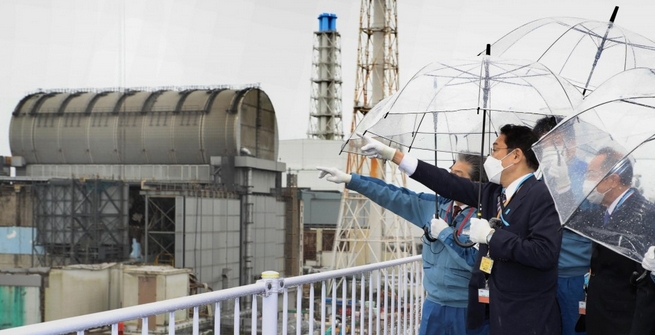
In a lawsuit filed by shareholders of Tokyo Electric Power Company (TEPCO) demanding compensation from the former management over the accident at the Fukushima Daiichi Nuclear Power Plant, judges from the Tokyo District Court visited Fukushima Prefecture on March 29 and inspected the site of the plant. This is the first time that judges have inspected the site after the nuclear power plant accident.
On the morning of the 29th, two judges including Yoshihide Asakura, Chief Judge of the Tokyo District Court, clerks, and lawyers for the plaintiffs and defendants took a bus from JR Ono Station in Okuma Town, Fukushima Prefecture, to the site of the Fukushima Daiichi Nuclear Power Plant.
The shareholders of Tokyo Electric Power Company (TEPCO) are demanding that the company compensate five former executives for the accident at the Fukushima Daiichi Nuclear Power Plant.
According to a lawyer for the shareholders, the inspection lasted for more than five hours, and they checked the condition of the buildings of Units 1 through 6, as well as the entrances and exits of buildings with important equipment, before and after the accident.
According to TEPCO, this is the first time that a judge has inspected the premises of the Fukushima Daiichi Nuclear Power Plant after the accident.
After the inspection, Hiroyuki Kawai, a lawyer for the shareholders, said, “The judges asked TEPCO many questions and looked around the site seriously. It was a very meaningful inspection, and we are hoping for a good verdict.
https://www3.nhk.or.jp/news/html/20211029/k10013327661000.html
Regulatory Commission visits Fukushima Daiichi Nuclear Power Plant over exhaust filter damage

Oct.28, 2021
On October 28, members of the Nuclear Regulation Authority (NRA) visited the Fukushima Daiichi Nuclear Power Plant and inspected the facilities where the problem was found, following a series of damages to the exhaust filters of the facilities that treat contaminated water at the Fukushima Daiichi Nuclear Power Plant of Tokyo Electric Power Company.
In September of this year at the Fukushima Daiichi Nuclear Power Plant, 32 of the 76 exhaust filters attached to the storage containers for radioactive waste from the ALPS system, which treats contaminated water, were found to be damaged.
The same exhaust filters were found to be damaged two years ago, but TEPCO replaced the filters and continued to operate the plant without analyzing the cause or taking countermeasures.
In response to these problems, Tomo Tanaka, Nobuhiko Ban, and other members of the Nuclear Regulation Authority inspected the Fukushima Daiichi Nuclear Power Plant on March 28.
Guided by TEPCO officials, the commission members entered the facility where the problematic exhaust filter was installed and confirmed the conditions at the time.
The Nuclear Regulation Authority (NRA) believes that there was a problem with TEPCO’s management system and will investigate in detail the cause and background of the repeated damage.
Also, on the 29th, they plan to check the temporary storage area for radioactive waste generated from decommissioning of the plant in response to the rapid increase in temporary storage of radioactive waste outside.
https://www3.nhk.or.jp/lnews/fukushima/20211028/6050016204.html
Japan looks to renewables, role of nuclear elusive ahead of election
Oct 29, 2021
Japan aims to increase its reliance on renewable energy in achieving net-zero emissions, but the role of nuclear power to be played toward that end appears to be elusive even in the government’s energy plan approved by the Cabinet about a week ahead of Sunday’s general election.
The plan outlines ways to achieve carbon neutrality by 2050 and cut greenhouse gas emissions 46 percent in fiscal 2030 from fiscal 2013 levels, an ambitious leap from the previous reduction target of 26 percent.
The government aims to have renewables account for 36 to 38 percent of Japan’s total power generation capacity in fiscal 2030, more than double the 18 percent recorded in fiscal 2019, while the percentage of fossil-fuel-fired thermal power has been slashed to 41 percent, down from 76 percent.
But the percentage for nuclear power remains unchanged at 20 to 22 percent from the previous plan, released in 2018.
The status of many nuclear plants in 2030 and thereafter is unclear considering the facilities’ 40-year operating limit and other regulatory hurdles, and there has been no public consensus on whether the country should continue to use nuclear power beyond 2050 either.
Yudai Maeda, an executive of renewable energy firm afterFIT Co., said people’s emotional reactions toward nuclear issues have somewhat subsided from the years after the 2011 Fukushima nuclear disaster and voter interests have been taken over by the coronavirus pandemic.
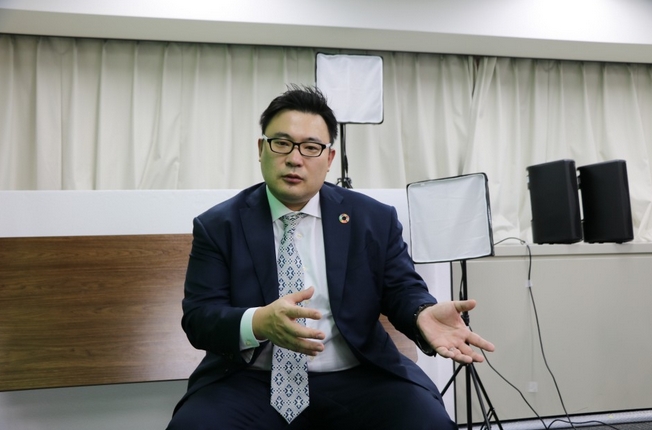
“Major issues in the election are more like how to restore the economy after the COVID-19 pandemic,” Maeda said.
A recent Kyodo News poll showed 36.7 percent will decide on who to vote for in the general election based on economic policies, while 16.1 percent said coronavirus measures were paramount.
Tsutomu Miyasaka, a professor of biomedical engineering at Toin University of Yokohama and pioneering researcher on thin and flexible solar cells, also believes energy and environmental issues should attract attention, just as climate change was one of the key issues for German voters in their September election.

A report by the U.N. Environment Programme released this week warned that the average global temperature could rise 2.7 C by the end of the century despite various climate pledges and mitigation steps.
That is well above the aspirational goal of the Paris Agreement — to keep global warming below 1.5 C this century over pre-industrial levels.
The international organization also said that whether the world can meet the goal of avoiding potential catastrophe hinges on efforts by humanity to halve annual greenhouse gas emissions in the next eight years.
Net-zero commitments, declared by 49 nations, including Japan, and the European Union could shave off another 0.5 C, if these pledges were made robust and if 2030 promises were made consistent with the net-zero commitments.
“Climate change is no longer a future problem. It is a now problem,” said Inger Andersen, executive director of UNEP, ahead of the upcoming U.N. climate change conference known as COP26. “The clock is ticking loudly.”
To achieve the 2030 emissions cut target, Maeda said nuclear power plants are necessary. However, Japanese political parties cannot agree on what to do with nuclear plants even though they agree on the country’s direction toward carbon neutrality.
Prime Minister Fumio Kishida said his Liberal Democratic Party will restart idled nuclear plants, providing they have adequate safety measures, in order to supply electricity stably and at a reasonable price.
In contrast, the major opposition Constitutional Democratic Party of Japan pledges to abandon nuclear power as soon as possible and will not allow any new nuclear plants to be built.
The Democratic Party for the People, a smaller opposition party, has said it will restart nuclear plants that cleared safety rules but will not allow the construction of new ones.
Following the nuclear crisis in Fukushima Prefecture triggered by a massive earthquake and tsunami, most of the nuclear plants in Japan remain offline under stricter safety regulations.
“Realistically, I think (Japan) cannot help but to heavily rely on nuclear and solar power to achieve that 2030 goal,” said Maeda, a former Foreign Ministry official.
He stressed nuclear should not be a long-term power supply given the tremendous amount of money needed in the event of an accident and falling renewable energy costs.
In the long run, energy experts have high expectations for offshore wind power.
“Producing large quantities of electricity from renewables requires a vast amount of space. Since Japan is a maritime nation with the world’s sixth-largest exclusive economic zone, it’s got to be offshore wind,” he said, adding floating turbines will hold the key.
Solar cells produced by Miyasaka, also a fellow at the University of Tokyo’s Research Center for Advanced Science and Technology, are expected to contribute to improving the space problem for renewables if they overcome durability challenges and go into commercial mass production.
Miyasaka’s perovskite solar modules are thin, flexible, and light yet capable of generating high voltages compared with silicon photovoltaics, with their characteristics enabling them to be installed or applied on unconventional places, including low load-bearing roofs, windows and automobile bodies.
In the not too distant future, Miyasaka believes people will be able to generate power by perovskite solar modules on places such as balcony floors and car bodies, store it in batteries and then use it during the night.
In building such a society, Miyasaka said the reliance on nuclear power could be reduced soon rather than later because disaster-prone Japan faces higher risks than many other countries.
“It is time for us to seriously engage in finding ways to live without nuclear power plants,” he said.
Japan PM’s nuclear push faces resistance ahead of election
Oct 28, 2021
KASHIWAZAKI, Japan – A decade after triple meltdowns at Fukushima forced mass evacuations and a shut-down of the nuclear industry, Japan has restarted only a third of its 33 operable reactors
Prime Minister Fumio Kishida’s push to restart Japanese nuclear power plants idled after the Fukushima disaster faces stiff opposition ahead of a
general election on Sunday, October 31, where his future as leader hangs in
the balance if the vote is tight.
A decade after triple meltdowns at Fukushima forced mass evacuations and a shut-down of the nuclear industry, Japan has restarted only a third of its 33 operable reactors.
Debate over whether to fire more of them back up is highly charged, with 40% of the population opposing the move.
It matters most in rural cities hosting the idled plants which had once relied on them for economic activity, such as Kashiwazaki, 265 km (165 miles) northwest of Tokyo – home to the world’s largest atomic power complex.
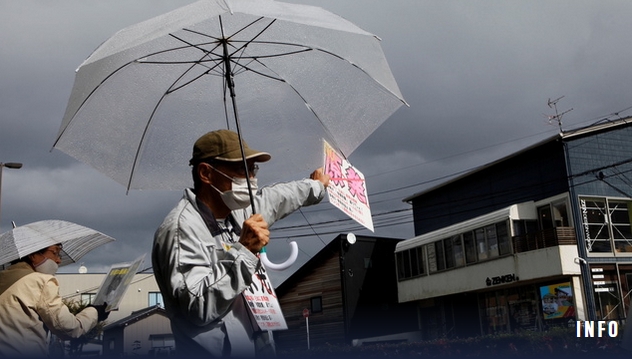
“The reason why we feel so strongly about this is because we feel the danger of the nuclear power plant – it hangs over our heads every day,” said Mie Kuwabara, a resident of a town close to Kashiwazaki and anti-nuclear activist.
Voters mostly care about economic recovery from the pandemic. But energy policy came into sharp focus last month, when Kishida beat a popular anti-nuclear candidate in the race for the Liberal Democratic Party (LDP) chief.
The architect of Kishida’s victory, party veteran Akira Amari, assumed a key party post and immediately pushed for restarts of 30 reactors while also promoting new, smaller reactors to replace aging ones.
Amari says Japan must revert to nuclear power to meet its 2050 carbon neutrality pledge, avoid rapidly rising prices of imported coal and gas and to cut its reliance on other countries for energy needs.
Amari faces a tight race in his home district, where he is struggling to attract support from anti-nuclear junior coalition partner, Komeito.
Opposition to his plan is strong in Kashiwazaki too.
“This prefecture as a whole, even within the LDP, is united behind the idea that the nuclear power plant can’t be restarted,” said Mineo Ono, who runs the LDP’s local chapter where anti-nuclear proponent Taro Kono polled higher than Kishida in the leadership race vote.
Ono cited local distrust caused by what he called multiple mishaps by the plant’s operator, Tokyo Electric Power Holdings (Tepco).
The nuclear regulator upended plans for a restart of the Kashiwazaki-Kariwa plant, which can power 24 million households, in April, after identifying operational issues including faulty intruder detection alarms and the misuse of ID cards.
Nation-wide, restarts have been delayed by technical issues, lawsuits and regulatory reviews.
Tepco in an emailed statement apologized and said it would work to regain the trust of locals. It added that while nuclear energy is instrumental in achieving carbon neutrality, the time is not right to discuss restarts.
That poses a problem for the LDP, which polls show is on the brink of losing its simple majority, an outcome that would still let it cling to power thanks to the coalition with Komeito, but that may lead to a push inside the party to oust Kishida.
The government said in its latest energy policy on Friday it would double 2020 levels of renewable energy to 38%, but has maintained nuclear power will provide some 22% of the country’s energy by 2030, up from 6% in the 2018 financial year.
‘Dividing factor’
Kashiwazaki, a town of 80,000, sits on the coast of the Sea of Japan. In the evening, buses unload workers maintaining the complex around the main train station.
“We host the world’s biggest nuclear plant, but that energy goes mostly to Tokyo and its surrounding regions. Locals feel deeply about that,” LDP’s Ono said. There is a ‘divide’ between the sentiment of the locals and people in Tokyo, he said.
A restart is critical for Tepco, which needs money to fund the clean-up at its Fukushima plant. Restarting two reactors at Kashiwazaki-Kariwa would save an estimated $880 million per year in fuel costs, it says.
But even the local chamber of commerce, instrumental in wooing the plant which started operations in 1985, says it is tired of what it sees as Tepco’s repeated failures.
“It’s almost unbearable, seeing how shoddy they are,” said chamber of commerce chief Masao Saikawa.
To allay these fears, Kenichi Hosoda, the LDP candidate in the district who serves as the vice minister at the Ministry of Industry overseeing energy policy, has toned down his pro-nuclear message.
“Now is not the time to discuss the issue,” he told Reuters after a recent rally held near the plant.
In response to a question on why discussions on the nuclear plant have been toned down before the vote, local LDP leader Ono spoke of “a large group of swing voters who the candidates have to capture.”
“When it comes down to it, the issue of nuclear energy will be the dividing factor. It’s a fact that the nuclear element has an influence,” said Ono. – Rappler.com
https://www.rappler.com/world/asia-pacific/japan-pms-nuclear-push-faces-resistance-ahead-of-election
1 This Month
Tell Congress: Prevent Nuclear Catastrophe in Iran

Tell Congress: Prevent Nuclear Catastrophe in Iran

Read the Public Inquiry Report, the Commissioners’ report, Surrendering Australia: The AUKUS Deception is available to download for free at aukuspublicinquiry.com. Or just watch the replay of the National Press Club Luncheon.


Shut down the radiation-damaged Heysham nuclear reactors now
To see nuclear-related stories in greater depth and intensity – go to https://nuclearinformation.wordpress.com

Say No to NASA’s Reckless Nuclear Reactor on the Moon
Say No to NASA’s Reckless Nuclear Reactor on the Moon
-
Archives
- November 2026 (238)
- October 2026 (302)
- September 2026 (339)
- August 2026 (330)
- July 2026 (355)
- June 2026 (287)
- May 2026 (306)
- April 2026 (356)
- March 2026 (251)
- February 2026 (267)
- January 2026 (308)
- December 2025 (358)
-
Categories
- 1
- 1 NUCLEAR ISSUES
- business and costs
- climate change
- culture and arts
- ENERGY
- environment
- health
- history
- indigenous issues
- Legal
- marketing of nuclear
- media
- opposition to nuclear
- PERSONAL STORIES
- politics
- politics international
- Religion and ethics
- safety
- secrets,lies and civil liberties
- spinbuster
- technology
- Uranium
- wastes
- weapons and war
- Women
- 2 WORLD
- ACTION
- AFRICA
- Atrocities
- AUSTRALIA
- Christina's notes
- Christina's themes
- culture and arts
- Events
- Fuk 2022
- Fuk 2023
- Fukushima 2017
- Fukushima 2018
- fukushima 2019
- Fukushima 2020
- Fukushima 2021
- general
- global warming
- Humour (God we need it)
- Nuclear
- RARE EARTHS
- Reference
- resources – print
- Resources -audiovicual
- Weekly Newsletter
- World
- World Nuclear
- YouTube
-
RSS
Entries RSS
Comments RSS

