Legal case over compensation for workers in ”uniquely dangerous” nuclear sites
High Court Takes Up Nuclear Site Workers’ Compensation Case (1) https://news.bloomberglaw.com/daily-labor-report/high-court-takes-up-washington-workers-compensation-challenge
Jan. 11, 202
- 9th Cir. upheld change to state workers’ compensation law
- U.S. government warns of costly consequences for contracts
The U.S. Supreme Court will consider the federal government’s challenge to a Washington state workers’ compensation law in a case that could have costly consequences for U.S. government contracts involving hazardous work on federal property.
The justices agreed Monday to review a U.S. Court of Appeals for the Ninth Circuit decision upholding a Washington law that presumes certain worker health conditions linked to cleanup work at the Hanford Site, a decommissioned federal nuclear production complex, are occupational diseases that can trigger workers’ compensation benefits.
The Department of Energy since 1989 has overseen cleanup at the Hanford Site, which produced weapons-grade plutonium for use in the U.S. nuclear program during World War II and the Cold War. The cleanup of the Hanford site is expected to continue over the next six decades and involve roughly 400 department employees and 10,000 contractors and subcontractors.
In 2018, Washington lawmakers passed legislation, HB 1723, that amended the state’s workers’ compensation law exclusive to the Hanford site, covering at least 100,000 current and former federal contract workers who performed services there over the past 80 years. The law states that presumed occupational diseases stemming from work at Hanford should trigger benefits eligibility, including cancers and other respiratory diseases.
The federal government argued the law exposes government contractors, and by extension the United States, to “massive new costs” that similarly situated state and private employers don’t incur
‘Uniquely Dangerous Workplace’
The Justice Department had asked the Supreme Court to take up the case, arguing the 2018 law discriminated against the United States and that state law shouldn’t apply to federal contract workers at Hanford. The government warned that the logic applied by a panel of Ninth Circuit judges opened the door to other states passing legislation targeting work at federal facilities.
“Congress did not permit States to adopt laws that impose unique burdens on the United States and the firms that it engages to carry out federal functions,” Justice Department attorneys argued. “The practical consequences of the panel’s mistake are far-reaching. Even if the Hanford site is considered in isolation, the decision is likely to cost the United States tens of millions of dollars annually for the remainder of the 21st century.”
Attorneys for Washington state, however, responded that courts have allowed states to regulate workers’ compensation for injuries or illnesses suffered during work on federal land. They argued Washington state has “long tailored its workers’ compensation laws to the dangers faced by particular employees,” noting statutes that protect firefighters and other workers facing special hazards.
“Hanford is a uniquely dangerous workplace, filled with radioactive and toxic chemicals, and private contractors operating there have routinely failed to provide employees with protective equipment and to monitor their exposures to toxic substances,” they argued.
Justice Department attorneys also argued the Ninth Circuit ruling clashed with Supreme Court precedent in a 1988 decision, Goodyear Atomic Corp. v. Miller, which described a similar situation of a state workers’ compensation award for an employee injured at a federally owned facility.
The full Ninth Circuit previously declined to take up the case, and said the Washington law fell properly within a part of federal law that authorizes states to apply their workers’ compensation laws to federal projects.
In a dissent to the Ninth Circuit’s denial of a rehearing, Judge Daniel P. Collins wrote that the panel’s decision clashed with high court precedent, calling it an “egregious error” that would have sweeping consequences.
The U.S. Solicitor General’s office represents the federal government. The Washington Attorney General’s office is defending the state law.
The case is U.S. v. Washington, U.S., No. 21-404, cert granted 1/10/22.
To contact the reporter on this story: Erin Mulvaney in Washington at emulvaney@bloomberglaw.com
To contact the editors responsible for this story: Jay-Anne B. Casuga at jcasuga@bloomberglaw.com; John Lauinger at jlauinger@bloomberglaw.com; Andrew Harris at aharris@bloomberglaw.com
Just the bare 144 years of above-ground storage for UK’s Chapelcross Intermediate Level Nuclear Waste
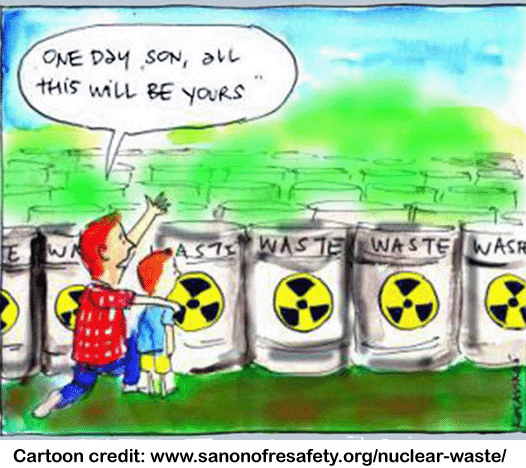
The question for policy makers is do we really want to contemplate building new nuclear power stations when the legacy will be with future generations for 102 years, nearly two and a half times beyond any new nuclear plant’s operational life. The cost of nuclear electricity generation is high and future costs of dealing with the legacy are also passed on to at least four future generations.

| Following on from a previous article on Hunterston B which was shut down last Friday I decided to have a look at one of the smaller nuclear power stations in Scotland to see how work was progressing on decommissioning. Chapelcross nuclear power station occupies a 92 hectares site on the location of a former World War II training airfield in Annan. Chapelcross had 4 Magnox reactors, each with a 48MW output. Chapelcross was linked to sister plant Calder Hall in Cumbria which is now the site of the NDA’s Sellafield operation. Calder Hall closed in 2003 and Chapelcross in 2004. Both plants were originally operated by the UK Atomic Energy Authority. Their main purpose was to produce weapons-grade plutonium although they also generated electricity for the National Grid. By 1st April 2019, Chapelcross had been defuelled and all High Level Waste moved to Sellafield. At that point, almost three years ago, the Intermediate Level Waste as well as LLW had still to be dealt with. The VLLW would appear to be close to the end of the decommissioning process. The LLW is destined for containers in Cumbria and the estimated 4,900 cublic metres of Intermediate Level Waste will be left onsite in specially constructed containers for a period of 120 years, pending a Scottish Government decision around 2145 on disposal of the containers and contents. The interim storage facility for storing Intermediate Level Waste at Chapelcross began 2014 and was completed by May 2021 when the first ‘package’ was placed in the facility. In announcing this progress Magnox Ltd and the NDA said in a news release; “The Interim Storage Facility (ISF) can hold over 700 waste packages of four different approved package types, and will be filled over the next five years as part of decommissioning work. Standing at 57m long and 23m wide, it has been constructed to safely and securely store packages for 120 years.” Work on the Intermediate Level Waste which is due to complete in 2026. The storage facility is then sealed for 120 years when a decision will be made by the Scottish Government on final disposal of ILW storage and contents. Whilst it can be argued that the core decommissioning work will take around 22 years, the end game is still 120 years away making 144 years in total for final clearance at the site. Chapelcross operated for 44 years. The ILW will remain on the site until 2146 although the buildings will be long gone by then. It is essential we deal with the legacies of the past and do so to the highest possible standard because we owe that to our own and future generations. The question for policy makers is do we really want to contemplate building new nuclear power stations when the legacy will be with future generations for 102 years, nearly two and a half times beyond any new nuclear plant’s operational life. The cost of nuclear electricity generation is high and future costs of dealing with the legacy are also passed on to at least four future generations. Newsnet 10th Jan 2022 https://newsnet.scot/news-analysis/nuclear-decommissioning-chapelcross-a-timeline/ |
The European Association for Renewable Energie Eurosolar rejects inclusion of nuclear and natural in the EU taxonomy
The European Association for Renewable Energie Eurosolar rejects »any
elements of nuclear and natural gas supply in the EU taxonomy for
environmentally sustainable activities«. The taxonomy is a classification
system for sustainable economic activities which are due to receive
advantageous financing conditions under EU regulations.
The European
Commision has proposed to include nuclear and natural gas into the
taxonomy. Member states like Germany strongly protested or, like Luxembourg
and Austria, even announced to bring action against the Commission, while
others are decisively supporting the proposal.
Photon 10th Jan 2022
EU delays deadline on green investment rules for nuclear and gas
EU delays deadline on green investment rules for nuclear and gas, By Kate Abnett BRUSSELS, Jan 10 (Reuters) – The European Commission said on Monday it has delayed to later this month the deadline for experts to give feedback on divisive plans to allow some natural gas and nuclear energy projects to be labelled as sustainable investments……… (subscribers only) https://www.reuters.com/markets/commodities/eu-delays-deadline-green-investment-rules-nuclear-gas-2022-01-10/
Former Israeli premier says notion of destroying Iran’s nuclear capabilities mere ‘nonsense’
Former Israeli premier says notion of destroying Iran’s nuclear capabilities mere ‘nonsense’Press Tv, 11 January 2022 The former Israeli prime minister has dismissed any possibility of a preemptive attack on Iran’s nuclear facilities by the regime, saying that such a notion is “nonsense.”
Ehud Olmert made the remarks in a Monday interview with Israel’s Channel 12 news, during which he derided the idea that the Tel Aviv regime would be able to destroy Iran’s nuclear facilities through a military strike.
Olmert emphasized that such a notion would be pure “nonsense,” adding, “It is unnecessary arrogance that indicates weakness, not strength.”
Olmert’s latest remarks echoed his previous assertions in an opinion piece published in Haaretz Hebrew site in which he noted that Israel did not have conventional military capabilities that enable it to strike and permanently eliminate Iran’s nuclear facilities as it did in Iraq in 1981 and Syria in 2007.
The Israeli regime has never stopped advertising the threat of “military action” against Iran and falsely accusing the Islamic Republic of seeking to acquire nonconventional military capability.
Iran, for its part, has repeatedly downplayed Israel’s threats against its nuclear facilities, promising crushing response to any act of aggression against the country.
On January 3, Iran’s foreign minister slammed anti-Iranian remarks by Israel’s foreign minister Yair Lapid, saying that the Islamic Republic will defend its interests with power.
Hossein Amir-Abdollahian’s remarks came in a tweet in response to earlier claims by Lapid that the Zionist regime “could attack Iran if necessary without informing the Biden administration,” adding that “Israel has capabilities, some of which the world, and even some experts in the field, cannot even imagine.”…………………………… https://www.presstv.ir/Detail/2022/01/11/674486/Ex-Israeli-PM-destroy-Iran-s-nuclear-capabilities-nonsense
Cracked’ nuclear power station retired.
Cracked’ nuclear power station retired. The Ecologist, Katrine Bussey | 10th January 2022 ‘As the expensive and hazardous job of cleaning up the radioactive legacy Hunterston leaves in its wake now begins, Scotland must press on with plans to harness more clean, renewable energy.’
One of Scotland’s two nuclear power plants has been shutdown, bringing an end to almost 46 years of it generating electricity.
Environmental campaigners said the final shutdown of Hunterston B, near West Kilbride – which started producing electricity 45 years and 11 months ago – was “inevitable”.
Lang Banks, the director of WWF Scotland, said the plant had become increasingly unreliable, and argued that growth in renewable energy means nuclear power is no longer required.
Technologies
Mr Banks said the “repeated failure to solve the problem of hundreds of cracks in the graphite bricks surrounding the reactor core means the closure of Hunterston B was inevitable”.
He added: “Thankfully Scotland has massively grown its renewable power-generating capacity, which means we’ll no longer need the electricity from this increasingly unreliable nuclear power plant.
“As the expensive and hazardous job of cleaning up the radioactive legacy Hunterston leaves in its wake now begins, Scotland must press on with plans to harness more clean, renewable energy.”
A Scottish Government spokesperson said: “Hunterston B, its operators and in particular the workforces who have staffed the plant for more than 40 years, have played an important role in supporting Scotland’s energy requirements.
“We do however remain clear in our opposition to the building of new nuclear power plants in Scotland under current technologies.
Transition
“Significant growth in renewables, storage, hydrogen and carbon capture provide the best pathway to net zero by 2045, and will deliver the decarbonisation we need to see across industry, heat and transport.
They added: “We recognise that planning will be crucial to ensure that economic and social opportunities from the transition are not missed.
“Our National Just Transition Planning framework sets out the consistent, ambitious approach we will take to developing transition plans.
We have committed to delivering our first Just Transition Plan as part of the forthcoming refreshed Scottish Energy Strategy, and will work in partnership with businesses, workers and communities to ensure this provides the certainty needed for investment in our net zero journey.
“As part of the jointly Scottish and UK Government funded Ayrshire Growth Deal, regional partners are developing a business case for the Hunterston Strategic Development Area to support a long-term strategic plan for the Ayrshire region, its people and businesses.”………………. https://theecologist.org/2022/jan/10/cracked-nuclear-power-station-retired
January 10 Energy News — geoharvey

Opinion: ¶ “Here’s How To Solve The UK Energy Crisis For The Long Term – Store More Power” • The key to making sure there is enough affordable, low-carbon energy is more storage to make the most of the renewable energy available. A storage boom has been forecast over the coming decade as governments race […]
January 10 Energy News — geoharvey
This week’s nuclear news

It’s a critical time for the world, as Russia and USA face off over Ukraine – the mainstream media showing an extraordinary ignorance on the background for all this. In Australia we get only the USA government’s point of view – I don’t know about other countries.
The UK government is poised to legislate for electricity consumers to pay for nuclear reactors long before they are built, and to cop the costs of delays, things going wrong, or the wonderful new reactors not actually operating anyway.. Meanwhile Europe continues to contort itself with the conundrum of deciding that nuclear is ”green” and worthy of tax-payer funding.
Coronavirus news– it’s all too much for me. We’re all in limbo – and a kind of mental paralysis sets in !
Climate Change. No, it hasn’t gone away. The last seven years were the hottest on record.
Some bits of good news . To cheer myself up, I’ve been reading a lot about butterflies. AND, the nearly endangered Monarch Butterflies are back – in their many thousands, Developing food crops that can thrive in dry and hot conditions.
Extraditing Julian Assange Threatens Journalists Worldwide.
Treaties, Constitutions, and Laws Against War — limitless life What if deterrence doesn’t work?
Ukraine crisis. US-Russia Talks May Be the Last Chance . What War With Russia Would Look Like. NATO chieftain to Russia: Georgia, Ukraine belong to us, take it or leave it. On eve of Biden-Putin, NATO-Russia talks, Blinken blasts Russia as threat to European continent.
Emissions from the five major economies set to cause a doubling of extremely hot years in many nations. “Don’t Look Up:” Hollywood tackles the myths that fuel climate denial — RenewEconomy
Nuclear energy backers say it’s vital for the fight against global warming. Don’t be so sure. Nuclear is not a practicable means to combat climate change.
Six reasons to say ‘no’ — Beyond Nuclear International
To preserve the planet, we must reduce our consumption of resources..
UN chief welcomes P5 statement on nuclear war prevention . Five world powers vow to prevent spread of nuclear weapons.
Changing patterns for spreading misinformation on pandemics and climate change.
Going nuclear: Should nations unilaterally decide?
Hundreds of thousands of satellites brightening the night sky with negative effects on the ecosphere.
ANTARCTICA. Enormous Antarctic glacier becoming unstable. Maori workers exposed to radiation in cleaning up USA’s failed nuclear reactor in Antarctica.
UK.
- Why is support for nuclear power noisiest just as its failures become most clear? Parliament to debate Nuclear Energy (Financing) Bill on 10 January – may transfer billions of new nuclear costs to consumers. Nuclear Energy Financing Bill – a poisoned chalice for the UK public. To bankroll the failing nuclear industry, the UK government will push thousands into fuel poverty, with its Nuclear Energy Bill.
- Coronavirus cases doubled in a few days at Sellafield nuclear site.
- Climate Noise Has Obscured Nuclear Dump Cronyism and Nuclear Impacts of Coal Mine – Why Bother With Traffic Light System for Induced Earthquakes?
- Government failure behind energy crisis. Government Wants YOU to Pay for New Nuclear. Safety concerns:
- Hunterston nuclear power workers need a just transition to sustainable work. No more subsidies to the nuclear industry. . Hunterston nuclear station shut down – then comes the long cleanup. BBC Report on Closure of Hunterston B Fails to Mention that All the Nuclear Crapola will Come to Cumbria. UK’s Heysham nuclear plant to shut down two years
- Falkland Islands in a nuclear-free zone, yet Britain deployed 31 nuclear weapons there earlier than planned
- Scotland very nearly reached goal of 100% renewable energy over 2020.
- Blackburn and Darwen Council approving and old nuclear dump site for commercial development ?
ARGENTINA.
Argentina pressures UK over deployment of nuclear weapons in Malvinas conflict .
USA.
- Weapons and war, Will Biden stay the course toward nuclear disarmament? President Biden should pledge never to use nuclear weapons first. Nuclear weapons states like USA must end the hypocrisy. Blinken on CNN: Unrelenting bellicosity, full-court offensive for control of former Soviet territory.
- What ratepayers should know about the Plant Vogtle expansion.
- NRC was right to deny OKLO’s plan for small nuclear reactors.
- What’s going on at Michigan’s nuclear power plants? A troublesome past, and present.
- Wastes. Xcel in Minnesota wants to use different nuclear waste casks from the approved TN-40 type. Concerns in New Mexico, about taking in out-of-state nuclear waste, as Waste Isolation Pilot Plant has limited space. Very quietly, NRC plans mass shipments of high level radioactive waste. Texas residents affected by New Mexico nuclear tests – radioactive fallout ignores state lines. Progress in nuclear waste cleanup at Idaho nuclear site
- Six men stood directly under a nuclear explosion test – all got cancer.
EUROPE. New generation European nuclear power will need investment of 500 billion euros by 2030. Existing plants will require 50 billion. European citizens divided over nuclear energy . European Commission’s divisive plan to label nuclear power ”green”, revealed on the sly? Anger as European Union is poised to subsidise the corrupt and rapacious nuclear industry. Including nuclear power as ”sustainable” completely undermines the European taxonomy’s original aim of the Green Deal.
AUSTRIA. Austria ready to take legal action against inclusion of nuclear power in Europe’s ”green taxonomy”.
RUSSIA. Russia’s nuclear submarine construction reaches a post-Soviet high. Russia’s secret nuclear waste city – Ozersk, City 40.
FRANCE. France – a serious anomaly detected in several EDF nuclear reactors. Fault found in France’s Chooz 2 nuclear reactor – its outage shutdown now extended.
GERMANY. German government struggles to unite on EU energy proposal.
NETHERLANDS. Facebook’s gigantic data farm planned for Netherlands causing a severe energy problem.
IRELAND. Ireland’s EU commissioner Mairead McGuinness insists that nuclear power is ”green”, amidst backlash over the EU ”taxonomy”.
GIBRALTAR. Nuclear submarine visiting Gibraltar puts people and the environment in danger.
NORTH KOREA. What we know about North Korea’s nuclear weapons and their military power.
SOUTH AFRICA. Nuclear power station life-extension project running late — even before it starts.
AUSTRALIA. The Australian government is complicit with USA and UK imperilling the health of Julian Assange, may well cause his death. The Australian media colludes with USA, UK and Australian governments’ persecution ofJulian Assange -”Crikey journal” typifies this .https://www.youtube.com/watch?v=R-OEJks1ldA .
US-Russia Talks May Be the Last Chance
It’s crunch time in Russia-U.S. relations. High-level talks starting Monday will determine the shape of world security for decades to come, observes Tony Kevin. Consortium News, By Tony Kevin, Pearls and Irritations 10 Jan 22,
On Monday, vital Russia-U.S. talks will start in Geneva. Russia’s delegation will be headed by Deputy Foreign Minister Sergei Ryabkov and the U.S. by National Security Adviser Jake Sullivan.
These are ‘precursor’ negotiations – ‘talks about talks’, in the old strategic arms limitation treaties (SALT) terminology. Russia is driving the pace. The U.S. is in reactive mode, trying unsuccessfully to slow things down, to trim Russia’s sails. So far they are not succeeding.
Russia’s best-case scenario for Monday is this: Successful precursor talks will be followed soon after by substantive, detailed foreign minister level negotiations, led by Russian Foreign Minister Sergei Lavrov and U.S. Secretary of State Antony Blinken, with participation of top military brass from both sides.
Russia is seeking detailed U.S.-Russia agreements on mutual security guarantees in Europe.
Unusually, Russian drafts of these agreements were handed over by Russia to the U.S. and at the same time made public on Dec. 17. Russia will want to achieve these solemn written mutual commitments, as well-summarized by Patrick Lawrence in Consortium News on Dec. 28:
- NATO will cease all efforts to expand eastward, notably into Ukraine and Georgia.
- NATO guarantees that it will not deploy missile batteries in nations bordering Russia.
- An end to NATO military and naval exercises in nations and seas bordering Russia.
- The effective restoration of the treaty covering intermediate-range nuclear weapons. The U.S. abandoned the INF pact in August 2019.
- An ongoing East-West security dialogue
These desired agreements would be backed up by early NATO-Russia negotiations in Brussels to achieve corresponding agreements at that level. Finally, the two presidents would formally seal the deal.
Russia’s worst-case scenario: that if the U.S. fails to negotiate towards this complete package – if the U.S. tries in its usual way to equivocate, delay, or cherry-pick Russia’s proposed deal – Russia will terminate the talks.
Coldest War
Russia-U.S. and Russia-NATO relations would then enter the deepest of deep freezes since the worst years of Cold War One. Russia would focus its economic and diplomatic resources entirely on relations with the East and South – backstopped by the Belt and Road Initiative of its reliable friend China. Russia would effectively stop trying to dialogue with U.S. and NATO Europe and call the U.S. bluff on enhanced sanctions.
On the now highly militarized Russia-NATO frontier, armies, navies and tactical intermediate range missile forces (sufficient to destroy most of Europe and European Russia) would confront each other. Risks of East-West war by provocation or accident would be far greater than in the years 1989-2014, before the sharp deterioration in East-West relations brought about by the U.S.-backed, 2014 Ukraine coup.
Time Running Out
These present talks instigated by Russia are thus really the Last Chance Saloon: the last opportunity maybe for decades to pursue relaxation of East-West tensions – ‘détente’, in the old, nearly forgotten word of late Cold War One. Russia has had enough of years of creeping security deterioration and has drawn its red lines………
Russia has seen how under successive U.S. presidents Clinton, George W. Bush, Obama, Trump, and now Biden, a strategically destructive pattern of U.S. and NATO behavior had emerged since 1999, when President Bill Clinton welshed on the 1989-91 agreements between Reagan and George H.W. Bush with Gorbachev, that NATO would not expand into Eastern Europe following the reunification of Germany. ‘Though there was no formal written treaty as such, subsequent Soviet and Russian complaints about being misled about NATO expansion were well founded in numerous written contemporaneous memcons and telcons (formal written records of conversations) at the highest levels.
As the West offered soothing words and prevarications, NATO expanded, first with Poland, Czechoslovakia and Hungary in 1999. There were further large expansions in 2004 and 2009, bringing NATO right up against Russia’s Western frontiers. Provocatively, NATO then listed Ukraine and Georgia as candidates for NATO membership……………………………….
Putin is now holding the strongest negotiating cards. My betting — indeed my hope — is that Russia will achieve its demanded mutual security guarantees in Europe in the coming weeks.
International security – Australia’s security — will be greatly strengthened if he succeeds.
Much could still go wrong. There are troublemakers in the Western bloc whose careers depend on maintaining East-West tensions at just below the level of war. They will try hard to subvert and derail Russia’s goals.
In Australia, as in the U.S., there is almost complete public ignorance of this subject matter. Be prepared for massive disinformation in the coming weeks from the partly Pentagon and State Department funded think tank the Australian Strategic Policy Institute (ASPI) and from mainstream media, hysterically whipping-up alleged threats of an imminent Russian invasion of Ukraine. This propaganda offensive, turning Russia’s defensive posture into aggression, is already under way, especially in the U.S.
Australia sadly no longer has the intellectual resources for an informed and balanced public discussion of these momentous developments. Ignorance and groundless fears of Russia prevail. Dissenting voices such as mine have been marginalized and almost silenced.
One might hope there is more reality-based knowledge in the national security community. But if there is, they are not telling the public. I fear that there too, ignorance and prejudice have taken hold. We are perilously leaving the strategic thinking on Russia to our Big Brother in Washington.
.Tony Kevin is a former Australian senior diplomat, having served as ambassador to Cambodia and Poland, as well as being posted to Australia’s embassy in Moscow. He is the author of six published books on public policy and international relations. https://consortiumnews.com/2022/01/09/us-russia-talks-may-be-last-chance/
To bankroll the failing nuclear industry, the UK government will push thousands into fuel poverty, with its Nuclear Energy (Financing) Bill

Bad for fuel poverty, bad for climate action: why MPs should vote against the Nuclear Energy Bill on Monday.
Controversial legislation is being rushed through parliament which will transfer billions of pounds onto
individual consumers, whilst affording them no protection from the spiralling construction costs of nuclear power. Introduced at the end of October when attention was rightly focused on COP26, the Bill has received little attention.
Yet it will have a profound impact on millions of families forced to foot the bill and will push thousands more into fuel poverty. So why is the government forcing more families into fuel poverty?
To bankroll a failing industry. With all 15 British nuclear power plants set to be closed by 2030, funding for eight new ones is in a state of collapse. Only one plant – Hinkley Point C – is under construction and
this is running ten years late and £4.5 billion over budget. The Bill enables energy companies to use a regulated asset base (RAB) model to transfer the construction costs – and financial risks – onto consumers
and start making a profit even before the plants generate any electricity.
Labour Outlook 9th Jan 2022
What War With Russia Would Look Like
Consortium News, January 10, 2022 Wendy Sherman thinks her aim in talks with Russian officials starting Monday is to lecture them on the cost of hubris. Instead she’s set to lead the U.S., NATO, and Europe down a path of ruin, warns Scott Ritter.By Scott Ritter
Special to Consortium News If ever a critical diplomatic negotiation was doomed to fail from the start, the discussions between the U.S. and Russia over Ukraine and Russian security guarantees is it.
The two sides can’t even agree on an agenda.
From the Russian perspective, the situation is clear: “The Russian side came here [to Geneva] with a clear position that contains a number of elements that, to my mind, are understandable and have been so clearly formulated—including at a high level—that deviating from our approaches simply is not possible,” Russian Deputy Foreign Minister Sergei Ryabkov told the press after a pre-meeting dinner on Sunday hosted by U.S. Deputy Secretary of State Wendy Sherman, who is leading the U.S. delegation.
Ryabkov was referring Russian President Vladimir Putin’s demands to U.S. President Joe Biden in early December regarding Russian security guarantees, which were then laid out by Moscow in detail in the form of two draft treaties, one a Russian-U.S. security treaty, the other a security agreement between Russia and NATO.
The latter would bar Ukraine from joining NATO and rule out any eastward expansion by the trans-Atlantic military alliance. At the time, Ryabkov tersely noted that the U.S. should immediately begin to address the proposed drafts with an eye to finalizing something when the two sides meet. Now, with the meeting beginning on Monday, it doesn’t appear as if the U.S. has done any such thing……….
All the U.S. has been willing to do, it seems, is to remind Russia of so-called “serious consequences” should Russia invade Ukraine, something the U.S. and NATO fear is imminent, given the scope and scale of recent Russian military exercises in the region involving tens of thousands of troops. This threat was made by Biden to Putin on several occasions, including a phone call initiated by Putin last week to help frame the upcoming talks.
Yet on the eve of the Ryabkov-Sherman meeting, U.S. Secretary of State Tony Blinken simply reiterated these threats, declaring that Russia would face “massive consequences” if it invaded Ukraine………..
Lessons of history
It is as if both Biden and Blinken are deaf, dumb, and blind when it comes to reading Russia.
Ryabkov has alluded to a fact already made clear by the Russians—there will be no compromise when it comes to Russia’s legitimate national security interests. And if the U.S. cannot understand how the accumulation of military power encompassed in a military alliance which views Russia as a singular, existential threat to its members’ security is seen by Russia as threatening, then there is no comprehension of how the events of June 22, 1941 have shaped the present -day Russian psyche, why Russia will never again allow such a situation to occur, and why the talks are doomed before they even begin.
As for the American threats, Russia has given its response—any effort to sanction Russia would result, as Putin told Biden last month, in a “complete rupture of relations” between Russia and those countries attempting sanctions. One need not be a student of history to comprehend that the next logical step following a “complete rupture of relations” between two parties that are at loggerheads over matters pertaining to existential threats to the national security of one or both is not the peaceful resumption of relations, but war.
There is no mealy-mouthed posturing by Foggy Bottom peacocks taking place in Moscow, but rather a cold, hard, statement of fact—ignore Russia’s demands at you own peril. The U.S., it seems, believes that the worst-case scenario is one where Russia invades Ukraine, only to wilt under the sustained pressure of economic sanctions and military threats.
Russia’s worse-case scenario is one where it engages in armed conflict with NATO……………
The Shape of War What would a conflict between Russia and NATO look like? In short, not like anything NATO has prepared for. ………………….
Given the overwhelming supremacy Russia has both in terms of the ability to project air power backed by precision missile attacks, a strategic air campaign against Ukraine would accomplish in days what the U.S. took more than a month to do against Iraq in 1991……….
While the U.S., NATO, the EU, and the G7 have all promised “unprecedented sanctions,” sanctions only matter if the other side cares. Russia, by rupturing relations with the West, no longer would care about sanctions. Moreover, it is a simple acknowledgement of reality that Russia can survive being blocked from SWIFT transactions longer than Europe can survive without Russian energy. Any rupturing of relations between Russia and the West will result in the complete embargoing of Russian gas and oil to European customers.
There is no European Plan B. Europe will suffer, and because Europe is composed of erstwhile democracies, politicians will pay the price. All those politicians who followed the U.S. blindly into a confrontation with Russia will now have to answer to their respective constituents why they committed economic suicide on behalf of a Nazi-worshipping, thoroughly corrupt nation (Ukraine) which has nothing in common with the rest of Europe. It will be a short conversation.
NATO’s Fix…………
Russia won’t wait until the U.S. has had time to accumulate sufficient military power, either. Russia will simply destroy the offending party through the combination of an air campaign designed to degrade the economic function of the targeted nation, and a ground campaign designed to annihilate the ability to wage war. Russia does not need to occupy the territory of NATO for any lengthy period—just enough to destroy whatever military power has been accumulated by NATO near its borders.
And—here’s the kicker—short of employing nuclear weapons, there’s nothing NATO can do to prevent this outcome. Militarily, NATO is but a shadow of its former self.,,,,,,,,,,,,,,
Sherman will face off against Ryabkov in Geneva, with the fate of Europe in her hands. The sad thing is, she doesn’t see it that way. Thanks to Biden, Blinken and the host of Russophobes who populate the U.S. national security state today, Sherman thinks she is there to simply communicate the consequences of diplomatic failure to Russia. To threaten. With mere words……..
One wonders if Sherman, Biden, Blinken, and the others have thought this through. Odds are, they have not, and the consequences for Europe will be dire.
Scott Ritter is a former Marine Corps intelligence officer who served in the former Soviet Union implementing arms control treaties, in the Persian Gulf during Operation Desert Storm, and in Iraq overseeing the disarmament of WMD. https://consortiumnews.com/2022/01/10/what-war-with-russia-would-look-like/
As nuclear power’s failures become more apparent, government and media enthusiastically promote it.

Why is support for nuclear power noisiest just as its failures become most clear? The UK government and mainstream media agree we need nuclear to avoid the worst climate change. They’re wrong – so why aren’t we hearing that? Open Democracy, Andrew Stirling, Phil Johnstone, 9 January 2022,

”…………………….This Green Party case is particularly noteworthy, since it is (strangely given underlying patterns of public concern on nuclear issues), the only organised political force in England collectively offering a consistently sceptical position about nuclear power in Parliament. With the longstanding Green grounding on this issue so strong over a half-century, it is especially strange that this development should come at a time when – at least for the Greens – the argument is more over than it has ever been.
What remains particularly striking about all the instances we cite is that none engage substantively with the real-world performance of nuclear power as it is. Despite vivid rhetorics around needs for ‘science-based’ policy – and occasionally colourful fear-mongering about intermittency ‘putting the lights out’ – none of these prolific voices address (let alone refute) the worldwide substantive picture that shows nuclear power overwhelmingly to be slower, less effective and more expensive at tackling climate disruption than are renewable and storage alternatives.
UK government policy
Despite the surface commitment, we see this trend in UK government energy policy too. Dig into more specialist civil service policy papers and you find spiralling prices and little in the way of an energy-related case for nuclear power. But – in a remarkable departure from the normally diligent attention to costs – the most recent energy white paper ignored all that boring economic detail. Official UK nuclear attachments are treated as an unquestionable given.
So, it might be understood why deep-rooted nuclear interests are seeking to hide these inconvenient facts behind pretty pictures of the West Highlands. But why is the media so keen to help, squirrelling realities away from view behind tales of repentant environmentalists? Why is so much new noise building up behind nuclear power in formerly critical political parties, just when the case has grown weaker than ever?
Profound issues are raised here, not only concerning the cost and speed of climate action, but about the independence and professionalism of the UK media and the health of British democracy as a whole. Whichever opinion we each take on nuclear issues – and whatever the undoubted uncertainties and ambiguities – we should all care very deeply about this. https://www.opendemocracy.net/en/opendemocracyuk/why-is-support-for-nuclear-power-noisiest-just-as-its-failures-become-most-clear/
The Australian media colludes with USA, UK and Australian governments’ persecution ofJulian Assange -”Crikey journal” typifies this
After seven years of arbitrary detention followed by three years of solitary confinement and other tortures in London’s Belmarsh Prison, Assange thinks of suicide constantly. That the U.S. is slowly killing this Australian journalist, partner and father before our eyes for exposing war crimes while the Australian Government does nothing and the majority of our press either remains silent or – when they say anything at all – write flippant and inaccurate stories about him demonstrates just how broken this country’s media is.
Australian media must stand up for Assange’s freedom, https://independentaustralia.net/life/life-display/australian-media-must-stand-up-for-assanges-freedom,15918 By Matilda Duncan | 10 January 2022, For far too long the Australian media has remained silent in the face of Julian Assange’s persecution and that must change, writes Matilda Duncan.
LAST MONTH, Crikey’s legal correspondent Michael Bradley wrote a bizarre analysis of Julian Assange’s impending extradition to the U.S. without any regard for basic facts.
It’s worth examining, as it typifies the failures and absurdities of Australian press responses to Assange going back a decade — filled with lies, smears and false narratives that prevent the public from understanding the significance and substance of his case.
In writing about one of the gravest threats to press freedom in years, Bradley went as far as to include a cringeworthy – if not downright pernicious, given Assange recently suffered a stroke and is in precarious health – reference to a Monty Python quote being inscribed on Assange’s tombstone that ‘he’s not the Messiah, he’s a very naughty boy’.
You couldn’t make this stuff up.
In allowing his thoughts to remain mired in diversionary debates and myths about WikiLeaks and Assange, Bradley completely misses the point of the U.S. extradition case and fails to mention the dire threat to investigative journalism around the world it presents.
He does not confront or condemn the alarming legal precedent of the United States charging a foreign national, one of our citizens, with espionage under U.S domestic law — despite Assange not being a U.S. citizen and WikiLeaks not being a U.S.-based publication.
Continue readingRussia’s secret nuclear waste city – Ozersk, City 40
Russian city hiding chilling Cold War secret from world https://www.9news.com.au/world/ozersk-city-40-secret-russian-city-cold-war-graveyard-of-the-earth/9644dcbb-e94f-44c6-b69e-4e3e4ca96455
By Richard Wood • Senior Journalist Jan 9, 2022 There has been a “slow-motion” disaster unfolding over the past 70 years at one of Russia’s most secretive sites. Ozersk, codenamed City 40, was the birthplace of the former Soviet Union’s nuclear weapons program at the dawn of the Cold War.

On the surface, it was a clean modern city that boasted good housing, spacious parks and high quality schools to attract the country’s top nuclear scientists.And its purpose was seen as so important that Russian authorities effectively hid it from the rest of the country and the world. But while, the work of Ozersk’s army of scientists developing Russia’s plutonium supplies was cloaked in secrecy, its environmental impact proved harder to contain.Today its legacy of radiation pollution has earned Ozersk the title ‘Graveyard of the Earth’.
Building Russia’s nuclear shield
Ozersk’s origins can be traced to the US dropping atomic bombs on the Japanese cities of Hiroshima and Nagasaki in 1945 at the end of World War II.
Alarmed at the terrifying new weapon of mass destruction, Russian leader Josef Stalin ordered his scientists to build a nuclear arsenal to combat the American threat.The Mayak plant deep in the Urals was founded in 1948 to develop essential large scale plutonium supplies for the Soviet atomic bomb. The work needed hundreds of workers.
Ozersk was founded nearby, initially as a sort of shanty town of wooden huts to house the workers. But over ensuing yeas, it grew to become a modern city of 100,000 people, with many of its citizens working at the Mayak plant.
‘Plutopias’

US environmental historian Kate Brown has described Ozersk and its counterpart nuclear cities in the US as “Plutopias”, a merging of the words plutonium and utopia. Professor Brown, who wrote Plutopia: Nuclear Families, Atomic Cities, and the Great Soviet and American Plutonium Disasters, told Nine.com.au that Ozersk residents were the envy of most Russians.
‘When I wrote about plutopia, I mean by that special, limited-access cities exclusively for plutonium plant operators who were well paid and lived comfortably. The people who lived in them were ‘chosen’,” Professor Brown said.”The plutonium cities such as Ozersk provided wonderful opportunities because not only was the housing very cheap and the wages very good, but the schools were good.”
But in Cold War Russia this all came at the price of intrusive security and curbs on personal freedom.Ozersk did not appear on maps and its citizens were struck from the national census.Residents were even forbidden to contact families and friends for up to years.
And for decades, the city was ringed by barbed wire fences and guard posts and entry was strictly controlled.
Lake of Death’
Professor Brown said both the Russians and American governments were prepared to cut corners in their dash to develop an edge in nuclear weapons.
And in 1957 one of the cooling systems at the Mayak plant, near Ozersk, failed, causing one of the tanks that contained the plant’s nuclear waste to overheat and explode.
While there were no casualties from the blast itself, more than 20 million curies of nuclear waste were swept up by the wind and scattered around the nearby countryside.The full effects of the Mayak radiation release and other incidents took years, even decades to become fully apparent, Professor Brown said.

The plutonium disasters were not big, explosive overnight affairs. They were slow-motion disasters that occurred over four decades,” she sai d.Officials from the Mayak plant also ordered the dumping of its waste into nearby lakes and rivers, which flow into the the Arctic Ocean.
Prof Brown said one of the lakes near Mayak has been so heavily contaminated by plutonium that local people have renamed it the ‘Lake of Death’.
‘Cover up’
The scale of the pollution was hushed up by Russian authorities for decades.
“Thanks to exhaustive efforts by the Soviet government and the already secretive nature of the location, for a long time, no one outside of the Ozersk area was even aware that it happened.
“It wasn’t until renegade Soviet scientists exposed the cover-up in the 1970s that scientists started to grasp the extent of the disaster.”
Radioactive spills have also happened at other secret Russian military and industry sites.In August 2019 a brief spike in radioactivity was recorded following a mysterious and deadly explosion at the Russian navy’s testing range in Nyonoksa on the White Sea.The explosion killed two servicemen and five nuclear engineers.
Campaigners expose contamination
Today the Mayak plant now serves the more peaceful purpose of reprocessing spent radioactive fuel.In Ozersk many restrictions have been eased, with residents free to leave when they want.
But the city is still surrounded by thick walls and guard fences, and entry by outsiders is strictly controlled by government officials.And while efforts have been made to clean up the environment, radiation pollution remains a threat to the health of residents.
A recent study showed that Ozersk residents are more than twice as likely to develop lung, liver, and skeletal cancers and far more likely to experience chronic radiation syndrome.Prof Brown says Russian environmental activists still face threats and persecution for exposing the radiation levels.
“They’ve paid a heavy price in terms of prosecution by the state and receiving threats of fines and even jail,” she said. “But they were determined to expose what really was disaster by design.”
Blinken on CNN: Unrelenting bellicosity, full-court offensive for control of former Soviet territory — Anti-bellum
Based on the transcript of Secretary of State Antony Blinken’s interview with Jake Tapper on CNN’s State of the Union show on January 9, below, as posted on the State Department website. Much of what has been excised is standard diplomatic verbiage along the lines of we’d prefer a diplomatic solution but….We’d like to think […]
Blinken on CNN: Unrelenting bellicosity, full-court offensive for control of former Soviet territory — Anti-bellum
1 This Month
Tell Congress: Prevent Nuclear Catastrophe in Iran

Tell Congress: Prevent Nuclear Catastrophe in Iran

Read the Public Inquiry Report, the Commissioners’ report, Surrendering Australia: The AUKUS Deception is available to download for free at aukuspublicinquiry.com. Or just watch the replay of the National Press Club Luncheon.


Shut down the radiation-damaged Heysham nuclear reactors now
To see nuclear-related stories in greater depth and intensity – go to https://nuclearinformation.wordpress.com

Say No to NASA’s Reckless Nuclear Reactor on the Moon
Say No to NASA’s Reckless Nuclear Reactor on the Moon
-
Archives
- November 2026 (238)
- October 2026 (302)
- September 2026 (339)
- August 2026 (330)
- July 2026 (355)
- June 2026 (287)
- May 2026 (306)
- April 2026 (356)
- March 2026 (251)
- February 2026 (267)
- January 2026 (308)
- December 2025 (358)
-
Categories
- 1
- 1 NUCLEAR ISSUES
- business and costs
- climate change
- culture and arts
- ENERGY
- environment
- health
- history
- indigenous issues
- Legal
- marketing of nuclear
- media
- opposition to nuclear
- PERSONAL STORIES
- politics
- politics international
- Religion and ethics
- safety
- secrets,lies and civil liberties
- spinbuster
- technology
- Uranium
- wastes
- weapons and war
- Women
- 2 WORLD
- ACTION
- AFRICA
- Atrocities
- AUSTRALIA
- Christina's notes
- Christina's themes
- culture and arts
- Events
- Fuk 2022
- Fuk 2023
- Fukushima 2017
- Fukushima 2018
- fukushima 2019
- Fukushima 2020
- Fukushima 2021
- general
- global warming
- Humour (God we need it)
- Nuclear
- RARE EARTHS
- Reference
- resources – print
- Resources -audiovicual
- Weekly Newsletter
- World
- World Nuclear
- YouTube
-
RSS
Entries RSS
Comments RSS

