Western govt, media, and public, ignorant about the complex history of Ukraine
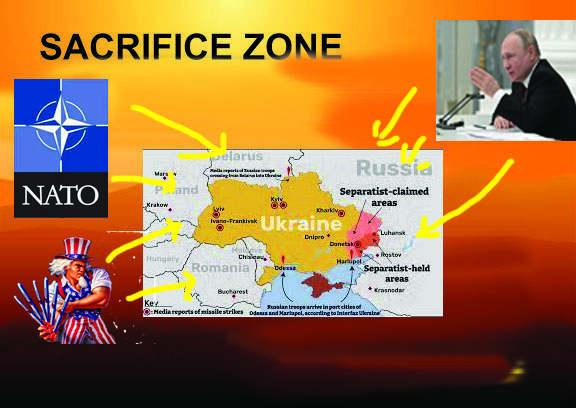
Lenin were he alive today would no doubt point out that Russia today, as well as the U.S., is a capitalist-imperialist country…….. He [Putin] is despicable, but his demand that NATO ceases expansion is as eminently reasonable and Biden’s desire to expand it seems crazier by the day.
Putin, Lenin, Imperialism and the (Real) History of Ukraine, Portside, March 5, 2022 Gary Leupp
— The people of this country suffer, I’ve always thought, from a general ignorance of history. ………
In 2014 having, having given little thought to Ukraine to that point, people in this county (self-defined Americans and others) were informed by the most authoritative sources they knew, the cable TV news anchors and commentators. They were treated to a history lesson that went something like this: The country of Ukraine has always been oppressed by Russia. It was colonized by Russia for centuries. Russia still, after the end of the Soviet Union, wants to control Ukraine! So it responded to a popular revolution in Kyiv, an expression of the Ukrainians’ longing to fulfill its “European aspirations,” by invading Ukraine!
having made its point clear in the brief invasion of Georgia in 2008 (to end talk of Georgian membership), having watched a U.S.-backed coup topple a president friendly to Russia replacing him with a pro-NATO cabal—was re-annexing Crimea (not just Russian from 1783 to 1954, but still Russia’s main naval port, then on lease from Crimea, and coveted by NATO) and supporting separatists in the primarily Russian speaking population in the Donbass region primarily to prevent further NATO expansion……………
In the real world, the U.S. has acted in the world since the collapse of the Soviet Union, the collapse of the Warsaw Pact, the collapse of what Washington perceived as the global communist movement, with an effort to encircle Russia with the most horrifically threatening military force in world history. It has expanded NATO in the absence of any real threat to itself from 16 to 28 members, bordering Russia on the Baltic coast and threatening to encircle it entirely. It has used NATO to pursue wars in Serbia, Afghanistan, Libya, and Syria, in the last case illegally intervening in a failed effort to gain control over a longstanding Russian ally…………
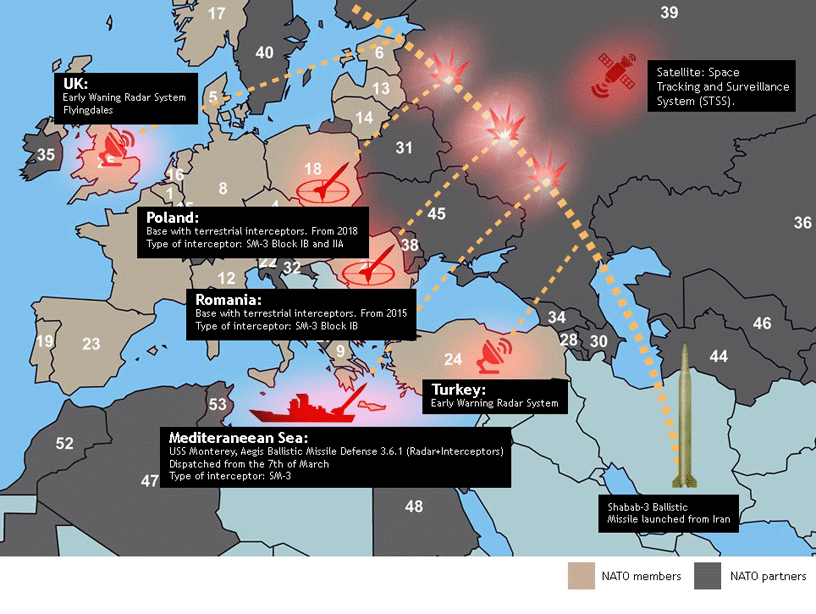
In the real world, Biden became president determined to both reassert U.S. “global leadership” and to continue NATO expansion. His campaign literature in 2020 reminded us that he believed in the cause. And it was clear he had a particular interest in drawing Ukraine in, which meant convincing Germany and other unenthusiastic NATO members to agree that Ukraine had cleaned up its corruption sufficient to get the nod.
He sent his secretary of state Anthony Blinken, who as Biden’s foreign policy advisor had urged him in 2002 to support Bush’s war on Iraq, to persuade the Germans that their gas pipeline to Russia threatened NATO unity! Meanwhile, U.S. puppet and NATO secretary-general Stoltenberg visited Kyiv to assure Ukraine that it will, indeed, be admitted to NATO. And the arms flowed into Ukraine.
Putin considered all this more threatening than ever………… The Russians were talking about their security, and need to defend their borders; the U.S. president was talking about his right to expand the alliance as he pleased.
For the U.S. media, what we see here is a clearly drawn conflict between Good and Evil, or in Blinken’s schoolmarmish conception “Democracy versus Autocracy.” What I see is two evils, neither of them democratic, locked in a conflict over the more powerful evil’s lust for further expansion. Both evils have their controlled news media and means to shape public consciousness.
Ukraine has been inhabited and crisscrossed by Scythians, Celts, Germanic peoples, Huns, Khazars, Mongols as well as Slavs. Given its history of incorporation into different states ………… at least the closest approximation of an independent state so far—was the Ukrainian Soviet Socialist Republic. Russia demanded that Ukraine be considered an independent state on the world stage; it held a separate UN seat. With Belarus it was one of the closest SSRs to Moscow, and most hesitant to withdraw from the union when Boris Yeltsin unilaterally dissolved it by pulling Russia itself out. Once established in its current configuration, Ukraine agreed to abandon its nuclear arsenal; it also agreed to a long-lease arrangement with Russia involving the vital Crimean naval base.
When Putin points to this history or at least aspects of it, he is not churning out lies at the level of the dutiful U.S. ……………

In the real world, Ukrainian fascist movements exist and were surely on display in the Maidan coup in 2014. They played a key role in the violent overthrow of an elected government, under Victoria Nuland’s watchful eye. There remains much support in some quarters for the wartime nationalist leader Stepan Bandera, who espoused a fascist ideology and helped round up Jews in Ukraine for the Nazi death camps. Anyone paying attention realizes that there are fascist elements in the military (the entire Azov Battalion) and that fascist parties, while small and with little electoral influence, have been able to stymie the implementation of the now-defunct Minsk Accords. So, yes, there is a fascist movement in Ukraine and it has a long history……
Crucial battles in this 1941-1945 war, also known as the Anti-Fascist War, were fought on Ukrainian soil, where some local communities sided with the fascists and embraced the Nazis’ Russophobia. Putin wants to essentialize Ukrainians as tending towards fascism, now working in tandem again with Russia’s enemies. This effort could well backfire among Russians who realize that Ukrainians are divided politically and ideologically among themselves and in any case undeserving of Putin’s characterization.
……….. Russians and Ukrainians retained amicable relations; the mere fact of new mutual independence was not a great problem for the relationship. Relations only deteriorated when, from around 2005, Ukrainian leaders requested NATO membership. In 2010 an anti-NATO president was democratically elected; the U.S. State Department oversaw a massive regime change effort to depict him as corrupt, anti-EU, impeding “Ukrainian’s European aspirations.” It succeeded in ousting him….
…….. Lenin were he alive today would no doubt point out that Russia today, as well as the U.S., is a capitalist-imperialist country…….. He [Putin] is despicable, but his demand that NATO ceases expansion is as eminently reasonable and Biden’s desire to expand it seems crazier by the day………………….. https://portside.org/2022-03-05/putin-lenin-imperialism-and-real-history-ukraine
The situation at Zaporizhzhia nuclear power station

information about Zaporizhzhia NPP
https://snriu.gov.ua/en/news/updated-information-about-zaporizhzhia-npp-1500 04 March 22
The largest nuclear power plant in Europe, Zaporizhzhia NPP, was captured by the military troops of the Russian Federation after heavy fighting in the streets of Energodar.
As a result of artillery shelling of the ZNPP industrial site:
– the reactor compartment building of the ZNPP unit 1 was damaged;
– 2 artillery shells hit the area of the dry type spent nuclear fuel storage facility.
The degree of damage to the structures and systems of these nuclear installations and their impact on safety requires additional assessments based on the results of the comprehensive inspections by the special services of the Operating Organization.
The fire, which broke out at night due to the enemy shelling of the ZNPP industrial site, severely damaged the training center building located in the immediate vicinity of the ZNPP industrial site.
Operational personnel, who were on shift at the time of the Russian occupation of the ZNPP site, were forced to continue working at their workplaces for more than 24 hours. There are no killed or injured ones among the ZNPP personnel. Some of the personnel received medical care due to stress.
To date, the rotation of operational personnel has been carried out, it is tentatively planned that the new shift will work until 23:00. Operational personnel monitor the state of power units and ensure their operation. At the same time, the personnel are working under pressure exercised by the armed forces of the Russian Federation, which occupied the ZNPP.
State of the power units:
- Unit 1 is in outage.
- Unit 2 is in operation to ensure the in-house needs.
- Unit 3 has been disconnected from the grid, the core cooldown operations are underway to transfer the nuclear installation into a cold shutdown state.
- Unit 4 is in operation, the electric power was increased up to 825 MW, the unit loading continues.
- Units 5, 6 are being cooled down.
Changes in the radiation situation in Zaporizhzhia region have not been registered, gamma radiation background is within the standard limits.
A bonanza for the weapons corporations, as many countries rush to buy weapons to send to Ukraine
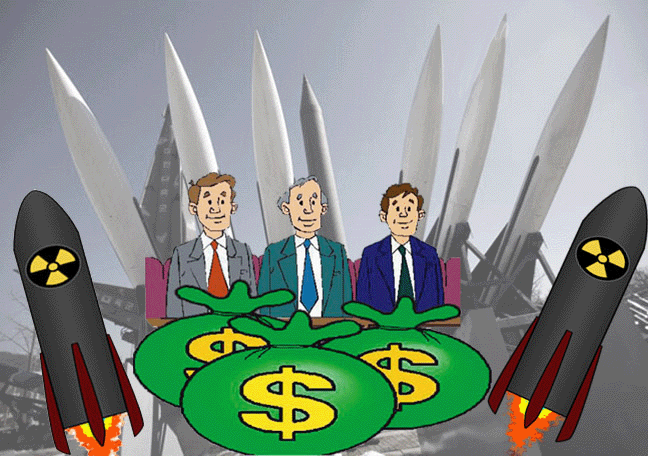
Countries Flood Ukraine With Military Support After Zelensky’s Appeal, Zero Hedge, BY TYLER DURDEN, MONDAY, MAR 07, 2022
By Autumn Spredemann ”……… The majority of arms and supplies from ally nations are being sent via Ukraine’s 310-mile border with Poland, which has become an important lifeline both for supplies and equipment, and refugees looking to flee the conflict.
Some border nations have chosen not to allow military equipment bound for Ukraine to pass through their territory out of fear of Russian retaliation.
On Feb 28, Hungarian Foreign Minister Peter Szijjarto said his country won’t allow “deadly weapons” to be transported through Hungary’s territory while reiterating the government doesn’t want to be involved in the Russia-Ukraine war. Szijjarto cited security concerns for Hungarian citizens as one of the primary factors in the decision.
Despite supply chain and shipping challenges, millions of dollars of ordnance continue to flow into Ukraine from two continents.
On Feb. 26, U.S. President Joe Biden authorized the State Department to send $350 million in weapons to Ukraine. …..
This is the third time Biden has used his presidential drawdown authority to send emergency security assistance, now totaling $1 billion, from U.S. reserves to Ukraine.
Canada
The Canadian government approved an additional $25 million in military aid to Ukraine on Feb. 27…..
Germany Chancellor Olaf Sholz announced on Feb. 26 that Germany would deliver 1,000 anti-tank weapons and 500 Stinger missiles to “our friends in Ukraine.”…
Sweden
In a departure from its decades-long neutrality, the Swedish government approved the shipment of 5,000 anti-tank weapons, 135,000 field rations, 5,000 helmets, and 5,000 pieces of body armor………
France
On Feb. 26, an army spokesperson said France would send “defensive military equipment” to Ukraine to aid in the resistance effort against Russia……..
United Kingdom
Back on Jan. 17, Secretary of Defense for the United Kingdom, Ben Wallace, said the UK would provide “self-defense” weapons and training to Ukraine amid the build-up of Russian troops near the border……. He elaborated that the second military support package included both lethal and non-lethal aid.
Belgium
Responding to a direct request from Kyiv, the nation opted to send 2,000 machine guns to the Ukrainian army and 3,800 tons of fuel on Feb. 26.
Netherlands
As of Feb. 26, the Dutch government said it’s delivering 50 Panzerfaust 3 anti-tank weapons with 400 missiles to Ukraine to help with the resistance effort against Russia. Additionally, 200 Stinger anti-aircraft missiles were promised along with helmets, shard vests, and sniper rifles.
Czech Republic
Formerly occupied by Russian troops during the Soviet era, the Czech government sent 4,000 artillery shells worth $1.7 million to Ukraine in January. The Czech Ministry of Defense released a statement on Feb. 26 saying it will also ship machine guns, submachine guns, assault rifles, and pistols, together with ammunition at an estimated value of $8.6 million.
Italy
Joining the growing list of countries providing military aid to Ukraine, on Feb. 28 the Italian cabinet pledged to dispatch Stinger missiles, mortars, and Milan or Panzerfaust anti-tank weapons. Among the items included in the defense package are Browning heavy machine guns, MG-type light machine guns, and counter-IED systems.
Portugal
Upon request from Ukrainian officials, the Portuguese Ministry of Defense announced on Feb. 26 that it will deliver military equipment including vests, night vision goggles, grenades, ammunition, complete portable radios, analog repeaters, and automatic G3 rifles.
Greece
The Balkan nation sent “defense equipment” and medical supplies on two C-130 aircraft from Athens on Feb. 27 at the request of Ukrainian authorities.
Romania
Another former satellite state of the Soviet Union, Romanian government spokesman Dan Carbunaru said the country would ship “ammunition and military equipment” on Feb 27.
Spain
On March. 2, Spanish Minister of Defense, Margarita Robles, announced the nation will send defensive equipment to Ukraine.
Finland
President Sauli Vainamo Niinisto decided to send an arms support package to Ukraine on Feb. 28. The delivery will include 2,500 assault rifles, 150,000 cartridges, 1,500 single-shot anti-tank weapons, and 70,000 combat ration packages. https://www.zerohedge.com/geopolitical/countries-flood-ukraine-military-support-after-zelenskys-appeal
‘Grave concern’ as Ukraine Zaporizhzhia nuclear plant under Russian orders
Grave concern’ as Ukraine Zaporizhzhia nuclear plant under Russian orders, International Atomic Energy Agency says Russian military orders of staff at nuclear plant violate international safety protocols, Guardian, Julian Borger in WashingtonMon 7 Mar 2022
Staff at Ukraine’s Zaporizhzhia nuclear power plant are being told what to do by the Russian military commander who seized the site last week, in violation of international safety protocols.
The International Atomic Energy Agency (IAEA) expressed “grave concern” at the situation at the six-reactor plant, the largest in Europe. The agency was told by the Ukrainian nuclear regulator that “any action of plant management – including measures related to the technical operation of the six reactor units – requires prior approval by the Russian commander”.
The IAEA director general, Rafael Mariano Grossi, said on Sunday that the Russian military command over the nuclear plant “contravenes one of the seven indispensable pillars of nuclear safety and security” which states that the operating staff must be able to carry out their safety and security duties and be able to make decisions “free of undue pressure”.
Russian forces shelled the Zaporizhzhia plant in the early hours of Friday morning, damaging a walkway between two of the six reactors, and starting a fire in a nearby building used for training. As a result some of the reactors were shut down and others were put on low power.
The reactors themselves are well protected by a thick concrete shell, but there is concern that more vulnerable spent fuel rods could be hit, or that the power and cooling systems could be affected, potentially triggering a meltdown.
The IAEA also expressed concern that the Russian occupying force had reportedly shut down mobile phone networks and the internet connection “so that reliable information from the site cannot be obtained through the normal channels of communication”.
It said communications between the plant and the Ukrainian nuclear regulator have been affected, which the IAEA said contravenes another of the nuclear safety pillars listed by Grossi, requiring “reliable communications with the regulator and others”…….
The IAEA said that the operators at the plant were now being able to rotate between three shifts, relieving the operators who had been on duty at the time the plant was seized, but there were still “problems with availability and supply of food” which the Ukrainian regulator said was affecting morale on the plant.
The IAEA also expressed alarm that communication had been lost with institutions and enterprises in the besieged port city of Mariupol where it said there are “category 1-3 radiation sources, a probable reference to medical or industrial isotopes. A category 1 source can be lethal after more than a few minutes exposure.
“Such radioactive material can cause serious harm to people if not secured and managed properly,” the agency said in a statement.https://www.theguardian.com/world/2022/mar/06/ukraine-zaporizhzhia-nuclear-plant-staff-under-russian-orders
IPCC’s bleak warning of climate breakdown – half of the world’s people are ‘highly vulnerable’

Working group 3 will set out pathways and policy choices governments could take to reach the goal of limiting global heating to 1.5C, including some of the likely costs and economic benefits of those choices.
After that, a “synthesis report” drawing together all three parts of the IPCC’s sixth assessment will be published in October, for policymakers to discuss at Cop27.
Q&A: Has the IPCC’s bleak warning of climate breakdown been heard? https://www.theguardian.com/environment/2022/mar/05/qa-has-the-ipccs-bleak-warning-of-climate-breakdown-been-heard
Report by Intergovernmental Panel on Climate Change said half of the world’s people are ‘highly vulnerable’
The second of four parts of the IPCC’s sixth assessment report, the latest comprehensive review of our knowledge of the climate crisis, was termed by some scientists “the bleakest warning yet”. Half of the world’s people are “highly vulnerable” to serious impacts from the climate crisis, a billion people in coastal areas face inundation, mass die-offs of species including trees and coral have already begun, and close to a tenth of the world’s farmland is set to become unsuitable for agriculture.
By any standards, these are stark and brutal findings. António Guterres, the UN secretary general, said: “I have seen many scientific reports in my time, but nothing like this. Today’s IPCC report is an atlas of human suffering, and a damning indictment of failed climate leadership.”
But the report has been overshadowed, understandably, by the war in Ukraine, and has received less policymaker and media attention than it deserved.
That does not mean the IPCC report will be ignored. Governments are working on their responses to the scientists’ warnings, and later this year at the next UN climate summit, Cop27, they are obliged to lay out their plans to cut greenhouse gas emissions to limit global heating to 1.5C above pre-industrial levels.
Will Cop27 be affected by the war in Ukraine?
Cop27 is to be held this November in Egypt, a country that has forged strong diplomatic and economic ties with Russia in the recent past. Any meetings among the G20 major economies will also take place under the shadow of the Russian invasion of Ukraine. However, insiders point out that the climate negotiations have gone on for 30 years, despite wars and other conflicts among UN nations. Climate diplomats are practised at keeping other geopolitical tensions at least partly at bay.
Perhaps of even greater relevance to the climate crisis will be the decisions governments make on energy policy in response to the Ukraine war. This week, the International Energy Agency urged a suite of actions – from households turning down their thermostats by 1C to windfall taxes on energy companies and the rapid construction of new wind and solar power generation – that could reduce the EU’s reliance on Russian gas by a third or more.
The other options open to policymakers if Vladimir Putin turns off gas supplies to Europe would include a return to coal-fired power generation, the dirtiest form of fossil fuel. The choices that governments make now, ahead of next winter, will have profound consequences for the climate crisis.
What actions could and should governments take as a direct result of the IPCC report?
One of the key messages of the IPCC working group 2 report is that climate change is already occurring, all over the world. Even if we succeed in limiting global temperature rises to 1.5C, the limit countries agreed to target at Cop26 in Glasgow last November, we will still face more extreme weather, droughts, floods, heatwaves and sea level rises.
The IPCC made clear that countries must seek to adapt now to these changes, to stave off the worst damage. Adaptation can mean building seawalls and river barriers, planting trees on hillsides to stop landslips amid floods, conserving or regrowing mangrove swamps to absorb the impact of coastal storm surges, painting roofs white to reflect the sun’s heat, or making buildings and built infrastructure such as telecommunications networks, roads and railways more resilient to extreme weather.
Far too little effort has gone into adaptation up to now, the IPCC found. Rich countries promised last year at Cop26 to double their funding for adaptation in the poor world, but nearly all countries are still badly prepared.
Will adaptation be enough?
No. There are “hard limits” to adaptation, the IPCC made clear: the impacts of temperatures rising unchecked would overcome all our efforts to adjust. Flood barriers may hold back a river in spate today, but as the icecaps and glaciers melt, as heatwaves take hold, and as droughts threaten agriculture, we will face too many threats and they will grow too severe for any adaptation effort to allow life to proceed as normal.
Cutting greenhouse gas emissions urgently, to stop temperatures rising further, must still be the priority, according to the IPCC.
How should that be done?
Early next month, the IPCC will release the third part of its four-part assessment, by working group 3, covering “mitigation” – the ways in which countries can reduce greenhouse gas emissions. This includes renewable energy generation, energy efficiency, alternatives to fossil fuels such as nuclear power, and novel technologies, such as carbon capture and storage and direct air capture of carbon dioxide.
Working group 3 will set out pathways and policy choices governments could take to reach the goal of limiting global heating to 1.5C, including some of the likely costs and economic benefits of those choices.
After that, a “synthesis report” drawing together all three parts of the IPCC’s sixth assessment will be published in October, for policymakers to discuss at Cop27.
Wildfires threaten a nuclear power plant in South Korea
Thousands of South Korean firefighters and troops are battling a large
wildfire that has been tearing through an eastern coastal area and
threatened a nuclear power station and a liquefied natural gas plant.
ABC News 5th March 2022
https://www.abc.net.au/news/2022-03-05/south-korea-wildfires-threaten-nuclear-lng-plants/100885914
Sky 6th March 2022
Russian forces approach Ukraine’s second-largest nuclear power plant in Yuzhnoukrainsk
– The US ambassador to the United Nations has warned that the world averted
nuclear catastrophe ‘by the grace of God,’ as troops move closer to the
country’s second-largest nuclear power plant. In a statement given during
an emergency meeting of the UN Security Council following the news that
Russian forces had shelled Europe’s largest nuclear power plant, Linda
Thomas-Greenfield said that troops were ‘now 20 miles, and closing, from
Ukraine’s second-largest nuclear facility,’ the South Ukraine nuclear
power plant in Yuzhnoukrainsk.
Unilad 5th March 2022
The Fukushima disaster ruined their lives.

Posted on by beyondnuclearinternational
They campaigned for justice, but the nuclear accident killed them anyway
By Linda Pentz Gunter
Kenichi Hasegawa was a dairy farmer in Fukushima Prefecture at the time of the March 11, 2011 Fukushima Daiichi nuclear disaster, living in a family of eight in Itate village with his parents, wife, children and grandchildren.
Itate is approximately 50 kilometers away from the nuclear site, but quickly became one of the most radioactively contaminated places as a result of the Fukushima disaster. Yet, residents were told little and it took more than a month for an evacuation order to be issued for Itate. Many did not leave until late June.
Mr. Hasegawa himself stayed on in Itate for five months after the disaster, tending to his cows until all of them were put down. Meanwhile, he kept a visual record of conditions there, taking more than ten thousand photos and 180 videos (in Japanese).
On October 22, 2021 Hasegawa died of thyroid cancer at just 68, almost certainly caused by his prolonged exposure to radioactive iodine released by the Fukushima Daiichi nuclear catastrophe.
Before the nuclear disaster, Hasegawa owned 50 dairy cows and farmed vegetables. He was also a political leader, serving as mayor of his local ward. But the Fukushima accident changed everything.
With a high concentration of radioactive substances now found in dairy milk, his business was ruined. Angered by the cover-up by authorities of the true extent of radioactive contamination, he became a co-representative along with Ms. Ruiko Muto, of the Nuclear Accident Victims Group Liaison Committee, established in 2015.
By then, he had already authored the 2012 book, Fukushima’s Stolen Lives: A Dairy Farmer’s Story, in which he delivered an eyewitness account of the aftermath of the nuclear disaster, “as he suffered with the knowledge that his children and grandchildren had been exposed to radiation, as he lost all of his cattle (who were considered part of the family, not simply the source of their livelihood), and as he endured the suicide of a fellow dairy farmer and friend.”
That friend wrote his final words on a wall before he died: “If only there were no nuclear power plants.”
Hasegawa returned to Itate in 2018, once the evacuation order had been lifted, and began growing buckwheat, largely to prevent his pastures from turning into wasteland. Although radiation levels in the buckwheat registered below what is considered dangerous, Hasegawa could not sell the crop.
In a 2020 interview with his Committee colleague, Ms. Muto, a resident of Miharu town, Hasegawa said: “The nuclear plant robbed us of everything. We still can’t go into the forests. Families with children used to go into the forest to gather wild plants and teach many things. That was a common practice, taken for granted. But today we can’t do anything like that. We can no longer eat anything foraged from the forest.
“In Japan, a community like ours affected by radiation is seen as an inconvenience,” Hasegawa told Muto. “They would like us to disappear and be forgotten.”
Family life was shattered by the Fukushima accident, including Hasegawa’s. His children and grandchildren vowed not to return the village and its contaminated land. In the Maeda neighborhood, where Hasegawa served as mayor, the population is now largely comprised of the elderly.
Worse still, Hasegawa said TEPCO’s approach was to blame the victims, rather than take responsibility for the devastation its nuclear power plant had caused.
“TEPCO eventually said that it’s really the village’s fault that people were exposed to radiation, because they did not evacuate,” Hasegawa recalled to Muto. “But we couldn’t evacuate because we had livestock or other things holding us back. They are saying everything was our own responsibility. Of course I protested loudly. How dare they blame us!”
Hasegawa is sadly, and unsurprisingly, not the only person who has succumbed to a premature death owing to radiation exposure caused by the Fukushima Daiichi nuclear catastrophe. By 2021, friends and colleagues involved with the aftermath of the Fukushima Daiichi disaster could count numerous people who had died.
Yet, even immediately after the still on-going nuclear disaster began, Japan’s Chief Cabinet Secretary said repeatedly: “There is no immediate effect on the human body or health”. The phrase was all too reminiscent of the ironic and prescient warning give to us by radiation researcher, Rosalie Bertell, in her 1985 book, “No Immediate Danger”.
One of those also lost in 2021 was Ms Yayoi Hitomi. She was only 60 years old when she died of ovarian cancer on September 28. Already an anti-nuclear activist well before the Fukushima Daiichi disaster, she was living in Koriyama city, situated just 60km from the stricken plant. Although Koriyama was categorized as outside of the mandatory evacuation zone, it was full of radiation hotspots.

Hitomi was a member of Women of Fukushima Against Nuclear Power. She worked as a journalist and web writer, and was one of the most efficient organizers of the Fukushima Nuclear Criminal Litigation Support Group. After Hitomi’s death, Muto, the head of the plaintiffs’ group, said that it was as if she had lost one of her arms.
Hitomi went to Europe in March 2016, and spoke in several countries on the situation in Fukushima. She was full of energy, and looked no older than 40. However, in the fall of 2016, a cancer was discovered and she passed away five years later. Her death tells us that even if you live outside of the mandatory exclusion zone, you aren’t always protected against potentially lethal radiation health hazards.
These coming losses had been predicted in a March 2020 interview (in Japanese), when Hasegawa and his wife had observed that people in their 50s and 60s were dying like flies.
All of this of course gives the lie to — and makes especially insensitive and abhorrent — claims made by nuclear power boosters, and even lazy journalists, that “no one died because of the Fukushima nuclear accident”.
Kurumi Sugita also contributed to this article.
Headline photo of Kenichi Hasegawa speaking in Australia, by MAPW Australia/Creative Commons
The Fukushima taboo

“Coming out” on thyroid cancer from Fukushima is an act of bravery in today’s Japan
By Linda Pentz Gunter
In the midst of the arcane fight over whether to include nuclear power in the European Union’s green “Taxonomy”, five former prime ministers of Japan made an unprecedented statement. They roundly condemned any inclusion of nuclear power as a green or sustainable energy, even as a so-called bridging fuel.
The current Japanese government glossed over the climate arguments in the former prime ministers’ argument, quickly seizing upon one tiny phrase concerning conditions in Japan post-Fukushima that read: “many children are suffering from thyroid cancer”.
The ruling Liberal Democratic Party even went so far as to approve a resolution condemning the five former prime ministers, one of whom, Junichiro Koizumi, is from that party. The resolution alleges that their statement was not “scientific” and that they were reigniting prejudice and encouraging people to view people from Fukushima as pariahs.
The party’s Policy Research Board said it would submit its resolution to current prime minister, Fumio Kishida.
On the same day — January 27, 2022 — as the former prime minister’s letter was submitted to the EU, six young people who were children at time of the March 2011 Fukushima Daiichi nuclear disaster, filed a lawsuit in the Tokyo District Court against TEPCO, the owner and operator of the nuclear plant.
The six, ages 17 to 27, hold the company responsible for the thyroid cancers each of them developed after being exposed to the radiation released by the nuclear disaster.
In filing suit and thus making the issue public, the six were immediately on the receiving end of an unprecedented level of abuse for speaking out. In this video of their testimony, they were obliged to keep their physical appearances concealed for fear of further reprisals.
“Coming out” on thyroid cancer — or indeed about any negative health impacts resulting from the Fukushima nuclear disaster — remains largely taboo in Japan. Studies that conclude the medical impacts are significant or even substantial, are met with equal hostility, stoniness or just plain silence.
When epidemiologist, Toshihide Tsuda and colleagues, published a paper in 2016 — Thyroid Cancer Detection by Ultrasound Among Residents Ages 18 Years and Younger in Fukushima, Japan: 2011 to 2014 — it was reportedly largely ignored rather than challenged.
The study concluded: “An excess of thyroid cancer has been detected by ultrasound among children and adolescents in Fukushima Prefecture within 4 years of the release, and is unlikely to be explained by a screening surge.”
This contradicted the prevailing and enduring view among the establishment that there are now more thyroid cancers found among children after Fukushima simply because there is more testing.
The “more testing” myth served as a convenient pretext to reduce testing for thyroid cancers in schools — on the basis such testing would upset children too much, hardly “scientific”.
The very public lawsuit may transform all this, as the testimonies leave an indelible picture of the toll taken on children and families by the Fukushima nuclear disaster.
In a two-part series, investigative journalist, Natsuko Katayama, reported on the case for the Tokyo Shimbun on January 19 and January 27 this year.
She wrote that among the plaintiffs, “Two of them had a lobe of the thyroid removed, and the other four had to have the whole thyroid removed because of recurrence (in the case of one of them, metastasis had spread to the lungs). All of them had to stop their studies or their professional activity in order to undergo these surgical procedures and medical treatments. They live in fear and anxiety of a recurrence, and their daily lives have been curtailed due to fatigue and weakness caused by the disease.”
One of the plaintiffs said they had all kept silent about their thyroid cancers for 10 years, not daring to go public because of the inevitable backlash of discrimination.
Many of those suffering illnesses related to the Fukushima nuclear disaster find themselves the new “Hibakusha”, the name originally given to those ostracized and rejected by Japanese society because of their exposure to radiation from the Hiroshima and Nagasaki atomic bombings.
Choking with emotion, one of the plaintiffs described in the press conference how she and the others had to give up their work and educational hopes and dreams due to the constrictions of illness and the necessary treatments. “Four of the six plaintiffs have had a recurrence or mestatasis of their disease,” she said.
Thyroid cancers among those exposed to Fukushima radiation as children have increased 20 times the expected rate, with about 80% metastasizing, meaning surgery was medically indicated and screening necessary.
“I am very worried about the future and cannot think about marriage or other plans,” said one of the young women, also a plaintiff in the trial, whose voice could be heard at the press conference, and whose cancer had returned and spread. All of them have faced considerable financial hardships due to the expense of their treatment and the loss of work.
The plaintiffs expressed the hope that the trial would help other children suffering from thyroid cancer, believed to number at least 300. But, with the suppression of testing and reporting, and the taboo surrounding any admission of thyroid cancer, the numbers could well be a lot higher.
The plaintiffs’ lawyers argue that Tepco will need to prove that there is no causal relationship between their clients’ thyroid cancer and the Fukushima Daiichi nuclear disaster. It seeks compensation for the victims.
“I try to believe that all will be well,” said one of the plaintiffs, a 26-year old woman who was 17 at the time her thyroid cancer was diagnosed, “even as I ask myself, ‘why me’?”
The 3.11 Children’s Thyroid Cancer Network was launched to support this lawsuit.
Headline image shows 2013 IAEA team member overseeing TEPCO moving nuclear fuel assemblies from Reactor Unit 4 to the Common Spent Fuel Pool. (Photo: IAEA)
Chain cutting device breaks off this time, and no progress in removing contaminated piping at TEPCO’s Fukushima Daiichi Nuclear Power Plant

March 3, 2022
TEPCO announced on February 3 that its cutting equipment failed for the second day in a row in cutting pipes contaminated with highly radioactive materials between Units 1 and 2 at the Fukushima Daiichi Nuclear Power Plant (Okuma and Futaba, Fukushima Pref.) One week after work began on February 24, the cutting of 26 separate sections has not progressed at all, and the procedure will be reviewed.
The radiation level at the site is extremely high due to the contaminated pipes being near the ground, and people continue to be unable to approach the site. TEPCO planned to remove the pipes because they would be an obstacle to the planned work to cover the Unit 1 reactor building with a cover.
The work was carried out by remotely operating a cutting device attached to a large crane, and on the 1st, one of the two chain-like cutting devices came off, and on the 2nd, the same device broke.
According to TEPCO, before the failure on the 1st, an alarm was triggered indicating an increase in the concentration of radioactive materials contained in the chips from the cut section of the pipe, and on the 2nd, the alarm sounded again, so the speed of the cutting device was reduced to prevent the production of many chips, but the device broke after cutting about one third of the pipe. The cause is believed to be premature wear of the device.
The pipes, each about 30 centimeters in diameter and measuring about 65 meters on the Unit 1 side and about 70 meters on the Unit 2 side, were cut into 26 sections and removed. (The plant was used to vent contaminated steam from inside the reactor to prevent the containment vessel from rupturing in March 2011.)
https://www.tokyo-np.co.jp/article/163463?fbclid=IwAR0W4Rv8sxOLCLhbCzOqq6x8OgRxXGMIjDyAYH0BpNXIf9x2p4HZf4Xaac8
How the West failed Ukraine….and how Putin has doomed Russia to collapse — daryanenergyblog

I came across this article in the Guardian that I think sums up how the west got itself into this mess. Why does the west always seem to lose to Putin? Timidity Greed & Sloth. The west has not effectively stood up to Putin any time he’s made some sort of move. Be it in […]
How the West failed Ukraine….and how Putin has doomed Russia to collapse — daryanenergyblog
Supreme Court orders damages for Fukushima victims in landmark decision
A victory sure, but $3,290 for 10 years of misery and a devastated life it is cheaply paid…

March 4, 2022
The Supreme Court upheld an order for utility Tokyo Electric Power Company Holdings Inc. to pay damages of ¥1.4 billion ($12 million) to about 3,700 people whose lives were devastated by the Fukushima nuclear disaster, the first decision of its kind.
NHK said the average payout was about ¥380,000 ($3,290) for each plaintiff in three class-action lawsuits, among more than 30 against the utility. The three suits are the first to be finalized.
A massive tsunami unleashed by an earthquake of magnitude 9.0 off Japan’s northeastern coast struck Tepco’s Fukushima No. 1 power plant in March 2011, leading to the world’s worst nuclear disaster since Chernobyl.
About 470,000 people were forced to evacuate in the days after the disaster and tens of thousands have still not been able to return.
Friday’s decision came as the court rejected an appeal by Tepco and ruled it negligent for not taking preventive measures against a tsunami of that size, the broadcaster said.
The court withheld a verdict on the role of the government, which is also a defendant in the lawsuits, and will hold a hearing next month to rule on its culpability, NHK added.
Lower courts have been split over the extent of the government’s responsibility to foresee the disaster and order steps by Tepco to prevent it.
Two aircraft carrier strike groups to participate in NATO war games off Russia’s northwest coast — Anti-bellum
Barents ObserverMarch 4, 2022 Russia will not observe Cold Response NATO exercise The 30,000 troops from 27 countries that have signed up for Cold Response 2022 will test winter combat in air, sea and land elements. The first personnel from countries like the United States and the United Kingdom have already arrived at military camps […]
Two aircraft carrier strike groups to participate in NATO war games off Russia’s northwest coast — Anti-bellum
Blinken: U.S. to transfer warplanes from Poland to Ukraine — Anti-bellum
Interfax-UkraineMarch 6, 2022 Blinken: USA working with Poland to transfer military aircraft to Ukraine The United States is negotiating with Poland on the possibility of transferring MiG and SU aircraft to Ukraine, on which Ukrainian pilots will be able to fly, U.S. Secretary of State Antony Blinken has said. “We are working with Poland as […]
Blinken: U.S. to transfer warplanes from Poland to Ukraine — Anti-bellum
Japan’s top court orders damages for Fukushima victims in landmark decision -NHK

TOKYO, March 4 (Reuters) – Japan’s Supreme Court upheld an order for utility Tokyo Electric Power (Tepco) to pay damages of 1.4 billion yen ($12 million) to about 3,700 people whose lives were devastated by the Fukushima nuclear disaster, the first decision of its kind.
Public broadcaster NHK said the average payout of about 380,000 yen ($3,290) for each plaintiff covered three class-action lawsuits, among more than 30 against the utility, which are the first to be finalised.
A massive tsunami unleashed by an earthquake of magnitude 9.0 off Japan’s northeastern coast, struck Tepco’s Fukushima Daiichi power plant in March 2011, to cause the worst nuclear disaster since Chernobyl.
About 470,000 people were forced to evacuate in the first few days, and tens of thousands have not yet been able to return.
Friday’s decision came as the court rejected an appeal by Tepco and ruled it negligent in taking preventive measures against a tsunami of that size, the broadcaster said.
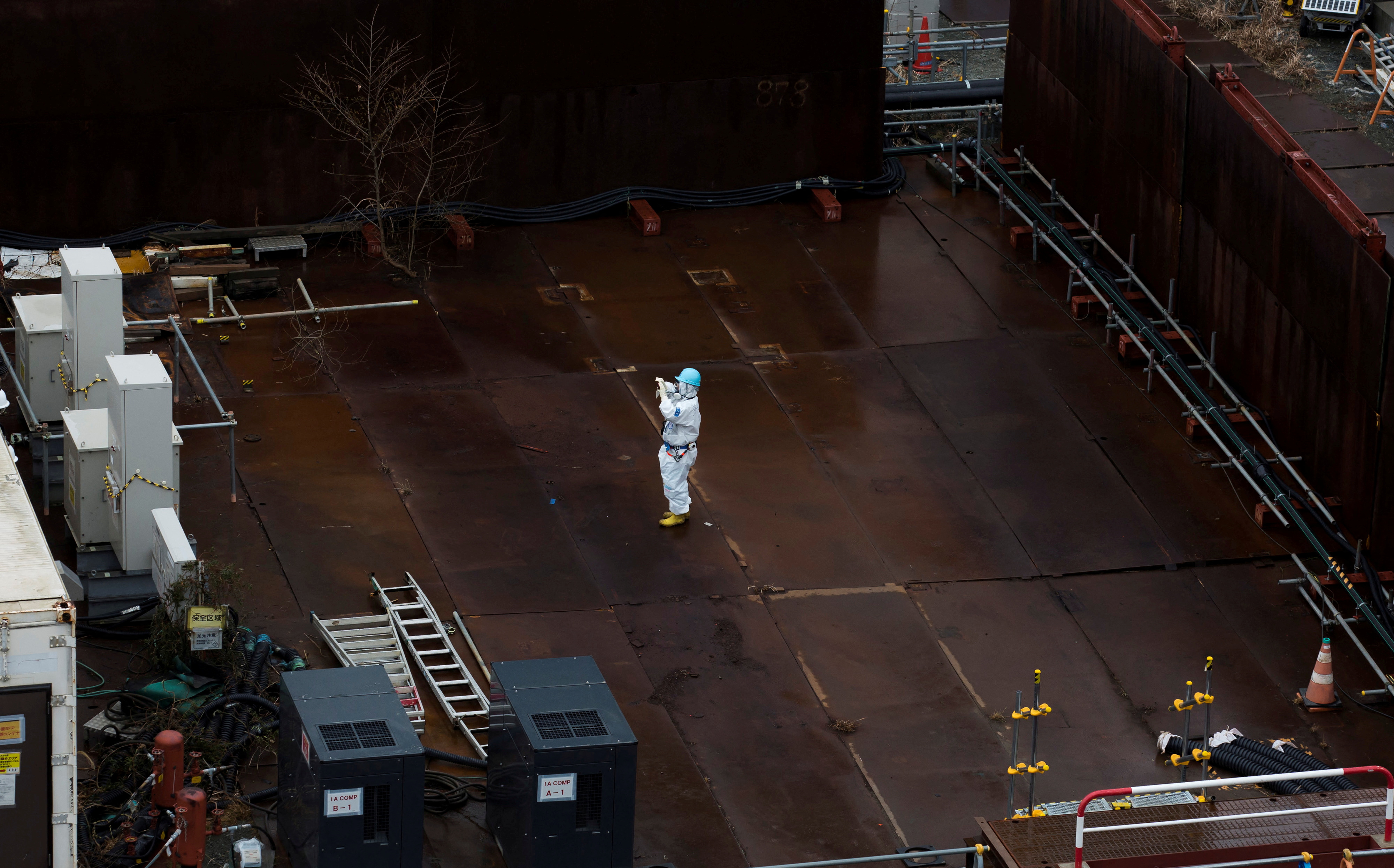
TOKYO, March 4 (Reuters) – Japan’s Supreme Court upheld an order for utility Tokyo Electric Power (Tepco) to pay damages of 1.4 billion yen ($12 million) to about 3,700 people whose lives were devastated by the Fukushima nuclear disaster, the first decision of its kind.
Public broadcaster NHK said the average payout of about 380,000 yen ($3,290) for each plaintiff covered three class-action lawsuits, among more than 30 against the utility, which are the first to be finalised.
A massive tsunami unleashed by an earthquake of magnitude 9.0 off Japan’s northeastern coast, struck Tepco’s Fukushima Daiichi power plant in March 2011, to cause the worst nuclear disaster since Chernobyl.
About 470,000 people were forced to evacuate in the first few days, and tens of thousands have not yet been able to return.
Friday’s decision came as the court rejected an appeal by Tepco and ruled it negligent in taking preventive measures against a tsunami of that size, the broadcaster said.
The court withheld a verdict on the role of the government, which is also a defendant in the lawsuits, and will hold a hearing next month to rule on its culpability, NHK added.
Lower courts have split over the extent of the government’s responsibility in foreseeing the disaster and ordering steps by Tepco to prevent it.
1 This Month
Tell Congress: Prevent Nuclear Catastrophe in Iran

Tell Congress: Prevent Nuclear Catastrophe in Iran

Read the Public Inquiry Report, the Commissioners’ report, Surrendering Australia: The AUKUS Deception is available to download for free at aukuspublicinquiry.com. Or just watch the replay of the National Press Club Luncheon.


Shut down the radiation-damaged Heysham nuclear reactors now
To see nuclear-related stories in greater depth and intensity – go to https://nuclearinformation.wordpress.com

Say No to NASA’s Reckless Nuclear Reactor on the Moon
Say No to NASA’s Reckless Nuclear Reactor on the Moon
-
Archives
- November 2026 (224)
- October 2026 (302)
- September 2026 (339)
- August 2026 (330)
- July 2026 (355)
- June 2026 (287)
- May 2026 (306)
- April 2026 (356)
- March 2026 (251)
- February 2026 (267)
- January 2026 (308)
- December 2025 (358)
-
Categories
- 1
- 1 NUCLEAR ISSUES
- business and costs
- climate change
- culture and arts
- ENERGY
- environment
- health
- history
- indigenous issues
- Legal
- marketing of nuclear
- media
- opposition to nuclear
- PERSONAL STORIES
- politics
- politics international
- Religion and ethics
- safety
- secrets,lies and civil liberties
- spinbuster
- technology
- Uranium
- wastes
- weapons and war
- Women
- 2 WORLD
- ACTION
- AFRICA
- Atrocities
- AUSTRALIA
- Christina's notes
- Christina's themes
- culture and arts
- Events
- Fuk 2022
- Fuk 2023
- Fukushima 2017
- Fukushima 2018
- fukushima 2019
- Fukushima 2020
- Fukushima 2021
- general
- global warming
- Humour (God we need it)
- Nuclear
- RARE EARTHS
- Reference
- resources – print
- Resources -audiovicual
- Weekly Newsletter
- World
- World Nuclear
- YouTube
-
RSS
Entries RSS
Comments RSS

