Fukushima Workers Tell The Harrowing Story Of How They Tamed One Of The World’s Worst Nuclear Disasters
When the Fukushima Daiichi Nuclear Power Plant overheated in March 2011, these heroic workers stepped in. To this day, most people are unaware of their achievements.
03/12/2022
This story, by Fukushima Central Television, Co., Ltd., was published in partnership with HuffPost Japan and is translated from the original Japanese footage.
In 2011, three nuclear reactors melted down, provoking a series of hydrogen explosions and resulting in the world’s most severe nuclear accident. It happened in Japan, which had been long celebrated as a technology powerhouse.
At the time of the accident, the site became a veritable death trap, with extremely high levels of radioactivity and chunks of concrete from the explosion raining down on workers. And yet, there were some who remained on the ground to try and bring the overheating nuclear power plant to a halt.
“I just couldn’t run away when my country was about to sink,” one of the workers said. If this story can be told at all, it is precisely thanks to those who faced one of the world’s worst nuclear disasters out of a sense of pride in their country’s technology, attachment to the community and loyalty to their jobs.
The magnitude 9 Great East Japan Earthquake struck at 2:46 p.m. local time on March 11, 2011. Soon after, a large tsunami hit the ground level of the Fukushima Daiichi Nuclear Power Plant, which consisted of six nuclear reactors.
Satoru Umematsu, a veteran electrical engineer who had taken part in building the ground floor, was there when it happened. Umematsu was 60 at the time, and fast approaching retirement age.
When the nuclear power plant’s power transmission tower was knocked down by the force of the earthquake, causing the loss of external power supply, emergency generators kicked in, ensuring that cooling pumps could continue to function.
When the tsunami struck, however, the emergency generators of reactors 1 through 4, located about 33 feet (10 meters) above sea level, were flooded and stopped working.
When Umematsu rushed to the plant’s earthquake-proof building, about 115 feet (35 meters) above sea level, where the emergency response room was set up, it was packed with people. Inside, ashen-faced power plant executives were bustling around in a frenzy.
A Strategy Forms
As Umematsu and the others realized that the reactors could no longer be cooled down, they moved to secure a vehicle-mounted generator and power cables in order to generate electricity and restore the power supply.
“It was unimaginable that a nuclear power plant would lose all power. So, when it did actually happen, we were overcome by a tremendous sense of urgency,” he said.
For Umematsu, who had experienced all kinds of situations at different job sites in the course of his career, this crisis was an absolute first.
After graduating from junior high school and acquiring engineering skills at a vocational training center, Umematsu had accumulated over 40 years of experience in electrical construction sites, including power generation dams and nuclear power plants. He was familiar with most electrical systems in nuclear power plants. He was proud of the technological capabilities Japan had acquired after World War II and would proudly tell his relatives of his work at the nuclear power plant. He was relied upon by subordinates and colleagues, who respectfully referred to him as “Ume-san.”
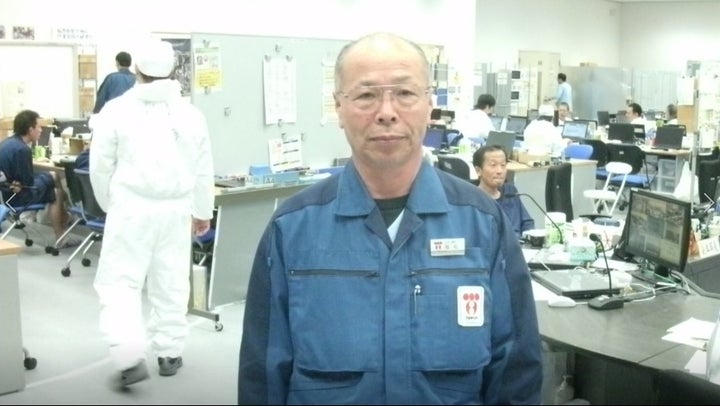
In order to complete their task in the shortest possible time, Umematsu and his crew devised a simple strategy. To restore the power supply, they would park the vehicle-mounted generator next to the reactor building and link it to the nuclear power plant by connecting the power cables.
Opening A Path For The Truck-Mounted Generator
However, even the task of moving the truck-mounted generator closer to the reactor building was a daunting one. All kinds of debris and rubble brought by the tsunami littered the area around the reactor building, obstructing the passage of vehicles.
It wasn’t the power plant staff, the Self-Defense Forces, the fire department, nor the police who tackled this problem — it was a local resident.
Yoshishige Tochimoto was the managing director of a local company with about 10 employees. He was 51 at the time. When the earthquake struck, he witnessed the destruction of the nuclear power plant’s critical equipment.

“When the power transmission tower on the slope was brought down by the earthquake, it generated huge sparks. They were pink in color. Between 10 to 20 meters in length,” he said.

Tochimoto was on the premises as a subcontractor, doing seismic retrofitting work on the nuclear power plant. As he felt the ground shaking, he said he was unable to stand on his feet.
His own car was washed away by the tsunami that followed the earthquake. Luckily, his company’s excavator had suffered virtually no damage and only the caterpillar tracks had been submerged.
Wary of being exposed to radiation, Tochimoto had not actively sought out nuclear-related work in the past. But now he accidentally found himself on the scene of a nuclear disaster.
“This could be really bad, I thought,” he said.
‘I Won’t Be Gone For Long’
Workers from Tochimoto’s business and other local companies assembled in the parking lot in front of the earthquake-proof building.
They took a roll call to ensure everyone was safe. Then, the prime contractor company instructed them to “disband,” as it was feared that some of the workers would have lost some family members, or their homes would have been damaged. Tochimoto remembered what the other workers were talking about at the time.
“There was talk of opening a vent hole to prevent a hydrogen explosion,” he said.
A hydrogen explosion. He was unfamiliar with that word. The matter, however, seemed completely unrelated to him.

Worried about his wife and children, he decided to go back to his home, approximately 8 miles (13 kilometers) away. Since his car at the nuclear power plant had been washed away by the tsunami, he asked an acquaintance for a ride home.
What would normally be a 30-minute ride ended up taking them two hours, as the road was heavily congested with people evacuating. After getting home and making sure that everyone in his family was safe, he got a call from the prime contractor company.
“Will you help us fix the nuclear power plant?”

The roads inside the nuclear power plant were impassable by vehicles as they were covered in rubble and fissures in the asphalt had caused uneven gaps. Tochimoto thought that, if it was only a matter of fixing the road, it would not take long and he would be back home soon.
“I won’t be gone for long,” he told his family as he headed toward the Daiichi power plant. The time was around 7:30 pm.
Restoring Power, Fighting Against Fear
It took until nighttime to prepare the equipment needed to restore power. With preparations over, Umematsu gathered some young workers from the power plant and explained to them how to handle the power cables and how to route them.
The cables in question were special high-voltage cables called “Triplex,” which could suffer damage if dragged over the ground. The workers would have to connect the heavy cables, each 1-meter section weighing about 13 pounds (6 kilograms), from the truck-mounted generator parked outside the building to the power panel inside. Due to the building’s complex structure, they would have to lay the cable over a distance of about 130 meters. Many of the team’s members had no previous experience in handling that kind of equipment.
“As graduates of Japan’s most prestigious universities, they knew the theory, but had never actually connected a high-voltage cable. I was the only one who could tell them how to go about it.”

TEPCO employees recording data in the central control room of Fukushima Daiichi Nuclear Power Station Units 1 and 2 (provided by NISA)
However, at around 11:00 p.m., radiation levels several tens of times higher than usual were detected inside the building of the Unit 1 reactor. The pressure on the steel “containment vessel” enclosing the reactor holding the nuclear fuel was about to exceed the permissible values. The director of the power plant immediately forbade anyone from entering the Unit 1 building. The signs were unmistakable that the feared meltdown had begun.
If the workers did not complete the operation swiftly, they too could have been exposed to lethal doses of radiation. If only the power supply could be restored, the looming crisis could be averted. It was up to Umematsu to make it possible.
“I’m pretty sure we were all scared. Extremely scared,” he said. “But being scared is different from being hesitant. Some were actually hesitant and did not want to go. We were certainly scared. Incredibly scared. After all, we were going to an unknown site. However, while being scared, we behaved normally.”

Since Umematsu was not a regular power plant employee, normally he would have been advised to go home. Instead, the power plant managers, relying on his skills, asked him to stay. Umematsu could have walked away while he still did not know how much radiation he would be exposed to. Instead, he chose to listen to his heart.
“I knew my skills were about to be put to the test,” he said. “I was glad my know-how could be of help in such a situation. When your country is as likely to stay afloat as it is to sink, you can’t quit just because you’re scared or because radiation levels are high.”
At that point, he still hadn’t been able to contact his wife and children. Nonetheless, as an engineer, he decided to throw himself into the task and went to work near the reactor building.
An Unsung Achievement
The truck-mounted generator, however, was still a long way away from being able to approach the reactor building. The road had yet to be repaired in order to make that possible. Fissures in the road caused height differences as much as a meter high. Tochimoto’s team studied the situation and considered what to do.
A proposal was made to bring in gravel from a nearby quarry to fill in the gaps, but was abandoned because it would have taken too long. Tochimoto thought that, as long as vehicles could pass, anything would do.
When he tried to turn the key to his company’s excavator, the engine came to life. Using the tip of the excavator’s bucket, he began to strip the asphalt coating in the parts of the road where the gaps were. He then proceeded to remove the gravel from under the paved surface and to press the surface down so as to create a gently sloping incline, at which point it looked as if a car might just be able to go through.

“While I was trying to open a road with the excavator, most of the people were actually watching me,” he said.
It seems that it was only thanks to Tochimoto and his excavator that the road was fixed. In just three hours, working by himself, he managed to repair the road inside the nuclear power plant so that vehicles could reach the reactor building.
Had Tochimoto not been there, it wouldn’t have been possible for the truck-mounted generator to approach the building to restore power, nor for fire engines to reach the same building and try to cool down the reactor.
To this day, most people are unaware of his achievement.
Because the road was fixed quickly, vehicles were able to reach the area around the reactor building by midnight. In the following hours, Tochimoto joined forces with workers from other companies to remove the rubble scattered around the reactor building.
A week after the accident, when a Hyper Rescue Team from the Tokyo Fire Department entered the area to cool off the fuel, one of its leaders said: “We were utterly surprised to see how the area surrounding the power plant had been cleared of debris to the point that not a single stone was visible, and our vehicles were able to approach without a hitch.”

The Real Risky Work Begins
Around midnight, a movable generator and a truck loaded with high-voltage cables smashed the nuclear protection gate and headed toward the reactor building.
Directing operations was Umematsu, the veteran engineer. He was hoping that, by connecting the movable generator to the power supply point near the Unit 1 reactor building, power could be restored, and the cooling pumps could start functioning once again.
The power cable was laid out near the reactor building, where radiation levels kept rising. The riskiest part of the work was about to begin.

Their efforts, however, had to be repeatedly interrupted as magnitude 4 and 5 aftershocks followed one after another. After a tsunami of such enormity, it was only natural that the area would have to be evacuated every time a tremor hit. Umematsu was getting impatient.
“We could have restored the power supply in five or six hours. However, we had to stop working and leave every time an aftershock struck, so things hardly moved at all. We went at it all night long, but most of the time we were sitting on our hands,” he said.
Radiation Levels 30,000 Times Higher Than Normal
A few hours have passed. At a press conference at 3 a.m. on March 12, Yukio Edano, chief cabinet secretary at the time, announced that he instructed workers to open a vent to release the pressure accumulated inside the Unit 1 reactor. Unless internal pressure is lowered in the reactor, he explained, the entire steel pressure vessel enclosing the nuclear fuel will explode. If that were to happen, huge amounts of radioactive material would be scattered across the surrounding area.
However, opening the required valve to ventilate the reactor building was an extremely difficult operation. The power plant operators assembled a “suicide squad” that rushed to where the valve was located, but radiation levels were so high that they had to turn back.

Around 6 a.m., just outside the building, Umematsu’s crew began full-scale operations to connect the power cable. Umematsu used a phone to report on progress to the emergency response office. As reception was poor, he kept moving around looking for a place where it would be easier to talk.
Without realizing it, he ended up nearby the exhaust tower through which steam exited the vent. At exactly the same time, efforts to open the valve from the outside finally succeeded.
Steam containing huge amounts of radioactive particles instantly rushed out of the exhaust tower, thoroughly irradiating Umematsu. “When I was near the exhaust tower, the dosimeter, which had been unresponsive for a while, suddenly came back to life with a loud BEEEEP. While cursing my luck, I had no choice but to continue working,” he said.
Japanese law sets maximum exposure levels for the general public at less than 1 millisievert per year (approximately 0.0027 millisieverts per day). Umematsu, on the other hand, was exposed to over 80 millisieverts in just one day.
Just As The Cable Was Connected …
The release vent is believed to have been successfully opened around 2:30 p.m. on March 12. Immediately after, efforts to connect the power cables, which had continued throughout the night, came to a successful completion.
It was now simply a matter of turning on the movable generator to restore power. Umematsu’s crew, in order to exchange places with the group that would operate the movable generator, had to leave the area and temporarily adjourn to the emergency response office in the earthquake-proof building.
“I believe it’s the same in power plants everywhere. Before moving on to the next job, you must let everyone know and get permission. You can’t proceed solely on your own judgment,” he said. “I would always let machine operators know that I finished this task, that I performed that check, and so on, then I would clear things with my superior, and only then would I proceed to the next task.”

It all happened exactly at moment Umematsu and his crew arrived at the emergency response office.
“It wasn’t a ‘whump,’ or a ‘thud,’ it was more like a popping sound,” he said.
At 3:36 p.m. on March 12, a hydrogen explosion shook the Unit 1 reactor.
For an unknown reason, the hydrogen that had filled the reactor building suddenly caught on fire and exploded. Concrete chunks from the gutted building flew across the entire area of the nuclear reactor at tremendous speeds.
“Find an empty car!”
Umematsu was shouting at the nearby workers at the top of his lungs. Radioactive rubble and insulation material was falling from the sky. He sensed that he would be exposed to considerable amounts of radiation just by touching it.

A fire engine happened to be parked nearby. The workers squeezed into the front and back seats one after another. Over 10 people crammed into a space normally meant for six. They kept the door closed for about 10 minutes. Holding their breath, they waited for the pollutants to pass by.
“‘There’s no going back now. The unthinkable has happened,’ I thought to myself. At that point I felt courage sweep over me. If you are on the scene of a Chernobyl-like disaster, it makes no difference anymore whether you’re inside or outside the reactor,” Umematsu said.
The hydrogen explosion shredded the power cables.
The surrounding area was once again littered with rubble. The repair work being carried out at reactors 2 and 3 had to start anew, which led to the following crisis.
The hydrogen explosion in the Unit 1 reactor could have been averted if only power could have been immediately supplied through the cable Umematsu’s crew had connected … The future could have been different. The expression on Umematsu’s face as his thoughts wandered back to those days, betrayed a deep anguish.
“Back then, if someone could have been with me at the site to issue instructions, if someone had said to me, ‘Leave things with me here and get ready to run power through the cables the instant they are connected,’ we could have done it,” he said.

“I immensely regret that we all went up to the office, even though the cables had been connected and we were ready to go. Looking back now, I feel we may have been too complacent,” he said.
Umematsu continued to work to connect the power supply into the following day, but from March 14, his radiation exposure had been so high that he was no longer allowed to work on-site. On the 15th, he had to evacuate the area and move outside of the nuclear power plant site.
It was then that, for the first time since the earthquake, he was finally able to talk on the phone to his eldest son.
Umematsu said: “We’re really in a dire situation, but we’re not panicking yet, so don’t worry!”
One week later, Umematsu returned to the Daiichi power plant.

While he was not allowed to work on-site, he could still help out by preparing food and drinks for those working on-site in a contaminated environment.
“If it hadn’t been for them, the emergency wouldn’t be over, you know.”
Stronger Than Fear, An Obligation To Help
At the time of the Unit 1 reactor explosion, Tochimoto, who had been working on repairing the road and removing rubble, was taking a break in the earthquake-proof building.
“‘What the hell is this!’ I thought. It came as a huge shock,” he said.
He waited for a few minutes and when he went outside, concrete and heat-insulating materials were scattered everywhere. Realizing that unless the area was again cleared of debris, vehicles wouldn’t be able to pass, he resumed working next to the reactor building.
“There was definitely radioactivity in the air, but I hadn’t been given a dosimeter so I had no way to tell,” he said.

Around him, some workers were scared of going to the work area, fearing that another explosion might follow. After all, who wouldn’t be afraid of working at a site rife with radiation as chunks of concrete rained down?
As for Tochimoto, however, another thought had begun to take hold in him. “Stronger than fear was the awareness that I had to do something about it. I felt I had to do everything in my power to help with the situation, even more so since I was a local,” he said.
Tochimoto was born and raised in Fukushima’s Futaba district, where the Daiichi power plant is located. Up until the time the nuclear power plant was built, the area was jokingly referred to as “the Fukushima boondocks,” because of how poor it was.
During the off-season for farmers, Tochimoto’s father would go look for work in big cities like Tokyo. In order to make ends meet and put food on the table, that’s what a lot of families had to do. As his father would only come home once a month, and sometimes not even then, Tochimoto says they never really had time together as a family.
After years of working hard away from home, his father learned how to operate a dump truck and eventually established the family’s heavy machinery company.

In the following years, the building of the nuclear power plant brought jobs and employment to the area, and the Tochimotos had a family life for the first time. They lived a quiet life, and the sight of his father playing with his grandchildren brought a smile to Tochimoto’s face.
“After things calmed down, my dad used to play a lot with his grandchildren. He would give them rides on his machines and play in many different ways with them. They were so cute,” he said.
The daily lives of local families, the foundation for which had been laid by his father’s generation, had prospered and continued to this day. Tochimoto recounted that while he faced extreme danger at the plant, as a local man, these memories were very strong in his mind.
To Leave Or To Go Back To The Nuclear Power Plant?
Tochimoto was once again opening a road through the rubble so vehicles could pass through. Unaware of how radioactive the scattered debris really was, he worked in close proximity to them, removing them one by one with the excavator.
At some point, the power plant’s female employees tried to evacuate from the area by minibus.
“They were already in the bus, but they couldn’t find a driver. When they asked if anybody could drive them, everyone fell quiet. Knowing that someone had to volunteer, I told them I’d do it. I felt I had to help in any way I could,” he said.

Driving the evacuation bus meant he would have to drive it back to the nuclear power plant so that more people could be evacuated again. Those being evacuated, on the other hand, would not return to the plant. He got at the wheel of the bus carrying the evacuees and headed to a junior high school outside the nuclear power plant premises. The thought of joining the evacuees himself crossed Tochimoto’s mind.
But eventually he made his way back to the nuclear power plant.
“A part of me didn’t want to go back, but there were still people working at the nuclear power plant. I headed back to the Fukushima Daiichi Nuclear Power Plant while thinking all the time I really should be heading home,” he said.
A ‘Local Guy’ Fighting Alongside Special Forces
After returning to the nuclear power plant, Tochimoto, in addition to removing rubble, also took part in efforts to secure water to cool the reactor. They would go around the site in search of water accumulated in the facilities and transport it to the fire engine.
The system for directly cooling down the reactor was out of order at the time. They were therefore trying to cool it by connecting the fire hoses to pipes that would directly inject water into the reactor.

On March 14, the Ground Self-Defense Forces arrived at the site where Tochimoto was working. It was the Central Nuclear Biological Chemical Weapon Defense Unit, which was qualified to deal with chemical weapons, including radioactive materials.
After filling the water truck of the Self-Defense Forces with water from the pressure filter tank near the reactor building, six people, including Colonel Shinji Iwakuma, who led the unit, headed to the Unit 3 Reactor. Tochimoto and his crew were also busy pouring water from the same tank into a sprinkler truck.
“I heard a ‘BOOM!’ I looked up and I saw what resembled a mushroom cloud,” he said.
At 11:01 a.m. on March 14, a hydrogen explosion occurred in the Unit 3 reactor.
Once again, countless chunks of concrete fell down from the sky. The members of the Self-Defense Forces were directly below. Four out of six were seriously injured. One of them was bleeding and had to be urgently transported to a specialized medical center by helicopter due to the risk of internal radiation exposure. Tochimoto immediately jumped into a car and left the scene

Fukushima Central Television/TEPCO
Tochimoto’s crew, in spite of witnessing two hydrogen explosions, resumed their work of removing the scattered rubble shortly after.
“I was told they were having problems at the power plant, so I was asked to help out. I couldn’t just say no. I thought I had no choice but work together with them. We had to assume we could turn things around,” he said.
Radiation levels within the nuclear power plant suddenly soared, and on the night of the 14th, Tochimoto too was finally ordered to evacuate. “Take it from here,” he said to the power plant staff, handing them the excavator’s key.
In spite of never having been closely associated with the nuclear power plant, he fought at the risk of his life until the very the last minute.
Like Umematsu, Tochimoto would later return to the Daiichi power plant. During the two weeks he was away, he learned how to remotely operate a concrete pump for injecting water into the reactor’s spent fuel pool and remained at the forefront of the efforts to resolve the emergency.
Eleven Years Later, ‘One Step At A Time, I Think Progress Is Being Made’
Following the successive meltdowns and hydrogen explosions, during a brief period of comparative calm, a system for cooling the reactor and the nuclear power plant began to be put in place. While Umematsu and Tochimoto were away, the Self-Defense Forces, the National Police Agency, the Tokyo Fire Department and the power plant’s own response team entered the site and began to work to restore power.
Thanks to them, it was finally possible to bring the overheating nuclear power plant to a halt at the last minute.
The worst-case scenario envisioned by the Japanese government, in which half of Japan would be destroyed and Tokyo itself would become uninhabitable, was thus averted by efforts on all sides.
The power plan at the center of this disaster continues to pose great risks. The nuclear fuel debris resulting from the meltdowns remains underground inside the plant. It is estimated to total about 880 tons and it continues to emit lethal doses of radiation, making it impossible for workers to approach it.
The Japanese government has joined forces with the power plant and Japanese companies like Toshiba, Hitachi and many others to tackle the removal of the debris, a difficult project and the world’s first of this kind. The only way to remove the debris is by remotely operated robots.
Eleven years after the accident, veteran engineer Umematsu returned to the site for an inspection.
He wanted to see once again the scene of the nuclear accident that had shattered Japan’s pride in the technological capabilities that had supported its postwar reconstruction, and which may still yield the opportunity for regaining that pride.
Robots small enough to navigate even the narrowest spaces inside this highly radioactive area were removing the rubble from inside the nuclear power plant piece by piece, while sending back images. All the workers operating the robots were young and are allowed to work only after months of training and simulations.
“Even a single piece of rubble is highly radioactive and dangerous. Even the smallest mistake can cause a huge accident, so we cannot afford to make any mistakes,” an engineer said.
Umematsu stared in silence at the young engineer who had said these words. And standing, for the first time since that day, at the site where he had supervised efforts to restore power, he said: “I really think we gave our very best at that time, and yet we didn’t succeed. Power was not restored. But I don’t think it was all in vain.”
“Oftentimes you must suffer multiple failures in order to attain a single result,” he added. “That’s how you move forward. From the perspective of removing the nuclear debris, I think advances are almost insignificant. And yet, one step at a time, I think progress is being made.”
Even though 11 years have passed since the accident, the removal of fuel debris has yet to start. Nonetheless, Umematsu thinks that “nothing is ever in vain.” And the simple fact that he can say these words is proof that the biggest problems have been overcome.
https://www.huffpost.com/entry/fukushima-daiichi-nuclear-disaster-workers_n_62261510e4b012a2628e2128
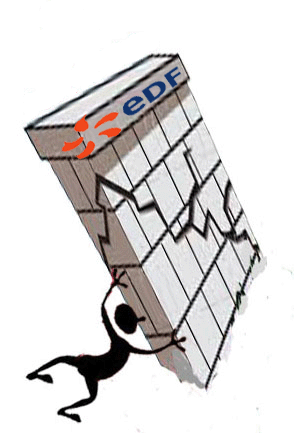
Macron government considering nationalising France’s debt-laden nuclear company EDF
 | |||
France looking to nationalise debt-laden power company EDF https://www.power-technology.com/news/france-power-company-edf/ 13 Mar 22
The French Government, which holds an 84% stake in the $30bn energy giant, could retain domestic business but review overseas operations. The Government of France is reportedly weighing options to nationalise multinational electric utility company Electricite de France (EDF), reported Bloomberg.
Citing people familiar with this, the report said that the French Government is considering the option to reorganise the debt-laden business with a focus on nuclear energy production.
French officials have been carrying out talks with advisers on the option to acquire all the stake from EDF’s small stakeholders and delist the company from the stock exchange, people aware of the development said.
The French Government, which owns 84% of EDF, could retain the ownership of the company’s domestic business but review EDF’s overseas operations, the sources added.
If the idea to nationalise EDF is approved, then the move is expected to take place after the French Presidential election, which is slated to take place later this year.
The Government of France is reportedly weighing options to nationalise multinational electric utility company Electricite de France (EDF), reported Bloomberg.
Citing people familiar with this, the report said that the French Government is considering the option to reorganise the debt-laden business with a focus on nuclear energy production.
French officials have been carrying out talks with advisers on the option to acquire all the stake from EDF’s small stakeholders and delist the company from the stock exchange, people aware of the development said.
The French Government, which owns 84% of EDF, could retain the ownership of the company’s domestic business but review EDF’s overseas operations, the sources added.
If the idea to nationalise EDF is approved, then the move is expected to take place after the French Presidential election, which is slated to take place later this year.
However, a spokesperson for the French finance ministry said that the information is ‘false’ and the government isn’t working on such a project.
Last month, French Government announced it will offer $2.4bn to support EDF, as the group sees a hit to profits due to outages at several of its nuclear plants and the impacts of a government power-price cap.
The US And Ukraine Have Every Reason To Lie About The War

The US-centralized empire is censoring and propagandizing as though it is in a hot war with Russia currently. Officially the US and its allies are not at war, but the imperial narrative management machine is behaving as though we are. This makes sense because when two nuclear-armed powers are fighting for dominance and know a direct military confrontation can kill them both, other types of warfare are used instead, including propaganda campaigns and psychological warfare.
For this reason it is necessary to take everything claimed about what happens in Ukraine with a planet-sized grain of salt, whether it’s by Russia, Ukraine, or the US and its allies. Be very skeptical of anything you hear about chemical attacks or any other narrative that can be used to get military firepower moving in a way that it otherwise would not. All parties involved in this conflict have every reason in the world to lie about such things.
The US And Ukraine Have Every Reason To Lie About The War https://caitlinjohnstone.substack.com/p/the-us-and-ukraine-have-every-reason?s=w
| Caitlin JohnstoneThe Washington Post has a new article out titled “Intelligence points to heightened risk of Russian chemical attack in Ukraine, officials say,” and I challenge you to find me any Russian state media with two opening paragraphs that are more brazenly propagandistic and bereft of journalistic ethics than these: |
The United States and its allies have intelligence thatRussia may be preparing to use chemical weapons against Ukraine, U.S. and European officials saidFriday, as Moscow sought to invigorate its faltering military offensive through increasingly brutal assaults across multiple Ukrainian cities.
“Security officials and diplomats said the intelligence, which they declined to detail, pointed to possible preparations by Russia for deploying chemical munitions, and warned the Kremlin may seek to carry out a ‘false-flag’ attack that attempts to pin the blame on Ukrainians, or perhaps Western governments. The officials, like others quoted in this story, spoke on the condition of anonymity because of the sensitive nature of the matter.”
So Russia is preparing to stage a chemical attack, and also the Russian chemical attack might look like Ukrainians or western governments committing a chemical attack, and also the evidence for this is secret, and also the details are secret, and also the government officials advancing this claim are secret, and also Russia’s military offensive is faltering. Gotcha.
The third paragraph is even better:
“The accusations surfaced as Russia repeated claims that the United States and Ukraine were operating secret biological weapons labs in Eastern Europe — an allegation that the Biden administration dismissed as ‘total nonsense’ and ‘outright lies.’”
This paragraph is awesome in two different ways. First, it’s awesome because The Washington Post goes out of its way to inform readers that Russia’s claims have been dismissed as “total nonsense” and “outright lies” after having literally just reported completely unevidenced claims by anonymous government officials with no criticism or scrutiny of any kind. Secondly, it’s awesome because at no point during the rest of the article is any mention made of Victoria Nuland’s incendiary admission before the Senate Foreign Relations Committee that Ukraine has “biological research facilities” that the US is “quite concerned” might end up “falling into the hands of Russian forces”.
Over and over again throughout the article The Washington Post takes great care to inform readers that Russian claims about biological weapons are not to be trusted, with allegations from Moscow described as “unproven accusations” made with “no verifiable evidence“, “absurd and laughable“, “outrageous claims”, “utter nonsense”, “sinking to new depths” and “baseless“.
This, again, after uncritically reporting completely unsubstantiated allegations by government officials and sheltering them from any accountability by granting them the cover of anonymity. Unproven claims by the Russian government are laughable absurdities presented without evidence; unproven claims by the US government are just The News.
The Washington Post also refers to past Russian dismissals of alleged chemical weapons attacks in Syria as false flags used to frame Damascus, while of course making no mention of the mountains of evidence that this has indeed occurred. It also says the UN human rights office “has received ‘credible reports’ of Russia using cluster bombs” which “could constitute war crimes”, making no mention of the USA’s abundant use and sale of these same munitions.
Democracy Dies in Darkness.
The fact that this Russian false flag narrative is being shoved forward with so much propagandistic fervor, not just by The Washington Post but also by government officials and CIA media pundits, makes it all the more concerning that we’re seeing things like YouTube banning the denial of “well-documented violent events” involving Russia’s invasion of Ukraine. We could soon see a chemical weapons incident occur in Ukraine, after which Silicon Valley platforms ban all accounts who express skepticism of the official western narrative about what happened.
The US-centralized empire is censoring and propagandizing as though it is in a hot war with Russia currently. Officially the US and its allies are not at war, but the imperial narrative management machine is behaving as though we are. This makes sense because when two nuclear-armed powers are fighting for dominance and know a direct military confrontation can kill them both, other types of warfare are used instead, including propaganda campaigns and psychological warfare.
There is a widespread general understanding in the west that Russia stands everything to gain by lying about what happens on the ground in Ukraine and cannot be taken at its word about occurrences during this war. There is much less widespread understanding of the fact that both Ukraine and the United States stand everything to gain by lying about this war as well and cannot be trusted either.
The Washington Post’s own reporting says that behind the scenes western governments see Russian victory in this war as a foregone conclusion. Ukraine’s only chance at stopping Russia in the near term would be if it could persuade NATO powers to take a more direct role in combat, like setting up a no-fly zone as President Zelensky has persistently pleaded with them to do. One way to get around NATO’s rational resistance to directly attacking the military forces of a nuclear superpower would be to appeal to emotion via atrocity propaganda. By circulating a narrative that Russia has done something heinous which cries out to the heavens for vengeance, regardless of the risks entailed.
The United States would also benefit from circulating atrocity propaganda about Russia, in that it would further consolidate international support behind the agenda to economically strangle the nation to death in facilitation of the empire’s struggle for unipolar planetary hegemony. Even before the invasion the US was already pushing the narrative that Russia has a list of dissidents, journalists and “vulnerable populations such as religious and ethnic minorities and LGBTQI+ persons” who it plans on rounding up and torturing.
To be clear, it is not conjecture that the US and its proxies make use of atrocity propaganda. The infamous Nayirah testimony for example helped manufacture consent for the Gulf War when a 15 year-old girl who turned out to be a coached plant falsely told the US Congressional Human Rights Caucus that she’d witnessed Iraqi soldiers taking babies out of incubators in Kuwait and leaving them on the floor to die.
Atrocity propaganda has been in use for as long as war and media have coexisted, and it would be incredibly naive to believe it won’t continue to be. Especially by power structures with a known history of doing so.
For this reason it is necessary to take everything claimed about what happens in Ukraine with a planet-sized grain of salt, whether it’s by Russia, Ukraine, or the US and its allies. Be very skeptical of anything you hear about chemical attacks or any other narrative that can be used to get military firepower moving in a way that it otherwise would not. All parties involved in this conflict have every reason in the world to lie about such things.
Western media trumpets blanket condemnation of Putin, without any consideration of the circumstances

Monbiot, let us note, has not used a single one of his weekly columns at The Guardian to highlight the years-long plight of Julian Assange, locked away in a British dungeon for revealing U.S. and U.K. war crimes in Iraq and Afghanistan. This is the gravest attack on a free press in living memory, and yet Monbiot used his most recent column to attack Assange supporters, such as veteran journalist John Pilger, for not being voluble enough in denouncing Putin.
The West’s Hands in Ukraine as Bloody as Putin’s, Consortium News, By Jonathan Cook
March 11, 2022 Jonathan Cook confronts the demand throughout the Western press and social media to not only “condemn” the Russian president, but do so without qualification.
Jonathan-Cook.net There is a discursive nervous tic all over social media at the moment, including from prominent journalists such as Guardian columnist George Monbiot. The demand is that everyone not only “condemn” Russian President Vladimir Putin for invading Ukraine, but do so without qualification.
Any reluctance to submit is considered certain proof that the person is a Putin apologist or a Kremlin bot, and that their views on everything under the sun – especially their criticisms of equivalent Western war crimes – can be safely ignored.
How convenient for all those Western leaders who have committed war crimes at least as bad as Russia’s current ones.
I have repeatedly described Russia’s invasion as illegal; I have regularly called Putin a war criminal (you may not have noticed but I just did it again in the two preceding paragraphs); and I have consistently compared Putin’s deeds to the very worst actions taken by the West over the past two decades. But none of that is enough. More is always needed.
The demand for unequivocal denunciation is a strange, if common, one and suggests that those insisting on it are being dishonest – if only with themselves. The function of the demand is not to clarify whether any particular piece of information or an argument is credible; it is intended purely as a “gotcha” meme.
I don’t remember an insistence that anyone condemn Tony Blair or George W. Bush for the invasion of Iraq in 2003 before they could be heard or taken seriously. Or that they denounce the U.S.-backed overthrow of Libyan leader Muammar Gaddafi that plunged that country into murderous chaos. Or that they deplore the West’s material support for Saudi Arabia’s slaughter of Yemen’s population, including Britain’s sale of planes, bombs and training to Riyadh. Or that they criticize the West’s backing of head-chopping jihadists in Syria (who coincidentally now appear to be drifting into Ukraine to become our allies again). Or that they decry decades of Western support for Israel as it has disappeared the Palestinian people.
And those are things for which we – meaning Westerners – are directly responsible. We elected the politicians who caused this unquantifiable suffering. Those bombs were ours. We ought to be clamoring for our leaders to be dragged to The Hague to be tried for war crimes.
By contrast, we – meaning Westerners – are not responsible for Putin or his actions. I cannot vote him out of office. Nothing I say will make him alter course. And worse, anything I do say against him or Russia simply amplifies the mindless chorus of self-righteous Western commentary intended to cast stones at Russia’s warmongers while leaving our own home-grown warmongers in place.
Westerners denouncing Putin won’t make compromise and peace more likely. It will make it less likely. Russians need to be highlighting Putin’s crimes as best they can to drive him to the negotiating table, while we need to be doing the same to our leaders to push them to the same table. As long as our attention is on Putin and his crimes, it is not on our leaders and their crimes.
Fog of War
Those who insist it is quite possible to denounce both Putin and Western leaders at the same time are precisely the people who have been so half-hearted in holding our own leaders to account.
Monbiot, let us note, has not used a single one of his weekly columns at The Guardian to highlight the years-long plight of Julian Assange, locked away in a British dungeon for revealing U.S. and U.K. war crimes in Iraq and Afghanistan. This is the gravest attack on a free press in living memory, and yet Monbiot used his most recent column to attack Assange supporters, such as veteran journalist John Pilger, for not being voluble enough in denouncing Putin.
Those who require unequivocal condemnation of Putin insist that now – in the midst of a war – is not the time to be sowing doubt or undermining morale in the rightness of “our” cause. (A small giveaway that they think of this as a Western, not Ukrainian, war with Russia.)
Again conveniently, that is precisely the message Western leaders want to send too – just ask Britain’s prime minister, Boris Johnson, whose “Partygate” scandal is now a distant memory as he seeks to evoke Churchillian gravitas in facing off with Russia. Instead, the parties in the British parliament put aside their very superficial differences this week as the Ukrainian president, Volodymyr Zelensky, rallied them with a “historic address.”
What, really, is the point of demanding Westerners denounce Putin unequivocally when the entire Western media and political class is directing our gaze exclusively at Russia’s crimes precisely so Westerners don’t look at equivalent Western crimes?
The truth is that, in power politics, unequivocal denunciations are for politicians and diplomats – and virtue-signalers. Condemnations may be emotionally satisfying, but the rest of us can put our energies to far better use.For most of us, the better course would be to blow away the immediate fog of war and instead analyze our – meaning the West’s – role in the unfolding events……………………………………………………………………………….. https://consortiumnews.com/2022/03/11/the-wests-hands-in-ukraine-as-bloody-as-putins/
Hopes for Bradwell nuclear power station now fading away like the ebbing tide
Calm After the Storm https://www.banng.info/news/regional-life/calm-after-the-storm/ 3 March 2022
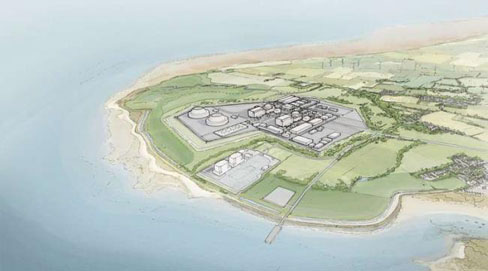
As we emerge from Covid a rather eerie silence descends over Bradwell B. After a tumultuous period of fighting the grotesque prospect of a colossal nuclear power station of Chinese design we are left wondering if the threat is ebbing away or will flow back like the returning tide.
Just two years ago and just before the first frightening lockdown, The Chinese operator launched its pre-Application proposals and the gross scale of the Bradwell B juggernaut was as unexpected as it was threatening. Despite lockdown the local reaction was immediate, widespread and determined. The proposals were summarily repelled and CGN declared a pause and retreated homeward to think again.
At least the China General Nuclear Power Corporation (CGN) has got part of what it came for. The regulators, Environment Agency and Office for Nuclear Regulation, have gifted approval for the Chinese Hualong One UK HPR1000 reactor design as ‘suitable for deployment in the UK’.
But, not necessarily at the Bradwell site. Although the ultimate prize for CGN is to build its reactors at Bradwell gaining the Generic Design Assessment (GDA) approval is not really much help. It doesn’t tackle the issues of cooling water, long-term storage of radioactive waste or the impacts of climate change in anything like the detail needed to gain approval for the Bradwell site. There are many obstacles that must be surmounted before permission to build can be granted.
Perhaps, as BANNG and other commentators have observed, CGN will have to be content with the consolation prize and seek its fortune elsewhere. That may not be in the UK since it is widely felt that the UK will prevent the Chinese state in the guise of CGN having a strategic role in developing sensitive UK infrastructure like a nuclear power station.
And so there is impasse. Opposed by the local Blackwater communities and shunned by the UK Government Bradwell B seems frozen in aspic. The best that may be said is that CGN may not walk away or be pushed immediately but the project is likely to languish in a state of indefinite inanition and will fade away like the ebbing tide.
Investors keen on renewable energy, while UK govt is trapping consumers into paying upfront for nuclear power plants to be built in a decade or more
Gordon Murray: LESLEY Riddoch’s article (The National, March 10)
is eminently sensible. The UK Government wants to build more large nuclear
plants such as Hinkley Point C. The problem for Boris is that investors are
not interested.
Centrica abandoned its plans to build new nuclear, Toshiba
exited the giant 3.3GW plant at Moorside, Cumbria and Hitachi scrapped the
£16 billion Wylfa plant on Anglesey. The current Hinkley development costs
are a whopping £23bn, almost double that projected in 2008 and set to rise
further.
The smart money is now with renewables where the returns are
higher, more immediate and less risky. Notwithstanding these setbacks, the
Conservative government, backed by Labour, is determined to plough on with
Sizewell C.
Their problem is who is going to fund it. The Government is not
keen to involve the Chinese who already get a return of 15% on their
investment at Hinckley Point C.
The Business Secretary Kwasi Kwarteng’s
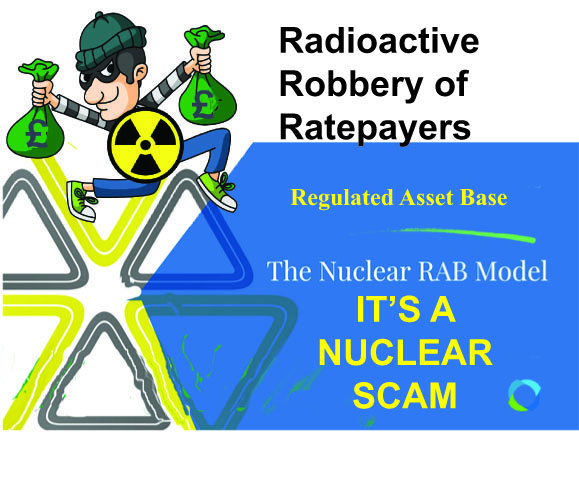
answer is the Regulated Asset Base (RAB) funding model whereby consumers,
that’s us, will pay the construction costs by increasing energy bills. It
is a fanciful type of nuclear subsidy where consumers pay for and
underwrite the construction costs for 10 years before a single watt of
power has been generated.
You have not misread this! The Government is set
to increase our energy bills even further at a time when gas/energy prices
are soaring, pushing even more people into fuel poverty. Perhaps their
spirits will be raised when they learn that RAB, according to Kwarteng,
will give private investors greater certainty through a lower and more
reliable rate of return.
An added bonus is that bill payers can expect
their bills to rise even further when the project is completed since we can
expect the energy strike price for nuclear to be twice that of renewable
– the cheapest form of electricity generation that is now subsidy
free-where consumers only start paying once they start to generate.
TheSmall Modular Reactor programme promises lower energy production costs but
there is no hard evidence to support this claim. What we will get for
certain is large numbers of these power plants spread all over the country
that will raise safety concerns over proliferation of nuclear materials and
terrorist attacks.
The National 12th March 2022
Chernobyl nuclear plant lacking external power supply
Ukraine’s state nuclear power regulator said on Friday the electricity
supply to the Chernobyl nuclear power station had not yet been restored,
despite Russia’s energy ministry saying it was restored by Belarusian
specialists on Thursday. Ukraine has warned of an increased risk of a
radiation leak if the high-voltage power line, damaged in fighting, is not
repaired to the plant, which is occupied by Russian forces.
Reuters 11th March 2022
Markets are in denial about nuclear risk
Markets are in denial about nuclear risk, The Jordan Times, Mar 13,2022 – NEW YORK — Financial markets do not seem to be pricing in the full risks of Russia’s invasion of Ukraine. The absence of any meaningful negative response in equity, corporate debt and sovereign debt markets in Europe, the United States, Canada and Japan would barely make sense even if there was no chance of the situation escalating into an open conflict between NATO and Russia. But that is not the only real risk; so, too, is the threat of the conflict going nuclear……….
Global asset markets have not even priced in this least-bad scenario. But if the Russia-Ukraine war escalated to become a Russia-NATO war, there would be a serious risk of nuclear conflict. One sure way to achieve such an escalation would be for NATO to establish a no-fly zone over Ukraine, as the Ukrainian government has urged.
While NATO and Western governments have imposed economic and financial sanctions on Russia and furnished Ukraine with anti-tank weapons, drones, portable surface-to-air missiles and ammunition, these forms of support do not amount to an act of war. Enforcing a no-fly zone, however, would mean shooting down Russian targets. Were NATO to take this step, a wider war would become inevitable.
So far, NATO has forthrightly rejected calls for a no-fly zone. It has also shown restraint in response to Putin’s nuclear saber-rattling. On February 27, 2022, Putin put Russia’s nuclear forces on high alert in response to Western sanctions and what he referred to as “aggressive statements” from NATO powers.
On the same day, Belarus abandoned its non-nuclear status — thereby permitting Russia’s nuclear weapons on its territory. This escalation came on the heels of Russia’s extensive strategic nuclear exercises on February 19, and Putin’s televised speech announcing the invasion on February 24, when he emphasised that Russia is still one of the world’s most powerful nuclear-weapons states…………..
Today, there is scant evidence that markets have even noticed the rising risk of a nuclear conflict. Denial is the name of the game.
Willem H. Buiter is an adjunct professor of international and public affairs at Columbia University. 2022. www.project-syndicate.org http://www.jordantimes.com/opinion/willem-h-buiter/markets-are-denial-about-nuclear-risk
UK’s Ministry of Defence called out for lobbying MPs on nuclear weapons
MoD under fire for lobbying MPs on nuclear weapons, The Ferret, Rob Edwards. March 13, 2022
The Ministry of Defence (MoD) is facing criticism for lobbying up to 27 Westminster politicians on the “benefits” of nuclear weapons for “UK industry, economy and the union”
Four lords and 23 MPs were invited to two briefings by senior MoD officials at the Faslane nuclear submarine base on the Clyde in 2021. According to the MoD, the aim was to “educate” them on the “continued relevance” of the Trident nuclear weapons system, and how replacing it was “value for money”.
According to experts, it is “highly unusual” for a government department to lobby politicians in this way. Campaigners questioned whether it was an “appropriate” use of public money and accused the MoD of acting as an “influencer” for nuclear vested interests………………………
One lobbying expert disputed the MoD’s suggestion it was not trying to influence politicians. “This is clearly a lobbying and influencing strategy, thinly disguised as a briefing to promote dialogue about defence policy,” said Dr Will Dinan, a senior lecturer in political communications at the University of Stirling.
“It is highly unusual for a government department to lobby UK politicians in this way. While the rationale offered is that these briefings are simply educational, it is clear that the overall strategic aim is to increase support among parliamentarians for maintaining nuclear capability.”
Dinan maintained that the nuclear briefings were “hardly neutral, informational or apolitical”. The need for nuclear weapons was “highly political” and MoD officials appeared to have “strayed some way from offering neutral and balanced advice to inform decision makers”, he said.
The Nuclear Information Service, which researches nuclear weapons, was also critical of the MoD. “These documents make it clear that the purpose of this exercise is to bolster support for the UK’s nuclear weapons programme,” said the group’s director, David Cullen.
“Lobbying in this fashion is not an appropriate use of public funds and diminishes the prospects for meaningful parliamentary oversight.”
The Scottish Campaign for Nuclear Disarmament pointed out that retired military commanders had spoken out against nuclear weapons. “The MoD is acting as an influencer for the nuclear-military-industrial complex with vested interests in them being constantly modernised and never given up,” said the campaign’s chair, Lynn Jamieson.
“If the MoD had a genuinely educational agenda it would include consideration of how to move towards signing the Treaty on the Prohibition of Nuclear Weapons. But then their job isn’t education, it’s defence and security — and Scottish CND’s view is that nuclear weapons put that at risk
The SNP MSP, Bill Kidd, is co-president of the international group of Parliamentarians for Nuclear Non-Proliferation and Disarmament. He pointed out that MSPs from the Scottish Parliament had not been invited to MoD nuclear briefings.
He said: “Will this be because we, at Holyrood, have voted time and again against the maintenance of these weapons of mass murder being stationed in our midst and looking for their removal? Or could it be that it’s Westminster that votes on the budget and long-term future of nuclear weapons and therefore it’s MPs who need to be influenced?”
Kidd also criticised the House of Commons and Lords for voting through upgrades and increases in nuclear warheads. This breached article six of the nuclear non-proliferation treaty committing countries to nuclear disarmament, he claimed…………….. https://theferret.scot/mod-lobbying-mps-nuclear-weapons/
Former Yugoslav FM: U.S., NATO expansion root cause of Ukraine war
Former Yugoslav FM: U.S., NATO expansion root cause of Ukraine war https://wordpress.com/read/feeds/113283937/posts/3885959839 Xinhua News Agency
March 12, 2022 U.S., NATO expansion root cause of Ukraine crisis, says Serbian expert
U.S. and NATO military expansion in Eastern Europe is the root cause of the current Ukraine crisis, Zivadin Jovanovic, former minister of foreign affairs of Yugoslavia, has said.
In an interview with Xinhua, Jovanovic who currently presides over the think-tank Belgrade Forum for a World of Equals, said that the crisis resulted from “the U.S.-NATO strategy of military expansion to the Russian borders, rejection of the principle of equal and indivisible security.”
Serbia was the first victim of NATO’s expansion strategy, Jovanovic recalled.
In 1999, NATO troops led by the United States blatantly set the UN Security Council aside and carried out a 78-day continuous bombing of Yugoslavia under the guise of “preventing humanitarian disasters,” killing and injuring over 8,000 innocent civilians and uprooting nearly 1 million.
Jovanovic called for a peaceful solution to the conflict in Ukraine, “taking into account legitimate security concerns of all countries and peoples involved.”
Jovanovic said that the Ukrainian conflict and all that had preceded it, “calls to end the policy of military expansion, for recognition of legitimate rights of all countries to equal security without undermining the security of others,” as well as for the “global recognition of the new multi-polar world order.”
“We hope that the Ukrainian conflict will be resolved as soon as possible peacefully, through dialogue, taking into account the need for equal security of all countries and peoples. Sanctions, threats, double standards, one-sided approaches…are undermining peace efforts and therefore should cease,” he added.
Cumbria remembers Fukushima
Yesterday was the 11th anniversary of the ongoing Fukushima disaster.
Members of Radiation Free Lakeland met up with Kazuhiko Kobayashi in 2018
to show him the Sellafield area and he told us that there is money for
climate research but not so much for research into the impacts of radiation
on our food and health. He is a kind gentle man and he was visibly shocked
to see the scale of Sellafield. Kazuhiko broke down in tears within the
shadow of Sellafield, at the impacts the nuclear industry is having on our
children’s health. His passionate opposition to nuclear power and nuclear
weapons, his work for change and to help those impacted, is an inspiration.
Kazuhiko has organised respite for children and families who have been
impacted by the ongoing Fukushima disaster.
Radiation Free Lakeland 12th March 2022
«We forget and we consider ourselves superior… But we are after all a mere part of Creation.» – We all must revise our relationship with Nature and reorient our association with consumerism! — Barbara Crane Navarro,

« I do not see a delegation for the Four Footed. I see no seat for the Eagles. We forget & we consider ourselves superior. But we are after all a mere part of Creation. We stand somewhere between the mountain & the Ant. » Chief Oren Lyons, Seneca Nation, in an address to the Non-Governmental […]
«We forget and we consider ourselves superior… But we are after all a mere part of Creation.» – We all must revise our relationship with Nature and reorient our association with consumerism! — Barbara Crane Navarro
March 13 Energy News — geoharvey

Opinion: ¶ “Will Russia’s Attack On Ukraine Help Thaw US-Venezuela Relations?” • These are desperate times, and desperate measures are needed. Oil helps make the world go round and Venezuela has a lot of it – and when the world is in crisis, such as with the ban on Russian oil exports causing prices to […]
March 13 Energy News — geoharvey
Nuclear threat: Faslane, home to Trident, symbol of humanity’s power and folly
Nuclear weapons are often described as a deterrent. But do they really deter? That they have “kept the peace” is just a story, “a myth”, not backed by evidence of cause and effect, as New York Times writer Ward Wilson has put it. He observed, “We don’t accept proof by absence in any circumstance where there is real risk.”
Nuclear threat: Faslane, home to Trident, symbol of humanity’s power and folly, https://uk.sports.yahoo.com/news/nuclear-threat-faslane-home-trident-110835394.html?guccounter=1&guce_referrer=aHR0cHM6Ly9uZXdzLmdvb2dsZS5jb20v&guce_referrer_sig=AQAAAG3X514QPdgktFOrKbKPrnzoSz6joD3PVpI6uSj2DBv3oIZTOIzUDZWnifcsw_SXXPYtt3h1orA3QYlShoI_rlgBn5o675_PqDys5-xmgpGOEFmBJ1ooQWfTzK9RMofsPeZk-CfshnVXybppn5h7kGhpqKtNAaeAVwv0YCeavNKnVicky Allan
Sun, 13 March 2022, On the northern shore of Gare Loch, washed by salt waters that merge into the Firth of Clyde, is the naval base, Faslane, home to Vanguard-class submarines. The UK has four such Trident-carrying submarines, each armed with eight missiles, each of which carries three warheads. All together, currently, the UK holds a stockpile of 225 such warheads. This sea loch, and the wildlife it sustains, knows little of the destructive capacity contained within it.
Each warhead is said to be eight times as destructive as the bomb dropped on Hiroshima in 1945, which killed over 140,000 civilians. They are dark pearls of latent horror; symbols of humanity’s power and folly.
This stretch of shoreline has, for this reason, been one of the most controversial sites in Britain since the 1960s – first home to Polaris, more recently Trident. Concern over the threat of nuclear weaponry, has waxed and waned with the changes in global politics.
The SNP’s calls to scrap it were a key message of the Independence referendum, and one still repeated now. 2016 saw debate around whether the programme should be renewed at an enormous cost of £31 million for just the replacement submarines – CND estimated the overall cost would be more like £205 million. The House of Commons backed it, though only one Scottish MP voted in favour. Then, just last year, Boris Johnson announced a lift on the cap on the the number of Trident nuclear warheads it can stockpile by more than 40 percent by the middle of this decade. This ended thirty years of gradual disarmament.
UN Elder Mary Robinson’s view on this was clear, “While the UK cites increased security threats as justification for this move, the appropriate response to these challenges should be to work multilaterally to strengthen international arms control agreements and to reduce – not increase – the number of nuclear weapons in existence.”
We are now in another chilling moment. Vladimir Putin’s invasion of Ukraine, his threats of “consequences you have never seen”, have meant that the word nuclear is on our lips again. The threat, which not long ago had seemed half-forgotten, a childhood nightmare demoted down the current list of existential threats, was there again: “the nuclear option”. Might the Russian leader be mad and power-hungry enough to use it?
Ian Blackford recently confirmed the continuing support of SNP for getting rid of Trident, saying, “The idea that having nuclear weapons provides a deterrence that removes that threat is far-fetched, to say the least.”
Nuclear weapons are often described as a deterrent. But do they really deter? That they have “kept the peace” is just a story, “a myth”, not backed by evidence of cause and effect, as New York Times writer Ward Wilson has put it. He observed, “We don’t accept proof by absence in any circumstance where there is real risk.”
Above all Faslane is a reminder of the ridiculous nuclear arsenal the world has built. We may have already clambered down from the global peak stockpile of nuclear weapons which existed in 1986, but there is a long way to go. Approximately 13,080 nuclear warheads exist worldwide and almost 90 percent of them belong to two countries: the United States and Russia. There are more than enough, if such maths made any sense, to kill every human on the planet, one hundred times over.
That fact, and Putin’s terrifying recent posturings, should be a reminder that global nuclear disarmament must remain a key goal of our times.
No room at the ER — Beyond Nuclear International

Even one nuclear bomb would spell disaster for medical services’ capacity to cope
No room at the ER — Beyond Nuclear International
1 This Month
Tell Congress: Prevent Nuclear Catastrophe in Iran

Tell Congress: Prevent Nuclear Catastrophe in Iran

Read the Public Inquiry Report, the Commissioners’ report, Surrendering Australia: The AUKUS Deception is available to download for free at aukuspublicinquiry.com. Or just watch the replay of the National Press Club Luncheon.


Shut down the radiation-damaged Heysham nuclear reactors now
To see nuclear-related stories in greater depth and intensity – go to https://nuclearinformation.wordpress.com

Say No to NASA’s Reckless Nuclear Reactor on the Moon
Say No to NASA’s Reckless Nuclear Reactor on the Moon
-
Archives
- November 2026 (224)
- October 2026 (302)
- September 2026 (339)
- August 2026 (330)
- July 2026 (355)
- June 2026 (287)
- May 2026 (306)
- April 2026 (356)
- March 2026 (251)
- February 2026 (267)
- January 2026 (308)
- December 2025 (358)
-
Categories
- 1
- 1 NUCLEAR ISSUES
- business and costs
- climate change
- culture and arts
- ENERGY
- environment
- health
- history
- indigenous issues
- Legal
- marketing of nuclear
- media
- opposition to nuclear
- PERSONAL STORIES
- politics
- politics international
- Religion and ethics
- safety
- secrets,lies and civil liberties
- spinbuster
- technology
- Uranium
- wastes
- weapons and war
- Women
- 2 WORLD
- ACTION
- AFRICA
- Atrocities
- AUSTRALIA
- Christina's notes
- Christina's themes
- culture and arts
- Events
- Fuk 2022
- Fuk 2023
- Fukushima 2017
- Fukushima 2018
- fukushima 2019
- Fukushima 2020
- Fukushima 2021
- general
- global warming
- Humour (God we need it)
- Nuclear
- RARE EARTHS
- Reference
- resources – print
- Resources -audiovicual
- Weekly Newsletter
- World
- World Nuclear
- YouTube
-
RSS
Entries RSS
Comments RSS

