Forgetting the apocalypse: why our nuclear fears faded – and why that’s dangerous
The horrors of Hiroshima and Nagasaki made the whole world afraid of the atomic bomb – even those who might launch one. Today that fear has mostly passed out of living memory, and with it we may have lost a crucial safeguard,
Guardian, by Daniel Immerwahr 13 May, 22”…………………. what had happened in Hiroshima, and three days later in Nagasaki, could happen anywhere.
The thought proved impossible to shake, especially as, within the year, on-the-ground accounts emerged. Reports came of flesh bubbling, of melted eyes, of a terrifying sickness afflicting even those who’d avoided the blast. “All the scientists are frightened – frightened for their lives,” a Nobel-winning chemist confessed in 1946. Despite scientists’ hopes that the weapons would be retired, in the coming decades they proliferated, with nuclear states testing ever-more-powerful devices on Pacific atolls, the Algerian desert and the Kazakh steppe.
The fear – the pervasive, enduring fear – that characterised the cold war is hard to appreciate today. It wasn’t only powerless city-dwellers who were terrified (“select and fortify a room in which to shelter”, the UK government grimly advised). Leaders themselves were shaken. It was “insane”, US president John F Kennedy felt, that “two men, sitting on the opposite sides of the world, should be able to decide to bring an end to civilisation”. Yet everyone knowingly lived with that insanity for decades…………..
………. The memory of nuclear war, once vivid, is quietly vanishing. ……..
Except that the threat of nuclear war, as Vladimir Putin is reminding the world, has not gone away.
……….. Yet many of Putin’s adversaries seem either unconvinced or, worse, unbothered by his threats. Boris Johnson has flatly dismissed the idea that Russia may use a nuclear weapon. Three former Nato supreme allied commanders have proposed a no-fly zone over Ukraine. This would almost certainly entail direct military conflict between Nato and Russia, and possibly trigger the world’s first all-out war between nuclear states. Still, social media boils over with calls to action, and a poll found that more than a third of US respondents wanted their military to intervene “even if it risks a nuclear conflict”.
Nuclear norms are fraying elsewhere, too. Nine countries collectively hold some 10,000 warheads, and six of those countries are increasing their inventories. Current and recent leaders such as Kim Jong-un, Narendra Modi and Donald Trump have, like Putin, spoken brazenly of firing their weapons……………..
Leaders have talked tough before. But now their talk seems less tethered to reality. This is the first decade when not a single head of a nuclear state can remember Hiroshima.
Does that matter? We’ve seen in other contexts what happens when our experience of a risk attenuates. In rich countries, the waning memory of preventable diseases has fed the anti-vaccination movement. “People have become complacent,” notes epidemiologist Peter Salk, whose father, Jonas Salk, invented the polio vaccine. Not having lived through a polio epidemic, parents are rejecting vaccines to the point where measles and whooping cough are coming back and many have needlessly died of Covid-19.
That is the danger with nuclear war. Using declassified documents, historians now understand how close we came, multiple times, to seeing the missiles fired. In those heartstopping moments, a visceral understanding of what nuclear war entailed helped keep the launch keys from turning. It’s precisely that visceral understanding that’s missing today. We’re entering an age with nuclear weapons but no nuclear memory. Without fanfare, without even noticing, we may have lost a guardrail keeping us from catastrophe.
……………….The US occupation authorities in Japan had censored details of the bomb’s aftermath. But, without consulting the censors, the American writer John Hersey published in the New Yorker one of the most important long-form works of journalism ever written, a graphic account of the bombing. Born to missionaries in China, Hersey was unusually sympathetic to Asian perspectives. His Hiroshima article rejected the bomber’s-eye view and instead told the stories of six survivors.
For many readers, this was the first time they registered that Hiroshima wasn’t a “Japanese army base”, as US president Harry Truman had described it when announcing the bombing, but a city of civilians – doctors, seamstresses, factory workers – who had watched loved ones die. Nor did they die cleanly, vaporised in the puff of a mushroom cloud. Hersey profiled a Methodist pastor, Kiyoshi Tanimoto, who raced to the aid of his ailing but very much still-living neighbours. As Tanimoto grasped one woman, “her skin slipped off in huge, glove-pieces”. Tanimoto “was so sickened by this that he had to sit down for a minute”, wrote Hersey. “He had to keep consciously repeating to himself, ‘These are human beings.’”
Hersey’s contemporaries understood the significance of these accounts. The New Yorker dedicated its full issue to Hersey’s article, and within an hour sold out its entire newsstand print run of 300,000 (plus another 200,000 copies to subscribers). Knopf published it as a book, which eventually sold millions. The text was reprinted in newspapers from France to China, the Netherlands to Bolivia. The massive ABC radio network broadcast Hersey’s text – with no commercials, music or sound effects – over four consecutive evenings. “No other publication in the American 20th century,” the journalism historian Kathy Roberts Forde has written, “was so widely circulated, republished, discussed, and venerated.”
Tanimoto, boosted to celebrity by Hersey’s reporting, made speaking tours of the US. By the end of 1949, he had visited 256 cities. Like Einstein, he pleaded for world government.
Rising tensions between Washington and Moscow erased the possibility of global government. Still, they didn’t change the fact: across the west, leading thinkers felt nuclear weapons to be so dangerous that they required, in Churchill’s words, remoulding “the relationships of all men of all nations” so that “international bodies by supreme authority may give peace on earth and justice among men”.
……………………………………… Maybe one could dismiss the fallout shelters as theatre and the films as fiction. But then there were the bomb tests – great belches of radioactivity that previewed the otherworldly dangers of nuclear weapons. By 1980, the nuclear powers had run 528 atmospheric tests, raising mushroom clouds everywhere from the Pacific atoll of Kiritimati to the Chinese desert. A widely publicised 1961 study of 61,000 baby teeth collected in St Louis showed that children born after the first hydrogen bombs were tested had markedly higher levels of the carcinogen strontium-90, a byproduct of the tests, despite being some 1,500km away from the closest test site.
Unsurprisingly, nuclear tests stoked resistance. In 1954, a detonation by the US at Bikini Atoll in the Pacific got out of hand, irradiating the inhabited atoll of Rongelap and an unfortunate Japanese tuna fishing boat. When the boat’s sickened crew returned to Japan, pandemonium erupted. Petitions describing Japan as “thrice victimised by nuclear bombs” and calling for a ban collected tens of millions of signatures. Ishiro Honda, a film director who’d seen the Hiroshima damage firsthand, made a wildly popular film about a monster, Gojira, awakened by the nuclear testing. Emitting “high levels of H-bomb radiation”, Gojira attacks a fishing boat and then breathes fire on a Japanese city.
………………….. Hiroshima occupied a similar place in public memory to Auschwitz, the other avatar of the unspeakable. The resemblance ran deep. Both terms identified specific events within the broader violence of the second world war – highlighting the Jews among Hitler’s victims, and the atomic bomb victims among the many Japanese who were bombed – and marked them as morally distinct. Both Hiroshima and Auschwitz had been the site of “holocausts” (indeed, early writers more often used that term to describe atomic war than European genocide). And both Hiroshima and Auschwitz sent forth a new type of personage: the “survivor”, a hallowed individual who had borne witness to a historically unique horror. What Elie Wiesel did to raise the stature of Europe’s survivors, Tanimoto did for Japan’s. In their hands, Hiroshima and Auschwitz shared a message: never forget, never again
.…………The whole idea is to kill the bastards,” said US general Thomas Power, when presented in 1960 with a nuclear plan designed to minimise casualties. “Look. At the end of the war, if there are two Americans and one Russian, we win.” This is the man who led the US Strategic Air Command – responsible for its nuclear bombs and missiles – during the Cuban missile crisis.
Generals like Power, tasked with winning wars, pressed often for pre-emptive strikes……………………..
Today, knowledge of the Holocaust is kept alive by more than 100 museums and memorials, including in such unexpected countries as Cuba, Indonesia and Taiwan. But there is no comparable memory industry outside of Japan to remind people of nuclear war.
The result is a profound generational split, evident in nearly every family in a nuclear state……………
the dispelling of dread has made it hard for many to take nuclear war seriously…………
With nuclear threats far from mind, voters seem more tolerant of reckless politicians. ……..
Nor is it only Trump. The nine nuclear states have had an impressive string of norm-breakers among their recent leaders, including Trump, Vladimir Putin, Narendra Modi, Kim Jong-un and Benjamin Netanyahu. With such erratic men talking wildly and tearing up rulebooks, it’s plausible that one of them might be provoked to break the ultimate norm: don’t start a nuclear war.
………… how guided are leaders by such fears? In the past 20 years, the US has pulled out of the 2015 nuclear deal with Iran and two of the three main treaties restraining its arms race with Russia (the third is in bad shape). Meanwhile, China has been developing aggressive new weapons……… India’s its prime minister, Modi, declared. India has the “mother of nuclear bombs” ……
The cost of the shredded norms and torn-up treaties may be paid in Ukraine. Russia invested heavily in its nuclear arsenal after the cold war; it now has the world’s largest. The worse the war in Ukraine goes, the more Putin might be tempted to reach for a tactical nuclear weapon to signal his resolve.
……………… we can’t drive nuclear war to extinction by ignoring it. Instead, we must dismantle arsenals, strengthen treaties and reinforce antinuclear norms. Right now, we’re doing the opposite. And we’re doing it just at the time when those who have most effectively testified to nuclear war’s horrors – the survivors – are entering their 90s. Our nuclear consciousness is badly atrophied. We’re left with a world full of nuclear weapons but emptying of people who understand their consequences. https://www.theguardian.com/world/2022/may/12/forgetting-the-apocalypse-why-our-nuclear-fears-faded-and-why-thats-dangerous
The dangerous business of dismantling America’s aging nuclear plants

The NRC has given Holtec permission to pare back safety and security requirements at its plants, including security personnel, cybersecurity, emergency planning, terrorist attack drills and accident insurance, according to documents on the agency’s website.
“The NRC has not figured out a permanent solution” to nuclear waste………. “They are using Holtec as a Band-Aid.”

Accidents at New Jersey’s Oyster Creek power plant have spurred calls for stricter oversight of the burgeoning nuclear decommissioning industry Washington Post, By Douglas MacMillan PORKED RIVER, N.J. — The new owner took over the Oyster Creek Nuclear Generating Station in 2019, promising to dismantle one of the nation’s oldest nuclear plants at minimal cost and in record time. Then came a series of worrisome accidents.
The new owner took over the Oyster Creek Nuclear Generating Station in 2019, promising to dismantle one of the nation’s oldest nuclear plants at minimal cost and in record time. Then came a series of worrisome accidents.
One worker was struck by a 100-ton metal reactor dome. Another was splashed with radioactive water, according to internal incident reports and regulatory inspection reports reviewed by The Washington Post. Another worker drove an excavator into an electrical wire on his first day on the job, knocking out power to 31,000 homes and businesses on the New Jersey coast, according to a police report and the local power company.
All three incidents occurred on the watch of Holtec International, a nuclear equipment manufacturer based in Jupiter, Fla. Though the company until recently had little experience shutting down nuclear plants, Holtec has emerged as a leader in nuclear cleanup, a burgeoning field riding an expected wave of closures as licenses expire for the nation’s aging nuclear fleet.
Over the past three years, Holtec has purchased three plants in three states and expects to finalize a fourth this summer. The company is seeking to profitably dismantle them by replacing hundreds of veteran plant workers with smaller, less-costly crews of contractors and eliminating emergency planning measures, documents and interviews show. While no one has been seriously injured at Oyster Creek, the missteps are spurring calls for stronger government oversight of the entire cleanup industry.
In the nearly three years Holtec has owned Oyster Creek, regulators have documented at least nine violations of federal rules, including the contaminated water mishap, falsified weapons inspection reports and other unspecified security lapses. That’s at least as many as were found over the preceding 10 years at the plant, when it was owned by Exelon, one of the nation’s largest utility companies, according to The Post’s review of regulatory records.,…………………
Holtec is pioneering an experimental new business model. During the lifetime of America’s 133 nuclear reactors, ratepayers paid small fees on their monthly energy bills to fill decommissioning trust funds, intended to cover the eventual cost of deconstructing the plants. Trust funds for the country’s 94 operating and 14 nonoperating nuclear reactors now total about $86 billion, according to Callan, a San Francisco-based investment consulting firm.
After a reactor is dismantled and its site cleared, some of these trust funds must return any money left over to ratepayers. But others permit cleanup companies to keep any surplus as profit — creating incentives to cut costs at sites that house some of the most dangerous materials on the planet.
Even after reactors are shut down, long metal rods containing radioactive pellets — known as spent fuel — are stored steps away, in cooling pools and steel-and-concrete casks. Nuclear safety experts say that an industrial accident or a terrorist attack at any of these sites could result in a radiological release with severe impacts to workers and nearby residents, as well as to the environment.
(Sarah L. Voisin/The Washington Post)
The Nuclear Regulatory Commission, the independent federal agency tasked with overseeing safety at nuclear sites, conducts regular inspections during the decommissioning process. But state and local officials say the NRC has failed to safeguard the public from risks at shut-down plants, deferring too readily to companies like Holtec.
“The NRC is not doing their job,” said Sen. Edward J. Markey (D-Mass.), who has pushed the agency to adopt stricter regulations around plant decommissioning. “We need a guaranteed system that prioritizes communities and safety, and we don’t have that right now.”
The NRC’s leadership is divided over the role regulators should play. The agency was created in 1974, as the first generation of commercial reactors was going online, and its rules were mainly designed to safeguard the operation of active plants and nuclear-material sites. As reactors shut down, the NRC began reducing inspections and exempting plants from safety and security rules.
Last November, the NRC approved a new rule that would automatically qualify shut-down plants for looser safety and security restrictions.
Continue readingUN: There is ‘credible’ information Ukrainian forces are torturing Russian POWs
https://www.washingtonexaminer.com/policy/foreign/un-there-is-credible-information-ukrainian-forces-are-torturing-russian-pows
Abigail Adcox, Washington Examiner, Tue, 10 May 2022
There is “credible” information that Russian prisoners of war have been mistreated by Ukrainian forces since the beginning of the Russian invasion in February, a United Nations official said.
The evidence suggests that Russia is not the only country willing to break international norms during war, as the U.N. reports that Ukrainian forces have subjected Russians under their watch to treatment that violates
international law, Matilda Bogner, head of the U.N. Human Rights Monitoring Mission in Ukraine, said Tuesday.
“Ukraine and Russia must promptly and effectively investigate all allegations of torture and ill-treatment of prisoners of war. They must also effectively control and instruct their forces to stop any further violations from occurring.”
Russia is accused of several war crimes, including raping Ukrainian women, targeting and killing innocent civilians, and forcing others to go to Russia against their will.
Comment: Given Ukraine’s long history of prisoner abuse throughout the eight-year war on Donetsk-Lugansk, torture is its standard procedure. Were the UN’s complaints effective then?
Some of the violations were determined by Bogner and other U.N. officials during a visit to towns in the Kyiv and Chernihiv regions that were occupied by Russian armed forces until the end of March.
The group also reported that hundreds of educational or medical facilities have been damaged or destroyed in areas of hostility across the country. At least 50 places of worship have been damaged, more than half of which cannot be used. Bogner said:
“The best way to end the violations that we have been documenting will be to end the hostilities. However, while they are ongoing and for as long as they last, parties must in the conduct of operations take constant care to spare the civilian population.”
“We have received credible information of torture, ill-treatment and incommunicado detention by Ukrainian Armed Forces against prisoners of war from Russian armed forces and affiliated armed groups. We continue to see the publication of videos, which show inhumane treatment, including prisoners from both sides being coerced to make statements, apologies and confessions, and other forms of humiliation.”
The mistreatment from both sides is considered a violation of international humanitarian law, as the U.N. continues to investigate and document egregious violations since Russia invaded Ukraine on Feb. 24.
Ukraine and Russia must promptly and effectively investigate all allegations of torture and ill-treatment of prisoners of war. They must also effectively control and instruct their forces to stop any further violations from occurring,” Bogner said.
Russia is accused of several war crimes, including raping Ukrainian women, targeting and killing innocent civilians, and forcing others to go to Russia against their will.
Some of the violations were determined by Bogner and other U.N. officials during a visit to towns in the Kyiv and Chernihiv regions that were occupied by Russian armed forces until the end of March.
The group also reported that hundreds of educational or medical facilities have been damaged or destroyed in areas of hostility across the country. At least 50 places of worship have been damaged, more than half of which cannot be used.
“The best way to end the violations that we have been documenting will be to end the hostilities,” Bogner said. “However, while they are ongoing and for as long as they last, parties must in the conduct of operations take constant care to spare the civilian population.”
Radioactive: Inside the top-secret AUKUS nuclear submarines deal

A nuclear subs deal would lock Australia more tightly into the US bloc.
. Shearer managed to sidestep the Russian roulette of Australia’s vaccine rollout with the help of doctors at the Department of Foreign Affairs and Trade.……….
My sources didn’t put it quite this bluntly, but everyone in the room understood that this was about Australia acquiring the power to pose a direct threat to China’s forces and the Chinese mainland.

Campbell made a crucial choice by appointing Rear Admiral Jonathan Mead…...
…
Secret meetings and subterfuge over many months shored up Australia’s “40-year fantasy” of a mighty nuclear marriage with the US and the UK.
SMH, By Peter Hartcher MAY 14, 2022 When Joe Biden was first briefed on Australia’s request for nuclear-powered submarines, he did not say “yes”. He was cautious, even sceptical. Among his doubts was whether Australia was up to it………….
The Australians were asking for the crown jewels in the national security vault. one of America’s remaining decisive advantages over China. The US had shared its nuclear sub secrets with only one nation, Britain, in 1958. Much had changed since.
The transformational power of nuclear-propelled subs is that they could allow Australia to pose a direct threat to the Chinese mainland. For the first time. It had come to that.
With unlimited range because they never need to refuel, and with vertical launch tubes for firing missiles, a nuclear-propelled submarine could stand off China’s coast and threaten it with cruise missiles.
Australia’s existing fleet of submarines, the six diesel-powered Collins class, is equipped with torpedo tubes only. Which means it can fire torpedoes at targets in the water but not missiles at targets on land.
But it had been a 40-year fantasy of Australian governments to get American nuclear propulsion. Canberra had been turned down every time. Indeed, no earlier request had even reached the president’s desk. The US Nuclear Navy, guardians of the technology, had ruled it out of the question.
Now the Australian appeal had the president’s full attention. The briefing paper in front of him ran through the positives and negatives of such an arrangement –it did not contain a recommendation.
On the positive side of the ledger, the top consideration was that it would help counter China. The People’s Liberation Army Navy has the advantage over the US in warfighting on and above the ocean. Arming an ally with nuclear-powered subs would help blunt China’s edge.
Nuclear-propelled submarines “are fast, they have stamina, they bring a whole spectrum of weapons, and if you are China, how are Australian and US forces working together?” poses the former chief of US Naval Operations, retired Admiral Jonathan Greenert.
“You don’t know their sovereign decisions. Your imagination is your biggest nightmare – what could they be doing? They can reposition fast, 25 knots [46km/h] for a full day. If an adversary says, ‘I’ve got a detection of a nuclear sub’, great – when? Two days ago. Then you draw a circle on the map and see where it might be. It’s a big circle.”
The US today has 68 submarines, all nuclear-powered. China has an estimated 76 subs, of which 12 are nuclear-powered. But the US fleet is shrinking as it retires older subs faster than it can build new ones. China’s nuclear-powered fleet is expanding. The AUKUS agreement aims to help Australia acquire eight.
Second, it would cement the alliance with Australia. Just a few years earlier, many in the US foreign policy community including Campbell had tipped Australia to be the ally most vulnerable to China’s influence, that it would “flip” and align with Beijing.
Instead, Australia had “set an incredibly powerful example” for the world in standing up to China, as Secretary of State Antony Blinken said in an interview this year. A nuclear subs deal would lock Australia more tightly into the US bloc.
Third, it would help the US to deter China’s expansion through the Indo-Pacific. It would signal US commitment to the region and to US allies, reassuring other Indo-Pacific nations who might be doubting American staying power. “The president said, ‘this could be quite powerful’,” according to an official who was present.
But on the other side of the ledger, Biden himself raised four big concerns with the Australian request. First was nuclear proliferation. Since the deal with Britain in 1958, Washington, London and Canberra, among others, had signed the Nuclear Non-Proliferation Treaty. If we give the Australians this technology, won’t we be in breach of the treaty, Biden wanted to know?
Second was the response from China. How will Beijing react if we agree to this? Will it provoke Xi Jinping into accelerating his own naval build-up, into getting more aggressive?
Third was Australia’s capability. Would the Australian political system be capable of bipartisan commitment for the decades required? Is Australian politics stable enough? Could Australia afford the price tag?
Fourth, would the US Nuclear Navy be prepared to deliver? This had been the obstacle to every other Australian inquiry. This elite priesthood is the guardian of the fast, stealthy, underwater Doomsday machines that are America’s last line of defence.
America’s nuclear warfighting is structured on a “triad” – ground-based, airborne and undersea forces. The ground-based and airborne forces are the most vulnerable to enemy attack. But even if these are destroyed in a surprise first strike by an enemy, its nuclear-powered, nuclear-armed subs are designed to survive, undetected in the dark depths, to deliver annihilation to the enemy. By guaranteeing “second strike” capability, they deter any adversary from even thinking about launching a first.
Australia was not asking for nuclear weapons; it was content to arm its subs with conventional missiles. And Canberra was not so much concerned about nuclear Armageddon. Australia has entrusted that responsibility to the US, sheltering under America’s nuclear “umbrella”. Australia was feeling threatened by China and wanted the capacity to threaten it in return.
As the discussion around the White House table unfolded last year, other concerns emerged. The group included Secretary of State Blinken, Defence Secretary Lloyd Austin, National Security Adviser Jake Sullivan, and the chairman of the Joint Chiefs, General Mark Milley.
What if we attempt this three-way agreement with Australia and Britain and it fails? The credibility of all three nations would be damaged. Have the Australians consulted fully with the French about their contract? Do we risk alienating one ally to gratify another?
The meeting broke up without a decision and with big questions needing to be answered. In the meantime, Australia had a contract with Paris – and French President Emmanuel Macron was deeply invested in it………..
In France, national pride and national honour were engaged, not to mention French economics – it was the biggest defence export contract France had signed, and the biggest Australian acquisition. The contract value was $50 billion but adjustments for inflation and extras took the total deal to at least $90 billion.
………………………………… Towards the end of 2019, Morrison started to ask his closest advisers about fallback options, including nuclear-propelled ones. They told him of the joyless history of Australian requests for nuclear propulsion and that the likelihood of getting the technology from the US or Britain was “very, very low”. And they warned him that Australia would need a civil nuclear industry. Without one, it couldn’t maintain the nuclear reactors that drive the boats. On March 19, 2020, two months after the Audit Office report, the prime minister took the first formal step towards exploring contingencies.
……. Secretly, he asked the secretary of the Defence Department, Greg Moriarty, for a discussion paper about all the options, including nuclear-propelled ones. He had the result within a fortnight……
Morrison decided to take the next step regardless. In May, 2020, he asked Moriarty and the military co-leader of the Defence Department, Chief of the Defence Force, General Angus Campbell, to form a small, expert group to see whether it was feasible for Australia to acquire and operate nuclear-powered subs. The top-secret exercise was led by the Chief of Navy, Vice Admiral Michael Noonan.
It came back with the conclusion that it was potentially feasible, but on two conditions. One, it was only possible with the help of the US, Britain or both. This was the only way Australia could operate nuclear-powered subs without setting up a civil nuclear industry to support them.
America and Britain use highly enriched, weapons-grade uranium to run their subs’ reactors. That means the reactors don’t need refuelling for the life of the boat itself, some 30 years.
Two, the same consideration ruled out the French nuclear-propelled sub, the big Barracudas Macron had launched so proudly, as an option. The French use low-enriched uranium, meaning their reactors need to be refuelled every decade or so in a lengthy process called full-cycle docking. This would keep the Australian fleet permanently dependent on Paris.
Moriarty’s opinion was that this would not be a sovereign Australian capability. Unless Australia started its own civil nuclear industry to refuel and maintain the reactors, something which Morrison would not countenance.
Tantalised, Morrison immediately asked Defence to contact the Pentagon to test its assumptions. Through a series of secure video conferences between the Pentagon and Defence’s headquarters on Russell Hill, the US Navy gave a guarded endorsement, summarised by an Australian official: “There’s nothing in your thinking that’s completely implausible”. But there was no enthusiasm from the Americans and certainly no commitment to help.
For the prime minister, this was a “game changer” nonetheless, as he’s described it to colleagues. The revelation: It was possible to have a nuclear-powered attack submarine, or SSN as navies call it, without needing to service the reactor.
To now, Morrison had briefed only two members of his cabinet, Linda Reynolds and the Foreign Affairs Minister, Marise Payne. But now that he envisaged raising the idea with the American president and British Prime Minister Boris Johnson, he decided to widen the circle.
When he briefed Treasurer Josh Frydenberg, he met an enthusiastic response. He remarked that the politics in the three capitals of Washington, London and Canberra seemed to be in alignment. “You could never do this deal with (the former leader of British Labour) Jeremy Corbyn,” said Frydenberg. “When a gate like this opens, you go through it.”
But what of the multibillion-dollar cost of cancelling the French deal and the far greater cost of building SSNs? “Everything is affordable if it’s a priority,” was the treasurer’s attitude. “This is a priority.”
Morrison then took it to the National Security Committee of his cabinet. This is the overarching mechanism for co-ordinating defence and security and includes top officials and ministers responsible for defence, foreign affairs, home affairs and intelligence. It gave Morrison the green light to take it further. “It was a high level of secrecy because there was no guarantee we could pull it off,” Morrison told colleagues. He didn’t want to disrupt progress with the French toward a conventional sub in case he failed with the Anglo American nuclear option, and end up with neither.
Morrison kept it so tight that the PM’s personal permission was required before any official could be brought into the charmed circle, a top civil servant explained. “So if anything leaked, you knew you’d be personally accountable to the PM himself,” said the official.
…………. Australia then, and now, had no long-range strike capability whatsoever. None on land, none in the air force, none in the navy. The ADF was set up for counterinsurgency wars as part of a US alliance like those in Afghanistan and Iraq, and low-level conflict in the Pacific Islands like the missions in East Timor and the Solomons, but was unprepared for high-intensity warfighting with a capable nation state.
Reynolds tasked the Capability Enhancement Review with recommending the strike power Australia needed. One part was to be the nuclear subs project. Campbell made a crucial choice by appointing Rear Admiral Jonathan Mead………
Eventually, the moment arrived for Australia’s first approach to the Biden White House. ……
In May 2021, the moment came. The director-general of Australia’s peak intelligence assessment agency, the Office of National Intelligence, Andrew Shearer, was planning a routine visit to Washington to consult with his US counterparts. He’d been briefed on the nuclear subs project. Would you like me to broach it with the White House, he asked the prime minister? Morrison agreed. Shearer managed to sidestep the Russian roulette of Australia’s vaccine rollout with the help of doctors at the Department of Foreign Affairs and Trade………..
Shearer and Campbell had known each other for decades. He explained what Australia wanted. “As China’s capability advances, we need to have submarines capable of meeting it. We need to be able to operate without the risk of easy detection by the Chinese,” Shearer said, according to the participants.
………….. My sources didn’t put it quite this bluntly, but everyone in the room understood that this was about Australia acquiring the power to pose a direct threat to China’s forces and the Chinese mainland.
Sullivan and Campbell immediately were interested. Biden has described the US rivalry with China as “the competition for the 21st century”. With this request, Australia was choosing sides emphatically.
…………… Shearer emphasised that Australia had no intention of developing a civil nuclear industry or developing nuclear weapons. He said that Canberra was satisfied it could operate the subs while preserving Australia’s strong record on nuclear non-proliferation.
Sullivan and Campbell had lots of questions about Australian technological, personnel and financial capacity but the potential killer at this threshold meeting was Australian politics. “We asked lots of questions about politics,” said Campbell. “Would this be contentious? Would this hold?”
Bipartisan political commitment, Labor and Liberal, was a prerequisite, the Americans said. “This would be a military marriage. It would have to hold over decades.”
…………. when Shearer returned to Canberra he made clear to Morrison and his other colleagues that the White House had set political bipartisanship as a non-negotiable condition. “If Albo says ‘no’, the deal will be dead,” as Australia’s ambassador to Washington, Arthur Sinodinos, put it to colleagues.
…….. the prime minister decided not to brief Labor leader Anthony Albanese for five months. He briefed him on the day before the deal was to be announced in a three-way piece of theatre with Morrison, Prime Minister Johnson and President Biden. It was high stakes on a very tight deadline.
This is part one of a two-part series by Peter Hartcher examining the AUKUS deal. The series concludes on Sunday, May 15. https://www.smh.com.au/politics/federal/radioactive-inside-the-top-secret-aukus-subs-deal-20220510-p5ak7g.html
Aw gee! What if USA and UK are selling us a pup with the nuclear submarines – obsolete all too soon?

It’s not just that the AUKUS deal is phenomenally expensive for Australia – $171 billion. It’s not just that they won’t be ready for 20 years at best – when they would then be superseded by more advanced submarines.
It;s that submarines themselves are losing their gloss, anyway. Everybody who’s anybody in the nuclear-weaponry-tax-payer-ripoff world is realising that underwater drones are a heap cheaper, a real threat to nuclear submarines, and much better suited to the relatively shallow waters of theb South China Sea.
But I guess that the USA and UK have to try to make a few bucks by selling their existing soon-out-of-date Vanguard and Astute nuclear submarines.
GT: NATO’s northward expansion risks turning Europe into powder keg — Anti-bellum
Global TimesMay 13, 2022 NATO’s northward expansion risks turning Europe into a new powder keg “Finland must apply for NATO membership without delay,” Finland’s President Sauli Niinisto and Prime Minister Sanna Marin jointly announced on Thursday. A similar announcement will come from Sweden on Sunday. After its eastward expansion, NATO is moving northward, which might […]
GT: NATO’s northward expansion risks turning Europe into powder keg — Anti-bellum
South Asia’s Scorching Heatwave: Another Window Into Our Climate-Insecure Planet — The Center for Climate & Security

By Sarang Shidore South Asia’s cruel heatwave in recent weeks has seen land temperatures reach 122 F (49 C) and air temperatures as high as 143 F (62 C) in India and Pakistan. A brutal April was preceded by a searing March, both setting records on the subcontinent for those months. The peak summer period…
South Asia’s Scorching Heatwave: Another Window Into Our Climate-Insecure Planet — The Center for Climate & Security
U.S. leads NATO war games in the Balkans — Anti-bellum
Associated PressMay 12, 2022 North Macedonia: US leads exercise in NATO’s newest memberU.S. troops are joining forces from Britain, France, Italy and allied countries in the region in a military exercise held in NATO’s newest member North Macedonia U.S. troops joined forces from Britain, France, Italy and allied countries in the region Thursday in a […]
U.S. leads NATO war games in the Balkans — Anti-bellum
NATO activating Black Sea battle groups — Anti-bellum
AgerpresMay 10, 2022 Chief of Defense Staff Visits Bulgaria, Discusses Regional Security Situation Chief of the Defense Staff (SMAp), General Daniel Petrescu, has conducted, between May 8-10, a visit to Sofia, occasion on which he evaluated, together with his Bulgarian counterpart, Emil Eftimov, the regional security situation. “The agenda of discussions included the evaluation of […]
NATO activating Black Sea battle groups — Anti-bellum
Alaska: U.S. revamps army for Arctic war with Russia, China — Anti-bellum
Stars and Stripes/Associated PressMay 12, 2022 Army poised to revamp Alaska forces to prep for Arctic fight The U.S. Army is poised to revamp its forces in Alaska to better prepare for future cold-weather conflicts, and it is expected to replace the larger, heavily equipped Stryker Brigade in the state with a more mobile, infantry […]
Alaska: U.S. revamps army for Arctic war with Russia, China — Anti-bellum
Today. Nuclear corruption – Ohio as a case study.

You’d think that Ohio would have learned ! In 2020 ”Generation Now” non-profit group created to promote “social welfare” was at the heart of the state’s largest corruption scandal and pleaded guilty to a federal racketeering charge involving House Bill 6.
Well the fake non-profits nuclear promotion groups are at it again, with the shonky eGeneration promoting House Bill 434 which could lead to a tax-payer blank cheque for developing molten-salt thorium-based reactors
An early version of a similar bill introduced by Stein in 2019 would have written eGeneration’s role into the law and let it spend up to $1 million per year.
What happened in Ohio is a clear example of corporate power combined with the growth of “dark money” organizations following the 2010 Citizens United Supreme Court decision to shape public policy decisions. ‘
The speaker of the Ohio House of Representatives and 3 other MPs found guilty in 2020 of “likely the largest bribery, money laundering scheme ever perpetrated against the people of the state of Ohio”
”The enormous lobbying effort won the subsidies used dark money–backed organizations that spent millions of dollars to sway voters and politicians.”
The Insanity Of Expanding Nuclear Energy
https://emagazine.com/the-insanity-of-expanding-nuclear-energy/ Sarah Mosko May 10, 2022
Former nuclear regulatory top dogs from the United States, France, Germany and Great Britain issued a joint statement in January strenuously opposing any expansion of nuclear power as a strategy to combat climate change. Why? There is not a single good reason to build new nuclear plants. Here are ten solid reasons not to.

1. Nuclear is too slow to tackle climate change. The new generation of proposed commercial nuclear plants, so called Advanced and Small Modular Reactors (SMRs), are at best decades away in designing and building. The latest report from the International Panel on Climate Change makes clear that limiting global warming to 1.5°C (2.7°F) means “achieving net zero carbon dioxide emissions globally in the early 2050s.” Wind and solar farms can be up and running in just a few months or years. Renewables can power the world by 2050, according to financial think tank Carbon Tracker.

2. Nuclear energy is too costly. Renewables like wind and solar are already the world’s cheapest form of energy, and their prices continue to tumble. By 2019, utility-scale renewable energy prices had already fallen to less than half that of nuclear. Together with lower natural gas prices, there has been little momentum in the United States to construct new nuclear plants for decades. Expanding nuclear power would translate into higher energy costs for consumers.


3. Nuclear is neither carbon-free nor non-polluting. While it’s true that the electricity produced by an operating nuclear plant doesn’t emit carbon dioxide, mining and enrichment of uranium are carbon intensive and pollute the air with potent greenhouse gases called chlorofluorocarbons. Radioactivity releases into air and water from nuclear plants are routine. And, the United States has already accumulated 85,000 metric tons of highly radioactive commercial spent fuel waste, the most dangerous pollutant known to man.

4. The problem of permanent disposal of nuclear waste remains technically unsolvable for the short or long term. Though the Nuclear Waste Policy Act of 1982 mandated construction of a permanent deep geologic repository to safely isolate nuclear waste for a million+ years, four decades hence there is literally no progress. Consequently, the nation’s commercial nuclear plants are, for the foreseeable future, de facto nuclear waste dumps.

8. The nuclear meltdowns at Chernobyl, Fukushima, and Three Mile Island demonstrated there is no room for human error or natural disasters when it comes to anything nuclear. Moreover, human civilizations come and go: The Roman Empire lasted short of 1,000 years. Humanity can’t ensure the safety of even our current nuclear reactors let alone ensure that future civilizations will stay clear of nuclear waste dumps for the next million+ years.

9. Nuclear plants are sitting ducks for terrorist attacks, whether still operating or storing nuclear waste. Dry storage canisters are stored onsite in the wide open in so-called Independent Spent Fuel Storage Installations. Vulnerability to malfeasance was driven home recently by the ease with which Russia captured both the Chernobyl site and the Zaporizhzhia nuclear plant early in the invasion of Ukraine

10. The idea that SMRs can save the day is magical thinking. SMRs are a completely unproven concept. On the order of ten thousand SMRs would be needed to impact climate change in time. This would create thousands more radioactive dump sites and as many opportunities for both nuclear accidents from human error or natural disasters and weapons proliferation from the plutonium generated by nuclear reactors.
Getting to net zero carbon emissions by the early 2050s requires the greatest reduction in carbon emissions in the shortest time and at the lowest cost. That nuclear can’t deliver on this and should be banned is the outspoken position of the former head of the Nuclear Regulatory commission, Gregory Jazcko.
The “all hands on deck” approach espoused by too many politicians to explain support for new nuclear is blatantly faulty, given that every dollar misspent on new nuclear is a dollar not invested in energy efficiency and faster, cheaper renewables. Expanding nuclear will actually retard progress on solving the climate crisis.
No matter what the misguided motivations of some politicians, our duty as informed citizens is to demand that they abandon the deadly pursuit of new nuclear energy and commit to shutting down our aging nuclear reactors.
Devious nuclear zealots at it again in Ohio – new Bill to lead to subsidising ”next-generation nuclear reactors”

Lyman and Bradford found it odd for HB 434 to follow so soon on the heels of HB 6, the nuclear and coal bailout law at the heart of Ohio’s ongoing corruption scandal.
“You’d think after that fiasco the legislature would be a little more cautious,”
Ohio bill would open door to subsidize next-generation nuclear power work, Nuclear power critics say the legislation could amount to a blank check for private companies researching nuclear reactor technology, while supporters say it would create jobs and bring in federal contracts. Energy News Network, by Kathiann M. Kowalski 10 May 22,
Three years ago, Ohio lawmakers attempted to bail out the state’s aging nuclear power plants with a law to make utility customers pay more than $1 billion in subsidies for those former FirstEnergy plants.
The nuclear subsidies were eventually repealed, but now some lawmakers are pushing legislation to help private companies develop a type of next-generation nuclear technology in the state known as a molten salt reactor.
House Bill 434 does not include any direct funding but would establish a state nuclear development authority meant to attract federal research contracts. It would also be eligible for state economic development funding and would have the authority to acquire property.
Representatives of a Cleveland-based nonprofit organization, eGeneration [who are they?], testified for the bill and stressed the potential benefits of developing the project in Ohio. Supporters say the technology could generate carbon-free power for centuries using spent fuel depleted at conventional nuclear power plants or by converting thorium into fuel.
Critics see the bill as another attempt by Ohio lawmakers to favor a particular form of generation. They’re also concerned about the potential lack of transparency with state economic development spending, much of which is handled by a group not subject to the state’s public records law. The Ohio Nuclear Free Network calls the bill a “radioactive taxpayer subsidy.”
What the bill would do
HB 434 would set up an Ohio nuclear development authority with members appointed by the governor after a nomination process resembling that of the Public Utilities Commission of Ohio. The authority, in turn, would be within the state’s Department of Development……..
The nuclear authority set up by the current bill would seek authority from the Nuclear Regulatory Commission or Department of Energy for the research and development of advanced nuclear technology. And it would promote commercialization of that technology, ranging from the manufacture of components to treatment, storage and disposal technology for spent fuel……………………….
Sarah Spence, executive director of the Ohio Conservative Energy Forum, testified in favor of the bill. The group supports energy innovation in Ohio and aims to promote an all-of-the-above strategy, she said. Nonetheless, she said, the group would have concerns if in practice the bill were used to subsidize one or two companies at the expense of others.
An unknown price tag
Under HB 434, the newly formed state nuclear authority would perform “an essential government function [on] matters of public necessity for which public moneys may be spent and private property acquired.” But the bill doesn’t hint how much money might be spent.
Any fiscal impacts wouldn’t be known until an agreement with the Nuclear Regulatory Commission or Energy Department is in place, Stein said.
HB 434’s lack of spending limits is a red flag for critics like Connie Klein, an organizer for the Ohio Nuclear Free Network. An early version of a similar bill introduced by Stein in 2019 would have written eGeneration’s role into the law and let it spend up to $1 million per year
Meetings of the nuclear authority would be deemed public meetings. But the nuclear authority could use staff or experts at the Department of Development, which delegates many activities to JobsOhio, a statutorily created corporation that is exempt from Ohio’s public records law. Funding for JobsOhio comes from Ohio Liquor pursuant to a partnership with the Ohio Department of Commerce’s Division of Liquor Control.
The Department of Development did not return a phone call seeking clarification of what role JobsOhio might play if HB 434 is enacted.
“It’s hard to know who’s going to be more disappointed — the citizens of Ohio if that bill becomes law and they actually spend any money trying to promote a molten-salt thorium-based reactor, or the promoters of the bill if anyone takes a serious look at how much it would cost actually to incubate a thorium fuel-cycle in Ohio,” said Peter Bradford, a former Nuclear Regulatory Commissioner who has also served as utility regulator in New York.
“Nuclear power’s biggest problem is its cost,” and thorium-based molten salt reactors are more expensive than other designs, Bradford said. “Also, they are at least a decade away from being licensed and building a prototype, which would still have to prove itself to be reliable and economically competitive, which it is unlikely to be able to do.” He estimates it would take about $10 billion to build a prototype, but it probably wouldn’t be able to produce power economically.
Additionally, it’s unclear what, if anything, the bill could actually authorize without a go-ahead from the Nuclear Regulatory Commission or the Department of Energy. The nuclear authority couldn’t build a molten salt reactor on its own without a federal go-ahead. Stein said a legislative resolution had requested a delegation of authority from the federal government some years ago, but that has yet to happen.
“It’s not obvious really that [HB 434] does much more than lend comfort to the tub thumpers for thorium or small reactors generally,” Bradford said.
Simply no guardrails’
Ed Lyman, director of nuclear safety for the Union of Concerned Scientists, said that to his knowledge the Nuclear Regulatory Commission has not licensed any authority to a state for licensing a molten salt reactor.
Moreover, Lyman said, “there’s already a lot of work on the federal level” focused on small nuclear reactor designs. Although Elysium Industries has done some limited work funded by the Department of Energy, big players at that level haven’t lined up behind the Ohio bill, Lyman said.

“There isn’t one technology,” for small nuclear reactors, said Jess Gehin, associate laboratory director for the Nuclear Science and Technology Directorate at Idaho National laboratory. The Department of Energy is doing research and working with companies on a range of technologies, including water-cooled and gas-cooled designs, as well as some in the molten salt arena.
But other designs are closer to coming online than the molten salt reactor envisioned by HB 434’s supporters.
“A molten salt reactor isn’t going to be the next one over the finish line,” Gehin said.
Neither Elysium Industries nor eGeneration responded to requests for comment. Meanwhile, Lyman and Bradford found it odd for HB 434 to follow so soon on the heels of HB 6, the nuclear and coal bailout law at the heart of Ohio’s ongoing corruption scandal.
“There is not even a requirement that there be board members well versed in energy economics or selecting among energy resources or consumer protection or environmental protections,” Bradford said. “There’s simply no guardrails or safeguards against any of the abuses that Ohio citizens or customers have suffered in the last five or six years, which is pretty breathtaking.”
“You’d think after that fiasco the legislature would be a little more cautious,” Lyman said.
HB 434 passed in the Ohio House at the end of March. Hearings have not yet been scheduled in the Ohio Senate’s Energy and Public Utilities Committee. https://energynews.us/2022/05/10/ohio-bill-would-open-door-to-subsidize-next-generation-nuclear-power-work/
Anti- Russian hysteria
U.S. Plays ‘Dangerous Game’ in Trying to ‘Cancel’ Russia, Ambassador Says
NewsWeek, BY TOM O’CONNOR 5/11/22 MOSCOW’S ENVOY IN WASHINGTON HAS WARNED THAT A GROWING BACKLASH AGAINST ALL THINGS RUSSIA-RELATED IN THE UNITED STATES IN RESPONSE TO THE WAR IN UKRAINE HAS SURPASSED EVEN COLD WAR-ERA LEVELS, TELLING NEWSWEEK THAT NOT ONLY DIPLOMATIC TIES BUT ALSO CULTURAL, EDUCATIONAL AND SCIENTIFIC WERE UNDER UNPRECEDENTED STRAIN.
“The United States has been swamped by a wave of Russophobia fuelled by the media at the instigation of the ruling circles,” Russia’s ambassador to the U.S., Anatoly Antonov told Newsweek. “The situation has taken the worst forms of the anti-communist paranoia and witch-hunt of the McCarthy era.”
He argued that the present state of affairs has sunken below even that of the infamous “red scare” led by late Senator Joseph McCarthy in the aftermath of World War II, as he stated that the scope of targets was now broader.
“Even during the Cold War, our nations continued cultural, educational and scientific contacts,” Antonov said. “I just hope that common sense will prevail and help end the dangerous game of canceling Russia, bordering on the ideas of racial superiority.”…….
Pointing to some recent examples, he said that “anti-Russian hysteria has quickly spread to everyday life.”
Among the more high-profile incidents has been the decision by a number of major musical institutions to drop performances by Russian conductor Valery Gergiev and pianist Denis Matsuev, both prominent supporters of Putin, shortly after the conflict in Ukraine erupted. In some cases, even classical songs have been removed from the bill, including the works of 19th-century composer Pyotr Tchaikovsky, renowned for ballets such as “Swan Lake,” “The Nutcracker” and the “1812 Overture.”
Also on the chopping block have been longstanding associations between professionals in the U.S. and Russia. The Educational Commission for Foreign Medical Graduates has suspended certification for Russian citizens and the oncology group OncoAlert has severed ties with Russian doctors, both actions taken in displays of solidarity with Ukraine………………… https://www.newsweek.com/us-plays-dangerous-game-trying-cancel-russia-ambassador-says-1705770
COST OVERRUNS AT GEORGIA NUCLEAR REACTORS OFFER CAUTIONARY TALE

STATEMENT: COST OVERRUNS AT GEORGIA NUCLEAR REACTORS OFFER CAUTIONARY TALE https://uspirg.org/news/usf/statement-cost-overruns-georgia-nuclear-reactors-offer-cautionary-tale
Ratepayer funds would be better spent advancing efficiency, renewable energy
For immediate release
WEDNESDAY, MAY 11, 2022 ATLANTA – THE ONLY NUCLEAR REACTORS UNDER CONSTRUCTION IN THE UNITED STATES ARE NOW PROJECTED TO COST MORE THAN $30 BILLION — AND THE PRICE TAG FOR PLANT VOGTLE NEAR AUGUSTA, GEORGIA, DOESN’T EVEN INCLUDE $3.68 BILLION THAT THE PROJECT’S ORIGINAL CONTRACTOR PAID TO THE OWNERS AFTER GOING BANKRUPT.
The $34 billion total is $20 billion more than the original cost estimate of $14 billion. The two reactors under construction are now more than five years behind schedule. Contractor delays, rework projects, the inability to complete tasks on time and the bankruptcy of reactor designer Westinghouse Electric Co. LLC have more than doubled the project’s costs.
Customers of Georgia Power, which owns 46% of the project, are already paying a fee that not only covers a portion of Vogtle’s financing costs, but also feeds the utility company’s profits on the project. The average residential Georgia Power customer will have paid more than $850 in such fees before the project ever delivers power to customers.
In response to the Plant Vogtle debacle, experts from Environment Georgia Research & Policy Center, U.S. PIRG Education Fund and Environment America Research & Policy Center released the following statements:
Environment Georgia Research & Policy Center’s State Director Jennette Gayer said:
“This exercise in futility is playing out and costing our neighbors big bucks while Georgia doesn’t even need nuclear power. Georgia has been the seventh-fastest growing state for solar power since 2011. Imagine where we would be now if we’d spent the $30 billion we’ve poured into Plant Vogtle into saving energy and getting more of it from truly clean sources. Even a decade ago, it was clear that nuclear power was too slow and too expensive to be our best response to the climate crisis, and that’s even more true today. “
U.S.PIRG Education Fund’s Consumer Watchdog Teresa Murray said:
“The cost overruns and delays at Plant Vogtle should be a cautionary tale to the rest of the country when it comes to building new nuclear reactors. If a project at my house cost more than double the budget and was a half-decade behind schedule, I’d never want to go through that again. Georgia ratepayers have already dished out hundreds of dollars for this misguided project, and electrons aren’t even flowing. Evidence shows that there are cheaper, cleaner and safer ways to keep the lights on than building new nuclear plants.”
Environment America Research & Policy Center’s Senior Director of the Campaign for 100% Renewable Energy Johanna Neumann said:
“Harnessing America’s renewable energy sources is more efficient and affordable than ever. Investing in energy efficiency remains the cheapest and fastest way to meet our energy needs, and America has vast untapped solar and wind potential. It’s time to stop throwing good money after bad. Regulators and policy makers should put in place goals and drive action toward powering our future with 100% renewable energy.”
1 This Month
Tell Congress: Prevent Nuclear Catastrophe in Iran

Tell Congress: Prevent Nuclear Catastrophe in Iran
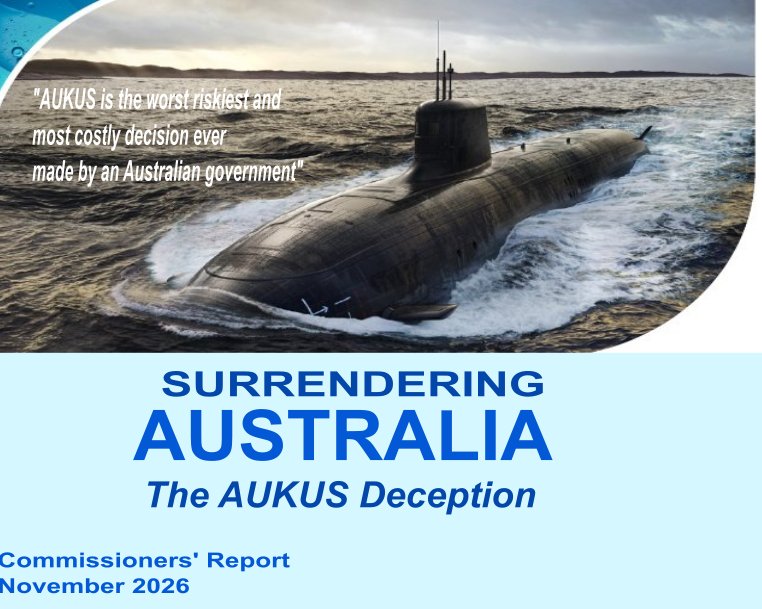
Read the Public Inquiry Report, the Commissioners’ report, Surrendering Australia: The AUKUS Deception is available to download for free at aukuspublicinquiry.com. Or just watch the replay of the National Press Club Luncheon.

Shut down the radiation-damaged Heysham nuclear reactors now
To see nuclear-related stories in greater depth and intensity – go to https://nuclearinformation.wordpress.com

Say No to NASA’s Reckless Nuclear Reactor on the Moon
Say No to NASA’s Reckless Nuclear Reactor on the Moon
-
Archives
- November 2026 (214)
- October 2026 (302)
- September 2026 (339)
- August 2026 (330)
- July 2026 (355)
- June 2026 (287)
- May 2026 (306)
- April 2026 (356)
- March 2026 (251)
- February 2026 (267)
- January 2026 (308)
- December 2025 (358)
-
Categories
- 1
- 1 NUCLEAR ISSUES
- business and costs
- climate change
- culture and arts
- ENERGY
- environment
- health
- history
- indigenous issues
- Legal
- marketing of nuclear
- media
- opposition to nuclear
- PERSONAL STORIES
- politics
- politics international
- Religion and ethics
- safety
- secrets,lies and civil liberties
- spinbuster
- technology
- Uranium
- wastes
- weapons and war
- Women
- 2 WORLD
- ACTION
- AFRICA
- Atrocities
- AUSTRALIA
- Christina's notes
- Christina's themes
- culture and arts
- Events
- Fuk 2022
- Fuk 2023
- Fukushima 2017
- Fukushima 2018
- fukushima 2019
- Fukushima 2020
- Fukushima 2021
- general
- global warming
- Humour (God we need it)
- Nuclear
- RARE EARTHS
- Reference
- resources – print
- Resources -audiovicual
- Weekly Newsletter
- World
- World Nuclear
- YouTube
-
RSS
Entries RSS
Comments RSS

