France’s nuclear output lowers, as climate change affects cooling water systems of reactors.
French Nuclear Outages Risk Making Europe’s Gas Crisis Worse, By Todd Gillespie and Rachel Morison, 17 June 2022,
The cost of electricity in France jumped, adding to Europe’s gas woes, as depressed nuclear output squeezes the market.
France’s nuclear reactors are operating at less than half their full capacity and this week have produced the least electricity at this time of year since at least 2008, according to data compiled by Bloomberg. The country, where warm weather is already making it tougher to cool the fleet of reactors, is importing power from neighboring countries like the UK, which historically has taken energy from France.
Electricity generation from state-run Electricite de France SA, the continent’s largest producer of atomic energy, is struggling under lengthy maintenance of its aging fleet and risks heightening the continent’s dependence on gas, which is in short supply. The company may now need to import power from neighbors in winter, straining wider European supply and burdening consumers with higher costs………………. https://www.bloomberg.com/news/articles/2022-06-17/french-nuclear-outages-risk-making-europe-s-gas-crisis-worse
Japan’s Fukushima village residents allowed to return 11 years after nuclear disaster – but do they want to?
Restrictions lifted for some residents in Fukushima prefecture, more than decade after the nuclear disaster, but many people are still worried
It’s first time restrictions removed to allow people to live again in ‘difficult-to-return’ zone; government says radiation levels have been reduced

12 June, 2022
Residents from part of Katsurao village in Fukushima Prefecture can move back into their homes again more than a decade on from the March 2011 nuclear disaster that followed an earthquake and tsunami, after evacuation orders were lifted on Sunday morning.
It is the first time restrictions have been removed to allow residents to live again in part of the “difficult-to-return” zone once expected to stay closed far into the future due to high radiation exposure.
The government decided on June 3 to end restrictions for the 0.95-square-kilometre area after determining decontamination had reduced radiation levels, and that infrastructure was in place to support habitation.
But while the government has poured funds into decontamination and infrastructure development for zones known as “specified reconstruction and revitalisation bases” which are earmarked for reopening, the intervening 11 years have depressed residents’ desire to return to their homes.
In the part of Katsurao’s Noyuki district where restrictions have been lifted, just four of the 30 households comprising 82 people intend to return, according to the local government.
Amid rainy weather, an official from the central government’s nuclear emergency response headquarters declared the area reopened at 8am. After the gate blocking the road was opened, a police car and other vehicles quickly began patrols of the area.
Katsurao Mayor Hiroshi Shinoki indicated he was considering bringing back residents through revitalising local agriculture, the area’s key industry.
“This is one milestone,” he said. “It is our duty to work to try to bring things back as much as we can to how they were 11 years ago.”
But Fujio Hanzawa, a 69-year-old resident who was quick to revisit his home, spoke carefully when asked about the reopening. “I’m glad I can return without limits, but I’m still 80 per cent concerned. There are issues outstanding, like the unfinished decontamination of the mountain.”
Around 337 square kilometres of land in seven Fukushima municipalities remain subject to the difficult-to-return zone classification. Of those, a total of just 27 square kilometres in six of the same municipalities comprise specified reconstruction and revitalisation base zones.
Apart from Katsurao, the towns of Futaba and Okuma – the latter being home to the crippled Fukushima Daiichi nuclear power plant – are expected to see restrictions partially lifted sometime this month or later, with another three municipalities scheduled for next spring. A specific timetable for areas outside the specified reconstruction bases has not been reached.
Katsurao was made entirely off-limits following the nearby nuclear power plant’s meltdown in the aftermath of the March 2011 earthquake and tsunami.
Concern over cracks in EPR nuclear reactors in France- questions on similar reactors in Finland, UK,China

Concerns have been raised over the reactors at EDF’s Hinkley Point C nuclear power station in Somerset, after cracks were detected in some of the company’s reactors in France. A new report has now warned that the cracks could cause “nuclear accidents” and adds that Hinkley Point C could face similar challenges.
The cracks were first detected in October 2021 in an emergency cooling circuit of the first 1300Mw reactor of the Civaux power plant in France. Cracks have since been discovered in three other
1500Mw reactors and in the 1300Mw Penly 1 reactor.
According to the report, produced by energy transition experts Global Chance, other plants including
Hinkley Point C should be examined in case they will be similarly affected. The report says: “It would also be necessary to examine the possibility that the EPR reactors at Flamanville, Olkiluoto and Taïshan, as well as those under construction at Hinkley Point, might themselves be concerned, insofar as they were designed on the basis of the 1500Mw N4 model.”
Co-author of the report Bernard Laponche emphasised the potential impact of the cracks. “If the defects detected on the welds evolve, they can cause a breach in the main reactor cooling system,” he said. “The risk is therefore to generate a nuclear accident situation”.
It comes after it was revealed in June last year that the US government had been assessing reports of a
leak at the Chinese Taishan power station, with gas escaping after the coating on some of the fuel rods deteriorated. An investigation is ongoing into the cause of the problems with the plant, which is in the southern Chinese province of Guangdong. To date, inspections at Taishan have found
“mechanical wear of certain assembly components”, EDF said. It added that several of its long-running reactors have shown a similar pattern and the issues did not raise questions over the Taishan reactor’s design.
New Civil Engineer 16th June 2022
Court rules Japanese government not responsible for Fukushima nuclear disaster damage
ABC News18 June 22
Key points:
- The nuclear disaster, caused by a tsunami striking the Fukushima Daiichi power plant, forced hundreds of thousands of people from their homes
- The ruling in the government’s favour may set a precedent for future cases
- The company Tepco were forced to pay damages to about 3,700 people in March K
Japan’s government is not liable for damages demanded by people whose lives were devastated by the Fukushima nuclear disaster, the country’s top court said on Friday, the first such ruling in a series of similar cases.
The ruling’s effect as a precedent will be closely watched, local media said……………… https://www.abc.net.au/news/2022-06-17/japan-government-not-responsible-for-nuclear-damage-court/101163670
Antarctic “doomsday glacier” melting at faster rate than in past 5,500 years

Two Antarctic glaciers are now losing ice at a faster rate than any time
over the past 5,500 years, with “potentially disastrous” implications for
sea level rise, new research has found. The Thwaites Glacier, known as the
“Doomsday glacier”, due to the grave risk its melting poses to the world,
is around the size of Great Britain, and its neighbour, the Pine Island
Glacier is only slightly smaller. The two glaciers form part of the Western
Antarctic Ice Sheet, which is being impacted by warming temperatures due to
the climate crisis, and are already contributing to global sea level rise.
Independent 16th June 2022
https://www.independent.co.uk/climate-change/news/antarctica-doomsday-glacier-ice-melt-b2102698.html
Sellafield, Britain’s most dangerous building, in the decades-long process of getting its nuclear waste cleaned up.

Britain’s most dangerous building is finally to be made safe after
engineers began removing nuclear waste from an ageing silo left over from
the arms race of the Cold War. Sellafield, at the edge of the Lake District
in Cumbria, has taken the first steps in a project described as the nuclear
industry’s equivalent of putting a man on the moon.
It has spent the past
two decades searching for a solution to the seemingly intractable problem
of cleaning up 10,000 cubic metres of radioactive sludge housed inside a
concrete silo. Known as Magnox, the silo was built in the late 1950s to
receive waste from Britain’s atomic weapons development programme, as
well as its growing fleet of nuclear reactors.
Today it holds roughly 80
per cent of all of Britain’s nuclear waste. For decades the waste has
been dissolving into a highly dangerous and potentially explosive mix
within a building no longer fit for purpose, leading to it being described
as the “most hazardous building in western Europe” – a description
Sellafield itself uses.
In 2005 a leak containing 20 metric tons of uranium
and 160kg of plutonium was discovered to have escaped from one of the
containers. The Office for Nuclear Regulation, the public watchdog, has
designated the building “an intolerable risk”.
This week, the plant
removed the first batch of waste from one of the silo’s 22 compartments
using a robotic arm specially designed for the task. The radioactive
material is then encased in cement, immobilising it to prevent any leakage,
and placed inside a metal container designed to store it permanently. The
project, which has been 20 years in the making and will take an estimated
further 20 years to complete, costs roughly £2 billion a year. Phil
Hallington, head of policy at Sellafield, described the project as the
nuclear industry’s equivalent of putting a man on the moon.
Times 16th June 2022
https://www.thetimes.co.uk/article/nuclear-waste-removal-begins-at-sellafield-power-plant-xlcmskffn
Can Australian Prime Minister Anthony Albanese save Julian Assange?
New Prime Minister Anthony Albanese, has said he couldn’t see any purpose in keeping Assange in gaol, stating “enough is enough”. In the first week of the Albanese Government, the ABC reported: ‘Mr Albanese is also a signatory to the Bring Julian Assange Home Campaign petition.’
Questioned by The Guardian – Albanese replied that it was his position that “not all foreign affairs is best done with the loudhailer”.
So – we are now getting used to an Australian Prime Minister who values thinking and diplomacy rather than bull-dozing and bullying tactics . So there’s hope.
On the other hand, there’s the determination of the U.S.military-industrial-complex, which rules U.S. politics – to punish Julian Assange for exposing U.S. military’s war crimes. And the subservience of the U.K. to USA, now vested in just oned person, Home Secretary Priti Patel, who shows no sign of having the integrity to stand up for justice.
It is ironic that everyone is now (rightly) jumping up and down about Russian military atrocities, and praising reporters who reveal these – but it seems it’s OK to persecute Assange for revealing U.S. military atrocities?
The power of the global nuclear lobby makes a joke of the sanctions against Russia, and controls the European Union on climate policy.

France, the nuclear industry’s poster boy, and self-appointed leader of the European Union is deeply involved with Russia’s state-owned nuclear corporation Rosatom in expanding the global industry. France is gungho for sanctions against Russian gas and oil, – but nuclear trade is fine.
Joe Biden very keen for sanctions against Russian trade, but the nuclear lobby quickly fixed him, when it came to nuclear – so Russia’s Rosatom was excluded from sanctions.
Russia exports uranium to Europe and USA – so that’s fine.
When it comes to calling nuclear power clean and green and sustainable, Russia, along with the global industry lobbyists, exerted strong pressure in various ways to make sure that the European Commission toes the line.

Julian Assange and family suffer as unjust detention continues
Independent Australia By Binoy Kampmark | 16 June 2022,
The documentary Ithaka powerfully depicts the fight Julian Assange’s family is putting up for him, writes Dr Binoy Kampmark.
JOHN Shipton, despite his size, glides with insect-like grace across surfaces. He moves with a hovering sense, a holy man with message and meaning. As Julian Assange’s father, he has found himself a bearer of messages and meaning, attempting to convince those in power that good sense and justice should prevail over brute stupidity and callousness.
His one object: release Julian………………………..
The documentary Ithaka powerfully depicts the fight Julian Assange’s family is putting up for him, writes Dr Binoy Kampmark.
JOHN Shipton, despite his size, glides with insect-like grace across surfaces. He moves with a hovering sense, a holy man with message and meaning. As Julian Assange’s father, he has found himself a bearer of messages and meaning, attempting to convince those in power that good sense and justice should prevail over brute stupidity and callousness.
His one object: release Julian…………………..
The documentary Ithaka powerfully depicts the fight Julian Assange’s family is putting up for him, writes Dr Binoy Kampmark.
JOHN Shipton, despite his size, glides with insect-like grace across surfaces. He moves with a hovering sense, a holy man with message and meaning. As Julian Assange’s father, he has found himself a bearer of messages and meaning, attempting to convince those in power that good sense and justice should prevail over brute stupidity and callousness.
His one object: release Julian……………………………….
Soft, a voice of reed and bird song, Shipton urged activists and citizens to join the fray, to save his son, to battle for a cause imperishably golden and pure. From this summit, power would be held accountable, institutions would function with sublime transparency, and citizens could be assured that their privacy would be protected.
In the documentary Ithaka, directed by Ben Lawrence, we see Shipton, Assange’s partner, Stella Moris, the two children, the cat and glimpses of brother Gabriel, all pointing to the common cause that rises to the summit of purpose. The central figure, who only ever manifests in spectral form – on-screen via phone or fleeting footage – is one of moral reminder, the purpose that supplies blood for all these figures.
Assange is being held at Belmarsh, Britain’s most secure and infamous of prisons, denied bail and being crushed by judicial procedure. But in these supporters, he has some vestigial reminders of a life outside.
The film’s promotion site describes the subject as ‘the world’s most famous political prisoner, WikiLeaks founder Julian Assange’ a figure who has ‘become an emblem of an international arm wrestle over freedom of journalism, government corruption and unpunished war crimes’. ………..
suffer he shall, if the UK Home Secretary Priti Patel decides to agree to the wishes of the U.S. Department of Justice (DOJ).
The DOJ insists that their man face 17 charges framed, disgracefully and archaically, from a U.S. law passed during World War I and inimical to free press protections. The Espionage Act of 1917 has become the crutch and support for prosecutors who see, in Assange, less a journalist than an opportunistic hacker who outed informants and betrayed confidences. ……………………..
Through the film, the exhausting sense of media, that estate ever-present but not always listening, comes through. This point is significant enough; the media – at least in terms of the traditional fourth estate – put huge stock in the release of material from WikiLeaks in 2010, hailing the effort and praising the man behind it.
But relations soured, and tabloid nastiness set in. The Left found tell-all information and tales of Hillary Clinton too much to handle while the Right, having initially revelled in the revelations of WikiLeaks in 2016, took to demonising the herald. Perversely, in the United States, accord was reached across a good number of political denizens: Assange had to go, and to go, he had to be prosecuted in the United Kingdom and extradited to the United States.
The documentary covers the usual highlights without overly pressing the viewer. A decent run-up is given to the Ecuadorian stint lasting seven years, with Assange’s bundling out, and the Old Bailey proceedings covering extradition. But Shipton and Moris are the ones who provide the balancing acts in this mission to aid the man they both love……….
The film has faced, as with its subject, the usual problems of distribution and discussion. When Assange is mentioned, the dull-minded exit for fear of reputation, and the hysterical pronounce and pounce.
In Gabriel Shipton’s words:
“All of the negative propaganda and character assassination is so pervasive that many people in the sector and the traditional distribution outlets don’t want to be seen as engaging in advocacy for Julian.”
Where Assange goes, the power monopolies recoil. Distribution and the review of a documentary such as Ithaka is bound to face problems in the face of such a compromised, potted media terrain. Assange is a reminder of the plague in the patient of democracy, a pox on the body politic. ……….. https://independentaustralia.net/life/life-display/julian-assange-and-family-suffer-as-unjust-detention-continues,16470#.YqqqxM6TP0M.twitter
The Rosatom Exemption: How Russia’s State-Run Nuclear Giant Has Escaped Sanctions
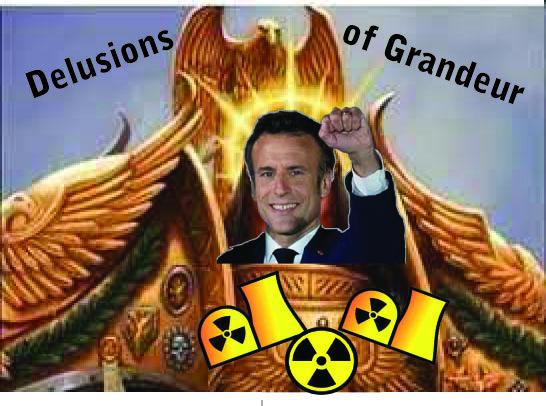
The French nuclear conglomerate Framatome has so far refused to end its cooperation with Rosatom. In December 2021, Rosatom and Framatome announced the signing of a “strategic cooperation” agreement to expand efforts to develop nuclear fuel and technologies.
And while more than 1,000 Western firms have either suspended or ended operations in Russia due to Putin’s invasion of Ukraine, Framatome doesn’t appear ready to join them.
https://www.rferl.org/a/rosatom-russia-nuclear-giant-escapes-sanctions/31899192.html 15 June 22, Europe has grappled with how to end its Russian energy addiction more than ever since Vladimir Putin launched his country’s unprovoked invasion of Ukraine on February 24.
The executive body of the 27-nation European Union agreed a plan in May to reduce its dependence on Russian natural gas by two-thirds by the end of the year, with a total phaseout of all Russian fossil fuel planned by the end of 2027. Coal, already on the outs in much of the bloc, will be banned by August.
But absent from sanctions, let alone discussion, is Rosatom, the Russian state-run nuclear power giant, despite a written appeal in the early days of the invasion from Ukrainian activists and NGOs to blacklist the company and ban nuclear fuel imported from Russia.
Brussels is not alone. When U.S. President Joe Biden announced a U.S. ban on Russian oil, natural gas, and coal imports in March, there was no mention of Rosatom. The Biden administration reportedly considered sanctioning Rosatom but backed off after nuclear industry lobbying and Biden’s plans to include nuclear power as part of the transition to clean energy, Reuters reported.
Rosatom’s footprint is deep in the global reactor and nuclear fuel business. That type of economic sway may explain why Russia’s nuclear industry “has managed to stay out of the limelight” during talk of sanctions, explained Oksana Ananyeva, an energy-policy analyst at the Ukrainian NGO Ekodia, one of the signatories of the March appeal addressed to Biden and EU leaders.
“One of the reasons for that is certainly the heavy reliance on uranium and nuclear fuel as most of the 32 countries that use nuclear power rely on Russia for some part of their nuclear fuel supply chain,” Ananyeva told RFE/RL.
The Numbers
Russian nuclear power radiates far beyond its borders. Of the 439 nuclear reactors in operation around the world in 2021, 38 of them were in Russia, an additional 42 were made with Russian nuclear reactor technology, and 15 more under construction were being built with Russian technology, according to a study published on May 23 at Columbia University’s Center on Global Energy Policy.
Russia is also a source of uranium, the key ingredient in nuclear fuel. Europe gets some 20 percent of its uranium from Russia. The United States relies on Russia for 16 percent of its uranium, with another 30 percent from two of Moscow’s close partners, Kazakhstan and Uzbekistan.
Russia owned 40 percent of the total uranium conversion infrastructure in the world in 2020 and 46 percent of the total uranium enrichment capacity in the world in 2018, according to the Columbia University report.
An EU Rethink On Nuclear Power?
In recent years, Rosatom is reported to have been part of nuclear-power industry lobby efforts to convince the EU to embrace nuclear as the bloc considers how to move faster to cleaner forms of power. According to Greenpeace, new EU nuclear capacity could be worth an estimated 500 billion euros ($521 billion) of potential investment.
The EU is scrambling to meet a goal of net-zero emissions by 2050 to prevent catastrophic global warming. Part of that process is defining what is and what isn’t a climate-friendly investment. Leaders in Brussels are seeking approval from EU countries and the European Parliament to include nuclear energy as a sustainable investment in its “taxonomy” policy for labeling green investments.
Rosatom has been accused by Greenpeace of using lobbying connections, which the environmental NGO describes as “reminiscent of nesting Russian dolls,” to press for the inclusion of nuclear energy in the taxonomy of sustainable investments, much like Russian energy firms Gazprom and LUKoil have done to include fossil gas.
In a report released on May 17, Greenpeace said its research had uncovered that Russian energy companies, including Gazprom, had met with EU commissioners and senior officials either directly or through subsidiaries and lobby groups at least 18 times since the European Commission published its action plan on sustainable finance in March 2018.
Beyond fuel, Rosatom is hoping to build new nuclear reactors, which are the core of its business. Hungary, heavily dependent on Russian gas and oil, has voiced opposition to proposed EU bans on Russian energy. It also has plans with Rosatom to build new reactors at its Paks nuclear power plant.
After meeting Rosatom’s chief executive in Istanbul on May 5, Hungarian Foreign Minister Peter Szijjarto said in a statement that the planned construction of the two new blocks at Paks served Hungary’s strategic interests.
Szijjarto said the Hungarian Atomic Energy Authority was reviewing the requests for permits submitted by Rosatom and once these are approved the project could enter its next phase.
The project, awarded in 2014 without a tender to Rosatom but plagued by delays, has often been cited as a sign of warm ties between Hungarian Prime Minister Viktor Orban and Putin.
While Hungary appears to be going ahead, Finland has announced it is pulling out from its planned reactor project with Rosatom. On May 2, the Finnish-led consortium Fennovoima said it had scrapped a contract with Rosatom citing delays and increased risks due to the war in Ukraine.
Rosatom, which owns a 34 percent stake in the consortium through a Finnish subsidiary, said on May 6 that it will demand compensation for the “unlawful termination” of the contract.
Europe’s Dependence
Continue readingTwo key committees of the European Parliament strike down EU plans to label nuclear and gas as green investment .

MEPs strike down EU plans to label nuclear and gas as green investment.
https://www.euronews.com/my-europe/2022/06/14/meps-strike-down-eu-plans-to-label-nuclear-and-gas-as-green-investment By Jorge Liboreiro & Alice Tidey • Updated: 14/06/2022
The European Commission’s highly controversial plan to label gas and nuclear as sustainable energy sources was on Tuesday struck down by two key parliamentary committees.
The Economic and Monetary Affairs Committee and the Environment, Public Health and Food Safety Committee rejected the proposal on Tuesday, with 76 MEPs voting to object and 62 voting in favour.
In a statement, MEPs on the committees said they “recognise the role of nuclear and fossil gas in guaranteeing stable energy supply during the transition to a sustainable economy.”
“But, they consider that the technical screening standards proposed by the Commission, in its delegated regulation, to support their inclusion do not respect the criteria for environmentally sustainable economic activities as set out in Article 3 of the Taxonomy Regulation,” the statement added.
They also requested that any new or amended delegated acts be subject to public consultation and impact assessments.
The objection will be put before the whole plenary in the first week of July. If the hemicycle replicates the outcome of the committees, the Commission’s plan will be officially scrapped.
The move pits lawmakers against a majority of member states, led by France, who had supported the inclusion of both gas and nuclear in the EU taxonomy.
A smaller group comprising Luxembourg, Spain, Austria and Denmark was vehemently opposed to the label, while Germany, which is highly dependent on gas, objected to the inclusion of nuclear as sustainable.
The committees’ rejection was welcomed by climate activists. Greenpeace EU sustainable finance campaigner Ariadna Rodrigo said in a statement that “MEPs stood with Ukraine today by voting to stop feeding Putin’s war machine with more money and inflaming the climate and nature crisis.”
“After more than 100 days of this devastating war, the European Parliament must now once and for all reject the greenwashing of fossil gas and nuclear energy in July. Do not give this shameful gift to Putin and his lobbyists,” she also said.
Mariana López Dávila, Programme Manager on Sustainable Finance, Environmental Coalition on Standards (ECOS) also commented, saying the vote “shows the Parliament’s willingness to stay true to science, and gives us hope that the EU can still lead the world into a truly sustainable future.”
“However, the veto is not yet a done deal. Members of the European Parliament stand a unique chance to walk the talk, and avoid greenwashing well-meaning investments into environmentally-harming projects,” she added.
Adopted in 2021, the taxonomy is a catalogue that helps private and public investors make informed choices about climate-conscious investments.
It covers a long list of projects that make a “substantial contribution” to at least one environmental objective of the EU’s climate policy while avoiding significant harm to any of the others.
Sectors already labelled as green under the taxonomy include solar energy, geothermal, hydrogen, wind power, hydropower and bioenergy.
The Commission later proposed to add gas and nuclear, arguing the two sources could be used as a temporary bridge to wean the EU off coal and achieve climate neutrality by 2050.
Pope Francis again says that the West provoked or failed to prevent Russia’s invasion of Ukraine.

Pope Doubles Down On NATO-Ukraine Comments: Russian Invasion Was “Provoked” https://www.zerohedge.com/geopolitical/pope-doubles-down-ukraine-war-comments-russian-invasion-was-provoked
BY TYLER DURDEN, WEDNESDAY, JUN 15, 2022 –Pope Francis has doubled down on prior controversial statements suggesting the Russia-Ukraine conflict is largely NATO’s fault, asserting also that “war cannot be reduced to distinction between good guys and bad guys” – as the Vatican’s own headline to the interview reads.
In statements published Tuesday by the Jesuit magazine La Civiltà Cattolica, the Roman Catholic leaders said that the Russian invasion was “perhaps somehow provoked” while again saying there were signs that NATO had been “barking at the gates of Russia” in the run-up.
The pontiff still condemned what he called the “ferocity and cruelty of the Russian troops” while warning against a pure ‘good vs. evil’ fairytale narrative of the conflict.
Just like with his initial similar comments made at the start of May, these latest statements have triggered outrage among Western pundits who’ve called for escalating military support to Ukraine at the expense of dialogue with Moscow toward negotiating a settlement to end the war:
“We need to move away from the usual Little Red Riding Hood pattern, in that Little Red Riding Hood was good and the wolf was the bad one,” Francis said. “Something global is emerging and the elements are very much entwined.”
That’s when in the interview he provided more context to his early May statements on the war. He said that a couple months prior to the Feb.24 invasion, he met with a “wise” head of state – though Francis didn’t name him or her:
“…a wise man who speaks little, a very wise man indeed … He told me that he was very worried about how Nato was moving. I asked him why, and he replied: ‘They are barking at the gates of Russia. They don’t understand that the Russians are imperial and can’t have any foreign power getting close to them.'”
“He concluded, ‘The situation could lead to war.’ This was his opinion. On 24 February, the war began. That head of state was able to read the signs of what was happening.”
He added: “We do not see the whole drama unfolding behind this war, which was, perhaps, somehow either provoked or not prevented.”
The Pope also reiterated that the arms industry in the West is benefitting from the bloodshed: “I also note the interest in testing and selling weapons. It is very sad, but at the end of the day that is what is at stake,” he said in the interview.
“Someone may say to me at this point: but you are pro-Putin! No, I am not. It would be simplistic and erroneous to say such a thing. I am simply against turning a complex situation into a distinction between good guys and bad guys, without considering the roots and self-interests, which are very complex. While we witness the ferocity and cruelty of Russian troops, we should not forget the problems, and seek to solve them,” he explained.
According to Vatican News, the pontiff additionally described that even beyond Ukraine-Russian, “the world is at war…
“We see what is happening now in Ukraine in a certain way because it is closer to us and pricks our sensibilities more. But there are other countries far away—think of some parts of Africa, northern Nigeria, northern Congo—where war is ongoing and nobody cares. Think of Myanmar and the Rohingya. The world is at war. Today, for me, World War III has been declared.”
The last time he suggested the West is at least equally to blame for the unfolding Ukraine war, an avalanche of op-eds and condemnations were issued by US and Western officials suggesting that somehow liberal Pope Francis too has been ‘compromised’ by Putin (ironically a smear typically reserved for Trump or Republicans in general).
Nuclear-armed nations spent $82.4bn on weapons in 2021
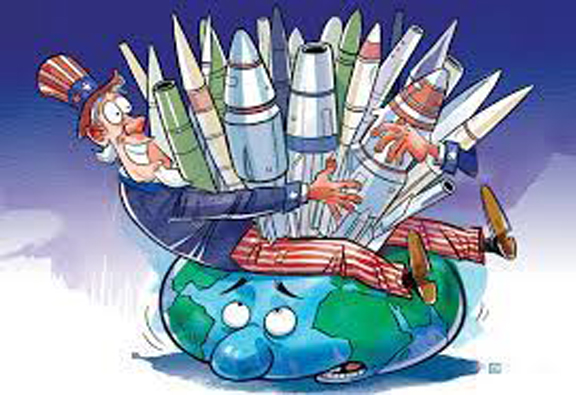
Nuclear-armed nations spent $82.4bn on weapons in 2021 https://www.aljazeera.com/news/2022/6/15/nuclear-armed-nations-spent-82bn-on-weapons-in-2021
International Campaign to Abolish Nuclear Weapons accuses nuclear-armed nations of ‘obscene’ spending and notes extensive industry lobbying.
The world’s nine nuclear-armed countries spent $82.4bn upgrading their atomic weaponry in 2021, eight percent more than the year before, a campaign group has said.
The biggest spender was the United States, which accounted for more than half the total spending, followed by China, Russia, the United Kingdom and France, the International Campaign to Abolish Nuclear Weapons (ICAN) said in its annual report on nuclear spending.
“Nuclear-armed states spent an obscene amount of money on illegal weapons of mass destruction in 2021, while the majority of the world’s countries support a global nuclear weapons ban,” the group said in its report. “This spending failed to deter a war in Europe and squandered valuable resources that could be better used to address current security challenges, or cope with the outcome of a still raging global pandemic. This corrupt cycle of wasteful spending must be put to an end.”
ICAN noted that nuclear weapons producers also spent millions lobbying on defence, with every $1 spent lobbying leading to an average of $256 in new contracts involving nuclear weapons.
“The exchange of money and influence, from countries to companies to lobbyists and think tanks, sustains and maintains a global arsenal of catastrophically destructive weapons,” the report said.
On Monday, the Stockholm International Peace Research (SIPRI) warned that all nine nuclear-armed countries were increasing or upgrading their arsenals, and that the risk of such weapons being deployed appeared higher now than at any time since the height of the Cold War.
Russia, which invaded Ukraine in February, has openly threatened to use its nuclear weapons.
ICAN estimates North Korea spent $642m on nuclear weaponry in 2021 even as its economy struggled under United Nations sanctions and the pandemic-linked closure of borders.
Pyongyang walked away from denuclearisation talks after the collapse of a summit with then-US President Donald Trump in 2019, and has carried out a record number of missile launches this year. There are concerns it is preparing for its first nuclear weapons tests since 2017.
There is no official confirmation on the amount North Korea spends on nuclear weapons or its arsenal. SIPRI estimates it has as many as 20 warheads.
Nuclear weapons spending, 2021
Source: International Campaign to Abolish Nuclear Weapons
- United States $44.2bn
- China $11.7bn
- Russia $8.6bn
- UK $6.8bn
- France $5.9bn
- India $2.3bn
- Israel $1.2bn
- Pakistan $1.1bn
- North Korea $642m
Many of UK’s coastal buildings may soon need to be abandoned due to sea level rise, – and what about the nuclear reactors?

Sea level rise threatens many coastal buildings in UK.
Is the UK government completely stupid? Not only are existing nuclear reactors at risk of flooding, but they plan new ones in the same threatened coastal areas?
Nearly 200,000 properties in England may have to be abandoned due to rising sea levels by 2050, a report says. It looks at where water will cause most damage and whether defences are technically and financially feasible.
There is consensus among scientists that decades of sea level rise are inevitable and the government has said that not all properties can be saved.
About a third of England’s coast will be put under pressure by sea level rise, the report says. “It just won’t be possible to hold the line all around the coast,” says the report’s author Paul Sayers, an expert on flood and coastal risks, adding that tough decisions will have to be made about what it is realistic to protect.
BBC 15th June 2022
https://www.bbc.co.uk/news/science-environment-61795783
The estimate of nearly 200,000 homes and businesses at risk of abandonment comes from researchers at the Tyndall Centre, in the University of East Anglia, published in the peer-review journal Oceans and Coastal Management.
Guardian 15th June 2022
The deteriorating nuclear order
We’re returning to a time when nuclear threats were the norm — and the world flirted with Armageddon.
Politico, BY IVO DAALDER, June 15, 2022
“A nuclear war cannot be won and must never be fought.”
So said the leaders of China, France, Russia, the United Kingdom and the United States for the very first time, just five months ago. Today, however, the prospect of nuclear weapons use is perhaps greater than any time since the Cuban missile crisis of 1962.
Just weeks after co-signing the joint statement on preventing nuclear war, Russian President Vladimir Putin launched a war of aggression against a neighbor that had given up its nuclear weapons in return for Russia’s explicit assurance “to respect the independence and sovereignty and the existing borders of Ukraine [and] refrain from the threat or use of force against the territorial integrity and political independence of Ukraine.”
At the onset of war, Putin made an explicit threat to “those who stand in our way,” saying that the “consequences will be such as you have never seen in your entire history.” And just three days later, he said he’d raise the alert level of its nuclear forces — though there are no indications that he did.
Russia has sought to enhance the threat of using nuclear weapons for years now.
Realizing its conventional capabilities were no longer a match for the U.S. and NATO, some time ago, Moscow adopted a military doctrine in which its use of so-called tactical weapons might persuade an adversary to back down. And with progress in its war against Ukraine stymied by determined Ukrainian forces backed with sophisticated Western weapons, the possibility that Putin might decide to “escalate to deescalate” has become especially alarming.
But it’s not just Russian behavior and threats that are lowering the nuclear threshold. There are an increasing number of other worrying developments on the nuclear front, starting with actions taken by other established nuclear powers.
For one, the U.S. is in the midst of a massive nuclear modernization program, costing upward of $1 trillion and including new land-based missiles, a new strategic bomber and new missile-carrying nuclear submarines. It’s also deployed low-yield nuclear warheads to give Washington the capability to respond to any limited nuclear use by Russia — though few believe a nuclear exchange is or can remain limited.
China’s also modernizing and expanding its nuclear forces at a fast clip. It’s been digging new missile silos in the Gobi Desert, and the Pentagon estimates that it will deploy 1,000 nuclear warheads by the end of the decade — effectively ending its long-standing policy of relying on a minimal deterrent.
Britain, too, has announced that it’s increasing its nuclear capabilities, boosting its possible future sea-launched warhead numbers by 40 percent. And France has embarked on a major new modernization program of nuclear missiles and submarines.
But it’s not only the established nuclear powers that are expanding capabilities — newer and aspirant powers are as well.
Pakistan and India have growing nuclear arsenals that, in a few years, may equal those of France or Britain. North Korea not only has resumed nuclear material production but has also expanded the mission of its growing nuclear forces from deterring attack to advancing its national interests. And Iran now possesses enough material for a nuclear bomb as prospects of returning to the nuclear deal restraining it have all but vanished.
This increasing nuclearization around the world is putting new pressure on the nonproliferation regime.
The more countries look to the nuclear option to ensure security, the more the incentive for other countries to follow. For example, Iran’s emergence as a nuclear threshold state increases the pressure on countries like Saudi Arabia, Egypt and Turkey to reconsider their non-nuclear status…………………..
Pakistan and India have growing nuclear arsenals that, in a few years, may equal those of France or Britain. North Korea not only has resumed nuclear material production but has also expanded the mission of its growing nuclear forces from deterring attack to advancing its national interests. And Iran now possesses enough material for a nuclear bomb as prospects of returning to the nuclear deal restraining it have all but vanished.
This increasing nuclearization around the world is putting new pressure on the nonproliferation regime.
The more countries look to the nuclear option to ensure security, the more the incentive for other countries to follow. For example, Iran’s emergence as a nuclear threshold state increases the pressure on countries like Saudi Arabia, Egypt and Turkey to reconsider their non-nuclear status. https://www.politico.eu/article/nuclear-weapons-russia-war-ukraine-united-states-china/
1 This Month
Tell Congress: Prevent Nuclear Catastrophe in Iran

Tell Congress: Prevent Nuclear Catastrophe in Iran

Read the Public Inquiry Report, the Commissioners’ report, Surrendering Australia: The AUKUS Deception is available to download for free at aukuspublicinquiry.com. Or just watch the replay of the National Press Club Luncheon.


Shut down the radiation-damaged Heysham nuclear reactors now
To see nuclear-related stories in greater depth and intensity – go to https://nuclearinformation.wordpress.com

Say No to NASA’s Reckless Nuclear Reactor on the Moon
Say No to NASA’s Reckless Nuclear Reactor on the Moon
-
Archives
- November 2026 (190)
- October 2026 (302)
- September 2026 (339)
- August 2026 (330)
- July 2026 (355)
- June 2026 (287)
- May 2026 (306)
- April 2026 (356)
- March 2026 (251)
- February 2026 (267)
- January 2026 (308)
- December 2025 (358)
-
Categories
- 1
- 1 NUCLEAR ISSUES
- business and costs
- climate change
- culture and arts
- ENERGY
- environment
- health
- history
- indigenous issues
- Legal
- marketing of nuclear
- media
- opposition to nuclear
- PERSONAL STORIES
- politics
- politics international
- Religion and ethics
- safety
- secrets,lies and civil liberties
- spinbuster
- technology
- Uranium
- wastes
- weapons and war
- Women
- 2 WORLD
- ACTION
- AFRICA
- Atrocities
- AUSTRALIA
- Christina's notes
- Christina's themes
- culture and arts
- Events
- Fuk 2022
- Fuk 2023
- Fukushima 2017
- Fukushima 2018
- fukushima 2019
- Fukushima 2020
- Fukushima 2021
- general
- global warming
- Humour (God we need it)
- Nuclear
- RARE EARTHS
- Reference
- resources – print
- Resources -audiovicual
- Weekly Newsletter
- World
- World Nuclear
- YouTube
-
RSS
Entries RSS
Comments RSS

