Dead fish near SC nuclear fuel site were an early warning. Then came the spills and accidents
The State, BY SAMMY FRETWELL, JULY 30, 2022
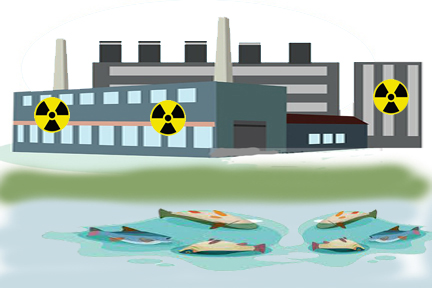
Dead fish floated in a small pond near a nuclear fuel factory one day in 1980, raising concerns about the Columbia plant’s danger to the surrounding environment. A cocktail of contaminants had been documented in groundwater, which seeps into creeks and ponds, and it appeared that one of these pollutants — ammonia — had contributed to the fish kill in Gator Pond, according to environmental studies. It was a disturbing discovery that foreshadowed a variety of environmental and safety troubles the Westinghouse nuclear fuel plant would deal with over the next 40 years.
Since 1980, more than 40 environmental and safety problems have been tied to the Westinghouse plant, ranging from groundwater pollution to nuclear safety violations that endangered plant workers, according to a review of news accounts and public records by The State. Despite those issues, the U.S. Nuclear Regulatory Commission approved a final environmental study Friday that said the future environmental impact of the plant would be small to moderate. The NRC recommended a new license for the plant to operate for an additional 40 years, a decision that greases the skids for final license approval this fall.
John Grego, who is with the Friends of Congaree Swamp organization that supports Congaree National Park, said the fuel factory has had too many troubles of all kinds through the years. “The variety of problems is what troubles me, that this occurred in so many aspects of their culture,’’ Grego said. “It just seems to suggest systemic problems with the safety culture at Westinghouse. You had these long-standing problems that weren’t remediated, problems that weren’t reported.’’
Some of the pollution tied to Westinghouse was not known to the public or government regulators for years, which has incensed some Lower Richland residents who live near the plant. Some residents of the predominantly African-American community have said they were left out of the loop for too long.
Only in recent years, when a flurry of safety issues at the plant arose, did many people learn about past pollution. A key community concern is whether water pollution from the plant could one-day contaminate their drinking water wells. State regulators said mechanisms are now in place to hold Westinghouse more accountable, while resolving past environmental problems. The company struck a binding agreement with the state Department of Health and Environmental Control in 2019 to investigate and clean up pollution on the property. The company also is nearing completion of an investigative study of the site’s environmental problems, according to a statement Friday from DHEC.
……………………… Congaree Riverkeeper Bill Stangler was skeptical. Stangler said he is not confident Westinghouse will improve the operation, despite recent assurances and agreements with state regulators to clean up and do a better job. The plant is located near the Congaree River. “They have a long track record of problems at that facility that would raise anyone’s eyebrows,’’ Stangler said. “It’s concerning if you have an interest in the environment; it’s concerning if you are someone who lives in the surrounding area. Time after time we have seen that they haven’t followed the rules, and they have had problems.’’
………………………
Troubles at Westinghouse began in the 1970s, not long after the plant opened, when a wastewater pond leaked. But problems continued steadily after the 1980 fish kill, sometimes little known to the public. After the company reported a leak of uranium through a hole in the plant floor in 2018, federal and state regulators learned that the company had spilled toxins into the ground in 2008 and in 2011 without telling them or the public. The company said it was not required to report the spills. Contaminants such as fluoride, uranium, solvents and ammonia have been found in groundwater on the Westinghouse site. Technetium, a nuclear pollutant, also has been discovered on the soggy property, but no one has yet pinpointed the cause of the pollution.
Some of the biggest troubles at Westinghouse have revolved around nuclear safety inside the plant. The company has run into trouble through the years for failing to make sure nuclear materials it manages didn’t trigger small bursts of radiation, which can endanger workers. Records show the NRC has expressed concerns multiple times with Westinghouse over the issue, known as criticality safety
……………………… Government records also show that people working at the plant falsified records, including as recently as 2009. In some cases, employees have been injured or threatened by nuclear accidents.
…………………. News accounts and government records also show that Westinghouse has, at times, had trouble handling and keeping track of nuclear material it is responsible for…………………………………………. https://www.thestate.com/news/local/environment/article263945551.html
UN Nuclear Review: A Prime Time to Stop the New Arms Race
The real solution to the threat of nuclear war is in plain sight, but still the powerful weapons makers and war profiteers refuse to yield.
https://medium.com/@codepink/un-nuclear-review-a-prime-time-to-stop-the-new-arms-race-6e3303aa0ccd By Marcy Winograd and Medea Benjamin, 31 July 22,
In the run-up to August’s United Nation’s 10th Annual Review of the landmark Nuclear Non-Proliferation Treaty (NPT), a review undertaken every five years, Secretary of State Antony Blinken’s State Department issued a surprising reaffirmation of the U.S. commitment to this treaty and the “ultimate goal of a world without nuclear weapons.”
The NPT, designed to “further the goal of achieving nuclear disarmament,” entered into force in 1970 and was extended indefinitely in 1995. It has now been signed by 191 nations, including the U.S. and Russia.
If only Blinken’s verbal support for the NPT was U.S. policy, as opposed to wishful thinking or trickery.
As treaty signatories and civil society representatives from around the world gather for a month in New York to evaluate the treaty’s implementation, the White House, Congress, and military contractors will move ahead on a near $2 trillion nuclear rearmament program euphemistically termed “nuclear modernization.”
Modernization is a kitchen upgrade. New touch-to-open cabinets. New LED recessed lighting.
It is not 600 new–instead of funeralized–intercontinental ballistic missiles (ICBM’s) on hair trigger alert to replace the Minuteman III in the midwest. Each of these “modern missiles” would span the length of a bowling lane with new warheads that are 20 times more powerful than the bombs that incinerated Hiroshima and Nagasaki.
Modernization is not a new sea-launched nuclear cruise missile that carries both conventional and nuclear warheads with the same radar profile to confuse “the enemy.”
Modernization is not 100 new stealth air-launched nuclear missiles like the B-21 Raider, also capable of carrying both conventional and nuclear weapons.
Ahh, but these nuclear weapons are just upgrades, not new systems, right?
Semantic back-flips aside, U.S. nuclear “modernization” means the development of new weapon systems with new nuclear warheads and a new arms race. What the State Department failed to mention in its reaffirmation of the NPT was that the U.S. nuclear rearmament program violates the spirit and intent of Article 6 of the NPT, which prohibits the pursuit of new nuclear weapons.
Instead of pursuing world peace and climate preservation for our children, US leaders are chasing a reckless foreign policy.
In April, the Wall Street Journal published a commentary titled “The U.S. should show it can win a nuclear war.”
More recently, the City of New York, home of the United Nations, released, however well-intentioned, a so-called public service announcement on how to survive a nuclear attack, referring to it as “the big one”, as though it were an earthquake. No mention was made of blinding flashes of light or widespread radiation that blisters the skin or immediate incineration. Instead, New Yorkers were instructed to get inside, stay inside and stay tuned. Tuned to what? Our fading heartbeats?
According to the International Committee to Abolish Nuclear Weapons (ICAN), a nuclear war between the US and Russia would lead to over 34-million dead and 57 million injured in the first few hours — and a dark subzero winter of famine and soot blocking the sun for those who survived.
No mention is made of this nightmare scenario, however, in the 2019 Joint Chiefs Nuclear Operations Publication (3–72), a Strangelovian document briefly released then deleted from the website of the Joint Chiefs of Staff. The vanishing unclassified document, preserved by the Federation of American Scientists, reflects the Pentagon’s delusional thinking that a nuclear war can be limited and won. Mark Milley, then Secretary of the Army, now Chair of the Joint Chiefs, signed off on the chilling statements below:
“A nuclear weapon could be brought into the campaign as a result of perceived failure in a conventional campaign, potential loss of control or regime, or to escalate the conflict to sue for peace on more-favorable terms.”
“Using nuclear weapons could create conditions for decisive results and the restoration of strategic stability …”
UN treaty signatories, along with NGO conference delegates, should use the month-long NPT operations review to speak truth to power.
First, they should speak out against the dangerous proxy war in Ukraine between the U.S./NATO and Russia that could lead to a nuclear confrontation. The delegates should denounce Russian President Vladmir Putin for ordering the invasion of Ukraine and call on all parties in the war to engage in a negotiated settlement.
One miscalculation, one moment of confusion, one intentional launch of a short-range nuclear warhead, followed by a retaliatory long-range nuclear weapon, could burn us alive and blanket the world in ash.
Delegates should also call on the United States and NATO to denuclearize Europe. This would entail removing US nuclear weapons from Belgium, the Netherlands, Germany, Italy and Turkey; scrapping plans to redeploy nuclear weapons to the United Kingdom, where for 14 years nuclear storage facilities rightfully have sat empty; and removing the provocative anti-ballistic missiles from Romania and Poland, both of which are perilously close to Russia’s border.
On the broader issue of disarmament, attendees at the UN meetings should shout “Come to your senses!” to the President Biden, Secretary of State Antony Blinken, National Security Advisor Jake Sullivan, Secretary of Defense Lloyd Austin and Chair of the Joint Chiefs of Staff Mark Milley for supporting nuclear rearmament. Delegates should denounce members of Congress who recently voted for the $840 billion dollar military budget that includes $30 billion as another down payment on the nuclear rearmament program.
Participants at the UN gathering could also call on President Biden to declassify his Nuclear Posture Review. Every administration is obligated by US law to release a new Nuclear Posture Review outlining the administration’s nuclear policy.
To date, Biden’s Nuclear Posture Review remains a secret.
Classified.
Declassifying the Review would allow the people of the United States, and the world, to know whether President Biden is committed to keeping his campaign promise of no first use of nuclear weapons and if he abides by the Joint Statement he signed with Putin in 2021 and the Joint Agreement he signed in 2022 with five nuclear weapons states, including Russia and China, committing the US to the NPT because “a nuclear war can never be won and must never be fought.”
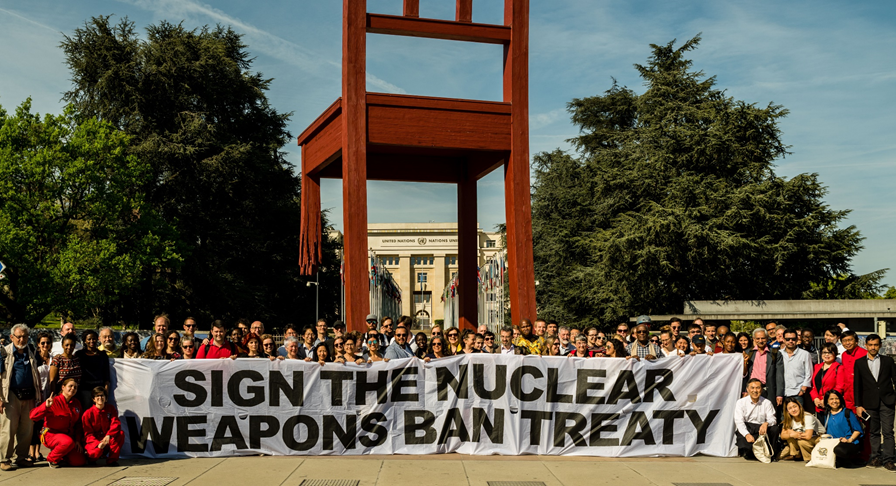
The real solution to the threat of nuclear war is in plain sight. It is the UN Treaty on the Prohibition of Nuclear Weapons, the first legally binding international agreement to comprehensively prohibit nuclear weapons. It was adopted in July 2017 and entered into force in January 2021, after it was ratified by 50 states. None of the nuclear states have signed it.
The NPT Review Conference is a golden opportunity for the participants, and the public in general, to call on all nations to sign the UN Treaty on the Prohibition of Nuclear Weapons and to once and for all embrace the Nuclear Non-Proliferation Treaty to, in the treaty’s words, “pursue negotiations in good faith on effective measures relating to cessation of the nuclear arms race at an early date and to nuclear disarmament.”
Take Action: Email the White House to demand President Biden’s Nuclear Posture Review be made public. Call your US Senators (202) 224–3121 to urge them to vote NO on the 2023 military budget or NDAA.
Marcy Winograd of Progressive Democrats of America served as a 2020 DNC Delegate for Bernie Sanders and co-founded the Progressive Caucus of the California Democratic Party. Coordinator of CODEPINKCONGRESS, Marcy spearheads Capitol Hill calling parties to mobilize co-sponsors and votes for peace and foreign policy legislation.
Medea Benjamin, co-founder of Global Exchange and CODEPINK: Women for Peace, is the author of the 2018 book, “Inside Iran: The Real History and Politics of the Islamic Republic of Iran.” Her previous books include: “Kingdom of the Unjust: Behind the U.S.-Saudi Connection” (2016); “Drone Warfare: Killing by Remote Control” (2013); “Don’t Be Afraid Gringo: A Honduran Woman Speaks from the Heart” (1989), and (with Jodie Evans) “Stop the Next War Now (Inner Ocean Action Guide)” (2005).
Ukraine War Hangs Over UN Meeting on Nuclear Treaty’s Legacy
VOA UNITED NATIONS 31 July 22, —
There was already plenty of trouble to talk about when a major U.N. meeting on the landmark Nuclear Nonproliferation Treaty was originally supposed to happen in 2020.
Now the pandemic-postponed conference finally starts Monday as Russia’s war in Ukraine has reanimated fears of nuclear confrontation and cranked up the urgency of trying to reinforce the 50-year-old treaty.

“It is a very, very difficult moment,” said Beatrice Fihn, the executive director of the Nobel Peace Prize-winning International Campaign to Abolish Nuclear Weapons.
Russia’s invasion, accompanied by ominous references to its nuclear arsenal, “is so significant for the treaty and really going to put a lot of pressure on this,” she said. “How governments react to the situation is going to shape future nuclear policy.”
The four-week meeting aims to generate a consensus on the next steps, but expectations are low for a substantial — if any — agreement……………………………
The events in Ukraine create a tricky choice for the upcoming conference, said Patricia Lewis, a former U.N. disarmament research official who is now at the international affairs think tank Chatham House in London.
“On the one hand, in order to support the treaty and what it stands for, governments will have to address Russia’s behavior and threats,” she said. “On the other hand, to do so risks dividing the treaty members.”
Another uncomfortable dynamic: The war has heightened some countries’ apprehensions about not having nuclear weapons, especially since Ukraine once housed but gave up a trove of Soviet nukes.
Ukraine is hardly the only hot topic.
North Korea appears to have been preparing recently for its first nuclear weapons test since 2017. And talks about reviving the deal meant to keep Iran from developing nukes are in limbo.
The U.S. and Russia have only one remaining treaty curtailing their nuclear weapons and have been developing new technologies. Britain last year raised a self-imposed cap on its stockpile. China says it’s modernizing — or, the U.S. claims, expanding — the world’s third-largest nuclear arsenal……………..
In recent years, frustration with the Nonproliferation Treaty catalyzed another pact that outright prohibits nuclear weapons. Ratified by more than 60 countries, it took effect last year, though without any nuclear-armed nations on board.
At a recent meeting in Vienna, participating countries condemned “any and all nuclear threats” and inked a lengthy plan that includes considering an international trust fund for people harmed by nuclear weapons.
Fihn, whose Geneva-based group campaigned for the nuclear ban treaty, hopes the vigor in Vienna serves as inspiration — or notice — for countries to make progress at the U.N. conference.
“If you don’t do it here,” she said, “we’re moving on without you elsewhere.” https://www.voanews.com/a/ukraine-war-hangs-over-un-meeting-on-nuclear-treaty-legacy/6681249.html
Grief for the abuse of nature that will come with Sizewell C nuclear station

East Anglia – already in drought and water scarcity, and climate change bringing heat waves – and they want to inflict more water-guzzling nuclear power upon this fragile environment
It’s hard not to be a nimby when nuclear meets nature. The margins of
our village lanes are thick with yellow leaves. It looks autumnal, but
they’ve changed colour and fallen due to heat stress. The fields are
tinder-dry; crop fires have sprung up here and there, some sparked by chaff
from combine harvesters hitting power lines, some thought to have been
started by the sun glancing off glass bottles left as litter.
In my garden the sparrows are no longer busy and voluble but sit out each day’s heat
in the privet, tiny beaks agape.
East Anglia gets little rain; the region
includes some of the driest places in the UK. Even so, aerial images
comparing now with last July are shocking — only the larger forests and
the damper creases of the watercourses still appearing green.
When I went to our local river for a cooling paddle, the water didn’t even reach my
knees. I drove to the coast. Suffolk’s seasides can be busy, but the long
dog-friendly beach south of the fishing hamlet of Sizewell is largely
overlooked by tourists and is a great place to swim. Kwasi Kwarteng, the
business secretary, had just given the proposed new nuclear power station
the go-ahead, and, bobbing in the waves, I gazed at the existing site’s
faraway blocks and sphere and tried to come to terms with what’s likely
to happen to this lovely stretch of coast — not to mention the Minsmere
nature reserve and all the sleepy villages, nightingale-filled woods and
family farms that the long building process will irrevocably change.
My grief for the countryside here is acute. I wish there were other options
than Sizewell on the table. You might say that’s nimbyism, but without
people willing to protect their home patches even more of our precious
landscapes, habitats and creatures will disappear — and that’s not just
a loss to locals, it’s a loss to all of us.
Times 29th July 2022
https://www.thetimes.co.uk/article/its-hard-not-to-be-a-nimby-when-nuclear-meets-nature-sd2wgdt9b
Westinghouse Nuclear Fuel Fabrication plant – a detailed history of troubles.

Dead fish near SC nuclear fuel site were an early warning. Then came the spills and accidents, The State, BY SAMMY FRETWELL, JULY 30, 2022
“……………………………………………………. 1980: State regulators learn of a fish kill near the Westinghouse wastewater plant. They found elevated levels of fluoride and ammonia-nitrogen in groundwater and surface water. It was later determined that the pollution came from the plant wastewater area. 1980: Twenty plant workers evacuated from Westinghouse after a small leak of uranium hexafluoride gas.
1982: Westinghouse unable to find 9.5 pounds of slightly enriched uranium, according to an NRC report. 1983: State regulators fine Westinghouse $6,000 for illegally shipping flammable material that caused a fire at Barnwell County’s low-level nuclear waste dump. 1988: Radioactivity found in monitoring wells is thought to have come from prior leaks of industrial wastewater. Low concentrations of Uranium 235, 234 and 238 found.
1989: EPA investigators find an array of pollutants in groundwater at the Westinghouse site, some higher than safe drinking water levels. Vinyl Chloride and TCE, both of which can cause cancer, were found to exceed the drinking water standard. 1989: Twenty five dead deer discovered at the Westinghouse property, some of them in an area where wastewater was being discharged near the Congaree River. The deer reportedly died from nitrate poisoning, but public records reviewed by The State do not show an exact cause. 1992: Trichloroethene (TCE), cis-1,2-dichloroethene (CIS 1,2 DCE) and tetrachloroethene (PCE), are detected at amounts above the federal maximum contaminant level for safe drinking water. The high levels were found near the plant’s oil house.
1993: NRC fines Westinghouse $18,750 after alleging that the company failed to perform a criticality safety analysis and failed to conduct safety tests. 1994: Radioactive leak exposes 55 workers to uranium hexafluoride and shuts down the Westinghouse plant. 1997: The plant loses two low-enriched fuel rods. The NRC says five violations of NRC requirements occurred. Safety was not compromised, but problems “are indicative of inadequate management attention.’’
1998: Company fined $13,750 after NRC notes the “loss of criticality control,’’ a problem that could have led to an accident. The agency says a problem had gone uncorrected. 2000: NRC hits Westinghouse with a violation notice because an operator “willfully violated criticality safety procedures when preparing to mix a batch of powder.’’ 2000: Uranyl nitrate spills at the Westinghouse plant, causing a cleanup. When the cleanup began, workers found the spill was worse than originally thought.
2001: NRC hits Westinghouse with a violation for transporting 3 cylinders of licensed material with elevated radiation levels. 2001: Westinghouse fails to follow criticality safety rules at a uranium recovery area dissolver elevator, violation notice says. Containers were not stacked far enough apart, reducing safety. Westinghouse didn’t do enough to fix the problem. 2001: NRC issues a violation notice to Westinghouse after raising concerns about criticality safety, including failing to keep uranium powder mixing hoods properly separated.
2001: NRC hits Westinghouse with violation after criticality safety controls failed to work on the ammonium diurnate process lines. 2002: NRC letter tells Westinghouse that its criticality safety control efforts need improvement. NRC Regional Administrator Luis Reyes says the last two safety reviews have urged improvement for criticality safety. Letter notes concern about nuclear transportation program. 2002: NRC notice of investigation says a contractor for Westinghouse falsified records about the receipt and processing of materials. That resulted in a small amount of nuclear material being improperly shipped to nuclear site in Tennessee. 2004: NRC again raises concerns about criticality safety, the practice of making sure a nuclear chain reaction does not occur. Efforts to improve compliance with procedures and “implement criticality safety controls were not fully effective,’’ letter from regional administrator Luis Reyes says.
2004: NRC letter hits Westinghouse with a $24,000 fine. The company failed to maintain criticality controls as required. Ash in the company’s incinerator exceeded concentration limits for uranium. The Level 2 violation is, at the time, the most serious ever noted at the plant. 2008: Broken pipe spills radioactive material into the soil in the same area as a later 2011 leak, but Westinghouse doesn’t tell state or federal regulators for years. 2008: The NRC sanctions Westinghouse for losing sixteen sample vials of uranium hexafluoride. The company didn’t properly document and control the transfer of the vials and failed to secure them from “unauthorized removal.’’ 2008: Westinghouse hit with a violation notice after a worker disabled an alarm and bypassed a safety significant interlock.
2009: Westinghouse fires a contract foreman after federal regulators found that he had falsified records. Westinghouse also was cited by the NRC. The foreman certified that employees were trained in safety procedures, when they had not completed training.
2009: Westinghouse loses 25 pounds of pellets that were to be used in making nuclear fuel rods. NRC downplays danger but says Westinghouse should have kept better track of the nuclear material.
2010: NRC levies $17,500 fine against Westinghouse after uranium-bearing wastewater spilled inside the plant.
2011: Uranium leaks into ground beneath the Westinghouse plant, but federal inspectors weren’t told about it for years. NRC officials said they only learned about the spill in 2017.
2012: Worker exposed to uranium-containing acid and whisked to a hospital by emergency medical crews. The worker was treated for pain and released.
2012: Westinghouse fails to follow through on a report to improve the facility so it could better withstand an earthquake, NRC says. Recommendations had been made nine years previously.
2015: Three workers are injured when steam erupted from a wash tank. The workers are taken to a Columbia area hospital for treatment and later sent to the burn center in Augusta, which specializes in treating severe burns.
2016: A buildup of uranium that could have led to a small burst of radiation forces Westinghouse to shut down part of the fuel plant and temporarily lay off 170 workers, about one-tenth of its work force at the plant. The uranium found in the scrubber area is nearly three times the legal limit.
2017: Westinghouse worker exposed to a solution toxic enough to cause chemical burns when the solution sprayed him. 2018: Uranium leaks into the ground through a hole in the Westinghouse plant floor. An acid solution had eaten into the floor. Soil was contaminated.
2018. The NRC says Westinghouse allowed workers to walk across a protecting liner for years, which likely weakened the liner and contributed to a hole in the floor that allowed uranium solution to leak out.
2019: Fire breaks out in a drum laden with mop heads, rags and other cleaning equipment.
2019: State and federal authorities report that water had leaked through a rusty shipping container and onto barrels of uranium-tainted trash. Contaminants then leaked into the soil below the shipping container floor.
2019: Westinghouse sends three workers to the hospital after they complained of an unusual taste in their mouths while doing maintenance on equipment that contains hydrofluoric acid.
2019: Two contaminated barrels are shipped from the Westinghouse plant to Washington State after workers in South Carolina failed to properly examine the containers for signs of radioactive contamination.
2020. The NRC issues violation against Westinghouse, this time after questions arose about nuclear safety. The issue centered on improper security of tamper seals, used to keep nuclear material from being stolen.
2020. NRC reports finding 13 pinhole leaks in a protective liner.
2020: South Carolina officials raise concerns about earthquakes at Westinghouse.
Sources: NRC records and news reports from The State. https://www.thestate.com/news/local/environment/article263945551.html
GLOBAL ALERT: Canada, Sign the Nuclear Ban Treaty! Hiroshima-Nagasaki Day 77th Anniversary Commemoration

“Nuclear weapons exist as a tool of power, inequality, and destruction. They have no place in the lives of future generations.” Dr. Vinay Jindal, International Physicians for the Prevention of Nuclear War, Canada
On Tuesday, August 9 at 7:00pm, the Hiroshima-Nagasaki Day Coalition invites your participation in the 77th Anniversary Commemoration of the Atomic bombings of Japan. Peace activists and dynamic presenters will highlight the importance of Canadian support for the United Nations Treaty on the Prohibition of Nuclear Weapons. The event will also feature a message from City of Toronto Mayor John Tory, and music by Grammy-nominated flautist Ron Korb.
Keynote Speaker, Akira Kawasaki
Akira Kawasaki is a member of the Executive Committee of the Tokyo-based nongovernmental organization Peace Boat. He also serves on the International Steering Group of the 2017 Nobel Peace Laureate, the International Campaign to Abolish Nuclear Weapons. Mr. Kawasaki has coordinated the “Global Hibakusha Project,” in which atomic bomb survivors travel the globe to share their testimony. He has also worked to educate young people to bring them into the movement for nuclear disarmament through numerous activities, such as the Hiroshima ICAN Academy. Mr. Kawasaki is a highly regarded author on nuclear issues, is respected by NGOs and governments alike, creating international opportunities to take action for disarmament. Mr. Kawasaki was recently awarded the Tanimoto Peace Prize in 2021.
Youth Speaker, Rooj Ali
Rooj Ali worked with fellow student Avinash Singh to gain the City of Winnipeg’s support for the UN Treaty on the Prohibition of Nuclear Weapons as part of the youth-led International Campaign to Abolish Nuclear Weapons Cities Appeal. Since 2019 Ms. Ali has been participating in a number of nuclear disarmament initiatives: co-chair of the Youth Nuclear Peace Summit, youth co-ordinator of Reverse the Trend: Save Our Planet, Save Our People, member of the Canadian Council of Young Feminists, and participant in the Hiroshima ICAN Academy.
Hiroshima Survivor, Setsuko Thurlow
Setsuko Thurlow was a 13-year-old schoolgirl when the United States used the world’s first nuclear weapon in war, destroying her beloved hometown, Hiroshima. For seven decades, she has warned the world that inaction is not an option: and that nuclear weapons must be totally eliminated. Throughout her adult life she has engaged in awareness raising and advocacy for nuclear abolition, and has shared her testimony about the realities of nuclear war with countless people across the globe. Today, Ms. Thurlow is a leading figure in the International Campaign to Abolish Nuclear Weapons and co-received the Nobel Peace Prize on behalf of ICAN in December 2017.
Where is Canada? To date, 66 states are states parties to the Treaty, and a further 23 states have signed. In June of this year NATO countries Norway, Germany, Netherlands and Belgium participated as observers at the first Meeting of States Parties to the Treaty. Canada did not participate. Now is the time for Canada to join the growing number of nations supporting and signing the UN Treaty on the Prohibition of Nuclear Weapons.
Registration: https://actionnetwork.org/events/canadasigntheban https://www.pressenza.com/2022/07/global-alert-canada-sign-the-nuclear-ban-treaty-hiroshima-nagasaki-day-77th-anniversary-commemoration/
High risks at Chornobyl

Radiation levels found at three times higher than IAEA numbers
High risks at Chornobyl — Beyond Nuclear International
Nuclear Weapons Policies of Japan and South Korea Challenged
By Jaya Ramachandran, GENEVA (IDN)31 July 22, — The Basel Peace Office, in cooperation with other civil society organisations, has challenged the nuclear weapons policies of Japan and South Korea in the UN Human Rights Council, maintaining that these violate the Right to Life, a right enshrined in Article 6 of the International Covenant on Civil and Political Rights (ICCPR).
The two East Asian countries’ nuclear strategies have been called into question in reports submitted on July 14 as part of the Universal Periodic Review (UPR) of the obligations of Japan, South Korea and 12 other countries under human rights treaties. (See Submission on Japan and Submission on South Korea).
The submissions, presented at a time when Russia has made nuclear threats to the US and NATO if they intervene in the Russian invasion of Ukraine, underline the need to address the risks of nuclear deterrence policies. Besides, Russia is not the only country that possesses nuclear weapons and/or maintains options to initiate nuclear war………………
both Japan and South Korea are engaged in extended nuclear deterrence policies which involve the threat or use of US nuclear weapons on their behalf in an armed conflict. Both have also supported the option of first use of nuclear weapons on their behalf, even when the United States has been trying to step back from such a policy.
The Basel Peace Office and other civil society organisations argue that the extended nuclear deterrence policies of Japan and South Korea violate their human rights obligations, as is their lack of support for negotiations for comprehensive, global nuclear disarmament.
The submissions make several recommendations of policies the governments could take to conform to the Right to Life. These include adopting no-first-use policies and taking measures to phase out the role of nuclear weapons in their security doctrines.
This they could do by establishing a Northeast Asia Nuclear-Weapon-Free Zone and urging at the ongoing Non-Proliferation Treaty (NPT) Review Conference an agreement on the global elimination of nuclear weapons by 2045, the 75th anniversary of the NPT………………………..
more https://www.indepthnews.net/index.php/armaments/nuclear-weapons/5487-nuclear-weapons-policies-of-japan-and-south-korea-challenged
Kishida to call for nuke-free world in historic address at U.N. treaty conference
Japan Times, BY ERIC JOHNSTON, 31 July 22,
In a year in which nuclear disarmament hopes have been dented by not-so-subtle references by Russia to its own arsenal following its invasion of Ukraine, Prime Minister Fumio Kishida is set to make history as the first Japanese leader to address the United Nations’ nuclear nonproliferation treaty review conference, which begins in New York on Monday.
Kishida, who represents a district in Hiroshima, is expected to call for a world without nuclear weapons and for greater transparency among nuclear powers regarding their stockpiles and capabilities. His message will refer to Japan’s experience as the only country to have been attacked with an atomic bomb. The leader will also stress that all countries should neither use nuclear weapons nor threaten to use them.
Speaking to reporters in Tokyo on Friday, the prime minister said it was important to link the treaty’s ideals with current geopolitical realities.
“The debate on nuclear disarmament is atrophying,” Kishida said, and he announced he would present a plan at the conference that would hopefully serve as a roadmap toward reaching a world without nuclear weapons.
The prime minister sees Japan’s role at the nearly monthlong conference, which will focus on keeping the buildup of nuclear weapons under control, as one of helping to bridge the differences between nuclear powers and nonnuclear states. Kishida is hoping to promote talks between China and the United States on nuclear disarmament and arms control. He’s also expected to call on the international community to work toward North Korea’s denuclearization………………………….
more https://www.japantimes.co.jp/news/2022/07/31/national/nuclear-conference-kishida-speech/
Lawmaker Says Iran Nuclear Talks Will Resume In Coming Days
https://www.iranintl.com/en/202207318199 1 Aug 22, An Iranian lawmaker has said the talks to revive the 2015 nuclear deal, known as the JCPOA, will resume probably in Vienna in the coming days.
Yaghoub Rezazadeh, a member of the parliament’s National Security and Foreign Policy Committee, said on Sunday that the decision has been taken thanks to the latest efforts of the European parties to reach a conclusion about the negotiations.
Rezazadeh added that the Islamic Republic had proposed that the next round would be held in Iran, but the final location of the negotiations will be determined following the agreement by the parties.
He said during the past few days the members of the committee held several meetings with Ali Bagheri-Kani, the head of Tehran’s negotiating team.
Moreover, Ali Bagheri-Kani tweeted on Sunday that “We shared our proposed ideas, both on substance and form, to pave the way for a swift conclusion of Vienna negotiations which were aimed at fixing the damaging complicated situation caused by the US unilateral and unlawful withdrawal.”
He added that Tehran works closely with the JCPOA partners, in particular with the EU coordinator of the talks “to give another chance to the US to demonstrate good faith and act responsibly. As Iran, we stand ready to conclude the negotiations in a short order, should the other side be ready to do the same.”
State Department spokesman Ned Price said on July 26 that the US was mulling European Union’s proposals over Iran’s nuclear program. EU foreign policy chief Josep Borrell recently produced new ideas to bridge differences between the United States and Iran and allow both to return to the agreement.
UK to be left for 1000s of years with Hinkley Point B’s legacy of nuclear waste
Hinkley Point B (HPB) may be ending electricity generation on 1st August,
but the UK will be left with its legacy of nuclear waste for thousands of
years. Even after generating waste for 46 years, we are still not sure what
will happen to it other than a vague promise that it will be buried
underground in a Geological Disposal Facility – a site for which has
still not been found. Press release and briefing available.
Stop Hinkley 27th July 2022
http://stophinkley.org/press-releases/hinkley-point-b-closure-the-end-of-an-error/
Is it environmentally sound to bury a massive stockpile of nuclear waste beneath the ocean floor? Probably not.
In case you were wondering if it was environmentally sound to bury a
massive stockpile of untreated nuclear waste beneath the ocean floor, the
answer that many UK-based experts will likely give you is: probably not.
But according to The Guardian, that’s exactly what the UK government is
planning to do — and experts are begging them to reconsider, arguing that
burying the waste beneath the seabed could devastate marine life in the
short-term, and leave future generations with an even more serious
environmental catastrophe to sort out.
Futurism 30th July 2022
https://futurism.com/the-byte/uk-bury-nuclear-waste-under-ocean-floor
Hinkley Point B nuclear power station to close permanently, due to safety concerns
Hinkley Point B closure adds to strain on Britain’s power supplies. The
nuclear plant is due to stop generating power on Monday,… Hinkley Point B, near Bridgwater in Somerset, will stop generating at 10am on Monday morning, 46 years after it first
sent power to the grid. It is closing due to age, with hairline cracks appearing in its graphite
bricks. EDF said it was too late to try and keep it open for winter, given the detailed safety case required.
Telegraph 30th July 2022
The future of global catastrophic risk events from climate change
Increasing risks posed by climate change are causing rare extreme events that can kill more than 10 million people or lead to damages of $10 trillion-plus, posing threats of total societal collapse, a U.N. report finds.
Yale Climate Connections, by JEFF MASTERSJULY 28, 2022.
our times since 1900, human civilization has suffered global catastrophes with extreme impacts: World War I (40 million killed), the 1918-19 influenza pandemic (40-50 million killed), World War II (40-50 million killed), and the COVID-19 pandemic (an economic impact in the trillions, and a 2020-21 death toll of 14.9 million, according to the World Health Organization).
These are the only events since the beginning of the 20th century that meet the United Nations’s definition of global catastrophic risk (GCR): a catastrophe global in impact that kills over 10 million people or causes over $10 trillion (2022 USD) in damage.
But human activity is “creating greater and more dangerous risk” and increasing the odds of global catastrophic risk events, by increasingly pushing humans beyond nine “planetary boundaries” of environmental limits within which humanity can safely operate, warns a recent United Nations report, “Global Assessment Report on Disaster Risk Reduction – Our World at Risk: Transforming Governance for a Resilient Future” (GAR2022) and its companion paper, “Global catastrophic risk and planetary boundaries: The relationship to global targets and disaster risk reduction” (see July post, “Recklessness defined: breaking 6 of 9 planetary boundaries of safety“).
These reports, endorsed by United Nations Secretary-General António Guterres, make the case that the combined effects of disasters, economic vulnerabilities, and overtaxing of ecosystems are creating “a dangerous tendency for the world to tend toward the Global Collapse scenario. This scenario presents a world where planetary boundaries have been extensively crossed, and if GCR events have not already occurred or are in the process of occurring, then their likelihood of doing so in the future is extreme … and total societal collapse is a possibility.”
Global catastrophic risk (GCR) events
Human civilization has evolved during the Holocene Era, the stability of which is now threatened by human-caused climate change. As a result, global catastrophic risk events from climate change are growing increasingly likely, the U.N. May 2022 reports conclude. There are many other potential global catastrophic risk events, both natural and human-caused (Figure 2 on original), posing serious risks and warranting humanity’s careful consideration. But the report cautions of “large uncertainty both for the likelihood of such events occurring and for their wider impact.” …………….
Five types of GCR events with increasing likelihood in a warmer climate
1) Drought……………………….
2) War…………………………………..
3) Sea-level rise, combined with land subsidence………………………………….
4) Pandemics……………………..
…….. Note that in the case of the 1918-19 influenza GCR event, a separate GCR event helped trigger it: WWI, because of the mass movement of troops that spread the disease. The U.N. reports emphasize that one GCR event can trigger other GCR events, with climate change acting as a threat multiplier.
5) Ocean current changes………………………….
6) Ocean acidification
7) A punishing surprise
In 2004, Harvard climate scientists Paul Epstein and James McCarthy conclude in a paper titled “Assessing Climate Stability” that: “We are already observing signs of instability within the climate system……………… high impact weather events – “black swan” events – that no one anticipated…………………………………………..
Avoiding climate change-induced global catastrophic risk events is of urgent importance, and the UN report is filled with promising approaches that can help. For example, it explains how systemic risk in food systems from rainfall variability in the Middle East can be reduced using traditional and indigenous dryland management practices involving rotational grazing and access to reserves in the dry season. More generally, the encouraging clean energy revolution now under way globally needs to be accelerated. And humanity must do its utmost to pay back the loans taken from the Bank of Gaia, stop burning fossil fuels and polluting the environment, and restoring degraded ecosystems. If we do not, the planet that sustains us will no longer be able to. https://yaleclimateconnections.org/2022/07/the-future-of-global-catastrophic-risk-events-from-climate-change/
1 This Month
19 November – Webinar – The Reality of Reprocessing
Time: 11:00 AM Pacific Time (US & Canada) / 2:00 PM Eastern / 7:00 PM UK / 8:00 PM CET
Register for the Zoom Event Here

Tell Congress: Prevent Nuclear Catastrophe in Iran

Tell Congress: Prevent Nuclear Catastrophe in Iran

Read the Public Inquiry Report, the Commissioners’ report, Surrendering Australia: The AUKUS Deception is available to download for free at aukuspublicinquiry.com. Or just watch the replay of the National Press Club Luncheon.


Shut down the radiation-damaged Heysham nuclear reactors now
To see nuclear-related stories in greater depth and intensity – go to https://nuclearinformation.wordpress.com

Say No to NASA’s Reckless Nuclear Reactor on the Moon
Say No to NASA’s Reckless Nuclear Reactor on the Moon
-
Archives
- November 2026 (190)
- October 2026 (302)
- September 2026 (339)
- August 2026 (330)
- July 2026 (355)
- June 2026 (287)
- May 2026 (306)
- April 2026 (356)
- March 2026 (251)
- February 2026 (267)
- January 2026 (308)
- December 2025 (358)
-
Categories
- 1
- 1 NUCLEAR ISSUES
- business and costs
- climate change
- culture and arts
- ENERGY
- environment
- health
- history
- indigenous issues
- Legal
- marketing of nuclear
- media
- opposition to nuclear
- PERSONAL STORIES
- politics
- politics international
- Religion and ethics
- safety
- secrets,lies and civil liberties
- spinbuster
- technology
- Uranium
- wastes
- weapons and war
- Women
- 2 WORLD
- ACTION
- AFRICA
- Atrocities
- AUSTRALIA
- Christina's notes
- Christina's themes
- culture and arts
- Events
- Fuk 2022
- Fuk 2023
- Fukushima 2017
- Fukushima 2018
- fukushima 2019
- Fukushima 2020
- Fukushima 2021
- general
- global warming
- Humour (God we need it)
- Nuclear
- RARE EARTHS
- Reference
- resources – print
- Resources -audiovicual
- Weekly Newsletter
- World
- World Nuclear
- YouTube
-
RSS
Entries RSS
Comments RSS

