AUDIO about USA’s mounting nuclear waste problem
 AUDIO: http://www.pri.org/stories/science/environment/fukushima-s-continuing-struggles-raise-questions-about-america-s-nuclear-waste-storage-14875.html 30 Aug 13, Fukushima’s continuing struggles raise questions about America’s nuclear waste storage Nuclear waste is piled up around the United States. Similar waste were part of the problem at Japan’s Fukushima plant, which continues to leak even 2.5 years later. That continued crisis has some asking if the U.S. is asking for trouble with its waste storage…… In the United States, there’s no urgent disaster, but there is the still-unsettled question of where U.S. radioactive waste will be stored.
Back in the 1980s, Yucca Mountain in Nevada was chosen as the nation’s nuclear waste dump, but widespread resistance has stalled the project. The waste is still with us, though, and Ed Lyman, the nuclear expert at the Union of Concerned Scientists says that’s a problem.
Back then, Lyman says, the Department of Energy was supposed to collect all of the radioactive waste by 1998. But that hasn’t happened — and it’s not going to happen any time soon.
With Yucca seemingly off the table, the government is starting over to find a permanent disposal site……. nuclear wastes continue to pile up, at the approximately 60 operating nuclear plants, at the decommissioned nuclear plants and at other places around the country.
“Most of the spent fuel is stored in swimming pool type structures called spent fuel pools,” Lyman said. “These are concrete, steel-lined pools filled with water, and the fuel is submerged under there. However, many of these pools have been overstuffed over the years because there’s been no place to send them.”
Beyond just being overstuffed — far beyond what they were originally designed for — they also represent a security risk, he added…… In the meantime, a group of Senators have proposed creating a new entity to manage nuclear waste, and to find a new long-term storage site for all of the country’s nuclear waste.
Radioactive water is leaking out of Fukushima nuclear plant as fast as it is leaking in.
As Fukushima Raises Severity Level, Nuclear Expert Warns Radioactive Leaks Will Only “Get Worse” Democracy Now 28 Aug 13 Japan’s nuclear regulator said today it has officially raised the severity rating of the latest radioactive water leak at the crippled Fukushima nuclear plant to Level 3 on an international scale for radiological releases. The plant’s operator, Tokyo Electric Power Co (TEPCO), said last week that 330 tons of highly radioactive water leaked from a storage tank at the facility. Crews of workers have been rushing to check for leaks in hundreds of other tanks holding radioactive water.
Japanese regulators have accused TEPCO of failing to properly monitor the storage tanks. “The problem is going to get worse,” warns Arnie Gundersen, a former nuclear industry executive who has coordinated projects at 70 nuclear power plants around the United States. “Radioactive water is leaking out of this plant as fast as it is leaking in.” TRANSCRIPT……. HTTP://WWW.DEMOCRACYNOW.ORG/2013/8/28/AS_FUKUSHIMA_RAISES_SEVERITY_LEVEL_NUCLEAR
Vermont Yankee nuclear plant joins the trend for nuclear plants closing
 In Victory for Activists, Entergy to Close Vermont Yankee Nuclear Plant; Will More Follow? Democracy Now, 28 Aug 13 One of the country’s oldest and most controversial nuclear plants has announced it will close late next year. Citing financial reasons, the nuclear plant operator Entergy said Tuesday it will decommission the Vermont Yankee nuclear power station in Vernon, Vermont.
The site has been the target of protests for decades and has had a series of radioactive tritium leaks. In 2010, the Vermont State Senate voted against a measure that would have authorized a state board to grant Vermont Yankee a permit to operate for an additional 20 years. Its closure leaves the United States with 99 operating nuclear reactors, and our guest, former nuclear executive Arnie Gundersen, says he expects more to follow in the aftermath of Japan’s ongoing nuclear disaster at the Fukushima nuclear plant.
Entergy to Close Vermont Yankee Nuclear Plant; Will More Follow?
“These small single-unit nuclear plants — especially the ones that are like Fukushima Daiichi — are prone to more closures in the future because it just makes no economic sense to run an aging nuclear plant that’s almost 43 years old, and to invest hundreds of millions of dollars more to meet the modifications related to Fukushima,” Gundersen says. TRANSCRIPT…… HTTP://WWW.DEMOCRACYNOW.ORG/2013/8/28/IN_VICTORY_FOR_ACTIVISTS_ENTERGY_TO
AUDIO: a bellwether for the nuclear industry- Vermont Yankee shutdown
AUDIO: Vt. Nuclear Plant Shutdown A Sign Of Changing Energy Market NPR Radio by JOHN DILLON August 27, 2013 The owner of Vermont’s only nuclear plant says it will shut down the facility next year. Entergy had just won a lengthy battle with the state over whether the plant could keep operating. Now the company says market forces and other issues mean the Vermont Yankee nuclear plant isn’t profitable.
Julien Dumoulin-Smith is an energy analyst with UBS Financial Services. He says competition from power plants in New England fired by abundant, cheap natural gas cut deeply into Entergy’s margins; and, he says, the problems facing Vermont Yankee also plague other older reactors.
JULIEN DUMOULIN-SMITH: This is likely a bellwether, as far as it goes, for the nuclear industry. In some senses, this is the first – or perhaps the second – of a large wave of potential nuclear plant retirements in this country….. http://www.npr.org/templates/story/story.php?storyId=216191879
Huge radiation: Estimated 276 quadrillion Bq of Cs-137 entered Fukushima basements
Water with nuclear fuel coming up from ocean floor off Fukushima coast? Tokyo Professor: 156 quadrillion Bq of Cs-137 once in basements — Double Chernobyl; Getting close to total fallout from every atomic bomb test in history — May be outputting from seeps in seafloor, I don’t know (VIDEO) http://enenews.com/water-with-pieces-of-nuclear-fuel-coming-up-from-ocean-floor-off-fukushima-coast-tokyo-professor-156-quadrillion-bq-of-cs-137-in-basements-getting-close-to-fallout-total-from-every-atomic-bombs-t
Title: Long-term Sources: To what extent are marine sediments, coastal groundwater, and rivers a source of ongoing contamination?
Source: Science Symposium at University of Tokyo
Date: Nov. 13, 2012
Professor Jota Kanda, Tokyo University of Marine Science and Technology:
Jota Kanda Highlight – Science Symposium at University of Tokyo
In the basement of the reactor housings […] they used to have 156 petabecquerels of Cs-137 […]
156 is a huge amount. Double the amount released from Chernobyl, even getting close to the value released from global fallout from bomb testing. […
The volume remains about the same, presumably because of the inflow of groundwater into the basement.
If there is inputting of groundwater, there might be outputting of groundwater, I don’t know.
The possible groundwater seepage from near by seafloor — that’s something I think. However we have no data indicative of this seep from the seafloor.
Watch Kanda’s presentation here
See also:
- Kanda: There may be other sources of contamination stored up inside Fukushima plant’s infrastructure — If it gets into the ocean it will have “devastating impact“
- Tokyo Professor: Cesium hot spots almost 100 times greater than surrounding area in seabed soil a mile offshore Fukushima plant
- Japan Expert: Contamination from Fukushima flowing beneath seafloor? “Could spring up outside the port“
- Nuclear Expert: Fukushima melted fuel is drifting in ocean and onto land, lacking any containment — It ends up on coastline and blows into communities — People get an exceptional dose — Health harm will go on for thousands, if not tens of thousands of years (AUDIO)
- Nuclear Engineer: Estimated 276 quadrillion Bq of Cs-137 entered Fukushima basements — Triple Chernobyl total release — A portion “has already made its way to aquifer, whence it can easily flow into sea”
See these great aerial photos of Chernobyl devastated Pripyat
 Vanishing Chernobyl: Aerial photos show how devastated town in radiation disaster zone is being reclaimed by nature http://www.dailymail.co.uk/news/article-2402589/Vanishing-Chernobyl-Aerial-photos-devastated-town-radiation-disaster-zone-reclaimed-nature.html#ixzz2dIk0FQsy
- Former power plant and neighbouring city of Pripyat are slowly becoming hidden from view by Red Forest
- Ukrainian government evacuated 350,000 residents from Chernobyl and Pripyat following 1986 disaster
By ANTHONY BOND 27 August 2013 Devastated by the worst nuclear disaster in history, Chernobyl is now a barren ghost town slowly being forgotten. (Below – Pripyat in 1990s – before forest took over)

These astonishing aerial photographs of the former power plant and the neighbouring city of Pripyat show how they are becoming hidden from view as the surrounding forest closes in.
Following the disaster – which occurred during a systems test on April 26, 1986 – the Ukrainian government evacuated 350,000 residents from Chernobyl and Pripyat.
Scroll down for video
An exclusion zone covering an area of more than 1,000sq miles around the abandoned plant was created to protect people from the effects of any lingering radiation.
These pictures of the zone – taken from a height of 10,000 metres, show how after 27 years of remaining largely uninhabitable, the surrounding Red Forest is slowly reclaiming the plant and the city.
Pripyat was founded in 1970 for the Chernobyl Nuclear Power Plant and grew to a population of 49,360 before it was evacuated a few days after the disaster. The pictures, as reported by EnglishRussia.com, show its residential buildings spurting out from the thick woodland below.
The secret Duga-1 complex can also be seen among the dense woodland. The radar system could detect launches of a potential enemy in North America. But despite its hi-tech capabilities, it is now left to ruin.
The accident on April 26,1986, created a huge explosion and fire which released large quantities of radioactive particles into the atmosphere, spreading over western USSR and Europe.
Although tens of thousands of people evacuated the area, a few residents refused to leave. A handful of older residents moved back to be close to family graves.
Tourists may obtain day passes, and some workers who are rebuilding parts of the site are allowed in for limited hours only each month. Scientists say the area will not be safe to live in for another 20,000 years.
Efforts to contain the contamination and prevent a greater catastrophe involved more than 500,000 workers and cost 18 billion rubles.
The official casualty count of 31 deaths has been disputed and there have also been numerous long-term effects such as cancers and deformities.
Important: Workers need to constantly help protect against any possible future radiation leaks
Fukushima people in a massive non-consensual experiment on radiation exposure
TV: “The Japanese are part of a massive non-consensual experiment on radiation exposure” — “Everywhere now is radioactive, we can’t escape it,” say Fukushima locals at beach (VIDEO) http://enenews.com/tv-japanese-are-part-of-a-massive-non-consensual-experiment-on-radiation-exposure-everywhere-now-is-radioactive-we-cant-escape-it-say-fukushima-locals-at-beach-video
Title: Concern over Fukushima leaks persists
Source: Al Jazeera
Date: August 25, 2013
Concern over Fukushima leaks persists
Anita McNaught, Reporter: At the local beach, despite news that highly radioactive water’s leaching into the sea, locals are cooling off. They told us they were philosophical — Everywhere now is radioactive, they can’t escape it.
The stricken Daiichi nuclear plant is 35 kilometers up the coast that way.
This beach only opened to the public in July. Back then authorities said that radiation in the seawater had fallen to acceptably low levels.
But when Yoshiro Watanabe took sand samples for analysis, he found levels there were far higher.
No one here knows what a safe background level is anymore — The Japanese are part of a massive non-consensual experiment on radiation exposure. Watch the broadcast here
AUDIO: Mark Willacy reports on the gloom of Fukushima fishermen
there’s a sense of hopelessness and pessimism that they’ll ever be able to go out and catch fish again.
Fishing ban reinstated as Fukushima nuclear leaks affect marine life http://www.abc.net.au/am/content/2013/s3833333.htm Mark Willacy reported this story on Monday, August 26, 2013 TONY EASTLEY: With the Fukushima nuclear plant leaking hundreds of tonnes of radioactive water into the Pacific every day, fishing has once again been banned off the coast.
While scientists say it’s too early to tell how the contamination will affect marine life, test catches have shown that some fish – especially bottom-feeding species, have been affected.
The ABC’s North Asia correspondent Mark Willacy has managed to get a berth on a boat which is catching fish for testing off the coast.
I spoke to him via satellite phone a short time ago. …….. Continue reading
Fukushima catastrophe might well measure 21 on International Nuclear Event Scale
TV: Isn’t Fukushima Daiichi at least a 21 on International Nuclear Event Scale, equal to 3 Level 7′s? “Global catastrophe… Disaster of unimaginable proportions” (VIDEO) http://enenews.com/tv-isnt-fukushima-daiichi-at-least-a-21-on-international-nuclear-event-scale-global-catastrophe-disaster-of-unimaginable-proportions-video
Title: Interview with Kevin Kamps Source: The Thom Hartmann Program Date: Aug 21, 2013
Kevin Kamps, Beyond Nuclear7 is the highest rung on this [INES] ladder which is global catastrophe, in my words.
Only Chernobyl and Fukushima Daiichi have reached the seventh rung on this scale.
Fukushima is 1,000x’s worse than we thought!
But as a colleague John Laforge with Nuke Watch in Wisconsin put it back at the time 2 ½ years ago, while there where 3 meltdowns and 4 explosions at Fukushima Daiich, isn’t that at least a 3 times 7, or a 21 on the scale? […] The ocean’s just getting hammered at Fukushima Daiichi.
Thom Hartmann, Host: A disaster of unimaginable proportions […] Watch the broadcast here
Radioactive water crisis out of control at Fukushima
Japan’s leaky nuclear plant, No end in sight The Fukushima nightmare lingers http://www.economist.com/news/asia/21584054-fukushima-nightmare-lingers-no-end-sight Aug 24th 2013 | TOKYO THE agonising efforts to clean up the crippled Fukushima Dai-ichi nuclear power plant hit new obstacles this week. On August 21st the Nuclear Regulation Authority (NRA) said that leaks of radioactive water were a level three, or “serious”, incident on a scale that goes up to seven. Some help from American experts aside, Japan has been dealing with the disaster itself. Now, even Tokyo Electric Power (TEPCO), the plant’s owner, would welcome foreign help.
TEPCO is under intense fire at home. It “has no sense of crisis at all”, grumbled Shunichi Tanaka, chairman of the NRA, as the leaks worsened. Another NRA commissioner questioned whether TEPCO’s data could even be trusted. After months of denial, the firm has only just admitted that contaminated water is leaking into the Pacific. China and South Korea have both expressed concern.
The plant’s melted reactor cores are tainting both the hundreds of tonnes of water pumped into them each day and the groundwater, producing vast quantities of radioactive liquid. After underground pools leaked, TEPCO has hastily built around 1,000 surface storage tanks. Several are leaking from joints sealed with plastic. The most recent leak, of 300 tonnes, prompted the NRA alert. Experts say many more tanks are at risk.
A shortage of cash may have heightened the crisis. TEPCO faces massive bills for replacement fuels and compensating evacuees. It failed to install even the most basic system to monitor water leaks. Its workers stand on tanks and memorise water levels. The NRA this week ordered TEPCO to install water gauges at once. “What’s needed is tanks with stainless-steel seals, but that would take time and money,” says Neil Hyatt, professor of radioactive-waste management at the University of Sheffield.
The race to lead the world in renewable energy
A Bright Future for Renewable Energy HUFFINGTON POST,Phyllis Cuttino Director, Clean Energy, The Pew Charitable Trusts 23 Aug 13 After several decades in laboratories and niche applications, clean energy technologies are primed for accelerated and widespread expansion in the global power sector. In the United States and around the world, solar, wind, and other renewable energy sources will represent a significant share of the new generating capacity deployed in the coming years and decades. These technologies will also be in demand as the world addresses persistent and emerging local and global environmental challenges and because clean energy will be sought after in the push to achieve greater energy security.
For all these reasons, the future of clean energy is bright. Less certain is the forecast for the United States’ competitive position in this fast-growing sector. On a variety of key measures–from innovation and manufacturing to deployment and exports–the United States is struggling to maintain its lead in the global economic and technological race……..http://www.huffingtonpost.com/phyllis-cuttino/a-bright-future-for-renew_b_3795222.html
Radio broadcast: Fukushima catastrophe worse than Chernobyl?
AUDIO: Fukushima may eclipse Chernobyl as the worst nuclear disaster in history
Radio: Fukushima may be eclipsing Chernobyl as worst nuclear disaster in history… It’s like a time bomb — They really need to seal off underground (AUDIO) http://enenews.com/radio-fukushima-may-be-eclipsing-chernobyl-as-greatest-nuclear-disaster-in-history-its-like-a-time-bomb-they-really-need-to-seal-off-undergrround-radiation-levels-are-going-up-and
Title: Fukushima may eclipse Chernobyl as the worst nuclear disaster in history
Source: VOR Radio
Author: Kate Zickel
Date: Aug 19, 2013
Kate Zickel, Senior Producer: […] Fukushima may be eclipsing Chernobyl as the greatest nuclear disaster in history. Public sentiment appears to be against the continuing reliance on nuclear power in Japan, but the government has been slow to move in that direction. […]
Aileen Mioko Smith, Director of Green Action: […] You remember in Chernobyl they placed a sarcophagus on top and below of concrete, all over the plant, so that radiation wouldn’t get out. Well imagine with Fukushima, it is underground, there are leaks happening underground. They really need to seal off underground, but they haven’t done it, and so there are leaks into the ocean. […] There’s still so much groundwater underneath, and we’ve been addressing the fact that it’s finally going to get to the contamination, and it has. So right now, there’s — above ground — a hole in the reactor, a hole in the containment, and trying to cool it, but still it leaks. They are pumping up the water there, but underground is this radiation spreading. The levels going into the ocean — about 300 tons of contaminated water is going in right now — is nearly as high levels as right after the Fukushima accident. But the concern is that the levels are going up and underground the contamination seems to be spreading. We don’t know what the sources are; it’s like a time bomb. […] Full broadcast here
Art Robinson’s ideas on radiation, AIDS, etc
Chairman of Oregon Republican Party suggests dropping nuclear waste from airplanes for its health benefits — Wants to put radioactive material from San Onofre into drinking water (VIDEO) http://enenews.com/chairman-of-oregon-republican-party-drop-nuclear-waste-from-airplanes-for-its-health-benefits-add-radioactive-material-from-san-onofre-to-our-drinking-water-video
Mother Jones,, August 16, 2013: [The] Oregon Republican Party elected a new chairman last weekend. His name is Art Robinson, and he wants to sprinkle radioactive waste from airplanes to build up our resistance to degenerative illnesses.
Watch the video below. – Robinson avoids the question for a long time. Now if you are short of time, the following link Watch Robinson discuss this matter on MSNBC here will cut to the chase, with Robinson’s views on radiation hormeisis and AIDS
(R-OR) Art Robinson Throws Hissy Fit On Rachel Maddow!!! – Pt.
Access to Energy Newsletter, April 1, 1997, April 1, 1997: All we need do with nuclear waste is dilute it to a low radiation level and sprinkle it over the ocean – or even over America after hor-mesis is better understood and verified with respect to more diseases.
Albany Democratic-Herald, , July 15, 2010: Robinson wrote in 1997, when radioactive groundwater was found beneath a decommissioned nuclear generating plant […] “It is unfortunate that this water under San Onofre is being wasted,” Robinson wrote then. “If we could use it to enhance our own drinking water here in Oregon where background radiation is low, it would hormetically enhance our resistance to degenerative diseases.” […] This week, in response, Robinson wrote that he would have liked to add radioactive isotopes to the foundation of his lab in rural Josephine County. “Had I been able to do this, the risk of cancer and other degenerative disease would have been lowered for those of us who work in this building.” Watch Robinson discuss this matter on MSNBC here
Germany- a World Leader in Solar, Wind and Health
Germany is leading the charge to economic self sufficiency through a massive nationwide network of wind and solar, recycling, high efficiency cars, self-grown food, cultivating wild plants (weeds), respecting nature and sensible living. Raw Food speaker Markus Rothkranz takes you on an inspirational tour of one of the world’s cleanest, most mature advanced countries, on a 200 mph train!
Fukushma emergency concerns China, Korea, Taiwan, New Zealand, and others
TV: China, Korea, Taiwan, New Zealand, and others are going to want to know just how out of control this newly revealed radiation emergency is at Fukushima (VIDEO) http://enenews.com/tv-china-korea-taiwan-new-zealand-others-going-control-new-radiation-emergency-fukushima-video
Title: Fukushima nuclear waste still leaking into Pacific
Source: RT
Date: Aug 9, 2013
Paul Gunter director of the reactor oversight project at Beyond Nuclear: We’re in a very grave situation right now as the Japanese government has declared this is a new radiation emergency coming out of a worsening situation at Fukushima Daiichi […]
The meetings that are going on right now between industry and government are behind closed doors. The Japanese people are asking for more transparency to get a better understanding of just how out of control this whole situation is.
And that’s going to be true for New Zealand, for Taiwan, for Korea, for China, for all the immediate Pacific nations.
But ultimately it raises concerns for radioactive contamination in the ocean currents in the Pacific.
See also: Korea Times: Quarter-billion liters of Fukushima contaminated water flowed into Pacific — Japan cover-up could violate international law — Hid global issue of environmental concern
1 This Month
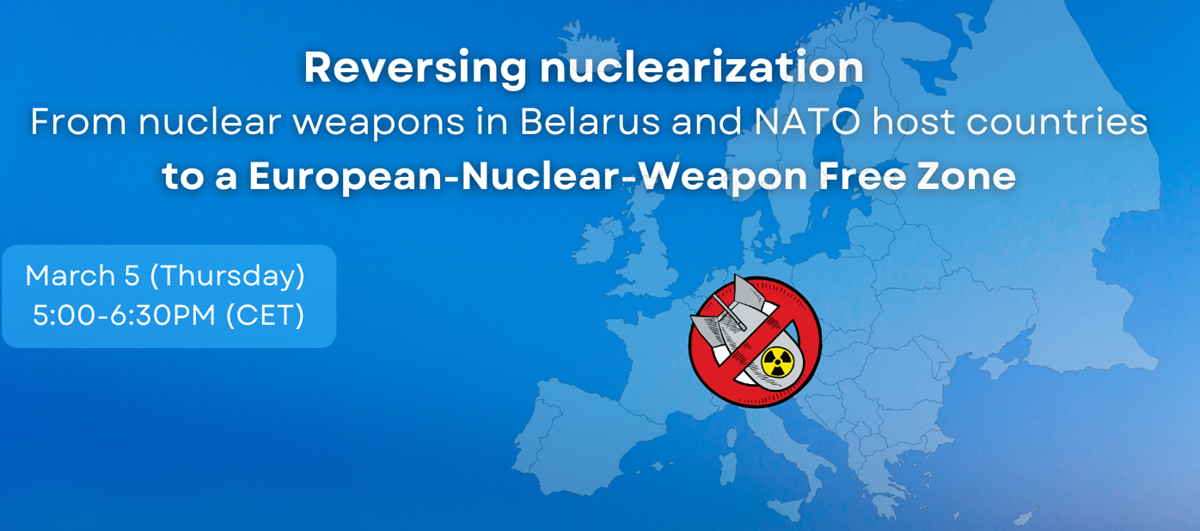
5 March -Online – Reversing nuclearization:
From nuclear weapons in Belarus and NATO host countries to a European-Nuclear-Weapon Free Zone
11am-12:30pm Eastern Time USA / 5pm-6:30pm CET

of the week – Advocating for a
nuclear free beach – https://www.samuellawrencefoundation.org/
The Samuel Lawrence Foundation advocates for a Nuclear Waste Free Beach at San Onofre, join us and take action!

10 March A LIVE WEBINAR THE REAL EFFECTS OF NUCLEAR POWER
What the Industry Isn’t Telling Us
1:00 PM Mountain, 2 pm Central, 3 pm Eastern. Live on the Keepers of the Water Facebook page

18 March Webinar @ 1 PM EST: An Assessment of SMR Projects: The Case of Canada
register for the zoom:
https://us02web.zoom.us/webinar/register/WN_o8BIIOUvQ2ONJR1nta65DQ#/registration

of the week – STOP SMALL MODULAR REACTORS IN CANADA
To see nuclear-related stories in greater depth and intensity – go to https://nuclearinformation.wordpress.com
-
Archives
- March 2026 (38)
- February 2026 (268)
- January 2026 (308)
- December 2025 (358)
- November 2025 (359)
- October 2025 (376)
- September 2025 (258)
- August 2025 (319)
- July 2025 (230)
- June 2025 (348)
- May 2025 (261)
- April 2025 (305)
-
Categories
- 1
- 1 NUCLEAR ISSUES
- business and costs
- climate change
- culture and arts
- ENERGY
- environment
- health
- history
- indigenous issues
- Legal
- marketing of nuclear
- media
- opposition to nuclear
- PERSONAL STORIES
- politics
- politics international
- Religion and ethics
- safety
- secrets,lies and civil liberties
- spinbuster
- technology
- Uranium
- wastes
- weapons and war
- Women
- 2 WORLD
- ACTION
- AFRICA
- Atrocities
- AUSTRALIA
- Christina's notes
- Christina's themes
- culture and arts
- Events
- Fuk 2022
- Fuk 2023
- Fukushima 2017
- Fukushima 2018
- fukushima 2019
- Fukushima 2020
- Fukushima 2021
- general
- global warming
- Humour (God we need it)
- Nuclear
- RARE EARTHS
- Reference
- resources – print
- Resources -audiovicual
- Weekly Newsletter
- World
- World Nuclear
- YouTube
-
RSS
Entries RSS
Comments RSS
 nuclear-news