Libbe HaLevy – Creating a 21st Century Manhattan Project
Libbe HaLevy – “Creating a 21st Century ‘Manhattan Project’ for Alternative Energy”is the topic Libbe is passionate about. Libbe was one mile from the nuclear accident at Three Mile Island when it happened. In the wake of the ongoing Fukushima nuclear disaster, she produces and hosts “Nuclear Hotseat” a weekly podcast containing nuclear news, expert interviews, holistic healing tips for nuclear survivors, and activist opportunities. She tours and performs a multi-character one-woman show, “Auntie Nuke Presents: My Nuclear Meltdown” as a fundraiser and consciousness raiser on nuclear energy issues. A life action coach who specializes in working with writers and survivors of childhood sexual abuse, her clients have included Julie Andrews and the Julie Andrews Collection of chidren’s books, New York Times #1 Bestselling author Emma Walton Hamilton, and Dr. Michael Rabinoff, a first time author whose book was endorsed by the Dalai Lama.
VIDEO: Thom Hartmann on cover-up of nuclear dangers
 Video: On the News With Thom Hartmann: US Nuclear Regulators Are Hiding the Risk of a Fukushima-Style Incident, and More TruthOut , 17 March 2014 15:21By Thom Hartmann, The Thom Hartmann Program | Video Report In today’s On the News segment: Recently released documents show that since Fukushima, our nuclear regulators have been playing down the risk of a similar incident happening in the US; homeowners want energy choices – and for once, that’s not just a Republican talking point; four new man-made gases are destroying our ozone layer and intensifying the effects of climate change; and more.
TRANSCRIPT:
Thom Hartmann here – on the best of the rest of….science & green news…..
You need to know this. Last week marked the third anniversary of the earthquake and tsunami that devastated the Fukushima Nuclear Power Plant in Japan. And, recently released documents show that since then, our nuclear regulators have been playing down the risk of a similar incident happening in the U.S. Emails obtained via a Freedom of Information Request show that the higher-ups at the Nuclear Regulatory Agency told staff to hide information from reporters, to keep quiet about NRC scientists studying risk at US plants, and to change the subject when media asked what a worst-case scenario in our country could look like. ……http://truth-out.org/news/item/22526-on-the-news-with-thom-hartmann-us-nuclear-regulators-are-hiding-the-risk-of-a-fukushima-style-incident-and-more
Interactive map shows how far you live from a nuclear reactor
A new interactive map tells you exactly how far you live from a nuclear reactor By Joseph Stromberg smithsonianmag.com March 13, 2014 “………Currently, if a radiological emergency occurs, the Nuclear Regulatory Commission recommends that anyone living within 10 miles of a plant to tune in to their local radio or television Emergency Alert System and heed the instructions from state or local officials. The commission also suggests that anyone within 50 miles to take action to protect local food and water supplies. Recently, some have have argued that the evacuation zone should be extended this far as well—and in 2011, after the Fukushima disaster in Japan, authorities from the Nuclear Regulatory Commission recommended that Americans living within 50 miles of the plant to evacuate……..
Unfolding, continuing crisis at Fukushima
Nuclear crisis at Fukushima continues to unfold: a trilogy of reports by PBS NewsHour’s Miles O’Brien (video) http://boingboing.net/2014/03/14/nuclear-crisis-at-fukushima-co.htmlNext, “Fishing for data in the radioactive waters off Fukushima.”
With help from fisherman and citizen scientists, researchers in Japan and the U.S. are tracking the nucleotides in the ocean creatures who swim in the plume of water tainted with radiation from Fukushima. Their research is part of a long-term effort to figure out when — if ever — certain fish will be safe to eat.
Xeni Jardin at 1:45 pm Fri, Mar 14, 2014 Miles O’Brien, science correspondent for PBS NewsHour, has produced a series of three must-see investigative reports revisiting the Fukushima nuclear crisis in Japan. His stories explore how the radiation leaks triggered by the earthquake and tsunami are continuing to affect life there, and beyond.
First, above, “Fukushima nuclear crisis continues to unfold.”
The site of the Fukushima nuclear disaster in Japan remains a post-apocalyptic landscape of abandoned towns, frozen in time. Science correspondent Miles O’Brien got a rare tour inside the plant, where three nuclear reactors melted down after the earthquake and tsunami in 2011, to learn more about the long-term solutions for stemming the radioactive contamination.
Next, “Fishing for data in the radioactive waters off Fukushima.”
With help from fisherman and citizen scientists, researchers in Japan and the U.S. are tracking the nucleotides in the ocean creatures who swim in the plume of water tainted with radiation from Fukushima. Their research is part of a long-term effort to figure out when — if ever — certain fish will be safe to eat.
VIDEO: toxic legacy of uranium mining on Indigenous Land
Video “A Slow Genocide of the People”: Uranium Mining Leaves Toxic Nuclear Legacy on Indigenous Land Democracy Now Friday March 14, 2014 The iconic Grand Canyon is the site of a battle over toxic uranium mining. Last year, a company called Energy Fuels Resources was given federal approval to reopen a mine six miles from the Grand Canyon’s popular South Rim entrance. A coalition of Native and environmental groups have protested the decision, saying uranium mining could strain scarce water sources and pose serious health effects. Diné (Navajo) tribal lands are littered with abandoned uranium mines. From 1944 to 1986, 3.9 million tons of uranium ore were chiseled and blasted from the mountains and plains of the region. More than 1,000 mines have closed, but the mining companies never properly disposed of their radioactive waste piles, leading to a spike in cancer rates and other health ailments.
Broadcasting from Flagstaff, Arizona, we speak with Taylor McKinnon, director of energy with Grand Canyon Trust, and Klee Benally, a Diné (Navajo) activist and musician. “It’s really a slow genocide of the people, not just indigenous people of this region, but it’s estimated that there are over 10 million people who are residing within 50 miles of abandoned uranium mines,” Benally says. Benally also describes the struggle to preserve the San Francisco Peaks, an area considered sacred by 13 Native tribes, where the Snowbowl ski resort is using treated sewage water to make snow.
Rebellious Fukushima farmer who cares about his cows
ABC News: Gov’t, scientists ‘baffled’ over white spots on cows around Fukushima plant — Farmer: No one knows what they are, I think it’s from radiation; “Our town’s contaminated like Chernobyl… We were just thrown away like trash” — Officials order the animals to be slaughtered (VIDEOS) http://enenews.com/abc-news-govt-baffled-over-white-spots-on-cows-around-fukushima-plant-farmer-no-one-knows-what-they-are-i-think-its-from-radiation-our-towns-contaminated-like-chernobyl-we-were-j
ABC News (Australian Broadcasting Corporation), Jan. 4, 2014 (Emphasis Added):
Mark Willacy, ABC News (Australia) correspondent: He calls himself […] the leader of the Fukushima nuclear resistance movement […]
Masami Yoshizawa, ‘Ranch of Hope’ 14 km from Fukushima Daiichi: I won’t obey what the government says, because we were betrayed. Our community was destroyed by the nuclear disaster. […]
What we saw and heard in Fukushima, “The Ranch of Hope”, Namie
Willacy: A radiation decontamination team arrives […] Yoshizawa has defied a government order to slaughter his cows.
Yoshizawa: Instead of being slaughtered, these cattle should be used to study the long-term effects of radiation. Killing them is destroying evidence. […]
Willacy: Scientists have descended on his property, saying it is important his herd is studied. […] Some of Yoshizawa’s cattle have developed white spots. The ministry of agriculture has begun an investigation, but so far everyone is baffled.
Yoshizawa: “I showed these spots to many vets who came to my farm. But none of them knows what they are. I think it’s the result of radiation.” […]
Masami Yoshizawa in Tokyo last May, published Dec. 26, 2013 13 (at 5:30 in): Our town is over. The end. It is like Chernobyl. […] Our town has been contaminated like Chernobyl. […] Our lives are totally destroyed. How depressed we are! So sad and empty. […] We were just thrown away like the trash. […] With all the rest of my life, I would like to fight against TEPCO and the government.
New book warns on South Asia ‘s nuclear instability
Study warns of nuclear instability in South Asia , THE HINDU, 18 Dec 13 NARAYAN LAKSHMAN A book released this week by a major think-tank in Washington has cautioned that in the fifteen years since India and Pakistan tested nuclear devices in 1998, they have together introduced 17 new nuclear weapon-capable delivery systems and this has produced “conditions that could lead to uncontrolled escalation.”
One of the authors of the study, Michael Krepon of the Stimson Centre, told The Hindu that although Indian and Pakistani leaders said after the 1998 tests that “offsetting nuclear capabilities would be stabilising and that they would facilitate more normal relations… things haven’t worked out that way.”
The book, Deterrence Stability and Escalation Control in South Asia, provides an uncompromising analysis of the dangers that have emerged in the sub-continent from recent developments in the nuclear field, including Pakistan’s introduction of short-range, tactical delivery vehicles, or “theatre nukes” whose utility depends on their proximity to battlefields and “leaves much to chance.”…….http://www.thehindu.com/news/international/south-asia/study-warns-of-nuclear-instability-in-south-asia/article5469010.ece
“Fallout” a film for today, about an old film on nuclear war
Back then we were closer to WWII and the bombs that were dropped on Hiroshima and Nagasaki. We knew the destructive power. Now, time blurs memories and people don’t realize how devastating those weapons are. The kilotons in nuclear bombs today dwarf the power of nuclear bombs when we grew up. ……..
Thanks Kat for bringing awareness in an industry that is more prone to “Hangover III” than hard-hitting documentaries.
When ActivistsMake Movies: The Nuclear Arms Race is Relevant Again With ‘Fallout’ The Wrap, HOLLYBLOGS | ByRichard Stellar on December 10, 2013 The documentary details the making of Stanley Kramer’s epic “On the Beach”
Below – Lily Tomlin, Dr Helen Caldicott, Kat Kramer, Karen Kramer
 You wouldn’t know that Kat Kramer was an activist. The daughter of director Stanley Kramer (above, second from right) looks as if she’d be more comfortable on the cover of Vogue than she would in a cramped editing room, poring over footage of films that, in her estimation, “change the world.”
One such film that efforts to do just that premiered a few weeks ago at the famed Sunset-Gower Studios lot,…… “Fallout” details the making of Stanley Kramer’s epic “On the Beach” — adapted from the fertile mind of Nevil Shute’s novel of a post-apocalyptic world ……..“Fallout” is about a movie about “the bomb” — and its relevance to today is staggering. Continue reading
Navajo gather for uranium film event
 Livestream Navajo Window Rock Uranium Film Fest Grassroots Gathering (includs video) http://bsnorrell.blogspot.com.au/2013/12/livestream-navajo-window-rock-uranium.html Live from Navajo Nation: International Uranium Film Festival, with grassroots talks and workshops Dec 2 — 4, 2013. By Brenda Norrell Censored News NAVAJO NATION — The grassroots gathering at the International Uranium Film Festival on the Navajo Nation began this morning, with talks by Native Americans battling uranium mining in their homelands. The festival will also feature 21 films, many focused on the poisoning and disease by Navajoland Cold War uranium mining, on Monday, Tuesday and Wednesday.
Navajo President Ben Shelly spoke during the opening of the three day event.
President Shelly said he is still “talking” with the US about cleaning up the Church Rock, N.M., uranium tailings spill that happened in 1979. Shelly said he is still “talking” about cleaning up the Tuba City dump site too.
The Church Rock spill poisoned the region, and then flowed down the Rio Puerco toward Flagstaff, Arizona, poisoning more land and water on the Navajo Nation and causing cancer and disease. Continue reading
Edward Snowden called a “terrorist” for disclosing the truth
Former NSA chief compares Snowden to terrorists http://politicalticker.blogs.cnn.com/2013/12/01/former-nsa-chief-compares-snowden-to-terrorists/ by CNN’s Jason Seher Washington – Former National Security Agency director Michael Hayden said Sunday that Edward Snowden, who has disclosed secrets about how the NSA surveils both at home and abroad, has created a “catastrophic” situation for American intelligence agencies.
“This is catastrophic for the safetay and security of the American nation, what this very narcissitic young man has done,” Hayden told Chris Wallace on “Fox News Sunday.”Multiple reports allege Snowden has created a “doomsday cache” of government secrets that would release to the public should he be incarcerated or harmed.
Hayden said he has “no reason to doubt” those reports, but added that the looming threat of future disclosures should not dissaude American agencies from pursuing Snowden. The retired general said abandoning the effort to bring Snowden to justice would be like “negotiating with terrorists.”
Snowden has been in Moscow since June. In August, Russia granted him asylum for one year. He is wanted in the United States on espionage charges.
Vested interests busy “spinning” the Iran nuclear deal
Iran’s Nuclear Deal Triggers Spin War By Pepe Escobar Global Research, November 27, 2013 Iran’s nuclear deal with the P5+1 group of world powers in Geneva has triggered a spin war which will last for the next 6 months, as many of the parties involved will pursue their own business interests in this situation, journalist Pepe Escobar told RT.
RT: As we see, US Secretary of State John Kerry and Iran’s Foreign Minister Mohammed Zarif came out of the talks with different views. Why’s there such diversity in the interpretation of the deal?
Pepe Escobar: Because the spin war started at 3am in Geneva. It’s going to go on for another six months, until May 2014, that’s the duration of this “first step” deal. [It’s] very important: Kerry had to say [this] so that he could appease the Israel lobby, the US Congress and the Wahhabi petrodollar lobby in the US, not to mention some neocons in the US as well, [who are] still very powerful.
Follow the Money: How Lobby Interests are Spinning Iran Nuclear Deal
In Iran it’s different. They are saying, “We still have our right to enrich uranium,” and this is correct, because they will keep enriching uranium to 5 percent for the next six months, [while] 20 percent [enrichment] is frozen. They will discuss… the next deal, which will be the definitive deal, starting from May 2014.
And all the 20 percent enriched uranium that they have is going to be diluted, so it cannot be used later on for weapons-grade material………
For the moment we have a breakthrough – it’s going to last for six months. There will be all sorts of interests that will try to bombard this deal; I’m saying especially about Wahhabi petrodollar monarchy interests and the Israeli lobby as well.
But for the moment we have diplomacy in action, something that we haven’t seen, especially between Iran and the US, for 34 years. This is the major breakthrough at the moment. But we have to be vigilant.http://www.globalresearch.ca/irans-nuclear-deal-triggers-spin-war/5359638
See 10 trailers from the Uranium Film Festival
10 Trailers From the Uranium Film Festival, Coming to Indian Country http://indiancountrytodaymedianetwork.com/2013/11/27/10-trailers-uranium-film-festival-coming-indian-country-152442 ICTMN Staff 11/27/13The Uranium Film Festival was founded in 2011 in Rio de Janeiro to promote films that address nuclear power, nuclear war, and the troubling legacy that this powerful, terrible use of technology leaves behind. Beginning today, the Uranium Film Festival hits the United States with screenings in and near Indian Country. On November 27 and 28, a selection of eye-opening films will show at the Guild Cinema in Albuquerque; on November 30 and December 1, the Center for Contemporary Arts Cinematheque in Santa Fe will host the Festival; and on December 2-4 the Festival will have its concluding run in Window Rock, at the Navajo Nation Museum.
Below are 8 trailers for films showing in the Uranium Film Festival.
Nuclear Savage: The Islands of Secret Project 4.1(showing in Albuquerque, Santa Fe, and Window Rock)
The Atomic States of America(showing in Albuquerque and Window Rock)
The Ultimate Wish: Ending the Nuclear Age(showing in Albuquerque and Window Rock)
Atomic Bombs on the Planet Earth(showing in Santa Fe) — full film:
Not for Public Release: A Nuclear Incident in Lock Haven(showing in Santa Fe)
Ground Zero – Sacred Ground(showing in Window Rock)
Herr Hoppe and the Nuclear Waste(showing in Window Rock)
The Four Corners: A National Sacrifice Area?(showing in Window Rock)…..
Unforgettable photography of the world’s most radioactive places
PHOTOGRAPHY, Ten Most Radioactive Places on Earth Mapped Out [GRAPHIC], CV News November 24, 2013 by Jim Lee ”……While the 2011 earthquake and worries surrounding Fukushima have brought the threat of radioactivity back into the public consciousness, many people still don’t realize that radioactive contamination is a worldwide danger. Radionuclides are in the top six toxic threats as listed in the 2010 report by The Blacksmith Institute, an NGO dedicated to tackling pollution. You might be surprised by the locations of some of the world’s most radioactive places — and thus the number of people living in fear of the effects radiation could have on them and their children.For years, there have been allegations that the ‘Ndrangheta syndicate of the Italian mafia has been using the seas as a convenient location in which to dump hazardous waste — including radioactive waste — charging for the service and pocketing the profits. An Italian NGO, Legambiente, suspects that about 40 ships loaded with toxic and radioactive waste have disappeared in Mediterranean waters since 1994. If true, these allegations paint a worrying picture of an unknown amount of nuclear waste in the Mediterranean whose true danger will only become clear when the hundreds of barrels degrade or somehow otherwise break open. The beauty of the Mediterranean Sea may well be concealing an environmental catastrophe in the making.
Mafia sinks toxic waste ships in the Mediterranean
8. The Somalian Coast
Nuclear Waste Dumping at Sea “paid” – Somalia
7. Mayak Chemical Combine, Russia

6. Sellafield, UK Continue reading
Japan’s mafia gangs exploiting homeless people in Fukushima nuclear cleanup
TV: Mentally disabled are working at Fukushima Daiichi, says journalist — Many men forced to go to plant — Homeless treated like ‘disposable people’ (VIDEO) http://enenews.com/tv-journalist-says-theres-mentally-disabled-workers-at-fukushima-many-men-forced-to-work-at-plant-homeless-treated-like-disposable-people-video
Atomic Mafia? Yakuza cleans up Fukushima, neglects basic worker
RT News, , Nov. 20, 2013: Homeless men employed cleaning up the stricken Fukushima nuclear plant, including those brought in by Japan’s yakuza gangsters, were not aware of the health risks they were taking and say their bosses treated them like “disposable people.” […] While some workers voluntarily agreed to take jobs on the nuclear clean-up project, many others simply didn’t have a choice […] many of the workers were brought into the nuclear plant by Japan’s organized crime syndicates, the yakuza. […] Although a special task force to keep organized crime out of the nuclear clean-up project has been set up, investigators say they need first-hand reports from those forced to work by the yakuza […]
Anonymous former Fukushima worker: We were given no insurance for health risks, no radiation meters even. We were treated like nothing, like disposable people — promised things, and then kicked us out when we received a large radiation dose.
Tomohiko Suzuki, journalist who worked at Fukushima plant: The government called Tepco to take urgent action, Tepco relayed it to subcontractors — and they, eventually, as they had a shortage of available workers, called the Yakuza for help. […] They were given very general information about radiation and most were not even given radiation meters. They could have exposed themselves to large doses without even knowing it. Even the so-called Fukushima 50 […] at least three of them were enrolled by the yakuza.
Aleksey Yaroshevsky, RT: : There are 25% more openings for jobs at Fukushima plant than applicants, according to government data. Gaps filled, says Suzuki, by the homeless, the desperately unemployed and even those with mental disabilities. Watch the broadcast here
Ice wall around Fukushima – a 10,000 year science fiction story?
TV: Work at Fukushima plant to go on for 10,000 years? Nuclear Expert: “It’s longer than human history” (VIDEO) http://enenews.com/tv-work-at-fukushima-plant-could-go-on-for-next-10000-years-nuclear-expert-its-longer-than-human-history-video
Arirang’s ‘Prime Talk’,, August 30, 2013 (at 1:45 in):
Dr. Suh Kune-yull, Professor of Nuclear Engineering at Seoul National University: [Freezing the soil around Fukushima reactors] sounds more like a sci-fi story, science fiction. We call this permafrost — frosting the soil — for 50 years and as long as 10,000 years. It’s longer than human history, it’s just unrealistic.
Watch the broadcast here
Arirang’s ‘Prime Talk’, ’, August 30, 2013 (at 1:30 in):
Dr. Suh Kune-yull, Professor of Nuclear Engineering at Seoul National University: I call this permafrost which [is] really freezing the soil but to me sounds more like a science fiction because they have to be doing this for work at least 50 years and as long as 10,000 years. So I think they were probably going to give this up one of these months. […]
1 This Month
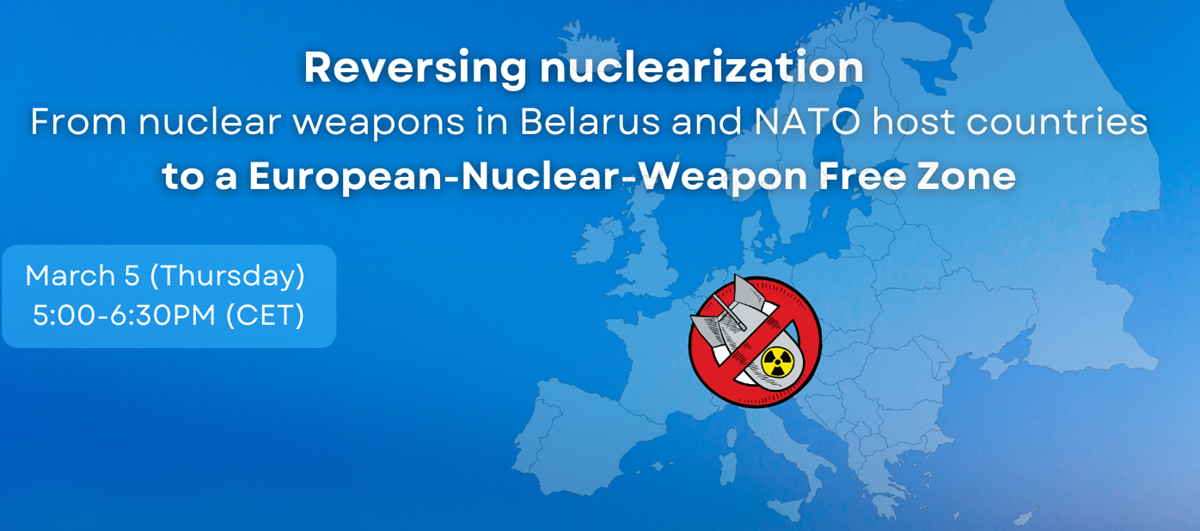
5 March -Online – Reversing nuclearization:
From nuclear weapons in Belarus and NATO host countries to a European-Nuclear-Weapon Free Zone
11am-12:30pm Eastern Time USA / 5pm-6:30pm CET

of the week – Advocating for a
nuclear free beach – https://www.samuellawrencefoundation.org/
The Samuel Lawrence Foundation advocates for a Nuclear Waste Free Beach at San Onofre, join us and take action!

10 March A LIVE WEBINAR THE REAL EFFECTS OF NUCLEAR POWER
What the Industry Isn’t Telling Us
1:00 PM Mountain, 2 pm Central, 3 pm Eastern. Live on the Keepers of the Water Facebook page

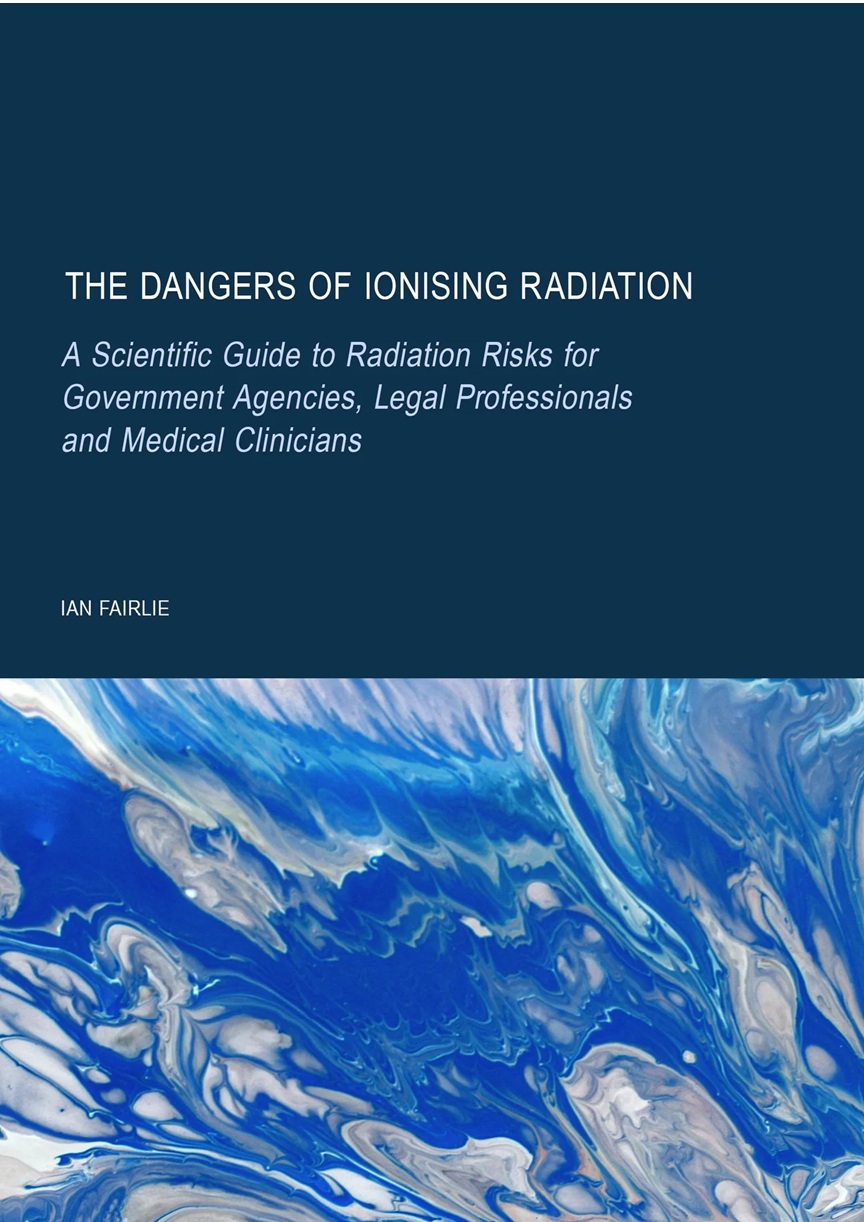
18 March Webinar @ 1 PM EST: An Assessment of SMR Projects: The Case of Canada
register for the zoom:
https://us02web.zoom.us/webinar/register/WN_o8BIIOUvQ2ONJR1nta65DQ#/registration

of the week – STOP SMALL MODULAR REACTORS IN CANADA
To see nuclear-related stories in greater depth and intensity – go to https://nuclearinformation.wordpress.com
-
Archives
- March 2026 (37)
- February 2026 (268)
- January 2026 (308)
- December 2025 (358)
- November 2025 (359)
- October 2025 (376)
- September 2025 (258)
- August 2025 (319)
- July 2025 (230)
- June 2025 (348)
- May 2025 (261)
- April 2025 (305)
-
Categories
- 1
- 1 NUCLEAR ISSUES
- business and costs
- climate change
- culture and arts
- ENERGY
- environment
- health
- history
- indigenous issues
- Legal
- marketing of nuclear
- media
- opposition to nuclear
- PERSONAL STORIES
- politics
- politics international
- Religion and ethics
- safety
- secrets,lies and civil liberties
- spinbuster
- technology
- Uranium
- wastes
- weapons and war
- Women
- 2 WORLD
- ACTION
- AFRICA
- Atrocities
- AUSTRALIA
- Christina's notes
- Christina's themes
- culture and arts
- Events
- Fuk 2022
- Fuk 2023
- Fukushima 2017
- Fukushima 2018
- fukushima 2019
- Fukushima 2020
- Fukushima 2021
- general
- global warming
- Humour (God we need it)
- Nuclear
- RARE EARTHS
- Reference
- resources – print
- Resources -audiovicual
- Weekly Newsletter
- World
- World Nuclear
- YouTube
-
RSS
Entries RSS
Comments RSS
 nuclear-news