Scientists advise deep bore burial for high level nuclear wastes
 Nuclear waste: Bury nuclear waste down a very deep hole, say scientists, Science Daily April 14, 2015 Source: University of Sheffield
The concept — called deep borehole disposal — has been developed primarily in the UK but is likely to see its first field trials in the USA next year. If the trials are successful, the USA hopes to dispose of its ‘hottest’ and most radioactive waste — left over from plutonium production and currently stored at Hanford in Washington State — in a deep borehole………
Deep borehole disposal (DBD) has a number of advantages over the current solution envisaged for all UK nuclear waste, which is in a mined repository at 500m depth:
- DBD is effectively ‘pay-as-you-go’ disposal. A mined repository can cost from hundreds of millions to tens of billions of dollars to construct before any waste can be disposed of; DBD costs a few tens of millions of dollars per borehole.
- There are more geological sites suitable for DBD as the granite layer that is required can be found at appropriate depths under most of the continental crust.
- A borehole could be drilled, filled and sealed in less than five years, compared to the current timescale for a UK mined repository, which is to open in 2040 and take its first waste by 2075 (although a site has not yet been agreed).
- As DBD disposes of nuclear waste at greater depths and with greater safety and because there are more potential sites available, it should be easier to obtain public and political acceptance of the technology.
- DBD has limited environmental impact and does not require a huge site: the holes are a maximum 0.6m in diameter and can be positioned just a few tens of metres apart. Once a borehole is complete, all physical infrastructure on the surface can be removed.
- While seismic activity might damage the containers within the borehole, fracture the surrounding rock and disrupt some of the nearest barriers in the borehole, it would still not destroy the isolation of the waste or make it possible for radioactivity to reach the surface or any ground water.
The demonstration borehole in the USA will be drilled just under half a metre in diameter and trials will be conducted to ensure waste packages can be inserted into the borehole and recovered if required. Initial results are expected in 2016. If these results are positive, disposal of the Hanford waste capsules would then take place in another borehole, just 0.22m in diameter.
Story Source:
The above story is based on materials provided by University of Sheffield. http://www.sciencedaily.com/releases/2015/04/150414100956.htm
Why China should avoid the doubtful dream of commercial nuclear reprocessing
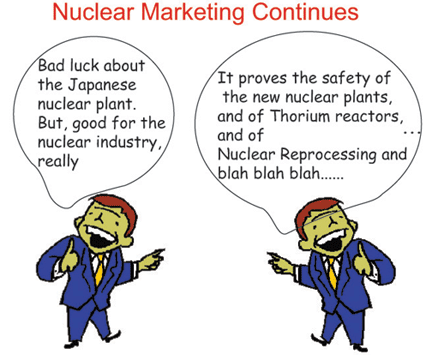
 Reprocessing in China: A long, risky journey, Bulletin of the Atomic Scientists, April 15 Hui Zhang“………Should China continue pursuing its plans for fast breeder reactors and commercialized reprocessing? Good reasons exist for avoiding this course of action. First, because most of China’s power reactors are newly built, Beijing will face little pressure over the next two decades to reduce its spent fuel burden. And spent fuel can be stored safely, at low cost, in dry casks—or disposed of safely in a deep geological repository.
Second, China faces no shortage of uranium resources for the foreseeable future. The nation’s identified resources more than tripled between 2003 and 2012, to 265,500 metric tons from 77,000 metric tons. China’s potential uranium reserves amount to more than 2 million tons. Beijing in recent times has also secured huge overseas uranium resources—about three times as large as its own identified uranium reserves. More such reserves could easily be added.
In any event, the cost of uranium accounts for only a small percentage of the cost of power that reactors generate. Simply put, the cost of uranium will not increase in the foreseeable future to levels that would justify the cost of reprocessing and breeder reactors. To the extent that China is concerned about potential disruptions in its uranium supply, it could easily and inexpensively establish a “strategic” uranium stockpile.
China should carefully examine the experiences of nations that have launched large reprocessing programs and built demonstration breeder reactors in the expectation that the commercialization of these reactors would follow. Commercialization did not follow in those countries—but huge expenses were incurred for cleaning up reprocessing sites and disposing of separated plutonium. For China, there is no urgent need to go down this risky road.
Plutonium recycling is much more expensive, and much less safe and secure, than operating light water reactors with a once-through fuel cycle. As for nuclear waste, dry cask storage is a safe, flexible, and low-cost option that can postpone for decades the need either to reprocess spent fuel or to dispose of it directly—allowing time for technology to develop. China has no convincing rationale for rushing to build commercial-scale reprocessing facilities or plutonium breeder reactors. http://thebulletin.org/reprocessing-poised-growth-or-deaths-door8185
Fears of a nuclear Electro-Magnetic Pulse (EMP) cause Pentagon to re-open Cheyenne mountain bunker
EMP Nuclear Attack Fears Have US Reopen Cheyenne Mountain, ARUTZ SHEVA Israel International News, By Mark Langfan 4/11/2015, Days after Iran deal, Pentagon acts fearing nuclear missile attack that would burn out America’s electronic-based defenses. The Pentagon has decided to reopen the Cheyenne Mountain Air Defense facility, which housed the heart of America’s air and missile defense of North America. The facility had been mothballed in a “cost-saving” move in 2006.
Last week, Admiral William Gortney, head of US NORAD (North American Aerospace Defense Command) and US Northern Command, reversed that decision and announced the Pentagon was spending an opening ante of $700 million to oversee reactivation of the Cheyenne mountain-embedded facility.
The reason – the Pentagon’s fears of a nuclear Electro-Magnetic Pulse (EMP) attack by a missile that would burn out America’s overly-dependent defense, which is based on modern electronics.
US NORAD and US Northern Command aren’t just acronyms. They represent the last-ditch American defense of the continental United States homeland. NORAD originally stood for North America Air Defense Command, but now stands for North American Aerospace Command. US Northern Command is the area-specific designation of the US military command that is responsible for the continental United States homeland.
Given the current US military fear of an inter-continental ballistic (ICBM) missile attack with an EMP nuclear-device, Admiral Gortney explained that “because of the very nature of the way that Cheyenne Mountain’s built, it’s EMP-hardened. And so, there’s a lot of movement [in the Pentagon] to put [military] capability into Cheyenne Mountain and to be able to communicate in there.”
In early 2013, this author warned against a similar Iranian “Fatwa-compliant” EMP attack against Saudi Arabia, and a North Korea EMP attack against South Korea.
In an even more startling admission, Admiral Gortney revealed that his “primary concern” was whether the Pentagon was “going to have the space inside the [Cheyenne] mountain for everybody who wants to move in there, and I’m not at liberty to discuss who’s moving in there.”
The Cheyenne mountain bunker is a half-acre cavern that was carved into a mountain in the 1960s that was originally designed to withstand a Soviet nuclear attack. During the Cold War, the United States feared a Soviet nuclear attack scenario that would feature an opening Soviet “EMP decapitation” nuclear attack.
Such a nuclear attack was not the launch of a massive Soviet nuclear first-strike against American cities, but instead, a first-strike Soviet “EMP decapitation” attack that would explode a nuclear device high-above the United States, burning out all of America’s command and control communication systems, and thus severing America’s President from being able to order the US military to retaliate.
By first electronically destroying America’s communications systems, the Soviets would thus have “decapitated” the US’s ability to respond to a secondary more massive follow-on Soviet nuclear attack on American cities.
Thus, a successful Soviet nuclear EMP attack on the US would have “trumped” the concept of MAD, or Mutually Assured Destruction, because America would have been unable to retaliate and destroy the Soviet Union in response to a Soviet nuclear attack.
During the Cold War, airmen stationed inside the massive complex were poised to send warnings and firing codes that could trigger the launch of America’s vast web of nuclear missiles. Now, in light of the latest nuclear EMP dangers hanging over the United States, the US military, and the United States of America- itself, once again hopes to be protected by the mountains of Colorado…….http://www.israelnationalnews.com/News/News.aspx/193883#.VSrsY9yUcnk
Nuclear reprocessing has NOT gone according to plan, in China
Reprocessing in China: A long, risky journey, Bulletin of the Atomic Scientists, Hui Zhang , April 15 Since 1983, a closed fuel cycle has been an official element of China’s nuclear energy policy. According to proponents, plutonium reprocessing and breeder reactors will allow full utilization of China’s uranium resources, drastically reduce the volume of radioactive waste that must be stored in an underground repository, and establish a way to dispense with the spent fuel accumulating in China’s reactor pools.
But Beijing’s attempts to develop commercially viable reprocessing facilities and breeder reactors have been afflicted with technological difficulties, serious delays, and cost overruns. At this point—especially taking into account China’s ample uranium resources and its easy access to additional resources abroad—it appears very doubtful that reprocessing and fast reactors are the proper way forward for China’s nuclear energy sector.
Not according to plan………..
 Parallel with development of the pilot reprocessing plant, China has been working to establish commercially viable plutonium breeder reactors. According to a plan in place until 2013, development of breeder reactors was to be a three-stage process. The first stage was to complete a project known as the China Experimental Fast Reactor. The second stage would involve building, by about 2020, a few demonstration fast reactors. Finally, commercialized fast reactors would be deployed around 2030. Progress always ran far behind schedule.
The China Experimental Fast Reactor is a sodium-cooled experimental fast reactor using technology developed for Russia’s BN-600 reactor. The project, with a planned capacity of 20 megawatts, was approved in 1995. Construction began in 2000. As with the pilot reprocessing plant, the experimental fast reactor encountered many difficulties during construction. Capital cost estimates had to adjusted twice, with each estimate double the previous one. The reactor went critical in July 2010 and, by July 2011, 40 percent of its full power was incorporated into the grid. The reactor, however, was online for only 26 hours during the remainder of 2011, and it produced the equivalent of just one full power-hour. Not until December 2014 did the reactor manage to operate at full capacity for 72 hours. So 19 years passed between project approval and operation at full capacity.
As for the second stage of the pre-2013 plan, CNNC in 2009 signed an agreement with Russia’s Rosatom to jointly construct two copies of Russia’s BN-800 fast neutron reactor in China. But Beijing has not officially approved the project. As with the French reprocessing plant, Chinese experts complain that Russia is demanding too high a price. It is not clear when or if the project will go forward. Instead, CNNC in 2013 began focusing on the development of the indigenous 600-megawatt China Fast Reactor (CFR-600). The start of construction is envisioned for 2017, with operations to commence in 2023—but the government has not approved the project yet.
Experts from CNNC have also, since 2013, urged the development of China’s first commercial fast reactor—a 1,000-megawatt reactor based on experience gained from the CFR-600. But CNNC expert Gu Zhongmao—an advocate of the closed fuel cycle—said at a recent workshop on nuclear energy in East Asia that “China needs at least another 20 to 30 years of effort before commercialization of fast reactor energy systems, and there are so many uncertainties ahead. It is beyond our ability to draw a clear picture 20 years ahead.”…………. http://thebulletin.org/reprocessing-poised-growth-or-deaths-door8185
Chernobyl’s Radioactive Impact on micro-organisms
11. Chernobyl’s Radioactive Impact on Microbial Biota submitted by damchodronma 6 April 15
Alexey V. Yablokov
 Of the few microorganisms that have been studied, all underwent rapid changes in the areas heavily contaminated by Chernobyl. Organisms such as tuberculosis bacilli; hepatitis, herpes, and tobacco mosaic viruses; cytomegalovirus; and soil micromycetes and bacteria were activated in various ways.
The ultimate long-term consequences for the Chernobyl microbiologic biota may be worse than what we know today. Compared to humans and other mammals, the profound changes that take place among these small live organisms with rapid reproductive turnover do not bode well for the health and survival of other species.
One gram of soil contains some 2,500,000,000 microorganisms (bacteria,microfungi, and protozoa). Up to 3 kg of the mass of an adult human body is made up of bacteria, viruses, and microfungi. In spite of the fact that these represent such important and fundamentally live ecosystems there are only scarce data on the various microbiological consequences of the Chernobyl catastrophe.
Several incidences of increased morbidity owing to certain infectious diseases may be due to increased virulence of microbial populations as a result of Chernobyl irradiation.
read on
pgs 281-83
“Chernobyl: Consequences of the Catastrophe for People and the Environment”
by Alexey Yablokov, Vasily Nesterenko and Alexey Nesterenko
NY Academy of Sciences, Volume 1181, 2009.
5,000 Slavic language studies reviews, over 1,400 cited.
http://www.strahlentelex.de/Yablokov_Chernobyl_book.pdf
Will Energy Secretary Moniz benefit France in MOX nuclear boondoggle deal? Or make AREVA accountable?
 $30+billion Plutonium (Pu) Fuel Project, Good for France; Bad for America: AREVA-MOX Ça Pue! Pe-yoo! Minimg Awareness, 5 Apr 15 [Recall that Areva is 89.9% French State owned and would be long gone if it weren’t for French taxpayers keeping it afloat. Furthermore, Areva has been under police investigation for years in France due to what is known as the Uramin scandal. After the French State the largest shareholder is Kuwait (Kuwait Investment Authority at 4.8%.]
From Savannah River Site Watch:
“Now, we’re being told the real reason for continuing construction of the $12.7 MOX plant at SRS – “it’s good for France!” Part of DOE’s foreign aid program fostered by Senator MOX….
“French ambassador impressed with MOX”
Aiken Standard, March 17, 2015,
We all know that with the gracious assistance of big-spender Senator Lindsey Graham that the bankrupt company AREVA has thrived on the transfer of US tax payer money into their coffers and are getting desperate as their plans for reprocessing of commercial spent fuel in the US have gone down the drain.
“We want to save the jobs in South Carolina because it’s good for the state, he (Wilson) believes it’s good for the U.S. and to me, it’s good for France,” Araud said. (Gerard Araud, France’s Ambassador to the United States)
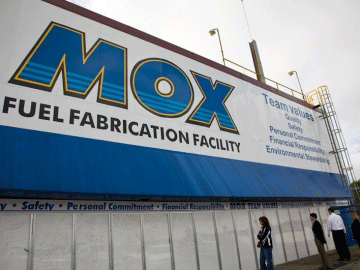 “The MOX facility is being designed by AREVA, a French company that is also the parent company to the MOX contractor, CB&I-AREVA MOX Services. Gilles Rousseau, the chief operating officer for the contractor, expressed his gratitude for having Araud on site.”
[…]
“Business at its Ugly Usual at DOE: As of April 4, 2015, there is No Accountability to the Tax-Paying Public for the U.S. DOE’s Grossly Mismanaged $30+-billion Plutonium Fuel (MOX) Project, a Textbook Case of Big Government’s Inability to Manage a Costly, Complex Project. When will Secretary of Energy Moniz and Congress act to hold those responsible accountable?
As DOE spins out of control in its management of large projects, the MOX coverup drags on and on and on. When will there be any accountability for the failed MOX project?
 SRS Watch requested in a letter hand delivered to US Secretary of Energy Ernest Moniz on July 29, 2014 that he “Take immediate steps to hold managers in DOE, NNSA and Shaw AREVA MOX Services accountable for the massive cost overruns and schedule delays associated with MOX project.”.http://www.srswatch.org/uploads/2/7/5/8/27584045/letter_to_moniz_from_srs_watch_july_28_2014.pdf
Will Secretary Moniz act responsibly and fulfill his obligations as a public servant? Will he hold specific individuals accountable and make sure that their glaringly inadequate abilities in managing the MOX boondoggle are not used elsewhere in DOE? Let us know who you think must be held accountable: srswatch@gmail.com https:// ……….miningawareness.wordpress.com/2015/04/05/30billion-plutonium-pu-fuel-project-good-for-france-bad-for-america-areva-mox-ca-pue-pe-yoo/
The 211 radioactive poisons left in wastes from CANDU nuclear reactors
Chart of 211 Radioactive Poisons in 10-Year Old CANDU Spent Fuel
The following chart identifies 211 radioactive poisons which are present in every ten-year old irradiated CANDU fuel bundle. The list is not complete.These data, compiled from AECL-9881, refer to the radioactive contents of an irradiated fuel bundle from the Bruce A reactors.
The origin of each radioactive poison is also indicated in the chart:
- F.P. indicates ”Fission Products”: these are the broken pieces of atoms which were split or fissioned in the reactor to produce energy [fission products are also produced when an atomic bomb explodes].
- F.I.A.P. indicates ”Fuel Impurity Activation Products”: during fission, impurities in the fuel become radioactive by absorbing neutrons.
- Z.A.P. indicates ”Zircaloy-4 Activation Products”: elements in the zirconium sheath also become radioactive by absorbing neutrons.
- ”Actinides” refer to the radioactive decay products of uranium and the trans-uranium (heavier-than-uranium) elements created during fission, when uranium atoms absorb one or more neutrons without fissioning.
The radioactivity of each poison is only roughly indicated:
- a single yen-sign ¥ indicates the presence of a particular radioactive poison;
- a triple yen-sign ¥ ¥ ¥ indicates the presence of over a million becquerels of that radioactive poison
- per kg of uranium fuel (for FP, FIAP, and Actinides) or
- per kg of zirconium alloy (for ZAP).
The list is organized according to the electric charge of the nucleus (the so-called “atomic number [Z]”), from the smallest charge (Hydrogen-3, also known as “tritium”) to the largest charge (Californium-252). This is consistent with the order of the elements in the periodic table.Within each chemical species, the radioactive varieties (called “isotopes” or “nuclides”) are organized according to the mass of the nucleus, indicated by the accompanying number in the chart, called the “mass number [A]”…….
CHART – on original …..http://www.ccnr.org/hlw_chart.html
Thousands of years for the oceans to recover from climate change
the abrupt fluctuations offer a glimpse at the duration of the effects of climate change driven by human activity pumping more planet-warming gases into Earth’s atmosphere, Moffitt said.
“What this shows us is that there are major biomes on this planet that are on the table, that are on the chopping block for a future of abrupt climate warming and unchecked greenhouse gas emissions,” Moffitt said. “We as a society and civilization have to come to terms with the things that we are going to sacrifice if we do not reduce our greenhouse gas footprint.
 Oceans might take thousands of years to recover from climate change, study suggests, SMH, April 2, 2015 Geoffrey Mohan Naturally occurring climate change lowered oxygen levels in the deep ocean, decimating a broad spectrum of seafloor life that took some 1,000 years to recover, according to a study that offers a potential window into the effects of modern warming.
Earth’s recovery from the last glacial period, in fact, was slower and more brutal than previously thought, according to the study, published online Monday in the journal Proceedings of the National Academy of Sciences.
Researchers deciphered that plotline from a 30-foot core of sea sediments drilled from the Santa Barbara Basin off the coast of California containing more than 5,000 fossils spanning nearly 13,000 years.
“The recovery does not happen on a century scale; it’s a commitment to a millennial-scale recovery,” said Sarah Moffitt, a marine ecologist at the University of California, Davis’ Bodega Marine Laboratory and lead author of the study. “If we see dramatic oxygen loss in the deep sea in my lifetime, we will not see a recovery of that for many hundreds of years, if not thousands or more.”………
beginning around 13,500 years ago, the seafloor community began a slow recovery with the rise of grazers that fed on bacterial mats. Recovery eventually was driven by a fluctuation back toward glaciation during the Younger Dryas period, a cooling sometimes called the Big Freeze.
“The biological community takes 1,000 years to truly recover to the same ecological level of functioning,” Moffitt said. “And the community progresses through really interesting and bizarre states before it recovers the kind of biodiversity that was seen prior to the warming.”……..
The climate changes chronicled in the study arose from natural cycles involving Earth’s orbit of the sun, and the oxygen declines that ensued were more extreme than those that have occurred in modern times, the study noted.
Still, the abrupt fluctuations offer a glimpse at the duration of the effects of climate change driven by human activity pumping more planet-warming gases into Earth’s atmosphere, Moffitt said.
“What this shows us is that there are major biomes on this planet that are on the table, that are on the chopping block for a future of abrupt climate warming and unchecked greenhouse gas emissions,” Moffitt said. “We as a society and civilization have to come to terms with the things that we are going to sacrifice if we do not reduce our greenhouse gas footprint.” http://www.smh.com.au/environment/climate-change/oceans-might-take-thousands-of-years-to-recover-from-climate-change-study-suggests-20150401-1md7qk.html
Historical record indicates increased risk of a Nuclear Reactor Disaster
 The Risk of a Nuclear Reactor Disaster Cultural Psychology, Satyagraha, 2 April 15
Utility companies, to support their claims of nuclear reactor safety, present artificial risk estimates — such as no more than one core meltdown per 30,000 years of reactor operation — that are based on faulty assumptions, guessing, and unvalidated theoretical models. Our only solid source of information on reactor risk is the historical record. According to the International Atomic Energy Commission (2013), as of 2012 a total of 581 civilian reactors had logged 15,247 years in operation. There have also been three major reactor accidents: Fukushima, Chernobyl, and Three-Mile Island (counting the three reactor accidents at Fukushima as a single event). This produces a rate of 3/15247 or 0.000197 such accidents per reactor-year. That number may seem small, but, as we shall see, it actually indicates extreme danger.
The number calculated above is an empirical rate based on a limited sample. What we really seek is the long-run population risk rate. (Similarly, we might flip a coin twice and observe heads both times, making the empirical proportion 1.0, but the long-run population rate is 0.50.)…….Assuming that 100 reactors operate in the United States for an average of 25 years each, the conservatively estimated Total Risk of at least one meltdown accident ranges from about 60% to 72%. (Over 40 years, even the nonconservative estimate is above 50%.) These estimates are consistent with other recent analyses (e.g., Ghys 2011; Smythe 2011; Lelieveld et al. 2012; Ha-Duong & Journé 2014).
One can easily imagine a utility company looking at these results and countering: “You can’t go by past events. The industry learns from mistakes. Reactors today are better designed and safer than those at Chernobyl and Three-Mile Island.” However it is unlikely that today’s American reactors are better designed than those at Fukushima. Further, more complex designs supply new opportunities for malfunction. And human error is always a danger.
In short, if we base risk estimates on the historical record — our best, most objective, and perhaps only reliable source of data — it is more likely than not that a serious accident will occur at one or more US reactors within the next 25 years. The unacceptability of this risk becomes even more salient when we consider that we are all neighbors. An accident that happens anywhere in the country is not “the other guy’s problem.” We’re all in this together.
References……..https://satyagraha.wordpress.com/2015/04/01/the-risk-of-a-nuclear-reactor-disaster/
Nuclear Power Plants continuously emit Carbon 14 to the environment
Carbon-14 in Terrestrial and Aquatic Environment of Ignalina Nuclear Power Plant:Sources of Production, Releases and Dose Estimates Jonas Mazeika Nature Research Centre Vilnius University LithuaniaThorium – a very large threat to the planet
 Don’t Jump on The Thorium Bandwagon – It’s Not Green, Not Viable, And Not The Answer To Our Energy Problems Prevent Disease.com, Nov 10, 2013 by KELLEY BERGMAN“….. thorium still represents a very large threat to the planet whose problems over current nuclear systems exist only in details. It is not eco-friendly by any stretch of the imagination, although it is being promoted as such to nations around the world. It’s not renewable, green or clean and definitely not the answer to the world’s energy crisis as scientists around the world are deceptively claiming.
Due to its extreme density, thorium is being highlighted for its potential to produce tremendous amounts of heat. Many companies have been experimenting with small bits of thorium, creating lasers that heat water, producing steam which can power a mini turbines. According to CEO Charles Stevens from Laser Power Systems (LPS) from Connecticut, USA,, just one gram of the substance yields more energy than 7,396 gallons (28,000 L) of gasoline and 8 grams would power the typical car for a century.
The idea of using thorium is not new. In 2009, Loren Kulesus designed the Cadillac World Thorium Fuel Concept Car.
Dozens of other companies are investing millions and jumping on the thorium bandwagon without any foresight or wisdom into the long-term devasting effects of another nuclear-based problem.
Thorium is now being heavily promoted by the nuclear industry and various lobbies. Its mining is based on exploitation of workers forced to work with bare hands and contamination, sacking and devastation of territories.
What Is Thorium?
Thorium is a radioactive chemical element. It produces a radioactive gas, radon-220, as one of its decay products. Secondary decay products of thorium include radium and actinium. In nature, virtually all thorium is found as thorium-232, which undergoes alpha decay with a half-life of about 14.05 billion years.
As far as nations go, Canada, China, Germany, India, the Netherlands, the United Kingdom and the United States have all experimented with using thorium as a substitute nuclear fuel in nuclear reactors.
Highly Carcinogenic Causing Defomities
Besides being radioactive, thorium is also a highly carcinogenic heavy metal used in military targeting systems and has been found in honey, milk, and other areas of the food chain where the military has been testing thorium such as Sardinia……
Sardinia is the victim of weapons manufacturers, polluting military activities and a political system that cares about power and money over the health of people and the environment. An epidemic of cancers and birth defects is now evident in this region through their soil, air, food and water contaminated with heavy metals, jet fuel and other poisons.
The nuclear physicist Evandro Lodi Rizzini of Brescia University and CERN (European Organization for Nuclear Research) found elevated levels of radioactive thorium 232 and cerium (proving that the thorium was man-made) in the tissues of 15 of 18 bodies in the Quirra area of Sardinia where they died of cancer between 1995 and 2000.
On March 24, 2012, prosecutor Domenico Fiordalisi in Lanusei, Sardinia, indicted twenty people on charges of “willful omission of precautions against injury and aggravated disasters or because they falsely certified the absence of pollution with the aim to “hide the environmental disaster.” The documents from Fiordalisi’s investigation have now been turned over to a tribunal for prosecution.
Fiordalisi opened his investigation when he learned the results of cancer research in the Quirra area. In the last 10 years, 65 percent of shepherds were diagnosed with leukemia, lymphomas and autoimmune diseases. He suspected that the materials used in the polygon contaminated soils, pastures, water and air poisoning people, plants and animals as a consequence.
On 8 May 2012, Fiordalisi reported to the Parliamentary Committee of Senators’ Inquiry on DU the results of these investigations led by him. He detailed how chromium, tungsten and thorium and of the extreme danger of the alpha particles generated by this substance.
He explained that thorium is much more harmful than depleted uranium, and that the area of the polygon of Quirra was completly impregnated. This substance has found its way into cheese, worms, mushrooms, sheperds and animals: pigs born with six legs and lambs with a single large eye. He stated that the 1187 milan missles that were launched between 1983 and 1999 which, in the opinion of the nuclear physicist Evandro Lodi Rizzini were responsible for an epidemic of cancers and lymphomas in the military due to the release of radioactive substances.
Dr. Rizzini said, “One micro-gram, that is, one millionth of a gram is sufficient to kill a person. It causes a rise in atomic disintegrations; with a production of 2000 alpha rays a day, nuclear radiation is most damaging.”
The organizations International Coalition to Ban Uranium Weapons and Mother Earth have good information about depleted uranium.
“With uranium-based nuclear power continuing its decades-long economic collapse, it’s awfully late to be thinking of developing a whole new fuel cycle whose problems differ only in detail from current versions.”
Amory Lovins, Rocky Mountain Institute, March 2009………….http://preventdisease.com/news/13/111013_Dont-Jump-on-The-Thorium-Bandwagon-Not-Green-Not-Viable-Not-The-Answer.shtml
Harry Reid led the charge to prevent another nuclear pollution of Nevada
 There will be a lot written about Harry’s advocacy on behalf of Nevada, and for those efforts he deserves a standing ovation. His actions will resonate for generations. Our grandchildren’s grandchildren will have been kept protected from the threats of nuclear waste. They won’t know who to thank, so on their behalf: Thank you, Harry.
They have considerably to celebrate, and we — and our youngsters and grandchildren — have considerably to be thankful for, including a legacy that will attain far into future generations of Nevadans.
The senator’s list of accomplishments, from preserving the environment to assisting bring overall health care to millions
with his championing of the Reasonably priced Care Act, will absolutely frame his legacy. But his everlasting accomplishment story will surely be his good results in staring down the nuclear power business and maintaining Nevada totally free of the highly radioactive nuclear waste that outsiders wanted to ship from distant states and bury inside Yucca Mountain. Continue reading
Damage to concrete is a threat to nuclear reactors
Part II: Nuclear Power Stations Need Testing for Concrete Damage – Comment Deadline Monday, March 30th, 2015 by miningawareness Deadline is on Monday, March 30th, 11.59 Eastern Time (DC) – one minute to midnight- for whether the US NRC should use proper methods to detect concrete degradation at Nuclear Power Stations: “The petitioner requests that the NRC amend its regulations to improve identification techniques against ASR concrete degradation at U.S. nuclear power plants. The petitioner suggests that the reliance on a visual inspection does not ‘adequately identify Alkali-Silica Reaction (ASR), does not confirm ASR, or provide the current state of ASR damage (if present) without petrographic analysis under current existing code.”http://www.regulations.gov/#!docketDetail;D=NRC-2014-0257 (Comment at link; can be anonymous.) It is critically important to also ask for ultrasonic testing for damage to the nuclear reactor pressure vessel, even though it is not on the docket. See:https://miningawareness.wordpress.com/2015/03/03/nuclear-reactor-cracks-widespread-disease-scourge-warns-nobel-in-chemistry-nominee/
The average age of US commercial nuclear reactors is 34 years with the oldest being over 45 years old (EIA, 2015). Even in the best of circumstances, concrete suffers age related damage. But, nuclear power stations suffer from extreme conditions. According to William et. al., for the NRC (2013): Continue reading
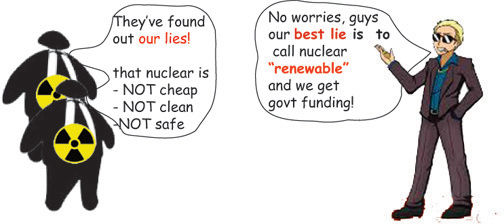
Dubious USA Bills – Small Nuclear Reactors, “education on nuclear”, nuclear as “renewable”
 Nuclear power measures face questions CrossCut WEDNESDAY 25, MARCH 2015 by John Stang The big topic at the House Technology & Economic Development Committee hearing was whether Washington should find a place to build small modular reactors, which would be produced for utility customers. Sen. Sharon Brown, R-Kennewick, is sponsoring this proposal and the two other nuclear-related bills that the committee examined. The Senate passed the
  small modular reactor bill 27-21, mostly along party lines.Tri-Cities leaders envision a Boeing-style assembly plant to build small modular reactors. This is a long-range plan and is predicted to take several years to develop……
The concept is still on the drawing board. No one has built a commercial small modular reactor yet……
At the hearing, critics cited the lack of any track record on cost or safety for small modular reactors, plus concerns over the nation’s lack of a permanent place to store used nuclear fuel.
“Small nuclear reactors are still in the prototype stage. … The prototype has never been tested in power production yet,” said Thomas Buchanan of Physicians for Social Responsibility.
“I don’t think that the Department of Commerce should work on this until it has a design that passes the NRC,” said Chuck Johnson of the same organization.
Johnson argued that a single small-modular reactor would not generate enough electricity to efficiently recover its construction and operating costs…..
Deborah Wolpoff of Olympia pointed to the cancelation of the nation’s proposed nuclear fuel repository inside Yucca Mountain, with no replacement lined up. “I think it is irresponsible to promote this technology that produces this waste that we have no solution for,” Wolpoff said.
Committee member Rep. Gael Tarleton, D-Seattle, wondered why the Legislature should support a new nuclear industry while Hanford’s Cold War nuclear wastes are decades from being cleaned up….
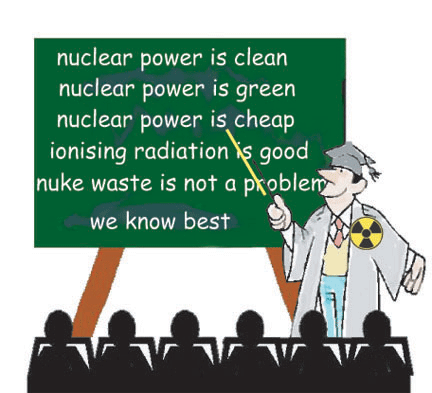 Another Brown bill, which the Senate passed 44-5, would create an education program aimed at providing nuclear science lessons to students in the eighth through 12th grades. Qualified American Nuclear Society members would be brought in for classroom sessions. Also, science teachers would receive instruction on nuclear science in order to teach the subject in the classrooms…….
Mary Hanson of Physicians Social Responsibility argued that the bill would give the nuclear industry influence over students, while other energy industries would not have the same access. She said American Nuclear Society members might be less versed in nuclear power’s health issues than its technical ones.
The third Brown bill, which the Senate passed 29-20, would add nuclear power to the list of alternative power sources that certain utilities can use to meet a state requirement to offer their customers voluntary participation in alternative energy purchases. The current list of green sources includes wind, solar, geothermal and biomass energy….
Physicians for Social Responsibility opposed it, contending nuclear energy is not a renewable power source….
http://crosscut.com/2015/03/nuclear-power-measures-face-questions/
Radioactive cesium in Fukushima’s soil
Soils retain, contain radioactivity in Fukushima Science Daily, March 24, 2015 Source: American Society of Agronomy (ASA), Crop Science Society of America (CSSA)
Radiocesium dissolves easily in water, allowing it to spread quickly. However, different soils have the ability to retain various toxins and prevent them from spreading or entering the food chain. The authors measured the ability of a large number of soil samples collected from Fukushima to intercept radiocesium. They found success depends on various factors.
One key factor is the presence of rough or weathered edges of certain minerals, such as mica, in the soil. These rough edges catch the radiocesium and prevent its movement. This is the frayed edge site (FES) concentration. Nakao explains, however, that “quantification of the FES with a simple experiment has proven difficult.” A “surrogate” measurement used by soil scientists is the radiocesium interception potential (RIP). This measurement is time-consuming and requires specialized facilities, preventing its measure at local institutes.
Thus, Nakao’s study looked for and found that other, more easily measured soil properties to predict the radiocesium interception potential (RIP) of a soil. “These findings may be useful in screening soils that are particularly vulnerable to transferring radiocesium to plants grown in them,” Nakao says. “However, the amounts of radiocesium transferred to plants are normally negligible, because most of the radiocesium is strongly fixed on the frayed edge site.”……..http://www.sciencedaily.com/releases/2015/03/150324101006.htm
1 This Month



26 September – International Day for the Total Elimination of Nuclear Weapons


PLEASE OPPOSE HR 8255 AND S.3639 – bills would accelerate satellite deployment, with no environmental review or safeguards – https://ncstd5li.quorum.us/campaign/169331/
To see nuclear-related stories in greater depth and intensity – go to https://nuclearinformation.wordpress.com
-
Archives
- September 2026 (245)
- August 2026 (330)
- July 2026 (355)
- June 2026 (287)
- May 2026 (306)
- April 2026 (356)
- March 2026 (251)
- February 2026 (267)
- January 2026 (308)
- December 2025 (358)
- November 2025 (359)
- October 2025 (375)
-
Categories
- 1
- 1 NUCLEAR ISSUES
- business and costs
- climate change
- culture and arts
- ENERGY
- environment
- health
- history
- indigenous issues
- Legal
- marketing of nuclear
- media
- opposition to nuclear
- PERSONAL STORIES
- politics
- politics international
- Religion and ethics
- safety
- secrets,lies and civil liberties
- spinbuster
- technology
- Uranium
- wastes
- weapons and war
- Women
- 2 WORLD
- ACTION
- AFRICA
- Atrocities
- AUSTRALIA
- Christina's notes
- Christina's themes
- culture and arts
- Events
- Fuk 2022
- Fuk 2023
- Fukushima 2017
- Fukushima 2018
- fukushima 2019
- Fukushima 2020
- Fukushima 2021
- general
- global warming
- Humour (God we need it)
- Nuclear
- RARE EARTHS
- Reference
- resources – print
- Resources -audiovicual
- Weekly Newsletter
- World
- World Nuclear
- YouTube
-
RSS
Entries RSS
Comments RSS
 nuclear-news