Fukushima insect study shows there is no safe low level of ionising radiation
 The researchers found that caterpillars that ate radioactive leaves pupated into mutated butterflies that did not live as long, compared with caterpillars that ate non-radioactive leaves. These mutations and increased mortality were seen even in butterflies that consumed only very small doses of radioactive cesium.
Deaths and mutations spike around Fukushima; no safety threshold for radioactive cesium exposure http://theunhivedmind.com/wordpress3/deaths-and-mutations-spike-around-fukushima-no-safety-threshold-for-radioactive-cesium-exposure/October 16, 2015 theunhivedmind Deaths and mutations spike around Fukushima; October 16, 2015 by: David Gutierrez, staff writer
http://www.naturalnews.com/051581_fukushima_radiation_nuclear_power.html
Plants in the area around Fukushima, Japan are widely contaminated with radioactive cesium, which is 
producing mutation and death in local butterflies, according to a study conducted by researchers from the University of the Ryukyus, Okinawa and published in the journal Scientific Reports.
The butterflies were found to experience severe negative effects at all detectable radiation levels, even very low ones.
“We conclude that the risk of ingesting a polluted diet is realistic, at least for this butterfly, and likely for certain other organisms living in the polluted area,” the researchers wrote.
Insects hard hit
The researchers note that although the 2011 meltdown of the Fukushima Daiichi Nuclear Power Plant released “a massive amount of radioactive materials … into the environment,” few studies have looked at the biological effects of this disaster. Researchers have, however, measured elevated radiation levels in the polluted area, and have chronicled the accumulation of radioactive material in both wild and domestic plant and animal life in the region.
Studies have also suggested that insects may be particularly hard-hit by the increased radiation. One study found an increase in morphological abnormalities (physical deformities) in gall-forming aphids. Another found that insect abundance has decreased in the affected region, particularly butterfly abundance. Continue reading
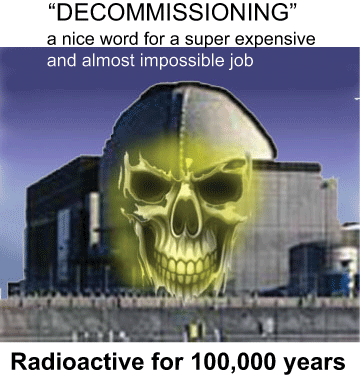
New York nuclear stations can’t afford costly shutdowns – so prolong decommissioning

 New York nuclear plants phase out, challengingly http://www.capitalnewyork.com/article/albany/2015/10/8579839/new-york-nuclear-plants-phase-out-challengingly One doesn’t have look hard in New York and throughout the region to see that the nuclear power industry has hit a rough patch.
The James FitzPatrick nuclear plant in Oswego County may be closing. The Ginna plant is on life support. Gov. Andrew Cuomo says he wants to close Indian Point.
Those closings and potential closings, combined with closure of Vermont Yankee in December and the announcement this month that Pilgrim in Massachusetts would be shuttered, herald what nuclear experts say is a denouement to the story of nuclear power in the United States.
“I would call it an organic phaseout,” said Mycle Schneider, a nuclear consultant based in Paris, during a conference at the New York Society for Ethical Culture on Thursday. “Nuclear’s position is threatened by a number of factors.”
Among those threats, he and others said, are the increasing costs of safely providing nuclear power, stagnant demand, a decrease in electricity use, and “ferocious competitors,” including natural gas and renewable power.
The question for state and federal regulators becomes how to safely and efficiently retire the nation’s nuclear fleet, a task infinitely more complex than getting rid of a typical power plant. Continue reading
Don’t be fooled: science shows that low dose ionising radiation harms living organisms
Radiation Impact Studies: Chernobyl and Fukushima, Dissident Voice, by Robert Hunziker / September 23rd, 2015 Some nuclear advocates suggest that wildlife thrives in the highly-radioactive Chernobyl Exclusion Zone, animals like it, and not only that, a little radiation for anybody and everybody is harmless and maybe good, not bad. This
 may seem like a senseless argument to tackle were it not for the persistence of positive-plus commentary by nuke lovers. The public domain deserves better, more studied, more crucial answers.
Fortunately, as well as unfortunately, the world has two major real life archetypes of radiation’s impact on the ecosystem: Chernobyl and Fukushima. Chernobyl is a sealed-off 30klm restricted zone for the past 30 years because of high radiation levels, whereas PM Abe’s government in Japan has already started returning people to formerly restricted zones surrounding the ongoing Fukushima nuclear melt-down.
 The short answer to the supposition that a “little dab of radiation is A-Okay” may be suggested in the title of a Washington Blog d/d March 12, 2014 in an interview of Dr. Timothy Mousseau, the world-renowned expert on radiation effects on living organisms. The hard answer is included further on in this article.
Dr. Mousseau is former Program Director at the National Science Foundation in Population Biology, Panelist for the National Academy of Sciences’ Panels on Analysis of Cancer Risks in Populations Near Nuclear Facilities and GAO Panel on Health and Environmental Effects from Tritium Leaks at Nuclear Power Plants, and a biology professor – and former Dean of the Graduate School, and Chair of the Graduate Program in Ecology – at the University of South Carolina.
The title of the Washington Blog interview is:
“Chernobyl and Fukushima Studies Show that Radiation Reduces Animal and Plant Numbers, Fertility, Brain Size and Diversity… and Increases Deformities and Abnormalities”
Dr. Mousseau made many trips to Chernobyl and Fukushima, making 896 inventories at Chernobyl and 1,100 biotic inventories in Fukushima. His mission was to test the effects of radiation on plants and animals. The title of his interview (above) handily serves to answer the question of whether radiation is positive for animals and plants. Without itemizing reams and reams of study data, the short answer is: Absolutely not! It is not positive for animals and plants, period.
Moreover, low doses of radiation, aka “radiation hormesis”, is not good for humans, as advocated by certain energy-related outlets. Data supporting their theory is extremely shaky and more to the point, flaky.
Furthermore, according to the Cambridge Philosophical Society’s journalBiological Reviews, including reported results by wide-ranging analyses of 46 peer-reviewed studies published over 40 years, low-level natural background radiation was found to have small, but highly statistically significant, negative effects on DNA and several measures of good health.
Dr. Mousseau, with co-author Anders Møller of the University of Paris-Sud, examined more that 5,000 papers involving background radiation in order to narrow their findings to 46 peer-reviewed studies. These studies examined plants and animals with a large preponderance of human subjects.
The scientists reported significant negative effects in a range of categories, including immunology, physiology, mutation and disease occurrence. The frequency of negative effects was beyond that of random chance.
There is no threshold below which there are no effects of radiation.
With the levels of contamination that we have seen as a result of nuclear power plants, especially in the past, and even as a result of Chernobyl and Fukushima and related accidents, there’s an attempt in the industry to downplay the doses that the populations are getting, because maybe it’s only one or two times beyond what is thought to be the natural background level…. But they’re assuming the natural background levels are fine. And the truth is, if we see effects at these low levels, then we have to be thinking differently about how we develop regulations for exposures, and especially intentional exposures to populations, like the emissions from nuclear power plants…… http://dissidentvoice.org/2015/09/radiation-impact-studies-chernobyl-and-fukushima/
Study shows there is no safe low level of ionising radiation
Radiation Impact Studies: Chernobyl and Fukushima, Dissident Voice, by Robert Hunziker / September 23rd, 2015
“…….A consortium of researchers coordinated by the International Agency for Research on Cancer (IARC) in Lyon, France, examined causes of death in a study of more than 300,000 nuclear-industry workers in France, the United States and the United Kingdom, all of whom wore dosimeter badges.1
The workers received on average just 1.1 millisieverts (mSv) per year above background radiation, which itself is about 2–3 mSv per year from sources such as cosmic rays and radon. The study confirmed that the risk of leukemia does rise proportionately with higher doses, but also showed that this linear relationship is present at extremely low levels of radiation.
The study effectively “scuppers the popular idea that there might be a threshold dose below which radiation is harmless.”
Even so, the significant issue regarding radiation exposure for humans is that it is a “silent destroyer” that takes years and only manifests once damage has occurred; for example, 200 American sailors of the USS Reagan have filed a lawsuit against TEPCO et al because of radiation-related illnesses, like leukemia, only four years after radiation exposure from Fukushima….. http://dissidentvoice.org/2015/09/radiation-impact-studies-chernobyl-and-fukushima/
Nuclear power building – UK’s worry of China’s poor health and safety record

 nuclearnews No 2 nuclear power Oct 15 ..…….. it is China’s poor health and safety record which is most worrying. With the power of the Chinese Government and the UK Government’s enthusiasm for Chinese money the concern is that the UK’s nuclear regulators will be sidestepped.
China’s health and safety standards have been thrust into the spotlight this year by a series of chemical explosions. An explosion at a chemical plant in the eastern Chinese province of Shandong shortly before midnight on 31st August 2015 was the second to occur at a chemical plant in Shandong province in a matter of days.
Although no casualties were reported, the blast happened about a fortnight after explosions in the port city of Tianjin, northern China, which killed over 145 people. In the wake of the Tianjin blast, the Communist Party has sacked the head of China’s safety regulator, who was previously the vice mayor of the city. Shortly after, 12 government officials and company executives were detained. (6)
 According to Ben Chu, author of ‘Chinese Whispers: Why Everything You’ve Heard About China is Wrong, the disaster in Tianjin was the latest consequence of a system that places personal profit before public safety. He says in China today behind every industrial accident lies a reeking morass of corruption.
Chinese state media reported that the son of a former local police chief was secretly a joint owner of the Tianjin warehouse that went up in a devastating fireball last week, killing 145 people, injuring 674 and damaging some 17,000 homes. He used his official connections to obtain licences for the warehouse, even though it flagrantly breached regulations prohibiting the storage of hazardous chemicals (sodium cyanide in this case) near residential areas. (7)
The continuing scandal of Russia’s Mayak nuclear contamination – whistleblower seeks asylum in France

 A Russian antinuclear activist asks for asylum in France Mediapart , October 2, 2015, by Amélie Poinssot and Michel de Pracontal, As the head of the NGO Planet of Hope [Planeta Nadezhd], Nadejda Koutepova has fought for fifteen years for the victims of radioactive contamination in the Urals, near the Maiak factory which, in 1957, gave the world its first nuclear catastrophe. In July, she was forced by circumstances to dissolve the NGO and leave Russia. This Friday, October 2nd, as Francois Hollande receives Vladimir Putin in Paris, she is asking for asylum in France.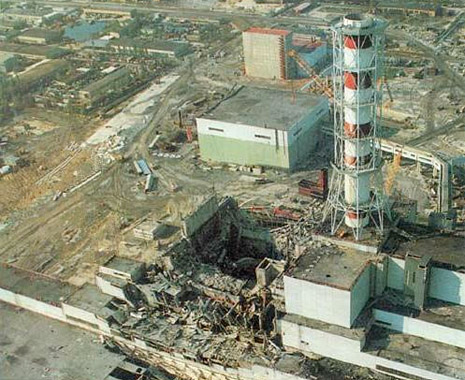
Fukushima children and adolescents have unusually high rates of thyroid cancer
Thyroid Cancer Detection by Ultrasound Among Residents Ages 18 Years and Younger in Fukushima, Japan: 2011 to 2014. http://journals.lww.com/epidem/Abstract/publishahead/Thyroid_Cancer_Detection_by_Ultrasound_Among.99115.aspx by Tsuda, Toshihide; Tokinobu, Akiko; Yamamoto,
 Eiji; Suzuki, Etsuji Epidemiology: Post Author Corrections: October 5, 2015 Open Access Published Ahead-of-Print
Methods: After the release, Fukushima Prefecture performed ultrasound thyroid screening on all residents ages <=18 years. The first round of screening included 298,577 examinees, and a second round began in April 2014. We analyzed the prefecture results from the first and second round up to December 31, 2014, in comparison with the Japanese annual incidence and the incidence within a reference area in Fukushima Prefecture.
Results: The highest incidence rate ratio, using a latency period of 4 years, was observed in the central middle district of the prefecture compared with the Japanese annual incidence (incidence rate ratio = 50; 95% confidence interval [CI] = 25, 90). The prevalence of thyroid cancer was 605 per million examinees (95% CI = 302, 1,082) and the prevalence odds ratio compared with the reference district in Fukushima Prefecture was 2.6 (95% CI = 0.99, 7.0). In the second screening round, even under the assumption that the rest of examinees were disease free, an incidence rate ratio of 12 has already been observed (95% CI = 5.1, 23).
Conclusions: An excess of thyroid cancer has been detected by ultrasound among children and adolescents in Fukushima Prefecture within 4 years of the release, and is unlikely to be explained by a screening surge.
This is an open-access article distributed under the terms of the Creative Commons Attribution-Non Commercial-No Derivatives License 4.0 (CCBY-NC-ND), where it is permissible to download and share the work provided it is properly cited. The work cannot be changed in any way or used commercially.
Examining Nuclear Regulatory Commission’s deceptive article about ending the cancer research
 Examining the Reasons for Ending the Cancer Risk Study as given in article by USA’s Nuclear Regulatory Commission 6 Oct 15 Garry Morgan, U.S. Army Medical Department, Retired Director Health and Radiation Monitoring BEST/MATRR a local chapter of BREDL
http://www.matrr.org
One word describes this article – FALLACY. The Nuclear Regulatory Commission’s (NRC) mission to protect the public is compromised by politicians supported by Nuclear Special Interest Groups such as the NEI, Nuclear Energy Institute, applying pressure to decrease funding to the NRC. You are supporting the nuclear industry not the public. The NRC is not an agency which has separated itself from undue political and industry influences and pressures.
A report of radiological contamination and its health effects could have been completed with less expense than $8 million dollars, accurately. The nuclear industry and the United States Government has much to hide regarding the failures to protect the public at large and in communities surrounding all nuclear facilities – this includes the uranium mining communities, the fuel facility communities, the nuclear hazardous waste communities, nuclear weapons communities and all nuclear reactor facility communities.
The nuclear industry and the regulator does not report real time ionizing radiation from emission sources from any active nuclear facility; reporting is based on averages reported annually from nuclear facility locations. This type of reporting is skewered, and lacks scientific credibility due to not reporting emissions in a real time monitoring program with accurate radiological assessments from real time monitoring reports along with community resident health evaluations.
Non-profit institutional examination of nuclear emissions and community health is demonstrating an entirely different story from that which the nuclear industry and the NRC reports. When there is contradictory evidence disputing the nuclear industry and the NRC, the NEI hires nuclear industry paid persons to contradict any information assimilated from private non-profit sources, regardless if the information is actually an accurate compilation from government sources with professional data assimilation and analysis. Example – The Browns Ferry Report <http://best-matrr.org/pdfs/AL_BFN_Report_2013-final-dig2.pdf>http://best-matrr.org/pdfs/AL_BFN_Report_2013-final-dig2.pdf
The examination of dispersal of radiological contaminating materials in East Tennessee presents a horror story of cancer, declining health and radionuclide contamination of the environment of East Tennessee communities along the Tennessee River and its’ tributaries. The citizens of East Tennessee have become a sacrificial group since the beginnings of the nuclear age in 1945. Unfortunately, the Department of Energy (DOE) and the NRC are participants in this horror story of the atomic age, placing the money gained from atomic death industry before peoples health and welfare – shame on you. Shame on the NRC, DOE, and the many nuclear and nuclear defense industries for your continued deceit.
This is the million pound weight in the room – the continuous deceit and placing money before human health in civilian nuclear and nuclear contractor programs, besides the continuous building of highly radioactive nuclear waste materials. The deceit demonstrated is a continuous failure to uphold Human Reliability Standards which is a cornerstone of any nuclear program, the failure due to deceit is tantamount to a disaster awaiting an outcome. http://public-blog.nrc-gateway.gov/2015/10/06/examining-the-reasons-for-ending-the-cancer-risk-study/comment-page-1/#comment-1617512>
Nadejda Koutepova speaks out on the hidden scandal of the Mayak radioactive contamination
A Russian antinuclear activist asks for asylum in France Mediapart , October 2, 2015, by Amélie Poinssot and Michel de Pracontal, The revelation, decades later
On the trip to Mars, astronauts’ brains would experience lethal levels of cosmic radiation.
 An Inconvenient Radiation tucson.com By David Galbraith THE ARIZONA DAILY STAR , 5 Oct 16 Mars waxes large in our current imagination. Matt Damon provides a compelling performance as an astronaut botanist stranded on the Red Planet, in a Ridley Scott film lauded for its scientific accuracy. The future in space shines bright, it seems. But is this really so?……..
Why do we need protection? The most energetic cosmic rays pack a punch of a 56 mile‐per‐hour baseball. Just as a body can be damaged by a baseball, so a cell can be damaged by a cosmic ray. How much damage can it do? Scientists have recently tested this question, exposing mice to amounts of radiation that would be experienced by astronauts during a trip to Mars which has very little atmosphere and minimal protection from cosmic rays. Extensive destruction of the brains of these mice was seen, with drastic deterioration in cognitive tests.
Our astronauts have already described interactions with cosmic rays during brief trips to the moon, reporting random flashes of light, a consequence of the explosive interaction of a cosmic ray with the cells in the retina. During the much longer trip to Mars, and the establishment of a permanent colony there, the brains of the astronauts will experience lethal levels of cosmic radiation.
An alternative, and very simple explanation of Fermi’s paradox, is that the universe is a sterilizing system: cosmic rays prevent access of living organisms, alien or human, to our immediate space neighborhood and beyond. Accepting and coming to terms with this disturbing concept will have far‐ reaching consequences, both practical, political, philosophical, and, perhaps, theological. The only things that remain shining, as we keep looking up, are the inaccessible stars, and my father’s ironic gift, the faint Cerenkov radiation in the night sky formed by cosmic rays. http://tucson.com/news/opinion/column/guest/an-inconvenient-radiation/article_8c30548b-a593-51c9-b9b6-042787fe4f67.html
USA nuclear weapons department helping China develop thorium reactors, despite their military uses
 The U.S. government lab behind China’s nuclear power push HONG KONG |REUTERS Dec 20, 2013 Scientists in Shanghai are attempting a breakthrough in nuclear energy: reactors powered by thorium, an alternative to uranium.
The project is run by the Chinese Academy of Sciences, a government body with close military ties that coordinates the country’s science-and-technology strategy. The academy has designated thorium as a priority for China’s top laboratories. The program has a budget of $350 million. And it’s being spearheaded by the influential son of a former Chinese president.
But even as China bulks up its military muscle through means ranging from espionage to heavy spending, it is pursuing this aspect of its technology game plan with the blessing – and the help – of the United States. China has enlisted a storied partner for its thorium push: Oak Ridge National Laboratory. The U.S. government institute produced the plutonium used for the Manhattan Project and laid important groundwork for the commercial and military use of nuclear power.
The Tennessee lab, as it happens, helped pioneer thorium reactors. The Pentagon and the energy industry later sidelined this technology in favor of uranium……..
Thorium’s chief allure is that it is a potentially far safer fuel for civilian power plants than is uranium. But the element also has possible military applications as an energy source in naval vessels. A U.S. congressman unsuccessfully sought to push the Pentagon to embrace the technology in 2009, and British naval officers are recommending a design for a thorium-fueled ship.
In a further twist, despite the mounting strategic rivalry with China, there has been little or no protest in the United States over Oak Ridge’s nuclear-energy cooperation with China……..
Although it does not yield byproducts that can be readily used to make weapons, thorium does have military applications.
The fuel could be used to power Chinese navy surface warships, including a planned fleet of aircraft carriers. China’s nuclear submarine fleet has struggled with reactor reliability and safety, according to naval commentators, and thorium could eventually become an alternative.
Top British naval engineers last year proposed a design for a thorium reactor to power warships. Compact thorium power plants could also be used to supply reliable power to military bases and expeditionary forces.
Thorium also has military potential for the United States, experts say……..
Critical problem of Fukushima nuclear reactor No2 – where is molten core?
 “Long-lived radionuclides such as Cesium-137 are something new to us as a species. They did not exist on Earth in any appreciable quantities during the entire evolution of complex life. Although they are invisible to our senses they are millions of times more poisonous than most of the common poisons we are familiar with. They cause cancer, leukemia, genetic mutations, birth defects, malformations, and abortions at concentrations almost below human recognition and comprehension. They are lethal at the atomic or molecular level,”
Fukushima: The World’s Never Seen Anything Like This Popular Resistance By Robert Hunziker, www.counterpunch.org October 2nd, 2015 The Fukushima Daiichi Nuclear Power Plant No. 2 nuclear reactor fuel is missing from the core containment vessel. (Source: Up to 100% of No. 2 Reactor Fuel May Have Melted, NHK World News, Sept. 25, 2015.)
Where did it go? Nobody knows.
Not only that but the “learning curve” for a nuclear meltdown is as fresh as the event itself because “the world has never seen anything like this,” never.
Utilizing cosmic ray muon radiography with nuclear emulsion, researchers from Nagoya University peered inside the reactors at Fukushima. The nuclear fuel in reactor core No. 5 was clearly visible via the muon process. However, at No. 2 reactor, which released a very large amount of radioactive substances coincident with the 2011 explosion, little, if any, signs of nuclear fuel appear in the containment vessel. A serious meltdown is underway.
“The researchers say further analyses are needed to determine whether molten fuel penetrated the reactor and fell down,” Ibid. In short, researchers do not yet know if the molten hot stuff has penetrated the steel/concrete base beyond the containment vessel, thus entering Mother Earth.
The Nagoya University research team, in coordination with Toshiba Corporation, reported their findings at a meeting of the Physical Society of Japan on Sept. 26th.
Thus, therefore, and furthermore, it is advisable to review what’s at stake:
“High-level nuclear waste is almost unimaginably poisonous. Take for example cesium-137, with a half-life of 30 years, which makes up the largest fraction of long-lived radionuclides residing in spent nuclear fuel. One gram of radioactive cesium-137 (about half the size of a dime) contains 88 Curies of radioactivity. 104 Curies of radioactive cesium-137, spread evenly over one square mile of land, will make it uninhabitable for more than a century,” Comments on Draft of Nuclear Waste Administration Act of 2013, Physicians for Social Responsibility, May 23, 2013.
As for example, there are 1,090 square miles of land surrounding the destroyed Chernobyl reactor that Ukraine classifies as an uninhabitable radioactive exclusion zone because radioactive fallout left more than 104 Curies of cesium- 137 per square mile on the land that makes up the zone. Scientists believe it will be 180 to 320 years before Cesium-137 around Chernobyl disappears from the environment.
Here’s the big, or rather biggest, problem: Cesium is water-soluble and makes its way into soils and waters as it quickly becomes ubiquitous in a contaminated ecosystem…… Continue reading
Dr Ian Fairlea sets out the grim facts on costs at the end of the nuclear power party
pity UK taxpayers in decades, centuries and millennia to come.
When the party’s over … the financial spectre at the end of nuclear power http://www.theecologist.org/News/news_analysis/2985577/when_the_partys_over_the_financial_spectre_at_the_end_of_nuclear_power.html Dr Ian Fairlie 1st October 2015
There are two rules about the end costs of nuclear power, writes Ian Fairlie. It’s far more than you ever knew. And whatever sum of money was ever set aside, it’s nowhere near enough. Germany understands this. That’s why it refused to let E.ON spin off its nuclear liabilities into a hands-off company. But the UK, it seems, has lost the ability to learn from its nuclear mistakes.
Nuclear power has a wide spectrum of disadvantages.
One is that when reactors are shut down for good, a host of financial liabilities continue with no income flow from the sale of nuclear electricity to pay for them.
And enormous new liabilities for decommissioning and final disposal commence at the same time.

This became crystal-clear in April when the German energy giant E.ON proposed to spin off its remaining nuclear activities1 into a separate company, Uniper, in an attempt to protect the parent company from the multiple nuclear liabilities from the impending shutdowns of its nuclear reactors: Germany is phasing out all nuclear power by 2022. Continue reading
Japan’s coastal population: risks from radiation ignored by govt and IAEA
UK research clearly shows that coastal zone populations are exposed to doses of marine radioactivity under the following set of environmental parameters:
- resident in coastal zones up to at least 200kms downstream of a source of liquid radioactive discharges to sea
- resident in coastal zones adjacent to coastal waters with high suspended sediment loadings
- resident in coastal zones adjacent to extensive fine sediment inter tidal/sub tidal sediment deposits (salt marsh, mud flats etc)
- resident in coastal zones subject to prevailing onshore winds and storm or tidal conditions generating marine aerosols, sea spray and coastal inundation
- resident in coastal zones where such parameters (A to D above) have, elsewhere, been shown to enable/facilitate the penetration of marine radioactivity for across the shoreline and up to 10 miles inland from the coast.
Fukushima: Japanese government and IAEA ignore radiation risks to coastal population http://www.theecologist.org/News/news_analysis/2985454/fukushima_japanese_government_and_iaea_ignore_radiation_risks_to_coastal_population.html Tim 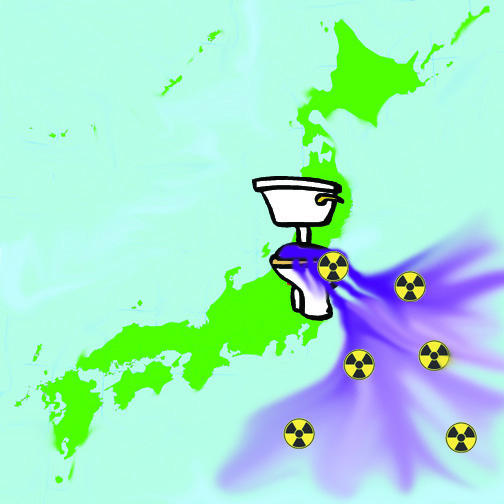 Deere-Jones 28th September 2015
Radiation can be carried long distances by marine currents, concentrated in sediments, and carried in sea spray 16km or more inland, writes Tim Deere-Jones. So Fukushima poses a hazard to coastal populations and any who eat produce from their farms. So what are the Japanese Government and IAEA doing? Ignoring the problem, and failing to gather data.
Review of the official Japanese marine monitoring programme reveals that the Japanese government is turning a blind eye to the risks of marine radiation from the stricken Fukushima site.
The strategy it has adopted, with the support of the IAEA, consistently ignores the latest evidence about the way marine radioactivity behaves in inshore marine environments and the potential radiological risks to coastal populations.
This strategy is based on a flawed hypothesis, developed by the nuclear industry through the late 1940s and early 1950s, when both oceanography and the study of the behaviour and fate of radioactivity in marine environments were in their absolute infancy.
As a result, the principal conclusions on the marine impact of the Fukushima event put forward in recent reports from the IAEA, the Government of Japan and it’s relevant agencies, minimise the environmental and public health negatives and emphasise a range of hypothetical ‘positives’.
This is a major flaw because the empirical evidence from ‘non-aligned’ research in the UK is that coastal communities are subjected to highly enriched doses of marine radioactivity through pathways of exposure, and from environmental parameters, which will not be analysed and researched under current Fukushima monitoring plans.
As a result, significant public health impacts of the event will not be documented, nor will important data about the way Fukushima marine radioactivity behaves at the coastline.
Failing to gather the evidence of coastal radiation Continue reading
Don’t fall for nuclear industry propaganda about radiation “hormesis” !
Cancer, Coverups and Contamination: The Real Cost of Nuclear Energy 27th September 2015 Andreas Toupadakis Ph.D Contributing Writer for Wake Up World “…….many nuclear industry advocates actually maintain that low-dose nuclear radiation is in fact beneficial to human health. Their theory, known as the “Hormesis Effect”, is deliberate industry propaganda. The human body perceives radiation as a threat to its existence, which results in an intense immune response. The short term result of this immune activity can be a short-term improvement of other existing ailments, however the immune system cannot work permanently in such a state of stress, and as environmental exposure continues, human health inevitably deteriorates. This is also the conclusion of the ECRR which concludes that…
“… hormesis may exist, but if it does exist its long-term effects are likely to be harmful… [When exposed to radiation] immune system surveillance is being potentiated in the short term … [however] the existence of radiation-inducible repair means that the repair systems themselves may be open to attack, also by radiation… If cells were induced into a state of high sensitivity for repair replication, then the cell line would undergo a greater rate of replication throughout the period of stress, and… the consequence of the short-term advantage conferred by hormesis is… accumulated DNA damage caused by high numbers of replication-copying processes.”
Over fifty years ago, questions on radiation and toxicity hazards were raised by at least three groups – the the International Commission on Radiological Protection (ICRP), National Council on Radiation Protection (NCRP), and the Federal Radiation Council (FRC). Continue reading

1 This Month



26 September – International Day for the Total Elimination of Nuclear Weapons


PLEASE OPPOSE HR 8255 AND S.3639 – bills would accelerate satellite deployment, with no environmental review or safeguards – https://ncstd5li.quorum.us/campaign/169331/
To see nuclear-related stories in greater depth and intensity – go to https://nuclearinformation.wordpress.com
-
Archives
- September 2026 (245)
- August 2026 (330)
- July 2026 (355)
- June 2026 (287)
- May 2026 (306)
- April 2026 (356)
- March 2026 (251)
- February 2026 (267)
- January 2026 (308)
- December 2025 (358)
- November 2025 (359)
- October 2025 (375)
-
Categories
- 1
- 1 NUCLEAR ISSUES
- business and costs
- climate change
- culture and arts
- ENERGY
- environment
- health
- history
- indigenous issues
- Legal
- marketing of nuclear
- media
- opposition to nuclear
- PERSONAL STORIES
- politics
- politics international
- Religion and ethics
- safety
- secrets,lies and civil liberties
- spinbuster
- technology
- Uranium
- wastes
- weapons and war
- Women
- 2 WORLD
- ACTION
- AFRICA
- Atrocities
- AUSTRALIA
- Christina's notes
- Christina's themes
- culture and arts
- Events
- Fuk 2022
- Fuk 2023
- Fukushima 2017
- Fukushima 2018
- fukushima 2019
- Fukushima 2020
- Fukushima 2021
- general
- global warming
- Humour (God we need it)
- Nuclear
- RARE EARTHS
- Reference
- resources – print
- Resources -audiovicual
- Weekly Newsletter
- World
- World Nuclear
- YouTube
-
RSS
Entries RSS
Comments RSS
 nuclear-news