The role of LEAD in damaging brains and contributing to violence
an astonishing body of evidence. We now have studies at the international level, the national level, the state level, the city level, and even the individual level. Groups of children have been followed from the womb to adulthood, and higher childhood blood lead levels are consistently associated with higher adult arrest rates for violent crimes. All of these studies tell the same story: Gasoline lead is responsible for a good share of the rise and fall of violent crime over the past half century……
It’s the only hypothesis that persuasively explains both the rise of crime in the ’60s and ’70s and its fall beginning in the ’90s.

A second study found that high exposure to lead during childhood was linked to a permanent loss of gray matter in the prefrontal cortex—a part of the brain associated with aggression control as well as what psychologists call “executive functions”: emotional regulation, impulse control, attention, verbal reasoning, and mental flexibility.
 LEAD – America’s real criminal element. Mother Jones, By Kevin Drum, February 16 “…………IN 1994, RICK NEVIN WAS A CONSULTANT working for the US Department of Housing and Urban Development on the costs and benefits of removing lead paint from old houses. This has been a topic of intense study because of the growing body of research linking lead exposure in small children with a whole raft of complications later in life, including lower IQ, hyperactivity, behavioral problems, and learning disabilities.
But as Nevin was working on that assignment, his client suggested they might be missing something. A recent study had suggested a link between childhood lead exposure and juvenile delinquency later on. Maybe reducing lead exposure had an effect on violent crime too?
That tip took Nevin in a different direction. The biggest source of lead in the postwar era, it turns out, wasn’t paint. It was leaded gasoline. And if you chart the rise and fall of atmospheric lead caused by the rise and fall of leaded gasoline consumption, you get a pretty simple upside-down U: Lead emissions from tailpipes rose steadily from the early ’40s through the early ’70s, nearly quadrupling over that period. Then, as unleaded gasoline began to replace leaded gasoline, emissions plummeted.
Huge production of radioactive trash would come from Hinkley point C nuclear reactor

 nuClear News No 82 Feb 16 The Impact of a New Reactor Programme on the UK’s Radioactive Waste Inventory The proposed Hinkley Point C nuclear power station would produce radioactive wastes and spent fuel with a radioactivity inventory equal to roughly 80% of the radioactivity in all of the UK’s existing radioactive wastes put together.
China’s nuclear fusion experiment – it’s still decades away from practical application
 Chinese Fusion Test Hits A Milestone By Creating 90 Million °F For 102 Seconds http://www.techworm.net/2016/02/chinese-fusion-test-hits-milestone-creating-90-million-f-102-seconds.html BY KAVITA IYER ON FEBRUARY 9, 2016
 Chinese scientists create record by hitting 90 Million °F For 102 Seconds which is three times hotter than the Sun
Scientists in China were able to heat plasma to three times the temperature of the core of our sun using nuclear fusion – a temperature of 90 million °F – for an impressive 102 seconds, as they continued their search to derive energy from nuclear fusion.
They have surpassed the nuclear fusion experimental device referred to as the Wendelstein 7-X (W7-X) stellerator developed by a team of German researchers from the Max Planck Institute that managed to heat hydrogen gas to 80 million degrees Celsius, and sustain a cloud of hydrogen plasma for a quarter of a second.
According to a statement on the institute’s website last Wednesday, the experiment was conducted on a magnetic fusion reactor at the Institute of Physical Science in Hefei, capital of Jiangsu province.
The experiments were carried out in a donut-shaped reactor, officially known as the Experimental Advanced Superconducting Tokamak (EAST). The reactor was able to heat a hydrogen gas – a hot ionised gas called plasma – to about 50 million Kelvins (49.999 million degrees Celsius). The interior of our sun is calculated to be around 15 million Kelvins.
The plasma can be contained by careful control of intense magnetic fields in a tight ring by running through the center of the donut’s circular cross section. In other words, the walls of the structure are never directly exposed to the high temperatures of the plasma.
For the long term goal of such fusion reactors, it is very necessary to make sure that those temperatures can be sustained for long period of time, as a huge input of energy is required to get them started. But, if they end up stopping too soon, the reaction is net negative in energy terms. Such high energies cause great instabilities making it difficult to confine them, as controlling such intense heat is tough. Therefore, it is a positive step indeed for running an experiment at such temperatures for 102 seconds.
It’s not the hottest temperature ever created on Earth. So far, the hottest temperature to have been created artificially in the lab remains that reached by the gargantuan Large Hadron Collider (LHC) at CERN, which managed to achieve temperatures of 4 trillion degrees Celsius back in 2012. However, those conditions last for the sheer flicker of time, which is inadequate for creating energy.
The ultimate goal of China’s team is to hit 100 million degrees Celsius now, and sustain the resulting hydrogen plasma for over 1,000 seconds, or 17 minutes. In the meantime, now that their ‘proof of concept’ experiment is out of the way, the German team says it could possibly sustain its plasma for as long as 30 minutes.
However, most scientists who are in agreement advocate that the long-yet-intense burn required for fusion needs to be around 180 million °F, which means we are likely decades away from actually connecting nuclear fusion to solve humanity’s energy problems.
Life after Fukushima and Chernobyl nuclear disasters with Prof. T. Mousseau
 Comparing fukushima and Chernobyl concerning raionuclide distribution and Isotopic variations on Land and effects on the environment. New studies by Timothy Mousseu and his team.
Tim was interviewed and he gave us an overall look at the situation and compares the 2 nuclear disasters for us. Link to Timothy Mousseau cricket.biol.sc.edu/Mousseau/Mousseau.html
Link to podcast here;
Strontium and Plutonium isotopes
“Most of the those other isotopes in are very small quantities relative to the cesium that were released – that were very different to the Chernobyl situation where huge quantities of Strontium, about equal Cesium and Strontium were released along with several isotopes of of Plutonium, The Plutonium is in the process of decaying into Americium and (that) is more radioactive than Plutonium apparent”
Strontium in Fukushima Prefecture
In Japan the the Strontium was not volatised as did Cesium and Iodine and it did not travel far (on Land) but large quantities of Strontium are still being released by the ground water at the plant and and from the cooling water leaking into the ocean.
Contamination of the Nursery areas in the deep ocean and off the coast of Japan?
On the 4th February 2016 a Press conference was held in the Foriegn Correspondents Club in Japan calling for more research funding to be done concerning the Human health effects of the Fukushima nuclear disaster and we find a similar problem faced by epidemiologists and researchers to the lack of interest and therefore funding in this area. During the interview with Timothy we touched on research funding issues in a variety of areas relevant to the nuclear disaster including the aquatic environment.
Timothy responded to a question put to him saying that only some studies have been done (to his knowledge) on the bottom feeding fish and that these fish had been found to high contamination but that very other few studies have been done. He went on to say;
“surveillance work to determine wether fish can be consumed rather than the biological impacts (and) ecological impacts of the fish themselves, this is one of the important questions and that is one of the interests we have as a group.”
He went on to say that the issues for thre authorities are that;
“Whether or not —“ The fish are below regulatory limits for export, that is the main – you know- economic driver of interest but the biological drive is almost nil as far as I can tell”
Terrestrial (land) contamination issues on wildllife, plant and micro–organisms

Of the limited research happening in this area, Tims and his team is at the forefront in developing novel and creative ways to ascertain the effects from the nuclear disaster. Usng their experience gleaned from the radiological effected areas of Chernobyl (with the help of Anders Pape Møller, CNRS, University of Paris-Sud) and applying this invaluable eperience on the highly effected areas on the mountain sides and hills sorrounding the Fukushima city to the coastal areas including Namie and IItate areas of Fukushima and some less contaminated areas for comparison studies.
These studies have resulted in some 8 to 9 primary papers on birds and Insects. Also, new research on Rodents is about to be released and cameras have been set up in various locations studying large mamals such as pigs and monkeys.
Oze National Park in southern Fukushima Prefecture and Northern Chiba Prefecture (north of Tokyo)
On the search for clean areas for comparison studies, Tim said that he was disapointed. He looked at the huge and remote Oze national Park as a possible localtion (largly situated in the Chiba Prefecture but his radiation readings were more than 10 times normal at 0.5 mcSv/h (compared to the contaminated research area with 30 – 40 and 50 mcSv/h in the hills sorrounding Fukushima City.
we talked about the effects of sediment transfer from the mountains down through the lakes and forests of Oze Park. Tim then mentioned a Typhoon he witnessed that stripped large areas of soil into the rivers and was concerned of the effects in the extensive lake system in Oze Park and the result of contamination making its way to the river outflows on the coast and effects on the fisheries. Asked as to wether any studies were being done he said that in the last year (some 5 years after the nuclear accident) many geollogists from around the world were vying for funding to commence studies in “the next year or two” studying such issues but presently;
“I don`t know of any studies being done” he said
The issue of funding was mentioned here and that the Japanese government seemed only interested in funding studies for issues around food and health issues (link to issues around health studies being grossly limited here
(courtesy of FFCJ www.youtube.com/watch?v=e58yF8zZQ9w )
Only a handful of scientists can afford to do these studies he went on to say. And I mentioned that TEPCO owned the larger share of this PNational Park. (Some findings concerning the issues and info on Oze National Park here www.opednews.com/articles/Does-Tepco-ow… )
Discussing the pros and cons of the peer review process
He said that it is always a consttant battle
“.. and I suppose its a really positive aspect of the peer review process”
On the pitfalls of the process he mentioned that for some decades finding sufficiently knowledgeable and open minded reviewers to consider “creative studies” is difficult. He went onto say that he and dis colleagues have managed to submit and have accepted some 80 papers in the last ten years concerning Chernobyl and Fukushima.
Funding issues for research and analysis
Here we discussed Ken Buesslers citizen crowd funding campaign for testing water off the west coast USA.
Tim noted that his costs come to some hundreds of thousands of dollars a year and that Kens study was very limited due to the cost of transportation of samples and costs for sampling etc. Kens was limited by the lack of funding raised concerning this campaign and pointed out that the costs are not fully covered by the monies raised.
“its a limited effort and doesnt in any way provide the level of info to address the bigger question but, that said, he has done a fabulous job with what he has got to do it”
I hen asked Tim if such a scheme might be implimented in Japan, he said
“You dont want the middle schoolers collecting radioactive dirt do you?”
Also, getting permission to work in these contaminated areas is difficult and omly open to professional research activities.
The new Japanese Secrets Law brought in at the end of 2013
On this he said that (aside form legal issues) there is “alot of self censorship in Japan to do with this disaster”
But he said that locals in Fukshima Prefecture have been incredibly helpful giving food, finacial support and property for laboratory analysis.
“There is an incidious form of censorship going on that most people are not tuned intoit and thats the fact that if you dont fund science – the resouces for research – it doesnt get done and (by) consequesnce questions are not asked and certainly not answered”
Lack of funding is the biggest form of censorship with this disaster.
He went on to say that on funding issues;
“I haven`t had a much luck with som of the conventional (funding) sources”
Chernobyl, new mice study
Last week Tim said he produced a study showing hightened prevelance of cataracts in the eyes of mice.
and that this was corroborated with an earlier study on birds.
Finding clues and evidence on previous relevant biosphere studies to date
A meta analysis is being done on previous studies looking into plant, animals and bacteria are adpting or evolving, on some level or other. Looking at all the evidence (including the issue of high U.V. radiation found on earth millions of years ago). His conclusions seem to point to the facts that the evolutionary response was “actually negative” and this report should be out in about a month. His earlier study on birds with Black pigment showed that some resiliance in a small amount of bird species was due to them using antioxidents to protect from gentic damage but that some cost. This might limit the lower antioxident levels left in these birds might cause problems for them to find mates and deal with environmental changes (such as climate change)
“Organisms can use these antioxidents to the mutational load OR use it to advertise to a mate or defend itself against some other diseases but there is this ultimate trade off that limits the success in one way or another”
Thermal regulation might be another factor due to this imbalance he said.
Chernobyl Heart – Fukushima heart?
We discussed pin holes found in babies even today in the contaminated areas of Belarus, Ukraine and Russia. Tim said that it is recognised that there are well documented cardio vascular damage in the areas of contamination and that he would check out this problem in the near future using samples he has collected already. (A previous article I have looked at some statistics and posits on this www.opednews.com/articles/The-manipulat…)
Issues on the decontamination and Top soil removal
We also discussed the issues of the damage to the environment by removing the living soil around houses and roads to reduce the geiger readings (dose). Tim also said that only limited top soil is removed and
“.. a superficial attempt to provide this appearencce of reduced contamination but it is not a solution to the area”
He went onto point out that the leaves and branches that fall will eventually cover these areas that are cleaned and a radioactive build up will re occour over time. He is running similar test into the issue found in Chernobyl with micro organisms not survivng and causing forest debris to build up (and causing wildfires etc). He is not sure if the levels and isotopic types found in Fukushima are going to cause the same problem that was found in Chernobyl but that he would know when an experiment he is running is concluded in the next few months or so.
Thyroid cancer increasing: can they continue to ignore the link with nuclear power?
Studies of Japanese survivors of the atomic bombs the United States dropped on Hiroshima and Nagasaki found the cancer with the greatest increase was thyroid cancer.
- A U.S. government survey of cancer rates among residents of the Marshall Islands, who were exposed to U.S. bomb testing in the 1950s, found thyroid cancer outpaced all others.
- A 1999 federal study estimated that exposure to I-131 from bomb testing in Nevada caused as many as 212,000 Americans to develop thyroid cancer.
- A 2009 book on the Chernobyl nuclear plant disaster found soaring levels of local thyroid cancer rates after the meltdown, especially among children, and workers called “liquidators,” who cleaned up the burning plant.
- More recently, studies have documented thyroid cancer rates in children near Fukushima, Japan, site of the 2011 meltdown, to be 20 to 50 times above the expected rate.
 AN INVISIBLE EPIDEMIC http://linkis.com/washingtonspectator.org/cxhdO Can an epidemic really sneak up on us like this? By Janette Sherman and Joseph Mangano February 4, 2016 Is it possible for an epidemic to be invisible?
Since 1991 the annual number of newly documented cases of thyroid cancer in the United States has skyrocketed from 12,400 to 62,450. It’s now the seventh most common type of cancer.
Relatively little attention is paid to the butterfly-shaped thyroid gland that wraps around the throat. Many don’t even know what the gland does. But this small organ (and the hormone it produces) is crucial to physical and mental development, especially early in life.
Cancer of the thyroid also gets little attention, perhaps because it is treatable, with long-term survival rates more than 90 percent. Still, the obvious question is what is causing this epidemic, and what can be done to address it?
Recently, there has been a debate in medical journals, with several authors claiming that the increase in thyroid cancer is the result of doctors doing a better job of detecting the disease at an earlier stage. A team of Italian researchers who published a paper last January split the difference, citing increased rates and better diagnosis. But as rates of all stages of thyroid cancer are soaring, better detection is probably a small factor.
So, what are the causes?
The Mayo Clinic describes a higher frequency of occurrence of thyroid cancer in women (not a telling clue, unless more is known about what predisposes women to the condition). It mentions inherited genetic syndromes that increase risk, although the true cause of these syndromes aren’t known. And Mayo links thyroid cancer to exposure to radiation. The latter is perhaps the only “cause” for which there is a public policy solution.
In the atomic age, radioactive iodine (chiefly Iodine-131) has proliferated, from atom bomb explosions and now from nuclear power reactors. Continue reading
European Commission faces the astronomic future costs of nuclear power
Without lifetime extensions, around 90% of the EU’s existing nuclear reactors would be shut down by 2030. But even with lifetime extensions, 90% of existing nuclear electricity production capacity will need to be replaced before 2050. This will cost €350-500 billion, estimates the Commission.
The Commission admits that the costs of new-build projects “are in the high range” of what analysts expected. Hinkley Point C tops the charts with €6.755 per KWe (vs. a €5.290 per KWe average for a “first of a kind” twin unit). There is a “historical trend of cost escalation”, the Commission concludes.

 EU paints challenging picture of Europe’s nuclear future, Energy Post. February 2, 2016 by Sonja van Renssen In a leaked draft document obtained by Energy Post, the European Commission outlines the investments in the EU nuclear industry that it believes are needed out to 2050. The document, originally announced for last year, but off the table again for February, paints a challenging picture for the European nuclear industry. €450-550 billion will have to be spent on new plants and lifetime extensions, costs of decommissioning and waste management are high, competitiveness is a challenge and nuclear’s share in the energy mix will decline from 27% today to 17-21%. Sonja van Renssen investigates.
The “Communication for a Nuclear Illustrative Programme” or PINC is a non-legislative document “periodically” produced by the European Commission, as required by the Euratom Treaty (article 40) that “provides an overview of investments in the EU for all the steps of the nuclear lifecycle”. The last PINC dates back to 2008 so the one currently under preparation will be the first since the Fukushima disaster in March 2011. It “provides a basis to discuss the role of nuclear energy in achieving the EU energy objectives”………
Globally, nuclear-related investment needs are estimated at around €3 trillion out to 2050, with most of that money due to be spent in Asia. ……
Total investments in EU nuclear energy approaching three-quarters of a trillion Euros are needed from now to 2050, the Commission calculates….
Escalating costs of new-build
Without lifetime extensions, around 90% of the EU’s existing nuclear reactors would be shut down by 2030. But even with lifetime extensions, 90% of existing nuclear electricity production capacity will need to be replaced before 2050. This will cost €350-500 billion, estimates the Commission.
“Different financing models are being examined or used in several EU Member States,” the Commission notes, citing the UK’s Contract for Difference for Hinkley Point C and the Mankala model in Finland. It does not give an opinion on state aid for nuclear, however, although this is fully within its remit. Then the understatement of the year: “Some new first of a kind projects in the EU, have experienced delays and cost overruns.” The Finnish Olkiluoto and French Flamanville projects are both at over three times their original budgets and years behind schedule.
The Commission admits that the costs of new-build projects “are in the high range” of what analysts expected. Hinkley Point C tops the charts with €6.755 per KWe (vs. a €5.290 per KWe average for a “first of a kind” twin unit). There is a “historical trend of cost escalation”, the Commission concludes. ……
Squeezing out lifetime extensions
The average age of the nuclear fleet in Europe is 29 years. By 2030, most of the EU’s nuclear fleet would be operating beyond its original design life. The Commission expects lifetime extensions of 10-20 years to require investments of €45-50 billion by 2050. Note that more than 80% of this would be spent from now to 2030. The post-Fukushima safety upgrades increase the cost of these lifetime extensions by some 5-25%, the Commission estimates……http://www.energypost.eu/exclusive-eu-paints-challenging-picture-europes-nuclear-future/
South Africa: CORRUPTION GOES NUCLEAR – Jacob Zuma, the Guptas and the Russians


Zuma’s 9 600MW nuclear procurement programme and its accompanying contracts are tainted with alleged vested interests of the most deplorable kind.
If the country has any hope of having a rational, legal, and transparent evaluation of the need for nuclear energy, the procurement process has to start afresh.
This however can only occur under new leadership, which places the country’s interests ahead of its own.
If this does not occur, the future of South Africa will consist of a dark and discontented nuclear winter.
Zuma, the Guptas and the Russians — the inside story
Part 1: In pursuit of satisfying his insatiable greed — Jacob Zuma will liberate us from our constitutional democracy, and destroy the chance of a ‘better life for all’ Zuma, the Guptas and the Russians — the inside story RAND DAILY MAIL LILY GOSAM 02 FEBRUARY 2016
I wish to make it clear from the outset that this piece is not about arguing the merits or demerits of nuclear energy. It is whether Zuma’s decision for nuclear energy is based on sound economic principles for the good of the country, or for some other purpose.
Zuma’s (rabid) pet project
On 9 of December 2015 (and hours before Nene was fired), Zuma’s cabinet approved the 9 600 MW nuclear procurement programme (nuclear programme). This paves the way for nuclear vendors to present proposals in March 2016 to build 6 to 8 nuclear reactors, at an estimated cost of between R800-billion and R1.6-trillion ($50-billion to $100 billion)[5] [6] [7.
The nuclear programme, however, glows with controversy. According to Peter Attard Montalto (an emerging market economist at Nomura), the nuclear programme is Zuma’s “pet project”, and is highly interwoven with politics and the succession issue[8]. His analysis is supported by a Mail and Guardian [M&G] source who said that the programme was regarded as one of Zuma’s “presidential legacy projects” [9]. Professor William Gumede, of Democracy Works, added that the programme is being implemented essentially from a purely patronage point of view[10]. While Andrew Feinstein, executive director of Corruption Watch UK (and former ANC MP), said simply, “I fear that the corruption in this deal might dwarf the arms deal” (News24)[11].
A nuclear procurement process in a constitutional democracy should be transparent, logical, considered, legal, participatory, and unbiased.
Yet Zuma has assumed personal control of the nuclear programme, and it has been characterised by: secret meetings; undisclosed documents and classified financial reports; deceit; aggressive campaigning; damage control exercises; illegality; use of apartheid (‘national key-point’) legislation[12]; sidestepping of Eskom’s technical and financial oversight; destruction of oversight organs of state; disregarding of industry experts; refusal of public consultation; ignoring of the ANC’s national executive committee (NEC) and ANC resolutions; and the removal of any government opponents, the most notable of whom was Nene…………
Below exposes the reasons why Zuma is so hell bent on forcing the Russian 9 600 MW programme through, irrespective of: the evidence against it (from independent and government sources); the laws that stand in his way; the people that advise against it; and the grave concerns of his own party.
Radioactive plant-feed
Nuclear reactors require uranium to function, in particular low-enriched uranium (LEU). But first one must mine the uranium, and for South Africa’s 9 600MW nuclear programme, plus the existing Koeberg Nuclear Plant, the demand for uranium would steadily increase as the nuclear power plants come online. Luckily South Africa is said to have 6% of global identified resources of uranium (or 970 000 tons), the seventh highest share in the world [OECD-NEA, 2013][62].
With a 9 600MW nuclear deal, local uranium reactor demand would grow from the current 290 tons of Uranium (Ut) per year, to eventually 3300 Ut per year, once all the reactors are operational [OECD- Nuclear Energy Agency, 2014][63]. That’s a dramatic 11 times increase in local demand for uranium.
And as it just so happens, in 2010 the Guptas (a family well-known for their backing of Zuma), along with Zuma’s son, Duduzane, emerged as buyers of a South African uranium mine — the Dominion Rietkuil Uranium Project — amid claims that Zuma intervened to ease state funding for the project (according to amaBhungane – M&G’s investigative arm)[64].
[For summaries of the Guptas’ influence with Zuma and his family, read Verashni Pillay’s 2013 M&G article, or Franz Wild’s 2015 Bloomberg article. There are also excellent standalone articles on the Guptas dealings with the state, such as the Sunday Times piece by Sabelo Skiti on how Eskom allegedly went to extraordinary lengths to make sure the Gupta family landed a R4-billion coal deal, or M&G’s amaBhungane articles on a former Gupta associate allegedly involved in R835-million Transnet kickbacks]
All mine
Uranium One Incorporated (Uranium One) — a public company in Canada — owned a number of uranium mines around the world, including a uranium and gold mine in the North West province, South Africa[65] [66]. The local mine was called the Dominion Rietkuil Uranium project, which proved to be a disappointment to the company and so it was mothballed in late 2008.
Uranium One’s global uranium holdings attracted the attention of Rosatom, which from 2009 onwards began buying up the company’s shares through one of its many wholly-owned subsidiaries. (Rosatom would eventually indirectly secure 51% ownership of Uranium One in 2010, and 100% in 2013, after which it was delisted[67])[68].
As Rosatom (through its subsidiary) was buying into Uranium One, the company sold the South African Dominion Rietkuil Uranium project. Reporters picked up on Uranium One’s “low-key announcement” in April 2010 of the sale of the mine to an undisclosed party[69] [70]. The mine was sold for $37.3-million, at a loss to the company of $242-million (based on the company’s interim financial statements)[71]. Thus the mine was sold for about 14% of its reported value.
One month later, in May 2010, the media got wind that the mine — which would come to be known as Shiva Uranium — was bought by Oakbay Resources and Energy Limited (a Gupta-controlled company) together with minority shareholders, which consist of companies within companies (like a Russian nesting doll), including indirectly the ANC’s MK war veterans and its women’s group[72], and the black economic empowerment group Mabengela Investments (Mabengela).
Mabengela is headed by Zuma’s son Duduzane and Rajesh “Tony” Gupta (the youngest of three Gupta brothers). 45% of Mabengela is owned by Duduzane Zuma; 25% by Rajesh “Tony” Gupta (the youngest of the three Gupta brothers); 20% by an array of Gupta employees, former business partners and friends; and the last 10% is owned by an obscure offshore company, with its sole owner a Dubai resident with discernible traces in South Africa[73] [M&G]. The M&G wrote that Mabengela appears to be the vehicle for the Zuma family’s empowerment by the Gupta family[74].
(The North West province — where the mine is situated — is governed by Supra Mahumapelo, the province’s premier, and he is said to be a member of the so-called “premier league”, which consists of premiers loyal to Zuma. The other premier-league provinces are the Free State and Mpumalanga[75]. For the 2014/15 period, the auditor-general found the number of “clean audits” — that is, financial statements that present a fair and accurate picture and comply with accepted accounting principles — for the departments and public entities in Mpumalanga and the North West came to 24% and 4% respectively, while 32% of the Free State’s audits were deemed clean[76] [77]. This excludes financial statements by departments not submitted on time, or at all[78].
amaBhungane and the Sunday Times uncovered that the Guptas had expected the Public Investment Corporation (PIC) to facilitate funding for the Uranium mine purchase. (The state-owned PIC is the country’s largest institutional investor, with more than R750-billion — as at 2010 – in civil servants’ pensions under its management[79]).
……….At the time of the purchase of the Dominion Rietkuil Uranium mine, journalist Brendan Ryan [Fin24] pondered, “Who in their right mind would buy one of the most notorious dogs in the entire South African mining sector — the failed Dominion Uranium mine — and do it at a time when uranium prices are still depressed? That’s the $64 000 question following news that the Gupta family — the ultimate controlling shareholder in Shiva Uranium — has bought Dominion for $37.3-million. It’s either the steal of the century — given that developers Uranium One wrote off an investment of $1.8-billion when they shut Dominion down in October 2008 — or it’s a classic case of throwing good money after bad.”[93]
Unbeknownst to Ryan, at the time, was that Zuma and his benefactors had set the course for a large-scale nuclear programme.
Atomic timeline: 2000 to 2010
In the early 2000’s, Zuma — then South African deputy president — met the Guptas for the first time, as a guest at a business function held by a Gupta company, Sahara Computers[94].
In 2005, during the power struggle between Zuma and Thabo Mbeki for the presidency, the Guptas were said to have sided with Zuma, even after he had been fired as deputy president. The Guptas had tried to court Mbeki, but did not get far. (The Guptas claim that they were friends with Mbeki as much as they are friends with Zuma). The Guptas don’t mind telling whoever cares to listen that they were there for Zuma when his days were dark [Business Day][95].
Early in 2007, Eskom approved a plan to expand South Africa’s overall electricity capacity by the year 2025. The plan included the construction of 20 000 MW of new nuclear capacity, consisting of up to 12 nuclear reactors. France’s Areva and the United States’ Westinghouse were contenders[96].
In December 2007, Zuma was elected as ANC president[97].
Six month’s later, in June 2008, Duduzile and Duduzane, Zuma’s daughter and son joined the board of the Gupta-controlled company, Sahara Computers[98] [99]. (Duduzile resigned from the position in 2010[100]. Duduzane and Gupta family members are directors of at least 11 of the same companies, as at December 2015 [Timeslive][101].)
In September 2008, Mbeki resigned as South African president.
In December 2008, Eskom abandoned the 20 000MW nuclear plan for being unaffordable in the wake of the 2008 global financial crisis and the renewed appreciation for coal production[102] [103] [104][Professor J. van Wyk of Political Sciences]
Zuma was inaugurated as South African president in May 2009. In November 2009, the Guptas’ formed a new company, which would come to be known as Oakbay Resources and Energy Limited[105](Oakbay).
One month later, in December 2009, Zuma declared at the United Nations Climate Change Conference in Copenhagen that South Africa was going to reduce its carbon emissions by 34% by 2020[106]. His announcement took both local and international commentators by surprise, but it revealed Zuma’s nuclear ambitions.
Four months after that, in April 2010, the Guptas, Duduzane Zuma, and other investors bought the mine — soon to be called Shiva Uranium — with Zuma allegedly ensuring state assistance. The Guptas and Duduzane then jumped into action, refurbishing the uranium and gold plant “very aggressively”[107] to make the plant operational for production. They also possessed due diligence studies and a comprehensive bankable feasibility study (a document required to raise capital)[108] [109]……..
In August 2010, Zuma met with his Russian counterpart, Dmitry Medvedev, during his first official visit to Russia. Zuma was accompanied by 11 cabinet ministers and more than 100 South African business people[112].
During the trip, Zuma concluded a deal with Medvedev for Rosatom to supply 40% of Koeberg’s enriched uranium needs until 2017 to 2018[113] [114]. The Head of Rosatom told reporters that the company hoped to eventually control 45% of the low-enriched uranium (LEU) market in South Africa[115].”Our share of the market in South Africa will rise,” he said…………….
Gupta and Gupta-linked companies involved in mining – including Shiva Uranium – have several times run into trouble with regulatory requirements, as well as those on environmental compliance[226] [227][TimesLive]. Due to changes in environmental and mining legislation, Zwane is in charge of enforcing those regulations[228] [229]………..
South Africa has become one of the leading destinations for renewable energy investment, so said a 2015 research report by the Energy Research Centre UCT. The Renewable Energy Independent Power Producers Project (REIPPP) is a joint private-public initiative for renewable energy generation, mainly from wind, solar PV and concentrated solar power. Since its inception, the REIPPP has been hailed an unprecedented success. The programme is unique in that for projects to qualify, developers must contribute to the reduction of socio-economic inequity, through community ownership and economic development benefits[237].
As of October 2015, 92 projects had been selected as part of the REIPPP, mobilising private investment of R193-billion, and with a combined capacity of 6 327MW. In addition, 37 out of the 92 projects had been completed by then and they contributed 1 827MW of power to the national electricity grid (this is equivalent to one Koeberg nuclear power station), while also providing social upliftment[238] [239] [240][241]. In June 2015, the energy department issued a determination to procure a further 6 300 MW for the project[242]. The national treasury expected the REIPPP to eventually contribute 17 000 MW of electricity capacity to the grid by 2022[243].
Yet, in October 2015, just when bidding by renewable power producers was set to start for the additional capacity[244], Brian Molefe — now CEO of Eskom — halted the process, with the non-issuance of budget quotes for the programme. He said it was a temporary measure taken to protect the financial sustainability of Eskom. Effectively, he was saying Eskom could not afford to support new REIPPP connections as well as energy purchases. He added that, “very soon a lasting solution will be found to address this matter” [Fin24][245] [246] [247]. (As of writing, no reports on Eskom’s future commitment to the REIPPP could be located.)
On Wednesday, 9 of December 2015, Zuma held a cabinet meeting to discuss key government programmes and decisions. Amongst them was the nuclear procurement programme for 9 600 MW, which was then approved by cabinet (but excluded the then Cooperative Governance and Traditional Affairs minister Gordhan, who was off sick) [Carol Paton of Business Day uncovered cabinet’s decision][248].
Just hours after the meeting, and to the cabinet’s great consternation and surprise (according to Jeff Radebe, who is a cabinet member, an ANC NEC member, and minister of the presidency)[249], they heard along with the rest of the public that Zuma had fired Nene, and replaced him with a parliamentary backbencher, David van Rooyen. The move was met with shock and disbelief in all sectors at home and abroad[250].
Two days later, on Friday, 11 of December 2015, the post-cabinet media briefing by Radebe and accompanying press statement made no mention of the fact that the 9 600MW nuclear deal had been approved[251] [252] [253]. It was only on Monday, 14 December 2015, after Gordhan had taken the helm of treasury that cabinet’s decision was publically confirmed by him.
Uranium enrichment
“Global uranium demand is predominantly driven by its use in nuclear power generation plants,”[254]declared Oakbay, the majority shareholder in Shiva Uranium. But uranium cannot be used as fuel to run nuclear reactors until it has been converted into low enriched uranium (LEU)[255] [256].
The World Nuclear Organisation states that Eskom procures its conversion, enrichment and fuel fabrication services from world markets, and that nearly half of its enrichment is from Russia. However, historically, South Africa has sought self-sufficiency in its fuel cycle[257].
In the 1970s the Apartheid government established a uranium enrichment company, which later, in 1999, was restructured to become Necsa (currently under the management of Zuma’s “lynchpins” Seekoe and CEO Tshelane). But actual enrichment operations ceased in 1995, and the only two conversion plants were both demolished. Much of the high-enriched uranium (HEU) is still stored away. (Some say there’s a 250kg cache[258]).
With the prospect of 9 600MW of nuclear power, local enrichment operations are again a priority. ………
Uranium is not the only commodity with dubious links to the nuclear programme.
In July 2013, John Helmer (a provocative American journalist who focuses on the Russian business sector) flagged a strange deal with a company Nemascore which had links to Zuma’s associates ……….
Stacked deck
Overall, the tendering process for the 9 600MW nuclear build programme will include 80% South African sourced construction companies, engineers, waste management system suppliers, security systems providers, cabling, cement, steel, finance, transport, IT firms, mining, and more[286] [287].
Which on the face of it sounds wonderful, but not when one considers it is for a nuclear programme that has already been declared by government and independent studies to be unnecessary and unaffordable, will ultimately result in 10 to 50 times higher electricity costs than we are paying now, and already exhibits alarming signs of fixed tendering through devious means[288]……..
Zuma is the bomb
Besides LEU, enrichment plants can also produce high enriched uranium (HEU), which is used in nuclear weaponry.
In March 2012, at a Nuclear Security Summit in Seoul, Zuma stated on the subject of HEU, “…South Africa has adopted a policy on the benefication of our mineral resources, including uranium.”[293] What Zuma meant by “benefication” was that SA has a policy of enriching Uranium and does not want to limit its options by foreswearing the production or use of HEU [IOL]. Officials further explained that Zuma was not only keeping SA’s options open for producing HEU in the future, but also defended its decision to hold on to its existing stock of HEU from the nuclear weapons programme of the Apartheid government [IOL]………..
Conclusion
Zuma’s 9 600MW nuclear procurement programme and its accompanying contracts are tainted with alleged vested interests of the most deplorable kind.
If the country has any hope of having a rational, legal, and transparent evaluation of the need for nuclear energy, the procurement process has to start afresh.
This however can only occur under new leadership, which places the country’s interests ahead of its own.
If this does not occur, the future of South Africa will consist of a dark and discontented nuclear winter. http://www.rdm.co.za/politics/2016/02/02/zuma-the-guptas-and-the-russians–the-inside-story
Behind the Russia – South Africa nuclear love affair
World Nuclear Association strategist Steve Kidd said that it was highly unlikely that Russia would succeed in carrying out even half of the projects in which it claims to be closely involved.
While a world nuclear report by two independent international energy consultants concludes that, “the lack of realism and overblown market expectations drive nuclear companies and traditional utilities into ruin”.
This may explain why rating agencies consider nuclear investment risky and the abandoning of nuclear projects explicitly ‘credit positive’.
Over and above that, the project as it stands threatens our country’s sovereignty, since our energy supply will be solely in the hands of Russia, which Allister Sparks describes as a country with “one of the world’s nastiest dictatorships”
 Zuma, the Guptas and the Russians — the inside story RAND DAILY MAIL LILY GOSAM 02 FEBRUARY 2016 “………From Russia with love of all things nuclear Russia is Zuma’s “preferred partner” for the 9 600 MW nuclear build, according to energy experts, analysts and journalists. He has had numerous personal negotiations (some undisclosed) between 2009 and 2014 with his Russian counterparts — Vladimir Putin and Dmitry Medvedev[13] — and within that time two agreements were signed (and both concealed from public scrutiny[14] [15] [16]).
Should the nuclear programme go ahead as Zuma and his benefactors have planned, Rosatom — Russia’s state-owned nuclear company — will build the nuclear power plants.
Rosatom consists of 360 companies, with 34 reactors in operation, and 29 under construction, including nine in Russia [M&G][17]. It is a nuclear mass production machine designed and dependent on worldwide nuclear energy expansion and domination[18].
Over the past five years, Rosatom has quietly cornered the market in nuclear energy, systematically seeking out agreements and contracts with roughly 30 nations interested in the installation of nuclear power plants. According to Global Risk Insights, Russian-built nuclear power plants in foreign countries become more akin to embassies — or even military bases — than simple bilateral infrastructure projects. The long-term or permanent presence that accompanies the exportation of Russian nuclear power will afford president Vladimir Putin a notable influence in countries crucial to regional geopolitics[19] [20]. Continue reading
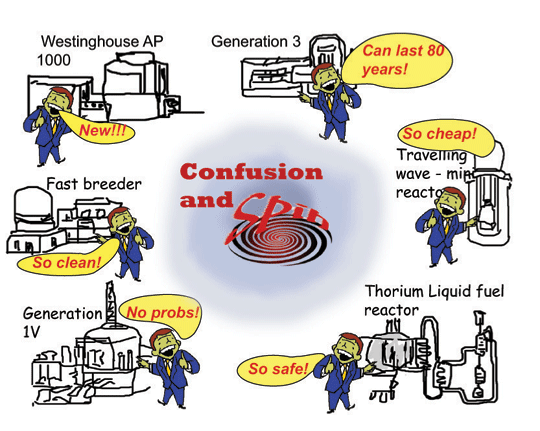
Nuclear industry crisis: Generation IV reactors to the rescue?
Nuclear renaissance? Failing industry is running flat out to stand still Jim Green, 30 Jan 2016, The Ecologist, “………Rhetoric about ‘super safe’ Generation IV reactors will likely continue unabated. That said, critical reports released by the US and French governments last year may signal a slow shift away from Generation IV reactor rhetoric.
The report by the French Institute for Radiological Protection and Nuclear Safety (IRSN) – a government authority under the Ministries of Defense, the Environment, Industry, Research, and Health – states: “There is still much R&D to be done to develop the Generation IV nuclear reactors, as well as for the fuel cycle and the associated waste management which depends on the system chosen.”
IRSN is also sceptical about safety claims: “At the present stage of development, IRSN does not notice evidence that leads to conclude that the systems under review are likely to offer a significantly improved level of safety compared with Generation III reactors … “
The US Government Accountability Office released a report in July 2015 on the status of small modular reactors (SMRs) and other ‘advanced’ reactor concepts in the US. The report concluded:
“While light water SMRs and advanced reactors may provide some benefits, their development and deployment face a number of challenges … Depending on how they are resolved, these technical challenges may result in higher-cost reactors than anticipated, making them less competitive with large LWRs [light water reactors] or power plants using other fuels … Both light water SMRs and advanced reactors face additional challenges related to the time, cost, and uncertainty associated with developing, certifying or licensing, and deploying new reactor technology, with advanced reactor designs generally facing greater challenges than light water SMR designs. It is a multi-decade process, with costs up to $1 billion to $2 billion, to design and certify or license the reactor design, and there is an additional construction cost of several billion dollars more per power plant.”
 Even SMR boosters are struggling to put a positive spin on the situation. Launching a Nuclear Energy Insider report on SMRs, lead author Kerr Jeferies said: “From the outside it will seem that SMR development has hit a brick wall, but to lump the sector’s difficulties together with the death of the so-called nuclear renaissance would be missing the point.”
According to a US think tank, 48 companies in north America, backed by more than US$1.6 billion (€1.5b) in private capital, are developing plans for advanced nuclear reactors. But even if all that capital was invested in a single R&D project, it would not suffice to commercialise a new reactor type.
The UK government also sees a big future for SMRs and has even promised to spend £250 million on “nuclear innovation and Small Modular Reactors”. But it will face two big problems. First, the money won’t go far. And second, nuclear power is already being outcompeted by wind and solar, which are getting cheaper all the time.
Dan Yurman notes in his review of nuclear developments in 2015: “Efforts by start-up type firms to build advanced reactors will continue to generate a lot of media hype, but questions are abundant as to whether this activity will result in prototypes.
“For venture capital firms that have invested in advanced designs, cashing out may mean licensing a design to an established reactor vendor rather than building a first-of-a-kind unit.”
Dr Jim Green is the national nuclear campaigner with Friends of the Earth Australia and editor of the Nuclear Monitor newsletter, where this article was originally published. Nuclear Monitor is published 20 times a year. It has been publishing deeply researched, often strongly critical articles on all aspects of the nuclear cycle since 1978. A must-read for all those who work on this issue! disaster……. www.theecologist.org/News/news_analysis/2987010/nuclear_renaissance_failing_industry_is_running_flat_out_to_stand_still.html
Exploding the false claims of the thorium nuclear lobby
 The mythologies of thorium and uranium, Greenpeace, by Jan Beránek – 24 March, 2014 Thorium and uranium represent the heaviest naturally occurring elements on Earth. Both were named after ancient gods: Uranus was the principal Greek god of the sky while Thor was the Norse (and broadly Germanic) god of a thunder.
……What are the chances that replacing the Greek god with a Germanic one will help? Would Thor take his powerful hammer and nail it all down? Not likely….
Let’s look more closely at some of the hopeful claims around thorium.
Safer reactors? The risks inherent in nuclear reactors are due to the massive concentrations of radioactive materials and the huge amount of heat they produce (which is actually needed to generate electricity). No matter if the fuel is based on uranium or thorium, if it’s solid or liquid, this characteristic alone will inevitably continue to be the Achilles heel of any nuclear reactor. As you can read in the Union of Concerned Scientists’ briefing on this issue, the truth is that the U.S. Department of Energy concluded in 2009 after a review that “the choice between uranium-based fuel and thorium-based fuel is seen basically as one of preference, with no fundamental difference in addressing the nuclear power issues [of waste management, proliferation risk, safety, security, economics, and sustainability].”
Less nuclear waste? It’s obvious that fission applied to different nuclear fuel results in a different composition of radioactive waste. But it’s still radioactive waste and whether the waste produced by thorium reactors is less problematic (because there’s no plutonium in it) remains a question. Spent thorium fuel still contains long-lived isotopes such as proactinium-231 (with a half-life 32,000 years which is even longer than plutonium Pu-239) which implies the need for long term management in timescales comparable to typical high level waste from uranium reactors. Not surprisingly, a chart published in Nuclear Engineering International magazine in November 2009 shows that the radiotoxicity of spent thorium fuel is actually higher than uranium spent fuel over the long term, ie after first 10,000 years:

No proliferation? Yes, thorium can’t itself be used to build nuclear weapons but it can’t be used directly as a nuclear fuel either. In fact, it has to be first converted into the fissile uranium isotope, U-233. That’s an isotope that is suitable for nuclear weapons. The US successfully detonated a nuclear bomb containing U-233 in 1955.
Even the UK Department of Energy and Climate Change commissioned a report which concluded in 2012 that the claims by thorium proponents who say that the radioactive chemical element makes it impossible to build a bomb from nuclear waste, leaves less hazardous waste than uranium reactors, and that it runs more efficiently, are “overstated”.
Thorium reactors exist only in blueprints and early experiments, which means there could be other issues not yet detected that would complicate their large scale implementation. In any case, this also means that it would take much longer than a decade before thorium reactors would potentially become available for a larger commercial deployment……. http://www.greenpeace.org/international/en/news/Blogs/nuclear-reaction/the-mythologies-of-thorium-and-uranium/blog/48625/

Germany’s nuclear waste nightmare
Radioactive waste dogs Germany despite abandoning nuclear power https://www.newscientist.com/article/2075615-radioactive-waste-dogs-germany-despite-abandoning-nuclear-power/ Major problems at a salt mine where 126,000 drums of radioactive debris are stored are fuelling public distrust of long-term waste disposal plans, reports Fred Pearce from Asse, Germany
Half a kilometre beneath the forests of northern Germany, in an old salt mine, a nightmare is playing out. A scheme to dig up previously buried nuclear waste is threatening to wreck public support for Germany’s efforts to make a safe transition to a non-nuclear future.
Enough plutonium-bearing radioactive waste is stored here to fill 20 Olympic swimming pools. When engineers backfilled the chambers containing 126,000 drums in the 1970s, they thought they had put it out of harm’s way forever.
But now, the walls of the Asse mine are collapsing and cracks forming, thanks to pressure from surrounding rocks. So the race is on to dig it all up before radioactive residues are flushed to the surface.

“There were people who said it wasn’t a good idea to put radioactive waste down here, but nobody listened to them,” says Annette Parlitz, spokeswoman for the Federal Office for Radiation Protection (BfS), as we tour the mine.
This is just one part of Germany’s nuclear nightmare. The country is also wrestling a growing backlog of spent fuel. Continue reading
Community and environmental impact of the Jaitapur nuclear power project
 France Peddles Unsafe Nuclear Reactors to India, Drawing Protest , 29 January 2016 By Kumar Sundaram, Truthout | News Analysis “………the concerns of the local community in Jaitapur go beyond the cost of the project. Jaitapur is located in the stunningly beautiful Konkan region, replete with verdant plateaus, magical mountains and undulating hills, lagoons, creeks, the open sea and infinite greenery. The NPCIL has labeled nearly 65 percent of the land as “barren,” despite the fact that Konkan is one of the world’s 10 “biodiversity hotspots,” sheltering over 5,000 species of flowering plants, 139 of mammals, 508 of birds and 179 of amphibians, including 325 globally threatened species.

Altogether, the nuclear park would jeopardize the livelihoods of 40,000 people. The annual turnover of Jaitapur’s fishing villages is about $2.2 million. In Nate Village alone, there are 200 big trawlers and 250 small boats. Nearly 6,000 people depend directly on fishing and over 10,000 are dependent on ancillary activities.
The community is apprehensive that the elaborate security arrangements around the project would block the fisherfolks’ use of the two creeks of Jaitapur and Vijaydurg. The fish population will also be affected since the nuclear plant would release a massive 52 billion liters of hot water into the Arabian Sea daily, raising the local sea temperature by 5 to 7 degrees Celsius.
Jaitapur has highly fertile land, which produces rice and other cereals, and arguably the world’s most famous mango, the Alphonso. Cashews, coconuts, kokum, betel nuts, pineapples and other fruits are found in abundance. The land is also quite productive in terms of its use for cattle-grazing and rain-fed agriculture.
The environmental impact assessment (EIA) for Jaitapur, conducted by the government-run National Environmental Engineering Research Institute (NEERI), did not even look into the crucial aspects of radiological releases, decommissioning and nuclear waste, besides summarily neglecting the vital issues of ecosystems and livelihoods, terrestrial ecosystems and farming, mangrove forests and the fragile marine ecology and fisheries in the region.
NEERI admits it does not have any expertise in radiation-related issues and it just mentioned in its report that all the stipulations of the government’s nuclear regulator would be followed. The then-minister for environment and forests, Jairam Ramesh, had himself termed these EIA assessments a joke. Even that environmental clearance, granted on 35 absurdly weak conditions, was given only for a period of five years, which lapsed as of November 2015. Citizens groups and independent experts have demanded a fresh EIA in place of an extension……… http://www.truth-out.org/news/item/34627-france-peddles-unsafe-nuclear-reactors-to-india-drawing-protest
The danger of transporting plutonium
 Too much of a bad thing? World awash with waste plutonium http://www.theecologist.org/News/news_round_up/2986959/too_much_of_a_bad_thing_world_awash_with_waste_plutonium.html Paul Brown 24th January 2016
As worldwide stocks of plutonium increase, lightly-armed British ships are about to carry an initial 330kg of the nuclear bomb metal for ‘safekeeping’ in the US, writes Paul Brown. But it’s only the tip of a global ‘plutonium mountain’ of hundreds of tonnes nuclear power’s most hazardous waste product.
Two armed ships set off from the northwest of England this week to sail round the world to Japan on a secretive and controversial mission to collect a consignment of plutonium and transport it to the US.
The cargo of plutonium, once the most sought-after and valuable substance in the world, is one of a number of ever-growing stockpiles that are becoming an increasing financial and security embarrassment to the countries that own them.
So far, there is no commercially viable use for this toxic metal, and there is increasing fear that plutonium could fall into the hands of terrorists, or that governments could be tempted to use it to join the nuclear arms race.

All the plans to use plutonium for peaceful purposes in fast breeder and commercial reactors have so far failed to keep pace with the amounts of this highly dangerous radioactive metal being produced by the countries that run uranium-fulled nuclear power stations.
The small amounts of plutonium that have been used in conventional and fast breeder reactors have produced very little electricity – at startlingly high costs.
Japan, with its 47-ton stockpile, is among the countries that once hoped to turn their plutonium into a power source, but various attempts have failed. The government, which has a firm policy of using it only for peaceful purposes, has nonetheless come under pressure to keep it out of harm’s way. Hence, the current plan to ship it to the US.
Altogether, 15 countries across the world have stockpiles. They include North Korea, which intends to turn it into nuclear weapons.
UK’s Plutonium represents a massive cost – but no balance sheet liability recorded
The UK has the largest pile, with 140 tons held at Sellafield in north-west England, whereplutonium has been produced at the site’s nuclear power plant since the 1950s, also using spent fuel from civilian nuclear plants such as Hinkley Point and Calder Hall. The government has yet to come up with a policy on what to do with it – and, meanwhile, the costs of keeping it under armed guard continue to rise.
Like most countries, the UK cannot decide whether it has an asset or a liability. The plutonium does not appear on any balance sheet, and the huge costs of storing it safely – to avoid it going critical and causing a meltdown – and guarding it against terrorists are not shown as a cost of nuclear power.
This enables the industry to claim that nuclear is an attractive and clean energy-producing option to help combat climate change.
The two ships that set off from the English port of Barrow-in-Furness this week are the Pacific Egret and Pacific Heron, nuclear fuel carriers fitted with naval cannon on deck. They are operated by Pacific Nuclear Transport Ltd, which ultimately is owned by the British government.
The presence on both ships of a heavily-armed security squad – provided by the Civil Nuclear Constabulary’s Strategic Escort Group – and the earlier loading of stores and the craning on board of live ammunition point to a long, security-conscious voyage ahead.
Sent to the US for safekeeping
The shipment of plutonium from Japan to the US falls under the US-led Global Threat Reduction Initiative (GTRI), or Material Management & Minimisation (M3) programme, whereby weapons-useable material such as plutonium and highly-enriched uranium (HEU) is removed from facilities worldwide for safekeeping in the US.
The cargo to be loaded onto the two UK ships in Japan consists of some 331kg of plutonium from Japan’s Tokai Research Establishment.
This plutonium – a substantial fraction of which was supplied to Japan by the UK decades ago for ‘experimental purposes’ in Tokai’s Fast Critical Assembly (FCA) facility – is described by the US Department of Energy (DOE) as “posing a potential threat to national security, being susceptible to use in an improvised nuclear device, and presenting a high risk of theft or diversion”. Or, as another US expert put it, “sufficient to make up to 40 nuclear bombs”.
Under the US-led programme, the plutonium will be transported from Japan to the US port of Charleston and onwards to the Savannah River site in South Carolina.
Tom Clements, director of the public interest group Savannah River Site Watch, has condemned this import of plutonium as a material that will simply be stranded at the site, with no clear disposition path out of South Carolina. He sees it as further evidence that Savannah River is being used as a dumping ground for an extensive range of international nuclear waste.
Prime terrorist material’ at risk
The British group Cumbrians Opposed to a Radioactive Environment (CORE) has for decades tracked the transport of nuclear materials round the world.
Their spokesman, Martin Forwood, said: “The practice of shipping this plutonium to the US as a safeguard is completely undermined by deliberately exposing this prime terrorist material to a lengthy sea transport, during which it will face everyday maritime risks and targeting by those with hostile intentions.
“We see this as wholly unnecessary and a significant security threat in today’s volatile and unpredictable world.” The best option, CORE believes, would have been to leave it where it was, under guard.
From DOE documents, this shipment will be the first of a number of planned shipments for what is referred to as ‘Gap Material Plutonium‘ – weapons-useable materials that are not covered under other US or Russian programmes.
In total, the DOE plans to import up to 900kg of ‘at risk’ plutonium – currently held in seven countries – via 12 shipments over seven years. Other materials include stocks of HEU – the most highly enriched plutonium (to 93%), also being supplied to Japan by the UK.
The voyage from Barrow to Japan takes about six weeks, and a further seven weeks from Japan to Savannah River – use of the Panama Canal having been ruled out by the DOE in its documents on the shipment. Previously, the countries near the canal have objected to nuclear transport in their territorial waters.
How the tax payer funds the nuclear industry – to keep it alive
The many ways of counting subsidies
Among the goodies routinely given away, according to the Concerned Scientists, are:
- Subsidies at inception, reducing capital costs and operating costs.
- Accounting rules allowing companies to write down capital costs after cost overruns, cancellations and plant abandonments, reducing capital-recovery requirements,
- Recovery of ‘stranded costs’ (costs to a utility’s assets because of new regulations or a deregulated market) passed on to rate payers.
 Yes, you read that last item correctly. Even when the energy industry receives its wish to be rid of regulation, it is entitled to extra money because of the resulting rigors of market pressures.
The ongoing environmental disaster at Fukushima is a grim enough reminder of the dangers of nuclear power. But nuclear does not make sense economically, either. Continue reading
Best to store nuclear wastes locally in deep bores, not export it
The deep borehole project is particularly interesting because almost anywhere you look in America, there are deep rocks perfect for this method. Every state can have its own borehole repository, much to some of these state’s annoyance, since most political leaders would rather foist their waste off on someone else and claim victory for their constituents.
But Congress doesn’t exactly like the deep borehole idea because they would not be able to gang up on one state and force it down their throat. Each state would have its own deep nuclear disposal boreholes and wouldn’t be able to promise their citizens that the nuclear waste would ever leave their state
 DOE Tries To Change The Rules On Nuclear Waste Disposal http://www.forbes.com/sites/jamesconca/2016/01/21/doe-tries-to-change-the-rules-on-nuclear-waste-disposal/#2715e4857a0b28df073f561e James Conca , “……..DOE is funding a study to drill a borehole more than 3 miles deep into the Earth’s crust below North Dakota to test a disposal method for radioactive waste called Deep Borehole Disposal. In this scenario, waste would be placed in the lower mile of the borehole in crystalline rock that would isolate the waste from the surface and shallow environments.
The borehole would then be filled up with some special layers, including asphalt, bentonite, concrete and crushed rock that will isolate the waste for geologic time. The borehole would need a diameter of at least 17 inches at the bottom for placing containers, and would be lined with steel casing. Future boreholes will be wider as the technology evolves, which is has been doing lately.
These developments follow directly the recommendations of President Obama’s Blue Ribbon Commission on America’s Nuclear Future, and followed up in thePresident’s Memorandum on disposal of Defense High-Level Waste and the2013 Administration’s Strategy for the Management and Disposal of Used Nuclear Fuel and High-Level Radioactive Waste. Conca and Wright (2012)provide background on nuclear waste and interpretation of the three BRC recommendations pertaining to nuclear waste disposal that has led to these changes.
But the basic strategy of this new disposal initiative is: Continue reading
1 This Month



26 September – International Day for the Total Elimination of Nuclear Weapons


PLEASE OPPOSE HR 8255 AND S.3639 – bills would accelerate satellite deployment, with no environmental review or safeguards – https://ncstd5li.quorum.us/campaign/169331/
To see nuclear-related stories in greater depth and intensity – go to https://nuclearinformation.wordpress.com
-
Archives
- September 2026 (245)
- August 2026 (330)
- July 2026 (355)
- June 2026 (287)
- May 2026 (306)
- April 2026 (356)
- March 2026 (251)
- February 2026 (267)
- January 2026 (308)
- December 2025 (358)
- November 2025 (359)
- October 2025 (375)
-
Categories
- 1
- 1 NUCLEAR ISSUES
- business and costs
- climate change
- culture and arts
- ENERGY
- environment
- health
- history
- indigenous issues
- Legal
- marketing of nuclear
- media
- opposition to nuclear
- PERSONAL STORIES
- politics
- politics international
- Religion and ethics
- safety
- secrets,lies and civil liberties
- spinbuster
- technology
- Uranium
- wastes
- weapons and war
- Women
- 2 WORLD
- ACTION
- AFRICA
- Atrocities
- AUSTRALIA
- Christina's notes
- Christina's themes
- culture and arts
- Events
- Fuk 2022
- Fuk 2023
- Fukushima 2017
- Fukushima 2018
- fukushima 2019
- Fukushima 2020
- Fukushima 2021
- general
- global warming
- Humour (God we need it)
- Nuclear
- RARE EARTHS
- Reference
- resources – print
- Resources -audiovicual
- Weekly Newsletter
- World
- World Nuclear
- YouTube
-
RSS
Entries RSS
Comments RSS
 nuclear-news
