During the early years of nuclear testing it was anticipated that nuclear weapons would be used on the battlefield, and that the Army and Marine Corps had better get used to operating on a “nuclear battlefield.” During the 1952 Big Shot test, 1,700 ground troops took shelter in trenches just seven thousand yards from the thirty-three-kiloton explosion. After the test, the troops conducted a simulated assault that took them to within 160 meters of ground zero. This test and others like them led to increases in leukemia, prostate and nasal cancers among those that participated.
In 2002, the Centers for Disease Control estimated that virtually every American that has lived since 1951 has been exposed to nuclear fallout, and that the cumulative effects of all nuclear testing by all nations could ultimately be responsible for up to eleven thousand deaths in the United States alone. The United States did indeed learn much about how to construct safe and reliable nuclear weapons, and their effects on human life and the environment. In doing so, however, it paid a terrible and tragic price.
Nuclear weapons have a mysterious quality. Their power is measured in plainly visible blast pressure and thermal energy common to many weapons, but also invisible yet equally destructive radiation and electromagnetic pulse. Between 1945 and 1992, the United States conducted 1,032 nuclear tests seeking to get the measure of these enigmatic weapons. Many of these tests would be today be considered unnecessary, overly dangerous and just plain bizarre. These tests, undertaken on the atomic frontier, gathered much information about these weapons—enough to cease actual use testing—yet scarred the land and left many Americans with long-term health problems.
Ken Raskin, 17 Aug 18,Why is it, that sticky jagged fibers, like fiberglass, don’t cause mesothelioma, when embedded in lung tissue yet, similar asbestos fibers do cause cancer and mesothelioma?
For toxicologists, studying asbestos and mesothelioma, there has always been one question. “How can these little-tiny, mineral fibers, embedded in soft tissue, almost always cause cancer? ”
Little or no physiological explanation, for it, made much sense.. The consensus was, that the fibers, set off a lethal-unending inflammation cascade, where the mineral fiber is lodged. An assault, on ones own body, by itself, from cytokines.
So, I ask, “Why is it that sticky jagged fibers, like fiberglass, dont cause mesothelioma when embedded in lung tissue, while asbestos does cause cancer and mesothelioma?”
The answer must be because, the asbestos fibers, are radioactive. They are mineral fibers, extracted from the earth. Asbestos fibers, contain radium. When lodged in soft tissue, the asbestos fibers, constantly emmit alpha rays that are mutagenic, chemotoxic, and carcinogenic to the surrounding tissue microenvironment.
People forget, that for 80 years, that the government and nuclear physicists, have been lying-their-asses-off about the true nature of radionuclides. They have been lying about radionuclide, lethality in the human body, even in microscopic doses. Even the more diluted emmitors, like the radium in asbestos just sits there in the tissue constantly emitting alpha and beta rays. The smallest fibers of asbestos, trapped in soft tissue, always causes cancer.
This is what a fiber of asbestos trapped in your lungs, stomach, colon or any other soft tissue is doing: Alpha emittor in a cloud chamber:
Cloud chamber. Alpha particles
This is the age of ultimate Trump -republican corrumption and criminality . Russia has the largest and, one of the only asbestos mines left, in the world. Any semblance of logic that they are not uncaring psychopaths. is all an illusion. Thee republicans, are making trillions on insider trading on the helterskelter tariffs that only make sense, to wall street crooks .
They will make trillions from kickbacks from russia for buying Russian asbestos, so that millions of americans can die horrible mesothelioma deaths
“Along with mineralogical observation, we have analyzed forty-four major and trace elements in extracted asbestos bodies (fibers and proteins attached to them) with coexisting fiber-free ferruginous protein bodies from extirpative lungs of individuals with malignant mesothelioma. Observarions and patients’ characteristics suggest that inhaled iron-rich asbestos fibers and dust particles, induce ferruginous protein body formation resulting in ferritin aggregates in lung tissue that contain radium from the asbestos. Chemical analysis of ferruginous protein bodies extracted from lung tissues reveals anomalously high concentrations of radioactive radium, reaching millions of times higher concentration than that of seawater. Continuous and prolonged internal exposure to hotspot ionizing radiation from radium and its daughter nuclides could cause strong and frequent DNA damage in lung tissue, initiate different types of tumour cells, including malignant mesothelioma”
226Ra has been measured in five asbestos group minerals. The activity levels are variable, are consistent with other forms of rock and range from 0.01–0.4 pCi 226Ra/g. Alpha particles from asbestos fibers immobilized in the lower lung near pleural surfaces and in the upper lung on bronchial surfaces may be implicated in initiating mesothelioma and bronchial carcinoma.
WHAT MORE DIRECT PROOF DO YOU NEED? TO KNOW HOW LETHAL RADIONUCLIDES ARE. THEY ARE THE MOST CARCINOGENIC, MUTAGENIC, TERATOGENIC, TOXIC agents in the universe. Radionuclide pollution, is destroying the life-giving chemistry of biomolecules on earth, that animate us!
CBS News 7th Aug 2018 , The federal government confirms some people in the St. Louis area may have
a higher risk of getting cancer. A recent health report found some
residents who grew up in areas contaminated by radioactive waste decades
ago may have increased risk for bone and lung cancers, among other types of
the disease.
The assessment was conducted by the Agency for Toxic
Substances and Disease Registry, a branch of the U.S. Centers for Disease
Control and Prevention. As CBS News correspondent Anna Werner reports, the
situation is not unique to St. Louis because it’s connected to America’s
development of its nuclear weapons program decades ago. Radioactive wastes
persist in soils, and many believe that’s why they or a loved one developed
cancer. Now for the first time, federal health officials agree, on the
record, that’s a real possibility. https://www.cbsnews.com/news/radioactive-waste-cancer-federal-health-officials-acknowledge-possible-link/
The half-lives of the protactinium isotopes work in the favor of potential proliferators. Because protactinium 232 decays faster than protactinium 233, the isotopic purity of protactinium 233 increases as time passes. If it is separated from its uranium decay products a second time, this protactinium will decay to equally pure uranium 233 over the next few months. With careful attention to the relevant radiochemistry, separation of protactinium from the uranium in spent thorium fuel has the potential to generate uranium 233 with very low concentrations of uranium 232—a product suitable for making nuclear weapons.
Thorium power has a protactinium problem https://thebulletin.org/2018/08/thorium-power-has-a-protactinium-problem/ By Eva C. Uribe, August 6, 2018 In 1980, the International Atomic Energy Agency (IAEA) observed that protactinium, a chemical element generated in thorium reactors, could be separated and allowed to decay to isotopically pure uranium 233—suitable material for making nuclear weapons. The IAEA report, titled “Advanced Fuel Cycle and Reactor Concepts,” concluded that the proliferation resistance of thorium fuel cycles “would be equivalent to” the uranium/plutonium fuel cycles of conventional civilian nuclear reactors, assuming both included spent fuel reprocessing to isolate fissile material.
Decades later, the story changed. “Th[orium]-based fuels and fuel cycles have intrinsic proliferation resistance,” according to the IAEA in 2005. Mainstream media have repeated this view ever since, often without caveat. Several scholars have recognized the inherent proliferation risk of protactinium separations in the thorium fuel cycle, but the perception that thorium reactors cannot be used to make weapons persists. While technology has advanced, the fundamental radiochemistry that governs nuclear fuel reprocessing remains unchanged. Thus, this shift in perspective is puzzling and reflects a failure to recognize the importance of protactinium radiochemistry in thorium fuel cycles.
Protactinium turns 100. The importance of protactinium chemistry for obtaining highly attractive fissile material from thorium has been recognized since the 1940s. However, the story really begins 100 years ago during the earliest research on natural radioactivity. In 1918, Austrian-Swedish physicist Lise Meitner and German chemist Otto Hahn were on a quest to discover the long-lived isotope of “eka-tantalum” predicted to lie between thorium and uranium in the periodic table. The isotope they sought would decay to actinium, which was always found with uranium but was known to be the parent of an unknown natural radioactive decay chain distinct from that of uranium 238, the most common isotope of uranium found in nature.
Meitner and Hahn discovered that treating pitchblende with nitric acid yielded an insoluble fraction of silica that associated with tantalum and eka-tantalum. After many years, they purified enough eka-tantalum for identification and measured its properties. As discoverers of eka-tantalum’s longest-lived isotope, Meitner and Hahn named this new element protactinium. They had isolated protactinium 231, a member of the uranium 235 decay chain. In 1938, they discovered that protactinium 233 could be produced by neutron irradiation of thorium 232, the most abundant isotope in naturally occurring thorium.
For the next several decades, protactinium was shrouded in “mystery and witchcraft” due to its scarcity in nature and its perplexing chemical properties. We now know that protactinium’s peculiar chemistry is due to its position in the periodic table, which lends the element vastly different chemical properties than its neighbors. Protactinium behaves so differently from thorium and uranium that, under many conditions, their separation is inevitable.
Scientists did not investigate the macroscopic chemistry of protactinium until the Manhattan Project. In 1942, Glenn T. Seaborg, John W. Gofman, and R. W. Stoughton discovered uranium 233 and observed its propensity to fission. Compared with naturally occurring uranium 235, uranium 233 has a lower critical mass, which means that less material can be used to build a weapon. And compared with weapons-grade plutonium 239, uranium 233 has a much lower spontaneous fission rate, enabling simpler weapons that are more easily constructed. A 1951 report by the Manhattan Project Technical Section describes extensive efforts devoted to the production of uranium 233 via neutron irradiation of thorium 232. Because the initial thorium feed material was often contaminated with natural uranium 238, the scientists obtained pure uranium 233 by using a variety of methods for separating the intermediate protactinium 233.
By this time, advances in technology and projections of uranium shortages stimulated interest in developing a breeder reactor, which produces more fissile material than it consumes. In the late 1960s, a team at Oak Ridge National Laboratory designed a Molten Salt Breeder Reactor fueled by thorium and uranium dissolved in fluoride salts, but it could only breed uranium 233 by continuously removing impurities—including protactinium 233—from the reactor core. To improve breeding ratios, the researchers investigated methodsfor removing protactinium from the molten fluoride salts.
In 1977, President Jimmy Carter banned commercial reprocessing of spent nuclear fuel, citing concerns with the proliferation of technology that could be used to make nuclear weapons. And with the high startup costs of developing new reactors, there would be no place for the Molten Salt Breeder Reactor in the energy market. With the end of research on thorium reactors came the end of ambitious research on protactinium separations. Over time, the role of protactinium in obtaining weaponizable uranium 233 from thorium was largely forgotten or dismissed by the thorium community.
Thorium reactors born again. Fast forward to 2018. Several nations have explored thorium power for their nuclear energy portfolios. Foremost among these is India. Plagued by perennial uranium shortages, but possessing abundant thorium resources, India is highly motivated to develop thorium reactors that can breed uranium 233. India now operates the only reactor fueled by uranium 233, the Kalpakkam Mini reactor (better known as KAMINI).
Thorium reactors have other potential advantages. They could produce fewer long-lived radioactive isotopes than conventional nuclear reactors, simplifying the disposal of nuclear waste. Molten salt reactors offer potential improvements in reactor safety. Additionally, there is the persistent perception that thorium reactors are intrinsically proliferation-resistant.
The uranium 233 produced in thorium reactors is contaminated with uranium 232, which is produced through several different neutron absorption pathways. Uranium 232 has a half-life of 68.9 years, and its daughter radionuclides emit intense, highly penetrating gamma rays that make the material difficult to handle. A person standing 0.5 meters from 5 kilograms of uranium 233 containing 500 parts per million of uranium 232, one year after it has been separated from the daughters of uranium 232, would receive a dose that exceeds the annual regulatory limits for radiological workers in less than an hour. Therefore, uranium 233 generated in thorium reactors is “self-protected,” as long as uranium 232 levels are high enough. However, the extent to which uranium 232 provides adequate protection against diversion of uranium 233 is debatable. Uranium 232 does not compromise the favorable fissile material properties of uranium 233, which is categorized as “highly attractive” even in the presence of high levels of uranium 232. Uranium 233 becomes even more attractive if uranium 232 can be decreased or eliminated altogether. This is where the chemistry of protactinium becomes important.
Protactinium in the thorium fuel cycle. There are three isotopes of protactinium produced when thorium 232 is irradiated. Protactinium 231, 232, and 233 are produced either through thermal or fast neutron absorption reactions with various thorium, protactinium, and uranium isotopes. Protactinium 231, 232, and 233 are intermediates in the reactions that eventually form uranium 232 and uranium 233. Protactinium 232 decays to uranium 232 with a half-life of 1.3 days. Protactinium 233 decays to uranium 233 with a half-life of 27 days. Protactinium 231 is a special case: It does not directly decay to uranium, but in the presence of neutrons it can absorb a neutron and become protactinium 232.
Neutron absorption reactions only occur in the presence of a neutron flux, inside or immediately surrounding the reactor core. Radioactive decay occurs whether or not neutrons are present. For irradiated thorium, the real concern lies in separating protactinium from uranium, which may already have significant levels of uranium 232. Production of protactinium 232 ceases as soon as protactinium is removed from the neutron flux, but protactinium 232 and 233 continue to decay to uranium 232 and 233, respectively.
The half-lives of the protactinium isotopes work in the favor of potential proliferators. Because protactinium 232 decays faster than protactinium 233, the isotopic purity of protactinium 233 increases as time passes. If it is separated from its uranium decay products a second time, this protactinium will decay to equally pure uranium 233 over the next few months. With careful attention to the relevant radiochemistry, separation of protactinium from the uranium in spent thorium fuel has the potential to generate uranium 233 with very low concentrations of uranium 232—a product suitable for making nuclear weapons. Scenarios for proliferation. Although thorium is commonly associated with molten salt reactors, it can be used in any reactor. Several types of fuel cycles enable feasible, rapid reprocessing to extract protactinium. One is aqueous reprocessing of thorium oxide “blankets” irradiated outside the core of a heavy water reactor. Many heavy water reactors include on-power fueling, which means that irradiated thorium can be removed quickly and often, without shutting the reactor down. As very little fission would occur in the blanket material, its radioactivity would be lower than that of spent fuel from the core, and it could be reprocessed immediately.
Myriad possibilities exist for the aqueous separation of protactinium from thorium and uranium oxides, including the commonly proposed thorium uranium extraction (THOREX) process. Alternatively, once dissolved in acid, protactinium can simply be adsorbed onto glass or silica beads, exploiting the same chemical mechanism used by Meitner and Hahn to isolate protactinium from natural uranium a century ago.
Another scenario is continuous reprocessing of molten salt fuel to remove protactinium and uranium from thorium. Researchers at Oak Ridge explored the feasibility of online protactinium removal in the Molten Salt Breeder Reactor program. Uranium can then be separated from the protactinium in a second step.
Sensible safeguards. Protactinium separations provide a pathway for obtaining highly attractive weapons-grade uranium 233 from thorium fuel cycles. The difficulties of safeguarding commercial spent fuel reprocessing are significant for any type of fuel cycle, and thorium is no exception. Reprocessing creates unique safeguard challenges, particularly in India, which is not a member of the Nuclear Non-Proliferation Treaty.
There is little to be gained by calling thorium fuel cycles intrinsically proliferation-resistant. The best way to realize nuclear power from thorium fuel cycles is to acknowledge their unique proliferation vulnerabilities, and to adequately safeguard them against theft and misuse.
Though their numbers are dwindling and the advancing years are taking a toll, their haunting memories are undimmed by the passage of more than seven decades.
On the occasion of Barack Obama’s offering of a floral tribute on Friday at the cenotaph in Hiroshima Peace Memorial Park — the first ever visit by a sitting US president — some of them share their stories with AFP.
Emiko Okada
Emiko Okada, now 79, was about 2.8 kilometres (1.7 miles) from ground zero and suffered severe injuries in the blast. Her sister was killed.
“All of a sudden a flash of light brightened the sky and I was slammed to the ground. I didn’t know what on earth had happened. There were fires everywhere. We rushed away as the blaze roared toward us.
“The people I saw looked nothing like human beings. Their skin and flesh hung loose. Some children’s eyeballs were popping out of their sockets.
“I still hate to see the glow of the setting sun. It reminds me of that day and brings pain to my heart.
“In the aftermath, many children who had evacuated during the war came back here, orphaned by the bomb. Many gangsters came to Hiroshima from around the country and gave them food and guns.
“President Obama is a person who can influence the world. I hope that this year will be the beginning of knowing what actually happened in Hiroshima and Nagasaki under the mushroom clouds.”
Keiko Ogura
Keiko Ogura, now 78, has devoted her life to keeping alive the memory of the devastating day. Continue reading →
NATO Nuclear Sharing, Centre for Security Studies, The CSS Blog Network, By Tim Street , 3 Aug 18
This primer explains the role US-owned B61 tactical nuclear weapons (TNW) play in Europe as part of NATO’s nuclear sharing arrangements. It considers these weapons in terms of their economic, political, diplomatic and security significance, including internal NATO dynamics, US-Russia relations and international arms control, non-proliferation and disarmament regimes.
Low-dose radiation exposure linked to leukemia in large retrospective studyhttps://dceg.cancer.gov/news-events/research-news-highlights/2018/low-dose-rad-leukemia National Cancer Institute. Division of Cancer Epidemiology and Genetics July 20, 2018 Using data from nine historical cohort studies, investigators in the Radiation Epidemiology Branch and colleagues from other institutions, led by senior investigator
Mark Little, D.Phil., were able to quantify—for the first time—excess risk for leukemia and other myeloid malignancies following low-dose exposure to ionizing radiation in childhood. More than two-fold increased risk and higher was observed for cumulative exposures less than 100 milliSieverts (mSv); excess risk was also apparent for cumulative doses of less than 50 mSv for some endpoints. The findings were published online July 16, 2018 in Lancet Haematology.
Because these diseases are rare, the excess absolute risk in the population is estimated to be small. Nevertheless, given the ubiquity of exposure, primarily from medical procedures like computed tomography
CT) scans, every effort should be made to minimize doses, especially for children.
Although substantial evidence links exposure to moderate or high doses of ionizing radiation, particularly in childhood, to increased risk of leukemia, prior to this study the association of leukemia with exposure to low-dose radiation was not well-established. Evaluating risks at low-doses, under 100 mSv, is crucial since this is the range most relevant to the general population. Additionally, some have suggested that this level, about 100 mSv, may represent a threshold dose of radiation below which there is no excess risk of leukemia. Evidence from this study suggests, on the contrary, that there is significant risk even at these lower doses, and that the current system of radiological protection is prudent and not overly protective.
Data for this analysis came from more than 250,000 individuals aged 21 or younger at the time of first exposure and were contributed from nine cohort studies (from Canada, France, Japan, Sweden, the UK, and the US) enrolled between June 4, 1915, and December 31, 2004.
Many policy-makers view nuclear power as a mitigation for climate change. Efforts to mitigate and adapt to climate change, however, interact with existing and new nuclear power plants, and these installations must contend with dilemmas between adaptation and mitigation. This paper develops five criteria to assess the adaptation–mitigation dilemma on two major points:
(1) the ability of nuclear power to adapt to climate change and
(2) the potential for nuclear power operation to hinder climate change adaptation.
Sea level rise models for nine coastal sites in the United States, a review of US Nuclear Regulatory Commission documents, and reports from France’s nuclear regulatory agency provided insights into issues that have arisen from sea level rise, shoreline erosion, coastal storms, floods, and heat waves. Applying the criteria to inland and coastal nuclear power plants reveals several weaknesses. Safety stands out as the primary concern at coastal locations, while inland locations encounter greater problems with interrupted operation.
Adapting nuclear power to climate change entails either increased expenses for construction and operation or incurs significant costs to the environment and public health and welfare. Mere absence of greenhouse gas emissions is not sufficient to assess nuclear power as a mitigation for climate change.
Research Highlights
►The adaptation-mitigation criteria reveal nuclear power’s vulnerabilities. ►Climate change adaptation could become too costly at many sites. ►Nuclear power operation jeopardizes climate change adaptation. ►Extreme climate events pose a safety challenge.
Kristin Linnerud*, Torben K. Mideksa** and Gunnar S. Eskeland***
A warmer climate may result in lower thermal efficiency and reduced load—including shutdowns—in thermal power plants. Focusing on nuclear power plants, we use different European datasets and econometric strategies to identify these two supply-side effects. We find that a rise in temperature of 1C reduces the supply of nuclear power by about 0.5% through its effect on thermal efficiency; during droughts and heat waves, the production loss may exceed 2.0% per degree Celsius because power plant cooling systems are constrained by physical laws, regulations and access to cooling water. As climate changes, one must consider measures to protect against and/or to adapt to these impacts.
INTRODUCTION Climate change may affect thermal power plants in two ways. Firstly, increased ambient temperature reduces the efficiency of thermal power plants in turning fuel into electricity (i.e. lowers the ratio of electricity produced to the amount of fuel used in producing it). For example, the difference in sea temperature between the Black Sea and the Mediterranean Sea will play a role in where Turkey builds 10 planned nuclear plants because the efficiency of these plants is negatively related to the temperature of the coolant (Durmayaz and Sogut, 2006).Secondly, at high ambient temperatures, the load of a thermal power plant may be limited by maximum condenser pressure, regulations on maximum allowable temperature for return water or by reduced access to water as a result of droughts. For example, during the 2003 summer heat wave in Europe, more than 30 nuclear power plant units in Europe were forced to shut down or reduce their power production (IAEA 2004; Zebisch et al., 2005; Rebetez et al., 2009; Koch and Vo¨gele, 2009). Our analysis focuses on these two temperature-induced impacts: reduced efficiency and increased frequency of shutdowns.
Although all thermal power plants are exposed to these two impacts, nuclear power plants are especially vulnerable. The average efficiency is lower and the water requirement per electricity output is higher in nuclear power plants compared to most other thermal power plants. More importantly, energy disruptions at nuclear power plants may cause a threat to energy supply security since each nuclear reactor accounts for a considerable amount of power and nuclear reactors are typically located in the same geographical area with access to the same source of cooling water (Vo¨gele, 2010).
……The two climate impacts have been addressed in the climate and energy literature. The 4th Assessment report of the Intergovernmental Panel on Climate Change (IPCC 2007, p. 556) reported that climate change could have a negative impact on thermal power production since the availability of cooling water may be reduced.
……..Cooling water shortages or regulatory limitations on the increase in water temperature put further restrictions on a nuclear power plant’s operations.8 The temperature of the returned cooling water is most often subject to regulations. The allowable return temperature varies depending on the source of the water, ambient conditions and local regulations. As the temperature of river or sea water rises, the water will be able to absorb less heat before exceeding the maximum allowable temperature limit for return water. In such circumstances, the plant must reduce power production until the return temperature is below the limit.
……Droughts may also reduce plants’ access to cooling water, and plants in drought-prone areas are especially vulnerable to climate change.
(Transport dangers) Any mainline rail can be used. The condition of the rails in the U.S. is not good. Think of recent train derailments – as NIRS has often asked, “What if nuclear waste had been aboard?” The irradiated nuclear fuel casks aboard trains bound for Holtec/ELEA, NM, combined with the rail cars, would weigh around 180 tons. These would be among the heaviest loads on the rails, and would risk further damaging them.
(Waste container contamination) sometimes the exterior of shipping casks are contaminated, sometimes severely so. Above, 49 such incidents of external contamination were documented in the U.S. from 1949-1996. As revealed by Mycle Schneider of WISE-Paris in the mid- to late 1990s, Areva (now called Orano in the U.S., as at the WCS, TX CISF) experienced a very large number of externally contaminated HLRW shipments.
Because pools are outside radiological containment structures that surround reactors (which can themselves fail, as shown at Fukushima Daiichi), the first step in the direction of Hardened On-Site Storage (HOSS) is to “expedite transfer” of irradiated nuclear fuel from indoor “wet” pools to outdoor dry storage. However, there must be significant upgrades to safety, security, health- and environmental protection associated with dry cask storage – that is, Hardened On-Site Storage (HOSS).
The recently published NCRP Commentary No. 27 evaluated the new information from epidemiologic studies as to their degree of support for applying the linear nonthreshold (LNT) model of carcinogenic effects for radiation protection purposes [1].
The aim was to determine whether recent epidemiologic studies of low-LET radiation, particularly those at low doses and/or low dose rates (LD/LDR), broadly support the LNT model of carcinogenic risk or, on the contrary, demonstrate sufficient evidence that the LNT model is inappropriate for the purposes of radiation protection.
An updated review was needed because a considerable number of reports of radiation epidemiologic studies based on new or updated data have been published since other major reviews were conducted by national and international scientific committees. The Commentary provides a critical review of the LD/LDR studies that are most directly applicable to current occupational, environmental and medical radiation exposure circumstances.
This Memorandum summarizes several of the more important LD/LDR studies that incorporate radiation dose responses for solid cancer and leukaemia that were reviewed in Commentary No. 27. In addition, an overview is provided of radiation studies of breast and thyroid cancers, and cancer after childhood exposures. Non-cancers are briefly touched upon such as ischemic heart disease, cataracts, and heritable genetic effects.
To assess the applicability and utility of the LNT model for radiation protection, the Commentary evaluated 29 epidemiologic studies or groups of studies, primarily of total solid cancer, in terms of strengths and weaknesses in their epidemiologic methods, dosimetry approaches, and statistical modeling, and the degree to which they supported a LNT model for continued use in radiation protection. Recommendations for how to make epidemiologic radiation studies more informative are outlined. The NCRP Committee recognizes that the risks from LD/LDR are small and uncertain.
The Committee judged that the available epidemiologic data were broadly supportive of the LNT model and that at this time no alternative dose-response relationship appears more pragmatic or prudent for radiation protection purposes.
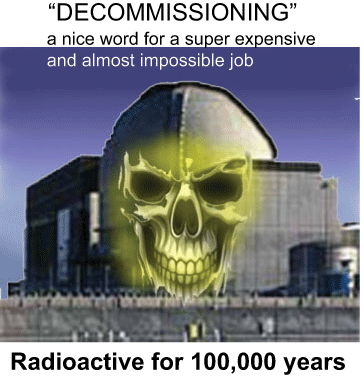
Decommissioning nuclear power stations need an “autopsy” to verify and validate safety margins projected for operating reactor license extensions
Summary
The Issue
The Nuclear Energy Institute (NEI), the lead organization for the U.S. commercial nuclear power industry, envisions the industry’s “Bridge to the Future” through a series of reactor license renewals from the original 40-year operating license; first by a 40 to 60-year extension and then a subsequent 60 to 80-year extension. Most U.S. reactors are already operating in their first 20-year license extension and the first application for the second 20-year extension (known as the “Subsequent License Renewal”) is before the U.S. Nuclear Regulatory Commission (NRC) for review and approval. NEI claims that there are no technical “show stoppers” to these license extensions. However, as aging nuclear power stations seek to extend their operations longer and longer, there are still many identified knowledge gaps for at least 16 known age-related material degradation mechanisms (embrittlement, cracking, corrosion, fatigue, etc.) attacking irreplaceable safety-related systems including miles of electrical cable, structures such as the concrete containment and components like the reactor pressure vessel. For example, the national labs have identified that it is not known how radiation damage will interact with thermal aging. Material deterioration has already been responsible for near miss nuclear accidents. As such, permanently closed and decommissioning nuclear power stations have a unique and increasingly vital role to play in providing access to still missing data on the impacts and potential hazards of aging for the future safety of dramatic operating license extensions.
The NRC and national laboratories document that a post-shutdown autopsy of sorts to harvest, archive and test actual aged material samples (metal, concrete, electrical insulation and jacketing, etc.) during decommissioning provides unique and critical access to obtain the scientific data for safety reviews of the requested license extensions. A Pacific Northwest National Laboratory (PNNL) 2017 report concludes, post-shutdown autopsies are necessary for “reasonable assurance that systems, structures, and components (SSCs) are able to meet their safety functions. Many of the remaining questions regarding degradation of materials will likely require[emphasis added]a combination of laboratory studies as well as other research conducted on materials sampled from plants (decommissioned or operating).” PNNL reiterates, “Where available, benchmarking can be performed using surveillance specimens. In most cases, however, benchmarking of laboratory tests will require(emphasis added)harvesting materials from reactors.” In the absence of “reasonable assurance,” it is premature for licensees to complete applications without adequate verification and validation of projected safety margins for the 60 to 80-year extension period.
Decommissioning is not just the process for dismantling nuclear reactors and remediating radioactive contamination for site restoration. Decommissioning has an increasingly important role at the end-of-reactor-life-cycle for the scientific scrutiny of projected safety margins and potential hazards at operating reactors seeking longer and longer license extensions.
The Problem
After decades of commercial power operation,the nuclear industry and the NRC have done surprisingly little to strategically harvest, archive and scientifically analyze actual aged materials. Relatively few samples of real time aged materials have been shared with the NRC. The NRC attributes the present dearth of real time aged samples to “harvesting opportunities have been limited due to few decommissioning plants.” However, ten U.S. reactors have completed decommissioning operations to date and 20 units are in the decommissioning process. More closures are scheduled to begin in Fall 2018. A closer look raises significant concern that the nuclear industry is reluctant to provide access to decommissioning units for sampling or collectively share this cost of doing business to extend their operating licenses.Key components including severely embrittled reactor pressure vessels were promptly dismantled by utilities and buried whole without autopsy. Many permanently closed reactors have been placed in “SAFSTOR,” defueled and mothballed “cold and dark” for up to 50 years without the material sampling to determine their extent of condition and the impacts of aging. Moreover, the NRC is shying away from taking reasonable regulatory and enforcement action to acquire the requested samples for laboratory analysis after prioritizing the need for a viable license extension safety review prior to approval. Meanwhile, the nuclear industry license extension process is pressing forward.
David Lochbaum, a recognized nuclear safety engineer in the public interest with the Union of Concerned Scientists, identifies that nuclear research on the impacts and hazards of age degradation in nuclear power stations presently relies heavily on laboratory accelerated aging—often of fresh materials—and computer simulation to predict future aging performance and potential consequences during license extension. Lochbaum explains that “Nuclear autopsies yield insights that cannot be obtained by other means.” Researchers need to compare the results from their time-compression studies with results from tests on materials actually aged for various time periods to calibrate their analytical models.According to Lochbaum, “Predicting aging effects is like a connect-the-dots drawing. Insights from materials harvested during reactor decommissioning provide many additional dots to the dots provided from accelerated aging studies. As the number of dots increases, the clearer the true picture can be seen. The fewer the dots, the harder it is to see the true picture.”
The Path Forward
1) Congress, the Department of Energy (DOE) and the NRC need to determine the nuclear industry’s fair share of autopsy costs levied through collective licensing fees for strategic harvesting during decommissioning and laboratory analysis of real time aged material samples as intended to benefit the material performance and safety margins of operating reactors seeking license extensions, and;
2) As NRC and the national laboratories define the autopsy’s stated goal as providing “reasonable assurance that systems, structures, and components (SSCs) are able to meet their safety functions” for the relicensing of other reactors, the NRC approval process for Subsequent License Renewal extensions should be held in abeyance pending completion of comprehensive strategic harvesting and conclusive analysis as requested by the agency and national laboratories, and;
3) Civil society can play a more active role in the independent oversight and public transparency of autopsies at decommissioning reactor sites such as through state legislated and authorized nuclear decommissioning citizen advisory panels.
There are nine countries that possess nuclear weapons. Five of these (the US, Russia, the UK, France and China) are members of the official owners club, who made their weapons early and had them legitimised in the Nuclear Non-Proliferation Treaty (NPT) signed in 1968, the key piece of international law governing nuclear weapons possession.
NPT has arguably been quite successful. In the 1960s it was widely anticipated that dozens of countries would get the bomb, as it appeared to be the fast track to clout and status on the world stage. But so far there have only been four rogue nuclear weapons states who ignored the NPT and made their own bombs. In order of acquisition, they are Israel, India, Pakistan and North Korea.
Has any country ever given up its nuclear weapons?
More countries have given up nuclear weapons programmes than have kept them, coming to believe they were more of a liability than an asset for national security.
The apartheid regime in South Africa secretly built six warheads, but dismantled the bombs and abandoned the whole programme in 1989 just before the system gave way to democracy.
Even Sweden had an advanced and ambitious plan based on heavy water reactors to build up to a hundred warheads, but gave up the project in the 1960s, preferring to spend defence funds on fighter planes.
The military juntas in both Argentina and Brazil pursued covert weapons programmes, although they stopped short of making a bomb, and the two countries gave up their programmes in the early nineties and joined the NPT.
Taiwan and South Korea began developing plutonium production programmes in the late sixties and early seventies before the US persuaded them to halt in the mid-seventies and rely on Washington for security. Japan is generally considered to have a “bomb in the basement”, in that it has all the materials and know-how to build a warhead quickly if it decided to follow that path and leave the NPT. At present that course seems unlikely.
Three successor countries to the Soviet Union – Ukraine, Kazakhstan and Belarus – inherited nuclear weapons in 1991, and all three agreed to surrender them, in Ukraine’s case in return for sovereignty guarantees from Russia that ultimately proved worthless.
In Iraq, Saddam Hussein dismantled his rudimentary nuclear weapons programme after the first Gulf war in 1991, and Libya’s Muammar Gaddafi handed over his nuclear weapons beginner’s set to the US in 2003. Their ultimate fate offers little incentive for future despots to give up their atomic dreams.
How do you make a bomb?
It is pretty difficult to make a nuclear weapon. If it was not we most likely would no longer be here. And it is difficult on two levels: making the fissile material and then constructing a device that will detonate it.
Material is fissile when the nucleus of an atom can be split by a neutron that has broken free of another atom, producing large amounts of energy and more neutrons. When those free neutrons go on to split the nuclei of other atoms, there is a chain reaction, causing a nuclear explosion.
Uranium and plutonium are used for nuclear weapons, but only specific atomic configurations, or isotopes, of those elements are fissile. The fissile isotopes used in nuclear warheads are U-235 and Pu-239. The numbers refer to their atomic weights. The biggest single challenge in making a nuclear warhead is producing enough of these isotopes from the elements found in nature.
Following the uranium path to the bomb requires converting refined uranium into a gas and then spinning it at very high speed in centrifuges to separate out the U-235, which makes up less than 1% of naturally occurring uranium. This has to be done repeatedly through “cascades” of centrifuges. Low-enriched uranium, used in civilian nuclear power, is usually 3%-4% U-235. Weapons-grade uranium is 90% enriched or more. Building enough centrifuges, and getting them to spin fast enough in unison, is the greatest technical challenge along the uranium route
Plutonium Pu-239 is produced in significant quantities by extracting it from irradiated uranium fuel that has been through a reactor. Because it is more fissile, less plutonium is required for a weapon. A sophisticated modern warhead requires as little as 2kg of plutonium, or at least three times that much uranium.
Once you have enough fissile material, you have to make it go bang. And to achieve that you have to force the atoms close enough together to trigger a chain reaction. There are two ways of doing this, and therefore two basic bomb designs.
The most rudimentary is the gun-type warhead, which involves firing one chunk of fissile material into another at high speed with conventional explosives. The Little Boy bomb dropped on Hiroshima was a gun-type device using 64kg of highly enriched uranium (HEU).
A more sophisticated bomb type, which requires less fissile material and allows the use of plutonium (which does not work in a gun-type warhead) is the implosion device, in which a sphere of HEU or plutonium is surrounded by explosives rigged to go off at exactly the same time to violently compress the core. The Fat Man bomb dropped on Nagasaki was an implosion device with about 6kg of plutonium.
The bargain at the heart of the NPT was that member states without nuclear weapons agreed not to acquire them, as long as the states with weapons reduced their obscenely large arsenals, capable of destroying the planet many times over. That has indeed happened, to an extent – at first as the result of arms control agreements, and then the collapse of the Soviet bloc and the end of the cold war.
From a peak of 70,000 nuclear weapons in the world at the height of the cold war, in 1985, there are now about 14,000, according to the Federation of American Scientists (FAS), still enough to end life on the planet. Then and now, the overwhelming majority (93% in 2018) of these warheads belong to the US and Russia, with between 6,000 and 7,000 apiece, although only about a quarter of those arsenals are deployed and ready for use. The rest are in reserve stockpiles or in the process of being retired and dismantled.
Of the second-tier nuclear weapons powers, again according to FAS estimates, France has 300 warheads, China 270, the UK 215, Pakistan 130-40, India 120-30, Israel 80, and North Korea between 10 and 20.
The last successful arms control agreement, the New Start treaty, was signed by Barack Obama and Dmitry Medvedev in 2010, limiting the US and Russia to 1,550 deployed strategic warheads each. The hope at the time was that the two nuclear superpowers would pursue a follow-on treaty and at one point Obama suggested he might reduce the US arsenal unilaterally by another third. But that did not happen.
What are the chances of a nuclear weapon falling into the hands of a terrorist group?
The terrorist nuclear weapon is one of the scariest scenarios the world faces. Unlike states, such groups cannot be deterred from using a weapon as the perpetrator could be very hard to identify in the wake of a blast, difficult to find, and ready to accept death as the price of inflicting devastating damage. Terrorist groups would not need expensive missiles to deliver their warheads. They could be sailed into a port in a shipping container or across land borders in the back of a truck.
After the collapse of the Soviet Union, the US spent substantial resources on dismantling many of its weapons and production facilities as well as ensuring that its many nuclear scientists had alternative employment so as not to be tempted to sell their wares and expertise to the highest bidder. But serious concerns about nuclear weapons security remain. Pakistan in particular is a source of anxiety as its military and intelligence services have radicalised elements within them, with links to terror groups.
There are also fears that a cash-strapped or vengeful North Korea could sell one of its warheads for the right price. A more recent emerging threat is that a rogue group could hack into a nuclear power’s command and control computers, triggering a launch, or into an early warning system, giving the impression an enemy attack is imminent.
How likely is accidental nuclear war?
As the years have passed since the cold war, it has become increasingly clear that we had several lucky escapes from nuclear weapons use during that era as the result of miscalculation or technical glitches. For example, in 1979, when a US watch officer left training tapes in the early warning system when he finished his shift, those in the incoming shift saw their screens light up with the tracks of multiple incoming Soviet missiles. It was only good judgment of the duty officers that avoided a nuclear alert.
In such situations, if the glitch is not identified lower down the chain of command and passed upwards as a seemingly genuine alert, a national leader has only a few minutes to decide whether to launch his or her country’s missiles before the apparent incoming salvo destroys them. Nearly three decades after the cold war, the US and Russia still keep hundreds of missiles on hair-trigger alert, ready to launch within minutes, in anticipation of just an occasion.
In the US system, there is no institutional check or barrier to the president launching those missiles once he has identified himself to the Pentagon war room using his nuclear codes.
What next?
Arms control will be on the agenda when Vladimir Putin and Donald Trump meet in Helsinki on Monday. One option is that the two presidents could extend the New Start treaty by another five years, as allowed for in the agreement. The biggest barrier is Trump’s distaste for any arrangement inherited from Obama. It is more likely he would argue for a more ambitious arms control agreement he could put his own name to. But Putin will be hard to convince, without the US scaling back its missile defence system, and that is unlikely at the moment.
The threat of a conflict with North Korea has receded somewhat since the Singapore summit, but it is increasingly clear that Pyongyang has no intention of disarming any time soon. The big question is what will Trump do once that becomes apparent to him.
The chances of a nuclear standoff with Iran, meanwhile, are rising. In May, Trump walked out of the 2015 nuclear agreement with Tehran, which curbed Iranian nuclear activities in return for sanctions relief. The US is now piling on sanctions and telling the world to stop buying Iranian oil. Sooner or later it is possible, likely even, that the Iranian government will stop abiding by the agreement and start stepping up its uranium enrichment and other activities. That is likely to raise tensions in the Gulf dramatically and make other regional players rethink whether to acquire nuclear weapons themselves.
Taking all these developments into consideration, the Bulletin of the Atomic Scientists has decided to set its “doomsday clock” to two minutes to midnight, the closest to catastrophe it has been since 1953.
Nuclear weapons in popular culture
The darkest day of the cold war produced some timeless comedy, from the classic movie of accidental apocalypse, Dr Strangelove, to the songs of the mathematician, musician and comedian, Tom Lehrer, with titles like So Long Mom (A song for WWIII), and in the UK, the civil defence sketch by Beyond the Fringe.
There are much darker works in the canon. On the Beach, in 1959, was the first major post-apocalyptic movie, in which survivors gather in Australia, the last continent left habitable. The Day After, in 1983, is even blacker. It starts with a nuclear blast obliterating a column of cars stuck on a highway as panicked people rush to try to evade the attack spreads.
More recent films, since the cold war, have dwelt on the threat of a single nuclear weapon detonated by terrorists or deranged geniuses or both. They include Broken Arrow (1996), The Peacemaker (1997) and The Sum of All Fears (2002), in which – because there is just one bomb involved – the detonation is no longer treated as an exctinction-level event. In that, art is following reality. The use of a nuclear weapon is now more likely than any time since the worst days of the cold war, but the probability of humanity being wiped out entirely by nuclear war is, for the time being, diminished.
Abnormal bugs found around Swiss nuclear power plants http://www.beyondnuclear.org/home/2018/7/11/abnormal-bugs-found-around-swiss-nuclear-power-plants.html A new study, believed to be the first to investigate health effects on insects near operating nuclear power plants, has found a highly significant twofold increase in morphological malformations on true bugs in the 5 km vicinity of three Swiss nuclear power stations.
The study — Morphological Abnormalities in True Bugs (Heteroptera) near Swiss Nuclear Power Stations — was conducted by Alfred Körblein, a physicist and authority on the health impacts of low-dose radiation, and Cornelia Hesse-Honegger, who has studied and painted insects affected by the Chernobyl nuclear accident. (You can read more about Hesse-Honegger’s work here.) Earlier studies on wildlife around Chernobyl and Fukushima found large and highly statistically significant incidences of radiation-induced mutation rates. Due to its ecological design, however, the Swiss study cannot answer the question whether the effect is caused by radiation from nuclear power plants. However, given the results, the researchers are calling for future studies to confirm their findings. Read the study.
“Nuke ‘Em All, and Let Allah Sort It Out”, History News Network by William Schroder, 1 June 18
“……….A left over by-product of Cold War weapons building, thousands of tons of Depleted Uranium(DU) – only 60% as powerful as natural uranium and therefore useless to the thermonuclear arms industry – pile up in temporary storage facilities such as Yucca Mountain, Nevada and the Hanford Nuclear Reservation in Washington. What to do with it? In the late 1950s, U.S. and U.K. weapons experts discovered a use for at least some of it. Far denser than lead, a DU coating gives conventional rockets, missiles and small arms ammunition extraordinary armor penetrating capability, a definite advantage against Soviet tanks and other “hard targets.” In the 1990s, as the Cold War waned, the U.S. and British arms manufacturers continued to produce DU ordinance. First used in combat in the Gulf War, an estimated250-300 tons of DU ammunition was expended during Operation Desert Storm and many times that in Bosnia, Kosovo and the 2003 invasion and occupation of Iraq.
DU munitions persist despite the fact their use violates the Geneva and Hague Conventions and the 1925 Geneva Poison Gas Protocol. DU also meets the definition of a WMD in US Code Title 50, Chapter 40 Sec. 2302: “The term ‘weapon of mass destruction’ means any weapon or device that is intended, or has the capability, to cause death or serious bodily injury to a significant number of people through the release, dissemination, or impact of (A) toxic or poisonous chemicals or their precursors; (B) a disease organism; or (C) radiation or radioactivity.”
Although only 40 percent as radioactive as natural uranium, DU has a half-life of 4.5 billion years and places all life forms at risk. As the material decays, alpha, beta and gamma radiation is released into the environment and contaminates the air, water and soil. Laboratory tests on animals show internalized alpha particles do more chromosome damage than 100 times that of an equivalent amount of other radiation. In an article published in the International Journal of Health Services, Dr. Rosalie Bertell wrote during the height of the war in Iraq, “The chief radiological hazard from DU is alpha radiation. In one day, one microgram (one millionth of a gram) of DU can release 107,000 alpha particles, each particle charged with more than four million electron volts of energy – and it only requires 6 to10 electron volts to break a DNA strand in a cell.
In the years following the 1991 Gulf War, tissue analysis reports from a hospital in Basra, Iraq showed a 160 percent increase in uterine cancer among Iraqi civilians, a 143 percent increase in thyroid cancer, a 102 percent increase in breast cancer and an 82 percent increase in leukemia. Doug Weir, the Coordinator of the International Campaign to Ban Uranium Weapons, quotes Iraqi oncologist, Dr. Jawad Al-Ali: “We have also seen a rise in the presence of double and triple cancers in patients. We know many carcinogenic factors are available in our environment, but the (cancer) rates increased only a few years after the 1991 war, and now after the 2003 conflict, we have started to have another alarming increase.”
While the U.S. is by far the largest user of DU munitions, a score of other countries have DU weapons in their arsenals. Why? Who profits? In the United States, three companies produce uranium enhanced ordinance – Alliant Techsystems of Edina, Minnesota, Day & Zimmermann of Philadelphia, Pennsylvania and General Dynamics of Falls Church, Virginia. According to a November 2007 article in theNew Internationalist, “DU is expensive and hazardous to store, so it is produced at a very low cost to arms manufacturers. Arms manufacturer, Alliant Techsystems has produced more than 15 million 30mm PGU-14 shells for the U.S. Air Force and over a million M829 rounds for the U.S. Army. They also produce small caliber rounds (25mm, 30mm) for guns on U.S. aircraft and fighting vehicles… In February 2006, the U.S. Army placed an order for $38 million of M829 rounds, bringing the total order from Alliant Techsystems to $77 million for that fiscal year.”
Despite the huge profit motive behind the manufacture and use of DU ordinance, the movement to ban radioactive weapons grows. The International Coalition to Ban Uranium Weapons (ICBUW) has 80 member organizations worldwide and campaigns “for an explicit international treaty that would not only ban uranium weapons but also cover the decontamination of battlefields and rules on compensation for victims.” The European Organization of Military Associations (EUROMIL), consisting of 34 military associations from 22 countries, also calls for a ban. “EUROMIL recognizes that there may be long-term implications for the health of soldiers performing duties in areas where DU weapons were used. To counteract such effects, governments should ensure measures are put into place that guarantee the safety and protection of troops during their missions in areas contaminated as a result of the use of DU. EUROMIL also recognizes that there may be long-term implications for the health of the population in the area where DU weapons were used. Therefore, EUROMIL strongly urges governments to ban the use of DU weapons and to use their influence to appeal to their worldwide partners to abandon the use of these weapons.”
Disseminating nuclear waste among the innocent civilians of the Balkans, Iraq, Afghanistan and now Syria is malfeasance of the highest order. For America to hold her reputation as a nation of justice and high moral purpose, it must reverse present policy and take the lead in a worldwide ban on depleted uranium weaponry. https://historynewsnetwork.org/article/169193











 nuclear-news