NuScale’s nuclear reactor looks suspiciously like an old design, (that melted down)
 Why Does NuScale SMR Look Like a 1964 Drawing of Swiss Lucens Nuclear Reactor
  (which suffered a major meltdown in 1969)?
https://miningawareness.wordpress.com/2015/08/31/why-does-nuscale-smr-look-like-a-1964-drawing-of-swiss-lucens-nuclear-reactor-which-suffered-a-major-meltdown-in-1969/
Whatever NuScale is, or is not, it clearly isn’t “new”. The Bible must have foreseen the nuclear industry when it said that there was no new thing under the sun. While there might be something new about it, certainly its scale is not. And, it seems mostly a remake of old military reactors, perhaps with influence from swimming pool reactors.
The main ancestor seems to be the US Army’s SM-1, made by the American Locomotive Company, making its most distant ancestor the steam locomotive.
Government subsidizes for NuScale are a deadly taxpayer rip rip-off. Even without an accident, nuclear reactors legally leak deadly radionuclides into the environment during the entire nuclear fuel chain, as well as when they are operating. Then, the nuclear waste is also allowed to leak for perpetuity.
The 1964 Lucens Design certainly looks like the one unit NuScale. Did MSLWR, now NuScale, take from Lucens or from an earlier common design ancestor?
NuScale 12 years ago when it was called MASLWR and still an official government project, 2003, INEEL/EXT-04-01626.

This is for single reactors. They want to clump them together.
Is there a common ancestor in either the US nuclear power station in Greenland or Antarctica? Actually, the main “parent” for the underground concept, according to the Swiss documentation, is underground hydroelectric power stations, dating from the 1800s. These caverns have been known to collapse, which, along with the WIPP collapse, points to another risk associated with underground nuclear reactors, besides leakage and corrosion.
being mostly in an underground cavern proved to be a liability rather than an asset for Lucens. The cavern leaked water and contributed to corrosion issues that ultimately led to nuclear meltdown.
Despite its tiny size, tinier than NuScale, it still is classified as a major nuclear accident. Furthermore, the cavern did not keep the nuclear fallout from escaping into the environment. There was 1 Sv (1000 mSv) per hour of
radiation in the cavern. Radiation was measured in the nearby village, and the cavern still leaks radiation. Continue reading
Nuclear power ridiculously expensive and uncompetitive – the market has spoken
 “nuclear is ridiculously expensive and uncompetitive”. So, nothing really needs to happen for renewable energy investment to grow. The reality is that the market has said “no” to nuclear and “yes” to renewables.
The Reality Is that the Market Has Said “No” to Nuclear and “Yes” to Renewables, RIAC, Paul Dorfman PhD, Honorary Senior Research Associate at the UCL Energy Institute University College London; Chair of the Nuclear Consulting Group; Member of the Irish Govt. Environment Protection Agency Radiation Protection Advisory Committee, and Tatyana Kanunnikova– 27 Dec 20,
“………. As for nuclear energy, can it be used to help mitigate climate change? What are the problems associated with nuclear energy?
 With mounting public concern and policy recognition over the speed and pace of the low carbon energy transition needed to mitigate climate change, nuclear power has been reframed as a response to the threat of global warming. However, at the heart of the question of nuclear power, there are differing views on how to apply foresight, precaution, and responsibility in the context of the poor economics of nuclear, the possibility of accidents, the consequences of those accidents, and indeed whether there exists a place for nuclear at all within the swiftly expanding renewable evolution.
When one considers nuclear, it is absolutely important to consider its life cycle in terms of carbon emissions. A study by Prof Benjamin Sovacool looked at 103 different studies and concluded that the average value for nuclear in terms of life cycle emissions was about 66 grams of carbon dioxide for every kilowatt-hour produced. This compares to about 9 grams per kilowatt-hour for wind and 32 grams per kilowatt-hour for solar. This puts nuclear as the third-highest carbon emitter after coal-fired plants and natural gas.
So, in terms of carbon emissions, nuclear is lower than fossil fuel but produces significantly more carbon dioxide in terms of its life  cycle than renewable power. And perhaps more importantly, with ramping predictions for sea level rise and climate disturbance, nuclear will be an important risk, since climate change will impact coastal nuclear plants earlier and harder than is currently expected. Proposed new reactors, together with radioactive waste stores, including spent fuel located on the coasts, will be vulnerable to sea level rise, flooding, and storm surge. These coastal sites will need considerable investment just to protect them against sea level rise, and in the medium term, they will even be subject to abandonment or relocation.
Adapting coastal nuclear power to climate change will entail significantly increased expense for construction, operation, waste storage, and decommissioning. Inland nuclear power plants will do no better. This is because they must be cooled by significant amounts of water and they have to shut down if that cooling water is either too warm or the river flow is reduced. These are two factors that will  absolutely happen with increased climate change. We are seeing this already in France where their reactors stationed by rivers, reliant on river water for cooling, have both diminished river flow and increased water temperatures in the summertime. That implies that there will be a significant inland nuclear station nuclear power shutdown in the future.
The other problem is one of economics, since nuclear is so hugely expensive. Carrying on constructing and prolonging the life of current nuclear plants is enormously costly. New construction is eye-wateringly expensive, which means that if we continue to build nuclear plants, we have much less resource, money, to put into the real solution to climate change, which is renewable power, demand-side management, and storage.
What are the advantages of solar and wind power?
A recent report by Standard and Poor, the key market analyst, found that renewable energy technology global investment has been running at about 350 billion dollars per year for the last few years. But for nuclear, it fell to about 17 billion for last year.
Standard and Poor say that they see “little economic rationale for new nuclear build in the US or Western Europe owing to massive cost escalations and renewables cost-competitiveness, which should lead to a material decline in nuclear generation”. Similarly, Lazard—the world’s leading financial advisory and asset management firm—has just compared the cost of new nuclear, which runs at about $119 to $192 per megawatt-hour, compared to $32 to $42 for utility-scale solar and between $20 and $54 for onshore wind per megawatt-hour. So there is a huge cost difference between nuclear and renewable technologies. Lazard go on to say that the unsubsidized, levelized cost of energy of large-scale wind and solar are at a fraction of the cost of new nuclear or even coal generators, even if the very great cost of nuclear decommissioning and ongoing maintenance is excluded.
Bloomberg New Energy Finance agrees with Lazard’s analysis. The key disadvantage to nuclear power is that it is just too expensive. For renewables, the cost is far lower and continues to fall, which is why what we see is the majority of new nuclear only being constructed with the support of vast state and public subsidy. So, given the reality that funding is limited, we need to make a choice between very expensive nuclear and very inexpensive renewables.
What hinders investments in renewable energy?
In fact, all of the markets are putting all of the money into renewable energy and none of the markets are putting their money into nuclear. There is no market investment in new nuclear. All the investment is going into renewable energy, as I have just discussed. The only problem is, of course, is that if governments via state subsidy put enormous amounts of the low carbon energy budgets into nuclear, they will have less money to invest properly in real low carbon energy technologies such as renewables, storage, and demand-side management.
What initiatives could help promote investments in renewable energy?
I do not think renewable energy needs pushing. The cost of renewables is a fraction of the cost of new nuclear. As Mr. Tanaka, a former director of the International Energy Agency and a former long-standing nuclear advocate, says, “nuclear is ridiculously expensive and uncompetitive”. So, nothing really needs to happen for renewable energy investment to grow. The reality is that the market has said “no” to nuclear and “yes” to renewables……………..
In the journey to manage the decline of fossil fuels, not all low carbon technologies are equal. The reality is that nuclear is far less benign, far more expensive, and far more carbon-intensive than other renewable options. Nuclear will struggle to compete with the technological, economic, and security advantages of the coming renewable evolution. In bidding goodbye to fossil fuels, we should also say goodbye to nuclear. And given the ramping costs and risks that cling to this, essentially late 20th-century technology, it is not before time.
Interviewed by Tatyana Kanunnikova. https://russiancouncil.ru/en/analytics-and-comments/interview/the-reality-is-that-the-market-has-said-no-to-nuclear-and-yes-to-renewables/
In USA’s economic and health crisis – nuclear weapons spending is booming
Roughly 50,000 Americans are now involved in making nuclear warheads at eight principal sites stretching from California to South Carolina. And the three principal U.S. nuclear weapons laboratories — located in Los Alamos and Albuquerque, N.M., and Livermore, Calif. — have said they are adding thousands of new workers at a time when the overall federal workforce is shrinking.
“the insane idea that after a pandemic and dealing with climate change and in an economic crisis in which people are struggling with massive inequality that we are going to spend this much money modernizing every last piece of our nuclear infrastructure — that would be a failure, a failure of policy and a failure of imagination.”
But major defense contractors and their employees — including many of those making nuclear weapons or running the national laboratories where they are designed — have long influenced budget choices by helping to finance elections of the members of Congress who approve spending for that work. The industry’s donations in the current election cycle to members of the House and Senate Armed Services committees alone had reached $9.4 million as of mid-October; of that amount, the two chairmen took in a total of at least $802,000, according to the Center for Responsive Politics, a nonpartisan research group. These tallies don’t include separate donations by lawyers or lobbyists.
|
While the country has been preoccupied with the COVID-19 pandemic, economic decline and the election, President Trump’s administration quietly and steadily steered America’s nuclear weapons industry to its largest expansion since the end of the Cold War, increasing spending on such arms by billions of dollars with bipartisan congressional support.
President-elect Joe Biden may embrace other priorities as he confronts the pandemic, tries to steer the country out of a recession, and is pressured to address social programs neglected under the Trump administration, as well as a ballooning deficit created by the 2017 Trump tax cuts and COVID-19 stimulus spending. But the creation of a larger and more modern nuclear warhead complex of factories, laboratories and related businesses is already playing out around the country, despite slowdowns in other federal projects due to the pandemic Four factories in Texas, South Carolina, Tennessee and New Mexico dedicated to producing warheads are being modernized. Four existing warheads are being substantially rebuilt with modern parts, on top of another such upgrade — costing $3.5 billion — that was completed last year. This pace compares with an average modernization of one type of warhead at a time during the Obama administration. “Over the next five years, the [nuclear weapons-related] costs start going up dramatically,” Continue reading |

USS Calhoun County sailors dumped thousands of tons of radioactive waste into ocean

|
They asked the dying Pasco County man about his Navy service a half-century before. He kept talking about the steel barrels. They haunted him, sea monsters plaguing an old sailor.”We turned off all the lights,” George Albernaz testified at a 2005 Department of Veterans Affairs hearing, “and … pretend that we were broken down and … we would take these barrels and having only steel-toed shoes … no protection gear, and proceed to roll these barrels into the ocean, 300 barrels at a trip.”
Not all of them sank. A few pushed back against the frothing ocean, bobbing in the waves like a drowning man. Then shots would ring out from a sailor with a rifle at the fantail. And the sea would claim the bullet-riddled drum.
Back inside the ship, Albernaz marked in his diary what the sailors dumped into the Atlantic Ocean. He knew he wasn’t supposed to keep such a record, but it was important to Albernaz that people know he had spoken the truth, even when the truth sounded crazy. For up to 15 years after World War II, the crew of Albernaz’s ship, the USS Calhoun County, dumped thousands of tons of radioactive waste into the Atlantic Ocean, often without heeding the simplest health precautions, according to Navy documents and Tampa Bay Times interviews with more than 50 former crewmen. Albernaz began a battle for his life in 1988 when part of his brain began to die, mystifying doctors who eventually concluded the rare ailment might be linked to radiation. He filed a VA claim for benefits in 2001 that was repeatedly rejected, often with tortured government reasoning.
The VA and Navy told Albernaz he was not exposed to radiation on the Calhoun County, a vessel the Navy ordered sunk in 1963 because it was radioactive. The VA ignored Navy documents discovered by a former congressional aide proving the ship’s radioactivity, telling Albernaz they were “unsubstantiated.” And the Navy today points to Cold War records that are incomplete and unreliable as proof crewmen were not exposed to dangerous radiation. The Navy and VA’s insistence that atomic waste on the Calhoun County was not dangerous comes 15 years after the VA linked the death of a crewman who served with Albernaz to radiation…….
Up to 1,000 men served on the Calhoun County in the years it dumped radioactive waste, a practice that continued until about 1960 — two years before the ship’s decommissioning. It’s impossible to know how many suffered unusual health problems after they left the ship. The VA and Navy never followed up on their health. Some got sick and never filed VA claims. And after more than a half-century, much of the crew has died………
The opening of the Atomic Age brought a vexing problem — how to dispose of radioactive waste. The Atomic Energy Commission, which then managed most aspects of U.S. atomic energy policy, settled on a cheap, convenient fix: ocean dumping. The Calhoun County soon became the only Navy ship on the East Coast dumping radioactive waste. The containers looked like ordinary 55-gallon steel drums. Nobody on the ship was quite sure what was in them.
They arrived by the hundreds by train and truck at the ship’s home port at Sandy Hook Bay, N.J. or the ship picked them up at Floyd Bennett Field on Long Island. Less often, waste was picked up at other ports, including Boston. The hottest waste came from Floyd Bennett. At times, the barrels were marked with color-coded dots or a painted X. The “red dot” barrels were said to be the most dangerous.
Not that it mattered. Few if any of the crewmen, according to interviews, received any special training on handling the waste. They said they handled the “red dot” barrels the same as all the rest. Much of the waste, which was packed in concrete, came from Brookhaven National Laboratory, a government research facility on Long Island that had a reactor and generated radioactive material. Several shipments emitted 17 rems per hour of radioactivity even after the waste was encased in concrete, Calhoun County‘s deck logs show. That is the equivalent of about 1,700 typical chest X-rays. Two sailors would place each barrel on its side and roll it to the edge of the ship. The Calhoun County, with its flat, shallow bottom, always shifted crazily in the waves, back and forth, a metronome marking time for a dangerous waltz.
As the ship tilted in their direction, the men released their barrel with a push and let gravity help take it overboard. The ship carried the waste out off the continental shelf several times a year to waters of varying depths, usually 6,000 to 12,000 feet. The designated dumping areas were a full day’s trip up to 200 miles out to sea, though several men said in interviews that the ship would dump much closer to the coast when the weather was bad. After they handled the barrels, the men went below deck to drink coffee or eat.
No documents appear to exist showing what exactly the Navy dumped. Deck logs list dumping coordinates, tonnage handled and drum radiation levels — but often, even that information is missing. And from 1946 to 1953, the Calhoun County‘s officers were not recording any dumps in deck logs at all………
On the Calhoun County, according to documents and interviews, radiation was neither feared nor respected. “We had no supervision,” said Bob Berwick, 82, of Laguna Niguel, Calif., an officer on the ship in 1952 and 1953. “We were on our own.”…….
None of the crew interviewed for this story recall getting special clothing or gear during dumping operations. An exception were the cotton gloves provided to the crew in the early to mid-1950s. “We threw the gloves overboard into the ocean when we were done with them,” said Richard Tkaczyk, 85, of Buffalo, N.Y., who served on the ship from 1949 to 1951. Several men said they were told to shower and take off clothing for washing after dumps. But for much of the ship’s history, this was not done, according to crewmen.
Albernaz told the VA in 2007 he recalled a trip when an AEC worker came through the crew quarters with a Geiger counter. “It would go off like a machine-gun and he would say to us, ‘Okay. Get your pillow, blanket and mattress. We’re moving you to the tank deck,’ ” Albernaz said. But the tank deck was under barrels, too. “So actually, there was really no place on that ship that was safe,” Albernaz said……….
the ship was radioactive. On June 5, 1956, according to Navy memos, Naval Research Laboratory technicians took radiation readings on the Calhoun County before barrels were loaded on its deck. Parts of the ship were radioactive, a memo to the Third Naval District commandant said. The ship’s captain, Herbert Hern, was ordered to “decontaminate affected areas” as soon as possible. The discovery prompted a more thorough examination of dumping operations. Navy brass did not like what they found. The ship’s handling of this dangerous waste was sloppy, haphazard………..
George Albernaz, then 22, was excited to be on the Calhoun County as its newest quartermaster. He was born in Fall River, Mass., and had hardly been away from home. He thought he was going to be part of the Navy’s storied amphibious force. He took a diary with him and recounted his adventure in the words of a wide-eyed sailor. “This is the story of the most fascinating experience of my life … doing a job I never dreamed existed, serving on a ship whose days as a man of war are but a story in the past but today she is engaged in a service equally important as any fighting ship in the Navy,” he wrote. It wasn’t long before Albernaz began keeping a different kind of diary. He titled this new log “Nuclear Waste Dumping Diary.”
Jan. 20 1957: “371 tons atomic waste.” Feb. 7, 1957: “368 tons atom waste.” Nov. 13, 1957: “299 (tons) poison gas (and) A.W.” One of Albernaz’s last entries was on June 12, 1958: “200 tons. Spec. weapons,” or special weapons. That was the day, Albernaz later told his wife, that he helped dispose of an atomic bomb. The Calhoun County sailed out of Norfolk, Va. with two giant crates. The ship’s log noted it dumped “confidential material” at 2:31 a.m.
Albernaz’s wife said he told her about that trip. He said the crew was told the crates contained two atomic bombs. Other sailors interviewed said the occasional dumping of disassembled atomic bombs occurred several times in its history. • • •…….. On March 10, 1958, one of the Calhoun County‘s crew, Harvey Lucas, was ordered to a Navy hospital. He was in pain and vomiting a brownish liquid, hospital records show. Two months later, the ship’s muster rolls show, Albernaz was hospitalized for two weeks. His wife said he later told her he had severe nausea. The two men were among a handful that year with long hospitalizations, records show. Albernaz later said doctor’s diagnosed them with stomach ulcers………..
A Dec. 13 memo by the chief of the Navy’s Bureau of Ships doubted radiation on the Calhoun County could ever be reduced to levels then considered safe. The memo noted the Navy had never been able to decontaminate a radioactive ship. “Complete paint stripping and sandblasting have failed to accomplish this (on the Calhoun County) and in the cases of ships contaminated in nuclear weapons tests,” the memo said. So the Navy ordered the Calhoun County sunk……….
Navy officer George Self, 83, of Pahrump, Nev., got the job to ready the Calhoun County for sinking. …………
Self did not go out on the second trip, so he is unsunsure how the ship met its end. The Navy said demolition charges sent the old LST to the bottom.
The years after his 1960 Navy discharge were cruel to Calhoun County crewman Harvey Lucas.
Lucas, a Denver man who spent more than three years on the ship, had always been suspicious of the Calhoun County‘s mission even while still a deckhand. Like Albernaz, Lucas tried to document the ship’s work. He stole a radiation badge and took pictures of the barrels. “He documented everything,” said daughter Jeanine Lucas. His family said he wondered if the work had been far more dangerous than the Navy let on. Those concerns could only have been stoked when his uncle, George Dutcher, who served on the ship with Lucas, died of cancer in the late 1960s still in his 40s. Lucas left the Navy and developed osteoporosis. It was so severe that a doctor said he had the bones of a 95-year-old, his family told the VA. He and his wife had five children born with birth defects or health problems. Cancer took Lucas, too. He died on June 17, 1985, at age 47 of leiomyosarcoma, an aggressive soft-tissue cancer. It has been documented in women who in the 1950s and 1960s received radiation treatment for excessive menstrual bleeding. Damage from the disease was so bad a funeral home couldn’t embalm him. Lucas was buried in a body bag. Lucas, and then his wife after his death, battled the VA for benefits, arguing the radiation caused his cancer and brittle bones. The VA repeatedly denied a link, at first saying the ship hadn’t carried radioactive waste………….. William Kemper, a retired Naval physicist, estimated Lucas had been exposed to radiation five times greater than the legal limit when he served. Kemper told the VA, “it seems most likely that he had ingested some cobalt 90 or other (radioactive) waste in . . . his duties.” In 1998, the VA finally ruled Lucas’s death was caused by radiation he was exposed to on the Calhoun County and approved benefits for his widow………… Civilian workers at Brookhaven, the lab that packaged much of the waste dumped by the Calhoun County, found it difficult to prove their on-the-job exposure to radiation in the Cold War led to cancers some of them suffered. Records were too incomplete. Some workers were never monitored. o in 2010, the federal government decided they would no longer have to prove their specific radiation exposure to get financial compensation and medical care. If they worked at the lab at least 250 days from 1947 to 1979 and were diagnosed with one of 22 radiation-related cancers, they qualified. Congress protects military personnel in much the same way. But none of the men who served on the Calhoun County are eligible for automatic VA benefits for radiation illnesses because they did not participate in underwater or atmospheric atomic tests and related activities, the government says. Thus, the crewmen do not meet their country’s definition of “Atomic Veteran.” https://www.tampabay.com/news/military/veterans/the-atomic-sailors/2157927/?fbclid=IwAR2LJbkpgGf3wFer8x96o_60n2EMtJ8hS-JREmkbBp_EkER9sl_iAxJuDkA |
|
USA government resists paying compensation to nuclear workers made ill by ionising radiation
the labor department ignored overwhelming evidence that her husband became sick from working at SRS
the system has become hard to navigate, with the government often fighting tooth-and-nail against the workers they were supposed to help
More than 2,200 workers had spent five years or more going through the exhaustive claims process, according to McClatchy’s 2015 “Irradiated’’ series. Some workers who filed for benefits died while awaiting decisions from the government, McClatchy found.
 Death and despair. How the feds refused to help a nuclear worker’s family in SC, The State,
 BY SAMMY FRETWELL, December18, 2020 Every time Jerry Bolen came home from a construction job at the local nuclear weapons complex, he took off his dusty coveralls before stepping into the house he shared with his wife and children.
It was a precaution against tracking hazardous, radioactive materials into the family’s home in rural Barnwell County, says his widow, recalling how she would gingerly place the contaminated garment into the washing machine.
But while the effort protected the couple’s three kids, Jerry Bolen suffered. The long days he spent working at the Savannah River Site, exposed to chemicals and radiation, eventually killed him, his widow says.
Now, an exasperated Carolyn Bolen has sued the U.S. Department of Labor following a 13-year battle with the government over whether the family should receive compensation for the cancer that took Jerry Bolen’s life in 2006.
Her story is a familiar one. Many people who worked at SRS have complained for years that a federal compensation program for sick workers and their families is a bureaucratic morass that takes too long to maneuver and often doesn’t provide the benefits they were promised.
In Carolyn Bolen’s case, however, she was turned down so many times for benefits through the federal program that she exhausted all her appeals, prompting the federal lawsuit, she and her lawyers say.
The Nov. 20 suit against the labor department is among a handful of cases in South Carolina by ex-SRS workers and their families who were denied benefits in recent years through the federal compensation program, said Bolen’s lawyers, who specialize in helping sick workers.
Bolen’s attorneys said the labor department ignored overwhelming evidence that her husband became sick from working at SRS. They are seeking $275,000, the maximum she can get under the program. Other suits are expected as more workers or their loved ones are turned down by the government, said attorneys Warren Johnson and Josh Fester.
The federal government launched the compensation program two decades ago after conceding that employment at nuclear weapons sites likely made some of the workers ill. It was designed to help former employees who got sick working in U.S. nuclear sites during the Cold War.
To receive compensation, workers or their families must show that radiation on the site was as likely as not to have caused cancer or a handful of other ailments. Or, in some cases, they must show that people worked on the site during times when records of exposure are difficult to find.
The nuclear compensation program provides benefits to sick workers, but in some cases, covers their families after the person has passed away, such as with Bolen.
Unfortunately, the system has become hard to navigate, with the government often fighting tooth-and-nail against the workers they were supposed to help, Johnson said. Taking legal action to force federal compensation shouldn’t be necessary, said Johnson and Fester, whose law practice has represented sick SRS workers for years.
“This was supposed to be a way to make up for, or show our gratitude to these patriotic workers,’’ Johnson said of the compensation program. “They gave their health for our sake for the Cold War. We can at least offset the burden, by giving financial security, knowing they aren’t leaving a burden on their wives and children.’’………..
In 2015, the labor department told The State and the McClatchy Co. the program had approved more than 40 percent of the claims made by nuclear workers and their families, far more than the 25 percent the government anticipated when the program launched in 2001. The labor department said Friday the approval rate nationally is now more than 50 percent.
Even so, many claims don’t get approved and the wait for answers can be time-consuming. More than 2,200 workers had spent five years or more going through the exhaustive claims process, according to McClatchy’s 2015 “Irradiated’’ series. Some workers who filed for benefits died while awaiting decisions from the government, McClatchy found.
Earlier this month, a federal panel considered a proposal, advocated by Johnson, that could make it easier for thousands of workers and their families to receive benefits. But the board put off a decision until next year…………
he never complained about the long hours or said much about hazardous conditions at the site. That was important to the federal government because, during the Cold War, much of the work on the Savannah River Site needed to be kept confidential, family members say.
Tim Bolen, his son, said he never knew his father worked at SRS until just a few weeks before his death. But Carolyn Bolen did.
She remembers the days her husband came home with his coveralls coated in “white stuff’’ that she says came from the Savannah River Site. Bolen never knew what the material was, but she was always wary of the potential danger. And her husband occasionally offered clues that the white material came from SRS, she said……….
The site, a 310-square-mile complex, contains an array of nuclear production areas with some of the most toxic substances in the world.
Among them is a tank farm, which houses nuclear waste deadly enough to rapidly kill a person directly exposed to it. Carolyn Bolen’s lawsuit says her husband worked for a while in the tank farm area and another section where radioactive material is used.
The Savannah River Site, located near the Georgia border outside Aiken, was part of the national effort to produce atomic weapons between World War II and the early 1990s. Nationally, the effort employed some 600,000 people, according to the U.S. Government Accountability Office……
After working periodically at SRS through the years, Jerry Bolen began to feel an uncomfortable sensation in the late 1990s that he couldn’t shake.
Something was wrong with his bladder. During trips to the bathroom, bloody urine flowed into the toilet and a sharp sting caused him to gasp. The pain was so bad, at times, that Carolyn Bolen could hear her husband’s cries throughout the house.
“He just screamed for mercy,’’ she said.
The discomfort sent him to a doctor, where the family learned the man who had faithfully kept a roof over their heads and food on the table was gravely ill. He had bladder and prostate cancer…….
In August 2006, Jerry “Little Mac’’ Bolen died at the age of 60, leaving his wife and family wondering how the once robust man could slip from their world. It didn’t seem right that a man so young and energetic had become so sick, family members say. …….
MISSING RECORDS
Jerry Bolen’s time at SRS, and his devotion to his family, haven’t impressed federal officials who have considered whether his family is eligible for benefits through the labor department’s sick worker compensation program. They’re skeptical an award to his widow is warranted, saying they need more evidence.
An obstacle some workers face is gaining access to records that could show there is at least a 50 percent chance radiation caused cancer they developed after working at the Savannah River Site, a complex developed in the early 1950s.
Many records either can’t be located, are inaccurate or don’t exist, meaning workers can’t prove how many days they worked on site, or the amount of radioactive material they might have been exposed to.
That’s a particular concern for subcontractors like Bolen, who did not work directly for the government or for the major contractors hired by the U.S. Department of Energy to run the site. Subcontractors often were local construction companies brought in to do specific jobs.
Johnson and Fester said records of subcontractors often are harder to find than those for energy department workers.
In Bolen’s case, the labor department turned down the family’s claim for benefits because “the submitted documentation does not establish covered SRS employment for the employee,’’ according to the federal lawsuit Carolyn Bolen filed. In declining comment on the Bolen case, a Department of Labor spokeswoman said Friday that claims can be turned down for a variety of reasons…..
Bolen’s lawsuit, however, said the labor department simply dismissed credible evidence that would prove the case. Jerry Bolen, for instance, worked with acquaintances or for his brothers’ construction businesses in the late 1960s, 1970s and 1980s, according to five affidavits filed in Carolyn Bolen’s federal lawsuit last month.
Those affidavits, provided by family and friends who worked with Jerry Bolen, were combined with SRS identification badges issued in his name, and records of radiation doses the family ran across in his belongings. Some material was unearthed and provided to the government after the labor department had initially denied requests for compensation.
Despite the evidence, the Department of Labor ruled against the Bolen family’s request for reconsideration this past summer. Her case had been turned down at least three times before 2020.
“The department simply ignored additional evidence that Mr. Bolen was present at the site before 1968 and after Jan. 24, 1969,’’ the lawsuit said. “Mrs. Bolen’s request for reconsideration further asserts the department misapplied the law in determining covered employment by holding Mrs. Bolen to an impossible burden of proof.’’
While the Bolens have been turned down repeatedly in seeking compensation, Johnson and Fester are hoping the lawsuit will succeed. Fester said one of the five other cases the firm has filed resulted in a verdict that would have required payment to a sick worker. But the worker died before benefits were dispersed.
In the meantime, Fester and Johnson are pushing the federal government to approve a proposal that could open up benefits to thousands of people who worked at the Savannah River Site.
Under federal law, the government can acknowledge that it is too difficult to find records during certain years that would prove a person’s case for compensation for radiation-related cancer. As a result, the government can declare periods of years free of the need to provide records showing that a person likely got cancer from working at SRS.
The government already has done that for the time from 1953 to fall 1972. Some ex-workers at SRS, who were employed there for at least 250 days between these times, are eligible for benefits without producing extensive documentation about exposure to radioactive materials.
Now, a federal advisory board is considering whether to extend that to cover up to 1990 for some types of workers at SRS. It’s clear that Jerry Bolen worked well above 250 days between 1972 and 1990 at the site, so it’s possible his family could gain compensation if the time period is expanded to 1990, Johnson and Fester said.
A decision, under consideration for years, could be rendered as early as February if the federal advisory board recommends expanding the period. Such a decision ultimately would be made by the U.S. Department of Health and Human Services, the labor department said Friday.
Carolyn Bolen said a favorable decision — and her lawsuit — would mean a lot to many people who need help after they or their loved ones got sick at SRS.
“There are a lot of poor people in this world, and they don’t have the money like the president or the people in the White House,’’ she said. “I ain’t just talking about myself. There are people with needs.’’
This story has been updated with information provided Friday Dec. 18, 2020 by the U.S. Department of Labor. https://www.thestate.com/news/local/environment/article247828620.html
The cover-up of workers’ illnesss in radioactively polluted clean-up of Kingston coal ash spill
A Legacy of Contamination, How the Kingston coal ash spill unearthed a nuclear nightmare, Grist By Austyn Gaffney on Dec 15, 2020 This story was published in partnership with the Daily Yonder.
………………………………….The apparent mixing of fossil fuel and nuclear waste streams underscores the long relationship between the Kingston and Oak Ridge facilities………… .
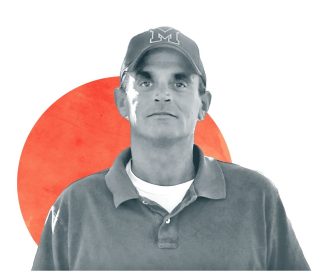 ……….In 2017, a former chemist named Dan Nichols stumbled upon a news story that revealed the existence of the additional health problems TVA feared. High levels of uranium had been measured in the urine of a former cleanup worker named Craig Wilkinson. Like Thacker, Wilkinson had worked the night shift. After dredges piped the coal ash back onshore, Wilkinson used heavy equipment to scoop, flip, and dry the wet ash along the Ball Field.
Although Wilkinson worked at the Kingston site for less than a year, he quickly developed health issues, including chronic sinus infections and breathing problems that eventually led to a double-lung transplant. Frustrated by his sudden decline in health, Wilkinson shelled out over $1,000 for a toxicology test because he wanted to know what occupational hazards might be lingering in his body.
After reading Wilkinson’s story, Nichols sat stunned. Though he was not associated with the spill, he’d been unable to shake his obsession with the Kingston disaster. Nichols had worked as a Memphis-based field chemist for a wastewater technology company, and he was used to studying lab reports on industrial water supplies and samples. For years he’d been trying to solve a mystery that no one else seemed to be aware of: why Kingston regulators deleted and then altered a state-sanctioned report showing extremely high levels of radiation at the cleanup site.
Roughly a month after the spill, Nichols read a Duke University press release stating that ash samples collected at Kingston by a team led by Vengosh, the geochemist, showed radium levels well above those typically found in coal ash. Nichols knew that the state environmental regulator, the Tennessee Department for Environment and Conservation, or TDEC, was also testing soil and ash samples at the site. After seeing Vengosh’s high radium readings, he wondered if TDEC’s report would also show high levels of either radium or uranium. (Radium is a decay element of uranium.) Later that spring, Nichols visited TDEC’s website and discovered the test results.
“I opened it up and went to uranium, and it was just off the charts,” Nichols recalled. In a 2020 affidavit, Nichols reported that these levels were “extremely high so as to be alarming.” At least 27 soil and ash samples were collected from at least 20 different sites surrounding Kingston beginning January 6, 2009. The levels ranged from 84 parts per million (ppm) to 2,000 ppm. The average level was over 500 ppm, as much as 50 times the typical uranium content found in coal ash.
The next morning, when Nichols slumped back into his computer chair and refreshed TDEC’s website, he saw that the report had been changed. The high uranium readings had plummeted. Now the average uranium levels in the ash were 2.88 ppm, a tenth of the typical uranium content found in coal ash and illogically, below levels naturally occurring in soil. Luckily, Nichols had downloaded the unaltered report the night before.
A month later, Nichols sent the two lab reports to one of the attorneys representing Tennessee residents affected by the spill in a lawsuit they’d brought against TVA. According to Nichols, the lawyers weren’t interested. Nevertheless, Nichols was determined to find more proof of the unusually high levels of on-site radiation. In between cutting hay and spraying weeds on his family farm, he spent years poring over information online about TVA, coal ash, and uranium before he stumbled across Wilkinson’s story.
Back in 2014, Wilkinson’s urine tested for unusually high levels of both mercury and uranium. The mercury is more easily explained: The most common cause of mercury contamination, according to the EPA, is coal-fired power plant emissions, which account for 44 percent of all man-made mercury pollution. The 2008 spill released 29 times the mercury reported at the Kingston site for the entire decade before it, and TVA documents show high levels of additional legacy mercury were present in the Clinch River and could have migrated into the Emory. Today, Wilkinson has symptoms attributable to methylmercury poisoning including blurry vision, fatigue, a hearing impairment, memory loss, and loss of coordination that caused him to fall out of the machines he operated until retiring on disability in 2015.
But most shocking to Nichols was the high level of uranium in Wilkinson’s body — it was 10 times the U.S. average, and identical to the median levels that one study found in workers exposed to the substance. Prolonged occupational exposure to uranium is strongly linked to chronic kidney disease, which Wilkinson suffers from. Because Wilkinson’s toxicology results were taken four years after he left Kingston, they likely show lower uranium levels than what he and other cleanup workers initially had.
Wilkinson’s results left no doubt in Nichols’ mind that the original uranium readings he’d saved were significant. A reporter for the Knoxville News-Sentinel, Jamie Satterfield, contacted him after the report he saved showed up in court proceedings. Satterfield published a story about the altered uranium readings in May of this year.
In response to her story, TDEC told the News-Sentinel that its updated uranium readings, which plummeted by 98 percent, were due to a change in the sampling method used for the tests. (Satterfield also reported that radium levels had been lowered between the initial TDEC report Nichols downloaded and the updated one; the department attributed this to a “data entry error.”) In an email response to Grist and the Daily Yonder, a TDEC spokesperson elaborated that the sampling lab, which was neither staffed nor supervised by TDEC, “discovered there were interferences in the analysis of soil and ash samples for uranium” and subsequently changed the method of analysis from one EPA-approved protocol to another. The new results were then published without public notice of the alteration.
“Changing lab reports is a very serious thing,” Nichols said. “But I can assure you data entry errors don’t cause a man to test for unusually high levels of uranium. That’s [TDEC’s] big problem.”
Unbeknownst to Nichols, Russell Johnson, the district attorney with jurisdiction over Roane County, where Kingston is located, had informed TDEC’s commissioner in 2017 that he was beginning a criminal probe into the Kingston cleanup. “I am deeply concerned with the apparent intentional conduct of the cleanup contractors and their supervisors, actions that took place in Roane County, conduct that may indeed have caused serious bodily injury or possibly even death to a number of people,” Johnson wrote in a letter to TDEC.
In concert with the Tennessee Bureau of Investigation, Johnson began investigating whether TVA or its contractors “suppressed information” as part of the coverup alleged in the 2013 worker lawsuit against Jacobs. They now have Nichols’ evidence as well. But despite this ongoing investigation, it’s unclear if workers will ever learn for certain whether or not they were exposed to dangerous substances besides the coal ash itself. (Bob Edwards, an assistant district attorney working under Johnson, told Grist and the Daily Yonder that the district attorney’s office could not comment on a pending investigation.)………………….https://grist.org/justice/tva-kingston-coal-ash-spill-nuclear/
Trying to test for cracks in nuclear waste containers that have to last for over a million years

Waste from nuclear fuel must be stored for more than a million years/
“Salt can be present in the ambient air and environment anywhere, not just near the ocean. We need to be able to plan for extended long-term storage of spent nuclear fuel at nuclear power plants for the foreseeable future — it’s a national reality,”
 Sandia to put nuclear waste storage canisters to the test, https://www.newswise.com/articles/sandia-to-put-nuclear-waste-storage-canisters-to-the-test, Scientists will explore science of cracks caused by corrosion, 10-Dec-2020 , by Sandia National Laboratories Newswise — ALBUQUERQUE, N.M. — Sandia National Laboratories is outfitting three 22.5-ton, 16.5-feet-long stainless-steel storage canisters with heaters and instrumentation to simulate nuclear waste so researchers can study their durability.
The three canisters, which arrived in mid-November and have never contained any nuclear materials, will be used to study how much salt gathers on canisters over time. Sandia will also study the potential for cracks caused by salt- and stress-induced corrosion with additional canisters that will be delivered during the next stage of the project.
Currently there is not an operating geologic repository in the U.S. for the permanent disposal of spent nuclear fuel. As a result, spent fuel is being stored at commercial nuclear power plants in both storage pools and dry storage canisters. The storage canisters currently holding the spent nuclear fuel were designed to have a useful life of a few decades but will now likely need to be used longer than planned, said Tito Bonano, Sandia’s nuclear energy fuel cycle senior manager.
Data is urgently needed to validate and guide how industry should manage storage canisters for longer than originally anticipated, Bonano said.
“Salt can be present in the ambient air and environment anywhere, not just near the ocean. We need to be able to plan for extended long-term storage of spent nuclear fuel at nuclear power plants for the foreseeable future — it’s a national reality,” he said.
The researchers expect the project could have long-reaching implications for public health and safety, industry practices, regulatory framework and defining future research paths, said Bonano.
The three-year project is funded by the Department of Energy’s Nuclear Energy office. Overall, fifteen never-used, never-irradiated DOE-owned canisters are being distributed for large scale testing to Sandia and two other national laboratories, an industry research institute and an independent storage facility at an existing nuclear power plant.
Waste from nuclear fuel must be stored for more than a million years
Nuclear power plants use uranium pellets inside a metal-cladded tube, called a fuel rod, to power reactors to create the heat needed to make electricity. After the fuel rods can no longer be used in the reactor, they need to be stored onsite until they are taken offsite to another facility and eventually permanently disposed because they will be radioactive for a long time, said Samuel Durbin, a mechanical engineer and Sandia’s canister project lead.
“When fuel is removed from a reactor, it’s very hot, both in temperature and radioactivity” Durbin said. “The utility loads it into a pool for about five years to cool down. After that, the spent fuel can be offloaded into a dry storage canister.”
A storage canister starts as a flat piece of stainless steel that is rolled into a cylinder and then welded where the seams come together. The heat from the welding creates heat-affected zones in the seams of the canister that experience tensile, or pulling, stress. This stress makes these areas around the welds more susceptible to corrosion from salt over time, said Durbin.
Research will test how much salt deposits on canisters over time
Sandia received three canisters Nov. 13. The research team will outfit each of them with 32 electrical heaters to simulate the decay heat, which is heat released as a result of radioactive decay, from the 32 spent fuel assemblies that would typically be stored in this type of canister. No radioactive materials will be used in the testing, Durbin said.
Instruments called thermocouples, which measure temperature, and other sensors for diagnostic testing and surface sampling also will be added, he said.
Once the outfitted canisters have been tested and repacked for transport at Sandia, the team plans to move them to a storage pad at an independent spent fuel storage installation on the West Coast where they will experience the same real-life conditions of in-use canisters. The Sandia team, led by managers Sylvia Saltzstein and Geoff Freeze, Durbin, and chemists/corrosion scientists Charles Bryan and Rebecca Schaller, along with partners from other national laboratories will monitor the test canisters and record surface deposits, especially chloride-bearing salts, for three to more than 10 years, depending on how much the data varies over time.
“Sodium-chloride, or salt, that settles on the surface of spent nuclear-fuel canisters can lead to chloride-induced stress corrosion cracking, and right now there is inadequate data on these surface deposits,” said Durbin.
In real-life storage of nuclear waste, Durbin said the decay heat from the spent fuel creates natural convection around the storage canisters, causing outside air to be drawn over the canister surface. This process helps cool the spent fuel over time. As ambient air is drawn in, salt and other particulates in the air are drawn in as well and can settle on the canister surface. During the test, the electrical heaters installed inside the canisters at Sandia will replicate this decay heat-driven convection without using nuclear materials.
In hot, dry conditions, Durbin said salt deposits alone don’t cause any issues, but over time, as the decay heat decreases and the canister cools, water can condense on the canister surface and a brine can form.
“These conditions can occur nationwide and are seen as precursors to chloride-induced, stress-corrosion cracking. Back when these canisters were being designed, people weren’t thinking about this as an issue because we had a plan for permanent disposal. The current national nuclear waste situation forces canisters to be stored onsite for the foreseeable future, which could be 100 years or longer, so stress corrosion cracking becomes more of a concern,” Durbin said.
In addition to the long-term heating and surface deposition test, Sandia will use up to another three canisters for laboratory-based tests to conduct fundamental research on cracking caused by salt and stress, especially on the welded seams and intersections of the canisters. Researchers will measure the effectiveness of commercially available crack repair and mitigation coatings.
To test these seams, the team will cut the canisters into small segments and test pieces with and without welded seams to study the pre-cursor conditions for salt and stress to cause the corrosion that leads to cracks, he said.
Hypersonic Missiles- ‘we program weapons that don’t work to meet threats that don’t exist.’

Like a Ball of Fire, London Review of Books, Andrew Cockburn on hypersonic weaponry, Vol. 42 No. 5 · 5 March 2020 “………. Putin’s bellicose claim – two weeks before the presidential election in which he was running for a fourth term – and the more recent official announcement that Avangard had now entered service, drew alarmed and unquestioning attention in the West. ‘Russia Deploys Hypersonic Weapon, Potentially Renewing Arms Race’ the New York Times blared. ‘The new Russian weapon system flies at superfast speeds and can evade traditional missile defence systems. The United States is trying to catch up.’
The ease with which the chimerical menace of hypersonic weapons has been launched into the budgetary stratosphere by the arms lobby suggests that their luck will hold for a long time yet. https://www.lrb.co.uk/the-paper/v42/n05/andrew-cockburn/like-a-ball-of-fire
Serious technical problems for the much hyped molten salt nuclear reactor
 Advanced reactor developers trying to expand nuclear power’s selling points Advanced reactor developers trying to expand nuclear power’s selling points
Molten salt reactor developers believe they can solve nuclear’s cost problem. Utiity Dive, Matthew Bandyk, 12 March 2020, “……….. the passage of the Nuclear Energy Innovation and Modernization Act (NEIMA) has given the nuclear industry a new boost in confidence that advanced reactors will make significant progress soon. Signed into law by President Trump in early 2019, NEIMA requires the Nuclear Regulatory Commission to create a new regulatory structure by the end of 2027 that will ease the licensing process for new reactor designs. ……..More federal legislative support for advanced reactors is possible ……… Despite the enthusiasm for the technology, commercialization could be many years away. Molten salt reactors still have several technical challenges that must be solved before they can become accepted in the power industry, according to Jacopo Buongiorno, TEPCO Professor of Nuclear Science and Engineering at the Massachusetts Institute of Technology /
…….. The MIT Energy Initiative study found that…. “less mature reactor concepts, including lead fast reactors, gas-cooled fast reactors, and molten salt systems, however, would not be expected to reach commercialization before 2050 .
……. One of the biggest challenges that extends the timeline is determining the structural materials that would go into a molten salt reactor core, which may be very different than the materials used in conventional reactors because of the completely different chemical environment.
While the Oak Ridge National Laboratory operated an experimental molten salt reactor for several years in the 1960’s, that project was for research and not for producing power, so it only partially answers the many technical questions needed to determine how a molten salt reactor could operate as a power plant, according to Buongiorno. “We don’t know exactly yet how long the materials used for molten salt reactors will last before they corrode,” he said. “Another important issue to be resolved is access and maintenance of the reactor components during power operations and outages, since the molten salts can become highly radioactive.” ….https://www.utilitydive.com/news/nuclear-energy-storage-advanced-reactor-developers-trying-to-expand-nuclea/573570/
|
|
The intractible problem of San Onofre’s, and indeed, America’s, nuclear waste

Mosko: Public Safety at Stake in Debate Over Nuclear Waste Storage at San Onofre, https://voiceofoc.org/2020/11/mosko-public-safety-at-stake-in-debate-over-nuclear-waste-storage-at-san-onofre/by SARAH MOSKO 18 Nov 20 SoCal Edison’s  spokesperson, John Dobken, authored an Oct. 20 editorial touting the dry nuclear waste storage system Edison chose when a radiation leak from steam generator malfunction forced permanent closure of the San Onofre Nuclear Generating Station (SONGS) in 2013. Ignoring for the moment the numerous obfuscations and omissions of critical facts, the essence of Dobken’s article is this: Edison wants to divert public attention away from the inadequacies of its dry canister storage system while promising that a deep geological national repository, as mandated in the Nuclear Waste Policy Act of 1982, will magically materialize before their storage canisters fail.
There’s plenty Dobken did not say that the public needs to know.
First off, we are nearly four decades past passage of the Nuclear Waste Policy Act and there is no tangible progress toward creation of a national repository operated by the Department of Energy. The cold hard reality is that no state wants it and, worse still, there is no feasible technology currently available to make a geological repository workable, according to the U.S. Nuclear Waste Technical Review Board. Plans for a geological repository at Yucca Mountain were rejected by Nevada, and subsequent proposals for “interim” storage sites in Texas and New Mexico are opposed by those states too.
Thus, the dream of a national repository remains in limbo for the foreseeable future, and it’s misleading to suggest otherwise. Also misleading is Dobken’s suggestion that, if needed, a failing canister could be transported to “a centralized Department of Energy facility” for repackaging in the future, as no such facility exits anywhere in the United States for this purpose.
Consequently, the plan throughout the country is to leave highly radioactive nuclear waste onsite indefinitely. The relevant 2014 report from the Nuclear Regulatory Commission (NRC) openly states that a repository might never become available. Like all other nuclear plant operators in the United States, Edison is saddled with a storage task never originally intended.
For dry storage, Edison chose thin-walled (just 5/8 inch thick), welded-shut stainless steel canisters which contrast sharply with the 10-19 inch thick-walled and bolted-shut casks many nuclear waste safety advocates in Orange, San Diego, and Los Angeles Counties are advocating for. Unlike the thick casks, SONGS’s canisters are vulnerable to stress corrosion cracking from numerous conditions, such as a salty marine environment like San Onofre. A 2019 Department of Energy report assigned “#1 Priority” to the risk of through-wall cracking in welded, stainless steel canisters in a moist salty environment.
The 73 Holtec canisters at SONGS are warranted for only 25 years, covering only manufacturing defects. This means the warranty excludes environmental conditions like earthquakes, salt air, water intrusion, seagull droppings, and any other corrosive damage to the canisters. Edison has not divulged what the warranty covers on the 51 older Areva canisters, which are already up to 17 years old. Dobken’s statement that the nuclear waste will become less radioactive in 100 years is meaningless in the timescale of the hundreds of thousands of years the waste will remain deadly to humans.
Dobken argues that the fact SONGS’s canisters are welded shut and can never be opened is a plus. This completely ignores the crucial safety requirement in the Nuclear Waste Policy Act that spent nuclear fuel storage containers be designed to be monitored inside and out and the contents retrievable from the containers. Edison purposely chose welded shut canisters, making it impossible to monitor or retrieve the fuel assemblies, which means the canisters can’t lawfully be accepted by the Department of Energy (DOE) for either an interim or permanent storage site.
In listing six other nations that also use welded-shut canisters (Brazil, Mexico, Slovenia, South Africa, Ukraine, United Kingdom), Dobken hopes readers won’t notice these are not countries the United States typically aims to emulate technologically. From that standpoint, a partial list of countries using thick-walled casks is more formidable: Belgium, Finland, France, Germany, Japan, Korea, Netherlands, Russia, Spain, and Switzerland. And, thick casks are used in the United States too, though thin-walled canisters are unfortunately most common.
In arguing that robotic camera technology – which Edison applied to the exterior of a sample of eight of 123 total canisters in 2019 – can be relied upon to detect defects like cracking, Dobken hides the fact that Edison has admitted that this methodology does not meet American standards for an inspection. This is because nuclear storage containers are pressure vessels, thus subject to standards set by the American Association of Mechanical Engineers for safe storage and transport of nuclear pressure vessels which explicitly require use of either magnetic particle or dye penetrant methodology to inspect for defects like cracking (ASME N3).
Edison used neither ASME-approved method simply because they can’t be applied to their canisters which are both too hot, too radioactive and inaccessible in their concrete storage overpacks. Furthermore, a robotic camera can never access the bottoms or inside walls of canisters to look for cracks originating there. Nor can it characterize cracking that might start on the exterior but proceeds laterally rather than straight through the canister wall.
Consequently, many nuclear safety advocates are arguing strenuously for retention of the cooling pools until a specialized dry fuel handling facility (aka “hot cell”) can be constructed onsite. This is because the only means to repackage the radioactive contents of a defective canister into another container is to perform the transfer within a cooling pool or hot cell.
Dobken correctly points out that NRC is nevertheless allowing decommissioned nuclear plants to destroy the cooling pools. This highlights a troublesome relationship between NRC and Edison which the public needs to understand. NRC has granted safety exemptions and waivers in dry storage systems nationwide which has allowed Edison to proceed with a canister system that is unsafe and cannot legally be accepted by DOE into either an interim storage site or permanent repository. Consequently, there is no plan to prevent or stop radioactive releases.
This liaison between NRC and Edison played out during the July 2020 meeting of the California Coastal Commission when NRC representative, Andrea Kock, remained mute as Edison cited the unapproved canister repair technology as justification for destroying the cooling pools. Though community nuclear waste safety advocates ardently cited factual objections, Kock’s silence no doubt helped shape the unanimous vote of the nine commissioners to grant Edison’s request. However, that two commissioners literally uttered “boos” despite casting “yes” votes speaks to doubts about Edison’s plan among the commission’s ranks.
Lastly, Dobken offers no defense for the fact that San Onofre had by far the worst safety record of any nuclear plant in the country during its pre-2012 operation, yet he cries foul any suggestion this should undermine public confidence in how Edison is currently handling dry storage. What’s not mentioned is that, in 2018, it took a conscience-driven whistleblower to expose a near-drop incident where a 54-ton canister loaded with radioactive waste was poised to plummet 18 feet while it was being lowered into its storage overpack. NRC’s subsequent investigation attributed the event to both design flaws and human error and cited Edison with the single most serious violation ever imposed on a spent fuel licensee.
Moreover, it was only because of this incident that Edison bothered to look at the canisters with the contrived robotic camera technology, revealing that essentially all the canisters get scraped/gouged during downloading into storage overpacks.
Dobken makes one point with which everyone agrees: “The public deserves the facts about spent nuclear fuel and its storage.” As the public listens to this debate over safe nuclear waste storage, both sides should be held accountable for underlying motivations. In asking Edison to opt for bolted-shut thick-walled casks with safety features lacking in thin-walled canisters, community safety advocates are seeking safety for their families and communities. Edison, on the other hand, will save untold $millions should the public be swayed to trust in Edison’s promises that their canister system won’t fail and that a national repository will materialize in time to save the day.
Sarah (Steve) Mosko is a local freelance journalist focused on solutions to environmental problems and social injustices.
Uranprojekt -The Nazi Nuclear Program
|
Uranprojekt -The Nazi Nuclear Program , Heritage Daily, 17 Nov 20,
Uranprojekt, also known informally as the Uranverein (meaning Uranium Club) was a secret German project, to research and develop atomic weapons and energy during the Second World War.Prior to the outbreak of hostilities, Germany was at the forefront of nuclear fission, with the discovery of the first nuclear fission of heavy elements by Otto Hahn (referred to as the father of nuclear chemistry), and his assistant Fritz Strassmann from the Kaiser Wilhelm Institute in 1938. This was shortly followed by Lise Meitner, an Austrian-Swedish physicist who theorised, and then proved in 1939 that the uranium nucleus had been split, giving the name “fission”. In light of the recent discoveries, Germany was encouraged by a paper submitted by experimental physicist Wilhelm Hanle, which proposed the use of uranium fission in a reactor. This led to a small team being tasked to study the potential military applications of nuclear energy. The Germans then established a new research project on the 1st September 1939 (the same day generally considered to be the start of WW2 with the invasion of Poland by Germany), under the auspices of the Wehrmacht’s Heereswaffenamt (HWA), the German Army Weapons Agency responsible for researching weaponry, ammunition, and equipment. The USA also became aware of the German program that same year, when Albert Einstein wrote to President Roosevelt, warning of the German threat in creating a “nuclear chain reaction in a large mass of uranium, by which vast amounts of power and large quantities of new radium-like elements would be generated.” It was quickly realised by the HWA that the project would be unable to make a decisive contribution to ending the war in the near term, so authority was placed under the Reichsforschungsrat (RFR, Reich Research Council), maintaining its kriegswichtig (war importance) designation. The project was then expanded into three main areas of research, the Uranmaschine to investigate creating a nuclear reactor, the production of uranium and heavy water, and the separation of uranium isotopes. Research struggled with the German invasion of the Soviet Union in 1941 (Operation Barbarossa), as the majority of Germany‘s scientific minds were turned to focus on developing other new technologies that could have a more immediate impact on the war effort (namely rocket technology and jet aircraft). The project also suffered from a drained talent pool. Many top German scientists and nuclear physicists (some of which were Jewish or with Jewish heritage) had fled the country, and there was a lack of understanding and investment from the regime in the pure scientific application of the research (in comparison, the Manhattan Project consumed some $2 billion (1945) in government funds, compared to a mere 8 million reichsmarks $2 million (1945) on the Uranprojekt). This resulted in the Germans never achieving a successful chain reaction, nor did they manage to develop a method of enriching uranium (having never seriously considered plutonium as a viable substitute). In 1942, a conference was initiated by Albert Speer as head of the “Reich Ministry for Armament and Ammunition” (RMBM: Reichsministerium für Bewaffnung und Munition) to discuss the continuation of research, and the prospects for developing nuclear weapons……. https://www.heritagedaily.com/2020/11/uranprojekt-the-nazi-nuclear-program/136152 |
|
Small Modular Nuclear Reactors, the nuclear industry’s latest pipe dream.
 Ramana and Schacherl: Why the Liberals’ nuclear power plan is a pipe dream https://ottawacitizen.com/opinion/ramana-and-schacherl-why-the-liberals-nuclear-power-plan-is-a-pipe-dream?fbclid=IwAR0GnxYt-JgXg7NVEyccBYt4r0SSbfAHm3Y-b_AvzgMIjxpOotUTBIvAcaI
Not only is this form of power expensive compared to the alternatives, we still haven’t resolved issues around radioactive contamination and hazardous waste streams.
At least a dozen corporations around the world are hoping for taxpayer funding to further develop their SMR designs, all of which are still on the drawing board. Last month, the federal government handed out $20 million to Terrestrial Energy. Other expectant entities include SNC-Lavalin, which bought Atomic Energy of Canada Ltd.’s CANDU division and is developing a CANDU SMR; United Kingdom-based Moltex Energy; and Seattle-based Ultra Safe Nuclear Corporation.
The Liberal government says it supports small modular reactors to help Canada mitigate climate change. The government is simply barking up the wrong tree, for several reasons: cost, cost and cost, as well as renewables, safety and radioactive waste.
Nuclear power is very expensive compared to other low-carbon options, and the difference keeps growing because the cost of renewables and energy storage is going down rapidly. Peter Bradford, a former U.S. Nuclear Regulatory Commission official, likened the use of nuclear power to mitigate climate change to fighting world hunger “with caviar.”
The high price tag for nuclear power plants has led to a near freeze on new ones around the world. Canada’s last nuclear plant came online in 1994, and Ontarians will remember when plans for two reactors at Darlington were shelved in 2009 after a $26-billion bid – three times the expected budget. Nuclear projects also have a long history of cost and time overruns. The cost estimate of NuScale, the most advanced SMR project in the U.S., has gone up from $4.2 billion to $6.1 billion. That works out to almost 10 times the cost per kilowatt of building wind power in Alberta. There is no way SMRs can be cost-competitive with wind or solar energy.
O’Regan has said he doesn’t know any way to get to net zero-carbon emissions by 2050 without nuclear power, but this is refuted by many studies. Ontario can meet its electricity demand using only renewables and hydro power backed up by storage technologies. A recent study using data from 123 countries shows that renewable energy outperforms nuclear power in reducing emissions. It concludes that nuclear investments just get in the way of building up renewable energy.
Advocates claim that we need nuclear energy to back up solar and wind power when the sun doesn’t shine and the wind doesn’t blow. However, nuclear reactors cannot be powered up and down rapidly and safely. If they are, their cost of generating electricity increases further. Nor do nuclear plants run reliably all the time. In France, which generates 70 per cent of its electricity from nuclear power, each reactor was shut down for an average of 96.2 days in 2019.
The federal government sees small reactors playing a role in remote off-grid communities and mines that now rely on diesel. But together they require less than 0.5 per cent of Canada‘s electricity generation capacity. Power from SMRs could be 10 times more expensive for those communities than adding wind and solar energy. There is also strong opposition to SMRs from First Nations communities, who say these represent an unacceptable risk.
The risk from nuclear power comes in multiple forms. There is the potential for accidents leading to widespread radioactive contamination. Because reactors involve parts that interact rapidly in complex ways, no nuclear reactor is immune to accidents. And they all produce radioactive nuclear waste streams that remain hazardous for up to one million years. Dealing with these is a major challenge, and there is no demonstrated solution to date.
Canada has a big challenge ahead: to decarbonize by 2050. Let’s get on with it, in the quickest and most cost-effective way: by improving the efficiency of our energy use, and building out solar, wind and storage technologies. The federal Green Party is correct in stating that nuclear reactors “have no place in any plan to mitigate climate change when cleaner and cheaper alternatives exist.” Let’s forget the dirty, dangerous distraction of small nuclear reactors.
M.V. Ramana is the Simons Chair in Disarmament, Global and Human Security and Director of the Liu Institute for Global Issues at the School of Public Policy and Global Affairs, University of British Columbia. Eva Schacherl is an advocate for protecting the Ottawa River and for environmental and social justice.
Correcting 5 wrong opinions about the Treaty on the Prohibition of Nuclear Weapons
 FIVE COMMON MISTAKES ON THE TREATY ON THE PROHIBITION OF NUCLEARWEAPONS https://warontherocks.com/2020/11/five-common-mistakes-on-the-treaty-on-the-prohibition-of-nuclear-weapons/
The Treaty on the Prohibition of Nuclear Weapons, the first international ban on nuclear weapons, will take full legal effect on Jan. 22, 2021. It joins the Chemical Weapons Convention and the Biological Weapons Convention as a treaty prohibiting weapons of mass destruction and follows the roadmap of the Mine Ban Treaty (known as the Ottawa Treaty) and Cluster Munitions Convention to bring together a coalition of civil society and diplomats to prohibit and eliminate weapons based on their humanitarian harm. The treaty has widespread support in the international community — 122 countries voted for its adoption in 2017, and these countries have continued to express their support for the treaty in subsequent statements to the U.N. General Assembly, in spite of resistance from nuclear-armed states and some of their allies, who have not joined the treaty.
This treaty is a big deal. And yet, political scientists and nuclear policy experts, largely from nuclear-armed states, repeatedly make mistakes in their analysis and interpretation of this treaty and international law. At a gathering of roughly 800 nuclear policy experts in Washington, D.C. in 2019, experts overwhelmingly and incorrectly predicted the treaty would not enter into force by March 2021. A French academic even misread the actual treaty text — a clear error that was not flagged by any of the article’s expert reviewers, and was only corrected after publication.
I work at the International Campaign to Abolish Nuclear Weapons, which won the 2017 Nobel Peace Prize for its efforts to negotiate the ban treaty. Its work is informed by international lawyers, academics, technical experts, diplomats, survivors of nuclear weapon use and testing, and advocates with regional expertise. This diverse and rich foundation of knowledge and experience informs our work to this day. But some academics and nuclear policy experts that haven’t worked as closely on the treaty often make five key mistakes when analyzing this treaty and international law: that the treaty may be just symbolic, that NATO countries cannot join, that the treaty doesn’t address compliance, that it won’t have any impact on nuclear-armed and NATO states, and that the treaty will only affect democracies.
Mistake One: The Treaty Is Purely Symbolic
The legal impact of the Treaty on the Prohibition of Nuclear Weapons is clear: Once it enters into force, all states parties will need to comply with the treaty’s prohibitions and implement its obligations. While some treaty articles reinforce existing obligations under other treaties, states parties do actually take on new legal obligations, contrary to what some have claimed. Even without any other states joining the treaty, from a strictly legal perspective, the treaty is not merely “symbolic.”
The treaty prohibits states parties from developing, testing, producing, manufacturing, transferring, possessing, stockpiling, using (or threatening to use) nuclear weapons, or allowing nuclear weapons to be stationed on their territory. It also prohibits states parties from assisting, encouraging, or inducing states to engage in any of these prohibited activities. Some of these prohibitions are already enshrined in nuclear weapon-free zone treaties, but not all prohibition treaty states parties are members of these treaties. Given that the Comprehensive Nuclear-Test-Ban Treaty unfortunately has yet to enter into force, the Treaty on the Prohibition of Nuclear Weapons will be the only agreement in force banning nuclear testing internationally.
In addition to adhering to prohibitions, states parties must implement positive obligations, some of which echo previous agreements, but many of which are new to this treaty.
There are some technical requirements. For example, states parties must submit a declaration with the U.N. secretary-general on their nuclear weapon status. They must also bring into force a comprehensive safeguards agreement with the International Atomic Energy Agency on inspecting their peaceful nuclear program, or maintain a more intrusive inspections regime (an “additional protocol”) if they have one in force already.
But the Treaty on the Prohibition of Nuclear Weapons also includes ground-breaking provisions on providing assistance to victims of nuclear weapons use and testing and remediating contaminated environments. This is the first time that international law has mandated that countries address the humanitarian devastation caused by decades of nuclear weapons testing and the U.S. bombing of Hiroshima and Nagasaki 75 years ago. It is a critical step forward to address the racist, colonialist, and unjust legacy left by these uniquely horrible weapons of mass destruction. Analysis of this treaty would do well not to ignore these historic articles.
Specifically, Article 6 of the treaty requires states to “provide age- and gender-sensitive assistance, without discrimination, including medical care, rehabilitation and psychological support,” for victims of nuclear weapons use and testing “as well as provide for their social and economic inclusion.” States must also “take necessary and appropriate measures” towards the remediation of contaminated environments. States with affected communities and contaminated environments under their jurisdiction are primarily responsible to structure and implement these obligations in order to respect these states’ sovereignty and follow the legal precedent for victim assistance in other treaties. However, Article 7, which requires that all countries cooperate to implement the treaty’s provisions, specifically calls on all states “in a position to do so” to provide assistance to other states as they carry out these initiatives. Such assistance can take many forms, including technical, financial, and material, so every state should be in a position to contribute.
These provisions will be at the center of the first meeting of states parties to the treaty, to take place within one year of the treaty’s entry into force. Austria has already offered to host this meeting in Vienna. At this meeting, states will discuss routine logistics of international treaty meetings, such as costs and establishing the rules of procedure. Observer states, including signatory states, and some non-signatory states, including at least Sweden and Switzerland, will also attend and share the cost of the meeting. The extent of their participation will be determined by the rules of procedure. Civil society will also likely play an active role.
Mistake Two: NATO Countries Cannot Join the Treaty
One academic recently argued that membership in NATO and the Treaty on the Prohibition of Nuclear Weapons would be “mutually exclusive.” While fully compliant membership in both treaties would require a few policy adjustments, it is certainly possible. There is no prohibition in the treaty for a member to be involved in military alliances or exercises with nuclear-armed states, as long as there is not a significant nuclear dimension to those alliances. NATO itself states, “NATO is committed to arms control, disarmament and non-proliferation, but as long as nuclear weapons exist, it will remain a nuclear alliance.” However, legal experts explain that if a NATO state would like to join the treaty, they may certainly do so and remain in the alliance as long as that state renounces participation in the nuclear dimension of the alliance and indicates that it does not support activities prohibited by the treaty. There is a precedent of NATO members “footnoting” alliance documents to signal disagreement with certain policies. A NATO state could thus announce its change in policy and adjust its behavior accordingly to be in compliance with the treaty’s provisions. Exactly how the NATO state would need to adjust its behavior to be in compliance with the treaty varies by country and could be determined in consultation with states parties.
Historically, different members of NATO can take different positions on controversial weapons without obliterating the alliance. Indeed, there are already divergent policies within NATO on the extent of participation in the nuclear aspect of the alliance: Some NATO countries go so far as to host U.S. nuclear weapons on their soil while others do not allow deployment on their territory under any circumstances. Opposition within NATO to banning landmines and cluster munitions did not stop those prohibitions from moving forward, even as the United States pressured countries to not even participate in the process to negotiate a treaty banning cluster munitions, and certainly did not destroy the alliance. Dozens of former leaders from NATO states, including two former NATO secretaries-general, recently called on their countries to join the Treaty on the Prohibition of Nuclear Weapons and certainly did not suggest that such a move would involve leaving NATO or that it would fracture the alliance. NATO’s status as a nuclear alliance has evolved over time, and it could continue to adapt to shifting international norms.
Mistake Three: There Is No Mechanism to Address Compliance Concerns in the Treaty
If there are any concerns about compliance with the terms of the treaty, the treaty explains clearly what states should do in Article 11. When a state party has a concern about another state party’s implementation of the accord, the two states may resolve the dispute amongst themselves or bring the matter to a meeting of states parties to discuss.
Concerns about compliance with an international treaty would certainly not be unique to this treaty and do not indicate that it is any less legitimate or valuable than other treaties with compliance disputes. States parties to the Nuclear Non-Proliferation Treaty regularly raise concerns about nuclear weapon-state compliance with their obligation to pursue nuclear disarmament under Article VI during meetings of states parties of that treaty. Likewise, states parties to the Chemical Weapons Convention condemn Syrian and Russian violations. These examples demonstrate the value of international treaties to reinforce norms and provide a forum to discuss and condemn violations of international standards for peace and security. Of course, given that the treaty has not yet entered into force, no state can currently be judged to be in non-compliance with the accord.
Mistake Four: The Treaty Will Only Impact Countries That Have Joined It
States parties’ implementation of their obligation to assist victims of nuclear weapons use and testing will also have lasting impact beyond those countries themselves. There is currently no international standard for adequate victim assistance for those who have been impacted by nuclear weapons use and testing and no standard for how to judge that a nuclear-contaminated site has been adequately remediated. States parties’ work on these provisions in the treaty will help to provide research and experience in these fields that can be applicable and useful even beyond countries that have joined the treaty.
Countries that are not part of the treaty can still contribute to these important measures. The United States, for example, is one of the largest donors to Mine Action, which facilitates mine clearance, despite not joining the Mine Ban Treaty. Mounir Satouri, a French member of the European Parliament, has expressed interest in encouraging European Union countries, including NATO members, to contribute to victim assistance and environmental remediation measures under the treaty, even if they have not yet joined as states parties.
The treaty will continue to grow and integrate into the international system well beyond its entry into force in January and first meeting of states parties. The norm established by previous weapons prohibitions impacted banks, companies, and government policies in countries that had not joined the treaty, and the same can be expected for the nuclear prohibition norm. The treaty’s adoption has already caused a major Dutch pension fund to divest from companies involved in nuclear weapons, and more divestment can be anticipated once the treaty takes full legal effect.
Mistake Five: The Treaty Only Impacts Democracies
Countries that have not yet expressed support for the treaty are also expected to join in time. In many countries that do not officially support the treaty, polls show that domestic opinion is behind the ban and capitals in nuclear-armed and NATO states have adopted resolutions calling on their governments to join. Critics claim that domestic support may push Western democracies – in particular France, the United Kingdom, the United States, and NATO allies — to join the treaty, while more autocratic states — without a strong civil society to demand they adhere — remain unfazed by the new international law and norm.
That’s not how international law works. International law applies to all countries, regardless of their governance structure, and all countries are influenced by the new norms advanced by international treaties. Pressure to join the treaty does not just come from an active civil society, but from other states, international organizations, and the changing norm established by the treaty itself. Article 12 of the treaty legally requires that all states parties urge other countries to join. This can be done in the form of public statements in international fora, like the United Nations, or privately in bilateral meetings. Pressure to adhere can even come from international figures like the U.N. secretary-general, the Dalai Lama, and the Pope who have all welcomed the Treaty on the Prohibition of Nuclear Weapons.
So far, the record shows that Western democracies are not necessarily more susceptible to pressure to support the treaty or to join it. While the United States and some NATO allies held a press conference outside the negotiations of the treaty in protest, China merely abstained on the resolution to start negotiations. When the treaty reached 50 states parties, a U.S. official Twitter account called the treaty “counterproductive,” while the Chinese UN Mission on Twitter claimed its objectives were “in line with purposes of the TPNW.” Of the states that have already joined the treaty, many have done so not because of civil society pressure, but due to their desire to adhere to international laws and norms against nuclear weapons.
Conclusion
In January, the treaty will take its rightful place among the other international treaties regulating nuclear weapons and other weapons of mass destruction, as an implementing instrument of the Nuclear Non-Proliferation Treaty’s Article VI and complement to the Comprehensive Nuclear-Test-Ban Treaty. Most countries support the Treaty on the Prohibition of Nuclear Weapons as an important achievement for peace and security and towards a world free of nuclear weapons. As the risk of nuclear weapons use increases alarmingly, nuclear disarmament measures like this treaty are urgently needed.
The Treaty on the Prohibition of Nuclear Weapons will impact the norm against nuclear weapons and in the meantime will provide concrete assistance for victims of nuclear weapons use and testing and contribute to remediating radiologically contaminated areas. It is a powerful tool: important enough for leaders to ratify even in the midst of a global pandemic and influential enough that the United States actually called on countries to withdraw their instrument of ratification or accession. Analytical attempts to belittle or undermine the significance of this treaty may appease the minority of countries that cling to these weapons of mass destruction for now, but make no mistake — the Treaty on the Prohibition of Nuclear Weapons is a game-changer. And it is not going anywhere.
The human impact of ”Trinity” and a thousand other nuuclear bomb tests on American soil

|
75 Years Later, Victims of Nuclear Bomb Tests on U.S. Soil Still Seek Justice, https://truthout.org/articles/75-years-later-victims-of-nuclear-bomb-tests-on-u-s-soil-still-seek-justice/, BY Satya Vatti, Globetrotter / Independent Media Institute, November 15, 2020 They thought the world was coming to an end,” Genoveva Peralta Purcella explains.
On July 16, 1945, the first-ever nuclear bomb was tested in New Mexico, in the Southwestern United States. The detonation was code-named “Trinity.” It is the day that would seal the fate of many Americans living in the surrounding areas for generations to come. Seventy miles from what became known as ground zero—the Trinity test site—Genoveva’s family lived on a ranch just outside the village of Capitan in New Mexico. Genoveva was born the year after the blast. Now 74 years old, she solemnly recalls how her family remembers the day that would change their lives forever. Genoveva’s sisters had come to visit their father and pregnant mother at the ranch. At precisely 5:30 a.m., as dawn broke, the sky suddenly went pitch dark. Having no other point of reference, they mistook the abnormally loud roaring and rumbling in the sky for thunder. The entire house began to shake. Fear-stricken, the family huddled together in a corner. When the sky cleared, her father stepped outside the house and found himself being showered with a white powder. The powder was everywhere and covered everything around them. Nothing escaped it, not the cows the family had raised, or the vegetables in the garden, or the rainwater they stored in the absence of running water. Like other families who went through this experience, Genoveva’s family also dusted off the powder and consumed their vegetables and the stored water. The blast produced so much energy that it incinerated everything it touched and formed a fireball that rose to more than 12 kilometers into the atmosphere. The fireball created ash that snowed over the communities surrounding the blast site. The people did not know it then, but this ash that covered thousands of square miles was the radioactive fallout from the explosion. Dread gripped the communities in Tularosa Basin who either witnessed or experienced the phenomenon they could not make sense of. Meanwhile, the immediate reaction of the staff of the Manhattan Project, which created the bomb, was of “surprise, joy, and relief.” Paul Pino, Genoveva’s cousin, who was born nine years after the Trinity blast, says that his family, which lived 33 miles from the blast site, was one of many who were unaware of what had transpired on that day. In the days and months leading up to the blast, U.S. government officials did not notify anyone who lived in the region about the imminent nuclear bomb test. Nobody in the Tularosa Basin was evacuated to safety. In the aftermath of the nuclear test, officials began to cement a false narrative into the consciousness of the nation; the region was remote and uninhabited. Tens of thousands of people, in fact, lived in the Tularosa Basin in 1945. For a long time, the people of the basin believed that the blast was an ammunition explosion. “We were lied to by the government,” said Pino. It takes 24,000 years for half of the radioactive plutonium used in the Trinity bomb to decay. The people of the region have inhaled and ingested radioactive particles for 75 years because of environmental contamination. Those in power refuse to accept responsibility and take any corrective action. To this day, there have been no cleanup efforts. Radiation exposure has caused high rates of aggressive cancers, thyroid disease, infant mortality, and other health abnormalities in generations of families in the Tularosa Basin region. The scale of the health impact cannot be determined accurately as long-term epidemiological studies have only been undertaken recently. The findings of the latest research studies by the National Cancer Institute were published in September 2020 in the journal Health Physics. “There were 10 of us; now only one is surviving,” Genoveva says, speaking of herself. She has lost everyone in her family to cancer. In a country without universal health care, debt from medical expenses has brought economic ruin to the communities near the Trinity site. “All the pain and suffering we have had to endure, and not a speck of help from the government,” Pino says. “Meanwhile, it has spent trillions on thousands of nuclear weapons.” Genoveva’s story is not an exceptional one. It is the story of tens of thousands of families in the United States. More than 1,000 nuclear bomb tests have been conducted in the U.S. between 1945 and 1992. A total of 100 above-ground tests were conducted at the Nevada test site from 1951 to 1962. The winds carried radioactive fallout for thousands of kilometers. Hundreds of millions of people living in the U.S. have been exposed to varying levels of radiation over the years, unknown to them. New Mexico was downwind of the Nevada test site, and the people living there continued to be exposed to radioactivity for decades after the initial exposure during the Trinity nuclear test. People from the impacted communities founded the Tularosa Basin Downwinders Consortium in 2005 to fight for justice for the survivors and their descendants. Tina Cordova, one of the group’s cofounders, was shocked to find out that a few of the impacted states neighboring New Mexico were receiving financial compensation under the Radiation Exposure Compensation Act since 1990. The communities in New Mexico, however, were left out of the act. When asked why, Cordova responds with, “It is the billion-dollar question. I think we are being left out because we are mainly Mexican Hispanics, Natives, and Latinos. We are minorities and we are poor.” Cordova herself is the fourth generation in her family to have cancer. She has joined with others like her to educate and organize the affected communities, to fight to establish the truth. “In their [the government’s] rush to bomb Japan, we were sacrificed in the process. We were enlisted in the service of our country, unknowing, unwilling, and remain uncompensated.” |
|
1 This Month

26 September – International Day for the Total Elimination of Nuclear Weapons


PLEASE OPPOSE HR 8255 AND S.3639 – bills would accelerate satellite deployment, with no environmental review or safeguards – https://ncstd5li.quorum.us/campaign/169331/
To see nuclear-related stories in greater depth and intensity – go to https://nuclearinformation.wordpress.com
-
Archives
- September 2026 (194)
- August 2026 (330)
- July 2026 (355)
- June 2026 (287)
- May 2026 (306)
- April 2026 (356)
- March 2026 (251)
- February 2026 (267)
- January 2026 (308)
- December 2025 (358)
- November 2025 (359)
- October 2025 (375)
-
Categories
- 1
- 1 NUCLEAR ISSUES
- business and costs
- climate change
- culture and arts
- ENERGY
- environment
- health
- history
- indigenous issues
- Legal
- marketing of nuclear
- media
- opposition to nuclear
- PERSONAL STORIES
- politics
- politics international
- Religion and ethics
- safety
- secrets,lies and civil liberties
- spinbuster
- technology
- Uranium
- wastes
- weapons and war
- Women
- 2 WORLD
- ACTION
- AFRICA
- Atrocities
- AUSTRALIA
- Christina's notes
- Christina's themes
- culture and arts
- Events
- Fuk 2022
- Fuk 2023
- Fukushima 2017
- Fukushima 2018
- fukushima 2019
- Fukushima 2020
- Fukushima 2021
- general
- global warming
- Humour (God we need it)
- Nuclear
- RARE EARTHS
- Reference
- resources – print
- Resources -audiovicual
- Weekly Newsletter
- World
- World Nuclear
- YouTube
-
RSS
Entries RSS
Comments RSS
 nuclear-news