Nuked blood: PM Rishi Sunak is urged to uncover the truth on veterans’ missing health records

The PM has been told to fix his “broken promises” as MPs urge an investigation into missing blood records of nuclear veterans
Rishi Sunak promised to meet test veterans and back a police investigation into possible crimes committed against them, but has yet to do either
Mirror UK, By Susie Boniface, Reporter, 14 Jul 2023
Rishi Sunak has been told to fix his “broken promises” to nuclear test veterans by telling Parliament the full truth of their missing medical records.
Labour and Tory MPs have asked the Defence Select Committee to hold its own inquiry into the blood tests that Cold War veterans say are being illegally withheld from them.
Labour peer Lord Watson of Wyre Forest has written to the Prime Minister asking him to correct Ministry of Defence claims in Parliament that it does not hold the blood data, and fulfil the promise made last year to meet the test veterans in person.
“Given the series of misleading statements, broken promises, and unwarranted delays, the onus rests upon the PM to rectify this matter,” Lord Watson said……………….
Lord Watson added: “It is an affront to expect elderly veterans to navigate the labyrinthine corridors of the MoD, merely to ascertain partial truths.”
It followsthe Mirror’s revelations yesterday that veterans’ service records appear to have had health data, including blood and urine analysis which may have showed radiation damage during their time at the weapons tests, removed from the files.
It is potentially a criminal offence for any healthcare provider to withhold, falsify or destroy medical records, due to the likely impact on the health of patients who cannot later be properly diagnosed or treated.
A timeline of denial…
December 2018: Defence Minister Tobias Ellwood tells Parliament “the MoD is unable to locate any information AWRE staff took blood samples for radiological monitoring”
October 2022: Atomic Weapons Establishment confirmed in Freedom of Information requests it held the results of “a small number” of blood and urine tests; the same information is given to Parliament
February 2023: Royal Navy tells veteran’s son that “the AWE does not hold any evidence that such tests ever happened”
March 2023: Defence Minister Andrew Murrison tells Parliament “AWE does not hold the blood test results for Nuclear Test Veterans” but only “references” to them, which are “included in scientific documentation related to nuclear weapons trials”. He says veterans can request any information held, individually
June 2023: Murrison tells one Tory MP that AWE only has information about blood tests of “one individual”; 10 days later he tells a second Tory MP it holds “blood test data for a small number of individuals”……………………………………
Labour MP Emma Lewell-Buck, who sits on the Commons defence committee, has urged it to consider launching an investigation. She said yesterday: “There is enough evidence to show blood tests were ordered, arranged, and taken, from large numbers of people. The results were stored and analysed. The veterans have always had a right to that information, and failing to provide it can cost lives.
“We must find out when and why they were removed from the medical records.”
Support has come from Tory backbencher Dr Julian Lewis, on behalf of a test veteran constituent, who has asked the committee chairman Tobias Ellwood to question the MoD further.
We have uncovered more than 200 pages of archive documents, ordering blood to be taken from servicemen at all of Britain’s nuclear weapons tests, from 1952 onwards.
They show:
- The MoD had a “Director of Hygiene and Research” who organised blood tests of personnel and kept a “master record” of results
- Orders from the Air Ministry and War Office telling unit medical officers to arrange repeated “blood testing of personnel working regularly with radioactive sources”, from 1952 onwards
- The medical forms used and instructions on how to duplicate and store them
- Officers seeking guidance from government ministers on testing troops and civilians
- A task force commander demanding all RAF sampling and decontamination personnel, and 25% of other trades under his command, have blood tests
- RAF crews being blood-screened before leaving the UK, with some rejected for service as a result
- Proof that army blood tests were copied “from AWRE records” to be put into soldiers’ main medical files – where they can no longer be found
- Pathologists attached to the weapons trials were told to create a “special health register” to log the data, with “safety limits” set for the blood counts, and instructions to send home or withdraw from service anyone who tested below those levels.
We have uncovered documentary evidence that urine was taken from men ordered into the forward area after Britain’s first atomic bomb in 1952, and analysed by scientists. Everyone who served at nine subsequent bomb tests on the Australian mainland had their blood tested. And for another three atom bombs, and six hydrogen bombs, detonated at Christmas Island in the South Pacific, there is evidence that RAF and Army soldiers were tested too.
Almost 22,000 men took part in the weapons tests, which were the biggest tri-service operation since D-Day.
Alan Owen, who founded campaign group LABRATS, said: “It is inconceivable that with all these orders, and thousands of men involved over more than a decade, there isn’t a warehouse somewhere filled with the results. We understand they were held on microfiche at the AWE in Aldermaston, and may have been recently reclassified or moved.
“We are certain these records exist and are being withheld, and the only possible reason to do that is to limit compensation claims to those injured by the radiation the government has always denied they were exposed to.”
All the documents are available to view online at www.labrats.international/blood https://www.mirror.co.uk/news/politics/nuked-blood-rishi-sunak-promises-30464869
Japan to Release 1.3 Million Tonnes of Water Used During Fukushima Nuclear Accident
The water used to cool damaged reactor cores from the Fukushima Daiichi Nuclear Power Plant accident in March 2011.
David Krofcheck, The Wire 16 Jul 23
“…………………………………………This year the Japanese government plans to release 1.3 million tonnes of water – used to cool the damaged reactor cores from the Fukushima Daiichi Nuclear Power Plant accident in March 2011 – into the Pacific Ocean
Between 2011-2013, approximately 300,000 tonnes of untreated wastewater had already flowed into the ocean off Fukushima. These first two years were the most dangerous time because long-lived heavy nuclei, like cesium-137, strontium-90 and shorter-lived iodine-131, from nuclear fission in the reactors ended up in the ocean.
Since 2013, the stored water has also accumulated flushed seawater goundwater which leaked into the three damaged reactor cores.
The big challenge is how to manage 1.3 million tonnes of unsafe radioactively-tainted water………………………………………………………………………….
“As Low As Reasonably Achievable” or ALARA – filtering out the nuclear fission nuclei from the stored wastewater may be the best that can be done. The ALARA approach to reduce nuclear fission nuclei released resulted in a 2013 effort to develop and employ an advanced liquid processing system, or ALPS. A series of filters was designed to remove 62 fission nuclei leaving both tritium and carbon-14 in the water. It only partially worked.
Potentially, this water could be run through more cycles of the ALPS before extra dilution and later release into the ocean.
The other 30% of treated water could also be diluted with seawater by factors of several hundred to one thousand and then released into the ocean. Any remaining tritium from the Fukushima reactor may find its way into the food chain as organically bound tritium via build-up in underwater plants and organisms.
The second option for managing the Fukushima water was to hold it on site in an ever-increasing number of tanks.
If the water is properly filtered to leave only tritium and carbon-14, then the natural decay of tritium can be used to reduce overall radioactivity. Since the radioactive half-life of tritium is 12.4 years, holding the water in tanks for seven half-lives, about 85 years, would reduce the tritium content to less than 1% of its current value. This option leaves the carbon-14 which would still roughly have the same radioactivity due to its 5,730-year half-life.
However, storing a tremendous volume of water for an entire human lifespan has never been tried. Even more water and storage tanks would need to be added as decommissioning the Fukushima Daiichi nuclear reactor cores proceeds. This is problematic.
A third option was to evaporate the water on land near Fukushima.
A 1979 nuclear accident at Three Mile Island Nuclear Station in the United States resulted in a similar radioactive water storage problem. About 9,300 tonnes of tritiated water, about 140 times less than that currently held in the Fukushima storage tanks, was electrically evaporated over two years. The tritium was released into the atmosphere, resulting in a radiation dose to people in the surrounding area of about one-hundredth of the natural background radiation.
Japan and TEPCO would need to deal with even larger amounts of water and tritium emitted into the atmosphere if the 30-year timeline for the reactor core clean-up is followed……………….. https://thewire.in/environment/japan-to-release-1-3-million-tonnes-of-water-used-during-fukushima-nuclear-accident
‘Atomic Fallout’: Records reveal government downplayed, ignored health risks of St. Louis radioactive waste for decades
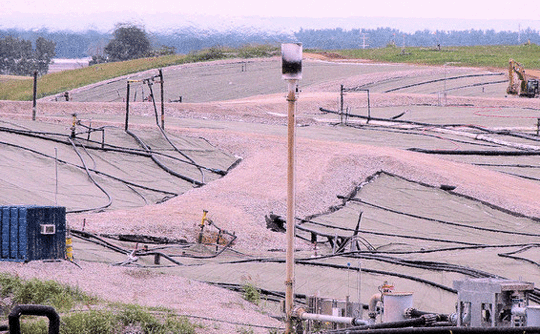
In May, almost 50 years after the waste was dumped at West Lake, the Environmental Protection Agency acknowledged what many residents had long feared: Radiological waste was spread throughout the West Lake Landfill, not confined to two specific portions as officials had long maintained.
The West Lake Landfill contamination was discovered in 1974. It was designated a Superfund site in 1990, and there is still no date certain for when the cleanup will begin.
MuckRock, by Allison Kite, Edited by Derek Kravitz, Jason Hancock 12 July 23
For kids like Sandy Mitchell, Ted Theis and Janet Johnson, childhood in the North St. Louis County suburbs in the 1960s and ‘70s meant days playing along the banks or splashing in the knee-deep waters of Coldwater Creek.
They caught turtles and tadpoles, jumped into deep stretches of the creek from rope swings and ate mulberries that grew on the banks.
Their families — along with tens of thousands of others — flocked to the burgeoning suburbs and new ranch style homes built in Florissant, Hazelwood and other communities shortly after World War II. When the creek flooded, as it often did, so did their basements. They went to nearby Jana Elementary School and hiked and biked throughout Fort Belle Fontaine Park.
Growing up, they never knew they were surrounded by massive piles of nuclear waste left over from the war.
Generations of children who grew up alongside Coldwater Creek have, in recent decades, faced rare cancers, autoimmune disorders and other mysterious illnesses they have come to believe were the result of exposure to its waters and sediment.
“People in our neighborhood are dropping like flies,” Mitchell said.
The earliest known public reference to Coldwater Creek’s pollution came in 1981, when the U.S. Environmental Protection Agency listed it as one of the most polluted waterways in the U.S.
By 2016, the Centers for Disease Control and Prevention was advising residents to avoid Coldwater Creek entirely. Cleanup of the creek is expected to take until 2038. A federal study found elevated rates of breast, colon, prostate, kidney and bladder cancers as well as leukemia in the area. Childhood brain and nervous system cancer rates are also higher.
“Young families moved into the area,” Johnson said, “and they were never aware of the situation.”
Theis, who grew up just 75 yards from the creek and played in it daily, died in August at the age of 60 from a rare cancer. Mitchell is a breast cancer survivor whose father died from prostate cancer. Johnson’s sister has an inoperable form of glioblastoma and other family members, including her father, daughter and nephew, have had various cancers.
Families who lived near Coldwater Creek were never warned of the radioactive waste. Details about the classified nuclear program in St. Louis were largely kept secret from the public. But a trove of newly-discovered documents reviewed by an ongoing collaboration of news organizations show private companies and the federal government knew radiological contamination was making its way into the creek for years before those findings were made public.

Radioactive waste was known to pose a threat to Coldwater Creek as early as 1949, records show. K-65, a residue from the processing of uranium ore, was stored in deteriorating steel drums or left out in the open near the creek at multiple spots, according to government and company reports.
A health expert who, as part of this project, was recently presented with data from a 1976 test of runoff to the creek concluded it showed dangerous levels of radiation 45 years ago.
Federal agencies knew of the potential human health risks of the creek contamination, the documents show, but repeatedly wrote them off as “slight,” “minimal” or “low-level.” One engineering consultant’s report from the 1970s incorrectly claimed that human contact with the creek was “rare.”
The Missouri Independent, MuckRock and The Associated Press spent months combing through thousands of pages of government records obtained through the Freedom of Information Act and interviewing dozens of people who lived near the contaminated sites, health and radiation experts and officials from government agencies.
Some of the documents, obtained by a nuclear researcher who focuses on the effects of radiation, had been newly declassified in the early 2000s. Others had been previously lost to history, packed away in government archives and not released publicly until now. (Read the documents here and learn more about our methodology here.)
All told, the documents from the now-defunct Atomic Energy Commission; its successors, the U.S. Department of Energy and the Nuclear Regulatory Commission; and the Environmental Protection Agency span the 75-year lifespan of the nuclear saga in St. Louis.
It starts in downtown St. Louis, where uranium was processed, and at the St. Louis airport, where it was stored at the end of the war; a monthslong move of the waste to industrial sites on Latty Avenue in suburban Hazelwood and a quarry in Weldon Spring, next to the Missouri River; an illegal dumping of waste at the West Lake Landfill in Bridgeton in the 1970s by a private company; and the declaration of the landfill as a federal toxic Superfund site in 1990.
Since then, the contaminated sites have been subjected to a seemingly endless cycle of soil, air and water testing, anxious community meetings attended by an ever-growing chorus of angry residents and panic when a subsurface smoldering event, similar to an underground fire, at the Bridgeton landfill threatened the radioactive waste buried nearby. That fire sent noxious and hazardous fumes into surrounding neighborhoods. The company in charge of the Bridgeton landfill now spends millions a year to contain it.
The documents have a familiar cadence: Year after year, decade after decade, government regulators and companies tasked with cleaning up the sites downplayed the risks posed by nuclear waste left near homes, parks and an elementary school. They often chose not to fully investigate the potential harms to public health and the environment around St. Louis………………………………………………………………………………………………………………………………………………
Illegal dumping of radioactive waste
When the Atomic Energy Commission sold the remnant nuclear waste, it anticipated being able to get rid of the more than 100,000 tons of toxic residues without spending any money.
The first company to purchase the waste, Continental Mining and Milling Co. of Chicago, borrowed $2.5 million to buy it in 1966 and then, shortly after, went bankrupt. Continental’s lender, Commercial Discount of Chicago, re-purchased the waste at auction for $800,000 and, after failing to get a bidder at a second auction, sold it to the Cotter Corp. To turn a profit, Cotter would ultimately dry the material and ship it to its uranium mill plant in Cañon City, Colorado………………………………………………………….
Cotter asked the government to bury the waste at Weldon Springs multiple times, in the late 1960s and early 1970s, but were rebuffed each time, meeting minutes show.
So, over a period of 2 ½ months in the summer and fall of 1973, Cotter took the problem into its own hands, without telling government regulators.
The company mixed the radioactive waste with tens of thousands of tons of contaminated soil from the site and illegally dumped it in a free, public landfill called West Lake, under three feet of soil and other garbage……………………………..
The AEC released Cotter from its St. Louis permit without immediate sanctions in 1974, but the company is partially responsible for the cleanup costs at the site.
Cotter’s parent company, General Atomics, did not respond to multiple requests for comment……………………………………………………………….
‘Tip of the iceberg’
In 1999, when Robbin Dailey moved into Spanish Village, a neighborhood of only a few dozen homes with its own park less than a mile from the back side of West Lake Landfill, she had no idea she was living next to a Superfund site.
When the EPA decided initially in 2008 to cap the waste at West Lake and leave it in place, Dailey never heard about the plan. Two years later, in 2010, she was alerted to the radioactive waste when a “subsurface smoldering event” — a type of chemical reaction that consumes landfilled waste like a fire but lacks oxygen — sent a pungent stench into the air around her home.
Dailey and her husband had their house tested and found thorium in the dust at hundreds of times natural levels. They sued the landfill’s owners, Republic Services, as well as the Cotter Corp. and Mallinckrodt.
Dailey said she and the companies had “resolved” their legal issues, but she, like all of the residents in North St. Louis County, was still in the dark about where within the landfill site the waste actually was.
Court records reveal a bevy of lawsuits against the private companies involved, at various times, with the West Lake Landfill. Not only that, but the landfill operators sued Mallinckrodt in an attempt to force the maker of the radioactive waste to pay for part of the cleanup.
Since the late 1970s, federal regulators repeatedly failed to uncover the true extent of contamination at West Lake.
In October 1977, the Nuclear Regulatory Commission used a helicopter to take hour-long passes back and forth over the landfill from an altitude of 200 feet. The goal was to measure gamma radioactivity coming from the site using specialized equipment.
While the effort correctly identified two areas with high levels of radiation, it had serious limitations, experts say. A survey of that type can miss contamination if it’s buried deep underground or if the ground is obstructed by vegetation.
And it did…………………………………
In May, almost 50 years after the waste was dumped at West Lake, the Environmental Protection Agency acknowledged what many residents had long feared: Radiological waste was spread throughout the West Lake Landfill, not confined to two specific portions as officials had long maintained……………………..
EPA officials said the contamination was found all over the property — in some areas at the surface and, in other areas, at great depths.
The agency looked at the dates on newspapers above and below the radioactive waste in two areas of the site previously thought to be uncontaminated to approximate when it was dumped, said Chris Jump, the EPA’s lead remedial project manager for the site.
It’s likely been there the whole time.
…………………………… Dawn Chapman, who left her job and co-founded Just Moms STL to advocate for the community around the landfill, said the EPA used to treat her and other activists like their fears were hysterical.
………………
A staffer with the Missouri Department of Natural Resources wrote in 1980 that contamination at the landfill was more severe and widespread than previously thought. In 1986 and 1990, onsite sampling showed possible radiological contamination in the groundwater in areas outside the sections of the landfill thought to be radioactive.
In 1987, the state classified the landfill as a hazardous waste site. The radioactive waste was in direct contact with the groundwater, the agency said in its annual report.
“Based on available information, a health threat exists due to the toxic effects of chemicals and low-level uranium wastes buried at the site and the possibility that off-site migration of these materials might occur,” the agency wrote.
…………………………. The West Lake Landfill contamination was discovered in 1974. It was designated a Superfund site in 1990, and there is still no date certain for when the cleanup will begin.
…………………………………….. Back to the drawing board
EPA’s first plan for the site would not have included moving the radioactive waste at all.
In 2008, the Environmental Protection Agency approved a plan for the landfill’s “primarily responsible parties” — the government and private contractors responsible for the site — to place a cap over the landfill and leave the waste in place.
Following criticism from the surrounding communities, EPA asked the Department of Energy, the Cotter Corp. and the landfill’s owner, Republic Services, to test the site again.
In the meantime, an underground fire brought a new level of scrutiny.
Starting in 2010, the Bridgeton landfill, which sits adjacent to the West Lake Landfill, has been experiencing a subsurface smoldering event.
………………………………………………….. The depth and severity of the new contamination the EPA found is not yet clear. The agency is preparing to release a report that will include the readings, a spokesperson said. A remedial design portion of the project is underway, the last step before the excavation begins.
But EPA doesn’t have a date certain as to when work on the project might start.
Curtis Carey, a spokesperson for the EPA, said despite decades of delays, the agency is planning next steps for the landfill “with a great deal more information because of our purposeful approach than was available 10, 15, 20 years ago.”
The following people contributed reporting, writing, editing, document review, research, interviews, photography, illustrations, analysis and project management. Chris Amico, Dillon Bergin, Kelly Kauffman and Derek Kravitz of MuckRock; Jason Hancock, Allison Kite and Rebecca Rivas of The Missouri Independent; Michael Phillis and Jim Salter of The Associated Press; Sarah Fenske, Theo Welling, Tyler Gross and Evan Sult of the Riverfront Times; EJ Haas, Madelyn Orr, Sydney Poppe, Mark Horvit and Virginia Young of the University of Missouri; Katherine Reed of the Association of Health Care Journalists; Liliana Frankel, Erik Galicia, Laura Gómez, Lauren Hubbard, Sophie Hurwitz and Steve Vockrodt; and Gerry Everding and Carolyn Bower of the original St. Louis Post-Dispatch team that published the seven-part “Legacy of the Bomb” series in 1989. https://www.muckrock.com/news/archives/2023/jul/12/st-louis-landfill-toxic-superfund/
Failed Fukushima Fixes Falling Like Dominoes

CounterPunch BY JOHN LAFORGE, 6 July, 23
“……………………………………………………………………Tepco’s cost-avoidance on its sea wall was only the first in a string of failures that have followed like dominos. The corruption led in July 2022 to convictions of four top Tepco executives for negligence and a fine of $95 billion.
In the 12 years since the meltdowns, Tepco’s disaster response efforts, always heralded as fixes, have been a series of hugely expensive failures: the “advanced” wastewater filter system “ALPS” has failed; the buried “ice wall” groundwater barrier has failed; containers made for the radioactive sludge produced by ALPS have failed; and plans to deal with millions of tons of collected debris — now kept in plastic bags — are being fiercely resisted by Japanese citizens.
Tons of cooling water is still being poured every day into Fukushima’s triple reactor wrecks to keep the hot melted fuel from again running amok. Additionally, groundwater gushes through the reactors’ foundations’ countless cracks and breaks caused by the staggering earthquake into what’s left of the structures’ sub-floors. All this water becomes highly radioactive as it passes over and through three giant masses — totaling at least 880 tonnes — of melted and mangled uranium and plutonium fuel.
You read that right. Fukushima’s destroyed reactor No. 3 was using fuel made partly of plutonium (see below), and so plutonium contaminates not just the ground and cooling water running over the melted fuel, but the ALPS apparatus, its filters, the containers used to store the radioactive sludge extracted by ALPS, and of course the sludge itself. You would think that the word plutonium would appear occasionally in news coverage of this ongoing disaster.
Failed ALPS means million-tonne do-over
Tepco’s jerry-rigged system dubbed Advanced Liquid Processing System or ALPS has never worked as planned. As early as 2013 the machinery was stalled. “The ALPS system failed to reduce radioactive elements, as claimed by the owner,” Power Technology, reported June 2, 2021.
Tepco has repeatedly said ALPS would remove 62 radioactive materials — all but tritium and carbon-14 from the continuously expanding volume of wastewater. Documents on a government committee’s website show that of 890,000 tonnes of water held at Fukushima, 750,000 tonnes, or 84 percent, contain higher concentrations of radioactive materials than legal limits allow, according to Reuters, Oct. 11, 2018. Among the long-lasting and deadly isotopes picked up by the water runs that through melted fuel wreckage are cesium, strontium, cobalt, ruthenium, carbon-14, tritium, iodine, plutonium, and at least 54 others.
In a June 14 op/ed for the China Daily, Shaun Burnie, the Senior Nuclear Specialist at Greenpeace East Asia, reported that the ALPS “has been a spectacular failure” and noted that:
“About 70 percent or 931,600 cubic meters of the wastewater needs to be processed again (and probably many more times) by the ALPS to bring the radioactive concentration levels below the regulatory limit for discharge. Tepco has succeeded in reducing the concentration levels of strontium, iodine, and plutonium in only 0.2 percent of the total volume of the wastewater, and it still requires further processing. But no secondary processing has taken place in the past nearly three years. Neither Tepco nor the Japanese government [have] said how many times the wastewater needs to be processed, how long it will take to do so, or whether the efforts will ever be successful. Greenpeace reported on these problems and why the ALPS failed nearly five years ago, and none of these issues has been resolved.”
Consequently, Tepco says it will re-filter over 70 percent of the 1.37 million tonnes of wastewater stored in giant tanks on site. Approximately 875,000 tons of contaminated water must be put through the system again, a process that will leave behind more of the highly radioactive and corrosive waste sludge.
Hoping to slow the rush to dumping, Ryota Koyama, a professor at Fukushima Univ. in Japan, said in an interview with China Media Group last May, “If the Japanese government or the Tokyo Elec Power Co really wants to discharge contaminated water into the sea, they need to explain in more detail whether the nuclides have really been removed.”
Ice wall also melts
Tepco intended to reduce the volume of groundwater gushing into the reactor building foundations by digging a $350 million “ice wall” into the earth between the destroyed reactors and the mountains behind. The company placed 1,568 heavy pipes filled with coolant 90 feet deep. It was to freeze the ground to form a deep impenetrable barrier, diverting groundwater to either side of the destroyed six-reactor Fukushima complex and prevent it seeping inside. It has failed to do so, The Guardian reported. In 2016, the Times of London reported that the scheme had only a “minor impact” on the volume of groundwater rushing in, which at the time still averaged 321 tonnes a day. Tepco announced then that it would retrofit the system and fix the leaks, but Science/The Wire reported in January 2022 that the company had admitted that its ice wall was “partially” melting. About 150 tonnes per day still gushes in.
Filtered sludge burning through containers
The ALPS filter has produced over 4,000 large containers filled with highly radioactive slurry and sludge left from the treatment.
Like the use of the word “advanced” in the name of the failed ALPS machinery, the cylinders used for the caustic, highly radioactive sludge are called “High Integrity Containers” or HICs, but in fact they are made of plastic and have degraded far faster than Tepco anticipated.
By March 2, Tepco had filled 4,143 containers, according to the daily Asahi Shimbun. At 30 cubic feet each, the cylinders now store a total of about 124,290 cubic feet of the highly radioactive sludge that will soon require expensive repackaging and, eventually, isolation from the biosphere for thousands of years.
Over two years ago, on June 8, 2021, Japan’s Nuclear Regulation Authority (NRA) announced that 31 of the containers had “exceeded their lifespans” and were corroded badly enough by the harsh toxic material that they must be replaced. The NRA also warned that another 56 cylinders would need replacing within two years.
Japan’s Mainichi newspaper reported that the government regulators blamed Tepco for “underestimating the radiation the 31 plastic cylinders were exposed to.” The company then claimed it would start moving the contents to new containers.
The Asahi Shimbun reported April 27, 2023, that the HICs must be stored in concrete boxes that can block radiation evidently being emitted by the HICs. https://www.asahi.com/ajw/articles/14883115
Rad waste to be dumped, deregulated
As early as next month, Japan intends to begin dispersing 1.37 million tonnes of contaminated wastewater into the Pacific Ocean. The government has steadfastly ignored fierce local and international opposition to the plan from the fishing community, marine scientists, Pacific Island nations, environmentalists, South Korea, and China. So far only South Korean politicians have suggested bringing international legal action against the dumping.
Since the 2011 meltdowns spewed radioactive materials broadly across Japan’s main island, some 14-million tonnes of cesium-contaminated soil, leaves, and debris have been scraped from the ground and stored in one-tonne bags. Citizens are struggling desperately prevent authorities from using the radioactive waste in road building or burning it in incinerators. The bags are currently stacked in tens of thousands of piles all over the region.
Even more protest was raised last February 10 when the NRA said it would allow Tepco to severely weaken its monitoring of the wastewater’s radioactivity. The NRA said would but the number of radioactive elements to be measured from 64 to 34.
The environment minister of Hong Kong — a coastal metropolis of 7.5 million people — charged in June that Japan is “violating its obligations under international law and endangering the marine environment and public health.” Minister Tse Chin-wan wrote in the daily Ta Kung Pao that Hong Kong would “immediately prohibit imports of seafood caught off the coast of Fukushima prefecture.”
Plutonium Spread Long Distances from Fukushima
Very few reports of the Fukushima catastrophic releases of radiation have mentioned plutonium contamination. Yet plutonium was used in fuel rods in Fukushima’s reactor number 3 which was destroyed by meltdown and several hydrogen explosions. Plutonium is one of the most toxic substances known to science, and fine particles are far more biologically hazardous than larger particles.
Following the March 14, 2011 explosion, experts worried about the release of extremely dangerous radioactive substances, and then a week later, on March 21 and 22, Tepco announced that it had detected plutonium in soil collected from its compound. (Fukushima Meltdown: The World’s First Earthquake-Tsunami-Nuclear Disaster, Takashi Hirose, Asahi Shimbun Publications, 2011, p. 51)
Now, studies published in the journals Science of the Total Environment, Nov. 15, 2020, and Chemosphere, July 2023, report that researchers found that cesium and plutonium “were transported over long distances,” and that deposits of them were recorded in “downtown Tokyo,” about 142 miles from the meltdowns.
According to the authors, very high concentrations of radioactive cesium were released during the accident as particles referred to as “cesium-rich micro-particles” (CsMPs). The researchers say CsMPs they found are mainly composed of silicon, iron, zinc, and cesium, and minor amounts of radioactive tellurium, technetium, molybdenum, uranium, and plutonium.
The studies, involving scientists from six countries and led by Associate Professor Satoshi Utsunomiya, a researcher at Kyushu University, found that “plutonium was included inside cesium-rich micro-particles that were emitted from the site.”
Radioactive CsMPs released from Fukushima are a potential health risk through inhalation. “Given the small size of the particles, they could penetrate into the deepest parts of the lung, where they could be retained,” Utsunomiya wrote. “The route of exposure of greatest concern is inhalation,” the authors reported, because plutonium, lodged in the lungs, can “remain for years.”
Utsunomiya summed up his team’s work saying, “It took a long time to publish results on particulate [plutonium] from Fukushima … but research on Fukushima’s environmental impact and its decommissioning are a long way from being over.”
John LaForge is a Co-director of Nukewatch, a peace and environmental justice group in Wisconsin, and edits its newsletter. https://www.counterpunch.org/2023/07/06/failed-fukushima-fixes-falling-like-dominoes/
Daniel Kovalik: Why Russia’s intervention in Ukraine is legal under international law

One must begin this discussion by accepting the fact that there was already a war happening in Ukraine for the eight years preceding the Russian military incursion in February 2022. And, this war by the government in Kiev against the Russian-speaking peoples of the Donbass – a war which claimed the lives of around 14,000 people, many of them children, and displaced around 1.5 million more even before Russia’s military operation – has been arguably genocidal. That is, the government in Kiev, and especially its neo-Nazi battalions, carried out attacks against these peoples with the intention of destroying, at least in part, the ethnic Russians precisely because of their ethnicity.
The argument can be made that Russia exercised its right for self-defense
10 July 23 https://www.rt.com/russia/554166-international-law-military-operation-ukraine/
Daniel Kovalik teaches International Human Rights at the University of Pittsburgh School of Law, and is author of the recently-released book Nicaragua: A History of US Intervention & Resistance.
For many years, I have studied and given much thought to the UN Charter’s prohibition against aggressive war. No one can seriously doubt that the primary purpose of the document – drafted and agreed to on the heels of the horrors of WWII – was and is to prevent war and “to maintain international peace and security,” a phrase repeated throughout.
As the Justices at Nuremberg correctly concluded, “To initiate a war of aggression … is not only an international crime; it is the supreme international crime differing only from other war crimes in that it contains within itself the accumulated evil of the whole.” That is, war is the paramount crime because all of the evils we so abhor – genocide, crimes against humanity, etc. – are the terrible fruits of the tree of war.
In light of the above, I have spent my entire adult life opposing war and foreign intervention. Of course, as an American, I have had ample occasion to do so given that the US is, as Martin Luther King stated, “the greatest purveyor of violence in the world.” Similarly, Jimmy Carter recently stated that the US is “the most war-like nation in the history of the world.” This is demonstrably true, of course. In my lifetime alone, the US has waged aggressive and unprovoked wars against countries such as Vietnam, Grenada, Panama, the former Yugoslavia, Iraq (twice), Afghanistan, Libya, and Somalia. And this doesn’t even count the numerous proxy wars the US has fought via surrogates (e.g., through the Contras in Nicaragua, various jihadist groups in Syria, and through Saudi Arabia and the UAE in the ongoing war against Yemen).
Indeed, through such wars, the US has done more, and intentionally so, than any nation on earth to undermine the legal pillars prohibiting war. It is in reaction to this, and with the express desire to try to salvage what is left of the UN Charter’s legal prohibitions against aggressive war, that a number of nations, including Russia and China, founded the Group of Friends in Defense of the UN Charter.
In short, for the US to complain about Russia’s invasion of Ukraine as a violation of international law is, at best, the pot calling the kettle black. Still, the fact that the US is so obviously hypocritical in this regard does not necessarily mean Washington is automatically wrong. In the end, we must analyze Russia’s conduct on its own merits.
One must begin this discussion by accepting the fact that there was already a war happening in Ukraine for the eight years preceding the Russian military incursion in February 2022. And, this war by the government in Kiev against the Russian-speaking peoples of the Donbass – a war which claimed the lives of around 14,000 people, many of them children, and displaced around 1.5 million more even before Russia’s military operation – has been arguably genocidal. That is, the government in Kiev, and especially its neo-Nazi battalions, carried out attacks against these peoples with the intention of destroying, at least in part, the ethnic Russians precisely because of their ethnicity.
While the US government and media are trying hard to obscure these facts, they are undeniable, and were indeed reported by the mainstream Western press before it became inconvenient to do so. Thus, a commentary run by Reuters in 2018 clearly sets out how the neo-Nazis battalions have been integrated into the official Ukrainian military and police forces, and are thus state, or at least quasi-state, actors for which the Ukrainian government bears legal responsibility. As the piece relates, there are 30-some right-wing extremist groups operating in Ukraine, that “have been formally integrated into Ukraine’s armed forces,” and that “the more extreme among these groups promote an intolerant and illiberal ideology… ”
That is, they possess and promote hatred towards ethnic Russians, the Roma peoples, and members of the LGBT community as well, and they act out this hatred by attacking, killing, and displacing these peoples. The piece cites the Western human rights group Freedom House for the proposition that “an increase in patriotic discourse supporting Ukraine in its conflict with Russia has coincided with an apparent increase in both public hate speech, sometimes by public officials and magnified by the media, as well as violence towards vulnerable groups such as the LGBT community.” And this has been accompanied by actual violence. For example, “Azov and other militias have attacked anti-fascist demonstrations, city council meetings, media outlets, art exhibitions, foreign students and Roma.”
As reported in Newsweek, Amnesty International had been reporting on these very same extremist hate groups and their accompanying violent activities as far back as 2014.
It is this very type of evidence – public hate speech combined with large-scale, systemic attacks on the targets of the speech – that has been used to convict individuals of genocide, for example in the Rwandan genocide case against Jean-Paul Akayesu.
To add to this, there are well over 500,000 residents of the Donbass region of Ukraine who are also Russian citizens. While that estimate was made in April 2021, after Vladimir Putin’s 2019 decree simplified the process of obtaining Russian citizenship for residents of the Donetsk and Lugansk People’s Republics, this means that Russian citizens were being subjected to racialized attack by neo-Nazi groups integrated into the government of Ukraine, and right on the border of Russia.
And lest Russia was uncertain about the Ukrainian government’s intentions regarding the Russian ethnics in the Donbass, the government in Kiev passed new language laws in 2019 which made it clear that Russian speakers were at best second-class citizens. Indeed, the usually pro-West Human Rights Watch (HRW) expressed alarm about these laws. As the HRW explained in an early-2022 report which received nearly no coverage in the Western media, the government in Kiev passed legislation which “requires print media outlets registered in Ukraine to publish in Ukrainian. Publications in other languages must also be accompanied by a Ukrainian version, equivalent in content, volume, and method of printing. Additionally, places of distribution such as newsstands must have at least half their content in Ukrainian.”
And, according to the HRW, “Article 25, regarding print media outlets, makes exceptions for certain minority languages, English, and official EU languages, but not for Russian” (emphasis added), the justification for that being “the century of oppression of … Ukrainian in favor of Russian.” As the HRW explained, “[t]here are concerns about whether guarantees for minority languages are sufficient. The Venice Commission, the Council of Europe’s top advisory body on constitutional matters, said that several of the law’s articles, including article 25, ‘failed to strike a fair balance’ between promoting the Ukrainian language and safeguarding minorities’ linguistic rights.” Such legislation only underscored the Ukrainian government’s desire to destroy the culture, if not the very existence, of the ethnic Russians in Ukraine.
Moreover, as the Organization of World Peace reported in 2021, “according to Ukraine’s National Security and Defense Council Decree no. 117/2021, Ukraine has committed to putting all options on the table to taking back control over the Russian annexed Crimea region. Signed on March 24th, President Zelensky has committed the country to pursue strategies that . . . ‘will prepare and implement measures to ensure the de-occupation and reintegration of the peninsula.’” Given that the residents of Crimea, most of whom are ethnic Russians, are quite happy with the current state of affairs under Russian governance – this, according to a 2020 Washington Post report – Zelensky’s threat in this regard was not only a threat against Russia itself but was also a threat of potentially massive bloodshed against a people who do not want to go back to Ukraine.
Without more, this situation represents a much more compelling case for justifying Russian intervention under the Responsibility to Protect (R2P) doctrine which has been advocated by such Western ‘humanitarians’ as Hillary Clinton, Samantha Power, and Susan Rice, and which was relied upon to justify the NATO interventions in countries like the former Yugoslavia and Libya. And moreover, none of the states involved in these interventions could possibly make any claims of self-defense. This is especially the case for the United States, which has been sending forces thousands of miles away to drop bombs on far-flung lands.
Indeed, this recalls to mind the words of the great Palestinian intellectual, Edward Said, who opined years ago in his influential work, ‘Culture and Imperialism’, that it is simply unfair to try to compare the empire-building of Russia with that of the West. As Dr. Said explained, “Russia … acquired its imperial territories almost exclusively by adjacence. Unlike Britain and France, which jumped thousands of miles beyond their own borders to other continents, Russia moved to swallow whatever land or peoples stood next to its borders … but in the English and French cases, the sheer distance of attractive territories summoned the projection of far-flung interest …” This observation is doubly applicable to the United States.
Still, there is more to consider regarding Russia’s claimed justifications for intervention. Thus, not only are there radical groups on its border attacking ethnic Russians, including Russian citizens, but also, these groups have reportedly been funded and trained by the United States with the very intention of destabilizing and undermining the territorial integrity of Russia itself.
As Yahoo News! explained in a January 2022 article:
“The CIA is overseeing a secret intensive training program in the U.S. for elite Ukrainian special operations forces and other intelligence personnel, according to five former intelligence and national security officials familiar with the initiative. The program, which started in 2015, is based at an undisclosed facility in the Southern U.S., according to some of those officials.
The program has involved ‘very specific training on skills that would enhance’ the Ukrainians’ ‘ability to push back against the Russians,’ said the former senior intelligence official.
The training, which has included ‘tactical stuff,’ is ‘going to start looking pretty offensive if Russians invade Ukraine,’ said the former official.
One person familiar with the program put it more bluntly. ‘The United States is training an insurgency,’ said a former CIA official, adding that the program has taught the Ukrainians how ‘to kill Russians.’”
(emphasis added).
To remove any doubt that the destabilization of Russia itself has been the goal of the US in these efforts, one should examine the very telling 2019 report of the Rand Corporation – a long-time defense contractor called upon to advise the US on how to carry out its policy goals. In this report, entitled, ‘Overextending and Unbalancing Russia, Assessing the Impact of Cost-Imposing Options’, one of the many tactics listed is “Providing lethal aid to Ukraine” in order to “exploit Russia’s greatest point of external vulnerability.”
In short, there is no doubt that Russia has been threatened, and in a quite profound way, with concrete destabilizing efforts by the US, NATO and their extremist surrogates in Ukraine. Russia has been so threatened for a full eight years. And Russia has witnessed what such destabilizing efforts have meant for other countries, from Iraq to Afghanistan to Syria to Libya – that is, nearly a total annihilation of the country as a functioning nation-state.
It is hard to conceive of a more pressing case for the need to act in defense of the nation. While the UN Charter prohibits unilateral acts of war, it also provides, in Article 51, that “[n]othing in the present Charter shall impair the inherent right of individual or collective self-defense… ” And this right of self-defense has been interpreted to permit countries to respond, not only to actual armed attacks, but also to the threat of imminent attack.
In light of the above, it is my assessment that this right has been triggered in the instant case, and that Russia had a right to act in its own self-defense by intervening in Ukraine, which had become a proxy of the US and NATO for an assault – not only on Russian ethnics within Ukraine – but also upon Russia itself. A contrary conclusion would simply ignore the dire realities facing Russia.
An Attack on the Zaporizhzhia Nuclear Plant Could Still be Catastrophic (- nuclear promoters minimise the risk)

Ed Lyman, July 7, 2023 https://blog.ucsusa.org/edwin-lyman/an-attack-on-the-zaporizhzhia-nuclear-plant-could-still-be-catastrophic/
Ukraine has accused Russia of planning to carry out a sabotage attack at the Zaporizhzhia nuclear plant that it has controlled since it seized it by force in March 2022. Although it reports this morning that this current threat is decreasing, the situation is fluid and the plant remains vulnerable to both accidents and attacks. While this ongoing crisis should not lead to panic, there is no cause for complacency either.
Unfortunately, the American Nuclear Society (ANS) and other commenters have been busy attempting to dismiss the risks that either an accident or a deliberate attack could lead to a significant radiological release with far-reaching consequences. Simply put, the ANS is dead wrong here, and by minimizing the potential risk it is endangering Ukrainians and others who may be affected by lulling them into a false sense of security and undermining any motivation to prepare for the worst. Effective emergency preparedness requires a clear-eyed understanding of the actual threat.
As I have pointed out previously, the fact that the six reactors have been in shutdown mode for many months (with one in “hot”, as opposed to “cold,” shutdown) does reduce the risk somewhat compared to a situation where reactors are operating or have only recently shut down. The decay heat in the reactors’ cores decreases significantly over time, although the rate of decrease slows down quite a bit after a few months. However, this does not mean, as ANS misleadingly implies, that there is no risk of a major radiological release that could disperse over a wide area. What it does mean is that if cooling were disrupted to one or more of the reactors, then there would be a longer period of time—days instead of hours—for operators to fix the problem before the cooling water in the reactor cores would start to boil away and drop below the tops of the fuel assemblies, causing the fuel to overheat and degrade.
Timely operator actions are even more critical for reactors that are shut down than for reactors that are operating, since some automatic safety systems are not functional during shutdown. Indeed, in a 1997 report, the International Atomic Energy Agency (IAEA) points out that “acceptable results for most of events during shutdown modes cannot be achieved without operator intervention.” The IAEA report states that both “preventive and mitigatory capabilities are somewhat degraded” in shutdown conditions, and lists a number of shutdown accident initiators for VVER-1000s.
One class of events of particular concern are “boron dilution” accidents, in which the concentration of boron in cooling water necessary to maintain reactors in a subcritical state becomes reduced and nuclear fission inadvertently begins in the core. This would not only increase the reactor temperature and the amount of heat that would have to be removed, but would also generate new quantities of troublesome short-lived fission products, such as iodine isotopes, which have previously decayed away in the months since shutdown. (This is why it remains important that potassium iodide—a drug that can block uptake of radioactive iodine in the thyroid—continue to be available to communities who may be in the path of any plume.)
It is also important to note that it is very unusual for reactors to be maintained for any length of time in either hot or cold shutdown modes with fuel remaining in the core, as is the case at Zaporizhzhia. Whenever nuclear reactors operate in unusual conditions that have not been thoroughly analyzed, risks increase.
Unfortunately, because of the incredible stress that the greatly reduced staff at Zaporizhzhia are under, and the unclear lines of command under Russian occupation, their ability to efficiently execute all the actions necessary to mitigate any accident or sabotage attack is in grave doubt. And if timely operator intervention does not occur, and the fuel assemblies are exposed, then a core melt accident similar to what was experienced in three of the reactors at Fukushima Daiichi is certainly possible.
Once the water level has dropped below the tops of the fuel assemblies, the original decay heat in the reactor core is no longer a relevant factor because when the zirconium cladding surrounding the fuel rods overheats and reacts with steam or air, it produces additional heat through a so-called exothermic reaction. The heat released in this way would soon become far greater than the original decay heat load and would accelerate the heat-up and degradation of the reactor core. At that point, it would be much harder for operators to arrest the progression of the core melt. Eventually, the molten core would drop to the floor of the steel reactor vessel and melt through it onto the floor of the containment building, where it would react with concrete to generate hot gases. Then, there are multiple ways in which the radioactive gases and aerosols generated during the core melt could be released into the environment, including a containment melt-through mode that is possible in VVER-1000 reactors such as Zaporizhzhia.
There is no technical reason why any resulting radioactive releases could not disperse at least as far as occurred at Fukushima, depending on the meteorological conditions. The heat of the radioactive plumes, which determines how high they will rise in the atmosphere and hence how far they can travel, largely come from the heat released by zirconium oxidation. The magnitude and extent of the resulting environmental contamination would depend on the “source term,” or the inventory and characteristics of the radioactive materials released from the site. Since up to six reactors and six spent fuel pools could be involved—especially if the site is deliberately sabotaged—the source term could ultimately be larger than that of Fukushima, where only three reactors were involved and containments remained largely intact.
Thus it is imperative that the international community take Ukraine’s warnings seriously and provide all the assistance it needs for emergency preparedness. Unjustified complacency could lead to a lack of resolve for addressing the danger, only increasing the potential for a long-lasting disaster that will compound the misery of the Ukrainian people.
Wishful thinking about nuclear energy won’t get us to net zero
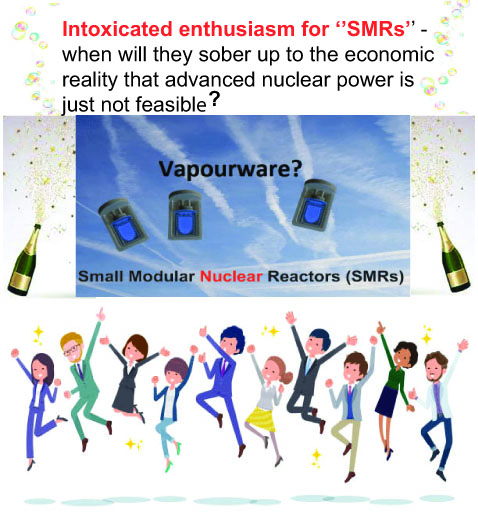
The climate problem is too serious to engage in unrealistic modelling exercises. Wishful thinking about nuclear energy will only thwart our ability to act meaningfully to lower emissions rapidly.
BY M.V. RAMANA AND SUSAN O’DONNELL | July 3, 2023 https://www.hilltimes.com/story/2023/07/03/wishful-thinking-about-nuclear-energy-wont-get-us-to-net-zero/391721/
On June 20, the Canada Energy Regulator (CER) released its 2023 Canada’s Energy Future report, developing scenarios for a path to net zero by 2050. These scenarios project roughly a tripling of nuclear energy generation capacity in Canada by 2050, seemingly reinforcing then-natural resources minister Seamus O’Regan’s statement in 2020 that there is “no path to net zero without nuclear.”
However, underlying both the scenarios and O’Regan’s contention is wishful thinking about the economics of nuclear energy, and how fast nuclear power can be scaled up.
The new nuclear capacity the report envisions consists of so-called small modular nuclear reactors (SMRs), which have so far not been built in Canada. Aside from refurbishing existing CANDU reactors, the CER does not think any more standard sized nuclear reactors will be built in Canada. Most of this buildup is to happen between 2035-2050, meaning that nuclear power will not help meet the government’s stated goal of decarbonizing the electricity grid by 2035.
But can SMRs be built rapidly after 2035? Only two Crown companies in the business of generating electricity for the grid have proposed to build SMRs: NB Power in New Brunswick, and Ontario Power Generation (OPG).
The reactor designs proposed for New Brunswick are cooled by molten salts and liquid sodium metal. Despite decades of development work and billions of dollars invested, major technical challenges have prevented molten salt reactors and sodium-cooled reactors from commercial viability, making it highly unlikely that the New Brunswick designs can be rapidly deployed in the time frame envisioned by the CER.
Assuming that OPG’s chosen design—the 300-megawatt BWRX-300—is the one to be deployed widely, then around 70 SMR units would need to be built and operating effectively on the grid between 2030-2050. The BWRX-300 design is yet to be approved by any safety regulator anywhere in the world.
But the report has an even more serious problem: economics. Nuclear power cannot compete economically, which is why its share of global electricity generation has declined from 17.5 per cent in 1996 to 9.2 per cent in 2022. Because SMRs lose out on economies of scale, they will produce even more expensive electricity.
The CER’s scenarios for nuclear power are based on the Electricity Supply Model, meant to calculate “the most efficient and cost-effective way to meet electricity demand in each region.” Such models are widely used in energy analysis and policymaking, but their utility depends on the validity of the assumptions used; garbage in, garbage out.
Two key parameters underlie the report’s scenarios: the capital cost of an SMR, and how that cost evolves with time. The CER’s assumptions in the two net-zero scenarios are that a SMR costs $9,262 per kilowatt in 2020, falling to $8,348 per kW by 2030, and to $6,519 per kW by 2050. Both these assumptions are ridiculously out of touch with the real world.
Consider the CAREM-25 SMR designed to feed 25 megawatts of electricity into the grid, being built in Argentina since 2014. Its original cost estimate in 2014 of US$446-million has escalated significantly since then, but even using these original costs, the project costs nearly $30,000 per kilowatt in 2022 Canadian dollars.
The NuScale design, arguably the closest to deployment in the United States, has been in development since 2007 with the build not yet begun. The January 2023 cost estimate for six NuScale SMRs with a total capacity of 462 megawatts is $9.3-billion, or over $26,000 per kilowatt in Canadian dollars.
Finally, the cost of the five-megawatt Micro Modular Reactor Project at Chalk River, Ont., was estimated by the proponent in May 2020 to be between $100- and $200-million. In 2022’s Canadian dollars, that works out to $22,000 to $44,000 per kilowatt.
In other words, the CER’s cost assumptions are wild underestimates, two-and-a-half to four times lower than the current evidence.
The second incorrect assumption is that costs will decrease with time. Both in the United States and France, the countries with the highest number of nuclear plants, the trend was the opposite: costs went up—not down—as more reactors were built. In both countries, the estimated construction cost of the most recent reactors being built—Vogtle in the United States and Flamanville-3 in France—have broken new records.
We need government organizations to do better. The climate problem is too serious for such unrealistic modelling exercises. Wishful thinking will only thwart our ability to act meaningfully to lower emissions rapidly.
M.V. Ramana is the Simons Chair in Disarmament, Global and Human Security and professor at the School of Public Policy and Global Affairs at the University of British Columbia. Susan O’Donnell is adjunct research professor and primary investigator of the CEDAR project at St. Thomas University in Fredericton, N.B.
‘Exploring Tritium’s Dangers’: a book review

By Robert Alvarez | June 26, 2023 https://thebulletin.org/2023/06/exploring-tritiums-danger-a-book-review/
Over the past 40 years, Arjun Makhijani has provided clear, concise, and important scientific insights that have enriched our understanding of the nuclear age. In doing so, Makhijani—now president of the Institute for Energy and Environmental Research—has built a solid reputation as a scientist working in the public interest. His most recent contribution to public discourse, Exploring Tritium’s Dangers, adds to this fine tradition.
A radioactive isotope of hydrogen, tritium is one the most expensive, rare, and potentially harmful elements in the world. Its rarity is underscored by its price—$30,000 per gram—which is projected to rise from $100,000 to $200,000 per gram by mid-century.
Although its rarity and usefulness in some applications gives it a high monetary value, tritium is also a radioactive contaminant that has been released widely to the air and water from nuclear power and spent nuclear fuel reprocessing plants. Makhijani points out that “one teaspoon of tritiated water (as HTO) would contaminate about 100 billion gallons of water to the US drinking water limit; that is enough to supply about 1 million homes with water for a year.”
Where tritium comes from. Since Earth began to form, the radioactive isotope of hydrogen known as tritium (H-3) has been created by interactions between cosmic rays and Earth’s atmosphere; through this natural process, the isotope continues to blanket the planet in tiny amounts. With a radioactive half-life of 12.3 years, tritium falls from the sky and decays, creating a steady-state global equilibrium that comes to about three to seven kilograms of tritium.
Tritium initially became a widespread man-made contaminant when it was spread across the globe by open-air nuclear weapons explosions conducted between 1945 and 1963. Rainfall in 1963 was found in the Northern Hemisphere to contain 1,000 times more tritium than background levels. Open-air nuclear weapons explosions released about 600 kilograms (6 billion curies) into the atmosphere. In the decades since above-ground nuclear testing ended, nuclear power plants have added even more to the planet’s inventory of tritium. For several years, US power reactors have been contaminating ground water via large, unexpected tritium leaks from degraded subsurface piping and spent nuclear fuel storage pool infrastructures.
Since the 1990s, about 70 percent of the nuclear power sites in the United States (43 out of 61 sites) have had significant tritium leaks that contaminated groundwater in excess of federal drinking water limits.
The most recent leak occurred in November 2022, involving 400,000 gallons of tritium-contaminated water from the Monticello nuclear station in Minnesota. The leak was kept from the public for several months. In late March of this year, after the operator could not stop the leak, it was forced to shut down the reactor to fix and replace piping. By this time, tritium reached the groundwater that enters the Mississippi River. A good place to start limiting the negative effects of tritium contamination, Makhijani recommends, is to significantly tighten drinking water standards.
Routine releases of airborne tritium are also not trivial. As part of his well-researched monograph, Makhijani underscores this point by including a detailed atmospheric dispersion study that he commissioned, indicating that tritium (HTO) from the Braidwood Nuclear Power Plant in Illinois has been literally raining down from gaseous releases – as it incorporates with precipitation to form tritium oxide (HTO)—something that occurs at water cooled reactors. Spent fuel storage pools are considered the largest source of gaseous tritium releases.
The largely unacknowledged health effects. Makhijani makes it clear that the impacts of tritium on human health, especially when it is taken inside the body, warrant much more attention and control than they have received until now. This is not an easy problem to contend with, given the scattered and fragmented efforts that are in place to address this hazard. Thirty-nine states, and nine federal agencies (the US Nuclear Regulatory Commission (NRC), Environmental Protection Agency (EPA), the Department of Energy (DOE), the Occupational Safety and Health Administration (OSHA), the Consumer Product Safety Commission, the Food and Drug Administration (FDA), and the Department of Agriculture are all responsible for regulating tritium.
This highly scattered regulatory regime has been ineffective at limiting tritium contamination, much less reducing it. For example, state and federal regulators haven’t a clue as to how many of some two million exit signs purchased in the United States—and made luminous without electric power by tritium—have been illegally dumped. For decades, tritium signs, each initially containing about 25 curies (or 25,000,000,000,000 pCi) of radioactivity, have found their way into landfills that often contaminate drinking water. One broken sign is enough to contaminate an entire community landfill. There are no standards for tritium in the liquid that leaches from landfills, despite measurements taken in 2009 indicating levels at Pennsylvania landfills thousands of times above background.
Adding to this regulatory mess, is the fact that federal standards limiting tritium in drinking water only apply to public supplies, and not to private wells.
In past decades, regulators have papered over the tritium-contamination problem by asserting, when tritium leakage becomes a matter of public concern, that the tritium doses humans might receive are too small to be of concern. Despite growing evidence that tritium is harmful in ways that fall outside the basic framework for radiation protection, agencies such as the Nuclear Regulatory Commission remain frozen in time when it comes to tritium regulation.
The NRC and other regulating agencies are sticking to an outdated premise that tritium is a “mild” radioactive contaminant that emits “weak” beta particles that cannot penetrate the outer layers of skin. When tritium is taken inside the body (by, for example, drinking tritiated water), half is quickly excreted within 10 days, the agencies point out, and the radiation doses are tiny. Overall, the NRC implies its risk of tritium ingestion causing cancer is small.
But evidence of harm to workers handling tritium is also growing. Epidemiologists from the University of North Carolina reported in 2013, that the risk of dying from leukemia among workers at the Savannah River Plant following exposure to tritium is more than eight times greater (RBE-8.6) than from exposure to gamma radiation (RBE-1). Over the past several years, studies of workers exposed to tritium consistently show significant excess levels of chromosome damage.[1]
The contention that tritium is “mildly radioactive” does not hold when it is taken in the body as tritiated water—the dominant means for exposure. The Defense Nuclear Facility Safety Board—which advises the US Energy Department about safety at the nation’s defense nuclear sites—informed the secretary of energy in June 2019 that “[t]ritiated water vapor represents a significant risk to those exposed to it, as its dose consequence to an exposed individual is 15,000 to 20,000 times higher than that for an equivalent amount of tritium gas.”
As it decays, tritium emits nearly 400 trillion energetic disintegrations per second. William H. McBride, a professor of radiation oncology at the UCLA Medical School, describes these disintegrations as “explosive packages of energy” that are “highly efficient at forming complex, potentially lethal DNA double strand breaks.” McBride, underscored this concern at an event sponsored by the National Institutes of Health, where he stated that “damage to DNA can occur within minutes to hours.” [2]
“No matter how it is taken into the body,” a fact sheet from the Energy Department’s Argonne National Laboratory says, “tritium is uniformly distributed through all biological fluids within one to two hours.” During that short time, the Defense Nuclear Facility Safety Board points out that “the combination of a rapid intake and a short biological half-life means a large fraction of the radiological dose is acutely delivered within hours to days…”
A new approach to tritium regulation. Makhijani pulls together impressive evidence clearly pointing to the need for an innovative approach that addresses, in addition to cancer, a range of outcomes that can follow tritium exposure, including prenatal and various forms of genomic damage. In particular, he raises a key point about how physics has dominated radiation protection regulation at the expense of the biological sciences.
It all boils down to estimation of a dose as measured in human urine based on mathematical models. For tritium, dose estimation can be extraordinarily complex (at best) when it is taken inside the body as water or as organically bound, tritide forms. So the mathematical models that can simplify this challenge depend on “constant values” that provide the basis for radiation protection.
In this regard, the principal “constant value” holding dose reconstruction and regulatory compliance together is the reliance on the “reference man.” He is a healthy Caucasian male between the age of 20 to 30 years, who exists only in the abstract world.
Use of the reference man standard gives rise to obvious (and major) questions: What radiation dose limit is necessary to protect the “reference man” from serious genomic damage? And what about protection of more vulnerable forms of human life?
According to the 2006 study by the National Research Council, healthy Caucasian men between the age of 20 and 30 are about one-tenth as likely to contract a radiation-induced cancer as a child exposed to the same external dose of gamma radiation while in the womb.
In his monograph, Makhijani underscores the need to protect the fetus and embryo from internal exposures to tritium—a need largely being side-stepped by radiation protection authorities. “Tritium replaces non-radioactive hydrogen in water, the principal source of tritium exposure,” Makhijani writes, pointing to unassailable evidence that tritium “easily can cross the placenta and irradiate developing fetuses in utero, thereby raising the risk of birth defects, miscarriages, and other problems.”
He is not alone in such an assessment. According a 2022 medical expert consensus report on radiation protection for health care professionals in Europe, “The greatest risk of pregnancy loss from radiation exposure is during the first 2 weeks of pregnancy, while between 2-8 weeks after conception, the embryo is most susceptible to the development of congenital malformations because this is the period of organogenesis.”
In the United States, the Nuclear Regulatory Commission’s efforts to reduce exposure limits and protect pregnant women and their fetuses is best described as foot-dragging. By comparison, the required limit for a pregnant worker in Europe to be reassigned from further exposure is one-fifth the US standard—and was adopted nearly 20 years ago.
Long-term environmental retention. A 2019 study put forward the first ever empirical evidence of very long-term environmental retention of organically bound tritium (OBT) in an entire river system, deposited by fallout from atmospheric nuclear weapons explosions.
When released into the environment, tritium atoms can replace hydrogen atoms in organic molecules to form organically bound tritium, which is found soil, and river sediments, vegetation, and a wide variety of foods. It’s been more than a half century since the ratification of the Limited Test Ban Treaty, and tritium released through nuclear weapons testing has undergone significant decay. Yet because of the long retention of organically bound tritium, in greater than expected concentrations, it still remains a contaminant of concern.
For instance, despite its 12.3-year half-life, a much larger amount of organically bound tritium from nuclear tests than previously assumed is locked in Arctic permafrost, raising concerns about widespread contamination as global warming melts the Arctic. Organically bound tritium can reside in the body far longer than tritiated water, to consequently greater negative effect.[3]
Nuclear weapons, nuclear power, and tritium. The tritium problem has several dimensions that relate directly to the world’s current and future efforts vis a vis nuclear power and nuclear weapons.
Now that nuclear power reactors are closing down, especially in the aftermath of the Fukushima accident, the disposal of large volumes of tritium-contaminated water into lakes, rivers, and oceans is becoming a source of growing concern around the world. The Japanese government has approved the dumping of about 230 million gallons of radioactive water, stored in some 1,300 large tanks sitting near the Fukushima nuclear ruins, into the Pacific Ocean. Once it incorporates into water, tritium is extraordinarily difficult, if not impossible to remove.
Protests in Japan by a wide segment of the public and in several other nations—including Russia, the Marshall Islands, French Polynesia, China, South Korea and North Korea—object to the disposal of this large volume of contaminated water into near-shore waters.
Then there’s the matter of boosting the efficiency and destructive power of nuclear weapons with tritium gas—a use that has dominated demand for this isotope. Because five percent of the tritium in thermonuclear warheads decays each year, it has to be periodically replenished. Over the past 70 years, an estimated 225 kilograms of tritium were produced in US government reactors, principally at the Savannah River Plant in South Carolina. Those reactors were shuttered in 1988. Since 2003, tritium supplies for US nuclear warheads are provided by two Tennessee Valley Authority nuclear power reactors. The irradiation of lithium target elements in the reactors has fallen short of meeting demand because of excess tritium leakage into the reactor coolant.
The hazards of tritium production for weapons are far from trivial.
For instance, since June of 2019, the Defense Nuclear Facility Safety Board has taken the Energy Department to task for its failure to address the risk of a severe fire involving tritium processing and storage facilities at the Savannah River Site. According to the Board, such a fire may have a 40 percent chance of occurring during 50 years of operation and could result in potentially lethal worker doses greater than 6,000 rems—1,200 times the annual occupational exposure limit. Doses to the public would not be inconsequential. Meanwhile, the Energy Department is under pressure from the nuclear weapons establishment to step up demand for tritium. Unless there is “a marked increase in the planned production of tritium in the next few years,” the 2018 US Nuclear Posture Review concluded “our nuclear capabilities will inevitably atrophy and degrade below requirements.”
The Energy Department estimates it will take 15-20 years to achieve a major multibillion overhaul of its tritium production infrastructure.
Meanwhile, the quest for fusion energy highlights a startling fact: The amount of tritium required to fuel a single fusion reactor (should an economic, fusion-based power plant ever be created) will likely be far greater than the amount produced by all fission reactors and open-air bomb tests since the 1940s. A full-scale (3,000 megawatt-electric) fusion reactor is estimated to “burn” about 150 kilograms of tritium a year.[4]
The cost for a one-year batch of tritium fuel for a fusion reactor, based on the current market price, would be $4.5 billion. An annual loss to the environment from a single fusion reactor could dwarf the release of tritium from all nuclear facilities that currently dot the global landscape.
The tritium overview. Evidence is mounting not just in regard to increased health risks from tritium-contaminated water and from organically bound tritium, but also as relates to the harm tritium can visit on the unborn. At the same time, it has become clear that regulation of tritium in the United States is grossly insufficient to the current risk from tritium contamination, not to mention future risks that could arise if tritium production, use, and associated leakage rise. Arjun Makhijani provides a useful roadmap for sparing workers and the public from the dangers this pernicious contaminant will pose in the future, absent more effective regulation that includes lower limits for human tritium exposure.
Notes
[1] See: https://link.springer.com/article/10.1007/s004200050272; https://www.mdpi.com/2305-6304/10/2/94; https://www.jstor.org/stable/3579658; http://www.rbc.kyoto-u.ac.jp/db/Literature/THO-Occupational.html; and https://www.unscear.org/docs/publications/2016/UNSCEAR_2016_Annex-C.pdf
[2] William MacBride, UCLA School of Medicine Vice Chair for Research in Radiation, Principal Investigator of UCLA’s Center for Medical Countermeasures Against Radiation — National Institutes of Health, Jan 27, 2014. See: https://www.youtube.com/watch?v=XEH72v-yN9A
[3] See https://www.nature.com/articles/s41598-019-47821-1
[4] Advocates assume that only the initial loading of 150 kg will be needed, as the reactor will “breed” the remaining amount of tritium to run the plant after a year of operation.
“The Doomsday Machine”: Confessions of Daniel Ellsberg, Former Nuclear War Planner
Democracy Now, JULY 03, 2023
As we remember Pentagon Papers whistleblower Daniel Ellsberg, who died in June, we look at how he was also a lifelong anti-nuclear activist, stemming from his time working as a nuclear planner for the U.S. government. In December 2017, he joined us to discuss his memoir, The Doomsday Machine: Confessions of a Nuclear War Planner. “This was an actual war plan for how we would use the existing weapons,” he noted, “many of which I had seen already that time.”
“……………………………………… I was given the job of improving the Eisenhower plans, which was not a very high bar, actually, at that time, because they were, on their face, the worst plans in the history of warfare. A number of people who saw them, but very few civilians ever got a look at them. In fact, the joint chiefs couldn’t really get the targets out of General LeMay at the Strategic Air Command.
And there was a good reason for that: They were insane. They called for first-strike plans, which was by order of President Eisenhower. He didn’t want any plan for limited war of any kind with the Soviet Union, under any circumstances,……………………………….. however it got started, Eisenhower’s directed plan was for all-out war, in a first initiation of nuclear war, assuming the Soviets had not used nuclear weapons.
And that plan called, in our first strike, for hitting every city — actually, every town over 25,000 — in the USSR and every city in China. A war with Russia would inevitably involve immediate attacks on every city in China. In the course of doing this — pardon me — there were no reserves. Everything was to be thrown as soon as it was available — it was a vast trucking operation of thermonuclear weapons — over to the USSR, but not only the USSR. The captive nations, the East Europe satellites in the Warsaw Pact, were to be hit in their air defenses, which were all near cities, their transport points, their communications of any kind. So they were to be annihilated, as well.
………………………………………………….. If we were defending West Europe — Germany, for example — we were planning to destroy the continent in order to save it.
Six hundred million, that was a hundred Holocausts. And when I held the piece of paper in my hand that had that figure, that they had sent out unembarrassedly, you know, proudly, to the president — “Here’s what we will do” — I thought, “This is the most evil plan that has ever existed. It’s insane.”
………………………………. To start with, even if it were only the president, no one man — really, no one nation — should have the ability — the ability even — to threaten or to carry out a hundred Holocausts at his will. That machinery should never have existed. And it does exist right now, and every president has had that power, and this president does have that power.
But the recent discussions of that, which emphasize his sole authority to do that, don’t take account of the fact that he has authority to delegate. And he has delegated. Every president has delegated. I don’t know the details of what President Trump has done or since the Cold War. Every president in the Cold War, right through Carter and Reagan, had delegated, in fact, to theater commanders in case communications were cut off. That means that the idea that the president is the only one with sole power to issue an order that will be recognized as an authentic authorized order is totally false.
How many fingers are on buttons? Probably no president has ever really known the details of that. I knew, in ’61, for example, that Admiral Harry D. Felt in CINCPAC, commander-in-chief of Pacific, for whom I worked as a researcher, had delegated that to 7th Fleet, down to various commanders, and they, in turn, had delegated down to people. So when you say, “How many altogether feel authorized?” if their communications are cut off — and that happened part of every day in the Pacific when I was there — communications got better, but the delegations never changed. There’s — we’ve never allowed it to be possible that an enemy could paralyze our retaliation by hitting our president or our command and control.
And neither did the Russians. When President Carter and then President Reagan advertised the fact that their plans emphasized decapitation, hitting Moscow, above all, which the French and British always planned to do, by the way, with their smaller forces — and when that became clear, the Russians instituted what they called a dead hand, a perimeter system, in Russian, which assured that if Moscow was destroyed, other commanders would have the power and would be told to launch their strikes…………………………….
AMY GOODMAN: Pentagon Papers whistleblower Daniel Ellsberg, speaking on Democracy Now! in December 2017 about his book The Doomsday Machine: Confessions of a Nuclear War Planner. https://www.democracynow.org/2023/7/3/the_doomsday_machine_confessions_of_daniel
World’s Largest Fusion Project Is in Big Trouble, New Documents Reveal

The ITER project formally began in 2006, when its international partners agreed to fund an estimated €5 billion (then $6.3 billion), 10-year plan that would have seen ITER come online in 2016. The most recent official cost estimate stands at more than €20 billion ($22 billion), with ITER nominally turning on scarcely two years from now. Documents recently obtained via a lawsuit, however, imply that these figures are woefully outdated: ITER is not just facing several years’ worth of additional delays but also a growing internal recognition that the project’s remaining technical challenges are poised to send budgets spiraling even further out of control and successful operation ever further into the future.
With each passing decade, this record-breaking monument to big international science looks less and less like a cathedral—and more like a mausoleum.
The International Thermonuclear Experimental Reactor (ITER) is already billions of dollars over budget and decades behind schedule. Not even its leaders can say how much more money and time it will take to complete
By Charles Seife on June 15, 2023. https://www.scientificamerican.com/article/worlds-largest-fusion-project-is-in-big-trouble-new-documents-reveal/?fbclid=IwAR3siLk4iSD43-SE6sBStfYeTIl9YNeZ5QcLz27JgQwMd85DcYV7kUmciw8
It could be a new world record, although no one involved wants to talk about it. In the south of France, a collaboration among 35 countries has been birthing one of the largest and most ambitious scientific experiments ever conceived: the giant fusion power machine known as the International Thermonuclear Experimental Reactor (ITER).
But the only record ITER seems certain to set doesn’t involve “burning” plasma at temperatures 10 times higher than that of the sun’s core, keeping this “artificial star” ablaze and generating net energy for seconds at a time or any of fusion energy’s other spectacular and myriad prerequisites. Instead ITER is on the verge of a record-setting disaster as accumulated schedule slips and budget overruns threaten to make it the most delayed—and most cost-inflated—science project in history.
ITER is supposed to help humanity achieve the dream of a world powered not by fossil fuels but by fusion energy, the same process that makes the stars shine. Conceived in the mid-1980s, the machine, when completed, will essentially be a giant, high-tech, doughnut-shaped vessel—known as a tokamak—that will contain hydrogen raised to such high temperatures that it will become ionized, forming a plasma rather than a gas. Powerful magnetic and electric fields flowing from and through the tokamak will girdle and heat the plasma cloud so that the atoms inside will collide and fuse together, releasing immense amounts of energy. But this feat is easier said than done.
Since the 1950s fusion machines have grown bigger and more powerful, but none has ever gotten anywhere near what would be needed to put this panacea energy source on the electric grid. ITER is the biggest, most powerful fusion device ever devised, and its designers have intended it to be the machine that will finally show that fusion power plants can really be built.
The ITER project formally began in 2006, when its international partners agreed to fund an estimated €5 billion (then $6.3 billion), 10-year plan that would have seen ITER come online in 2016. The most recent official cost estimate stands at more than €20 billion ($22 billion), with ITER nominally turning on scarcely two years from now. Documents recently obtained via a lawsuit, however, imply that these figures are woefully outdated: ITER is not just facing several years’ worth of additional delays but also a growing internal recognition that the project’s remaining technical challenges are poised to send budgets spiraling even further out of control and successful operation ever further into the future.
The documents, drafted a year ago for a private meeting of the ITER Council, ITER’s governing body, show that at the time, the project was bracing for a three-year delay—a doubling of internal estimates prepared just six months earlier. And in the year since those documents were written, the already grim news out of ITER has unfortunately only gotten worse. Yet no one within the ITER Organization has been able to provide estimates of the additional delays, much less the extra expenses expected to result from them. Nor has anyone at the U.S. Department of Energy, which is in charge of the nation’s contributions to ITER, been able to do so. When contacted for this story, DOE officials did not respond to any questions by the time of publication.
The problems leading to these latest projected delays were several years in the making. The ITER Organization was extremely slow to let on that anything was wrong, however. As late as early July 2022, ITER’s website announced that the machine was expected to turn on as scheduled in December 2025. Afterward that date bore an asterisk clarifying that it would be revised. Now the date has disappeared from the website altogether. ITER leaders seldom let slip that anything was awry either. In February 2017 ITER’s then director general, the late Bernard Bigot, discussed its progress with DOE representatives. “ITER is really moving forward,” he said. “We are working day and night…. The progress is on schedule.” The timeline he presented implied that everything was on track. Construction of the ITER complex’s foundation, which incorporates an earthquake protection system with hundreds of tremor-dampening rubber- and metal-laminated plates, should have been almost complete. From there, assembly of the reactor itself was planned to begin in 2018. At the time of Bigot’s remarks, two of its major pieces—a massive magnetic coil to wrap around the doughnutlike tokamak and a large section of the vacuum vessel that makes up the tokamak’s walls—were supposed to be ready to ship within the month and by the end of the year, respectively. Instead the coil would take almost three more years to complete, as would the vessel sector. The pieces were completed in January and April 2020, respectively. In fact, a large proportion of the big components of the machine were behind schedule by a year or two years or even more. Soon ITER’s official start of assembly was bumped from 2018 to 2020.
Then, in early 2020, the COVID pandemic struck, slowing manufacturing and shipping of machine components.
Continue readingThe Voltaire Network on the collapse of Kiev. Ukraine -its past, and now
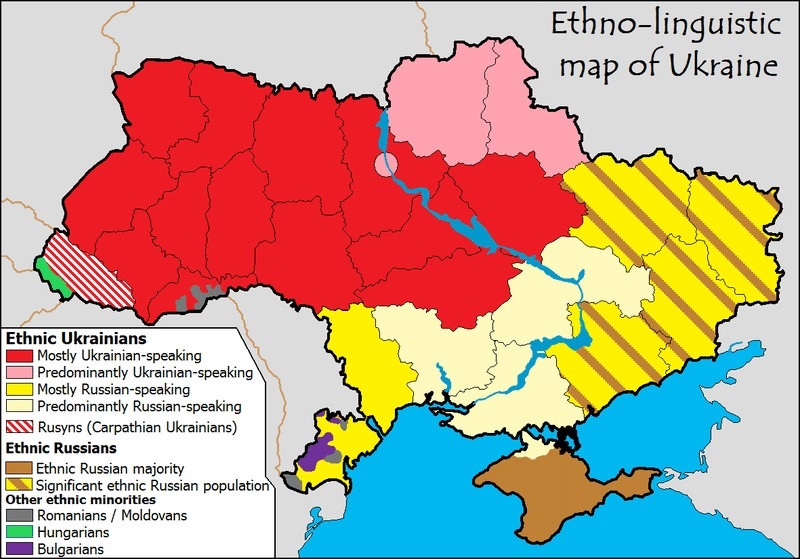
The collapse of Kiev, Thierry Meyssan, 14 June 23, Translation, Roger Lagassé
1 The fate of arms has decided. The moment of truth has spoken. The Ukrainian counter-offensive has failed miserably. NATO’s considerable armaments were useless. The battlefield is littered with corpses. All for nothing. The territories that joined the Russian Federation by referendum will remain Russian.
This “checkmate” not only marks the end of Ukraine as we have known it, but of Western domination that had staked its future on its lies.
The multipolar world may be born this summer at several international summits. A new way of thinking in which might no longer makes right.
This article was written on June 10. At that time, the only information available came from Russia and allied headquarters. Ukraine had imposed a total embargo on its counter-offensive. We should therefore have waited before publishing this text. However, we felt that if Ukraine had been able to break through Russia’s first line of defense, even if it hadn’t managed to get into the breach, it would have let us know. We are therefore publishing this analysis.
In six days, from June 4 to 10, 2023, the Ukrainian army launched its counter-offensive and suffered a terrible defeat.
During the summer, Russian forces built two defense lines in the part of Novorossia they liberated and in the Donbass. They prevent the passage of all armored vehicles.
Ukrainian forces have chosen a dozen points of attack to retake “enemy-occupied” territory. Their armored vehicles were unable to get through the first line of Russian defenses and piled up in front of it, where they were destroyed one by one by Russian artillery and suicide drones.
At the same time, the Russian army targeted missiles at command centers and arsenals inside Ukrainian territory and destroyed them.
The Ukrainian air defense system was destroyed by hypersonic missiles as soon as it was installed. In its absence, the Ukrainians were unable to carry out the maneuvers planned by Nato.
Russia did not use any of its new weapons, apart from its NATO weapons jamming system and some of its hypersonic missiles.
The border is now a long graveyard of tanks and men. Airports are full of smoking Mig-29 and F-16 wrecks.
The staffs of the United States, the Atlantic Alliance and Ukraine are passing the buck for this historic disaster. Hundreds of thousands of human lives and 500 billion dollars have been wasted for nothing. Western weapons, which shook the world in the 90s, are now worthless compared to the Russian arsenal of today. Strength has changed sides.
Two conclusions can already be drawn:
DO NOT CONFUSE THE UKRAINIAN ARMY WITH THE “INTEGRAL NATIONALISTS”
While there is no longer a Ukrainian army capable of high-intensity warfare, there are still the forces of the “integral nationalists” (sometimes called “Banderists” or “Ukrainian-Nazis”). But they are only trained for low-intensity warfare. Its leaders went to fight in Chechnya in the late 90s on behalf of the CIA and NATO secret services, and sometimes in Syria in the 2020s. They are trained in targeted assassinations, sabotage and civilian massacres. Nothing more.
They succeeded
1. In sabotaging the Russian-German-French-Dutch Nord Stream gas pipeline, plunging Germany and then the European Union into recession on September 26, 2022.
2. In sabotaging the Kerch Strait bridge (known as the “Crimean Bridge”), on October 8, 2022.
3. In attacking the Kremlin with drones, May 3, 2023
4. In using drones to attack the Ivan Kurs, the intelligence vessel defending the Turkish Stream gas pipeline in the Black Sea, on May 26, 2023.
5. In sabotaging the Kakhovka dam to split Novorossia in two, on June 6, 2023.
6. In sabotaging the Togliatti-Odessa ammonia pipeline to destroy the Russian mineral fertilizer industry, on June 7, 2023.
Just as in the two World Wars and the Cold War, they proved their terrorist capabilities, but played no decisive role on the battlefield.
Now more than ever, we need to distinguish between Ukrainians who thought they were defending their people, and the “integral nationalists” [1], who don’t care about their compatriots and have been trying for a century to eradicate Russians and their culture.
THE UKRAINE WE KNEW IS DEAD
Until now, Ukraine has been above all a power of communication. Kiev succeeded in making people believe that the 2014 coup d’état that overthrew a democratically elected president in favor of integral nationalists was a revolution. Likewise, it has managed to make people forget the way it crushed its citizens in the Donbass, refusing to give them access to public services, to pay civil servants’ salaries and pensions to the elderly and, ultimately, bombing its cities. Finally, it succeeded in convincing Westerners that Ukraine was a homogenous country with a single population living a common history.
As in most wars, there is also a “civil war” aspect [2]. Today, everyone can see that, contrary to what was claimed, Vladimir Putin’s analysis was not a reconstruction of history, but a factual truth. The people of Donbass are profoundly Russian. The people of Novorossia (including Crimea) are of Russian culture, albeit with a different history (they have never known serfdom). Ukraine has never existed as an independent state in history, apart from one decade, during the periods 1917-22 and 1941-45, and three other decades, since 1991.
During these three experiences, Kiev never stopped purging its people and massacring its citizens when the full nationalists were in power (1917-22 with Simon Petliura, 1941-45 with Stepan Bandera, and 2014-22 with Petro Poroshenko and Volodymyr Zelensky). In total, over the course of a century, the “integral nationalists” – as they call themselves – have murdered more than 3 million of their compatriots.
During the First World War, the people of Novorossia had already risen up around the anarchist Nestor Makhno; during the Second World War, the people of Donbass and Novorossia rose up as Soviets; while this time, they are fighting against the “integral nationalists” in Kiev with Russian forces.
The only way to stop these massacres is to separate the “integral nationalists” from the population of Russian culture they want to kill [3]. Since Nato staged a coup in 2014 and put them in power, there’s no other way but to note the country’s current division and leave them in power in Kiev. It is the Ukrainians, and they alone, who will have to overthrow them.
Current military operations have already done so. The part of the country liberated by the Russians voted in a referendum to join the Federation. However, last year’s Russian advance was halted by President Vladimir Putin as part of negotiations with Ukraine, conducted first in Belarus, then in Turkey. Odessa is still Ukrainian in law, even though it is culturally Russian. Transnistria is still Moldavian, even though it is culturally Russian.
The war is technically over. No offensive can alter the current borders. Admittedly, the fighting may drag on and a peace treaty is a long way off, but the die is cast. There is still a problem in Ukraine and Moldavia: Odessa and Transnistria are still not Russian. Above all, there remains a fundamental problem: in violation of their oral and written commitments, the members of the Atlantic Alliance have stockpiled US weapons on Russia’s borders, jeopardizing its security.
Jacques Baud on the legitimacy and legality of Russia’s Special Military Operation in Ukraine

Introduction. Jacques Baud is a former colonel of Swiss Strategic Intelligence, former colonel of the General Staff, specialist in Eastern countries, and former chief of doctrine of United Nations Peacekeeping Operations. He is author of several books published by Max Milo, including Ukraine Between War and Peace, Operation Z, and Governing by Fake News.
Jacques Baud on the legitimacy and legality of Russia’s SMO in Ukraine Dennis Riches, Lit by Imagination 13 June 23
Dialogue Franco-Russe, 2023/05/31 (partial transcript,)_ translated by Dennis Riches
Jacques Baud is a former colonel of Swiss Strategic Intelligence, former colonel of the General Staff, specialist in Eastern countries, and former chief of doctrine of United Nations Peacekeeping Operations. He is author of several books published by Max Milo, including Ukraine Between War and Peace, Operation Z, and Governing by Fake News.
Interview

Irina Dubois: You were a member of Strategic Intelligence Switzerland, a specialist in Eastern European countries at the United Nations where you participated in programs in Ukraine in 2014 and 2017. We organized a major conference at the Dialogue Franco-Russe in February of this year, and we dealt with many topics but perhaps not everything.
Today I want to come back to these questions, some sensitive questions perhaps, but certainly questions about the issues that interest our audience. And you are in Paris because your latest book Ukraine Between War and Peace was published by Max Milo yesterday.
First of all, is the Russian special operation, as it has been defined by Russia, or the war in Ukraine, as they say in the West, legal from the point of view of international law?
Jacques Baud: Obviously, there are many views, and naturally it depends on what you understand as the objective of this operation. Westerners tend to explain this special operation as Russia’s desire to occupy and seize Ukraine. Others say it’s because of NATO’s advance etc. These motives would not make an operation legal because you cannot go to war simply because your neighbor wants to join NATO. But that’s not what the Russians claim, either. It is Westerners who give this explanation.
The explanation given by Russia is an explanation that is, in my opinion, the only valid one. The idea was to protect the Russian-speaking populations of Donbass from the actions of the Ukrainian government. These abuses against the people of Donbass began… It’s really been a very long time, actually, but they really started to show a certain aspect from 2014, starting because of the new authorities, when the new unelected authorities in Kiev came to power and started what triggered, in reality, the revolt of the whole south of Ukraine.
It was the abolition of the Official Languages Act that made Russian an official language on a par with Ukrainian. The abolition of this law meant that Russian-speaking citizens could no longer interact with the authorities in Russian and had to do so in Ukrainian. And that’s what sparked massive revolts throughout southern Ukraine, not just in Donbass, but throughout southern Ukraine.
Westerners did not talk about this because they wanted to legitimize the coup d’état in Kiev— Maidan as it was called—but in reality, the whole south of the country ignited from Odessa to Kharkov. To restore order, so to speak, the Kiev government couldn’t use the Ukrainian army because it was also made up of Russian speakers, and the Russian-speaking Ukrainian soldiers didn’t want to shoot other Russian-speaking Ukrainians. This is why it was necessary to create these famous ultra-nationalist paramilitary units such as the Azov Regiment, the Pravi Sector, and all these paramilitary units, some of which are neo-Nazi—we will come back to this—and which have since 2014 committed violence against the populations of Donbass.
What happened in 2015—it is important to remember this—in order to stop this violence under the auspices of the OSCE and with the participation of France, Germany and Russia, France and Germany on the Ukrainian side, Russia on the side of the Donbass forces, which was not separatist—I repeat, which was not separatist—signed the Minsk Accords, which were supposed to bring a political solution to the conflict. But the Westerners did not respect their signatures. The Ukrainian government did not respect its signature, neither under President Petro Poroshenko nor President Volodymyr Zelenskiy.
So we arrived in a situation where in March 2021, Ukrainian President Volodymyr Zelensky issued a decree for the reconquest of Crimea and the south of the country, and from that moment, on March 24th, 2021, there was a concentration of Ukrainian forces on the borders of Donbass preparing an offensive against Donbass. That’s when the Russians started thinking about what was going to happen, and they saw that an intervention might be needed. They applied a principle that is a United Nations principle, which is the principle of the Responsibility to Protect [R2P]. This is the same principle that Russia invoked in 2008 to protect the populations of South Ossetia in Georgia. This Responsibility to Protect is a United Nations principle that was adopted in 2004-2005, and I can speak to it because I was responsible for the doctrine of peacekeeping operations at the United Nations in New York. I was responsible for the protection of civilians. So this is a subject that I know well.
The Responsibility to Protect consists of three pillars. The first is that every state is responsible for protecting its own population. So there Ukraine was obligated to protect its population in Donbass. However, we know that between 2014 and 2022, there were about 10,000 deaths in the Donbass and that in February 2022, the Ukrainian army was preparing to attack the Donbass. Therefore, the first pillar of Responsibility to Protect was not respected.
The second pillar of Responsibility to Protect is the role of friendly countries or allied countries, if you will, or surrounding countries in this case of Ukraine. These countries should have helped Ukraine to solve these internal problems. In this case it is very simple since for the Minsk Accords we had the German and French signatories. Yet we know, because Angela Merkel said it in November last year and François Hollande said it in December of last year, then Zelenski confirmed it in January of this year, that they never intended to put the agreements in place. Therefore, the political solution that constituted the second pillar of Responsibility to Protect was not respected, either, neither by Ukraine, nor by Western countries, nor even by the countries of the Security Council. The Minsk Accords had become a Security Council resolution.
There remains the third pillar of Responsibility to Protect, which is the possibility of a neighboring country intervening to help civilian populations. It is this third pillar that Russia is currently working on with its special operation. The term special operation is legitimate because the war, in fact, began in 2014. It had at first a political solution in February 2015 with the Minsk Accords, and these agreements were not respected. Thus we are in the same war that began in 2014, an internal war that initially extended until 2022. Therefore, the Russian intervention is indeed a special operation within a war that already existed, and it is important to say so.
So they are still within Responsibility to Protect, which is a principle. So what about legality? We have in principle the legitimacy of the Russian action. Legitimacy is the moral right, the political right to do so. Legality is the legal right to do so, but we will come back to that.
All the conditions that existed in Donbass at that time gave legitimacy to the Russian action in Donbass. So next is the problem of legality.
The Russians understood that very well. First of all, the Russians are a people who are very legalistic. We know that this is a subject that the authorities uphold. It was even the same with the Soviets long ago. It’s surprising, but that’s the way it is. Then the following thing happened. In order to intervene under the principle of the responsibility to protect, Russia invoked Article 51 of the Charter of the United Nations, which authorizes intervention for the benefit of a population. However, to do so it had to be done within the framework of a coalition. This legality involved a bit of hairsplitting, but it is nonetheless legal. To create this coalition, Russia had to recognize the independence of the two self-proclaimed republics of Donbass, the Luhansk Republic and the Donetsk Republic, which Russia had always refused to do before. This is important to say because the Russian authorities, Vladimir Putin in particular, had in mind a political solution to the problem. That is, the implementation of the Minsk Accords. But at the beginning of February 2022, with the Ukrainian forces preparing to attack Donbass, the Russians found that the political solution was now dead and that it was necessary to move to a military solution, if you will, and Vladimir Putin agreed to recognize the independence of the two republics so that he could ally with the two now recognized independent republics, signing treaties of friendship and assistance in case of danger. This is what was done on February 21st, 2022: the recognition of the two republics. Then there was a parliamentary process in the Moscow, in the Duma [legislature], in the Russian Federation, and then in the parliaments of the two republics. On this basis there was the signing of friendship treaties. On February 23rd both republics requested military assistance from Russia. At that time, in coalition with the two republics, Russia intervened under Article 51 of the Charter of the United Nations.
Thus, in reality, we have de facto legitimacy through Responsibility to Protect and legality through the application of Article 51 of the UN Charter. It is very important to stress that this legitimacy and legality is only valid to the extent that, in my opinion, Russia was seeking to protect populations. Russia’s calculation, I think, is that they intervened to help these populations, and that in order to conclude the conflict, Russia would integrate other political objectives such as the question of NATO, such as the question of neutralizing the presence of foreign troops in Ukraine etc. This is another problem, but that can be added in a later phase of negotiation. This is what happened, in fact, when Volodymyr Zelenskiy, at the end of March 2022, made proposals to Russia that took into consideration precisely the neutralization of Ukraine, the status of the Donbass republics etc. In reality, the policy of Russia is legitimate, and it is legal. I think that strategically it was much less false than what the Westerners always say………………………………………………………………………..
The issue of the Indigenous Peoples Act is also important. I mention it in my book, and I quote a parliamentarian of the Kiev Rada [parliament]. The law was passed on July 1st, 2021. For those who don’t know, it’s a law that gives different rights to Ukrainians based on their ethnicity. In history you must know that the Germans had done the same thing in 1935 with what was called the Nuremberg Laws, which gave different rights to German citizens and Jewish [German] citizens. So the principle of this type of law is that it gives different rights, not according to what one does but according to who one is……………………………………… in short, that from now on Russians will no longer have the same rights as others Ukrainian citizens. They will no longer even have the same rights, the same benefits, the same human rights, and will no longer enjoy constitutional rights like other Ukrainian citizens. So a very clear distinction was made between Ukrainian citizens and Russian-speaking citizens of Ukraine.
………. For me, this law expresses very well the ultra-nationalist character of the government……….. ultra-nationalist, most certainly neo-Nazi in the sense that they take elements of ideology that make distinctions between ethnicities. This is the element that goes beyond ultra-nationalism and could be called neo-Nazi………………
Irina Dubois: But why exactly is the neo-Nazi presence minimized by the press in the West? And why is this term almost never taken seriously?
Jacques Baud: It is never taken seriously because in the West they wanted to create a black-white perception. They wanted to avoid all shades of grey, and since 2014, in fact, we know that the Maidan Revolution was possible thanks to the intervention of ultra-nationalist, neo-Nazi extremists………………….. governments …….had to work with those who helped them carry out the coup. This is why we have this permanent presence of neo-Nazis in the security apparatus and the political apparatus of the country………………………
I have also put in my book—you have the excerpts—the writings or doctrines of these different movements. They are indeed talking about racial purity. It is the same as the Germany of the 1930s that wanted purity, blondes with blue eyes etc., the same thing.
In the West, of course, if we talk about this, we delegitimize the Ukrainians and we would have to recognize that Russia is correct. This is what is avoided in all our media but also among politicians. It’s in all Western media, particularly in Switzerland and France, where you are never told about the victims of Donbass. We never talk about them. And above all, you are never told about it as the possible reasons for the Russian intervention. Never……………………………….
…………… This difference in the treatment of minorities is something that Westerners don’t want to show because it would explain and justify Russian intervention. As I said, the invocation of Responsibility to Protect is legitimate.
Irina Dubois: They are not talking about neo-Nazis, but on the other hand, they are talking about war crimes by Russia such as acts of torture, and lately the deportation of children. Do we have evidence today of all these acts relayed by the press since the beginning, the very beginning of the conflict, especially in Bucha?
Jacques Baud: I start from the idea that in a conflict where you have thousands of men fighting each other, there are certainly war crimes on one side and on the other, perhaps more by one than by the other, but there are most certainly some. The problem is that they wanted to focus on only some of them. Bucha is one example, and the example of the children being another. ………………….. I may say it is a crime, but first there must be an impartial, objective, and international investigation.
Moreover, with regard to the children, we know that the decision of the International Criminal Court was made on the basis of a report made by an NGO and that American journalists tried to investigate this document. They found something very different from what was being told. They first found that the children who had been deported (so-called “deported” with quotation marks) had in fact simply been removed from the battlefield because in Donetsk, where these children came from, they were periodically bombed by Ukrainians. Therefore, these children were removed to safety with the agreement of their parents. There was no deportation but rather it was the parents who sent their children, in fact, to Russia, and journalists have even found that the concentration camps do not exist. Where were these children? In fact, they are at very good hotels. And the children have music lessons, play the cello, do cultural activities………………………………………………….
There are also many parents who did not dare to admit that they sent their children to Russia because they were afraid of reprisals from the Ukrainians. The work of these American journalists I know is very serious work. They are truly American people, so they are not Kremlin delegates. They are American, and I know from experience with them that they are people who do serious work. I have seen what they have done, and I can say that it is serious work. I have the impression, based on that, that the International Criminal Court went beyond what it was supposed to do. That is my feeling. They have deliberately—and I mean deliberately—because the report on which it is based—its judgments, finally—show that there was no desire on the part of Russia to abduct children, to separate them from their families. There was no evil intent in this case, so I question, personally, the moral, intellectual, and professional integrity of the people in charge of the International Criminal Court.
– End of interview excerpt – more https://wordpress.com/read/feeds/34145837/posts/4755356855
The War in Ukraine Was Provoked—and Why That Matters to Achieve Peace

By recognizing that the question of NATO enlargement is at the center of this war, we understand why U.S. weaponry will not end this war. Only diplomatic efforts can do that.
Common Dreams, JEFFREY D. SACHS, May 23, 2023
George Orwell wrote in 1984 that “Who controls the past controls the future: who controls the present controls the past.” Governments work relentlessly to distort public perceptions of the past. Regarding the Ukraine War, the Biden administration has repeatedly and falsely claimed that the Ukraine War started with an unprovoked attack by Russia on Ukraine on February 24, 2022. In fact, the war was provoked by the U.S. in ways that leading U.S. diplomats anticipated for decades in the lead-up to the war, meaning that the war could have been avoided and should now be stopped through negotiations.
Recognizing that the war was provoked helps us to understand how to stop it. It doesn’t justify Russia’s invasion. A far better approach for Russia might have been to step up diplomacy with Europe and with the non-Western world to explain and oppose U.S. militarism and unilateralism. In fact, the relentless U.S. push to expand NATO is widely opposed throughout the world, so Russian diplomacy rather than war would likely have been effective.
The Biden team uses the word “unprovoked” incessantly, most recently in Biden’s major speech on the first-year anniversary of the war, in a recent NATO statement, and in the most recent G7 statement. Mainstream media friendly to Biden simply parrot the White House. The New York Times is the lead culprit, describing the invasion as “unprovoked” no fewer than 26 times, in five editorials, 14 opinion columns by NYT writers, and seven guest op-eds!
There were in fact two main U.S. provocations. The first was the U.S. intention to expand NATO to Ukraine and Georgia in order to surround Russia in the Black Sea region by NATO countries (Ukraine, Romania, Bulgaria, Turkey, and Georgia, in counterclockwise order). The second was the U.S. role in installing a Russophobic regime in Ukraine by the violent overthrow of Ukraine’s pro-Russian President, Viktor Yanukovych, in February 2014. The shooting war in Ukraine began with Yanukovych’s overthrow nine years ago, not in February 2022 as the U.S. government, NATO, and the G7 leaders would have us believe.
Biden and his foreign policy team refuse to discuss these roots of the war. To recognize them would undermine the administration in three ways. First, it would expose the fact that the war could have been avoided, or stopped early, sparing Ukraine its current devastation and the U.S. more than $100 billion in outlays to date. Second, it would expose President Biden’s personal role in the war as a participant in the overthrow of Yanukovych, and before that as a staunch backer of the military-industrial complex and very early advocate of NATO enlargement. Third, it would push Biden to the negotiating table, undermining the administration’s continued push for NATO expansion.
The archives show irrefutably that the U.S. and German governments repeatedly promised to Soviet President Mikhail Gorbachev that NATO would not move “one inch eastward” when the Soviet Union disbanded the Warsaw Pact military alliance. Nonetheless, U.S. planning for NATO expansion began early in the 1990s, well before Vladimir Putin was Russia’s president. In 1997, national security expert Zbigniew Brzezinski spelled out the NATO expansion timeline with remarkable precision.
U.S. diplomats and Ukraine’s own leaders knew well that NATO enlargement could lead to war…………………………………………………………………..
Ukraine’s leaders knew clearly that pressing for NATO enlargement to Ukraine would mean war. Former Zelensky advisor Oleksiy Arestovych declared in a 2019 interview “that our price for joining NATO is a big war with Russia.”
During 2010-2013, Yanukovych pushed neutrality, in line with Ukrainian public opinion. The U.S. worked covertly to overthrow Yanukovych, as captured vividly in the tape of then U.S. Assistant Secretary of State Victoria Nuland and U.S. Ambassador Geoffrey Pyatt planning the post-Yanukovych government weeks before the violent overthrow of Yanukovych. Nuland makes clear on the call that she was coordinating closely with then Vice President Biden and his national security advisor Jake Sullivan, the same Biden-Nuland-Sullivan team now at the center of U.S. policy vis-à-vis Ukraine.
…………………………………. Historian Geoffrey Roberts recently wrote: “Could war have been prevented by a Russian-Western deal that halted NATO expansion and neutralised Ukraine in return for solid guarantees of Ukrainian independence and sovereignty? Quite possibly.” In March 2022, Russia and Ukraine reported progress towards a quick negotiated end to the war based on Ukraine’s neutrality. According to Naftali Bennett, former Prime Minister of Israel, who was a mediator, an agreement was close to being reached before the U.S., U.K., and France blocked it.
While the Biden administration declares Russia’s invasion to be unprovoked, Russia pursued diplomatic options in 2021 to avoid war, while Biden rejected diplomacy, insisting that Russia had no say whatsoever on the question of NATO enlargement. And Russia pushed diplomacy in March 2022, while the Biden team again blocked a diplomatic end to the war.
By recognizing that the question of NATO enlargement is at the center of this war, we understand why U.S. weaponry will not end this war. Russia will escalate as necessary to prevent NATO enlargement to Ukraine. The key to peace in Ukraine is through negotiations based on Ukraine’s neutrality and NATO non-enlargement. The Biden administration’s insistence on NATO enlargement to Ukraine has made Ukraine a victim of misconceived and unachievable U.S. military aspirations. It’s time for the provocations to stop, and for negotiations to restore peace to Ukraine. https://www.commondreams.org/opinion/the-war-in-ukraine-was-provoked-and-why-that-matters-if-we-want-peace—
Fukushima waste-water plan a nuclear threat to Asia-Pacific
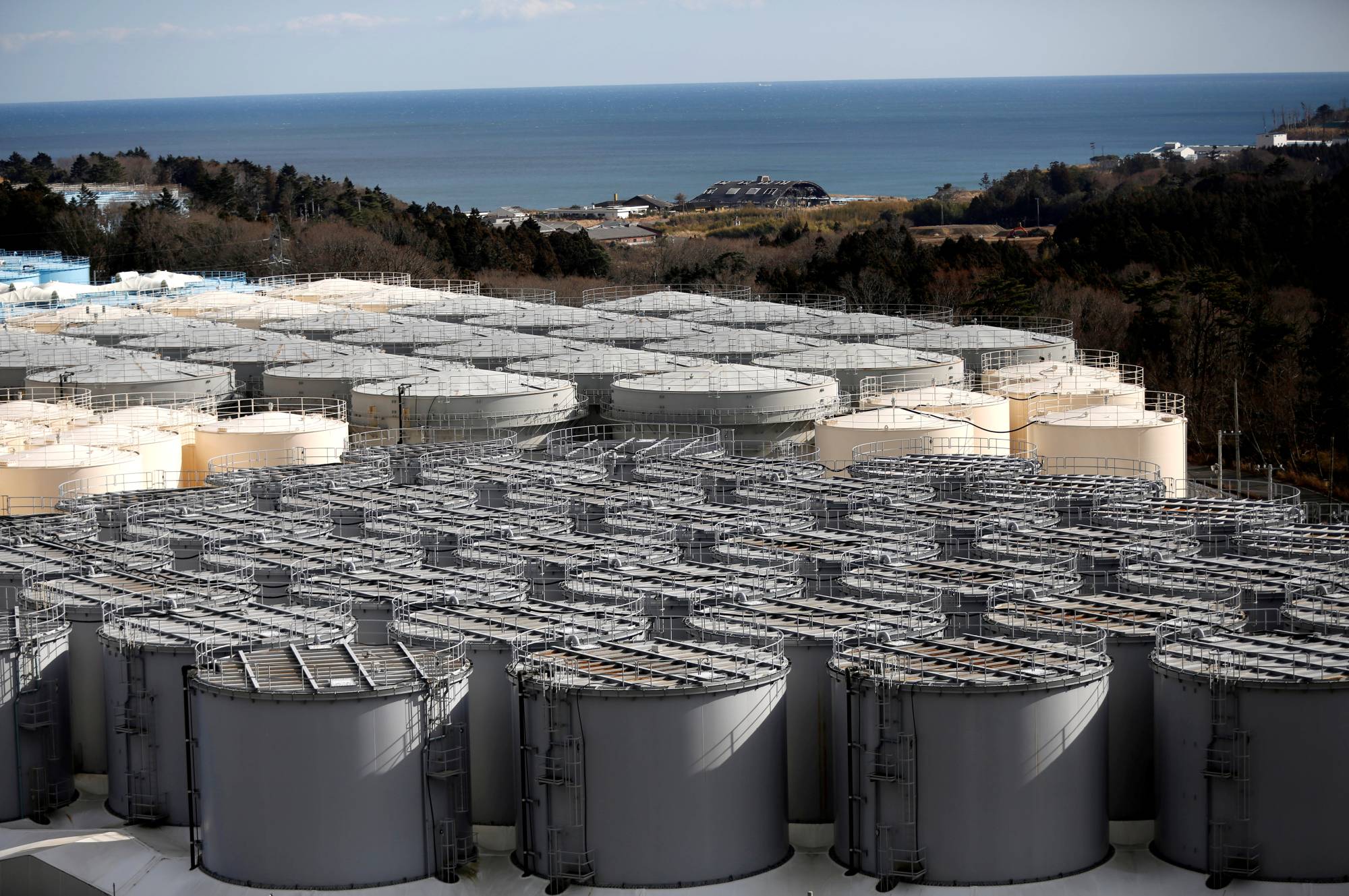
By Shaun Burnie | chinadaily.com.cn 2023-06-13 https://www.chinadaily.com.cn/a/202306/13/WS6487d3e0a31033ad3f7bbf92.html
Japan has decided to start discharging radioactive wastewater from the Fukushima Daiichi nuclear power plant into the Pacific Ocean very soon. The operator of the wrecked plant began tests on Monday of newly constructed facilities for discharging treated radioactive wastewater into the sea. Many myths and untruths have been spread about the nuclear-contaminated water. For example, the Japanese government has said, that according to the International Atomic Energy Agency, the global nuclear industry and some scientists, there is nothing to worry about the effects of the radioactive wastewater.
The Japanese government also claims that nearly all the radioactive materials will be removed from the wastewater using the Advanced Liquid Processing System (ALPS) with only tritium remaining before it is released into the Pacific. It is constantly stated that tritium cannot be removed from the wastewater, but would emit very weak radiation and therefore it will have no impact on either the marine environment or human health in the Asia-Pacific region and beyond.
False claims to mislead the Japanese public
As for Tokyo Electric Power Company, the owner of the Fukushima nuclear plant, it claims discharging the wastewater is necessary due to insufficient space for more storage tanks and for it to be able to fully decommissioning the Fukushima plant between 2041 and 2051. TEPCO also says the discharges will meet regulatory standards and will be lawful.
In the real world, it is a lot worse and a lot more complicated than what TEPCO, the Japanese government and the IAEA claims. The ALPS has been a spectacular failure, with major doubts about its effectiveness. In addition to tritium, all the radioactive carbon (C-14) in the wastewater will be released into the ocean along with many other radionuclides (plutonium isotopes, iodine-129, strontium-90). But despite the Japanese government and TEPCO “planning” to keep them below the regulatory limit, they will still be significant.
There is no safety threshold for artificial radioactivity in the environment, and technology does exist to process tritium from the tanks’ water. However, TEPCO and the Japanese government do not want to spend huge amounts of money needed to do so. Tritium is indeed a low energy radioactive material but that does not mean its effect is weak; if ingested, it has the potential to damage plants, animals and humans.
Recent research published by a leading radiation biologist shows scientific literature of the past 60-plus years is clear — tritium, in particular organically bound tritium (OBT), is biologically harmful to all forms of life. The persistence, bioaccumulation and potential biomagnification and increased toxicity of OBT increases the potential impact on the environment if tritiated water is discharged on land or in the sea.
Tritium more dangerous than previously believed
None of the current regulations in Japan (or worldwide) takes into full account the nature of organic forms of tritium. That organic forms of tritium have been found to bioaccumulate in phytoplankton, the base of the marine food chain, is deeply worrying. The fact that there has been no comprehensive environmental impact assessment of these and many other issues is outrageous, and suggests there is a deliberate underestimation of the accumulation and potential toxic effect of tritium on the environment.
Equally important, the many other radioactive materials in the Fukushima wastewater have the potential to cause damage to the environment and human health. In fact, Japan has sufficient storage capacity, including in the areas around the Fukushima plant. And storing the toxic wastewater, TEPCO cannot fully decommission the reactors at Fukushima in the next 20-30 years — probably not in this century. Rather than being lawful, the release of the wastewater into the sea will violate international law, specifically the United Nations Convention on the Law of the Sea.
One reason why the untruths and myths continue to be spread is that there is a lot at stake for the Japanese government and the nuclear industry. Japan’s energy policy is dependent on restarting many nuclear reactors shut down after the 2011 Fukushima disaster. So far, nine have resumed operations — but according to government policy, Japan needs 30-plus reactors by 2030.
Public opinion in Japan has been influenced by the government’s claim that it is safe to operate these nuclear reactors and that it is possible to recover from a three-reactor meltdown without consequences for human health and the environment. Of course, it’s not.
Sweeping real issue under the carpet
TEPCO, the Japanese government or the IAEA refuses to accept that the wastewater crisis points to a deeper nuclear crisis at the Fukushima plant. And it is getting worse, because groundwater entering the plant continues to become highly contaminated, while the water in the tanks requiring ALPS processing increases.
In November 2021, based on TEPCO data, there were 1,284,284 cubic meters of contaminated ALPS water in the storage tanks, of which 832,900 cu m needed further ALPS processing. As of April 20, 2023, the total volume of radioactive wastewater stored in the tanks was 1,330,944 cu m — a 3.6 percent increase in less than 2 years.
Worse, about 70 percent or 931,600 cu m of the wastewater needs to be processed again (and probably many times again) by the ALPS to bring the radioactive concentration levels below the regulatory limit for discharge. This is an increase of nearly 12 percent in less than 2 years.
TEPCO has succeeded in reducing the concentration levels of strontium, iodine and plutonium in only 0.2 percent of the total volume of the wastewater, and it still requires further processing. But no secondary processing has taken place in the past nearly three years. Neither TEPCO nor the Japanese government nor the IAEA wants to talk about this. They have not said how many times the wastewater needs to be processed, how long it will take to do so or whether the efforts will ever be successful.
Problems not new but none solved in 5 years
Greenpeace wrote about these problems and why the ALPS failed nearly five years ago; none of those issues has been resolved. Also, there is a high possibility of the ALPS failing in the future.
To proceed with their discharge plan, the Japanese government and TEPCO have been creating a false impression on the public that significant progress has been made in decommissioning the Fukushima plant. But fact is, the source of the problem — the highly radioactive fuel debris in reactor pressure vessels 1, 2 and 3 — continues to contaminate groundwater. Nearly 1000 cu m of water becomes highly contaminated every 10 days. So until the nuclear fuel is isolated from the environment, contaminated groundwater, potentially hundreds of thousands of cubic meters, will continue to accumulate.
While the Fukushima plant, after being destroyed by the earthquake-triggered tsunami in March 2011, released large amounts of radioactive particles into the environment, most of the radioactive inventory remains inside the melted fuel. As such, the damaged Fukushima plant on the edge of ocean is a long-term radioactive threat to the environment, including the marine environment. And this threat will be aggravated once Japan begins dumping the toxic water into the ocean.
TEPCO, the Japanese government and the IAEA refuse to acknowledge the fact that the decommissioning plan for the Fukushima plant is not attainable, and that they must embark on a comprehensive reassessment of the plan.
Crisis compounded by damage to reactor
The nuclear crisis in Fukushima is compounded by the damage to the reactors, in particular unit 1. The rapid meltdown of the nuclear fuel in March 2011 severely damaged the large concrete block the 440-ton reactor pressure vessel sits on. One of the agencies responsible for its decommissioning has recently demanded that TEPCO work out immediate countermeasures to prevent the possible collapse of the reactor. But with very high radiation levels inside the plant, it’s not clear whether any countermeasures are possible.
Building a very large containment structure covering the reactor buildings, like it was done at the Chernobyl plant in Ukraine after the nuclear disaster in 1986, is probably the only way to prevent highly radioactive dust entering the lower atmosphere in the event of a future collapse. But such a “solution” is not a currently an option for the Japanese government or the nuclear industry, as it would send the wrong message that the decommissioning process is not going according to plan.
There is no scientific, legal or moral justification for Japan to deliberately contaminate our shared and common marine environment. And concerned citizens, scientists, maritime lawyers, the fishing communities across the Asia-Pacific and the world’s leading oceanography universities and institutes have spread public awareness about the nuclear dangers, something that has rarely been done before.
There is a very strong legal case for challenging Japan’s decision to dump the wastewater into the sea but doing so is a major undertaking. For many reasons, no state or group of states may take up the challenge through UNCLOS this year. But since the environmental threat from the Fukushima plant will only intensify, future legal action should not be ruled out.
At a time when our oceans are under so many multiple threats, including from melting glaciers and related climate emergencies, overfishing and biodiversity loss and plastic pollution — there is no reason why Japan should be allowed to dump the radioactive water into the sea.
Greenpeace has been campaigning for protection for our oceans from radioactive contamination since the 1970s. And the most important thing I have learned in my 30 years with Greenpeace is that positive change is possible even if it does not often happen as early as it should but it can happen and people must never give up their efforts or hope.
The author is a senior nuclear specialist with Greenpeace East Asia and has worked in Japan and wider Asia for over 30 years.
1 This Month
10 March A LIVE WEBINAR THE REAL EFFECTS OF NUCLEAR POWER
What the Industry Isn’t Telling Us
1:00 PM Mountain, 2 pm Central, 3 pm Eastern. Live on the Keepers of the Water Facebook page



18 March Webinar @ 1 PM EST: An Assessment of SMR Projects: The Case of Canada
register for the zoom:
https://us02web.zoom.us/webinar/register/WN_o8BIIOUvQ2ONJR1nta65DQ#/registration


of the week – STOP SMALL MODULAR REACTORS IN CANADA
To see nuclear-related stories in greater depth and intensity – go to https://nuclearinformation.wordpress.com
-
Archives
- March 2026 (109)
- February 2026 (268)
- January 2026 (308)
- December 2025 (358)
- November 2025 (359)
- October 2025 (376)
- September 2025 (258)
- August 2025 (319)
- July 2025 (230)
- June 2025 (348)
- May 2025 (261)
- April 2025 (305)
-
Categories
- 1
- 1 NUCLEAR ISSUES
- business and costs
- climate change
- culture and arts
- ENERGY
- environment
- health
- history
- indigenous issues
- Legal
- marketing of nuclear
- media
- opposition to nuclear
- PERSONAL STORIES
- politics
- politics international
- Religion and ethics
- safety
- secrets,lies and civil liberties
- spinbuster
- technology
- Uranium
- wastes
- weapons and war
- Women
- 2 WORLD
- ACTION
- AFRICA
- Atrocities
- AUSTRALIA
- Christina's notes
- Christina's themes
- culture and arts
- Events
- Fuk 2022
- Fuk 2023
- Fukushima 2017
- Fukushima 2018
- fukushima 2019
- Fukushima 2020
- Fukushima 2021
- general
- global warming
- Humour (God we need it)
- Nuclear
- RARE EARTHS
- Reference
- resources – print
- Resources -audiovicual
- Weekly Newsletter
- World
- World Nuclear
- YouTube
-
RSS
Entries RSS
Comments RSS
 nuclear-news