Declassified Soviet files reveal horror crimes of Ukrainian Nazi collaborators
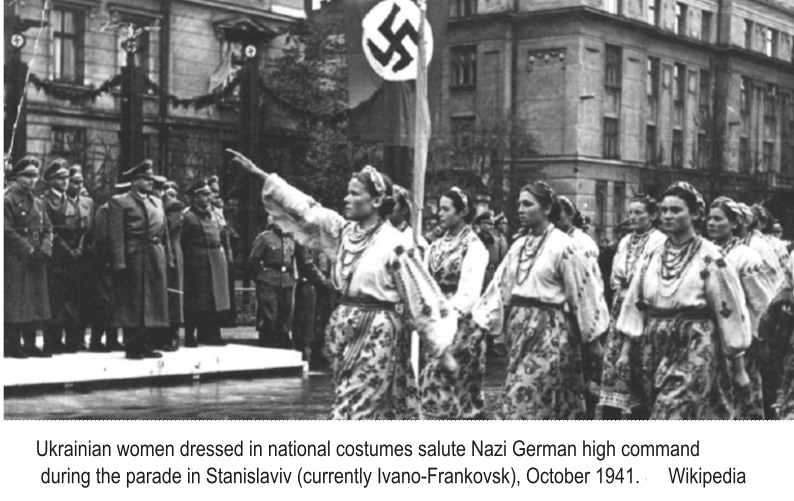
https://www.rt.com/russia/584980-kgb-documents-ukrainian-nazis/ 16 Oct 23
Nationalists began ethnic cleansing of Jews during WWII, even before German occupation began, documents show
RT has obtained a trove of declassified KGB documents, highlighting crimes committed by Ukrainian nationalists in Soviet territories occupied by Nazi Germany during WWII. The files include witness accounts of people who survived ethnic cleansing, as well as testimonies of Ukrainian collaborators captured by the Soviet domestic intelligence, then known as the NKVD.
Large swaths of present-day Ukraine fell under Nazi occupation in summer 1941 as German troops advanced deep into the Soviet Union. In fact, attacks on ethnic Jews and Poles, as well as local communists, began immediately as Soviet troops withdrew.
“In the first hours following the retreat of the Bolsheviks, the Ukrainian population has demonstrated commendable activity against Jews,” a status report from the Gestapo, Nazi Germany’s secret police, dated July 16, 1941, reads.
Said “commendable activities” involved burning down a synagogue in the western Ukrainian city of Dobromyl and the murder of some 50 Jews by an “angry crowd” in Sambor. In Sokal, the help of local “trustworthy Ukrainians” allowed Nazis to find and exterminate some 183 “communist Jews.” Moreover, Ukrainian nationalists rounded up and brutally abused around 1,000 Jews in Lvov, subsequently putting them into a local prison, with the facility and the ‘inmates’ eventually taken over by the Germans, according to the status report.
With the German occupation regime properly established, the ethnic cleansing process was streamlined, with the so-called Ukrainian Auxiliary Police, created by the Nazis in August 1941, playing a very active role in it. According to the testimony of the Ukrainian police commander in Belya Tserkov, a major city in the Kiev region, Mikhail Tomasevish, members of his unit were so eager to kill Jews that they acted even beyond orders given by their Nazi masters. Namely, the local police secretary took pleasure in “questioning” arrested Jews, beating them with a rubber tube, and freely taking them “away” afterwards, with none of the detained ever returning to the police HQ.
Tomasevich led the police unit until 1943, when he fled alongside retreating German forces but ultimately ended up in the NKVD’s custody. While Tomasevich claimed most of the city’s Jews were exterminated before he assumed the post, he admitted partaking, one way or another, in the killing of over 1,000 people. Under his leadership, the police continued to actively search for survivors, using various tricks to lure the remaining Jews in the city to their deaths.
“To identify hiding persons of Jewish nationality, the [German field] gendarmerie, through the [Ukrainian] police, organized so-called traps, i.e., it was announced throughout the city that henceforth Jews would be allowed to live freely, but only in select houses,” Tomasevich testified.
“I put all the Jews who believed that and settled in the houses on a special register, a special folder of cases, titled ‘Yids’ [a derogatory term for ‘Jews’], was opened,” he explained, adding that when the flow of Jews willing to settle in the houses waned, all of them, some 50 people, were detained and killed “around January or February 1942.”
Civilian Ukrainian authorities, established under German occupation, have actively contributed to ethnic cleansings as well. For instance, according to an indictment in a 1944 case about Nazi crimes committed in the city of Sarny and its vicinity, local Ukrainian mayor Marinyuk directly facilitated the extermination of the entire local Jewish population in August 1942.
Some 13,000 people were gathered at a local concentration camp, guarded by field gendarmerie and Ukrainian police, under the pretext of being relocated for “work” in Germany. Instead, the Jews ended up before firing squads, with children thrown into the death pits and buried alive. Only some 40–50 people managed to escape the massacre, with Ukrainian nationalist units in pursuit, and those who managed to capture escapees were awarded a sack of salt.
Monuments to Ukrainian Nazis in Canada

W.O. Munce, https://www.thepostil.com/monuments-to-ukrainian-nazis-in-canada/
Given the fact that Ukraine and Nazis are again making news, it is important to point out that there are indeed commemorative monuments to Ukrainian Nazis in Canada, located where the Ukrainian populations are the greatest. The reasons for such monuments are known to the Ukrainian community alone, but so it is essential to make a record of them here, along with a hint at what those being commemorated did back in the days of World War Two.
“Ukrainian partisans and their allies burned homes, shot or forced back inside those who tried to flee, and used sickles and pitchforks to kill those they captured outside. Churches full of worshipers were burned to the ground. Partisans displayed beheaded, crucified, dismembered, or disemboweled bodies, to encourage remaining Poles to flee… It was this maimed OUN-Bandera, led by Mykola Lebed’ and then Roman Shukhevych, that cleansed the Polish population from Volhynia in 1943” (The Reconstruction of Nations).
The 14th Division of the Ukrainian SS surrounded the village Huta Pieniacka from three sides… The people were gathered in the church or shot in the houses. Those gathered in the church—men, women and children—were taken outside in groups, children killed in front of their parents. Some men and women were shot in the cemetery, others were gathered in barns where they were shot” (British archives).
“One of their major tasks as UPA partisans was the cleansing of the Polish presence from Volhynia. Poles tend to credit the UPA’s success in this operation to natural Ukrainian brutality; it was rather a result of recent experience. People learn to do what they are trained to do, and are good at doing what they have done many times. Ukrainian partisans who mass-murdered Poles in 1943 followed the tactics they learned as collaborators in the Holocaust in 1942: detailed advance planning and site selection; persuasive assurances to local populations prior to actions; sudden encirclements of settlements; and then physical elimination of human beings. Ukrainians learned the techniques of mass murder from Germans. This is why UPA ethnic cleansing was striking in its efficiency, and why Volhynian Poles in 1943 were nearly as helpless as Volhynian Jews in 1942. It is one reason why the campaign against Poles began in Volhynia rather than Galicia, since in Volhynia the Ukrainian police played a greater role in the Final Solution” (The Reconstruction of Nations).
“On that day, early in the morning, soldiers of this division, dressed in white, masking outfits, surrounded the village. The village was cross-fired by artillery. SS-men of the 14th Division of the SS ‘Galizien’ entered the village, shooting the civilians rounded up at a church. The civilians, mostly women and children, were divided and locked in barns that were set on fire. Those who tried to run away were killed. Witnesses interrogated by the prosecutors of the Head Commission described the morbid details of the act. The crime was committed against women, children, and newborn babies” (The Institute of National Remembrance. Commission for the Prosecution of Crimes against the Polish Nation).
Related Articles:
Canada’s Honoring of Nazi Vet Exposes Ottawa’s Longstanding Ukraine Policy
Following the war, Canada’s Liberal government classified thousands of Jewish refugees as “enemy aliens” and held them alongside former Nazis in a network of internment camps enclosed with barbed wire, fearing that they would infect their new country with communism. At the same time, Ottawa placed thousands of Ukrainian veterans of Hitler’s army on the fast-track to citizenship.
By celebrating a Waffen-SS volunteer as a “hero,” Canada’s Liberal Party highlighted a longstanding policy that has seen Ottawa train fascist militants in Ukraine while welcoming in thousands of post-war Nazi SS veterans. Canada’s second most powerful official, Chrystia Freeland, is the granddaughter of one of Nazi Germany’s top Ukrainian propagandists.
SCHEERPOST, By Max Blumenthal / The Grayzone 1 Oct 23
In the Spring of 1943, Yaroslav Hunka was a fresh-faced soldier in the 14th Grenadier Division of the Waffen-SS Galicia when his division received a visit from the architect of Nazi Germany’s genocidal policies, Heinrich Himmler. Having presided over the battalion’s formation, Himmler was visibly proud of the Ukrainians who had volunteered to support the Third Reich’s efforts.
80 years later, the Speaker of Canada’s parliament, Anthony Rota, also beamed with pride after inviting Hunka to a reception for Volodymyr Zelensky, where the Ukrainian president lobbied for more arms and financial assistance for his country’s war against Russia.
“We have in the chamber today Ukrainian war veteran from the Second World War who fought for Ukrainian independence against the Russians and continues to support the troops today even at his age of 98,” Rota declared during the September 22 parliamentary event in Ottawa.
“His name is Yaroslav Hunka but I am very proud to say he is from North Bay and from my riding of Nipissing-Timiskaming. He is a Ukrainian hero, a Canadian hero, and we thank him for all his service,” Rota continued.
Gales of applause erupted through the crowd, as Prime Minister Justin Trudeau, Zelensky, Deputy Prime Minister Chrystia Freeland, Canadian Chief of Defense Staff Gen. Wayne Eyre and leaders of all Canadian parties rose from their seats to applaud Hunka’s wartime service.
Since the exposure of Hunka’s record as a Nazi collaborator – which should have been obvious as soon as the Speaker announced him – Canadian leaders (with the notable exception of Eyre) have rushed to issue superficial, face-saving apologies as withering condemnations poured in from Canadian Jewish organizations.
The incident is now a major national scandal, occupying space on the cover of Canadian papers like the Toronto Sun, which quipped, “Did Nazi that coming.” Meanwhile, Poland’s Education Minister has announced plans to seek Hunka’s criminal extradition.
The Liberal Party has attempted to downplay the affair as an accidental blunder, with one Liberal MP urging her colleagues to “avoid politicizing this incident.” Melanie Joly, Canada’s Foreign Minister, has forced Rota’s resignation, seeking to turn the the Speaker into a scapegoat for her party’s collective actions.
Trudeau, meanwhile, pointed to the “deeply embarrassing” event as a reason to “push back against Russian propaganda,” as though the Kremlin somehow smuggled an nonagenarian Nazi collaborator into parliament, then hypnotized the Prime Minister and his colleagues, Manchurian Candidate-style, into celebrating him as a hero.
To be sure, the incident was no gaffe. Before Canada’s government and military brass celebrated Hunka in parliament, they had provided diplomatic support to fascist hooligans fighting to install a nationalist government in Kiev, and oversaw the training of contemporary Ukrainian military formations openly committed to the furtherance of Nazi ideology.
Ottawa’s celebration of Hunka has also lifted the cover on the country’s post-World War Two policy of naturalizing known Ukrainian Nazi collaborators and weaponizing them as domestic anti-communist shock troops. The post-war immigration wave included the grandfather of Deputy Prime Minister Chrystia Freeland, who functioned as one of Hitler’s top Ukrainain propagandists inside Nazi-occupied Poland.
Though Canadian officialdom has worked to suppress this sordid record, it has resurfaced in dramatic fashion through Hunka’s appearance in parliament and the unsettling contents of his online diaries.
“WE WELCOMED GERMAN SOLDIERS WITH JOY”
The March 2011 edition of the journal of the Association of Ukrainian Ex-Combatants in the US contains an unsettling diary entry which had gone unnoticed until recently.
Authored by Yaroslav Hunka, the journal consisted of proud reflections on volunteering for the 14th Grenadier Division of the Waffen-SS Galicia. Hunka decribed the Nazi Wehrmacht as “mystical German knights” when they first arrived in his hometown of Berezhany, and recalled his own service in the Waffen-SS as the happiest time in his life.
“In my sixth grade,” he wrote, “out of forty students, there were six Ukrainians, two Poles, and the rest were Jewish children of refugees from Poland. We wondered why they were running away from such a civilized Western nation as the Germans.”
The Jewish Virtual Library details the extermination of Berezhany’s Jewish population at the hands of the “civilized” Germans: “In 1941 at the end of Soviet occupation 12,000 Jews were living in Berezhany, most of them refugees fleeing the horrors of the Nazi war machine in Europe. During the Holocaust, on Oct. 1, 1941, 500–700 Jews were executed by the Germans in the nearby quarries. On Dec. 18, another 1,200, listed as poor by the Judenrat, were shot in the forest. On Yom Kippur 1942 (Sept. 21), 1,000–1,500 were deported to Belzec and hundreds murdered in the streets and in their homes. On Hanukkah (Dec. 4–5) hundreds more were sent to Belzec and on June 12, 1943, the last 1,700 Jews of the ghetto and labor camp were liquidated, with only a few individuals escaping. Less than 100 Berezhany Jews survived the war.”
When Soviet forces held control of Berezhany, Hunka said he and his neighbors longed for the arrival of Nazi Germany. “Every day,” he recalled, “we looked impatiently in the direction of the Pomoryany (Lvov) with the hope that those mystical German knights, who give bullets to the hated Lyakhs are about to appear.” (Lyakh is a derogatory Ukrainian term for Poles).
In July 1941, when the Nazi German army entered Berezhany, Hunka breathed a sigh of relief. “We welcomed the German soldiers with joy,” he wrote. “People felt a thaw, knowing that there would no longer be that dreaded knocking on the door in the middle of the night, and at least it would be possible to sleep peacefully now.”
Two years later, Hunka joined the First Division of the Galician SS 14th Grenadier Brigade – a unit formed under the personal orders of Heinrich Himmler. When Himmler inspected the Ukrainian volunteers in May 1943 (below), he was accompanied by Otto Von Wachter, the Nazi-appointed governor of Galicia who established the Jewish ghetto in Krakow.
“Your homeland has become so much more beautiful since you have lost – on our initiative, I must say – those residents who were so often a dirty blemish on Galicia’s good name, namely the Jews…” Himmler reportedly told the Ukrainian troops. “I know that if I ordered you to liquidate the Poles … I would be giving you permission to do what you are eager to do anyway.”
“HITLER’S ELITE TORTURERS AND MURDERERS HAVE BEEN PASSED ON RMCP ORDERS”
Following the war, Canada’s Liberal government classified thousands of Jewish refugees as “enemy aliens” and held them alongside former Nazis in a network of internment camps enclosed with barbed wire, fearing that they would infect their new country with communism. At the same time, Ottawa placed thousands of Ukrainian veterans of Hitler’s army on the fast-track to citizenship.
The Ukrainian Canadian newsletter lamented on April 1, 1948, “some [of the new citizens] are outright Nazis who served in the German army and police. It is reported that individuals tattoooed with the dread[ed] SS, Hitler’s elite torturers and murderers have been passed on RCMP orders and after being turned down by screening agencies in Europe.”
The journal described the unreformed Nazis as anticommunist shock troops whose “‘ideological leaders’ are already busy fomenting WWIII, propagating a new world holocaust in which Canada will perish.”
In 1997, the Canadian branch of the Simon Wiesenthal Center charged the Canadian government with having admitted over 2000 veterans of the 14th Volunteer Waffen-SS Grenadier Division.
That same year, 60 Minutes released a special, “Canada’s Dark Secret,” revealing that some 1000 Nazi SS veterans from Baltic states had been granted citizenship by Canada after the war. Irving Abella, a Canadian historian, told 60 Minutes that the easiest way to get into the country “was by showing the SS tattoo. This proved that you were an anti-Communist.”
Abella also alleged that Prime Minister Pierre Trudeau (Justin’s father) explained to him that his government kept silent about the Nazi immigrants “because they were afraid of exacerbating relationships between Jews and Eastern European ethnic communities.”
Yaroslav Hunka was among the post-war wave of Ukrainian Nazi veterans welcomed by Canada. According to the city council website of Berezhany, he arrived in Ontario in 1954 and promptly “became a member of the fraternity of soldiers of the 1st Division of the UNA, affiliated to the World Congress of Free Ukrainians.”
Also among the new generation of Ukrainian Canadians was Michael Chomiak, the grandfather of Canada’s second-most-powerful official, Chrystia Freeland. Throughout her career as a journalist and Canadian diplomat, Freeland has advanced her grandfather’s legacy of anti-Russian agitation, while repeatedly exalting wartime Nazi collaborators during public events.
CANADA WELCOMES HITLER’S TOP UKRAINIAN PROPAGANDISTS……………………………………………………………………………………………………………. more https://scheerpost.com/2023/10/01/canadas-honoring-of-nazi-vet-exposes-ottawas-longstanding-ukraine-policy/
A Powerful minority makes the nuclear decisions, in a strategy of concealment
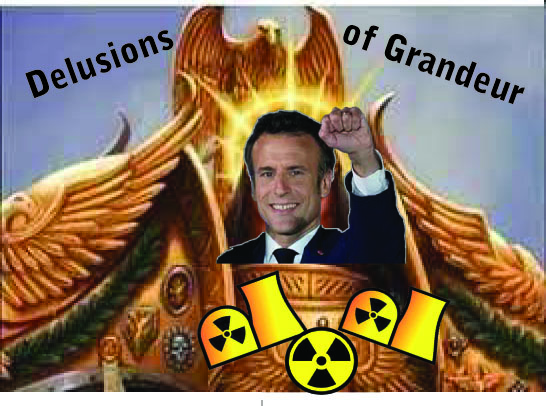
“Without civilian nuclear energy there is no military use of this technology – and without military use there is no civilian nuclear energy,” Macron said during a visit to Framatome’s Le Creusot facility in December 2020.
The French nuclear mullahs are at the heart of this international lobby. In particular, they are engaged in a communication strategy that consists of underestimating, trivializing or denying the effects of radiation, and insisting that it is possible to live with radiation in contaminated areas. In other words, a strategy of concealment.
By Kolin Kobayashi, https://beyondnuclearinternational.org/2023/09/24/a-strategy-of-concealment/—
This year marks the 13th year since the Fukushima accident began, yet the path to a conclusion is by no means clear. The declaration of a state of emergency still cannot be lifted because of the various dangers and difficulties that have arisen. Despite this, Prime Minister Kishida’s government is doing more than ever to promote nuclear power as a basic energy source. This approach is similar to that of the French administration, which is also trying to promote nuclear energy as a dual-use nuclear weapon.
The international nuclear lobby, which represents only a minority, has the influence and money to dominate the world’s population with immense power and has now united the world’s minority nuclear community into one big galaxy. Many of the citizens who have experienced the world’s three most serious civil nuclear accidents have clearly realized that nuclear energy is too dangerous. These citizens are so divided and conflicted that they feel like a helpless minority.
The current situation with the Fukushima accident
Let’s start with the total amount of radiation that the Fukushima-Daiichi nuclear power plant still contains today. The spent fuel at the site contains 85 times more cesium-137 than Chornobyl and 50,000 to 100,000 times more than the Hiroshima bomb.
The fuel is still stored in pools on the top floor of the reactor buildings (30 metres above ground), with the exception of Unit 3, the removal of which was completed in 2019.
Now, although 12 years have passed, the precise program for future decommissioning is unclear. While the approximate overall radiation levels are known, the buildings and reactors themselves, where the decommissioning and dismantling work will take place, are highly radioactive and cannot be easily penetrated by workers.
The true extent of the accident is not known, nor is the exact state of dispersion of the corium (the molten magma from the nuclear fuel rods in the reactor core). In Unit 1, for example, it is clear from the images taken by a robot that many parts of the circular concrete foundation supporting the pressure vessel have been damaged by the high heat of the corium. There is a significant risk of collapse in the event of a strong earthquake, and if the 440-tonne vessel collapses, it could hit the storage pool next to it. If this pool is damaged, even partially, another major disaster could occur.
Release of contaminated water
The amount of contaminated water is increasing all the time, as water continues to flow to cool the corium. Currently, around 90 tonnes of contaminated water are being added to the tanks every day. There are currently more than 1,000 tanks, and TEPCO says they will be full by February next year.
TEPCO had promised not to release water without the consent of local communities and fishermen, but this promise was not kept. The International Atomic Energy Agency (IAEA) dispatched a team of experts to investigate whether the radioactivity levels of the contaminated water treated by TEPCO met the international safety standards set by the IAEA, and the final report was submitted to the government on July 4. On the basis of this report, the Japanese government decided to release the water and began discharging water into the Pacific Ocean on August 24, releasing 7,800 tons in 17 days.
However, the IAEA does not have the scientific authority to make reference to the ecological impact of this water discharge, nor has it carried out such a long-term assessment. It is more of a political decision than a scientific one.
TEPCO and the Japanese government have said that releasing contaminated water is essential for decommissioning work, but there are still places to build storage facilities. There are also methods other than releasing the water into the ocean, such as solidifying it in mortar and storing it on the surface.
However, the regulatory committee and study group said they had considered five solutions: geological injection, hydrogen release, underground burial, steam release and ocean release. In the end, they chose the cheapest method.
What is the international nuclear lobby?
Today, the nuclear issue is globally interwoven. The raw material needed — uranium — as well as nuclear technology and radiation protection standards, cannot be managed by a single country.
First of all, nuclear energy is the dark side of the atomic bomb. Nuclear reactors designed to produce electricity were originally machines designed to produce plutonium for the manufacture of atomic bombs. So it was only natural that French president, Emanuel Macron, should advocate the complementary nature of civil nuclear energy and nuclear weapons. “Without civilian nuclear energy there is no military use of this technology – and without military use there is no civilian nuclear energy,” Macron said during a visit to Framatome’s Le Creusot facility in December 2020.
The realpolitik of the atomic bomb led to the creation of the IAEA in 1948. The five nuclear-weapon states on the UN Security Council promoted nuclear energy for peace and encouraged its development in order to monopolize nuclear weapons, and they made the IAEA a nuclear supervisory agency to ensure that no other country produced atomic bombs. The UN Member States were deceived by Eisenhower’s fine-sounding words “Atoms for Peace” to the UN General Assembly on 8 December 1953.
The IAEA controls nuclear energy throughout the world. But this international organization is neither objective nor impartial, nor does it conform absolutely to scientific truth. It is a highly political institution.
Ordinary citizens trust international organizations simply because they hear about them in UN reports. But the IAEA is constantly working to promote nuclear energy. The effects of radiation are trivialized or denied, as if they were not a problem, merely a manageable danger for nuclear power plants.
The effects of radiation are grossly underestimated. The data base on which the IAEA relies is that of Hiroshima and Nagasaki, collected by the Atomic Bomb Casualty Commission. These data are totally incomplete. They do not take into account people who were exposed to radiation more than 2 km from the hypocenters, people who entered the cities after the bombs were dropped, and people who were exposed to radiation from black rain in distant areas. In other words, low-dose radiation exposure is completely ignored.
The French nuclear mullahs are at the heart of this international lobby. In particular, they are engaged in a communication strategy that consists of underestimating, trivializing or denying the effects of radiation, and insisting that it is possible to live with radiation in contaminated areas. In other words, a strategy of concealment.
The famous Ethos project, which ran in Belarus from 1996 to 2001, ten years after the Chornobyl accident, seemed to be helping the population, but in fact it was consolidating the theory of acceptance of radiation. Jacques Lochard, former director of the CEPN (Centre d’étude sur l’Evaluation de la protection dans le domaine Nucléaire) in France, who carried out this project, quickly showed up in Fukushima in November 2011 and implemented the same strategy in a different form.
Lochard is the perfect example of the constantly revolving door among individuals from organizations that promote nuclear power and those involved in radiation protection. These circumstances are totally unknown to ordinary citizens.
The CEPN is an association with only four members: the CEA (Commissariat à l’énergie atomique et aux énergies alternatives), EDF (Électricité de France), Areva/Orano and the IRSN (Institut de radioprotection et de sûreté nucléaire). In other words, it is the embodiment of the French nuclear lobby and manages the French nuclear lobby’s communication on radiation protection.
The Chornobyl Ethos project and the CORE and SAGE projects that followed it, were organized and carried out by Lochard, now retired but appointed as a visiting professor at the Institute of Atomic Bomb Disease at Nagasaki University, and his right-hand man, Thierry Schneider. They have become respectable points of reference for the European Commission as a means of dealing with a nuclear accident.
The methods initiated by this minority of promoters will be imposed, with authority and money, on those who are victims of a future serious nuclear accident in Europe. According to this philosophy, there is no need to evacuate. We can live happily with radiation, even in contaminated areas.
In this way, the French nuclear lobby, in cooperation with the International Commission on Radiological Protection, the IAEA-UNSCEAR (United Nations Scientific Committee on the Effects of Atomic Radiation) and others, can assure us that we can overcome a serious nuclear accident, by simply adapting to radiation exposure. The phrase “let’s hope people have the strength to bounce back” is repeated. The word “resilience” has become a key word in this milieu.
But in Belarus and Ukraine, 37years after the Chornobyl nuclear disaster, 60% to 80% of children are still ill from the radiation resulting from Chornobyl. In Fukushima too, there are those 300 or more cases of thyroid cancer. The Japanese authorities still insist that in the case of Fukushima, the causal relationship between cancer and radiation is not yet known. This is despite the fact that this was admitted in the case of Chornobyl. It can therefore be said that at Chornobyl, as at Fukushima, the reality of the effects of radiation caused by the accidents is still not officially recognized.
France has clearly stated that nuclear weapons and nuclear power are the two wheels of the car, and President Macron has insisted that a total of 15 nuclear power plants will be built by 2050. Japan has also declared that it will continue to develop nuclear power plants in collaboration with France.
However, it is clear from the outset that if we continue to develop nuclear power plants, nuclear waste will continue to accumulate. At present, the storage pools at every nuclear power plant site — whether in Japan or France — are approaching the limit of their full capacity. However, no reliable method for the final disposal of high-level nuclear waste has yet been established.
In this way, the lessons of Chornobyl and Fukushima are not being applied at all, but rather, the actual health hazards are being covered up. Any so-called cleanup projects are being carried out for the sake of immediate interests only. In the end, they are forcing the victims to endure radiation exposure and ultimately abandoning them. This is because of the cover-up strategy of the international nuclear lobby in the background.
Kolin Kobayashi is a Tokyo-born France-based anti-nuclear activist and retired freelance journalist. He is president of the non-profit organization, Echo-Echanges.
The Discharge of Fukushima’s Radioactive Water could be a Precedent for Similar Actions

Obviously, it would be misleading to rely on the IAEA’s statements suggesting that radioactive wastewater does not pose any risk to global health. This information strengthens the likelihood that the IAEA did not reveal valid and precise radiation data regarding the Chornobyl accident and Zaporizhia nuclear power plant during the ongoing Ukrainian war either.
Pinar Demircan 7 Sept 23 https://www.dianuke.org/the-discharge-of-fukushimas-radioactive-water-could-be-a-precedent-for-similar-actions/
Underlying the disregard for objections from global civil society and transforming the ocean into a nuclear waste dump lies a bigger goal inspired by capitalist practices that arise from its crisis: to achieve another threshold by normalization of cost-cutting measures for the sake of the nuclear industry.
While the climate crisis is rapidly turning forests and habitats of living creatures into coal and ash with a tiny spark of fire in Turkiye, Greece, and Canada, the planet’s seas, already polluted with plastics and waste, are also being recklessly infused with radioactivity, driven by profit and cost-centered policies. On August 24, within the framework of the procedures carried out by the Japanese government and TEPCO, the discharge of 1.34 million tonnes of radioactive water which is accumulated in tanks at the plant site, started.
The installation of a treatment system costing 23 million USD, the discharge of wastewater without an Environmental Impact Assessment (EIA) is being realized by foregoing safer alternatives such as solidification of wastewater into construction materials or long-term storage costing 100 times more that constitutes ecocide. Clearly, this method of release that is expected to be carried out over the next 40 years, indicates a systemic assault on the global ecosystem that is longer and more severe than presently apparent.
The Japanese Government is not telling the truth about ‘purification’
The discharge process of the wastewater resulting from the complete meltdown of three reactor cores at the Fukushima nuclear facility began in 2011 and is at par with the danger level ascribed to the Chornobyl disaster. This also highlights how the Fukushima discharge differs from the regular discharge processes of nuclear power plants and indicates the extent of danger that nuclear power plants pose. Furthermore, the radioactive isotopes treated in the accumulated wastewater is only half of the whole amount according to what was stated on the website of the Japanese Ministry of the Environment.
A detail that has been overlooked till today is that there is no information regarding the amount of discharge during this 40-year time frame for the disposal of radioactive water into the ocean. This might indicate that the discharged amount may even be equivalent to the period of, for example, 100 years despite the declared duration of 40. In addition, since the present objections have been disregarded, it is worth considering the potential impact of future oppositions at the end of the 40 years.
A threshold to be achieved
Apparently, over the next decade, the radioactive water discharged from Fukushima is anticipated to disseminate into multiple seas worldwide, encompassing the Marmara, Mediterranean, Aegean, and Black Sea, which surrounds Turkiye. A recent scientific study [2] suggests that the evaporation in these seas will escalate industrial radioactivity levels in the ecosystem. Given this backdrop, it is important to ask why TEPCO, the Japanese government, and the IAEA continue to disregard the adverse impacts of the discharge, which also makes them responsible for the potential increases in cancer, DNA damage, increased miscarriages, hormone imbalances, and unhealthy future generations worldwide? Underlying the disregard for objections raised by global civil society, and transforming the ocean into a nuclear waste dump, lies a bigger goal inspired by capitalist practices that arise from its crisis: to achieve another threshold of the normalization of cost-cutting measures for the sake of nuclear industry.
How can we be sure of the exact amount to be released?
It is also possible to consider the above statement with the possibility of adding wastewater from the other nuclear power plants across Japan to the already 1 million 340 thousand tonnes of water accumulated over the past 12 years at Fukushima. While nuclear power plants operate under higher costs and have to cope with four times cheaper renewable energy production costs, the ocean dumping of the radioactive wastewater offers an easy solution for the nuclear industry. Crossing this threshold guarantees the capability to manage climate-induced hazards to nuclear facilities since now, societal consent has been obtained for this plan of action. Imagine how beneficial this course of action will be for the nuclear industry, with the IAEA promising its support for the industry – to the 410 reactors operating worldwide, approximately 50 reactors under construction, and 80 reactors [3] in various stages of maintenance, repair, decommissioning, and dismantling.
Take for example, Rosatom of Russia, the owner of the Akkuyu Nuclear Power Plant which reached its final stage of construction for the first reactor in Turkiye. It has a long history of concealing the Mayak nuclear power plant accident, well into the 1990s. Furthermore, from 1948 to 2004, Rosatom discharged nuclear waste into the Techa River, thus reinforcing its already questionable track record, and also points to how the legalization of nuclear discharge might be beneficial for the industry. It is also easy to predict the potential impact of this approach in the Mediterranean region by a nation with an underdeveloped democratic system and institutional dynamics dominated [4] by political power. This is especially important since an exemption made for the Akkuyu NPP in the article which allows for the discharge water from the facilities around the Mediterranean temperature of the plant and allows the sea temperature to reach up to 35 Celsius and poses serious ecological challenges indicating that Turkiye violates Barcelona Agreement.
The Role of the IAEA
The example of Fukushima’s radioactive water discharge presents us a picture of a political power that has adopted the corporate management mentality prioritizing profits and industry interests under the guise of efficiency and profitability. The International Atomic Energy Agency (IAEA) plays a vital role in ensuring that nuclear energy generation is conducted safely and within established guidelines. However, a leaked document [5] from the IAEA reveals that the agency, which declared its support for TEPCO and the Japanese government, advised them to refrain from making statements that could portray nuclear power plants negatively and disseminate information that influences the press and public opinion. As this scandal brings to light the deep connections between the IAEA, the Japanese government, and TEPCO, it is important to consider the role of the IAEA as a highly regarded global organization.
It is noteworthy to mention that the IAEA’s involvement in the nuclear industry stems from a confidential agreement WHA 12-40 [6] with the World Health Organization (WHO) in 1959, stating that “whenever either organization proposes to initiate a programme or activity on a subject in which the other organization has or may have a substantial interest, the first party shall consult the other with a view to adjusting the matter by mutual agreement”. Consequently, the IAEA, established to promote the growth of nuclear power plants worldwide, refrained from disclosing any potential health hazards posed by these plants.
Obviously, it would be misleading to rely on the IAEA’s statements suggesting that radioactive wastewater does not pose any risk to global health. This information strengthens the likelihood that the IAEA did not reveal valid and precise radiation data regarding the Chornobyl accident and Zaporizhia nuclear power plant during the ongoing Ukrainian war either.
It is important to inform the global society that the IAEA, which focuses mainly on promoting nuclear power, should not be involved in discussions related to public health in line with the principle of separating responsibilities to avoid conflict of interest. Therefore, it is recommended that civil society should inform the international community about the content of the recently disclosed IAEA document and demand an end to the discharge of radioactive water from Fukushima into the ocean. Accordingly, it should be ensured that all processes involved in disposing radioactive contamination in Fukushima are subject to internal and financial control measures performed by a minimum of two separate units.
At this stage, it is essential to take measures by clarifying the issues emphasized by the non-governmental organizations following the processes, and it should be ensured that realistic solutions can only be produced with the involvement of a consortium of neighbouring countries such as South Korea, China, Taiwan and the Pacific Islands. In this regard, the process management for the construction of the steel dome shelter, which was completed in 2016 with financing by 40 countries that came together in 1997 to protect the exploded fourth reactor of the Chornobyl Nuclear Power Plant from external weather conditions, can be taken as an example. [7]
Undoubtedly, the economic and administrative control mechanisms created for Chornobyl due to Ukraine’s lack of financial resources is not acceptable for the technology-giant Japan, which bears the costs of the disaster on its own. However, since global society has not entirely shown its commitment to changing the system, an in-system solution can prevent adding the radioactive disaster to the climate crisis before the transformation of life on the planet hits its constraints. In other words, claiming efficiency and profitability and institutionalization of the logic of ‘running the state like a business’, which has become the common discourse of political powers will at least help to achieve the rationality of emulated corporate management.
” The future of nuclear as an alternative energy source relies on the success of the Fukushima release” – Rafael Grossi.

“more broadly, the future of nuclear as an alternative energy source relies on the success of the Fukushima release,” he said. Though there has been heightened public alarm toward nuclear plants recently – for instance, regarding the Russian-occupied Zaporizhzhia plant in Ukraine – “the problem there is war, the problem is not nuclear energy,” Grossi said.
AEA chief ‘completely convinced’ it’s safe to release treated Fukushima nuclear wastewater .
By Jessie Yeung, Marc Stewart and Emiko Jozuka, Tokyo CNN, 7 July 23
Japan’s plan to release treated radioactive water into the ocean is safe and there is no better option to deal with the massive buildup of wastewater collected since the 2011 Fukushima nuclear disaster, the head of the United Nations’ nuclear watchdog told CNN.
Japan will release the wastewater sometime this summer, a controversial move 12 years after the Fukushima nuclear plant meltdown. Japanese authorities and the IAEA have insisted the plan follows international safety standards – the water will first be treated to remove the most harmful pollutants, and be released gradually over many years in highly diluted quantities.
But public anxiety remains high, including in nearby countries like South Korea, China and the Pacific Islands, which have voiced concern about potential harm to the environment or people’s health. On Friday, Chinese customs officials announced they would maintain a ban on food imports from 10 Japanese prefectures including Fukushima, and strengthen inspections to monitor for “radioactive substances, to ensure the safety of Japanese food imports to China.”……………………..
On Tuesday, Grossi formally presented the IAEA’s safety review to Japanese Prime Minister Fumio Kishida. The report found the wastewater release plan will have a “negligible” impact on people and the environment, adding that it was an “independent and transparent review,” not a recommendation or endorsement……………………….
The 2011 disaster caused the plant’s reactor cores to overheat and contaminate water within the facility with highly radioactive material. Since then, new water has been pumped in to cool fuel debris in the reactors. At the same time, ground and rainwater have leaked in, creating more radioactive wastewater that now needs to be stored and treated.
That wastewater now measures 1.32 million metric tons – enough to fill more than 500 Olympic-sized swimming pools.
Japan has previously said there were “no other options” as space runs out – a sentiment Grossi echoed on Friday. When asked whether there were better alternatives to dispose of the wastewater, the IAEA chief answered succinctly: “No.”
It’s not that there are no other methods, he added – Japan had considered five total options, including hydrogen release, underground burial and vapor release, which would have seen wastewater boiled and released into the atmosphere………………………………………
International skepticism
But some critics have cast doubt on the IAEA’s findings, with China recently arguing that the group’s assessment “is not proof of the legality and legitimacy” of the wastewater release.
Many countries have openly opposed the plan; Chinese officials have warned that it could cause “unpredictable harm,” and accused Japan of treating the ocean as a “sewer.” The Secretary General of the Pacific Islands Forum, an inter-governmental group of Pacific island nations that includes Australia and New Zealand, also published an op-ed in January voicing “grave concerns,” saying more data was needed.
And in South Korea, residents have taken to the streets to protest the plan. Many shoppers have stockpiled salt and seafood for fear these products will be contaminated once the wastewater is released – even though Seoul has already banned imports of seafood and food items from the Fukushima region.
International scientists have also expressed concern to CNN that there is insufficient evidence of long-term safety, arguing that the release could cause tritium – a radioactive hydrogen isotope that cannot be removed from the wastewater – to gradually build up in marine ecosystems and food chains, a process called bioaccumulation…………………………………
more broadly, the future of nuclear as an alternative energy source relies on the success of the Fukushima release, he said. Though there has been heightened public alarm toward nuclear plants recently – for instance, regarding the Russian-occupied Zaporizhzhia plant in Ukraine – “the problem there is war, the problem is not nuclear energy,” Grossi said……….. https://edition.cnn.com/2023/07/06/asia/japan-fukushima-water-iaea-chief-interview-intl-hnk/index.html
Crooked Canadian company Lavalin trying to sell ?zombie nuclear technology to China and UK

 Canada now dominates World Bank corruption list, thanks to SNC-Lavalin, Financial Post Armina Ligaya | September 18, 2013 Canada’s corporate image isn’t looking so squeaky-clean in the World Bank’s books — all thanks to SNC-Lavalin.Corruption’s double standard: It’s time to punish countries whose officials accept bribes
Out of the more than 250 companies year to date on the World Bank’s running list of firms blacklisted from bidding on its global projects under its fraud and corruption policy, 117 are from Canada — with SNC-Lavalin and its affiliates representing 115 of those entries, the World Bank said.
“As it stands today, the World Bank debarment list includes a high number of Canadian companies, the majority of which are affiliates to SNC Lavalin Inc.,” said the bank’s manager of investigations, James David Fielder.
“This is the outcome of a World Bank investigation relating the Padma Bridge project in Bangladesh where World Bank investigators closely cooperated with the Royal Canadian Mounted Police in an effort to promote collective action against corruption.”
As a result of the misconduct found during the probe, the Montreal-based engineering and construction firm, and its affiliates as per World Bank policy, were debarred in April 2013 for 10 years, as part of a settlement with SNC-Lavalin. And in one fell swoop, 115 Canadian firms were blacklisted by the World Bank, making Canada seemingly look like the worst offending country.
It’s quite the jump from 2012, when no Canadian companies were barred……..http://business.financialpost.com/2013/09/18/canada-now-dominates-world-bank-corruption-list-thanks-to-snc-lavalin/

Lavalin looks to expand nuclear enterprise in China http://www.theglobeandmail.com/report-on-business/industry-news/energy-and-resources/lavalin-looks-to-grow-in-china/article17950935/ SHAWN MCCARTHY – GLOBAL ENERGY REPORTER OTTAWA — The Globe and Mail, Apr. 13 2014, SNC-Lavalin Inc. is hoping to revitalize its international nuclear business through an effort with its Chinese partners to burn reprocessed fuel in a Candu reactor as a way to reduce radioactive waste.
Officials from Candu Energy Inc. are leading a Canadian nuclear industry mission to China this week, which will include a visit Monday to the Qinshan nuclear power station south of Shanghai where two heavy-water Candu 6 reactors are in operation. Candu Energy is the former Atomic Energy of Canada Ltd., and is now wholly owned by SNC-Lavalin
The Mississauga-based nuclear vendor has been working with the Chinese operator of the Qinshan plants to fashion reprocessed fuel from the waste products of competing light-water reactors. The Candu could, in effect, become the blue box of the nuclear industry, company executives said in an interview.
“We’re very excited that this advances the discussion we can have about introducing more Candus into China,” Jerry Hopwood, the company’s vice-president of marketing and product development, said.
Candu reactors use heavy water, which includes a hydrogen isotope called deuterium, both for coolant and to moderate atomic reactions. Light-water reactors use ordinary water for both purposes.
Each approach offers different benefits, but the world market is dominated by light-water reactors, which require enriched uranium as fuel. In contrast, the heavy-water Candus can burn natural uranium as well as reprocessed fuel.
Mr. Hopwood said China now has 21 light-water reactors that produce two streams of energy-rich waste: spent fuel from the reactor itself and depleted uranium from the enrichment process. China plans to more than double its number of light-water reactors to meet the demands of its growing economy.
“Those reactors are going to produce a lot of waste fuel and China has a plan to recycle all the waste fuel from its reactor,” Mr. Hopwood said. “We believe there is a very strong opportunity to sell a significant number of Candu units in China.”
He said the partners have completed all the development and licensing work, and the Chinese operators expect to begin running reprocessed fuel in the two Candu reactors at an industrial level by the end of the year.
The company is also working with Chinese partners to modify the existing Enhanced Candu model so it will more efficiently burn the recycled fuel but also run on thorium, an abundant alternative to uranium that produces less highly radioactive waste. China has vast reserves of thorium but must import uranium, and develop a thorium-fired reactor.
As well, Candu Energy is one of two finalists in the United Kingdom’s competition to select a reactor design that will eliminate a stockpile of plutonium. “We think this work in China is paving the way for other options where Candu’s fuel-cycle ability is a benefit, notably in the U.K.,” Mr. Hopwood said.
The trade delegation will include Ontario’s Minister of Research and Innovation, Reza Moridi, who is a nuclear physicist, and several business leaders from the Organization of Canadian Nuclear Industries, an Ontario-based suppliers’ group that is eager to land export and service business in the world’s fast growing reactor market.
Critics contend the Candu 6 is an outdated design that lacks safety features included in newer reactors, and that it is a technology that the international marketplace has largely rejected since the 1990s.
“So yeah, the industry is trying to say Candu isn’t dead. Never say die,” said Shawn-Patrick Stensil, a nuclear campaigner at Greenpeace Canada. “If Candu isn’t dead, it’s a zombie.”
Disproportionately High Contributions of 60 Year Old Weapons-137Cs Explain the Persistence of Radioactive Contamination in Bavarian Wild Boars

Environmental Science and Technology, Felix Stäger, Dorian Zok, Anna-Katharina Schiller, American Chemical Society, ACS Publications 30th Aug 2023
Abstract
Radionuclides released from nuclear accidents or explosions pose long-term threats to ecosystem health. A prominent example is wild boar contamination in central Europe, which is notorious for its persistently high 137Cs levels. However, without reliable source identification, the origin of this decades old problem has been uncertain. Here, we target radiocesium contamination in wild boars from Bavaria. Our samples (2019–2021) range from 370 to 15,000 Bq·kg–1 137Cs, thus exceeding the regulatory limits (600 Bq·kg–1) by a factor of up to 25. Using an emerging nuclear forensic fingerprint, 135Cs/137Cs, we distinguished various radiocesium source legacies in their source composition. All samples exhibit signatures of mixing of Chornobyl and nuclear weapons fallout, with 135Cs/137Cs ratios ranging from 0.67 to 1.97. Although Chornobyl has been widely believed to be the prime source of 137Cs in wild boars, we find that “old” 137Cs from weapons fallout significantly contributes to the total level (10–68%) in those specimens that exceeded the regulatory limit. In some cases, weapons-137Cs alone can lead to exceedances of the regulatory limit, especially in samples with a relatively low total 137Cs level. Our findings demonstrate that the superposition of older and newer legacies of 137Cs can vastly surpass the impact of any singular yet dominant source and thus highlight the critical role of historical releases of 137Cs in current environmental pollution challenges.
Synopsis
Sixty years old 137Cs from nuclear weapons fallout contributes significantly to the notorious contamination levels in wild boars in Central Europe that were previously believed to be dominated by Chornobyl.
Introduction
In the face of climate change, nuclear energy is experiencing a renaissance as a low-carbon option to feed humanity’s hunger for energy. (1) However, the release of radionuclides into the environment from nuclear accidents or nuclear weapons fallout poses potential threats to public health and societies and economic activities as some radionuclides are capable of persistently contaminating the food chain, resulting in widespread and long-term risk of radiation exposure. (2,3) The fission product cesium-137 (137Cs, half-life T1/2 = 30.08 y) is a prominent example of such contaminants as it is ubiquitously present in the environment. It originates from the fallout of atmospheric nuclear explosions from the mid-20th century (weapons-137Cs) and nuclear accidents, most prominently the Chornobyl (4) and Fukushima (5,6) nuclear accidents (reactor-137Cs).
For safety regulations, many countries have employed strict regulatory limits for 137Cs levels in general food products (e.g., EU < 600 Bq·kg–1 and Japan: <100 Bq·kg–1). (7) However, although routine radiation surveillance provides essential quantitative information on 137Cs contamination levels, the attribution of a contamination to its origins remains poorly understood as the ubiquitous weapons-137Cs cannot be distinguished from any reactor-137Cs. This analytical challenge impedes the comprehensive understanding of the origin of environmental 137Cs contamination, which is a critical prerequisite for a quantitative assessment of the responsibilities for certain 137Cs legacies and the establishment of more targeted strategies for environmental remediation and protection. More than ever, with threats of nuclear strikes or accidental releases in the course of the Russo-Ukrainian war, it is now imperative to be able to identify the source of any release of 137Cs and evaluate their environmental consequences.
Synopsis
Sixty years old 137Cs from nuclear weapons fallout contributes significantly to the notorious contamination levels in wild boars in Central Europe that were previously believed to be dominated by Chornobyl.
Introduction
ARTICLE SECTIONS
In the face of climate change, nuclear energy is experiencing a renaissance as a low-carbon option to feed humanity’s hunger for energy. (1) However, the release of radionuclides into the environment from nuclear accidents or nuclear weapons fallout poses potential threats to public health and societies and economic activities as some radionuclides are capable of persistently contaminating the food chain, resulting in widespread and long-term risk of radiation exposure. (2,3) The fission product cesium-137 (137Cs, half-life T1/2 = 30.08 y) is a prominent example of such contaminants as it is ubiquitously present in the environment. It originates from the fallout of atmospheric nuclear explosions from the mid-20th century (weapons-137Cs) and nuclear accidents, most prominently the Chornobyl (4) and Fukushima (5,6) nuclear accidents (reactor-137Cs). For safety regulations, many countries have employed strict regulatory limits for 137Cs levels in general food products (e.g., EU < 600 Bq·kg–1 and Japan: <100 Bq·kg–1). (7) However, although routine radiation surveillance provides essential quantitative information on 137Cs contamination levels, the attribution of a contamination to its origins remains poorly understood as the ubiquitous weapons-137Cs cannot be distinguished from any reactor-137Cs. This analytical challenge impedes the comprehensive understanding of the origin of environmental 137Cs contamination, which is a critical prerequisite for a quantitative assessment of the responsibilities for certain 137Cs legacies and the establishment of more targeted strategies for environmental remediation and protection. More than ever, with threats of nuclear strikes or accidental releases in the course of the Russo-Ukrainian war, it is now imperative to be able to identify the source of any release of 137Cs and evaluate their environmental consequences.
While isotopic signatures of actinides (e.g., uranium and plutonium) have been used successfully to distinguish the contributions between various sources, (8,9) radiocesium isotopic fingerprints have not yet been applied routinely for source identification. Cesium-135 is an ideal and long-lived candidate (T1/2 = 2.3 My) after a release, better suited than fast-fading 134Cs (T1/2 = 2.07 y). Also, the production mechanism of 135Cs provides more detailed information on the nuclear origin of a contamination, which hence allows attribution of a radiocesium contamination to its source via its distinct 135Cs/137Cs ratio. Its mother nuclide (135Xe) has a large cross-section for thermal neutron capture, resulting in suppressed onset of 135Cs under the high neutron flux density of a reactor core. (10) By contrast, despite the intense but short neutron flux at the moment of a nuclear explosion, 135Xe mostly “survives” the explosion because most primary fission products of the 135 isobar are 135Te and 135I, which have yet to decay to 135Xe. (11)
A nuclear explosion hence yields a relatively high 135Cs/137Cs ratio, whereas a reactor yields a low ratio. Nowadays, analytical protocols for commercial triple quadrupole inductively coupled plasma mass spectrometry (ICP-QQQ-MS) as well as thermal ionization mass spectrometry (TIMS) are available for the precise determination of 135Cs/137Cs, thus allowing the application of the 135Cs/137Cs ratio as an isotopic fingerprint in nuclear forensics and environmental tracing studies. (12−19) In any case, the application of 135Cs/137Cs as a forensic fingerprint is still far from routine as it requires meticulous chemical separation and sophisticated analytical procedures.
Synopsis
Sixty years old 137Cs from nuclear weapons fallout contributes significantly to the notorious contamination levels in wild boars in Central Europe that were previously believed to be dominated by Chornobyl.
Introduction
ARTICLE SECTIONS
In the face of climate change, nuclear energy is experiencing a renaissance as a low-carbon option to feed humanity’s hunger for energy. (1) However, the release of radionuclides into the environment from nuclear accidents or nuclear weapons fallout poses potential threats to public health and societies and economic activities as some radionuclides are capable of persistently contaminating the food chain, resulting in widespread and long-term risk of radiation exposure. (2,3) The fission product cesium-137 (137Cs, half-life T1/2 = 30.08 y) is a prominent example of such contaminants as it is ubiquitously present in the environment. It originates from the fallout of atmospheric nuclear explosions from the mid-20th century (weapons-137Cs) and nuclear accidents, most prominently the Chornobyl (4) and Fukushima (5,6) nuclear accidents (reactor-137Cs). For safety regulations, many countries have employed strict regulatory limits for 137Cs levels in general food products (e.g., EU < 600 Bq·kg–1 and Japan: <100 Bq·kg–1). (7) However, although routine radiation surveillance provides essential quantitative information on 137Cs contamination levels, the attribution of a contamination to its origins remains poorly understood as the ubiquitous weapons-137Cs cannot be distinguished from any reactor-137Cs. This analytical challenge impedes the comprehensive understanding of the origin of environmental 137Cs contamination, which is a critical prerequisite for a quantitative assessment of the responsibilities for certain 137Cs legacies and the establishment of more targeted strategies for environmental remediation and protection. More than ever, with threats of nuclear strikes or accidental releases in the course of the Russo-Ukrainian war, it is now imperative to be able to identify the source of any release of 137Cs and evaluate their environmental consequences.
While isotopic signatures of actinides (e.g., uranium and plutonium) have been used successfully to distinguish the contributions between various sources, (8,9) radiocesium isotopic fingerprints have not yet been applied routinely for source identification. Cesium-135 is an ideal and long-lived candidate (T1/2 = 2.3 My) after a release, better suited than fast-fading 134Cs (T1/2 = 2.07 y). Also, the production mechanism of 135Cs provides more detailed information on the nuclear origin of a contamination, which hence allows attribution of a radiocesium contamination to its source via its distinct 135Cs/137Cs ratio. Its mother nuclide (135Xe) has a large cross-section for thermal neutron capture, resulting in suppressed onset of 135Cs under the high neutron flux density of a reactor core. (10) By contrast, despite the intense but short neutron flux at the moment of a nuclear explosion, 135Xe mostly “survives” the explosion because most primary fission products of the 135 isobar are 135Te and 135I, which have yet to decay to 135Xe. (11) A nuclear explosion hence yields a relatively high 135Cs/137Cs ratio, whereas a reactor yields a low ratio. Nowadays, analytical protocols for commercial triple quadrupole inductively coupled plasma mass spectrometry (ICP-QQQ-MS) as well as thermal ionization mass spectrometry (TIMS) are available for the precise determination of 135Cs/137Cs, thus allowing the application of the 135Cs/137Cs ratio as an isotopic fingerprint in nuclear forensics and environmental tracing studies. (12−19) In any case, the application of 135Cs/137Cs as a forensic fingerprint is still far from routine as it requires meticulous chemical separation and sophisticated analytical procedures.
Bavaria, southeastern Germany, is notorious for its heavy 137Cs contamination following the Chornobyl nuclear accident. (20) It was reported that 137Cs inventory in surface soil ranged from 102 to 105 Bq·m–2 in April 1986 [data from the Federal Office for Radiation Protection (BfS), Germany]. As a potent accumulator of 137Cs, (21,22) regional wild boars (Sus scrofa) were subsequently contaminated, and the 137Cs activity concentrations in their meat exceeded the regulatory limit by approximately 1–2 orders of magnitude. However, unlike most forest species, which initially also exhibited high 137Cs contamination in their bodies followed by a decline with time (i.e., a short ecological half-life), (23,24) 137Cs levels in wild boars have not shown a significant decline trend since 1986. (20,25)
In certain locations and instances, the decline in contamination levels is even slower than the physical half-life of 137Cs. (26) This phenomenon has been termed “wild boar paradox” and is generally attributed to the ingestion of 137Cs accumulating hypogeous fungi (e.g., deer truffle, Elaphomyces) by wild boars. (27,28) Depending on the soil composition, especially clay mineral content, (29) these underground mushrooms are a critical repository of the downward migrating 137Cs. They are one major food item for wild boars, particularly during winter when food on the surface is scarce. (30) However, due to the lack of convincing evidence for identifying the sources of 137Cs, the origins of the persistent contamination in wild boars remains unclear.
Here, we analyzed the 137Cs activities together with 135Cs/137Cs ratios in wild boar meat samples, collected from 11 Bavarian districts during 2019–2021. Reporting the largest environmental sample set of 135Cs/137Cs to date (n = 48), we undertook a critical comparison with the published values and validated the feasibility of utilizing 135Cs/137Cs for source identification. Using a mixing model, we estimated the contribution of weapons-137Cs and reactor-137Cs, which not only deepens our understanding of the “wild boar paradox” but may also allow a future location-specific prediction of the evolution of the 137Cs contamination in wild boars with time. Lastly, our method can be applied for the traceability of 137Cs in any environmental samples in the future.
Materials and Methods……………………………………………………..
Results and Discussion………………………………………………………..
……..more https://pubs.acs.org/doi/full/10.1021/acs.est.3c03565
Important new BMJ article increases our perception of radiation risks

September 3, 2023
The BMJ article which was published on Aug 16, 2023 (accessible free of charge) is the result of a lengthy occupational study by US Professor David Richardson and a team of 11 academics and public health researchers in the US, UK, France and Spain. https://www.bmj.com/content/382/bmj-2022-074520
Its conclusion states
“This major update to INWORKS provides a direct estimate of the association between protracted low dose exposure to ionising radiation and solid cancer mortality based on some of the world’s most informative cohorts of radiation workers. The summary estimate of excess relative rate solid cancer mortality per Gy is larger than estimates currently informing radiation protection, and some evidence suggests a steeper slope for the dose-response association in the low dose range than over the full dose range. These results can help to strengthen radiation protection, especially for low dose exposures that are of primary interest in contemporary medical, occupational, and environmental settings.”
In a nutshell, the article’s findings
- substantially increase our perception of radiogenic risks
- confirm that the linear no threshold model for radiation risks is acceptable
- give new hard evidence of increased risks at low levels of exposure
- act to question the continued use of the LSS studies of Japanese bomb survivors in deriving absolute radiation risks for the public
- act to question the ICRP’s continued use of DDREFs which at present halve radiation risks, and
- act to put pressure on ICRP, WHO, IAEA, etc to revise upwards the current low risks of radiation.
DISCUSSION
- Numerical Risk of Radiation…………………………………………………………………………………………………..So it can be shown that the INWORKS study increases the currently perceived absolute risk of fatal cancer in the UK from ~ 5% to 13% per Sv. This is a substantial increase and will need to be addressed by the ICRP and national authorities.
- 2. Strengthens and Increases the risks found older studies. Second, the new study strengthens an earlier 2018 study (Richardson et al, 2018) by the same team by adding another 10 years’ data to the epidemiology datasets used in the metastudy. It not only strengthens the findings but actually increases the observed ERR risk by ~10% ie from 0.47 to 0.52 per Gy.
- 3. Increased Risks at Low Doses. Perhaps most significant, are the study’s findings of higher risks at very low doses between 0 and 150 mGy which are the doses we need to be concerned with………………………………………………………………………………………………………………………………………more https://www.ianfairlie.org/news/important-new-bmj-article-increases-our-perception-of-radiation-risks/?fbclid=IwAR0TtpWfyxm1ebiaHGw_eUJd1n1PWRfkmGF3n-YtBnO0rMIRi2XqcPzYYWY
RADIOACTIVE TSUNAMIS: NUCLEAR TORPEDO DRONES AND THEIR LEGALITY IN WAR
, By Raul (Pete) Pedrozo, Center for International Maritime Security
Introduction
Russia and North Korea are both fielding a novel type of naval weapon – nuclear-armed torpedo drones. These new weapons introduce a variety of strategic and operational challenges that further complicate a worsening threat environment. They also pose critical legal questions about whether their intended concepts of operation are lawful. These weapons have a fearsome potential to weaponize the maritime environment, and precise questions of their legality should be resolved in order to dissuade their proliferation.
North Korea and Russia’s Doomsday Torpedoes
On July 28, North Korea displayed a new nuclear-armed drone torpedo at the 2023 Victory Day Parade in Pyongyang. Although its official classification is unknown, the new weapon is likely a Haeil-class drone torpedo. The nuclear torpedo drone is approximately 52 feet long and 5 feet in diameter, has an estimated range of about 540 nautical miles, and can be fitted with a conventional or nuclear warhead. It could therefore be used against targets in both South Korea and Japan. ……………………………………………..
The nuclear-armed underwater drone can be used to attack coastal naval installations or cities with little or no warning, providing North Korea with a strategic nuclear weapons delivery option that is difficult to detect and defend against.
The Haeil-class drone torpedo is similar to (but smaller than) the Russian Poseidon, an intercontinental, nuclear-powered, nuclear-armed autonomous torpedo that was first revealed by the Russian Navy in 2015. The Poseidon (also known as Kanyon or Status 6) can reportedly operate at speeds of around 70-100 knots and at depths of around 3,300 feet, which means it can outrun and out dive any conventional torpedo……………………………………………………….
These drone torpedoes can be armed with up to a 100-megaton nuclear warhead, but their primary method of destruction is less about directly impacting targets. Instead, they focus on weaponizing the immediate aftereffects of nuclear detonations in the maritime environment. These nuclear torpedo drones are designed to trigger a radioactive tsunami-like ocean swell that destroys coastal cities and renders them uninhabitable, potentially resulting in large-scale displacement and millions of deaths. The legality of this concept of operations deserves closer scrutiny.
Legal Means and Methods of Warfare
Generally, the legal right of the belligerents to adopt means or methods of warfare during an international armed conflict is not unlimited (AP I, art. 35; HR, art. 22; Newport Manual, § 6.1). Specifically, a belligerent does not have the unlimited right to inflict superfluous injury or unnecessary suffering on the opposing belligerent (HR, art. 23; Newport Manual, § 6.1). Weapons law “regulates which weapons and means can lawfully be used during an armed conflict,” and is comprised on both customary international law and treaties (St. Petersburg Declaration; Newport Manual, § 6.2). The customary international law principle of distinction and the prohibition of unnecessary suffering regulate the legality of the means of warfare (Newport Manual, § 6.2). Weapons law is also codified in treaties, such as the Environmental Modification (ENMOD) Convention and Additional Protocol I (AP I) to the 1949 Geneva Conventions.
Damage to the environment is a concern. AP I places restrictions on weapons that “are intended or may be expected to cause widespread, long-term, and severe damage to the natural environment (AP I, art. 35(3); Newport Manual, § 6.3).” AP I further provides that the belligerent shall take care “in warfare to protect the natural environment against widespread, long-term and severe damage,” which includes a prohibition of the “use of methods or means of warfare which are intended or may be expected to cause such damage to the natural environment…” that prejudices the health or survival of the civilian population (AP I, art. 55(1); Newport Manual, § 6.3). The International Committee of the Red Cross interprets “long-term” to include damage over a period of decades (ICRC Commentary to AP I, ¶ 1453(c))……………………………………………………………………………………………………………………………………………………………………………………………………………………….
Conclusion
Armed with multi-megaton nuclear warheads, these torpedo drones will be detonated along an adversary’s coast to create a powerful radioactive tsunami to destroy coastal cities and naval bases. Given that the concept of operations for these new weapons might unlawfully modify and weaponize the natural environment, both the North Korean Haeil and Russian Poseidon torpedo drones are likely unlawful weapons per se under the law of armed conflict.
The unleashing of environmental forces in such a manner is contrary to the law of war and likely violates the ENMOD Convention, which prohibits any method of warfare for changing—through the deliberate manipulation of natural processes—the dynamics, composition, or structure of the Earth (DoD Law of War Manual, §§ 6.10.1-6.10.2; FM 6-27, ¶¶ 2-139, 2-140). ………………………………………………………………………………………..
As parties to AP I and the ENMOD Convention, both North Korea and Russia have legal obligations not to use environmental techniques that are prohibited by the Convention, or to employ means or methods of warfare that can cause widespread, long-term, and severe damage to the natural environment. https://cimsec.org/radioactive-tsunamis-nuclear-torpedo-drones-and-their-legality-in-war/
Germany facing up to its nuclear waste problem

German nuclear phaseout leaves radioactive waste problem
Klaus Deuse, August 30, 2023 https://www.dw.com/en/german-nuclear-phaseout-leaves-radioactive-waste-problem/a-66661614?maca=en-Facebook-sharing&mibextid=2JQ9oc&fbclid=IwAR1xPxzvz3kfLoNV1JbUx70rWCRa5tiML4tl2jffIm0ILDquq2-av2j7bxw
While Germany searches for a permanent storage facility for its nuclear waste, it risks sitting on piles of dangerous waste for decades. The problem drains public finances by hundreds of millions of euros every year.
Germany ended the era of nuclear energy in Europe’s biggest economy when it decommissioned the last three remaining nuclear power plants on April 15 this year. Decades of nuclear power generation, however, have left a legacy that is unlikely to go away as smoothly as the phaseout: nuclear waste.
Since a permanent German storage facility is out of sight in the near future, the spent fuel rods, packed into specialized containers called Casks for Storage and Transport of Nuclear Material (CASTOR), will likely remain in interim storage for decades.
About 1,200 CASTOR containers are currently stored at 17 interim sites in Germany. A state-owned company, the Bundeseigene Gesellschaft für Zwischenlagerung mbH (BGZ), is tasked with operating the sites.
BGZ spokesperson Janine Tokarski told DW that the company finally expects “about 1,800 containers from across Germany to be designated for final disposal.”
Another state company, the Federal Company for Radioactive Waste Disposal (BGE), is exploring sites in Germany for the final disposal of the dangerous waste. According to Tokarski of BGZ, experts plan to find a site and, more importantly, reach a political consensus on it “in the 2040s at the earliest.”
From then on, another 20 to 30 years are likely to be spent on planning and construction, said Tokarski. She anticipates the beginning of final storage “in the 2060s at the earliest.” The shipping of all the waste from the various interim sites will probably take another 30 years, she added.
The century-long operation is expected to cost hundreds of billions of euros. Last year alone, BGZ spent €271 million ($292 million) just to ensure Germany’s nuclear waste is safely stored — €191 million of the sum on operating the interim sites and €80 million on investments in them.
A nuclear fortress
In 1992, the first CASTOR containers with highly radioactive fuel rods were stored in the interim storage site of Ahaus in northwestern Germany.
The 200-meter-long (218-yard-long) central storage building towers 20 meters high above the flat landscape of the Münsterland region and is protected by a wire fence surrounding the sprawling 5,700-square-meter (61,354-square-feet) site.
Bisected by a reception and maintenance area, the building currently holds more than 300 yellow casks containing burned fuel rods. Additionally, six CASTOR containers, each 6 meters long and weighing 120 tons, are stored in one of the two halls, keeping the waste leak-tight for a calculated 40 years.
Leak tightness is achieved through a pressure switch installed in the double-wall sealing system of these containers, said David Knollmann from BGZ in Ahaus.
“A gas is inserted between the two walls, specifically helium gas, at a certain pressure. This switch ensures the pressure doesn’t fall below a certain level,” he told DW.
David Knollmann proudly added that in 30 years, there hasn’t been a single case of a container requiring repairs.
The nuclear safety at the Ahaus interim storage site is not only overseen by German nuclear authorities but also by Euratom, an independent nuclear energy organization run by European Union member states, and the International Atomic Energy Agency (IAEA). Their auditors inspect the site regularly but without advance notice.
Pressure of time
In addition to the two central interim storage facilities in Ahaus and Gorleben, Germany operates other decentralized temporary storage facilities at the sites of all former German nuclear power plants.
Moreover, additional waste, shipped for reprocessing to France and the UK, will eventually return to Germany. Knollmann said this will only happen “when all the necessary regulatory conditions are met.”
Much of the waste, he explained, comes from “dismantled nuclear power plants” and includes contaminated pumps and filters. Those would eventually be stored at the Schacht Konrad site near the town of Salzgitter, a former iron ore mine proposed as a deep geological repository for medium- and low-level radioactive waste.
The Schacht Konrad mine, said Tokarski, is expected to become operational as a nuclear waste storage “around the early 2030s.”
All German interim storage sites are subject to limited operating permits of 40 years. For example, the permit for the Ahaus site will be up for renewal by 2028 at the latest. As all experts agree that a final central repository for Germany’s nuclear waste won’t be fully operational before 2090 at the earliest, the country faces the problem of what to do with the radioactive material until then.
Without political consensus on the issue, Ahaus residents fear that their neighborhood’s storage facility might secretly become “a final repository solution.”
Nuclear weapons testing cause of radioactivity in wild boars, study says

https://www.bbc.com/news/world-europe-66665646— 31 Aug 23
A new study has found that nuclear weapons tests during the Cold War are a major cause of high levels of radioactivity in central Europe’s wild boar population.
The radioactivity found in wild boars has previously been blamed on the 1986 Chernobyl disaster.
But the new research concludes that earlier nuclear weapons testing in the 1960s is a significant cause.
Other wild animals’ radioactivity levels have dropped over the years.
So many wondered why the wild pigs’ contamination levels remained so high.
After testing meat from 48 boars in Germany’s state of Bavaria, scientists from Vienna’s University of Technology and Leibniz University of Hannover found that their radioactivity is to a significant degree caused by older, Cold War nuclear bomb blasts which are still affecting the soil in the area.
Writing in the Environmental Science and Technology journal, the scientists say that radioactive caesium from the tests have sunk into the earth, contaminating deer truffles – the food favoured by wild boars, who dig into the soil to find them.
But the truffles – and the subsequent contamination of wild boars – is unlikely to abate any time soon, the study says.
This is because more radioactive caesium from Chernobyl will seep further into the soil, further contaminating the truffles.
The boars’ continued contamination threatens the Bavarian forests themselves, the study says: as the animals are not shot for their meat, their populations are growing unsustainably.
OPENING THE FLOOD GATES AT FUKUSHIMA
Discharging radioactive water from the damaged Fukushima Daiichi nuclear power plant is avoidable, risky and potentially illegal
By Sarah Hachman and Associate Professor Tilman Ruff AO, University of Melbourne, 29 Aug 23 https://pursuit.unimelb.edu.au/articles/opening-the-flood-gates-at-fukushima
The Japanese government intends to discharge all 1.34 million tonnes of wastewater from the Fukushima Daiichi Nuclear Power Station, an operation that began on 24 August 2023. Presumably, it also plans to discharge the wastewater that will continue to accumulate over the coming decades.
This decision is not only harmful to human and environmental health but is also in direct violation of international law.
The original announcement, made in 2021, came 10 years after a 9.0 earthquake and tsunami struck Japan’s east coast, damaging the cooling mechanisms at the Fukushima Daiichi Nuclear Power Station (FDNPS) and causing three nuclear reactors to meltdown.
The destruction of the FDNPS released an estimated 520 Peta Becquerels (520 x 10¹⁵ nuclear decays per second) of various radionuclides (radioactive elements) into the atmosphere, including cesium, carbon-14, iodine-129, and tritium. However, this figure excludes noble gases such as xenon-133, of which the Fukushima release was the largest since atmospheric nuclear bomb tests.
AN INCOMPLETE CLEAN-UP
Following the incident, the Japanese government worked with the UN’s International Atomic Energy Agency (IAEA) and the Tokyo Electric Power Company (TEPCO) on a plan to decommission the plant, efforts which continue to this day.
The first step of this process was to ensure the reactors remained stable. As such, ocean water was pumped into the reactors as a replacement for the now-defunct cooling mechanisms. Though necessary, this process, along with extensive groundwater leakage, has produced over one million tonnes of irradiated wastewater, which continues to accumulate daily.
This wastewater is being decontaminated using an Advanced Liquid Processing System (ALPS), a filtration process intended to remove 62 radionuclides from water using a series of chemical reactions. However, this system’s consistent effectiveness, even with repeated treatment, has not yet been demonstrated, and ALPS is incapable of eliminating tritium and carbon-14.
As of July 2023, the ALPS-treated wastewater was being stored on-site in 1,046 storage tanks that are nearing capacity, hence the claimed need for ocean discharge.
The Japanese government plans to incrementally discharge the treated wastewater into the Pacific Ocean over the next 30 to 40 years. Though presented with other disposal options, such as long-term storage in purpose-built, seismically-safe tanks and solidifying the water in a leakproof form such as mortar or concrete, the task force declined to explore these avenues due to complexity and cost.
Even after initial cleaning, 70 per cent of the stored wastewater contains levels of radionuclides above regulatory standards, in some cases up to 20,000 times higher. And it’s not just tritium (more on this substance below) in this water, there are other, more toxic, substances, such as cesium-137, strontium-90 and cobalt-60.
However, the IAEA found that Japan’s plans “are consistent with IAEA Safety Standards” and that the levels of tritium, carbon-14, and other potential radioactive contaminants will be within international standards when discharged, without TEPCO having demonstrated its water cleaning can consistently achieve this.
Dilution of the wastewater as planned to meet regulatory limits will not alter the total amount of materials released, which is the key factor.
TEPCO estimates the annual radiation dose to people from the discharged water would be lower than that of a dental x-ray or a round-trip flight from New York City to Tokyo.
However, TEPCO’s checkered history gives little grounds for confidence in its assurances.
NOT ENOUGH EVIDENCE OF SAFETY
Despite reassurance from the IAEA, the scientific community remains divided on the decision, citing growing evidence of how tritium may impact human and environmental health.
Moreover, environmental scientists have argued that the amount considered to be an environmentally safe level of radiation is more political than scientific. National standards invariably lag behind the science, and regulatory limits for tritium in water vary from as much as 7000 Bq/L (Becquerels per litre) in Canada to 15 Bq/L in California.
Tritium is a naturally occurring, radioactive form of hydrogen also produced by nuclear reactors and explosions. It is the largest radioactive byproduct of nuclear power plants. It reacts with oxygen to create tritiated water, which is why ALPS is unable to filter it. Tritium exposure has been largely considered to be harmless in low concentrations and, when ingested, tritiated water is processed in the body identically to water.
There is strong evidence, however, that tritium, particularly organically-bound forms, may have lasting health effects similar to other forms of radiation exposure, such as decreased lifespan, developmental delays and cognitive deficits, immunodeficiency, infertility and birth defects, and cancer and DNA mutations among humans, land animals and aquatic vertebrates and invertebrates who experienced high or prolonged exposure.
The International Commission on Radiological Protection considers tritium’s beta radiation overall to be twice as biologically damaging as X-rays, and organically-bound tritium three times as damaging as tritium incorporated into water.
Though the task force has committed to monitoring tritium exposure in aquatic animals, TEPCO noted that “fish tritium measurement is very difficult and there are only a few analysis agencies that are capable of performing this measurement,” and that reports from these agencies are often conflicting, making this an insufficient risk mitigation strategy.
ILLEGAL UNDER INTERNATIONAL LAW
Japan joined both the 1972 London Convention to prevent marine pollution by waste dumping, and also the 1996 Protocol which specifically prohibits the marine dumping of radioactive waste. In 1996, Japan ratified the United Nations Convention on the Law of the Sea (UNCLOS), an international agreement that established a framework for maritime activities.
By ratifying UNCLOS, Japan committed itself to “protect and preserve the marine environment” and abstain from polluting waterways from “land-based sources”.
Additionally, in 1992 Japan committed to the Rio Declaration, a collection of goals created by the UN targeting sustainable development and environmental protection that heavily emphasises the precautionary principle. Article 15 states: “where there are threats of serious or irreversible damage, lack of full scientific certainty shall not be used as a reason for postponing cost-effective measures to prevent environmental degradation.”
Though there is still debate within the scientific community surrounding the effects of tritium and what constitutes an acceptable level of radiation exposure, two truths remain. One, Japan has committed itself to environmental protection, and two, the contaminated wastewater is a land-based source of pollution.
Furthermore, the very existence of the debate on tritium’s safety and the knowledge that the discharged water will contain other, more harmful radioactive pollutants, requires Japan to employ the precautionary principle just as they agreed to in 1992.
The Japanese government moving forward with the discharge plan, disregarding its commitments to the global community and international efforts for environmental protection sets a precedent for how the global community responds to modern nuclear crises.
Approving this plan means approving a compromise on human and environmental health, inflicting a transboundary and transgenerational problem on peoples around the Pacific with no offsetting benefit or say in the decision, and a failure to engage state and non-state actors with stakes in the nuclear industry to question what’s acceptable.
As such, the Japanese government must follow through on its commitments to the international community and critically consider alternatives for wastewater disposal. The discharge is planned to go on for 30-40 years and radioactive wastewater will continue to accumulate.
Even though it has already started, it can still be stopped and a better alternative implemented.
At Fukushima Daiichi, decommissioning the nuclear plant is far more challenging than water release.
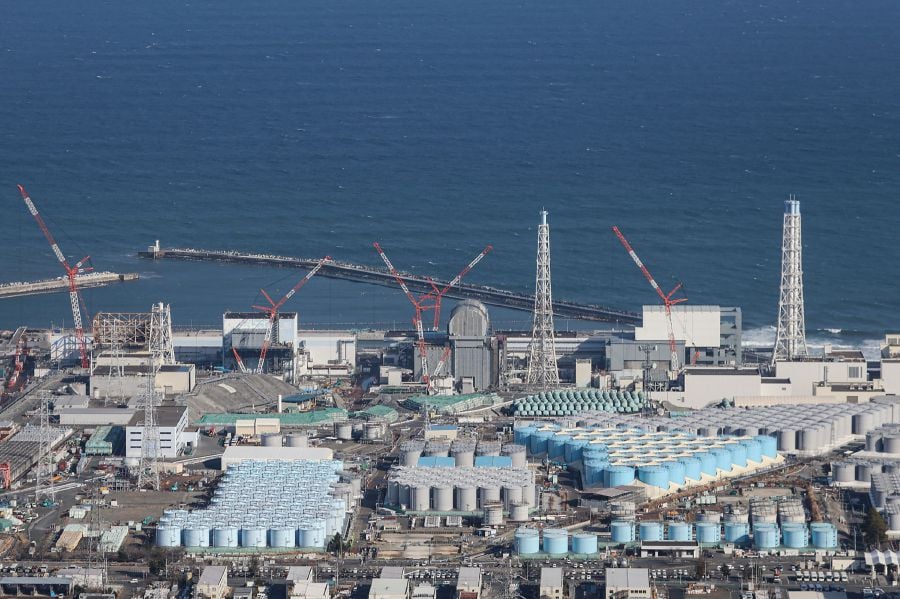
“technical difficulty involving the decommissioning is much higher” than the water release and involves higher risks of exposures by plant workers to remove spent fuel or melted fuel.
Some experts say it would be impossible to remove all the melted fuel debris by 2051 and would take 50-100 years, if achieved at all.
BY MARI YAMAGUCHI, August 27, 2023
FUTABA, Japan (AP) — For the wrecked Fukushima Daiichi nuclear plant, managing the ever-growing volume of radioactive wastewater held in more than 1,000 tanks has been a safety risk and a burden since the meltdown in March 2011. Its release marks a milestone for the decommissioning, which is expected to take decades.
But it’s just the beginning of the challenges ahead, such as the removal of the fatally radioactive melted fuel debris that remains in the three damaged reactors, a daunting task if ever accomplished.
Here’s a look at what’s going on with the plant’s decommissioning:
…………………………………………………… WILL THE WASTEWATER RELEASE PUSH DECOMMISSIONING FORWARD?
Not right away, because the water release is slow and the decommissioning is making little progress. TEPCO says it plans to release 31,200 tons of treated water by the end of March 2024, which would empty only 10 tanks out of 1,000 because of the continued production of wastewater at the plant.
The pace will later pick up, and about 1/3 of the tanks will be removed over the next 10 years, freeing up space for the plant’s decommissioning, said TEPCO executive Junichi Matsumoto, who is in charge of the treated water release. He says the water would be released gradually over the span of 30 years, but as long as the melted fuel stays in the reactors, it requires cooling water, which creates more wastewater.
Emptied tanks also need to be scrapped for storage. Highly radioactive sludge, a byproduct of filtering at the treatment machine, also is a concern.
WHAT CHALLENGES ARE AHEAD?
About 880 tons of fatally radioactive melted nuclear fuel remain inside the reactors. Robotic probes have provided some information but the status of the melted debris remains largely unknown.
Earlier this year, a remote-controlled underwater vehicle successfully collected a tiny sample from inside Unit 1’s reactor — only a spoonful of the melted fuel debris in the three reactors. That’s 10 times the amount of damaged fuel removed at the Three Mile Island cleanup following its 1979 partial core melt.
Trial removal of melted debris using a giant remote-controlled robotic arm will begin in Unit 2 later this year after a nearly two-year delay. Spent fuel removal from Unit 1 reactor’s cooling pool is set to start in 2027 after a 10-year delay. Once all the spent fuel is removed, the focus will turn in 2031 to taking melted debris out of the reactors. But debris removal methods for two other reactors have not been decided.
Matsumoto says “technical difficulty involving the decommissioning is much higher” than the water release and involves higher risks of exposures by plant workers to remove spent fuel or melted fuel.
“Measures to reduce radiation exposure risks by plant workers will be increasingly difficult,” Matsumoto said. “Reduction of exposure risks is the basis for achieving both Fukushima’s recovery and decommissioning.”
HOW BADLY WERE THE REACTORS DAMAGED?
Inside the worst-hit Unit 1, most of its reactor core melted and fell to the bottom of the primary containment chamber and possibly further into the concrete basement. A robotic probe sent inside the Unit 1 primary containment chamber found that its pedestal — the main supporting structure directly under its core — was extensively damaged.
Most of its thick concrete exterior was missing, exposing the internal steel reinforcement, and the nuclear regulators have requested TEPCO to make risk assessment.
CAN DECOMMISSIONING END BY 2051 AS PLANNED?
The government has stuck to its initial 30-to-40-year target for completing the decommissioning, without defining what that means.
An overly ambitious schedule could result in unnecessary radiation exposures for plant workers and excess environmental damage. Some experts say it would be impossible to remove all the melted fuel debris by 2051 and would take 50-100 years, if achieved at all.
Risk of cancer death after exposure to low-dose ionizing radiation underestimated, suggests nuclear industry study

by British Medical Journal, 16 Aug 23, https://medicalxpress.com/news/2023-08-cancer-death-exposure-low-dose-ionizing.html
Prolonged exposure to low-dose ionizing radiation is associated with a higher risk of death from cancer than previously thought, suggests research tracking the deaths of workers in the nuclear industry, published in The BMJ.
The findings should inform current rules on workplace protection from low-dose radiation, say the researchers.
To date, estimates of the effects of radiation on the risk of dying from cancer have been based primarily on studies of survivors of atomic bombs dropped on Japan at the end of the Second World War.
These estimates are used to set the level of protection required for workers regularly exposed to much lower doses of radiation in the nuclear industry and other sectors such as health care.
But the latest data from the International Nuclear Workers Study (INWORKS) suggest that risk estimates, based on the acute exposures among atomic bomb survivors to an extremely high dose of radiation, may underestimate the cancer risks from exposure to much lower doses of ionizing radiation delivered over a prolonged period in the workplace.
The researchers therefore tracked and analyzed deaths among 309,932 workers in the nuclear industry in the UK, France, and the US (INWORKS) for whom individual monitoring data for external exposure to ionizing radiation were available.
During a monitoring period spanning 1944 to 2016, 103,553 workers died: 28,089 of these deaths were due to solid cancers, which include most cancers other than leukemia.
The researchers then used this information to estimate the risk of death from solid cancers based on workers’ exposure to radiation 10 years previously.
They estimated that this risk increased by 52% for every unit of radiation (Gray; Gy) workers had absorbed. A dose of one Gray is equivalent to a unit of one Joule of energy deposited in a kilogram of a substance.
But when the analysis was restricted to workers who had been exposed to the lowest cumulative doses of radiation (0-100 mGy), this approximately doubled the risk of death from solid cancers per unit Gy absorbed.
Similarly, restricting the analysis only to workers hired in more recent years when estimates of occupational external penetrating radiation dose were more accurate also increased the risk of death from solid cancer per unit Gy absorbed.
Excluding deaths from cancers of the lung and lung cavity, which might be linked to smoking or occupational exposure to asbestos, had little effect on the strength of the association.
The researchers acknowledge some limitations to their findings, including that exposures for workers employed in the early years of the nuclear industry may have been poorly estimated, despite their efforts to account for subsequent improvements in dosimeter technology—a device for measuring exposure to radiation.
They also point out that the separate analysis of deaths restricted to workers hired in more recent years found an even higher risk of death from solid cancer per unit Gy absorbed, meaning that the increased risk observed in the full cohort wasn’t driven by workers employed in the earliest years of the industry. There were also no individual level data on several potentially influential factors, including smoking.
“People often assume that low dose rate exposures pose less carcinogenic hazard than the high dose rate exposures experienced by the Japanese atomic bomb survivors,” write the researchers. “Our study does not find evidence of reduced risk per unit dose for solid cancer among workers typically exposed to radiation at low dose rates.”
They hope that organizations such as the International Commission on Radiological Protection will use their results to inform their assessment of the risks of low dose, and low dose rate, radiation and ultimately in an update of the system of radiological protection.
More information: Cancer mortality after low dose exposure to ionising radiation in workers in France, the United Kingdom, and the United States (INWORKS): cohort study, The BMJ (2023). DOI: 10.1136/bmj-2022-074520
Journal information: British Medical Journal (BMJ)
1 This Month

Protect Sazan Island from the Trump family! https://secure.avaaz.org/campaign/en/protect_sazan_island_from_the_trump_family_loc/?bqFCVab&v=174511&cl=22707147157&_checksum=5e9dde668860e8231c33699735e16a1fbf22ab2cb01da50c999fe8732b9775ef&utm_source=email&utm_medium=blast_email&utm_campaign=174511
10 June – Assessing Canada’s Investments in Small Modular Nuclear Reactors – https://zoom.us/meeting/register/IiqHA5feRhaEBycOLNTJlA#/registration


Cuba Is Not a Failed State – It Is a Besieged State
PETITION: “Global Appeal to Endorse Palestinian Right of Return of Refugees”
To see nuclear-related stories in greater depth and intensity – go to https://nuclearinformation.wordpress.com
-
Archives
- June 2026 (89)
- May 2026 (306)
- April 2026 (356)
- March 2026 (251)
- February 2026 (268)
- January 2026 (308)
- December 2025 (358)
- November 2025 (359)
- October 2025 (376)
- September 2025 (257)
- August 2025 (319)
- July 2025 (230)
-
Categories
- 1
- 1 NUCLEAR ISSUES
- business and costs
- climate change
- culture and arts
- ENERGY
- environment
- health
- history
- indigenous issues
- Legal
- marketing of nuclear
- media
- opposition to nuclear
- PERSONAL STORIES
- politics
- politics international
- Religion and ethics
- safety
- secrets,lies and civil liberties
- spinbuster
- technology
- Uranium
- wastes
- weapons and war
- Women
- 2 WORLD
- ACTION
- AFRICA
- Atrocities
- AUSTRALIA
- Christina's notes
- Christina's themes
- culture and arts
- Events
- Fuk 2022
- Fuk 2023
- Fukushima 2017
- Fukushima 2018
- fukushima 2019
- Fukushima 2020
- Fukushima 2021
- general
- global warming
- Humour (God we need it)
- Nuclear
- RARE EARTHS
- Reference
- resources – print
- Resources -audiovicual
- Weekly Newsletter
- World
- World Nuclear
- YouTube
-
RSS
Entries RSS
Comments RSS
 nuclear-news