Financial facts were the killer for Pilgrim Nuclear Station
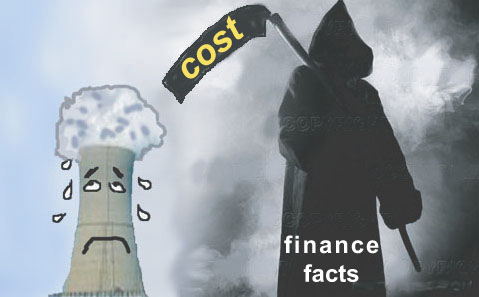 Costs lead officials to pull the plug on Pilgrim , Boston Globe , By David Abel GLOBE STAFF OCTOBER 13, 2015 “…….In an interview with the Globe, Mohl said Entergy faced the “harsh reality” that Pilgrim probably will lose about $40 million a year until it closes.
Opponents of Pilgrim, who have long protested the plant’s safety record and have raised environmental concerns, celebrated the announcement.
“They should shut down now, saving them money and us peace of mind,” said Mary Lampert, director of Pilgrim Watch, a Duxbury group that has been calling for the plant’s closure for years.
Senator Edward J. Markey, another longtime critic, called Entergy’s decision prudent. “While nuclear energy was once advertised as being too cheap to meter, it is increasingly clear that it is actually too expensive to matter,’’ he said in a statement. “The remaining period of operation of Pilgrim needs to be with the utmost attention to safety and security.’’
Officials at the Nuclear Regulatory Commission said they will maintain close oversight of the plant through its decommissioning, which by law could take up to 60 years after the plant shuts down, said Neil Sheehan, a spokesman for the commission. Until the plant closes, Pilgrim will be subject to expensive federal inspections that will review whether equipment failure, procedural trouble, or human error led to the shutdowns in 2013 and 2015…..
What comes afterward, at the moment, remains unclear, Mohl said. As with other nuclear plants that have been shuttered in the region, the operators will need to leave radioactive waste on the site of Pilgrim until the federal government finds a suitable location to store the spent fuel. Where to store the waste permanently has divided politicians for decades.
Some neighbors in Plymouth worry about the prospect of nuclear waste remaining at the plant for years to come.
“What has happened is that a bad dream is turning into a nightmare,” said Jeff Berger, chairman emeritus of a nonpartisan advisory group to the town called the Nuclear Matters Committee. “The plant is going to have a lot fewer people guarding a lot of nuclear waste, and that’s a real concern.” https://www.bostonglobe.com/metro/2015/10/13/entergy-close-pilgrim-nuclear-power-station-nuclear-power-plant-that-opened/fNeR4RT1BowMrFApb7DqQO/story.html
After Pilgrim Power Station closed, the area is left with a nuclear graveyard
After Pilgrim closes, a nuclear graveyard, Boston Globe 14 Oct 15 “…….Unlike the closing of other kinds of businesses — like a retail store or factory — there is no sense of finality in Entergy’s decision to pull the plug on Pilgrim. If anything, it raises more questions, offers few answers, and will demand vigilance by federal regulators, state leaders, and local officials. For starters, Pilgrim remains online now and could keep generating power for nearly four more years. That’s a concern, especially since the Nuclear Regulatory Commission last month lowered the plant’s safety ranking following unplanned shutdowns and chronic problems with pressure valves, demoting it to one of the three worst-performing nuclear power facilities in the United States…….
Concern over China’s involvement in UK’s nuclear project
In China’s Hands, TIME 16 Oct 15 Canada, Australia and the United States, the ownership of critical infrastructure by foreign companies is a controversial matter. In America, it is overseen by the Department of Defense. In Britain, China is about to build our next nuclear power station.
As this newspaper reports today, this is a matter of concern to British security services. A deal whereby Chinese state-owned companies spearhead the construction of the new nuclear project at Hinkley Point C has already been agreed. A second arrangement, …… (subscribers only) http://www.thetimes.co.uk/tto/opinion/leaders/article4587199.ece
Support Jeremy Corbyn’s stand against use of nuclear weapons
 We would never press the nuclear button – we support Jeremy Corbyn’s decision https://www.change.org/p/shadow-cabinet-we-would-never-press-the-nuclear-button-we-support-jeremy-corbyn-s-decision?recruiter=12083014 Members of Britain’s shadow cabinet have criticised Labour leader Jeremy Corbyn for saying he would never press the ‘nuclear button’.
We believe his stance is the only possible option. Giving the order to fire nuclear weapons would cause mass devastation on a global scale, and a global nuclear war could even end humanity altogether.
It is absurd to treat someone who says he won’t use these terrible weapons as some sort of ‘extremist’. Trident makes us less safe, not more.
We would never press the button. We support Jeremy Corbyn’s decision and call on all of Labour’s senior members to do likewise.
Organisational intertia: Civilian Nuclear Facilities Just Begging to Be Hacked
 I wonder if the South Australia Nuclear Fuel Chain Commission’s fudgy old pro nuke fossils are awake up to this one?
New Report: Civilian Nuclear Facilities Are Just Begging to Be Hacked,Motherboard, by MICHAEL BYRNE 11 October 2015 Worldwide civilian nuclear infrastructure
is woefully underprepared for the likelihood of a cyberattack, according to a new report from researchers at Chatham  House, a London-based think-tank. As facilities become more reliant on digital systems and off-the-shelf software, and as top-level awareness of cybersecurity threats stagnates, a serious event seems foretold.
“Recent high-profile cyber attacks, including the deployment of the sophisticated 2010 Stuxnet worm, have raised new concerns about the cyber security vulnerabilities of nuclear facilities,” begins an executive summary of the report. “As cyber criminals, states, and terrorist groups increase their online activities, the fear of a serious cyber attack is ever present.”
“This is of particular concern because of the risk—even if remote—of a release of ionizing radiation as a result of such an attack,” the summary continues. “Moreover, even a small-scale cyber security incident at a nuclear facility would be likely to have a disproportionate effect on public opinion and the future of the civil nuclear industry.”…….
You’re probably not going to get a bomb near a reactor core, but malicious code is another story.
The second part of the problem has to do with off-the-shelf software, according to the report. It’s much cheaper to buy pre-built systems, but this opens up new possibilities for hacker infiltration.
“Hacking is becoming ever easier to conduct, and more widespread: automatic cyber attack packages targeted at known and discovered vulnerabilities are widely available for purchase,” the Chatham researchers write. “Advanced techniques used by Stuxnet are now known and being copied; and search engines can readily identify critical infrastructure components that are connected to the internet.”
The paper highlights several barriers faced in fixing the whole mess. One is a lack of incident reporting—operators at different facilities are not always aware of attacks on other facilities. This is further enabled by a general lack of regulatory requirements regarding cybersecurity. Developing countries may have even fewer requirements on top of being at increased risk due to a lack of resources. Staff at nuclear facilities are, moreover, often ill-prepared for cyber threats due to lack of training, poor communication between nuclear engineers and security personnel, and an executive-level disinterest in or obliviousness to non-physical dangers.
The technical challenges outlined include:…..
Organizational inertia is a hell of a thing though. If history is any guide, it will take more than recommendations to see real change. It will take an actual disaster. http://motherboard.vice.com/en_uk/read/new-report-civilian-nuclear-facilities-are-just-begging-to-be-hacked
Britain’s flawed nuclear energy project
Back to the future: Britain’s response to climate change is to go nuclear, Independent Australia, Adnan Al-Daini 7 October 2015, IInstead of embracing renewables to combat climate change, the British Government has decided to slip further into the deathly grip of the nuclear industry, writes Dr Adnan Al-Daini.
SO, the British government’s response to climate change is to go nuclear. The Hinkley Point nuclear power station is to be built jointly by Chinese companies and the French state-owned energy company EDF. The cost of building the plant is estimated to be GB £25 billion (AU $53.1 billion). For the deal to go ahead, the UK has to provide a guarantee worth £2 billion. In addition, the Government has to provide EDF with a guaranteed price of electricity generated at twice today’s price for 35 years.
This project is fundamentally flawed for four main reasons.
Firstly, this station is very expensive and it will take at least eight years for any electricity to be generated. Climate change needs action now, if not yesterday.
Professor Clive Hamilton quotes Lovins and Sheikh in his book, Requiem for a Species, thus:
‘The more urgent it is to protect the climate, the more vital it is to spend each dollar in ways that will displace the more carbon soonest.’ …..
Second, this approach of providing power from a huge power plant is the old way of thinking. The future belongs to small truly renewable energy power plants supplying local communities or just one building…..
Third, guaranteeing the price at twice today’s electricity price for 35 years makes no economic sense. Renewable energy systems such as solar and wind have a price guarantee for only 15 years. Why this preferential treatment for nuclear power?…..
the decision by the British government to go nuclear is going to end up costing future generations dear in the future, the burden of which will be borne by our children and grandchildren. https://independentaustralia.net/environment/environment-display/back-to-the-future-britains-backward-response-to-climate-change-is-to-go-nuclear,8236
Today’s renewable energy headlines
Triple Pundit (registration) (blog)-13 hours ago
YLE News-9 hours ago
Truthdig-11 Oct 2015
CleanTechnica-12 hours ago
Deccan Herald-3 hours ago
Opinion-The Guardian-10 Oct 2015
In-Depth-Sydney Morning Herald-20 hours ago
Blog-Voice of America (blog)-12 Oct 2015
Embracing Renewable Energy to Benefit the Bottom Line
Britons OK with nuclear power – as long as it’s far away from where they live
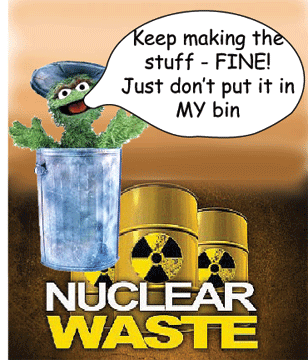
 Britons in favour of nuclear power – as long as it’s nowhere near their homes, CITY A.M. 13 October 2015 by Clara Guibourg Most Britons support nuclear power, a new study has found – as long as it isn’t anywhere near their homes.
A poll by the Institution of Mechanical Engineers found 56 per cent were in favour of the UK continuing to use nuclear power. Of those in favour, four out of five supported nuclear power because they believed it to be necessary for the country’s power supply. Others said it would provide jobs and boost the economy.
However there’s a strong feeling of nimbyism over nuclear power: nobody wants to live near a plant – and fewer still by a nuclear waste facility.
Jenifer Baxter, head of energy and environment at the Institution of Mechanical Engineers, said this showed what a strong barrier nimby activists could play:…..http://www.cityam.com/226427/britons-in-favour-of-nuclear-power-as-long-as-its-nowhere-near-their-homes
Y-12 uranium project could cost up to $76.7M
Frank Munger, Oct 13, 201 OAK RIDGE — Federal overseers have given preliminary approval for a new uranium purification facility at the Y-12 nuclear weapons plant, with a price range between $58.6 million and $76.7 million.
Full story available to subscribers only. http://www.knoxnews.com/news/local-news/y12-uranium-project-could-cost-up-to-767m_15303531
U.S. Sen. Heinrich pushes for mining reform, tours abandoned uranium site
U.S. Sen. Heinrich Tours Uranium Sites on Navajo http://newamericamedia.org/2015/10/us-sen-heinrich-tours-uranium-sites-on-navajo.php Navajo Times, News Report, Oct 12, 2015
U.S. Sen. Martin Heinrich, D-N.M., paused Friday at the entrance of an abandoned uranium mine.
Located in the stony hills of Red Valley and accessible only by four-wheel-drive vehicle, the mine stares blankly at the breathtaking vistas in this remote area where an estimated 175 mines once operated.
Although the entrance is sealed with a wall of cinder blocks, the mine remains a stark reminder of the uranium legacy on the Navajo Nation.
Heinrich, who met with tribal leaders and experts from the Navajo Division of Natural Resources on Friday, toured the site as he pushes for mining reform in the wake of the Aug. 5 spill at Gold King Mine. The U.S. Environmental Protection Agency has taken responsibility for the spill, which sent a 3-million-gallon, mustard-colored plume of toxic wastewater downriver, but Heinrich wants stiffer laws in place to safeguard the land and the people who depend on it.
“I think it’s time to change the law,” Heinrich told a small group of reporters after hiking down a rocky hillside to view the mine entrance. “I wanted to see what abandoned uranium mines look like to get a first-hand impression of the scale of the problem and have that really influence our efforts in Washington.”
Why is Bill Gates silent on St Louis radioactive scandal ?
Saul Fein 11 Oct 15 Bill Gates is the largest stockholder of Republic Svcs! He has the power to tell Republic to put out the fire and remove the nukes! But he doesn’t, he is silent on the matter! Why?
Ticking time bomb it is without a doubt! If you want to really know what we have to live with every day, for 6 years now,
just come to shop around St Charles Rock Rd near 270/70. You will smell the toxins on any given day! Residents, workers, transients have to deal with it every day yet Republic and EPA say everything’s under control and there’s no health hazard. If that is what their scientific data tells them then I say their “scientific data” is faulty and/or those interpreting the data are idiots! Besides the toxic gases, don’t forget the 150,000 tons of nuclear weapons wastes ( according to the NRC) which has already been proven to have migrated outside the landfill onto private property and into the groundwater beneath the landfill! Please go to West Lake Landfill on Facebook!
Naomi Oreskes: Exxon’s climate concealment.
Millions of Americans once wanted to smoke. Then they came to understand how deadly tobacco products were. Tragically, that understanding was long delayed because the tobacco industry worked for decades to hide the truth, promoting a message of scientific uncertainty instead.
The same thing has happened with climate change, as Inside Climate News, a nonprofit news organization, has been reporting in a series of articles based on internal documents from Exxon Mobil dating from the 1970s and interviews with former company scientists and employees.
http://www.nytimes.com/2015/10/10/opinion/exxons-climate-concealment.html & http://www.environmentalhealthnews.org/t/-5574733362346705383
New Nobel laureate in literature warned about nuclear power’s dangers
Nobel winning writer warned of dangers of nuclear power during Japan visit http://ajw.asahi.com/article/behind_news/people/AJ201510090039 October 09, 2015 THE ASAHI SHIMBUN
The new Nobel laureate in literature warned that even a minor natural disaster could lead to a nuclear catastrophe during her visit to Japan in 2003, according to a doctor who met the writer.
Svetlana Alexievich, a journalist born in Ukraine and raised in Belarus, the nations affected by the Chernobyl nuclear disaster, published “Voices from Chernobyl–Chronicle of the Future” in 1997 about the consequences of the calamity.
“I vividly remember that she said peaceful use of nuclear power and nuclear weapons are two sides of a coin, completely identical,” said Minoru Kamata, a medical doctor and chairman of the Japan Chernobyl Foundation, a nonprofit organization that provides medical assistance to those affected by the disaster.
“She continued to say that in Japan (the danger of) nuclear power generation is covered up in the name of peaceful use, but even a minor natural disaster could lead to a serious accident,” he added.
Alexievich, 67, was named the recipient of this year’s Nobel Prize in Literature on Oct. 8 “for her polyphonic writings, a monument to suffering and courage in our time.”
Kamata said the award of a Nobel Prize to a critic of nuclear power should strike a chord with people in Japan who experienced the Fukushima nuclear disaster in March 2011 and are now watching as the government begins to reactivate nuclear reactors.
During her visit to Japan, Alexievich also met traditional Japanese storyteller Kaori Kanda twice–in Matsumoto, Nagano Prefecture, and in Nagoya.
One of Kanda’s noted tales is a story about Chernobyl based on Alexievich’s book.
Kanda, who is from Iwaki, Fukushima Prefecture, had long harbored doubts about the safety of nuclear power stations even before the Fukushima triple meltdown.
When Kanda performed her Chernobyl tale during Alexievich’s visit, the journalist commended it, saying, “You told a tale that exemplified exactly what I wanted to convey through my book.”
News about renewable energy
Thomas L. Friedman: Stuff happens to the environment, like climate change.
With both China and India having just announced major plans to curb their carbon emissions, the sound you hear is a tipping point tipping. Heading into the United Nations climate summit meeting in Paris in December, all the world’s largest industrial economies are now taking climate change more seriously. This includes the United States — except for some of the knuckleheads running to be our next president, which is not a small problem. …
If you have time to read one book on this subject, I highly recommend the new “Big World, Small Planet,” by Johan Rockstrom, director of the Stockholm Resilience Center, and Mattias Klum, whose stunning photographs of ecosystem disruptions reinforce the urgency of the moment.
http://www.nytimes.com/2015/10/07/opinion/thomas-friedman-stuff-happens-to-the-environment-like-climate-change.html &http://www.environmentalhealthnews.org/t/-432955192434563926
Exploring Cost-Effective, Non-Polluting Enhanced Geothermal Systems
A new fracturing fluid has been created that may increase the ability to develop geothermal energy, scientists report. This advance of tapping the natural heat of Earth may improve the cost-effectiveness and cleanliness of the process.
http://www.sciencedaily.com/releases/2015/10/151007084534.htm
Renewables could supply nearly a quarter of Africa’s energy by 2030, says report
International Renewable Energy Agency report says the continent has the potential to quadruple the proportion of its energy supplied by renewables…
http://www.theguardian.com/environment/2015/oct/06/renewables-supply-quarter-africas-energy-2030-report &http://www.dailyclimate.org/t/2524623843131879060
R** Wind and solar keep getting cheaper and cheaper.
A new analysis suggests that we continue to move into a world in which it makes more economic sense to draw electricity from the sun or the winds, rather than from fossil fuels
http://www.dailyclimate.org/t/7719159717658620021
Dirt-cheap catalyst may lower fuel costs for hydrogen-powered cars
‘Green’ process relies on sunlight
http://www.eurekalert.org/pub_releases/2015-10/dnl-dcm100715.php
Impossible to fund South Africa’s nuclear power plan
 Greenpeace boss says plan for nuclear power stations is impossible to fund http://www.bdlive.co.za/ business/energy/2015/10/08/ greenpeace-boss-says-plan-for- nuclear-power-stations-is- impossible-to-fund BY WYNDHAM HARTLEY, 08 OCTOBER 2015, SOUTH Africa’s planned nuclear build programme would never get off the ground because it would be impossible to fund, Greenpeace executive director Kumi Naidoo said on Thursday.
Mr Naidoo, on visit to the land of his birth, was a guest of the Cape Town Press Club at which he spoke on global warming and environmental matters.
Responding to questions, Mr Naidoo said the plan for nuclear power stations “is crazy because it is too expensive and too dangerous”.
“It won’t come off because no-one will be able to fund it,” he said, adding that when government first started talking about a nuclear build the price tag was R1-trillion but that was when the exchange rate was R8 to the US dollar and not the current R14.
He said that the main concern about the obsession with nuclear was that it softened the concentration on renewable energy sources like sun and wind which created more jobs than nuclear.
Chairman of the African National Congress’s (ANC) policy sub-committee Jeff Radebe is on record as saying the energy challenge is a top priority in a discussion document for its national general council.
The ANC has said that nuclear energy plan will be discussed at the council, but has also said it would go ahead unless there were affordability assessments.
Mr Naidoo expressed concern that there was no safe way of disposing of nuclear waste which could last anything between 200 and 1,000 years.
On his main topic of whether the earth could survive global warming, he said: “There is a small window of opportunity to change things, but it is closing fast.”
The CIA and the Pentagon in the US were right, he said, when they said that the threat to global peace and security was the effects of climate change which placed people in competition for water and other natural resources which they were prepared to fight for.
“There are no jobs on a dead planet”.
Mr Naidoo said however he was optimistic about the future “because we don’t have any choice”. Responding to a question about climate change sceptics, he described the view they held as denialism — “like the view in South Africa that HIV did not cause AIDS”.
1 This Month

of the week – Shut Down Drone Warfare!


Tell the Ukrainian Government to Drop Prosecution of Peace Activist Yurii Sheliazhenko

Petition to revoke the licensing of the Near Surface Nuclear Disposal Facility (NSDF) at Chalk River. https://www.ourcommons.ca/petitions/en/Petition/Details?Petition=e-7247
To see nuclear-related stories in greater depth and intensity – go to https://nuclearinformation.wordpress.com
-
Archives
- April 2026 (91)
- March 2026 (251)
- February 2026 (268)
- January 2026 (308)
- December 2025 (358)
- November 2025 (359)
- October 2025 (376)
- September 2025 (257)
- August 2025 (319)
- July 2025 (230)
- June 2025 (348)
- May 2025 (261)
-
Categories
- 1
- 1 NUCLEAR ISSUES
- business and costs
- climate change
- culture and arts
- ENERGY
- environment
- health
- history
- indigenous issues
- Legal
- marketing of nuclear
- media
- opposition to nuclear
- PERSONAL STORIES
- politics
- politics international
- Religion and ethics
- safety
- secrets,lies and civil liberties
- spinbuster
- technology
- Uranium
- wastes
- weapons and war
- Women
- 2 WORLD
- ACTION
- AFRICA
- Atrocities
- AUSTRALIA
- Christina's notes
- Christina's themes
- culture and arts
- Events
- Fuk 2022
- Fuk 2023
- Fukushima 2017
- Fukushima 2018
- fukushima 2019
- Fukushima 2020
- Fukushima 2021
- general
- global warming
- Humour (God we need it)
- Nuclear
- RARE EARTHS
- Reference
- resources – print
- Resources -audiovicual
- Weekly Newsletter
- World
- World Nuclear
- YouTube
-
RSS
Entries RSS
Comments RSS
 nuclear-news