Urgent need to stop the erosion of nuclear arms treaties -multilateral disarmament forum
 Urgent need’ to stop erosion of nuclear order, Modern Diplomacy, 16 Aug 20, The lack of trust and cooperation among States, and the diminished faith in “the very multilateral institution that was designed to maintain global peace and security”, must be overcome, a high-level UN official told a prominent disarmament conference on Thursday.“There is an urgent need to stop the erosion of the nuclear order. All countries possessing nuclear weapons have an obligation to lead”, Director-General of the UN Office at Geneva (UNOG) Tatiana Valovaya, told the Conference on Disarmament, which she also heads. Urgent need’ to stop erosion of nuclear order, Modern Diplomacy, 16 Aug 20, The lack of trust and cooperation among States, and the diminished faith in “the very multilateral institution that was designed to maintain global peace and security”, must be overcome, a high-level UN official told a prominent disarmament conference on Thursday.“There is an urgent need to stop the erosion of the nuclear order. All countries possessing nuclear weapons have an obligation to lead”, Director-General of the UN Office at Geneva (UNOG) Tatiana Valovaya, told the Conference on Disarmament, which she also heads.
The multilateral disarmament forum was established in 1984 to negotiate arms control and disarmament agreements, and meets three times a year in Geneva………… https://moderndiplomacy.eu/2020/08/15/urgent-need-to-stop-erosion-of-nuclear-order/ |
|
USA are drifting toward a fraught nuclear arms race
Politico 5th Aug 2020, U.S.-Russia relations are at a dangerous dead end that threatens the U.S.
national interest. The risk of a military confrontation that could go
nuclear is again real. We are drifting toward a fraught nuclear arms race,
with our foreign-policy arsenal reduced mainly to reactions, sanctions,
public shaming and congressional resolutions. The global Covid-19 pandemic
and the resulting serious worldwide economic decline, rather than fostering
cooperation, have only reinforced the current downward trajectory.
https://www.politico.com/news/magazine/2020/08/05/open-letter-russia-policy-391434
A Major Nuclear Arms Treaty Expires Next Year. What Happens Next?
 A Major Nuclear Arms Treaty Expires Next Year. What Happens Next? https://www.wunc.org/post/major-nuclear-arms-treaty-expires-next-year-what-happens-next
 signed an updated strategic arms reduction treaty. Unless that agreement, New START, is renewed before February, the two largest nuclear arsenals will be unconstrained for the first time since the height of the Cold War.
The impending deadline is a reminder that the possibility of nuclear warfare did not end with the Cold War, nor is North Korea the sole threat. In fact, expert Alexandra Bell suggests that domestic nuclear accidents, like the one in Goldsboro, North Carolina in 1961, are also a major threat. The infrastructure is aging, agrees Michaela Dodge, who argues that modernization is essential to the safety and effectiveness of strategic weapons in deterrence policy.
So what is the price tag of those upgrades?
Host Frank Stasio talks with Bell and Dodge about the risks, benefits and costs of maintaining strategic nuclear weaponry as the U.S. approaches the expiration of New START. Bell is the senior policy director for the Center for Arms Control and Non-Proliferation. Dodge is a research scholar at the National Institute for Public Policy.
Renewable energy a better choice for Ohio, than nuclear bailout
It’s Up to us to stop the building of nuclear weapons
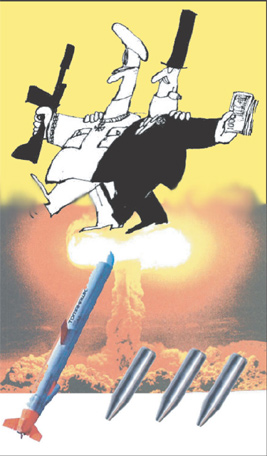 Up to us to stop the building of nuclear weapons, Greenfield Recorder, Sherrill Hogen , Charlemont. 6 Aug 20 https://www.recorder.com/my-turn-hogen-Hiroshima-35463074 Change! Finally, after 400 years, White America may be ready to start addressing the wrongs that brought our country into being. Racism and genocide are life-threatening poisons to our very soul. Yet there are other poisons that have not yet consumed us, but might still do so. For one, our planet might burn up from climate disasters before we can stop it. For another, human folly might unleash nuclear war — a more instantaneous incineration of all that we hold dear.
You might think that we are smarter than that. But we humans have not proven that we are so smart when it comes to settling our differences.
You might believe that war is inevitable and just hope that no one pushes the nuclear button. But hoping doesn’t keep it from happening. So, just as we are awaking to what it might take to address the legacies of slavery and the extermination of Native Americans, we must address the real possibility of nuclear annihilation. It is hard to do when the warnings are not in the news.
And isn’t that interesting…. Why isn’t such an enormous threat to our very existence in the media and in our daily conversations? I wonder if our arms industry and military superstructure would rather keep such knowledge buried.
If we do wake up to this danger, we might raise up another voice along with Black Lives Matter, Water is Life, Me Too, and Save our Planet: NO MORE WAR, NO NUCLEAR WEAPONS.
It has been 75 years since the U.S. dropped atomic bombs on Hiroshima and Nagasaki, Japan. For 75 years we humans have managed to ignore the reasons and results of that horrific act. I hope we can change course on this issue as we are doing on others.
One step in that direction is to recognize the dates the bombs fell, Aug. 6 and 9, 1945.
One event was already held Aug. 6 in Turners Falls. Join us Aug. 8, 11 a.m. to noon on the Greenfield Town Common; and Aug. 9 at the library in Easthampton at 7 p.m.
As we strive to recognize the value of every human being and every living thing, our government and arms industry are building nuclear weapons every day, and it is up to us to stop them.
The longlasting impact of Fukushima nuclear disaster, and nuclear activities world-wide
emeritus at the University of Chicago, published one of the best overviews
any of us at Fairewinds has read about the impact of the meltdowns at the
Fukushima Dai-ichi atomic power reactors upon the people and culture of
Japan.
Focus, the article entitled – This Will Still Be True Tomorrow:
“Fukushima Ain’t Got the Time for Olympic Games”: Two Texts on
Nuclear Disaster and Pandemic is a must-read worldwide. Atomic power plants
and nuclear power waste dumps are located all over the world.
in the burden of nuclear test labs, uranium mining, and the manufacturing
of atomic power fuel and nuclear weapons, the ecological weight of the
radioactive legacy we all live with is overwhelming.
Fukushima Dai-ichi, Dr. Field has written a well-researched and documented
analysis of what is happening today to its victims.
(TEPCO), the owner of the Fukushima Dai-ichi reactors, and the government
of Japan have forged ahead with decisions that have compromised the health,
livelihood, and futures of victims and their families and their subsequent
children – for generations.
nuclear power and the international military/industrial complex, has failed
miserably in its commitment to its citizens and severely impacted the
health and welfare of generations to come with its contaminated land, air,
water, and food.
https://www.fairewinds.org/demystify/fukushima-aint-got-time-for-olympic-games?s=09
Underground rockfall at Waste Isolation Pilot Plant
A pair of rock falls were reported at the Waste Isolation Pilot Plant’s underground repository for nuclear waste, as salt in the underground gradually collapses to bury nuclear waste.
The falls were reported to have occurred between July 20 and 27 in an area closed off to workers, and were discovered on Wednesday after a geotechnical device showed a reading the suggested an increased closure rate.
Closure in WIPP’s underground occurs when the salt its built into slowly collapses. The creeping process is used to permanently bury drums of low-level transuranic (TRU) nuclear waste, and rock falls occur routinely in areas that are closed off to workers and ground control efforts are cease.
To control the creep and allow for safe operations such as waste emplacement, bolts are installed into the walls of the underground to temporarily slow the creep.
WIPP spokesman Donavan Mager said the recent rock falls were in an area that had been closed off to workers and had not had recent ground control measures. ……
The discovery of the falls was made during a routine weekly review of the geotechnical data, and WIPP personnel investigated the reading as a precautionary measure, Mager said.
“It was a prohibited area, but they thought they would check it out,” he said. “Depending on how an instrument is operating, we can see if salt is creeping or closing.” https://www.currentargus.com/story/news/local/2020/07/30/waste-isolation-pilot-plant-reports-rock-fall-underground-nuclear-waste/5550662002/
“Psychic numbing” about the world’s suicidal nuclear weapons race

|
Jane H. Kavaloski: We must confront our ‘psychic numbing,’ stop nuclear proliferation, https://madison.com/ct/opinion/mailbag/jane-h-kavaloski-we-must-confront-our-psychic-numbing-stop-nuclear-proliferation/article_e8736883-4eb4-55f8-b0d8-3ede2efd6e53.html August 6, 1945, begins as any other day in Hiroshima. Despite a premonition that something is about to happen, people go about their lives as usual. At 8 a.m. the smells of breakfast hang fragrant in the air. Children laugh and play in their courtyards. As they leave for work, husbands bid their wives goodbye. Grandmothers rock infants to sleep, while grandfathers tend their bonsai trees.
Fifteen minutes later, an atomic bomb detonates over Hiroshima. The fortunate ones, who live in the epicenter, are immediately vaporized and spared the agonizing suffering of the aftermath. The people who live a little further from Ground Zero are transformed into haunted figures, who walk and crawl the streets looking for water to cool their burned, melting skin and broken bodies. For the most part, they move like robots, non-responsive to the cries for help from the suffering humanity around them. Jay Lifton, the renowned psychiatrist, named this lack of compassion in the midst of so much horror as “psychic numbing.” At this 75th anniversary of that day, we must ask ourselves if we too are victims of “psychic numbing.”
Since August 1945, U.S. citizens have been primarily silent about the proliferation of nuclear weapons. Currently the U.S. has approximately 6,500 nuclear weapons. There are almost 14,000 world-wide.
As U.S. citizens, we must confront our own “psychic numbing” and insist that our elected officials stop this madness. In commemoration of this 75th anniversary, demand that our elected officials work toward global nuclear disarmament! |
|
|
Costs of Vogtle nuclear expansion just keep going up, Coronavirus making this worse
Costs of nuclear expansion at Georgia power plant spiking, Sun Herald, THE ASSOCIATED PRESS, AUGUST 01, 2020 ATLANTA
The costs of expanding Georgia Power’s nuclear plant are growing, and at least part of the price hike is tied to the coronavirus outbreak and the rising number of workers diagnosed with the COVID-19 disease.
Southern Company, the Atlanta-based parent company for Georgia Power, forecasts it will cost $149 million more than previous projections for its share of expanding Plant Vogtle, which was already billions of dollars over its original budget and years behind schedule.
The Atlanta Journal-Constitution reports the company said Georgia Power could eventually ask state regulators to charge customers for the latest price tag increase.
Southern Company said the pandemic continues to affect work at Vogtle……. https://www.sunherald.com/news/business/article244660932.html
Gorbachev renews call to oppose nuclear weapons
Gorbachev renews call to oppose nuclear weapons Asahi Shimbun
August 1, 2020 A message to participants of the International Symposium for Peace 2020 “The Road to Nuclear Weapons Abolition” on Aug. 1, 2020, at Nagasaki
Dear participants of the symposium,
Dear Nagasaki Mayor Taue,
Dear representatives of The Asahi Shimbun,
To my important colleagues and friends,
I feel very happy to be able to address all of you taking part in this symposium seeking a world without nuclear weapons. It is symbolic that this meeting is taking place in the city of Nagasaki. Like Hiroshima, Nagasaki 75 years ago suffered great damage from the atomic bomb explosion, which killed tens of thousands of victims and left behind people with disabilities on the scorched earth. I once visited the city, and those memories have remained with me until now………. http://www.asahi.com/ajw/articles/13584606
A science professor has a radical idea. Scientists should care about the world, not just about their careers
These days, science is simply a career. You do your work and you keep your eyes to the bench. But the world can be a better place if we take our eyes off the bench occasionally. So this letter is a reminder to our colleagues: Get involved, and consider it our contribution to the general public who support our research.
3 Questions: Jonathan King on the future of nuclear weapons testing http://news.mit.edu/2020/3qs-jonathan-king-future-nuclear-weapons-testing-0729
Professor of biology discusses a scientist’s responsibility to speak out about important issues that affect our nation and the world. Raleigh McElvery | Department of Biology, July 29, 2020
In an open letter published on July 16 in Science, four MIT professors and nearly 70 additional scientific leaders called upon fellow researchers to urge U.S. government officials to halt plans to restart nuclear weapons testing. Corresponding author and professor of biology Jonathan King sat down to discuss the history of nuclear testing, his personal ties to the issue, and his responsibilities as a scientist. He also co-chairs the Nuclear Disarmament Working Group of Massachusetts Peace Action, MIT’s annual Reducing the Threat of Nuclear War conference, and the editorial board of the MIT Faculty Newsletter.
Q: What events have made you passionate about the issue of nuclear weapons testing?
A: I grew up in the shadow of nuclear war, participating in drills at school where you would duck under your desk. During the Cold War, the world’s nations exploded hundreds of dangerous nuclear tests, releasing radioactivity into the atmosphere in order to develop these weapons. I was a college student during the Cuban Missile Crisis, and remember vividly the fear of a nuclear exchange.
Around that time, it became clear to our nation’s leaders that this was not the way to go. In his famous speech at American University, President Kennedy reversed direction. Professor of chemistry at Caltech Linus Pauling led an effort with his wife to back Kennedy and collect 9,000 signatures from scientists endorsing the president’s Partial Nuclear Test Ban Treaty. This was before the internet, so getting 9,000 signatures was not easy, and it had a national impact. I was actually a graduate student at Caltech, following up on Pauling’s work on proteins, when the treaty was ratified and he was awarded the Nobel peace prize for his work.
When I arrived at MIT as an assistant professor, Jerome Wiesner was the Institute president. He was also a key player in pushing the Partial Nuclear Test Ban Treaty, and Kennedy had previously named him chair of the President’s Science Advisory Committee (PSAC). MIT was full of world leaders in nuclear disarmament, including physicists who had worked on the bomb and decided it was a mistake. I’m not a physicist, but I was among the generation at MIT that was very vocal about these issues.
Q: What is the current state of nuclear weapon testing and regulation in the United States, and what concerns do you have about renewed testing?
A: The U.S. hasn’t tested a nuclear weapon since 1992. In that period of time, the Comprehensive Test Ban Treaty (CTBT) was developed by many nations, agreeing not to conduct a nuclear weapons test of any yield. The Senate hasn’t ratified it, but in 2016 the U.S. did adopt UN Security Council Resolution 2310, agreeing to uphold the goal of the CTBT and withhold nuclear testing.
However, the current administration is proposing to modernize nuclear weapons and restart testing, which is both provocative and dangerous. Even if these tests are small, contained, and underground, they will still open the door for other nations to restart testing of their own, and possibly lead to a new nuclear weapons arms race.
When a nuclear weapon — either a conventional bomb or hydrogen bomb — explodes, many radioactive isotopes are produced. Some of them are short-lived and decay quickly, but others like strontium-90 are much longer-lived. These ones can make you sick very slowly, and some can mutate or damage DNA. Even underground tests can leak radioactivity into the atmosphere and environment.
Q: What spurred you and your colleagues to write an open letter to Science, and what was your goal in doing so?
A: Our letter was signed by 70 scientific leaders and Nobel Prize winners, and calls upon the scientific community to warn the nation that this is a dangerous way to go. We also urged the Senate to ratify the CTBT, and pass a new bill introduced by Senator Ed Markey called the Preserving Leadership Against Nuclear Explosives Testing (PLANET) Act — which would prevent spending money on the renewal of testing.
I come from a culture that views scientists as public servants. All my research has been funded by taxpayer dollars, and with that comes a responsibility to help address threats to the community. The very history of my department, the MIT Department of Biology, is tied to scientists taking a stand against social and political issues. I was just a young assistant professor when faculty members like David Baltimore and Ethan Signer led demonstrations to oppose the Vietnam War. It was a very open environment and we supported one another.
These days, science is simply a career. You do your work and you keep your eyes to the bench. But the world can be a better place if we take our eyes off the bench occasionally. So this letter is a reminder to our colleagues: Get involved, and consider it our contribution to the general public who support our research.
China takes a bigger role at Hinkley as nuclear reactor pressure rises
EDF is reliant on expertise of Chinese minority partner to finish nuclear plant, according to analysts
Senior engineers from China General Nuclear (CGN) proposed a way to lift a concrete dome on to...(subscribers only) https://www.telegraph.co.uk/business/2020/07/25/china-takes-bigger-role-hinkley-nuclear-reactor-pressure-rises/
Trump uses fear of China to drum up hostilities, and diminish arms control
“What about China?” and the threat to US–Russian nuclear arms control https://thebulletin.org/2020/07/what-about-china-and-the-threat-to-us-russian-nuclear-arms-control/#
By David M. Allison, Stephen Herzog, July 20, 2020 The administration of President Donald J. Trump has consistently used fear of China to undermine nearly five decades of bipartisan consensus on US–Russian nuclear arms control. The negative consequences of these actions may last far beyond the Trump presidency. If generations of agreement between Democrats and Republicans on bilateral nuclear treaties with Russia erode, it will pose a significant setback to US national security and global stability. Future leaders may ultimately need to consider new approaches to nuclear risk reduction that preserve the benefits of the arms control regime.
EDF’s UK nuclear projects in doubt after Court of Audit report
EDF’s UK nuclear projects in doubt after Court of Audit report 13 JUL 2020 BY LEM BINGLEY
Suffolk coast – time to choose whether it is to be a nuclear or a renewable coast
East Anglian Daily Times11th July 2020, Green councillor Andrew Stringer says now is the time to choose if Suffolk will become the nuclear coast, or the renewable coast. “We are the first
to understand climate change, and the last that can do something about
it.”
This quote is not from a protestor trying to change the world by
non-violent direct action. These are the words of James Kelloway, the
energy intelligence manager for the National Grid. And right now Suffolk
needs all the energy intelligence we can get. We sit on the horns of a
dilemma. We have significant energy production resources in and around our
coast line.
And, perfectly understandably these resources are trying to
grow – not only to help meet the country’s energy needs but to face the
challenge of moving towards a low carbon economy. Governments in the past
have left us with a legacy of an unclear energy policy. Almost as if they
were trying to ride two horses at the same time. This conflict is playing
out in real time, right now on our Suffolk Coast. The choices we make now
leave less and less room for error.
We simply must deliver a low carbon
future in less than a decade, while the focus on value for money has never
been more crucial. If we are to continue with our current quality of life
let alone leave a legacy that allows us to thrive. If that challenge
wasn’t hard enough, this all plays out on a spectacular heritage coast.
https://www.eadt.co.uk/business/andrew-stringer-sizewell-c-opinion-1-6741099
1 This Month


Tell the Ukrainian Government to Drop Prosecution of Peace Activist Yurii Sheliazhenko

Petition to revoke the licensing of the Near Surface Nuclear Disposal Facility (NSDF) at Chalk River. https://www.ourcommons.ca/petitions/en/Petition/Details?Petition=e-7247


of the week – STOP SMALL MODULAR REACTORS IN CANADA
To see nuclear-related stories in greater depth and intensity – go to https://nuclearinformation.wordpress.com
-
Archives
- March 2026 (204)
- February 2026 (268)
- January 2026 (308)
- December 2025 (358)
- November 2025 (359)
- October 2025 (376)
- September 2025 (258)
- August 2025 (319)
- July 2025 (230)
- June 2025 (348)
- May 2025 (261)
- April 2025 (305)
-
Categories
- 1
- 1 NUCLEAR ISSUES
- business and costs
- climate change
- culture and arts
- ENERGY
- environment
- health
- history
- indigenous issues
- Legal
- marketing of nuclear
- media
- opposition to nuclear
- PERSONAL STORIES
- politics
- politics international
- Religion and ethics
- safety
- secrets,lies and civil liberties
- spinbuster
- technology
- Uranium
- wastes
- weapons and war
- Women
- 2 WORLD
- ACTION
- AFRICA
- Atrocities
- AUSTRALIA
- Christina's notes
- Christina's themes
- culture and arts
- Events
- Fuk 2022
- Fuk 2023
- Fukushima 2017
- Fukushima 2018
- fukushima 2019
- Fukushima 2020
- Fukushima 2021
- general
- global warming
- Humour (God we need it)
- Nuclear
- RARE EARTHS
- Reference
- resources – print
- Resources -audiovicual
- Weekly Newsletter
- World
- World Nuclear
- YouTube
-
RSS
Entries RSS
Comments RSS
 nuclear-news