Nuclear businesses have seen a serious shortage of human resources since the March 2011 meltdowns at the Fukushima No. 1 power plant
At a Tokyo job fair for the atomic energy industry on March 4, Kenta Kakitani, a graduate student at the University of Tokyo, hopes to some day become a nuclear plant design engineer.
But Kakitani may be a rare breed in Japan, where nuclear businesses have seen a serious shortage of new talent since the March 11, 2011, meltdowns at the Fukushima No. 1 power plant, the world’s worst nuclear disaster since Chernobyl in 1986.
“It seems that the nuclear power industry has lost much of its popularity because it is seen as in decline and is suffering a negative image from having to decommission crippled reactors,” said Kakitani, 24, who majors in nuclear engineering.
According to education ministry data, 298 students entered departments related to nuclear power study in fiscal 2015, a slight decline from 317 in fiscal 2010.
Kakitani said that although the number may not have declined drastically, many talented students are majoring in the fields of artificial intelligence and aerospace engineering instead of nuclear engineering.
The turnout at the job fair reflects the nuclear power industry’s fall from grace.
In fiscal 2010, 1,903 students attended a nuclear industry job event. In fiscal 2015, only 337 showed up. This year’s tally won’t be known until after a job fair in Osaka on Saturday.
Demand in the industry for graduate talent, however, is on the rise. Firms participating in the job fair, including big names like Tokyo Electric Power Company Holdings Inc., Toshiba Corp. and Hitachi Ltd., rose from 34 in fiscal 2012 to 59 in fiscal 2016, organizers said.
But recent news that scandal-hit Toshiba is scaling back its atomic business isn’t helping to attract graduates.
Akio Takahashi, president of the nonprofit group Japan Atomic Industrial Forum Inc. (JAIF), which organized the Tokyo job fair, worries that Japan will not have enough nuclear engineers even though it will take several decades to decommission Fukushima No. 1.
“It will be problematic if we run short of manpower,” said Takahashi.
Since the meltdown calamity struck, nuclear plants have faced stricter safety standards. Reactors are now required to be equipped with dozens of additional safety features to defend against various situations, including meltdowns, tsunami and terrorism.
Nuclear plant operators have had to come up with new reactor designs and deal with mountains of paperwork for submission to the Nuclear Regulation Authority, Japan’s nuclear watchdog, which has final authority over whether a reactor can be restarted under the new safety standards.
Japan Atomic Power Company, which runs reactors in the village of Tokai, Ibaraki Prefecture, and in Tsuruga, Fukui Prefecture, plans to hire about 30 rookie engineers in April 2018.
“After the Fukushima incident, nuclear power faced strong criticism. However, talking to the students today, I felt that more of them are interested in nuclear power,” said a JAPC official at the job fair.
The situation is more serious at the NRA, which assesses and inspects nuclear plants. The NRA, which also set up a booth at the job fair to lure prospective students, hasn’t made it a secret that it lacks enough competent staff to verify whether reactors are up to the safety standards.
The industry also believes nuclear engineering students are not receiving enough training.
Following the Fukushima meltdowns, research reactors, which, like their commercial counterparts have suspended operations, must clear the new safety standards before they can be restarted. For now they are idle.
“Over the past two to three years, students have graduated without engaging in the basic experiments that are of utmost importance in studying nuclear power,” said Keiko Kito, a JAIF staffer who is also a member of the Japan Nuclear Human Resource Development Network (JN-HRD Net). “They may need to study further after research reactors are reactivated at universities.”
The network consists of schools, companies and government organizations, including the education and industry ministries.
Education ministry official Ryosuke Murayama noted that research reactors were necessary to nurture students who can develop and operate nuclear plants, but would not help those seeking to experiment with ways to decommission reactors.
“One of the experiments considered necessary in the basic research associated with the decommissioning of plants involves the secular change in fuel debris. Honestly, it doesn’t require research reactors,” said Murayama.
Murayama is in charge of the ministry’s program to decommission Fukushima No. 1, offering budgets to schools and corporations if their research disciplines are considered effective.
The ministry also earmarked about ¥60 million a year until 2019 for a Fukushima University program aimed at educating students and training working-level technicians for decommissioning the Fukushima No. 1 plant.
Starting in April, roughly 20 students enrolled in the program are set to visit Fukushima No. 1 as part of extracurricular study.
Fukushima University President Katsumi Nakai reportedly plans to offer similar opportunities to students outside the program, such as those studying psychology or risk communications, starting in 2018.
The education ministry, in cooperation with other organizations, including JN-HRD Net, formed a working group in 2015 to look into the human resources needs of the country’s nuclear power industry, according to a report published in 2016.
“Decommissioning will take decades,” said Murayama of the education ministry. “We hope to develop human resources in various fields. Other than those with traditional nuclear engineering backgrounds, we may want people from the fields of robotics, chemistry and even civil engineering.”
But whether the government effort will bear fruit remains to be seen.
Of the students who attended the job fair, those majoring in other disciplines besides nuclear energy, including in electrical and electronic engineering and liberal arts, were in sharp decline.
Less than 50 liberal arts students showed up at the event in fiscal 2015, down from over 250 in fiscal 2010, according to JAIF.
Moreover, a JAIF staffer said the decline in liberal arts students showed the lack of popularity of the nuclear power industry.
Japanese school children who survived Fukushima meltdown are being subjected to ‘nuclear bullying
Discrimination suffered by evacuee pupils likened to that faced by those who lived through atom bomb blasts of Second World War

School children wearing padded hoods to protect them from falling debris take part in an earthquake simulation exercise in an annual evacuation drill at an elementary school in Tokyo
“Radiation! Bang bang!”
Gesturing as if with guns, two boys in Tokyo repeatedly taunted a girl whose family fled to Japan’s capital to escape radioactivity unleashed by the Fukushima nuclear crisis of 2011.
Tormented by headaches and weight loss, the girl began to skip classes, and switched schools to escape the bullies, her mother told Reuters. But the very radiation that uprooted the family brought more pain in her new home.
“For her to be called ‘radioactive’ was heartbreaking,” said the mother, speaking on condition of anonymity.
Six years after an earthquake and tsunami sparked the Fukushima meltdown, several cases of “nuclear bullying”, as the Japanese media calls them, have prompted discrimination similar to that suffered by survivors of the World War Two atom bombs.
Japan has long grappled with bullying, but discrimination against Fukushima evacuees is a serious problem, with a government panel last month urging greater efforts to safeguard such children.
It called for better mental care in schools and asked teachers to improve their understanding of the disaster’s likely psychological and physical effects, besides watching for signs of bullying, so that it can be stopped.
Discrimination over the March 11 2011 nuclear calamity, the worst since Chernobyl in 1986, appears widespread. Nearly two-thirds of Fukushima evacuees faced prejudice or knew of some who did, a recent poll by the Asahi newspaper showed.
One boy suffered years of bullying after fleeing from Fukushima aged around 8, a regional educational board found in an investigation prompted by the family’s lawyers.
Students in his new home in Japan’s second largest city of Yokohama hit and kicked the boy, calling him a “germ.” They also demanded a share of the evacuee compensation they believed he was receiving.
The boy, who is now 14 and wants to remain anonymous, paid them 1.5 million yen (£10,700) to avoid physical abuse, the family’s lawyer said.
“I thought of dying many times,” he wrote at the time. “They treated me like a germ because of the radiation.”
The board had initially refused to investigate, heeding only the written request of the lawyers, said one of them, Kei Hida.
Bullying, known as “ijime,” is one aspect of the immense pressure facing Japanese children to conform, with the most recent data showing a record 224,540 cases in 2015.
The new guidelines for disaster-stricken children supplement laws adopted four years ago requiring better measures in schools to detect, and prevent, bullying.
The scale of abuse is impossible to gauge, as child evacuees rarely protest.
But more than half face some form of it, said Yuya Kamoshita, leader of an evacueesâ rights group. “Evacuees tend to stick out, and are easily categorised as ‘different’, which makes them prone to bullying,” he said.

Pupils take shelter under desks as part of quake drills ahead of the six-year anniversary of the Fukushima nuclear disaster
Schools and education boards’ efforts to tackle the problem have fallen short, he and other lawyers said.
The cases are reminiscent of victims of the 1945 bombings of the cities of Hiroshima and Nagasaki, whose radiation exposure led to discrimination in marriage and at work over mistaken fears of infection, or birth defects in their children.
The bullying of Fukushima evacuees springs from similar prejudice, say victims, raising fears of the treatment they will encounter as adults.
“Children who were in Fukushima may be unable to get married when they grow up, or their husbands may wonder whether they can have babies,” said the girl’s mother, who is from Iwaki, a city 50 km (31 miles) south of the nuclear plant.
“I think this anxiety will stay with her.”
Bullying has a corrosive effect, said Masaharu Tsubokura, a Fukushima doctor who has treated disaster survivors and worked to spread understanding of radiation.
“Some children can resist bullying, they can talk back,” he said. “But others cannot, they just hide themselves away. They lose their confidence and dignity.”
Plan to tunnel under the reactor buildings to remove melted fuel
Buried in technical reports was this interesting plan. Researchers have developed a method to tunnel under the reactor buildings to remove melted fuel.
The plan itself bases itself in existing concepts for sealed underground tunnel systems similar to the BART train system in the US or the Channel in the UK. Japan has a similar tunnel system used for rail lines that run between the main island of Honshu and Hokkaido.
TEPCO has attempted to continue presenting a narrative that the melted fuel remained in the reactor vessels or at least remained in the containment vessels, making it more straightforward to remove. This new plan assumes fuel to have melted deeply down into the reactor building basement concrete or potentially through the ground below.
The plan doesn’t clarify how much human entry to the underground base unit would be allowed or required. Seeing broader planning for potential scenarios would seem a wise move after early work found unexpected surprises causing designers to go back and rework plans. For such a plan to be under development means there is some thought among the decommissioning research teams that a worst case scenario could exist. These would include further inspections inside the containment structures and horizontal drilling below the reactor buildings to obtain soil samples.
The divergence between the work of the parties that have to actually plan the decommissioning work vs. the parties that have a stake in comforting public relations is quite clear. The very notion of such a plan raises questions about the true nature of the meltdowns.
A complex system of drilling equipment, debris retrieval, and nuclear waste casks would be included in the system. Additional inspection work will be required to determine if this new method will be needed.
The same report also includes the controversial sarcophagus plan.
Fukushima disaster evacuees told to return to abandoned homes
Thousands who fled 2011 disaster must choose between financial hardship or return to homes they believe are unsafe

An evacuee is checked for radiation from the Fukushima Daiichi nuclear power plant after the March 2011 meltdown.
Thousands of people who fled the meltdown at the Fukushima Daiichi nuclear power plant six years ago will soon lose their housing subsidies, forcing some to consider returning despite lingering concerns over radiation in their former neighbourhoods.
The measure, condemned by campaigners as a violation of the evacuees’ right to live in a safe environment, will affect an estimated 27,000 people who were not living inside the mandatory evacuation zone imposed after Fukushima became the scene of the worst nuclear accident in Japanese history.
The meltdown in three reactors occurred after a magnitude-9 earthquake on 11 March 2011 triggered a powerful tsunami that killed almost 19,000 people along Japan’s north-east coast and knocked out the plant’s backup cooling system.
As a “voluntary” evacuee, Noriko Matsumoto is among those who will have their subsidies withdrawn at the end of this month, forcing them to make a near-impossible choice: move back to homes they believe are unsafe, or face financial hardship as they struggle on living in nuclear limbo.
“Many of the other evacuees I know are in the same position,” Matsumoto said at the launch of Unequal Impact, a Greenpeace Japan report on human rights abuses affecting women and children among the 160,000 people who initially fled from areas near the plant. As of last month, almost 80,000 were still displaced.
Matsumoto said: “They would still have to contend with high radiation if they returned, but the government is forcing them to go back by withdrawing housing assistance – that’s tantamount to a crime.”
At the time of the incident, Matsumoto was living with her husband and their two daughters in the city of Koriyama, 43 miles (70km) west of the stricken facility, well outside the area where tens of thousands of people were ordered to leave.
Matsumoto initially stayed put, but three months later, with her youngest daughter, then aged 12, having nosebleeds, stomach ache and diarrhoea, she left her husband behind and took their children to Kanagawa prefecture, more than 150 miles south of Fukushima.
She said: “The government is playing down the effects of radiation exposure … Yet people who don’t return to places like Koriyama after this month will be left to fend for themselves. They will become internally displaced people. We feel like we’ve been abandoned by our government.”
Many of the people who left their homes of their own volition after the triple meltdown were mothers and their young children, who experts say face greater risks to their health from prolonged exposure to relatively low levels of radiation.
The voluntary evacuations have forced families to live apart, while parents struggle to earn enough money to fund their new accommodation and keep up mortgage payments on their abandoned homes.
Kazuko Ito, a lawyer and the secretary general of Tokyo-based NGO Human Rights Now, said: “The government has a responsibility to protect the human rights of evacuees but it doesn’t recognise this obligation. Instead, it downplays the health impact of the accident, especially the dangers associated with long-term radiation exposure.”
In an arrangement repeated among thousands of other Fukushima families, Matsumoto’s husband decided to stay in Koriyama, a city of 330,000 people that was never subject to an evacuation order, and run their restaurant, rather than risk becoming unemployed by joining his wife and children in Kanagawa. The high cost of travel means the family gets together once every two months.
The housing subsidy for households of two or more people from Matsumoto’s neighbourhood is typically 90,000 yen (£640) a month, according to local officials, who say some households will receive smaller sums after the subsidy is withdrawn.
Matsumoto said: “The nuclear accident is to blame for this situation, yet it’s been turned around to make it look like it’s our fault, like we are being selfish.”
Residents who were not living in the mandatory evacuation zone when they fled have been campaigning to retain housing subsidies, in a challenge to the authorities’ attempts to convince more evacuees that some neighbourhoods have been properly decontaminated.
Campaigners have called on the government to declare Fukushima neighbourhoods unfit for human habitation unless atmospheric radiation is brought to below one millisievert (mSv) a year, the maximum public exposure limit recommended by the International Commission on Radiological Protection.
While 1 mSv a year remains the government’s long-term target, it is encouraging people to return to areas where radiation levels are below 20 mSv a year, an annual exposure limit that, internationally, applies to nuclear power plant workers.
Matsumoto said the unprecedented decontamination effort in Fukushima had brought radiation levels in and around her home to below government-set limits, but insisted that children were still at risk from “hotspots” in places such as parks and forests. “Those areas have not been decontaminated,” she said. “It’s true that atmospheric radiation has been lowered, but that’s not the case on the ground and in the soil.”
At the end of this month, evacuation orders will be lifted in four more towns and villages near Fukushima Daiichi, with only those closest to the plant, where radiation is more than 50 mSv a year, still off-limits.
The headline, subheading and first two paragraphs of this article were corrected on 11 March 2017. The evacuees have not been told they must return to their homes if they want to keep their subsidies, as originally suggested. The subsidies are being withdrawn regardless, which will force many to return out of financial necessity.
Kumamoto, Murata & Nakate: “Fukushima Evacuees Face New Hardship Six Years On”
March 9, 2017
Miyako Kumamoto: The Liaison Committee for Organizations of Victims of the Nuclear Disaster / Hiromu Murata: The Liaison Committee for Litigation Plaintiffs of Nuclear Disaster Victims / Seiichi Nakate: Japan Nuclear Evacuee Association for Comprehensive Rights
Backlog from the Fukushima Anniversary
Just to let you know. I accumulated some backlog since I have been busy away from home to attend the various events organized for the Fukushima 6th Anniversary in Paris, plus having computer problems. I have therefore been unable to update this last week recent Fukushima news on the blog. I will slowly try to catch up with my backlog,
Starting today, I will try slowly to catch up the backlog, by posting some of these last week news every day a bit at a time. To share with you those news and also to keep the chronology of the Fukushima ongoing catastrophe on this blog without any missing gap.
Please bear with me.

Paris 6th Anniversary of Fukushima
I am away from home, staying in Paris as of now to participate to the various events organized for the Fukushima 6th Anniversary. I also have a computer problem, my computer is kaput.
So I am unable for the time being to post the news updates on the blogs and on FB. Sorry.
I will share with you a news articles list, for you to use to read what has been published in the last 3 days.
Some articles’ links from 10th, 11th & 12th March.2017 :

10
Fukushima disaster evacuees told to return to abandoned homes
The Semi-Secret Plan To Tunnel Under Fukushima Daiichi
http://www.fukuleaks.org/web/?p=16176
Japanese school children who survived Fukushima meltdown are being subjected to ‘nuclear bullying’
Nuclear energy industry lacks new talent as Fukushima fallout turns off graduates
Frozen Clocks and Radiation Mark Fukushima’s Abandoned Towns
http://news.nationalgeographic.com/2017/03/fukushima-nuclear-disaster-exclusion-zone-anniversary/
Le retour contraint et forcé des réfugiés de Fukushima
https://reporterre.net/Le-retour-contraint-et-force-des-refugies-de-Fukushima
11
Manifestation antinucléaire de soutien au peuple japonais #stand4fukushima #paris
https://www.facebook.com/cyrille.cormier.923/videos/1876965169255203/
Six ans après la catastrophe nucléaire de Fukushima, le suivi sanitaire interpelle les spécialistes
Akira Mizubayashi : «Le pouvoir veut que nous vivions l’après-Fukushima dans le déni»
SIX YEARS AFTER: 34,000 people in Tohoku region still in makeshift housing units
http://www.asahi.com/ajw/articles/AJ201703110042.html
Kenta Sato Breakwater factory, Iitate
http://aperturecomms.com.au/case-study-kenta-sato/
Des évacués de Fukushima victimes de harcèlement
Fukushima : où l’on tente encore de nous faire croire que le nucléaire pourrait être moteur de la redynamisation rurale – Une catastrophe sans fin, par Cécile Asanuma-Brice *
EDITORIAL: Divisions still haunt residents of Fukushima on 6th anniversary
http://www.asahi.com/ajw/articles/AJ201703110056.html
Decontamination work in Fukushima Pref. far from finished business
http://mainichi.jp/english/articles/20170311/p2a/00m/0na/027000c
Six years after outbreak of crisis, Fukushima nuclear workers continue to face slander, discrimination: survey
Singapore keeping in place Fukushima food import curbs, six years after disaster
The illusion of normality at Fukushima
http://www.dw.com/en/the-illusion-of-normality-at-fukushima/a-37885120
Only 6% of Fukushima nuclear disaster compensation paid by TEPCO
http://english.kyodonews.jp/news/2017/03/463020.html
Struggling With Japan’s Nuclear Waste, Six Years After Disaster
Six Years Of Fukushima: Six Lessons
http://www.dianuke.org/six-years-fukushima-six-lessons/
12
24,000 evacuees not counted by Fukushima govt.
https://www3.nhk.or.jp/nhkworld/en/news/20170312_13/
Fukushima Radiation, What Prospects for Humanity
http://www.globalresearch.ca/fukushima-radiation-what-prospects-for-humanity/5578929
A Fukushima Survivor’s Story – Setsuko Kida
https://www.youtube.com/watch?v=fG5gn9ojAMo&feature=youtu.be

Kyoko Kugawa-Albu, of Asuka Association with Herve Courtois (D’un Renard)
(https://www.facebook.com/asuka.asso)
SIX YEARS AFTER: TEPCO’s ‘casino in desert’ looms in evacuated Fukushima town

The lights of 750 housing units for Tokyo Electric Power Co. employees shine in the foreground in Okuma, Fukushima Prefecture, as the Fukushima No. 1 nuclear power plant glimmers in the back.
OKUMA, Fukushima Prefecture–As Kazutoshi Mabuchi drove down a mountain road here in the darkness, carefully avoiding a wild boar crossing his path, a cluster of orange-lit housing units suddenly came into view under the night sky.
These dwellings accommodate about 750 employees of Tokyo Electric Power Co., operator of the crippled Fukushima No. 1 nuclear power plant, which Okuma co-hosts.
“It looks like a casino that popped up in the desert out of nowhere,” said Mabuchi, 71, as he patrolled the town.
Mabuchi could see a cafeteria where some TEPCO employees were dining while watching TV.
All 11,000 residents of Okuma were forced to evacuate after the nuclear disaster unfolded at the plant, triggered by the magnitude-9.0 Great East Japan Earthquake and tsunami on March 11, 2011.
The town has been almost entirely empty since, with 96 percent of it designated as a “difficult-to-return zone” due to the high radiation levels. That means it is unknown if and when the evacuees will ever be able to return to their former homes to live. Barricades are put up on the roads as well as in front of the houses in the zone to prevent entry.
The TEPCO housing units are located in Okuma’s Ogawara district, which is excluded from the difficult-to-return zone. Classified as a restricted residence area due to relatively lower doses of radiation compared with most parts of the town, evacuees can visit Ogawara freely, but they cannot stay overnight.
Mabuchi is from Ogawara, and he, like all the other 360 people in the district, is still evacuated.
He drives four and a half hours each week to Okuma from Chiba Prefecture, where he moved to live with his daughter’s family after the triple meltdown. He and two others work on a shift to patrol Okuma for three days, a task commissioned by the town government since the autumn of 2012.
Local officials hope to get the residence restriction designation for Osuma lifted by March 2019 by carrying out extensive decontamination operations there.
But it remains unclear whether evacuees will return even if the area’s radiation readings drop enough to allow it to be habitable again.
A survey by the town shows that only one in three former residents is willing to return. The damaged roofs of the houses in the district remain covered with plastic sheets. Rice paddies and fields are strewn with numerous traces of holes dug up by wild boars.
Construction of the TEPCO housing units in Ogawara began in October 2015. The government granted a permit to the utility as a special case, saying the company is the “essential party in leading the recovery and rebuilding efforts” in Fukushima Prefecture.
The 750 single-person units were all occupied by the end of 2016 after TEPCO workers began moving in to them last July.
The utility says in its literature that the company “expects its employees residing there to contribute to rebuilding the town and reassurance of the people.”
“In addition to our objective of grappling with the decommissioning process squarely, we wanted to make visible our determination to help the rebuilding of local communities,” said Yoshiyuki Ishizaki, head of the company’s Fukushima Revitalization Headquarters, about the housing project.
Many of the employees are shuttled by bus between the sprawling nuclear complex and their units, wearing the same uniform and eating the same food.
“It is like we are on a conveyer belt, and our houses are part of the plant,” said one of the employees living there, referring to the absence of signs of a normal life, such as children playing on the ground and parents hurrying back home from their workplace.
There were more than 10 TEPCO dorms along the coastal area of Fukushima Prefecture before the nuclear disaster, which struck 40 years after the plant’s first reactor went online.
Locals affectionately called the occupants of the dorms “Toden-san” (TEPCO-san) before the accident. TEPCO employees were active participants in local events, such as cleanup efforts on holidays, sports meets and festivals, to fit in with their host communities.
With the nuclear accident, however, that community life completely disappeared.
“I am not going to return to Ogawara to live,” Mabuchi said while taking a break from the patrol.
He had his house razed in January. But he has carried on with the patrol for his neighbors’ sake.
“I am hoping that the town will continue to exist just for the people who want to go back home,” he said.
As the sky clouded over, the only lights visible in the dark came from the lights in the TEPCO lodgings.
“This is no longer Ogawara,” he said, and slid into his car.
SIX YEARS AFTER: Aftershocks at more than twice usual quake rate since 2011 event
Temblors thought to be aftershocks of the Great East Japan Earthquake have rocked the Tohoku and Kanto regions at more than twice the pre-3/11 rate in the past year, according to the government’s Earthquake Research Committee.
Figures released by the committee on March 9 showed that 368 magnitude-4 or higher earthquakes occurred over the past year. That is more than double the number that occurred in 10 years before the 2011 disaster, when an annual average of 136 was recorded.
“Seismic activity still remains high and impacts wide areas,” said Naoshi Hirata, head of the committee and professor of seismology at the University of Tokyo’s Earthquake Research Institute.
“It is still more likely that earthquakes that can cause significant damage will occur. So be prepared and keep your guard up.”
According to the committee, 5,383 magnitude-4 or higher temblors occurred in the year immediately following the magnitude-9 Great East Japan Earthquake.
Although the frequency has decreased since then, between 245 and 368 quakes have occurred annually over the last three years.
Furthermore, magnitude-7 or higher major tremors have occurred once every year since 2011, except in 2015.
March 11 marks the sixth anniversary of the quake and the tsunami, which triggered a triple meltdown at the Fukushima No. 1 nuclear power plant.
TEPCO to use ‘fishing gear-like’ robot to hunt for melted fuel at Fukushima nuke plant
Tokyo Electric Power Co. (TEPCO) said it will send a fishing gear-like robot into the nuclear fuel containment vessel of the Fukushima No. 1 nuclear plant’s No. 1 reactor on March 14 to examine the state of melted nuclear fuel.
This will be the power company’s latest in a series of attempts to find and examine nuclear fuel at the plant using robots. TEPCO plans to spend four days on the search in hopes of ascertaining the state of the fuel for the first time. The melted fuel is believed to be in the bottom of the containment vessel, where radioactively contaminated water has accumulated.
The rod-shaped robot measuring about 70 centimeters long will travel through the water inside the vessel after being dropped in on a cable — like fishing — through a gap in scaffolding at the site.
http://mainichi.jp/english/articles/20170310/p2a/00m/0na/003000c
40% of local leaders doubt 3.11 disaster area recovery by 2020 due to Fukushima crisis

Many trucks are seen engaged in land redevelopment work in Rikuzentakata, Iwate Prefecture, on March 9, 2017.
About 40 percent of 42 local leaders along the coasts of Iwate, Miyagi and Fukushima prefectures doubt their areas will recover from the March 2011 Great East Japan Earthquake by the time of the 2020 Tokyo Games due to the ongoing Fukushima nuclear crisis, a Mainichi Shimbun survey shows.
A large majority of the pessimistic local chiefs represent cities, towns and villages in Fukushima Prefecture where many residents were forced to evacuate following the triple meltdown at the Fukushima No. 1 nuclear plant. The survey results show that these municipalities have yet to recover from the meltdowns.
The central government has categorized a five-year period from fiscal 2011 as an intensive recovery period, and another five-year period from fiscal 2016 as a recovery and building period. It plans to spend as much as 32 trillion yen over a 10-year period ending in fiscal 2020 to complete recovery operations and abolish the Reconstruction Agency. It aims to support Fukushima and other disaster-stricken prefectures, but has no clear budget provision.
The Mainichi Shimbun received written responses from all 12 city, town and village mayors it queried in Iwate Prefecture, and from all 15 mayors queried in each of Miyagi and Fukushima prefectures.
While only two municipal chiefs in Iwate and one in Miyagi did not anticipate an end to recovery efforts by fiscal 2020, 13 local leaders in Fukushima Prefecture — including those in evacuation zones — shared this view. Only the Shinchi town mayor replied that recovery will be possible by fiscal 2020, while the mayor of Soma said he did not know.
Many local leaders in Fukushima Prefecture say they do not expect recovery operations to be completed by fiscal 2020 due to negative effects from the nuclear disaster. The town of Namie says it does not anticipate an end to recovery operations in three years, pointing out that the recovery speeds in areas hit by tsunami versus the nuclear disaster are obviously different.
The town of Futaba, 96 percent of which is designated as a difficult-to-return zone, says post-disaster restoration has not even started. Kawauchi village, which has already seen its evacuation order lifted, laments that its population is set to drop drastically due to a very low birthrate and a rapidly aging citizenry.
Rikuzentakata and Otsuchi in Iwate, and Yamamoto in Miyagi, responded that they are unlikely to witness a full recovery by fiscal 2020. Rikuzentakata explained that its new city hall isn’t scheduled to be completed until fiscal 2021. The town of Otsuchi cited a delay in a land redevelopment project and other reasons. The town of Yamamoto said that community formation at mass relocation sites and psychological recovery take a long time.
http://mainichi.jp/english/articles/20170310/p2a/00m/0na/007000c
TEPCO to conduct robotic probe of No.1 reactor next week Tuesday

TEPCO to conduct robotic probe of No.1 reactor
The operator of the Fukushima Daiichi nuclear power plant says it will send a remote-controlled probe into the crippled No.1 reactor next week.
Tokyo Electric Power Company said on Thursday a robot equipped with a camera and dosimeter will be inserted into the containment vessel of the reactor, beginning on Tuesday.
The 4-day probe is part of the utility’s effort to remove melted nuclear fuel from the 3 reactors at the plant that experienced meltdowns following the massive earthquake and tsunami on March 11th, 2011.
TEPCO believes the fuel penetrated the No. 1 reactor’s pressure vessel and has remained at the bottom of the containment vessel as fuel debris.
The robot is 70 centimeters long and about 10 centimeters wide. It will enter the containment vessel through a pipe.
The plan is to lower the camera and dosimeters attached to cables at 5 locations into contaminated water at the bottom, which is about 2 meters deep.
TEPCO officials say that even if the water is too murky to capture images, data from the dosimeter will help them assess the condition and extent of the debris.
They say it will be a delicate operation, citing the possibility that the robot may get stuck in piping or on other structures and become irretrievable.
The latest probe follows a robotic survey into the No.2 reactor earlier this year.
https://www3.nhk.or.jp/nhkworld/en/news/20170310_10/
TEPCO to examine inside of Fukushima No. 1 reactor Tues. with robot
The operator of the disaster-struck Fukushima Daiichi nuclear power plant said Thursday it will attempt to examine the inside of the No. 1 reactor next Tuesday using a remote-controlled robot.
The move follows a botched attempt by another self-propelled robot to take a look inside the No. 2 reactor, which also melted down. That robot became unable to move when it encountered debris and eventually could not be retrieved.
These are the first attempts by Tokyo Electric Power Company Holdings Inc. to examine the insides of the wrecked reactors since the nuclear disaster triggered by a massive earthquake and ensuing tsunami on March 11, 2011.
Govt. to lift more Fukushima evacuation orders

The Japanese government is set to lift evacuation orders in 2 municipalities in Fukushima Prefecture, issued after the 2011 nuclear disaster.
The government will hold a joint meeting between the reconstruction taskforce and the nuclear disaster task force on Friday. On Saturday, it will be 6 years since the earthquake and tsunami.
Participants will decide on whether to lift an evacuation order in part of Namie town on March 31st and a portion of Tomioka on April 1st.
Following the accident at the Fukushima Daiichi nuclear plant, the government issued evacuation orders for 11 municipalities in the prefecture and has since gradually lifted them.
With the latest measure, the orders will be in effect only in no-entry zones with high radiation levels as well as part of the towns of Futaba and Okuma that co-host the nuclear plant.
About 1,150 square kilometers were initially subject to the government evacuation order. That number is now expected to shrink to about 369.
The central government hopes to continue decontamination work and infrastructure projects in some no-entry zones. It says it wants to create a hub for reconstruction by the end of fiscal 2021, where residents and decontamination workers will live.
But the government faces challenges in rebuilding communities as an increasing number of people, mainly the young, say they don’t want to return to their hometowns even if evacuation orders are lifted.
Fukushima nuclear disaster evacuees ‘pressured’ to return to contaminated homes, says Greenpeace
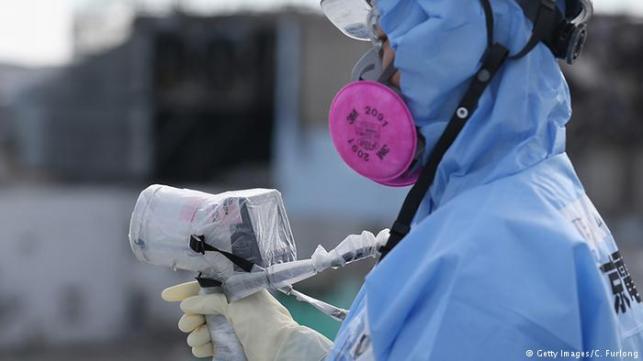
Even though radiation levels in a village near the site of the Fukushima nuclear disaster still exceed international guidelines, its evacuated residents are being coerced to return, according to a Greenpeace report.
Residents from the Japanese ghost village of Iitate will be allowed to return to their former homes at the end of March – the first time since they were forced to flee the Fukushima nuclear disaster in 2011. That’s the date the Japanese government has set to lift evacuation orders.
But according to environmental organization Greenpeace, it’s uncertain whether many will want to. Greenpeace says tests it has carried out on homes in Iitate show that despite decontamination, radiation levels are still dangerously high – but that’s not stopping the Japanese governmenment from pressuring evacuees from returning, under threat of losing financial support.
Those who refuse to go back to their former homes, and are dependent on the Japanese government’s financial help, are faced with a dilemma. After a year from when an area is declared safe again to live in, evacuated residents will see their compensation payments terminated by the government.
Radiation ‘comparable with Chernobyl’
The nuclear disaster led to more than 160,000 people being evacuated and displaced from their homes. Of these, many tens of thousands are still living in temporary accommodation six years on.
The village of Iitate, lying northwest of the destroyed reactors at Fukushima Daiichi power plantand from which 6,000 citizens had to be evacuated, was one of the most heavily contaminated following the nuclear disaster.
Government employees monitor radiation at a day-care center in Iitate in 2011
Around 75 per cent of Iitate is mountainous forest, an integral part of residents’ lives before the nuclear accident.
But according to Greenpeace’s report, published on Tuesday, radiation levels in these woods are “comparable to the current levels within the Chernobyl 30km exclusion zone – an area that more than 30 years after the accident remains formally closed to habitation.”
Put another way, Greenpeace said that in 2017, there clearly remains a radiological emergency within Iitate – defining emergency thus: “If these radiation levels were measured in a nuclear facility, not Iitate, prompt action would be required by the authorities to mitigate serious adverse consequences for human health and safety, property or the environment.”
The environmental organization says decontamination efforts have primarily focused on the areas immediately around peoples’ homes, in agricultural fields and in 20-meter strips along public roads.
But these efforts ended up generating millions of tons of nuclear waste – these now lie at thousands of locations across the prefecture, but they haven’t reduced the level of radiation in Iitate “to levels that are safe,” says Greenpeace.
‘Normalizing’ nuclear disaster?
The organization has accused the Japanese government of trying “to normalize a nuclear disaster, creating the myth that just years after the widespread radioactive contamination caused by the nuclear accident of 11 March 2011, people’s lives and communities can be restored and reclaimed.
“By doing so, it hopes, over time, to overcome public resistance to nuclear power.”
Greenpeace also lambasted the government for leaving unanswered what it calls a critical question for those trying to decide whether to return or not: what radiation dose will they be subjected to, not just in one year but over decades or a lifetime?
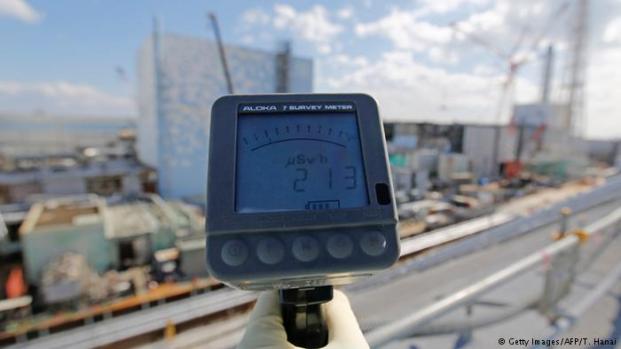
Greenpeace says Japan’s government wants to restore public confidence in nuclear power at the cost of harming residents
“Until now the Japanese government has exclusively focused on annual radiation exposure and not the potential radiation dose rates returning citizens could potentially face over their entire lifetime,” says Greenpeace.
Greenpeace, which has been monitoring Iitate since 2011, carried out its latest survey in November 2016
It found that the average radiation dose range for Iitate beginning from March 2017 over a 70-year lifetime was between 39 millisieverts (mSv) and 183mSv – and that’s not including natural radiation exposure expected over a lifetime, or the exposure received in the days, weeks and months following the March 2011 nuclear disaster.
That exceeds yearly guidelines set by the International Commission on Radiological Protection (ICRP) when added up over a 70-year period – it puts the maximum recommended radiation exposure at 1mSv annually.
Greenpeace says: “The highly complex radiological emergency situation in Iitate, and with a high degree of uncertainty and unknown risks, means that there is no return to normal in Iitate, Fukushima prefecture.”
It has called on the Japanese government to cease its return policy, and to provide full financial support to evacuees, and “allow citizens to decide whether to return or relocate free from duress and financial coercion.”
According to Greenpeace, “for the more than 6,000 citizens of Iitate, this is a time of uncertainty and anxiety.”
Heinz Smital, nuclear physicist and radiation expert at Greenpeace Germany, and part of the team taking measurements at Iitate, told DW the residents were faced with a very difficult situation.
“If you decide to live elsewhere [and not return to Iitate], then you don’t have money, you’re sometimes not welcomed in another area so you are forced to leave, because people say, ‘you’re not going back but you could go back,'” he said. “But for people who go back, they have contaminated land, so how can they use the fields for agriculture?”
He urged the Japanese government to more involve those affected in the decision-making process and not try to give an impression that things are “going back to normal.”
“It’s a violation of human rights to force people into such a situation because they haven’t done anything wrong, it’s the operator of the power plant responsible for the damage it caused,” said Smital.
“It’s very clear that there’s very serious damage to the property and the lifestyle of the people but the government doesn’t care about this.”
Fukushima Nuclear Meltdown and Thyroid Cancer in Children

Alexander Bay, Chapman University – Fukushima Nuclear Meltdown and Thyroid Cancer in Children
Is there a link between the Fukushima nuclear meltdown and cancer?
Alexander Bay, associate professor in the department of history at Chapman University, looks into the link between the radiation and thyroid cancer among children.
When I began teaching at Chapman University in August 2006, I had an established research trajectory focusing on the history of public health in Japan. My first book, Beriberi in Modern Japan, published in December, 2012, by the University of Rochester Press as part of the Rochester Studies in Medical History, grew out of my Stanford PhD dissertation. I produced an initial articulation of this project for the refereed journal Japan Review: Journal of the International Research Center for Japanese Studies. My article, “Beriberi, Military Medicine, and Medical Authority in Prewar Japan,” appeared in the fall 2008 issue. I spent the 2008-2009 academic year in Japan during which a Japan Society for the Promotion of Science Postdoctoral Fellowship funded further research for and the writing of my book. In addition to journal articles and book monographs, I have presented original research at the annual meetings of the Association for Asian Studies, the History of Science Society, East Asian Science, Technology and Society, and the Japan Society for the History of Medicine. I have also written book reviews for The Pacific Circle, the Journal of the Japanese Society for the History of Medicine, First World War Studies, East Asian Science, Technology and Society: An International Journal, and The Journal of Asian Studies, and have acted as an peer reviewer for East Asian Science, Technology and Society: An International Journal.
During the summer of 2010, I began initial work on second project concerning the history of the environmental impact on digestive system disorders. I presented early versions of this study at the Association for Asian Studies annual meeting, the Science, Technology, and Medicine in East Asia: Policy, Practice, and Implications in a Global Context conferencAlex Bay kickboxinge at The Ohio State University and at a University of North Carolina Asian Studies Program lecture series in 2011. Based on these conference presentations and academic talks, an editor of Historia Scientiarum, the English-language journal for the History of Science Society of Japan, asked me to contribute to a special issue dedicated to the history of Japanese medical history. The editor now has my article draft. I received a summer 2012 Travel/Research Grant from the D. Kim Foundation for the History of Science in East Asia to further research this topic. Tentatively entitled Nation from the Bottom Up: Disease, Toilets and Waste Management in Modern Japan, this project concerns the history of environmental hygiene and digestive-system diseases including dysentery, typhoid fever, hemorrhoids and parasite-diseases like schistosomiasis as well as the technology of waste-management in Japan from 1900 to 1980.
After the March 11, 2011, earthquake and tsunami induced triple meltdowns at the Fukushima Dai’ichi Nuclear Power Plant, Fukushima Prefecture began a Health Survey to test the thyroid glands of children under 18. The survey uncovered a large number of thyroid abnormalities. At present, there are 1,819 cases of childhood thyroid abnormality in Fukushima prefecture alone. As of 2016, there are 166 cases of thyroid cancer detected through cytology. Medical statistics suggest that this is an unnatural deviation from the baseline of 1 or 2 in one million. The Health Survey; however, argues that these new cases are the result of a “screening effect:” Because the Health Survey is actively checking children, it is finding more cases that fall within the baseline numbers for thyroid cancer. The take-home message is that there is no causal link between the Fukushima meltdowns, the amount of radiation released and these cancers.
The history of how the tobacco industry constructed ignorance concerning the link between smoking and cancer helps highlight the Japanese government’s campaign to spread doubt and uncertainty about the health effects of radiation and childhood cancer.
Studies sympathetic to the nuclear-power industry often excluded data on the health effects concerning non-human subjects. This discourse resonates with language used by the tobacco industry to cast doubt and uncertainty over the discussion of the health effects of smoking: Animal experiments cannot prove that smoking caused cancer because they do not reflect the human condition. The Survey noted in 2014 that the accident produced no reactions in tissue despite numerous peer-reviewed studies showing that artificial radiation from Fukushima caused genetic damage in butterfly species. Scientific research; however, has shown that even low-dose exposure increases the risks of cancer. We are unfortunately seeing effects of this in the children of Fukushima Prefecture.
1 This Month

of the week – Shut Down Drone Warfare!


Tell the Ukrainian Government to Drop Prosecution of Peace Activist Yurii Sheliazhenko

Petition to revoke the licensing of the Near Surface Nuclear Disposal Facility (NSDF) at Chalk River. https://www.ourcommons.ca/petitions/en/Petition/Details?Petition=e-7247
To see nuclear-related stories in greater depth and intensity – go to https://nuclearinformation.wordpress.com
-
Archives
- April 2026 (114)
- March 2026 (251)
- February 2026 (268)
- January 2026 (308)
- December 2025 (358)
- November 2025 (359)
- October 2025 (376)
- September 2025 (257)
- August 2025 (319)
- July 2025 (230)
- June 2025 (348)
- May 2025 (261)
-
Categories
- 1
- 1 NUCLEAR ISSUES
- business and costs
- climate change
- culture and arts
- ENERGY
- environment
- health
- history
- indigenous issues
- Legal
- marketing of nuclear
- media
- opposition to nuclear
- PERSONAL STORIES
- politics
- politics international
- Religion and ethics
- safety
- secrets,lies and civil liberties
- spinbuster
- technology
- Uranium
- wastes
- weapons and war
- Women
- 2 WORLD
- ACTION
- AFRICA
- Atrocities
- AUSTRALIA
- Christina's notes
- Christina's themes
- culture and arts
- Events
- Fuk 2022
- Fuk 2023
- Fukushima 2017
- Fukushima 2018
- fukushima 2019
- Fukushima 2020
- Fukushima 2021
- general
- global warming
- Humour (God we need it)
- Nuclear
- RARE EARTHS
- Reference
- resources – print
- Resources -audiovicual
- Weekly Newsletter
- World
- World Nuclear
- YouTube
-
RSS
Entries RSS
Comments RSS
 nuclear-news