Japan nuclear watchdog to boost monitoring spots for TEPCO ‘treated’ water release
Smooth propaganda spinning from NHK, ‘treated’ water instead of the reality: radioactive water!
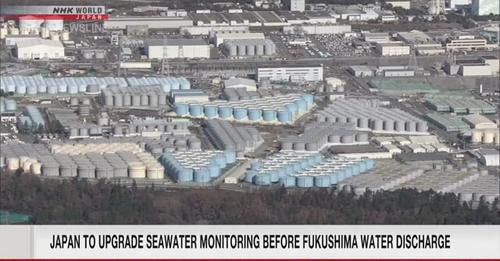
February 16, 2022
Japan’s nuclear watchdog has decided to boost maritime monitoring spots in anticipation of the release of treated water from the damaged Fukushima Daiichi nuclear plant.
The plant operator, Tokyo Electric Power Company, or TEPCO, plans to release treated water into the sea, starting from around spring next year.
Water, which has either been used to cool molten fuel or seeped into damaged reactor buildings, has become contaminated with radioactive materials.
TEPCO is treating the water by filtering out most of the radioactive substances. But the filtered water still contains tritium.
The utility plans to discharge the treated water after diluting the tritium level to well below national standards.
The Nuclear Regulation Authority on Wednesday discussed ways to measure levels of radioactive substances in the seawater, based on advice from an expert panel of the Environment Ministry.
The authority decided to increase its tritium monitoring locations from 12 to 20, and to lower the minimum detectible level to enable more precise measurements.
It will adopt these enhancements this spring. This would allow for comparison of water before and after release.
The total of tritium monitoring locations, including those of the Environment Ministry, will be increased to around 50, mainly within 10 kilometers of the release spot.
The head of the authority, Fuketa Toyoshi, called for sufficient confirmation to prevent substandard measurements and errors, noting that analysis of tritium takes time and analytic laboratories are limited.
TEPCO claims that impacts from exposure to treated water are minimal, but fears of damage based on rumors remain strong, especially among local residents.
The government and the plant operator hope that stepped-up monitoring would help ease such concerns.
The second court of appeal in the Children’s De-exposure Trial

February 15, 2022
The “Children’s De-exposure Trial” for the Fukushima nuclear accident was held at the Sendai High Court on February 14. This is the second time the court has heard the case since the appeal trial began in October last year.
In order to protect their children from radiation exposure, parents and children in Fukushima are suing the government, Fukushima Prefecture, Fukushima City and other local governments. In March last year, the Fukushima District Court ruled that the parents and children lost the case. The case has been moved to the Sendai High Court. The related article on this site is at the end of this article.
Imagine how unbearable it must be!
At the second court session held on the 14th, what attracted me (Uneri) the most was the statement by Mr. A, the plaintiff (who was living in Fukushima at the time of the accident). The words of people who lived in Fukushima at the time of the accident have a strong appeal to the listeners. It is a long text, but I am hesitant to cut it down, so I will introduce it in a slightly abbreviated form.
Statement of Opinion by Plaintiff Male A
My name is A. I am a plaintiff. I would like to talk about a basic misconception about the nuclear accident.
There is a common misconception that an unprecedented earthquake and unexpected tsunami caused an unexpected nuclear accident. But this is a big misunderstanding. Accidents at nuclear power plants caused by earthquakes and tsunamis were predicted, and because of this, seismic reinforcement and work to raise the seawalls were carried out, and accidents at some plants were avoided (Tokai Daini Nuclear Power Plant, for example).
Because nuclear accidents were anticipated, the measures to be taken in the event of an accident were also determined in detail. After the JCO accident in 1999, these measures were compiled into a series of laws called "nuclear disaster prevention," which culminated in the Act on Special Measures Concerning Nuclear Emergency Preparedness.
What I would like to argue is the fact that the government and Fukushima Prefecture did not follow these procedures and forced us, the residents, to be exposed to radiation. The SPEEDI (System for Prediction of the Effects of Emergency Radioactivity) data, which was up and running less than two hours after the earthquake and should have been used for emergency evacuation, was not made public until March 23, 2011, more than 10 days after the nuclear accident. The Nuclear Safety Technology Center (NSTC), which was managing SPEEDI at the time, sent more than 30 faxes to the Fukushima prefectural government in the morning of March 13, 2011, as well as email attachments from late at night on March 11, but the prefecture still did not release this data either. Fukushima Prefecture explained that they could not release the data because they did not have information on the source of the emissions, but this explanation is completely unreasonable. This is because the guidelines for dealing with the accident ("Guidelines for Environmental Radiation Monitoring in Emergencies") included a response plan for cases where there was no source information.
It is not only about predicting the diffusion of radioactive materials. In terms of actual measurements, information was concealed and data acquisition was obstructed. From the morning of the day after the earthquake, the staff of the Fukushima Nuclear Energy Center went to the vicinity of the Fukushima Daiichi Nuclear Power Plant to take actual measurements of radioactive materials released into the environment, following the "guidelines" mentioned above. On March 12, five monitoring sites were monitored, and on March 13, ten sites were monitored, but then the Ministry of Education, Culture, Sports, Science and Technology stopped the monitoring, according to a person who was involved in the monitoring at the time. As a result, the actual measurements from March 14 to 17, when the contamination caused by the nuclear accident was most serious, are missing.
As a result, the residents of the affected areas were left without being informed of the massive spread of radioactive materials, the fact that the plant had melted down, or how to evacuate. In other words, the purpose of nuclear disaster prevention, which is to protect the residents from radiation exposure, could not be achieved due to the inaction and interference of the government. This is why we claim that we were forced to suffer unnecessary radiation exposure.
At the end of March 2011, the Fukushima Prefectural Board of Education decided to start classes at schools in the prefecture from April 6 to 8 without measuring radiation levels, and in early April, the Nuclear Safety Commission began to consider whether the exposure limit for residents in areas with high radiation levels should be raised from 1 millisievert to 20 millisievert per year. On April 10, it was reported that the Ministry of Education, Culture, Sports, Science and Technology (MEXT) is planning to set the annual exposure limit for students at 20 millisieverts. On April 10, it was reported that the Ministry of Education, Culture, Sports, Science and Technology is planning to set an annual exposure limit of 20 millisieverts for children, which means that this standard will be applied even to children in order to prevent the expansion of the evacuation zone.
In this way, the government and Fukushima Prefecture hid information and prevented residents from evacuating at the beginning of the nuclear accident, and later, when it became clear how serious the contamination was, they raised the radiation dose limits for residents (instead of expanding the evacuation zone). Needless to say, all of these actions were against the law, against justice, against international common sense, and against humanism.
As a result, everyone in the disaster area, myself included, did not know how much radiation we had been exposed to, and thus we spent the first ten years of the accident with health concerns. Whenever I had a prolonged cold, a sore throat, or a lumpy feeling, I would think, "What if this is ......? You can imagine how unbearable these days are. In the affected areas, there are many people who are sincerely worried about the health and future of their children, but are unable to speak out about it. Who has created such a society? Wasn't it created by those who turn a blind eye to acts that are against the law, against justice, against international common sense, and against humanism?
In response to this situation, isn't it time to remove the unreasonable things that have been imposed on the disaster area and change the injustice? I sincerely and earnestly hope that the court will make an appropriate decision.
Plaintiff A's statement of opinion
It was a very impressive statement. To “imagine” the unbearable suffering of people. It is something that we all need to keep in mind.
At the meeting after the trial
At a meeting held in Sendai City after the court session, there was a briefing on the “3/11 Children’s Thyroid Cancer Trial,” which was filed in the Tokyo District Court last month. Ken’ichi Ido, a lawyer for “De-exposure of Children” is also involved in this trial.
On January 27th, six young men between the ages of 17 and 27 who were living in Fukushima Prefecture at the time of the accident filed a lawsuit against TEPCO, claiming damages. The reason for their claim is that their thyroid cancer was caused by radiation exposure. They were between 6 and 16 years old at the time of the accident. All of them have undergone surgery. Four of them had recurrences and had to have surgery again. Four of them have had their thyroid glands completely removed and have been forced to take hormones for the rest of their lives. Four of them have had total thyroidectomies and will have to take hormones for the rest of their lives. One of them has also been diagnosed with metastasis to the lungs, and we don't know what will happen to him. This is the situation. Since nearly 300 cases of thyroid cancer have already been found in Fukushima Prefecture, which should have been one or two cases per one million people per year, we will fight the case on the grounds that the only possible cause is radiation exposure.

The theory of over-diagnosis and various other arguments have been used to say that there is no causal relationship between cancer and exposure. (The prefectural residents' health survey review committee and UNSCEAR (United Nations Scientific Committee on the Effects of Atomic Radiation) have issued such opinions. In response to this, there has already been a bashing movement, saying, "Don't file a lawsuit if exposure is not the cause. However, if the causal relationship is denied here, all of the various cancers and health hazards that are actually occurring will be denied. The fiction that the government is trying to create, that "there was no health damage at all" despite the fact that so much radiation was released by the nuclear accident, will be accepted. I believe that this is a trial that we cannot lose.

It takes a lot of courage to go to court now, and the six young people took their time and consulted with their families before making their decision. The reason for their decision is partly because they are worried about their own future, but also because nearly 300 young people are living with the same kind of suffering and anxiety. These people are being torn apart, so they have a strong desire to give courage and encouragement to these people. I think that's where he made his decision in the end.
Attorney Ido

The “Thyroid Cancer Trial” is a trial in which people who have unfortunately been diagnosed with thyroid cancer hold Tokyo Electric Power Company responsible for their condition. The “Children’s De-exposure” is an appeal for the right to protect children to the maximum extent possible to prevent them from getting such diseases. Both are very important. We need to pay attention to them.
At the meeting, the lawyers also pointed out the recent “very unconscionable thing” that happened. I have not been able to introduce it on this site, so I will write about it here.
Former Prime Ministers’ EU letter issue
In a letter to the European Commission, five former prime ministers, including Junichiro Koizumi, Naoto Kan, and Tomiichi Murayama, wrote that “many children are suffering from thyroid cancer (due to the nuclear accident). The government and Fukushima Prefecture are protesting vehemently against this.
In a letter to the European Commission, he wrote, "Many children are suffering from thyroid cancer (due to the nuclear accident). It is not appropriate."
Reconstruction Minister Nishimei

The prefectural government and Fukushima Prefecture are fiercely protesting against the report. We have written to you to request that you provide us with objective information based on scientific findings."
Governor Uchibori
How do you see this trend? At the post-court meeting, Mr. Ido said
It reminded me of the attack on "Yummy Shinbo". In the end, by bashing the "nosebleeds" in "Yummy Shinbo," people couldn't talk about the fact that many children had nosebleeds. Such a social atmosphere was created to erase the nosebleeds as a fact. I think that the powers that be want to make the thyroid cancer case a success story like the one they had at that time. However, it is inconceivable that there is no health hazard after such a huge accident. We need to appeal this fact at every opportunity. We must not allow the facts to disappear.
I agree. Uneri Unera also strongly protests. In the prefectural health survey, thyroid cancer was found in more than 250 people, and more than 200 operations were performed to remove it. It must be true that “many children are suffering from thyroid cancer. The only basis for Uchibori’s opinion that “the prefectural health survey shows no link between cancer and radiation exposure” is that “we have not been able to find a clear link between the two at this time. The only basis for the view that “there is no link between cancer and radiation exposure” is that “we have not been able to find a clear link between the two at this time.” In my opinion, it is much more factual to point out that “many people are suffering” rather than to argue forcefully that there is no link.
There are many people for whom it is more convenient to say that there were no health problems caused by the Fukushima accident. There are many people who would be better off if it were stated that there were no health problems caused by the Fukushima accident. Even ordinary people who have lived in the Tokyo metropolitan area, such as myself, might feel more comfortable if they knew that there was no such thing. This is because the responsibility of living in a society that has been promoting nuclear power plants without actively resisting them would be lessened.
However, in the case of the sensitive subject of low-dose exposure, the moment we give in to the temptation to say that there was no damage, we will lose sight of all the actual damage. Until the day comes when we can say, “There really was no damage to our health” (unfortunately, I don’t think that day will ever come), I think we should focus on the fact that there are people who are actually suffering and worried.
It’s OK to be scared, to cry, to be angry
At the end of the meeting, a different plaintiff from the one who gave an opinion in court took the microphone. She is a woman who has raised two children in Fukushima. I would like to end this report with her words.
When we filed the lawsuit in August 2014, my second son said, "Mom, I want to take a day off from school to say something," and spoke at the meeting. The son who spoke at that time is now 15 years old. He has been sick since he was in the fifth grade and is now in the third grade. He will take the entrance exam this year, but he only went to junior high school for the first semester. I don't know if it was because of the radiation. I don't know if it is because of the radiation or not, but he used to be fine, but now he is like that. As I mentioned earlier about the nosebleeds, both my first and second sons had many nosebleeds at that time, and I had to move left and right. I was really scared and didn't know what to do. I was really frustrated when we lost the case in Fukushima, and I am determined not to lose in Sendai. It's okay to be scared, to cry, to be angry. So that one day we can laugh at the end. I would like to make this happen.
One of the plaintiffs

The next court date has been set for May 18.
Japan Federation of Bar Associations writes to Prime Minister Kishida, urging him to consider other ways to release treated water into the ocean

February 15, 2022
The Japan Federation of Bar Associations (JFBA) submitted an opinion letter to Prime Minister Fumio Kishida and others opposing the release of treated water from the TEPCO’s Fukushima Daiichi Nuclear Power Plant into the ocean, arguing that the procedures for obtaining social consensus are insufficient. The letter urges that other methods be considered instead of discharging the water into the sea.
The letter emphasizes the fact that the Nuclear Citizens’ Committee, made up of engineers and researchers, has proposed a method of storing the treated water by mixing it with cement or sand and hardening it. The report emphasized the fact that the Citizens’ Committee on Nuclear Energy, made up of engineers and researchers, proposed a method of storing treated water by mixing it with cement and sand.
It was a ritualistic meeting.
The government held seven meetings the year before last to hear opinions from agriculture, forestry, and fisheries groups, as well as chiefs from within and outside the prefecture, attended by the vice ministers of the relevant ministries. However, since there were almost no questions, the opinion piece criticizes the meetings as “ritualistic. The government and TEPCO only held the briefings with the conclusion that the waste would be released into the ocean. It cannot be said that they are listening to the voices of many citizens and reflecting them in their measures.
The Japan Federation of Bar Associations also sent the letter to the Minister of Economy, Trade and Industry, the Minister of the Environment, and the Chairman of the Nuclear Regulation Authority. (Keitaro Fukuchi)
https://news.yahoo.co.jp/articles/bd482f91d45a9db5f2b2d04511218a2c2f4ed15b?fbclid=IwAR3SZtUKj56m67BgLNp-7HQ9ESo6d1WuwDUQXh0YW4pJHLzkoU88UF4e1LQ
The Second Oral Argument of the Appeal Court at the Sendai High Court – At the previous date, the representative of the plaintiffs said, “The Fukushima District Court should make a proper decision on the issue of radiation exposure.
February 14, 2022
The second oral session of the “Children’s De-exposure Trial” was held on February 14, 2012. This case squarely questioned the risk of radiation exposure in Fukushima Prefecture after the nuclear accident and the negligence of the government. The second oral argument will be held on the afternoon of February 14 in Courtroom 101 of the Sendai High Court (Presiding Judge Masako Ishiguri). In the first oral argument held in October last year, Sumio Konno, the representative of the plaintiffs, made a statement. Sumio Konno, the representative of the plaintiffs, made a statement at the first oral argument in October last year, saying, “I hope the court will make a bloody decision on the issue of radiation and safe education for children. Please make a proper decision on the issues that the Fukushima District Court has thoroughly evaded. This summer marks eight years since the lawsuit was filed. This summer marks eight years since the lawsuit was filed, and a series of lawsuits will continue to be filed in Sendai, accusing the government and local governments of negligence in dealing with radiation exposure caused by the nuclear accident, including the health risks of low-dose radiation exposure and the dangers of internal exposure to insoluble radioactive particles.

My son ate snow in Tsushima.
The Fukushima District Court’s decision to deny the dangers and concerns of radiation and the future of our children, which we have been advocating, by simply following the arguments of the government and Fukushima Prefecture, filled us with frustration and emptiness.
I want the court to make a bloody decision on the issue of radiation and children’s safety education. Please make a proper decision on the issues that the Fukushima District Court has thoroughly evaded.
On behalf of the plaintiffs in the first trial, Ms. Konno made a statement in the courtroom of the Sendai High Court.
More than seven years have passed since the lawsuit was filed, and many of the child plaintiffs have graduated from junior high school without having the opportunity to receive education in a safe place or compensation. The remaining child plaintiffs will be graduating in March of the next year. During this period, some of the plaintiffs had to withdraw their complaints due to various reasons. Some of the plaintiffs’ mothers, out of desperation, evacuated with their children to safer places where they could receive their education.
At the time, I was working alone at the Onagawa Nuclear Power Plant (Miyagi Prefecture). He was working alone at the Onagawa Nuclear Power Plant in Miyagi Prefecture at the time, and his wife and children, who were living in Namie Town, evacuated to the Tsushima area like other townspeople. He later found out that the evacuation, which was supposed to be a way to escape the risk of radiation exposure, was actually a move to a more contaminated area.
My son, who was five years old at the time of the nuclear accident, was evacuated from the early morning of March 12 to the early morning of March 15, 2011, to the gymnasium of Tsushima High School in the Tsushima district of Namie Town. The area was highly contaminated due to the flow of radioactive plumes and is still designated as a difficult-to-return area. My son told me that he rolled up snow and ate it as ice cream. When I heard that story, I was shocked.
About half a year later, my son began to have a cold-like illness that lasted for about two years. I visited the hospital twice a month. The doctor said, ‘It’s a lowered immune system. If the town of Namie had been informed of the SPEEDI information at that time, they would have evacuated further away from the Tsushima area. I had exposed my son to radiation…. I am frustrated and angry with Fukushima Prefecture. Even now, only Fukushima residents are forced to be exposed to 20 millisieverts of radiation per year.
Since the accident at the nuclear power plant, Ms. Konno has consistently said, “Children cannot protect themselves. The frustration of not being able to protect her own children from the risk of radiation exposure is a feeling shared by the plaintiffs in the first trial.
It is up to us adults to protect our children. It’s our responsibility as adults. It is our minimum duty as adults.

(“We should avoid unnecessary radiation exposure.”)
The lawyers outlined their reasons for the appeal.
Lawyer Ido
The “School Environmental Hygiene Standards” do not include any standards for radioactive materials. There should be a standard for radiation exposure, and the fact that there is not is negligence on the part of the government. Children should be protected from radiation exposure at the level of environmental standards. I would like the court to make a straightforward judgment. It is true that the air dose has gone down, but the concentration of soil contamination will not go down easily. Most of the radioactive cesium in the soil is made up of insoluble fine particles. If these particles are taken into the body and internal exposure occurs, the biological half-life is thought to be as long as several decades, posing a serious danger. Using children as guinea pigs is unacceptable. Unnecessary radiation exposure that can be avoided should be avoided. In its written reply, the government claims that ‘exposure to about 1 millisievert per year is not worthy of legal protection. We hope that the court will reaffirm the natural principle that radiation exposure should be avoided whenever possible.
Koichi Mitsumae, Attorney at Law
The main issue in this lawsuit is how to measure the amount of radiation that the people of Fukushima have been exposed to as a result of the nuclear accident, and how to consider the effects of low-dose internal exposure on their health. It is extremely important that the results of the prefectural health survey be verified based on fair science. The degree of nondisclosure of information regarding the results of the survey is appalling. We call for a full hearing, including the examination of expert witnesses.
Attorney Kenzo Furukawa
”Should we evacuate or stay indoors? What should we eat and what should we drink? What should we eat and drink? The most important thing to make the right decision is accurate information. However, the decision of the first instance court was based on abstract theory and made no decision, allowing the government and Fukushima prefecture to hide information. In Namie Town, neither the national government nor the Fukushima Prefecture provided SPEEDI information, which led to the evacuation of many townspeople to the Tsushima area, where radiation doses were high, forcing them to be exposed to unnecessary radiation. If only the government and Fukushima Prefecture had provided the SPEEDI information, there are still people who would not have been exposed to radiation. The decision of the first trial must be fundamentally revised.
Yasuo Tanabe, Attorney at Law
The ICRP’s 2007 recommendation of a reference level of up to 20 millisieverts per year is unacceptable from the perspective of protecting the lives and health of children. The fact that Fukushima Prefecture decided to reopen schools prior to the April 19, 2011 notice by the Ministry of Education clearly exposed children to radiation doses that were several times higher at the very least. I hope the court will decide whether the government and Fukushima Prefecture acted illegally from the perspective of protecting the residents from radiation exposure.
Attorney Toshio Yanagihara
Until March 11, 2011, the Japanese government and legal system were completely unprepared for the consequences of the nuclear accident. “The Japanese government and legal system were completely unprepared for the nuclear accident until March 11, 2011, and even after the nuclear accident, the case has been left unresolved.
The court should make a correct judgment on the illegality of the orders and recommendations issued by the government, based on the basic premise that the plaintiffs in the first trial were sovereign citizens of this country and the subjects of human rights before and after the nuclear accident.
Shin-Yi Choi, Attorney at Law
After the nuclear power plant accident, the government’s policy has been based on ’20 millisieverts per year. The government has submitted a joint opinion as a theoretical basis that there is no proven health risk for radiation exposure of up to 100 millisieverts per year. On the other hand, the court of first instance did not take into account the risk of internal radiation exposure, especially insoluble radioactive particles. We hope that the appellate court will address this point head-on.

In the first trial, the court ruled that there was no danger of radiation exposure.
The “Children’s De-exposure Trial” was filed on August 29, 2014, and two lawsuits have been heard together.
One is an “administrative lawsuit” (commonly known as the Children’s Human Rights Lawsuit).
The first is an “administrative lawsuit” (commonly known as the Children’s Rights Lawsuit), in which public elementary and junior high school children in Fukushima Prefecture (plaintiffs) demand that cities and towns in Fukushima Prefecture (defendants) provide education in facilities that are safe in terms of radiation exposure.
The other is the “lawsuit for state compensation” (commonly known as the “parent-child lawsuit”).
The parents and children who were living in Fukushima Prefecture on March 11, 2011 demanded that the government and Fukushima Prefecture implement “five unreasonable measures” (1) concealing necessary information such as SPEEDI and monitoring results, (2) not allowing the children to take stable iodine pills, (3) reopening schools under the standard of 20 mSv per year, which is 20 times the limit of radiation exposure for the general public, and (4) not allowing the children to go to school after the accident. (3) reopening schools at 20 mSv/year, which was 20 times the limit of radiation exposure for the general public, (4) not allowing children to evacuate en masse when they should have done so at the beginning of the accident, and (5) using Mr. Shunichi Yamashita and others to promote false safety information.
On March 4, 2020, they realized the witness examination of Shunichi Yamashita (Professor at Nagasaki University and Vice President of Fukushima Medical University), who was appointed as the “Radiation Health Risk Management Advisor” for Fukushima Prefecture immediately after the nuclear accident.
However, on March 1 last year, the Fukushima District Court (presiding judge: Toji Endo) dismissed the plaintiffs’ case in its entirety and handed down a judgment dismissing the case.
Regarding the demand that education be conducted in facilities with a safe environment, Judge Endo ruled that “the 20 mSv/year standard cannot be considered immediately unreasonable,” that “it is not sufficient to find that the increase in cases of thyroid cancer discovered through thyroid examinations (Prefectural Health Survey) is due to the effects of radiation caused by the nuclear accident in question,” and that “the It is possible to carry out education at the public junior high schools attended by the plaintiffs while decontamination and remediation measures are taken,” and “It cannot be said that there is any illegality in deviating from or abusing the discretionary authority of the Board of Education, nor can it be said that there is any concrete risk of exposure to radiation to a degree that would adversely affect the maintenance of human health. The court dismissed the case, saying, “Since it is not recognized that there is a concrete risk of exposure to radiation to a degree that would adversely affect human health, it is not recognized that there is an illegal violation of the plaintiffs’ moral rights pertaining to their lives and bodies.
Kenichi Ido, the head of the defense team, posted the following message on his website before the second oral argument.
In this brief, we will present the criteria for abuse and derogation in the exercise of administrative power and argue that the exercise of discretionary power by the government and Fukushima Prefecture that exceeds these criteria is illegal and invalid beyond the permissible range. We will also present the method of interpretation of international human rights law that should serve as the standard for the exercise of discretionary power. In addition, I will argue against the claims of the State and Fukushima Prefecture, especially against the State’s claim that the benefit of not being exposed to 1 millisievert per year is not worthy of legal protection. The father, one of the appellants, is also scheduled to give an opinion. The argument will reach its climax. I ask for your attention.
http://taminokoeshimbun.blog.fc2.com/blog-entry-595.html?fbclid=IwAR2MxmccoLNchTmjs-KEfAnUI-MO5LjYKhU4t1MfbmoNztymfNiFEHszhR8
IAEA promises ‘objective review’ of Fukushima treated water discharge
Objective review from a partner in crime!

Feb 14, 2022
An International Atomic Energy Agency mission to Japan pledged Monday to conduct an objective and science-based safety review of a plan to discharge treated low-level radioactive water into the sea from the crippled Fukushima No. 1 nuclear plant.
The IAEA task force made the pledge in a meeting with government officials in Tokyo, a day before visiting the plant severely damaged by the 2011 earthquake and tsunami for inspection, as the discharge plan has drawn opposition from China and South Korea, as well as local fishing communities.
The task force will conduct the five-day review in Japan in an “objective, credible and science-based manner and help send a message of transparency and confidence to the people in Japan and beyond,” said Gustavo Caruso, director and coordinator at the IAEA’s Department of Nuclear Safety and Security.
The inspection is aimed at helping ensure the discharge plan proceeds in line with international safety standards and without harming public health or the environment, according to the Vienna-based agency.
Monday’s meeting involved the IAEA team and officials from the economy ministry, the Foreign Ministry and plant operator Tokyo Electric Power Company Holdings Inc.
Caruso said the government needs to find the best way to handle the treated water from the standpoint of safety and sustainability, as Tokyo’s efforts will be vital for further promoting international understanding on the issue.
Keiichi Yumoto, director general for nuclear accident disaster response at the economy ministry, said the government will fully cooperate with the IAEA review.
Tokyo considers it extremely important to have safety evaluations from the IAEA, Yumoto said.
The task force, established last year, is made up of independent and highly recognized experts with diverse technical backgrounds from various countries including China and South Korea, as well as personnel from IAEA departments and laboratories, according to the agency.
The findings from the mission will be compiled into a report by the end of the year, according to the IAEA.
The review will also be reflected in deliberations over the discharge plan, submitted by Tepco, carried out by the Nuclear Regulation Authority, according to Yumoto.
Water that has become contaminated after being pumped in to cool melted reactor fuel at the plant has been accumulating at the complex, also mixing with rainwater and groundwater at the site.
Tokyo decided last April to gradually discharge the water, treated through an advanced liquid processing system that removes radionuclides except tritium, into the Pacific Ocean after dilution starting next year.
Through an undersea tunnel, treated water is to be released into the sea about 1 kilometer away from the Fukushima plant from around spring 2023.
IAEA task force members are not expected to work in a national capacity but serve in their individual professional roles and report to Director General Rafael Mariano Grossi.
In response to the government’s request for assistance, Grossi said the IAEA will support Japan before, during and after the release of the water.
The safety review had been initially scheduled for mid-December but was postponed due to the rapid spread of the highly contagious omicron variant of the coronavirus.
https://www.japantimes.co.jp/news/2022/02/14/national/fukushima-water-iaea/
Fukushima man returning home wants to tell sons about his ‘error’

February 14, 2022
FUTABA, Fukushima Prefecture–The town where Yuji Onuma in his youth dreamed up a slogan promoting the “bright future” that nuclear power promised remains deserted and a shell of its former self.
But Onuma, 45, is now hoping to pass along a different message to his sons of the dangers of nuclear power, as he plans to continue visiting his former home after more than a decade away.
Evacuees from this town, cohost to the crippled Fukushima No. 1 nuclear power plant, are being allowed to stay overnight at their homes for the first time in 11 years since the nuclear disaster.
The temporary stays are ahead of a full return envisaged in the limited area of Futaba in summer this year. Futaba is the only municipality where all residents remain evacuated.
OVERNIGHT STAY REKINDLES MEMORIES
An Asahi Shimbun reporter accompanied Onuma, his wife and their two sons as they returned home from Jan. 29 through 30 on a “preparatory overnight stay” program that started on Jan. 20.
Around noon on Jan. 29, Onuma was in the Konokusa district of Futaba, 6 kilometers to the northwest of the nuclear plant, with his wife and two sons.
The district is designated a “difficult-to-return” zone, where an evacuation order remains in place because of the high levels of radiation from the triple meltdown at the plant, and is outside the area for the preparatory stay program.
Houses in the district were seen with entrances closed off with barricades.
“Damage from the nuclear disaster is not always easy to see, but I still want you to know something about it,” he told his family as they walked along a street.
Onuma pointed to a barbershop that he used to go to as a young boy. He also pointed to the home of a classmate and a road he would take to go to a driving school.
“There were people’s livelihoods in every single one of these houses before we were evacuated,” he told his family members in the midst of the totally deserted landscape.
“Oh!”
The abrupt shout came from Yusei, the oldest of Onuma’s sons. Right before the eyes of the 10-year-old was a house that was flattened by the massive tremor of the Great East Japan Earthquake, which triggered a tsunami and the nuclear disaster, on March 11, 2011.
A rainwater drainage pipe covered with moss was seen lying on the ground. A tree was spotted growing through an opening between the tiles of the house’s roof.
Difficult-to-return zones account for more than 90 percent of the landmass of Futaba, where no one has yet returned to live. Ties with fellow townspeople have grown so thin that Onuma learned about the deaths of his neighbors and a classmate only through an information bulletin of the town government.
“It’s so sad,” Onuma said. “I could have offered incense for them if only it had not been for the nuclear disaster.”
The preparatory overnight stay program started in the area designated a “specified reconstruction and revitalization base,” where the evacuation order is expected to be lifted in June.
In the designated area, many houses have been demolished. Onuma’s home stands alone, surrounded by empty lots.
Onuma also had planned to have his home demolished, as no elementary school or junior high school was likely to be reopened any time soon.
What the youngest of his sons said changed his mind. Onuma quoted 8-year-old Yusho as saying, when the family was visiting Futaba last March, “I like Futaba. I want to come to Futaba again.”
Encouraged by his son’s remarks, Onuma in April began improving the living conditions at his home, including tidying it up and decontaminating it.
He said he hopes to keep returning here with his family during summer vacations and on other occasions so he can see how the community will continue changing in the future.
ARCHITECT OF FUTABA’S ONCE PROUD SLOGAN
An overhead signboard once greeted visitors to a central shopping street in Futaba’s downtown area. It carried a slogan saying, “Nuclear power is the energy of a bright future,” which Onuma submitted when he was an elementary school pupil to win a local competition.
Being the author of the iconic slogan was, for some time following the nuclear disaster, a source of distress for Onuma.
He once thought that atomic energy could be entrusted to provide people’s power needs for the future. However, in the twinkling of an eye, the nuclear accident changed the lives of so many people.
Onuma said he has a different view of nuclear power now.
“I have to tell my children everything, including my own ‘error,’ so the same thing will never be repeated,” Onuma said.
He planted pansies, which can mean “remembrance” in the language of flowers, on a flower bed outside his home.
“I hope to convey pre-disaster remembrances of Futaba to my children,” he said. “And I also hope to go on creating new ‘remembrances’ in this town, where the clocks have stood still for 10 years and 10 months and counting.”
EVACUATION ORDER MAY BE LIFTED IN JUNE
Futaba was home to 7,140 residents when the quake and tsunami struck. The town remains totally evacuated due to the nuclear disaster that resulted, and its residents are taking shelter across 42 of Japan’s 47 prefectures.
Part of Futaba’s difficult-to-return zones has been designated a specified reconstruction and revitalization base. The town government is hoping to have the evacuation order lifted in the reconstruction base area in June.
The preparatory overnight stay program, which allows evacuees who want to return to spend the night at their homes in advance to prepare for their lives there, started in Futaba on Jan. 20.
Many townspeople of Futaba, in the meantime, have rebuilt their lives in other communities to which they have evacuated. Only 19 individuals from 13 households had applied for a preparatory overnight stay by Jan. 27, with Onuma’s two sons being the only minors among them.
The town government has set the goal of having 2,000 residents, including new settlers, five years after the evacuation order is lifted.
When parties including the Reconstruction Agency and the town government took a survey last year, however, some 60 percent of Futaba’s residents said they had decided against returning, and only about 10 percent said they wished to return.
‘Not a dumping ground’: Pacific condemns Fukushima water plan
Northern Mariana Islands says proposal for wastewater from stricken plant to be stored on site must be considered urgently.

By Catherine Wilson – 14 Feb 2022
The Commonwealth of the Northern Mariana Islands says there is a viable alternative to Japan’s plan to dump more than 1 million tonnes of treated water from the crippled Fukushima nuclear power station into the Pacific Ocean, and it requires urgent consideration.
The wastewater is a product of efforts to cool the nuclear reactors at Fukushima that were badly damaged in the March 2011 earthquake and tsunami.
The Northern Mariana Islands, a United States territory with a population of about 51,659 people, is located only 2,500km (1,553 miles) southeast of Japan. The islands’ leaders have declared that Japan’s plan, officially announced last year, is unacceptable.
“The expectation is that the discharge will not happen until 2023. There is time to overturn this decision,” Sheila J Babauta, a member of the Northern Mariana Islands’s House of Representatives, told Al Jazeera in an interview last month. In December, its government adopted a joint resolution opposing any nation’s decision to dispose of nuclear waste in the Pacific Ocean.
“The effort that went into the creation of the joint resolution exposed research and reports from Greenpeace East Asia highlighting alternatives for the storage of Japan’s nuclear waste, including the only acceptable option, long-term storage and processing using the best technology available,” Babauta said.
Currently, Japan intends to dispose of all the wastewater, which will be treated, over a period of about 30 years.
Anxiety is high among local Japanese fishers and coastal communities. And its plan has met with vocal opposition from neighbouring countries, including China, South Korea and Taiwan, as well as Pacific Island countries and the Pacific Islands Forum, the intergovernmental organisation for the region.
“This water adds to the already nuclear polluted ocean. This threatens the lives and livelihoods of islanders heavily reliant on marine resources. These include inshore fisheries as well as pelagic fishes such as tuna. The former provides daily sustenance and food security, and the latter much needed foreign exchange via fishing licences for distant water fishing nation fleets,” Vijay Naidu, adjunct professor at the School of Law and Social Sciences at the University of the South Pacific in Fiji, told Al Jazeera.
It was the use of the Pacific Islands for nuclear weapons testing by the US, the United Kingdom and France from the 1940s to late last century which has driven heated opposition among islanders to any nuclear-related activities in the region.
Radioactive contamination from more than 300 atmospheric and underwater nuclear tests rendered many locations, especially in the Republic of the Marshall Islands and French Polynesia, uninhabitable and led to irreversible long-term health disorders in affected communities.
Satyendra Prasad, the Chair of Pacific Islands Forum Ambassadors at the United Nations, reminded the world in September last year of the Pacific’s “ongoing struggle with the legacy of nuclear testing from the transboundary contamination of homes and habitats to higher numbers of birth defects and cancers”.
In 1985, regional leaders established the South Pacific Nuclear Free Zone Treaty, prohibiting the testing and use of nuclear explosive devices and the dumping of radioactive wastes in the sea by member states, including Australia, New Zealand and Pacific Island nations.
“For us in the Pacific, the Pacific Ocean has become a proving ground, a theatre of war, a highway for nuclear submarines and waste. The Pacific is not a dumping ground for radioactive waste water,” Maureen Penjueli, Co-ordinator of the Pacific Network on Globalisation, added.
Running out of space
When the earthquake and tsunami struck the Fukushima power plant, three nuclear reactors went into meltdown.
The process of decommissioning the disaster-hit site, which could take up to four decades, includes pumping cooling water through the affected infrastructure to prevent overheating. About 170 cubic metres of treated wastewater is accumulating every day and now fills at least 1,000 tanks around the site.
The Japanese government says it needs to release the water because it is running out of space to store it all.
It says it consulted with other countries in the region after announcing its plan in April last year, conducting briefings with Pacific Island Forum countries and the organisation’s secretariat. It adds that it will cooperate with the international community and adhere to relevant international standards.
“In November last year, experts from laboratories of the IAEA [International Atomic Energy Agency], France, Germany, and the Republic of Korea visited Japan to collect samples such as fish. These samples will be divided and sent to these laboratories for analysis,” a spokesperson for Japan’s Ministry of Foreign Affairs told Al Jazeera.
“The sea area monitoring will be strengthened from one year before the discharge, which is expected to start in spring 2022 under the current plan. The concentration measurement of the nuclides regulated by law, including tritium and carbon-14, will be measured prior to the discharge into the sea, and reports of the results will be made public.”
Last year, Rafael Mariano Grossi, the director-general of the IAEA, expressed support for Japan’s decision.
“We will work closely with Japan before, during and after the discharge of the water,” Grossi said. “Our co-operation and our presence will help build confidence, in Japan and beyond, that the water disposal is carried out without an adverse impact on human health and the environment.”
The US has also given its backing to Japan.
Babauta believes storage space is available at the Fukushima Daiichi site and on nearby land in Japan’s Futaba and Okuma districts.
In a report published in 2020, Greenpeace argued that “the only acceptable solution” was for Japan to continue the long term storage and processing of the contaminated water.
“This is logistically possible and it will allow time for more efficient processing technology to be deployed as well as allowing the threat from radioactive tritium to diminish naturally,” the environmental group said. Greenpeace said that while the Japanese government had considered allocating land for storage in Okuma and Futaba, ocean discharge was seen as easier and less time-consuming.
The wastewater storage option is also favoured by the expert civil society organisation, the Citizens Committee on Nuclear Energy (CCNE), which is supported by Tilman Ruff, associate professor at the Institute for Global Health at the University of Melbourne in Australia.
“Their [CCNE’s] recommendation for the management of the water is that, the first thing to do would be to store it in properly built secure long-lived large tanks similar to the ones that Japan uses for its national oil and petroleum reserves … The argument that they make, which, I think, is really very valid, is that, if this water was stored not for an indeterminant period, but even for a period of about 50-60 years, then, by then, the tritium will have decayed to a tiny fraction of what it is today and hardly be an issue,” Ruff told Al Jazeera.
The Japanese government insists the effect of the radiation on human health as a result of the discharge is small, specifying that it will amount to 0.00081 mSv/year (millisievert of radiation per year), a fraction of the natural radiation exposure level, estimated at 2.1 mSv/year. But medical experts have serious concerns about the enormous volume of wastewater and the potential fallout of even minimal amounts of Tritium, a radioactive isotope that will not be removed during treatment.
“Tritium is a normal contaminant from the discharges, the cooling water from normal reactor operations, but this is the equivalent of several centuries worth of normal production of tritium that’s in this water, so it is a very large amount,” Ruff said.
“The government says that it will dilute the water so that it doesn’t exceed the concentration limits that are regulated … It might allow you to tick a regulatory requirement, but it doesn’t actually reduce the amount of radioactivity going into the environment and the amount of radioactivity that is being released here is really critical,” added Ruff, who is a Nobel laureate and co-president of the International Physicians for the Prevention of Nuclear War.
He says that the human and environmental consequences of even very low levels of radiation exposure cannot be discounted.
“Obviously, the higher the level of exposure [to radiation], the greater the risk, but there is no level below which there is no effect,” Ruff said. “That is now really fairly conclusively proven, because in the last decade or so there have been impressive very large studies of large numbers of people exposed to low doses of radiation. At levels even a fraction of those that we receive from normal background [radiation] exposure from the rocks, from cosmic radiation. At even those very low levels, harmful effects have been demonstrated.”
For Babauta and other Pacific Islanders, any effect is untenable.
For now, she says that it is vital that the Northern Mariana Islands have “a seat at the decision-making table. Major decisions such as these impact the core of our lives as Pacific Islanders, thus impacting our children’s future and generations to come.”
https://www.aljazeera.com/news/2022/2/14/not-a-dumping-ground-pacific-condemns-fukushima-water-plan
Kenichi Hasegawa, former dairy farmer who continued to tell the truth about the nuclear accident in Fukushima, passes away.

Immediately after the accident, I pressed the village mayor to disclose information.
He also shared the voice of a dairy farmer friend who committed suicide.
Mr. Kenichi Hasegawa, a former dairy farmer who continued to appeal about the current situation in Iitate Village contaminated by radiation after the Fukushima Daiichi Nuclear Power Plant accident in 2011, died of thyroid cancer on October 22, 2011 at the age of 68. He was 68 years old. He was the co-chairman of Hidanren, a group of victims of the nuclear power plant accident, and the head of the group of Iitate villagers who filed for alternative dispute resolution (ADR). Since 2005, he has been focusing on growing buckwheat noodles in the village, while criticizing what the government and administration call “reconstruction projects” and “reconstruction Olympics. In February and March of this year, he was diagnosed with cancer and fell ill. Many people are saddened by the death of Mr. Hasegawa, who continued to communicate the issues of the nuclear accident both inside and outside Japan.

On January 13, 2012, prior to the Global Conference for a Nuclear Power Free World held in Yokohama, NGO officials and journalists from overseas visited Fukushima and Mr. Hasegawa conveyed the current situation of the Iitate villagers. He said, “I wish there were no nuclear power plants. He said, “I wish we didn’t have nuclear power plants, and I hope the remaining dairy farmers will do their best not to be defeated by nuclear power plants. He left a message that said, ‘I have lost the will to work.
Our government has been promoting nuclear power plants as a national policy, so I thought they would take proper measures when an accident occurred. But the government did not take any action. I may return to my village, but I can’t bring my grandchildren back. If we go back and end our lives, that will be the end of the village.
Paul Saoke, a Kenyan public health specialist and then secretary general of the Kenya chapter of the International Council for the Prevention of Nuclear War, recorded Hasegawa’s lecture on his iPad. Mr. Saoke said, “In Kenya, the Fukushima nuclear accident is almost unknown. When I return to Japan, I would like to have the media watch the video of my lecture and let them know what kind of damage is being done by the residents. Mr. Hasegawa’s appeal was posted on the Internet and quickly spread around the world.
In 2012, he gave a speech at the European Parliament.
The film “My Legacy: If Only There Were No Nuclear Power Plants
In 2012, Mr. Hasegawa gave a lecture at the European Parliament in Belgium on the one-year anniversary of the Fukushima nuclear accident. Mr. Hasegawa visited Europe with his wife Hanako, and together with Eisaku Sato, former Governor of Fukushima Prefecture, conveyed the current situation in Fukushima.

Our Iitate village was a beautiful village,” said Mr. Hasegawa. “Our Iitate village was a beautiful village,” Mr. Hasegawa began. While explaining how the government experts who came to the village kept saying that the village was safe, he said, “The villagers were exposed to radiation while the mayor and the people in the village administration clung to the village. We dairy farmers were told not to raise cows in the planned evacuation zone, and with no follow-up from the government, prefecture, or village, we made the decision to quit dairy farming on our own. Finally, I conveyed the regret of my friend who committed suicide, leaving behind a note saying, “If only there were no nuclear power plants.

Photo: Hideaki Takamatsu
In 2002, Naomi Toyoda’s film “The Last Will and Testament: If Only There Were No Nuclear Power Plants” was completed, and Mr. Hasegawa’s words and the events of his friend who committed suicide were further disseminated to society. Yasuhiro Abe, manager of the Forum Fukushima movie theater, said, “At the time, various debates were boiling in the local community, and despite the length of the film, it was fully booked for three days. Mr. Hasegawa’s words about Iitate were very human, and he had a different level of strength that no one else had.
Through his activities in Japan and abroad, Mr. Hasegawa has connected and interacted with a wide range of people.
Mr. Toshiyuki Takeuchi, the president of Fukushima Global Citizen’s Information Center (FUKUDEN), who has been informing people in Japan and abroad about Mr. Hasegawa’s activities, said, “Mr. Hasegawa is a person who has been affected by pollution. Mr. Hasegawa has been active as an anti-nuclear and anti-radiation activist, criticizing the government, the administration (village authorities), and TEPCO for failing to take appropriate measures that put the health of the residents of the contaminated area first. At the same time, he has a strong attachment to the Maeda area and his life there, and has returned to the area to start making soba noodles and rebuild his life. The complexity of his feelings (“irrationality”) was sometimes difficult to convey to people overseas.
As I listened to Mr. Hasegawa’s story, there were many moments when I felt that “everything was there in Iitate Village and Maeda area before the earthquake, and it was the center of the world and life. “Complex irrationality” is probably a cross-section of the tragedy of everything being taken away on its own.
Solidarity with the Nuclear Weapons Abolition Movement
Bringing together people from all walks of life
In 2007, after the International Campaign to Abolish Nuclear Weapons (ICAN) was awarded the Nobel Peace Prize, ICAN Co-Chairman Tilman Ruff (Australia) and ICAN International Steering Committee member and Peace Boat Co-Chairman Satoshi Kawasaki visited Mr. Hasegawa’s house in Iitate Village with medals.

Mr. Ruff said. He refused to be cowed or silenced, and continued to speak the truth about the nuclear disaster in Fukushima, stressing the need for rights, dignity, health, and recognition of the people and land that the government and TEPCO unreasonably put in harm’s way. I am honored to have known Kenichi and to have been able to work for a common cause.”
Mr. Kawasaki also mourns his death. Mr. Kawasaki also mourned his passing. “We were together on many occasions, including the European Parliament in Belgium in 2012, the round trip to Australia in 2013, and the Peace Boat trip. I remember the way he spoke straight from the bottom of his heart about the damage he had suffered as a dairy farmer and the anger and frustration of the people of Fukushima, strongly conveying his message to people even though they spoke different languages. I believe that Ms. Hanako, who has always accompanied us and talked about the damage caused by nuclear power plants from her own perspective, will continue to play a role as a sender.
Ms. Riko Mutoh (Funehiki), who is also a co-chair of Hidanren, said, “Ms. Hasegawa was a big presence. His words were powerful and persuasive. After returning to Iitate Village, she was busy with local activities. He was a person who brought people together, both inside and outside of the village, within and outside of the prefecture, those who had evacuated and those who were living there.
(Text and photo by Hiroko Aihara)
PCB waste treatment plan in Fukushima: “Insufficient explanation” and opposition from many people

Feb. 07, 2022
A meeting was held to check the government’s plan to dispose of highly concentrated PCB waste generated in Fukushima Prefecture after the nuclear power plant accident in Muroran City.
The Ministry of the Environment presented a plan to treat waste containing polychlorinated biphenyls (PCBs), a toxic substance, from the “contaminated waste management area” in Fukushima Prefecture at a facility in Muroran City, and the city and province approved the plan last December.
On the 7th, a meeting was held in Muroran City to check the government’s project, with representatives of citizens’ groups and academic experts attending.
At the meeting, a representative from the Ministry of the Environment explained that the decision was made based on the opinions of experts who had investigated the safety of the treatment at the site.
In response to this, a number of committee members expressed their opposition to the disposal of PCBs, arguing that the Ministry of the Environment’s explanation was too sketchy and that they had not received a reply to their questionnaire.
One of the committee members, Akiaki Kono, representative of the Association for the Safety of PCB Disposal, said, “Information on the field survey has not been properly disclosed. I felt that the administrative procedures were incomplete. The situation is not such that safety can be confirmed,” he said.
The Ministry of the Environment said, “We have not decided when we will start processing. The Ministry of the Environment says, “We have not decided when we will start the treatment, but we will answer the opinions and questions raised this time.
https://www3.nhk.or.jp/sapporo-news/20220207/7000043152.html?fbclid=IwAR3fXeQ4VwN56XNR5S05uFjTGHYCiRcQ9nk85uC9NbSG5V3FvDDQ4nFDEpY
Robot photos appear to show melted fuel at Fukushima reactor

MARI YAMAGUCHI – February 10, 2022
TOKYO (AP) — A remote-controlled robot has captured images of what appears to be mounds of nuclear fuel that melted and fell to the bottom of the most damaged reactor at Japan’s wrecked Fukushima nuclear plant, officials said Thursday.
A massive earthquake and tsunami in 2011 damaged cooling systems at the power plant, causing the meltdown of three reactor cores. Most of their highly radioactive fuel fell to the bottom of their containment vessels, making its removal extremely difficult.
A previous attempt to send a small robot with cameras into the Unit 1 reactor failed, but images captured this week by a ROV-A robot show broken structures, pipes and mounds of what appears to be melted fuel and other debris submerged in cooling water, plant operator Tokyo Electric Power Company Holdings said Thursday.
About 900 tons of melted nuclear fuel remain inside the plant’s three damaged reactors, including about 280 tons in Unit 1. Its removal is a daunting task that officials say will take 30-40 years. Critics say that’s overly optimistic.
The robot, carrying several tiny cameras, obtained the internal images of the reactor’s primary containment vessel while on a mission to establish a path for subsequent probes, TEPCO said.
TEPCO spokesperson Kenichi Takahara said the piles of debris rose from the bottom of the container, including some inside the pedestal — a structure directly beneath the core — suggesting the mounds were melted fuel that fell in the area.
Takahara said further probes will be needed to confirm the objects in the images.
At one location, the robot measured a radiation level of 2 sievert, which is fatal for humans, Takahara said. The annual exposure limit for plant workers is set at 50 millisievert.
The robot probe of the Unit 1 reactor began Tuesday and was the first since 2017, when an earlier robot failed to obtain any images of melted fuel because of the extremely high radiation and interior structural damage.
The fuel at Unit 1 is submerged in highly radioactive water as deep as 2 meters (6.5 feet).
TEPCO said it will conduct additional probes after analyzing the data and images collected by the first robot.
Five other robots, co-developed by Hitachi-GE Nuclear Energy and the International Research Institute for Nuclear Decommissioning, a government-funded consortium, will be used in the investigation over the next several months.
The investigation at Unit 1 aims to measure the melted fuel mounds, map them in three dimensions, analyze isotopes and their radioactivity, and collect samples, TEPCO officials said.
Those are key to developing equipment and a strategy for the safe and efficient removal of the melted fuel, allowing the reactor’s eventual decommissioning.
Details of how the highly radioactive material can be safely removed, stored and disposed of at the end of the cleanup have not been decided.
TEPCO hopes to use a robotic arm later this year to remove an initial scoop of melted fuel from Unit 2, where internal robotic probes have made the most progress.
https://www.yahoo.com/now/robot-photos-appear-show-melted-134212334.html
Zero Contaminated Water” and “Dismantling of Reactor Buildings” Missing from the Plan: The Final Form of Decommissioning the TEPCO’s Fukushima Daiichi Nuclear Power Plant
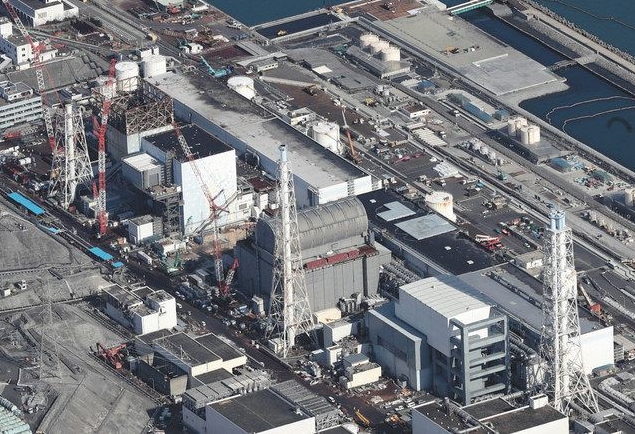
February 11, 2022
On March 11, it will be 11 years since the accident at TEPCO’s Fukushima Daiichi Nuclear Power Plant occurred. During this time, two goals have disappeared from the decommissioning plans of TEPCO and the government. During this time, two goals have disappeared from the decommissioning plans of TEPCO and the government: “zero generation of contaminated water” and “dismantling of reactor buildings. The core of decommissioning has been lost, and the goal of convergence work has yet to be drawn. (Kenta Onozawa)
Unable to stop inflow of groundwater as source of contamination
We want to proceed according to the schedule. We want to proceed as scheduled,” Akira Ono, chief executive officer of TEPCO’s Fukushima No. 1 Decommissioning Promotion Company, stressed at a press conference on January 27. The Nuclear Regulation Authority’s review of the plant’s facilities is scheduled to be conducted once a week, and is expected to be completed by the end of March.
In its initial decommissioning plan, TEPCO had set a goal of “zero generation of contaminated water. However, this goal disappeared when the plan was revised in 2019. Although the amount of contaminated water has been reduced to about one-third of what it was at the time of the accident, it is not known how the large amount of groundwater is flowing into the reactor buildings, the source of the contamination.
The frozen soil barrier, which was introduced to stop the inflow of groundwater, has not been proven to be effective. TEPCO did not respond to the request from the Regulatory Commission to show a direction to stop the water in the building, and continued to emphasize that the tanks would be full next spring, and the government decided to release the water into the ocean.
Once the release of treated water begins, there is no need for TEPCO and the government to hastily revive the goal of “zero contaminated water” because even if contaminated water continues to be generated, it can be purified and treated before being released. However, as long as contaminated water is not reduced to zero, the process of purification, storage, and release will continue endlessly.
Nuclear fuel removal technology and storage also face a difficult road.
What is even more unclear is what to do with the melted down nuclear fuel (debris) and the reactor building where it remains.
In a survey of the interior of the containment vessel of the Unit 1 reactor, a large amount of molten debris, which appeared to have solidified, was seen at the bottom of the vessel photographed by an underwater robot on August 9. It is likely to be debris, as it is close to the pressure vessel where the nuclear fuel was located.
Of the three reactors that suffered meltdowns, Unit 1 was the only one where the accumulation of debris could not be confirmed, and the detailed investigation using six different robots finally showed signs of progress.
However, the road to debris recovery is long and arduous. At the Unit 2 reactor, which will be the first to take out debris, trial collection is planned to start within 2010, but it will be limited to a few grams each by robots.
The total amount of debris, which is high-dose radioactive waste, is estimated to be 880 tons for the three reactors. The total amount of debris, or high-dose radioactive waste, is estimated to be 880 tons for the three reactors, and even if it takes 30 years to remove the debris, it will not be finished until 80 kilograms are removed each day. We do not have the technology to remove the entire amount of waste, nor do we have a concrete plan for how to store it in an environment where high radiation levels are a hindrance.
Decommissioning usually means clearing the land…
TEPCO and the government will maintain the plan to finish decommissioning the plant in 41-51 years, but the original plan to dismantle the reactor buildings disappeared in 2013. Decommissioning refers to the clearing of the land for normal nuclear power plants, but what is the status of Fukushima Daiichi?
The final decision on what to do will be made in consultation with the local government. Akira Ono, who is in charge of TEPCO’s decommissioning, once answered at a press conference. TEPCO and the government have yet to even consider the final form of decommissioning, with only the end date unchanged.
https://www.tokyo-np.co.jp/article/159484?rct=national&fbclid=IwAR2VVYtQA4iLWpvxMz_YXqCWzee3_uXLmJmR6yUaDYIrKJDdeezIIcr-lUE
Delayed robot probe of Fukushima reactor begins

Feb. 8, 2022
The operator of the damaged Fukushima Daiichi nuclear power plant has begun its delayed robot probe of the inside of the facility’s No.1 reactor.
Tokyo Electric Power Company, or TEPCO, had planned to start the survey of the reactor’s containment vessel on January 12, but postponed it due to mechanical trouble.
Engineers noticed during preparations that data from radiation-measuring equipment installed in a robot was not shown correctly.
The engineers later found out that electromagnetic waves emitted from the robot’s device for extending and winding up cables had affected its radiometers. They solved the problem, and confirmed that the data was then shown accurately.
TEPCO started the survey on Tuesday morning. Officials of the utility say they initially planned to end the probe by August, but that the schedule will be moved back due to the delay.
The probe is part of efforts to remove molten fuel debris from inside the reactor.
Fukushima Operators Send Robot Into Worst-Hit Melted Reactor

Feb. 8, 2022
By MARI YAMAGUCHI, Associated Press
TOKYO (AP) — A remote-controlled robot on Tuesday was used to probe the hardest-hit nuclear reactor at Japan’s wrecked Fukushima plant, as officials push forward with clean-up operations that have been mired in delays and controversy.
An earthquake and tsunami in 2011 unleashed a disastrous meltdown at Fukushima Daiichi’s three reactors that partly sunk their radioactive cores into the plant’s concrete foundations, making removal extremely difficult.
The plant’s operator, Tokyo Electric Power Company Holdings, said the submersible robot was sent into Unit 1’s primary containment vessel to install a guiding path for five subsequent robots, which will attempt to asses and take samples of the melted fuel that emits fatally high radiation.
Tuesday’s probe followed five years after the operators sent another robot into the same and badly-damaged reactor, but failed to get any images of the melted fuel.
The robot-led work, which was postponed from mid-January due to mechanical glitches, is expected to last for a few days before full-fledged probes begin.
Earlier probes showed that the fuel at Unit 1 is submerged by highly radioactive water as deep as 2 meters (6.5 feet).
Five other robots, co-developed by Hitachi-GE Nuclear Energy and the International Research Institute for Nuclear Decommissioning, a government-funded consortium, will be separately sent in for the investigation over the next several months.
The probe at Unit 1 aims to measure the melted fuel mounds, map them in three dimensions, analyze isotopes and their radioactivity, and collect samples, Tokyo Electric officials said.
Those are key to developing equipment and a strategy for a safe and efficient melted fuel removal.
About 900 tons of melted nuclear fuel remain inside the plant’s three reactors, including about 280 tons in Unit 1, and its removal is a daunting task that officials say will take 30-40 years. Critics say that’s overly optimistic.
Remote-controlled robots with cameras have provided only a limited view of the melted fuel in areas too dangerous for humans to reach. In 2017, super-high levels of radiation and structural damage hampered investigating Unit 1.
Details of how the highly radioactive material can be safely removed, stored and disposed at the end of the cleanup have not been decided.
Tokyo Electric hopes to use a robotic arm to remove a first scoop of melted fuel later this year from Unit 2, where internal robotic probes have made the most progress.
Fisherman and residents of Fukushima’s outlying areas have protested the operator’s plans to discharge into the nearby sea radioactive waters from the reactors, after treating and diluting them to safely releasable levels.
Taiwan lifts Fukushima food ban as it looks to Japan for trade pact support
The island will ease restrictions to allow in produce from five Japanese prefectures more than a decade after the nuclear disaster.
Decision will help smooth the way for Taiwan’s bid to join the CPTPP, Cabinet spokesman says.

8 Feb, 2022
Taiwan will largely lift a ban on some Japanese food imports imposed after the 2011 Fukushima nuclear disaster as it seeks closer cooperation with Tokyo.
Citing the need to join global trade pacts, including the Comprehensive and Progressive Agreement for Trans-Pacific Partnership (CPTPP), the island’s government announced on Tuesday it would conditionally lift the ban on food from Fukushima and four other Japanese prefectures later this month.
“For 11 years, Japan has imposed restrictive measures even more stringent than international standards to reduce the risk in relation to food, leading to more than 40 countries, including the 11 member states of the CPTPP to fully lift the ban on related Japanese food imports,” Cabinet spokesman Lo Ping-cheng said.
Lo said many European countries had also relaxed their bans or required radiation-free certificates for the imports.
“All over the world today, only Taiwan and China maintain the ban, and even Hong Kong and Macau have partially lifted the ban,” he said.
Lo said that after years of reviews and consultations with food experts and scientists as well as examination of international standards and practices, the island finally decided to conditionally remove the ban.
Under the plan, food from Fukushima, Gunma, Chiba, Ibaraki and Tochigi prefectures will be allowed in but aquatic products, tea, and dairy products will require proof that they are radiation-free and have certificates of origin.
General bans on wildlife meats, mushrooms and certain kinds of vegetables will remain in place.
Lo said the removal would help smooth the way for the island’s bid to join the CPTPP, which requires high standards for membership.
“For Taiwan to take part in the world trade and economic system and to join the high-standard CPTPP, we need to meet international criteria and refrain from ignoring scientific proof,” he said, adding Taiwan had discussed the issue many times with Japan and must remove unreasonable obstacles if it wants to join the Asia-Pacific trade body.
But he also stressed that the removal was not part of a deal in exchange for Japan’s support on CPTPP entry, though it would help the island’s bid.
John Deng, Taiwan’s top trade negotiator, said Taiwan applied to join the CPTPP last year and through its overseas representative offices or bilateral trade meetings, it had sought support from the 11 member states – Australia, Brunei, Canada, Chile, Japan, Malaysia, Mexico, New Zealand, Peru, Singapore, and Vietnam.
He said the CPTPP’s review committee had yet to examine Taiwan’s application because it had been busy with Britain’s membership bid over the past year.
Meanwhile, Taiwanese President Tsai Ing-wen said on her Facebook account on Tuesday that her government would not neglect the health concerns of the public and would uphold food safety on the island.
The main opposition party, the Kuomintang, however, blasted the Tsai government for ignoring public opinion that the food products be banned.
The decision comes despite a 2018 referendum that supported the 2011 ban.
Observers said the decision had more to do with the island’s hopes of winning security and military support from Japan to counter growing threats from Beijing.
“Participation in the CPTPP is a reason, but more importantly, Tsai wants to use the measure to befriend Japan so that it will join the United States to help defend Taiwan in the event of a potential cross-strait conflict,” said Wang Kung-yi, director of the Taiwan International Strategic Study Society, a Taipei-based think tank.
He said Tsai had done all she could to seek support from the US.
Wang said Tsai had also tried hard to cement ties with Japan to counter the mainland especially after former Japanese prime minister Abe Shinzo said any mainland Chinese attack against Taiwan, either direct or indirect, would affect Japan’s national security.
Beijing considers Taiwan its territory that must control, by force if necessary. It has warned the US and Japan – which both recognise the mainland diplomatically – against military and official support for the island.
Tokyo High Court rejects some of the evidence used in the second appeal against the former management of TEPCO

Feb. 9, 2022
A trial to hold the former management of Tokyo Electric Power Company (TEPCO) criminally liable. In the second appeal hearing, the court rejected the witness examination and on-site inspection at the Fukushima Daiichi nuclear power plant that the designated lawyer acting as the prosecutor had requested.
Tsunehisa Katsumata, former chairman of TEPCO, who was the top management of TEPCO at the time of the nuclear accident, and three other members of the former management team, were charged with manslaughter and forced to stand trial for allegedly failing to take countermeasures against the tsunami at the Fukushima Daiichi Nuclear Power Plant and causing the death of a patient at a nearby hospital due to evacuation.
The Tokyo District Court in the first trial acquitted them, saying that they could not have foreseen the tsunami, and the designated lawyer acting as the prosecutor appealed.
In the first trial of the appeal held last November, the court’s decision was closely watched, as the court demanded the adoption of documents and witness interviews of experts to support the reliability of the government’s earthquake assessment.
Ms. Riko Muto, head of the Fukushima Nuclear Power Plant Appeal Team, said, “I trust the conscience of the court to find out why the nuclear accident occurred, why it could not have been prevented, and who is responsible for this.
The second trial was held on the 9th. The presiding judge of the Tokyo High Court, Keisuke Hosoda, adopted as evidence the documents submitted by the designated lawyer acting as the prosecutor.
On the other hand, he dismissed as “unnecessary” the questioning of three witnesses, including experts involved in the formulation of the government’s earthquake assessment, and refused to conduct on-site inspections at the Fukushima Daiichi Nuclear Power Plant and other facilities.
Hiroyuki Kawai, lawyer for the Fukushima Nuclear Power Plant Lawsuit Group: “I feel disappointed. I didn’t see the slightest sign of a desire to determine the responsibility of the defendants for causing the biggest pollution incident in Japan’s history.
1 This Month
19 February – VIRTUAL EVENT-Decision Time: AI and Our Nuclear Arsenal
12:45 p.m. Central / 1:45 p.m. Eastern
To see nuclear-related stories in greater depth and intensity – go to https://nuclearinformation.wordpress.com
-
Archives
- February 2026 (141)
- January 2026 (308)
- December 2025 (358)
- November 2025 (359)
- October 2025 (376)
- September 2025 (258)
- August 2025 (319)
- July 2025 (230)
- June 2025 (348)
- May 2025 (261)
- April 2025 (305)
- March 2025 (319)
-
Categories
- 1
- 1 NUCLEAR ISSUES
- business and costs
- climate change
- culture and arts
- ENERGY
- environment
- health
- history
- indigenous issues
- Legal
- marketing of nuclear
- media
- opposition to nuclear
- PERSONAL STORIES
- politics
- politics international
- Religion and ethics
- safety
- secrets,lies and civil liberties
- spinbuster
- technology
- Uranium
- wastes
- weapons and war
- Women
- 2 WORLD
- ACTION
- AFRICA
- Atrocities
- AUSTRALIA
- Christina's notes
- Christina's themes
- culture and arts
- Events
- Fuk 2022
- Fuk 2023
- Fukushima 2017
- Fukushima 2018
- fukushima 2019
- Fukushima 2020
- Fukushima 2021
- general
- global warming
- Humour (God we need it)
- Nuclear
- RARE EARTHS
- Reference
- resources – print
- Resources -audiovicual
- Weekly Newsletter
- World
- World Nuclear
- YouTube
-
RSS
Entries RSS
Comments RSS
 nuclear-news