Reflecting on this week, in nuclear, and other, news

Christina Macpherson’s websites & blogs
This week I chanced upon a website that made me think, and reminded me that everything is inter-connected. The nuclear issue is just one part of the web of global social and environmental issues . This website is “Project New World: Let’s co-operate “ I think it originates in Germany – but anyway, it can be read in many languages, and it links up all sorts of issues.
This idea is timely, as now there’s an international group in gaol in Russia, for protesting against oil drilling in the Arctic. (Includes Ana Paula Alminhana Maciel (Brazil), Sini Saarela (Finland), Roman Dolgov (Russia), Tomaz Dziemianscuk (Poland), Faiza Oulahsen (Holland), Anthony Perrett (UK), Alexandra Harris (UK), Philip Ball (UK), Kieron Bryan (UK), Mannes Ubels (Holland), Camila Speziale (Argentina-Italy), Dima Litvinov (US-Sweden), an Australian, a New Zealander, a Ukranian crew member and a Russian crew member.) OK – it’s oil not nuclear. In fact, the Russians have dumped so much radioactive trash in the Arctic, that this drilling may well be very connected to nuclear trash..
In America, 83 year old Sister Megan Rice remains in a prison cell, awaiting what could be a 30 year sentence for her anti nuclear action.
The one bright spot is that the US Nuclear Regulatory Commission’s wheels of process for re-licensing nuclear power plants have ground to a halt, along with much else, due to the USA government shut-down. Also, for Australia and others, it might be just that bit harder for the secretive Trans Pacific Partnership to get signed up, seeing that Obama has had to cancel his Asian visit.
In Australia, Robert Stone is showing his nuclear advertising film “Pandora’s Promise”, and getting mainstream media coverage, of course. In Melbourne, there will be a protest at the launching of the film. Cinema -goers will be handed leaflets explaining what the film carefully leaves out.
Pandora’s Propaganda – nuclear’s film advertisement spreads from USA
Christina Macpherson’s websites & blogs
The nuclear advertising film ‘ Pandora’s Promise’ will be showing around Australia, and in Edinburgh and London in the next couple of weeks. It is largely funded by people from the pro nuclear Breakthrough Institute, including people like Bill Gates, who has his own nuclear power company Terra Power. It is directed by passionate nuclear enthusiast, Robert Stone, who does Q and A afterwards, and over-talks any critical questioners.
Weaknesses of this film include the way that it:
- mocks anti nuclear opinions as a bunch extremists and zealots. It makes no effort to portray any sensible opposing opinion.
- minimises the health effects of ionising radaiation with downright untruths, for instance, telling us only that Chernobyl killed 56 people. It leaves out that a United Nations World Health Organization agency predicts 16,000 more will die from Chernobyl cancers and that the European Environment Agency estimates 34,000 more. It omits that non-fatal thyroid cancer struck another 6,000, mostly children
- does not mention the crippling economics that is now closing nuclear plants in USA (Florida, Wisconsin and California), nor the imperative for tax-payer subsidy
- does not mention insurance: the nuclear industry, alone among industries is exempt from risk through USA’s Price Anderson Act, as well as every home owner’s insurance policy stating that this policy does not compensate you for any radiation damage from a nuclear power plant.
- avoids the economics of Small Nuclear reactors (SMRs) Even under the best of circumstances, there will be no SMR prototype for as long as a decade or more. There are serious questions over the economics of mass producing these, over their safety, and the huge costs of maintaining security over thousands of little nuclear reactors scattered around the land. None of this is discussed in the film.
- promotes Integral Fast Reactors (IFRs) – fast breeder reactors. but doesn’t mention the past failure of these, in USA , France (Super Phoenix) Japan (Monju), and their enormous cost.
- Dishonestly minimises the nuclear waste problems of IFR’s. Film does not explain that the final wastes, while smaller in volume, are far more radioactive and dangerous than existing nuclear wastes, and therefore require the same amount of storage space and security.
This week’s nuclear news
Christina Macpherson’s websites & blogs
Fukushima news dominates – as always. There is so much information coming out – it’s hard to keep up. I recommend the website http://enenews.com/ for up to date news.
- A magnitude 5.3 earthquake has rocked Japan’s Fukushima prefecture on Thursday – 50 km South West of the crippled nuclear reactors. No harm reported there.
- Workers on Wednesday discovered the cracks and cuts at 8 places in the buttress supporting the 120-meter vertical pipe standing between the number-1 and number-2 reactor buildings about 66 meters above the ground..
- The planned ice wall around and under the plant is likely to increase the sogginess of the ground there, and thus increase risk of reactors collapsing
- Top actress Norika Fujiwara [former Miss Japan] has accused the government of covering up the truth about the crisis at the Fukushima nuclear plant,
- TEPCO paid for the creation of a blacklist of actors and musicians who are against the nuclear industry. http://enenews.com/report-tepco-paid-creation-blacklist-actors-musicians-against-nuclear-industry
India . Anger as the government tries to do a “sweetheart” deal with American nuclear companies, so that they can get around India’s Nuclear Liability Act . ( This would mean that the Indian tax-payer would cop the costs of a nuclear accident, rather than the nuclear company as the Act stipulates)
Syria. The situation has settled down to the extent that war is not now so likely. Questions arise as to why nuclear weapons of mass destruction are not banned, if chemical ones are. Israel stands out as a nuclear weapons country in the region.
Iran New President Hassan Rouhani making efforts for more diplomacy, and pledging that Iran will never develop nuclear weapons.
This week’s nuclear news
Christina Macpherson’s websites & blogs
Japan is always the top news. This week, it would be funny if it were not so serious. With the Fukushima wrecked nuclear plant in a calamitous state, The Japanese government, aided by the known to be dodgy Olympic Committee, has won the right to host the 2020 Olympic Games in Tokyo. What a great way to renew confidence in Japan, and in its ability to fix the Fukushima nuclear catastrophe! Unfortunately it is far from fixed, The vast expense of setting up the Olympic Games would be better spent in fixing it. And the world should help.
USA’s Syria dilemma. An attack on Syria is likely to bring about nuclear disaster – in several ways – striking Syria’s nuclear reactor, use of depleted uranium weapons, nuclear retaliation from Russia, or even from other nations that hold nuclear devices.
Iran has reduced its nuclear stockpile – but will the West be ready to truly negotiate?
Nuclear weapons industry – a huge bloated and out of control industry, in USA, Russia – and beyond. It’s in their interest to have A war – with Syria, Iran, anybody, really.
California – a ray of common sense – as electricty utilities join in a project for community renewable energy.
The Science Denial Industry exposed. A new book Dealing in Doubt: The Climate Denial Machine Vs Climate Science In the tradition of asbestos denialism, tobacco denialism, now climate denialism is exposed – (radiation denialism is the next)
Rupert Murdoch’s role in installing Australia’s puppet Prime Minister
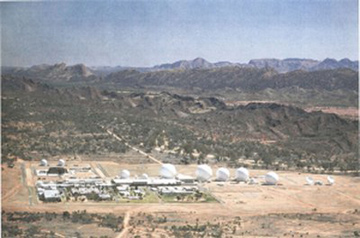 In 1975, the USA – with it’s secret militaristic plans for Pine Gap, in the Central Australian desert – played a critical part in the removal of Australia’s Prime Minister Gough Whitlam
In 2010 multinational mining companies were behind the push to remove Kevin Rudd, and his Mining Super profits tax. I don’t buy the argument that Kevin Rudd was such a difficult personality that Labor had to kick him out. Anyway, Julia Gillard replaced Rudd’s mining tax with a weak as water mining tax. But the corporate powers still weren’t happy.
How were these foreign owned companies, like BHP, able to prevail? Predominantly by promoting the message of climate change denial. And how did this message prevail in Australia, where in 2007, Kevin Rudd was swept to power on a wave of public enthusiasm for action on climate change?
Despite some well informed coverage on climate change, by the Fairfax media, the ABC and SBS, the denialist message, taken up by the right wing politicians and friends of polluting industries, was steadfastly pushed to the public by Rupert Murdoch’s media, with its 70% ownership of Australian media.

There was an easy puppet waiting there for them. Tony Abbott has but one over-riding value – and that is To Be Topp. There might be a few very right-wing Catholic religious themes in there – (ones which many Catholics would be ashamed of) But as for other trifling subjects like climate change, – well they don’t bother Tony Abbott, as he doesn’t understand them.
Nobody seems to notice the fact that Australia is now President of the United nations Security Council. And the UN has not sanctioned an attack on Syria. But the USA might very well attack Syris unilaterally, with out waiting fir the UN. And what will Australia do?
And how confident do you feel about all this, with the vacuous Tony Abbott at the helm of thegood ship Australia?
Nuclear news this week
Christina Macpherson’s websites & blogs
Well, from an Australian perspective, the Australian election might seem to be serious, but it pales into insignificance compared to what’s going on in Japan.
The Fukushima crisis is deepening,. More radioactive leaks found. The ground under the nuclear reactors is subsiding. Radioactivity levels are spiking high around Fukushima. They’re going to have to empty radioactive water into the sea – and that is disturbing Pacific neighbours. It is developing as an international problem (which it always was, really). They are going to build an ice wall under the reactors.
Prime Minister Abe has staked his reputation etc on accelerating Japan’s economy by restarting nuclear reactors, and marketing Japan’s nuclear reactors overseas. So now he is making announcements about the government putting more effort into cleaning up Fukushima. On September 15 the last of Japan’s two operating nuclear reactors will shut down – for maintenance – for an indefinite period.
The world’s commercial nuclear industry is anxiously watching things in japan. But no worries – the world’s military nuclear industry rolls on.
Nuclear news for the past week
Christina Macpherson’s websites & blogs
Fukushima again dominates the news – reactor foundations possibly unstable , just as much water pouring out as going in to cool reactors. Russia again offering help, (a good idea- they have the best knowledge). Lawmakers call for a state of emergency in Japan – but Prime minister Abe is away in Middle East, marketing japan’s nuclear technology. Fukushima’s fishing industry shut down indefinitely.
Syria and the world. The situation has the potential to bring about a nuclear war between USA and Russia.
USA. Women and discrimination. Now this one really surprised me. It sounds as if some women are complaining of discrimination, because NASA makes stricter rules for female astronauts because they have a greater risk of getting cancer from space radiation, than men do !
Vermont Yankee nuclear power plant to shut down, for financial reasons. Rumours that Indian Point nuclear plant could be the next to fall. Plan for nuclear waste to Mississippi meeting with strong objections, especially as there’s a rumour they might import nuclear wastes from France. Concerns about radioactivity in fish at the top of the Pacific food chain on USA West Coast – need to test tuna, salmon and herring.
France: nuclear regulator demands huge expenditure to improve safety of nuclear plants
India: A new book “The Power of Promise” gives a devastating account of the corruption in India’s nuclear industry.
Taiwan sends back radioactive containers to Japan.
Fracking. New concerns here, as new “improved’ methods involve the use of depleted uranium in the drilling process.
Kazakhstan’s water imperilled by in situ leaching of uranium
Energy and Nuclear News This Week
Christina Macpherson’s websites & blogs
Fukushima remains the big news. The water emergency continues. Prime Minister Abe ‘s focus seems to be the need to fix Fukushima, so that Japan can restart its nuclear reactors, and sell nuclear technology abroad – rather than recognising the seriousness of the situation. The “Nuclear Village” is still there in Japan, with Tepco’s powerful connections, money, and control of the media.
Hiroshima and Nagasaki. Commemmorations continue, and also scholarly accounts of the 1945 bombings, the way that media and governments have reported them and the reasons behind the bombing.
UK. Russia joins the push to sell nuclear reactors to Britain, as long as the UK guarantees a continued profitable price for them (i.e a public subsidy)
USA. Same old wrangles about nuclear waste – what to do with it. Nevada and USA Energy Secretary Ernest Moniz giving conflicting accounts of waste transport arrangements. Water problems – Vermont Yankee Nuclear Plant’s heat pollution of Connecticut River. A Massachusetts town provides all of its municipal energy by renewable sources, plus energy efficiency. Small Modular Nuclear Reactors – a new report finds them to be economically just not viable
Zimbabwe. Big argument on whether or not they supplied uranium to Iran.
Syria. A dubious report about tactical nuclear weapons being used against Syrian government. This report was removed from the web, and there has been no more news on this, no substantiation of this story.
This week in nuclear news
Christina Macpherson’s websites & blogs
Fukushima is even in the mainstream news, as Prime Minister Abe acknowledges the radioactive water crisis there. Japan’s new nuclear regulator is not pulling punches, stating that it is an emergency situation. Radioactive water has been leaking out for 2 years, with the amount reaching 300 tonnes a day. Water accumulating below the nuclear reactors is causing the ground to sink. There’s a very real risk of the buildings collapsing. This would be especially dire in the case of reactor no 4, which has an elevated pool of radioactive spent fuel rods.
Hiroshima and Nagasaki Days being recognised around the world, with calls for a Nuclear Weapons Convention – a process to ban nuclear weapons, as similar processes have closed down chemical and biological weapons, and land mines. An international poll conducted in 26 countries found that 78 percent of people support a treaty that would outlaw and eliminate nuclear weapons. Similarly, 151 of 195 UN member nations have a stated policy supporting a ban on nuclear weapons.
- USA. The Pentagon’s plan for AirSea Battle entails a pre-emptve attack on China. This new posture is quietly being adopted without public awareness.
- The decline in nuclear power is gathering pace. EDF, the world’s largest nuclear company announced that it now abandons nuclear power projects in USA, and will focus on renewable energy.
- Global warming is taking its toll on nuclear reactors, with Entergy’s Cape Cod Bay’s Pilgrim nuclear plant forced to cut back due to excess heat.
- The Attorneys General of New York and Vermont have joined the fight against California’s San Onofre nuclear power plant in an effort to stop federal regulators from erasing all record of a judicial ruling that the public has a right to intervene before major amendments are granted to an operating license. An important battle – it means upholding the Supreme Court’s power, rather than having the Nuclear Regulatory Commission overriding it.
South Korea’s nuclear industry is in somewhat of a turmoil, with continuing revelations of corruption, falsification of safety documents.
UK. The supposedly anti nuclear Liberal Democrats are on the verge of selling out, to join the Tories in a pro nuclear policy, as both parties try to organise a subsidy for new nuclear, but one that doesn’t look like a subsidy.
July 24 – potted nuclear news this week
Christina Macpherson’s websites & blogs
Nuclear Abolition Week – activities in 25 countries.
Fukushima – continues to be – not good. Tepco after 2 years of denial, admits that radioactive water has been , and is, leaking into the sea. Fishing authorities and marine biologists warn of it entering the food chain. Steam envelops Fukushima Daiichi nuclear reactor No 3. Cause not yet known.
Health news:
- Legal hearings about radiation exposure to US navy men at nuclear reactor in Antarctica.
- All British children have Plutonium from Sellafield in their teeth.
- Steep rise in birth defects near USA’s Hanford nuclear site.
- Thyroid cancer in Fukushima area- old peopel afected as well as children
- . Birth defects in Iraq-attributed to depleted uranium. But – World Health Organisation reports on high rate of birth defects in Iraq – but makes no attempt to identify the cause
China – Government’s dramatic cancellation of uranium processing plant after thousands of protestors marched against it. Now the Chinese government is worrying that this could lead to a national anti nuclear movement, not just a district one.
UK: Survey shows UK government out of step with public, on nuclear power – surprise again – older men are pro nuclear, women and young people anti nuclear.
The week that was, in nuclear news
Christina Macpherson’s websites & blogs
This month I’ve been focussing on “small scale renewable energy”. And what a pleasure this has been. So many good things going on. Peru is giving free solar panels tothe poorest 2 million poor households. In Fiji, a team of grandmothers, having received training in India, are now the solar power educators for communities. UK launches new solar feed-in tariff that will pay back homeowners as they use their solar energy. Many new developments in more efficient solar panels, and in solar and wind energy storage.
World Nuclear Status Report 2013 details the declining state of the industry
UK. Angst continues about how to pay for new nuclear power – with hidden subsidy to the French supplier, and bribes offered to Somerset towns and villages near planned nuclear plant . Sounds a bit like Japan’s “Nuclear Village” doesn’t it – in which local areas became dependent on government money, for hosting nuclear plants?
USA. They’ve got a nuclear enthusiast too, for Energy Secretary – Ernest Moniz – who’s just announced new funding for nuclear companies General Atomics, GE Hitachi, Gen4 Energy and Westinghouse . However, it’s not well known, but the Dept of Energy has decided on deep burial as the solution for nuclear wastes, not nuclear reprocessing and new nuclear plants.
Financial disaster of U.S.Uranium Enrichment Corporation (USEC) threatens viability of USA nuclear industry
Legal case continues, with US navy personnel suing TEPCO for their radiatio-related illnesses.
France. 30 anti nuclear activists arrested. They broke into France’s oh so secure Tricastin nuclear power plant.
Japan. the Abe government forges on, with drive to restart nuclear reactors. But this is not popular. And – Fukushima continues to leak radioactive water, and measure high levels of radioactivity.
The week in nuclear and energy news
Christina Macpherson’s websites & blogs
JAPAN 350 shareholders angry at TEPCO Annual General Meeting, demand nuclear shutdown. A big rise in radiation in seawater near Fukushima, raising the fear that Fukushima groundwater may be leaking into the ocean. First shipment of uranium/plutonium (MOX ) arrives near Takahama nuclear plant – adding to Japan’s already huge stock of toxic radioactive trash. Japan’s farming sector switching to rooftop solar power.
The week that was, in nuclear news
Christina Macpherson’s websites & blogs
USA. Nuclear industry still reeling from closure of San Onofre nuclear power plant. Now the full shock of the “decommissioning” challenge is being felt. It will take at least 60 years to get rid of that radioactive corpse of San Onofre. Warren Buffett and MidAmerican cancel plans for nuclear power, and shift investment to wind energy. Nuke lobby produces an advertising film – Pandora’s Promise, which, I am happy to say, is getting pretty bad reviews.
UK govt struggling with costs for its new nuclear program: it will link its guaranteed fixed price for electricity to inflation, so that the French supplier EDf will be sure of a profit, but British consumers will face high costs. Meanwhile UK and Russia sign a deal that will enable Rosatom to sell nuclear technology to Britain. Wind power doing very well, with negligible need for backup, over 12 months.
Climate change: 48 USA city mayors pledge action to address climate change. China starts a carbon trading scheme.
Japan. Prime Minister Abe – still junketing around Europe marketing nuclear reactors, but 60% of Japanese oppose export of nuclear reactors. Prime Minister’s wife Akie opposes nuclear power, speaks up for renewable energy.
Uranium industry in serious doldrums. Rio Tinto’s Rossing uranium mine may have to close.
Snapshots of the latest nuclear news
Christina Macpherson’s websites & blogs
Iraq. A 2012 World Health Organization study on congenital birth defects in Iraq has still not been released to the public. Why not?
USA. California’s San Onofre nuclear power plant to stay closed permanently. The closure of this plant, near to 60 million people, is a landmark event for the (lack of?) future of the nuclear industry. It follows fast on 3 other USA nuclear plants shutting down. The reasons for these closures are economic. But in the case of San Onofre, it is largely the result of a sustained, well organised, and well supported citizen campaign. Huge radioactive waste problems remain at San Onofre. Decommissioning will take 50 years.Also a big challenge to supply electricity by other means – especially renewable energy.
Japan’s Prime minister is on a drive to export Japan’s nuclear technology, to Poland, Czech Republic, Turkey. Middle East – anybody really. Meanwhile his wife, Akie, has spoken out against nuclear power, and in favour of Japan exporting clean energy technology.
Fukushima. Grim news coming out about shortage of workers for the Fukushima cleanup. Experienced workers are reaching their radiation dose limit. Radiation cleanup workers prefer work elsewhere. If Japan goes ahead with nuclear power, and exporting nuclear technology, the Fukushima shortage will become even more critical. Cleanup will take 50 years at the very minimum.
India. Nuclear power plans for Kovvada and surrounding villages have stalled, due to huge opposition from local villagers.
The week that was, in nuclear news
Christina Macpherson’s websites & blogs
Well there are a lot of big stories out there – Warren Buffett and MidAmerican scrapping nuclear plans and going for wind energy instead, – San Onofre nuclear plant (California) looking ever less likely to restart, – Japan’s PM Abe marketing and pushing for nuclear power, Fukushima radioactive groundwater leaking into the stricken reactors – China boosting renewable energy world-wide.
But the most interesting story is the press release coming out from The United Nations Scientific Committee on the Effects of Atomic Radiation (UNSCEAR). UNSCEAR is to produce a full report on Fukushima radiation, in October this year. UNSCEAR is subservient to the International Atomic Energy Agency (IAEA) , whch vets all its publications. UNSCEAR made up largely of scientists from the nuclear industry. The Its chairman, Wolfgang Weiss is a boss on Euratom, a marketing body for nuclear power.
UNSCEAR’s press release is being publicised worldwide. It states a rather vague, but remarkably reassuring view that Fukushima radiation will not harm anybody. This view contrasts with the February 2013 World Health Organisation report, which found that for the Fukushima radaiatio affected community, a rise in breast cancer in girls, and in leukaemia in clean-up workers is to be expected – in later years.
Space travel. Apparently the same sort of ionising radiation is bad news in space, and NASA etc are a bit downcast as they predict this will give Mars astronauts a big cancer risk.
Julian Assange. Well, if you want any help from the Australian government – make sure that you do a drug crime, or manslaughter or something like that. Don’t expect any help if you just showed a video about US army atrocities in Afghanistan, or revealed cables in the public interest. Australia’s Foreign Minister, Bob Carr has made it pretty clear that the government is not interested in helping Julian Assange, (under investigation by USA for ‘treasonable’ offences)
1 This Month
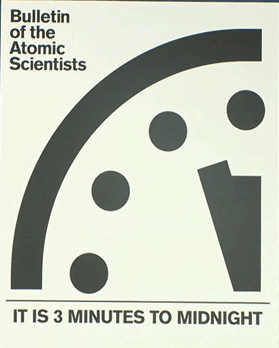
Watch the 2026 Doomsday Clock unveiling live here on January 27 at 10 a.m. EST
To see nuclear-related stories in greater depth and intensity – go to https://nuclearinformation.wordpress.com/

29 Jan. Thursday 7-8 p.m. Webinar – World’s Largest Nuclear Station in Port Hope, ON?


31st January – Challenging the War Machine – a DECLASSIFIED UK SUMMIT


Website of the Week
Now until to February 10, 2026 Radioactive waste storage in France: the debate is finally open! How to participate?
-
Archives
- January 2026 (277)
- December 2025 (358)
- November 2025 (359)
- October 2025 (376)
- September 2025 (258)
- August 2025 (319)
- July 2025 (230)
- June 2025 (348)
- May 2025 (261)
- April 2025 (305)
- March 2025 (319)
- February 2025 (234)
-
Categories
- 1
- 1 NUCLEAR ISSUES
- business and costs
- climate change
- culture and arts
- ENERGY
- environment
- health
- history
- indigenous issues
- Legal
- marketing of nuclear
- media
- opposition to nuclear
- PERSONAL STORIES
- politics
- politics international
- Religion and ethics
- safety
- secrets,lies and civil liberties
- spinbuster
- technology
- Uranium
- wastes
- weapons and war
- Women
- 2 WORLD
- ACTION
- AFRICA
- Atrocities
- AUSTRALIA
- Christina's notes
- Christina's themes
- culture and arts
- Events
- Fuk 2022
- Fuk 2023
- Fukushima 2017
- Fukushima 2018
- fukushima 2019
- Fukushima 2020
- Fukushima 2021
- general
- global warming
- Humour (God we need it)
- Nuclear
- RARE EARTHS
- Reference
- resources – print
- Resources -audiovicual
- Weekly Newsletter
- World
- World Nuclear
- YouTube
-
RSS
Entries RSS
Comments RSS
 nuclear-news