Uranium company Paladin downgraded by investment analysts
Translating business language – “outperform” – means good to invest. “Sector Perform” mean s not so good
Outperform. The stock’s total return is projected to exceed the average return of the industry (or its sector or its peers). This means the stock will perform better than the competition and is likely rated a “Buy”.
Sector Perform). The stock is expected to perform in line with the average return of the market or sector or its peers. Similar to a “Hold” or a “Neutral” rating.
Paladin Energy Limited Downgraded to Sector Perform at RBC Capital (PDN) North fork vue.com October 2nd, 2013 Paladin Energy Limited (ASX:PDN) was downgraded by investment analysts at RBC Capital from an “outperform” rating to a “sector perform” rating in a note issued to investors on Wednesday, American Banking News reports. They currently have a A$0.80 ($0.75) price target on the stock……..
A number of other analysts have also recently weighed in on PDN. Analysts at TD Securities cut their price target on shares of Paladin Energy Limited (ASX:PDN) from A$0.90 ($0.84) to A$0.65 ($0.61) in a research note to investors on Friday, August 30th. They now have a “hold” rating on the stock. Separately, analysts at BMO Capital Markets cut their price target on shares of Paladin Energy Limited (ASX:PDN) from A$0.80 ($0.75) to A$0.60 ($0.56) in a research note to investors on Friday, August 30th. Finally, analysts at Raymond James downgraded shares of Paladin Energy Limited (ASX:PDN) from an “outperform” rating to a “market perform” rating in a research note to investors on Monday, August 5th. Three equities research analysts have rated the stock with a hold rating and one has issued a buy rating to the stock. The stock presently has an average rating of “Hold” and a consensus price target of A$0.96 ($0.90).
Paladin Energy Ltd (ASX:PDN) is a uranium production company with projects in Australia and two operating mines in Africa. http://www.northforkvue.com/finance/10712/paladin-energy-limited-downgraded-to-sector-perform-at-rbc-capital-pdn/
Cripplingly low uranium price forces Paladin to cut costs
Paladin cuts top-echelon base salaries, overall spending amid low uranium price TIMES COLONIST OCTOBER 2, 2013 PERTH, Australia – Paladin Energy Ltd (TSX:PDN) is cutting the base salaries of its board and management by 10 per cent as part of cost-saving measures due to low spot prices for uranium — its main commodity.
In total, the miner — which lists its shares on the Toronto and Australian stock markets — is aiming to reduce cash costs for its 2014 financial year by US$23 million.
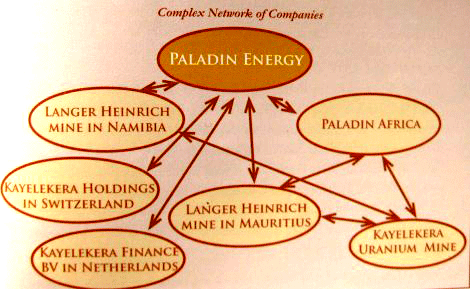
The cuts include a $10.8-million reduction in spending on overhead and exploration and a US$12.4-million reduction in discretionary capital spending at two mines in southern Africa….The Langer Heinrich mine in central Namibia will see its capital spending cut by US$10 million compared with the 2013 financial year while a further $2 million will be cut from the capital budget for the Kayelekera mine in Malawi. http://www.timescolonist.com/business/paladin-cuts-top-echelon-base-salaries-overall-spending-amid-low-uranium-price-1.645930
Australian government colludes with uranium miners in displacing Aboriginals from their homelands
“As an elder of the Yankunytjatjara and the APY Lands I state my absolute disappointment and disgust with the governments of South Australia and the Commonwealth. I say “NO” to mining in APY Lands and I say “NO” to homeless centres being built for our people away from their traditional homelands.”
Elder believes the APY Land is being dismantled http://cooberpedyregionaltimes.files.wordpress.com/2008/11/coober-pedy-regional-times-12-09-2013.pdf, by Yami Lester, (OAM) Order of Australia Medal)
Yankunytjatjara Elder Yami Lester is deeply disturbed by the exodus of Anangu from the APY Lands over the past several years. Big mining has been approved for the area but there are no jobs.. He says many families are not returning, causing a decline in the population of the lands. Lester who was awarded the Order of Australia medal in 1981 for service in the field of Aboriginal Welfare says,“The governments are now impatient to mix Anangu into the mainstream, hundreds of kilometres from their homelands.
Rupert Murdoch’s role in installing Australia’s puppet Prime Minister
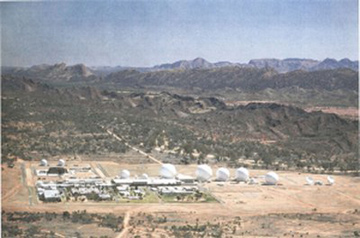 In 1975, the USA – with it’s secret militaristic plans for Pine Gap, in the Central Australian desert – played a critical part in the removal of Australia’s Prime Minister Gough Whitlam
In 2010 multinational mining companies were behind the push to remove Kevin Rudd, and his Mining Super profits tax. I don’t buy the argument that Kevin Rudd was such a difficult personality that Labor had to kick him out. Anyway, Julia Gillard replaced Rudd’s mining tax with a weak as water mining tax. But the corporate powers still weren’t happy.
How were these foreign owned companies, like BHP, able to prevail? Predominantly by promoting the message of climate change denial. And how did this message prevail in Australia, where in 2007, Kevin Rudd was swept to power on a wave of public enthusiasm for action on climate change?
Despite some well informed coverage on climate change, by the Fairfax media, the ABC and SBS, the denialist message, taken up by the right wing politicians and friends of polluting industries, was steadfastly pushed to the public by Rupert Murdoch’s media, with its 70% ownership of Australian media.

There was an easy puppet waiting there for them. Tony Abbott has but one over-riding value – and that is To Be Topp. There might be a few very right-wing Catholic religious themes in there – (ones which many Catholics would be ashamed of) But as for other trifling subjects like climate change, – well they don’t bother Tony Abbott, as he doesn’t understand them.
Nobody seems to notice the fact that Australia is now President of the United nations Security Council. And the UN has not sanctioned an attack on Syria. But the USA might very well attack Syris unilaterally, with out waiting fir the UN. And what will Australia do?
And how confident do you feel about all this, with the vacuous Tony Abbott at the helm of thegood ship Australia?
Legal firm Ashurst threatening Australian nuclear/uranium critic. Ashurst replies.
Among other things, the Ashurst letter accused the anti-nuclear campaigner of imputing that Mr Walker was ‘’insensitive’’.
 In any case, these kinds of threats to muzzle free speech are on the rise. At a time when the mainstream media is under pressure from falling revenues, lawyers are threatening and shutting down websites around the country at an alarming clip.
 Anti-nuke campaigner braces for legal blast, The Age, December 19, 2012 Michael West Ashurst is at it again.
Acting on instructions from its clients, the big law firm last month was threatening a farmer who had the hide to express his opinion on electricity prices. This month it has been instructed to threaten a 75-year old pensioner who has spoken out against the alleged exploitation of African workers by an Australian uranium miner.
Noel Christina Macpherson Wauchope, who runs the website www.antinuclear.net under the name Christina Macpherson, told BusinessDay she was not in a position to hire lawyers.
“I think they must have thought AntiNuclear Australia was a big organisation, but it is just me,” she said. She was particularly worried that the letter of demand said “STRICTLY CONFIDENTIAL NOT TO BE PUBLISHED” until we explained that there was no legal basis for expecting confidentiality from somebody who simply bobbed out of the blue with a bunch of threats and told you to keep quiet about it.
If you already had some kind of confidential or contractual arrangement with the other party, it might be different…… The price of Noel Wauchope’s concern for the people Karonga was a long and intimidating letter of demand from Ashurst on behalf of the uranium company Paladin Energy and its general manager of international affairs, Greg Walker. If she did not comply with these demands, warned Ashurst, she would face court action.
Curiously, big companies with more than 10 employees are not permitted to sue for defamation yet the concerns notice sent to Noel Wauchope complains about defamation of Paladin.
The Ashurst defamation partner responsible for the letter was unavailable for comment. and did not respond to questions. Neither did Ashurst’s public relations department. Paladin chief executive John Borshoff said he was unaware of the
letter. “I’m not aware about a 75-year old lady,” said Borshoff, “All I know is that these NGOs (Non-Government Organisations) and they are
absolutely maligning us, and we sent them legal letters”.
Neither was Borshoff aware that Paladin was unable to sue for defamation……
Among other things, the Ashurst letter accused the anti-nuclear campaigner of imputing that Mr Walker was ‘’insensitive’’.
In any case, these kinds of threats to muzzle free speech are on the rise. At a time when the mainstream media is under pressure from falling revenues, lawyers are threatening and shutting down websites around the country at an alarming clip.Read more: http://www.theage.com.au/business/antinuke-campaigner-braces-for-legal-blast-20121219-2bm74.html#ixzz2FeGIYe9h
 27 August 2013
Dear Ms Wauchope
Thank you for giving me ths opportunity to respond to the article which you have posted on your websites. I trust that you will post this letter with equal prominence. Fairfax is no longer publishing it, has accepted that I and Ashurst acted ethically and competently at all times, and has withdrawn and apologised for the suggestions in the article to the contrary.
Your article contains a number of errors and says anumber of false and damaging things about me. In particular, when I sent you the letter on 10th December 2012, I had no way of knowing who you were, as we were sending it to you as a domain name registrant. Your site appeared to be published by an organisation. Further, I at all times acted in accordance wit proper legal practise, and my professional obligations to my client.
I hope that you will rethink your decision to continue to publish incorrect and harmful allegations about me.
Kind regards
Ashurst lawyer
Editor’s note: I don’t understand why Fairfax withdrew the article from their online publication, as I thought that the article was true. I understand that the journalist who wrote that article stands by the story and has not accepted the claims made by Ashurst. I am posting below , the article in question, published earlier on this website.
Ashurst Australia responds to article criticising it
27 August 2013
Dear Ms Wauchope
Thank you for giving me ths opportunity to respond to the article which you have posted on your websites. I trust that you will post this letter with equal prominence. Fairfax is no longer publishing it, has accepted that I and Ashurst acted ethically and competently at all times, and has withdrawn and apologised for the suggestions in the article to the contrary.
Your article contains a number of errors and says anumber of false and damaging things about me. In particular, when I sent you the letter on 10th December 2012, I had no way of knowing who you were, as we were sending it to you as a domain name registrant. Your site appeared to be published by an organisation. Further, I at all times acted in accordance wit proper legal practise, and my professional obligations to my client.
I hope that you will rethink your decision to continue to publish incorrect and harmful allegations about me.
Kind regards
Ashurst lawyer
Editor’s note: I don’t understand why Fairfax withdrew the article from their online publication, as I thought that the article was true. I understand that the journalist who wrote that article stands by the story and has not accepted the claims made by Ashurst. I am posting below , the article in question, published earlier on this website.
Australia’s old Has-Been Hawke – in the grip of the nuclear lobby
Greens condemn plan to turn Australia into the world’s nuclear waste dump Australian Greens spokesperson on nuclear policy, Senator Scott Ludlam. 24 August 2013. The Greens have strongly rejected the proposal by former Labor Prime Minister Bob Hawke to turn Australia into a dump for the world’s nuclear waste.
Greens spokesperson Senator Scott Ludlam said the plan was “the worst imaginable way to raise revenue”.
“What Mr. Hawke is proposing is criminal activity. The Parliament passed Greens amendments last year to prohibit the importation of nuclear waste.

“Mr Hawke seems to think the way to fill the Budget hole is to fill a hole in Australia with the world’s nuclear waste. The Labor Party and the Coalition must rule out this dangerous proposal immediately.
“Having seen both the Howard and Rudd-Gillard Governments make an absolute mess of trying to force a dump for Australian nuclear waste on Tenant Creek in the Northern Territory, heaven help us if they were trying to deal with nuclear waste from around the world as well.
“The question is – is Mr Hawke expressing this view as a hobby or as an earner on the side? If he has any commercial interests in a waste management company he should make that clear now
Australian government’s hypocritical pretense of ‘helping’ Julian Assange
 Australia could seek an assurance from Sweden that following the completion of all Swedish legal proceedings that Assange would be deported to Australia. This would be an entirely appropriate outcome for an Australian citizen who has been subject to extradition to a foreign country.
If the Gillard government was able to obtain these diplomatic assurances, which are consistent with international law, then Assange would face his accusers in Sweden and not face the prospect of onward extradition to the United States.
How Australia can end the Assange stalemate The Drum Australia can help Julian Assange negotiate his legal problems while remaining consistent with the norms of international law and with the level of assistance that would be offered to other Australians, writes Donald Rothwell. …….. the UK has indicated that it does not recognise Ecuador’s granting of asylum and if Assange were to leave the Embassy he is liable to arrest and extradition to Sweden.
Ecuador revealed in mid-August – as the Assange matter reached a pivotal point- that Britain had threatened to rely on its Diplomatic and Consular Premises Act and revoke the Ecuadorian Embassy’s diplomatic protection so as to enter and seize Assange.
This threat was extraordinary and without modern precedence and it was unsurprising that the Ecuadorian Government responded with such fury. British Foreign Secretary William Hague has now downplayed any suggestion that the Ecuadorian Embassy will be raided, and emphasised Britain will act consistently with international law.
Nevertheless, Hague and the British government have made it clear that they have a legal obligation to Sweden to extradite Assange and that they will continue to seek his arrest for breach of his bail  conditions……..
Australia has been remarkably silent on some of these recent developments. Throughout the year Assange has been highly critical of what he claims has been a lack of support from the Australian government, but Foreign Minister Bob Carr insists that Assange has received more consular assistance than any other Australian in similar circumstances.
The reality is that Australia can still play a proactive, and perhaps even pivotal role, in seeking to bring about a resolution to the current stalemate. Continue reading
Nuclear lobby’s big advertising push – the Sydney “CON”ference
Putting the Con back into Conference: No social license for nuclear power. July 25: Natalie Wasley, Beyond Nuclear Initiative and Uranium Free NSW On July 25/26 the Australian Academy of Technological Sciences and Engineering (ATSE) is holding a conference in Sydney titled ‘Nuclear Energy for Australia?’
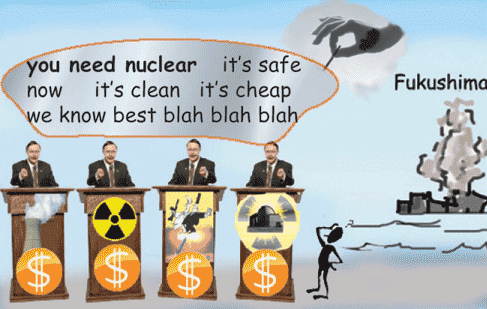
The conference might be framed as a question but the answer is predictable given that the majority of keynote speakers are from organisations in favour of developing a nuclear power industry in Australia, including industry representative bodies and pro-nuclear think tanks. Continue reading
UN examines Australian uranium miner Paladin’s Malawi operations
UN rubbishes Malawi’s Paladin uranium deal, fertilizer subsidy By Hudson Mphande, Nyasa Times July 23, 2013 United Nations Special Raportuer on the Right to Food Olivier De Schutter who was in Malawi for an assessment of the food situation in the country has rubbished Kayerekera uranium mine deal between Malawi and Australian Paladin Mining Company saying the Southern African country has had a raw deal that is robbing the poor.
The UN Raportuer said the uranium mining deal was one of the investments in Malawi through which the country is losing resources that could otherwise make a difference in food security and other pro-poor initiatives. He said in the life span of the mine Malawi is expected to lose almost US$281 million…
“Mining companies are exempt from customs duty, excise duty, value added taxes on mining machinery, plant and equipment. They can also sign special deals on the rate of royalty owed to the government. I believe that there are more reasons that investors would come to Malawi without such incentives,” he said.
De Schutter was addressing journalists in the capital Lilongwe at the end of his 11-day tour of the country.
He bemoaned that due to illicit financial flows, tax envasion as well as tax incentives that the country offer to both domestic and foreign companies currently Malawi was failing to get maximum use of its resources.
De Schutter said that revenue losses from special tax incentives to Paladin Africa Mining alone are estimated at almost K67 billion (US$205 milion) since the mine started its operations and could reach almost K92 billion (US$281 million) over its13-year lifespan.
“Paladin alone is costing the budget more than US$20 million (almost K8 billion) a year in taxes,” he said.
He added: “I am convinced that unless combined with a comprehensive enhancement and optimisation of tax revenue, current macro-economic reforms may not have substantive positive impacts. There is need for
Malawi to examine its national tax laws and policies towards preventing illicit capital flight. As mining develops, Malawi can simply not afford business-as-usual.”
The UN Special Raportuer said it is estimated that the country has lost over 10 percent of its growth domestic product (GDP) to illicit outflows and tax evasion over the period 1980 to 2009……..
De Schutter also specifically expressed concerns on the country’s current minimum wage currently at K371 ($1.12) per day, describing it as the lowest in the world…… The UN special rapporteur said he will give a report and his recommendations to both the UN Human Rights Commission and the Malawi Government. http://www.nyasatimes.com/2013/07/23/un-rubbishes-malawis-paladin-uranium-deal-fertilizer-subsidy/
Environmental dangers from Australian uranium mine
URANIUM MINING: THE SCARY THINGS I’VE LEARNT.. Social Journalism BY SAFFI KEREZSY 02 JUL 2013 Several news reports quoted that 150,000 litres of contaminated water was being leaked from the mine daily. This figure was from a CSIRO report. So after reading these news stories, I began searching for the original report to discuss in my assignment. I read through pages and pages of CSIRO publications and found nothing. It turns out the report was never released to the public. It was commissioned by ERA.
I then found the Supervising Scientist Annual Reports. That is, the government-appointed scientist which was implemented when Ranger was first approved in order to protect the Kakadu environment. From what I can gather, the main ‘problem’ with the reporting process is that the Supervising Scientist reports often report that despite incidents, it is concluded that ‘no environmental damage has been recorded off the immediate mine site’, or words to that effect.
I also found a quote from the International Union for Conservation of Nature which said that ‘there had been more than 110 pollution incidents and numerous breaches of environmental requirements at the mine’. Obviously there was a lot of debate from various stakeholders, particularly the traditional owners within Kakadu and Greens Senator Scott Ludlam.
After 30 years of open-cut mining at Ranger mine, ERA announced the commencement of underground exploration drilling in December 2012. Unsurprisingly, environmental concerns have again been raised since the announcement of this development…… I do worry about the lack of regulation regarding the environment. If the large-scale contamination mentioned has occurred at Ranger mine within a precious world heritage area, even with an appointed scientific division to monitor the mine activities, then obviously something is not quite right with the system. If we allow such damage to be done to Kakadu, then I don’t see there being much hope for the environment surrounding the other uranium mines located in less significant locations. And for me, that’s a little bit scary.http://socialjournalism.com.au/uranium-mining-the-scary-things-ive-learnt/
Paladin Energy “screwing” Malawians in uranium mining deal
all a fat lie. Paladin and many other foreign multinational mining countries are least interested to contributing to the Malawi economic growth. They are here to milk the country – exploiting all that it has rich in minerals and dump us when the time is right even poorer.
Killing Malawians through the rotten extractives deals: The case of Paladin’s uranium mining Nyasa Times, by Patrica Masinga, 24 April 13, Malawi has in the few weeks been engaged by a plethora of stakeholders discussing strategies to revive, or more on the ground, reclaim the benefits that Malawians are been milked of by the so-called extractive industry multi-national corporations.
They call themselves investors, and government believes that the Malawi Development Goals (MDGs – who cares if it’s the second phase) will be boosted, particularly that mining alone through Kayerekera of Paladin Energy Limited group of companies (trading as Paladin (Africa) Ltd in Malawi?) could provide a large economic base.
But that is all a fat lie. Paladin and many other foreign multinational mining countries are least interested to contributing to the Malawi economic growth. They are here to milk the country – exploiting all that it has rich in minerals and dump us when the time is right even poorer.
Imagine, to screw Malawians of their rightful economic gains, the company, incorporated in Australia first listed on the Australian Stock Exchange (ASX) on March 29, 1994 under code ‘PDN’, and quickly changed its name from Paladin Resources NL to Paladin Resources Ltd in 2000 and listed under the Toronto Stock Exchnage (TSX) in Canada April 29, 2005, and again changed its name to Paladin Energy Ltd in November 2007 and listed on the Namibian Stock Exchnage on February 2008.
By such trends, one is compelled to question the motive, considering also that in Namibia itself the company owns the Langer Heinrich Uranium Mine where it started production in 2008 and has Kayerekera Uranium Mine as its second largest mining venture in this part of Africa acting also as a good supllment to the Langer Heinrich Uranium Mine.They call themselves investors, and government believes that the Malawi Development Goals (MDGs – who cares if it’s the second phase) will be boosted, particularly that mining alone through Kayerekera of Paladin Energy Limited group of companies (trading as Paladin (Africa) Ltd in Malawi?) could provide a large economic base.
But that is all a fat lie. Paladin and many other foreign multinational mining countries are least interested to contributing to the Malawi economic growth. They are here to milk the country – exploiting all that it has rich in minerals and dump us when the time is right even poorer. Continue reading
Australia’s role in America’s global spying – Snowden reveals this

Three Latin American countries, Venezuela, Bolivia and Nicaragua, have now offered Mr Snowden political asylum after European Governments last week denied their airspace to a plane carrying the Bolivian president Evo Morales home from a conference in Moscow after the US State Department alleged that the former US intelligence contractor was on board..
Snowden reveals Australia’s links to US spy web Hume Weekly, By Philip  Dorling July 8, 2013, United States intelligence leaker Edward Snowden has provided his first disclosure of Australian involvement in US global surveillance, identifying four facilities in the country that contribute to a key American intelligence collection program.
Classified US National Security Agency maps leaked by Mr Snowden and published by US journalist Glenn Greenwald in the Brazilian O Globo newspaper reveal the locations of dozens of US and allied signals intelligence collection sites that contribute to interception of telecommunications and internet traffic worldwide.
The US Australian Joint Defence Facility at Pine Gap near Alice Springs and three Australian Signals Directorate facilities: the Shoal Bay Receiving Station near Darwin, the Australian Defence Satellite Communications Facility at Geraldton and the naval communications station HMAS Harman outside Canberra are among contributors to the NSA’s collection program codenamed X-Keyscore.
The New Zealand Government Security Communications Bureau facility at Waihopai near Blenheim also contributes to the program.
X-Keyscore reportedly processes all signals before they are shunted off to various “production lines” that deal with specific issues and the exploitation of different data types for analysis – variously code-named Nucleon (voice), Pinwale (video), Mainway (call records) and Marina (internet records). US intelligence expert William Arkin describes X-Keyscore as a “national Intelligence collection mission system”.
Worldwide web
The documents published by O Globo show that US and allied signals intelligence collection facilities are distributed worldwide, located at US and allied military and other facilities as well as US embassies and consulates. Continue reading
Dodgy tax deals by uranium companies in Africa: Paladin under investigation
Advocacy group ActionAid claims poor countries are losing more than $130 billion in tax revenues a year by giving generous tax breaks to big companies, including Australian miners. There are about 240 Australian mining companies with operations in Africa.
Perth-based uranium miner Paladin Energy, came under scrutiny for its tax arrangements in Malawi where it runs a mine in Karonga. A report by the group Norwegian Church Aid alleges there are discrepancies between Paladin’s reported tax and its tax paid. It also alleges other payments by Paladin in Malawi are lower than the company reports.
Paladin has subsidiaries registered in Mauritius and the British Virgin Islands, both tax havens. Last year’s annual report showed the company accumulated losses that mean it will need to make profits totalling $208 million in Australia before paying any tax.
 Tax man takes scalpel to energy and resources firms http://www.theage.com.au/national/tax-man-takes-scalpel-to-energy-and-resources-firms-20130705-2phat.html July 6, 2013 Georgia Wilkins The Tax Office will open 60 cases of suspected tax dodging by Australian and international companies amid global pressure to crack down on profit shifting.
The investigations will add to the 26 cases of offshore restructuring already under review  by the government body.
Under scrutiny are companies that deliberately restructure their business to route profits through low-tax jurisdictions or tax havens to avoid paying higher taxes in Australia, often through the use of post box companies or marketing hubs that have little real substance. Continue reading
Australia’s scandalous history of disease and death from nuclear bomb testing
A powerful manuscript entitled “The Black Mist and its Aftermath — Oral Histories by Lallie Lennon” (2010) was submitted to the South Australian and federal governments as well as to the International Atomic Energy Agency
Now aged in her 80s, Lallie has never had her health issues properly investigated, much less received any compensation. She continues to suffer from the beta burn-related skin condition to this day.
Professor Sir Ernest Titterton, the duplicitous architect of nuclear testing in Australia, typified the official contempt for survivors when he dismissed the Black Mist event as a “scare campaign”.
More recently, the ultra-right wing Herald Sun columnist Andrew Bolt has repeated this line.
 Australian atomic massacre still ignored http://www.greenleft.org.au/node/54394, June 29, 2013 By David T. Rowlands Nearly 60 years have passed since Totem 1, a British nuclear test in the Australian desert, was recklessly conducted in unfavourable meteorological conditions.
Nuclear testing of any sort, even in the most “controlled” of circumstances, is inherently abusive, a crime against the environment and humanity for countless generations to come. Yet the effects of Totem 1 were particularly bad, even by the warped standards of the era.
The mushroom cloud did not behave in the way it was supposed to. Instead of rising uniformly, part of it spread laterally, causing fallout to roll menacingly at ground level over a remote yet still populated corner of South Australia, sowing injury, illness and death in its wake.
The number of casualties is unknown because the secretive and unaccountable nuclear establishment has always declined to investigate the full impact of its own criminal negligence. But it has been suggested by investigators that perhaps 50 short-term Aboriginal fatalities resulted.
In addition to those who died, many others were exposed to harmful levels of radiation. The long-term health effects on these individuals have never been charted — but anecdotal reports of high cancer rates and horrendous birth defects in isolated “downwinder” communities have circulated.
At the time of the tests, it was well known by authorities that communities of Aboriginal people were close by. Yet the official attitude was that the concerns of a “handful of natives” could not be allowed to interfere with the “interests” of the British Commonwealth. Continue reading
1 This Month



26 September – International Day for the Total Elimination of Nuclear Weapons


PLEASE OPPOSE HR 8255 AND S.3639 – bills would accelerate satellite deployment, with no environmental review or safeguards – https://ncstd5li.quorum.us/campaign/169331/
To see nuclear-related stories in greater depth and intensity – go to https://nuclearinformation.wordpress.com
-
Archives
- September 2026 (245)
- August 2026 (330)
- July 2026 (355)
- June 2026 (287)
- May 2026 (306)
- April 2026 (356)
- March 2026 (251)
- February 2026 (267)
- January 2026 (308)
- December 2025 (358)
- November 2025 (359)
- October 2025 (375)
-
Categories
- 1
- 1 NUCLEAR ISSUES
- business and costs
- climate change
- culture and arts
- ENERGY
- environment
- health
- history
- indigenous issues
- Legal
- marketing of nuclear
- media
- opposition to nuclear
- PERSONAL STORIES
- politics
- politics international
- Religion and ethics
- safety
- secrets,lies and civil liberties
- spinbuster
- technology
- Uranium
- wastes
- weapons and war
- Women
- 2 WORLD
- ACTION
- AFRICA
- Atrocities
- AUSTRALIA
- Christina's notes
- Christina's themes
- culture and arts
- Events
- Fuk 2022
- Fuk 2023
- Fukushima 2017
- Fukushima 2018
- fukushima 2019
- Fukushima 2020
- Fukushima 2021
- general
- global warming
- Humour (God we need it)
- Nuclear
- RARE EARTHS
- Reference
- resources – print
- Resources -audiovicual
- Weekly Newsletter
- World
- World Nuclear
- YouTube
-
RSS
Entries RSS
Comments RSS
 nuclear-news