Dear US Congress, thank you for saving Australia from itself
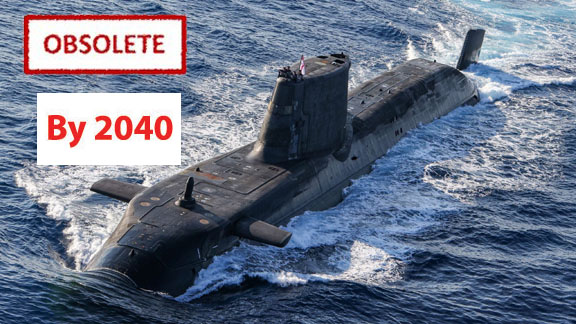
by Rex Patrick | Jan 7, 2023 https://michaelwest.com.au/dear-us-congress-thank-you-for-saving-australia-from-itself/
Is “bad news” out of US Congress about an AUKUS nuclear submarine deal a blessing in disguise? Former submariner and senator Rex Patrick says US politicians, though acting in the interests of the US, may save Australia from itself, and $170 billion too.
We are concerned that what was initially touted as a ‘do no harm’ opportunity to support Australia and the United Kingdom and build long-term competitive advantages for the US and its Pacific allies, may be turning into a zero-sum game for scarce, highly advanced U. SSNs,” wrote the Democrat and Republican heads of the Senate Armed Services Committee.
“Over the past year, we have grown more concerned about the state of the US submarine industrial base as well as its ability to support the desired AUKUS SSN [Nuclear Submarine] end state”.
“We believe current conditions require a sober assessment of the facts to avoid stressing the US submarine industrial base to the breaking point.”
These two Senators have nailed it.
Scotty’s greatest marketing moment
The AUKUS submarine was a ‘brain fart’ of Prime Minister Scott Morrison who was facing disquiet within the Liberal Party ranks (I know; as a Senator and submariner, they were raising the issue with me) over the French designed Attack Class replacement submarine program.
It was an idea supported by a Defence Department which had, in the 12 years since the future submarine project had been initiated, spent five billion taxpayer dollars delivering no submarine, and more than $8.5 billon on other failed projects.
On the morning of September 16, 2021, Morrison stood up in a stage-managed announcement staring US President Biden, then UK Prime Minister Boris Johnson and Morrison. Apart from the fact that President Biden didn’t know Morrison’s name, it was Morrison’s greatest ‘Scotty from Marketing’ moment.
While waving a big and distracting nuclear submarine hand to the camera, his other hand was behind his back silently putting a death to the French submarine program, something that would very shortly after cause a diplomatic rift between Australia and France.
Then opposition leader, Anthony Albanese, was given a briefing on AUKUS and the new submarine plans just 24 hours prior to the announcement. In the face of the oncoming election, Albanese made the political call to give the announcement Labor’s full support. Indeed, pursuing a ‘small target’ political strategy, Labor was embarrassingly desperate to avoid a fight about national security.
Not good for Australia
It was only after the dust had settled that the right questions started to be asked; simple questions like how much, when and where?
The cost soon emerged. The French submarine program has taken an expensive $50 billion submarine program and blown out to an unaffordable $90 billion. The AUKUS submarine was to invoke a cost ‘chain reaction’, coming in at a bankrupting $170 billion. We were jumping out of the financial frying pan and into the fire.
2040 what?
The commissioning date soon emerged. 2040! Noting the rationale for the switch from a French to an AUKUS program was the rising geo-political tension in our regions, the AUKUS submarine was to be delivered even later that the French solution. In an environment where Defence itself had warned our defence procurement warning time had been reduced to less than 10 year, it made no sense to embark on a program that delivers a first capability in 20 years.
Then the build discussions started. The nuclear submarine was not to be built in Australia, rather the US. We were going to sell out Australia industry, and in particular our hard-won competent submarine sustainment industry. We were going simply export $170B, most of the jobs and a sovereign capability the taxpayer had spent billions developing.
Not good for the US either
And the US Congress is now coming to the realisation that the AUKUS program will not be good for the US either.
Supporting Australia’s submarine program will put even more pressure on the US submarine industry trying to build 12 new Columbia Class ballistic missile submarines and meet the demands of supplying the US Navy with its own Virginia Class submarines.
This is not surprising. The US Congressional Research Service has been issuing reports for the better part of a decade that highlight the growing pressures on and limited capacity of the two American submarine construction facilities. The industrial capacity problem is already acute.
The old Los Angeles Class submarines are retiring faster that the Virginias can be brought online.
Now the Senate Armed Services Committee has finally realised what would be involved in supporting the AUKUS submarine.
Please help pal!
Not having built or operated nuclear submarines before, and as the only country in the world that would be operating nuclear submarines without an established nuclear power industry, Australia’s dependency on the US would be significant. Training, shipbuilding, operating and maintaining a nuclear submarine, nuclear safety … we would need a lot of help with all of it.
We are talking about nuclear reactors. The US can’t half commit to this. AUKUS nuclear submarines will be a considerable distraction to the entire US submarine enterprise at a time when they don’t need distraction.
But the public concerns of the senators only tell half the story.
China conflict looms, before the subs arrive
Conflict between the US and China is more likely to occur in the next decade, than in the 2040’s when a first AUKUS nuclear submarine would be fully operational.
A decision by the US to support an AUKUS nuclear submarine would be a decision resigning their close Asia-Pacific ally to the operating of ageing Collins class submarines in the very period a high-end submarine partnering capability was needed most.
Stupid and stupider, but political momentum
The whole AUKUS nuclear submarine thing has a political momentum about it which will bring about national security downsides for both countries.
As indicated above, the Labor Party leadership signed up to this massive project on 24 hours’ notice and little information. Now, completely captured by the ‘Department of Largely Failed Procurement and No Accountability’, Albanese, Defence Minister Richard Marles and Defence Industry Minister Pat Conroy have been supplied with a full barrel of naval Kool Aide, and they’re chugging it down.
Cold hard analysis, such as that being conducted by the US Congress, might be the only thing that saves Australia from itself.
US President Joe Biden warned AUKUS nuclear submarine deal could come at cost to American fleet2 B1
By defence correspondent Andrew Greene and political reporter Georgia Hitch
Two powerful US politicians have raised serious concerns about the AUKUS pact, warning President Joe Biden the proposal to help Australia acquire nuclear-powered submarines risked harming America’s industrial base to “breaking point”.
Key points:
- The senators warned against selling or transferring Virginia-class submarines to Australia
- A spokesperson for the defence minister says details of the AUKUS deal will be announced in the first half of 2023
- Canberra’s outgoing US ambassador says “bedding down” AUKUS is biggest challenge for new representative Kevin Rudd
In a leaked letter dated December 21, first obtained by US publication Breaking Defense, the Democratic Chair of the Senate Armed Services Committee and a former Republican colleague outline their anxieties over the ambitious project.
“Over the past year, we have grown more concerned about the state of the US submarine industrial base as well as its ability to support the desired AUKUS SSN [nuclear sub] end state.”
Committee chair, Senator Jack Reed, and Republican Senator James Inhofe warn the White House explicitly against any plan to sell or transfer Virginia-class submarines to Australia before the US Navy meets its current requirements.
“We believe current conditions require a sober assessment of the facts to avoid stressing the US submarine industrial base to the breaking point,” the Senators are quoted as saying………….
Their dramatic intervention comes just three months before the Albanese government unveils its nuclear submarine plan and is the first time members of Congress have raised major concerns about AUKUS, which enjoys bi-partisan support in Washington.
In August a senior US Navy official also warned helping Australia acquire nuclear-powered submarines could be too big a burden for America’s already overstretched shipyards. ……………………………………………………… more https://www.abc.net.au/news/2023-01-06/biden-warned-aukus-deal-could-imperil-us-submarines/101832468
Australia to buy long-range HIMARS missile system from United States – at unknown cost (? 2 $billion)
ABC, By defence correspondent Andrew Greene, 5 Jan 2023
Australia’s Army will have an unprecedented long-range strike capability with the purchase of the US-made High Mobility Artillery Rocket (HIMARS) system, which Ukraine has praised for its devastating effectiveness against invading Russian forces.
Key points:
- Defence officials say the use of HIMARS in Ukraine against Russia confirms why it’s needed
- Labor says the overall cost of the missiles is over one billion dollars
- Defence Industry Minister Pat Conroy says it “isn’t useful” to disclose the full cost to “potential adversaries”
The Albanese government has finalised a deal to buy 20 of the truck-mounted rocket launchers by 2026, while signing another deal to acquire the Norwegian-made Naval Strike Missiles (NSM) for Australian warships next year.
Precise costs of the purchases are being kept secret for security reasons, but the government has confirmed to the ABC the overall figure is “between one and two billion dollars”.
Defence Industry Minister Pat Conroy said during an October visit to the United States he held “productive discussions” with the Army and Lockheed Martin on how Australia could start producing the rockets used in HIMARS.
On New Year’s Day, a Ukrainian strike using the US-donated HIMARS system killed dozens, possibly even hundreds of Russian soldiers in the Donetsk region……………………………….
Congress was first notified of a possible sale of the Lockheed Martin-produced HIMARS to Australia seven months ago, while the NSM purchase was flagged by the Morrison government in April last year………………..
Labor says the HIMARS and NSM purchases will together cost over $1 billion, but Mr Conroy says precise details are being kept deliberately hidden.
“We won’t be disclosing the total cost of the two announcements,” he told the ABC.
“The two combined costs is between one and two billion dollars, the reason that we’re not disclosing the specific amount is that gives information to potential adversaries which isn’t useful beaming out there.”
In its notice to Congress in May, the US Defence Security Cooperation Agency estimated the cost of 20 HIMARS and associated munitions and equipment at US$385 million ($561 million). https://www.abc.net.au/news/2023-01-05/australia-america-himars-missile-system/101827334
 | |||
| |||
Physicists push for nuclear science education. Their environmental colleagues not so sure
‘Cherish’ the power: Physicists issue call to arms over nuclear skills gap
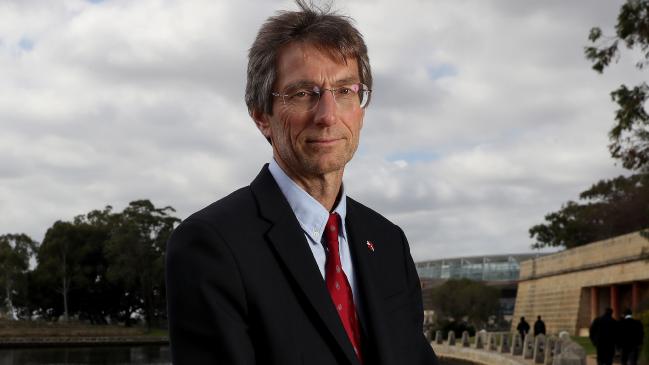
Associate Professor Tilman Ruff, founder of the Nobel prize-winning International Campaign to Abolish Nuclear Weapons, said he feared the nation’s universities were becoming “academic prostitutes” for the nuclear industry – particularly firms that make nuclear weapons.
“The organisations that have historically funded nuclear research at universities have been those with interests in either uranium mining and nuclear power, or nuclear weapons. That’s the problem. There’s not big amounts of money in the more socially constructive areas.”
https://www.smh.com.au/national/cherish-the-power-physicists-issue-call-to-arms-over-nuclear-skills-gap-20221228-p5c92s.html By Liam Mannix, December 28, 2022
Australia’s physicists say we must learn to cherish nuclear science and invest in training a new generation of experts to run satellites, quantum computers and submarines.
But their colleagues in environmental science are wary of what such an investment might produce.
Australia’s physicists say we must learn to cherish nuclear science and invest in training a new generation of experts to run satellites, quantum computers and submarines.
Australia has committed to buying or building a fleet of American or British-designed nuclear submarines, with the first expected to be in the water late next decade.
They will probably require a crew and workforce of nuclear engineers, technicians and scientists – but Australia lacks a civil nuclear industry.
The nation is already struggling to fill key nuclear safety positions, let alone produce a new workforce, says Dr AJ Mitchell, senior lecturer in the Australia National University’s Department of Nuclear Physics and Accelerator Applications.
“The need is urgent. The captain of our first nuclear submarine is probably already in secondary school today,” he said. “This must be a sovereign capability. And it needs to start yesterday.
“We need to make people understand that ‘nuclear’ is not something to be scared of, but rather to cherish and appreciate.”
Mitchell is leading the development of a national vision for nuclear science, a project launched this month at the Australian Institute of Physics Congress in Adelaide. The strategy includes a national program of nuclear science education.
Nobel laureate and Australian National University vice-chancellor Brian Schmidt made waves last month when urged Australia not to “drag its feet” on the nuclear submarines issue.
The boats represented “one of the biggest training and workforce development challenges Australia has faced”, he said.
That warning adds to pre-existing concerns about the training of engineering and science graduates generally.
Australia has been slowly increasing its number of new engineers, but most of the workforce growth is from overseas labour, according to a report by Engineers Australia.
Fewer students are studying advanced mathematics or physics in year 12, while applications for engineering courses at university fell between 2010 and 2015. Australia has the third lowest number of engineers as a proportion of graduates among developed countries.
Changes to the way engineering courses are funded led the Group of Eight – a coalition of the country’s top research universities – to declare this year that the Australian model for the university education of engineers was “broken” and could not deliver enough skilled engineering graduates to meet the government’s infrastructure investment.
But not all scientists share a conviction that nuclear physics and engineering need investment.
“There is already controversy about the nuclear submarines deal, and anxiety in our region about some sort of arms race and nuclearisation,” said Associate Professor Peter Christoff, a climate policy researcher at the University of Melbourne and former assistant commissioner for the environment in Victoria.
“Significant funding for research into nuclear physics and engineering would send precisely the wrong signals to our regional neighbours and increase their anxieties that what we’re seeing is precisely the start of that nuclear arms race.”
Associate Professor Tilman Ruff, founder of the Nobel prize-winning International Campaign to Abolish Nuclear Weapons, said he feared the nation’s universities were becoming “academic prostitutes” for the nuclear industry – particularly firms that make nuclear weapons.
“The organisations that have historically funded nuclear research at universities have been those with interests in either uranium mining and nuclear power, or nuclear weapons. That’s the problem. There’s not big amounts of money in the more socially constructive areas.”
Fake, dishonest ‘Australian Greens for Nuclear Energy’ group

The Australian Greens have strong, principled anti-nuclear policies (with some obvious allowances for the beneficial uses of nuclear technology e.g. nuclear medicine).

A group called ‘Australian Greens for Nuclear Energy‘ has nothing to do with the Australian Greens. The spokesperson for the group, Tyrone D’Lisle, is NOT a member of the Australian Greens. He resigned as convener of the Queensland Young Greens in 2013 following behaviour which he attributed to stress and exhaustion. A Greens representative said: “Mr D’Lisle’s views do not represent Greens policies.” D’Lisle resigned from the Greens altogether in 2017.
It is unclear if there are ANY members of the Australian Greens in ‘Australian Greens for Nuclear Energy’. The group is either partially fake (it includes non-members of the Greens) or completely fake (with NO members of the Greens). We do not know if the group is breaking any state or federal laws by calling itself ‘Australian Greens for Nuclear Energy’ when some or all members of the group are not members of the Australian Greens.
We’ve only come across two people who identify as members of ‘Australian Greens for Nuclear Energy’. They may be the only two people in this group. ‘Australian Greens for Nuclear Energy’ acknowledge that they are a “relatively small group”.
Update: ‘Australian Greens for Nuclear Energy’ claim that the ‘real’ name of their group is ‘Greens for Nuclear Energy Australia’ but they can’t change their facebook group name ‘Australian Greens for Nuclear Energy’! Evidently the group has tried to change its name, an implicit acknowledgement that they have been falsely misrepresenting themselves as members of the Australian Greens and as a sub-group of the Australian Greens political party.
Furthermore, they are shifting their propaganda over to new sites called ‘Australians for Nuclear Energy’ … another implicit acknowledgement that they have been falsely misrepresenting themselves as members of the Australian Greens and as a sub-group of the Australian Greens political party.
It was only after Friends of the Earth exposed the fakery of this ‘Australian Greens for Nuclear Energy’ group that they announced that their ‘real’ name is ‘Greens for Nuclear Energy Australia’ and decided to shift their propaganda to new sites which make no mention of the Greens.
What to make of the new name ‘Australians for Nuclear Energy’? As far as we know there are only two members in the group, so it should be called ‘Two Australians for Nuclear Energy’. Or to use their own terminology, ‘A Relatively Small Number of Australians for Nuclear Energy’.
The Big Lie
‘Australian Greens for Nuclear Energy’ lie. For example, they claim that “senior people within environmental organisations like Greenpeace or Friends of the Earth have stated they don’t want to change [their position regarding nuclear power] because they will lose funding.”
D’Lisle has been asked on countless occasions to substantiate or retract that claim but he has done neither. There is no truth to the claim. It is a fabrication. It is a lie.
D’Lisle claims he was not responsible for the lie but he refuses to say 1) who was responsible for it, 2) who else apart from him posts on facebook as ‘Australian Greens for Nuclear Energy’, and 3) whether anyone other than D’Lisle posts on facebook as ‘Australian Greens for Nuclear Energy’.
The claim about Friends of the Earth and Greenpeace is a dishonest fabrication and it is also defamatory. Perhaps that is why ‘Australian Greens for Nuclear Energy’ are concealing authorship of the lie.
Perhaps D’Lisle was responsible for the lie, in which case he has lied about Friends of the Earth and Greenpeace and then lied about lying. Or perhaps another member of ‘Australian Greens for Nuclear Energy’ was responsible for the lie, in which case D’Lisle is concealing the deceit of another member of his group.
D’Lisle acknowledged in correspondence with Friends of the Earth that he has zero evidence to support the accusation against Friends of the Earth and Greenpeace. So why no public retraction and apology?
As for the contributions of ‘Australian Greens for Nuclear Energy’ to energy debates, it’s a concoction of misinformation, half-truths and outright lies:
* They claim that “civilian nuclear energy programs don’t lead to nuclear weapons programs” even though they repeatedly have.
* D’Lisle thinks “the world is going nuclear”. In fact, nuclear power has been stagnant for the past 30 years and its future is bleak, largely because nuclear power is far more expensive than renewables (including storage and transmission costs).
* They claim there were no radiation deaths from the Fukushima disaster DESPITE BEING WELL AWARE of the World Health Organization report which concluded that for people in the most contaminated areas in Fukushima Prefecture, the estimated increased risk for all solid cancers will be around 4% in females exposed as infants; a 6% increased risk of breast cancer for females exposed as infants; a 7% increased risk of leukaemia for males exposed as infants; and for thyroid cancer among females exposed as infants, increased risk of up to 70%.
* They make dishonest claims about the Chernobyl death toll. They suggest a death toll of less than 100. Blatant deceit. They ignore studies such as: the estimate of 16,000 cancer deaths across Europe in a study published in the International Journal of Cancer, and the World Health Organization’s estimate of “up to 9,000 excess cancer deaths” in Belarus, the Russian Federation and Ukraine. For a longer discussion on pro-nuclear deceit regarding Chernobyl, click here.
* ‘Australian Greens for Nuclear Energy’ trivialise Chernobyl (and other nuclear disasters) by peddling the argument that the psychological trauma was greater than the biological effects from radiation exposure. There’s no dispute that, as the World Health Organisation states, the relocation of more than 350,000 people in the aftermath of the Chernobyl disaster “proved a deeply traumatic experience”. How to compare that psychological trauma to estimates of the cancer death toll from radiation exposure, such as the UN/WHO estimate of 9,000 cancer deaths in ex-Soviet states or the International Journal of Cancer study estimating 16,000 deaths across Europe? They can’t be compared. Apples and oranges. Most importantly, why on earth would anyone want to rank the biological damage and the psychological trauma from the Chernobyl disaster? Chernobyl resulted in both biological damage and psychological trauma, in spades. Psychological insult has been added to biological injury. One doesn’t negate the other.
* And they make false and indefensible claims about numerous other nuclear-related topics.
Nuclear power does not stack up for Australia – PM Albanese
Australian Prime Minister Anthony Albanese has shut down calls for the
country to consider nuclear power options despite rising electricity
prices.
The prime minister recently declared that proponents of nuclear as
a carbon-neutral energy source in Australia are wrong. His comments came
after Peter Malinauskas, the premier of South Australia, urged both sides
of politics to be more mature on the nuclear question, saying the debate
has become “consumed by culture wars” rather than based on evidence.
In response, Albanese told radio station FIVEaa on Monday that the case for
nuclear power in Australia does not stack up, citing waste storage as a key
problem.
Xinhua 6th Dec 2022
https://english.news.cn/20221206/e6558b077e90438e977ac388f850f859/c.html
Will USA take any notice at all, as Australia’s Prime Minister and world media call for Julian Assange’s release?
The telling question here is whether Albanese will get any purchase with the Washington set. While enjoying a reputation as a pragmatic negotiator able to reach agreements in tight circumstances, the pull of the US national security establishment may prove too strong. “We now get to see Australia’s standing in Washington, valued ally or not,” was the guarded response of Assange’s father John Shipton.
Julian Assange and Albanese’s Intervention https://theaimn.com/julian-assange-and-albaneses-intervention/ December 1, 2022, by: Dr Binoy Kampmark
The unflinching US effort to extradite and prosecute Julian Assange for 18 charges, 17 of which are chillingly based upon the Espionage Act of 1917, has not always stirred much interest in the publisher’s home country. Previous governments have been lukewarm at best, preferring to mention little in terms of what was being done to convince Washington to change course in dealing with Assange.
Before coming to power, Australia’s current Prime Minister Anthony Albanese had made mention of wishing to conclude the Assange affair. In December 2019, before a gathering at the Chifley Research Centre, he described the publisher as a journalist, accepting that such figures should not be prosecuted for “doing their job”. The following year, he also expressed the view that the “ongoing pursuit of Mr Assange” served no evident “purpose” – “enough is enough”.
The same point has been reiterated by a number of crossbenchers in Australia’s parliament, represented with much distinction by the independent MP from Tasmania, Andrew Wilkie. In a speech given earlier this year to a gathering outside Parliament House, the Member for Clark wondered if the UK and Australia had placed their relations with Washington at a premium so high as to doom Assange. “The US wants to get even and for so long the UK and Australia have been happy to go along for the ride because they’ve put bilateral relationships with Washington ahead of the rights of a decent man.”
The new Australian government initially gave troubling indications that a tardy, wait-and-see approach had been adopted. “My position,” Albanese told journalists soon after assuming office, “is that not all foreign affairs is best done with the loudhailer.”
Documents obtained under freedom of information also showed an acknowledgment by the Albanese government of assurances made by the United States that the WikiLeaks founder would have the chance to serve the balance of any prison sentence in Australia. But anybody half-versed in the wiles and ways of realpolitik should know that the international prisoner transfer scheme is subordinate to the wishes of the relevant department granting it. The US Department of Justice can receive the request from Assange, but there is nothing to say, as history shows, that the request will be agreed to.
Amidst all this, the campaign favouring Assange would not stall. Human rights and press organisations globally have persistently urged his release from captivity and the cessation of the prosecution. On November 28, The New York Times, the Guardian, Le Monde, El País and Der Spiegel published a joint open letter titled, “Publishing is not a Crime.”
The five outlets who initially worked closely with WikiLeaks in publishing US State Department cables 12 years ago have not always been sympathetic to Assange. Indeed, they admit to having criticised him for releasing the unredacted trove in 2011 and even expressed concern about his “attempt to aid in computer intrusion of a classified database.”
Had the editors bothered to follow daily trial proceedings of the extradition case in 2020, they would have noted that the Guardian’s own journalists muddied matters by publishing the key to the encrypted files in a book on WikiLeaks. A mortified Assange warned the State Department of this fact. Cryptome duly uploaded the cables before WikiLeaks did. The computer intrusion charge also withers before scrutiny, given that Chelsea Manning already had prior authorisation to access military servers without the need to hack the system.
But on this occasion, the publishers and editors were clear. “Cablegate”, with its 251,000 State Department cables, “disclosed corruption, diplomatic scandals and spy affairs on an international scale.” They had “come together now to express [their] grave concerns about the continued prosecution of Julian Assange for obtaining and publishing classified materials.”
Very mindful of their own circumstances, the media outlets expressed their grave concerns about the use of the Espionage Act “which has never been used to prosecute a publisher or broadcaster.” Such an indictment set “a dangerous precedent, and threatens to undermine America’s First Amendment and the freedom of the press.”
The same day of the letter’s publication, Brazil’s President-elect Lula da Silva also added his voice to the encouraging chorus. He did so on the occasion of meeting the WikiLeaks editor-in-chief Kristinn Hrafnsson and Joseph Farrell, an associate of the organisation, and expressed wishes that “Assange will be freed from his unjust imprisonment.”
The stage was now set for Albanese to make his intervention. In addressing parliament on November 30 in response to a question from independent MP Monique Ryan, Albanese publicly revealed that he had, in fact, been lobbying the Biden administration for a cessation of proceedings against Assange. “I have raised this personally with the representatives of the US government.”
The Australian PM was hardly going to muck in on the issue of the WikiLeaks agenda. Australia remains one of the most secretive of liberal democracies, and agents of radical transparency are hardly appreciated. (Witness, at present, a number of venal prosecutions against whistleblowers that have not been abandoned even with a change of government in May.)
Albanese drew a parallel with Chelsea Manning, the key figure who furnished WikiLeaks with classified military documents, received a stiff sentence for doing so, but had her sentence commuted by President Barack Obama. “She is now able to participate freely in society.” He openly questioned “the point of continuing this legal action, which could be caught up now for many years, into the future.”
For some years now, the plight of Assange could only be resolved politically. In her address to the National Press Club in Canberra delivered in October this year, Assange’s lawyer Jennifer Robinson acknowledged as much. “This case needs an urgent political solution. Julian does not have another decade to wait for a legal fix.” This point was reiterated by Ryan in her remarks addressed to the prime minister.
The telling question here is whether Albanese will get any purchase with the Washington set. While enjoying a reputation as a pragmatic negotiator able to reach agreements in tight circumstances, the pull of the US national security establishment may prove too strong. “We now get to see Australia’s standing in Washington, valued ally or not,” was the guarded response of Assange’s father John Shipton.
Australia a”pot of gold” for America’s military section to wage war in space

US Space Force eyes ‘prime’ Australian real estate for future warfare operations, ABC News, By defence correspondent Andrew Greene 3 Dec 22
Visiting senior US military officers believe Australia is a “pot of gold at the end of the rainbow”, as they eye off this continent’s “prime” geography for future space operations.
Key points:
- US military officials visiting Australia say conflict in space in the next few years is a very real prospect
- They believe the war in Ukraine is demonstrating the growing importance of space as a new war-fighting domain
- Australia’s southern location and potential launch sites near the equator make it an attractive prospect for future operations
Top-ranking members of the US Space Force are warning of China’s growing capability in the emerging military domain as they meet defence counterparts and local industry representatives.
“I’m visiting my allies and we’re talking about future partnerships that we can have,” US Space Force Lieutenant-General Nina Armagno told reporters in Canberra.
“This is prime country for space domain awareness,” the director of staff of the US Space Force added while speaking at the Australian Strategic Policy Institute.
The three-star general has travelled to Canberra along with Lieutenant-General John Shaw, the deputy commander of the US Space Command who is responsible for America’s combat capabilities above Earth……………………………..
Both of the visiting military officers believe the war in Ukraine is demonstrating the growing importance of space as a new war-fighting domain…………………………..
Australia’s own Defence Space Command was only formally stood up in March, but General Armagno says this country already has the natural advantage of its southern-hemisphere geography and potential launch sites close to the equator.
“It seems as [if] Australia is sitting on a pot of gold at the end of the rainbow, really, for our common national security interests,” she said. https://www.abc.net.au/news/2022-12-02/us-space-force-eyes-australian-real-estate-future-warfare/101724368
The definitive case against nuclear submarines for Australia

Australia needs submarines, but conventional ones are more than adequate for the nation’s security. Australia’s north is archipelagic, which means smaller, shorter-ranged submarines can close maritime avenues of approach.
Australia needs submarines, but conventional ones are more than adequate for the nation’s security. Australia’s north is archipelagic, which means smaller, shorter-ranged submarines can close maritime avenues of approach.
The Saturday Paper, Albert Palazzo -adjunct professor at UNSW Canberra. He was a former director of war studies for the Australian Army. November 12, 2022
It’s more than a year since Australia scuttled its submarine deal with France in favour of the nuclear-powered submarine arrangement Scott Morrison announced as part of the AUKUS agreement. There’s been a change of government and more announcing, yet any real detail on why we need such boats, how we’ll get them, which ones they’ll be and how much they’ll cost remains unknown. What has become increasingly clear, however, is that these warships are a massive boondoggle for which there is little strategic justification.
Australia maintains its defence forces to provide for the nation’s security. Every capability the Australian Defence Force acquires undergoes a detailed decision process that includes an examination of how the weapon meets national security requirements. With the nuclear-powered submarine program, however, Australia’s starting point was an announcement confirming the acquisition and the AUKUS agreement, an order of proceedings that conveniently bypassed the messy and challenging aspects of justification for the purchase.
Perhaps skipping this phase was necessary because the rationale given for the acquisition is unsound. At best, it is a desire to be seen to be supporting the ANZUS Treaty. What is not being asked is whether support for the alliance should be the main basis for the acquisition of such expensive platforms with such narrow utility.
Like a kid in a lolly shop, Australia has been given permission to buy the biggest treat on display … What is missed, however, is that being in the inner sanctum generates a massive obligation – and some day that bill may fall due.
What does Australia intend to do with its fleet of nuclear-powered submarines? The answer seems to be that we’ll project power into the East and South China seas, in order to deter our largest trading partner, China, from taking actions inimical to Australian and American interests.
If China is a threat today, why is the government planning to acquire a platform that will not be available for 15 years or more? Shouldn’t the priority be on more readily available weapons? These would include off-the-shelf conventional submarines, additional long-range strike missiles, and drones of all kinds.
Even once Australia has acquired its entire fleet of eight submarines, only two or three are likely to be available for operations at any one time. Deterrence necessitates the ability to intimidate one’s opponent. China is a large country with great industrial depth and a population accustomed to hardship. It also has 66 submarines of its own and more on the way. It is hubris to expect Australia will be able to intimidate a great power, at least on its own.
More worryingly, the seas in which Australia aims to operate are within China’s anti-access/area denial zone, an area guarded by missiles, mines, aircraft and ships, and of such lethality that even the United States is unsure it could penetrate without massive losses. Even if our future submarines did get inside this defensive zone, they would not last long. Essentially, these submarines should not be expected to return home.
Survivability is an important criterion for such an expensive purchase. Enthusiasts point to the better survival potential of nuclear-powered submarines because they remain submerged for longer periods, thereby making detection harder. By contrast, conventional subs must periodically surface to recharge their batteries. But this is an advantage that is fast becoming irrelevant. Sensor technology is improving and becoming pervasive, as demonstrated daily in the war in Ukraine. It is a very big gamble to act on a presumption that sub-surface sensors will not improve in the 15 to 20 years before Australia’s submarines become operational. In fact, a study from Australian National University’s National Security College expects that before 2050 the oceans will become fully transparent to hunters from above.
Any defensive advantage currently possessed by nuclear-powered submarines will be gone.
More questions need to be asked: What is the strategic benefit of being able to operate off the Chinese coast? How do nuclear-powered submarines improve Australia’s security? And are there better options for the nation’s defence?
The answers to the first two questions are: “There is none” and “They don’t.” The third answer is: “Yes, there are indeed better options.” Australia needs submarines, but conventional ones are more than adequate for the nation’s security. Australia’s north is archipelagic, which means smaller, shorter-ranged submarines can close maritime avenues of approach. …………
Supporters of the nuclear-powered submarine pay too little attention to the project’s opportunity cost. According to experts at the Australian Strategic Policy Institute, the eight planned submarines will cost at least $116 billion, and likely much more – upwards of $200 billion, according to some analysts. Australia needs submarines, but conventional ones are more than adequate for the nation’s security. Australia’s north is archipelagic, which means smaller, shorter-ranged submarines can close maritime avenues of approach………………………….. more https://www.thesaturdaypaper.com.au/opinion/topic/2022/11/12/the-definitive-case-against-nuclear-subs
Climate change, not China, is Australia’s real security danger

The definitive case against nuclear subs The Saturday Paper, Albert Palazzo -adjunct professor at UNSW Canberra. He was a former director of war studies for the Australian Army. November 12, 2022 “……………………………………………………………. Too many security officials hold to the mistaken belief that China is the most significant threat Australia faces. In fact, climate change deserves the top spot. Climate scientists, United Nations officials and military commanders themselves, including current US Secretary of Defense Lloyd Austin, consider climate change an existential threat to survival. Any threat posed by China is much more limited. At worst, China’s challenge to the US-led world order could result in America’s withdrawal from the Western Pacific. Climate change could lead to the end of the human project and take countless other species down with us.
China represents, at most, a second-order threat, but it is China that draws the obsessive focus of much of the current generation of security thinkers. It does not make sense for Australia to invest so much in a weapon system that has no utility against the nation’s most dangerous threat, yet this is what is happening.
Advocates of nuclear-powered submarines also propose that constructing these vessels in Adelaide will help sustain a sovereign shipbuilding industry. In fact, the opposite is the likely result. Once in service these vessels will actually increase Australia’s dependence on the US and foreign contractors. This is because many of the sub’s critical components, weapons and systems will be made by foreign parties. Australian sailors might even need shadow US sailors to co-staff technical positions until Australia generates enough nuclear-savvy personnel of its own.
The government has announced it will invest between $168 billion and $183 billion in what it has called a national naval shipbuilding enterprise, with the goal of sustaining and growing a domestic shipbuilding capability and securing Australian jobs for the future. Such a capability is a noble goal, but what has been left unexplained is why it should be such a priority compared with foreign-dominated industries that are more critical to the nation’s future wellbeing.
Last summer, for example, Australian transport risked grinding to a halt as a result of the urea crisis, which led to a serious shortage of AdBlue, a vital diesel fuel additive. Without AdBlue, the nation’s fleet of long-haul trucks would have stopped moving, resulting in supermarkets running out of food, farmers not harvesting their crops and the mining industry coming to a halt. Yet there has been no talk of taxpayer-supported AdBlue production in Australia. Similarly, many medicines are imported, as are a host of important everyday items, such as baking powder and matches. Unlike shipbuilding, these industries apparently warrant no support.
If one wanted a truly sovereign defence industry, then the product that might mandate the level of support proposed for the subs is microchips. Virtually all military and civilian technology contains chips, yet Australia is happy to remain fully reliant on overseas suppliers for this most important of components. Establishing a domestic industry would require a huge subsidy, as well as additional investment in tertiary education and precursor manufacturing processes. Without these chips, however, no weapon system is truly sovereign.
So why the nuclear-powered subs, if they make so little sense? The obvious answer is to support the alliance. Instead of aiming for self-reliance, Australia has always preferred to seek the protection of a great power. But there is another reason: like a kid in a lolly shop, Australia has been given permission to buy the biggest treat on display. Nuclear-powered subs are one of America’s most closely guarded technologies. If Australia gets them, it will be a clear sign that, like Britain, we have been admitted to a very exclusive club, the inner sanctum of US security. What is missed, however, is that being in the inner sanctum generates a massive obligation – and some day that bill may fall due. https://www.thesaturdaypaper.com.au/opinion/topic/2022/11/12/the-definitive-case-against-nuclear-subs
Australia “should not face intimidation from so-called allies under the auspices of defense cooperation,”

Australia “should not face intimidation from so-called allies under the auspices of defense cooperation,” said Kate Hudson, general secretary of the Campaign for Nuclear Disarmament. “The TPNW offers the best chance for lasting global peace and security and a clear road map for nuclear disarmament.”
‘So Irresponsible’: US Condemned for Warning Australia Against Joining Anti-Nuclear Treaty.
Australia “should not face intimidation from so-called allies under the auspices of defense cooperation,” said one advocate. https://www.themoscowtimes.com/2022/11/08/russia-us-eye-nuclear-arms-reduction-talks-in-coming-weeks-kommersant-a79313 JULIA CONLEY, November 9, 2022, Anti-nuclear weapons campaigners rebuked the Biden administration on Wednesday over its opposition to Australia’s newly announced voting position on the Treaty on the Prohibition of Nuclear Weapons, which could signal the country’s willingness to sign on to the agreement.
As The Guardian reported, the U.S. Embassy in Canberra warned Australian officials that the Labour government’s decision to adopt an “abstain” position regarding the treaty—after five years of opposing it—would obstruct Australia’s reliance on American nuclear forces in case of a nuclear attack on the country.
Australia’s ratification of the nuclear ban treaty, which currently has 91 signatories, “would not allow for U.S. extended deterrence relationships, which are still necessary for international peace and security,” the embassy said.
The U.S. also claimed that if Prime Minister Anthony Albanese’s government ratifies the treaty it would reinforce “divisions” around the world.
Australia “should not face intimidation from so-called allies under the auspices of defense cooperation,” said Kate Hudson, general secretary of the Campaign for Nuclear Disarmament. “The TPNW offers the best chance for lasting global peace and security and a clear road map for nuclear disarmament.”
The TPNW prohibits the development, testing, stockpiling, use, and threats regarding the use of nuclear weapons.
The Australian chapter of the International Campaign to Abolish Nuclear Weapons (ICAN) noted that Albanese’s vocal support for achieving nuclear disarmament puts him in line with the majority of his constituents—while the U.S., as one of nine nuclear powers in the world, represents a small global minority.
According to an Ipsos poll taken in March, 76% of Australians support the country signing and ratifying the treaty, while only 6% are opposed.
Albanese has won praise from campaigners for his own anti-nuclear advocacy, with the prime minister recently telling The Australian that Russian President Vladimir Putin’s nuclear saber-rattling “has reminded the world that the existence of nuclear weapons is a threat to global security and the norms we had come to take for granted.”
“Nuclear weapons are the most destructive, inhumane, and indiscriminate weapons ever created,” Albanese said in 2018 as he introduced a motion to commit the Labour Party to supporting the TPNW. “Today we have an opportunity to take a step towards their elimination.”

Labour’s 2021 platform included a commitment to signing and ratifying the treaty “after taking account” of factors including the development of “an effective verification and enforcement architecture.”
Australia’s decision to change its voting position comes as the U.S. is planning to deploy nuclear-capable B-52 bombers to the country, where the weapons will be positioned close enough to strike China.
Gem Romuld, Australia director of ICAN, said in a statement that “it’s no surprise the U.S. doesn’t want Australia to join the ban treaty but it will have to respect our right to take a humanitarian stance against these weapons.”
“The majority of nations recognize that ‘nuclear deterrence’ is a dangerous theory that only perpetuates the nuclear threat and legitimizes the forever existence of nuclear weapons, an unacceptable prospect,” Romuld added.

Beatrice Fihn, executive director of ICAN, called the U.S. embassy’s comments “so irresponsible.” “Using nuclear weapons is unacceptable, for Russia, for North Korea, and for the U.S., U.K., and all other states in the world,” said Fihn. “There are no ‘responsible’ nuclear armed states. These are weapons of mass destruction and Australia should sign the TPNW!”
AUKUS and nuclear submarines: Defence Minister Richard Marles sets Australia’s course in lockstep with USA-UK’s animosity to China.
the United States wants to build the first several nuclear-powered submarines for Australia and provide it with a submarine fleet by the mid-2030s in response to China’s growing military power.
Australia Sets New Defense Course To Establish Nuclear Submarines Fleet – Defense Minister

https://eurasiantimes.com/australia-sets-new-defense-course-to-establish-nuclear-submarines/—By EurAsian Times Desk November 8, 2022
Australia has set the course of its next defense strategy, which includes the development of nuclear-powered submarines to repel attacks far from the country’s shores, Australian Defense Minister Richard Marles said on Tuesday.
“Increasingly, we are going to need to think about our Defence Force in terms of being able to provide the country with impactful projection, meaning an ability to hold an adversary at risk much further from our shores across the full spectrum of proportionate response,” Marles said, delivering a speech at a university in Canberra, as quoted by the Australian Financial Review newspaper.
The minister also said that the new defense strategy relies on the establishment of a submarine fleet in cooperation with the United States and the United Kingdom within the AUKUS trilateral partnership.
Australia, the US, and the UK announced the AUKUS defense partnership in September 2021. The first initiative announced under the AUKUS pact was the development of nuclear-powered submarine technology for the Royal Australian Navy, which prompted the Australian government to abandon a $66 billion agreement with France’s Naval Group company for the construction of diesel-electric submarines.
Earlier, the Wall Street Journal had reported that the Biden administration is in the middle of discussions to expedite the construction of Australia’s first nuclear-powered submarines as guaranteed in the AUKUS defense pact.
The report said on Friday, citing Western officials, that the United States wants to build the first several nuclear-powered submarines for Australia and provide it with a submarine fleet by the mid-2030s in response to China’s growing military power.
The United States’ recommendation has not yet been formally approved, but a final decision on this matter is expected in March, the report said.
The report also highlighted the challenges the United States would face to complete the task, including the need to secure billions of dollars to expand its submarine-production capacity and a contribution from Australia to back the effort.
The White House said in a press release that Australia, the United Kingdom, and the United States – the countries that comprise the AUKUS security pact – have made significant progress toward ensuring that Australia would acquire conventionally armed, nuclear-powered submarines. The AUKUS allies will provide the submarines at the earliest possible date, the release said.
In September, the three allies announced the new trilateral security partnership, forcing Australia to abandon its $66 billion contract with France to receive 12 state-of-the-art conventionally-powered attack submarines from the United States.
In May, the Chinese Foreign Ministry said the AUKUS security pact is provoking an arms race in the South Pacific without any consultation with island countries of the region.
China believes that the AUKUS partnership escalates the arms race in the region and urges the US, the UK, and Australia to commit to the non-proliferation of nuclear weapons, Chinese Defense Ministry spokesman Tan Kefei had said earlier.
“The trilateral security partnership and cooperation on nuclear submarines between the US, the UK and Australia create serious risks of proliferation of nuclear weapons, escalate the regional arms race, undermine regional peace and stability as well as threaten global peace and security,” Tan had said.
The official noted that China had always believed that any regional cooperation should strengthen mutual trust among countries in the region and pose no threat to others.
“We urge the US, the UK, and Australia to abandon the Cold War mentality and ‘zero-sum game’ ideas and fulfill its obligations in good will regarding non-proliferation of nuclear weapons,” the spokesman had added
Australia’s ongoing nuclear submarine debacle – ‘A tangle of overlapping interests’

https://undueinfluence.substack.com/p/a-tangle-of-overlapping-interests?utm_source=post-email-title&publication_id=297295&post_id=82059669&isFreemail=true&utm_medium=email Michelle Fahy 5 Nov 22
The federal government’s secret hiring from 2015 of numerous former US Navy officials to advise on Australia’s submarine procurement was exposed by The Washington Post a fortnight ago. “Some of the retired admirals have worked for the Australian government while simultaneously consulting for US shipbuilders and the US Navy, including on classified programs,” the Post said. The US officials benefited financially from “a tangle of overlapping interests”. The Post revealed that one former US admiral had been consulting to Australia while also occupying a full time position as chairman of the board of Huntington Ingalls Industries, a US company that builds US nuclear-powered submarines. That arrangement was abandoned in April this year due to conflict of interest concerns.
Australian defence experts Mike Scrafton and Richard Tanter have outlined the implications of these revelations in John Menadue’s public policy journal, Pearls and Irritations.
Mike Scrafton said, “What remains unclear now is the extent to which the abandonment of the French submarine and the decision to pursue a nuclear powered version was influenced by the Americans. The dramatic shift to the AUKUS project casts the role of the ex-US officials in a different light.”
Red flags have been a feature of Australia’s submarine procurement process since the original deal with France’s Naval Group in 2016. Concerns there included the government’s selection of Naval Group despite it being under investigation for corruption in three earlier shipbuilding contracts, with a fourth investigation added after Australia handed Naval Group the deal. Neither this alarming fact, nor other questionable aspects of the deal, triggered a rethink to find a more suitable contractor. The Washington Post revelations now raise even more questions about the backroom dealings in this disastrous extended procurement process.
B52’s mark the demise of Australia as a self-reliant nation

Australia has become a base for the possible use of US nuclear weapons against China………………..
And all this has happened without the Parliament being consulted
https://johnmenadue.com/b52s-mark-the-demise-of-australia-as-a-self-reliant-nation/
By Bruce Haigh, Nov 5, 2022
News that the US plans to base six B52’s at RAAF, Tindal, will likely change the dynamic, in what has admittedly been a half-hearted attempt by Australia, at improving relations with China.
The Foreign Minister, Penny Wong, got off to a good start, but the momentum was slowed by Prime Minister Albanese’s remarks that China constituted a threat, his rushed attendance at an anti-China NATO Summit meeting, the QUAD meeting and the Abe funeral. Abe like his grand farther Kishi was very anti-Chinese.
Albanese’s remarks echo those of Biden, who has chosen on a number of occasions to say that the US would ‘defend’ Taiwan. These guarantees have each time been denied by White House spokes persons but have been reiterated often enough by Biden to indicate where he stands on the question of the ‘reintegration’ of Taiwan with China.
Biden in his confusing way did nothing to stop the ill-conceived Pelosi visit to Taiwan. Biden has refused, indeed prevented, diplomatic negotiations toward ending the war in the Ukraine. He sees the war, mistakenly and naively, as an opportunity to break Russia. Albanese has gone along with this, recently sending 70 Australian soldiers to the UK to train Ukrainian troops. His thinking, and that of Biden, appear in lockstep over the major foreign policy and defence issues confronting Asia and Europe, mainly created and fanned by the US.
An almost frenzied pace is building in the US for confrontation of China. Why? John Menadue, Richard Tanter, Mike Scrafton and Jeffrey Sachs have all recently written in Pearls & Irritations on this unfolding madness.
The basing of B52’s in the Northern Territory changes the nature of Australia’s defence relationship with the USA and our diplomatic relationship with China. Australia has become a base for the possible use of US nuclear weapons against China. Tentative and overly cautious moves to re-establish a sound and workable relationship with China will have been set back, if not put on ice. Moves that Morrison was a party to, or patsy to, have proceeded apace without the brakes being applied by Marles or Albanese. The horse has bolted. And all this has happened without the Parliament being consulted. So much for Australian democracy. All this talk about Western Democracies standing up to totalitarian regimes is so much cant.
China is unlikely to regard Australia as having acted in good faith and nor is the region and the Pacific. Overnight the US and Australia changed the nature of the game with no prior warning and no special briefings. It is a unilateral and hostile upping of the anti.
It is also unlikely that Australia will be advised if the aircraft are carrying nuclear weapons on planned patrols. The line that can be expected is that for operational and security reasons information relating to carriage of nuclear weapons is classified and can neither be confirmed or denied.
No doubt the Chinese are seriously thinking of writing Australia off as being incapable of independent decision making- a vassal state, a follower, lacking the capacity and courage to shape its regional destiny. The chances of Xi Jinping meeting with Albanese at the G20 have receded, if not evaporated.
Perhaps it is symbolic that the ubiquitous B52 marks the demise of Australia as a self-reliant nation.
The B52 is the symbol of US foreign policy failure in Asia. Not satisfied with the terms of the Paris peace settlement, Nixon and Kissinger decided to bomb the Accord, as it was termed, out of existence. Over a ten-day period beginning on 18 December 1972, B52’s bombed Hanoi and surrounding areas. It was a disaster anywhere from 15 to 30 aircraft were shot down, depending on whether you believe the Americans or Vietnamese. The US was forced back to the negotiating table and agreed to the original terms.
B52’s bombed Laos and Cambodia during the same undeclared war with a greater tonnage of bombs than the US used over Europe in WWII. Fields are still being cleared of unexploded armaments and men, women and children are still being maimed.
The basing of the B52’s blind sides the Defence Review called by Albanese and Marles and gives a great deal of weight to AUKUS, details of which are yet to be put to the Australian Parliament. It is unconscionable that AUKUS is bandied about as a joint defence arrangement when little is known about it.
It is presumed that all that is currently taking place and has taken place between the US and Australia, such as the embedding of US personnel in the ADF, base upgrades and proposed and past purchases of defence equipment, such as the Mark II Abrams tank, were all done under AUKUS, except that the UK seems to have been notably absent. So, is it AUUS? Or against the wishes of the Japanese people will it become JAPAUUS? Or AUJAPUS? OR AUJAPUKUS?
Whatever the Monty Python outcome, it needs to go before the Australian Parliament. It has been a big mistake for Prime Minister, Albanese, to take on and run with Morrison’s dirty and deceitful deal. Australia needs to be aware of the immediate and long-term consequences of the US military and industrial China folly of which once again we have been railroaded into. No debate, no consideration and no brains.
Australia’s $multibillion submarine madness and the phoney China threat
According to the Australian Strategic Policy Institute, the cost of eight would be $171 billion after inflation. More recent estimates are over $200 billion.


https://johnmenadue.com/australian-submarine-madness/ By Brian Toohey, Nov 4, 2022
Nobody knows what military threats to Australia from China or anyone else will exist in 2050. In these circumstances, it is folly to commit to spending over $200 billion on acquiring eight US designed nuclear attack submarines to deploy in support of the US on the China coast.
This is particularly extravagant when modern conventionally powered submarines are much cheaper and far harder to detect. Nuclear submarines are noisy because they rely on a reactor to power a steam engine with cooling pumps, turbines, reduction gears and steam in the pipes. They also expel hot water that can be detected, as can the wake on the surface when travelling at high speeds.
Modern battery powered submarines, which Australia perversely has no plans to get, maintain near silent operation with what’s called air independent propulsion (AIP) supplied by a hydrogen fuel cell in Singapore’s German submarines, a Sterling engine favoured by the Swedes or in the case of the latest Japanese submarines, by advanced batteries with long endurance.
These submarines have the great advantage of making the crew far safer than noisy nuclear ones while leaving funds over for much needed improvements in Australian’s health, education, and social security systems as well as for tackling climate change.
Yet the Albanese government has a 350 strong task force in Defence planning the big changes needed to build nuclear powered submarines in Adelaide. In contrast, a prize-winning essay published in the US Naval Institute’s magazine Proceedings in June 2018 said the US Navy would do well to consider acquiring “some quiet, inexpensive and highly capable diesel-electric submarines. It said, “The ability of AIP was demonstrated in 2005, when HMS Gotland, a Swedish AIP submarine, ‘sank’ many U.S nuclear fast-attack subs, destroyers, frigates, cruisers, and even the USS Ronald Reagan aircraft carrier in joint exercises”. However, the Australian Navy somehow sees a great advantage in getting US nuclear attack subs such as the Virginia Class that were sunk in the exercise.
One of the US’s most highly regarded defence analysts, Winslow Wheeler, recently pointed out that these subs have been available only 15 times in 33 years for their six-monthly deployments. This suggests fewer than two of Australia’s eight nuclear submarines would be operationally available, on average, each year. According to the Australian Strategic Policy Institute, the cost of eight would be $171 billion after inflation. More recent estimates are over $200 billion.
Australia could build ten of the latest German submarines operated by Singapore for about $10 billion. They also have an outstanding maintenance record, as well as being well suited to the shallow waters in Australia’s region. A similar figure could apply to the latest Swedish ones, but they may not be so readily available. Japan’s new Taigei class would cost roughly the same to buy, but more to operate its bigger crew. The Japanese government would be reluctant to build it in other than in its own shipyards.
These figures suggest that the job of defending Australia could be performed for a reasonable cost, particularly if greater use were made of modern, low-cost, drones. The trend for low-cost drones to become more useful is only likely to grow by 2050 when Australia might be getting its first operational nuclear submarine.
At some stage, a reality check needs to apply to the barrage of claims about increased Chinese aggression or the China threat. The last major war involving China was in Korea in 1950. China argues its rapid arms build-up reflects how it’s surrounded by potential enemies, including the US, which has been in many more aggressive wars and spends much more on its military.
The Pentagon 2021 annual report to Congress on China acknowledged it had withdrawn six land claims to settle border disputes with neighbours. Contrary to the common assumption that it is ready to invade Taiwan, the Pentagon said “There is no indication it is significantly expanding its force of tank landing ships and landing craft – suggesting a traditional large-scale direct beach assault operation requiring extensive lift remains aspirational”.
China could settle some of the extreme territorial sea claims that were originally made by the Communist Party’s political opponent, the Nationalist Party, before 1949. Taiwan also makes these claims. Although abrasive, nobody has been killed. By 2050 the US, with Australia tagging along, may have extended its well-established history of killing people by engaging in international aggression in violation of the rules. Alternatively, in 2050 China could engage in its first major war since 1950 by attempting to invade Australia, except no one no one has suggested any plausible motive.
Although Australian nuclear submarines will not be available, many Australian pundits see a need to go to Taiwan’s aid if secret intelligence analysis says China is about to attack it. Following the illegal invasion of Iraq in 2003 based on concocted intelligence, the Challis chair of international law at Sydney University, Ben Saul, said it’s important to ask if a war over Taiwan would be legal. He wrote in the Lowy Institute’s The Interpreter, “The conventional legal answer favours China. Only a state has the right to use military force in self-defence against an armed attack by another state – and to ask other states to help it to defend itself.”
The Australian Foreign Affairs department says Taiwan is not a state. Saul adds, “In a world with a plurality of different political systems, states are not permitted to use force simply to protect democracy or ‘freedom’ abroad. The US backed Taiwan even when it was a military dictatorship until the 1990s; its defence has never really been about freedom.”
1 This Month



26 September – International Day for the Total Elimination of Nuclear Weapons


PLEASE OPPOSE HR 8255 AND S.3639 – bills would accelerate satellite deployment, with no environmental review or safeguards – https://ncstd5li.quorum.us/campaign/169331/
To see nuclear-related stories in greater depth and intensity – go to https://nuclearinformation.wordpress.com
-
Archives
- September 2026 (206)
- August 2026 (330)
- July 2026 (355)
- June 2026 (287)
- May 2026 (306)
- April 2026 (356)
- March 2026 (251)
- February 2026 (267)
- January 2026 (308)
- December 2025 (358)
- November 2025 (359)
- October 2025 (375)
-
Categories
- 1
- 1 NUCLEAR ISSUES
- business and costs
- climate change
- culture and arts
- ENERGY
- environment
- health
- history
- indigenous issues
- Legal
- marketing of nuclear
- media
- opposition to nuclear
- PERSONAL STORIES
- politics
- politics international
- Religion and ethics
- safety
- secrets,lies and civil liberties
- spinbuster
- technology
- Uranium
- wastes
- weapons and war
- Women
- 2 WORLD
- ACTION
- AFRICA
- Atrocities
- AUSTRALIA
- Christina's notes
- Christina's themes
- culture and arts
- Events
- Fuk 2022
- Fuk 2023
- Fukushima 2017
- Fukushima 2018
- fukushima 2019
- Fukushima 2020
- Fukushima 2021
- general
- global warming
- Humour (God we need it)
- Nuclear
- RARE EARTHS
- Reference
- resources – print
- Resources -audiovicual
- Weekly Newsletter
- World
- World Nuclear
- YouTube
-
RSS
Entries RSS
Comments RSS
 nuclear-news