Movie Premiere -“The Road to War”- Australia is being set up to be the US proxy in its coming war with China.
As international tensions rise to a new level, with the Ukraine war passing its first anniversary and the Albanese Government set to announce its commitment of hundreds of billions of dollars to new weaponry, nuclear propelled subs, Stealth bombers etc, The Road to War brings into sharp focus why it is not in Australia’s best interests to be dragged into an American-led war with China.]]

The Road to War is directed by one of Australia’s most respected political documentary filmmakers, David Bradbury. Bradbury has more than four decades of journalistic and filmmaking experience behind him having covered many of the world’s trouble spots since the end of the Vietnam war — SE Asia, Iraq, East Timor, revolutions and civil war in Central and South America, India, China, Nepal, West Papua.
“I was driven to make this film because of the urgency of the situation. I fear we will be sucked into a nuclear war with China and/or Russia from which we will never recover, were some of us to survive the first salvo of nuclear warheads,” says the twice Oscar-nominated filmmaker.
We must put a hard brake on Australia joining in the current arms race as the international situation deteriorates. We owe it to our children and future generations of Australians who already face the gravest existential danger of their young lives from Climate Change,” says Bradbury.
There is general concern among the Defence analysts Bradbury interviews in the film that Australia is being set up to be the US proxy in its coming war with China. And that neither the Labor nor LNP governments have learnt anything from being dragged into America’s wars of folly since World War II — Korea, Vietnam, two disastrous wars in Iraq and America’s failed 20 year war in Afghanistan which ripped that country apart, only to see the Taliban warlords return the country and its female population to feudal times.
We must put a hard brake on Australia joining in the current arms race as the international situation deteriorates. We owe it to our children and future generations of Australians who already face the gravest existential danger of their young lives from Climate Change,” says Bradbury.
There is general concern among the Defence analysts Bradbury interviews in the film that Australia is being set up to be the US proxy in its coming war with China. And that neither the Labor nor LNP governments have learnt anything from being dragged into America’s wars of folly since World War II — Korea, Vietnam, two disastrous wars in Iraq and America’s failed 20 year war in Afghanistan which ripped that country apart, only to see the Taliban warlords return the country and its female population to feudal times.
“Basing US B52 and Stealth bombers in Australia is all part of preparing Australia to be the protagonist on behalf of the United States in a war against China. If the US can’t get Taiwan to be the proxy or its patsy, it will be Australia,” says former Australian ambassador to China and Iran, John Lander.
Military analyst, Dr Richard Tanter, fears the US military’s spy base at Pine Gap near Alice Springs, will be the first target of any direct confrontation between the US and Russia or China.
“The US military base at Pine Gap is critical to the US military’s global strategy, especially nuclear missile threats in the region. The generals in Moscow and Beijing would have it as a top priority on their nuclear Hit List,” says Dr Tanter whose 40 years of ground-breaking research on Pine Gap with colleague, Dr Des Ball, has provided us with the clearest insight to the unique role Pine Gap plays for the US. Everything from programming US drone attacks to detecting the first critical seconds of nuclear ICBM’s lifting off from their deep underground silos in China or Russia, to directing crippling nuclear retaliation on its enemy.
Military analyst, Dr Richard Tanter, fears the US military’s spy base at Pine Gap near Alice Springs, will be the first target of any direct confrontation between the US and Russia or China.
“The US military base at Pine Gap is critical to the US military’s global strategy, especially nuclear missile threats in the region. The generals in Moscow and Beijing would have it as a top priority on their nuclear Hit List,” says Dr Tanter whose 40 years of ground-breaking research on Pine Gap with colleague, Dr Des Ball, has provided us with the clearest insight to the unique role Pine Gap plays for the US. Everything from programming US drone attacks to detecting the first critical seconds of nuclear ICBM’s lifting off from their deep underground silos in China or Russia, to directing crippling nuclear retaliation on its enemy.
“Should Russia or China want to send a signal to Washington that it means business and ‘don’t push us any further’, a one-off nuclear strike on Pine Gap would do that very effectively, without triggering retaliation from the US since it doesn’t take out a US mainland installation or city,” says Dr Tanter.
“It’s horrible to talk about part of Australia in these terms but one has to be a realist with what comes to us by aligning ourselves with the US,” Tanter says.
“Studies show in the event of even a very limited nuclear exchange between any of the nuclear powers, up to two billion people would starve to death from nuclear winter,” says Dr Sue Wareham of the Medical Association for the Prevention of War.
“The Australian Government, Prime Minister Anthony Albanese and Defense Minister Richard Marles, have a serious responsibility to look after all Australians. Not just those living in cities. Were Pine Gap to be hit with even one nuclear missile, Health Minister Mark Butler would be hard pressed to find any volunteer nurses and doctors willing to risk their lives to help survivors in Alice Springs, Darwin and surrounding communities from even one nuclear missile hitting this critical US target,” says Dr Wareham.
The Road to War. Latest Film by David Bradbury
Premiere in Melbourne March 22 at the Carlton Nova cinema
Hobart screening State Cinema March 23 with special guest Bob Brown
Adelaide screening Capri cinema March 29
Further information or interviews with David Bradbury:
Mobile 0409925469
‘David and Goliath’ – legal case, as indigenous group fights the Australian government to stop a nuclear waste dump on their traditional land

Stephanie Richards, 6 March 23, https://indaily.com.au/news/2023/03/06/david-and-goliath-kimba-nuke-waste-fight-heads-to-federal-court/?utm_medium=email&utm_campaign=InDaily%20Lunchtime%20%206%20March%202023&utm_content=InDaily%20Lunchtime%20%206%20March%202023+CID_654499187b614fa7e1f09bd8ceb7100e&utm_source=EDM&utm_term=READ%20MORE
Barngarla Traditional Owners’ fight to stop a nuclear waste facility being built near Kimba on South Australia’s Eyre Peninsula has reached the Federal Court, with the first substantive case hearing in Adelaide today.
They were supporting the Barngarla Determination Aboriginal Corporation, which has applied for judicial review in an attempt to thwart construction of the federal government’s planned radioactive waste storage facility at Napandee near Kimba.
“We’re fighting against injustices that have been happening to the Barngarla people regarding this waste dump in Kimba,” Barngarla Traditional Owner Harry Dare told InDaily outside court.
“We’re actually fighting for a seven sisters and women’s dreaming site and we’re fighting for a vote in our local governance.
“The Australian Government has given back our Native Title, but they haven’t given us a voice in those Native Title areas, so we’re fighting for equality and for all of Australia to be nuclear free.”
The Napandee site was selected by the former Morrison Government, with then Resources Minister Keith Pitt saying the government had secured “majority support” from the local community after more than “six years of consultation”.
But Barngarla Traditional Owners opposed the project and argued they were not included in the consultation.
During today’s hearing, the Federal Court was told of how the decision to locate the dump at Napandee, near Kimba, played out.
After beginning the process to select the site through its administrative powers, the then Coalition Government changed tack and decided to legislate, partly to avoid delays through legal challenges.
However, when the legislation failed in the Senate, the government restarted the administrative process.
Counsel for the Barngarla told Justice Natalie Charlesworth that raised questions over whether Pitt, who ultimately named the Napandee location and who strongly supported the legislative approach, could properly carry out his administrative role.
“That, of itself, would excite a reasonable apprehension that the minister might be unable or unwilling to approach the matter with an open mind,” he said.
“Because, effectively, the decision had already been made.”
The court was also told that the Barngarla disagreed with the former government’s view that the dump had wide community support in Kimba and would also argue the decision on the dump was unreasonable given the lack of proper consultation with the Indigenous owners.
Given Pitt’s correspondence with the Barngarla people and his other statements, the impression that might arise was that consultation would largely amount to “matters around the edges”.
“In terms of identifying culture and the like in the implementation of the site, which had already been selected and to which the minister was committed,” counsel said.
With the case listed for several days, the federal government is expected to argue that much of the material to be relied on by the applicants is subject to parliamentary privilege.
The Barngarla launched their action in 2021 after being denied the right to participate in a community ballot to gauge local support for the Napandee site because many did not live in the Kimba council area.
The community ballot returned about 61 per cent in favour of the dump.
But when the Barngala conducted their own ballot among their community members, 83 voted no and none voted yes.
They argue they were denied the right to participate in a community ballot to gauge local support for the site, because many did not live in the Kimber council area.
Traditional Owner Linda Dare told protestors ahead of this morning’s hearing that the proposed location for the nuclear waste facility was near an important women’s site for the Barngarla people.
“It just seems to be that every time the government wants to put something it’s always around a women’s site,” she said.
“We need to fight as women around Australia to protect our sites.
“We need to say ‘no’ because it’s going to affect the waterways, not just in South Australia but everywhere.”
InDaily reported in September that the federal government was spending three times more than Barngarla Traditional Owners fighting the project in the Federal Court.
Information released to SA Greens Senator Barbara Pocock showed that between December and July, the government had spent $343,457.44 on legal fees.
That compares to the approximate $124,000 spent by the Barngarla Determination Aboriginal Corporation over the same period.
The Native Title group estimates that the total cost incurred by the federal government would run into the millions.
Barngarla Determination Aboriginal Corporation chairperson Jason Bilney told InDaily the judicial review was a “David and Goliath battle”.
“But, we’re dedicated. It took us 21 years to win our Native Title, come out of Native Title six months later and we’re fighting a nuclear waste dump on our country,” he said.
“What does that tell you about truth telling, the Statement From The Heart or the Voice?
“Our Voice isn’t being heard, truth telling isn’t being told and they’re going to break the First Nations’ heart – Barngarla – and put it (the nuclear waste dump) on our country.”
Bilney said Traditional Owners expected the Federal Court would take months to reach a decision, with hearings scheduled each day this week.
“It could take a year, but we would like it to have it sooner than later,” he said.
It comes after the Barngarla Native Title group last month won a separate Supreme Court bid to overturn former Premier Steven Marshall’s decision to allow a mineral exploration company to drill at Lake Torrens in the state’s outback.
At the time, Bilney said the group was buoyed by the win as they continued their legal fight to stop the Napandee nuclear waste facility from going ahead.
South Australian Labor has long called for Barngarla people to have the right to veto the project, with Premier Peter Malinauskas previously saying that the state government had expressed its views to the federal government.
Traditional owners fight to stop South Australian nuclear waste dump
Peth Now, Tim Dornin, AAP, March 6, 2023
Issues with the decision-making process and questions over consultation have been raised by traditional owners in their court bid to block the federal government’s plans for a nuclear waste dump on South Australia’s Eyre Peninsula.
The case for a judicial review brought by the Barngarla people opened on Monday, with the Federal Court in Adelaide told of how the decision to locate the dump at Napandee, near Kimba, played out.
After beginning the process to select the site through its administrative powers, the then coalition government changed tack and decided to legislate, partly to avoid delays through legal challenges.
However, when the legislation failed in the Senate, the government restarted the administrative process.
Counsel for the Barngarla told Justice Natalie Charlesworth that raised questions over whether former resources minister Keith Pitt, who ultimately named the Napandee location and who strongly supported the legislative approach, could properly carry out his administrative role.
“That, of itself, would excite a reasonable apprehension that the minister might be unable or unwilling to approach the matter with an open mind,” he said.
“Because, effectively, the decision had already been made.”
The court was also told that the Barngarla disagreed with the former government’s view that the dump had wide community support in Kimba and would also argue the decision on the dump was unreasonable given the lack of proper consultation with the Indigenous owners.
Given minister Pitt’s correspondence with the Barngarla people and his other statements, the impression that might arise was that consultation would largely amount to “matters around the edges”.
“In terms of identifying culture and the like in the implementation of the site, which had already been selected and to which the minister was committed,” counsel said.
With the case listed for several days, the federal government is expected to argue that much of the material to be relied on by the applicants is subject to parliamentary privilege.
Before Monday’s hearing began, members of the Barngarla community and their supporters gathered outside the court, vowing to continue the fight no matter the result of the court proceedings.
“If it goes against the government, they are going to appeal it. If it goes against us, we are going to appeal it,” Elder Harold Dare said.
“We are going to appeal it as long and as hard as we can.
“It’s not just about the Barngarla, it’s about all of Australia and ultimately the world.
“We’re fighting for the protection of a sacred Aboriginal women’s site. It’s about the respect we are showing to our women’s sites.”
“We’re fighting for the protection of a sacred Aboriginal women’s site. It’s about the respect we are showing to our women’s sites.”
The Barngarla launched their action in 2021 after being denied the right to participate in a community ballot to gauge local support for the Napandee site because many did not live in the Kimba council area.
The community ballot returned about 61 per cent in favour of the dump.
But when the Barngala conducted their own ballot among their community members, 83 voted no and none voted yes……. more https://www.perthnow.com.au/news/crime/traditional-owners-fight-to-stop-sa-nuclear-waste-dump-c-9947910
Australian Defense Minister Attempts to Reassure Thailand Over Nuclear Subs

Defense Post 24 Feb 23, Australia’s defense minister aimed to reassure Thailand on Friday that plans to acquire a new fleet of nuclear submarines would enhance “collective security” in the region after neighboring countries voiced concerns.
The submarine issue came up during a visit to Manila earlier this week, Defense Minister Richard Marles told AFP in an interview, and was also on the agenda for Friday’s talks with Thai Prime Minister Prayut Chan-O-Cha, who is responsible for defense……………..
Malaysia and Indonesia have expressed concerns about the acquisition, warning against an arms race.
But Marles said Australia wanted to build a “sense of confidence” about the plan…………….
Marles said Friday that “acquiring a conventionally powered submarine is not going to form part of any solution.” https://www.thedefensepost.com/2023/02/24/australia-thailand-nuclear-subs/
The US Can Secretly Rotate Nuclear Warheads Through Australia

And the clear message coming from Moriarty, with the consensus of foreign affairs minister Penny Wong, is that for all Australia knows, the US could run nuclear warheads through the country, without informing anyone, and that’s what governments going back decades have agreed to.
Washington’s proposed rotating of B-52s through the north is understood to be a threat to Beijing, and coupled with the broad US access to our military sites, as well as the joint facilities at Pine Gap and North West Cape, these arrangements likely hardwire us into any US war on China.
22/02/2023 BY PAUL GREGOIRE, https://www.sydneycriminallawyers.com.au/blog/the-us-can-secretly-rotate-nuclear-warheads-through-australia/
After a midmorning break on budget estimate proceedings, defence secretary Greg Moriarty delivered a response to a question put by Greens Senator Jordan Steele-John earlier in the day, which has since escalated the current debate over Australia relinquishing sovereignty to the US.
Steele-John quizzed Moriarty, on 15 February, as to whether B-52 bombers that will be “cycling through” the country, following the US Army having built storage space for six such fighters as part of its upgrade of RAAF Base Tindal, “will be solely conventionally capable, not nuclear capable”.
“It’s clear that stationing of nuclear weapons in Australia is prohibited by the South Pacific Nuclear Free Zone Treaty, to which Australia is fully committed,” advised Moriarty, adding that this treaty, nor that of non-proliferation, prevent foreign aircraft visiting or transiting local airfields or airspace.
According to the defence head, “successive Australian governments have understood and respected the longstanding US policy of neither confirming nor denying the presence of nuclear weapons on particular platforms”.
And the clear message coming from Moriarty, with the consensus of foreign affairs minister Penny Wong, is that for all Australia knows, the US could run nuclear warheads through the country, without informing anyone, and that’s what governments going back decades have agreed to.
Unimpeded access
When Steel-John further queried Moriarty as to whether this could see nuclear weapons transiting, Wong intervened stating that the question involves talk of “rotational forces under an agreement with another government”, so she’d like to provide an answer after the “opportunity to consult”.
The pre-prepared response later delivered by Moriarty included the admission that “US bomber aircraft have been visiting Australia since the early 1980s and have conducted training in Australia since 2005”. And over this time, Canberra has respected Washington’s policy of warhead ambiguity.
Moriarty added that this policy is in line with the 2014 Force Posture Agreement between the two nations, which provides the US with unimpeded access to certain local military facilities, of which it gains operational control over when it’s carrying out any construction activity at such a site.
The FPA officially established that US troops rotate through the north of Australia, with their number now having grown to 2,500 marines annually, as well as having improved interoperability between the nations’ air forces. And it’s this agreement that’s led to the construction of a B-52 storage site.
Washington’s proposed rotating of B-52s through the north is understood to be a threat to Beijing, and coupled with the broad US access to our military sites, as well as the joint facilities at Pine Gap and North West Cape, these arrangements likely hardwire us into any US war on China.
Ambiguity abounds
“As I understand from that, secretary, the government’s reading of Australia’s treaty obligations does not prohibit nuclear armed B-52s from being temporarily present in Australia,” Senator David Shoebridge suggested to Moriarty following his explanation of the opaque US stance on warheads.
However, at this point, Wong cut in on what appeared to be a fairly straightforward assessment coming from the Greens senator in regard to what the defence secretary had just explained.
“There’s no suggestion,” the foreign minister countered. “No one at this table has talked about nuclear armed B-52s.”
Wong then reiterated some of the points made by the defence secretary that clearly led to Shoebridge’s assumption: Canberra has long understood and respected “the longstanding US policy of neither confirming nor denying” and this doesn’t impinge on our international obligations.
Shoebridge then framed it in a different way, as he asked whether Defence considers this nation isn’t under any obligation to prevent nuclear armed US bombers from entering if they’re not a “permanent presence”. However, the minister, again, claimed he was “reading more into it”.
Then, after further reasonable prodding from the Greens member, Wong, quite tellingly, explained that she and the defence secretary weren’t in a position to go any further than the answer that was provided, and she then implied it was unfair to the community to posit further “hypotheticals”.
Whilst initial diplomatic moves made by Wong since taking over the foreign affairs portfolio have served a modicum of hope that the mounting tensions between Beijing and Canberra might be allayed, her December visit to the US saw this dashed.
Wong and defence minister Richard Marles were in Washington to meet with US secretary of state Antony Blinken and defence secretary Lloyd Austin late last year, as part of the annual AUSMIN conference, which had a focus on countering China’s “destabilising military activities” this time.
And the conference saw Austin extend an invitation to Japan – which is a part of the QUAD security arrangement, along with this country, the US and India – to join in the US Force Posture Initiatives, which are the operational arrangements established under the FPA, on Australian soil.
The resurrected QUAD has become of increasing importance with its new focus on Beijing. In fact, Anthony Albanese’s first act as prime minister was to fly to Japan for a QUAD meeting, while the following month saw him in Madrid for a NATO conference, which had China on its agenda.
And while the Albanese administration hasn’t repeated the hawkish ravings that former PM Scott Morrison and defence minister Peter Dutton were spouting at the end of their reign, the US presence in Australia, likely guarantees involvement in a war with China prior to any official decision.
Ending at the starting line
Following Wong’s explanation that all that could be said had been, Shoebridge put it to Moriarty that he understands that Australia doesn’t challenge the US on warhead ambiguity, and he then asked whether our treaty obligations aren’t breached by B-52s potentially carrying nuclear arsenal.
In response, the minister became even more ruffled than she had been prior, and she reiterated that the various treaties aren’t being threatened.
Wong then accused Shoebridge of drumming up concerns, to which he countered that he wasn’t “fearmongering” and put the question to the defence secretary one more time.
“I think the minister has outlined Australia’s treaty obligations,” Moriarty told the Greens senator, as he brought the exchange regarding B-52s to a close.
“As I said, under the South Pacific Nuclear Free Zone Treaty, to which we are fully committed, stationing of nuclear weapons is prohibited.”
South Australia: Grid with the most wind and solar has the smallest reliability gap
South Australia is leading Australia – and the world – with the amount of
wind and solar within its state grid. And not only is it defying the
skeptics that insisted wind and solar can’t power a modern economy, it’s
also the grid facing the smallest reliability gaps over the coming decade.
South Australia sourced 70 per cent of its local demand from variable
renewables in 2022 – nearly twice the percentage of the second best state
grid (Victoria, with 38 per cent), and more than any other gigawatt scale
grid in the world.
In the December quarter, that average lifted to 80 per
cent wind and solar – and it’s doing this at the end of a long “skinny
grid” that is connected to only one other state – and breaking the
stranglehold that gas generators have over wholesale electricity prices in
Australia and around the world.
Renew Economy 21st Feb 2023
Australia’s dangerous and ill-judged obsession with the American “Alliance”
After that Australian forces, or rather their equipment, was aligned to a newer kind of threat from irregular or insurgent forces in Western Asia, conflicts in which Australia had little or no direct interest but was engaged there to keep the US on-side

The proposed long term acquisition of nuclear submarines has completely upended our diplomatic and strategic positioning, as revealed (perhaps unintentionally) by Defence Minister Richard Marles when he told a gathering in London this month that the AUKUS goal is to create “a more seamless defence industrial space” between the three countries, affirming that Australia is more tied at the hip to the US than previously admitted – because we would not have national control over the submarines in relation to their location and deployment, thereby severely compromising our national sovereignty.
The submarines would have little purpose for independent defence if ranged against China
Pearls and Irritations. By Andrew Farran, Feb 16, 2023
How might the renown mid-20th century linguist Ludwig Wittgenstein have addressed the current defence strategic review?
As the perceptive mid-20th century Cambridge based English/Austrian linguist Ludwig Wittgenstein explained, the answer you get to a question depends on how the question is formed. The same wisdom could have been conveyed to military planners in the past when they set out to plan force structures for twenty or more years ahead. Wrong question. Wrong answers.
Looking back, think of all the military expenditure over the past twenty years and more that has been wasted as being unusable or irrelevant to purpose. Think of the lost opportunities for sound force development and the money saved that might have been available for under-resourced schools, hospitals and welfare assistance falling short of need.
After World War Two planning remained where it had left off, with established formations around divisions, battalions and platoons, essentially ground forces and an expensive aircraft carrier unsuitable for serious combat. After much debate a viable carrier fleet was seen as unattainable and unaffordable with the loss of the existing fleet air arm. Upgrades on traditional lines were undertaken following the Korean War but thereafter with Vietnam becoming the main preoccupation (misconceived), and keeping faith with the US on military commitments, the conventional wisdom in military circles was that future conflict would involve containing insurgents in Asian jungles and the protection of naval approaches around continental Australia and its resources of a conventional nature.
Nonetheless a parallel objective was the search for a silver bullet that would provide cover for all contingencies whether existing or not. Hence the embrace by government of the F111 fighter/bomber not withstanding the tribulations of its procurement and eventual deployment (the latter being relatively little as it happened). After that Australian forces, or rather their equipment, was aligned to a newer kind of threat from irregular or insurgent forces in Western Asia, conflicts in which Australia had little or no direct interest but was engaged there to keep the US on-side – being our insurance in case of larger dangers closer to home.
…………………………. The real threat to America today is largely internal given rising levels of rioting and disaffection (racial and otherwise). But concern over America’s decline vis a vis China, whether real or not, is now front and centre on force structure issues.
…………….. As before we have looked for a magic pudding that would enhance our profile and please our once great and powerful friends. Hence as was the case with the F111s, and more recently the F-35s we have become fixated with nuclear powered submarines, having decided they are needed for long range deployment.
There is much that is unreal about this move. Firstly long range deployment implies that China is the potential or envisaged enemy requiring Australian engagement at that level. While China might be seen as flexing its muscles lately it has done nothing in this regard that is different from the United States. Both seek to protect and advance their relative status. But for neither side would this be advanced by military conflict.
……………..
wider world has a vested interest in the avoidance of counter-productive warfare and a deep felt need for viable multilateralism.
(See Jeffrey Sachs, “The new geopolitics”.)
………………………… The proposed long term acquisition of nuclear submarines has completely upended our diplomatic and strategic positioning, as revealed (perhaps unintentionally) by Defence Minister Richard Marles when he told a gathering in London this month that the AUKUS goal is to create “a more seamless defence industrial space” between the three countries, affirming that Australia is more tied at the hip to the US than previously admitted. – because we would not have national control over the submarines in relation to their location and deployment, thereby severely compromising our national sovereignty.
That would be a high price to pay even if we were engaged in a major war as was the case in 1942; but it is not and should not be the price we pay on speculation over assumed threats that are anything but imminent. The submarines would have little purpose for independent defence if ranged against China which can deploy a growing number of nuclear powered and armed submarines together with some 50 conventional powered ones (bearing in mind too that North Korea could deploy just as many given that the Korean War remains unresolved).
The Strategic Review currently underway will certainly strengthen our capacity to protect our immediate off-shore regions and coastline with new technologies including drones for enhanced surveillance, medium range missiles and sea mines, and survivable platforms to support them – while appreciating at the same time that in a high conflict situation the Chinese or any other militarily powerful nation could lob missiles on our vulnerable locations with disconcerting accuracy (including cities, Pine Gap and North West Cape). That point could well be the end of us sooner than we would like to think
So why buy into this unless doing so would make a difference when we know it would not. There is a lot more to this issue for the government to consider than when Prime Minister Menzies and his Cabinet decided on Australian forces being deployed in Vietnam or when Prime Minister Howard and his kitchen cabinet decided similarly in the case of Iraq – both gigantic mistakes. https://johnmenadue.com/the-defence-strategic-review-and-australias-alliance-obsession/
With weasel words, Australia’s top military brass, and sycophant Richard Marles, justify allowing U.S. nuclear weapons in Australia
US nuclear-armed bomber visits allowed under Australian treaty obligations The Age, Matthew Knott, February 15, 2023
American B-52 bombers armed with nuclear warheads could rotate through Australia without breaching treaty obligations, the nation’s most senior defence public servant has indicated.
The Australian public would never be informed whether such aircraft are carrying nuclear weapons under the so-called US policy of “warhead ambiguity” in which it neither confirms nor denies if particular forms of military equipment are nuclear-armed.
While adamantly refusing to address hypothetical scenarios, Foreign Minister Penny Wong said: “The responsible way of handling this is to recognise that the US has a ‘neither confirm nor deny position’ which we understand and respect.”
It was revealed last year that the United States is preparing to build dedicated facilities for up to six B-52 bombers at Tindal air base, south of Darwin, for use in the Northern Territory dry season.
Nuclear weapons opponents and the Chinese government blasted the plan on the basis it could escalate tensions in the Asia-Pacific and accelerate an arms race in the region………………….
Australia is prohibited from permanently housing nuclear weapons in the country under its treaty obligations. But Moriarty, speaking in general terms, suggested US nuclear-armed bombers could temporarily pass through Australia without breaching international law.
“The stationing of nuclear weapons in Australia is prohibited by the South Pacific Nuclear-free Zone Treaty to which Australia is fully committed,” Moriarty said.
“There is no impediment under this treaty or the Nuclear Non-proliferation Treaty to the visit of foreign aircraft to Australian airfields or transit of Australia’s airspace, including in the context of our training and exercise programs and Australia’s force posture co-operation program with the United States.”
The B-52 is a long-range, heavy bomber that can carry out ocean surveillance and anti-ship operations and “can carry nuclear or precision guided conventional ordnance”, according to the US government……………
Greens defence spokesman David Shoebridge said: “It is highly alarming that Australian military facilities are being made available for the US to launch its nuclear-capable bombers.
“This decision not only makes us a nuclear target – it further erodes our sovereignty.
“The US has made it clear it won’t tell anyone when their B-52’s are nuclear armed or not. This leaves Australia in the dark about our role in the USA’s global nuclear strategy.”
Defence Minister Richard Marles said that while Australia had agreed to an increased tempo of American rotations in northern Australia, there had been no change in policy regarding the presence of nuclear-armed weapons.
“America maintains a policy of ambiguity in terms of the nature of assets that are on their platforms and they do that so as to amplify their extended nuclear deterrence,” he told the ABC.
Asked whether US nuclear-armed bombers should be allowed in Australia, opposition defence spokesman Andrew Hastie said: “Of course, we want to see a greater presence of the American military in the Indo-Pacific.”……………………………………………
When the ABC’s Four Corners revealed the plan to build dedicated facilities for the B-52s in October, Chinese Foreign Ministry spokesman Zhao Lijian said: “Such a move by the US and Australia escalates regional tensions, gravely undermines regional peace and stability, and may trigger an arms race in the region.”
Greens foreign affairs spokesman Jordan Steele-John said: “Nuclear-capable B-52 bombers have no place on Australian bases, on Australian shores or in Australian airspace. They are an offensive weapon that will destabilise our region.” https://www.theage.com.au/politics/federal/us-nuclear-armed-bomber-visits-allowed-under-australian-treaty-obligations-20230215-p5ckrs.html—
Officials will not confirm whether US bombers in Australia carry nuclear weapons

By defence correspondent Andrew Greene, 16 Feb 23
Officials have stopped short of ruling out that US strategic bombers are carrying nuclear weapons to Australia, but the government insists any such move would not breach this country’s international obligations.
Key points:
- United States bombers with nuclear capability frequently fly in Australian air
- The US has a policy of refusing to confirm or deny if those bombers carry nuclear weaponry
- The federal government says it respects US secrecy on nuclear weapons
During a Senate estimates hearing on Wednesday Greens senators sought details on whether visiting American aircraft such as the B-52s operating out of the Top End are ever nuclear armed.
The committee was told the United States had a longstanding policy of “neither confirming or denying” the presence of nuclear weapons under its practice of maintaining global operational unpredictability. ……..
Defence Department secretary Greg Moriarty said the “stationing of nuclear weapons” in Australia was prohibited under the South Pacific Nuclear Free Zone Treaty, but the treaty did not prevent visits by the US bombers.
Foreign Minister Penny Wong backed the secretary’s statement and accused Greens senators of trying to “make a political point”.
“This is the Australian position: We understand and respect the longstanding US policy of neither confirming or denying. That is the position,” Senator Wong said.
“But we remain fully committed to the South Pacific Nuclear Free Zone Treaty, and we will fully comply with our international obligations, which are understood by the United States.”
Under further questioning from Greens senator David Shoebridge, the foreign minister said it would not be appropriate to elaborate. …………………….

Defence mulls methods to make warships more deadly
Defence has also revealed it is examining ways to make Australia’s next fleet of warships more lethal. ……………more https://www.abc.net.au/news/2023-02-15/defence-wont-confirm-if-us-bombers-carry-nuclear-weapons/101978596
Richard Marles and Jonathan Mead babble on about nuclear submarines, (adding to the confusion)

Australia will have ‘unequivocal’ control over nuclear-powered submarines, insists chief adviser
‘When we take command of our first boat, we will have sovereign capability’, says Vice Admiral Jonathan Mead,
Daniel Hurst Guardian, 14 Feb 23,
The head of Australia’s nuclear-powered submarine taskforce insists Australia will retain full operational control over the submarines, while potentially having US or British engineers on board to provide technical advice.
The comments follow renewed debate in recent weeks over whether the flagship project of the Aukus pact – which relies on support from the US and the UK – will lead to an erosion of Australian sovereignty.
The former prime minister Malcolm Turnbull has been calling on the government to answer whether the submarines could be “operated, sustained and maintained by Australia without the support or supervision of the US navy”, and whether that effectively meant “sovereignty would be shared with the US”.
But the head of the taskforce advising the Australian government on the acquisition of at least eight submarines, Vice Admiral Jonathan Mead, used an interview with ABC TV on Monday evening to assert Australian control.
“When we take command of our first boat, we will have sovereign capability,” he told the 7.30 program.
“We will be commanding and controlling, under the Australian government direction, that nuclear-powered submarine.”…………………………….
Like the defence minister, Richard Marles, Mead expressed confidence that the plan to be announced soon would ensure there was no capability gap between the retirement of Australia’s existing Collins class diesel-electric submarines and the entry into service of nuclear-powered boats. But he did not provide specifics.
Mead also described the purpose of nuclear-powered submarines as being to “put the greatest question of doubt in the enemy’s mind” and “if necessary, respond with massive firepower”.
Marles used a speech to parliament last week to declare that acquiring nuclear-powered submarines would “dramatically enhance” Australia’s sovereignty, rather than undermine it………
Marles said Australia would “always make sovereign, independent decisions on how our capabilities are employed”.
In the wake of that speech, Turnbull tweeted that it was “quite a different thing to have a major platform that cannot be operated without the supervision/support of another country”
Turnbull said on Monday evening: “I think the question which has not been answered is: could the submarines be operated if US technical advice/support were withdrawn? The entire resources of the Australian news media have been unable to pin the government or the navy down on that.”
Paul Keating, the former Labor prime minister has previously raised concerns about increased reliance on US support and suggested Australia’s sovereignty was being “wilfully suborned”. https://www.theguardian.com/australia-news/2023/feb/13/australia-will-have-unequivocal-control-over-nuclear-powered-submarines-insists-chief-advisor
Nuclear zealot Jonathan Mead touts nuclear-powered submarines- Australia to have “full control” – (oh yeah?)

Australian commanders to have complete control over nuclear-powered submarines and reactors
ABC 7.30 / By Sarah Ferguson and James Elton, 13 Feb 23
Australian Navy commanders will have full operational control over their submarines and the powerful nuclear reactors onboard, despite the potential presence of US or UK engineers.
Key points:
- US or UK personnel may go to sea on Australian nuclear submarines
- Australian technicians will understand “every detail” of how the reactors work
- Construction in Adelaide shipyards may begin by end of 2020s
Vice Admiral Jonathan Mead, chief of the AUKUS submarine taskforce, has rejected criticisms that the nuclear propulsion program, based on US technology, would undermine Australian sovereignty.
“When we take command of our first boat, we will have sovereign capability,” he told 7.30‘s Sarah Ferguson in an exclusive interview.
Details of extensive plans to build a fleet of eight boats powered with weapons-grade uranium will be revealed next month.
Vice Admiral Mead was asked what would happen onboard in the event of any dispute over the nuclear reactor, including following an accident, between a US or UK engineer and the boat’s Australian commander.
“We would expect anyone, be it a foreign engineer or an Australian engineer, to provide advice,” he said.
But the commanding officer of that submarine, the Australian, would have “command and control over the reactor, over the submarine – unequivocal”.
Australians will understand ‘every detail’ of welded-shut nuclear reactors
The defining feature of the submarine deal is that the highly enriched uranium reactors that power the boats will be supplied by either the US or UK, and “welded shut”.
The use of weapons-grade fuel means the reactors do not need to be opened for refuelling over the 30-plus-year life of the boat. Reactors that run on low-enriched uranium, like those used by the French and Chinese navies, do require refuelling.
This also means Australia will not need to manufacture nuclear fuel – one of the commitments the country has made to the International Atomic Energy Agency.
Vice Admiral Mead said Australia would, however, be sending people to US “design facilities” so we would understand “every element of detail of that reactor”.
No Australian reactors … for now
Asked if Australia is considering building its own nuclear reactors in the future, Vice Admiral Mead said: “We are not envisioning that at the moment, we haven’t gone into that at the moment.”
The senior Navy official has spoken previously about the need for the AUKUS program to have public support.
Asked what would happen to an Australian nuclear-propelled submarine that was hit by a missile, Vice Admiral Mead said he could not reveal the technical details but that “nuclear-powered submarines are designed for exacting standards”.
He also said that submariners receive only minimal doses of radiation onboard – less than an ordinary person walking the streets of a capital city.
UK or US-designed boat, and when will we see them?
Addressing the scale of the program, Vice Admiral Mead said if Australia wanted to begin construction of new boats in Adelaide “towards the end of this decade” the government would need to quickly finalise the construction of a revamped shipyard.
He also described the extraordinary staffing requirements of the project, requiring nuclear physicists, chemists and engineers, as well as specialist tradesmen.
One of the biggest questions around AUKUS is whether Australia would be left without a functioning submarine force before the new boats are launched, as the ageing Collins fleet approaches retirement.
Vice Admiral Mead said unequivocally there would be no gap, but would not be drawn on the Navy’s specific plans.
The UK defence secretary, Ben Wallace, recently suggested a new submarine design the three countries could share was under consideration.
Asked whether that strategy would further delay the delivery of new submarines, Vice Admiral Mead reaffirmed there would be no gap in Australia’s capability.
China is the motivation
Vice Admiral Mead said rapid changes in the Indo Pacific had sharpened strategic competition.
“We’ve also seen in recent years a significant modernisation in the Chinese military, particularly the Navy,” he said.
Australia’s current fleet of Collins class submarines run on diesel-electric engines that are extremely quiet when running off the battery.
Nuclear submarines have massive range and the stealth advantage of not needing to resurface, but they do have reactor components that can’t be easily switched off to “go quiet”.
The pros and cons of nuclear and conventional submarines have led defence analysts to suggest a new generation of diesel submarines should be considered as well, particularly to operate closer to the Australian coastline – while the nuclear boats could be prioritised for operations further away from the mainland.
But Vice Admiral Mead said the nuclear submarines would be a good option in both theatres.
“Nuclear-powered submarines provide a capability to deploy away from the home shore, or to deploy close to home shore,” he said.
Pressed on whether conventional submarines would be quieter for closer operations, Vice Admiral Mead said under some circumstances nuclear submarines could be “just as quiet”.
“It’s often more to do with the age and the technology of the submarine that we are dealing with,” he said.
Vice Admiral Mead said the purpose of nuclear-powered submarines was to “put the greatest question of doubt in the enemy’s mind” and “if necessary, respond with massive firepower”.
This type of game-changing capability, he said, would change Australia’s “strategic personality”. https://www.abc.net.au/news/2023-02-13/australian-commanders-complete-control-over-nuclear-submarines/101965182
Aukus fallout: as US-China tensions grow, Australians reveal mixed feelings about nuclear submarine pact
- Surveys reveal concerns that Aukus won’t make Australia safer, while fears grow of ‘secretive policymaking and little government accountability’
- Some observers have also questioned the high cost of Aukus to taxpayers, suggesting there are other, less expensive ways to ‘deter China’
Su-Lin Tan in Singapore, 12 Feb, 2023
s Australia becoming “more dependent” on the United States following the signing of the Aukus pact, or will the alliance make the country a safer place?
The results of different surveys about the trilateral partnership have revealed a complex set of sentiments among Australians about the country’s current geopolitical climate, as US-China tensions grow………… [Subscribers only] more https://www.scmp.com/week-asia/politics/article/3209821/aukus-fallout-us-china-tensions-grow-australians-reveal-mixed-feelings-about-nuclear-submarine-pact?module=perpetual_scroll_0&pgtype=article&campaign=3209821
Australia safest country to survive nuclear apocalypse – except for it being a military target

However, they also said that Australia does have one major factor working against it – its relatively close military ties with the United Kingdom and the United States make it more likely to become a target in a nuclear war.
In this area, New Zealand displayed some advantages because of its longstanding nuclear-free status, the researchers wrote
Scientists Reveal Safest Countries To Survive Nuclear Apocalypse, NDTV, Bhavya Sukheja February 10, 2023
Scientists have recently revealed that Australia and New Zealand are best placed to survive a nuclear apocalypse and help reboot collapsed human civilisation.
The study, published in the journal Risk Analysis, has found that there are just a few island nations that could continue to produce enough food to feed their population after an “abrupt sunlight-reducing catastrophe” such as a nuclear war, super volcano or asteroid strike. These countries include not just Australia and New Zealand, but also Iceland, the Solomon Islands and Vanuatu.
There would “likely be pockets of survivors around the planet in even the most severe” scenario, the researchers wrote in the study. They compared 38 island countries on 13 factors which they said would predict which ones stood the best chance of surviving in a post-apocalyptic world.
The authors of the study found that Australia and New Zealand – both robust agricultural producers and tucked away from the likely sites of northern hemisphere nuclear fallout – topped the tables, with Australia performing best overall………..
However, they also said that Australia does have one major factor working against it – its relatively close military ties with the United Kingdom and the United States make it more likely to become a target in a nuclear war. In this area, New Zealand displayed some advantages because of its longstanding nuclear-free status, the researchers wrote. …………………………….
The study also predicted that in an event of a nuclear apocalypse, China, Russia and the US could see food production fall up to 97 percent under nuclear winter models and would be forced to rely on new food production technologies. https://www.ndtv.com/feature/australia-new-zealand-among-best-placed-to-survive-nuclear-apocalypse-study-finds-3771867
Australia’s Taiwan nightmare

As one stands back from all of this, it become very clear that Canberra has completely ignored Malcolm Fraser’s vital warning that, “Giving America the power to say when Australia goes to war is the most dangerous position that Australia can bear”.
Any shooting war with China will very likely be a war that has ultimately been provoked by Washington to serve US interests. It is equally likely that the US will deafen us all with a propaganda onslaught
By Richard Cullen, Feb 6, 2023 https://johnmenadue.com/how-australia-created-the-taiwan-nightmare-for-itself/?fbclid=IwAR30kyoG_TGvb9CXqA4TW5uUl-Rhskpz9OIXbeAxc66AqzW7nirLr6v6IWo
Australia has been persuaded, enticed and strongarmed into taking gravely dangerous decisions. But Australia is a sovereign state and its fingerprints are, ultimately, all over the formation of its terrible abdication of national independence.
We need to pay particular attention to a definitive insight advanced by Paul Keating: Taiwan is not a vital Australian interest. In fact, it is an entity that could help unravel decades of remarkable, positive development in Australia, if we allow this to happen.
We know that the US is now a deeply disturbed super-power. Last year, the respected American commentator, Tom Plate, writing in the South China Morning Post, emphasised the “unseemly primal lust” with which the US jumped into the Ukraine war converting a “regional crisis into an increasingly global one”. Plate added that only the US had been able to parlay “its exceptional brand of American exceptionalism into a preposterous permanent innocence”.
The profound dangers arising from Australia’s far too close association with Washington’s global-control agenda have been stressed for over 50 years, first by Gough Whitlam, as he became Prime Minister in 1972, and even more emphatically by his once arch-rival, (former Prime Minister) Malcolm Fraser, who published a lengthy book in 2014 arguing that, “[G]iving America the power to say when Australia goes to war is the most dangerous position that Australia can bear.” He added that, “If America [unilaterally] uses forces deployed out of Australia, how can an Australian Prime Minister say we are not involved?”
Sensing the rising risk of grave danger, former Prime Minister, Paul Keating, around two years ago, argued with customary clarity that: “Taiwan is not a vital Australian interest. We have no alliance with Taipei”.
The former US Secretary of State, Colin Powell said, in 2004, that: “Taiwan is not independent. It does not enjoy sovereignty as a nation”. Almost 20 years later, Taipei enjoys dwindling recognition, now in the low-teens, from a handful of smaller states. Beijing is recognised as the sole, ultimate sovereign of China (including Taiwan) by the vast majority of nation-states, some 170 of whom recently reaffirmed their commitment to this centrally important One China principle.
Keating stressed that Australia should not be drawn into a military engagement over Taiwan, “US-sponsored or otherwise”, and said Taiwan was “fundamentally a civil matter” for China. These comments, predictably, were not well received in Taipei. If anything, the distressed nature of this response implicitly confirmed the position Keating outlined. Taiwan has been an intrinsic part of China for over 300 years, at least, since well before the French Revolution and the creation of the US and long before Australia was first settled by Europeans.
As for Japan’s leaders, Keating calls them the Bourbons of the Pacific – they have learned nothing and forgotten nothing, we’re still trying to find our security from Asia rather than in Asia. Furthermore, Professor Ravina, from the University of Texas, reminded us last year that, “Japan looks a lot like a one-party state” adding that, “the Liberal Democratic Party (LDP) has governed Japan almost exclusively since the end of World War II”. Declassified CIA documents, Ravina says, have confirmed that the LDP was covertly supported by the US “with millions of dollars” after it was established.
Japan is now avidly re-militarising at great expense, with a malevolent eye fixed on China yet again. Canberra has recklessly adopted Japan as a new primary military ally, despite the active veneration of Japan’s military history – which embodies an almost unparalleled record of military barbarism – by certain influential elite-factions.
Meanwhile, the current Democratic Progressive Party (DPP) leadership in Taiwan refuses to endorse the One China principle (unlike the main opposition Kuomintang Party (KMT)) and it keeps testing how far it can push a pro-independence stance short of moving audaciously in that direction. This is combined with much mutual cross-strait political glaring – even as the economic coupling continues to deliver outstanding reciprocal benefits, year after year. Within the DPP, the more extreme faction is anxious to keep pushing the independence project. Any sort of candid negotiations with Beijing over this fraught relationship are simply off the agenda for the DPP. There is at least an even-chance that the DPP will retain power, at the expense of the KMT, at the next Presidential Election in January, 2024.
Although the US ritually claims it still supports the One China principle it does so within the context of persistent, Taiwan-separatist dog-whistling. This was highlighted in a recent Common Dreams article by the prominent peace activist, Joseph Gerson, who insisted that the US should “cease encouraging Taiwanese independence”.
Malcolm Fraser told the ABC, in 2014, that he saw no difference between the Abbott Coalition Government in Australia and the Labor Governments led by Rudd and Gillard in their misguided, excessively pro-Washington policy setting, when he criticised the way Gillard had put American troops into Darwin. Fraser also forcefully highlighted the acute danger posed to Australia by the presence of US spy-bases in Australia in his book – especially Pine Gap.
In 2018, Prime Minster Turnbull, flicked the switch to serious China-thumping over Huawei (without any “smoking gun” evidence, in Turnbull’s later, own words). Since then, we have witnessed the desperately ill-conceived, uncertain and hugely expensive AUKUS nuclear submarine decision and the latest agreement to station nuclear-capable US bombers near Darwin. Very recently, the new Labor Government in Canberra has eagerly announced a plan to acquire an expensive set of the latest mobile missiles from the US.
Arguably worst of all, is the shocking Force Posture Agreement (FPA), signed with the US in 2014 by Foreign Minister Julie Bishop, which provides the legal basis for, as Bevan Ramsden recently revealed, “the comprehensive US militarisation of Australia, especially the Northern Territory, thus setting up Australia as a US forward base from which to launch its next war”.
Meanwhile, Australia and its mainstream media outlets have happily played host to diplomatically disgraceful, ongoing levels of China-threat war-drumming from the Japanese Ambassador in Canberra. John Menadue recently told us that, “The Japanese Embassy in Canberra is leading the anti-China campaign in Australia.” While Allan Behm wonders if this particular Ambassador, who describes himself a former spymaster, aspires “to be a legend in his own lunchtime”. One can be forgiven for wondering if this Canberra-based, Japanese campaign may be part of a wider US-shaped project to guard against any back-sliding on China-glaring, following the change of government last year in Australia.
Then there is the Australian Strategic Policy Institute (ASPI), which maintains a constant focus on advancing the grand China Threat narrative. John Queripel recently argued persuasively that, when you follow the money you discover that ASPI is a “front for US propaganda”.
As one stands back from all of this, it become very clear that Canberra has completely ignored Malcolm Fraser’s vital warning that, “Giving America the power to say when Australia goes to war is the most dangerous position that Australia can bear”. And, in the course of doing so, they have made the severe geopolitical risk faced by Australia far worse. Canberra has now placed the essence of the decision on when Australia may go to war against China into the hands of the three least trustworthy, triggering-parties one can imagine: Washington, Tokyo and Taipei. In all three places, reckless Anti-Beijing elements enjoy inordinate influence.
What a catalogue of cringe-making, very expensive, immature belligerence Australia has racked-up. And let’s not forget that all of this, piled-on, antagonistic military activity and expenditure is primarily directed at Australia’s leading current and best-ever, long-term trading partner. It takes one’s breath away.
Any shooting war with China will very likely be a war that has ultimately been provoked by Washington to serve US interests. It is equally likely that the US will deafen us all with a propaganda onslaught claiming that any Beijing military action responding to provocations was unprovoked – and don’t dare think otherwise. Any such war will almost certainly visit extreme harm on the global economy and surely prove to be catastrophic for the Australian political-economy and devastating for Taiwan, just for starters. US arms suppliers can be expected to power onwards and upwards, however.
Australia has certainly been persuaded, enticed and strongarmed into taking the gravely dangerous decisions outlined above. But Australia is a sovereign state. It has agency. Australia’s fingerprints are, ultimately, all over the formation of this terrible abdication of national independence.
If matters are ever to be put right, we first must not forget that America is, as Professor Adam Tooze argues, addicted to greatness and haunted by its loss and it has crafted “an extraordinarily aggressive techno-military objective” to champion its superiority over China.
Next, we have to remember how, once-upon-a-time, 50 years ago, we began growing up as a sovereign state within Asia. We must recollect what we have been told so clearly by Whitlam and Fraser and avow that Australia’s national interest is our paramount concern. We can be entirely sure that Washington, Tokyo and Taipei are never going to tell us this: they will each work to advance their own dangerously tilted agendas.
Finally, we have to pay particular attention to the conclusive insight provided by Paul Keating: Taiwan is not a vital Australian interest. In fact, it is an entity that could very much help unravel decades of remarkable, positive development in Australia, if we allow this to happen.
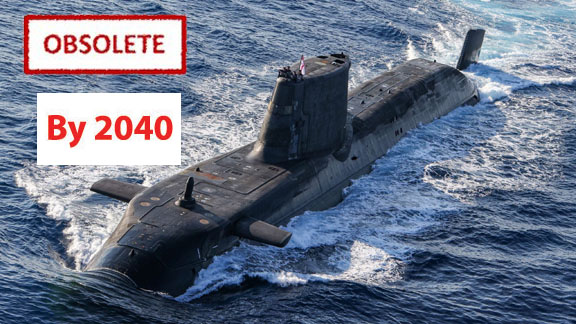
Growing signs Australia’s new nuclear submarine will be British design
Breaking Defense , (Sponsored by Northrop Grumman) By COLIN CLARK and TIM MARTIN February 10, 2023
SYDNEY and BELFAST — With the formal announcement of Australia’s path to obtain nuclear attack submarines expected to happen in Washington next month, speculation about the likely solution AUKUS is beginning to leak out.
The most intriguing hints center on a British boat — but not the Astute-class — based in part on rare public comments by Australian Defense Minister Richard Marles and his British counterpart, UK Defence Secretary Ben Wallace……………………………………
From the first announcement of the AUKUS effort, Australia has said it intends to build boats at home. However, developing the nuclear expertise from a tiny pool of a few dozen individuals to potentially thousands of people will take time, as will development of the highly skilled welders and other technical experts needed to build and maintain nuclear powered boats. Developing a new design and building a new shipyard to produce it seems unrealistic, given the lack of domestic expertise — especially if the goal is to deploy nuclear attack submarines before the conventionally powered Collins-class attack subs are retired.
That has prompted talk of America supplying Australia with refitted Los Angeles-class boats or providing Virginia-class boats that would be crewed by Australians, but both options pose many obstacles. America doesn’t seem able to build nuclear attack boats quickly enough to meet its stated requirement of 66, which prompted two top defense lawmakers in the Senate to caution President Joe Biden against committing the US to supplying Australia with nuclear boats.
Given the concerns about personnel and Marles’ comments, there is reason to think Britain’s next-generation sub, which will require a much smaller crew than do any of the American boats are in play……………….
“Among the ‘straws in the wind’ are the UK’s ambitions to rebuild its own submarine fleet. The Royal Navy would like to see a rise from the planned seven Astute-class attack submarines to perhaps 12 boats in the long term.
In a speech in December 2022, the UK chief of the defence staff, Admiral Sir Tony Radakin, said of AUKUS that ‘if we have the courage to do this properly’ it could help grow the UK’s own submarine numbers in the decades to come, clearly assisted in part by potential economies of scale under AUKUS.”
Jonathan Mead
Back in November 2021, the man who led the day-today work on the AUKUS boats in Australia, Vice Adm. Jonathan Mead, told an Australian Senate committee that his country intended to select a “mature design” for its nuclear submarine. “It is our intention,” Mead said then, “that when we start the build program, the design will be mature and there will be a production run already in existence.” That would appear to make the British offering a candidate…………………
Sidharth Kaushal, a sea power expert at the Royal United Services Institute think tank, told Breaking Defense:
“The point of friction that introduces with the UK [revolves around] the Australians operating with the US Navy primarily in the Indo-Pacific and their preference for things like prompt strike capabilities, including cruise missiles and potentially hypersonic missiles. The [US Navy] Virginia-class payload module can host those weapons but the [Royal Navy’s] Astute-class can torpedo launch cruise missiles but doesn’t necessarily offer prompt strike capabilities.”
All seven Astute-class submarines are due to be in service with the Royal Navy by 2026, each with a life cycle of 25 years. …………….
“There’s much more work to be done when you look at areas of joint production…but for the initial project of delivering a new Australian submarine there’s going to be some compromises,” Kaushal said. “For the US, this works out quite nicely but their big challenge of course remains, that their production lines are struggling to meet US Navy requirements.”
Should the Virginia-class be selected for the Australian requirement, the US would also benefit from new basing facilities for the future submarines, he added.
“It would effectively give the US an additional SSN base separate to Guam, which is of course an inherently vulnerable location and will be more so going forward,” Kaushal explained.
Operationally, how the future Australian submarines operate in the Indo-Pacific looks to be particularly difficult to assess in light of China formidable ASW capabilities, like Type 56 Corvettes and Y-8 maritime patrol aircraft, combined with the often shallow waters of the South China Sea which can make nuclear submarine missions more difficult.
“China is investing in a pretty substantial sensor network in the South China Sea that includes under sea hydrophones, large unmanned underwater vehicles all linked up to artificial islands they have built,” Kaushal said. ………………………………. https://breakingdefense.com/2023/02/growing-signs-australias-new-nuclear-sub-will-be-british-design/
1 This Month

To see nuclear-related stories in greater depth and intensity – go to https://nuclearinformation.wordpress.com
-
Archives
- September 2026 (194)
- August 2026 (330)
- July 2026 (355)
- June 2026 (287)
- May 2026 (306)
- April 2026 (356)
- March 2026 (251)
- February 2026 (267)
- January 2026 (308)
- December 2025 (358)
- November 2025 (359)
- October 2025 (375)
-
Categories
- 1
- 1 NUCLEAR ISSUES
- business and costs
- climate change
- culture and arts
- ENERGY
- environment
- health
- history
- indigenous issues
- Legal
- marketing of nuclear
- media
- opposition to nuclear
- PERSONAL STORIES
- politics
- politics international
- Religion and ethics
- safety
- secrets,lies and civil liberties
- spinbuster
- technology
- Uranium
- wastes
- weapons and war
- Women
- 2 WORLD
- ACTION
- AFRICA
- Atrocities
- AUSTRALIA
- Christina's notes
- Christina's themes
- culture and arts
- Events
- Fuk 2022
- Fuk 2023
- Fukushima 2017
- Fukushima 2018
- fukushima 2019
- Fukushima 2020
- Fukushima 2021
- general
- global warming
- Humour (God we need it)
- Nuclear
- RARE EARTHS
- Reference
- resources – print
- Resources -audiovicual
- Weekly Newsletter
- World
- World Nuclear
- YouTube
-
RSS
Entries RSS
Comments RSS
 nuclear-news