Australian Government ignores AUKUS ‘very high risk’ warning from the Admiral in charge

Admiral Mead sought to bell the cat while Defence Minister Marles has not been straight with the Australian people about the very high risks of AUKUS, even though he has been briefed on and appears to have informed Cabinet of those risks.

Marles should front up about this concealment without delay.
Labor not blameless
by Rex Patrick | Apr 29, 2025, https://michaelwest.com.au/government-ignores-aukus-high-risk-warning-from-the-admiral-in-charge/
The AUKUS submarine project faces huge risks, and Cabinet knows. But as the Government ships $2B of taxpayers’ money to the US this year, with much more to follow, the taxpayer is not being told. Rex Patrick reports.
On 26 February this year, Vice Admiral Jonathan Mead, the man in charge of AUKUS, advised the Senate that the AUKUS submarine program was “very high risk”. He said, “We’ve made that clear to government, and the government has made that clear to the public.”
However, it has not.
I follow AUKUS closely and had not heard that publicly before. Whilst it is absolutely the case, and something MWM has reported on extensively, this was the first public admission of the very high risk nature of the project from the Australian Submarine Agency.
Concerns about US submarine production rates and the weakness of the UK’s submarine industrial base have generated grave doubts about whether the $368B AUKUS scheme will deliver nuclear-powered submarines for Australia.
Moreover, former Prime Minister Malcolm Turnbull has revealed, after conversations with insiders, that there is no Plan B.
“Plan B is that we will not get any submarines.”
FOI ahoy
I was somewhat surprised by Admiral Mead’s unusual candour, so on 27 February, I moved to test the veracity of his remarks with an FOI application directed at the Australian Submarine Agency (ASA) seeking access to “any ministerial submission or briefing provided by ASA to the Minister for Defence … that refers to the AUKUS nuclear submarine program as involving ‘high risk’ or ‘very high risk’.”
I also sought access to ‘any statement made by the Minister for Defence or the Minister for Defence Industry and Capability Delivery that refers to the AUKUS nuclear submarine program as involving ‘high risk’ or ‘very high risk’.”
A decision on those was made this week. FOI applications can reveal the truth by what is disclosed, by what is withheld, and by confirming what doesn’t exist.
ASA confirmed the existence of a ministerial briefing characterising the AUKUS submarine program as involving ‘high risk’ or ‘very high risk’, but refused access to that briefing on national security and Cabinet secrecy grounds. Significantly, ASA’s refusal decision confirmed this document was produced for the dominant purpose of briefing a Minister on an attached Cabinet submission.
In effect, the Submarine Agency confirmed Admiral Mead’s statement that ASA has briefed the government on the ‘high risk’ or ‘very high risk’ nature of the AUKUS project, and that briefing was submitted to the Defence Minister for Cabinet consideration.
“That high-risk assessment has gone to the very top of the Government.”
Alarm bells should be ringing.
Misleading the public
But the FOI decision also reveals that Defence Minister Richard Marles has not been forthcoming with the Australian public about the full hazards of AUKUS.
In relation to statements the minister has made to the public on the risk status of the project, the Australian Submarine Agency advised that ‘no in scope documents were identified’ that show the Defence Minister has made any public statement that acknowledges the ‘high’ or ‘very high’ risk of the AUKUS scheme.
The agency was able to find only a handful of statements referring to risk management in general and assertions that the United Kingdom will carry the primary risks of the AUKUS-SSN construction.
Admiral Mead was not correct in his statement to the Senate, but more importantly, the Government has been caught red-handed fudging the risks associated with the AUKUS scheme. The public has been misled.
Admiral Mead sought to bell the cat while Defence Minister Marles has not been straight with the Australian people about the very high risks of AUKUS, even though he has been briefed on and appears to have informed Cabinet of those risks.
Marles should front up about this concealment without delay.
Labor not blameless
Last week, at a pre-polling booth, I was standing next to a Labor volunteer who was handing out how-to-vote cards for the seat of Adelaide. An elderly gentleman stuck out his hand and asked the volunteer for a how-to-vote card.
“We have to stop the Liberals getting in”, he said. “We don’t need nuclear power”.
I couldn’t resist. “But you’re taking a Labor how-to-vote”, I said. He gave me a strange look. “What about the eight naval reactors?” I queried. “A naval reactor is a reactor, and naval nuclear waste is nuclear waste”.
Many in the Labor camp think AUKUS is Morrison’s (and Peter Dutton’s) baby. But for Labor, that’s just a convenient mistruth. In September 2021, Morrison announced AUKUS. But he only announced a study. It was Prime Minister Anthony Albanese at the March 2023 San Diego “kabuki show” (as described by Paul Keating) that turned it into a formal Defence project behemoth with a projected cost of $368 billion.
Pre-polling booths are a good place to hang out for political gossip. I also held a discussion with a long-standing grassroots Labor Party member who proceeded to tell me how he had been sidelined for his opposition to AUKUS.
There’s no doubt the Labor rank-and-file have been cut out of the party’s decision-making with the Labor leadership ramming an AUKUS endorsement through the party’s 2023 national conference. Since then, the dissenting views of many, perhaps even a majority of Labor members, have been marginalised and suppressed.
AUKUS to be torpedoed
Politics aside, any project manager worth their salt would put an end to AUKUS. It’s a looming procurement shipwreck.
The US will not be able to supply the Virginia Class submarines to the Royal Australian Navy. The US Congressional Research Service has calculated a US build rate of 2.3 boats per annum is necessary to enable the US to provide boats to Australia without harming US undersea warfare capability. The current build rate is somewhere between 1.1 and 1.3 boats per annum.
The British submarine industry is one big cluster fiasco. Fruit that will flow from that program will be late, possibly rotten, and far more expensive than planned.
Meeting delivery obligations by the US and UK under the program will be really hard. And the fact that the Australian Government can’t even be up front and honest about the program
Rex Patrick is a former Senator for South Australia and earlier a submariner in the armed forces. Best known as an anti-corruption and transparency crusader, Rex is running for the Senate on the Lambie Network ticket next year – www.transparencywarrior.com.au.
“suggests there is no chance of success.”
But Albanese need not worry, nor Marles. By the time all of this sinks in, they’ll be out of the system. It will be our children who suffer from the tens of billions wasted and the massive hole in our national security capability.
Rex Patrick
Why Military Neutrality is a Must for Australia

Embrace military neutrality. Australia faces a choice: join declining empires or lead in peace. Discover why neutrality is the way forward in a multipolar world.
April 30, 2025 , By Denis Hay, Australian Independent Media
Introduction: A Nation at the Crossroads
Picture this: It’s 2030. Australian submarines sail under U.S. command in the Taiwan Strait. Canberra receives intelligence briefings written in Washington. The media frames any dissent as disloyalty. Ordinary Australians ask: “How did we get dragged into another war we never voted for?”
Rewind to 2025: our foreign policy is shaped not by peace or diplomacy, but by deals like AUKUS, designed to entrench Australia within the military-industrial interests of a declining superpower. Meanwhile, the world is shifting. BRICS is rising. The U.S. is losing credibility. And Australia must decide: Will we continue to act as a pawn, or will we embrace military neutrality and sovereignty through peace?
The Global Realignment: The World Beyond the U.S.
U.S. Decline and the Rise of Multipolarity
In 2015, analysts inside global financial circles began quietly withdrawing from the U.S. The reasons were clear:
• America’s fertility rate had fallen to 1.8 (below replacement).
• Civil unrest, mass shootings, and institutional collapse painted a picture of chaos.
• Trust in government and media plummeted (Edelman Trust Barometer, 2021).
Meanwhile, the BRICS+ bloc was expanding rapidly. By 2024, Saudi Arabia, UAE, and Iran had joined, and member nations began transacting in local currencies. The world was no longer unipolar—and Australia must adapt.
The BRICS+ Bloc and the Global South
The global South is now:
• Home to the largest youth populations (India, Nigeria, Indonesia)
• Receiving billions in tech investment (e.g., Microsoft’s $1B in African AI infrastructure)
• Transitioning to local currency trade
Australia can no longer afford to cling to outdated alliances that tie us to declining powers.
Why Australia Must Reassess Its Strategic Alliances
The Cost of U.S. Dependence
Our military is deeply entwined with U.S. command structures:
• AUKUS submarine deal: $368 billion to be tied into U.S. war planning
• Hosting U.S. troops, ships, and bombers in the Northern Territory
The Failure of U.S. Militarism
• Iraq and Afghanistan: trillions spent, no peace achieved
• Ukraine: Proxy war fuelled by NATO expansion and U.S. arms interests
Quote from the video: “America is being phased out… not because they hate it, but because it’s obsolete.”
What the OCGFC Knows – And Why We Should Listen
The Owners and Controllers of Global Financial Capital (OCGFC) have already moved on from America. They’re investing in the South. Australia should follow their strategy—but for peace, not profit.
The Case for Military Neutrality
What Is Military Neutrality?
Military neutrality means:
• No participation in military blocs
• No hosting of foreign military bases
• No involvement in foreign wars
Example of military neutrality: Switzerland has remained neutral for over 200 years. Reference: https://worldpopulationreview.com/country-rankings/neutral-countries
Benefits of Military Neutrality for Australia
• Enhanced sovereignty: Canberra decides, not Washington
• Improved regional trust
• Reduced risk of becoming a target in U.S.-China conflict
Strategic Independence……………………………………………………………………………….
Australia is now home to:
The Pine Gap spy base, integral to U.S. drone warfare and nuclear targeting
Rotational deployments of U.S. marines and bombers in the Northern Territory
Massive investment under AUKUS, where Australia receives nuclear-powered submarines it will not command independently
Growing integration into U.S. war planning around China and the South China Sea
The Quiet Absorption of Sovereignty
These developments raise serious questions:
If we cannot deny access to foreign troops on our soil, are we still sovereign?
If our military relies on foreign command systems, do we retain independent defence?
This is not a conspiracy theory. This is creeping dependency. Sovereignty is rarely lost overnight. It is eroded decision by decision, treaty by treaty, base by base—until there is nothing left to reclaim.
The Choice Before Us
We must confront an uncomfortable possibility: Australia is at risk of becoming a de facto 51st state – not through constitutional change, but through military submission.
The warning signs are clear. If we continue down this path unquestionably, we may find ourselves unable to make decisions without a nod from Washington.
Neutrality offers a way out. …………………………………………………………………………………………………… https://theaimn.net/why-military-neutrality-is-a-must-for-australia/
The Australian Labor Party is No Friend of the Nuclear-Free Cause.

https://theaimn.net/the-australian-labor-party-is-no-friend-of-the-nuclear-free-cause/ 26 Apr 25
I’m thinking that the nuclear lobby loves the ALP even more than it loves the Liberal Coalition opposition party.
Advance Australia, and the U.S-controlled Atlas Network are powerful and well-funded groups dedicated to molding public opinion on behalf of wealthy right-wing groups. They did a fine job in 2023 of destroying Australian support for the 2023 Australian referendum on the indigenous Voice to Parliament.
I was expecting them to pretty much run riot in support of the Liberal Coalition’s plan for a nuclear Australia. That does not seem to have happened. Why not?
Advance “kicked off with outright lies“, but has been rather quiet lately. And the Atlas Network is nowhere in sight, although its modus operandi is secretive anyway, spreading simplistic memes.
My conclusion is that Peter Dutton’s Liberal Coalition campaign is so inept, so incompetent, that it has turned out to be counter-productive to the party’s cause. There’s just so much evidence of this ineptitude – particularly when it comes to the estimated costs of setting up seven nuclear power plants around Australia. The latest of many examinations of these costs is – “Coalition’s nuclear gambit will cost Australia trillions – and permanently gut its industry.” Half-baked plans to keep old coal-power plants running for many years until nuclear is “ready”, no mention of plans for waste disposal, – the tax-payer to cop the whole cost. Even a suave sales magician like Ted O’Brien has not been able to con the Australian public. The party’s incompetence is on show in other ways, too, unconnected to the nuclear issue.
But what of Labor? They have been remarkably quiet on the nuclear issue – focussing on their own rather ha[f-baked plans for housing. It’s all cost-of-living issues – and I don’t deny that this is important. But nuclear rarely gets a mention – except when Labor finds it useful to mention the costs.
It doesn’t look as if Peter Dutton’s Liberal Coalition has a hope in hell of getting a majority win for its nuclear platform.
But does the nuclear lobby really care? I’m afraid not. You see, the Labor Party, supposedly opposed to the nuclear industry, has a long tradition of caving in on nuclear issues. From 1982 – a weak, supposed “no new uranium mines” policy became a “three mines uranium policy” 1984 then a pathetic “no new mines policy” in the 1990s. Backing for South Australia’s uranium mines further weakened Labor anti-nuclear policy.
Over decades, Labor luminary Gareth Evans has been acclaimed for his supposed stance against nuclear weapons. But he’s done a disservice to the nuclear-free movement, in his long-standing position in favour of “the contribution that can be made by nuclear energy capable of providing huge amounts of energy, and just as clean as renewables in its climate impact”. Evans has always been close to the International Atomic Energy Agency, in his complacency that nuclear power has nothing to do with nuclear weapons!
Labor has always been officially opposed to nuclear power, but at the Federal level, and some State levels, there have always been significant Ministers like Bob Hawke, and Martin Ferguson, who pushed for the nuclear industry. To his credit, Anthony Albanese for a long time held out against the nuclear industry. Even up until 2024, he was still trying .
But the crunch had already come – Albanese on Thursday, 16th September 2021 – “We accept that this technology [nuclear-powered submarines ] is now the best option for Australia’s capability.”
Why did Albanese agree to this deal, arranged between the Morrison Liberal government, and the USA and UK? Apparently, he did so, after just a two-hour briefing, with no documents provided, on the previous day. Labor Caucus was presented with it as a fait accompli. No vote was taken.
I can only conclude that Albanese’s decision was based on that time-honored fear of Labor looking “weak on security”.
In one fell swoop, Labor’s anti-nuclear policy was wrecked. The nuclear submarines will mean nuclear reactors on Australia’s coast. The will mean nuclear waste disposal in Australia, including foreign nuclear waste from the second-hand submarines. They will surely eventually mean nuclear weapons, as who can really tell if a nuclear-powered submarines has or has not got nuclear weapons? (The Chinese will be very wary about them.)
Since 2021, Australia’s nuclear submarine arrangement has been largely in the hands of Defence Minister Richard Marles, who worked with that dodgy company PWC to set it up, and who is a committed supporter of Australia’s solidarity with the USA.
March 2023 – Prime Minister Anthony Albanese, US President Joe Biden and UK Prime Minister Rishi Sunak unveiled the path to acquiring nuclear-powered submarines.
“In 2024, Australian Prime Minister, Anthony Albanese, made undisclosed “political commitments” with its AUKUS partners in an agreement for the transfer of naval nuclear technology to Australia, sparking concerns about the potential for high-level radioactive waste to be stored in the country. “
The global nuclear lobby works across national boundaries to promote its industry. It does well with Russia – as government clamp-down on dissent makes it easier to expand the industry in all its forms, and to market nuclear power to Asian ana African countries.
The nuclear industry is well aware of the problems in maintaining the belief that nuclear is clean, cheap, and climate friendly. But above all, it’s the nuclear-waste problem that its most expensive and difficult obstacle. Here’s where Australia has always looked appealing. All this nonsense about getting small nuclear reactors is just a distraction . The industry knows that small nuclear reactors are fraught with difficulties – too expensive, requiring too much security, public opposition at the local level, still needing too much water……… But to keep the global industry going, a nuclear-waste-welcoming country would be such a boost.
Well, it is early days, even for the prospect of those AUKUS nuclear submarines ever actually arriving. But in the meantime – the whole AUKUS thing has quietly introduced the Australian public to the idea that nuclear submarines are OK, and so are their wastes, and so are USA nuclear weapons based in Australia.
So, really, the Australian Labor Party has done a much better job of promoting the nuclear industry, than the fumbling Liberal Coalition could.
We are fortunate inn Australia to have proportional representation in our election. If you care about keeping Australia nuclear-free, you don’t have to vote for either of the big parties.
Australian Community groups furious Coalition nuclear plan would go ahead even if locals oppose it

Critics of policy say residents should be ‘very angry’ they will not be able to veto generators in their towns despite promise to consult them.
Tory Shepherd, 13 Apr 25, https://www.theguardian.com/australia-news/2025/apr/13/community-groups-furious-coalition-nuclear-plan-would-go-ahead-even-if-locals-oppose-it
There is a “growing backlash” to the Coalition’s nuclear plan, with community groups furious at the lack of consultation and angered that the policy would not give local communities the power of veto and that nuclear plants would be built regardless of local opposition.
Opponents say the pro-nuclear lobby group Nuclear for Australia has been hosting information sessions but that it makes it overly difficult for people to attend and ask questions, and is not able to answer those questions that are posed.
Wendy Farmer, who has formed an alliance of the seven regions affected by the Coalition’s pledge to build nuclear reactors on the site of coal-fired power stations, says Australians should be “very angry” that they will not be able to veto any planned nuclear generators in their towns despite the Coalition’s promise to carry out a two-and-a-half-year consultation.
She refuses to call the policy a “plan” because of that lack of consultation. “They haven’t even looked at these sites,” she said.

Dave Sweeney, the Australian Conservation Foundation’s nuclear free campaigner, says it is “more con than consultation”. And he says in his many years in nuclear-free campaigns he has never seen so many sectors – including unions, state leaders, energy producers, businesses and protest groups – aligned against nuclear.
The Coalition has pinpointed Tarong and Callide in Queensland, Liddell and Mount Piper in New South Wales, Loy Yang in Victoria, and small modular reactors (SMRs) in Port Augusta in South Australia and Muja, near Collie in Western Australia.

It says the $331bn nuclear plan will make electricity cheaper, while critics have called its costings a “fantasy”.
The Liberal party did not respond to questions about the lack of consultation and lack of veto power.
The alliance said there “has been no consultation or free prior and informed consent from traditional custodians”.
“You never asked locals if they want nuclear reactors in their back yards, instead you threaten compulsory acquisition and federal overrides with no right to veto,” it said in a petition to the Coalition.
It said the plan was a “distraction” designed to “create false debate” when communities are already transitioning away from fossil fuels to renewable energy.
Jayla Parkin, a Collie resident and community organiser for Climate Justice Union, said pro-nuclear information sessions had not provided any answers and had tried to stop First Nations people from entering.
Nuclear for Australia has held two information sessions with “expert speakers” in the town.

One elder was “devastated” after initially being refused entrance to a meeting last year, Parkin said. “She wanted to get the information,” Parkin said. “Not everyone is simply for nuclear or against. We are for being informed on what’s going to happen.”
At a January meeting, elders were told they couldn’t go in because of something wrong with their registrations, which Parkin then sorted out. Once inside, she said questions had to be submitted via an app.
Not a single question could be answered … like ‘Where is the water coming from?’, ‘How will this benefit Collie?’, and ‘Where are you going to store the radioactive waste?’” she said.
Since then, the community had heard nothing, she said.
Nuclear for Australia, founded by Will Shackel and boasting the entrepreneur Dick Smith as a patron, describes itself as a grassroots organisation with no political affiliation.
Information sessions have featured Grace Stanke, a nuclear fuels engineer and former Miss America who says being called “Barbenheimer” is one of her favourite compliments.
Shackel told SBS that Nuclear for Australia Google people when they try to register for the sessions.
“If we believe that someone is a known protester … someone who could cause a physical threat to people in there, we will not allow them in,” he said.
Farmer, also the president of Voices of the Valley, said Nuclear for Australia was “silencing people” by only allowing questions through an app and filtering them.
Nuclear for Australia has also taken out ads in local newspapers claiming 77% of coal jobs are transferable to nuclear plants and that nuclear workers are paid 50% more than other power generation-related jobs.
The fine print shows those claims come from a US nuclear industry lobby organisation and refer to the situation in the US.
Farmer said that, “adding insult to injury”, the advertisements misspell Latrobe Valley as La Trobe Valley and, in one case, an ad aimed at Latrobe was put in an SA newspaper.
“Regional communities are desperate for jobs now,” Farmer said. “Nuclear is not the answer.”
Protesters heckled the opposition leader, Peter Dutton, for not meeting with the community when he visited Collie in October last year.
“Collie doesn’t like it when people like that come to our town and hide,” Parkin said. “People have questions … at least openly answer them.”
In Perth last week Dutton was asked about criticism from Collie residents that he hadn’t heard their concerns about nuclear power and whether he would commit to visiting the town during the election campaign.
“I’ve been to Collie before,” he said. “There are seven locations around the country, and I won’t be able to get to all of them.”
Those communities knew the Coalition was offering them “the ability to transform”, he said.
Greg Bannon is from the Flinders Local Action Group, which was formed to oppose plans to build a nuclear waste dump in SA.
He said the community had not heard much apart from a February information session held by Nuclear for Australia. He said there were concerns about the safety of any power plant and the impact on the local environment. “Port Augusta … is probably the most stupid place to put a nuclear power station in the world,” he said, pointing to the unique nature of Spencer Gulf and its flat “dodge” tides.
“Any leakage … the water would end up in the top end of the gulf, with only one place to go, through Port Lincoln, the fish nurseries, the mangroves … only 50km further south is Point Lowly near Whyalla, where the annual migration of the southern giant cuttlefish occurs, which is a unique event in the world,” he said.
The other point, Bannon said, was that the region had already transitioned away from baseload power to renewables.
Guardian Australia has approached the Coalition and Nuclear for Australia for a response.
Tom Venning was preselected to replace retiring MP Rowan Ramsey in Grey, the federal electorate that Port Augusta sits within. He said he supported the policy as part of a “credible path to net zero” and that if the Coalition formed government there would be a two-and-a-half-year community consultation and an independent feasibility study.
“I’m committed to keeping my community fully informed and involved,” he said, adding that he would take any concerns seriously and would work with local leaders and the energy minister to address them.
Sweeney said the Coalition already appeared to be backing away from its commitment to nuclear and appeared reluctant to bring it up.
On Friday Dutton said people would flock to nuclear if they subsidised it but that they could “subsidise all sorts of energies”.
“I don’t carry a candle for nuclear or any other technology,” he said.
Farmer said: “There is a growing backlash.
“We are keeping it as a hot topic – because the Coalition doesn’t want to talk about nuclear, we will.”
Why The US Australia Alliance Needs a Rethink

Australian Independent Media March 29, 2025, By Denis Hay
Description
Why the US Australia alliance needs a rethink. The U.S. is no ally. Discover why Australia must distance itself to avoid war and reclaim its sovereignty.
How Australia Can Safely Distance Itself from U.S. Hegemony
Introduction – The US Australia Alliance: Myth vs Reality
Picture this: You’re sitting in a Brisbane café, sipping a flat white while reading the headlines – Australia has just signed another defence pact with the United States. More American troops, military hardware, and diplomatic praise about our “unbreakable alliance.” Yet, beneath the headlines lies a growing discomfort – are we allies, or are we just a strategic pawn in U.S. global dominance?
Joh Bjelke-Petersen once said that this is just politicians “feeding the chooks.” Empty words. The truth is, the U.S. government doesn’t respect its people, let alone Australia. It sees nations – including its own – as resources to be mined for profit. This article will explore how Australia can break free from this exploitative alliance without putting itself in harm’s way.
The U.S. Government’s Track Record: A Global Power Without Respect
Exploiting Its Own Citizens
Visit Detroit, Michigan – a city once bustling with manufacturing pride. Now, it stands as a ghost town of forgotten promises, where basic water access has become a luxury. Millions of Americans are homeless or working two jobs or more just to survive. U.S. billionaires soared in wealth, while 45 million Americans live impoverished.
Internal reflection: “If they treat their own citizens this way, what hope do allies have?”
Exploiting Other Nations
Let’s take Iraq. The 2003 invasion, sold on lies about weapons of mass destruction, cost hundreds of thousands of lives, all to secure oil. In Libya, a once-stable nation descended into chaos after U.S.-led intervention. This is not defence—it’s corporate imperialism.
When the U.S. backs coups in Latin America or imposes sanctions on countries like Venezuela or Cuba, the motive is always clear: control the global economy for U.S. corporate gain.
The U.S.–Australia Relationship: Not What It Seems
Political Rhetoric vs Reality
Australian and U.S. politicians often repeat phrases like “shared values” and “strong friendship.” But how many Australians were consulted when Pine Gap was set up or when AUKUS was signed?
Dialogue: “This isn’t a partnership. It’s a surrender of our sovereignty,” says a former Australian diplomat.
The Cost of Loyalty
Australia’s blind support for U.S. policy has real consequences:
• Trade tensions with China – our largest trading partner
• Environmental destruction from military exercises on Australian soil
• Loss of independence as U.S. bases expand here without public debate.
Why China Matters More Than Ever
60% of Australia’s exports go to Asia, with China alone accounting for over 25%. Australia’s economy is tightly linked to Chinese demand, from iron ore to wine. Trade disruptions – often driven by political antagonism encouraged by the U.S. – have already cost farmers, winemakers, and miners dearly.
The Danger of Choosing Sides
We risk becoming collateral damage in a U.S.-China conflict. Australia should not repeat its mistakes from Vietnam or Iraq – wars that had nothing to do with our national interest but cost us dearly in blood, treasure, and reputation. This has been the outcome of the US Australia alliance.
Thought: “Must we always fight other nations’ wars? When do we stand up for ourselves?”
Pathways Toward Australian Independence………………………………………..
Phasing Out US Australia Alliance and Military Influence
Start with transparency:
• Conduct a national audit of U.S. bases and agreements.
• Establish parliamentary oversight.
• Hold a public referendum on AUKUS.
Dialogue: “Our security must not come at the cost of our sovereignty,” says Senator David Shoebridge.
………………………………………….more https://theaimn.net/why-the-us-australia-alliance-needs-a-rethink/
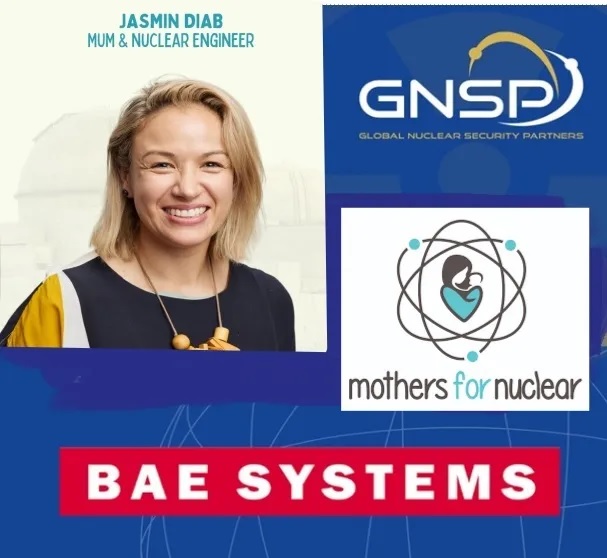
Australia’s MUMS FOR NUCLEAR – propaganda wheels within wheels.
March 30, 2025, https://theaimn.net/australias-mums-for-nuclear-propaganda-wheels-within-wheels/
I’ve only just discovered “Mums for Nuclear” – and they sound just so lovely. They are an Australian offshoot of “Mothers for Nuclear”, which is a very lovely global organisation, full of joy and delight in nature, and of course – all are lovely ladies with lovely children. Here’s a sample of their philosophy:
“I personally went from a fear of nuclear to understanding how many of my assumptions about it were astonishingly far from the truth. The more I read, the more I realized that we direly need more nuclear power to help solve some of the greatest threats to the environment and humanity, including mitigation of climate change, protection of natural resources, reductions in air pollution, and lifting people from poverty. I joined Mothers for Nuclear because I want to help leave a better world for our children.”
That was written by Iida Ruishalme – A Finnish mother, and one of nine women featured on the Mothers for Nuclear website She works as a science writer, and by the way, is the only one who is not directly involved with the nuclear industry. Most of the others are nuclear engineers.
Anyway, the website is beautiful – and it’s easy to come away from it with enthusiasm for nuclear power.
Those nine women represent the USA, Finland, Germany, and the UK. You don’t learn how many members the organisation has, nor where it gets its funding.
From their website:
“In 2022 Mothers for Nuclear became a fiscal sponsor of Stand Up for Nuclear. Stand Up for Nuclear is the world’s 1st global initiative that fights for the protection and expansion of nuclear energy. We are long-term partners who have worked together on multiple campaigns including in California, Europe, Kenya, and many others.”
Mmm..mm – I wondered – “What is a fiscal sponsor“?
“Fiscal sponsorship refers to the practice of non-profit organizations offering their legal and tax-exempt status to groups – typically projects – engaged in activities related to the sponsoring organization’s mission. It typically involves a fee-based contractual arrangement between a project and an established non-profit.”
Mmmmm – sounds as though Mothers for Nuclear is a real help to the nuclear industry, and quite useful to its own members. Though I don’t for a moment doubt their sincerity.
Now we come to the new – and what a timely newness – Australian version – the more relaxed sounding “Mums for Nuclear“. It has joined the “charity” nuclear front group Nuclear for Australia.
Once again, I’ve found it hard to discover just how many members are in Mums for Nuclear. And also – where it gets its funding.
I have found one member, Jasmin Diab, who is the face of the outfit, but doesn’t call herself a CEO or anything formal like that: “Hi, I’m Jaz! I’m a mum of one human and two dogs.”
However, Jaz does have another role, which is quite a bit more formal.
Jasmin Diab is a nuclear engineer and is the Managing Director for Global Nuclear Security Partners (GNSP) in Australia. Global Nuclear Security Partners is a world leading nuclear management consultancy:
“We work with partners, clients and relevant authorities to ensure that novel technology is secure. Across SMR, AMR and fusion we work to make sure that projects, programmes, processes and products are protected and commercially viable.”
“Our clients include: the UK Department for Energy Security and Net Zero; the UK Ministry of Defence; UK National Nuclear Laboratory; the Canadian Nuclear Waste Management Organistion; the Ukrainian Government and nuclear industry; Magnox; Babcock International; BAE Submarines; University of Bristol; University of Manchester and SMR developers. We’ve worked with the armed police capability of the Ministry of Defence Police, Civil Nuclear Constabulary and US teams in protecting nuclear material and developing doctrine, and with the infrastructure police of some Middle Eastern Governments.”
I don’t doubt that Jasmin Diab is sincere, and that she is a good mum to one human and two dogs. And she can provide for them well, with that good job with GNSP. I’m not sure that her message will go down that well with Australian women. A recent national survey shows that Australian women are strongly opposed to nuclear energy and are most concerned any consideration of the controversial power source will delay the switch to renewables.
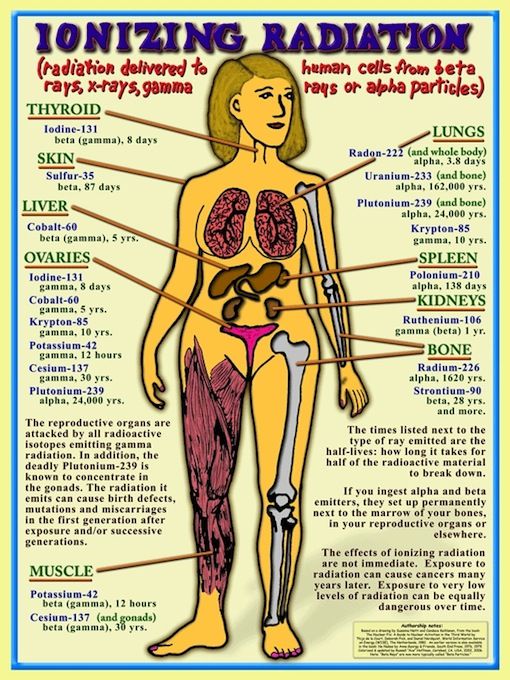
The Mums for Nuclear groups seem curiously uninterested in the fact that women, and children, are significantly more vulnerable to illness from nuclear radiation than men are.
‘Vandals in the White House’ no longer reliable allies of Australia, former defence force chief says
Henry Belot and Ben Doherty, Guardian, 21 Mar 25
Chris Barrie says Donald Trump’s second term is ‘irrecoverable’, but stops short of calling for end to Aukus pact.
A former Australian defence force chief has warned “the vandals in the White House” are no longer reliable allies and urged the Australian government to reassess its strategic partnership with the United States.
Retired admiral Chris Barrie spent four decades in the Royal Australian Navy and was made a Commander of the Legion of Merit by the US government in 2002. He is now an honorary professor at the Australian National University.
“What is happening with the vandals in the White House is similar to what happened to Australia in 1942 with the fall of Singapore,” Barrie said. “I don’t consider America to be a reliable ally, as I used to.
“Frankly, I think it is time we reconsidered our priorities and think carefully about our defence needs, now that we are having a more independent posture … Our future is now in a much more precarious state than it was on 19 January.
“Trump 1.0 was bad enough. But Trump 2.0 is irrecoverable.”
Barrie said it was “too soon” to say whether Australia should end its multibillion-dollar Aukus partnership, but raised concerns about a lack of guarantee that nuclear-powered submarines would actually be delivered. He also warned about an apparent lack of a back-up option.
Pillar One of the Aukus deal – which would see the US sell Australia nuclear-powered submarines before the Aukus-class submarines were built in Australia – is coming under increasing industry scrutiny and political criticism, with growing concerns the US will not be able, or will refuse, to sell boats to Australia, and continuing cost and time overruns in the development of the Aukus submarines.
“Let’s define why we really need nuclear submarines in the first instance, given a new independent defence posture for Australia,” Barrie said. “If they still make sense in that context, fine. But they might not. There might be alternatives. There might be alternatives with conventional submarines if we didn’t want to go any further than the Malacca Straits.”
Barrie’s warning comes after former foreign affairs minister Bob Carr said Australia would face a “colossal surrender of sovereignty” if promised US nuclear-powered submarines did not arrive under Australian control.
Carr, the foreign affairs minister between 2012 and 2013, said the Aukus deal highlighted the larger issue of American unreliability in its security alliance with Australia.
“The US is utterly not a reliable ally. No one could see it in those terms,” he said. “[President] Trump is wilful and cavalier and so is his heir-apparent, JD Vance: they are laughing at alliance partners, whom they’ve almost studiously disowned.”………………………. https://www.theguardian.com/australia-news/2025/mar/21/vandals-in-the-white-house-no-longer-reliable-allies-to-australia-former-defence-force-chief-says-ntwnfb?CMP=share_btn_url
Australia: Liberals Against Nuclear launches campaign to return party to core values

Liberals Against Nuclear
A new advocacy group, “Liberals Against Nuclear,” launched today with an advertising campaign aimed at persuading the Liberal Party to abandon its nuclear energy policy position so it can win the coming election.
The group spokesman is Andrew Gregson, former Tasmanian Liberal director, candidate, and small businessman.
“Nuclear power is the big road block preventing the Liberals getting to the Lodge,” Gregson said. “This is big government waste that betrays liberal values, splits the party, and hands Government back to Labor. It’s time for our party to dump nuclear.
“This policy contradicts core liberal principles by requiring tens of billions in government borrowing, swelling the bureaucracy, and imposing massive taxpayer-backed risk.”
The campaign launch includes television advertising, digital content, and billboards questioning the Liberal Party’s support for nuclear. The ads highlight how nuclear energy requires billions in upfront government borrowing, with international experience showing inevitable cost blowouts.
“As John Howard said: “For Liberals the role of government should be strategic and limited.” Yet this nuclear policy gives us bigger government, higher taxes to pay for it, more debt, and less freedom as the state takes over energy production,” Gregson said.
The group warns that the nuclear policy is driving free market and middle ground voters directly to the Teals and other independents in must-win seats. Recent polling shows just 35% of Australians support nuclear energy, with support collapsing once voters understand the policy details.
The group warns that the nuclear policy is driving free market and middle ground voters directly to the Teals and other independents in must-win seats. Recent polling shows just 35% of Australians support nuclear energy, with support collapsing once voters understand the policy details. https://liberalsagainstnuclear.au/
Australia’s Trump cards
by Rex Patrick | Mar 16, 2025, https://michaelwest.com.au/tariffs-australias-trump-cards/
Australia does have Trump cards; North West Cape, Pine Gap, US Marine Rotational forces in Darwin, AUKUS and/or critical minerals that the US needs. Perhaps it’s also time to cancel the traitorous quantum computing development contract given to a US company over Australian companies.
These are things that we can put on the table. But doing that requires a measure of boldness. Our problem is our Prime Minister doesn’t have the ticker. Neither does the opposition leader. They are with Trump internationally as they are with the gas cartel domestically; owned and weak.
Anthony Albanese has it all wrong, writes former senator and submariner Rex Patrick. He’s trying to bribe Trump with sweeteners in response to trade tariffs. Instead, he needs to tell Trump he’s prepared to take things away.
US nuclear deterrent
Deep beneath the Indian Ocean, USS Kentucky, a nuclear-powered Ohio Class Ballistic Missile Submarine (SSBN) ploughs its way through the water. Contained within its 18,750 tonne pressure hull structure are 24 Trident ballistic missiles, each capable of carrying eight nuclear warheads to targets up to 12,000 km away.
The launch of all of USS Kentucky’s missiles would, quite literally, change the world by exacting severe destruction on whole societies.
This ability to inflict damage on an exceptionally large scale is the basis of the SSBN’s deterrent capability. Unlike silo based missiles, which are vulnerable to a first strike, or aircraft delivered nuclear weapons, which can be pre-emptively hit or shot down, SSBNs are essentially invisible. They provide certainty of response.
SSBNs serve as the ultimate nuclear deterrent. They’re extremely important to the US, whose navy possesses 14 of them. At any one time six to eight will be at sea, with four of them always on deterrent patrol. They are spread about the globe giving the US President the ability to quickly deliver return-fire with nuclear warheads at any adversary.
24/7 Operation
The primary performance metric for an SSBN is to be able to deliver its nuclear weapons with reliability, timeliness and accuracy.
The Commanding Officer of USS Kentucky must be able to loiter undetected in a place suited for the launching of weapons, be able to receive an order to launch, have an understanding of the submarine’s exact navigational position to a high degree of accuracy and have the ability to launch the weapons quickly and reliably once that order arrives.
Loitering undetected and being able to receive an order to launch is challenging. When a submarine is near the surface, their hulls can be seen by aircraft, and raised periscopes and communications masts can be seen visually and on radar. Operating a submarine at shallow depth can also result in acoustic counter-detection.
The Commanding Officer of USS Kentucky knows that deep is the place to be.
But being deep frustrates a submarine’s ability to receive communications, particularly an ‘emergency action message’.
And that’s were Very Low Frequency (VLF) communications stations come into play. In conjunction with a submarine’s buoyant wire antenna – a long wire that sits just below the sea surface – they can receive a launch command from the President.
The US has a network of these VLF communication stations around the world including in Maine, Washington state and North West Cape, Australia.
North West Cape
The VLF Communication Facility at North West Cape (NAVCOMMSTA Harold E Holt) has been in operation since 1967. Born of secrecy, it was at first exclusively US operated until 1974 when the facility became joint and started communicating with Australian submarines. In 1991 it was agreed that Australia would take full command in 1992 and US Naval personnel subsequently left in 1993.
The facility’s deterrence support role now rests on a 2008 treaty which, ratified in 2011, is formally titled the “Agreement between the Government of Australia and the Government of the United States of America relating to the Operation of and Access to an Australian Naval Communication Station at North West Cape in Western Australia”.
The station’s antenna is 360 meters high, with a number of supporting towers in a hexagon shape connected to it by wires. Considered to be the most powerful transmitter in the southern hemisphere, it transmits on 19.8 kHz at about 1 megawatt.
The station enables emergency action messages to be relayed to submerged SSBNs, like USS Kentucky, when operating in the Indian and Western Pacific oceans.
If the facility was taken out by a first strike nuclear attack, the US Air Force can temporarily deploy Hercules ‘TACAMO’ aircraft, with a long VLF wire they deploy while airborne. It’s a back-up measure with much lower transmission power capabilities.
A bedrock of certainty
After US steel and aluminium tariffs were put into play, the Australian Financial Review ran with a headline “How Australia was blindsided on the US tariffs”. The article opened with, “Australia pulled out all stops to avoid Donald Trump’s duties on steel and aluminium, but it’s impossible to negotiate with someone who doesn’t want anything”.
But the US does want something.
A fact not so well appreciated with respect to nuclear deterrence is it must be seen to be a robust and continuous capability. Onlookers must see a 24/7 capability including deployable submarines manned by well-trained crews, proven and reliable missile systems, an organised strategic command, a continuous communication system that reliably links that strategic command to the submarines with appropriate redundant communication pathways, training facilities and maintenance support.
Potential adversaries must know that they could be struck by an SSBN that could be lurking anywhere in the world’s major oceans.
Effective nuclear deterrence must be built on a bedrock of operational certainty.
Remove the transmitter keys
North West Cape forms part of that certainty.
Australia has the keys to take some certainty away. Without our cooperation the US can’t operate a certain global deterrent capability. Turning off transmissions at North West Cape reduces the effectiveness of the US nuclear deterrence while eliminating one Australian nuclear target
The North West Cape Treaty provides leverage. While the agreement has another decade to run, Article 12 provides that “either Government may terminate this Agreement upon one year’s written notice to the other Government.”
It’s open to Australia to signal or give actual notice of termination. That would focus up policy makers in Washington.
Would we do that to a mate? No, but the US is showing they are not a mate. They are not showing us the loyalty we have shown them. Other actions; abandoning Ukraine, threatening Greenland and Panama and a not so subtle push to annex Canada have also shown they are an unreliable ally who doesn’t share our values.
Trump cards
In negotiating with President Zelensky over the war in Ukraine, President Trump told him in no uncertain terms. “We’re going to feel very good and very strong. You’re, right now, not in a very good position. You’ve allowed yourself to be in a very bad position. You don’t have the cards right now with us.”
But Australia does have Trump cards; North West Cape, Pine Gap, US Marine Rotational forces in Darwin, AUKUS and/or critical minerals that the US needs. Perhaps it’s also time to cancel the traitorous quantum computing development contract given to a US company over Australian companies.
These are things that we can put on the table. But doing that requires a measure of boldness. Our problem is our Prime Minister doesn’t have the ticker. Neither does the opposition leader. They are with Trump internationally as they are with the gas cartel domestically; owned and weak.
Things have changed
Alliances are means to ends, not an end in themselves; and, as pointed out above, things have changed. We can pretend everything is okay, but that doesn’t make it so.
But the bureaucracy is unlikely to advise the Government of alternatives.
Our uniformed leaders are locked into AUKUS, a program that gives them relevance at the big table; something they wouldn’t otherwise have with the depleted Navy they’ve built out of their procurement incompetence. They’re clinging to that relevance, despite all signs showing the program is running aground.
Our spooks are in the same place. In response to calls to put Pine Gap on the table, former Home Affairs Secretary Mike Pezzullo (sacked for failing to safeguard sensitive government information) spoke out, putting the facility ahead of trade interests and Aussie jobs.
The bulk of the intelligence from Pine Gap is very usable for the US and rather less so for Australia. Senior spooks just want to maintain their own relevance in the Five Eyes club; but it’s a mistake to conflate their interest with our national interest.
We should be prepared to play our Trump cards and we should be prepared to face the national security consequences.
If that means an Australia that‘s more independent and more self-reliant, that would be a very good thing. If there’s a shock to the system, then all well and good, because in the changing world we find ourselves in, it might be the only thing that wakes the Canberra bubble from its stupor and pushes us to actually be prepared.
In these uncertain times, there are no hands more trustworthy than our own.
Rex Patrick is a former Senator for South Australia and earlier a submariner in the armed forces. Best known as an anti-corruption and transparency crusader, Rex is running for the Senate on the Lambie Network ticket next year – www.transparencywarrior.com.au.
US report discusses possibility of nuclear submarine accident, if subs supplied to Australia

A report to the US Congress discusses the possibility of an accident with a nuclear-powered submarine if it supplies one to Australia.
This comes amid renewed questions over whether an AUKUS submarine deal would leave the US vulnerable, and an accident off the English coast where a tanker carrying jet fuel for the US military has hit a cargo ship.
The risk of a marine accident is one of three risks looked at around the submarines deal that is central to the the AUKUS Pillar One pact.
The congressional research report said an accident “might call into question for third-party observers the safety of all US Navy nuclear-powered ships”.
That could erode US public support and the ability of US nuclear-powered ships to make port calls around the world.
The 111-page report by the Congressional Research Service discussed the US not handing over the subs at all – although Canberra just made a $870m downpayment on them.
Keeping them might make up for the US sub fleet hitting “a valley or trough” around now till the 2030s, and shipbuilding being at a low point, it said.
Donald Trump’s pick for the top defence policy role at the Pentagon, Elbridge Colby, has said AUKUS could leave the US short and “it would be crazy to have fewer SSN Virginia-class [attack submarines] in the right place and time”.
The new research report to Congress said Pillar One was launched in 2021 without a study of the alternatives.
One alternative “would keep all US-made SSNs under the control of the US Navy, which has a proven record extending back to 1954 of safely operating its nuclear-powered ships”.
The original Pillar One pact is for the US to sell between three and five subs to Australia, then Australia to use US and UK nuclear propulsion technology to build another three-to-eight nuclear powered, conventionally armed submarines itself, for a total fleet of eight.
Australia’s Defence Minister Richard Marles said on Monday that Elbridge Colby was broadly supportive of AUKUS, if enough subs were available.
Canberra was aware of the challenge in the US around producing submarines, “and that’s why we’re contributing to the US industrial base”.
“And it’s a significant contribution and it’s going to increase the availability of Virginia class submarines for the United States.
“That’s a point which has been accepted and understood by the US Defence Secretary, Pete Hegseth, in the meeting that I had with him.”
Australia was last year included as a “domestic source” of US military production for the first time, and is aiming to ramp up making ammunition and missiles, as well as test hypersonic weapons with the US and UK.
“That’s going well in the sense that we are making the contributions, we are seeing an increase in production rates, and over the time frame in which we are looking to have our Virginia class submarines transferred to us, we are confident that this challenge can be met,” Marles told the ABC.
In the US, Trump appears most focused on building an ‘Iron Dome’ missile defence system, as he mentioned in his speech to Congress. This would be another huge pressure on military spending.
The report to Congress covered three big risks – accidents and whether Pillar One was the best option for deterrence and “warfighting cost-effectiveness”, and how the tech – the “crown jewels of US military technology” – could be kept secret, especially from China.
It debated a different “military division of labour”.
“Australia, instead of using funds to purchase, build, operate, and maintain its own SSNs, would instead invest those funds in other military capabilities – such as … long-range anti-ship missiles, drones, loitering munitions, B-21 long-range bombers, or other long-range strike aircraft” to conduct “missions for both Australia and the United States”.
The general rule was programmes should not go ahead without a sound business case, it noted.
“There is little indication that, prior to announcing the AUKUS Pillar 1 project in September 2021, an analysis of alternatives … or equivalent rigorous comparative analysis was conducted to examine whether Pillar 1 would be a more cost-effective way to spend defence resources for generating deterrence and warfighting capability”.
The report made no mention of how New Zealand, Japan, Korea and others might join AUKUS Pillar Two, an agreement for sharing advanced military tech.
Coalition’s nuclear plan most expensive option for Australia, former US climate official says

Dr Jonathan Pershing, a former US special envoy for climate change and climate negotiator under Democratic presidents, says few countries building nuclear power plants
Adam Morton Climate and environment editor, Tue 11 Mar 2025 , https://www.theguardian.com/australia-news/2025/mar/11/coalitions-nuclear-plan-most-expensive-option-for-australia-former-us-climate-official-says
A longtime senior US climate official has weighed in on Australia’s energy debate, saying “very, very few people” internationally are building new nuclear power plants and, in most cases, the combination of solar and batteries delivers “higher reliability than gas”.
Dr Jonathan Pershing, a former US special envoy for climate change and climate negotiator under Democratic presidents, was in Sydney on Monday to speak at the city’s climate action week. Asked whether nuclear power as proposed by the Coalition was a viable option for Australia, he said “almost all the numbers that I have seen suggest that that’s a more expensive option than other choices”.
“What’s really interesting is the global community’s progress on nuclear with, frankly, a bigger head start than Australia’s had, because the ban here has been in place for a long time,” he told Guardian Australia.
“Very, very few people are building new nuclear.”
Pershing, who is program director at the William and Flora Hewlett Foundation, said even if Australia was able to overcome two immediate hurdles to nuclear energy – the legislated ban and an historical lack of public support for the technology – it then faced asking taxpayers to pay “holding costs” for 10 to 20 years when it could be building the same amount of generating capacity sooner.
“The cheapest one still globally, and I think here as well, is probably a combination of solar plus batteries – and that’s firm capacity, by the way,” he said. “If we look at the way that’s been analysed, the combination of the two [solar and batteries] gets you higher reliability than you get from gas.
He cited the example of the 40-year-old Diablo Canyon nuclear plant, in California. He said it was not likely to be replaced with a new nuclear generator once it reached the end of its life because of the cost. “They’ll do some life extensions, but they don’t think it is even plausible to imagine building new capacity there,” he said. “It’s just too expensive.”
The Coalition has claimed that its proposal to slow the rollout of renewable energy, extend the life of ageing coal plants, rely more on gas-fired power and later build publicly funded nuclear plants at seven sites, mostly after 2040, would be cheaper and more reliable than Labor’s promise of sourcing 82% of Australia’s electricity from renewable energy by 2030.
Peter Dutton has said the Coalition’s claim is supported by a report by consultants at Frontier Economics. But several other independent energy experts have argued the Coalition’s plan would, in relative terms, be likely to be more expensive for consumers over the next decade, at least, and less reliable and lead to substantially higher greenhouse gas emissions.
Pershing said a another problem for Australia would be training personnel for a nuclear power industry. Technical experts would have to be brought from overseas, which isn’t the case for other types of energy generation, he said.
That expertise could come from Canada, China, France or Russia, adding that in the case of Russia, “I’m not so convinced that that’s where you’d want to go”.
Pershing said the Trump administration’s anti-climate action stance would have an effect “but, I think, less than people might imagine”. He said the change in the US was an opportunity for Australia, “depending on how it chooses to engage”.
“The thing that’s most salient is that the rest of the world has decided that the least-cost solution to provide for more energy, particularly for electricity, is through some combination of renewables technologies plus batteries,” he said, citing International Energy Agency data showing it was the cheapest and faster solution “for about 80% of the world”.
“In much of the world, demand [for energy] is rising and you’re going to have to supply that demand from something. That means transition minerals, and that means technology, and that means investment. Those are places that the Australian economy is well positioned to deliver.”
Based on Trump’s language and early actions, the US was likely to slow the construction of wind and solar power and electric vehicles while increasing its demand for critical minerals, he said. But the US was “not the primary place where things are happening”.
“The place where things are happening is across Asia, broadly, with enormous continued demand from China, demand from India, demand from Indonesia and then actually others around the world who are building on that capacity,” he said.
Regarding fossil fuel exports, Pershing said the question for Australia was how it replaced the economic value of the coal and gas it sells with other exports, and what commitments it has made that were consistent with keeping global heating to less than 2C.
Australia could, for example, build a new mutually beneficial trade relationship with Japan where Australia produced and sold zero carbon steel and other metals. Pershing said Australia would also have to deal with the future of communities, such as in the Hunter Valley and its nearby port of Newcastle, that rely heavily on coal mining and coal exports.
“I think these are difficult questions, and they’re legitimate ones for the whole society to take up,” he said. “[A change] is coming. It’s not that it won’t come, but if we don’t manage it, it’ll have enormously negative consequences for communities, and I think that’s on the collective government, civil society and thought leadership to resolve and to address”.
What if a Fukushima-sized nuclear accident happened in Australia?
Today is the 14th anniversary of the Fukushima disaster, and this morning the good folks at Don’t Nuke the Climate released a huge research project that shows what a Fukushima-style nuclear disaster would look like if it happened at one of Dutton’s seven proposed reactor sites.
About these maps, https://nuclearplume.au/ 11 Mar 25
The seven sites on this map have been selected by the federal Coalition to house multiple nuclear power reactors.
You can select the reactor site and wind direction to see how a Fukushima-scale nuclear disaster would contaminate different areas surrounding the seven sites in Australia.
The interactive map uses a radiation plume map, originally peer reviewed and published by the European Geosciences Union. It shows the deposition of radioactive caesium-137 from the Fukushima disaster as of July 2011. The darker the shading, the higher the level of radioactive contamination and the higher the radiation exposures for people in those areas. At distances far from the Fukushima plant, radiation exposures were low but even low radiation doses can cause negative health impacts including fatal cancers and cardiovascular disease.
Caesium-137 has been one of the most significant radioactive contaminants since the March 2011 Fukushima disaster but many other types of radioactive particles contaminated wide areas (iodine-131, xenon-133, etc.).
Other radiation fallout maps from the Fukushima disaster can be seen here and here.
It’s time to ditch Virginia subs for AUKUS and go to Plan B
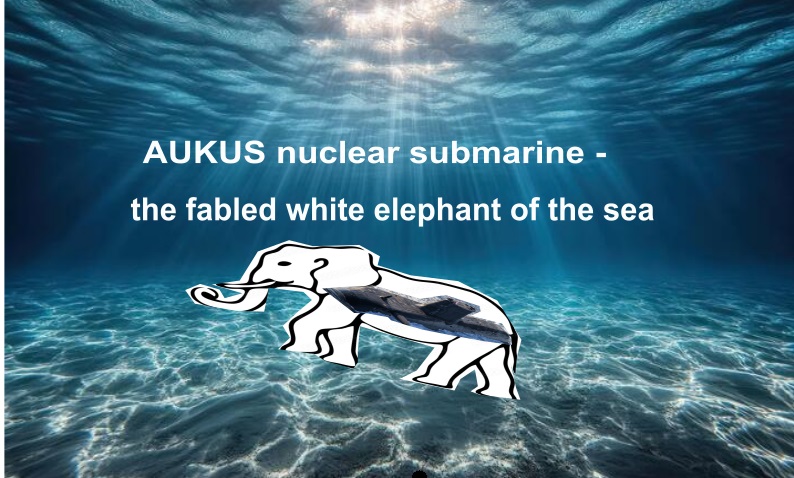
In this op-ed, Henry Sokolski argues Australia should switch its focus from buying Virginia-class submarines and instead put that money towards Pillar 2 technologies.
Breaking Defense Henry Sokolski March 06, 2025
Earlier this month, the Australian government made its first payment of $500 million toward eventually obtaining US nuclear-powered submarines under the 2021 AUKUS agreement. Because the submarine deal is unlikely to overcome budgetary, organizational, and personnel hurdles, that payment should be Australia’s last.
Rather than sacrificing much of its defense program to buy nuclear submarines, Canberra should instead adopt an AUKUS Plan B that would field new defense technologies such as uncrewed systems and hypersonic weapons that would enhance Australia’s security faster, and for far less.
Most experts believe funding AUKUS’s nuclear submarine plans will be challenging. Australia’s defense budget this year is almost $35 billion USD, and is planned to rise to almost $63 billion annually by the end of this decade when Australia would begin buying US nuclear submarines. At more than $3 billion per boat, each Virginia sub will eat up five to ten percent of the Australia defense budget that year, assuming Australia can double its defense spending in five years. Already, a former top officer has warned that the submarine pact will “cannibalize” other priorities and require deferring future surface warships or eliminating some ground units.
Another potential stumbling block is what’s needed to manage a nuclear propulsion program. More than 8,000 people work for the US Naval Nuclear Propulsion program. Today only about 680 people work at the Australian Submarine Agency. If Australia wants a sovereign submarine force that isn’t dependent on Washington’s oversight, it will need thousands of additional skilled civilian workers.
Military personnel is also a challenge. The Royal Australian Navy (RAN) includes about 16,000 sailors today. Each Virginia-class submarine has a crew of about 130 people, and about 400 sailors per ship to account for training, shore duty, and maintenance. With retention already difficult for the Australian Defence Force, the RAN may be hard-pressed to find and keep the thousand-plus highly-qualified personnel it needs to crew the nuclear sub fleet……………………………..
https://breakingdefense.com/2025/03/its-time-to-ditch-virginia-subs-for-aukus-and-go-to-plan-b/
Surface tension: could the promised Aukus nuclear submarines simply never be handed over to Australia?

Guardian, Ben Dohert, 7 Mar 25
The multi-billion dollar deal was heralded as ensuring the security of the Indo-Pacific. But with America an increasingly unreliable ally, doubts are rising above the waves.
Maybe Australia’s boats just never turn up.
To fanfare and flags, the Aukus deal was presented as a sure bet, papering over an uncertainty that such an ambitious deal could ever be delivered.
It was assured, three publics across two oceans were told – signed, sealed and to-be-delivered: Australia would buy from its great ally, the US, its own conventionally armed nuclear-powered attack submarines before it began building its own.
But there is an emerging disquiet on the promise of Aukus pillar one: it may be the promised US-built nuclear-powered submarines simply never arrive under Australian sovereign control.
Instead, those nuclear submarines, stationed in Australia, could bear US flags, carry US weapons, commanded and crewed by American officers and sailors.
Australia, unswerving ally, reduced instead to a forward operating garrison – in the words of the chair of US Congress’s house foreign affairs committee, nothing more than “a central base of operations from which to project power”.
Reliable ally no longer
Officially at least, Aukus remains on course, centrepiece of a storied security alliance.
Pillar one of the Australia-UK-US agreement involves, first, Australia buying between three and five Virginia-Class nuclear-powered submarines from the US – the first of these in 2032.
Then, by the “late 2030s”, according to Australia’s submarine industry strategy, the UK will deliver the first specifically designed and built Aukus submarine. The first Australian-built version will be in the water “in the early 2040s”. Aukus is forecast to cost up to $368bn to the mid-2050s.
But in both Washington and Canberra, there is growing concern over the very first step: America’s capacity to build the boats it has promised Australia, and – even if it had the wherewithal to build the subs – whether it would relinquish them into Australian control.
The gnawing anxiety over Aukus sits within a broader context of a rewritten rulebook for relations between America and its allies. Amid the Sturm und Drang of the first weeks of Trump’s second administration, there is growing concern that the reliable ally is no longer that…………………….
‘The cheque did clear’
On 8 February, Australia paid $US500m ($AUD790m) to the US, the first instalment in a total of $US3bn pledged in order to support America’s shipbuilding industry. Aukus was, Australia’s defence minister Richard Marles said, “a powerful symbol of our two countries working together in the Indo-Pacific”.

“It represents a very significant increase of the American footprint on the Australian continent … it represents an increase in Australian capability, through the acquisition of a nuclear‑powered submarine capability … it also represents an increase in Australian defence spending”.
………….. just three days after Australia’s cheque cleared, the Congressional Research Service quietly issued a paper saying while the nuclear-powered attack submarines (known as SSNs) intended for Australia might be built, the US could decide to never hand them over.
It said the post-pandemic shipbuilding rate in the US was so anaemic that it could not service the needs of the US Navy alone, let alone build submarines for another country’s navy…………………………………………………………………………………………………..
‘Almost inevitable’
Clinton Fernandes, professor of international and political Studies at the University of New South Wales and a former Australian Army intelligence analyst, says the Aukus deal only makes sense when the “real” goal of the agreement is sorted from the “declared”.
“The real rather than declared goal is to demonstrate Australia’s relevance to US global supremacy,” he tells the Guardian.
“The ‘declared goal’ is that we’re going to become a nuclear navy. The ‘real goal’ is we are going to assist the United States and demonstrate our relevance to it as it tries to preserve an American-dominated east Asia.”
Fernandes, author of Sub-Imperial Power, says Australia will join South Korea and Japan as the US’s “sentinel states in order to hold Chinese naval assets at risk in its own semi-enclosed seas”.
“That’s the real goal. We are demonstrating our relevance to American global dominance. The government is understandably uneasy about telling the public this, but in fact, it has been Australia’s goal all along to preserve a great power that is friendly to us in our region.”
Fernandes says the Aukus pillar one agreement “was always an article of faith” based on a premise that the US could produce enough submarines for itself, as well as for Australia.
“And the Congressional Research Service study argues that … they will not have enough capacity to build boats for both themselves and us.”
He argues the rotation of US nuclear-powered submarines through Australian bases – particularly HMAS Stirling in Perth – needs to be understood as unrelated to Aukus and to Australia developing its own nuclear-powered submarine capability.
“Submarine Rotational Force-West (SRF-W) is presented by the spin doctors as an ‘optimal pathway’ for Aukus. In fact, it is the forward operational deployment of the United States Navy, completely independent of Aukus. It has no connection to Aukus.”
The retired rear admiral and past president of the Submarine Institute of Australia, Peter Briggs, argues the US refusing to sell Virginia-class submarines to Australia was “almost inevitable”, because the US’s boat-building program was slipping too far behind.
“It’s a flawed plan, and it’s heading in the wrong direction,” he tells the Guardian.
Before any boat can be sold to Australia, the US commander-in-chief – the president of the day – must certify that America relinquishing a submarine will not diminish the US Navy’s undersea capability.
“The chance of meeting that condition is vanishingly small,” Briggs says.
It now takes the US more than five years to build a single submarine (it was between three and 3.5 years before the pandemic devastated the workforce). By 2031, when the US is set to sell its first submarine to Australia, it could be facing a shortfall of up to 40% of the expected fleet size, Briggs says.
Australia, he argues, will be left with no submarines to cover the retirement from service of the current Collins-class fleet, weakened by an unwise reliance on the US.
The nuclear-powered submarines Australia wants to buy and then build “are both too big, too expensive to own and we can’t afford enough of them to make a difference”.
He argues Australia must be clear-eyed about the systemic challenges facing Aukus and should look elsewhere. He nominates going back to France to contemplate ordering Suffren-class boats – a design currently in production, smaller and requiring fewer crew, “a better fit for Australia’s requirements”……. https://www.theguardian.com/world/2025/mar/07/surface-tension-could-the-promised-aukus-nuclear-submarines-simply-never-be-handed-over-to-australia
Nuclear reactors could become targets of war, defence experts warn

The Australian Security Leaders Climate Group has warned the Coalition’s nuclear plans could leave Australia vulnerable to devastating attacks.
Key Points
- The Australian Security Leaders Climate Group has warned nuclear reactors could become targets of war in Australia.
- Nuclear reactors could be targeted by missile attack and sabotage, the group said.
- The Coalition is planning to build seven small nuclear reactors across five states.
Australian nuclear reactors could become a target of war if the Coalition was to go ahead with plans to build them, a group of former defence leaders warn.
The plan to build seven small nuclear reactors across five states on the sites of coal-fired stations could leave Australia vulnerable to missile warfare and sabotage, the Australian Security Leaders Climate Group says.
The group, including former Australian Defence Force chief Chris Barrie and former director of preparedness and mobilisation at the Department of Defence Cheryl Durrant, is urging the nation not to go down the path of building nuclear power stations.
Modern warfare is increasingly being fought using missiles and unmanned aerial systems, Barrie said.
“Every nuclear power facility is a potential dirty bomb because rupture of containment facilities can cause devastating damage,” he said.
“With the proposed power stations all located within a 100 kilometres of the coast, they are a clear and accessible target.”
Durrant cited the Russia-Ukraine war where both sides have prioritised targeting their opponents’ energy systems
Australia would be no different,” Durrant said.
Nuclear power plants could become a dual target due to their role in energy supply, but also the catastrophic devastation which would occur if facilities were breached.
This means Australia would need to consider introducing expensive and complex missile defence systems and cyber and intelligence resources to defend the plants if war were to break out — which the nation currently lacks.
“Do we prioritise the protection of cities and population centres and military bases, or do we divert vital resources to defending seven nuclear power stations scattered across Australia?” Barrie said.
The group said building nuclear capabilities would derail Australia’s climate targets and exacerbate risks in the region.
1 This Month



Shut down the radiation-damaged Heysham nuclear reactors now
To see nuclear-related stories in greater depth and intensity – go to https://nuclearinformation.wordpress.com

Say No to NASA’s Reckless Nuclear Reactor on the Moon
Say No to NASA’s Reckless Nuclear Reactor on the Moon
-
Archives
- October 2026 (256)
- September 2026 (339)
- August 2026 (330)
- July 2026 (355)
- June 2026 (287)
- May 2026 (306)
- April 2026 (356)
- March 2026 (251)
- February 2026 (267)
- January 2026 (308)
- December 2025 (358)
- November 2025 (359)
-
Categories
- 1
- 1 NUCLEAR ISSUES
- business and costs
- climate change
- culture and arts
- ENERGY
- environment
- health
- history
- indigenous issues
- Legal
- marketing of nuclear
- media
- opposition to nuclear
- PERSONAL STORIES
- politics
- politics international
- Religion and ethics
- safety
- secrets,lies and civil liberties
- spinbuster
- technology
- Uranium
- wastes
- weapons and war
- Women
- 2 WORLD
- ACTION
- AFRICA
- Atrocities
- AUSTRALIA
- Christina's notes
- Christina's themes
- culture and arts
- Events
- Fuk 2022
- Fuk 2023
- Fukushima 2017
- Fukushima 2018
- fukushima 2019
- Fukushima 2020
- Fukushima 2021
- general
- global warming
- Humour (God we need it)
- Nuclear
- RARE EARTHS
- Reference
- resources – print
- Resources -audiovicual
- Weekly Newsletter
- World
- World Nuclear
- YouTube
-
RSS
Entries RSS
Comments RSS

