Do the Right Thing: Put the South African Government’s Nuclear Plans to a Popular Referendum
BY GERARD BOYCE, COUNTER PUNCH 5 Feb 24
Ever since South African Energy Minister Dr Kgosientsho Ramokgopa announced that Cabinet had approved the updated Integrated Resource Plan last December, local media has been awash with articles by nuclear supporters and sundry lobbyists exhorting politicians and government to ‘show true leadership’ and ‘do the right thing’ when it comes to nuclear power.
Invariably, doing so means showing unwavering support for the government’s plans to expand nuclear energy generation capacity by choosing the particular nuclear technology or reactor design favored by the author of the article being read or following the guidelines they helpfully drew up to assist policymakers by advising how they ought to proceed going about doing so, even if this means going against the recommendations of the presidentially-appointed panel of experts who sit on the Presidential Climate Commission or failing to address the numerous criticisms that have been leveled against government’s nuclear plans, prominent South African nuclear scientists among them. Presumably, depending on the responses these articles elicit, individual politicians would then be lauded for the leadership and courage they have shown or berated for their lack thereof.
It is curious, not to mention ironic, to hear such sentiments expressed by pro-nuclear supporters, especially those who have long attempted to portray the decision to ‘go nuclear’ as a self-evident outcome of a purely technical decision-making process that is obviously best left to ‘the experts’ i.e. appointed and unelected technocrats who are supposedly immune to political interference.
It is also somewhat misleading of them to characterize the decision to support the expansion of nuclear power capacity as one requiring ‘courage’ as such given the scant detail government has provided on its nuclear plans, the few general nuclear education and public awareness campaigns on nuclear power it has run within and outside of the communities in which it is proposed that reactors be located in future and the critical information related to its past nuclear dealings and the planned Koeberg life expansion project amongst others it has allegedly deliberately withheld from the public.
All of these combined result in persistent and extremely low public levels of knowledge of nuclear power and related issues, so much so that the general public appears ambivalent about the issue of nuclear power. This assessment seems to be supported by the persistently low turnout that is observed at the perfunctory public hearings which the government seemingly hosts to satisfy administrative requirements surrounding public participation in order to mitigate any potential for conflict to arise in the future rather than to genuinely engage the public’s views on nuclear power.
Subsequently, the organized anti-nuclear political movement nationally is under-resourced and the level of grassroots public support it enjoys is uncertain. Considering the limited organized opposition thereto and the general public’s nuclear indifference, none but the most biased observer would be reluctant to concede that the decision to champion nuclear power is unlikely to demand much by way of boldness or courage from the individual politician. More so since nuclear power, by its nature, accords so conveniently with the motivations of the average individual politician to amass more power and influence for themselves and members of their class and has the power to undermine the public oversight mechanisms and regulatory frameworks set up to monitor them. Yet perhaps the biggest reason why nuclear power is likely to appeal to representatives of SA’s major political parties especially is because it could enable their parties to navigate the political forces that assail them…………………………………………………………………………………………………………………………….
It is apparent from the scenarios described above that political imperatives dictate the adoption of a pro-nuclear position by politicians from all the major political parties in SA irrespective of the political ideologies they espouse or the content or merits of the specific nuclear plan under review. Under these circumstances, exhorting politicians to support nuclear power is akin to urging them to act to protect their party’s narrow political interests. One submits to the reader that this does not seem to be particularly brave or courageous.
In contrast, it would require a tremendous amount of courage for a politician to acknowledge and act on the insight that the distortions introduced by prevailing political considerations render it impossible for them to hold robust internal political debates on the issue of nuclear power, more so considering the increased frequency with which ostensible party comrades have resorted to using deadly methods to eliminate potential rivals. It is, therefore, naïve to rely on the party political system to formulate positions on nuclear power that are truly in the nation’s best interest.
……………………………………………… they could opt to support the right of every citizen to act with the courage and integrity nuclear supporters claim they want politicians to by calling upon the government to submit its nuclear plans to a popular referendum. In a country where citizens have become fed up by years of maladministration and corruption and large sections of the electorate are beginning to lose faith in the democratic system itself, this display of political courage would serve as definitive proof of the leadership credentials of the politician who wanted to ‘do the right thing’ by their compatriots.
Dr Gerard Boyce is an Economist and Senior Lecturer in the School of Built Environment and Development Studies at the University of KwaZulu-Natal (Howard College) in Durban, South Africa. He writes in his personal capacity. m https://www.counterpunch.org/2024/02/05/do-the-right-thing-put-the-south-african-governments-nuclear-plans-to-a-popular-referendum/
An international law expert explains why South Africa’s case at the ICJ is so important

A ruling by the International Court of Justice in favor of South Africa, which has accused Israel of genocide, could mean saving thousands of lives in Gaza. The alternative, however, could be devastating and further embolden Israeli violence.
BY YUMNA PATEL https://mondoweiss.net/2024/01/an-international-law-expert-explains-why-south-africas-case-at-the-icj-is-so-important/?fbclid=IwAR0_La2MT5GTGkKo2X56cAEa15B-SPBIOwKnMKznqzCczU0XVSIz_BlNrBE
South Africa and Israel will be appearing before the International Court of Justice, on Thursday, January 11, where the court will begin hearing arguments on whether Israel is committing the crime of Genocide.
The highly anticipated public hearings, which will last for two days, are based on an 84-page appeal submitted by South Africa in December to the ICJ, the top judicial body of the United Nations. In the appeal, South Africa argues that Israel’s military campaign in Gaza is “genocidal in character” and that through both action and intent to commit genocide, Israel has violated the 1948 Genocide Convention.
Both Israel and South Africa are parties to the convention, which came into being on the heels of World War II and the Holocaust. All signatories of the treaty are obligated not to commit genocide, to ensure that it is prevented, and to seek that the crime be prosecuted.
South Africa’s appeal to the ICJ, however, is not just about charging Israel with the crime of genocide – a lengthy process that could take the court months or years. It’s also seeking a more immediate solution by requesting the court institute provisional measures to immediately halt Israel’s military campaign in Gaza.
Essentially, South Africa wants two things: to stop the mass killing of Palestinians in Gaza now and for Israel to be charged with the crime of genocide in the long term. A condensed breakdown and explanation of the 84-page brief can be found here.
Expectedly, Israel has outright denied any accusations of genocide, lambasting the South African appeal as antisemtic “blood libel”. The U.S. has also rebuked South Africa’s appeal, called it “meritless” and “completely without any basis in fact.”
Nevertheless, Israel is pressing forward, sending a carefully crafted legal team to The Hague in the Netherlands to defend Israel’s position that it is not committing genocide in Gaza.
The much-talked about public proceedings, which will take place over the course of two days on Thursday and Friday, January 11th and 12th, are being welcomed by both Palestinians, as well as a number of countries around the world, who have thus far failed to bring about a ceasefire, primarily due to the U.S. veto of UN resolutions calling for a halt to the violence.
Despite the international buzz and anticipation, many in Palestine and around the world remain skeptical as to how much weight an ICJ ruling against Israel could hold due to a long history of Israeli impunity on the global stage and Israel’s well-documented disregard for international law and human rights norms.
Still, many Palestinian international law experts and human rights groups say the ICJ proceedings are significant and could hold serious consequences not only for Israel and Palestine but for the world.
Among them is Dr. Munir Nuseibah, a Palestinian professor of International law at Al-Quds University and the Director of the Al-Quds Human Rights Clinic. Mondoweiss spoke to Dr. Nuseibah about the significance of this case, why people should pay attention to it, and what implications it holds.
Why does this case matter?
The case filed by South Africa is important for a number of reasons. First, Dr. Nuseibah notes, the fact that it was filed at the ICJ in and of itself is significant, being that the court is the highest judicial body that settles disputes between states.
“This is quite significant because it’s… based on an agreement, or treaty that is binding to both South Africa and Israel,” he said, referring to the 1948 Genocide Convention.
“This is important in the history of the Palestinian cause, since we haven’t had an opportunity to get a binding international decision on any of the important questions that we have been dealing with, including for example, the issue of the Palestinian refugees, the [Israeli] occupation, etc,” Dr. Nuseibah continued.
The last time the ICJ made a decision in relation to Palestine was a 2004 advisory opinion that found Israel’s separation wall, which at that stage was still early on in its construction, violated international law and should be torn down.
However, because that decision was a non-binding advisory opinion, Israel was not obligated to stop construction or take down the wall. Instead, Israel continued constructing the wall, which today spans across hundreds of kilometers, cutting off Palestinians from their land and swallowing up swaths of Palestinian territory.
This case, Dr. Nuseibah says, would be different, as the resulting decision from this week’s proceedings would be binding, and if the court rules in favor of South Africa, it would mean that under international law, Israel would be obligated to end its military campaign in Gaza in the short term, and in the long term, potentially provide material reparations to the victims of its genocide.
The case is also significant as a symbolic measure as well. That, in the face of an ongoing genocide, which has been well documented by Palestinians and international human rights organizations alike, the world must intervene to stop it.
“If there is no serious intervention, and if the United Nations, the world, and what we call the international community is going to continue to be silenced and made inactive, and in a certain way deactivated and demobilized, this horror will continue,” Dr. Nusaibah said, not just in Palestine but around the world.
“To not only be accused of genocide, but to be charged by the court, and to be seen as a country guilty of genocide is very important,” he said. “In my opinion, everything that happens in the International Court of Justice now, is likely to influence thousands of lives in the future.
So whatever these judges will decide will actually be a question of life and death for many, many Palestinians.”
What will South Africa be arguing on Thursday?
The crux of South Africa’s argument is that Israel is committing genocide in Gaza and that it is violating its obligations under the 1948 Convention on the Prevention and Punishment of Genocide, which defines the crime as “acts intended to bring about the destruction of a substantial part of the Palestinian national, racial and ethnic group.”
South Africa’s argument hinges on proving that Israel is not only committing acts of genocide in Gaza but that there is a clear intent on Israel’s part to commit genocide – the latter being a significant focus of the 84-page brief, which listed off an array of quotes from Israeli politicians, officials, and public figures using genocidal language when speaking about Israel’s campaign in Gaza.
“[South Africa’s] first argument will involve the speeches and quotes basically from Israeli officials who have been using genocidal language from the very first day actually, from October 7th,” Dr. Nuseibah said.
“In criminal law it’s not enough to do something, but you have to intend to do something. And one of the signs of intent, are the things you say. So these quotes from Israeli officials will be used to show that Israel has been calling for genocide,” he continued.
And, of course, South Africa will be providing evidence of what it says are clear genocidal acts carried out by Israel in Gaza, such as “bombing civilians, heavily targeting homes, targeting hospitals, targeting cultural centers, targeting universities, schools, etc,” Dr. Nuseibah detailed.
“So all of these targets that the Israeli army has destroyed over the past months, and of course the civilian casualties, the human beings who have been murdered or injured or made disabled, [Israel] using hunger as a weapon, etc. – all of that will be a very important part of the facts South Africa will present,” he said, adding that the denial of fuel and electricity, the siege on 2 million civilians, and the forcible displacement of Palestinians in Gaza is also “an important element of genocide and especially in this case.”
What will Israel’s legal defense look like?
While there are 84 pages to give us an insight into South Africa’s case, it’s not as apparent what exactly Israel’s defense will consist of.
If the past few months have been any indication, however, during which Israel has denied any wrongdoing in Gaza, justified it as self-defense, and has actually accused Hamas of genocide for its October 7th attack – some assumptions can be made as to how Israel will approach it’s defense.
First, Israel’s primary strategy, Dr. Nuseibah says, will be to “deny, deny, deny.”
“Israel will deny everything that South Africa claims,” Dr. Nuseibah said. “It will deny that it has starved people, or that it is trying to starve people. It will deny that it is not allowing humanitarian aid into Gaza, by showing examples where it actually did allow some trucks to enter,” he continued, noting that what little humanitarian aid has been allowed into Gaza has been critically insufficient to address the needs of the more than 2 million people trapped in the strip.
“It [Israel] will talk about any attempts they made in any of their operations to ‘reduce civilian casualties’, whether by warning civilians in certain places,” Dr. Nuseibah said, referring to Israel’s practice of dropping leaflets to notify civilians that their area is going to be attacked, or by providing QR codes and maps of “safe zones” and “combat zones” in Gaza – all practices that have been widely criticized both as insufficient to save civilian lives, and as a PR move by Israel to save face in front of the international community.
At the time of publication, 96 days after Israel began its bombardment on Gaza, more than 23,000 Palestinians have been killed, the vast majority of them civilians.
“So, Israel’s strategy will be to deny everything, because there is nothing else they can do or say,” Dr. Nuseibah said. “It is a longtime strategy and practice of Israel that we are used to. Israel always denies its crimes. Even until today, Israel denies the Nakba, that is the official position of Israel, to deny it.”
While Israel has focused much of its propaganda campaign on accusing Hamas, and supporters of the Palestinian cause in general, of carrying out or advocating for the genocide of Israelis and Jewish people, Dr. Nuseibah said he doubts that will be a feature of Israel’s arguments at the ICJ.
“I doubt that they will do this or bring this up, because if they do, then they would have to present evidence. They would have to allow an open investigation into what happened on October 7th,” Dr. Nuseibah said, noting that Israel has historically prevented access to independent investigators seeking to probe potential crimes committed in the occupied Palestinian territory.
How will this impact Palestinian lives right now?
While the deliberations on whether Israel is guilty of genocide in Gaza or not could take years, South Africa’s case is expected to yield a much more immediate and time-sensitive result.
As part of its appeal to the court, South Africa is seeking an emergency interim decision by the court, or “provisional measures,” to order the Israeli military to cease its campaign in Gaza immediately, stop the displacement of Palestinians, and allow for the entry of adequate humanitarian aid into Gaza. The court could make that decision in as little as a few days or weeks.
These provisional measures, Dr. Nuseibah says, are some of the most critical elements to the case and have the biggest potential to change the course of the unfolding genocide in Gaza.
“This is very time sensitive. Every day that we lose, we are losing more lives. We are losing more casualties. There are more homes that are demolished. There are more days that children are not going to school,” he continued.”There is a lot of loss every single day of civilian life, and there is no human being in Gaza who is not heavily influenced by what is happening.”
“All of the provisional requests that South Africa has made are there to save lives immediately. And I do expect that the court will take these measures. History has shown that the ICJ has given these provisional measures in similar situations, even with less casualties and less risk,” Dr. Nuseibah said.
“So I do expect that the court will decide provisional measures, which would mean a ceasefire, which is the most important thing right now, as well as stopping the displacement, allowing for the entry of aid, and stopping the continuous demolition of Gaza.”
Israel has ignored international law before, what will be different this time?
Continue reading800+ Global Groups Back South Africa’s Genocide Case as ICJ Prepares for Hearing
byEDITORJanuary 9, 2024
“The very least states can do is to submit Declarations of Intervention as a small part of fulfilling their obligations under Article 1 of the Genocide Convention,” said a peace coalition.
SCHEERPOST, By Julia Conley / Common Dreams January 9, 2024
An international peace coalition announced Monday that more than 800 civil society organizations from across the globe have endorsed its sign-on letter distributed to world governments, urging leaders to join South Africa in formally accusing Israel of genocidal violence at the United Nations’ highest judicial body.
When Common Dreams first reported on the sign-on letter last Wednesday, just over 100 groups had joined the call.
The surge of support comes as the International Court of Justice (ICJ), also known as the World Court, is scheduled to hold a hearing on South Africa’s case on Thursday and Friday.
The International Coalition to Stop Genocide in Palestine (ICSGP)—which includes the National Lawyers Guild, the Black Alliance for Peace, World Beyond War, and Progressive International, among other groups—is calling on governments to “reinforce [South Africa’s] strongly worded and well-argued complaint by immediately filing a Declaration of Intervention” at the court.
The declarations could increase the likelihood that the ICJ sides with South Africa in the case, says the coalition.
In recent days, Turkey, Malaysia, and the Organization of Islamic Cooperation, which represents 57 member-states, have all endorsed South Africa’s 84-page claim, which details genocidal rhetoric in public statements made by high-level Israeli officials as well as the Israeli military’s actions in Gaza.
“The South African filing before the ICJ marks a critical juncture which tests the global will to salvage the laws and systems which were designed to safeguard not merely human rights, but to preserve humanity itself.”……………………………………………………………………………………………… more https://scheerpost.com/2024/01/09/800-global-groups-back-south-africas-genocide-case-as-icj-prepares-for-hearing/
Israel Is Terrified the World Court Will Decide It’s Committing Genocide
Public hearings on South Africa’s request for provisional measures will take place on January 11 and 12 at the ICJ which is located in the Peace Palace in The Hague, Netherlands. The hearings will be livestreamed from 4:00-6:00 a.m. Eastern/1:00-3:00 a.m. Pacific on the Court’s website and on UN Web TV. The court could order provisional measures within a week after the hearings.
Other States Parties to the Genocide Convention Can Join South Africa’s Case
South Africa, a party to the Genocide Convention, charged Israel with genocide in the International Court of Justice.
By Marjorie Cohn / Truthout, January 8, 2024, https://scheerpost.com/2024/01/08/israel-is-terrified-the-world-court-will-decide-its-committing-genocide/
For nearly three months, Israel has enjoyed virtual impunity for its atrocious crimes against the Palestinian people. That changed on December 29 when South Africa, a state party to the Genocide Convention, filed an 84-page application in the International Court of Justice (ICJ, or World Court) alleging that Israel is committing genocide in Gaza.
South Africa’s well-documented application alleges that “acts and omissions by Israel … are genocidal in character, as they are committed with the requisite specific intent … to destroy Palestinians in Gaza as a part of the broader Palestinian national, racial and ethnical group” and that “the conduct of Israel — through its State organs, State agents, and other persons and entities acting on its instructions or under its direction, control or influence — in relation to Palestinians in Gaza, is in violation of its obligations under the Genocide Convention.”
Israel is mounting a full-court press to prevent an ICJ finding that it’s committing genocide in Gaza. On January 4, the Israeli Foreign Ministry instructed its embassies to pressure politicians and diplomats in their host countries to make statements opposing South Africa’s case at the ICJ.
In its application, South Africa cited eight allegations to support its contention that Israel is perpetrating genocide in Gaza. They include:
(1) Killing Palestinians in Gaza, including a large proportion of women and children (approximately 70 percent) of the more than 21,110 fatalities and some appear to have been subjected to summary execution;
(2) Causing serious mental and bodily harm to Palestinians in Gaza, including maiming, psychological trauma, and inhuman and degrading treatment;
(3) Causing the forced evacuation and displacement of about 85 percent of Palestinians in Gaza — including children, the elderly and infirm, and the sick and wounded. Israel is also causing the massive destruction of Palestinian homes, villages, towns, refugee camps and entire areas, which precludes the return of a significant proportion of the Palestinian people to their homes;
(4) Causing widespread hunger, starvation and dehydration to the besieged Palestinians in Gaza by impeding sufficient humanitarian assistance, cutting off sufficient food, water, fuel and electricity, and destroying bakeries, mills, agricultural lands and other means of production and sustenance;
(5) Failing to provide and restricting the provision of adequate clothing, shelter, hygiene and sanitation to Palestinians in Gaza, including 1.9 million internally displaced persons. This has compelled them to live in dangerous situations of squalor, in conjunction with routine targeting and destruction of places of shelter and killing and wounding of persons who are sheltering, including women, children, the elderly and the disabled;
(6) Failing to provide for or ensure the provision of medical care to Palestinians in Gaza, including those medical needs created by other genocidal acts that are causing serious bodily harm. This is occurring by direct attacks on Palestinian hospitals, ambulances and other healthcare facilities, the killing of Palestinian doctors, medics and nurses (including the most qualified medics in Gaza) and the destruction and disabling of Gaza’s medical system;
(7) Destroying Palestinian life in Gaza, by destroying its infrastructure, schools, universities, courts, public buildings, public records, libraries, stores, churches, mosques, roads, utilities and other facilities necessary to sustain the lives of Palestinians as a group. Israel is killing whole families, erasing entire oral histories and killing prominent and distinguished members of society;
(8) Imposing measures intended to prevent Palestinian births in Gaza, including through reproductive violence inflicted on Palestinian women, newborns, infants and children.
South Africa cited myriad statements by Israeli officials that constitute direct evidence of an intent to commit genocide:
“Gaza won’t return to what it was before. We will eliminate everything,” Israel’s Defense Minister Yoav Gallant said. “If it doesn’t take one day, it will take a week. It will take weeks or even months, we will reach all places.”
Avi Dichter, Israel’s Minister of Agriculture, declared, “We are now actually rolling out the Gaza Nakba,” a reference to the 1948 ethnic cleansing of Palestinians to create the state of Israel.
“Now we all have one common goal — erasing the Gaza Strip from the face of the earth,” Nissim Vaturi, the Deputy Speaker of the Knesset and Member of the Foreign Affairs and Security Committee proclaimed.
Israel’s Strategy to Defeat South Africa’s Case at the ICJ
Continue reading4 east African countries are going for nuclear power – why this is a bad idea
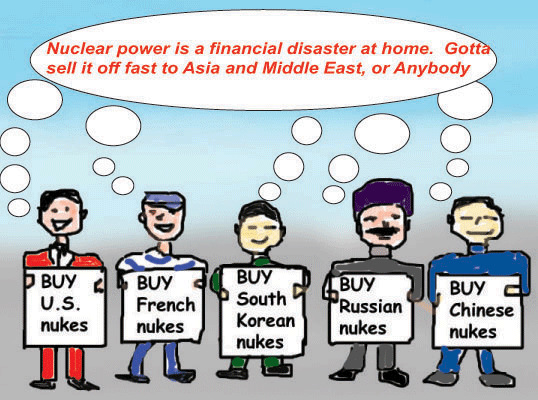
The Conversation, Hartmut Winkler, Professor of Physics, University of Johannesburg, 8 Dec 23
The east Africa region has the fastest growing population in Africa. Between 2013 and 2017, its growth rate was twice the African average. The region is also experiencing strong economic growth. It’s sub-Saharan share of GDP has risen from 14% in 2000 to 21% in 2022.
Such growth translates to higher electricity demand. Among a variety of new energy proposals is building nuclear power plants. Earlier this year, Uganda announced plans to construct a 2,000MW nuclear plant 150km north of Kampala, with the first 1,000MW operational by 2031. Rwanda also recently signed up to a deal to build a nuclear reactor, while Kenya and Tanzania have made more or less similar announcements.
It is in many ways tempting for these countries to pursue a nuclear power plant build. Even a single large-scale nuclear reactor would typically double national electricity generation capacity. In addition, it is technology that is – in theory at least – able to provide a constant electricity output independent of weather, season or time of day.
Another factor that motivates many potential entrants to nuclear power is that it has historically been perceived in many quarters as confirmation of high technological status and proof of national respectability. This is despite many of the world’s technologically and economically strongest nations now having shut down their nuclear plants. Germany and Italy are examples.
But there are several risks of choosing the nuclear path. The biggest in my view is financial. The costs of constructing, maintaining and later decommissioning a nuclear plant make this one of the most expensive forms of electricity generation. The actual cost is invariably a lot higher than originally announced.
Along with that, the construction period is usually many years longer than declared at the start.
In addition, safety issues can never be discounted when dealing with nuclear energy, as the 2011 Fukushima disaster in Japan amply illustrated………………………………………………………………………………..
East Africa’s likely future energy mix
In view of the financial risk and high cost, and as global experience has shown that it typically requires ten or more years to set up a new nuclear plant from project approval to electricity production, east African countries should pursue alternatives for electricity production.
New medium-scale solar, wind and geothermal power-generating facilities would likely dominate the expansion of east African electricity generation capacity in the coming decade as they are cheap in comparison. Typical construction timescales are also much lower than nuclear or hydro megaprojects.
………………………………………………………………… Given all these factors, investing in a large and expensive nuclear build with uncertain completion timeframes that may end up being way more expensive than projected is ultimately simply not worth it.
https://theconversation.com/4-east-african-countries-are-going-for-nuclear-power-why-this-is-a-bad-idea-218046
Risk of total shutdown of Eskom’s Koeberg nuclear power station continues to increase
The risk of both nuclear reactors at Eskom’s Koeberg nuclear power station in Cape Town being shut down simultaneously for life extension continues to increase…………………………………… (Subscribers only) https://www.dailymaverick.co.za/article/2023-10-20-koeberg-nuclear-power-station-rising-risk-of-total-shutdown/ #nuclear #antinuclear #nuclearfree #NoNukes
Film examines France’s nuclear history in Algeria
Documentary gives voice to villagers who lived through explosions and still suffer from deadly effects
Melissa Gronlund, Sep 29, 2023 https://www.thenationalnews.com/arts-culture/2023/09/29/france-algeria-atom-bomb/
etween 1960 and 1966, the French government detonated 13 atom bombs in the Algerian Sahara. The tests signalled France’s accession to the nuclear club and were hailed in Paris as a victory.
“Hoorah for France,” wrote President Charles de Gaulle the morning after the first blast, in a message to his army minister.
Little is known about the bomb’s effect in Algeria itself. According to a witness, 60 people died in 1962 after an explosion went wrong.
Inhabitants of the nearby village of Mertoutek say they were evacuated for 24hours and then told it was safe to return. More than 60 years later, they still say the land and water beneath it is contaminated. When they perform ablutions before prayers, for example, the water hurts their skin.
The international incident, which has been gaining exposure over the past few years, is the subject of a new short film And still, it remains by British filmmakers Arwa Aburawa and Turab Shah.
The husband and wife team had been thinking about how to represent the end of the world and the nuclear tests presented them with the example of a community who had – when they heard the detonations – believed the world was ending.
But when they began investigating the event, they realised there was only documentation of the French side of the story.
“[There was] nothing about the villagers themselves and absolutely nothing in terms of what happened next,” says Aburawa, who grew up in Manchester, UK, in a Palestinian family. “We were interested in the lack of perspective of people on the ground. How did they experience this moment, and then how did they experience life after that?”
Commissioned by the Liverpool Arab Arts Festival to look into how the climate crisis is affecting the Arab world, Aburawa and Shah spent two years researching the tests. In 2022, they travelled to the small village of Mertoutek.
Located in the foothills of the Hoggar Mountains, Mertoutek is profoundly isolated. Most of the villagers have never been to the nearest town, which is four hours away – itself a two-hour plane ride from Algiers. Most trace their ancestry to tribes from Mali and Niger who migrated to the village 400 years ago.
Aburawa and Shah were prepared to be ignored, but they were instead immediately welcomed. The villagers were keen to tell their side of history, the pair say, and were as interested in Aburawa and Shah as the filmmakers were in them and their stories.
Aburawa, who could communicate in Arabic with some of the elders of the village, was invited into gatherings with the women, who wanted to know how she celebrated her traditions as a Palestinian. Every morning, the young girls of the village would come by their house to see if she wanted to come herd the goats, she says, or to teach her their games.
The villagers ended up changing the shape of the film. Aburawa and Shah had initially been taken by the very poetic metaphor that followed the detonations – that the dust cloud of radioactive material travelled along the northern winds towards France, in effect returning to pollute the country that had perpetrated the tests.
“But when we visited Mertoutek, we learnt they have a long, long history. They told us how their families had been in the village for hundreds of years, and people before that for thousands of years,” says Aburawa.
“Suddenly, our concept of time and how to place a community’s experience in the moment massively shifted. We wanted to acknowledge that people have long histories and the land has an even longer history.”
And still, it remains treats the landscape as a main character. The pair filmed with a wide anamorphic lens in order to bring in more of the surroundings, and they pay attention to the sensory feel of life outdoors – fingers dig holes in the soft sand to create a board game; the wind whips painfully through spindly leaves.
Longer sequences give the sense of the world turning. In one stunning scene, the sky turns from bright, almost lurid orange to a faded pink, as the sun rises and the craggy mountains transform from outlines to legible sandstone edifices.
“What’s happening right now in the climate crisis and what happened in colonialism are so deeply connected,” says Aburawa. “They are both colonial mindsets of extraction and toxifying without thinking of the consequences.
“The situation in Algeria is saying, ‘You can’t escape these things. They don’t just disappear. A bomb exploded in the 60s, but it hasn’t gone away. It still remains with us.’ And that’s what inspired the title of the film.”
Today, the townspeople of Mertoutek still live in danger. At one point, one of the villagers recounts in the film that her father and some other men from the village went to the test site to take scrap metal to use for their gardens. The men all got sick. The recounter’s father got brain cancer and died.
“We asked them, did you ever think of leaving?” says Shah. “And they said, ‘But where would we go?’ There wasn’t anywhere for them to leave to. It was never an option.”
And still, it remains is showing at Lux in Waterlow Park, London, until October 14. More information is available at lux.org.uk
In Kenya, police break up an environmental meeting that was explaining nuclear hazards
by BRIAN OTIENO Correspondent, Coast Region 24 September 23 https://www.the-star.co.ke/counties/coast/2023-09-24-police-break-up-environmental-training-on-nuclear-reactor/
Police break up environmental training on nuclear reactor
The training was to enlighten the residents on the effects of a nuclear reactor.
In Summary
- Uyombo is a village next to the beach in Matsangoni, Kilifi county and has been earmarked to host Kenya’s first nuclear reactor.
- The residents and environmental activists however remain unconvinced and still maintain there is greater risk to their health than the benefits they will get from the reactor.
Environmental activists in Kilifi county have accused the government of trying to force a dangerous project on Uyombo residents.
Uyombo is a village next to the beach in Matsangoni, Kilifi county and has been earmarked to host Kenya’s first nuclear reactor.
On Thursday, the Centre for Justice, Governance and Environment Action organized the training to enlighten the residents on the effects of a nuclear reactor on the environment and how to best protect themselves from possible harm.
However, police disrupted the training before it even started and dispersed the residents who had gathered there.
They said the meeting was illegal.
On Sunday, CJGEA executive director Phyllis Omido termed the police action “extrajudicial, punitive and abuse of power by the state officers”.
“We tried to reason with them but they refused. They kept whisking our chairs away and were determined to prevent the meeting from happening,” Omido told the Star.
She said the security and administrative agencies have been holding meetings over the same and she has been attending them.
“Why is it that when we call the meeting, it suddenly becomes illegal and suddenly there are security risks?” she posed on the phone Sunday.
However, Matsangoni police boss Kenneth Maina told the Star the activists were inciting the locals against the project.
“You know the other day we had a meeting with the PS there and it was successful. Nobody is denied the right of picketing, demonstrating and the like but these people did not get a permit or notify the police,” Maina told the Star on the phone.
He said police never deny anyone any right to do anything, but procedures must be followed.
“There was no confrontation. When the OCS arrived at the scene and asked them to disperse, they did,” Maina said.
CJGEA, Ujamaa Centre, Muslims for Human Rights and Turtle Watch are among the environmental and human rights groups opposed to the setting up of the nuclear reactor there.
There have been several meetings between Nuclear Power and Energy Agency (Nupea) officials, the residents and the local administration as part of discussions over the intended establishment of the plant.
The plant is set to be established in 2034 if all goes to plan which includes putting in place all the safety measures, according to Nupea.
The residents and environmental activists however remain unconvinced and still maintain there is greater risk to their health than the benefits they will get from the reactor.
Omido said they were shocked to learn that the area administration had quickly planned another baraza on the same day as their training and asked all residents to attend.
USA can’t get investors for Small Nuclear Reactors: no problem – flog them off to Ghana!
U.S. Announces New Support for Ghana’s Civil Nuclear Energy Program under the FIRST Capacity Building Program
US Embassy in Ghana 16 Sept 23

Accra, Ghana – U.S. Principal Deputy Assistant Secretary of State for International Security and Nonproliferation Ann Ganzer joined Ghanaian counterparts today to announce further U.S. support for establishing Ghana as a Small Modular Nuclear Reactor (SMR) Regional Training Hub and center of excellence for the sub-Saharan African region……………………………………………………………………………………….
Germany advises against nuclear power in Uganda
The Independent September 13, 2023
Kampala, Uganda | THE INDEPENDENT | The Ambassador of the Federal Republic of Germany, Matthias Schauer, has advised against plans by Uganda to invest in nuclear power plants.
Ambassador Schauer joins a number of local and international experts who have advised Uganda against plans to put up 2000-megawatt nuclear.
Schauer, whose country continues to support Uganda’s clean energy projects and policies said nuclear power generation is not only costly but environmentally sensitive.
He was speaking at the launch of the Energy Policy for Uganda 2023 at the Sheraton Hotel in Kampala.
He said the plans to put nuclear power plants seem not to fit in the goals of the new policy.
According to the ambassador, Uganda is envied by industrial nations including Germany for its abundant hydropower and huge potential for solar power.
Germany stopped producing any electricity from its nuclear power plant in April this year.
He said Germany shut down its nuclear power plants for fear of disasters like the Chornobyl disaster in 1986 and the 2011 Fukushima Daiichi nuclear power plant disaster.
The Energy Ministry Permanent Secretary Irene Bateebe last year indicated that Uganda needs nine billion dollars to put up a nuclear power plant.
But the Ambassador says putting up a nuclear power plant costs between $15-20 billion.
The new policy which is replacing the one developed in 2002 identifies the development of nuclear as part of the plans for Uganda’s energy mix.
The policy among other strategies suggests Public-private partnership investments, including decommissioning, spent fuel, and radioactive waste management, in nuclear power development.
The government has in the past suggested a phased approach towards putting up the first reactors for the 2000-megawatt nuclear power plant by the end of 2031……………………………….
https://www.independent.co.ug/germany-advises-against-nuclear-power-in-uganda/
—
Does Europe need Niger’s uranium?
Will the lights go out in Europe if Niger were to prevent France from mining more of its uranium? DW asked experts in Niger and Europe about the energy supply chain in the wake of the coup. Niger’s greatest treasure lies underground: Uranium is the most
important commodity in the Sahel state. But coup plotters have been in
charge for just over a month, fuelling fears that the uranium supply to
global markets is in jeopardy. France, the former colonial power in Niger,
is in a particularly tight spot. Around two-thirds of its electricity comes
from nuclear power plants powered by uranium sourced in Niger. It also
exports electricity to other countries in Europe that have no nuclear
plants of their own.
Deutsche Welle 4th Sept 2023
https://www.dw.com/en/does-europe-need-nigers-uranium/a-66711717
Niger is Far From a Typical Coup

Rather than send troops in response to the coup, France and the U.S. seem to favor a “Rwanda” type solution applied in Mozambique earlier this year, writes Vijay Prashad. Only this time ECOWAS would apply force.
SCHEERPOST, By Vijay Prashad / Peoples Dispatch 20 Aug 23
In July 26, 2023, Niger’s presidential guard moved against the sitting president—Mohamed Bazoum—and conducted a coup d’état. A brief contest among the various armed forces in the country ended with all the branches agreeing to the removal of Bazoum and the creation of a military junta led by Presidential Guard Commander General Abdourahamane “Omar” Tchiani. This is the fourth country in the Sahel region of Africa to have experienced a coup—the other three being Burkina Faso, Guinea, and Mali
The new government announced that it would stop allowing France to leech Niger’s uranium (one in three lightbulbs in France is powered by the uranium from the field in Arlit, northern Niger). Tchiani’s government revoked all military cooperation with France, which means that the 1,500 French troops will need to start packing their bags (as they did in both Burkina Faso and Mali).
Meanwhile, there has been no public statement about Airbase 201, the US facility in Agadez, a thousand kilometers from the country’s capital of Niamey. This is the largest drone base in the world and key to US operations across the Sahel. US troops have been told to remain on the base for now and drone flights have been suspended. The coup is certainly against the French presence in Niger, but this anti-French sentiment has not enveloped the US military footprint in the country.
Hours after the coup was stabilized, the main Western states—especially France and the United States—condemned the coup and asked for the reinstatement of Bazoum, who was immediately detained by the new government. But neither France nor the United States appeared to want to lead the response to the coup. Earlier this year, the French and US governments worried about an insurgency in northern Mozambique that impacted the assets of the Total-Exxon natural gas field off the coastline of Cabo Delgado. Rather than send in French and US troops, which would have polarized the population and increased anti-Western sentiment, the French and the United States made a deal for Rwanda to send its troops into Mozambique. Rwandan troops entered the northern province of Mozambique and shut down the insurgency. Both Western powers seem to favor a “Rwanda” type solution to the coup in Niger, but rather than have Rwanda enter Niger the hope was for ECOWAS—the Economic Community of West African States—to send in its force to restore Bazoum.
A day after the coup, ECOWAS condemned the coup. ECOWAS encompasses fifteen West African states, which in the past few years has suspended Burkina Faso and Mali from their ranks because of the coups in that country; Niger was also suspended from ECOWAS a few days after the coup. Formed in 1975 as an economic bloc, the grouping decided—despite no mandate in its original mission—to send in peacekeeping forces in 1990 into the heart of the Liberian Civil War. Since then, ECOWAS has sent its peacekeeping troops to several countries in the region, including Sierra Leone and Gambia. Not long after the coup in Niger, ECOWAS placed an embargo on the country that included suspending its right to basic commercial transactions with its neighbors, freezing Niger’s central bank assets that are held in regional banks, and stopping foreign aid (which comprises forty percent of Niger’s budget).
The most striking statement was that ECOWAS would take “all measures necessary to restore constitutional order.” An August 6 deadline given by ECOWAS expired because the bloc could not agree to send troops across the border. ECOWAS asked for a “standby force” to be assembled and ready to invade Niger. Then, ECOWAS said it would meet on August 12 in Accra, Ghana, to go over its options. That meeting was canceled for “technical reasons.” Mass demonstrations in key ECOWAS countries—such as Nigeria and Senegal—against an ECOWAS military invasion of Niger have confounded their own politicians to support an intervention. It would be naïve to suggest that no intervention is possible. Events are moving very fast, and there is no reason to suspect that ECOWAS will not intervene before August ends.
Coups in the Sahel
When ECOWAS suggested the possibility of an intervention into Niger, the military governments in Burkina Faso and Mali said that this would be a “declaration of war” not only against Niger but also against their countries…………………………………………………………………………….. https://scheerpost.com/2023/08/20/niger-is-far-from-a-typical-coup/
US/France Threaten Intervention in Resource-Rich Niger: Fears of War in West Africa
SCHEERPOST, August 8, 2023, By Ben Norton / Geopolitical Economy Report
The US and France have threatened foreign intervention to re-install a pro-Western regime in Niger.
The US and France have threatened intervention to re-install a pro-Western regime in Niger, which produces uranium needed for nuclear energy, has untapped oil reserves, and hosts strategic US drone bases and French troops. This follows coups led by nationalist, anti-colonial military officers in West Africa.
Niger is a major producer of gold and uranium, the latter of which is needed for European nuclear energy. The country has significant oil reserves to which foreign corporations have wanted access. It also hosts large US drone bases.
These Western threats follow coups led by nationalist, anti-colonial military officers in neighboring Burkina Faso and Mali, whose governments have warned that intervention would be considered an act of war, and could thus set off a regional conflict.
West Africa is rich in natural resources. It is also very strategic for the United States and France.
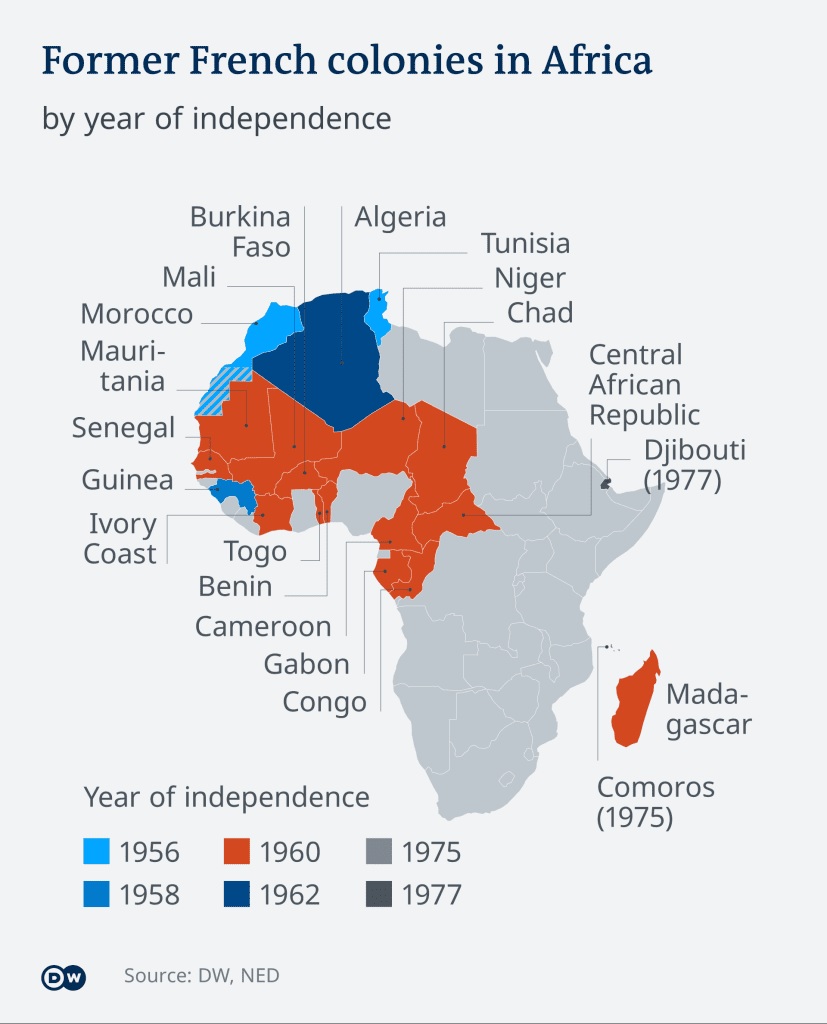
Almost all of West Africa was colonized by France, which committed brutal atrocities in the region.
Still today, France maintains neocolonial policies, effectively controlling West African economies by forcing them to use the CFA franc as their national currency.
Senegalese development economist Ndongo Samba Sylla described the CFA franc as “a colonial currency, born of France’s need to foster economic integration among the colonies under its administration, and thus control their resources, economic structures and political systems”.
Paris dictates the monetary policies and even holds much of the foreign exchange reserves of numerous West African nations, including Niger, Burkina Faso, and Mali.
The CFA franc is a “a barrier to industrialisation and structural transformation” in these countries, explained Sylla, who characterized it as a “neocolonial device that continues to destroy any prospect of economic development in user nations”.
The United States has one of its largest and most important drone bases in Niger: the Air Base 201, which cost $110 million to build, and an additional $20-30 million per year to maintain – in one of the poorest countries on Earth.
Niger is geostrategically important for the Pentagon’s Africa strategy. It is located in the middle of the Sahel, a region with a lot of US and French military activity, where thousands of troops are stationed on a regular basis.
Washington uses its drone bases in Niger, in the heart of the Sahel, to project military dominance in North and West Africa, in coordination with the forces that US Africa Command, or AFRICOM, has deployed across the continent.
If Washington loses its ally in Niger, the new nationalist military government may try to close the foreign military bases and kick out the roughly 1000 US soldiers in the country.
Niger’s historically subordinate relationship with the Western powers has not brought the Nigerien people any prosperity.
The country is a major producer of gold, but more than 40% of Nigeriens live in extreme poverty.
Niger is also one of the world’s largest producers of uranium. This radioactive material is crucial for nuclear energy in Europe, especially in France, where roughly one-third of electricity comes from nuclear power.
Less known is that Niger also has sizeable oil reserves………………………………………………………………………………………………………………………………………….
Soon after the coup in Niger, there were similar reports that the nationalist military government decided to block exports of uranium and gold to the West.
The prospect of a foreign military intervention in Niger and potentially other West African nations is truly on the table. It is by no means an empty threat…………………………………………………………………………………………………..
Anti-colonial nationalists rise to power in West Africa
Some of the nationalist military leaders who have taken power in West Africa are invoking the historical legacy of anti-colonial movements………………………………………………………………………………………………….
Threats of intervention in West Africa
The leaders of the new government in Niger publicly warned that France is plotting military intervention.
Paris is looking “for ways and means to intervene militarily in Niger”, the authorities said, stating that French officials met with the chief of staff of Niger’s national guard “to obtain the necessary political and military authorisation”, The Guardian reported.
The British newspaper described Niger’s toppled president, Bazoum, as “an ally of western powers”.
Along with Paris, the US State Department is actively coordinating with Bazoum and plotting to put its ally back in power.
To give supposed “multilateral” cover to their plans for intervention, the US and France have been working closely with the Economic Community of West African States (ECOWAS).
Reuters reported that ECOWAS and “West African defence chiefs have drawn up a plan for military action if Niger’s coup is not overturned”.
The UK-based news outlet emphasized, “Given its uranium and oil riches and pivotal role in the war with Islamist rebels in the Sahel region, Niger has strategic significance for the United States, China, Europe and Russia”.
ECOWAS imposed sanctions on Niger, and the country’s southern neighbor Nigeria has begun establishing a de facto blockade……………………………………………………………………………………………………………………………………….
Niger is a leading producer of uranium, needed for European nuclear energy
One of the principal economic interests that Western powers have in Niger is its uranium.
The anti-poverty organization Oxfam published a report in 2013 detailing how France was making a killing profiting off of the uranium in Niger, which is one of the poorest countries in the world.
The people of Niger, who are known as Nigeriens (not to be confused with Nigerians from Nigeria), have seen almost no benefits from this uranium extraction.
Oxfam cited a Nigerien activist who noted, “In France, one out of every three light bulbs is lit thanks to Nigerien uranium. In Niger, nearly 90% of the population has no access to electricity. This situation cannot continue”.
“It is incomprehensible that Niger, the world’s fourth-largest uranium producer and a strategic supplier for Areva and France, is not taking advantage of the revenue from this extraction and remains one of the poorest countries on the planet”, an Oxfam researcher added.
……………………………………………………………………………………. Since the coup in Niger, both France and EU leadership have insisted they will not be affected, stating that they have enough uranium in their reserves to last a few years.
But if the nationalist government remains in power in Niger and abides by its alleged pledge to cut off uranium exports, Europe could face economic consequences.
This also comes at a complicated moment for Europe, which has pledged to boycott Russian oil exports and reduce imports of Russian gas………………………………………………………………………………………………..
Niger hosts strategic US military bases
In addition to foreign economic designs on West Africa, the US military has a massive footprint on the region – particularly in Niger, where it operates multiple bases.
A 2019 report in PBS noted an increasing US military presence in Africa, revealing that the Pentagon had nearly 800 personnel stationed in Niger. (That figure later rose to roughly 1000.)………………………………………………………………..
General Thomas Waldhauser, the commander of US military forces in Africa, described Niger’s pro-Western government as “a good partner in a very, very bad neighborhood”.
PBS indicated that the US military was creating a base in Agadez, Niger, which “will be the largest installation Air Force personnel have ever built”.
“The U.S. has been operating drone missions out of another base in Niger’s capital since 2013”, the media outlet wrote, adding, “The CIA is also believed to be using another drone base in Northeastern Niger”.
Investigative journalist Nick Turse, reporting in 2023, described this US facility in Niger, Air Base 201, as “the linchpin of the U.S. military’s archipelago of bases in North and West Africa and a key part of America’s wide-ranging intelligence, surveillance, and security efforts in the region”……………………………
What is striking is the neocolonial symbolism of the United States maintaining these high-tech military facilities worth hundreds of millions of dollars in Niger, one of the poorest countries on Earth, where the majority of the population doesn’t even have access to electricity.
Before the July 2023 coup, Washington saw the Nigerien government as a key ally in its attempt to isolate China and Russia.
Antony Blinken took a historic trip to Niger in March, in the first-ever visit by a US secretary of state………………………………………………………………………………………………………………… Washington sees the continent as highly strategic in its new cold war against China and Russia.
…………………………………………………………………………………………………………………..The nationalist governments in Niger, Burkina Faso, and Mali are very unstable, and the threat of Western-sponsored military intervention could destabilize the countries, fueling more coups, and potentially setting off a regional war.
The transparent goal of the United States and France is to re-impose political control over the region, to exploit its plentiful natural resources and geostrategic location…………. more https://scheerpost.com/2023/08/08/us-france-threaten-intervention-in-resource-rich-niger-fears-of-war-in-west-africa/
Uranium profits in Niger. France is grabbing it all
Meillure Ecole du Senagal 24 April 23
Of the 5504 billion CFA francs (US$ 5504 millions) in annual uranium revenues, Niger earns only 86 billion CFA francs and France quietly takes the 5418 billion CFA francs.
Niger mines 43,000 tonnes a year, selling for 43 million CFA francs a tonne (US$ 64 000) at 43,000 CFA francs a kilo (US$ 64). Niger’s uranium is listed on the stock market, more specifically on the Chicago exchange. A kilo of uranium dioxide sells for 128 million CFA francs(US$ 128 000), not forgetting that on the international market the cost of materials fluctuates.
On the basis of current figures (128 million CFA francs (US$128 000 X 43,000 tonnes = 5504 billion CFA francs (US$ 5504 millions), we realize that out of the 5504 billion CFA francs (US$ 5 504 millions), Niger will only be entitled to 86 billion CFA francs (US$ 86 millions) i.e. a shortfall of 5418 billion CFA francs (US$ 5418 millins) for the country of Niger.
Niger’s 20 million tonnes of radioactive waste
Uranium tailings in Niger are blowing in the wind and poisoning the water
By Linda Pentz Gunter
Note: In late July, a military coup ousted Niger’s president, Mohamed Bazoum. Since then, those who have declared themselves in charge have announced a halt to uranium exports to France. France relies on Niger for around 17% of the uranium that fuels its troubled commercial reactor fleet (with Kazakhstan and Uzbekistan the main suppliers). Since Russia’s invasion of Ukraine, European countries have been wrestling with their uncomfortable dependence on Russian-sourced uranium supplies. The Russian mercenary group, Wagner, already has a strong presence in Africa, and one that is now growing.
The grey mountain looms, mirage-like, on the horizon of the uranium mining town of Arlit in Niger. (Picture below is of Kyrgyzstan’s mountain of uranium tailings, not Niger’s – but the same type)

This lethal legacy has been confirmed by the independent French radiological research laboratory — Commission de Recherche et d’Information Indépendantes sur la Radioactivité — known in international circles simply as CRIIRAD. The lab, and its director, Bruno Chareyron, have been studying the situation around uranium mines in Niger for years. In 2009 his lab measured the radioactive levels of the wastes at 450,000 Becquerels per kilogram.
In a recent video, CRIIRAD describes the waste pile— mostly radioactive sludges — as “a sword of Damocles hanging over the drinking water supply for more than 100,000 people.” (You can watch the video below, in French with English subtitles. If you understand French, you can also listen to the CRIIRAD podcast episodes on this topic on Spotify.)
Under its subsidiary, Cominak, Orano exploited mines near Arlit for 40 years. Much of the uranium extracted was used as fuel for reactors in France and other countries in the European Union.
As part of the extraction process, radon gas was released into the air along with fine radioactive dusts, inhaled by the uranium mine workers and local residents. Radioactively contaminated materials ended up in workers’ homes, used to fashion furniture and utensils and even as construction materials for the homes themselves. And yet, no effort was made by Orano to contain this waste. Instead, as the Radio France International report says, “it was simply dumped on the ground.”
Some workers who were treated in the local Areva-run hospital were told their illnesses had nothing whatever to do with the uranium mines.
Diners along the Seine, sitting under their Parisian fairy lights, rarely if ever thought about the workers in Arlit who helped turn those lights on, and who suffered all the negative health consequences while enjoying none of the financial gain. Niger remains one of the world’s poorest countries.
Niger is yet another example of colonialism, its people burdened effectively with a radioactive smallpox blanket. It’s a story and a pattern that repeats itself across the world where people of color toil in uranium mines or other foreign-imposed government or corporate methods of exploitation, working to benefit white western customers thousands of miles away.
And it’s an exploitation that could now be prolonged at Orano’s only remaining uranium mine in Niger — Somair. Earlier this year, Orano and the then Niger government signed an agreement to extend operations at Somair until 2040, 11 years longer than its originally projected closure date. That agreement may now be in doubt under the current political uncertainty brought about by the July coup.
Imouraren in northern Niger, with potentially 200,000 tonnes of uranium deposits, is still also potentially within Orano’s sights, although what would become the world’s biggest uranium mine has been on hold for some time, even before the current coup.
Meanwhile, in Arlit, many live without electricity at all. Or even running water. That water, according to Chareyron, has already been contaminated by the 40 years of waste discharges from the mines —chemicals and heavy metals along with radioactive uranium and its daughter products such as radium and polonium— which have migrated into groundwater. Absent other alternatives, local populations are obligated to keep drinking it.
According to the Radio France International report, “Orano’s Niger subsidiary, Cominak, said that it will cover the radioactive mud with a two-metre layer of clay and rocks to contain the radiation.” But, even though it is a necessary first step to prevent further dispersal into the air, the measure will scarcely be an enduring barrier, given the wastes will be dangerous to human health for hundreds of thousands of years.
But while it is dangerous for Arlit locals to wash their hands in their radioactively contaminated water supply, has Cominak washed its hands of them? In the two years since the mines closed, nothing has happened to safeguard the waste piles.
Almoustapha Alhacen, a former mine worker who heads the local NGO, Aghir’n Man and collaborates with CRIIRAD, told Chareyron that the reason given for inaction is lack of financing.
In reality, the problem is an even bigger one than miserly corporate inaction. Worldwide, points out Chareyron, authorities have yet to figure out how to confine lethal radioactive waste safely over the longterm. The simple answer is that, when it comes to radioactive waste, no one really knows what to do.
1 This Month
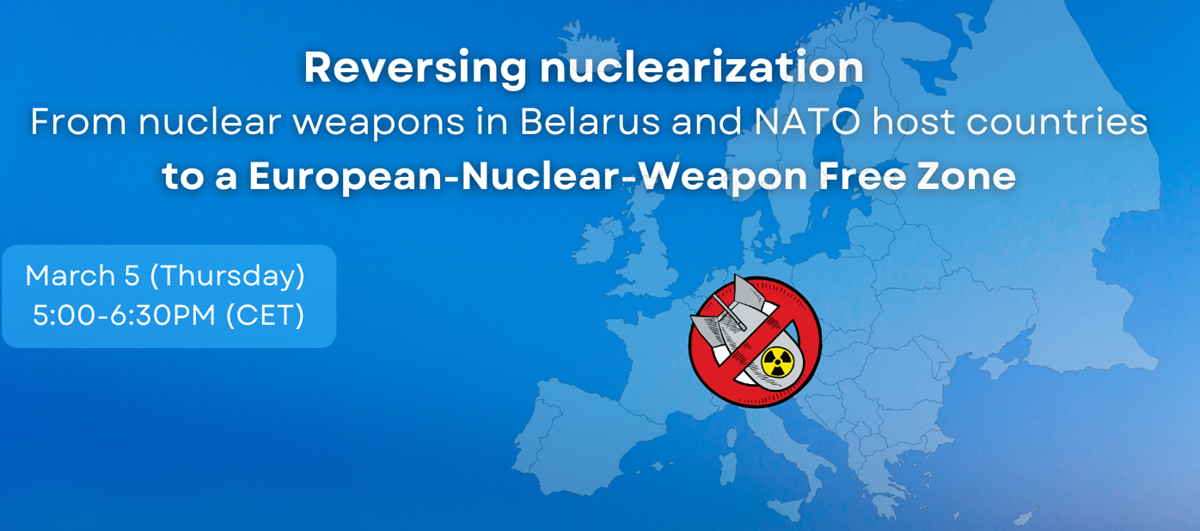
5 March -Online – Reversing nuclearization:
From nuclear weapons in Belarus and NATO host countries to a European-Nuclear-Weapon Free Zone
11am-12:30pm Eastern Time USA / 5pm-6:30pm CET

of the week – Advocating for a
nuclear free beach – https://www.samuellawrencefoundation.org/
The Samuel Lawrence Foundation advocates for a Nuclear Waste Free Beach at San Onofre, join us and take action!
10 March A LIVE WEBINAR THE REAL EFFECTS OF NUCLEAR POWER
What the Industry Isn’t Telling Us
1:00 PM Mountain, 2 pm Central, 3 pm Eastern. Live on the Keepers of the Water Facebook page

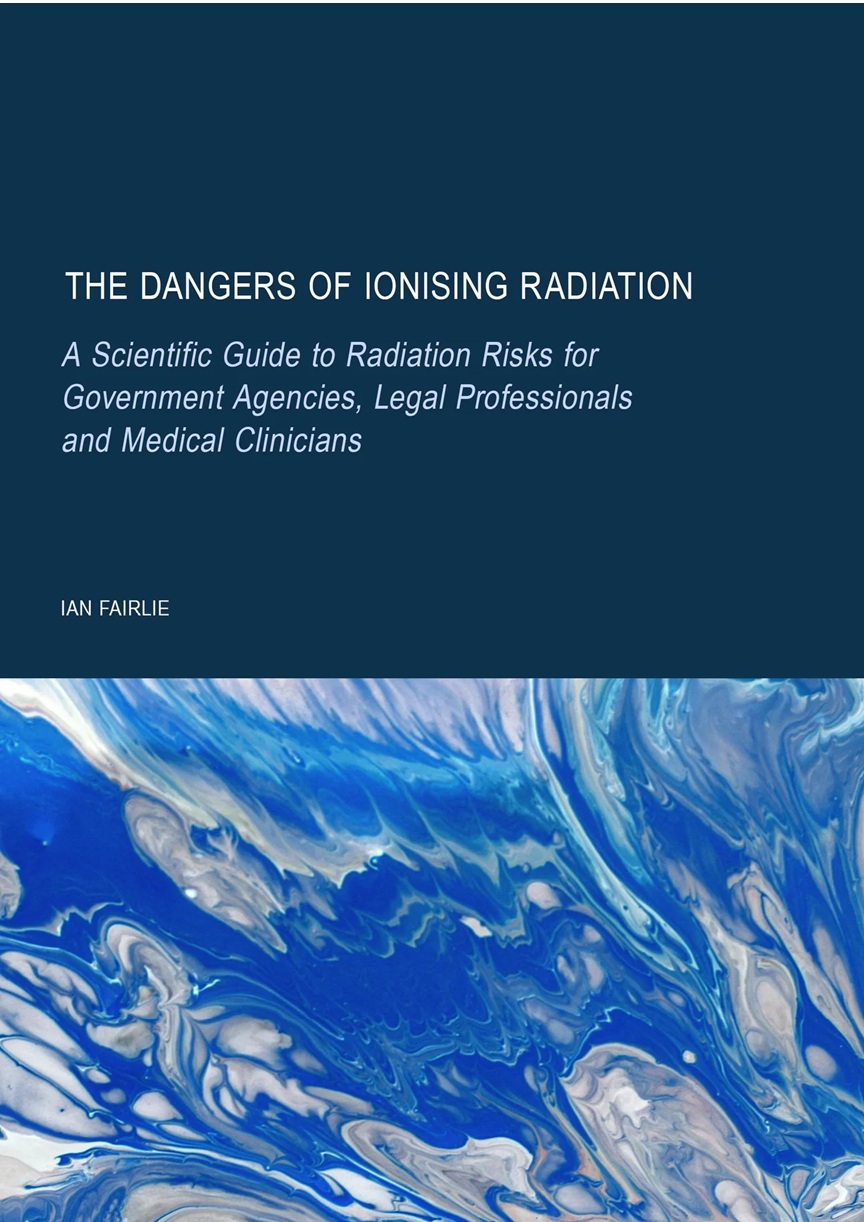
18 March Webinar @ 1 PM EST: An Assessment of SMR Projects: The Case of Canada
register for the zoom:
https://us02web.zoom.us/webinar/register/WN_o8BIIOUvQ2ONJR1nta65DQ#/registration

of the week – STOP SMALL MODULAR REACTORS IN CANADA
To see nuclear-related stories in greater depth and intensity – go to https://nuclearinformation.wordpress.com
-
Archives
- March 2026 (37)
- February 2026 (268)
- January 2026 (308)
- December 2025 (358)
- November 2025 (359)
- October 2025 (376)
- September 2025 (258)
- August 2025 (319)
- July 2025 (230)
- June 2025 (348)
- May 2025 (261)
- April 2025 (305)
-
Categories
- 1
- 1 NUCLEAR ISSUES
- business and costs
- climate change
- culture and arts
- ENERGY
- environment
- health
- history
- indigenous issues
- Legal
- marketing of nuclear
- media
- opposition to nuclear
- PERSONAL STORIES
- politics
- politics international
- Religion and ethics
- safety
- secrets,lies and civil liberties
- spinbuster
- technology
- Uranium
- wastes
- weapons and war
- Women
- 2 WORLD
- ACTION
- AFRICA
- Atrocities
- AUSTRALIA
- Christina's notes
- Christina's themes
- culture and arts
- Events
- Fuk 2022
- Fuk 2023
- Fukushima 2017
- Fukushima 2018
- fukushima 2019
- Fukushima 2020
- Fukushima 2021
- general
- global warming
- Humour (God we need it)
- Nuclear
- RARE EARTHS
- Reference
- resources – print
- Resources -audiovicual
- Weekly Newsletter
- World
- World Nuclear
- YouTube
-
RSS
Entries RSS
Comments RSS
 nuclear-news