Germany to pay nuclear operators 2.4 bln euros for plant closures
|
Germany to pay nuclear operators 2.4 bln euros for plant closures, https://www.reuters.com/article/germany-nuclear-settlement/germany-to-pay-nuclear-operators-24-bln-euros-for-plant-closures-idUSS8N2IR026 By Reuters Staff, (Reporting by Vera Eckert, Tom Kaeckenhoff and Markus Wacket, editing by Thomas Escritt)
FRANKFURT, March 5 21, (Reuters) – The German government has agreed to pay nuclear operators 2.4 billion euros ($2.86 billion) in compensation for forcing them to shut their nuclear plants early in response to the the Fukushima disaster, ministries said on Friday.The Frankfurter Allgemeine Zeitung daily had reported on Thursday that a sum of 2.4 billion euros will be made available from the general budget, citing government sources. The four affected companies are the German listed utilities RWE, which will get 880 million euros, and E.ON , which will get 42.5 million euros, as well as Swedish state-owned rival Vattenfall, which will get 1.425 billion euros, and mainly publicly-owned German EnBW , which will get 80 million euros. A Constitutional Court ruling in November had found in favour of the companies in their complaint that the government’s previous offer had not gone far enough. The court called for a speedy settlement of the dispute, which was mainly pursued by Vattenfall. The court had already ruled in 2016 that while the nuclear phase-out was legal, the operators needed to be better compensated for lost production. ($1 = 0.8389 euros) |
|
Nuclear Power’s Prospects Cool a Decade After Fukushima Meltdowns
Nuclear Power’s Prospects Cool a Decade After Fukushima Meltdowns
Disaster at the Japanese reactors marked a turning point for an industry that once promised to give the world a nearly unlimited source of energy WSJ, By Peter Landers, March 3, 2021
OMAEZAKI, Japan—At a seaside nuclear-power plant here, a concrete wall stretching a mile along the coast and towering 73 feet above sea level offers protection against almost any conceivable tsunami. Two reactors are ready to start splitting atoms again to heat water into steam and generate power, the operator has told regulators.
Yet despite safety measures set to cost nearly $4 billion, the Hamaoka plant hasn’t produced a single kilowatt since May 2011, and it has no target date to restart. The paint on billboards is fading and an old “no trespassing” sign outside the barbed wire lies on the ground—signs of creeping neglect.
Even a local antinuclear leader, Katsushi Hayashi, said he spent more time these days fighting an unrelated rail line in the mountains, confident that regulators and public opinion wouldn’t let the plant open any time soon. “Fukushima gave us all the proof we need. It’s dangerous,” Mr. Hayashi said.
The triple meltdowns at Japanese nuclear reactors in Fukushima after the March 11, 2011, earthquake and tsunami marked a turning point in an industry that once dreamed of providing the world with nearly unlimited power.
A decade after Fukushima, just nine reactors in Japan are authorized to operate, down from 54 a decade ago, and five of those are currently offline owing to legal and other issues. All of Fukushima prefecture’s reactors are closed permanently or set to do so. Chubu Electric Power Co. , owner of the Hamaoka plant, declined to make an executive available for comment. It has formally applied to reopen two reactors at the plant and told regulators that new measures such as the wall, mainly completed in 2015, make them safe to operate…… (subscribers only) https://www.wsj.com/articles/nuclear-powers-prospects-cool-a-decade-after-fukushima-meltdowns-11614767406
Fukushima’s Olympic makeover: Will the ‘cursed’ area be safe from radioactivity in time for Games?

|
Fukushima’s Olympic makeover: Will the ‘cursed’ area be safe from radioactivity in time for Games? VIDEO, https://www.france24.com/en/asia-pacific/20200626-fukushima-s-olympic-makeover-will-the-cursed-area-be-safe-from-radioactivity-in-time 26/6/ 20 The Olympic Games, dubbed the “reconstruction Olympics”, should allow Japan to move on from the Fukushima tragedy. The region, a symbol of the 2011 disaster, has officially been cleaned up but many problems remain, such as radioactivity and “forbidden cities”. Over the course of several months, our reporters followed the daily lives of the inhabitants of this “cursed” region. In recent months, Japanese authorities have been working hard to finish rebuilding the Fukushima region in time for the Summer Games. This huge reconstruction and decontamination project is never-ending and is expected to cost nearly €250 billion. Although the work undertaken over the past 10 years is colossal and the region is partly rebuilt, it’s still not free from radioactivity. The NGO Greenpeace has detected radioactive hotspots near the Olympic facilities. And at the Fukushima power plant, Tepco engineers continue to battle against radioactive leaks. They also face new issues such as contaminated water, which is accumulating at the site and poses a new-fangled problem for Japan. Our reporters were able to visit the notorious nuclear power plant. They bring us a chronicle of daily life in Fukushima, with residents determined to revive their stricken region. |
|
Fukushima resident still can’t return home 10 years after nuclear disaster
|
Fukushima resident still can’t return home 10 years after nuclear disaster, March 3,
 2021 (Mainichi Japan) FUKUSHIMA — Yasuko Sasaki’s house lies just 30 kilometers away from the Fukushima Daiichi Nuclear Power Station, where a meltdown took place following the 2011 Great East Japan Earthquake and tsunami. On Feb. 1, Sasaki temporarily returned to clean up leaves that had fallen on the grave at the back of the property. Once a month, the 66-year-old visits her house in the Tsushima district in the Fukushima Prefecture town of Namie from the prefectural village of Otama — 50 kilometers away — where she is currently evacuated to. It has been almost 10 years since she became unable to live at her own residence. Due to high radiation levels, Tsushima was designated a “difficult to return” zone, where restrictions for entering are in place, and people are barred from living there. Homes without their owners living in them have been ransacked by wild animals. While Sasaki has been away, wild animals chewed up stuffed turtle and bird specimens kept at her house. She continues to clean her house so that she “can return at any time.”………… The Reconstruction Design Council in response to the Great East Japan Earthquake, an advisory panel to the prime minister, deemed that “recovery from the devastating disaster will not be completed until Fukushima soil recovers.” The government has set up Specified Reconstruction and Revitalization Bases within difficult-to-return zones and is carrying out decontamination work and developing infrastructure so that people can reside in the area once again. It aims to lift evacuation orders for the bases in between 2022 and 2023. However, the areas designated as reconstruction bases are limited. In the Tsushima district, a 153-hectare space surrounding the town hall’s Tsushima branch is designated — just 1.6% of the whole district. Of the 532 households in the district at the time of the disaster, 80% including Sasaki’s house are not included in the reconstruction base area, and there are no prospects for these people to be able to return to their homes. Sasaki said, “Everything’s still the same, even 10 years after the (nuclear) disaster. I wonder for how many more years I’ll have to continue cleaning (my house).” (Japanese original by Rikka Teramachi, Fukushima Bureau, Suyon Kimu, City News Department) https://mainichi.jp/english/articles/20210302/p2a/00m/0na/012000c |
|
|
Nuclear power bailout Bill to be eliminated by Ohio law-makers
 Ohio Senate passes proposal to eliminate nuclear bailout at heart of House Bill 6 https://www.cincinnati.com/story/news/politics/2021/03/03/ohio-senate-eliminate-nuclear-bailout-heart-house-bill-6/6892339002/ Jessie Balmert, Cincinnati Enquirer
COLUMBUS – Ohio lawmakers unanimously passed a proposal to eliminate a controversial $1 billion bailout for nuclear plants – with the apparent blessing of the company that owns them.On Wednesday, the Ohio Senate passed Senate Bill 44, 32-0, which would eliminate subsidies for two nuclear plants in northern Ohio tacked onto Ohioans’ electric bills. The bailout is a key component of House Bill 6, which was at the heart of a federal bribery investigation. Former Ohio House Speaker Larry Householder, R-Glenford, and four others were accused of participating in a nearly $61 million scheme to elect Householder as leader of the House, pass House Bill 6 and defend it against a ballot initiative to block the law. In the seven months since their arrests, Ohio lawmakers have done little to change the underlying law, which also subsidized coal plants, eliminated incentives for renewable energy and energy efficiency and guaranteed profits for Akron-based FirstEnergy Corp. “We need to use this as a learning opportunity,” said Sen. Rob McColley, R-Napoleon, of House Bill 6. “This is something that will undo what I feel is an awful lot of damage that has been done not just to our institution but to the state of Ohio.” Senate Bill 44 would eliminate the subsidies for the Perry and Davis-Besse plants owned by Energy Harbor, which was previously called FirstEnergy Solutions. Energy Harbor now says it doesn’t need those fees, which were slated to be added to Ohioans’ electric bills through 2027. A change from federal utility regulators in late 2019 effectively penalizes companies that accept state subsidies when those companies sell their power. Energy Harbor also expects it can compete with natural gas under Democratic President Joe Biden’s policies, lawmakers said. Sen. Michael Rulli, R-Salem, said Energy Harbor appears to have benefitted from its bankruptcy proceedings, too. Fees on Ohioans’ electric bills never took effect because lawsuits brought by Ohio Attorney General Dave Yost, Cincinnati and Columbus blocked them. The bill keeps $20 million in subsidies for solar companies, which would drop the monthly fee from 85 cents to 10 cents for residential customers and from $2,400 to $242 for industrial customers. Sen. Sandra Williams, D-Cleveland, offered an amendment to put utility shutoffs on hold during the COVID-19 emergency, but it was rejected. Sen. Matt Dolan, R-Chagrin Falls, said Ohio recently authorized $50 million for help with utility bills and he would work with Gov. Mike DeWine’s administration to ensure it gets to the people who need it. One lesson Senate President Matt Huffman, R-Lima, said he’s learned from House Bill 6 is Ohio lawmakers aren’t all experts on energy policy and should leave some decisions to the Public Utilities Commission of Ohio. “These complex issues regarding utilities should be decided by the public utilities commission and not, from time to time, with legislation,” Huffman said. “It’s sort of a cautionary tale to a lot of complex issues.” The Ohio Senate recently passed Senate Bill 10, which eliminates the decoupling provision from state law and refunds about $17 million collected from customers before the court ruling. FirstEnergy could still seek that benefit from state utility regulators. Both bills would need approval from the Ohio House of Representatives and Gov. Mike DeWine to become law. Going forward, Huffman said Ohio lawmakers could do more to limit the influence of dark money in politics. “We have to find a way to minimize it, but so much of that is controlled by the federal government,” he said. |
|
Public Service Enterprise Group trying to force ratepayers to act as guarantors for nuclear power debts
 Obligating ratepayers to act as guarantors…
…. they seek to leverage the subsidies as a means to obligate ratepayers to act as guarantors of the plants’ profitability,
It is noteworthy that PSEG never offered to return any stranded-cost payments to ratepayers and now has the temerity to argue that this $3 billion wealth transfer should not be considered in determining whether the nuclear plants require further subsidization.
Despite the efforts of PSEG and Exelon to ignore precedent and establish their preferred regulatory structure, the fact remains that the BPU and Legislature removed precisely these types of costs and risks from ratepayer responsibility long ago.
|
Ratepayers held up their side of nuclear deal. PSEG must do the same https://www.njspotlight.com/2021/03/nj-board-public-utilities-must-decide-massive-nuclear-subsidies-pseg-drumbeat-no-justification-responsibility-costs-risks/ STEVEN S. GOLDENBERG | MARCH 3, 2021
There is no justification for PSEG’s effort ‘to require ratepayers to assume responsibility for the costs and risks associated with the continued operation’ of its nuclear plants
With the issue regarding the propriety of nuclear subsidies — known as Zero Emission Certificates or ZECs — again before the Board of Public Utilities, the predictable PSEG-inspired public drumbeat supporting its nuclear plants has begun. News outlets, including NJ Spotlight News, have recently featured articles and editorials that tout the benefits the nuclear plants confer on the state, and are intended to gin up support for extending the current $300 million annual ratepayer subsidies. Continue reading
|
Ohio Senate votes unanimously to repeal nuclear plant bailout
 Ohio Senate votes to repeal nuclear plant bailout, Toledo Blade https://www.toledoblade.com/local/politics/2021/03/03/ohio-senate-votes-to-repeal-nuclear-plant-bailout/stories/20210303112, JIM PROVANCE
COLUMBUS — Making its biggest statement yet in the wake of a $61 million Statehouse bribery scandal, the Ohio Senate voted unanimously Wednesday to kill a controversial $1 billion bailout of two northern Ohio nuclear power plants.
The chamber, however, kept the portion of the now tainted House Bill 6 passed in 2019 that provides $20 million a year to support qualifying utility-scale solar projects.
If the House of Representatives agrees, the bill would remove provisions of the law requiring electricity customers to pay $150 million a year in surcharges to support operation of the Davis-Besse nuclear power plant near Oak Harbor and the Perry plant east of Cleveland. Together, the two plants along Lake Erie directly employ about 1,400 people.
“This is something that will undo what I feel is an awful lot of damage that has been done, not just to our institution but to the state of Ohio,” he said.The decision to end the nuclear credits was made easier by the decision of the plants’ owner, Energy Harbor, to forgo the money after federal rules were changed to penalize providers in the competitive electricity marketplace if they accept state subsidies.
Two individuals and a nonprofit corporation involved in the bribery scheme have already pleaded guilty to federal racketeering charges. Charges are still pending against three others, including former Ohio House Speaker Larry Householder (R., Glenford), in connection with the scheme to hide the flow of cash from Akron-based FirstEnergy Corp. and related entities.
The money was used to help elect representatives loyal to Mr. Householder, help elect him speaker, and then enact the nuclear bailout sought by what was then a FirstEnergy subsidiary but is now the independent Energy Harbor.
The Senate’s move Wednesday does not undo provisions of House Bill 6 that roll back and then eliminate prior statutory mandates that utilities produce more of their power from renewable sources and reduce energy consumption overall.
There also are competing bills, including one that passed the Senate and is now in the House that would repeal House Bill 6 provisions that would have locked in FirstEnergy Corp. profits regardless of what happened in the electricity marketplace. FirstEnergy has already agreed not to take advantage of that provision this year.
The House also has its own bill pending to repeal the nuclear and revenue guarantee provisions.
Senate President Matt Huffman (R., Lima) said no agreement has been reached with the House as to which vehicle legislation will be sent to Gov. Mike DeWine’s desk.
“I was part of the discussion in the last month or so of the last General Assembly, and in general conversations with Speaker [Bob] Cupp at that time, about things that collectively the House and Senate could get enough votes to pass,” he said. “Those are the first two things that we have done….
“I think those things are supported by a significant majority,” Mr. Huffman said. “You can see they were passed unanimously out of the Senate, so we can deal with those two significant problems of House Bill 6…. It certainly doesn’t mean it’s the end of the discussion regarding those things.”
With the initial passage of House Bill 6, the plants’ owner, then FirstEnergy Solutions, proceeded with refueling Davis-Besse, clearing a potential major hurdle in the plant’s continued operation.
Dust with French nuclear test residue threatens Turkey
|
Dust with French nuclear test residue threatens Turkey https://www.dailysabah.com/turkey/dust-with-french-nuclear-test-residue-threatens-turkey/news
BY DAILY SABAH WITH AGENCIES, ISTANBUL TURKEY , MAR 03, 2021 France is not the only country to be affected by sandstorms carrying the residues of cesium 137, used in nuclear tests by the country in the 1960s in the Sahara desert. Experts warn the dust, expected to move eastward and make a landing in Turkey soon, may be harmful for the population. Bekir Taşdemir, a nuclear medicine expert from Dicle University, says though it is unclear how much cesium residue there is in the dust sandstorms brought, people need to be cautious. “Possible high rate (of cesium) will necessitate people to stay indoors. They should not breathe the air outside and not open their windows,” Taşdemir warned. French experts had revealed that cesium was found in dust hailing from the Sahara Desert after a sandstorm on Feb. 6 traveled to the Jura Mountains. The same pattern of sandstorms is forecast for Turkey in the coming days. Taşdemir told Demirören News Agency (DHA) on Wednesday that the movement of dust particles, when combined with rainfall, will be more dangerous. “You should take an umbrella or have protective clothing if it is necessary to go out. If it rains, you should rapidly remove your clothes and wash them and take a shower when you return home. If radioactive residues are accumulated on your body or clothes, it poses a risk. There is also the possibility that those residues will settle on fruits and vegetables and you should be careful washing them thoroughly before consumption, in case of such a sandstorm,” he added. Cesium 137, a lethal chemical element, is used in the nuclear industry. When touched with bare hands, it can kill the person within seconds. It was emitted into the atmosphere after the 2011 nuclear plant accident in Fukushima, according to researchers. France had conducted its first nuclear test in the Sahara desert on Feb. 13, 1960. It carried out 17 nuclear explosions in the Algerian part of the Sahara Desert between 1960 and 1966. Eleven of the tests came after the 1962 Evian Accords ended the six-year war of independence and 132 years of French colonial rule. The issue of nuclear tests remains a major bone of contention between France and Algeria which claims the nuclear tests claimed the lives of a large number of people among the local population and damaged the environment. The Sahara dust that has blanketed parts of southern and central Europe last month has caused a short, sharp spike in air pollution across the region according to researchers. |
|
Russia’s most high-tech multi-purpose nuclear submarine further delayed
Russia’s most high-tech multi-purpose nuclear sub further delayed
The first upgraded cruise missile submarine of the Yasen-M class, the Kazan, will for unknown reasons have to sail another test-voyage before being handed over to the Northern Fleet. Barents Observer, 3 Mar 21, By Thomas Nilsen
New date for possible handover is set for May-June 2021, TASS reports with a source in the military-industrial complex. The state-affiliated news agency is known voicing military insights, but also for sugarcoating facts.
Another factory sea trial is planned, to be followed by an audit of the components and mechanisms, the source said without elaborating on which technical design flaws are to be fixed this time.
The “Kazan” was expected to be handed over from the submarine builder Sevmash yard to the Northern Fleet last Friday.
“The lead nuclear submarine “Kazan” can be handed over to the Russian Navy on February 26, the head of the United Shipbuilding Corporation, Aleksey Rakhmanov told RIA Novosti as late as on February 10.
Why the prestigeous submarine is hold back for more testing is unkown……..
Since first scheduled for delivery to the navy in 2017, the submarine has been notoriously delayed. A planned delivery in 2018 was postponed to 2019. That year came with another announcement that the “Kazan” would probably need all of 2020 to fix a number of auxiliary parts and assemblies which did not met the tactical and technical requirements set by the Ministry of Defense, the Barents Observer reported at the time……… https://thebarentsobserver.com/en/security/2021/03/russias-most-high-tech-multi-purpose-nuclear-sub-further-delayed
Ex-PMs Kan, Koizumi urge Japan to quit nuclear power generation
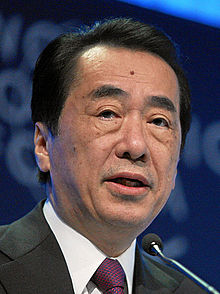 Ex-PMs Kan, Koizumi urge Japan to quit nuclear power generation https://english.kyodonews.net/news/2021/03/6b3c5a6b5519-ex-pms-kan-koizumi-urge-japan-to-quit-nuclear-power-generation.html1 Mar 21, KYODO NEWS – Former prime ministers Naoto Kan and Junichiro Koizumi on Monday urged Japan to stop using nuclear power, saying the country should learn from the Fukushima crisis a decade ago and turn to renewable energy.
 Both were proponents of nuclear power while in office but became critics following the March 11, 2011, earthquake, tsunami and subsequent triple meltdown at the Fukushima Daiichi nuclear plant.
“Japan has so much natural sources of energy like solar power, hydropower and wind power. Why should we use something that’s more expensive and less safe?” said Koizumi, a maverick reformist who held office from 2001 to 2006, at a joint press conference.
Kan, who led the response to the disaster at the time, criticized Yoshihide Suga’s vow to reduce Japan’s net carbon emissions to zero by 2050, calling it a pretense to restart nuclear reactors across the country, most of which have been halted as utilities wait to clear tougher regulations imposed after the Fukushima crisis.
While the former prime ministers come from opposite ends of the political spectrum — Koizumi led the center-right Liberal Democratic Party while Kan headed the now-defunct Democratic Party of Japan, which leaned left — they said opposing nuclear energy was a nonpartisan stance.
The main obstacle to shifting toward renewable energy is structural, Kan said, stemming from the entrenched interests of utility companies, government agencies and academics who constitute the “nuclear power village.”
“They know it would be too expensive to build new plants, or that there’s no way to properly dispose of nuclear waste. But there are a lot of stakeholders and they want to keep it that way,” said Kan, now a member of the Constitutional Democratic Party of Japan.
Regarding tritium-laced water at Fukushima Daiichi quickly filling up tanks, Koizumi said in the press conference at the Foreign Correspondents’ Club of Japan that plans to release the water into the sea were fiercely opposed by local fishermen and that further research into other options was needed.
Japan got 76 percent of its electricity from thermal power in fiscal 2019, compared with 18 percent from renewable energy and 6 percent from nuclear energy, according to preliminary data from the Ministry of Economy, Trade and Industry.
Under Suga’s “Green Growth Strategy,” the country is aiming to increase renewable energy to 50-60 percent while thermal power and nuclear energy is to constitute a combined 30-40 percent.
Nuclear Free And Independent Pacific Day 2021

Peace Movement Aotearoa Today, 1 March, is Nuclear Free and Independent Pacific Day – the 67th anniversary of the ‘Bravo’ nuclear bomb detonation by the United States close to the surface of Bikini Atoll, in the Marshall Islands, which blasted out a crater more than 200 feet deep and a mile across.
Particles of radioactive fallout from the blast landed on the island of Rongelap (100 miles away) to a depth of one and a half inches in places, and radioactive mist appeared on Utirik (300 miles away). The US navy did not send ships to evacuate the people of Rongelap and Utirik until three days after the explosion. Fallout from this one nuclear weapon detonation spread over more than 7,000 square miles, and traces were detected throughout the Pacific, in India, Japan, the United States and Europe. The Marshallese, and other Pacific peoples subjected to more than 300 full scale nuclear bomb detonations in the Pacific – conducted by Britain, France and the US – were used as human guinea pigs in an obscene experiment to ‘progress’ the insane pursuit of nuclear weapons supremacy.
Nuclear Free and Independent Pacific Day is a day to remember that the arrogant colonial mindset which allowed, indeed encouraged, this horror continues today – the Pacific is still neither nuclear free nor independent.
Much of the Pacific remains under foreign control, from military or illegal occupation to dependence on a coloniser state for international representation, including ‘American’ Samoa, Cook Islands, French-Occupied Polynesia, Guam, Hawai’i, Kanaky, Niue, Norfolk Island, Northern Marianas, Pitcairn Island, Rapa Nui, Tokelau, Uvea mo Futuna, and West Papua. The voices of these Pacific peoples, along with the voices of ngā hapū o Aotearoa and indigenous Australians, are not heard directly in the UN General Assembly and other international forums where so many decisions on crucial issues affecting our region are made – not only on nuclear weapons and other disarmament priorities, but also on social and economic justice, human rights, protection of natural resources and the environment, the COVID-19 pandemic, climate justice and demilitarisation.
The Pacific is one of the regions that is being, and will continue to be, most impacted by climate change and extreme weather events which are affecting low-lying islands and Pacific peoples who are dependent on natural resources for food, clothing and shelter, and on water sources that are vulnerable to salinisation by rising sea levels and high seas. Yet the overwhelming majority of fossil fuel use and greenhouse gas emissions do not come from the Pacific island nations.
The Pacific is also one of the most highly militarised regions in the world – but only four Pacific island nations have armed forces. The overwhelming majority of militarisation in the Pacific comes from outside the region – military bases, military training exercises, and military occupation by the armed forces of Indonesia, France and the United States, in particular, along with Australia, Britain, China, New Zealand, Russia and others.
Nuclear Free and Independent Pacific Day is a day to think about the many faces of colonisation – physical, cultural, spiritual, economic, nuclear, military – past and present; the ongoing issues of independence, self-determination and sovereignty here in Aotearoa New Zealand and the other colonised and occupied countries of the Pacific; and the ability of Pacific peoples to stop further nuclearisation, militarisation and economic exploitation of our region.
It is a day to acknowledge and remember those who have suffered and died in the struggle for independence around the Pacific; those who have opposed colonisation in its many forms and paid for their opposition with their health and life; and those who have suffered and died as a result of the nuclear weapons states’ use of the Pacific for nuclear experimentation, uranium mining, nuclear bomb blasts and nuclear waste dumping.
It is a day to celebrate the courage, strength and endurance of indigenous Pacific peoples who have maintained and taken back control of their lives, languages and lands to ensure the ways of living and being which were handed down from their ancestors are passed on to future generations.
It is the day to pledge your support to continue the struggle for a nuclear free and independent Pacific, as the theme of the 8th Nuclear Free and Independent Pacific Conference said: “No te parau tia, no te parau mau, no te tiamaraa, e tu, e tu – For justice, for truth and for independence, wake up, stand up!”
The Trump personality cult is still a threat
CPAC Showed That Trump’s Personality Cult Is Still Alive — and Still a Threat, https://truthout.org/articles/cpac-showed-that-trumps-personality-cult-is-still-alive-and-still-a-threat/?eType=EmailBlastContent&eId=30eb7938-c44f-478d-a80d-5562c3d8b80a, Sasha Abramsky, 1 Mar 21,
In the classic 1950 movie Sunset Boulevard, Gloria Swanson plays the has-been Hollywood diva, Norma Desmond, desperate for adoration, utterly infatuated with the spotlight. One of its most famous lines — “Alright, Mr. DeMille, I’m ready for my close up” — captures the unseemly spectacle of someone far past their sell-by date who refuses to accept their fall from stardom.
“You see,” the has-been actress utters with undistilled terror, “This is my life. It always will be. There’s nothing else. Just us and the camera — and those wonderful people out there in the dark.”
When Donald Trump stepped up to the podium at the CPAC event in Orlando, Florida, this weekend, it was, unsurprisingly, both a ghastly and incredibly tired remake of Sunset Boulevard, a reprise of yesterday’s news, of the former president’s greatest hits, from a man who cannot imagine a world without himself at the center.
During a bizarre CPAC presentation, Trump named all the Republicans who had crossed him and threatened to destroy their careers. He asked his audience — plaintively — whether they missed him yet. He claimed he had won the last election and would, if he so chose, win again in 2024. To this last point, his cult-like audience — which had already paraded through the conference center, in imitation of strong-men idolatrous cults in locales such as North Korea, a golden bust of the disgraced ex-president — responded, on cue, and overwhelming evidence to the contrary notwithstanding, “You won! You won! You won!”
Trump, in gilded retirement at Mar-a-Lago not only refuses to accept that Joe Biden won last year’s election, but he also hasn’t even remotely begun to consider the possibility that the GOP might ever be anything other than a vehicle for the enrichment of the Trump family. He has, these past months, teased the possibility of starting a third party; at the CPAC event, however, he scotched those rumors, instead urging GOP members to donate to political action committees controlled by Trump himself, along with members of his inner circle.
That decision wasn’t exactly a surprise; after all, most of the GOP is still in lockstep with Trumpism, convinced the election was stolen, and, as January 6th fades into the past, more than willing to forgive and forget the ex-president’s incitement to deadly violence. In the past couple weeks, House Minority Leader Kevin McCarthy traveled to Mar-a-Lago to pay an obsequious homage to the man whom, back in January, he had screamed at during a profanity-laden phone call at the height of the Capitol siege. So, too, did GOP whip Steve Scalise, make a kiss-the-ring visit to the exiled president.
Mitch McConnell, who bared just a touch of courage after the Senate impeachment vote by saying on the Senate floor that there was no doubt that Trump was responsible for the events of January 6th, followed up with an astounding public display of gorging himself on humble pie.
Meanwhile, state GOP chapters around the country are busily censuring GOP congressmembers and senators who voted to impeach or convict Trump. And GOP-controlled legislatures are pushing through legislation aimed to prevent the sort of non-existent “fraud” that Trump still claims cost him the last election. Of course, since the fraud wasn’t real, what this means in practice is a vast effort to contract the electorate and to make it harder for people of color, the poor and students to cast ballots in coming elections.
The ungodly CPAC display this past four days made two things absolutely clear. The first is that CPAC, and by extension most of the GOP, is nothing more or less than a personality cult; the values that have traditionally animated conservative movements in the U.S. have, now, been entirely subjugated to the allure of Trumpism. The second is that Trump’s financial interests — which are all he really cares about at this point — clearly lie not in putting his own dollars on the line by building up a third party, but in milking the GOP faithful for all he can, as quickly as he can, before his myriad legal woes catch up to him.
Toward the end of Sunset Boulevard, Desmond shoots an ex-lover as he attempts to walk out on her. In a bizarre twist, the dead man then narrates his posthumous understanding of how this will all end. He imagines the headlines that will accompany the announcement of his murder. “Forgotten star, a slayer, aging actress, yesterday’s glamor queen.” Instead, as Desmond is perp-walked down her palace steps, the cameras keep clicking, and the diva remains, even in delusional disgrace, the star of her own show.
Having failed to deal Trump a political death-blow in the Senate during the impeachment trial, the GOP is now stuck with its very own Norma Desmond. Trump is always ready for his close-up, because without the sound of the adoring claque, he is nothing.
Washington State and others want to overturn Trump rule that weakens Hanford nuclear waste rule
|
The state of Washington and other groups are asking the Biden administration to overturn a Trump administration rule that would allow the federal government to potentially clean up the Hanford nuclear reservation to less stringent standards. A letter sent Friday to Jennifer Granholm, just a day after she was confirmed as energy secretary, was signed by leaders of Washington state, the Yakama Nation, the Natural Resources Defense Council, Hanford Challenge and Columbia Riverkeeper. They call the Department of Energy’s decision in 2019 to allow the reclassification of some Hanford site and other radioactive waste “a matter of extraordinary concern.” The new DOE rule, which was adopted to relax the interpretation of what is defined as high level radioactive waste, “lays the groundwork for the Department to abandon significant amounts of radioactive waste in Washington state precipitously close to the Columbia River,” the letter said. It would create a long-term risk of harm to the residents of the Pacific Northwest and the natural resources critical to the region, it said. However, some Tri-Cities area interests have supported the revised interpretation of high level radioactive waste, saying it could save billions of dollars in environmental cleanup money across the nation, making more money available for some of the most pressing environmental cleanup at the Hanford nuclear reservation. ……. DOE’s new policy allows the agency to reclassify radioactive waste if it determines it does not exceed certain radionuclide concentrations for low level waste or does not need to be disposed of in a deep geological repository, such as the one proposed at Yucca Mountain, Nev. Previously, high level waste could be reclassified, but under a more involved process that relies on the Nuclear Regulatory Commission. Hanford watchdogs have said that giving DOE authority to reclassify high level waste could lead to grouting waste inside Hanford’s underground tanks, rather than retrieving the waste and properly treating it for disposal. DOE began building the $17 billion vitrification plant in 2002 to turn some, but not all, of the tank waste into a stable glass form for disposal. Turning some of the excess waste into a concrete-like grout for disposal rather than glassifying it has been proposed. The Washington state Department of Ecology has maintained that any treatment of tank waste must produce a waste form that is “as good as glass” to protect the environment and prevent contaminants from leaching into the soil and reaching groundwater. Those who signed the Friday letter agree that “trying to change Hanford’s high level tank waste to low-level waste through the stroke of a pen is no solution, and this Trump-era rule has to go,” said Tom Carpenter, executive director of Seattle-based Hanford Challenge, which advocates for Hanford workers. The new interpretation of high level waste gives DOE unilateral authority to redefine high level radioactive waste with no opportunity for input, oversight or consent by state regulators or the public, the letter said. “And it fails to hold the Department and the federal government accountable for adequately cleaning up the legacy waste that is left over from the establishment of the United States’ nuclear arsenal,” the letter said. The new interpretation of the definition of nuclear waste conflicts with a Biden administration order that agencies should follow science, improve public health and protect the environment, the letter said. Those signing the letter on behalf of Washington state include Attorney General Bob Ferguson and the director of the Department of Ecology, Laura Watson. ‘Trump-era rule has to go’ https://www.bigcountrynewsconnection.com/news/state/washington/state-wants-biden-to-overturn-trump-rule-on-hanford-nuclear-waste/article_16f7fd90-5857-57ce-a113-b43fa388a7d3.html |
|

Michigan Attorney General wants review of nuclear plant license transfer to Holtec
 an energy company to seek more review before it undertakes a license transfer that could cost Michiganders money and safety.AG Nessel is petitioning the Nuclear Regulatory Commission to look more closely into a case involving a license transfer request for the Palisades Nuclear Plant and Big Rock Point Independent Spent Fuel Storage Installation, which are both currently owned by Entergy Co.
Nessel is requesting a hearing for the transfer of control of the licenses to those facilities from Entergy to Holtec International.
Earlier this month, Entergy and Holtec filed an application asking for the approval of the transfer of control of the licenses. Entergy plans to retire the Palisades Nuclear Plant in 2022.
A trust fund of about $550 million was established with ratepayer funds to decommission the Palisades. Not only does Holtec want to use that fund to decommission the Palisades but also to handle the site restoration and fuel management cost.
Attorney General Nessel filed her petition and request to further review this license transfer application.
In her petition, Nessel said that she supports safe decommissioning, site restoration and fuel management at Palisades, but she’s concerned that Holtec does not have the financial qualifications to complete a risk-intensive project.
The petition demonstrates that Holtec has underestimated the costs for actual decommissioning, thus threatening the health and safety of Michigan residents, according to Michigan AG Dana Nessel. The petition also questions Holtec’s exemption request to use the decommissioning funds for site restoration and nuclear fuel management without providing evidence of other funding sources.
“Protecting the environment, the health and the pocketbooks of Michigan residents are part of my responsibilities as attorney general,” said Nessel in a press release. “My concern is that by seriously underestimating the cost of decommissioning, site restoration and nuclear fuel management, coupled with a lack of appropriate financial assurances, Holtec endangers our environment and health, and potentially leaves our residents to bear the costs of proper clean-up.”
Palisades Nuclear Power Plant is located in Covert Township and the Big Rock Point facility is located in Hayes Township both on the shores of Lake Michigan.
1 This Month

Read the Public Inquiry Report, the Commissioners’ report, Surrendering Australia: The AUKUS Deception is available to download for free at aukuspublicinquiry.com. Or just watch the replay of the National Press Club Luncheon.


19 November – Webinar – The Reality of Reprocessing
Time: 11:00 AM Pacific Time (US & Canada) / 2:00 PM Eastern / 7:00 PM UK / 8:00 PM CET
Register for the Zoom Event Here



Shut down the radiation-damaged Heysham nuclear reactors now
To see nuclear-related stories in greater depth and intensity – go to https://nuclearinformation.wordpress.com

Say No to NASA’s Reckless Nuclear Reactor on the Moon
Say No to NASA’s Reckless Nuclear Reactor on the Moon
-
Archives
- November 2026 (103)
- October 2026 (302)
- September 2026 (339)
- August 2026 (330)
- July 2026 (355)
- June 2026 (287)
- May 2026 (306)
- April 2026 (356)
- March 2026 (251)
- February 2026 (267)
- January 2026 (308)
- December 2025 (358)
-
Categories
- 1
- 1 NUCLEAR ISSUES
- business and costs
- climate change
- culture and arts
- ENERGY
- environment
- health
- history
- indigenous issues
- Legal
- marketing of nuclear
- media
- opposition to nuclear
- PERSONAL STORIES
- politics
- politics international
- Religion and ethics
- safety
- secrets,lies and civil liberties
- spinbuster
- technology
- Uranium
- wastes
- weapons and war
- Women
- 2 WORLD
- ACTION
- AFRICA
- Atrocities
- AUSTRALIA
- Christina's notes
- Christina's themes
- culture and arts
- Events
- Fuk 2022
- Fuk 2023
- Fukushima 2017
- Fukushima 2018
- fukushima 2019
- Fukushima 2020
- Fukushima 2021
- general
- global warming
- Humour (God we need it)
- Nuclear
- RARE EARTHS
- Reference
- resources – print
- Resources -audiovicual
- Weekly Newsletter
- World
- World Nuclear
- YouTube
-
RSS
Entries RSS
Comments RSS

