South Korea aims to fight, at International Tribunal, Japan’s plan to empty Fukushima water into Paific Ocean
S Korea aims to fight Japan’s Fukushima decision at tribunal, https://www.aljazeera.com/news/2021/4/14/s-korea-aims-to-fight-japans-fukushima-decision-at-tribunal, 15 Apr S Korea
Moon Jae-in asks officials to look at ways to refer Japan’s Fukushima decision to the International Tribunal for the Law of the Sea.
South Korean President Moon Jae-in has ordered officials to explore petitioning an international court over Japan’s decision to release water from its Fukushima nuclear plant, his spokesman said, amid protests by fisheries and environmental groups.
Moon said officials should look into ways to refer Japan’s move to the International Tribunal for the Law of the Sea, including filing for an injunction, spokesman Kang Min-seok told a briefing.
Japan unveiled plans on Tuesday to release more than 1 million tonnes of contaminated water into the sea from the plant, which was crippled by a 2011 earthquake and tsunami, starting in about two years after filtering it to remove harmful isotopes.South Korea protested strongly against the decision, summoning Koichi Aiboshi, Tokyo’s ambassador in Seoul, and convening an intra-agency emergency meeting to craft its response.
Moon also expressed concerns about the decision as Aiboshi presented his credentials, having arrived in South Korea in February for the ambassador’s post.“I cannot but say that there are many concerns here about the decision as a country that is geologically closest and shares the sea with Japan,” Moon said, asking Aiboshi to convey such worries to Tokyo, according to Kang.An aerial view shows the storage tanks for treated water at the tsunami-crippled Fukushima Daiichi nuclear power plant in Okuma town, Fukushima prefecture, Japan February 13, 2021 [Kyodo via Reuters]South Korea’s foreign ministry issued a statement saying it had raised similar concerns with the United States after the Department of State said Japan’s decision was “transparent” and in line with global safety standards.
The ministry also said it shared “strong regret and serious concerns” about the water’s planned release at a video conference on Wednesday with Chinese officials on maritime issues.
A series of protests against the move by politicians, local officials, fishermen and environmental activists took place in South Korea on Wednesday, including in front of the Japanese embassy in Seoul and consulates in the port city of Busan and on Jeju island.
A coalition of 25 fisheries organisations staged a rally and delivered a written protest to the embassy, urging Tokyo to revoke the decision and Seoul to ban imports from Japanese fisheries.
“Our industry is on course to suffer annihilating damage, just with people’s concerns about a possible radioactive contamination of marine products,” it said in a statement.
The progressive minor opposition Justice Party and some 30 anti-nuclear and environmental groups called Japan’s move “nuclear terrorism,” and said they sent the Japanese embassy a list of signatures of more than 64,000 people opposed to the move collected from 86 countries since February.
Fukushima” is not over: Japanese NGOs raise concern over the ongoing nuclear disaster
Fukushima” is not over: Japanese NGOs raise concern over the ongoing nuclear disaster, Friends of the Earth Japan, Pacific Asia Resource Center (PARC), 14 Apr 21,
On the 10th anniversary of one of the worst nuclear accidents at Fukushima Daiichi Nuclear Power Station, and amid the controversial decision of the Japanese government to dump “treated” radioactive water into the ocean, Japanese NGOs Friends of the Earth Japan and Pacific Asia Resource Center (PARC) co-produced a documentary film Fukushima 10 Years Later: Voices from the continuing nuclear disaster. The film sheds light on the ongoing suffering of victims of the accident and poses critical questions about the Japanese government’s poor responses to the accident.
While then-Prime Minister Abe vainly declared to the world that “the situation in Fukushima is completely under control”, nuclear decays are continuing inside the molten fuel rods, and the exploded plants are still emitting radioactive particles to this day. In the meanwhile, evacuees are torn apart in limbo, with grim hopes of returning to their homeland, continued fear of radioactive fallout, and a dire socio-economic situation. Fisherfolk, who overcame the initial fear of ocean contamination, are forced to relive the experience each time TEPCO and the Japanese government repeatedly choose to release contaminated water into the ocean.
This happens all under the propaganda that Fukushima is pressing ahead with “Fukkou (Recovery)”.
This video aims to highlight the current situation of the victims of the man-made disaster, and challenge the government propaganda of Fukushima’s Recovery.
Fukushima 10 Years Later: Voices from the continuing nuclear disaster
Produced by Friends of the Earth Japan and Pacific Asia Resource Center
Supervised by HOSOKAWA Komei (Citizens’ Commission on Nuclear Energy)
Directed by MATSUMOTO Hikaru (Friends of the Earth Japan)
Running time: 43 min.
The English subtitled version of the film is now available on Vimeo on Demand and will cost USD 5.75 to rent and USD 47.50 to purchase.
https://vimeo.com/ondemand/fukushima10years
For further information on the film, please contact OKUMURA Yuto, Pacific Asia Resource Center.
E-mail: video@parc-jp.org
Yuto Okumura,Pacific Asia Resource Center (PARC)
Ratepayer advocate calls on New Jersey Supreme Court to reverse decision allowing subsidy to nuclear power
Nuclear subsidy gets new challenge, NJ Spotlight TOM JOHNSON, ENERGY/ENVIRONMENT WRITER | APRIL 14, 2021 | ENERGY & ENVIRONMENT, NJ ratepayer advocate asks Supreme Court to consider decision on $300 million subsidy. Regulators are poised to add more,
New Jersey Rate Counsel Director Stefanie Brand is asking the New Jersey Supreme Court to reverse last month’s appellate court decision upholding the award of hundreds of millions in ratepayer subsidies to the state’s nuclear power plants.
In a notice of a petition for certification, the Division of Rate Counsel argued the lower court erred when it upheld the New Jersey Board of Public Utilities’ decision in 2019 to approve $300 million in new surcharges on customers’ gas and electric bills. Without the subsidies, Public Service Enterprise Group, whose subsidiary operates three nuclear units in South Jersey, has threatened to close the plants because they are no longer profitable.
If the high court decides to review the case, it could result in the justices taking up the case at roughly the same time as the BPU, which is scheduled to decide whether the plants — Hope Creek, Salem I and Salem II — qualify for additional subsidies from ratepayers for another three years. The BPU is expected to rule on those applications on April 27. The first subsidy added about $70 a year to what residential customers pay for electricity……… https://www.njspotlight.com/2021/04/nj-rate-counsel-director-stefanie-brand-seeks-supreme-court-reversal-300-million-nuclear-subsidy-pseg/
Secrecy over new conditional coal mine licence applications for Cumbria – no public scrutiny.
Keep Cumbrian Coal in the Hole 13th April 2021, Nuclear safety group Radiation Free Lakeland have asked for and been refused sight of the new conditional coal mine licence applications from
West Cumbria Mining to the Coal Authority. The controversial Irish Sea coal
mine developers had originally been granted conditional exploration
licences eight years ago over the heads of Cumbria County Council and the
public, with no public scrutiny at all.
These have now lapsed and the
developers have applied for new licences. Radiation Free Lakeland have
asked for sight of the licence applications from West Cumbria Mining. The
Coal Authority have refused sight of the licence applications based on two
clauses in the Freedom of Information Act 2000: Section 43(2) Commercial
Interests and Section 44(1)(a) Prohibition by Enactment. Campaigners say
that there is no justification offered by the Coal Authority for the
protection of the developers at the expense of public scrutiny into the new
licence applications.
COAL AUTHORITY REFUSE RIGHT TO SEE LICENCE TO DRILL UNDER IRISH SEA
Israel appears to confirm it carried out cyberattack on Iran nuclear facility
Shutdown happened hours after Natanz reactor’s new centrifuges were started, Guardian, Martin Chulov Middle East correspondentMon 12 Apr 2021, Israel appeared to confirm claims that it was behind a cyber-attack on Iran’s main nuclear facility on Sunday, which Tehran’s nuclear energy chief described as an act of terrorism that warranted a response against its perpetrators.
The apparent attack took place hours after officials at the Natanz reactor restarted spinning advanced centrifuges that could speed up the production of enriched uranium, in what had been billed as a pivotal moment in the country’s nuclear programme.
As Iranian authorities scrambled to deal with a large-scale blackout at Natanz, which the country’s Atomic Energy Agency acknowledged had damaged the electricity grid at the site, the Israeli defence chief, Aviv Kochavi, said the country’s “operations in the Middle East are not hidden from the eyes of the enemy”.
Israel imposed no censorship restrictions on coverage as it had often done after similar previous incidents and the apparent attack was widely covered by Israeli media. Public radio took the unusual step of claiming that the Mossad intelligence agency had played a central role.
Israeli Prime Minister Benjamin Netanyahu said later Sunday that “the struggle against Iran and its proxies and the Iranian armament efforts is a huge mission”…..
The unexplained shutdown is thought to be the latest in a series of exchanges between the two arch-enemies, who have fought an extensive and escalating shadow war across the Middle East over more than decade, centred on Iran’s nuclear programme and its involvement in matters beyond its borders.
Clashes have more recently been fought in the open, with strikes against shipping, the killing of Iran’s chief nuclear scientist, hundreds of airstrikes against Iranian proxies in Syria, and even a mysterious oil spill in northern Israel, which officials there have claimed was environmental sabotage.
Natanz has remained a focal point of Israeli fears, with an explosion damaging a centrifuge assembly plant last July, and a combined CIA and the Mossad cyber-attack using a computer virus called Stuxnet in 2010 that caused widespread disruption and delayed Iran’s nuclear programme for several years.
Iran’s nuclear chief, Ali Akbar Salehi, urged the international community and the International Atomic Energy Agency (IAEA) to take action against the perpetrators of the attack. He confirmed that a “terrorist attack” had damaged the electricity grid of the Natanz site. The IAEA said it was aware of the reports but declined to comment further…………
Western officials believe Israel has become increasingly brazen in its attempts to disrupt the Iranian programme, pointing to the killing of the country’s leading nuclear scientist, Mohsen Fakhrizadeh, last November, who was shot dead along with his bodyguards on a rural highway. Iran claims that artificial intelligence was used to identify Fakhrizadeh, who was gunned down by a remotely operated automatic weapon. The small lorry carrying the weapon then exploded…………… https://www.theguardian.com/world/2021/apr/11/israel-appears-confirm-cyberattack-iran-nuclear-facility
The US Energy Department’s renewed promotion of plutonium-fueled reactors.

Plutonium programs in East Asia and Idaho will challenge the Biden administration, Bulletin of the Atomic Scientists, By Frank N. von Hippel | April 12, 2021 ”’…………. The US Energy Department’s renewed promotion of plutonium-fueled reactors. The US plutonium breeder reactor development program was ended by Congress in 1983. A decade later, the Clinton Administration shut down the Idaho National Laboratory’s Experimental Breeder Reactor II for lack of mission. At the time, I was working in the White House and supported that decision.

The nuclear-energy divisions at the Energy Department’s Argonne and Idaho National Laboratories refused to give up, however. They continued to produce articles promoting sodium-cooled reactors and laboratory studies on “pyroprocessing,” a small-scale technology used to separate plutonium from the fuel of the Experimental Breeder Reactor II .
During the Trump administration, this low-level effort broke out. With the Energy Department’s Office of Nuclear Energy headed by a former Idaho National Lab staffer and help from Idaho’s two Senators, the Energy Department and Congress were persuaded to approve the first steps toward construction at the Idaho National Laboratory of a larger version of the decommissioned Experimental Breeder Reactor II.
The new reactor, misleadingly labeled the “Versatile Test Reactor,” would be built by Bechtel with design support by GE-Hitachi and Bill Gates’ Terrapower. The Energy Department awarded contracts to the Battelle Energy Alliance and to university nuclear-engineering departments in Indiana, Massachusetts, Michigan, and Oregon to develop proposals for how to use the Versatile Test Reactor.

The current estimated cost of the Versatile Test Reactor is $2.6-5.8 billion, and it is to be fueled with plutonium. The Idaho National Laboratory’s hope is to convince Congress to commit to funding its construction in 2021.
The Energy Department also committed $80 million to co-fund the construction of a 345-megawatt-electric (MWe) “Natrium” (Latin for sodium) demonstration liquid-sodium-cooled power reactor proposed by GE-Hitachi and Terrapower which it hopes Congress would increase to $1.6 billion. It also committed $25 million each to Advanced Reactor Concepts and General Atomics to design small sodium-cooled reactors. And it has subsidized Oklo, a $25-million startup company financed by the Koch family, to construct a 1.5 MWe “microreactor” on the Idaho National Laboratory’s site to demonstrate an extravagantly costly power source for remote regions.
In all these reactors, the chain reaction would be sustained by fast neutrons unlike the slow neutrons that sustain the chain reactions in water-cooled reactors. The Energy Department’s Office of Nuclear Energy has justified the need for the Versatile Test Reactor by the fast-neutron reactors whose construction it is supporting. In this way, it has “bootstraping” the Versatile Test Reactor by creating a need for it that would not otherwise exist.
This program also is undermining US nonproliferation policy..………..https://thebulletin.org/2021/04/plutonium-programs-in-east-asia-and-idaho-will-challenge-the-biden-administration/?utm_source=Newsletter&utm_medium=Email&utm_campaign=MondayNewsletter04122021&utm_content=NuclearRisk_EastAsia_04122021
Japan’s hugely costly nuclear reprocessing program.

Plutonium programs in East Asia and Idaho will challenge the Biden administration, Bulletin of the Atomic Scientists, By Frank N. von Hippel | April 12, 2021, ”………………Japan’s hugely costly reprocessing program. The United States has been trying to persuade Japan to abandon reprocessing ever since 1977. At the time, then prime minister Takeo Fukuda described plutonium breeder reactors as a matter of “life and death” for Japan’s energy future and steamrolled the Carter administration into accepting the startup of Japan’s pilot reprocessing plant. Today, Japan is the only non-nuclear-armed state that separates plutonium. Despite the absence of any economic or environmental justification, the policy grinds ahead due to a combination of bureaucratic commitments and the dependence of a rural region on the jobs and tax income associated with the hugely costly program. The dynamics are similar to those that have kept the three huge US nuclear-weapon laboratories flourishing despite the end of the Cold War.
For three decades, Japan has been building, fixing mistakes, and making safety upgrades on a large plutonium recycle complex in Rokkasho Village in the poor prefecture of Aomori on the northern tip of the main island, Honshu. The capital cost of the complex has climbed to $30 billion. Operation of the reprocessing plant is currently planned for 2023.
A facility for fabricating the recovered plutonium into mixed-oxide plutonium-uranium fuel for water-cooled power reactors is under construction on the same site (Figure 3 on original). The cost of operating the complex is projected to average about $3 billion per year. Over the 40-year design life of the plant, it is expected to process about 300 tons of plutonium—enough to make 40,000 Nagasaki bombs. What could possibly go wrong?
Japan’s Atomic Energy Commission reports that, because of the failures and delays of its plutonium useage programs, as of the end of 2019, Japan owned a stock of 45.5 tons of separated plutonium: 9.9 tons in Japan with the remainder in France and the United Kingdom where Japan sent thousands of tons of spent fuel during the 1990s to be reprocessed.
Both the Obama and Trump administrations pressed Tokyo to revise its reprocessing policy, especially after Japan’s decision to decommission its failed prototype breeder reactor in 2016.
Perhaps in response to this pressure, in 2018, Japan’s cabinet declared:
“The Japanese government remains committed to the policy of not possessing plutonium without specific purposes on the premise of peaceful use of plutonium and work[s] to reduce of the size of [its] plutonium stockpile.”
A step toward reductions that is being discussed would be for Japan to pay the United Kingdom to take title to and dispose of the 22 tons of Japanese plutonium stranded there after the UK mixed-oxide fuel fabrication plant was found to be inoperable. Japan’s separated plutonium in France is slowly being returned to Japan in mixed-oxide fuel for use in reactors licensed to use such fuel.
If, as currently planned, Japan operates the Rokkasho Reprocessing Plant at its design capacity of more than seven tons of plutonium separated per year, however, its rate of plutonium separation will greatly exceed Japan’s rate of plutonium use. Four of Japan’s currently operating reactors are licensed to use mixed-oxide fuel but loaded only 40 percent as much mixed-oxide fuel as planned in 2018-19 and none in 2020. Two more reactors that can use mixed-oxide are expected to receive permission to restart in the next few years. In 2010, Japan’s Federation of Electric Power Companies projected that the six reactors would use 2.6 tons of plutonium per year. If the much-delayed Ohma reactor, which is under construction and designed to be able to use a full core of mixed-oxide fuel, comes into operation in 2028 as currently planned, and all these reactors use as much mixed-oxide fuel as possible, Japan’s plutonium usage rate would still ramp up to only 4.3 tons per year in 2033. (At the end of 2020 the Federation of Electric Power Companies announced its hope to increase the number of mixed-oxide-using reactors to 12 by 2030 but did not list the five additional reactors, saying only, “we will release it as soon as it is ready.”)
As of June 2020, construction at Rokkasho on the mixed-oxide fuel fabrication facility that will process the plutonium separated by the Rokkasho Reprocessing Plant was only 12 percent complete. It was still just a hole in the ground containing some concrete work with its likely completion years behind the currently planned 2023 operation date of the reprocessing plant.
Thus, as happened in Russia and the United Kingdom, the Rokkasho Reprocessing Plant could operate indefinitely separating plutonium without the mixed-oxide plant operating. The reprocessing plant includes storage for “working stocks” containing up to 30 tons of unirradiated plutonium. If and when it begins operating, the mixed-oxide fuel fabrication plant will itself have additional working stocks of at least several tons of plutonium. Therefore, even if Japan transfers title to the plutonium it has stranded in the United Kingdom and manages to work down its stock in France, the growth of its stock in Japan could offset those reductions.
The Biden administration should urge Japan’s government to “bite the bullet” and begin the painful but necessary process of unwinding its costly and dangerous plutonium program. A first step would be to change Japan’s radioactive waste law to allow its nuclear utilities to use the planned national deep repository for direct disposal of their spent fuel.
In the meantime, most of Japan’s spent fuel will have to be stored on site in dry casks, as has become standard practice in the United States and most other countries with nuclear power reactors. Because of its safety advantages relative to storage in dense-packed pools, the communities that host Japan’s nuclear power plant are moving toward acceptance of dry-cask storage. During the 2011 Fukushima accident, the water in a dense-packed pool became dangerously low. Had the spent fuel been uncovered and caught on fire, the population requiring relocation could have been ten to hundreds of times larger ………….https://thebulletin.org/2021/04/plutonium-programs-in-east-asia-and-idaho-will-challenge-the-biden-administration/?utm_source=Newsletter&utm_medium=Email&utm_campaign=MondayNewsletter04122021&utm_content=NuclearRisk_EastAsia_04122021
Fukushima: Japan announces it will dump contaminated water into sea
Fukushima: Japan announces it will dump contaminated water into sea https://www.theguardian.com/environment/2021/apr/13/fukushima-japan-to-start-dumping-contaminated-water-pacific-ocean
More than 1m tonnes of contaminated water will be released from the destroyed nuclear station in two years’ time, Japan plans to release into the sea more than 1m tonnes of contaminated water from the destroyed Fukushima nuclear station, the government said on Tuesday, a decision that is likely to anger neighbours such as South Korea.
The move, more than a decade after the nuclear disaster, will deal another blow to the fishing industry in Fukushima, which has opposed such a step for years.
The work to release the water will begin in about two years, the government said, and the whole process is expected to take decades.
“On the premise of strict compliance with regulatory standards that have been established, we select oceanic release,” the government said in a statement after relevant ministers formalised the decision.
Around 1.25 million tonnes of water has accumulated at the site of the nuclear plant, which was crippled after going into meltdown following a tsunami in 2011.
It includes water used to cool the plant, as well as rain and groundwater that seeps in daily.
The water needs to be filtered again to remove harmful isotopes and will be diluted to meet international standards before any release.
The decision comes about three months ahead of the postponed Olympic Games to be hosted by Tokyo, with some events planned as close as 60km (35 miles) from the wrecked plant.
The disposal of contaminated water from the Fukushima Daiichi plant, run by Tokyo Electric Power, has proved a thorny problem for Japan as it pursues a decades-long decommissioning proj
China concerned about Japan dumping Fukushima nuclear waste water into the Pacific.
| China says concerned over Fukushima waste disposal https://www.aa.com.tr/en/asia-pacific/china-says-concerned-over-fukushima-waste-disposal/2206069 Beijing asks Japan to take ‘responsible attitude’ towards Fukushima nuclear plant’s radioactive water disposal Riyaz Ul Khaliq |12.04.2021 ANKARAChina on Monday expressed concern over the disposal of waste from Japan’s Fukushima nuclear power plant into the sea.“China has expressed grave concern to Japan through diplomatic channels, asking the country to take a responsible attitude towards Fukushima nuclear power plant’s radioactive water disposal,” the local newspaper People’s Daily reported, quoting the Chinese Foreign Ministry. Last week, Japan said it plans to dispose of radioactive wastewater from the Fukushima nuclear plant into the ocean.Prime Minister Yoshihide Suga’s government will move ahead with the idea despite opposition within and outside the country and may announce the decision as early as Tuesday. The wastewater, though treated, may still contain radioactive tritium.Japanese authorities want to dilute the waste to “acceptable global standards” and start dumping it into the ocean two years from now. Japan’s fishery industry and some provincial authorities have voiced concerns over the plan, which has also drawn criticism from China and South Korea.However, the Japanese government said it “will work to address their concerns and bring in the International Atomic Energy Agency (IAEA) and other partners.”“We will seek the cooperation of global organizations such as the IAEA and local governments to thoroughly check the plan’s safety and maintain transparency,” Kajiyama Hiroshi, Japan’s economy, trade, and industry minister, said last week. |
USA’s nuclear rocket plan, and the Nazi history behind it.
The US plans to put a nuclear-powered rocket in orbit by 2025, David Hambling.. (subscribers only)
: https://www.newscientist.com/article/2274199-the-us-plans-to-put-a-nuclear-powered-rocket-in-orbit-by-2025/#ixzz6rrl4rEGB
Nuclear space craft very clearly is part of nuclear weapons programme
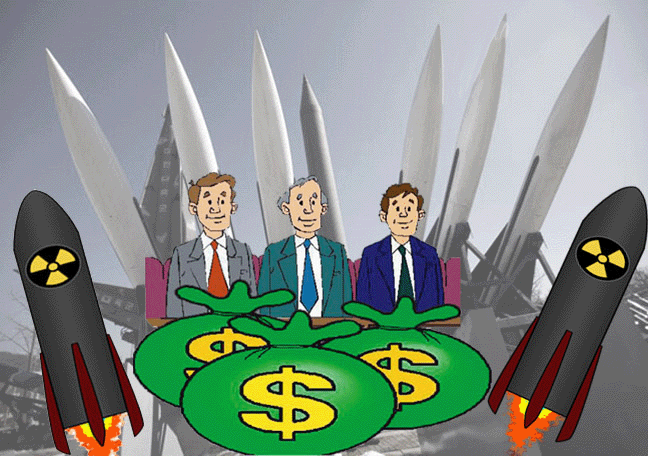
DARPA awards nuclear spacecraft contracts to Lockheed Martin, Bezos’ Blue Origin and General Atomics
PUBLISHED MON, APR 12 2021 HTTPS://WWW.CNBC.COM/2021/04/12/DARPA-NUCLEAR-SPACECRAFT-LOCKHEED-BEZOS-BLUE-ORIGIN-GENERAL-ATOMICS.HTML
The Pentagon’s DARPA awarded contracts to General Atomics, Lockheed Martin and Jeff Bezos’ space venture Blue Origin under the agency’s DRACO (Demonstration Rocket for Agile Cislunar Operations) program.
The Pentagon’s research and development arm on Monday awarded a trio of companies with contracts to build and demonstrate a nuclear-based propulsion system on a spacecraft in orbit by 2025.
General Atomics, Lockheed Martin and Jeff Bezos’ space venture Blue Origin won the Defense Advanced Research Projects Agency or DARPA awards, under the agency’s Demonstration Rocket for Agile Cislunar Operations program or DRACO.
The goal of the program is deceptively simple: Use a nuclear thermal propulsion system to power a spacecraft beyond low Earth orbit.
The problem of plutonium programs
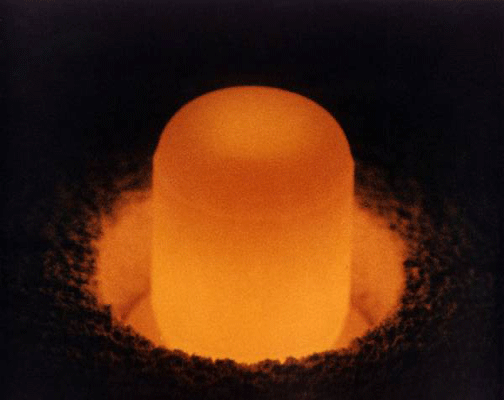
Plutonium programs in East Asia and Idaho will challenge the Biden administration, Bulletin of the Atomic Scientists, By Frank N. von Hippel | April 12, 2021 Among the Biden administration’s nuclear challenges are ongoing civilian plutonium programs in China and Japan. Also, South Korea’s nuclear-energy research and development establishment has been asserting that it should have the same “right” to have a plutonium program as Japan. These challenges have been compounded by a renewed push by the Energy Department’s Idaho National Laboratory to revive a plutonium program that was shut down in the 1980s. These foreign and domestic plutonium programs are all challenges because plutonium is a nuclear-weapon material.
Henry Kissinger’s State Department quickly discovered that the governments of Brazil, Pakistan, South Korea, and Taiwan—all under military control at the time—had contracted for French or German spent-fuel “reprocessing” plants. The United States intervened forcefully and none of these contracts were fully consummated…………………..
…………….A possible path forward. During the Trump administration, the Energy Department fell back into the never-never land of plutonium-fueled reactors from which the United States extracted itself in the 1980s. Fortunately, the big-dollar commitments to the Versatile Test Reactor and the Natrium Reactor have not yet been made, and the Biden administration could use the excuse of budget stringency not to make those commitments.
In South Korea, the Biden administration will have to deal with the completion of the Idaho National Lab–Korea Atomic Energy Research Institute Joint Fuel Cycle Study. Although there will no doubt be obfuscation in the report, the conclusions of the 10-year study should have been obvious from the beginning: reprocessing is hugely costly, creates proliferation risks, and complicates spent fuel disposal. Fortunately, the anti-nuclear-energy Moon administration is unlikely to push for reprocessing. It will be much more interested in the opportunities that the Biden administration can provide to advance the Korean Peninsula denuclearization agenda. It should therefore be politically relatively easy for the Biden Administration to terminate cooperation on pyroprocessing.
China’s reprocessing and fast-neutron reactor program may be driven in part by China’s interest in obtaining more weapon-grade plutonium to build up the size of its nuclear arsenal. If that is the case, China’s incentive to build up could be reduced through nuclear arms control. Specifically, if China is building up its nuclear arsenal out of concern about the adequacy of its nuclear deterrent in the face of an unconstrained US missile-defense buildup, then the United States could examine the possibility of an agreement to limit missile defenses as an alternative to an open-ended, offense-defense arms race. That was the path of wisdom that the United States and Soviet Union chose with their 1972 Anti-Ballistic Missile Treaty.
In Japan, the Biden administration will be faced with the continued unwillingness of the powerful Ministry of Economics, Trade, and Industry to wind down Japan’s dysfunctional plutonium program. But, if a linkage could be made between constraining China’s nuclear buildup and ending Japan’s hugely costly reprocessing program, that might help tip the balance in Japan’s internal debate over reprocessing. https://thebulletin.org/2021/04/plutonium-programs-in-east-asia-and-idaho-will-challenge-the-biden-administration/?utm_source=Newsletter&utm_medium=Email&utm_campaign=MondayNewsletter04122021&utm_content=NuclearRisk_EastAsia_04122021
New nuclear power may not be feasible in USA – former NRC chair says
Former NRC chair questions economic feasibility of new nuclear in US, Utility Dive Iulia Gheorghiu. 12cApr 21,
Without further aid from Congress and the White House, the prospects for the U.S. nuclear industry will dwindle in the face of cheaper resources that are getting built faster than new nuclear generators, according to a former Chairman of the U.S. Nuclear Regulatory Commission………
Excepting NuScale Power, which has advanced in permitting with the NRC, the near-term potential for other small modular reactor designs to replace physical coal plants is “very low in the near future, like zero,” Allison Macfarlane, …..
The only U.S. reactors currently under construction continue to face delays. Vogtle Unit 3 and Unit 4 are poised to be the first nuclear plants completed in the United States [since 2016]……….
Georgia Power, one of the owners of the two nuclear reactors at Vogtle Power Plant, recently announced construction remediation work, signaling further delays for the unit that is expected to be operational later this year.
“If we don’t pay attention to this issue, there is no future for nuclear, you will not build anything. It will all be too expensive, it will all take too long,” she said.
She remarked on supply chain issues with larger designs, such as the Westinghouse AP1000 design, a pressurized water reactor power plant that was used in V.C. Summer and Vogtle construction.
“The AP1000 is a good design, but it may be a dead design,” Macfarlane said. https://www.utilitydive.com/news/former-nrc-chair-questions-economic-feasibility-of-new-nuclear-in-us/598188/
Bitcoin: cryptocurrency an extreme energy user. Can it be justified in a climate emergency?

This is a critically important article. As long as multi billionaires like Elon Musk and Bill Gates are accepted as authorities of integrity, on what direction society should take, we are in trouble. Both of these visionary zealots are enthusiastic about nuclear power. Both are enthusiastic about nuclear-powered space rocketry. Elon Musk is all for Bitcoin. I don’t know about Bill Gates’opinion on this. While we acknowledge thsat these entrepreneurs have made beneficial achievements, we really do not need to minlessly follow them. Neither are really scientific experts, and should not in any way be determining society’s policies on climate, or anything else. Neither show any awareness of concern about unlimited growth and unlimited energy use, on a finite planet.
A new “crypto climate accord” wants to clean up Bitcoin. But the calls for government regulation, bans and taxation are growing. The post Can cryptocurrency be justified in a climate catastrophe? appeared first on RenewEconomy.
Can cryptocurrency be justified in a climate catastrophe? — RenewEconomy
Bitcoin mining and cryptocurrency in general are having what could very loosely be sort of described as a ‘coming of age’ moment. It’s loose because advocates of these digital currencies, which obtain ‘trust’ from requiring massive amounts of energy to generate (‘proof of work’), don’t seem to be handling the challenges of dealing with key issues like climate and environment particularly well.
This was explored recently in RenewEconomy, in this post detailing how there are many Bitcoin mining operations running massive server farms that either exist on carbon intensive grids, or even directly use fossil gas on mining sites where that gas would have otherwise been flared.
And last week, we covered a piece of research that predicted Bitcoin’s energy consumption will match that of Australia’s by the year 2024.
“Under the Paris Agreement, China is devoted to cut down 60 per cent of the carbon emission per GDP by 2030 based on that of 2005. However, according to the simulation results of the [blockchain carbon emission] model, we find that the carbon emission pattern of Bitcoin blockchain will become a potential barrier against the emission reduction target of China”, the researchers found. It’s significant, because the fate of China on energy and climate decides, by and large, the fate of the world.
Part of the reason interest has increased in Bitcoin was a significant purchase of it by Tesla. CEO Elon Musk is a well-known fan of cryptocurrency, including Dogecoin, an alternative to the more mainstream Bitcoin. But scrutiny of its extreme energy consumption, alongside a lack of any real sustainability or environment initiatives across the industry of Bitcoin miners, has led to nearly months now of constant criticism (including from this author).
Now, a new initiative is attempting to change that at a surprisingly ambitious and fundamental level. Last week, a range of organisations launched the ‘Crypto Climate Accord’, aiming to decarbonise the entire cryptocurrency industry, including Bitcoin trading house Coinshares.
Among the partners are the Rocky Mountain Institute (RMI), well-regarded among energy experts, and representations from the United Nations Framework Convention on Climate Change (UNFCCC). Energy Web and the Alliance for Innovative Regulation (AIR) are involved too, as are the cryptocurrency companies.
“The Accord intends to achieve this by working collaboratively with the cryptocurrency industry — including all blockchains — to transition to 100% renewable energy by 2025 or sooner. While many organisations are individually taking steps to decarbonise their operations, the Accord recognises that an industry-wide coalition and scalable solutions can quickly multiply impact.”
Total decarbonisation of power by 2025 comes along with full decarbonisation of all business operations by 2040, and with the active removal of historical emissions from the Earth’s atmosphere by 2040. These are both genuinely ambitious goals, and they seem to be closely tied to international climate diplomacy. It is a far cry from the decentralised, regulation-hating, unaccountable world of Bitcoin mining as it exists today.
While this seems like a step in the right direction, it is very likely its advocates will be swimming against the tide. The very philosophy of collective action to take responsibility for the externalities of profit-making business is contrary to the libertarian values of individual freedom. Some participants may not be all that invested. “Coinshares less than two weeks ago was arguing more energy consumption is about the best thing ever. I’m not sure how this is inspired by the Paris Agreement if they’ve clearly never read it or don’t understand it”, wrote Alex De Vries, author of the Digiconomist blog.
Meanwhile, Bitcoin seems only to be getting hungrier for energy, and there doesn’t seem to be much effort to direct that big ship towards clean power sources only. Cheap coal and gas will likely get cheaper, as they both get displaced from grids by renewable energy.
The Centre for Global Development just released a new analysis showing that mining a single Bitcoin is equivalent to the total annual energy usage of 18 Americans, or 2,199 Tanzanians.
They recommend a range of policy options to forcibly clamp down on the problem, including a ban of large mining operations and taxing mining activity. Neither of these will be welcomed by the industry. “The most hopeful case for the environment is that the price of bitcoin falls low enough to push most miners out of business, leaving behind only those with access to cheap renewable energy and the most efficient mining rigs”, they write.
The question is whether voluntary accords or forcible regulation win out in cleaning up Bitcoin. The alternative is very ugly – a major new threat to climate action at a sensitive time indeed.
Reforms needed at Canadian Nuclear Safety Commission ~ Hill Times letter to the editor — Concerned Citizens of Renfrew County and Area
April 12, 2021 https://www.hilltimes.com/2021/04/12/reforms-needed-at-canadian-nuclear-safety-commission/292381 Canada’s nuclear regulatory agency, the Canadian Nuclear Safety Commission says it’s the “World’s best nuclear regulator” on its website. That “self-image” of the CNSC’s is inconsistent with statements made in recent years by international peer reviewers, high-ranking Canadian officials, international nuclear proponents and others. The International Atomic Energy Agency recently reviewed Canada’s nuclear […]
Reforms needed at Canadian Nuclear Safety Commission ~ Hill Times letter to the editor — Concerned Citizens of Renfrew County and Area
1 This Month

Read the Public Inquiry Report, the Commissioners’ report, Surrendering Australia: The AUKUS Deception is available to download for free at aukuspublicinquiry.com. Or just watch the replay of the National Press Club Luncheon.


19 November – Webinar – The Reality of Reprocessing
Time: 11:00 AM Pacific Time (US & Canada) / 2:00 PM Eastern / 7:00 PM UK / 8:00 PM CET
Register for the Zoom Event Here



Shut down the radiation-damaged Heysham nuclear reactors now
To see nuclear-related stories in greater depth and intensity – go to https://nuclearinformation.wordpress.com

Say No to NASA’s Reckless Nuclear Reactor on the Moon
Say No to NASA’s Reckless Nuclear Reactor on the Moon
-
Archives
- November 2026 (103)
- October 2026 (302)
- September 2026 (339)
- August 2026 (330)
- July 2026 (355)
- June 2026 (287)
- May 2026 (306)
- April 2026 (356)
- March 2026 (251)
- February 2026 (267)
- January 2026 (308)
- December 2025 (358)
-
Categories
- 1
- 1 NUCLEAR ISSUES
- business and costs
- climate change
- culture and arts
- ENERGY
- environment
- health
- history
- indigenous issues
- Legal
- marketing of nuclear
- media
- opposition to nuclear
- PERSONAL STORIES
- politics
- politics international
- Religion and ethics
- safety
- secrets,lies and civil liberties
- spinbuster
- technology
- Uranium
- wastes
- weapons and war
- Women
- 2 WORLD
- ACTION
- AFRICA
- Atrocities
- AUSTRALIA
- Christina's notes
- Christina's themes
- culture and arts
- Events
- Fuk 2022
- Fuk 2023
- Fukushima 2017
- Fukushima 2018
- fukushima 2019
- Fukushima 2020
- Fukushima 2021
- general
- global warming
- Humour (God we need it)
- Nuclear
- RARE EARTHS
- Reference
- resources – print
- Resources -audiovicual
- Weekly Newsletter
- World
- World Nuclear
- YouTube
-
RSS
Entries RSS
Comments RSS

