Radioactive leakage from nuclear waste containers near Fukushima Daiichi nuclear plant
ECNS 30th April 2021, Tokyo Electric Power Company Holdings Inc. (TEPCO), the operator of the Fukushima Daiichi nuclear plant in Japan’s northeast said last week a container holding radioactive waste at the site of the plant may have leaked, Japan’s Asahi Shimbun reported Friday last week. The TEPCO said some gel-like blocks with large amount of radiation were found last month at the site where the containers were kept, and the situation is under investigation, according to the newspaper. The containers have been stacked in three layers, and the top container has become rusted and corroded, causing liquid accumulation, said the company. The sides of the two lower containers have been contaminated with radioactive materials, and it is believed that the liquid leaking from the top container may have made its way to the ground through the containers below, according to the company. The relevant containers have been moved to an indoor storage facility. The concentration of radioactive materials that emit beta rays in the gel-like blocks was 230,000 becquerels per gram, according to the report. http://www.ecns.cn/m/news/society/2021-04-30/detail-ihakynqm6148318.shtml |
Texas legislators must reject proposal to lower human health and safety measures at nuclear waste dump
Texas legislators must reject proposal to lower human health and safety measures at nuclear waste dump , Record Star, 2 May 21, Texas legislators should reject proposed legislation that aims to remove environmental safeguards currently in place governing the disposal of nuclear waste in the state.
A bill that strips away the human health and safety precautions around the disposal of nuclear waste which have been in place since the state authorized nuclear waste dump sites nearly 20 years ago is headed to a vote in the Texas House of Representatives later this month or next. HB 2692, authored by Odessa Rep. Brooks Landgraf, would remove the provision mandating that all nuclear waste be containerized in steel- reinforced structures prior to being placed in a below-surface waste dump.
“Every environmental organization in the state of Texas has come out against this drastic rollback on protecting the citizens of this state, yet it sailed right out of committee and is headed to the full House and Senate” said Eric Holguin, executive director of Texas Environment First. “Texas is one of only a handful of states that even allows nuclear waste dumps to operate. There is absolutely no rational explanation for why the state should lower its regulatory standards in 2021.”
The Texas facility disposes of Class A, B, and C low level radioactive waste in Andrews, County, which is also home to the Ogallala Aquifer – a vital source of drinking water for much of the state. From the outset of operations, the state has mandated containerized disposal. ,,…… While the proposal purports to seek a ban on high level nuclear waste disposal in Texas, no federal license for high level waste storage or disposal has been issued in Texas.
“All of us are prepared to fight any federal efforts to bring high level nuclear waste to Texas,” Holguin said. “But right now, low level nuclear waste is being disposed of every day at the Andrews facility. De-regulating nuclear waste dumps is a colossally bad idea. The Texas Legislature must reject it.” https://www.recordstar.com/story/news/2021/04/29/texas-legislators-must-reject-proposal-lower-human-health-and-safety-measures-nuclear-waste-dump/7398882002/
Sen. Angus King: Cybersecurity a major concern in U.S. nuclear command-and-control system
Sen. Angus King: Cybersecurity a major concern in U.S. nuclear command-and-control system https://spacenews.com/sen-angus-king-cybersecurity-a-major-concern-in-u-s-nuclear-command-and-control-system/, by Sandra Erwin — May 2, 2021 King: Without an adequate N3C system ‘none of the rest of it works’
WASHINGTON — The U.S. nuclear command, control and communications system that serves as the link between U.S. nuclear forces and presidential authority could be vulnerable to cyber attacks and needs upgrades, Sen. Angus King (I-Maine) told reporters May 1.
King, an independent who caucuses with the Senate’s Democratic majority, is the chairman of the Senate Armed Services Committee’s subcommittee on strategic forces, which oversees the Pentagon’s space, nuclear and strategic deterrence programs.
King and a bipartisan group of senators on Saturday were briefed on U.S. nuclear modernization efforts at Offutt Air Force, Nebraska, where U.S. Strategic Command is headquartered. The senators on Friday also toured U.S. nuclear operations at Minot Air Force Base, North Dakota.
During a call with reporters after the Saturday briefing, King said the nuclear command, control and communications system known as NC3 was a “major point of discussion” and a “significant part of the briefing” senators received at Offutt.
NC3 is a Cold War-era system of interconnected sensors, communications and early warning satellites, aircraft and ground control centers. The Trump administration in 2018 assigned U.S. Strategic Command the responsibility for upgrading the NC3 architecture so it’s compatible with modern technology.
King said nuclear command and control has become “much more complicated” and cybersecurity is a high priority. “All I can tell you is that it’s very much at the forefront” of the Strategic Command’s plan to upgrade the system, he said.
Ongoing discussions about the cost of modernizing the U.S. nuclear triad “tend to focus on missiles and airplanes and submarines, but command and control is essential,” King said. “It really ought to be referred to as the quad, not the triad.”
The U.S. nuclear triad consists of three “legs” — ground-based intercontinental ballistic missiles, aerial bombers and submarines that can deliver nuclear weapons anywhere in the world.
Without an adequate N3C system, “none of the rest of it works,” said King.
The increasing frequency and sophistication of cyber attacks against DoD and other government systems is a cause for concern in the modernization of the NC3, he added. “The next conflict will almost certainly start with a major cyber attack to disable communications networks, and communications between the command authority and the forces, whether it’s an aircraft carrier or a bomber or a missile site.”
“It’s a challenge of assurance of communication, to be sure that you’re not cut off,” King said. “The president has to able to communicate with the forces to be able to issue commands, to consult with advisors.”
Other senators who participated in the briefing included John Hoeven (R-N.D.), Deb Fischer (R-Neb.), Jeanne Shaheen (D-N.H.) and Joni Ernst (R-Iowa).
Most Scots feel unsafe about having nuclear weapons base on the Clyde
The National 1st May 2021, ONLY a quarter of Scots voters have said they feel safer having nuclear
weapons based on the Clyde, according to a new opinion poll. The latest
survey from James Kelly asked people the question: “The UK Government
argues that its nuclear weapons protect the public due to a ‘deterrent’
effect. However, others argue that the presence of nuclear weapons on the
Clyde puts the public in greater danger by making the area a target for
nuclear attacks, and by creating a risk of serious accidents.
https://www.thenational.scot/news/19272880.less-quarter-scots-feel-safer-nuclear-weapons-clyde/
UK anti-nuclear groups plan to stand candidates for elections, opposing Bradwell new nuclear station
Maldon Standard 30th April 2021, ANTI-NUCLEAR campaign groups have urged political candidates standing for
the Essex County Council elections on Thursday to support their cause
against the building of a new nuclear power station Bradwell B
.TheBlackwater Against New Nuclear Group and the Bradwell Action Network hope
to get candidates on their side in time for the elections, with responses
being posted on the groups’ respective websites. Both groups are
encouraging residents opposed to the Bradwell B project to contact their
Essex County Council candidates asking them to make their views known.
New Zealand nuclear veterans want apology and compensation from the government
New Zealand’s nuclear horror still not acknowledged say vets Stuff, Janine Rankin May 02 2021 Photos on a wall, names on a board and an academic study will ensure the radiation damage to 551 men who witnessed Britain’s nuclear bomb explosions in the Pacific is never forgotten.
But what the New Zealand survivors of those blasts really want is an apology and compensation from the Government.
The stories of the nuclear veterans and the subsequent heartache and illness affecting them and the off-spring of those who had families have been retold in Palmerston North this weekend.
It was the third opening of Denise Baynham’s exhibition of the photographs and stories of navy veterans “Operation Grapple, We were There” at Te Manawa art gallery……………
…….. The men exposed to those bomb blasts, many times more powerful than the bombs that ended World War II in Japan, suffered radiation damage, and still do.
A carefully controlled sample of 50 veterans showed three times the frequency of genetic damage, technically called total chromosome translocations, than the control group.
Rowland is now the association’s patron, and he and Sefton’s close friend and successor Tere Tahu are determined to have the Government acknowledge the harm done.
They have a meeting with Veterans’ Affairs Minister Meka Whaitiri on May 10, with the goal of gaining an audience with Prime Minister Jacinda Ardern.
Veteran John Purcell said until now, they had only received “a wall of silence” from successive ministers.
“It is my belief that the Crown abrogated its duty of care by dispatching HMNZS Pukaki and Rotoiti to take part in the British nuclear testing, being fully aware that we were being sent into harm’s way.”
What he wants is a public apology, a public acceptance of the research findings, urgent research regarding the children and grandchildren of veterans, and compensation., https://www.stuff.co.nz/national/125002784/new-zealands-nuclear-horror-still-not-acknowledged-say-vets
In India’s pandemic nightmare, India and Pakistan need to invest in health, not nuclear weapons.

Oxygen is more important than uranium, DW, 1 May 21, India and Pakistan can afford to buy weapons and test ballistic missiles, but they can’t cope with the COVID crisis. DW’s Shamil Shams says it is time for both to invest in public health and focus less on warmongering.
Dr. Mubarak Ali, a progressive Pakistani historian, recently wrote on social media that the mishandling of the coronavirus pandemic in India and Pakistan proves that “oxygen is more important than uranium.”
Both India and Pakistan are grappling with an acute public health crisis brought on by coronavirus. India lacks oxygen for COVID patients, and Pakistan can’t afford to buy vaccines.
However, both nuclear-armed states continue to devote a large chunk of their national budgets to military spending.
The pandemic situation in India is nightmarish. During the week following April 18, India reported 2.24 million new cases, the highest number recorded by any country in a seven-day period since the pandemic began.
India also logged 16,257 deaths, almost double the 8,588 deaths recorded the previous week, according to Health Ministry data. Since the start of the pandemic last year, India has registered over 17.6 million COVID cases and almost 200,000 related deaths.
This “second wave” is particularly lethal and has exposed the fragility of India’s health infrastructure. Hospitals are overwhelmed with COVID patients, and there aren’t enough places to cremate or bury the dead.
The situation is Pakistan is getting worse by the day. Infections and deaths are surging.
As of Tuesday, April 27, Pakistan has recorded almost 805,000 COVID cases and 17,329 deaths. Experts say the actual numbers are likely much higher.
The vaccine rollout has been quite slow in Pakistan because the government doesn’t have the funding to purchase doses. China and other countries have donated a few million vaccine doses, but it is not enough to vaccinate a country of 220 million people.
Stubborn arrogance
Yet, the ruling classes in India and Pakistan are not ready to reevaluate their public spending policies.
For over 70 years since both countries gained independence from British rule, India and Pakistan have invested more in defense than in the wellbeing of their people.
Their militaries have thrived, even as a large segment of their populations have fallen below the poverty line.
This is what happens when a developing county prioritizes security-based national spending. India and Pakistan have the latest tanks and fighter jets, yet their hospitals lack ICU beds and ventilators………
Misplaced priorities
Even the world’s most developed health care systems have been pushed to the edge by the coronavirus pandemic. And for developing countries, the pandemic has demonstrated the necessity of a functional health care system for prosperity.
Powerful militaries and massive defense budgets cannot fight a virus.
Therefore, India and Pakistan can no longer justify supporting a nuclear arsenal while their populations suffer due to a lack of medicines, oxygen cylinders and hospitals.
The rulers of the two nations must put an end to their warmongering and resolve their disputes politically and diplomatically. The best way to deal with COVID – and potential pandemics in the future – is through regional cooperation.
The way many Pakistanis have offered support to Indians during their health crisis is proof that the two nations can overcome many challenges if they help each other.
The pandemic has demonstrated that if the arch-rival south Asian neighbors don’t move toward reconciliation and peace, their economies are bound to collapse in the long run, and even their mighty armies will not be able to stop it. https://www.dw.com/en/opinion-oxygen-is-more-important-than-uranium/a-57350243?fbclid=IwAR3Cwkkmbw2jocuXnqY6MpWWHOnWzy182c0WUa1XIkWRvAntNSlZS2t4CVY
Czech Republic’s nuclear plan hangs on hope for European Commission to call nuclear ”green”

The EU’s Nuclear Showdown Comes to a Head in Czechia, World Politics Review, Tim Gosling Friday, April 30, 2021 A fight over nuclear power is heating up in the European Union. While the Czech Republic and other Central and Eastern European states insist that the technology is vital to their transition from coal-generated energy, others in the bloc want to cut it out of the equation. The outcome of the debate could also help determine the fate of a stalled tender to build a new reactor at Dukovany, one of the country’s two existing nuclear power plants.
[Nuclear] Hopes in Prague were boosted in March when the Joint Research Center, an expert group for the European Commission, delivered a report stating that nuclear power qualifies as a “sustainable” source of energy………
However, the commission was quick to state that the Joint Research Center’s opinion is far from the final word, indicating that the tussle would continue. And indeed, on April 21, when the commission finally published its first list of sustainable energy sources—known as the EU taxonomy for sustainable activities in Brussels’ policymaking circles—nuclear power was not included. Some member states, as well as lawmakers in the European Parliament, had threatened to veto an earlier draft that included nuclear and gas-powered energy.
But that’s still not the end of the story. Referring to “a delicate compromise on whether or not to include nuclear energy,” the EU executive said it would make a final decision based on further expert opinions. That could be presented in June, said Vladis Dombrovskis, the European Commission vice-president in charge of the economy.
That gives the nuclear lobby two months to push its side of the debate……
Germany will switch off its last nuclear plant next year, as part of a phased drawdown adopted in the aftermath of the 2011 Fukushima disaster. But Berlin’s anti-nuclear drive isn’t limited to its own reactor fleet. Environment Minister Svenja Schulze pledged in March that the country plans to quash nuclear power globally, with a particular focus on its neighborhood.
“Nuclear power is neither safe nor clean,” she said at the time, as she unveiled a 12-point plan that argues the technology cannot be considered part of any solution to the climate crisis. “The future is for renewable energy.”
……….. in the wake of the Fukushima disaster, the challenges and costs of building new nuclear reactors have risen dramatically, and that’s what makes the EU classification key. Classification as “sustainable” would significantly lower the cost of financing for private investors, according to industry lobbyist Foratom.
Such a classification is also crucial to staying on the right side of the EU’s competition regulations, as it’s now all but impossible to build new nuclear reactors without state aid.
“The Czech government does not hope to use EU funds to build new nuclear reactors,” says Vit Havelka of the Prague-based think tank Europeum. “They’re worried that Brussels will block [the provision of] state aid, which would make it economically unfeasible.”…….
critics contend that the alternatives haven’t been properly researched. Global consultancy Deloitte suggests that renewables could deliver the same capacity of new energy generation as Dukovany 2—which is optimistically earmarked for completion in 2038—more quickly and less expensively, helping to modernize the energy sector and support the economy along the way. According to another study, it is the focus on nuclear that is helping to keep renewable power-generation underutilized.
Jiri Jerabek from Greenpeace says in an interview that the Czech government has “no proper support schemes for most types of renewables.” Moreover, its target to raise the share of renewables in its energy mix from around 16.2 percent in 2019 to 22 percent by 2030 is well below the EU’s goal of 32 percent, earning it reprimands from the European Commission…….. https://www.worldpoliticsreview.com/articles/29616/for-eastern-europe-nuclear-power-depends-on-eu-taxonomy
Mobile nuclear reactors? Scathing report slams ‘disturbing’ military program
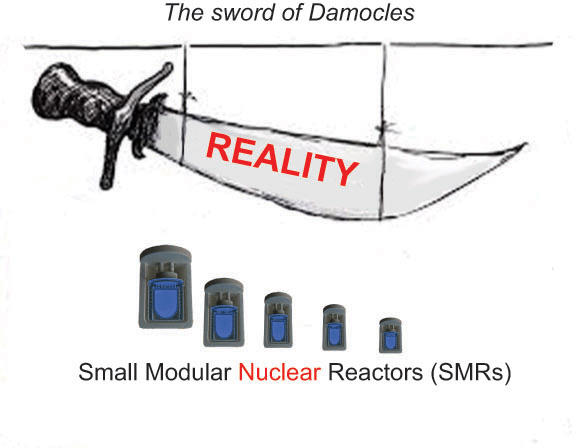
Mobile nuclear reactors? Scathing report slams ‘disturbing’ military program, Times, 1 May 21, Todd South The author of an academic report on Pentagon plans to build mobile nuclear reactors to power future combat bases called the effort “extremely disturbing” and “based on a lie.”
The report released Thursday slams the Pentagon and Army G-4, logistics — specifically the Army office’s 2018 report that lays out the potential uses and needs for such mobile nuclear reactors in future operations.
Alan J. Kuperman wrote the 21-page report titled, “Proposed U.S. Army Mobile Nuclear Reactors: Costs and Risks Outweigh Benefits,” in his role as coordinator of the University of Texas at Austin’s Nuclear Proliferation Prevention Project.
“They don’t reduce casualties, they increase costs and they increase threats to the lives of U.S. service members,” Kuperman said.
The program, known as “Project Pele,” is prototyping the mobile advanced microreactor concept under the Pentagon’s Strategic Capabilities Office……..
The DoD spokesman pointed out that the project is part of a collaboration involving the Department of Energy, Nuclear Regulatory Commission, U.S. Army Corps of Engineers and private industry. Project Pele is not being designed for a specific military service branch but does include experts across defense for a variety of requirements.
Army officials for G-4 deferred comment on the program to DoD……..
Congress approved funding for prototype reactors and the Army awarded $40 million in contracts to three nuclear reactor companies in March 2020 for Project Pele, according to the NPPP report.
Kuperman struck at the Army’s rationale, calling the project unnecessary and dangerous. He counters some of the main justifications that have been provided by DoD and Army reports:
High cost – Kuperman said the Army’s claims that nuclear power can provide cheaper electricity for powering future forward bases is “based on unrealistic assumptions.” Those include that such a reactor would have low construction costs and operate for 18 hours a day over 40 years. The more likely scenario is a mobile reactor would run for half that time over about 10 years, meaning nuclear electricity could cost 16 times more than estimates and still seven times more than diesel-generated power.- Vulnerability to missile attacks – The report points to the 2020 missile attack on forces at al-Asad air base in Iraq. Even with warnings hours ahead of time, more than 100 U.S. personnel suffered traumatic brain injury from the 11 strikes that hit the facility. And the missiles were 10 times more accurate than the Army has predicted in its report on the vulnerability of reactors to precision strikes. The service admits that a direct hit on a reactor would destroy the device. Kuperman notes that even the Army’s plans to protect the reactors, by burying them underground, could inadvertently cause meltdowns by impeding air cooling and causing overheating. A similar strike on an similar such future base with a reactor could cause far more devastating consequences.
Captured reactors – Should a U.S. base housing a mobile reactor be overrun or abandoned, the radioactive waste from the reactor could be used in “dirty bomb” terror attacks.- No mission for reactors – One of the chief purposes of pursing such reactor programs was to reduce casualties from diesel transport to remote bases. But Defense Department data shows a dramatic drop in casualties of five per 1 million gallons of fuel delivered in 2005 to nearly zero by 2013.
- High-energy weapons don’t need reactors – Kuperman states that the justification that future high-energy or laser weapons that the Army hopes to have protecting bases don’t require a reactor to power. “A high energy weapon would have to be fired millions of times to justify a reactor,” Kuperman said. “In reality such a weapon would be fired perhaps hundreds of times in its lifetime.”
- Transport problems – The Army wants to air deliver these reactors to combat posts. Kuperman questions the “regulatory nightmare” that would create. The program calls for initial tests flying the reactors domestically to run then returning them, and their radioactive waste, to another domestic location. Foreign transport would require approval of countries airspace traversed and the approval of a host nation where the reactor would be placed, he said. Other Army recommendations include truck or rail transport domestically and either ship or over-the-ocean flights to friendly ports to then move the reactors again via truck or rail.
Army Times reported on the proposed program in 2019, which had drawn backlash from the Union of Concerned Scientists and its then-director of the Nuclear Safety Project, Edwin Lyman, who called the proposal, “naïve.”The original proposal, approved by the Pentagon’s Strategic Capabilities Office asked for industry solutions in January 2019 on providing a less than 40-ton small, mobile nuclear reactor design that could operate for three years or more and provide 1 to 10 megawatts of power.Planners want the reactor to fit inside a C-17 cargo plane for air transport to theater. More recent moves have reduced the power output to 5 megawatts……..
Lyman notes a major failure with one of the original eight designs in 1961 when a core meltdown and explosion of the ML-1 reactor in Idaho killed three operators.
The three deployed to Antarctica, Greenland and Alaska proved “unreliable and expensive to operate,” Lyman wrote in his response to the Army’s 2018 report on the mobile reactor program.Lyman told Army Times on Thursday that a number of those old reactors required decades of decommissioning and one used at Fort Belvoir, Va., near Washington D.C. is finally scheduled for decommissioning in late 2021……….. https://www.armytimes.com/news/your-army/2021/04/30/mobile-nuclear-reactors-scathing-report-slams-disturbing-military-program/
Feds: Underground nuclear waste tank at Hanford Nuclear Reservation may be leaking

Feds: Nuclear waste tank at Hanford Nuclear Reservation may be leaking, Statesman Journal NICHOLAS K. GERANIOS, 30 Apr 21, Associated Press SPOKANE, Wash. (AP) — An underground nuclear waste storage tank in Washington state that dates to World War II appears to be leaking contaminated liquid into the ground, the U.S. Department of Energy said Thursday.
It’s the second tank believed to be leaking waste left from the production of plutonium for nuclear weapons at the Hanford Nuclear Reservation. The first was discovered in 2013. Many more of the 149 single-walled storage tanks at the site are suspected of leaking.
Tank B-109, the latest suspected of leaking, holds 123,000 gallons of radioactive waste. The giant tank was constructed during the Manhattan Project and received waste from Hanford operations between 1946 to 1976.
The Hanford site near Richland in the southeastern part of the state produced about two-thirds of the plutonium for the nation’s nuclear arsenal, including the bomb dropped on Nagasaki, Japan, and now is the most contaminated radioactive waste site in the nation.
A multi-billion dollar environmental cleanup has been underway for decades at the sprawling Hanford site.
The Washington state Department of Ecology and the U.S. Environmental Protection Agency were notified Thursday that the tank was likely leaking…….
The leak from Tank B-109 was first suspected in March 2019, when there appeared to be a small drop in the level of its liquid waste. Monthly checks showed the level stable until July 2020, when another drop was detected, and the DOE launched an investigation. https://www.statesmanjournal.com/story/tech/science/environment/2021/04/29/feds-nuclear-waste-tank-hanford-nuclear-reservation-may-leaking/7401579002/
Like Trump, Biden administration to ramp up nuclear bomb-making

| US pushes ahead with nuclear plans despite watchdog concerns, 9 news, By Associated Press Apr 30, 2021 The Biden administration appears to be picking up where former President US Donald Trump left off as the federal agency that oversees US nuclear research and bomb-making has approved the conceptual design and cost range for infrastructure investments for a multibillion-dollar project to manufacture key components for the nation’s nuclear arsenal. The National Nuclear Security Administration in a decision announced Wednesday stated that planning and construction could cost upwards of $5.15 billion initially.The agency did not articulate what exactly that money would be spent on nor does it include the cost of other preparations that would be needed for Los Alamos National Laboratory to begin producing 30 plutonium cores per year. The push to resume production of the nuclear triggers has spanned multiple presidential administrations, with supporters arguing that the US needs to ensure the stability and reliance of its arsenal given growing global security concerns. The nuclear agency also has said most of the cores in the stockpile date back to the 1970s and 1980s. Lab Director Thom Mason during a virtual community meeting Thursday evening fielded several questions about the project, saying the goal of the work is not to expand the arsenal but rather to extend the life of the existing stockpile……… watchdog groups have been sounding alarms over the potential for more security and safety lapses at the northern New Mexico lab and the potential for environmental contamination. Another concern is the nuclear waste that would be generated by the work. The groups have said the cost estimate outlined by the agency in its decision is roughly double the projections made just last year. Greg Mello with the Los Alamos Study Group said the ballooning budget and uncertainty over whether the lab can meet the federal government’s mandated production schedule “throw further doubt on the wisdom of proceeding with industrial pit production” at Los Alamos.“ LANL’s facilities are simply too old and inherently unsafe, its location too impractical,” he said.“Even with a much smaller stockpile, LANL could not undertake this mission successfully.” Some groups have threatened to sue the US Energy Department and the National Nuclear Security Administration, saying a more comprehensive review should have been done on the plans to produce plutonium cores at Los Alamos and at the Savannah River Site in South Carolina. They argue that nearby communities already have been saddled with legacy contamination from previous defence work.Critics are fearful that the project will result in factories that resemble the Rocky Flats facility in Colorado, which had a long history of leaks, fires and environmental violations and needed a $9 billion clean up that took years to finish………..J Jay Coghlan of Nuclear Watch New Mexico called the federal government’s plans “unnecessary and provocative,” saying more production will result in more waste and help to fuel a new arms race……https://www.9news.com.au/world/us-pushes-ahead-with-nuclear-plans-despite-watchdog-concerns/506472b5-da49-4939-971c-4a36586a3843 |
South Korean fishermen protest against the dumping of Fukushima wastewater into the Pacific Ocean
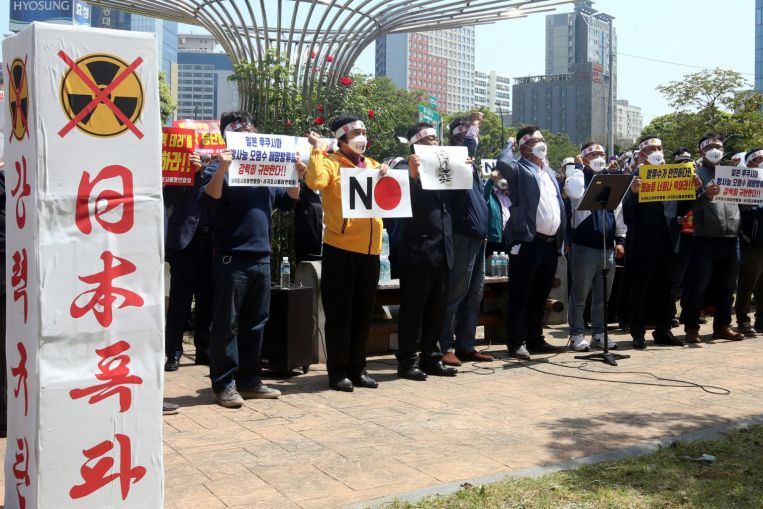
S.Korean fishermen hold boat protests against Japan nuclear plans, Reuters 30 Apr 21, Hundreds of South Korean fishermen across the country held protests on Friday calling on Japan to reverse its decision to release contaminated water from its crippled Fukushima nuclear plant into the sea.
About 800 fishermen participated in rallies at ports in nine cities, according to South Korea’s National Federation of Fisheries Cooperatives.
At one port, at Gungpyeong on the west coast, fishermen held anti-Japan banners and chanted slogans such as “Withdraw Japan’s decision” and “Condemn irresponsible nuclear attack”. Twenty fishing boats with banners denouncing Japan’s decision sailed near the port.
“My father bequeathed this sea to me and I’m going to pass it on to my son, who is also fishing,” said Park Re-seung, chief of Yongdu-ri fishing village, who has worked in the fishing industry for 38 years. “Why is Japan doing this? How could they do such a bad thing against the sea? Don’t they eat fish?”…….
“For us, this issue is about making our living,” Park added. “If the customers continue to see the news of the water release, they wouldn’t be even buying fishes that we caught here.” https://www.reuters.com/business/environment/skorean-fishermen-hold-boat-protests-against-japan-nuclear-plans-2021-04-30/
Extinction Rebellion climate activists block Faslane nuclear base

Extinction Rebellion block Faslane nuclear base entrance, Climate activists set up a blockade at the Faslane nuclear base by attaching themselves to plant pots. https://www.bbc.com/news/uk-scotland-glasgow-west-56941041 30 Apr 21,
Members of Extinction Rebellion Scotland staged the protest at the north gate of the base on the Gare Loch in Argyll and Bute.
The all-female group placed three planters painted with the words “Safe”, “Green”, and “Future” on the road.
Police Scotland said they were made aware of the incident at 06:20 and officers were at the scene.
HMNB Clyde – known as Faslane – is the Royal Navy’s main presence in Scotland.
It is home to the core of the submarine service, including the UK’s nuclear weapons, and the new generation of hunter-killer submarines.
The protest group said they were demanding a future “safe from the threat of nuclear weapons and environmental destruction”.
Extinction Rebellion said the action was part of the Peace Lotus campaign, a global day of anti-war resistance celebrating the anniversary of the end of the Vietnam War.
An HMNB spokesman confirmed police were in attendance and assisting Ministry of Defence officers in dealing with the protest. He added: “Well-established, fully co-ordinated procedures are in place to ensure the effective operation of HMNB Clyde is not compromised because of protest action.”
Even with water release to the Pacific, Fukushima nuclear plant needs more storage tanks
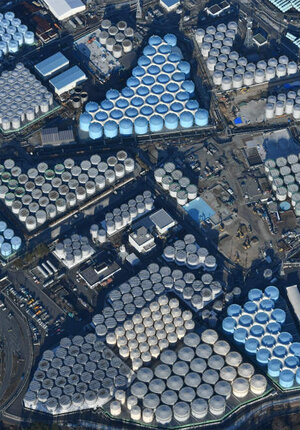
Even with water release, nuclear plant needs more storage tanks, Asahi Shimbun, By KEITARO FUKUCHI/ Staff Writer, May 1, 2021 The plan to release treated radioactive water from the crippled Fukushima No. 1 nuclear plant into the sea will likely not resolve the chronic problem of contaminated water accumulating there, Asahi Shimbun calculations show.
The maximum rate of water discharge allowed under the government’s basic plan would be less than the inflow of rainwater and groundwater at the nuclear power plant, meaning that additional water storage tanks would inevitably be needed at the site.
The government on April 13 approved the basic plan to release more than 1 million tons of treated water into the sea. The government and plant operator Tokyo Electric Power Co. hope to start discharging the water two years from now. Existing storage tanks at the site are expected to reach full capacity around the same time.
The Asahi Shimbun studied this plan based on documents and materials published by the government and TEPCO……… http://www.asahi.com/ajw/articles/14332645
Delays, increased costs and geopolitical uncertainties throw doubt on construction of nuclear power station in Finland.
Nuclear power plant construction in north Finland faces delay, increased costs and geopolitical uncertainties
Costs for the partly Russian-owned controversial plant will be €1 billion more than previously estimated. Barents Observer, By Thomas Nilsen , April 29, 2021
“Further deterioration of political and commercial relations between the EU, the USA and Russia could lead to more sanctions between the parties. Such deteriorated international affairs and sanctions could influence the project’s schedule and financing, in particular,” Fennovoima writes in its updated construction license application to Finnish authorities on Wednesday.
Work on the site in Pyhäjoki south of Oulu is in full swing despite final permission for the reactor itself at Hanhikivi 1 nuclear power plant is not yet granted.
The original application was delivered in 2015, but as Fennovoima sees “changes in boundary conditions,” an updated application was made. Among other things, the application includes an additional survey on the power plant’s impact on the marine environment and fishery during operation.
Other changes are related to security and preparedness arrangements and design solutions, although, no changes to the key principles of the power plant, Fennovoima underlines…….
Russia’s state-owned nuclear corporation holds a 34% stake in the plant. For Moscow, export of civilian nuclear power reactors is both a commercial revenue and a source of symbolic technology pride.
Last week, government officials in the Czech Republic said they were kicking Rosatom out of the play for bidding at a planned new reactor for the Dukovany nuclear power plant. The move came amid the diplomatic turmoil between Prague and Moscow following a 2014 blast in a weapons storage which Czech intelligence blames Russian military spies for being involved.
Like with the Czech nuclear power plant, also Fennovoima’s Hanhikivi 1 reactor is planned to receive uranium fuel supplies from Russia…….. https://thebarentsobserver.com/en/nuclear-safety/2021/04/construction-nuclear-power-plant-runs-delay-costs-increase-and-geopolitical#.YIp3J6ITqk0.twitter
1 This Month

Read the Public Inquiry Report, the Commissioners’ report, Surrendering Australia: The AUKUS Deception is available to download for free at aukuspublicinquiry.com. Or just watch the replay of the National Press Club Luncheon.


19 November – Webinar – The Reality of Reprocessing
Time: 11:00 AM Pacific Time (US & Canada) / 2:00 PM Eastern / 7:00 PM UK / 8:00 PM CET
Register for the Zoom Event Here



Shut down the radiation-damaged Heysham nuclear reactors now
To see nuclear-related stories in greater depth and intensity – go to https://nuclearinformation.wordpress.com

Say No to NASA’s Reckless Nuclear Reactor on the Moon
Say No to NASA’s Reckless Nuclear Reactor on the Moon
-
Archives
- November 2026 (103)
- October 2026 (302)
- September 2026 (339)
- August 2026 (330)
- July 2026 (355)
- June 2026 (287)
- May 2026 (306)
- April 2026 (356)
- March 2026 (251)
- February 2026 (267)
- January 2026 (308)
- December 2025 (358)
-
Categories
- 1
- 1 NUCLEAR ISSUES
- business and costs
- climate change
- culture and arts
- ENERGY
- environment
- health
- history
- indigenous issues
- Legal
- marketing of nuclear
- media
- opposition to nuclear
- PERSONAL STORIES
- politics
- politics international
- Religion and ethics
- safety
- secrets,lies and civil liberties
- spinbuster
- technology
- Uranium
- wastes
- weapons and war
- Women
- 2 WORLD
- ACTION
- AFRICA
- Atrocities
- AUSTRALIA
- Christina's notes
- Christina's themes
- culture and arts
- Events
- Fuk 2022
- Fuk 2023
- Fukushima 2017
- Fukushima 2018
- fukushima 2019
- Fukushima 2020
- Fukushima 2021
- general
- global warming
- Humour (God we need it)
- Nuclear
- RARE EARTHS
- Reference
- resources – print
- Resources -audiovicual
- Weekly Newsletter
- World
- World Nuclear
- YouTube
-
RSS
Entries RSS
Comments RSS

