Despite Germany’s nuclear phaseout, the secure supply of electricity in Germany will remain guaranteed at the current high level for the foreseeable future.
Renew Economy 16th May 2021 Germany’s target of achieving greenhouse gas neutrality by 2045 has a very important sub-goal: The expansion of renewable energy capacity to provide green power for transport, heating and making hydrogen. But running such an integrated energy system on fluctuating renewables alone will require not just more wind turbines and solar panels, but a power network that ensures the delicate balance of supply and demand at all times, while conventional capacities are shut down. So far, the power supply in Germany remains one of the most reliable in the world. The government and grid operators are confident it will stay this way despite the challenges of electrifying the nation and experts highlight the importance of European power grid integration. But others predict that the country will soon be in need of back-up capacity. Germany’s conventional power generation capacity is beginning to dwindle. In December 2022, the country will have over 23 gigawatts (GW) less nuclear power capacity than ten years ago. In a reply to parliamentarians, it wrote in March 2021: “All analyses of supply security known to the federal government and carried out in accordance with the latest scientific findings come to the conclusion that the secure supply of electricity in Germany will remain guaranteed at the current high level for the foreseeable future. The analyses also take into account the phase-out of nuclear energy and the end of coal-fired power generation. https://reneweconomy.com.au/shutting-down-nuclear-and-coal-can-germany-keep-the-lights-on/ |
OVER 440 safety incidents have been recorded at Scotland’s nuclear bases over the last three years,
The National 16th May 2021, Faslane and Coulport** OVER 440 safety incidents have been recorded at Scotland’s nuclear bases over the last three years, with events becoming increasingly more frequent.
More than 80% of the incidents occurred at HM Naval Base Clyde at Faslane,
where most of the UK’s nuclear submarine fleet is located. A number of
safety incidents were also recorded at the Royal Naval Armaments Depot at
Coulport, home to the nuclear warheads. SNP MP Deirdre Brock, who obtained
the figures, told The Scotsman: “This is an appalling safety record and
it just should not be tolerated. Scotland has an arsenal of weapons of mass
destruction sitting just a few miles from our biggest city.
Both Germany and Britain are decarbonising while nuclear production is greatly reducing
Nuclear Phase-Out – UK & Germany**
Even-handed analysis of data from Germany and the UK indicates that it is
still easily possible to dramatically reduce carbon emissions whilst
greatly reducing the amount of energy coming from nuclear power.
One thing not usually appreciated in the arguments about the impact of nuclear power
plant retirements in Germany is that in reality much the same process has
occurred, for different reasons, in the UK.
In both Germany and the UK the
falling proportion of electricity coming from nuclear power has gone along
with dramatic reductions in carbon emissions from electricity in both
countries.
Peering through the fog of the current debate one would almost
think that ‘pro-nuclear’ UK was busy cutting its carbon emissions by
increasing nuclear output whilst ‘anti-nuclear’ Germany was busy
increasing them, or at least not reducing them, by its phase-out policy.
Yet nothing of the sort has been happening. Both the cases of Germany and
the UK knock the pro-nuclear arguments on the head that say that increases
in renewable energy cannot reduce carbon emissions without maintaining
nuclear production. Clearly they can!
100% Renewables 16th May 2021
EDF’s Sizewell B nuclear station: steel components wearing out. EDf to close Hinkley Point B in Somerset and Hunterston B in Scotland early.
Times 17th May 2021, Steel components in the heart of Britain’s most modern nuclear power
station are wearing out more quickly than expected, forcing EDF to carry
out lengthy unscheduled repairs.
The French energy giant is having to keep
Sizewell B in Suffolk offline for three months longer than planned to deal
with the safety issues. …
EDF said it had found wear to some of Sizewell’s stainless steel “thermal sleeves”, which form part of
the mechanisms that insert control rods into the reactor core to shut it
down. Experience at a reactor in France has shown that extreme wear could
eventually result in parts of the thermal sleeves coming loose and
obstructing the control rods. EDF is assessing the cause and extent of the
wear at Sizewell and how many components need to be replaced before it
seeks permission to restart the plant. It insisted the damage was
“nowhere near” the stage where it would prevent control rods
functioning, and that in any event the reactor could still be shut down
safely.
EDF has said it will close Hinkley Point B in Somerset and
Hunterston B in Scotland permanently by next year, earlier than planned,
because of cracks in their graphite cores. It is also considering closing
Dungeness B in Kent as soon as this year. The plant was not scheduled to
close until 2028 but has been offline since 2018 because of corrosion.
Small nuclear reactors – a way to get indigenous people to then accept nuclear waste?

Gordon Edwards is president of the Canadian Coalition for Nuclear Responsibility and notes the Moltex SMR design involves dissolving spent nuclear fuel in molten salt, and there lies an issue, he believes.
“What happens when you dissolve the solid fuel in a liquid, in this molten salt – then all of these radioactive materials are released into the liquid,” says Edwards, “and it becomes more dangerous to contain them because a solid material is much easier to contain than a liquid or gaseous material.”

Peskotomuhkati chief unhappy about nuclear reactor testing on his traditional territory https://www.aptnnews.ca/national-news/peskotomuhkati-nation-nuclear-reactor-testing-new-brunswick-small-modular-reactors/—
Christopher Read cread@aptn.caMay 16, 2021,
Feds say they won’t reach zero emissions by 2050 without small nuclear reactors.
It’s a new kind of nuclear reactor that the federal government is putting up $50.5 million in development money for, but some Indigenous leaders are already speaking out against it
.Moltex Energy Canada is getting the tax-dollar investment to develop what the nuclear industry calls a “small modular reactor” or SMR – which is generally considered to be a reactor with a power output of 300 megawatts or less.The Moltex SMR design is to be developed at New Brunswick Power’s Point LePreau Nuclear Generating Station, which is on the north shore of the Bay of Fundy and in Peskotomuhkati traditional territory.
ARC Clean Energy Canada is another operation also set to develop an SMR at the Point LePreau site. It was announced in February that ARC would get $20 million from the New Brunswick government if the company can raise $30 million of its own cash.
Hugh Akagi is Chief of Peskotomuhkati Nation and has concerns about more nuclear development in the aging facility.
“Well, I don’t feel very good about it, to be honest,” says Akagi. “You paid that money if you pay tax on anything in this country, you’ve just made a donation to Moltex. If you’re not concerned about $50 million being turned over to a corporation for a technology that does not exist – I hope you heard me correctly on that.”
The federal government has taken a shine to the idea of SMRs and Minister of Natural Resources Seamus O’Regan is on the record as saying “We have not seen a model where we can get to net-zero emissions by 2050 without nuclear.”
Under the Small Modular Reactor Action Plan, the federal government is pushing for SMRs to be developed and deployed to power remote industrial operations as well as northern communities.
Three streams of government-supported SMR developments are underway at two sites in Ontario as well as at Point LePreau.
As well, the governments of New Brunswick, Ontario, Saskatchewan and Alberta have all signed a memorandum of understanding pledging their support for SMR development.
Akagi says he hasn’t been formally consulted – but has been to a presentations put on by NB Power about the SMR project.
He says he is unlikely he’ll ever give it his support.
“Until I can have an assurance that the impact on the future is zero,” says Akagi, “I don’t want to 100 years, 200 years is still seven generations. I want zero impact.”
But Moltex Energy Canada CEO Rory O’Sullivan says his company’s technology will ultimately reduce environmental impact, by recycling spent nuclear fuel from full scale reactors.
“Instead of putting it in the ground where it’ll be radioactive for very long periods, we can reuse it as fuel to create more clean energy from what was waste,” says O’Sullivan. “We can’t get rid of the waste altogether. But the aim is to get rid, to get it down to about a thousandth of volume of the original long-lived radioactivity.
O’Sullivan admits to formerly seeing nuclear as too much of a problem to be a viable solution in the climate crisis.
“When I graduated as a mechanical engineer I saw that nuclear is potentially as too expensive, has the waste issue, has a potential safety issue,” says O’Sullivan. “Well, actually, with these innovative new designs, you can potentially have nuclear power that is lower cost, cheaper than fossil fuels – you can get much safer solution using innovation and you can potentially deal with the waste.”
Gordon Edwards, one of Canada’s most prominent nuclear critics, isn’t buying that argument.
Edwards is president of the Canadian Coalition for Nuclear Responsibility and notes the Moltex SMR design involves dissolving spent nuclear fuel in molten salt, and there lies an issue, he believes.
“What happens when you dissolve the solid fuel in a liquid, in this molten salt – then all of these radioactive materials are released into the liquid,” says Edwards, “and it becomes more dangerous to contain them because a solid material is much easier to contain than a liquid or gaseous material.”
Edwards also works on a radioactive task force with the Anishinabek Nation and the Iroquois Caucus.
And as he sees it, small modular reactors could make it harder for Indigenous communities to say no to the deep geological repositories [DGRs] being pitched to Indigenous communities as a supposedly safe way for Canada’s nuclear industry to entomb highly radioactive waste for hundreds of thousands of years.
“We don’t accept the small modular reactors because we know that it’s just a way of implicating us so that we can then have less of an argument against being radioactive waste dumps,” says Edwards. “If we accept small modular reactors into our communities, how can we then turn around and say we don’t want to keep the radioactive waste? It would just put us in an impossible position.”
Edwards and other nuclear critics such as Akagi recently participated in an online webinar focused on concerns around nuclear development at Point LePreau.
And those adding their voices to the critical side of the ledger on nuclear development at Point LePreau include Jenica Atwin – the Green Party’s MP for Fredricton, and Wolastoq Grand Council Chief Ron Tremblay – who issued a Resolution calling for nuclear development to be halted.
Atwin put out a release in April calling Canadian nuclear policies “profoundly misguided.”
“My basic premise is that the government needs to be more responsible in the information that they’re sharing just in general to talk about the risks that exist alongside whatever benefits they’re kind of toting,” says Atwin. “And right now, we’re only hearing that it’s the greatest option. This is how we fight climate change. It is clean, it’s cheap energy. And I have to disagree.”
If all goes to according to the Moltex plan, its SMR could be operable by about 2030.
Rolls Royce desperate for investors for its £2bn Small Nuclear Reactors

It’s not a good look, as Rolls Royce is in a financial crisis
Consortium led by Rolls-Royce on hunt for orders for its £2bn nuclear reactors after redesign that means each will power 100,000 more homes https://www.thisismoney.co.uk/money/markets/article-9581899/Rolls-Royce-starts-hunt-buyers-nuclear-reactor-boost.html By ALEX LAWSON, FINANCIAL MAIL ON SUNDAY 16 May 2021
A consortium led by Rolls-Royce is on the hunt for orders for its £2billion nuclear reactors after a redesign that means each will power 100,000 more homes.
The Mail on Sunday can reveal that the UK Small Modular Reactor (SMR) project has revamped the proposed mini reactors to increase their output. The factory-built reactors will now generate 470 megawatts, enough to provide electricity to a million homes.
The project, launched in 2015, aims to bring ten mini nuclear reactors into use by 2035, with the first due to enter service around 2030.
Tom Samson, chief executive of the UK SMR Consortium, said negotiations had begun with potential investors to fund the creation of the mini reactors – signalling that the project may move more rapidly than previously thought.
He said it was looking for customers, which could include energy, industrial or technology companies, to operate the sites. He added: ‘We’re ready to take this technology to market. We’re going to be pursuing orders. We’re hoping to get orders soon.’
The UK’s nuclear power industry has had a chequered recent past with the future of some huge plants thrown into doubt. Rolls-Royce hopes to create a nimbler solution to complement big power stations.
Rolls-Royce is the major share holder in the venture, which has been developed through a consortium that includes Atkins, Jacobs and Laing O’Rourke. The Government has so far invested £18million to support its design and £215million has been earmarked for the SMR programme as part of a ‘Green Industrial Revolution’.
Samson said a further £300million of private capital is now being sought to develop the reactors, which it hopes will be located both in the UK and overseas.
The initial ‘two to three’ units are likely to require Government support, but Samson hopes to move to ‘traditional debt and equity’ to fund following orders. Last week, the Government updated its nuclear policy to open its Generic Design Assessment to new nuclear technologies. UK SMR hopes to be the first to submit a proposal to Government and regulators.
Samson said 220 engineering decisions had been made in the latest designs. He said the switch from an ‘armadillo’-shaped building to one with a ‘faceted’ top allowing the roof to wrap around the inner workings made it more efficient.
The Prime Minister’s former chief adviser Dominic Cummings was a champion of the UK SMR programme, but Samson said No10 remained behind the project and it chimed with current policy.
He added: ‘We unashamedly wrap ourselves in the Union Jack. This is a really proud UK innovation that we’ve developed here at low cost. And that’s what consumers need.
We’re contributing to the Government’s levelling-up agenda. We’re also contributing to its post-Brexit global Britain agenda.’
Samson is running the rule over sites for factories to build the mini reactors, and said they were most likely to be in the North of England and the East Midlands, where Rolls-Royce is based. He is also studying potential locations for the reactors, which could include former nuclear sites in West Cumbria and Anglesey, where Japanese giant Hitachi pulled the plug on plans for a £20billion plant last year.
Samson described renewable energies such as solar and wind power as ‘weather dependent’, adding: ‘We’re not intermittent. These plants will run for 60 years. They will operate 24/7.’
Rolls-Royce rocked by a £4 billion loss

Rolls-Royce rocked by a £4 billion loss: But upbeat boss says firm is in a position to ‘thrive, not just survive’ after lockdown, This is Money, By FRANCESCA WASHTELL FOR THE DAILY MAIL, 12 March 2021 Rolls-Royce plunged to a £4billion loss last year after the collapse in air travel hammered its engines business.
The UK’s premier engineering firm warned the recovery this year would be even slower than expected after a second wave of the pandemic led to more flight cancellations.
But boss Warren East was in fighting mood and said the company was in a position to ‘thrive, not just survive’ and had built up enough cash to deal with any further setbacks.,,,,,,,
The £4billion loss – which compares with a £583million profit in 2019 – was worse than analysts had expected.
In an effort to get through the crisis, Rolls kicked off a huge restructuring last May that included cutting 9,000 jobs from its 52,000-strong workforce and selling parts of the business worth £2billion.
Rolls has also raised £7.3billion – which included arranging loans and selling new shares – and has access to £9billion.
But at its lowest point last year, the Derby-headquartered company admitted it could struggle to survive if the downturn continued.
Rolls has been burning through cash, £4billion in total last year, and expects to go through another £2billion in 2021……..
Away from civil aerospace, Rolls is also trying to establish itself as a leader in building small nuclear reactors and developing green flight technology…… https://www.thisismoney.co.uk/money/markets/article-9352005/Rolls-Royce-hit-4bn-loss-Boss-says-firm-thrive-post-lockdown.html
Chernobyl nuclear tomb will eventually collapse. Sellafield, too, will need £132 billion, at least, to decommission.

LADBible 15th May 2021, A scientist has warned that Chernobyl nuclear power plant must be dismantled in the next 100 years or else it will collapse.
Professor Neil Hyatt is the Royal Academy of Engineering and Nuclear Decommissioning Authority’s research chair in radioactive waste management. Speaking to LADbible about recent developments that nuclear reactions had been detected from deep within the mummified plant – 35 years after its core exploded in what is widely viewed as history’s worst nuclear disaster – he says it’s time to act.
“If we don’t take it down, it’s going to fall down,” says Professor Hyatt, who teaches at Sheffield University. “The original shelter was built as a temporary facility to stabilise a situation and the New Safe Confinement is essentially the same thing – to buy us time. [But] it only buys us around 100 years or so.
“If you think about nuclear decommissioning, which I do all the time, look at the projects that are going on around the world. “There’s the Sellafield site in the UK – that’s one hundred years to decommission the Sellafield site at a cost of £132 billion, at least. “That probably tells you it’s going to take at least 50 years, if we started today, probably at a cost of about £900 million, to decommission Chernobyl.
“These are orders of magnitude, and the reason is because we still don’t know everything we need to know to decommission it, about the material inside.” He adds: “If we don’t take it down, it’s gonna collapse eventually. If you’ve bought yourself 100 years, you really need to start cracking on with the dismantling – probably in the next 20 years.
US Nuclear is significantly overvalued

US Nuclear Stock Gives Every Indication Of Being Significantly Overvalued, Yahoo Finance GuruFocus.com, Sat, May 15, 2021,
The stock of US Nuclear (OTCPK:UCLE, 30-year Financials) is believed to be significantly overvalued, according to GuruFocus Value calculation. GuruFocus Value is GuruFocus’ estimate of the fair value at which the stock should be traded. It is calculated based on the historical multiples that the stock has traded at, the past business growth and analyst estimates of future business performance. If the price of a stock is significantly above the GF Value Line, it is overvalued and its future return is likely to be poor. On the other hand, if it is significantly below the GF Value Line, its future return will likely be higher. At its current price of $0.57 per share and the market cap of $13.3 million, US Nuclear stock is believed to be significantly overvalued. GF Value for US Nuclear is shown in the chart below. [on original]
Because US Nuclear is significantly overvalued, the long-term return of its stock is likely to be much lower than its future business growth, which averaged 7.8% over the past five years.
Since investing in companies with low financial strength could result in permanent capital loss, investors must carefully review a company’s financial strength before deciding whether to buy shares. Looking at the cash-to-debt ratio and interest coverage can give a good initial perspective on the company’s financial strength. US Nuclear has a cash-to-debt ratio of 0.43, which ranks worse than 79% of the companies in Hardware industry. Based on this, GuruFocus ranks US Nuclear’s financial strength as 3 out of 10, suggesting poor balance sheet. This is the debt and cash of US Nuclear over the past years:
…………In short, The stock of US Nuclear (OTCPK:UCLE, 30-year Financials) gives every indication of being significantly overvalued. The company’s financial condition is poor and its profitability is poor. Its growth ranks worse than 81% of the companies in Hardware industry. https://finance.yahoo.com/news/us-nuclear-stock-gives-every-111207593.html
Saugeen First Nation do not want Canada’s nuclear waste. Nuclear Waste Management Organization says the project will not be built without their consent.

Saugeen First Nation debates fate of Canada’s nuclear waste CTV News , Scott Miller CTV News London Videographer @ScottMillerCTV Contact Sunday, May 16, 2021 ”…… Last January, the Saugeen Ojibway Nation voted 85 per cent against plans to bury Ontario’s low and intermediate level nuclear waste along the shores of Lake Huron.
Saugeen members will have a similar decision to make on plans to bury Canada’s high-level nuclear waste under 1,500 acres of farmland, north of Teeswater, because the planned project also falls within their traditional territory.
The Nuclear Waste Management Organization says the project will not be built without SON’s consent.
“Well it’s important now because that’s what was agreed to as part of the treaties. So there’s constitutional rights that are at play,” says NWMO’s Indigenous Knowledge and Reconciliation Section Manager, Jessica Perritt.
SON leadership have said they didn’t ask for nuclear waste to be created and temporarily stored in their territory, but now, they must be part of deciding its fate.
“We’ve got to treat our people, not like the olden days where the Indian Agent didn’t even allow us to think or make decisions. We can make decisions for ourselves,” says Roote………..
Members of the Saugeen Ojibway Nation and residents of South Bruce have until 2023 to decide if they want to permanently house Canada’s first and only underground nuclear waste storage facility. https://london.ctvnews.ca/saugeen-first-nation-debates-fate-of-canada-s-nuclear-waste-1.5430208
Glascow City Council calls on UK Government to scrap plans to replace nuclear arsenal
Glasgow Evening Times 15th May 2021, GLASGOW City Council is calling on the UK Government to pursue nuclear
disarmament. Councillors have backed a motion which supports the Treaty to
Prohibit Nuclear Weapons – and urges the government to scrap plans to
replace its Trident nuclear arsenal.
It was presented by Councillor Feargal
Dalton, the convener of the Nuclear Free Local Authorities Scotland Forum
(NFLA). A letter will be sent to the UK Government to inform it of the
resolution. Cllr Dalton, who has a military background, said: “There is
no moral justification for nuclear weapons; I never heard one in all my
years in the submarine service.
https://www.glasgowtimes.co.uk/news/19304352.council-calls-trident-replacement-plans-scrapped/
UK’s radioactive pollution at Dalgety Bay to be cleaned up after 31 years
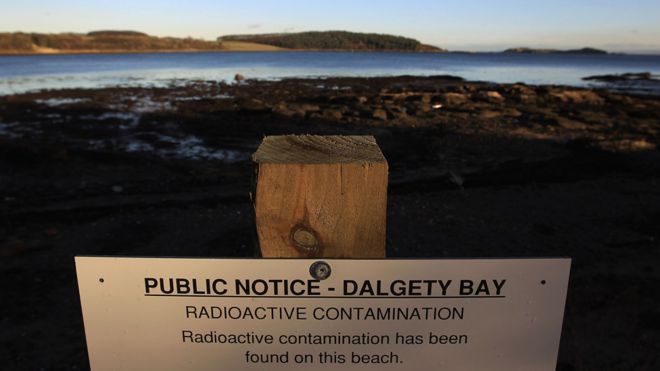
Radioactive pollution at Dalgety Bay to be cleaned up after 31 years,The Ferrret, Rob Edwards, May 14, 2021, The clean-up of radioactive pollution by the Ministry of Defence (MoD) at Dalgety Bay in Fife is to start — 31 years after it was first discovered.
The Scottish Environment Protection Agency (Sepa) has announced that work to decontaminate a stretch of foreshore on the north of the Firth of Forth near a popular sailing club will begin on 17 May. It is expected to be finished in 2022.
Sepa promised that the clean-up would provide a “permanent and positive resolution” to the decades-old pollution. It was “an important milestone for Dalgety Bay”, the agency said.
Campaigners have welcomed the news, but said that it was “utterly disgraceful” that it had taken so long to deal with the contamination. Locals and visitors had been put at risk for “many unnecessary years”, they argued
The £10m clean-up has long been the subject of fierce arguments and delays. Local politicians have repeatedly accused the MoD of refusing to take responsibility, and dragging its heels.
The contamination comes from second world war planes, and was accidentally detected during monitoring in 1990. Luminous, radioactive radium was used to make plane dials glow in the dark so they could be read at night.
After the war the planes were incinerated and dumped as landfill, on which part of the town of Dalgety Bay was built in the 1960s. Since 1990 more than 3,000 radioactive particles have been found on the beach and in local gardens.
Hundreds of particles, many of them potentially hazardous, keep being washed ashore from a headland being eroded by the sea. To protect public health, access to contaminated areas was restricted in 2011, and fishing was banne…………
According to Friends of the Earth Scotland, the area had been “blighted” by radioactive pollution that was “dangerous” to people and wildlife. “It is great news that a clean up is about to get underway but it is utterly disgraceful that it has taken more than thirty years to begin properly dealing with the problems,” said the environmental group’s director, Dr Richard Dixon.
“MoD denial and foot dragging has left locals and visitors at risk for many unnecessary years. A big part of the problem has been the MoD’s fear that if they admit they have to pay to clean up Dalgety Bay they’ll be on the hook for massive bills for similar work that needs to done throughout the UK.”……….
According to Friends of the Earth Scotland, the area had been “blighted” by radioactive pollution that was “dangerous” to people and wildlife. “It is great news that a clean up is about to get underway but it is utterly disgraceful that it has taken more than thirty years to begin properly dealing with the problems,” said the environmental group’s director, Dr Richard Dixon……..
The 50-strong group of Nuclear Free Local Authorities has been working with Fife Council to help get the Dalgety Bay foreshore decontaminated…………https://theferret.scot/radioactive-pollution-dalgety-bay-cleaned-up/
Master of Space: Corporate plans for the militarization & privatization of space
Feb 2, 2021 Sun, Jan 31, 2021: 10:30 am to 12:30 pm Master of Space: Corporate plans for the militarization & privatization of space DESCRIPTION: Bruce Gagnon will reveal the deadly connections between the corporate drive to ‘control and dominate’ space as spelled out in the US Space Command’s 1997 planning document called Vision for 2020. https://thecommunity.com/wp-content/u…
The gold rush is now underway as space technologies have matured to the point where mining the sky for precious resources becomes possible. Corporate forces intend to use the newly formed ‘Space force’ to guard the front gate on and off Earth to ensure that only ‘authorized’ companies and nations would be allowed to access space.
This vision was first spelled out before Congress in the early 1950’s when former Nazi Maj. Gen. Walter Dornberger shared his vision of orbiting battle stations in space to control the pathway on and off our planet. Dornberger had been Hitler’s liaison to V-1 & V-2 rocket scientist Wernher von Braun during WW II. After the war Dornberger, Von Braun and more than 1,000 Nazi leaders were secretly brought to the US to serve in the military industrial complex. Van Braun built the US space program and Dornberger became a V-P of Bell Aerospace in New York. http://www.space4peace.org
BIO: Bruce Gagnon is the Coordinator (and Co-Founder) of the Global Network Against Weapons & Nuclear Power in Space. He is a Vietnam war-era veteran and began his organizing work with the United Farm Workers Union. He lives in Bath, Maine.
Ionising radiation was scientifically proven to be bad for dogs. Does that mean it’s good for humans?

The effects of ionizing radiation on domestic dogs: a review of the atomic bomb testing era, Wiley Online Library , Gabriella J. SpatolaElaine A. Ostrander Timothy A. Mousseau 13 May 2021 https://doi.org/10.1111/brv.12723
ABSTRACT
Dogs were frequently employed as laboratory subjects during the era of atomic bomb testing (1950–1980), particularly in studies used to generate predictive data regarding the expected effects of accidental human occupational exposure to radiation. The bulk of these studies were only partly reported in the primary literature, despite providing vital information regarding the effects of radiation exposure on a model mammalian species. Herein we review this literature and summarize the biological effects in relation to the isotopes used and the method of radionuclide exposure. Overall, these studies demonstrate the wide range of developmental and physiological effects of exposure to radiation and radionuclides in a mid‐sized mammal.
………………………………………………III. CONCLUSIONS
Domestic canines commonly share the same environment, lifestyle, and exposure to pollutants as their human counterparts (Mazzatenta et al., 2017; Ostrander et al., 2017). Coupled with their larger body size and longer lifespan compared to other frequently used model organisms, this makes the canine model a useful tool in studying radiation‐induced diseases.- Frequent effects of radiation exposure in dogs include haematological changes, infertility, and cancer of the bone, liver, lung, and blood, among others. Effects depend on the radionuclide, method of exposure, age at exposure, dose rate, and total exposure dose.
With an increasing demand for nuclear power comes a higher risk of nuclear accidents, and studies of radiation exposures in domestic dogs have provided valuable information for understanding the repercussions for accidentally exposed populations.- Although experiments done in a laboratory setting have proved illuminating, more studies are needed on natural populations affected by past radiological disasters in order to further our understanding of how laboratory results may apply, as such populations are affected by potentially confounding environmental factors. In addition, the vast background knowledge provided by early radiation studies on dogs could allow meaningful conclusions to be drawn regarding the application of laboratory results to natural populations……………… https://onlinelibrary.wiley.com/doi/10.1111/brv.12723#.YJ5JV_2vd9I.twitter
Hamas Targets Israeli Oil And Nuclear Facilities With Rocket Attacks
Hamas Targets Israeli Oil And Nuclear Facilities With Rocket Attacks, Oil Price By ZeroHedge – May 14, 2021 Hamas’ militant wing, the Al-Qassam Brigades, announced earlier this week that it is deliberately targeting Israel’s secretive Dimona nuclear reactor site, known as the Shimon Peres Negev Nuclear Research Center, which lies east of the the Gaza Strip far into the Negev Desert.
It was on Wednesday that Qassam Brigade spokesmen said they were “directing a rocket strike involving 15 rockets for Dimona” – and since then it appears rockets have fallen generally in the southerly area – but there’s since been no reports of direct hits anywhere on the complex, or damage to the site……….
“On Tuesday, at least one rocket appeared to score a direct hit, damaging an Ashkelon facility connected to the Trans-Israel pipeline running from the Mediterranean to the Red Sea,” Newsweek observed, and continued:
“The military wing of Palestinian Islamist movement Hamas has targeted Israel’s nuclear facility, key oil facilities and other sites across the country amid a violent escalation between the two sides.”…… https://oilprice.com/Geopolitics/Middle-East/Hamas-Targets-Israeli-Oil-And-Nuclear-Facilities-With-Rocket-Attacks.html
1 This Month

Read the Public Inquiry Report, the Commissioners’ report, Surrendering Australia: The AUKUS Deception is available to download for free at aukuspublicinquiry.com. Or just watch the replay of the National Press Club Luncheon.


19 November – Webinar – The Reality of Reprocessing
Time: 11:00 AM Pacific Time (US & Canada) / 2:00 PM Eastern / 7:00 PM UK / 8:00 PM CET
Register for the Zoom Event Here



Shut down the radiation-damaged Heysham nuclear reactors now
To see nuclear-related stories in greater depth and intensity – go to https://nuclearinformation.wordpress.com

Say No to NASA’s Reckless Nuclear Reactor on the Moon
Say No to NASA’s Reckless Nuclear Reactor on the Moon
-
Archives
- November 2026 (103)
- October 2026 (302)
- September 2026 (339)
- August 2026 (330)
- July 2026 (355)
- June 2026 (287)
- May 2026 (306)
- April 2026 (356)
- March 2026 (251)
- February 2026 (267)
- January 2026 (308)
- December 2025 (358)
-
Categories
- 1
- 1 NUCLEAR ISSUES
- business and costs
- climate change
- culture and arts
- ENERGY
- environment
- health
- history
- indigenous issues
- Legal
- marketing of nuclear
- media
- opposition to nuclear
- PERSONAL STORIES
- politics
- politics international
- Religion and ethics
- safety
- secrets,lies and civil liberties
- spinbuster
- technology
- Uranium
- wastes
- weapons and war
- Women
- 2 WORLD
- ACTION
- AFRICA
- Atrocities
- AUSTRALIA
- Christina's notes
- Christina's themes
- culture and arts
- Events
- Fuk 2022
- Fuk 2023
- Fukushima 2017
- Fukushima 2018
- fukushima 2019
- Fukushima 2020
- Fukushima 2021
- general
- global warming
- Humour (God we need it)
- Nuclear
- RARE EARTHS
- Reference
- resources – print
- Resources -audiovicual
- Weekly Newsletter
- World
- World Nuclear
- YouTube
-
RSS
Entries RSS
Comments RSS

