Trump may want out of the Iran war, but the first round of negotiations showed the challenges ahead

It seems clear that Donald Trump realizes that this war has been a catastrophe for him, regardless of what he says publicly. As the global economy barrels toward recession, he sees little use in persisting. His only option is to increase pressure on Iran with more destruction, which would only bring more Iranian retaliation and lead to an even greater global economic catastrophe.
Iran is not willing to sacrifice what it sees as its national right to enrich its own uranium for civilian use, something permitted them under the Nuclear Non-Proliferation Treaty (NPT) to which they are a signatory, and, notably, Israel is not.
By Mitchell Plitnick April 17, 2026, https://mondoweiss.net/2026/04/trump-may-want-out-of-the-iran-war-but-the-first-round-of-negotiations-showed-the-challenges-ahead/
When U.S. Vice President JD Vance took to the podium after a long day of talks to end the American and Israeli war of choice on Iran, he made one thing clear. This had not been a serious attempt to reach a deal.
Although the talks went on for more than twenty hours, it’s just one day of negotiations. The very fact that the headline was that there had been no “breakthrough” in just one day displayed a fundamental lack of seriousness.
Despite Vance’s attempt at drama, neither side shut the door on continuing negotiations. The U.S. has even proposed extending the ceasefire, as Pakistani emissaries have arrived in Tehran to arrange further talks. Washington has even pressed Israel for a ceasefire in Lebanon, something that does not sit well with either Israeli Prime Minister Benjamin Netanyahu or the Israeli Jewish population.
At the same time, the United States has moved to block Iranian ships from using the Strait of Hormuz, a sort of counter-blockade, and has dispatched thousands more troops to the region.
What does all of this mean?
Trump wants a way out of this war, but does he have one?
It seems clear that Donald Trump realizes that this war has been a catastrophe for him, regardless of what he says publicly. As the global economy barrels toward recession, he sees little use in persisting. His only option is to increase pressure on Iran with more destruction, which would only bring more Iranian retaliation and lead to an even greater global economic catastrophe.
In that context, Trump’s move to “blockade Iran’s blockade” in the Strait of Hormuz is best understood as an attempt to appear strong before being forced to accept terms that end this war with Iran in a stronger position than it was before.
Trump even went so far as to force Netanyahu to accept a brief pause in Lebanon. That’s not an easy feat, as Netanyahu is reeling in Israel from the lack of positive results from the wars in both Iran and Lebanon. Israeli Jews support both wars but believe Netanyahu has not handled them correctly, based on the lack of tangible political gains for Israel since they began, in contrast to what they see as military triumphs.
But while Trump may want a way out of the war, finding that exit may still be difficult.
One option is for Trump to simply leave the ceasefire in place without an agreement. That means the Strait of Hormuz remains blocked, whether by Iran alone or by both Iran and the United States. Iran and Israel would continue to fight, but the fighting would likely be limited to those two countries, leaving the Gulf Arab states out.
That isn’t a very appealing option for Trump. He could talk about having “changed the Iranian regime,” but the reality of economic depression, ongoing fighting, and a strengthened Iran would be clear.
Moreover, Israel has been more vulnerable to both Iranian and Hezbollah attacks, as their supply of interceptors has dwindled. The U.S. can replenish them, but probably not at prior levels and not as quickly as Israel would need. The image of Israel getting pounded by Iranian and Hezbollah missiles is not one Trump wants his constituents to see.
Another option is simply to double down on force. Iran has already shown what the result would be if Trump chooses that option. Their recent attacks on Saudi Arabia’s East-West Pipeline, which serves as an alternative to the Strait of Hormuz for the export of oil, were a warning of Iran’s ability to do a lot more damage to oil exports from the region. Iran has also threatened to close the Bab al-Mandeb Strait in the Red Sea. Ansar Allah (the Houthis) in Yemen have shown they can do this at will and that there is little the U.S. can do about it.
The third option is a realistic agreement. This seems to be the one Trump wants to take. The problem he faces is that American demands are unrealistic, and the compromises he would have to make would be extremely hard to sell as anything but capitulation.
According to reports, the talks in Islamabad crashed on the key issues of Iran’s nuclear program, its support of armed non-state actors in the region, and control of the Strait of Hormuz.
That was backed up by the words of a U.S. official who told Axios reporter Barak Ravid that the American red lines were that Iran would:
- End all uranium enrichment;
- Dismantle all major nuclear enrichment facilities;
- Surrender all highly enriched uranium;
- Accept an American peace, security and de-escalation framework that includes regional allies;
- End funding for regional allies like Hamas, Hezbollah, and Ansar Allah;
- Fully open the Strait of Hormuz, charging no tolls for passage.
If the American spokesperson was accurate in calling those “red lines” rather than negotiating points, they’re non-starters.
Iran has offered to suspend all nuclear enrichment activity for five years, countering a U.S. demand that they agree to a twenty-year suspension. Iran had, before the war, agreed not to stockpile enriched uranium, which would make it impossible for them to ever accumulate enough nuclear material for a bomb.
But Iran is not willing to sacrifice what it sees as its national right to enrich its own uranium for civilian use, something permitted them under the Nuclear Non-Proliferation Treaty (NPT) to which they are a signatory, and, notably, Israel is not.
Demanding Iran give up that option is not realistic. Yet that very unrealistic demand has been made more pressing by the war itself. By attacking Iran, Israel and the United States have reinforced the evidence for what happens to countries that abandon the pursuit of nuclear weapons. Iran can look at itself along with Libya, Iraq, Syria, and Ukraine on one hand and North Korea on the other to see this obvious logic.
The path out of that paradox is Iran’s returning to the nuclear monitoring that it agreed to before Trump tore up the nuclear deal, and the U.S. accepting that Iran can enrich its own uranium, within reasonable limits. That creates a mutual deterrence; Iran would have to break off the inspections to even begin enriching uranium beyond its immediate needs, which it wouldn’t do unless the U.S. and Israel continue their belligerence.
It appears that such a resolution would be acceptable to Iran, but it would mean a significant climbdown for Trump. And, obviously, Israel will not accept it and would have to be strictly restrained by the United States. Yet it remains the only reasonable way out.
It is notable that there was no mention of Iran’s missile and drone capabilities among the red lines. That seems to imply that the United States has already backed away from a condition that amounts to convincing Iran to disarm itself in the face of not only American and Israeli aggression but also the understandably renewed hostility toward it from the Gulf Arab states.
That realization by the Americans reflects someone getting in Trump’s ear and making some headway on issues that are just absurdly unrealistic. Similarly, while Vance might have included support for non-state allies in his talks, that has not featured prominently in White House statements or in Trump’s stream-of-consciousness ramblings since the talks in Islamabad.
The nuclear issue seems to have the most prominent position, and that is always better. It is the issue on which Iran has the most flexibility, largely because it is based on Western fears and propaganda more than it has been based on reality until now. Yes, the war has probably made Iran’s nuclear ambitions much more real. The death of Ayatollah Ali Khamenei means his fatwa against nuclear weapons is no longer in effect, and, as noted, Iran has been given much more incentive to pursue a nuclear weapon than ever before.
Still, the fact that they were even willing to offer a five-year suspension of nuclear activity and have not stated any opposition to the idea of international inspectors would indicate that Iran is open to significant compromise on the nuclear issue.
The Strait of Hormuz may be more problematic. Iran has always and will always have the ability to disrupt shipping in the Strait. No American threat or international anger can change that simple fact of geography.
On the other hand, while neither Iran nor the United States has ratified the UN Convention on the Law of the Sea, which guarantees safe and unimpeded passage to peaceful vessels through many waterways including the Strait, most of the world views Iran’s threats to passage in the Strait and to its plan to collect tolls for passage as unacceptable.
Iran wants to use its ability to threaten passage through the Strait to help press for the reparations they need and, more importantly, to ease the sanctions that have restricted Iran’s ability to participate in the global economy, particularly regarding trade with Asia and Europe. It is likely that they would abandon the legally dubious idea of collecting tolls in the Strait if they can re-enter the Asian and European markets and receive reparations for this war.
Again, though, this would be a huge concession from the United States. It would be impossible to sell such a concession as anything but a massive defeat, even to Trump’s most sheepish supporters. Iran would be significantly stronger and economically healthier than it was before the war. There’s no way to dress that up.
Israel’s Lebanon land grab
Finally, there is Lebanon. Trump surely had to exert extreme pressure to get Netanyahu to agree to a ceasefire, even a brief one.
Israel has not tried to hide the fact that this aspect of the war is a pure land grab. Netanyahu intends to extend Israeli control, if not its border, north to the Litani River. He is not about to abandon that goal lightly, even if he is forced to accept that his long-sought war on Iran is a failure.
The talks in Washington between Israel and Lebanon are a farce. No agreement there is possible, because what Israel wants is a permanent presence in Lebanon and the disarmament of Hezbollah.
This Lebanese government would be open to a reasonable agreement with Israel, but those terms are obviously unreasonable. No country, especially not one as small as Lebanon, would simply give up a huge chunk of its territory.
But this Lebanese government wanted to address Hezbollah. They wanted to bring Hezbollah into the Lebanese military, thus disarming them and integrating them into a single, national force. That was never going to be easy, but Israel never stopped attacking Lebanon during the so-called “ceasefire” brokered in late 2024. If they really wanted the Lebanese government to eliminate Hezbollah as an independent fighting force, that was exactly the opposite of what they would have done.
The Lebanese are attending these meetings to help convince Trump to rein Israel in. Israel is doing it to convince Trump that they are willing to cooperate with his effort to end the Iran war. In both cases, the effort is merely a show.
Trump will take the exit from Iran as soon as he can find it, and Israel will find it hard to bring him back in again now that he has seen why all other U.S. presidents didn’t fall for Netanyahu’s “bomb Iran” pitch. But he will have little reason to exert the political influence that would be needed to keep Israel from occupying southern Lebanon permanently. Israel and Iran will also likely continue lobbing missiles at each other, even though Israel’s ability to fight Iran without direct American support is extremely limited.
That’s the best-case scenario for Trump, and it’s not a good one. It is entirely possible that, rather than admit a huge defeat, he will decide to keep fighting Iran to no possible better outcome.
Trump made this bed. He can either lie in it or take one of the less disastrous options to get out of it. Unfortunately for the world, he is not a man prone to making good decisions. .Plitnick is correct a fatwa in shiism if comes it from your marja is considered binding and upon his death is rescinded, apologies. I asked an al khoei who called for an unrelated reason. it’s not like that in sunni practise, can one never safely assume, i thought it would be ok this time.
Chernobyl first-responder reveals lifelong health damage 40 years after working in deadly radiation zone
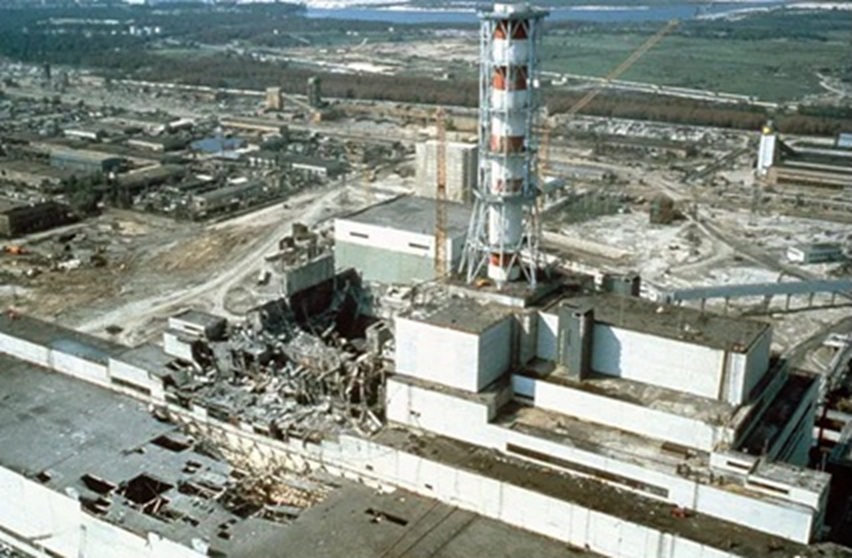
Sergei Belyakov worked as a ‘biorobot liquidator’ cleaning up Chernobyl after its 1986 nuclear meltdown.
LAD Bible, 19 Apr 2026 , Brenna Cooper
In April 1986, Sergei Belyakov was fishing along the Dnieper River when he noticed that the water level had dropped significantly, a sign of an industrial accident further upstream.
Just days before, he’d seen the state news broadcaster briefly mention an incident at Chernobyl, a nuclear power plant in the north of the country.
“They were casually saying there was an accident at the nuclear power plant, and there were a few casualties, but it had all been taken care of,” Sergei recalled.
The assistant professor initially believed there had been some form of industrial accident at the plant, but what would unfold would go on to be one of the worst nuclear disasters in history.
Chernobyl disaster: 40 years on
In the early hours of the morning on 26 April 1986, technicians at Chernobyl Nuclear Power Plant in Pripyat, Ukraine, were performing a routine test on the reactor when a fatal design flaw caused it to explode, releasing more than 100 radioactive elements into the atmosphere.
The consequences of the explosion would be catastrophic, with harmful radiation spreading as far north as Sweden and even reaching the US East Coast.
Four decades on from the disaster, National Geographic has released a four-part documentary series, titled Chernobyl: Inside the Meltdown, featuring first-hand accounts from those who witnessed the disaster and its aftermath.
After initially attempting to cover up the worst of the disaster, government officials leaned on national pride and propaganda to entice volunteers to help in the cleanup.
Around 600,000 people, referred to as liquidators, were drafted in from across Ukraine and the wider Soviet Union to assist with the clean-up, each receiving a radiation dose of 2000 roentgen an hour, equivalent to four times the lethal dose, in exchange for their work.
Sergei, then an assistant professor from the Ukrainian State Chemical Technology University in Dnipro, was one of such volunteers. Believing his background in military chemistry would be beneficial to the clean-up, Sergei travelled to the exclusion zone and worked for several weeks between July and September. With the job title of ‘biorobot liquidator’, Sergei’s work involved turning over top-level soil, spraying down buildings and shovelling graphite from the roof of reactor No. 4.
His work on the roof brought him just footsteps away from the open reactor, an area where experts say just 30 to 45 seconds of exposure would be lethal. With only a respirator and two sheets of lead for protection, Sergei made six trips up onto the roof – and the health consequences of his work still linger today.
“I still have some [problems], yes,” Sergei explained in an interview with LADbible. “Strangely enough, now, after all these years, and it’s… this is one of the things people don’t realise, that how radiation hits you.”
The impact of radiation exposure on his health was near instant. Aged 30 at the time, he began to experience immediate headaches, nasal congestion and difficulty looking into the sunlight.
After his 42 days in the exclusion zone ended, Sergei returned home with 1,000 Rubles, roughly £2,500 in today’s money and the equivalent of ‘five times’ his monthly salary at the time.
However, the health issues would continue. A ‘high-level’ basketball player before the explosion, Sergei also suffered with ‘severe fatigue’, with it taking around ‘a year and a half’ for the university professor to get back onto the court.
“[My] immune system suffered, I had problems with [my] kidneys,” he said.
“[I] had problems with my liver, my blood work was laughable at the time when I came back. I mean, white blood cells were miserable.”……………………………………………………………
Japanese earthquake and tsunami warning forces evacuation from Fukushima nuclear plants
20 Apr, 2026 By Tom Pashby
Workers at two Fukushima nuclear power plants in Japan were forced to
evacuate to higher ground following earthquake and tsunami warnings today
(20 April). Japan’s nuclear power company Tepco (Tokyo Electric Power
Company) issued statements where they sought to reassure the public about
its plants. “At around 16.53 [local time] on April 20, 2026, an
earthquake with a magnitude of 7.5 on the Richter scale struck off the
coast of Sanriku, Japan”, it said. “As of now, there is no abnormality
with our main power system. “In response to the tsunami advisory issued
for Fukushima Prefecture, evacuation orders have been issued to workers at
the Fukushima Daiichi and Fukushima Daini Nuclear Power Stations.
New Civil Engineer 20th April 2026,
https://www.newcivilengineer.com/latest/japanese-earthquake-and-tsunami-warning-forces-evacuation-from-fukushima-nuclear-plants-20-04-2026/
In historic Senate vote, over 75% of Democrats vote to block arms sales to Israel

The vote was the latest sign of Democrats’ growing consensus against aid to Israel, as support for the country hits an all-time low.
By Michael Arria , Monodweiss, April 16, 2026
On Wednesday night, the Senate rejected a pair of resolutions that would have blocked the sale of bombs and bulldozers to Israel.
Although the Joint Resolutions of Disapproval, which were introduced by Sen. Bernie Sanders (I-VT) failed to pass, a record number of Senators backed the effort. 40 Senators backed a resolution would have blocked the sale of $295 million in D9R and D9T Caterpillar bulldozers to Israel and 36 members voted for a resolution that would have stopped a $151.8 million sale of 1,000-pound bombs to Israel.
“The fact that 40 of 47 Democratic Senators voted to withhold military hardware from Israel is a new high water mark in holding Israel accountable for violating US and international law,” tweeted Center for International Policy Vice President for Government Affairs Dylan Williams.
Sanders has attempted to pass similar resolutions on three other occasions. Last April, just 15 Senators voted for them, while 27 Senators supported them in July.
In a statement released after the vote, Sanders pointed out that 80% of the Democratic caucus backed the measures.
“When we started this effort there were just 11 votes,” said Sanders. “Now, there are 40.”……………………………………………………………………………………………………………………………………………………
Ahmad Abuznaid, Executive Director of the US Campaign for Palestinian Rights (USCPR), told Mondoweiss that activists have to keep pushing for a full arms embargo.
“The writing is on the wall, and we see politicians reacting to the fact that aid to Israel and AIPAC are toxic,” said Abuznaid. “But we have to dig deeper because there is a distinction. We need to control the narrative. We need to end support for genocide and occupation. That’s the moral, ethical, and legal position.”
Last month, NBC News released a poll showing that just 13% of Democrats view Israel positively, while almost 60% view it negatively. https://mondoweiss.net/2026/04/israel-races-against-time-to-expand-west-bank-settlements-before-it-is-limited-by-new-regional-realities/
Israel is racing to expand West Bank settlements before new political realities end its era of impunity
Israel is approving the construction of new West Bank settlements at an unprecedented rate because it knows its window of impunity is closing — especially if Iran emerges intact from the war and the Republicans lose the U.S. midterms.
By Qassam Muaddi, Mondoweisss , April 19, 2026
The Israeli cabinet approved the construction of 34 new West Bank settlements last week, bringing the total number approved by the ruling coalition led by Israeli Prime Minister Benjamin Netanyahu up to 103. The cabinet decision is the largest batch of new settlements approved in decades, breaking the record set by a previous landmark decision in June 2025, which approved 22 new settlements.
While the latest decision has been overshadowed by the regional conflagrations related to the U.S.-Israeli war on Iran, its timing indicates that Israel perceives a closing window for its ability to entrench its colonial project in its own backyard — the West Bank — in light of shifting realities that might see Iran emerging from the war intact and in a strengthened position regionally.
These developments come as Israel has reportedly been “coerced” to halt its onslaught against Lebanon by U.S. President Donald Trump, forcing it to accept a ceasefire with Hezbollah. Meanwhile, the very fact that the U.S. agreed to a temporary ceasefire with Iran was condemned by the entirety of the Israeli political establishment, both from within Netanyahu’s camp and from the Israeli opposition, who lambasted Netanyahu’s “failure” to overthrow the Iranian government.
While Israel will attempt to use the ceasefire in Lebanon to force the hand of the Lebanese government to accept the ongoing occupation of the southern part of the country, little military progress has been made against Hezbollah, which has reportedly rebuilt its military capabilities since it was bloodied by Israel in October 2024. Iran has also continued to show strength in the region through exerting control over the Straits of Hormuz, and has been described by analysts as an emerging “major world power.”
This is the crucial backdrop to Israel’s moves in the West Bank. It seeks to further cement its de facto annexation of the territory in a race against time to entrench its colonial project in the only geographic region where it can proceed with comparatively minimal resistance.
The closing window
The impatience of the Israeli decision is not only suggested by the magnitude and speed of the cabinet approval, but also by the fact that Israel is in an election year, with polls indicating that Netanyahu and his hardline allies, Finance Minister Bezalel Smotrich and National Security Minister Itamar Ben-Gvir, show a low chance of winning…………………………………………………………………………………………………………………………………………………………………………………. https://mondoweiss.net/2026/04/israel-races-against-time-to-expand-west-bank-settlements-before-it-is-limited-by-new-regional-realities/
Assessing Small Modular Nuclear Reactors (SMRs) in Canada
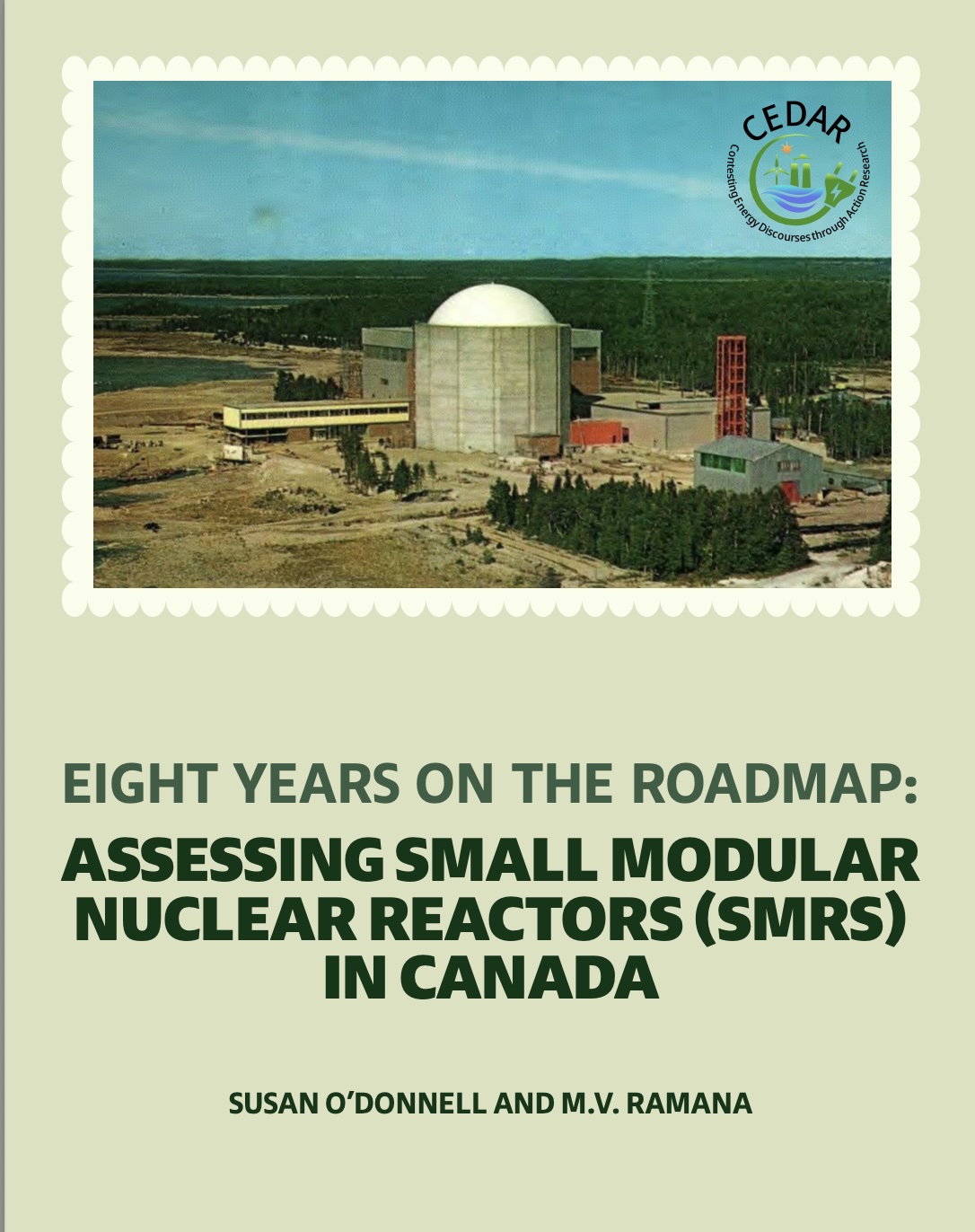
20 April 26, https://cedar-project.org/roadmap/
In 2018, Canada published a strategic plan – a roadmap – to develop small modular nuclear reactors (SMRs) across the country. An SMR is one designed to generate 300 megawatts (MW) of electricity or less, compared to Canada’s existing CANDU power reactors which generate 500 MW or more.
According to the “SMR Roadmap,” the first demonstration SMR was expected to be operating in 2026. In this milestone year, our report analyzes the financial and developmental status of the 10 SMR designs with some kind of presence in Canada.
On this page are the report and the recording of the report launch webinar on March 18, 2026.
The report authors are Susan O’Donnell, PhD, St. Thomas University and M.V. Ramana, PhD, University of British Columbia. The report was published by the CEDAR research project at St. Thomas University.
Report launch webinar
The SMRs report was launched during a webinar on March 18, 2026, An assessment of SMR projects: the case of Canada. The speakers were the report authors, Susan O’Donnell, PhD, St. Thomas University and M.V. Ramana, PhD, University of British Columbia with moderator Madis Vasser, PhD, Senior expert on SMRs for Friends of the Earth Estonia.
The event was hosted by Nuclear Transparency Watch in Paris and co-hosted by the Sustainability Learning Lab at St. Thomas University in Fredericton.
The webinar recording, below, was published by the NB Media Co-op, a CEDAR project partner.
Nuclear weapons may be the sane choice for the world’s maddest regime
For North Korea’s Kim Jong-un, the lesson from Iran shows that if your
goal is survival the more dangerous the arsenal the better.
Times 19th April 2026, https://www.thetimes.com/world/asia/article/kim-north-korea-nuclear-trump-iran-6s7gjkqns
Scotland & Nuclear Power
A fresh opinion poll conducted in the middle of the Scottish election
campaign has found widespread support for renewable energy sources to
reduce energy bills and tackle climate change.
When asked about
Scotland’s energy security needs, support for a uranium-fuelled nuclear
future polled a ‘miserable’ 14%, compared to 55% support for harvesting
home grown wind, water and solar sources. The findings will likely make
grim reading for Scottish Labour and Libdem campaign bosses who are
promoting new nuclear power stations, due to resounding support for
renewables compared to nuclear, from their own voters.
SCRAM 20th April 2026,
https://www.no2nuclearpower.org.uk/scram/
THE US HAS NO ROUTE TO VICTORY IN IRAN WHICH WILL LIKELY EMERGE STRONGER
THIS ADVENTURE MAY DO TO AMERICAN COLONIALISM WHAT SUEZ DID TO THE BRITISH AND THE FRENCH
Ian Proud, Apr 19, 2026, https://thepeacemonger.substack.com/p/the-us-has-no-route-to-victory-in?utm_source=post-email-title&publication_id=3221990&post_id=194637482&utm_campaign=email-post-title&isFreemail=true&r=1ise1&triedRedirect=true&utm_medium=email
I was pleased to meet Laith Marouf, a War Correspondent and Executive Director of Free Palestine TV for the first time.
As Laith is based in Lebanon, we discussed the recently announced 10 day ceasefire with Israel, and whether it might endure. This ceasefire had clearly been imposed on Netanyahu by Trump, but what was the prevent Israel from returning to position normal after any putative peace deal over Iran? Laith laid out the historical and religious reasons why Iran would never abandon Lebanon purely to obtain a peace deal with the USA. Other people I have spoken to talk about the muti-confessional nature of Lebanon but that, come what may, Hezbollah remains a powerful force in politics, that won’t be eradicated by air strikes.
So, Israeli conquest of Lebanon will likely never be possible for as long as Iran remains a powerful force in the region.
We therefore discussed the US and Israel’s inability to inflict a defeat on Iran. There is no evidence that the US has the capability or the political capital at home to endure an extended military engagement with a country, thousands of miles from the US, geographically and by population size far bigger than any adversary confronted in the twenty first century, and with the support of the two big regional military and economic powers, Russia and China.
The only way that the US can impose a defeat on Iran is to precipitate regime change and despite Trump’s ramblings about regime change equating to a change of leader (sic!) the proposition that a modern-day Shah can be returned to the throne in Tehran have never looked possible or remotely likely.
That leaves the US militarily stuck in a conflict that is causing global economic shocks that are mobilising both the developing world and parts of the western world against American hegemony. Iran may be to US colonialism what Suez was to the British and French.
Laith situated this latest war in the context of what he describes as the 100 years of humiliation for the Muslim world.
Iran differs from the Arab world in having civilisational integrity and history that will endure this latest attempt at subjugation by western powers. War in the other hand is putting significant pressure on the smaller more fragmented governments across the Arab world which are reliant for survival on the umbrella of US hegemony which is collapsing.
We briefly considered the risk of nuclear escalation in Iran and the likelihood that this, ultimately, would backfire spectacularly on the west with a potentially enormous flood of refugees heading west, not to mention the intense ecological damage and the impact that would have on the global economy. Lots of people pontificate about Israel using tactical nukes, which, while I consider Netanyahu desperate to cling to power, I consider unlikely if only because it would likely sever the hitherto ironclad relationship with the US and lead to more immediate and existential risks to the functioning and integrity of Israel as a state.
We discussed Israel’s nuclear capability and how it can coexist in a more peaceable way with other countries in the region. Laith drew on the example of Apartheid South Africa which was also nuclear armed but which gave up its nuclear programme and completely shifted its model of governance to abandon the rule of white supremacists.
In the completely hypothetical scenario of Israel doing the same – which looks wholly unlikely anytime soon – I asked about the position of Jewish people in Israel under theoretical Palestinian rule. We considered the outlier role of the Jewish community in Iran which is the only major subset of Judaism that isn’t hardwired into the ecosystem of Zionism as a potential model.
In the final analysis, whenever the war against Iran ends, however it ends, Iran appears likely to emerge in a stronger position as a regional superpower than it held before the war started, indeed, before Donald Trump abandoned the JCPOA deal. US power and influence, on the other hand, continues to shatter, ushering in a multipolar world with greater clarity.
A genuinely thought-provoking discussion which I’d encourage you to watch via the link above. I had a microphone problem so my audio is terrible, though still audible.
TRUMP SAYS “ENOUGH”—BUT ISRAEL PUSHES ON IN LEBANON WAR LATEST
April 17, 2026 , https://scheerpost.com/2026/04/17/trump-says-enough-but-israel-pushes-on-in-lebanon-war-latest/
A fragile pause in the widening Middle East war is colliding with escalating rhetoric, conflicting claims, and continued violence on the ground.
In a flurry of social media posts, President Donald Trump declared that the United States had directly intervened to halt further Israeli strikes on Lebanon.
“Israel will not be bombing Lebanon any longer,” Trump wrote.
“They are PROHIBITED from doing so by the U.S.A. Enough is enough!!! Thank you!”The statement, issued amid a rapidly evolving ceasefire framework, suggests a level of U.S. leverage over Israeli military operations that officials and analysts have long debated—but rarely seen asserted so bluntly.
Yet even as Trump claimed de-escalation, events on the ground told a more complicated story.
Reports out of southern Lebanon indicated continued violence, including a drone strike that killed at least one person despite the announced ceasefire. Meanwhile, Israeli Prime Minister Benjamin Netanyahu signaled no intention of ending the broader campaign.
“Israel is “not done yet” with Hezbollah, Netanyahu said, describing a strategy of pursuing both military pressure and political negotiation simultaneously.”
Hormuz Reopens—But Under Pressure
At the same time, Iran announced that the Strait of Hormuz—one of the world’s most critical oil chokepoints—would be reopened to commercial shipping during the ceasefire period.
Iranian Foreign Minister Abbas Araghchi stated:
“Passage for all commercial vessels through [the] Strait of Hormuz is declared completely open for the remaining period of ceasefire.”
Trump quickly echoed the announcement, declaring the strait: “COMPLETELY OPEN AND READY FOR BUSINESS AND FULL PASSAGE.”
But the reopening came with contradictions. While signaling relief for global markets—oil prices reportedly dropped sharply following the news—the U.S. simultaneously maintained its military pressure.
“The naval blockade will remain in full force and effect … until such time as our transaction with Iran is 100% complete,” Trump said.
In other words: open waters, closed fists.
Conflicting Claims, No Clear Deal
Despite Trump’s sweeping declarations—including that Iran had agreed to “never close the Strait of Hormuz again”—there was no immediate confirmation from Iranian officials.
On the ground and in diplomatic channels, uncertainty remains the defining feature of this moment.
Negotiations are reportedly ongoing, with proposals for a temporary framework lasting several weeks. But key issues—including sanctions relief, uranium enrichment, and regional military activity—remain unresolved.
Even Trump appeared to acknowledge the disconnect, insisting:
“This deal is not tied, in any way, to Lebanon.”
That separation may be more rhetorical than real.
Ceasefire or Illusion?
The current 10-day ceasefire between Israel and Lebanon has already shown signs of strain. While some displaced civilians have begun returning home, analysts warn that the underlying dynamics of the conflict remain unchanged.
“Hezbollah will keep its ‘finger on the trigger’” if violations continue, one warning noted, underscoring how quickly the situation could unravel.
And with more than a million people displaced and thousands killed in recent weeks, the pause—however real or temporary—offers only limited relief.
A War Paused, Not Ended
What emerges from the past 24 hours is not clarity, but contradiction.
A ceasefire declared—and violated.
A waterway reopened—under blockade.
A bombing campaign “prohibited”—while leaders vow to continue fighting.The language of peace is here. The reality of war has not left.
And as global powers posture over oil routes, naval blockades, and regional leverage, the question is no longer whether the conflict can pause—
—but whether anyone is actually in control of it.
As the U.S.–Israeli war on Iran spills across the region, a sudden ceasefire in Lebanon is being framed as a breakthrough—but the reality is far more unstable. Iran’s influence appears to have forced a pause on one front, reopening the Strait of Hormuz and easing global economic panic, while Israel signals it has no intention of ending its campaign against Hezbollah. At the center of it all is Donald Trump, claiming control over both escalation and restraint—yet presiding over a situation where bombs still fall and tensions continue to rise.
In this live discussion from Breakthrough News, analysts break down what’s really driving the ceasefire, how battlefield dynamics forced political shifts, and whether Washington is actually capable—or willing—to restrain Israel. Is this the beginning of de-escalation, or just a temporary pause before a wider war?
“I Felt Like a Monster”: Israeli Soldiers Break Silence on Gaza—and the System Behind It

And what lingers in these testimonies is not just what was done, but what it did to those who carried it out. Soldiers speak of shame, of dissociation, of an inability to reconcile their actions with any moral framework. The military calls it PTSD. But the soldiers—and some experts—call it something else: moral injury. Not fear of what happened to them, but horror at what they themselves became.
April 18, 2026, Joshua Scheer, https://scheerpost.com/2026/04/18/i-felt-like-a-monster-israeli-soldiers-break-silence-on-gaza-and-the-system-behind-it/
The official narrative isn’t just cracking—it’s being dismantled by the very people who carried it out.
In a devastating investigation, Israeli soldiers are now speaking in their own words about what they did, what they witnessed, and what their commanders allowed in Gaza. These are not secondhand accusations or political attacks. They are confessions—raw, detailed, and impossible to dismiss.
“I Felt Like a Monster”: Israeli Soldiers Expose ‘Moral Injury’—and a System Built on Silence
They describe opening fire on unarmed civilians identified only as “targets” on a drone feed. They describe prisoners humiliated, abused, and discarded. They describe executions—men surrendering with hands raised, only to be shot and later labeled “terrorists.” And they describe something just as revealing as the violence itself: a system where none of this leads to accountability.
What emerges is not chaos. It is structure.
This is not the “fog of war.” It is policy by practice—kill first, justify later, investigate never.
As we have seen in this country, the destructive effects of the “fog of war”—the brutal killings, the unjustified pushes toward empire—do not end on the battlefield. The damage lives on in the soldiers who are sent to carry it out. And too often, it feels as if those in power simply do not care. But we can choose something different. We can listen. We can create space for those who were there to speak honestly about what they saw and did. And in doing so, we can begin to confront the truth—not from the top down, but from the ground up—where real accountability, and the possibility of change, actually begins.
And what lingers in these testimonies is not just what was done, but what it did to those who carried it out. Soldiers speak of shame, of dissociation, of an inability to reconcile their actions with any moral framework. The military calls it PTSD. But the soldiers—and some experts—call it something else: moral injury. Not fear of what happened to them, but horror at what they themselves became.
Because moral injury doesn’t just indict individuals—it indicts systems.
This is not a new phenomenon in Israel. The concept of “moral injury” has been studied for years, but what Israeli researchers and clinicians are now documenting gives it renewed urgency—and clarity. It names what many soldiers themselves are struggling to articulate: a rupture between what they did, or were ordered to do, and the values they believed they held. Unlike PTSD, which is rooted in fear, moral injury is rooted in recognition—the realization that lines were crossed, often knowingly, in the heat of revenge, chaos, and command pressure. Psychologists working directly with troops describe a pattern: soldiers firing on people later found to be uninvolved, approving strikes with known civilian casualties, or participating in actions they justified in the moment but cannot live with afterward. The consequences are severe—depression, shame, substance abuse, even suicidal thoughts—but the deeper implication is structural. This is not just about individual breakdowns. It reflects a system that places soldiers in situations where moral collapse becomes not an exception, but an expectation.
It exposes a military culture that normalizes dehumanization, a political structure that shields it, and an international order that enables it. It reveals a reality that cannot be dismissed as isolated misconduct or “a few bad actors,” but instead points to a pattern—repeated, reinforced, and quietly accepted.
And of course it may take years for the damage the understanding to take hold with Y Net Global reporting “One of the complexities of moral injury is that it does not always appear at the moment of action,” Levi-Belz said. “Sometimes it emerges weeks later, after you take off the uniform. Sometimes years later.”
“There is no doubt that among IDF soldiers and reservists there has been an increase in moral injury compared to routine operations,” he said. Based on clinical experience and preliminary samples, he estimates that 40 percent to 50 percent of soldiers, particularly reservists, encountered morally injurious events during the war.
And that is where the story turns outward.
Because none of this unfolds in a vacuum. The bombs, the cover, the diplomatic protection—all of it flows, in part, from Washington. The United States continues to fund, arm, and politically defend the very system these soldiers are now describing from within.
The facts are no longer hidden. The voices are no longer external critics. They are coming from inside the system itself.
So the question is no longer whether the world knows.
The question is whether it is willing to act—or whether it will choose, again, to look away.
Because when even the perpetrators are telling the truth, silence is no longer ignorance.
It is complicity.
America’s pro-Israel J Street says Israel should pay out-of-pocket if it wants US weapons
The pro-Israel advocacy group likely changed its tune after widespread popular opposition to taxpayer-funded weapons
By MEE staff, 13 April 2026 , https://www.middleeasteye.net/news/j-street-says-israel-should-pay-out-pocket-if-it-wants-us-weapons
The pro-Israel advocacy group J Street is now calling for an end to “direct” US military support to Israel, per a new policy document published on Monday.
The group had previously backed Washington’s continued provision of defensive weapons systems, such as the replenishment of Israel’s Iron Dome, at no cost to Israelis.
Now, it says the US “should continue to sell” short-range air and ballistic missile defence capabilities to Israel, but Israel should use its own money to pay for them.
“Israel faces real security challenges that require a significant defense investment. With a per capita GDP comparable to leading US allies such as the United Kingdom, France and Japan, as well as an annual defense budget of over $45 billion, it has the financial means to address these challenges,” J Street said.
“It does not require almost $4 billion per year in US financial subsidies to purchase weapons,” it added.
“Continuing this assistance is both unnecessary and politically counterproductive, creating avoidable tensions in US domestic politics and in the bilateral relationship.”
The way the current military aid package operates is that the US provides Israel with American taxpayer funds, and those funds are put into US weapons companies to acquire equipment.
On its website, J Street says that it “organizes pro-Israel, pro-peace, pro-democracy Americans to promote US policies that embody our deeply held Jewish and democratic values and that help secure the State of Israel as a democratic homeland for the Jewish people”.
Political tide turns
J Street’s shift follows a distinct change in attitudes towards Israel among the American public after the genocide in Gaza, where over 72,000 Palestinians have been killed since Israel’s war on the enclave broke out in October 2023.
But perhaps more importantly for the group, whose support base is made up of Democrats, the party’s future is changing course.
Progressive New York Congresswoman Alexandria Ocasio-Cortez, who is widely believed to be seeking higher office, announced earlier this month that she would no longer vote for any US military support to Israel, despite having previously backed the provision of defensive weapons, much to the disappointment of many of her supporters.
It is notable, however, that her statement followed Israeli Prime Minister Benjamin Netanyahu’s surprise declaration earlier this year that Israel will not seek to renew its military aid package with the US in 2028.
“I want to taper off the military aid within the next 10 years,” all the way down to zero, Netanyahu told The Economist in January.
J Street’s new position demands that any future US arms sales that Israel pays for out-of-pocket “be fully consistent with American law”, which echoed Ocasio-Cortez’s statement.
US law prohibits security assistance to any country whose government engages in a consistent pattern of gross human rights violations or blocks or restricts the transport or delivery of US-backed humanitarian aid.
“US arms sales to Israel should be further conditioned to incentivize alignment with American interests and laws – as has been the case with other allies and partners – when their behavior is inconsistent with US interests,” J Street said.
At the same time, the group acknowledges that Washington and Israel generally share the same interests anyway.
“The US also benefits meaningfully from the relationship. Intelligence sharing has been critical in campaigns such as the fight against ISIS, while joint operations such as Israel’s 2006 strike on Syria’s secret nuclear facility have advanced shared security goals.”
It added that because “approximately 500,000 American citizens live in Israel”, selling it weapons should continue to be a US national security priority.
Israel Destroys a Synagogue; US Media Yawn
“Iranian Jews are viewed by Iranians as indigenous,” he said. “They’re the original Bundists,” a nod to the Jewish political movement that “stood not just for socialism, but for do’ikayt—Yiddish for ‘hereness,’” the concept that a Jew’s homeland was in whatever nation they resided in (New York Times, 4/6/26).
Ari Paul, April 16, 2026 https://fair.org/home/israel-destroys-a-synagogue-us-media-yawn/
An Israeli missile attack destroyed a Tehran synagogue during the Jewish Passover holiday (Religion News Service, 4/9/26). The Israeli military “expressed regret over what it called ‘collateral damage’ to a synagogue in Tehran caused by an overnight strike,” which was “targeting a senior Iranian commander,” said the Middle East Eye (4/7/26).
Photos of the wreckage at the Rafi-Nia Synagogue have accompanied many of these pieces. The Council on American-Islamic relations condemned the attack in a statement (4/7/26):
We strongly condemn the Israeli regime’s bombing of a synagogue in Tehran, which was the predictable end result of the indiscriminate US/Israel bombing campaign against mosques, hospitals, schools, apartments and other civilian sites across Iran.
The group challenged “various Israel advocacy groups and politicians that support this war in the name of protecting Israel to condemn Israel’s synagogue attack.”
Buried at best
The story of the attack on the Tehran synagogue was, at best, buried in the US corporate media. CNN posted a brief video (4/7/26) about the bombing but had no online article about it. The New York Times (4/7/26, 4/7/26) mentioned the attack, but as background in broader stories about the US/Israel war on Iran.
A search for “Rafi-Nia” on the Washington Post website yields no results. Ditto for the AP, although the news service did post a video to YouTube (4/7/26). Al Jazeera’s coverage (4/7/26) of the attack was a mélange of AP and AFP copy. CBS News (4/7/26) also used a few paragraphs of AFP copy to report on the attack, although it was buried in the middle of a general timeline about the war.
The Wall Street Journal (4/7/26) had the story, but led with Israel’s contrition over the destruction; that’s not a journalistic construction we see in US news coverage when it comes to the Israeli bombings of other civilian structures in Iran, Gaza or Lebanon. When Israel destroys a hospital, apartment building, encampment, etc., the stories don’t lead with official regret, but rather include Israeli claims that the civilian facilities were actually legitimate military targets. The Journal’s lead provided the government with public relations cover over the sensitive issue of destroying a Jewish house of worship.
Newsweek (4/8/26), once a bigger player in the US media landscape, led with condemnation of the attack from Jewish Iranian leaders, who declared “their unwavering solidarity with Iran in defending the homeland.”
Jewish presence in Iran
Underplaying the story obscures not only the wantonness of Israel’s aggression, but the actual nature of Iranian society, which is portrayed as obsessed with wiping Jews off the map (ADL, 6/25/25). “Iranian foreign policy freely mixes anti-Israel furies with anti-Jewish ones,” wrote New York Times columnist Bret Stephens (1/13/26), a pro-war cheerleader (2/22/26, 3/24/26).
In fact, while Israel is obviously the center of Mideastern Jewish life, the Iranian Jewish population dwarfs those elsewhere in the Middle East. “Estimates range from 9,000 to 20,000 Jews currently living in Iran,” according to the Forward (6/18/25).
Wrote the Palestine Chronicle (3/6/26): “The Jewish presence in Iran is among the oldest continuous Jewish communities in the world, with roots that historians trace back more than two millennia.”
Yes, Iran is a theocracy; the government is no model for an open society. But there is a Jewish member of Iran’s parliament, who even went on record this year openly criticizing Iranian President Masoud Pezeshkian’s handling of popular unrest (i24, 1/29/26).
‘Well-protected second-class citizens’
US media have covered the Jews of Iran before. USA Today (8/29/18) did a story in 2018, reporting from Tehran. Former Forward reporter Larry Cohler-Esses (8/12/15, 8/12/15, 8/18/15, 8/27/15) reported extensively and critically on Iranian Jews, indicating that the country was at least open to letting a reporter for a Jewish publication do their job.
Cohler-Esses told FAIR that Jews in Iran are “well-protected second-class citizens.” In fact, when he read about the attack, he “wondered if it was the synagogue I spent Shabbat in, but it wasn’t,” because there are more than a dozen active synagogues in Tehran—a reflection of the size of the Jewish community there.
Recalling his 2015 reporting trip, Cohler-Esses said that on Shabbat, Jews would spill out of their synagogues and mingle in the street after services, a sight he didn’t often see in many places in Europe. In one instance, after he left a synagogue service, one of the congregants ran after him through a street teeming with people, wearing a kippah and a tallit (traditional religious attire), and “no one batted an eye.”
The Jews of Iran do suffer discrimination, because Muslims are favored in the legal code over all non-Muslims, Cohler-Esses said. He noted that the Jewish population of Iran has shrunk significantly since the 1979 Islamic Revolution.
“Iranian Jews are viewed by Iranians as indigenous,” he said. “They’re the original Bundists,” a nod to the Jewish political movement that “stood not just for socialism, but for do’ikayt—Yiddish for ‘hereness,’” the concept that a Jew’s homeland was in whatever nation they resided in (New York Times, 4/6/26).
Cohler-Esses was hopeful that coverage of the synagogue’s destruction in the Jewish and Israeli press (JTA, 4/7/26; Jerusalem Post, 4/7/26) had the “potential to make Jewish readers of Jewish media outlets go, ‘Oh, they have synagogues there.’” But with the underplaying of the story in US media, it’s a missed teachable moment for news consumers generally.
More robust press coverage of the attack could have taught Americans that the Jews of Iran do have something to fear: Israel.
THE NEW NUCLEAR POWER PUSH INTENSIFIES PART 1
Enviro Close-Up #712, https://www.youtube.com/watch?v=QZxgwmJi-ew
The push for nuclear power has intensified. It’s as if the Three Mile Island, Chernobyl and Fukushima nuclear power disasters never occurred —and the growing and widespread use of safe, clean, green energy, led by solar and wind, is not happening.
In this Enviro Close-Up, three experts on nuclear issues, each for many decades, analyze what’s going on. Kevin Kamps, executive director of the organization Don’t Waste Michigan, says the U.S. Nuclear Regulatory Commission has “from the beginning…not been about nuclear safety and nuclear security, the environment, public health, the list goes on…but it’s never been worse than it is now.”
Nuclear regulations are in freefall. It’s the “nuclear push on steroids,” says Kamps. Arnie Gundersen, a nuclear engineer and former nuclear industry vice president who broke from the industry and for decades has been a leading nuclear whistleblower, says: “I’ve always said the NRC is a lapdog, but under Trump the lapdog has had its vocal cords cut and its teeth ground down.”
Attorney Terry Lodge, who has been in court battle after court battle in challenges to nuclear power, describes it as “the most dangerous, inherently technologically difficult way of boiling water…and it continues to be that.” Further, the NRC and the agency it replaced, the U.S. Atomic Energy Commission, have been “the absolute epitome, textbook examples of captive regulatory agencies….owned and dominated politically by the industry that they supposedly regulate.” Also, it’s “the most expensive” energy technology, and in financing it “we’re siphoning off money” from energy forms that are to create “faster…and cheaper, to feed a nuclear industry.” And the intensified nuclear push in the U.S. is going on elsewhere in the world.
With 38,000+ Dead, Women and Girls Make Up Over Half of Those Killed in Israel’s US-Backed War on Gaza: UN
“Not a single combatant among them,” said one human rights activist. “Further confirmation that over 90% of the victims are innocent civilians.”
Brad Reed for Common Dreams, Apr 17, 2026 https://www.commondreams.org/news/israel-gaza-war-women
Israel’s yearslong assault on Gaza has killed more than 38,000 women and girls, according to a report released Friday by the United Nations.
In total, the UN found that at least 22,000 women and 16,000 girls have been killed in the conflict, an average of nearly 50 women and girls per day.
Sofia Calltorp, chief of humanitarian action at UN Women, said the report shows how Israel’s war on Gaza “has affected every aspect of life, with its most horrific toll seen in the scale of death.”
“Women and girls accounted for a proportion of deaths far higher than those observed in previous conflicts in Gaza,” Calltorp emphasized. “Those killed were mothers, they were daughters, sisters, and friends—deeply loved by those around them. They were individuals with lives and with dreams.”
More than 72,000 people in total have been killed since Israel launched its attack on Gaza in October 2023, after Hamas invaded Israeli territory and killed approximately 1,200 Israelis. Experts warn that the current known death toll is likely an undercount.
While Palestinian women and girls represent more than half of those who have been killed, according to the report, Israeli and US officials have persisted in claiming the US-backed assault has targeted Hamas fighters.
“Not a single combatant among them,” said Ramy Abdul, chairman of the Euro-Mediterranean Human Rights Monitor. “Further confirmation that over 90% of the victims are innocent civilians.”
Although a ceasefire has been in place since October 2025, the report notes that an estimated 730 Gaza residents have been killed over the last six months. Additionally, the report says the humanitarian situation in Gaza remains dire.
“Nearly one million women and girls have been displaced, repeatedly,” said Calltorp. “Access to water and food have been severely limited, with nearly 790,000 women and girls experiencing crisis-level or catastrophic levels of food insecurity. Extensive damage to infrastructure has made it almost impossible for women and girls in Gaza to access their basic needs, like healthcare.”
Calltorp demanded that the ceasefire deal “be fully implemented,” and that “respect for international law must be upheld” to ease the suffering in Gaza.
“Humanitarian assistance must reach those in need—at scale and without obstruction,” Calltorp said. “And women and girls must be placed at the center of response and recovery efforts.”
In addition to causing a humanitarian disaster in Gaza, Israel in recent weeks has also been waging an aerial bombing and ground invasion in Lebanon that has killed thousands of people and displaced more than 1 million. US President Donald Trump announced on Thursday that Israel and Lebanon came to a ceasefire agreement that is set to last for 10 days.
At the same time, Israeli settlers have been waging a campaign of increased violence against Palestinians living in the West Bank, and veteran Israeli war correspondent Ron Ben-Yishai on Thursday declared that the actions of the settlers look like “ethnic cleansing.”
1 This Month




Shut down the radiation-damaged Heysham nuclear reactors now
To see nuclear-related stories in greater depth and intensity – go to https://nuclearinformation.wordpress.com

Say No to NASA’s Reckless Nuclear Reactor on the Moon
Say No to NASA’s Reckless Nuclear Reactor on the Moon
-
Archives
- November 2026 (12)
- October 2026 (302)
- September 2026 (339)
- August 2026 (330)
- July 2026 (355)
- June 2026 (287)
- May 2026 (306)
- April 2026 (356)
- March 2026 (251)
- February 2026 (267)
- January 2026 (308)
- December 2025 (358)
-
Categories
- 1
- 1 NUCLEAR ISSUES
- business and costs
- climate change
- culture and arts
- ENERGY
- environment
- health
- history
- indigenous issues
- Legal
- marketing of nuclear
- media
- opposition to nuclear
- PERSONAL STORIES
- politics
- politics international
- Religion and ethics
- safety
- secrets,lies and civil liberties
- spinbuster
- technology
- Uranium
- wastes
- weapons and war
- Women
- 2 WORLD
- ACTION
- AFRICA
- Atrocities
- AUSTRALIA
- Christina's notes
- Christina's themes
- culture and arts
- Events
- Fuk 2022
- Fuk 2023
- Fukushima 2017
- Fukushima 2018
- fukushima 2019
- Fukushima 2020
- Fukushima 2021
- general
- global warming
- Humour (God we need it)
- Nuclear
- RARE EARTHS
- Reference
- resources – print
- Resources -audiovicual
- Weekly Newsletter
- World
- World Nuclear
- YouTube
-
RSS
Entries RSS
Comments RSS

