For the first time, drones autonomously attacked humans
For the First Time, Drones Autonomously Attacked Humans. This Is a Turning Point. Drone experts have long dreaded this moment.
Popular Mechanics, BY KYLE MIZOKAMIJUN 1, 2021
- Libyan forces reportedly used Kargu-2 drones to autonomously seek out and attack human targets.
- This is the first recorded case of using a self-hunting drone against people.
- Drone experts say this extremely dangerous development could be dangerous to people far beyond the traditional battlefield.
The world’s first recorded case of an autonomous drone attacking humans took place in March 2020, according to a United Nations (UN) security report detailing the ongoing Second Libyan Civil War. Libyan forces used the Turkish-made drones to “hunt down” and jam retreating enemy forces, preventing them from using their own drones.
The field report (via New Scientist) describes how the Haftar Affiliated Forces (HAF), loyal to Libyan Field Marshal Khalifa Haftar, came under attack by drones from the rival Government of National Accord (GNA) forces. After a successful drive against HAF forces, the GNA launched drone attacks to press its advantage. From the report:
Logistics convoys and retreating HAF were subsequently hunted down and remotely engaged by the unmanned combat aerial vehicles or the lethal autonomous weapons systems such as the STM Kargu-2 (above) and other loitering munitions. The lethal autonomous weapons systems were programmed to attack targets without requiring data connectivity between the operator and the munition: in effect, a true “fire, forget and find” capability.
The report says Turkey supplied the drones to Libyan forces, which is a violation of a UN arms embargo slapped on combatants in the conflict.
…….. Drone experts have been dreading this moment while advocating for a ban on autonomous attack drones. https://www.popularmechanics.com/military/weapons/a36559508/drones-autonomously-attacked-humans-libya-united-nations-report/
Collaboration between Russia and Europe finally cleans up the most dangerous nuclear ship in the Arctic.
After 27 Years, Lepse No Longer Poses a Nuclear Threat to the Arctic, High North News, PETER B. DANILOV 17 June 21, Last week, the Russian service ship Serebryanka delivered the last spent-fuel bundles from the Lepse floating maintenance base to an Atomflot storage site in Murmansk, completing the final stage of securing the nuclear waste……. To ensure the dismantling of the Lepse floating maintenance base, it was necessary to specially develop new technologies and equipment and make innovative decisions,” said FSUE Atomflot Director General Mustafa Kashka.
In July 2020, the Lepse floating maintenance base’s main batch of spent nuclear fuel was unloaded at the Nerpa shipyard. A total of 620 spent-fuel bundles were extracted and unloaded.
Lepse was regarded as the most dangerous nuclear vessel in the north and the Norwegian environmental NGO Bellona began the work of securing the spent nuclear fuel onboard the vessel in 1994.
……….. The project to dismantle and dispose of the Lepse Floating Maintenance Base is multilaterally implemented.
In 1996, the project was included in the EU’s TACIS program (Technical Assistance to the Commonwealth of Independent States), which involved the allocation of funds for the inspection of the state of spent nuclear fuel.
Since 2008, the project has been carried out in the framework of a Grant Agreement between the European Bank for Reconstruction and Development (EBRD), Rosatom, and JSC NFC Logistics Centre (the project’s customer and coordinator).
The EBRD has provided 54 million euros from the Northern Dimension Environmental Partnership Fund (NDEP). https://www.highnorthnews.com/en/after-27-years-lepse-no-longer-poses-nuclear-threat-arctic
U.S. wants nuclear deal done before Iran’s new president takes power
U.S. wants nuclear deal done before Iran’s new president takes power, Dave Lawler Axios, 17 June 21, The Biden administration wants to finalize a deal with Iran to return to the 2015 nuclear deal in the six weeks remaining before a new Iranian president is inaugurated, a U.S. official tells Axios.
Key quote: The official said it would be “concerning” if talks dragged on into early August, when Iran’s transition is due to take place. “If we don’t have a deal before a new government is formed, I think that would raise serious questions about how achievable it’s going to be,” the official said.
Driving the news: Conservative judiciary chief Ebrahim Raisi, a close ally to Supreme Leader Ali Khamenei, is the clear favorite to win Friday’s presidential election in Iran. No prominent members of the reformist camp were permitted to run, meaning the more moderate President Hassan Rouhani will almost certainly hand power to a hardliner.
- Analysts and some diplomats involved in the negotiations have long said it would be easier to reach a deal with the outgoing administration than with a newly inaugurated government, particularly one led by Raisi.
- Six rounds of talks have been held so far in Vienna, with the U.S. not in the room but negotiating indirectly through EU intermediaries.
State of play: Iran’s top negotiator, Abbas Araghchi, said this week that while a deal wouldn’t be possible in the current round of talks, Iran had no interest in “wasting time” and the elections wouldn’t be a factor………….https://www.axios.com/us-iran-nuclear-deal-talks-raisi-inauguration-ed00555e-db84-4d26-9e2b-1ad8b21f9fc5.html
Earth is now trapping an ‘unprecedented’ amount of heat, NASA says
Climate and Environment New research shows that the amount of heat the planet traps has roughly doubled since 2005, contributing to more rapidly warming oceans, air and land The International Space Station orbits over the Atlantic Ocean southwest of South Africa. (NASA) By Tik Root June 16, 2021 at 3:00 p.m. CDT 893 The amount […]
Earth is now trapping an ‘unprecedented’ amount of heat, NASA says — limitless life
What actually happened at Taishan?
What actually happened at Taishan? https://www.rnanews.eu/what-actually-happened-at-taishan-nfla-call-on-nuclear-regulator-to-carefully-investigate-possible-r-140634.html?fbclid=IwAR2W5hoUwNH-6fgYOgVv6LIbM4wVWPGA1cLA4i8_XAC0PPIpz4odlGmSTcI NFLA call on nuclear regulator to carefully investigate possible radioactive leak and its implications for Hinkley C & Sizewell C | NFLA, 16 June 21,
The UK & Ireland Nuclear Free Local Authorities (NFLA) is concerned to read many contradictory reports over what has been called a ‘radioactive leak’ by some and ‘performance issues’ by others at the Taishan nuclear plant some 100kms from Hong Kong in the Guangdong region of China. NFLA has written to the UK nuclear regulatory, the Office for Nuclear Regulation (ONR), to ask it to investigate this matter with real urgency in terms of the implications for similar reactors being considered for the UK.
The Taishan plants developed in China use the same EPR (European Pressurised Reactors) technology being planned for the Hinkley Point C plant in Somerset and currently being considered in a public inquiry at Sizewell C in Suffolk.
Taishan is a prestige EPR project built after China signed a nuclear electricity generation agreement with ÉDF. Construction started in 2009, and the two units started generating electricity in 2018 and 2019, respectively. It is 70% owned by CGN, and 30% by Framatome, a subsidiary of EDF.
This incident came to light following an investigation by CNN, and it appears to have been going on for some considerable time.
According to the CNN investigation, in late May, one of the EPR reactors started venting radioactive gases – it is not known precisely why or when. The CNN article mentions possible fuel failures, and this is a possibility. It appears the Chinese nuclear regulator and the Chinese Government reacted by proposing to increase the safety limits for residents downwind in order to keep the reactor operating, and they told Framatome of this intention. Framatome objected to such an action and said China should instead shut down the reactor to find out what had gone wrong. The response from Chinese authorities was negative to this suggestion. As a result, Framatome (unusually) submitted an operational safety assistance request to the US Government on June 3rd, formally asking for a ‘legal waiver’ that would allow them to address an urgent nuclear safety matter. This was sent to the US Department of Energy (DOE), warning their officials that the nuclear reactor was leaking fission gas.
On June 8th, EDF asked the US DOE for an expedited review of their request, according to a memo obtained by CNN. “The situation is an imminent radiological threat to the site and to the public and Framatome urgently requests permission to transfer technical data and assistance as may be necessary to return the plant to normal operation” read the memo. Framatome reached out to the US government for assistance, the document indicates, because the Chinese government agency was continuing to increase its limits on the amount of radioactive gas that could safely be released from the facility without shutting it down, according to the documents reviewed by CNN.
Since this report came out, EDF and the Chinese authorities have tried to downplay that any serious incident took place, suggesting these matters were merely “performance issues” within safely levels. It should be noted though that an extraordinary board meeting has been requested by Framatome with its Chinese partners to discuss the matter. (2)
NFLA believe some kind of safety incident could well have taken place at the Taishan reactor, and sincerely hopes that it has not been anything approaching a major nuclear incident. The reaction of the Chinese nuclear regulator is of real concern to us, as is the large level of confusion that has clearly taken place over this incident.
NFLA has written to the UK Chief Nuclear Inspector asking for the Office of Nuclear Regulation to investigate this incident as part of the nuclear regulators’ Multinational Design Evaluation Programme, which includes a working group on the EPR that focuses on reviewing lessons learnt from commissioning, construction and early phase operations. Any concern that comes from this incident needs to be learnt quickly given the development of a similar reactor at Hinkley Point and a proposed reactor at Sizewell. For NFLA, this incident only goes to confirm its concern that the EPR reactor is highly complex and difficult to build, and safety issues could well remain within it.
NFLA Steering Committee Chair Councillor David Blackburn said:
“The murky details of what has actually happened to one of the Taishan Chinese EPR reactors in this incident is indicative of the lack of transparency that remains in the global nuclear industry. It also shows the real communication problems that can occur between in this case the French and Chinese nuclear companies and regulators. I hope this has not been a serious incident, but the detail initially provided to CNN suggests something has gone wrong and needs to be carefully considered in terms of its impact on this new nuclear reactor. It confirms to NFLA that there remain so many inherent issues in new nuclear that it would be far better to pursue instead safer, cheaper, more easily realisable and radioactive waste-free renewable energy alternatives.”
Ends – for more information please contact Sean Morris, NFLA Secretary, on 07771 930196.
French nuclear company and Chinese government once again have a problem with their much vaunted EPR nuclear reactor design
Nuclear reactor problem a new headache for designer and China. Bangkok Post, 16 June 21, PARIS – The emergence of problems in a new-generation nuclear reactor in China threatens to undermine efforts by its French designer to sell it elsewhere, and could hurt Beijing’s nuclear industry, analysts said.
French energy giant EDF and the Chinese government have sought to ease concerns about a gas build-up at the Taishan Nuclear Power Plant after a CNN report of a potential leak at the site.
The Chinese foreign ministry said Tuesday that radiation levels remained normal at the site in southern Guangdong province and there were no safety concerns.
But it is the latest snag to hit EDF’s much-vaunted EPR reactor.
The Taishan power station became in 2018 the first site worldwide to use the pressurised water design, which has been subject to years of delays in similar projects in Britain, France and Finland.
A second EPR reactor was launched at Taishan a year later. The facility is partly owned by EDF along with state-owned China General Nuclear Power Group, the majority stakeholder and operator of the plant.
EDF said the plant’s number one reactor experienced a build-up of gases in part of the cooling system following the deterioration of the coating on some uranium fuel rods.
The French company was first informed about the problem with the fuel rods in October, but only learned about the gas build-up on Saturday, according to EDF.
The problem and the silence of Chinese authorities triggered criticism of EDF, whose EPR reactor is supposed to be safer, last longer and produce more electricity than previous versions.
– EDF seeks contracts –
It seems that both the Chinese nuclear regulators and the French nuclear corporations may have acted in bad faith,” said Paul Dorfman, a researcher at the University College London’s Energy Institute.
“If so, this new EPR debacle should have important consequences for any further plans for new EPR builds in France, the UK, and internationally,” he added…….
The Taishan incident comes as EDF, which is currently struggling to finish the Flamanville EPR in France after more than a dozen years of work, is hoping to win new contracts.
France, which must eventually decide whether to renew its park of ageing nuclear reactors, is holding off on making a decision until Flamanville comes online, which is now expected in late-2022 at best………. https://www.bangkokpost.com/world/2133307/nuclear-reactor-problem-a-new-headache-for-designer-and-china
The real welfare cheats are weapons makers.
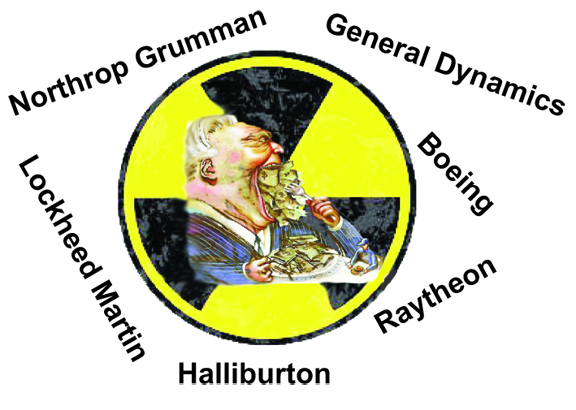
We’re squabbling over Social Security, while the government lavishes infinitely more money on the arms industry. The Nation, By Rebecca Gordon 16 June 21, ”……………………………..President Joe Biden remains super-glued to the same old post–World War II agreement between the two major parties: They can differ vastly on domestic policies, but they remain united when it comes to projecting US military power around the world and to the government spending that sustains it. In other words, the US “national security” budget is still the third rail of politics in this country…………………………….

WELFARE FOR WEAPONS MAKERS
Of course, there’s a second high-voltage, untouchable rail in American politics and that’s funding for the military and weapons manufacturers. It takes a brave politician indeed to suggest even the most minor of reductions in Pentagon spending, which has for years been the single largest item of discretionary spending in the federal budget.
It’s notoriously difficult to identify how much money the government actually spends annually on the military. President Trump’s last Pentagon budget, for the fiscal year ending on September 30, offered about $740 billion to the armed services (not including outlays for veteran services and pensions). Or maybe it was only $705.4 billion. Or perhaps, including Department of Energy outlays involving nuclear weapons, $753.5 billion. (And none of those figures even faintly reflected full national security spending, which is certainly well over a trillion dollars annually.)
Most estimates put President Biden’s 2022 military budget at $753 billion—about the same as Trump’s for the previous year. As former Senator Everett Dirksen is once supposed to have said, “A billion here, a billion there, and pretty soon you’re talking real money.”
Indeed, we’re talking real money and real entitlements here that can’t be touched in Washington without risking political electrocution. Unlike actual citizens, US arms manufacturers seem entitled to ever-increasing government subsidies—welfare for weapons, if you like. Beyond the billions spent to directly fund the development and purchase of various weapons systems, every time the government permits arms sales to other countries, it’s expanding the coffers of companies like Lockheed-Martin, Northrup-Grumman, Boeing, and Raytheon Technologies. The real beneficiaries of Donald Trump’s so-called Abraham Accords between Israel and the majority Muslim states of Morocco, the United Arab Emirates, Bahrain, and Sudan were the US companies that sell the weaponry that sweetened those deals for Israel’s new friends.
When Americans talk about undeserved entitlements, they’re usually thinking about welfare for families, not welfare for arms manufacturers. But military entitlements make the annual federal appropriation of $16.5 billion for Temporary Aid to Needy Families (TANF) look puny by comparison. In fact, during Republican and Democratic administrations alike, the yearly federal outlay for TANF hasn’t changed since it was established through the 1996 Personal Responsibility and Work Opportunity Reconciliation Act, known in the Clinton era as “welfare reform.” Inflation has, however, eroded its value by about 40 percent in the intervening years.
And what do Americans get for those billions no one dares to question? National security, right?
But how is it that the country that spends more on “defense” than the next seven, or possibly 10, countries combined is so insecure that every year’s Pentagon budget must exceed the last one? Why is it that, despite those billions for military entitlements, our critical infrastructure, including hospitals, gas pipelines, and subways (not to mention Cape Cod steamships), lies exposed to hackers?
And if, thanks to that “defense” budget, we’re so secure, why is it that, in my wealthy home city of San Francisco, residents now stand patiently in lines many blocks long to receive boxes of groceries? Why is “national security” more important than food security, or health security, or housing security? Or, to put it another way, which would you rather be entitled to: food, housing, education, and health care, or your personal share of a shiny new hypersonic missile?
But wait! Maybe defense spending contributes to our economic security by creating, as Donald Trump boasted in promoting his arms deals with Saudi Arabia, “jobs, jobs, jobs.” It’s true that spending on weaponry does, in fact, create jobs, just not nearly as many as investing taxpayer dollars in a variety of far less lethal endeavors would. As Brown University’s Costs of War project reports:
And if, thanks to that “defense” budget, we’re so secure, why is it that, in my wealthy home city of San Francisco, residents now stand patiently in lines many blocks long to receive boxes of groceries? Why is “national security” more important than food security, or health security, or housing security? Or, to put it another way, which would you rather be entitled to: food, housing, education, and health care, or your personal share of a shiny new hypersonic missile?
Rebecca GordonRebecca Gordon, a TomDispatch regular, teaches in the philosophy department at the University of San Francisco. She is the author of American Nuremberg: The U.S. Officials Who Should Stand Trial for Post-9/11 War Crimes (Hot Books, April 2016). Her previous books include Mainstreaming Torture: Ethical Approaches in the Post-9/11 United States and Letters from Nicaragua.
https://www.thenation.com/article/economy/the-real-welfare-cheats-are-war-profiteers/
NATO readies for a collective response to attacks in space

NATO says attack in space could trigger mutual defense clause Defense News By: Lorne Cook, The Associated Press 16 June 21BRUSSELS — NATO leaders on Monday expanded the use of their all for one, one for all, mutual defense clause to include a collective response to attacks in space.
Article 5 of NATO’s founding treaty states that an attack on any one of the 30 allies will be considered an attack on them all. Until now, it’s only applied to more traditional military attacks on land, sea, or in the air, and more recently in cyberspace.
In a summit statement, the leaders said they “consider that attacks to, from, or within space” could be a challenge to NATO that threatens “national and Euro-Atlantic prosperity, security, and stability, and could be as harmful to modern societies as a conventional attack.”
“Such attacks could lead to the invocation of Article 5. A decision as to when such attacks would lead to the invocation of Article 5 would be taken by the North Atlantic Council on a case-by-case basis,” they said.
Around 2,000 satellites orbit the earth, over half operated by NATO countries, ensuring everything from mobile phone and banking services to weather forecasts. Military commanders rely on some of them to navigate, communicate, share intelligence and detect missile launches.
In December 2019, NATO leaders declared space to be the alliance’s “fifth domain” of operations, after land, sea, air and cyberspace. Many member countries are concerned about what they say is increasingly aggressive behavior in space by China and Russia.
Around 80 countries have satellites, and private companies are moving in, too. In the 1980s, just a fraction of NATO’s communications was via satellite. Today, it’s at least 40%. During the Cold War, NATO had more than 20 stations, but new technologies mean the world’s biggest security organization can double its coverage with a fifth of that number.
NATO’s collective defense clause has only been activated once, when the members rallied behind the United States following the Sept. 11, 2001, attacks…………..
Biden said Monday that Article 5 is “a sacred obligation” among allies. “I just want all of Europe to know that the United States is there,” he said. “The United States is there.” https://www.defensenews.com/smr/nato-priorities/2021/06/14/nato-says-attack-in-space-could-trigger-mutual-defense-clause/
Climate and weather hazards to France’s nuclear reactors in summer 2021
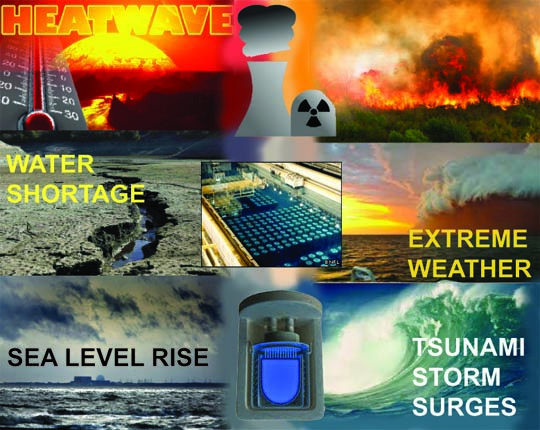
Weather conditions can have a significant impact on the production of
French nuclear power plants: over the past six years, heat waves and
droughts have caused nearly 360 shutdowns or reductions in production on
the French nuclear fleet, causing up to 6.2GW unavailability.
Since itscreation in 2019, Callendar has acquired expertise in the short-term
forecasting of these downtimes and the modeling of the long-term effects of
climate change on nuclear production. For the first time, we are proposing
an assessment of the risk of unavailability due to medium-term
meteorological causes for the summer of 2021.
Callendar (accessed) 15th June 2021
http://callendar.climint.com/fr/disponibilite-nucleaire-canicule-secheresse-ete-2021/
Is the leak in a nuclear reactor in China due to a Framatome manufacturing defect ?
Is the leak in a nuclear reactor in China due to a manufacturing defect in
the Drôme? The nuclear rods for reactor n ° 1 in Taishan, China, are
manufactured by the Framatome site in Romans-sur-Isère. One of the
hypotheses considered to explain the leak in the circuit could be a
manufacturing defect.
It is difficult to know for the moment what caused
the leak within the reactor n ° 1 of the EPR of Taishan, in China. In
recent months, “rare gases” have been identified in the primary circuit
after the degradation of a few rods containing the uranium pellets. These
pencils are made in Romans-sur-Isère, on the Framatome site.
France Bleu 16th June 2021
Fire at Hinkley Point C building site
A fire broke out on the building site for Hinkley Point C this morning
(Tuesday, June 15). A pall of smoke was spotted in the sky over the power
station near Bridgwater in Somerset and reports of a blaze quickly began to
circulate on social media.
Devon and Somerset Fire and Rescue attended the
plant after one of the galleries used to run pipes and cables around the
station caught alight. Shortly after 9.30am, pictures of the smoke cloud
were uploaded to Facebook by people living nearby, in Burnham-on-Sea. A
spokesman confirmed that the Hinkley Point’s internal fire crew
extinguished the blaze and there were no casualties. He said the incident
was now being investigated and EDF energy will ensure “lessons are learned”
from the event.
Somerset Live 15th June 2021
https://www.somersetlive.co.uk/news/somerset-news/hinkley-point-c-fire-confirmed-5530409
Is China covering up a nuclear leak?
US assessing reported leak at Chinese nuclear power facility, By Zachary Cohen, CNN, June 14, 2021
The US government has spent the past week assessing a report of a leak at a Chinese nuclear power plant, after a French company that part owns and helps operate it warned of an “imminent radiological threat,” according to US officials and documents reviewed by CNN.
The warning included an accusation that the Chinese safety authority was raising the acceptable limits for radiation detection outside the Taishan Nuclear Power Plant in Guangdong province in order to avoid having to shut it down, according to a letter from the French company to the US Department of Energy obtained by CNN.
Despite the alarming notification from Framatome, the French company, the Biden administration believes the facility is not yet at a “crisis level,” one of the sources said.
While US officials have deemed the situation does not currently pose a severe safety threat to workers at the
plant or Chinese public, it is unusual that a foreign company would unilaterally reach out to the American government for help when its Chinese state-owned partner is yet to acknowledge a problem exists. The scenario could put the US in a complicated situation should the leak continue or become more severe without being fixed.
https://edition.cnn.com/2021/06/14/politics/china-nuclear-reactor-leak-us-monitoring/index.html
Chris Hedges: Julian Assange and the Collapse of the Rule of Law

“Lliving in truth in a despotic system is the supreme act of defiance. This truth terrifies those in power.”
Chris Hedges: Julian Assange and the Collapse of the Rule of Law — Rise Up Times Julian exposed the truth. He exposed it over and over and over until there was no question of the endemic illegality, corruption and mendacity that defines the global ruling elite.
Chris Hedges gave this talk at a rally Thursday night in New York City in support of Julian Assange. John and Gabriel Shipton, Julian’s father and brother, also spoke at the event, which was held at The People’s Forum. By Chris Hedges / Original to ScheerPost
BY MODERATOR June 11, 2021 This why we are here tonight. Yes, all of us who know and admire Julian decry his prolonged suffering and the suffering of his family. Yes, we demand that the many wrongs and injustices that have been visited upon him be ended. Yes, we honor him up for his courage and his integrity. But the battle for Julian’s liberty has always been much more than the persecution of a publisher. It is the most important battle for press freedom of our era. And if we lose this battle, it will be devastating, not only for Julian and his family, but for us.
Tyrannies invert the rule of law. They turn the law into an instrument of injustice. They cloak their crimes in a faux legality. They use the decorum of the courts and trials, to mask their criminality. Those, such as Julian, who expose that criminality to the public are dangerous, for without the pretext of legitimacy the tyranny loses credibility and has nothing left in its arsenal but fear, coercion and violence.
The long campaign against Julian and WikiLeaks is a window into the collapse of the rule of law, the rise of what the political philosopher Sheldon Wolin calls our system of inverted totalitarianism, a form of totalitarianism that maintains the fictions of the old capitalist democracy, including its institutions, iconography, patriotic symbols and rhetoric, but internally has surrendered total control to the dictates of global corporations.
I was in the London courtroom when Julian was being tried by Judge Vanessa Baraitser, an updated version of the Queen of Hearts in Alice-in Wonderland demanding the sentence before pronouncing the verdict. It was judicial farce. There was no legal basis to hold Julian in prison. There was no legal basis to try him, an Australian citizen, under the U.S. Espionage Act. The CIA spied on Julian in the embassy through a Spanish company, UC Global, contracted to provide embassy security. This spying included recording the privileged conversations between Julian and his lawyers as they discussed his defense. This fact alone invalidated the trial. Julian is being held in a high security prison so the state can, as Nils Melzer, the U.N. Special Rapporteur on Torture, has testified, continue the degrading abuse and torture it hopes will lead to his psychological if not physical disintegration.
The U.S. government directed, as Craig Murray so eloquently documented, the London prosecutor James Lewis. Lewis presented these directives to Baraitser. Baraitser adopted them as her legal decision. It was judicial pantomime. Lewis and the judge insisted they were not attempting to criminalize journalists and muzzle the press while they busily set up the legal framework to criminalize journalists and muzzle the press. And that is why the court worked so hard to mask the proceedings from the public, limiting access to the courtroom to a handful of observers and making it hard and at times impossible to access the trial online. It was a tawdry show trial, not an example of the best of English jurisprudence but the Lubyanka.
Now, I know many of us here tonight would like to think of ourselves as radicals, maybe even revolutionaries. But what we are demanding on the political spectrum is in fact conservative, it is the restoration of the rule of law. It is simple and basic. It should not, in a functioning democracy, be incendiary. But living in truth in a despotic system is the supreme act of defiance. This truth terrifies those in power………..https://riseuptimes.org/2021/06/14/chris-hedges-julian-assange-and-the-collapse-of-the-rule-of-law/
Why Utah really does not need Bill Gates’ small nuclear reactors

What Bill Gates and co. would like us to forget is that even the these geewhiz new small reactors are still based on that old carbon-releasing fuel chain –
Yes, there is a need to clean up our power generation to curb climate change — the sooner the better. But Williams points to a recent study that determined the lifecycle emissions with nuclear — mining, milling, transporting and storing the fuel and building and decommissioning the plants — far exceed other alternative energy sources.
Cox is eager for a nuclear future. Utahns should tell him why we’re not, says Robert Gehrke, https://www.sltrib.com/news/politics/2021/06/14/cox-is-eager-nuclear/ With safer, cleaner, cheaper alternatives, nuclear power may not make the most sense for Utah, By Robert Gehrke , June 15, 2021,
In Wyoming last week, an announcement was made that could mark a resurgence in the long-stymied nuclear energy industry.
Officials announced plans to build a new 345 megawatt nuclear power plant in the state that could, at its peak, generate enough electricity for all of the households in Wyoming with room to spare.
What makes this announcement different is the array of power players behind the project. It’s a partnership between Warren Buffett-owned Pacificorp and Bill Gates-owned Terrapower that has the backing of President Joe Biden’s Energy Department and Wyoming Gov. Mark Gordon.
It also has the support of Utah Gov. Spencer Cox, who praised the project as “a huge announcement” that “will have big implications for Utah in the future.”
“We look forward to similar partnerships in the years to come,” the governor said.
It’s not necessarily a new position. Cox’s predecessor, Gov. Gary Herbert, supported nuclear energy, as did his predecessor, Gov. Jon Huntsman.
But the Wyoming announcement ups the stakes dramatically, moving it from concept to something more concrete and forcing Utahns to confront critical questions nagging nuclear power: Is it safe? Is it cost-effective? And is it right for Utah?
Safety has always been the issue dogging nuclear power. Whether it’s Three Mile Island or Chernobyl or Fukushima, you surely have some nuclear disaster as a touchstone framing you perception of the energy.
The good news, according to Michael Simpson, chair of the Material Science and Engineering department at the University of Utah, is that the Natrium reactors that Terrapower hopes to build in Wyoming are generally safer than the old water-cooled reactors.
The Terrapower plant would be cooled with sodium, which transfers heat better than water, meaning it is less likely to melt down (like Chernobyl) or explode (like Fukushima).
Years ago, Simpson said, researchers at the Idaho National Laboratory did an experiment with a sodium-cooled reactor where they shut off the sodium coolant and instead of heating, the reactor slowly cooled and the reaction stopped.
Others dispute the safety claims, however. Earlier this year, the Union of Concerned Scientists issued a report that said the sodium reactors are unproven and raise other safety issues — for example, the sodium can burn if exposed to air.
“When it comes to safety and security, sodium-cooled fast reactors and molten salt-fueled reactors are significantly worse than conventional light-water reactors,” said Edwin Lyman, director of nuclear power safety for UCS.
Then there is the waste issue. The proponents of the sodium reactors contend that they would burn more of the fuel, producing less waste. Again, UCS disputes that and argues the waste that would be generated would pose nuclear proliferation and possible terrorism risks.
Then there’s the economics of nuclear power.
Recently, South Carolina completely scrapped a water-cooled nuclear plant that had been in the works for years. Some $9 billion was squandered sparking lawsuits by investors and ratepayers demanding their money back.
Rocky Mountain Power’s own figures released in 2019 put the cost of nuclear power at $95 per megawatt hour, compared to around $25 to $30 per hour for solar. Some cost projections are lower, some are higher, but none put nuclear in the same ballpark as solar, raising the obvious concern that we’ll be on the hook for the added expense one way or another — either as ratepayers or as taxpayers subsidizing the more costly power source.
There’s also a larger question, according to Scott Williams, executive director of HEAL Utah, an environmental group that has opposed nuclear power: Do we need it?
Yes, there is a need to clean up our power generation to curb climate change — the sooner the better. But Williams points to a recent study that determined the lifecycle emissions with nuclear — mining, milling, transporting and storing the fuel and building and decommissioning the plants — far exceed other alternative energy sources.
But the TerraPower reactor isn’t expected to come online until 2028 and, as we saw in South Carolina, when it comes to building nuclear power plants, the projections often are unrealistically optimistic.
With battery technology improving and rooftop solar expanding and getting cheaper, there’s no reason to gamble on nuclear, Williams said, other than centralized generation benefits Rocky Mountain’s shareholders.
“It just doesn’t make sense,” he said. “If you’re looking at it objectively, to say it’s better to put a bunch of money into a technology that not only isn’t proven, but has been proven to fail time and time again.”
And we have to take into account our state’s history with nuclear energy that is nothing short of radioactive itself, from the miners and uranium mill workers sickened by their exposure to radiation, to the thousands upon thousands of Utah Downwinders stricken with various cancers as a result of nuclear weapons testing in Nevada, to the decade-long battle to beat back a nuclear waste storage facility in Utah’s desert.
So do we scrap the whole nuclear idea? Not necessarily.
But if Utah wants to venture down the nuclear energy path, these questions and a host of others have to be thoroughly researched and addressed. We’re not there yet and until we are, the cheerleading from the Biden administration and Gov. Cox feels premature.
NATO’s hostility to the Nuclear Weapons Ban Treaty is in conflict with its true goal – to become a non-nuclear alliance .
NATO’s Nuclear Two-Step, An alliance that avows nuclear disarmament should not cling so dangerously to its weapons. https://www.defenseone.com/ideas/2021/06/natos-nuclear-two-step/174703/ BY RICHARD LENNAN, EFORMER UN DISARMAMENT OFFICIAL, JUNE 14, 2021
NATO wants to become a non-nuclear alliance. That sentence might surprise many, but it’s true: when the organization achieves its long-standing goal of full implementation of the Nuclear Non-proliferation Treaty, its members will no longer possess nuclear weapons.
Given the growing risks, it would be natural for NATO to be reinvigorating and accelerating its efforts on nuclear disarmament. Perversely, however, the alliance has been moving in the opposite direction.
Despite NPT commitments to work to reduce stockpiles and diminish the role of nuclear weapons in security doctrines, the three nuclear-armed NATO members are all improving their nuclear arsenals. NATO rhetoric in favor of nuclear weapons is hardening, and the alliance is “circling the wagons” around nuclear deterrence. Although the North Atlantic Treaty makes no mention of nuclear weapons, NATO was officially dubbed a “nuclear alliance” in the 2010 Strategic Concept and this deliberate embedding of nuclear weapons in the alliance’s identity has steadily continued.
Political support by individual NATO members for retaining NATO’s nuclear weapons capability is increasingly seen as a test of loyalty and unity; discussion of alternatives is discouraged, even punished. Bizarrely, the NATO 2030 Reflection Group report recommended that “NATO should better communicate on the key role of its nuclear deterrence policy… so as to effectively counter hostile efforts to undermine this vital policy.” An uninitiated observer could be forgiven for thinking that NATO’s raison d’être is not “to safeguard the freedom, common heritage and civilization” of its members, but rather to defend and protect their right to use weapons of mass destruction.
When much of the world is strengthening the norm against nuclear weapons by joining the 2017 Treaty on the Prohibition of Nuclear Weapons, or TPNW, NATO is undermining its own security by encouraging proliferation of nuclear weapons, by provoking arms races with nuclear-armed rivals, and by constraining the ability of alliance members to pursue effective steps towards nuclear disarmament.
Nowhere is the harmful effect of this trend clearer than in NATO’s counterproductive hostility to the TPNW. The treaty’s objective is also one professed by NATO: ending the nuclear weapons threat by eliminating nuclear weapons. Any differences therefore come down to the means by which this objective is to be achieved. Yet NATO has reacted to the TPNW as if it were some kind of dangerous assault on its core values, if not a threat to its very existence.
The reasons given for NATO’s opposition have been described by Hans Blix as “strained” and by former Canadian foreign minister Lloyd Axworthy as “phoney baloney”. There is no legal reason that NATO allies cannot join the TPNW, and NATO’s obsessive focus on the treaty has prevented any consideration of what it can offer the alliance.
By supporting and joining the the treaty, individual NATO states can help to build a robust new global norm against nuclear weapons, strengthening barriers against proliferation, diminishing pressure for nuclear arms races, and reducing the overall reliance of NATO on nuclear weapons, opening up pathways for progress on disarmament. They will also demonstrate their commitment to fully discharging their disarmament obligations under the earlier Non-Proliferation Treaty, easing tensions among its signatories.
Conversely, the approach of blanket dismissal of and hostile non-engagement with the TPNW will only constrain NATO’s options, alienate potential partners, and push the alliance’s nuclear disarmament goal further out of reach.
Outside the alliance’s current leadership, there is growing support within a number of member states for joining the TPNW. A range of former leaders, including NATO secretaries general and defense and foreign ministers, have called on NATO states to join. Parliaments in NATO states have passed motions in support of the treaty; cities across the alliance have called on their governments to join it. Opinion polls in many NATO states consistently support, by a clear margin, accession to the treaty.
NATO as a non-nuclear alliance would be something to celebrate. Yet rather than openly aspiring to such status, and discussing how it might look and function, the alliance seems to be actively avoiding – even suppressing – any consideration of the possibility. This is a dangerously counterproductive and shortsighted approach.
It is time for NATO members to shake off the restrictions of reactive, short-term thinking about nuclear weapons, and instead to re-embrace the vision of nuclear disarmament as a preventative tool for shaping NATO’s security environment. While total elimination of nuclear weapons may remain a distant goal, envisioning and planning for NATO as a non-nuclear alliance should begin now. Positive and constructive engagement with the TPNW, including joining the treaty for those NATO members willing and ready to do so, would be a logical place to start.
Richard Lennane is a former Australian diplomat and UN disarmament official. He is a principal co-author of A Non-Nuclear Alliance: Why NATO Members Should Join the UN Ban on Nuclear Weapons, published on 10 June 2021 by the International Campaign to Abolish Nuclear Weapons (ICAN).
1 This Month

Read the Public Inquiry Report, the Commissioners’ report, Surrendering Australia: The AUKUS Deception is available to download for free at aukuspublicinquiry.com. Or just watch the replay of the National Press Club Luncheon.


19 November – Webinar – The Reality of Reprocessing
Time: 11:00 AM Pacific Time (US & Canada) / 2:00 PM Eastern / 7:00 PM UK / 8:00 PM CET
Register for the Zoom Event Here



Shut down the radiation-damaged Heysham nuclear reactors now
To see nuclear-related stories in greater depth and intensity – go to https://nuclearinformation.wordpress.com

Say No to NASA’s Reckless Nuclear Reactor on the Moon
Say No to NASA’s Reckless Nuclear Reactor on the Moon
-
Archives
- November 2026 (103)
- October 2026 (302)
- September 2026 (339)
- August 2026 (330)
- July 2026 (355)
- June 2026 (287)
- May 2026 (306)
- April 2026 (356)
- March 2026 (251)
- February 2026 (267)
- January 2026 (308)
- December 2025 (358)
-
Categories
- 1
- 1 NUCLEAR ISSUES
- business and costs
- climate change
- culture and arts
- ENERGY
- environment
- health
- history
- indigenous issues
- Legal
- marketing of nuclear
- media
- opposition to nuclear
- PERSONAL STORIES
- politics
- politics international
- Religion and ethics
- safety
- secrets,lies and civil liberties
- spinbuster
- technology
- Uranium
- wastes
- weapons and war
- Women
- 2 WORLD
- ACTION
- AFRICA
- Atrocities
- AUSTRALIA
- Christina's notes
- Christina's themes
- culture and arts
- Events
- Fuk 2022
- Fuk 2023
- Fukushima 2017
- Fukushima 2018
- fukushima 2019
- Fukushima 2020
- Fukushima 2021
- general
- global warming
- Humour (God we need it)
- Nuclear
- RARE EARTHS
- Reference
- resources – print
- Resources -audiovicual
- Weekly Newsletter
- World
- World Nuclear
- YouTube
-
RSS
Entries RSS
Comments RSS

