Why Cosmic Radiation Could Foil Plans for Farming on Mars
Why Cosmic Radiation Could Foil Plans for Farming on Mars, New research suggests gamma rays stunt plant growth. Inside Science , August 20, 2021 – Karen Kwon, Friday, August 20, 2021 – — What would it take for humans to live on Mars? The first step is to successfully get people to the red planet, of course. Once there, the astronauts would face a task that could be even more difficult: figuring out how to survive in an environment that is vastly different from Earth’s. A new study demonstrates one of the challenges — Earth’s plants don’t grow as well when exposed to the level of radiation expected on Mars.
Wieger Wamelink, an ecologist at Wageningen University in the Netherlands who describes himself as a space farmer, has been frustrated by sci-fi depictions of growing plants on Mars. “What you often see is that they do it in a greenhouse,” he said, “but that doesn’t block the cosmic radiation,” which consists of high-energy particles that may alter the plants’ DNA. Mars lacks the same degree of protection from cosmic radiation that the Earth’s atmosphere and magnetic field provide. To prove his suspicion that cosmic radiation could be dangerous to plants, Wamelink decided to test the hypothesis himself.
First, Wamelink and his team had to recreate the cosmic radiation. The team settled on using gamma rays generated by radioactive cobalt, even though the actual cosmic radiation that bombards Mars’ surface consists of various types of radiation, including alpha and beta particles……………..
Four weeks after germination, the scientists compared the two groups and saw that the leaves of the group exposed to gamma rays had abnormal shapes and colors. The weights of the plants also differed; the rye plants in the gamma-ray group weighed 48% less than the regular group, and the weight of the garden cress exposed to gamma rays was 32% lower than their unblasted counterparts. Wamelink suspects the weight difference is due to the gamma rays damaging the plants’ proteins and DNA. The results were published in the journal Frontiers in Astronomy and Space Sciences this month……………. http://insidescience.org/news/why-cosmic-radiation-could-foil-plans-farming-mars
Russia, Germany, hope efforts to save Iran nuclear deal will be continued — Putin
Russia, Germany hope efforts to save Iran nuclear deal will be continued — Putin, Tass, 20 Aug 21, The Russian leader also said he had informed Merkel about his telephone conversation with Iranian President Ebrahim Raisi on August 18 MOSCOW, August 20. /TASS/. Russia and Germany hope that efforts towards saving the Iran nuclear deal will be continued after a new government is formed in Iran, Russian President Vladimir Putin said after talks with visiting German Chancellor Angela Merkel.
“When discussing the situation around the Iran nuclear deal, we with Mrs Chancellor expressed the hope that after a new government is formed in Iran, strenuous efforts will be continued to preserve the Joint Comprehensive Plan of Action,” he said.
Putin also said he had informed Merkel about his telephone conversation with Iranian President Ebrahim Raisi on August 18.
The JCPOA Joint Commission has had several offline meetings in Vienna since April to discuss prospects for the United States’ possible return to the deal and steps needed to ensure full and efficient compliance with the deal’s terms by all its signatories. The commission members continue to discuss ways of restoring the nuclear deal at informal meetings in various formats, including at an expert level. JCPOA participants also hold separate consultations with the US delegation without Iran’s participation. It was originally planned to finish consultations in late May and then – in early June………… https://tass.com/politics/1328453
Biden’s Iran envoy calls nuclear deal’s fate ‘one big question mark
Biden’s Iran envoy calls nuclear deal’s fate ‘one big question mark’, Politico, By ALEXANDER WARD and QUINT FORGEY 08/19/2021 ROBERT MALLEY, the man President JOE BIDEN has tasked with putting the United States back into the Iran nuclear deal, isn’t supremely confident he’ll succeed in his mission.
“It’s just one big question mark,” he told NatSec Daily during an exclusive interview in his State Department office. Rejoining the multinational accord “is not something that we can fully control,” he said, citing a lack of engagement from the Iranians.
Negotiations between the United States, Iran and five world powers have proceeded fruitlessly since April. Tehran’s side won’t even speak directly with Washington’s and instead prefers working through intermediaries while in Vienna. That dance was complicated by the arrival of new Iranian President EBRAHIM RAISI, a hardliner who experts suspect is more skeptical of the diplomatic effort than his pact-signing predecessor. No open bargaining has taken place since Raisi came to power in mid-July.
………….. Should the United States and Iran fail to agree on terms in the coming months, the envoy says his team is preparing some contingencies. One is that Washington and Tehran sign a wholly separate deal, complete with different parameters than the current accord. Another is a suite of punitive responses in coordination with European allies, though Malley didn’t specifically detail what those would be………… https://www.politico.com/newsletters/national-security-daily/2021/08/19/exclusive-bidens-iran-envoy-calls-nuclear-deals-fate-one-big-question-mark-494049
If children are to live with the climate crisis, we must green the curriculum
If children are to live with the climate crisis, we must green the curriculum, Guardian, Meryl Batchelder,
It’s clear to me when I teach that sustainability and the environment should be a thread running through every subject
Thu 19 Aug 2021 ”……………….. With so much focus on children – the ones who will have to live with the coming ecological disaster – the role of education is key. This summer has seen unprecedented wildfires and floods. Pupils see scenes of biblical devastation on the news, but in many schools they are not being given the required information or context and this can lead to misunderstanding or anxiety.
……………. There is still no mention of the climate crisis in the national curriculum for England in primary schools, and in key stage 3 science very little of the curriculum relates to climate education. Incredibly, the last major update to the national geography curriculum for England in 2013 saw the then education secretary, Michael Gove, attempt to drop climate change.
………….. So what needs to change? We need a green curriculum that starts in early years and extends through all key stages. Properly taught, climate change education should be a thread through all subjects – not just science and geography – from the food miles of the ingredients we cook in food technology to debates on humanitarian issues such as mass migration in religious education or personal, social, health and economic (PSHE) education.
Working in a state school means I am duty bound to teach lessons within the confines of the national curriculum. As far as this allows, I have sought to enrich my pupils’ learning with fieldwork, hands-on science, technology, engineering and mathematics (STEM) challenges and even gardening. But not every school has the resources or expertise to bring climate education into the classroom. Earlier this year, the climate education campaign group Teach the Future reported that seven in 10 UK teachers say they have not received adequate training to educate their students on the climate crisis……….. https://www.theguardian.com/commentisfree/2021/aug/19/children-climate-crisis-green-curriculum-sustainability-environment—
Big winners from the Afghan war -the weapons-making corporations.

Progressive Critics Say Investors in US Weapon-Makers Only Clear Winners of Afghan War
“The military-industrial complex got exactly what it wanted out of this war.” https://www.commondreams.org/news/2021/08/17/progressive-critics-say-investors-us-weapon-makers-only-clear-winners-afghan-war
As the hawks who have been lying about the U.S. invasion and occupation of Afghanistan for two decades continue to peddle fantasies in the midst of a Taliban takeover and American evacuation of Kabul, progressive critics on Tuesday reminded the world who has benefited from the “endless war.”
“Entrenching U.S. forces in Afghanistan was the military-industrial complex’s business plan for 20+ years,” declared the Washington, D.C.-based advocacy group Public Citizen.
“Hawks and defense contractors co-opted the needs of the Afghan people in order to line their own pockets,” the group added. “Never has it been more important to end war profiteering.”
In a Tuesday morning tweet, Public Citizen highlighted returns on defense stocks over the past 20 years—as calculated in a “jaw-dropping” analysis by The Intercept—and asserted that “the military-industrial complex got exactly what it wanted out of this war.”

The Intercept‘s Jon Schwarz examined returns on stocks of the five biggest defense contractors: Boeing, Raytheon, Lockheed Martin, Northrop Grumman, and General Dynamics
defense stocks outperformed the stock market overall by 58% during the Afghanistan War.
.
Schwarz found that a $10,000 investment in stock evenly split across those five companies on the day in 2001 that then-President Georg W. Bush signed the authorization preceding the U.S. invasion would be worth $97,295 this week, not adjusted for inflation, taxes, or fees.
According to The Intercept:
This is a far greater return than was available in the overall stock market over the same period. $10,000 invested in an S&P 500 index fund on September 18, 2001, would now be worth $61,613.
That is, defense stocks outperformed the stock market overall by 58% during the Afghanistan War.
“These numbers suggest that it is incorrect to conclude that the Taliban’s immediate takeover of Afghanistan upon the U.S.’s departure means that the Afghanistan War was a failure,” Schwarz added. “On the contrary, from the perspective of some of the most powerful people in the U.S., it may have been an extraordinary success. Notably, the boards of directors of all five defense contractors include retired top-level military officers.”
“War profiteering isn’t new,” journalist Dina Sayedahmed said in response to the reporting, “but seeing the numbers on it is staggering.”
Progressive political commentator and podcast host Krystal Ball used Schwarz’s findings to counter a key argument that’s been widely used to justify nearly 20 years of war.
“This is what it was really all about people,” she tweeted of the defense contractors’ returns. “Anyone who believes we were in Afghanistan to help women and girls is a liar or a fool.”
Jack Mirkinson wrote Monday for Discourse Blog that “it is unquestionably heartbreaking to think about what the Taliban might inflict on women and girls, but let us dispense with this fantasy that the U.S. has been in Afghanistan to support women, or to build democracy, or to strengthen Afghan institutions, or any of the other lines that are deployed whenever someone has the temerity to suggest that endless war and occupation is a harmful thing.”
“We did not go into Afghanistan to support its people, and we did not stay in Afghanistan to support its people,” he added. “It is astonishing, given what we know about the monsters that the U.S. has propped up time and time again around the world, that the myth persists that we do anything out of our love for human rights. We went in and we stayed in for the same reason: the American empire is a force that must remain in perpetual motion.”
As Common Dreams reported Monday, while the Taliban has retaken control, anti-war advocates have argued diplomacy is the only path to long-term peace, with Project South’s Azadeh Shahshahani emphasizing that “the only ones who benefited from the U.S. war on Afghanistan were war-profiteering politicians and corporations while countless lives were destroyed.”
Responding to Shahshahani’s tweet about who has benefited from two decades of bloodshed, Zack Kopplin of the Government Accountability Project wrote, “Adding war-profiteering generals to the mix too.”
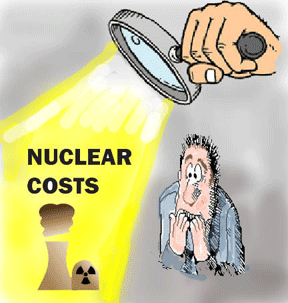
As renewable energy powers ahead, the UK government’s prospects for funding nuclear power projects look very risky
China’s cash for UK nuclear plants is in doubt https://climatenewsnetwork.net/chinas-cash-for-uk-nuclear-plants-is-in-doubt/
August 16th, 2021, by Paul Brown Cooler Sino-British relations mean China’s cash for UK nuclear plants is at risk
LONDON, 16 August, 2021 − A serious stumbling block now threatens the prospect of China’s cash for UK nuclear plants materialising − and also the likelihood of a successful outcome to COP26, the global climate conference which the British government is due to host later this year.
In order to finance the construction of nuclear stations that are supposed to generate up to 20% of the UK’s electricity, the British government needs Chinese money. Without it, the already prohibitively expensive projects may become completely unaffordable.
Neither the deeply indebted French government-owned company EDF, which is building two stations, each with twin reactors, nor the UK government is prepared to underwrite the entire cost of the projects. This is because of the huge sums required − around £45 billion (US$62bn).
However, the UK government faces severe political pressure to end Chinese involvement, because of the perceived threat of ceding control over vital services such as the electricity supply.
Problematic deal
The problem for Boris Johnson, the UK prime minister, is particularly acute as Britain is hosting COP26, this year’s UN climate conference, in Glasgow in November. Relations between the UK and China are already poor, in part because of disputes over democratic freedoms for the people of Hong Kong.
But with China the world’s largest carbon emitter, Johnson needs it onside if he is to have a chance of making COP26 the success it must be to avert catastrophic climate change.
The problem over funding the nuclear programme arises because of a deal struck in 2015 between the then British prime minister, David Cameron, and China’s president Xi Jinping.
That agreed that China would stump up one third of the £23bn ($32bn) cost of the Hinkley C nuclear power station in the West of England, and also pay 20% of the cost of another planned station, Sizewell C, on the east coast. In return the Chinese could then build a nuclear plant of their own design at Bradwell B in Essex, closer to London, and use it as a platform to export their Hualong HPR1000 reactor technology to the rest of the world
To President Xi the cost of helping to fund the French company to build nuclear stations in Britain was outweighed by the advantage of getting Chinese technology validated in the UK as a bridge to future exports.
Six years later, however, with the Hinkley Point project well under way and Sizewell C supposedly close to launch, the British government is now nervous about allowing the Chinese such a strong involvement in the UK’s nuclear secrets and the nation’s power supply.
Its dilemma, though, is that if the UK reneges on its 2015 agreement, then China could abandon both projects, leaving a financial black hole of many billions of pounds. Trades unions are horrified at the potential loss of jobs the possible cancellation of the projects would cause.
One alternative to Chinese funding is a UK nuclear tax which would be paid in advance by electricity users to fund the construction of the power stations. With power bills already due to rise by more than 10% in Britain before the end of 2021, this is unlikely to be an electorally popular solution.
Renewable competition
What will happen is anyone’s guess. Given Johnson’s well-known habit of postponing difficult decisions, and the looming COP26, it is likely that nothing will be announced until the crucial Glasgow talks are over. The French, in anticipation, have already announced that they are postponing the “final investment decision” on Sizewell C until next year.
Meanwhile the renewable energy industry, particularly offshore wind, is powering ahead with a massive construction programme. Its projects will all produce electricity far more cheaply than any of the UK’s proposed new nuclear stations.Last ditch attempts by the nuclear industry to put a green gloss on its proposals by persuading ministers that its spare electricity capacity can be used to make green hydrogen seem unlikely to succeed.Perhaps in time it will become obvious to Johnson that if banning Chinese involvement in British nuclear plants means they end up not being built that will be a bonus, because cheaper renewable energy will soon be available to fill any perceived gap in supply. − Climate News Network
Radioactive snakes may monitor Fukushima fallout
Radioactive snakes may monitor Fukushima fallout, Bulletin of the Atomic Scientists, By Susan D’Agostino | August 17, 2021 When a massive earthquake followed by a tsunami hit Japan a decade ago, the Fukushima Daiichi Nuclear Power Plant experienced a catastrophic meltdown. Humans fled a wide area around the plant that today is known as the Fukushima Exclusion Zone, while animals and plants remained. Now, scientists have enlisted the help of snakes in the zone to make sense of the disaster’s impact on the environment. Their findings, reported in an Ichthyology and Herpetology paper, indicate that Fukushima’s native rat snakes, like canaries in a coal mine, may act as living monitors of radiation levels in the region.
“Because snakes don’t move that much, and they spend their time in one particular local area, the level of radiation and contaminants in the environment is reflected by the level of contaminants in the snake itself,” Hannah Gerke, a lead author on the study, said.
………… The scientists’ findings reinforced their 2020 study that found a high correlation between levels of radiocesium—a radioactive isotope of cesium—in the snakes and levels of radiation in their environment.
………. rat snakes have relatively small home ranges; they travel an average of 65 meters (approximately 213 feet) each day, according to the study. And they are susceptible to accumulating radionuclides—unstable atoms with excess nuclear energy—from disasters such as the one that took place in Fukushima. A rat snake that makes its home in a small but heavily contaminated area will tell a different story than a rat snake lives in a less contaminated locale.
In the decade since the nuclear disaster, most of the contaminants have settled in the soil. This means that animals such as birds that spend much of their time in trees have limited insight to offer about contaminants on the ground. But snakes, whose long bodies slither in and burrow under the soil, can help determine degrees of contamination.
Also, snakes live long, which means that the data they gather provides information about environmental contaminants over time……………..
The scientists identified more than 1,700 locations in the region that the snakes frequented. Rat snakes in Fukushima, it turns out, avoid evergreen broadleaf forests but spend time close to streams, roads, and grassland. They also frequent trees and buildings.
What did the snakes reveal? Some of the snakes’ radiation exposure in the Fukushima Exclusion Zone hails from contaminated prey they eat, but most—80 percent—comes from contact with contaminated soil, trees, and plants.
“Understanding how contaminants move throughout an ecosystem and how they move in different animals throughout the food web gives us a better picture of the impacts [of the nuclear disaster] to the ecosystem,” Gerke said………….. https://thebulletin.org/2021/08/radioactive-snakes-may-monitor-fukushima-fallout/
Chinese nuclear power firm CGN could be pushed out of UK’s Bradwell nuclear power project – and then what?

Could CGN be pushed out of the UK’s nuclear industry? The Conservative backwoodsman MPs smell blood on China. They have already reversed Government policy and banned Huawei from involvement in rolling out the fifth generation (5G) of wireless communications networks.
They now intend to stop another Chinese firm, CGN, from showcasing its HPR1000 technology when building a replacement nuclear power station at Bradwell in Essex. The MPs will achieve this by amending the forthcoming National Security and Investment Bill.
Trouble is, CGN already has contracts signed to part-fund nuclear power stations together with Electricité de France, at Hinkley Point in Somerset and Sizewell in Suffolk. In both cases, the Chinese have absolutely key engineering roles, with know-how not easily replaced.
The big question is: if CGN were kicked out of Bradwell, whether they would also walk away from the other two projects. Of course in doing so, they would then be in breach of many existing contractual obligations. But, in
such circumstances, good luck with suing the Chinese government.
Electrical Review 16th Aug 2021
Could CGN be pushed out of the UK’s nuclear industry?
Another former Westinghouse top executive faces criminal charges over failed South Carolina multi $billion nuclear power project

4th person charged in South Carolina nuclear project failure, https://apnews.com/article/business-south-carolina-5389136fd3675a311d1a83d68542d0f9 COLUMBIA, S.C. (AP) — A fourth business executive faces criminal charges stemming from a federal investigation into a failed multibillion-dollar project to build two nuclear reactors in South Carolina, authorities announced Wednesday.
Jeffrey A. Benjamin was a former senior vice president for Westinghouse Electric Co., the lead contractor to build two new reactors at the V.C. Summer plant. South Carolina Electric & Gas Co. parent company SCANA Corp. and state-owned utility company Santee Cooper spent nearly $10 billion on the project before halting construction in 2017 following Westinghouse’s bankruptcy.
He now faces multiple felony counts of fraud, according to an indictment.
Benjamin, who supervised all nuclear projects for Westinghouse, received information throughout 2016 and 2017 that the two V.C. Summer reactors were behind schedule and over budget, prosecutors said.
But he repeatedly told SCANA and Santee Cooper that the project was on schedule, hiding the construction’s true timeline from the utility companies, the indictment alleges.
He was fired from Westinghouse in March 2017, shortly before the company filed for bankruptcy.
The collapse of the V.C. Summer project spawned multiple lawsuits, some by ratepayers who said company executives knew the project was doomed and misled consumers and regulators as they petitioned for a series of rate hikes. The failure cost ratepayers and investors billions and left nearly 6,000 people jobless.
Benjamin could face up to twenty years in prison and a $5,000,000 fine if convicted.
Three top-level executives have already pleaded guilty in the multi-year federal fraud investigation, and all are awaiting sentencing as they cooperate with investigators.
Former SCANA Corp. Executive Vice President Stephen Byrne agreed last summer to tell investigators everything he knows about the lies and deception SCANA and its subsidiary South Carolina Electric & Gas used to keep regulators approving rate increases and maintain support from investors.
Kevin Marsh, SCANA’s former CEO, signed a plea deal on felony fraud charges in November.
And Carl Churchman, another Westinghouse official, pleaded guilty in June to lying to federal authorities.
America’s nuclear waste non-policy – a treacherous betrayal of future citizens

In “Deep Time: The End of an Engagement” (Issues, Spring 2021), Başak Saraç-Lesavre describes in succinct and painful detail the flawed US policy for managing nuclear waste. She weaves through a series of missteps, false starts, and dead-ends that have stymied steady progress and helped toengender our present state—which she describes as “deadlocked.”
Her description and critique are not meant to showcase political blunders, but to caution that the present stasis is, in effect, a potentially treacherous policy decision. The acceptance of essentially doing nothing and consigning the waste to a decentralized or centralized storage configuration is in fact a decision and a de facto policy.
To make the situation worse, this status quo was not reached mindfully, but is the result of mangled planning, political reboots, and the present lack of a viable end-state option. Although there may be some merit to accepting a truly interim phase of storing nuclear waste prior to an enduring disposal solution, the interim plan must be tied to a final solution.
As decreed in the Nuclear Waste Policy Act, and reinforced by the Blue Ribbon Commission on America’s Nuclear Future, centralized interim storage was to be the bridge to somewhere. But the bridge is now looking like the destination,and it would be naive not to view it as another disincentive to an already anemic will to live up to the initial intent.
Issues (accessed) 17th Aug 2021
Boys fight over nuclear space toys. Jeff Bezos sues NASA over its contract with Elon Musk
 | |||

Moon race moguls: Bezos sues US government over SpaceX lunar lander contract, The Age, By Christian Davenport, August 17, 2021 Washington: Jeff Bezos’ Blue Origin space company is suing NASA to force it to fund a second spacecraft to ferry astronauts to and from the moon.
The suit, filed in the Court of Federal Claims on Tuesday AEST, seeks to allow the space company to win a slice of the lucrative $US2.9 billion ($3.96 billion) Human Landing System contract awarded solely to Elon Musk’s SpaceX.
It comes about two weeks after the US Government Accountability Office rebuffed Blue Origin’s protest of that decision.
In a statement, the company said it was “an attempt to remedy the flaws in the acquisition process found in NASA’s Human Landing System. We firmly believe that the issues identified in this procurement and its outcomes must be addressed to restore fairness, create competition, and ensure a safe return to the Moon for America.”
The contract is one of the most significant NASA programs in some time and has been a target for Blue Origin for years. In 2017, before there was even a formal request for proposals, the company pitched NASA on a lunar lander for cargo.
Blue Origin subsequently teamed up with Lockheed Martin, Northrop Grumman and Draper, traditional players in the American defence business, to bid for the program. And last year NASA awarded the Blue Origin-led team the biggest award in the initial phase of contracts.
But in April, NASA selected a single winner, SpaceX, to develop the spacecraft for what would be the first human landing on the moon since the last Apollo mission, in 1972. Given the funding for the initial round, the award was considered a major upset…..
Since then, Blue Origin has tried every lever at its disposal – lobbying Congress, filing the suits and waging a public relations war – to overturn the SpaceX award.
Blue Origin has claimed that SpaceX’s Starship spacecraft that would become the lunar lander is an “immensely complex and high risk” path for NASA to take since it would involve as many as 16 flights to fully fuel the spacecraft for a lunar landing.
Many in the space community have bristled at that bare-knuckles approach, especially since it was aimed at SpaceX……………. https://www.theage.com.au/world/middle-east/moon-race-moguls-bezos-sues-us-government-over-spacex-lunar-lander-contract-20210817-p58jfb.html
President Biden Can Reduce Nuclear Dangers Without Congress
How President Biden Can Reduce Nuclear Dangers Without Congress https://breakingdefense.com/2021/08/how-president-biden-can-reduce-nuclear-dangers-without-congress/
“Biden is sending a clear message: he will take on nuclear issues only as long as they do not undermine his top legislative priorities,” write Tom Collina and Doreen Horschig. By TOM Z. COLLINA and DOREEN HORSCHIG
| With razor-thin majorities in Congress, it is no surprise that the Biden administration has had to set strict priorities for its legislative agenda. The administration’s focus on pandemic relief, infrastructure, voting rights and climate leaves little room to negotiate on other pressing issues. The good news is there’s one top-tier issue on which President Biden can make significant progress without arm-twisting legislators: reducing the risk of nuclear war.The Biden team sees the crucial need to address nuclear threats, and has already taken major steps: it extended the 2010 arms control treaty with Russia, New START, and agreed to talks on additional reductions; it is negotiating in Vienna to revive the 2015 nuclear deal to keep Iran away from the bomb; and it has begun a comprehensive review of US nuclear policy, called the Nuclear Posture Review (NPR). Notably, none of these steps requires congressional approval, at least not yet. Instead, in areas where Hill support is needed now, the administration has gone out of its way to avoid fights. For example, Biden’s Pentagon budget supports all the new and unnecessary nuclear weapons proposed by the Trump administration. Biden is sending a clear message: he will take on nuclear issues only as long as they do not undermine his top legislative priorities. This approach fails to recognize that preventing nuclear war is not just another political issue. Nuclear weapons are the only threat humanity faces that could end civilization as we know it in a day (climate change will take much longer, though with the same potential impact). Spending billions of dollars on new weapons the United States doesn’t need, like the new $264 billion intercontinental ballistic missile, will only feed an arms race with Russia and China — even if it helps win votes for a bipartisan infrastructure deal. Better roads will not be of much help if the world slides into nuclear catastrophe. Yet even under President Biden’s constrained approach, he can set far-reaching nuclear weapons policies using his extensive executive authority. Presidents enjoy greater control over nuclear policy than almost any other area of government — and Biden should use it.For example, as part of the NPR process, the President can make good on his pledge to limit the role of nuclear weapons. As vice president, Biden said: “I strongly believe we [the United States] have made enough progress that deterring — and if necessary, retaliating against — a nuclear attack should be the sole purpose of the US nuclear arsenal.”Such a “sole purpose” declaration would be a welcome and important shift away from current policy that allows nuclear weapons to be used to deter other types of lesser threats, such as biological or conventional attacks. US conventional superiority can be used in these cases. In particular, Biden should end the Trump policy of threatening the use of nuclear weapons in response to cyberattacks. As damaging as cyber strikes can be, threatening to retaliate with nukes increases the risk of nuclear war, weakens deterrence, and would violate international law in nearly all scenarios. Biden should make it harder to use the most devastating weapons ever created. A sole purpose policy would limit nuclear weapons to one job only: preventing their use by others.Such a policy should include two other important elements: that the United States will not use its nuclear weapons in a preemptive strike (before an adversary launches a suspected attack) or on warning of attack (before a reported attack arrives). These launches would dangerously increase the risk of starting nuclear war by mistake in response to bad intelligence or a false alarm. The United States has made both types of mistakes before and could do so again.Skeptics state that a US sole purpose policy would undermine the confidence of allies in extended deterrence. But extended deterrence is not based on meeting all threats with nuclear war. The United States should deter conventional attacks with conventional weapons and nuclear attacks with nuclear weapons. The Biden administration can find ways to reassure allies without giving them veto power over US policy .A second concern of critics is that the United States could not make sole purpose credible as adversaries and allies alike would not trust such a declaratory policy. Critics have a point, which is why to show that it practices what it preaches, the United States would have to make doctrinal and operational changes. These including adopting a less threatening nuclear posture, eliminating first-strike postures, preemptive capabilities, and other destabilizing warfighting strategies. This would signal restraint in alert levels of deployed systems, targeting, and launch-on-warning. Joe Biden, as a senator, vice president and presidential candidate, has consistently promoted a more limited role for nuclear weapons. Now that he has the power of the presidency, he must follow through—and he can without undermining his crucial congressional agenda. Now is the time for bold action, and Biden has the chance to create a lasting legacy on nuclear matters.Tom Z. Collina is director of policy at Ploughshares Fund. He is co-author of The Button: The New Nuclear Arms Race and Presidential Power from Truman to Trump. Doreen Horschig, PhD is the current Roger L. Hale Fellow at the Ploughshares Fund, a global security foundation. She studies nuclear policy, specifically norms contestation, public opinion, and counter-proliferation.  ReplyForward |
Safety review of reactor at Tsuruga nuclear plant halted over data tampering
Safety review of reactor at Tsuruga nuclear plant halted over data tampering, Japan Times, 18 Aug 21, The Nuclear Regulation Authority on Wednesday decided to suspend its safety screening of a reactor at Japan Atomic Power Co.’s Tsuruga nuclear power plant in Fukui Prefecture after data tampering was found in documents submitted to the regulator.
The NRA will maintain the suspension of screening, which is a prerequisite for restarting the No. 2 reactor at the plant, until it confirms the credibility of data provided by the company and the effectiveness of preventive measures.
The data tampering was discovered in a diagram containing geological information obtained from a drilling survey conducted at the plant’s premises.
A team of experts set up by the NRA had pointed to the possibility of an active fault underneath the No. 2 reactor building at the nuclear plant.
When the diagram was presented at an NRA screening meeting in February last year, it came to light that descriptions seen in the previous version had been deleted or modified without any explanation…………. https://www.japantimes.co.jp/news/2021/08/18/national/tsuruga-nuclear-data-manipulation-safety/
Whistleblowers Like Daniel Hale are Vital Checks on Government
Whistleblowers Like Daniel Hale are Vital Checks on Government https://portside.org/2021-08-17/whistleblowers-daniel-hale-are-vital-checks-government
Daniel Hale provided his fellow citizens a service. We owe it to him—and people like him—to encourage and protect whistleblowers.
August 17, 2021 Abigail R Hall and Nathan P Goodman LOS ANGELES DAILY NEWS lmost four years—that’s how long Air Force veteran Daniel Hale will spend in prison thanks to a recent court decision. He pled guilty on a single charge related to disclosing classified documents related to the U.S. government’s drone assassination program.
Hale joins a long list of whistleblowers that have been charged and incarcerated under the Espionage Act. Passed in 1917 shortly after the U.S. entered WWI, the act prohibited any activity that could “injure” the United States.
While one could understand penalizing the distribution of things like troop movements, the Espionage Act has become a favorite weapon against whistleblowers in the intelligence community. Whistleblowing—when an insider reveals wrongdoings in an organization—is a vital check on government.
In an ideal world, government serves the best interests of the citizenry. Checks and balances exist to hold elected officials and public employees accountable. Congress can cut an agency’s budget if it fails to do its job, citizens can vote an unscrupulous politician out of office, etc.
But government doesn’t work this way. The checks and balances placed on government may be weak or altogether ineffective. Ideally, elected officials, public servants, and voters all know the same information and are aware of what the other groups know. In this case, we’d say information is “symmetric.” In reality, however, information in politics is highly “asymmetric.” Public employees know more about their actions than elected officials do. Elected officials know things about government actions that voters do not know. This creates room for opportunism, waste, fraud, and abuse.
This is particularly the case in the national security state, where officials can declare information classified or otherwise maintain a monopoly over information. This intensifies the problem of asymmetric information and makes it difficult—if not impossible—for citizens and other oversight bodies to check the behavior of government officials.
Whistleblowers expose government malfeasance.
Daniel Hale and the U.S. drone assassination program illustrates these concepts well. Public officials portrayed drone strikes as “surgical” in their accuracy, claiming that the program had all but eliminated collateral damage in the form of civilian deaths. Since security state officials were the only ones with access to the true data, those meant to act as the checks and balances were unable to assess the veracity of these claims.
That is until Hale’s disclosures were published. “The Drone Papers,” exposed the reality of the drone program. Contrary to claims of “surgical precision,” during one five-month period in Afghanistan, nearly 90 percent of those killed in strikes were not the intended targets. Hale also exposed that any military-aged male in a strike zone was deemed an “enemy” unless it could be proven otherwise.
He also exposed the “kill chain,” the process by which officials selected targets for drone assassination. Relying on signals intelligence, metadata, and government watchlists, information on prospective targets was condensed into a “baseball card.” Officials, serving as judge, jury, and executioner, decided who would be killed with minimal oversight.
Hale’s revelations illustrated other abuses as well. In one unclassified document, he showed that the government’s “No Fly List,” was not based on credible security threats, but instead on arbitrary and illogical “criteria.” Numerous Americans, particularly Muslim Americans, had their freedom of movement restricted without any sort of process. Hale’s revelations allowed many of the individuals on the No Fly List to mount effective legal challenges.
Many are quick to argue that people like Daniel Hale should have used the “proper” channels to express their concerns. But this is easier said than done. Many of the laws designed to protect whistleblowers do not apply to the security state. Those that do, like the Presidential Policy Directive 19, signed by President Obama in 2012, apply to intelligence community employees—but not contractors. Daniel Hale and other whistleblowers, like Edward Snowden, were both contractors and, therefore, would not have been protected under current law. But there are other problems. Though not accessible to the public, the Office of the Inspector General of the Intelligence Community analyzed 190 cases of alleged retaliation against whistleblowers at six different intelligence agencies. In just a single case did agencies “internal reviewers” find in favor of the whistleblower.
Whistleblowers perform a vital service. As insiders with an understanding of day-to-day intelligence operations, they can determine what is appropriate and what is abuse better than your average citizen. They can release important information that may otherwise be kept secret for the personal gain of government officials.
It’s time to get serious about protecting whistleblowers. Amending the Espionage Act to allow for better legal defenses is a start. Expanding protections to intelligence contractors and true external review of retaliation claims is another.
Daniel Hale provided his fellow citizens a service. We owe it to him—and people like him—to encourage and protect whistleblowers.
Abigail R Hall is an Associate Professor of Economics at Bellarmine University in Louisville, Kentucky. She is the coauthor of “Manufacturing Militarism: U.S. Government Propaganda in the War on Terror.” Nathan P. Goodman is a recent PhD graduate from George Mason University and will soon become a Postdoctoral Fellow in the Department of Economics at New York University.
Iraq needs energy, but nuclear power is not the answer
Nuclear power won’t fix Iraq’s energy crisis, Bulletin of the Atomic Scientists, By Nils Holst | August 18, 2021 On June 29, Iran halted gas and electricity exports to Iraq over nonpayment of fees. The move left millions of Iraqis without power as temperatures soared to more than 120 degrees, turning cities into ovens and throwing the embattled government of Prime Minister Mustafa al-Kadhimi into yet another political firestorm. While the Iranian move was clearly designed to increase Tehran’s influence over its neighbor, it also raises questions about Iraq’s proposal last month to restart the country’s civilian nuclear program, once the subject of proliferation concern……………….
On June 29, Iran halted gas and electricity exports to Iraq over nonpayment of fees. The move left millions of Iraqis without power as temperatures soared to more than 120 degrees, turning cities into ovens and throwing the embattled government of Prime Minister Mustafa al-Kadhimi into yet another political firestorm. While the Iranian move was clearly designed to increase Tehran’s influence over its neighbor, it also raises questions about Iraq’s proposal last month to restart the country’s civilian nuclear program, once the subject of proliferation concern.
Iraq’s nuclear legacy. Iraq received its first research reactor from the Soviet Union in 1962, and acquired several more over the next two decades. Although these reactors were purportedly developed for peaceful purposes, Iraq launched a covert nuclear weapons program in the early 1970s in violation of the Nuclear Non-Proliferation Treaty, which it signed in 1968. Concerned with Iraq’s likely nuclear weapons development, Israel bombed the Osiraq reactor complex in 1981, driving Iraq’s nuclear weapons program underground. Iraq spent the next decade experimenting with different methods to enrich uranium covertly to weapons-grade levels (typically 90 percent uranium 235), along with additional research on nuclear weapons designs.
After the 1991 Gulf War, the United Nations Security Council instructed the International Atomic Energy Agency (IAEA) to dismantle Iraq’s nuclear weapons program. The IAEA removed all weapons-grade nuclear material from Iraq and destroyed or disabled the country’s nuclear facilities. Iraq was reluctant to cooperate with international inspectors, however, which, coupled with then-President Saddam Hussein’s tendency to exaggerate his country’s weapons-of-mass-destruction capabilities, led US intelligence agencies to incorrectly assess that Iraq was hiding a nuclear weapons program. This assessment led to the 2003 US invasion, after which it was discovered that Hussein had not, in fact, restarted the program.
The Iraqi government made efforts to conform to international nonproliferation norms in the post-Hussein era. Iraq ratified the IAEA Additional Protocol in 2012, giving the IAEA greater insight into the country’s nuclear activities, and the Comprehensive Nuclear Test Ban Treaty in 2013. The UN Security Council lifted restrictions on Iraq’s nuclear industry in 2010. Current and former government officials have routinely floated the idea of using nuclear power to solve the country’s crippling energy shortages,
which leave large parts of the country without power during the hot summer months, a major cause of political unrest in recent years.
In June, Kamal Hussein Latif, chairman of the Iraqi Radioactive Sources Regulatory Authority, said the Iraqi government is currently in talks with Russia’s Rosatom about a $40 billion plan to build eight nuclear reactors. Latif also said Iraq discussed the plan with French, American and South Korean officials. Rosatom has secured contracts to construct nuclear reactors with several of Iraq’s neighbors, including Turkey, Iran, Jordan, and Egypt, although the contract with Jordan later fell through.
The $40 billion question. Part of Iraq’s nation-building strategy is ensuring greater access to electricity, and Baghdad sees nuclear power as an attractive way to address this challenge. The proposed eight-reactor plan would provide the country with a steady 11 gigawatts of power, bridging the gap between supply and demand even during the hottest part of the year. Iraq would reduce its reliance on Iranian gas, free up more of its hydrocarbons for export, and limit its dependence on carbon-based fuel generally. Nuclear power could also boost the legitimacy of al-Kadhimi’s government, and potentially rehabilitate Iraq’s image as an upstanding member of the civilian nuclear community.
There are some problems with this plan, though. Establishing and maintaining nuclear facilities would impose a large financial burden on a government already struggling to provide basic services to its citizens. Declining oil prices in 2020 forced Iraq to dip into its foreign reserves to pay public-sector salaries, and to shelve a much smaller plan to repair and upgrade the country’s dilapidated transmission and distribution network. And don’t forget the $4 billion Iraq owes Iran in unpaid utility bills, the cause of the most recent blackouts sweeping the country.
Even with favorable terms, a $40 billion project would be hard to justify given the government’s difficulty meeting its current financial obligations.
Compounding the affordability problem is the fact that about two thirds of generated power isn’t paid for, due to theft or unmetered connections. The government already heavily subsidizes electricity costs, with customers only paying for about 10 percent of the actual cost of the electricity they use. As a result, the Ministry of Electricity needs $12 billion per year to balance the books. Adding nuclear energy to the mix would push the ministry even deeper into the red, depending on how much financing Iraq could get for the project.
Proliferation is another major concern. The Iraqi power grid has weathered 35 terror attacks so far this year. Introducing nuclear technology would increase the risk of nuclear material falling into terrorist hands, either through a direct attack on a nuclear facility or via a corrupt government official. Given the country’s existing abundant energy resources, Iraq’s neighbors may suspect a civilian nuclear program is once again a cover story for weapons development. With other regional states like Turkey and Saudi Arabia toying with the idea of nuclear weapons, the appearance of seemingly unaffordable reactors in Iraq could be the straw that breaks the back of the already overburdened camel that is nonproliferation in the Middle East. Uncertainty over what happens if the Iran nuclear deal is not renewed, or renewed but expires in a few years, adds to this danger.
Iraq needs energy, but nuclear power is not the answer. In the short term, Iraq must rebuild its broken transmission and distribution system, overhaul the Ministry of Electricity’s fee collection system, and remove bottlenecks in the gas pipeline network to improve generation capacity. In the medium term, the country can encourage renewable energy use and diversify its energy mix by expanding solar power projects and refurbishing existing hydroelectric facilities. These infrastructure projects will ensure Iraq has reliable and consistent power generation in the long term, and be a better use of resources than an unnecessary, budget-busting prestige project. https://thebulletin.org/2021/08/nuclear-power-wont-fix-iraqs-energy-crisis/
1 This Month

Read the Public Inquiry Report, the Commissioners’ report, Surrendering Australia: The AUKUS Deception is available to download for free at aukuspublicinquiry.com. Or just watch the replay of the National Press Club Luncheon.


19 November – Webinar – The Reality of Reprocessing
Time: 11:00 AM Pacific Time (US & Canada) / 2:00 PM Eastern / 7:00 PM UK / 8:00 PM CET
Register for the Zoom Event Here



Shut down the radiation-damaged Heysham nuclear reactors now
To see nuclear-related stories in greater depth and intensity – go to https://nuclearinformation.wordpress.com

Say No to NASA’s Reckless Nuclear Reactor on the Moon
Say No to NASA’s Reckless Nuclear Reactor on the Moon
-
Archives
- November 2026 (94)
- October 2026 (302)
- September 2026 (339)
- August 2026 (330)
- July 2026 (355)
- June 2026 (287)
- May 2026 (306)
- April 2026 (356)
- March 2026 (251)
- February 2026 (267)
- January 2026 (308)
- December 2025 (358)
-
Categories
- 1
- 1 NUCLEAR ISSUES
- business and costs
- climate change
- culture and arts
- ENERGY
- environment
- health
- history
- indigenous issues
- Legal
- marketing of nuclear
- media
- opposition to nuclear
- PERSONAL STORIES
- politics
- politics international
- Religion and ethics
- safety
- secrets,lies and civil liberties
- spinbuster
- technology
- Uranium
- wastes
- weapons and war
- Women
- 2 WORLD
- ACTION
- AFRICA
- Atrocities
- AUSTRALIA
- Christina's notes
- Christina's themes
- culture and arts
- Events
- Fuk 2022
- Fuk 2023
- Fukushima 2017
- Fukushima 2018
- fukushima 2019
- Fukushima 2020
- Fukushima 2021
- general
- global warming
- Humour (God we need it)
- Nuclear
- RARE EARTHS
- Reference
- resources – print
- Resources -audiovicual
- Weekly Newsletter
- World
- World Nuclear
- YouTube
-
RSS
Entries RSS
Comments RSS

