UK’s nuclear industry decline is a permanent process
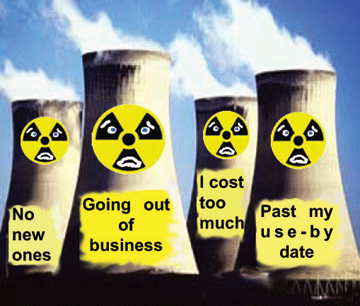
Cash-strapped nuclear industry has no answers to Britain’s energy shortages. While the issues limiting the UK’s nuclear power plant capacity may be temporary, its broader pattern of decline is not. As power
prices spike to record levels this week, one vital corner of Britain’s energy supply is failing to operate at full tilt. A nuclear reactor at Hartlepool has been floundering over an issue with a gas turbine, while another at Heysham 1 is offline after a forced outage last month.
Overall, the capacity of Britain’s ageing nuclear fleet of reactors is down by about one-third (5.2GW compared to 8GW) this week amid planned maintenance and unexpected problems. It is only adding to pressure on officials attempting to balance the electricity system as gas prices soar to record highs on a supply crunch, and wind output drops as weather calms.
But while the issues limiting nuclear power plant capacity may be temporary, its broader pattern of decline is not. The industry, which produces about 18pcof UK power annually, sits at a crossroads amid a rapidly evolving energy system. Most of the ageing nuclear fleet is set to shut down by the end of
the decade and several within the next few years.
Whether and how it will be replaced is uncertain, with industry critics accusing the Government of
dragging its feet at a time when Britain needs low carbon power to fill gaps in wind and solar generation. In a bid to help the flailing sector, ministers are set to bring forward a new finance mechanism which supporters believe can help reduce the costs of large nuclear projects. Consumers
would pay for the projects upfront while they are being built.
This,however, is sure to be a much tougher sell this winter given the soaring wholesale costs likely to boost bills. Whitehall is aiming to bring forward at least one large-scale nuclear project this parliament, and is puttingsome money into developing the next generation of technology: Advanced Modular Reactors and small modular reactors (SMRs).
So, does it matter if more nuclear power is not developed? Many experts say yes, given the stable
role they can provide. But that doesn’t mean it should be at any cost……….
Telegraph 15th Sept 2021
Russia developing more floating nuclear power plants
A Russian plan to build more floating nuclear power plants advanced this
month after two subsidiaries of Rosatom, Russia’s state nuclear
corporation, signed a cooperation agreement to power a remote mining
facility on Siberia’s northeastern tip. The new waterborne facilities
will come on the coattails of the Akademik Lomonosov, the audacious
experiment on floating nuclear power that Rosatom connected to a remote
port in Chukotka in 2019 after spending more than a decade constructing it,
amid objections from environmentalists.
Bellona 17th Sept 2021
Russia advances on plans for new floating nuclear plants
Don’t Let Presidents Start Nuclear Wars on Their Own

Don’t Let Presidents Start Nuclear Wars on Their Own
In the U.S., one person has vast, essentially unchecked power to launch a nuclear strike. The country needs stronger guardrails to protect against a catastrophic miscalculation. Bloomberg, By Editorial Board 20 September 2021 In the final days of Donald Trump’s administration, General Mark Milley, the chairman of the Joint Chiefs of Staff, offered some very unusual instructions to senior military officials. If they received orders to launch an attack, up to and including the use of nuclear weapons, they were to “do the process” of consulting with him first. The general asked all of the officers to verbally signal their assent, which he reportedly considered “an oath.”
That’s according to a new book by Bob Woodward and Robert Costa. Milley had become so alarmed at Trump’s addled behavior, the authors say, that he felt the added safeguards were necessary to forestall a calamity……..
.. highlight a longstanding but largely unresolved danger: the lack of guardrails to prevent a reckless or unstable president from starting a nuclear war.
Following the latest revelations, Republicans have accused Milley of everything from insubordination to treason. But whether he acted improperly is debatable.
…… As it happens, there’s no evidence that Trump was contemplating using nukes. But that doesn’t mean the world is safe from future presidents in a similar situation…… https://www.bloomberg.com/opinion/articles/2021-09-20/milley-trump-controversy-shows-need-for-nuclear-guardrails
North Korea says Australia’s submarine deal could trigger ‘nuclear arms race
North Korea says Australia’s submarine deal could trigger ‘nuclear arms race’ WP, By Rachel Pannett 20 Sep 21, North Korea on Monday condemned a new defense pact by the United States, Australia and Britain, and a plan to share nuclear submarine technology with Australia, saying the deal could trigger a nuclear arms race and upset the balance in the Asia-Pacific region………Responding to news of the trilateral security pact on Monday, the unnamed North Korean ministry official described the United States as “the chief culprit toppling the international nuclear nonproliferation system,” adding that its “double-dealing attitude” was threatening “world peace and stability.”…….. https://www.washingtonpost.com/world/2021/09/20/north-korea-submarine-nuclear-aukus/
Czech government will subsidise nuclear power
Czech lawmakers approve nuclear support, WNN, 17 September 2021
The Czech Republic’s support framework for nuclear investment has been approved by the lower house of parliament. The Low Carbon Act should come into effect from 1 January 2022, the energy ministry said. “Currently, there are no market incentives for investment in new nuclear or other emission-free energy sources,” noted Tomáš Ehler, the deputy minister of industry and trade, saying, “These market failures have been confirmed by the European Commission itself.”
The new law, approved by large majority in the Chamber of Deputies yesterday, seeks to address this by allowing for a state-owned company to purchase electricity from new nuclear plants at a fixed rate for at least 30 years with the possibility of extension. …. The new law, approved by large majority in the Chamber of Deputies yesterday, seeks to address this by allowing for a state-owned company to purchase electricity from new nuclear plants at a fixed rate for at least 30 years with the possibility of extension. ……. https://www.world-nuclear-news.org/Articles/Czech-lawmakers-approve-nuclear-support
Nuclear Modernization Casts Budget Shadow Over Air Force Plans
Nuclear Modernization Casts Budget Shadow Over Air Force Plans
“There’s no free money, right, so it has to come from somewhere,” said Lt. Gen. Clinton Hinote, deputy chief of staff for strategy, integration and requirements. Breaking Defense, By THERESA HITCHENS September 20, 2021
| AFA: The fundamental budget challenge facing the Air Force is the “nuclear bow wave” of spending required to modernize its nuclear force structure, with a “major danger” that those costs will make all the service’s other modernization plans untenable, said Lt. Gen. Clinton Hinote, who leads future force development. |
“There’s no free money, right, so it has to come from somewhere,” he told reporters during the annual Air Force Association conference here. “But if it comes from the top line of the Department of the Air Force, and frankly the Department of Navy, it’s going to crowd out other things, other investments, and it’s going to be very difficult to have a modern Air Force and a modern Space Force, a modern Navy, and recapitalize the nuclear triad. That’s where we are right now.”
The Congressional Budget Office in May 2021 estimated the price tag for the total DoD triad modernization effort at $405 billion from 2021 through 2030, up from the $238 billion it estimated in 2019. This ginormous price tag does not include spending by the Energy Department to build the nuclear warheads that would be carried by DoD’s ICBMs, bombers and subs……. https://breakingdefense.com/2021/09/nuclear-modernization-casts-budget-shadow-over-air-force-plans/
Aukus fallout: for years, US told India it couldn’t share nuclear submarine technology. ‘And now this
Aukus fallout: for years, US told India it couldn’t share nuclear submarine technology. ‘And now this …’
Deal between Australia, the US and Britain to share nuclear-powered submarine technology has some in India asking why it hasn’t been granted similar access to US technology…….. https://www.scmp.com/week-asia/politics/article/3149446/aukus-fallout-years-us-told-india-it-couldnt-share-nuclear?module=perpetual_scroll&pgtype=article&campaign=3149446 Pranay Sharma 20 Sep 21.
Japan eyes disposal abroad of radioactive plant equipment
Watch out! Japan’s hoping to export now its radioactive junk!
September 20, 2021
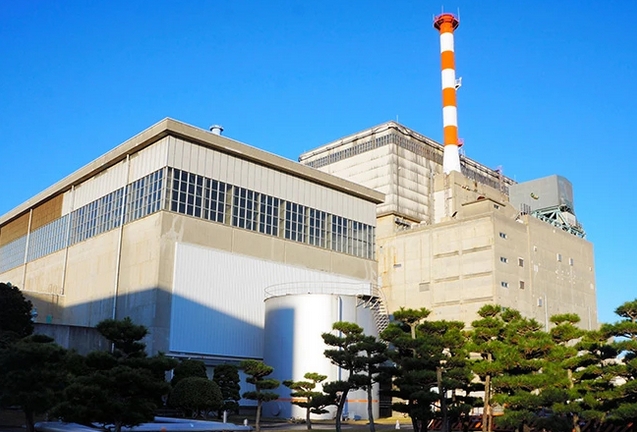
Japan plans to ease regulations to allow exports of large, disused equipment from nuclear power plants for overseas disposal as a way to reduce the mountains of radioactive waste accumulating at home.
The setup would mark a major shift from the government’s existing principle of disposing of all radioactive waste inside the country.
The industry ministry mentioned the revised disposal policy in the draft of the updated Basic Energy Plan, which awaits Cabinet approval in October at the earliest.
Even if the plan is approved, it will likely take some time for the government and nuclear plant operators to clear a slew of hurdles, such as estimating the costs of the project and ensuring the safety of shipments.
The Ministry of Economy, Trade and Industry, which oversees the nuclear industry, is considering outsourcing the disposal of three kinds of large low-level radioactive equipment overseas: steam generators, feed-water heaters and nuclear fuel storing and shipping casks.
These components range in size from 5 to 20 meters and weigh 100 to 300 tons.
Although they are not highly contaminated, compared with nuclear debris generated by spent fuel, they must be disposed of and managed properly, including being buried deep in the ground for years.
The ministry is considering their export as an “exceptional measure” to deal with the grave issue of the radioactive waste accumulating at nuclear facilities across Japan.
“Export regulations will be reviewed to allow for export (of low-level radioactive waste) when certain conditions are met, such as their safe recycling into useful resources,” the draft for the latest version of the Basic Energy Plan said.
The industry ministry is soliciting public opinions on the outsourcing plan until Oct. 4.
Nuclear plant operators have decided to decommission 24 reactors, including the six units at the crippled Fukushima No. 1 nuclear plant.
Work to dismantle those reactors is expected to go into full gear starting in 2025.
Excluding the reactors at the Fukushima plant, the decommissioned units will produce an estimated 165,000 tons of low-level radioactive waste.
But more than 90 percent of that waste has nowhere to go for dismantling and disposal.
Japan still lacks a dedicated disposal site for equipment used at nuclear plants, forcing plant operators to store the waste at their facilities.
The ministry says the storage of the out-of-service equipment is getting in the way of the decommissioning process.
Experts say some businesses in the United States and Sweden clean, melt and recycle metal from radioactive waste sent by foreign countries.
“Japan should first learn the know-how of disposal by outsourcing the work to foreign businesses with a reliable track record in the area and eventually become capable of doing it at home,” said Koji Okamoto, a professor of nuclear engineering at the University of Tokyo.
Under the Joint Convention on the Safety of Spent Fuel Management and on the Safety of Radioactive Waste Management, signatory countries that produce radioactive waste are obliged, in principle, to dispose of it within their territories.
But they can export the waste as exceptional cases if they obtain the consent of countries where business partners are based.
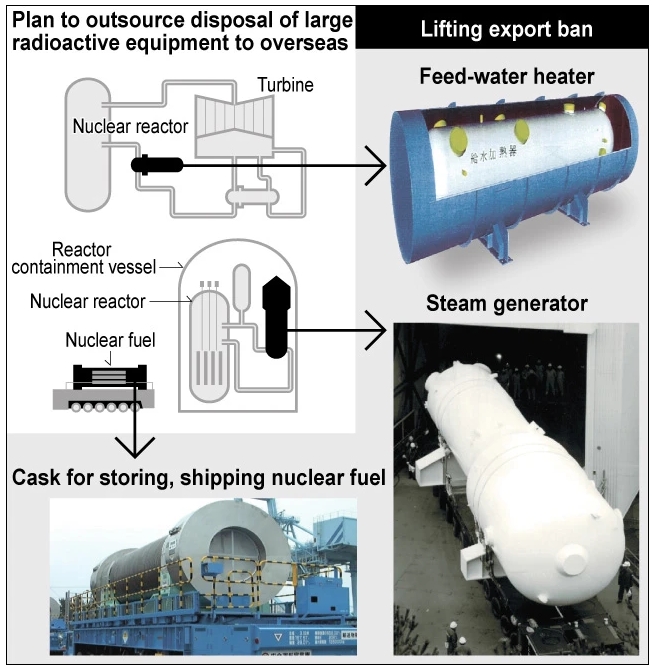
However, Japan’s Foreign Exchange and Foreign Trade Control Law bans such exports.
Utilities have pressed the government for a change in the disposal policy, and the industry ministry has been reviewing the existing setup alongside experts on nuclear technology.
Although the ministry intends to follow the principle of doing away with the waste within Japan, it plans to approve exports of the three types of nuclear plant equipment on condition that they will be recycled.
Ministry officials say the plan can be achieved through a revised ministry directive, without having to change the law.
The equipment intended for recycling overseas could include components kept at nuclear plants that still generate power.
But the ministry needs to work out many issues to turn the plan into reality.
Nuclear plant operators have the primary responsibility for disposing of low-level radioactive waste. And the actual costs these Japanese companies would have to pay to recyclers overseas is still unknown.
The bill could be far more expensive than initially estimated.
How to safely ship the radiation-contaminated equipment abroad is another unresolved issue.
The amount of nuclear waste in Japan has been growing since the 2011 Fukushima nuclear disaster. Utilities have gradually resumed operations at nuclear plants, but some have decided to decommission reactors, particularly aging ones, largely because of the costs needed to upgrade them under new safety standards.
For decades, Japan has been unable to secure a final disposal site for such waste inside the country, mainly because of opposition from residents of candidate sites.
TEPCO bungles placement of 100 fire detectors at nuclear plant
September 20, 2021
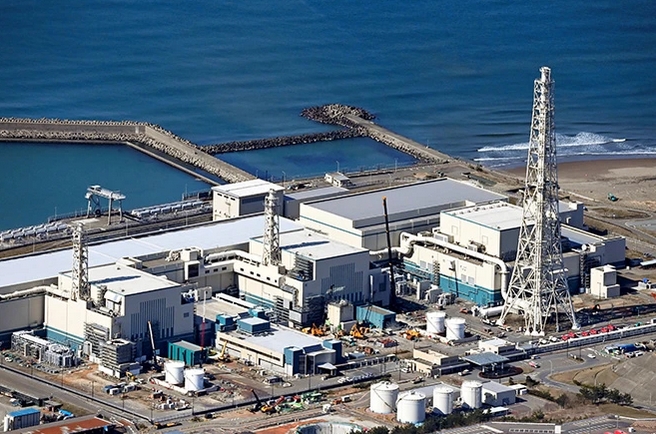
Tokyo Electric Power Co. has continued its bumbling ways concerning safety measures, misplacing dozens of fire detectors at its Kashiwazaki-Kariwa nuclear plant in Niigata Prefecture, sources said.
TEPCO is seeking to restart the No. 7 reactor at the sprawling nuclear plant, but the utility has run into a host of problems following stricter safety standards implemented after the 2011 disaster at its Fukushima No. 1 nuclear plant.
In the latest incident, about 100 fire detectors were not placed in locations set under safety regulations, the sources said.
The misplacements could delay the detection of heat and smoke from a fire, hampering an immediate response to such a potentially disastrous event.
Under the new safety regulations, nuclear plant operators are required to place a fire detector at least 1.5 meters from an air conditioner vent or other opening. That rule is based on the fire protection law.
Inspectors from the government’s Nuclear Regulation Authority in February noticed that a smoke detector was placed only about 1 meter from the ventilating opening in the storage battery room of the No. 7 reactor building.
TEPCO said it has since moved the detector to the proper location and confirmed through visual checks that the other fire detectors were installed in the right places.
But an additional NRA inspection in April found that two other fire detectors were misplaced.
Following that finding, TEPCO undertook a fresh check of about 2,000 detectors throughout the nuclear plant.
The company reported to the nuclear watchdog on Sept. 16 that more cases of misplaced detectors were confirmed, bringing the total to about 100, according to the sources.
With seven reactors, the Kashiwazaki-Kariwa nuclear plant is among the largest in the world in terms of capacity. It is also the only nuclear facility that TEPCO can restart since the company decided to decommission both the Fukushima No. 1 and No. 2 nuclear plants.
TEPCO is eager to put the Kashiwazaki-Kariwa plant back online because burning fossil fuel at its thermal plants has proved costly.
But the NRA in April ordered the company to stop preparations toward a restart following revelations of a number of safety flaws.
In January, the company announced the completion of work to bolster safeguarding of the No. 7 reactor, which has an output of 1.35 gigawatts.
However, fire-prevention work was not finished at many locations of the nuclear plant.
News outlets also reported in January that an employee of the plant entered the central control room of a reactor by using the ID of another employee in September last year, a serious breach of the NRA’s anti-terrorism measures.
In addition, it was found that security devices designed to detect unauthorized entry had not been working properly at 15 sites at the plant since March last year.
TEPCO left most of these devices unfixed for about a month.
The company is expected to submit a report to the NRA on how to prevent a recurrence by Sept. 23.
Is AUKUS pact a signal to India to go for nuclear attack submarines?
With a new aircraft carrier, six new Kalvari class diesel attack submarines and Vishakhapatnam class of destroyers, the Indian Navy is going to be very potent force in the Indo-Pacific by 2025. By Shishir Gupta, Hindustan Times, New Delhi SEP 18, 2021 With Australia signing a pact with US and UK to go in for eight nuclear powered conventional attack submarines or SSNs to deter China in Indo-Pacific, India also needs to have a relook at its 1999 conventional submarine plan and move swiftly towards nuclear powered sub-surface vessels.
The AUKUS pact will not be without security ramifications for the Quad partners as there is a distinct possibility that China may build an SSN for its client Pakistan citing the transfer of nuclear reactor under AUKUS to Australia. This will create a bigger security headache for India and for other countries in the IOR. https://www.hindustantimes.com/india-news/is-aukus-pact-a-signal-to-india-to-go-for-nuclear-attack-submarines-101631944254552.html
Nuclear submarine deal planned for 18 months – French ambassador says this is treasonous
Recalled French ambassador accuses Australia of ‘treason in the making’ https://www.theage.com.au/politics/federal/recalled-french-ambassador-accuses-australia-of-treason-in-the-making-20210918-p58ssg.html. By Anthony Galloway
France’s recalled ambassador to Australia has likened Canberra’s actions to treason after the Morrison government dumped a $90 billion submarine contract with Paris and instead decided to build nuclear-powered submarines with the United States and Britain.
France on Saturday has taken the extraordinary step of recalling its ambassadors from Australia and the US, as the fallout grows from a new defence pact that has infuriated French President Emmanuel Macron.
Speaking to The Sydney Morning Herald and The Age hours before he was recalled, France’s ambassador to Australia, Jean-Pierre Thebault, did not rule out suspending talks to allow French troops greater access to Australian military bases after his nation was “stabbed in the back”.
Adding insult to the process… we have very reliable reports from the independent press, which I thank, about the fact that all this was in the making for 18 months. Which means we have been blind-sided intentionally for 18 months…. The crime was prepared for 18 months,” he said.
France’s recalled ambassador to Australia has likened Canberra’s actions to treason after the Morrison government dumped a $90 billion submarine contract with Paris and instead decided to build nuclear-powered submarines with the United States and Britain.
France on Saturday has taken the extraordinary step of recalling its ambassadors from Australia and the US, as the fallout grows from a new defence pact that has infuriated French President Emmanuel Macron.
Speaking to The Sydney Morning Herald and The Age hours before he was recalled, France’s ambassador to Australia, Jean-Pierre Thebault, did not rule out suspending talks to allow French troops greater access to Australian military bases after his nation was “stabbed in the back”.
“Adding insult to the process… we have very reliable reports from the independent press, which I thank, about the fact that all this was in the making for 18 months. Which means we have been blind-sided intentionally for 18 months…. The crime was prepared for 18 months,” he said.
He slammed Australia for allowing a meeting to go ahead between Mr Dutton and Foreign Minister Marise Payne late last month with their French counterparts where they spoke about enhancing defence ties between the two countries.
“It is us, through letters that were sent by the President [Macron] some months ago to the Prime Minister [Scott Morrison], who proposed to look at more ambitious and new ambitious cooperations,” Mr Thebault said……….. The extraordinary move follows the Morrison government’s decision to tear up a $90 billion contract to buy 12 French submarines in favour of a new nuclear-powered fleet using technology from the US and United Kingdom under a new partnership called AUKUS.
Malaysia and Indonesia warn Australia’s Indo-Pacific pact could trigger nuclear arms race
Malaysia and Indonesia warn Australia’s Indo-Pacific pact could trigger nuclear arms race, Taipei Times, 19 Sep 21
The new AUKUS alliance will involve Australia, the US and Britain exchanging technology and intelligence
Australia will have access to US nuclear technology, which will enable it to build nuclear submarines
Australia’s nuclear arms ban remains in new deal
Birmingham said there was no “quid pro quo” in Australia agreeing to step up its strategic relationship with the UK and the US.
He insisted that nuclear weapons would not be based within Australia’s jurisdiction. “We’ve been clear, Australia’s position in relation to nuclear weapons does not change, will not change,” he said yesterday.
“We will meet all of our non-proliferation treaty arrangements and obligations and not be changing any of our policies in relation to the nuclear weapons technology.”
Birmingham did not rule out an increase in the number of UK and US military personnel on Australian shores. “We already have US troops and marines who work in Australia on rotational deployments at times,” he said………….
it is not just the French who have been made uneasy by the AUKUS arrangement, which is still to be worked out in detail. Australia’s allies in the Indo-Pacific have also raised concerns over what the deal will mean for tensions in the region.
Malaysia said on Saturday that Canberra’s decision to build atomic-powered submarines could trigger a regional nuclear arms race, echoing concerns already raised by Beijing.
“It will provoke other powers to also act more aggressively in the region, especially in the South China Sea,” the Malaysian prime minister’s office said, without mentioning China……https://www.taipeitimes.com/News/world/archives/2021/09/20/2003764684
Nuclear reactor worker wins NIS one million cancer compensation.
Nuclear reactor worker wins NIS one million cancer compensation
‘G,’ a 78-year-old pensioner from Beersheba, claimed to have been continually exposed to hazardous materials and radioactive radiation at the Dimona nuclear reactor.By JERUSALEM POST STAFF SEPTEMBER 19, 2021 A Dimona nuclear reactor technician, who twice contracted cancer since his retirement, will be compensated in the sum of over NIS one
million, N12 reported on Sunday.’G,’ a 78-year-old pensioner from Beersheba, worked as a chemistry technician at the Dimona nuclear reactor for 32 years before retiring in 2003.
The retired technician claimed to have been continually exposed to hazardous materials and radioactive radiation, which caused him to develop five cancerous tumors which were surgically removed, as well as battling bladder and prostate cancer.He also claimed that there was no proper supervision and no means of radiation protection given to him during his time working in the reactor.”I went through a troubling period in my life. I couldn’t believe my job would bring me to this situation,” he reportedly noted in a claim filed to social security…….. https://www.jpost.com/israel-news/nuclear-reactor-worker-wins-nis-one-million-cancer-compensation-679783
China fears that the nuclear-powered submarines could be armed with nuclear weapons at short notice

US FORCES US submarine launches Trident II nuclear missiles in stunning show of strength U.S,Sun Olivia Burke, Sep 19 2021
THE US Navy triumphantly test-launched Trident D5LE nuclear missiles on Friday in a stunning show of strength.
The scheduled two-missile deployment of the unarmed revamped weapon took place off the coast of Cape Canaveral, Florida from the USS Wyoming (SSBN-742) submarine……
The Navy boasted of the “unmatched reliability” of the new “sea-based nuclear deterrent” as tensions continue to increase with China.
It was the 184th successful Trident II (D5 & D5LE) SWS missile test flight and follows the last launch in February this year off the coast of Florida……..
“This same team is now developing the next generation of the Trident Strategic Weapon System, which will extend our sea-based strategic deterrent through 2084,”
The Navy also revealed the submarine missiles have been given “a life extension program to address potential impacts from aging and obsolescence”.
They are now primed to be stationed amongst the rest of the fleet alongside the UK Vanguard-class, US Colombia-class, UK Dreadnought-class.
With an estimated annual cost of $170million, the US spend a whopping $2.4million each year to run the Ohio-class submarines.
….the launch comes in the wake of the revelation of the UK’s and US’ plans to build nuclear-powered submarines for Australia.
AUKUS’ ALLIANCE
The alliance has angered China, who fear the subs could be armed at short notice with nukes, despite assurances they will only carry conventional weapons.
The countries leaders carefully navigated the announcement without directly mentioning China’s imposing power – but hinted at their intentions behind the move by discussing “democracy, freedom of navigation, and security.”
The new Indo-Pacific security pact, known as AUKUS, will give the land Down Under the technology to deploy nuclear-powered submarines.
It is part of an agreement intended to counter China’s rising military might – that they have splashed six times more cash on than Australia.
With 42 times more soldiers, 55 times more tanks, 13 times more submarines and 16 times more fighter jets, they eclipse the Aussies artillery.
And with 3.3 million troops in service, Beijing dwarves Australia’s 80,000 soldiers – but AUKUS has still managed to seriously ruffle some feathers.
CHINA’S FURY
Chinese Foreign Ministry spokesman Zhao Lijian condemned the alliance as “seriously damaging regional peace and stability, intensifying the arms race, and undermining the Treaty on the Non-Proliferation of Nuclear Weapons”.
China is believed to have between 250 and 350 nuclear weapons, compared to America’s colossal arsenal of 5,800 and Russia’s total of 6,375. ……. https://www.the-sun.com/news/3691458/us-submarine-trident-ii-nuclear-missiles-chinas-threats/
Russia urges IAEA monitoring, ‘transparency’ on US-Australia nuclear sub pact,
Russia urges IAEA monitoring, ‘transparency’ on US-Australia nuclear sub pact, Press TV, Friday, 17 September 2021 Russia warns against Australia’s attempt to becoming a nuclear power under a trilateral pact Canberra signed with the United States and Britain earlier this week.
Russian Permanent Representative to the International Atomic Energy Agency (IAEA) in Vienna Mikhail Ulyanov said on Friday that “time has not come yet for such estimations” about Australia turning into a nuclear power.
Under a new Australia-UK-US alliance (Aukus), Canberra would be building at least eight nuclear submarines, using US technology.
The first of the submarines is expected to enter service is 2036.
Ulyanov warned that the plan “is alarming and makes you keep a close eye on that.”
“Australia is a non-nuclear power,” he said, adding that “all this should be closely supervised by the IAEA and its inspection mechanism.”……..
Many observers warned that the trilateral pact could lead to a situation very similar to the US-Russian arms race during the cold war…… https://www.presstv.ir/Detail/2021/09/17/666731/Russia-Australia-nuclear-powered-submarines-Aukus-
1 This Month

Read the Public Inquiry Report, the Commissioners’ report, Surrendering Australia: The AUKUS Deception is available to download for free at aukuspublicinquiry.com. Or just watch the replay of the National Press Club Luncheon.


19 November – Webinar – The Reality of Reprocessing
Time: 11:00 AM Pacific Time (US & Canada) / 2:00 PM Eastern / 7:00 PM UK / 8:00 PM CET
Register for the Zoom Event Here



Shut down the radiation-damaged Heysham nuclear reactors now
To see nuclear-related stories in greater depth and intensity – go to https://nuclearinformation.wordpress.com

Say No to NASA’s Reckless Nuclear Reactor on the Moon
Say No to NASA’s Reckless Nuclear Reactor on the Moon
-
Archives
- November 2026 (94)
- October 2026 (302)
- September 2026 (339)
- August 2026 (330)
- July 2026 (355)
- June 2026 (287)
- May 2026 (306)
- April 2026 (356)
- March 2026 (251)
- February 2026 (267)
- January 2026 (308)
- December 2025 (358)
-
Categories
- 1
- 1 NUCLEAR ISSUES
- business and costs
- climate change
- culture and arts
- ENERGY
- environment
- health
- history
- indigenous issues
- Legal
- marketing of nuclear
- media
- opposition to nuclear
- PERSONAL STORIES
- politics
- politics international
- Religion and ethics
- safety
- secrets,lies and civil liberties
- spinbuster
- technology
- Uranium
- wastes
- weapons and war
- Women
- 2 WORLD
- ACTION
- AFRICA
- Atrocities
- AUSTRALIA
- Christina's notes
- Christina's themes
- culture and arts
- Events
- Fuk 2022
- Fuk 2023
- Fukushima 2017
- Fukushima 2018
- fukushima 2019
- Fukushima 2020
- Fukushima 2021
- general
- global warming
- Humour (God we need it)
- Nuclear
- RARE EARTHS
- Reference
- resources – print
- Resources -audiovicual
- Weekly Newsletter
- World
- World Nuclear
- YouTube
-
RSS
Entries RSS
Comments RSS

