Options for the future of the US intercontinental ballistic missile (ICBM) programme -the Carnegie Endowment fo International Peace.
The Pentagon has asked a Washington thinktank to draw up a report on the
future of the US intercontinental ballistic missile (ICBM) programme and
deliver it before the end of January. The Carnegie Endowment for
International Peace (CEIP) will present options based on three rounds of
virtual consultations, which began on Tuesday, between Pentagon officials,
nuclear weapons experts and arms control advocates.
Guardian 9th Dec 2021
Industrial action set to ”cripple” the effective running of UK’s nuclear submarine base.
SPECIALIST staff are to escalate industrial action in a dispute which a
union has said is expected to “cripple” the effective running of UK’s
nuclear submarine base on the Clyde. Unite Scotland has confirmed that its
pay dispute with the ABL Alliance at the Royal Naval Armaments Depot (RNAD)
Coulport is to escalate with around 70 workers set to take strike action
from next week.
Herald 9th Dec 2021
UK government will ”prove the potential”of advanced nuclear reactors with its Advanced Modular Reactor Research, Development and Demonstration Programme.
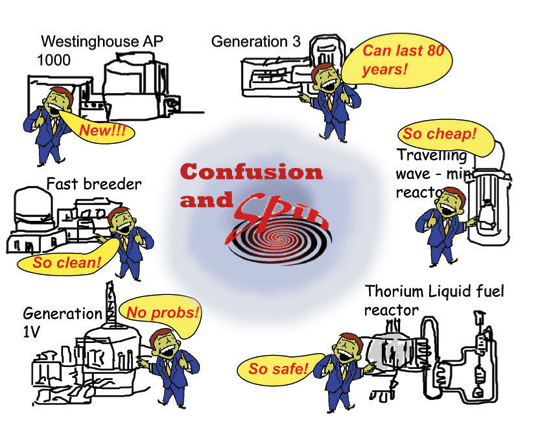
nuClear NewsNo 136 Dec 21, Advanced Reactors , Energy minister Greg Hands told the Nuclear2021 conference organised by the Nuclear Industry Association that the UK will build a high-temperature gas reactor (HTGR) as the centrepiece of its Advanced Modular Reactor Research, Development & Demonstration Programme.
The goal of the research programme is to “prove the potential” of advanced reactors and have a demonstration unit in operation “by the early 2030s, at the latest”. The key focus would be to produce high temperature heat which could be used for hydrogen production, to supply industrial processes and potentially district heating as well as electricity generation.
Several other reactor concepts could have been selected. The emerging category of ‘advanced’ reactors includes the lead-cooled fast reactor, molten salt reactor, supercritical water-cooled reactor, sodium-cooled fast reactor and very-high-temperature gas reactor in addition to hightemperature gas reactors.
Paul Howarth, CEO of the National Nuclear Laboratory (NNL), called it “a further signal of the resurgence of nuclear.” He added, “With the opportunity HTGRs bring to deliver high temperature heat, hydrogen and synthetic fuels, the potential of this technology to help decarbonise our industries and energy grid is significant.” He noted that NNL is “actively working on the fuel, graphite and high temperature materials required for HTGRs.”
The Advanced Modular Reactor Research, Development & Demonstration Programme counts on £170 million of government funding from a £385 million package intended to accelerate development of highly flexible nuclear technologies. (1)
In July the Government sought views on its preference to explore the potential of High Temperature Gas Reactors (HTGRs) for the Advanced Modular Reactor Research Development & Demonstration (AMR RD&D) Programme. It says the call found no significant, additional evidence to materially change the outcome of the Government’s underpinning analysis. As a result, the Programme will focus on High Temperature Gas Reactors with the ambition for this to lead to a HTGR demonstration by the early 2030s at the latest. In parallel, government continues to support the development of all AMRs as part of wider policy on advanced nuclear activities. This includes: opening the Generic Design Assessment (GDA) process to advanced nuclear technologies and developing a siting approach for further nuclear developments. (2) https://www.no2nuclearpower.org.uk/wp/wp-content/uploads/2021/12/nuClearNewsNo136.pdf
Opposition to small nuclear reactor project for Oyster Creek
Small Nuclear Reactor Might Be Built At Oyster Creek, Jersey Shore Online, 10 Dec,
”……………….Janet Tauro, who serves as New Jersey Board Chair of Clean Water Action, told The Southern Ocean Times that her organization was not in favor of the idea. “The last thing we need is another nuclear reactor at a site that has millions of gallons of waste material still in their fuel pool.”
She expressed concerns of where Oyster Creek’s current nuclear waste would end up, noting that Holtec’s application to the Nuclear Regulatory Commission for a consolidated interim storage facility that would be based in New Mexico has not been approved and is facing resistance by residents and officials of that state.
“Nothing is happening any time soon – if at all – and we don’t want to saddle other people with other state’s nuclear waste.” She noted spent nuclear fuel rods on site at Oyster Creek must be removed from their storage casks every 20 years and put into new containers.
“This is a bad idea. Ocean County shouldn’t be a test case for unproven technology. Oyster Creek is the first nuclear power plant that Holtec has decommissioned. It is needless to expose Ocean County to that risk. Spent fuel rods should be nowhere near another nuclear reactor,” she added.
Bradwell nuclear project would become vulnerable to sea level rise
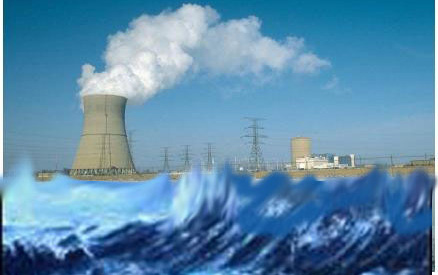
BANNG refutes recent statement by BRB that Bradwell B would be Essex’s
biggest contribution to reduced carbon emissions. Low lying land at
Bradwell would become vulnerable to sea level rise. And Bradwell B would be
unlikely to start operating before the middle of next decade – far too
late to make an appreciable contribution to a net zero 2050. In fact it
would have a negative impact on renewable energy and flexibility.
Maylands Mayl 10th Dec 2021
UK’s failure to reduce energy demand – the most important measure to address climate change.

No2NuclearPower No. 136 December 21 Overtly and comprehensively ignoring demand side management . In nuClear News No.135 we asked if UK electricity demand is really going to double. While many other countries are spending billions on energy efficiency measures and proactively aiming to reduce energy and electricity consumption, the UK seems to be giving up on the old ‘fabric first’ idea and putting all its eggs into the nuclear and electricity supply basket. On transport there seems to be far too much focus on electric vehicles rather than public transport and active travel. With a nuclear tax on consumers’ bills in prospect and a large percentage of the population dependent on non-car travel options, the Government’s climate policies threaten to exacerbate inequalities rather than promote ‘climate justice’.
Unlike the UK, Denmark has a policy to reduce total energy demand by 50% by 2050. (1) And, Germany is not projecting a doubling of electricity demand either, in fact gross electricity generation is projected fall by 2050. Energy efficiency is the main mechanism, but also less waste in the system, more flexibility in storage and grids, integration of the heat sector. These all come together to work towards less (or certainly no more) electricity use whilst switching to renewables. In 2010, the Federal Environment Agency wrote that in the households, industrial as well as trade, commerce and services sectors “a reduction of final energy consumption by 58%, from 1639.4 TWh in 2005 to 774.2 TWh in 2050” is expected. Electricity consumption by these sectors decreases by 19%, from 492.9 TWh in 2005 to 396.7 TWh in 2050. Electricity demand experiences a lower reduction rate than final energy consumption due to the switch from fossil fuels to electricity. Total electricity consumption is expected to fall from 564 TWh in 2005 to 506 TWh. (2)
The National Audit Office (NAO) published a damning report on the Green Homes Grant debacle. It has seldom issued a more excoriating report. The scheme was originally supposed to make 600,000 homes more energy efficient. It may just have reached 47,500. It was meant to create somewhere between 100,000 and 140,000 jobs, but may have only sustained 5,600 people in employment. It was supposed to last 18 months. It was ignominiously abandoned over a weekend, after just 6 months. The NAO reckon “the rushed delivery and implementation of the scheme has significantly reduced the benefits that might have been achieved, caused frustration for homeowners and installers, and had limited impact on job creation for the longer term.” ……………….. https://www.no2nuclearpower.org.uk/wp/wp-content/uploads/2021/12/nuClearNewsNo136.pdf
100% renewables possible for USA – study demonstrates
A study led by Stanford University professor Mark Jacobson has
demonstrated that the US energy system running on wind, water and solar,
coupled with storage, not only avoids blackouts but lowers energy
requirements and consumer costs while creating millions of jobs, improving
health, and freeing up land. The Jacobson-led study conducted with
colleagues from Stanford University analysed grid stability under multiple
scenarios in which wind, water, and solar energy resources powered 100% of
all energy needs in the United States. The study, published in the journal
Renewable Energy, demonstrates a blackout-free energy system under ideal
circumstances, and a much reduced risk of blackouts in extreme weather
events compared to the current fossil fuel-led energy systems.
Renew Economy 10th Dec 2021
Iran nuclear talks pulled back from the brink as Tehran shifts stance
 |

Iran nuclear talks pulled back from brink as Tehran shifts stance, Cautious optimism as Tehran revises its position after pressure from Russia and China Guardian, Patrick Wintour Diplomatic editor, Fri 10 Dec 2021 Efforts to revive the Iran nuclear deal have been hauled back from the brink of collapse as Tehran revised its stance after pressure from Russia and China and clear warnings that the EU and the US were preparing to walk away.
The cautiously optimistic assessment came at the start of the seventh round of talks on the future of the nuclear deal in Vienna. It follows what was seen as a disastrous set of talks last week in which the US and the EU claimed Iran had walked back on compromises reached in previous rounds.
The Russian ambassador to the talks, Mikhail Ulyanov, said: “We managed to eliminate a number of misunderstandings that created some tension. Everyone confirmed their commitment to productive work [to restore the nuclear agreement].”
Nevertheless, Joe Biden warned that the United States was preparing “additional measures” against Iran, amid lingering fears that the talks could still fail………….. https://www.theguardian.com/world/2021/dec/09/iran-nuclear-deal-pulled-back-from-brink-of-collapse-as-talks-resume-in-vienna
China Wants to Join Southeast Asia’s Nuclear-Free Zone

A greater factor in China’s calculus is the AUKUS alliance among the U.S., U.K. and Australia. Under the security partnership announced in September, the U.S. and U.K. agreed to equip Australia with a fleet of nuclear-powered submarines to counter China’s influence in the Indo-Pacific. China wants to even the score. In a phone call with counterparts from Malaysia and Brunei that same month, Chinese Foreign Minister Wang Yi skewered AUKUS as anathema to the Bangkok Treaty. “The United States and Britain chose not to participate in the SEANWFZ [Southeast Asia Nuclear Weapon-Free-Zone] Treaty,” Wang reminded his peers. “Instead, they have transferred military nuclear technology to the region under various pretexts and also provided the region with highly enriched uranium materials, running counter to the efforts made by ASEAN countries to build a nuclear-free zone.”
China Wants to Join Southeast Asia’s Nuclear-Free Zone. Why Now? LawfareBy Ryan A. Musto Thursday, December 9, 2021 China is ready to rock with the Treaty of Bangkok.
In a rare appearance at the special online summit for the Association of Southeast Asian Nations (ASEAN) on Nov. 22, China’s President Xi Jinping announced that China is prepared to sign the protocol of a 1995 agreement that establishes Southeast Asia as a nuclear-weapon-free zone. Under the agreement, known as the Bangkok Treaty, 10 regional states renounce the right to nuclear weapons in any form within the ASEAN zone. If it joins the treaty, China would agree not to use or threaten the use of nuclear weapons within the zone or against its members. It would make China the first nuclear-weapon state to adhere.
China’s support for the treaty is no surprise. To strengthen its enduring “no-first-use” policy to never initiate nuclear conflict, China routinely has asserted (most recently in a 2019 white paper) that it “is always committed to … not using or threatening to use nuclear weapons against non-nuclear-weapon-states or nuclear-weapon-free zones unconditionally.” For the Bangkok Treaty, ASEAN and China agreed in 2011 to a secret memorandum of understanding that preserves China’s territorial claims in the South China Sea, removing the greatest hurdle to Beijing’s commitment. China was ready to sign the protocol and memorandum in 2012 but deferred once the other eligible “P-5” nuclear-weapon states under the Non-Proliferation Treaty—France, Russia, the United Kingdom and the U.S.—refused to join. Now, Xi wants to legally bind China to the treaty “as early as possible.” But what’s the rush?
Adherence to the Bangkok Treaty would burnish China’s image amid its rapid expansion in nuclear capabilities…………
A greater factor in China’s calculus is the AUKUS alliance among the U.S., U.K. and Australia. Under the security partnership announced in September, the U.S. and U.K. agreed to equip Australia with a fleet of nuclear-powered submarines to counter China’s influence in the Indo-Pacific. China is furious and wants to even the score. In a phone call with counterparts from Malaysia and Brunei that same month, Chinese Foreign Minister Wang Yi skewered AUKUS as anathema to the Bangkok Treaty. “The United States and Britain chose not to participate in the SEANWFZ [Southeast Asia Nuclear Weapon-Free-Zone] Treaty,” Wang reminded his peers. “Instead, they have transferred military nuclear technology to the region under various pretexts and also provided the region with highly enriched uranium materials, running counter to the efforts made by ASEAN countries to build a nuclear-free zone.”……….. https://www.lawfareblog.com/china-wants-join-southeast-asias-nuclear-free-zone-why-now
Nuclear exit to unleash wind power in Northern Germany

Nuclear exit to unleash wind power in Northern Germany
By Charlotte Nijhuis and Nikolaus J. Kurmayer | EURACTIV.com with CLEW 10 Dec 2021
The shutdown of the last nuclear power plant in Schleswig-Holstein will unclog the electricity grid and unleash wind power in the northern German state, according to its environment minister Jan Philipp Albrecht, reports Clean Energy Wire.
“Nuclear power is clogging our grids, especially in the direction of the south,” Albrecht told press agency dpa.
Due to grid bottlenecks, offshore wind turbines indeed have to be switched off in some cases.
The importance of nuclear power as a whole is therefore overestimated,” Albrecht added.
After the shutdown of the nuclear plant at the end of this year, the north of Germany could cover 160% of its electricity needs with renewable energy and there will be more wind power exports to the south, Albrecht said.
Fears of power blackouts due to the nuclear phaseout are unfounded, he said. “After all, we will continue to massively expand renewable energies in Germany now. In the future, we will not be dependent on nuclear power being generated in France.”
His anti-nuclear party, the Greens, have recently entered federal government in Germany, with Super-Minister Robert Habeck in charge of boosting the expansion of renewable energies up to 80% of the country’s power supply.
Germany is set to turn off the nuclear reactors Grohnde, Gundremmingen C and Brokdorf by the end of December.
Shutting down the remaining three nuclear reactors in 2022 will then conclude a decades-long struggle by the anti-nuclear movement that gave rise to the Green Party and other environmental groups in the 1980s.
…….researchers are confident that the shutdown of Germany’s last nuclear power plants will not cause supply shortages, according to calculations by the German Institute for Economic Research (DIW Berlin).
In order to keep grid operation stable, congestion management will need to be adjusted. But “the lights will not go out in Germany,” study author Claudia Kemfert said in statement.
“On the contrary: the [nuclear] shutdown paves the way for the overdue expansion of renewable energies. Nuclear energy was uneconomical from the start and characterised by incalculable risks,” she added………https://www.euractiv.com/section/electricity/news/nuclear-exit-to-unleash-wind-power-in-northern-germany/
Japan PM to push for progress at NPT meet to scrap nuclear weapons
Japan PM to push for progress at NPT meet to scrap nuclear weapons
TOKYO, Dec 9 (Reuters) – Japanese Prime Minister Fumio Kishida vowed on Thursday to do his utmost to push for meaningful progress at a January meeting to review the Non-Proliferation Treaty and encourage action to rid the world of nuclear weapons.
The comment by Kishida, who hails from the nuclear memorial city of Hiroshima, comes after the previous such meeting, in New York in 2015, failed to adopt a final document following disagreement over a plan for a nuclear-free Middle East………… https://www.reuters.com/business/energy/japan-pm-push-progress-npt-meet-scrap-nuclear-weapons-2021-12-09/
Hunterston and Continuous Decommissioning
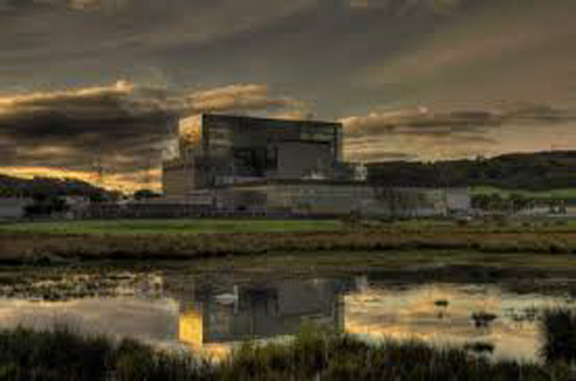
nuClear News No136 Dec 21, Hunterston and Continuous Decommissioning The Nuclear Decommissioning Authority’s 2021-24 Business Plan (1) says it has reviewed the Magnox reactor decommissioning strategy and endorsed a site-specific approach to Magnox reactor decommissioning which will involve a mix of decommissioning strategies. For some sites this will result in their decommissioning being brought forward whilst for others a deferral strategy will be the chosen approach. New Site-Specific Strategies will be developed for each Magnox station across Britain. These will support optimal sequencing of reactor dismantling – a rolling programme of decommissioning which will maximise the opportunity for sharing any lessons learned, developing and implementing new technologies and strengthening wider capability.
These new site-specific decommissioning strategies are currently being defined. A timetable will be set that best suits each site and a business case developed to set out the benefits and cost and schedule impacts of any changes.
Reactor dismantling at the Hunterston A Magnox station, which ceased generation in 1990, is now expected to start in 2035. The previous strategy was to place the reactors into care and maintenance for up to 85 years to allow for radioactivity to decay. The current work programme which involves packaging various waste, sludges etc and placing the packages into an Intermediate Level Waste store will now take until 2030, 40 years after it ceased operation. The plant opened in 1964, so by 2030 Hunterston A will have spent longer being cleaned up than it actually spent generating electricity. Originally the current work programme was expected to be completed by 2022, but problems associated with retrieving waste in 5 bunkers has caused delays. The period between 2030 and 2035 will be spent demolishing various buildings.
Under the old strategy the NDA was going to install a “weather envelope” around the old Magnox reactors. Work on this has now been suspended.
Hunterston B Meanwhile, Hunterston B – Reactor 3 switched off for final time on 26th November. The reactor was first switched on on 6th February 1976. When EDF acquired the power station it was expected to end generation in 2016. (2) Hunterston B Reactor 4 – is scheduled to shut down in January, which will see the end of power generation for the site in North Ayrshire, Scotland. (3)
Reactor 3 and Reactor 4 were taken offline on 9 March and 3 October 2018, respectively, after cracks in their graphite cores were discovered during routine inspections. In August 2020, the UK’s Office for Nuclear Regulation (ONR) gave approval to EDF to restart Reactor 4 in August 2020 and Reactor 3 the following month. The reactors were taken offline earlier this year for further inspections of their graphite cores. In April, the ONR gave permission for the units to be switched back on. However, it said continued operation would be for up to a total of 16.7 terawatt days for Reactor 3 and 16.52 terawatt days for Reactor 4 – about six months of operation for each reactor. Reactor 3 returned to service on 23 April and Reactor 4 on 5 June.
In June, the UK government and EDF agreed on improved arrangements to decommission the UK’s seven AGR nuclear plants that are scheduled to close this decade. This followed an announcement by EDF that it had decided not to restart the first of the AGRs, Dungeness B, and to begin defuelling with immediate effect. (4) Each of the AGR sites will move across to the NDA on a rolling basis once defueling and fuel free verification are complete, for the decommissioning work to be overseen and managed by the NDA’s Magnox division. However, EDF’s defueling work will be supported by the NDA divisions Sellafield Ltd and Nuclear Transport Solutions (NTS) alongside other parts of the NDA group. Spent fuel from Hunterston B will be sent by train to Sellafield. (5)
EDF has now submitted a defueling safety case to ONR. First there will be what’s called “defueling outage” which will last about 60 days – making sure everything is safe to commence defueling. Defueling is then expected to start in March 2022 and will take around 3 years.
After defueling the NDA will take control of the AGR reactors. Under the old regime it would have taken until about 2030 to prepare the reactors for a period of care and maintenance. Now Hunterston B will develop a site-specific decommissioning strategy which should involve reactor dismantling sooner rather than later, thus providing the prospect of more continuous employment on the site.
The NDA, EDF and Magnox have been working together to investigate the feasibility of Hunterston B sharing the use of the Hunterston A Intermediate Level Waste (ILW) store and processing facility. Seems obvious that they should, but EDF has recently been working on plans for a standalone store. EDF and NDA have now agreed to share the Hunterston A store and EDF has suspended work on a Hunterston B store. ONR & SEPA still need to be consulted and a planning application made to North Ayrshire Council (NAC). (6) https://www.no2nuclearpower.org.uk/wp/wp-content/uploads/2021/12/nuClearNewsNo136.pdf
British pensioners funding France’s ”nuclear renaissance” with white elephant nuclear projects?

According to Gérard Magnin, a former EDF director, the French company sees Hinkley as ‘a way to make the British fund the renaissance of nuclear in France’. He added: ‘We cannot be sure that in 2060 or 2065, British pensioners, who are currently at school, will not still be paying for the advancement of the nuclear industry in France.’ ..……….
White elephant energy projects that are tomorrow’s HS2, The Conservative Woman, 10 Dec 21, -December 10, 2021AS someone who has in a small way been opposing the climate catastrophe narrative* and has had to study the government’s energy plans, I’m beginning to wonder why Suffolk has been chosen for not one but two white elephant energy projects. What have we done to deserve this? An even more pertinent question is ‘What the hell does this technologically-illiterate government think it is doing?…….
The proposed Sizewell C will house a pair of French-designed nuclear fission reactors of 1600MW output each which are slated to be built next to the decommissioned Sizewell A. …………
Superficially (i.e. as assessed by a typical minister who has the same knowledge of science, technology, engineering and mathematics as the average 12-year-old) Sizewell seems an obvious place to dump a pair of the new generation large nuclear reactors, that is if you ignore the fact that it will take a big bite out of the Suffolk Coastal Area of Outstanding Natural Beauty, ruin the tourist trade for decades and require the building of a temporary town to house the thousands of workers who will be imported to build it. More to the point, they’ll come in late while costing far more than the estimate.
It seems no one in government has noticed that European Pressurised Water Reactors (EPRs) like the two planned for Sizewell C are proving extremely difficult to build. For example, the Finnish Olkiluoto Nuclear Power Plant already had two reactors of a different design, so they are not nuclear tyros. They applied for planning permission for the third, the first Finnish EPR, in 2000. It was due to begin feeding power to the grid in 2010. The latest estimate is June 2022. That’s 22 years between application and delivery of electricity instead of ten. It comes as no surprise that Finland has cancelled plans for a second EPR. Another example: the Hinkley C EPRs in Somerset have a strike price of £106/MWh at 2021 prices and will, unless there are further delays, be contributing to the grid in 2026 after approval in 2008. As well as being late it is over budget: the cost estimate was £18billion in 2016, but by 2019 it was up to £22,500,000,000 and the electricity it produces will cost more than forecast.
The deadline for the UK Planning Inspectorate to submit their recommendation for Sizewell C is January 14, 2022. The minister then has three months to think it over. It will be interesting to see what he or she decides if, as is perfectly possible, we are then in the middle of a fuel and energy crisis.
Working on the Olkiluoto timescale, Sizewell C would begin to power UK homes in 2044, by which time climate hysteria may well have abated. And of course there is the matter of cost. Initial estimate for Olkiluoto was €3billion for the single reactor. Latest and nearly final estimate is €11,000,000,000. It makes HS2 look a bargain.
According to the Financial Times Her Majesty’s Government has noticed that China General Nuclear (CGN) may not be the ideal partner to be involved in building nuclear reactors in the UK: like all Chinese firms it is the tool of its owner, the Chinese State, and as such has strategic interests which may not chime with those of the UK. Permitting any foreign state-controlled company to have its hand on the off switch of the National Grid is obviously undesirable – which is unfortunate as there’s another foreign state-owned ‘partner’ in the car crash that is the UK’s nuclear development plan. Électricité de France (EDF) owns 75 per cent of Framatome, the firm responsible for the disastrous EPR design. There are various subsidies, name changes and takeovers that complicate matters but here is the underlying reality: Framatome designs, manufactures, and installs components, fuel and instrumentation and control systems. It is involved in Hinkley C, the Chinese reactors at Taishan where there have recently been safety concerns, and has recently bagged a contract to supply control and support equipment for a Russian reactor. So this foreign firm is supplying Russia and China with duplicates of the equipment which is being installed in the UK…………
And while we’re on the subject of EDF, here’s a report from the Guardian in 2017: According to Gérard Magnin, a former EDF director, the French company sees Hinkley as ‘a way to make the British fund the renaissance of nuclear in France’. He added: ‘We cannot be sure that in 2060 or 2065, British pensioners, who are currently at school, will not still be paying for the advancement of the nuclear industry in France.’ …………
DRUMS OF WAR Biden is pushing us to brink of NUCLEAR WAR over Ukraine in chilling echo of Cuban missile crisis, Russia claims

FIRES OF WAR Biden is pushing us to brink of NUCLEAR WAR over Ukraine in chilling echo of Cuban missile crisis, Russia claims, The Sun UK, Katie Davis, 10 Dec 2021
RUSSIA has warned Joe Biden is pushing the nation to the brink of NUCLEAR WAR as tensions over Ukraine hit boiling point.
Sergei Ryabkov, Russia’s deputy foreign minister, has warned a chilling echo of the 1962 Cuban missile crisis is possible as the US closely watches unrest at the border.
“You know, it really could come to that,” he said.
“If things continue as they are, it is entirely possible by the logic of events to suddenly wake up and see yourself in something similar.”
A standoff between Russia and the US brought the world close to nuclear war when Washington blocked Moscow from shipping nuclear missiles to Cuba in 1962 – and Ryabkov has warned escalating tensions between the nations risk a repeat of that.
After strained negotiations, John Kennedy and Nikita Khrushchev reached an agreement, with the Soviet leader dismantling their offensive weapons in Cuba on the condition the US would sign a public declaration to not invade the Caribbean country again.
It comes amid mounting tensions between the West and Moscow over a potential invasion of Ukraine – with growing fears war could break out.
Last week US intelligence detected Russia massing 175,000 troops on the border with Ukraine as fears of a potential invasion in early 2022 are mounting.
Meanwhile, Moscow claimed its fighter jets intercepted a US spy plane that was flying over the Black Sea.
Russia has denied that it plans to attack Ukraine.
Ryabkov’s warning comes after Joe Biden held a high-stakes call with Vladimir Putin as tensions between Washington and Moscow intensify over Ukraine.
The two-hour call between the leaders was held in a bid to de-escalate tensions – with the US President threatening sanctions over the situation at Russia’s border…………….
Russia has been demanded Ukraine not join NATO and raged that the US must stop all military activity in the region.
Ukraine commanders have warned that a Russian invasion would overwhelm the country without help from the West…………
it’s reported Britain and her allies are ready to use force to stop Russia invading Ukraine – despite warnings it would lead to the worst conflict since World War Two…………
a US senator has warned America could “rain destruction” on Russia with nuclear weapons if Putin invades Ukraine……
Senator Roger Wicker said “We don’t rule out first-use nuclear action, we don’t think it will happen, but there are certain things in negotiations, if you are going to be tough, that you don’t take off the table.”
But the Russian Embassy in Washington hit back at Wicker’s remarks, branding his suggestion that the US should consider using nuclear weapons against Moscow in the event of invasion as “irresponsible”.
“Such statements are irresponsible,” the statement, posted on Facebook, said.
“We advise all the unenlightened to read the joint statement of the Presidents of Russia and the United States of June 16, 2021 thoroughly. This document reaffirms the two countries’ commitment to the principle that a nuclear war cannot be won and must never be fought.”………. https://www.thesun.co.uk/news/16999520/biden-pushing-brink-nuclear-war-ukraine-russia/
The latest court case for Australian Julian Assange – and the death of democracy
Assange is too important to the establishment to let get away. No matter that the C.I.A. wanted to kill him; no matter that the C.I.A. spied on his privileged conversations with his lawyers; no matter that the chief witness in the computer conspiracy charge admitted he made it all up.
The Old Boy Network of trust between the rulers of the Anglo-Saxon powers was enough.
To save their hides from more exposure about how they try to violently and deceptively dominate the world, they are willing to sacrifice the last vestiges of their pretend democracy.
Julian Assange is that important to them.
Democracy Dying in the Darkness of the Assange Case https://consortiumnews.com/2021/12/10/democracy-dying-in-the-darkness-of-the-assange-case/ December 10, 2021 The establishment figures on the bench took American promises as “solemn undertakings from one government to another” because Assange is too important to let go, By Joe Lauria.
It is a very dark day indeed for the future of press freedom. If Julian Assange does not find relief at the U.K. Supreme Court, it won’t be an exaggeration to say that democracy, already on life support, is done for. The U.S., and its best ally Britain, have behaved in this affair no better than any tinpot dictator tossing a critical reporter into a dungeon.
This judgement by the High Court today to allow Assange’s extradition to the U.S. comes on U.N. Human Rights Day; the day that Washington concluded its so-called Democracy Summit and the day when the Nobel Prize was awarded to two journalists, one of whom dismissed Julian Assange and said the purpose of journalism is to support national security.
That’s exactly what the national security state wants from its journalists. And they reward them with the highest honors. Assange did the opposite. He fulfilled journalism’s supreme purpose and he may be about to pay for it with his life.
The Choices Available
The High Court could have denied extradition to a country whose intelligence service plotted to kill or kidnap him. It could have sent the case back to magistrate’s court to be reheard.
Instead Lord Chief Justice Ian Burnett and Lord Justice Timothy Holroyde found an extremely narrow way to overturn the lower court’s decision not to extradite Assange.
Continue reading1 This Month



19 November – Webinar – The Reality of Reprocessing
Time: 11:00 AM Pacific Time (US & Canada) / 2:00 PM Eastern / 7:00 PM UK / 8:00 PM CET
Register for the Zoom Event Here



Shut down the radiation-damaged Heysham nuclear reactors now
To see nuclear-related stories in greater depth and intensity – go to https://nuclearinformation.wordpress.com

Say No to NASA’s Reckless Nuclear Reactor on the Moon
Say No to NASA’s Reckless Nuclear Reactor on the Moon
-
Archives
- November 2026 (74)
- October 2026 (302)
- September 2026 (339)
- August 2026 (330)
- July 2026 (355)
- June 2026 (287)
- May 2026 (306)
- April 2026 (356)
- March 2026 (251)
- February 2026 (267)
- January 2026 (308)
- December 2025 (358)
-
Categories
- 1
- 1 NUCLEAR ISSUES
- business and costs
- climate change
- culture and arts
- ENERGY
- environment
- health
- history
- indigenous issues
- Legal
- marketing of nuclear
- media
- opposition to nuclear
- PERSONAL STORIES
- politics
- politics international
- Religion and ethics
- safety
- secrets,lies and civil liberties
- spinbuster
- technology
- Uranium
- wastes
- weapons and war
- Women
- 2 WORLD
- ACTION
- AFRICA
- Atrocities
- AUSTRALIA
- Christina's notes
- Christina's themes
- culture and arts
- Events
- Fuk 2022
- Fuk 2023
- Fukushima 2017
- Fukushima 2018
- fukushima 2019
- Fukushima 2020
- Fukushima 2021
- general
- global warming
- Humour (God we need it)
- Nuclear
- RARE EARTHS
- Reference
- resources – print
- Resources -audiovicual
- Weekly Newsletter
- World
- World Nuclear
- YouTube
-
RSS
Entries RSS
Comments RSS

