Vietnam set to restart nuclear power project, with Russia’s help
Vietnam poised to resume nuclear project a decade after Fukushima, Free Malaysia Today Nikkei -December 19, 2021 –HANOI: Vietnam says it will proceed with a project to build a 10-megawatt nuclear research reactor with Russian help, a move seen as a new step toward reviving plans to build nuclear power plants a decade after the Fukushima disaster.
Vietnamese President Nguyen Xuan Phuc was escorted by Vietnamese nuclear experts when he visited Moscow for four days starting Nov 29………..
Unlike in democratic countries, where there is criticism of nuclear power programmes and public opinion tends to be divided, such criticism cannot easily surface in Vietnam with its single-party political system, making it possible to resume the nuclear programme……………………..
Political and nuclear energy experts in Vietnam agree that if Hanoi resumes the plan for using nuclear power, Russia could be an initial partner in the projects.https://www.freemalaysiatoday.com/category/world/2021/12/19/vietnam-poised-to-resume-nuclear-project-a-decade-after-fukushima/
France ready to join forces with fossil fuel promoters, in order to put nuclear at the heart of European environment policy.

To put nuclear power at the heart of European environmental policy, France
is ready to join forces with countries which promote fossil fuels.
European taxonomy is a register classifying the different energies with a more or
less green label. Obtaining it may in particular make it possible to
benefit from grants or funding.
For its part, France is pushing for nuclear
power to be recognized by the European Commission as sustainable energy. To
achieve its ends, it is not excluded that it ally with other countries
which, for their part, support natural gas – fossil energy – as shown by a
note revealed by the newspaper Context relayed by many NGOs.
France Inter 17th Dec 2021
We the People: What led to the Cold War?

We the People: What led to the Cold War? Fear of nuclear weapons annihilating all life on Earth, for one thing https://www.spokesman.com/stories/2021/dec/19/we-the-people-what-led-to-the-cold-war-fear-of-nuc/ 19 Dec 21 By Pip CawleyFor The Spokesman-Review
Each week, The Spokesman-Review examines one question from the Naturalization Test immigrants must pass to become United States citizens.
Today’s question: During the Cold War, what was one main concern of the United States?
There are two official answers to this question. One is that the U.S. was concerned about the spread of communism. The other is that the U.S. was concerned with the possibility of nuclear war. The myriad ways the fear of communism influenced the United States are too numerous and complex for this brief article.
Instead, I want to discuss the fear of nuclear war. It is easy to forget that since the invention and proliferation of nuclear weapons, we now have the technology available to exterminate our entire species. The fear of nuclear war was ever-present and influenced every aspect of American life. In his Nobel Prize acceptance speech, the celebrated author William Faulkner stated, “Our tragedy today is a general and universal physical fear so long sustained by now that we can even bear it. There are no longer problems of the spirit. There is only the question: When will I be blown up?”
Let’s discuss how we got to this point.
The Cold War, so named because the two major powers, the United States of America and the Union of Soviet Socialist Republics, never “heated up” or fought open war in Europe, lasted from 1945 to 1990.
Some historians argue the Cold War started during the end of World War II and that the use of the first nuclear weapons on Japan was intended, among other things, to intimidate the Soviets.
The Cold War impacted not just military concerns but was a ubiquitous concern for everyday Americans. A real fear of nuclear war was ever-present in American society. Government-backed films like “The Red Menace” reminded the public of the threat of nuclear war, and families built bomb shelters in their yards and basements.
Schools practiced drills where children were taught to hide under their desks in the case of nuclear war. Obviously, a small desk won’t protect a child from nuclear bombs, but it was part of what is called “security theater.” Security theater is the performance of security or safety measures that realistically do nothing to increase the individual’s safety but give a small sense of control and comfort. They are doing something, and even if what they’re doing is useless, it still helps them feel better.
In reality, there is nothing we could do to protect ourselves from the devastation nuclear weapons bring. Those not killed in the blast instead die of radiation exposure. If enough nuclear weapons are detonated, it will cause a nuclear winter in which the sun’s rays are blocked by clouds of dust and debris. Without warmth from the sun, temperatures on Earth would radically drop, killing all plant and animal life on the planet. This was, and still is, a new and frightening reality.
We arrived at this new reality thanks to what is called the arms race. The U.S. and the USSR sought to get or maintain a technological and tactical advantage over each other. Both countries invested immense amounts of resources to develop new and more powerful weapons. For example, if the U.S. built one aircraft carrier, the USSR would build two, which would prompt the U.S. to build three more even larger aircraft carriers, and so on. The constant one-upmanship of the arms race led to the development of nuclear weapons, first in the U.S. and then in the USSR.
Eventually, these stockpiles of weapons became so large that the two countries each had the capability of destroying all human life on Earth. If one country attacked, the other would retaliate and the conflict could eventually escalate to the use of nuclear weapons, which would then lead to our own extinction.
For that reason, the two countries agreed not to directly attack each other in what is called Mutually Assured Destruction.
Since neither side wanted to end all life on Earth, they agreed not to directly attack each other. This kept an all-out war from breaking out between the two countries.
They did wage proxy wars against each other all over the globe. The U.S. and the USSR demanded that other countries pick a side, theirs or their enemy’s. The USSR expanded its sphere of influence toward Europe, drawing an Iron Curtain across the territory.
The Soviets invaded Afghanistan and spent 10 years fighting for control of the country. On the other hand, the U.S. invaded Korea and later Vietnam in order to prevent the countries from “falling to communism.” Meanwhile, the push for decolonization in Africa led to armed conflicts, often funded or supplied by one of the major powers. In Iran and several South American countries, clandestine plans and espionage were used to unseat governmental leaders, some of whom were democratically elected, and replace them with new leaders who would be friendly to U.S. interests.
Today, the U.S. and Russia possess the most nuclear weapons, and despite disarmament treaties and downsizing of stockpiles, both still possess enough nuclear devices to destroy the planet several times over. In the years since the Cold War ended, other countries have obtained nuclear capabilities. There are nine countries with nuclear weapons; some others are seeking to obtain their own.
While fear of nuclear war no longer influences our daily lives, as it did during the Cold War, it remains a real concern in international relations.
Pip Cawley received her Ph.D. in political science from Washington State University in Pullman. This article is part of a Spokesman-Review partnership with the Thomas S. Foley Institute of Public Policy and Public Service at Washington State University
Greenpeace says that TEPCO ignored risks to South Korea when assessing radiological impact of releasing Fukushima nuclear water waste.
The international environmental organization called TEPCO’s radiological
impact assessment “highly selective” in its use of IAEA guidelines. The
international environmental group Greenpeace sent an opinion to the Tokyo
Electric Power Company (TEPCO) on Thursday stating that the company’s
radiological impact assessment of contaminated water from the Fukushima
Nuclear Power Plant made convenient use of International Atomic Energy
Agency (IAEA) guidelines without considering the potential damages to
residents of neighboring countries such as South Korea.
The opinion from Greenpeace was based on its review of the draft version of a contaminated
water radiological impact assessment report released by TEPCO last month.
Hankyoreh 18th Dec 2021
http://english.hani.co.kr/arti/english_edition/e_international/1023823.html
French Environment Minister asks EDF to conduct audit on nuclear power availability, following safety shutdowns
French Environment Minister Barbara Pompili asked power utility EDF
(EDF.PA) on Friday to conduct an audit on the availability of its nuclear
power stations after the company shut down some of its reactors due to
technical problems. EDF, whose reactors provide up to 70% of the country’s
electricity needs, said on Wednesday it found faults at a nuclear power
station and shut down another plant using the same kind of reactors.
Reuters 17th Dec 2021
German experts argue that high costs, delays and toxic wastes mean that money for nuclear power would be better spent elsewhere
From CNN 19 Dec 21, ……..German politicians and experts argue that high costs and the time it takes to build new plants — no fewer than five years, and often much longer — mean money would be better spent elsewhere.
German politicians and experts argue that high costs and the time it takes to build new plants — no fewer than five years, and often much longer — mean money would be better spent elsewhere.
German officials also argue that the lack of a global plan for storing toxic waste should disqualify nuclear as a “sustainable” energy source.Christoph Hamann, an official at Germany’s federal office for nuclear waste management, emphasized that government efforts to construct sites below ground where waste can be stored indefinitely remain a work-in-progress.”We’re talking about a very toxic, high radioactive waste, which is producing problems for the next tens of thousands, or even hundreds of thousands of years. And we’re directing this problem, when using nuclear power, to future generations,” Hamann said………..
USA govt moves towards getting an interim storage for nuclear wastes
The feds have collected more than $44 billion for a permanent nuclear waste dump — here’s why we still don’t have one, CNBC, DEC 18 2021 KEY POINTS
- The federal government has more than $44 billion collected from energy customers since the 1980s specifically to be spent on a permanent nuclear waste disposal in the United States.
- Currently, nuclear waste is mostly stored in dry casks on the locations of current and former nuclear power plants around the country.
- On Nov. 30, the Office of Nuclear Energy at the U.S. Department of Energy took a preliminary step towards establishing an interim repository for nuclear waste. Some see this as a reason for optimism, others as kicking the can down the road.
The federal government has a fund of $44.3 billion earmarked for spending on a permanent nuclear waste disposal facility in the United States.
It began collecting money from energy customers for the fund in the 1980s, and the money is now earning about $1.4 billion in interest each year.
But plans to build a site in Yucca Mountain, Nevada, were scuttled by state and federal politics, and there’s been a lack of political will to find other solutions. The result is that the U.S. does not have the infrastructure to dispose of radioactive nuclear waste in a deep geologic repository, where it can slowly lose its radioactivity over the course of thousands of years without causing harm………………………………………….
After 2014, the federal government was forced to stop collecting money for the Nuclear Waste Fund because of a legal ruling. Owners and operators of nuclear power plants had challenged Department of Energy’s collection of fees, arguing that ratepayers should not be paying into a fund when the United States had no viable options for where the used fuel permanent disposal should go.
Amid all the stops and starts, the money in the Nuclear Waste Fund has been put back into the general fund and is being used for other purposes, Frank Rusco of the Government Accountability Office says. To use the funds for their original purpose would require new authorization and appropriation by Congress, he said.
“This will potentially cause a difficulty in getting a repository built,” Rusco said.
Since the federal government has not established a permanent repository for its radioactive nuclear waste, it’s had to pay utility companies to store it themselves. Currently, nuclear waste is mostly stored in dry casks on the locations of current and former nuclear power plants around the country. So far, the system is working, and in 2014, the Nuclear Regulatory Commission (NRC), the lead oversight body for the industry, has said that current storage technology would be sufficient for 100 years……………………
As of Sept. 30, the government has paid $9 billion to utility companies for their interim storage costs and the Department of Energy’s Agency Finance Report estimates it will cost another $30.9 billion until a permanent waste disposal option is completed in the United States.
hat estimate could prove to be low, Rusco said.
However, the tide may be turning back toward finding longer-term solutions.
On Nov. 30, the Office of Nuclear Energy at the U.S. Department of Energy put out a formal “request for information” for a temporary, but consolidated, nuclear waste storage in the U.S.
Unlike a permanent storage facility, which involves digging deep into the ground, a temporary facility would simply keep all the dry casks together in one place, as opposed to distributed around the country. In some cases, the local nuclear plants have been completely disassembled — but the waste is still stored on site. Consolidating it would at least save on costs.
Nuclear power is never safe or economical
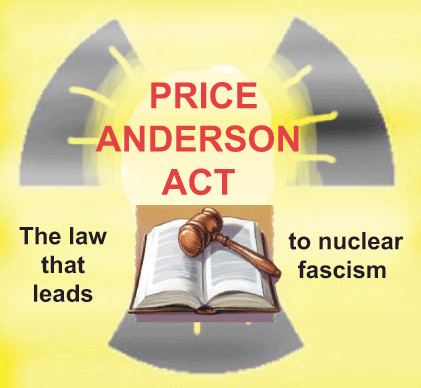
Nuclear power is never safe or economical
I hope Sen. Durbin changes his mind about promoting nuclear energy. The real carbon-free sources of electricity are wind and solar. Chicago Sun Times George Milkowski, West Ridge Nov 27, 2021 ”’
……….. When nuclear power plants were first touted in the 1950s as a new and safe method for producing electricity, it was said the electricity would be “too cheap to meter.” This is pure nonsense! If it was so safe, why weren’t any power plants built and put on line until passage of the Price-Anderson Act? The law has been amended a number of times and greatly limits the liability of operators of nuclear power plants.
Anything paid out beyond the limits set in Price-Anderson would take years of lawsuits.
Sen. Durbin wrote “It is past time for Congress to step up and develop a comprehensive, consent-based plan to store nuclear waste.” That’s an understatement. Nuclear waste is stored within a half-mile of Lake Michigan at the now-closed Zion nuclear power plant. Why is it close to the source of our drinking water? Because there is nowhere to ship it! Plans to ship such waste to a depository in Yucca Mountain in the southwest fell through when some improperly stored barrels burst into flames, releasing large amounts of high-level radioactive material.
Who does the senator think will agree to a “consent-based plan” when there is no known method of safely storing these dangerous materials for thousands of years, the time it takes for radioactive decay to make it safe for the environment?
Sen. Durbin argued that “we must ensure the nuclear fleet remains safe and economical,” but nuclear power has never been economical. As far as I know, the last time a permit was approved for a new nuclear plant was during the Obama administration. That plant in Georgia is only about half complete, although it was to be finished by now and the cost is already double the initial estimate.
The current “fleet,” as Sen. Durbin called them, of nuclear power plants were designed and engineered to last about 30 to 40 years. Most of our country’s plants are near that age. Their internal systems are constantly bombarded by radioactive particles, making the metal in the systems more brittle and prone to failure every year. Subsidizing them is a waste of taxpayer money and a dangerous gamble with our lives.
I hope Sen. Durbin changes his mind. The real carbon-free sources of electricity are renewables: wind and solar.
Heysham 2 nuclear power station to close earlier than planned
Heysham 2 nuclear power station will continue generating electricity
safely until 2028, however, “closing” two years earlier than originally
planned. In 2016, the sites’ operational lives were extended by seven
years to 2030. Operational dates are under constant review and since then
inspection, modelling and operational experience from other sites, have
given EDF a clearer picture of lifetime expectations for the AGR fleet as
the stations age. Heysham 1 will operate until 2024,
Lancaster Guardian 17th Dec 2021
Energy economics – getting the fuel -oil and nuclear -for continued expansion of capitalism – is costing more all the time
Dave Elliott: n an interesting article in the Ecologist, Gareth Dale
argues that the rising cost of plundering nature presents major problems
for the continued expansion of capitalism.
For example, he says the ‘energy return on energy invested’ (EROI) for fossil-fuel extraction is
plummeting: ‘In plain English, ever more energy is consumed in squeezing
each drop of oil from the bowels of the earth’. He notes that a recent
study has found that, at present, over 15% of the oil extracted was being
use to extract more oil and that this will rise as easily accessed reserves
deplete.
It’s the same for nuclear – as high grade ore reserves
deplete, the energy cost of mining/processing uranium rise, with EROI
ratios falling from 15:1 as now, to maybe 5:1 or less over time. Meantime
the EROIs for renewables are mostly higher and improving- e.g. solar was
poor in the early days, but is now at around 25:1, wind is around 50:1 on
good sites, and may get to 80:1 offshore, hydro is at around 200:1.
Renew Extra 18th Dec 2021
https://renewextraweekly.blogspot.com/2021/12/energy-resource-limits.html
French President says discussions continue with Germany about nuclear power as ”green”
French President Emmanuel Macron said on Thursday France and Germany would
continue discussions in the coming days to find a compromise on whether the
European Union should label nuclear and gas as green investments. France
wants to be able to attract green finance to fund the construction of new
nuclear power plants in France, while Germany is phasing out nuclear and
keen on switching to gas — a fossil fuel. Macron said in a joint news
conference with his German counterpart Olaf Scholz that a decision on the
subject, the so-called green taxonomy, would soon be issued by the European
Commission.
Reuters 17th Dec 2021
European Union’s rift over nuclear power
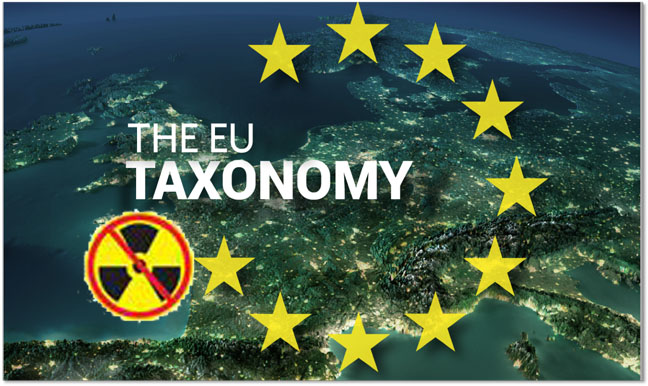
EU faces nuclear rift in decision on energy funds, future, Ravalli Republic, By SAMUEL PETREQUIN and RAF CASERT – Associated Press By SAMUEL PETREQUIN and RAF CASERT -17 Dec 21,
BRUSSELS (AP) — The leaders of the European Union’s two most important nations faced reporters together during a joint news conference early Friday, a show of unity at the end of the EU’s final summit of the year.
Then two words – “nuclear energy” – intervened.
Heading into the Christmas week, atomic power is a topic on which France and Germany broadly differ, and one that has become a big thorn in the side of the EU as the 27-nation bloc decides whether to include nuclear-generated energy among the economic activities that qualify for sustainable investment.
German Chancellor Olaf Scholz, who took office last week, and French President Emmanuel Macron agreed on most of the issues tackled during Thursday’s summit, including Ukraine-Russia tensions and an immigration dispute with Belarus.
On the the sustainable investment rules, however, the two leaders have yet to reach a compromise. The rift over nuclear energy was enough to scuttle any agreement on energy prices during the summit.
A big rise in energy prices has reignited the debate about whether the EU should promote nuclear power projects as a way of becoming greener and more energy independent.
France has asked for nuclear power to be included in the so-called “taxonomy” by the end of the year, leading the charge with several other EU countries that operate nuclear power plants.
The group initially faced strong opposition from Germany and other members that wanted nuclear power to be ineligible for green financing, but Scholz adopted a peacebuilding tone in the summit’s final hours early Friday.
“We are talking about countries with different business models. It’s important that each EU country can pursue its own approach without Europe becoming disunited,” Scholz said. “At the end of the day, we will have to come together despite the different priorities we may have set.”
Germany’s remaining nuclear power plants are due to go offline next year. France derives about 70% of its electricity from nuclear energy……………..
making future nuclear power projects eligible for billions in euros available as part of the European Green Deal while avoiding “greenwashing” remains a controversial issue.
…….. “The lack of agreement shows how lively this is, not only in our country, but throughout Europe,” Belgian Prime Minister Alexander De Croo, who faces a domestic crisis over how to phase out nuclear plants and still maintain energy security to his citizens.
De Croo suggested that amid the energy price crunch, nuclear energy and gas could be temporarily eligible for funds……..
The ball is now with the EU’s chief, European Commission President Ursula von der Leyen. She is expected to present before the end of the year the list of activities eligible for the green investment funds and must decide whether nuclear energy and natural gas make the cut.
Von der Leyen has been under pressure from environmental groups and Green European lawmakers to resist the inclusion of both.
“Fossil gas and nuclear power have no place in the EU taxonomy” for sustainable activities, said Sven Giegold, a Green lawmaker in the European Parliament……. https://ravallirepublic.com/lifestyles/technology/eu-faces-nuclear-rift-in-decision-on-energy-funds-future/article_9d325652-1272-5667-8c6b-1654e065aa61.html
Nuclear Energy Cannot Meaningfully Contribute to a Climate-Neutral Energy System

Nuclear Energy Cannot Meaningfully Contribute to a Climate-Neutral Energy System https://www.counterpunch.org/2021/12/16/nuclear-energy-cannot-meaningfully-contribute-to-a-climate-neutral-energy-system/, BY SCIENTISTS FOR THE FUTURE 16 Dec 21, In light of the accelerating climate crisis, nuclear energy and its place in the future energy mix is being debated once again. Currently its share of global electricity generation is about 10 percent. Some countries, international organizations, private businesses and scientists accord nuclear energy some kind of role in the pursuit of climate neutrality and in ending the era of fossil fuels. The IPCC, too, includes nuclear energy in its scenarios.
On the other hand, the experience with commercial nuclear energy generation acquired over the past seven decades points to the significant technical, economic, and social risks involved. This paper reviews arguments in the areas of “technology and risks,” “economic viability,” ’timely availability,” and “compatibility with social-ecological transformation processes.”

Technology and risks:
Catastrophes involving the release of radioactive material are always a real possibility, as illustrated by the major accidents in Three Mile Island, Chernobyl, and Fukushima. Also, since 1945, countless accidents have occurred wherever nuclear energy has been deployed. No significantly higher reliability is to be expected from the SMRs (“small modular reactors”) that are currently at the planning stage. Even modern mathematical techniques, such as probabilistic security analyses (PSAs), do not adequately reflect important factors, such as deficient security arrangements or rare natural disasters and thereby systematically underestimate the risks.
Moreover, there is the ever-present proliferation risk of weapon-grade, highly enriched uranium, and plutonium. Most spent fuel rods are stored in scarcely protected surface containers or other interim solutions, often outside proper containment structures. The safe storage of highly radioactive material, owing to a half-life of individual isotopes of over a million years, must be guaranteed for eons. Even if the risks involved for future generations cannot be authoritatively determined today, heavy burdens are undoubtedly externalized to the future.

Nuclear energy and economic efficiency: The commercial use of nuclear energy was, in the 1950s, the by-product of military programmes. Not then, and not since, has nuclear energy been a competitive energy source. Even the continued use of existing plants is not economical, while investments into third generation reactors are projected to require subsidies to the tune of billions of $ or €. The experience with the development of SMR concepts suggests that these are prone to lead to even higher electricity costs.
Lastly, there are the considerable, currently largely unknown costs involved in dismantling nuclear power plants and in the safe storage of radioactive waste. Detailed analyses confirm that meeting ambitious climate goals (i. e. global heating of between 1.5° and below 2° Celsius) is well possible with renewables which, if system costs are considered, are also considerably cheaper than nuclear energy. Given, too, that nuclear power plants are not commercially insurable, the risks inherent in their operation must be borne by society at large. The currently hyped SMRs and the so-called Generation IV concepts (not light-water cooled) are technologically immature and far from commercially viable.
Timely availability: Given the stagnating or – with the exception of China – slowing pace of nuclear power plant construction, and considering furthermore the limited innovation potential as well as the timeframe of two decades for planning and construction, nuclear power is not a viable tool to mitigate global heating. Since 1976, the number of nuclear power plants construction starts is declining. Currently, only 52 nuclear power plants are being built. Very few countries are pursuing respective plans. Traditional nuclear producers, such as Westinghouse (USA) and Framatome (France) are in dire straits financially and are not able to launch a significant number of new construction projects in the coming decade. It can be doubted whether Russia or China have the capacity to meet a hypothetically surging demand for nuclear energy but, in any event, relying on them would be neither safe nor geopolitically desirable.
Nuclear energy in the social-ecological transformation: The ultimate challenge of the great transformation, i. e. kicking off the socio-ecological reforms that will lead to a broadly supported, viable, climate-neutral energy system, lies in overcoming the drag (“lock-in”) of the old system that is dominated by fossil fuel interests. Yet, make no mistake, nuclear energy is of no use to support this process. In fact, it blocks it. The massive R&D investment required for a dead-end technology crowds out the development of sustainable technologies, such as those in the areas of renewables, energy storage and efficiency.
Nuclear energy producers, given the competitive environment they operate in, are incentivized to prevent – or minimize – investments in renewables. For obvious technical as well as economic reasons, nuclear hydrogen – the often-proclaimed deus ex machina – cannot enhance the viability of nuclear power plants. Japan is an exhibit A of transformation resistance. In Germany the end of the atomic era proceeds, and the last six nuclear power stations will be switched off in 2021 and 2022, but further steps are still needed, most importantly the search for a safe storage facility for radioactive waste.
By way of conclusion: The present analysis reviews a whole range of arguments based on the most recent and authoritative scientific literature. It confirms the assessment of the paper Climate-friendly energy supply for Germany – 16 points of orientation, published on 22 April 2021 by Scientists for Future (doi.org/10.5281/zenodo.4409334) that nuclear energy cannot, in the short time remaining before the climate tips, meaningfully contribute to a climate-neutral energy system. Nuclear energy is too dangerous, too expensive, and too sluggishly deployable to play a significant role in mitigating the climate crisis. In addition, nuclear energy is an obstacle to achieving the social-ecological transformation, without which ambitious climate goals are elusive.
This article is the English language summary of the findings of the German report by Scientists for Future (S4F) International.
Natalie Bennett, a Green member of UK Parliament deftly separates nuclear facts from nuclear fantasy

Separating fact from fission, https://theecologist.org/2021/dec/15/separating-fact-fission Natalie Bennett , 15th December 2021 Nuclear is no panacea for the climate crisis – even if we build new power plants they will come on line too late. Natalie Bennett is a member of the House of Lords, and a member of the Green party.
“The role of civil nuclear power in meeting the UK’s electricity needs and energy security” has just been debated by peers in the House of Lords. Had a television inquisitor put that question to me, I’d start by saying that I don’t accept the terms of the question.
New nuclear should have no role in the UK’s electricity generation, and policies promoting new plants – far from offering any hope of security – present a threat to that essential provision in this age of shocks.
The failed 20th century technology that is nuclear power is something I’ve been debating for a long time. So I could go on at length about the failure to find a solution to the pressing issue of nuclear waste – as Lib Dem Lord Oates did very effectively in the debate.
Cleanest
I could talk about safety issues – from Three Mile Island to Chernobyl to Fukushima. And while many in the debate tried to say, well “not so many people died” on those occasions, that fails to address the huge risks, and in our age of shocks, the increasing dangers presented by multiple climate, human and physical threats that could hamper recovery efforts when things start to go wrong.
I could talk to the links of “civil” nuclear to nuclear weapons – those hideous weapons of mass destruction. I could talk about the handing of enormous sums of money to multinational companies – or foreign governments.
But there are two important arguments less often aired that deserve to be put.
First, that new nuclear power plants are a distraction from what we should be doing. Think about how often you hear ministers talking about new nuclear – such as the latest championing of the – rather modest – government investment in the Rolls Royce fantasy of “small” nuclear reactors.

You also rarely hear ministers talking about renewables. And consider how seldom you hear the politicians in government in serious discussion about energy conservation. For the cleanest, greenest, energy you can possibly have is the energy that you don’t need to use.
Resilient
The fact that government ministers are not talking about this is unsurprising, given that the Green Homes Grant was such an utter disaster. But, in fact, the silence predates that particular Rishi Sunak mess.
Talking about – and acting on – new nuclear power swallows up the space where the renewables and conservation should be.
That’s something that’s true on a global scale, as a brilliant University of Sussex study last year demonstrated. There are, in the academic jargon, path dependencies that see renewables and nuclear crowding each other out.
And it is most painfully evident in the UK in the failure to pursue the most obvious, and productive, path for renewables, community energy.
Despite promises – and recommendations from the Environmental Audit Committee, the Net Zero Strategy contained no plan of action for a key means of spreading prosperity around the country, as well as helping to secure a resilient, decentralised energy system and engaging people directly in the essential drive to Net Zero.
Fission
Secondly, nuclear power projects are too slow. This is a killer argument for which nuclear proponents can have no answer.
Continue readingUncertainties persist, as France shuts down the 4 largest nuclear reactors, because of corrosion and cracks

Corrosion and cracks: the four largest French nuclear reactors shut down.
Four reactors were shut down by EDF, at the Civaux and Chooz power plants, due to a failure of an essential part in the event of an accident. Many uncertainties persist on the consequences of this discovery.
Reporterre 16th Dec 2021
Challenges 15th Dec 2021
1 This Month



19 November – Webinar – The Reality of Reprocessing
Time: 11:00 AM Pacific Time (US & Canada) / 2:00 PM Eastern / 7:00 PM UK / 8:00 PM CET
Register for the Zoom Event Here



Shut down the radiation-damaged Heysham nuclear reactors now
To see nuclear-related stories in greater depth and intensity – go to https://nuclearinformation.wordpress.com

Say No to NASA’s Reckless Nuclear Reactor on the Moon
Say No to NASA’s Reckless Nuclear Reactor on the Moon
-
Archives
- November 2026 (74)
- October 2026 (302)
- September 2026 (339)
- August 2026 (330)
- July 2026 (355)
- June 2026 (287)
- May 2026 (306)
- April 2026 (356)
- March 2026 (251)
- February 2026 (267)
- January 2026 (308)
- December 2025 (358)
-
Categories
- 1
- 1 NUCLEAR ISSUES
- business and costs
- climate change
- culture and arts
- ENERGY
- environment
- health
- history
- indigenous issues
- Legal
- marketing of nuclear
- media
- opposition to nuclear
- PERSONAL STORIES
- politics
- politics international
- Religion and ethics
- safety
- secrets,lies and civil liberties
- spinbuster
- technology
- Uranium
- wastes
- weapons and war
- Women
- 2 WORLD
- ACTION
- AFRICA
- Atrocities
- AUSTRALIA
- Christina's notes
- Christina's themes
- culture and arts
- Events
- Fuk 2022
- Fuk 2023
- Fukushima 2017
- Fukushima 2018
- fukushima 2019
- Fukushima 2020
- Fukushima 2021
- general
- global warming
- Humour (God we need it)
- Nuclear
- RARE EARTHS
- Reference
- resources – print
- Resources -audiovicual
- Weekly Newsletter
- World
- World Nuclear
- YouTube
-
RSS
Entries RSS
Comments RSS

