France and Germany – opposite attitudes to nuclear power
Is nuclear energy green? France and Germany lead opposing camps.
The French government wants to build reactors. The German government wants to shut them down. WP 19 Dec 21,
”………………….. France is leading a group of mostly central and eastern European countries that are pushing the European Union to add modern nuclear energy to a list of “environmentally sustainable economic activities.”
…………. The president of the surrounding Alsace region, Frédéric Bierry, has urged Macron to consider Fessenheim as a possible future site, calling the old plant’s closure a “financial,” “social” and “economic” scandal in the face of a warming climate.
But one of the biggest obstacles — for Fessenheim and for Macron’s broader plans — lies about half a mile to the east of the town’s old nuclear plant. That’s where France ends and Germany begins.
The new German economy and climate minister, Green party member Robert Habeck, was among the politicians who signed a statement celebrating the closure of the Fessenheim plant. The German government has argued that nuclear plants are too risky, and too slow and costly to build, to be a solution to the climate crisis. Germany’s outlook is influenced by nuclear accidents, such as the 2011 Fukushima meltdown in Japan. And Berlin points to reports like one this past week, of cracks in the pipes at a French nuclear reactor, as evidence that plant safety remains a problem.
Germany is among a group of skeptics, including Denmark and Austria, that wants Europe to shut down its remaining nuclear plants and that fiercely oppose a climate-friendly designation for nuclear power, which would signal to green investors that nuclear energy is worthy of financing.
The controversy may come to a head within days, with the European Commission expected to make a decision just before its Christmas break.
………………………………… Environmental activists in Germany acknowledge that continued reliance on coal is a problem even in the medium term. But they are optimistic about how quickly the country can ramp up alternative energy.
Germany’s Green party, in its position as part of the new ruling coalition, has vowed to increase spending significantly on renewables and to limit energy price spikes for consumers. It wants renewables to account for 80 percent of electricity by 2030, up from the present target of about 50 percent.
For German politicians and activists, the idea of nuclear power as green or sustainable is anathema. They talk about the potential for accidents with catastrophic environmental consequences. They note the problems associated with the long-term storage of deadly radioactive waste. They say they don’t want to draw investment away from wind and solar.
German anti-nuclear and environmental activist Stefan Auchter said his country’s path will be validated when the next Chernobyl or Fukushima comes. He compared the use of nuclear energy to playing Russian roulette………………………. https://www.washingtonpost.com/world/2021/12/18/nuclear-energy-climate-france-germany/
Plight of Fukushima’s fishermen
In April 2021, the Japanese government decided to discharge radioactive
water stored inside the TEPCO Fukushima Daiichi Nuclear Power Station into
the Pacific Ocean. TEPCO’s plan is to build a pipeline along the ocean
bed and release diluted processed radioactive water 1 km off the coast of
Fukushima. In November, Greenpeace conducted its 33rd Fukushima radiation
survey since the nuclear disaster, during which we had the opportunity to
interview local fisherman Mr. Haruo Ono. Mr. Ono opens up about the pain he
feels, saying that discharging radioactive water into the ocean will throw
Fukushima’s fishing industry back down into the abyss.
Greenpeace 20th Dec 2021
USA has 85,000 metric tons of spent fuel from nuclear power plants, 90 million gallons of weapons wastes – robots to the rescue.
There’s over 85,000 metric tons of spent nuclear fuel from commercial
nuclear power plants, and 90 million gallons of waste from government
weapons programs in the U.S. today, according to the Government
Accountability Office.
That number is rapidly growing. Every year, we add
2,000 metric tons of spent nuclear fuel. Disposing and handling nuclear
waste is a dangerous task that requires precision and accuracy. Researchers
from the National Centre for Nuclear Robotics led by the Extreme Robotics
Lab at the University of Birmingham in the UK are finding ways to help
humans and robots work together to get the job done.
The researchers have
developed a system using a standard industrial robot that uses a parallel
jaw gripper to handle objects and an Ensenso N35 3D cameras to see the
world around it. The team’s system involves allowing humans to make more
complex decisions that AI isn’t equipped to do, while the robot
determines how to best perform the tasks. The team uses three kinds of
shared control.
The Robot Report 18th Dec 2021
Iran holds air defence drill near Bushehr nuclear plant
Iran holds air defence drill near Bushehr nuclear plant
Drill comes days after latest round of talks in Vienna to restore Iran’s nuclear deal with world powers ended without an agreement. Aljazeera, Maziar Motamedi 20 Dec 2021
Tehran, Iran – Iran has held an air defence drill in the vicinity of its southwestern Bushehr nuclear power plant amid ongoing tensions over the country’s nuclear programme.
State media reported that the drill was conducted in the early hours of Monday to the south of the Bushehr province and also over parts of the Persian Gulf.
The drill comes days after the latest round of talks in Vienna to restore Iran’s nuclear deal with world powers which ended with some modest gains but no agreement.
Israel has opposed efforts to revive the 2015 deal, which lifted sanctions on Tehran in exchange for curbs on its nuclear programme and has continued to threaten direct military action against Iranian nuclear facilities.
Nournews, a media outlet close to Iran’s security forces, reported last week that security forces assess there may be a credible possibility Israel would launch an attack in an effort to thwart the talks in Vienna.
On Monday, it quoted Gholamali Rashid, the commander of the Islamic Revolutionary Guard Corps’ (IRGC) Khatam al-Anbiya military base, as also mentioning the Vienna talks, and adding that any potential Israeli attack
would not be possible without the US giving its approval………..
The Natanz facilities were the target of two main sabotage attacks, which Iran blamed on Israel, in 2020 and 2021. There was also another sabotage attack in June, also blamed on Israel, on a centrifuge parts assembly workshop in Karaj near capital Tehran.
The seventh round of nuclear talks in Vienna between Iran and the world powers party to the accord the US abandoned in 2018 closed with modest progress on Friday. Talks are expected to resume in the coming days before the end of the current year.
Iran and Western powers have so far been at odds in the talks over which sanctions need to be lifted, and what measures Iran needs to take to scale back down its advancing nuclear programme. https://www.aljazeera.com/news/2021/12/20/iran-holds-air-defence-drill-over-bushehr-nuclear-plant
Cyber Threats and Nuclear Weapons: Assessing Risks
Cyber Threats and Nuclear Weapons: Assessing Risks, Insights from Herbert Lin. The Diplomat By Mercy A. Kuo, December 20, 2021 Trans-Pacific View author Mercy Kuo regularly engages subject-matter experts, policy practitioners, and strategic thinkers across the globe for their diverse insights into U.S. Asia policy. This conversation with Dr. Herbert S. Lin – senior research scholar for cyber policy and security at the Center for International Security and Cooperation and Hank J. Holland Fellow in Cyber Policy and Security at the Hoover Institution, both at Stanford University, and author of newly published “Cyber Threats and Nuclear Weapons” (Stanford University Press, 2021) ̶ is the 301st in “The Trans-Pacific View Insight Series.”
Define key elements of the U.S. nuclear enterprise.
The nuclear enterprise consists of everything that touches nuclear weapons issues, including nuclear weapons design and stewardship; nuclear delivery systems (e.g., missiles, submarines, bombers); nuclear command, control, and communications (NC3); nuclear planning and decision-making; and nuclear operations. Information technologies (also known as computing and communications technologies) are critical for all of these elements of the nuclear enterprise.
Identify plausible cyber risk scenarios of the U.S. nuclear enterprise. irst, an adversary may conduct a deliberate cyberattack against some element(s) of the U.S. nuclear enterprise that could compromise the U.S. ability to use its nuclear weapons when appropriate (e.g., in retaliation). A report from the U.S. Government Accountability Office probed cyber vulnerabilities in U.S. weapons systems (including some nuclear systems), noting that the Department of Defense routinely finds mission-critical cyber vulnerabilities during operational testing of weapons systems that are under development, pointing out that “using relatively simple tools and techniques, testers were able to take control of systems and largely operate undetected.” Exploitation of such vulnerabilities could cripple nuclear weapons delivery systems on the ground or in flight.
The 2018 Nuclear Posture Review also identifies adversary offensive cyber capabilities as creating new challenges and potential vulnerabilities for U.S. NC3, calling out challenges to network defense, authentication, data integrity, and secure, assured, and reliable information flow. Compromises to NC3 could disconnect the National Command Authority from U.S. nuclear forces, fail to provide warning of incoming nuclear attack, or falsely signal the existence of a nuclear attack.
A second type of cyber risk arises from the integration of nuclear and nonnuclear capabilities, which is often enabled by computing and communications technology. Such integration likely raises the risk of inadvertent nuclear escalation in times of conflict. For example, integrating nuclear and conventional systems confers operational advantages in warfighting, and is also generally less expensive than acquiring separate nuclear and conventional systems. But such advantages trade off against an increased possibility that cyberattacks directed against a dual-purpose system for non-nuclear reasons could be interpreted by U.S. decision-makers as an attack on U.S. nuclear capabilities, especially if those cyberattacks are coming from another nuclear power. Thus, they may feel more pressure to escalate up the nuclear ladder.
A second scenario is based on the fact that cyberattacks and cyber espionage/intelligence gathering use the same penetration techniques and differ only in what they seek to accomplish. Thus, any given cyber penetration carries with it an unknown potential for attack, for intelligence gathering, or both. A cyber penetration from China or Russia detected in U.S. NC3 system could be part of a relatively benign attempt to gather intelligence, or it could be the start of a serious cyberattack that is intended to degrade NC3. But it is impossible for U.S. decision-makers to know China’s or Russia’s intention before we observe the actual results of the penetration. If the United States detects a cyber penetration of its NC3 during a crisis or during the initial phases of a kinetic conflict, U.S. decision-makers may jump to a worst-case assessment.
Analyze the capabilities of China and North Korea in generating cyber nuclear risks.
Chinese and North Korean capabilities to generate cyber risks to the U.S. nuclear enterprise are not known in the unclassified literature. However, it is known that Chinese offensive cyber capabilities are world-class, and North Korea’s capabilities are substantial, even if not necessarily on a par with China’s at every level and for every contingency.
Furthermore, certain operational scenarios involving China in particular implicate a number of dual-purpose systems. ……………. https://thediplomat.com/2021/12/cyber-threats-and-nuclear-weapons-assessing-risks/
Archbishop calls for nuclear disarmament
Archbishop calls for nuclear disarming, Santa fe New Mexican By Robert Nott rnott@sfnewmexican.com, Dec 20 , 2021
Looking up at the sky as a young teen one day in Daly City, Calif., Archbishop John C. Wester had one thought as he saw military planes overheard.
Were they ours, or were they Russian planes?
The year was 1962, perhaps the first time nuclear war between the two superpowers seemed likely to erupt as the Cuban Missile Crisis played out and students were taught to prepare for an atomic attack by diving under their desks at schools.
“I don’t think going under our desks was very helpful,” Wester said Sunday in Santa Fe, moments before issuing a call for the world to rid itself its nuclear weapons.
Now, some 60 years later, he said he wants to do more to end the threat of an atomic war. Wester spoke and prayed during a 30-minute prayer service and ceremony at the Shrine of Our Lady of Guadalupe before he unveiled a sign bearing an image of Pope Francis and a quote uttered by the pope in Hiroshima in 2020: “The possession of nuclear arms is immoral.”
Wester said “our archdiocese needs to be facilitating, encouraging an ongoing conversation” about nuclear disarmament.
He urged people to “pray for God’s intervention” to keep that conversation going.
At least 125 people were present for the service, many bearing roses in honor of the Lady of Guadalupe. Among them was Karen Weber, who said it’s “highly symbolic” for Wester to speak out on the “abolishment of nuclear weapons.”
The shrine is across the street from the Firestone building at West Alameda and Guadalupe streets in downtown Santa Fe, where Los Alamos National Laboratory recently opened a small office. The proximity of the two locales was not lost on Mary Riseley, who described herself as a Quaker and an Episcopalian and who handed out roses to participants in Sunday’s event.
Calling Wester a “prophet in the Catholic Church,” she said it’s important for him to stand up “for peace and understanding” during these times of turmoil.
In his comments, Wester alluded to the growing tension around the Russia-Ukraine border and said there are at least “40 active conflicts in the world.”
“We need to be instruments of peace,” he said, especially as we head into the Christmas season, a “season of peace.”
The current arms race, he said “is more ominous” than any that came before…….. https://www.santafenewmexican.com/news/local_news/archbishop-calls-for-nuclear-disarming/article_0aabf9f0-60e8-11ec-9e5f-5f7820707fca.html
The French government asked EDF for earlier restart of nuclear reactors (now on maintenance)
The French government asked Electricite de France SA to restart some
nuclear reactors earlier than planned in order to help with a winter energy
crunch across Europe. Ecology Minister Barbara Pompili said on France Info
radio that she had asked EDF Chief Executive Officer Jean-Bernard Levy in a
meeting on Friday to restart more quickly than planned some reactors that
were halted for maintenance and scheduled to restart in mid-January.
Bloomberg 19th Dec 2021
U.S. congressional delegation arrives in Ukraine to discuss threat of war with Russia — Anti-bellum
US Congress delegation arrives in Ukraine to discuss threat of war with RussiaA group of congressmen announced Washington’s readiness to take tough measures in response to any encroachment on sovereign Ukrainian territory *** “Representative Jason Crow led a U.S. Congressional delegation to Kyiv to discuss Russia’s aggressive military buildup in and around Ukraine and hear […]
U.S. congressional delegation arrives in Ukraine to discuss threat of war with Russia — Anti-bellum
Nuclear Plants Masquerading as Climate-Friendly Shouldn’t Qualify for Green Finance

Nuclear Plants Masquerading as Climate-Friendly Shouldn’t Qualify for Green Finance
December 17, 2021 Gaye Taylor,
Bruce Power’s recent issuance of C$500 million in green bonds to help extend the life of Ontario’s biggest nuclear power plant is being touted as a critical step toward decarbonization. But it could also be seen as a dangerous and time wasting dead-end, a corruption of the very notion of green financing.
According to Jonathan Hackett, head of sustainable finance at BMO Capital Markets and co-lead green structuring agent for Bruce Power, nuclear is necessary to the net-zero transition, writes the Globe and Mail.
According to Hackett, the urgent need to green the energy and power sectors means nuclear power is a worthy recipient of green finance.
But confronting the notion that nuclear power is “green” are unresolved concerns about what to do with reactor waste products, as well as the acute dangers inherent in nuclear power plants, with the tragedy at Japan’s Fukushima plant the most recent example.
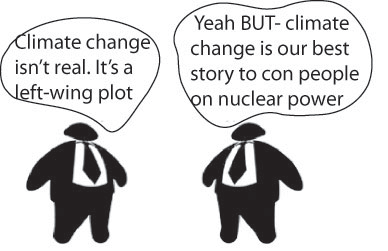
As for the claim that nuclear is essential to avoiding climate meltdown, independent experts say the world has neither the time, the funds, nor the expertise to bring the expensive and notoriously slow sector to bear in time to shift the climate crisis in any meaningful way.
And this reality doesn’t change as the hype around small modular nuclear reactors (SMRs) ramps up. “There is no SMR promoter suggesting a prototype could be licenced, built, and operating by the end of this decade,” said Mycle Schneider, author of the annual World Nuclear Industry Status Report, at a webinar hosted by University of British Columbia in October. “That means—if ever, likely not—a commercialization could start only in the second half of the 2030s.”

Noting that “the industry has never kept its promises on schedules and budgets,” Schneider added, “we have no time, money, and brainpower to waste on fantasy PowerPoint designs.”
Early this month, Ontario Power Generation and GE Hitachi triumphantly announced plans to bring an SMR into service at the Darlington nuclear generating station “as early as 2028”. But even if they managed to bring the project in on time and on budget—a practice that has never been the industry’s strong suit—the project would just be one expensive generation source in a decarbonizing economy that needs far more electricity, and vastly more energy efficiency, far faster than SMRs can deliver.
And this year’s WNISR report was only the latest to conclude that the nuclear industry outside China is already in decline, with its output in the United States dropping to its lowest level since 1995. In France, a former nuclear leader, atomic generation dropped to 1985 levels.
Faced with such an implosion in the prospects of its traditional reactors, the nuclear industry has seized upon SMRs as a ticket to a new revenue track. But SMRs will never be ready in time to shift the trajectory of the climate crisis. Even if they worked, “it would take centuries to build enough to make a difference,” Schneider said.

Schneider is not alone that view.
“Betting on nuclear as a climate solution is just sticking our heads in the sand because SMR technology is decades away, extremely expensive, and comes with a nasty pile of security and waste headaches,” Ontario Clean Air Alliance Chair Jack Gibbons wrote last year, responding to then-natural resources minister Seamus O’Regan’s full-throated endorsement of the SMR storyline.
“That our government would be this gullible is distressing, especially given the havoc already being wreaked by a changing climate,” he added.
Jonathan Porritt, founder of the UK’s Forum4theFuture, echoed Gibbons’ view in a March opinion piece for The Guardian. He warned of a nuclear sector now “straining every sinew to present itself as an invaluable ally” in the global push for net-zero by 2050.” Yet the problems that have long dogged the industry remain unchanged: “ever-higher costs, seemingly inevitable delays, no solutions to the nuclear waste challenge, security and proliferation risks.”
The reasons for the USA’s persecution of Julian Assange : Glenn Greenwald spells it out
“much of the conduct described in the indictment is conduct that journalists engage in routinely — and that they must engage in in order to do the work the public needs them to do.”
Julian Assange Loses Appeal: British High Court Accepts U.S. Request to Extradite Him for Trial
Press freedom groups have warned Assange’s prosecution is a grave threat. The Biden DOJ ignored them, and today won a major victory toward permanently silencing the pioneering transparency activist.
| Glenn Greenwald 11 December In a London courtroom on Friday morning, Julian Assange suffered a devastating blow to his quest for freedom. A two-judge appellate panel of the United Kingdom’s High Court ruled that the U.S.’s request to extradite Assange to the U.S. to stand trial on espionage charges is legally valid. |
As a result, that extradition request will now be sent to British Home Secretary Prita Patel, who technically must approve all extradition requests but, given the U.K. Government’s long-time subservience to the U.S. security state, is all but certain to rubber-stamp it. Assange’s representatives, including his fiancee Stella Morris, have vowed to appeal the ruling, but today’s victory for the U.S. means that Assange’s freedom, if it ever comes, is further away than ever: not months but years even under the best of circumstances…………
In response to that January victory for Assange, the Biden DOJ appealed the ruling and convinced Judge Baraitser to deny Assange bail and ordered him imprisoned pending appeal. The U.S. then offered multiple assurances that Assange would be treated “humanely” in U.S. prison once he was extradited and convicted. They guaranteed that he would not be held in the most repressive “supermax” prison in Florence, Colorado — whose conditions are so repressive that it has been condemned and declared illegal by numerous human rights groups around the world — nor, vowed U.S. prosecutors, would he be subjected to the most extreme regimen of restrictions and isolation called Special Administrative Measures (“SAMs”) unless subsequent behavior by Assange justified it. American prosecutors also agreed that they would consent to any request from Assange that, once convicted, he could serve his prison term in his home country of Australia rather than the U.S. Those guarantees, ruled the High Court this morning, rendered the U.S. extradition request legal under British law.
What makes the High Court’s faith in these guarantees from the U.S. Government particularly striking is that it comes less than two months after Yahoo News reported that the CIA and other U.S. security state agencies hate Assange so much that they plotted to kidnap or even assassinate him during the time he had asylum protection from Ecuador. Despite all that, Lord Justice Timothy Holroyde announced today that “the court is satisfied that these assurances” will serve to protect Assange’s physical and mental health.
The effective detention by the U.S. and British governments of Assange is just months shy of a full decade. ……………………….. Assange has been imprisoned in the high-security Belmarsh prison, described in the BBC in 2004 as “Britain’s Guantanamo Bay.” He has thus spent close to seven years inside the embassy and two years and eight months inside Belmarsh: just five months shy of a decade with no freedom………..
………. In May 2019,the British government unveiled an 18-count felony indictment against him for espionage charges, based on the role he played in WikiLeaks’ 2010 publication of the Iraq and Afghanistan War Logs and diplomatic cables, which revealed multiple war crimes by the U.S. and U.K. as well as rampant corruption by numerous U.S. allies throughout the world. Even though major newspapers around the world published the same documents in partnership with WikiLeaks — including The New York Times, The Guardian, El Pais and others — the DOJ claimed that Assange went further than those newspapers by encouraging WikiLeaks’ source, Chelsea Manning, to obtain more documents and by trying to help her evade detection: something all journalists have not only the right but the duty to their sources to do.
Because the acts of Assange that serve as the basis of the U.S. indictment are acts in which investigative journalists routinely engage with their sources, press freedom and civil liberties groups throughout the West vehemently condemned the Assange indictment as one of the gravest threats to press freedoms in years. In February, following Assange’s victory in court, “a coalition of civil liberties and human rights groups urged the Biden administration to drop efforts to extradite” Assange, as The New York Times put it.
That coalition — which includes the ACLU, Amnesty International, the Knight First Amendment Institute at Columbia University and the Committee to Protect Journalists — warned that the Biden DOJ’s ongoing attempt to extradite and prosecute Assange is “a grave threat to press freedom,” adding that “much of the conduct described in the indictment is conduct that journalists engage in routinely — and that they must engage in in order to do the work the public needs them to do.” Kenneth Roth, Director of Human Rights Watch, told The New York Times that “most of the charges against Assange concern activities that are no different from those used by investigative journalists around the world every day.” ………………
But the Biden administration — led by officials who, during the Trump years, flamboyantly trumpeted the vital importance of press freedoms — ignored those pleas from this coalition of groups and instead aggressively pressed ahead with the prosecution of Assange. The Obama DOJ had spent years trying to concoct charges against Assange using a Grand Jury investigation, but ultimately concluded back in 2013 that prosecuting him would pose too great a threat to press freedom. But the Biden administration appears to have no such qualms, and The New York Times made clear exactly why they are so eager to see Assange in prison:
Democrats like the new Biden team are no fan of Mr. Assange, whose publication in 2016 of Democratic emails stolen by Russia aided Donald J. Trump’s narrow victory over Hillary Clinton.
In other words, the Biden administration is eager to see Assange punished and silenced for life not out of any national security concerns but instead due to a thirst for vengeance over the role he played in publishing documents during the 2016 election that reflected poorly on Hillary Clinton and the Democratic National Committee. Those documents published by WikiLeaks revealed widespread corruption at the DNC, specifically revealing how they cheated in order to help Clinton stave off a surprisingly robust primary challenge from Sen. Bernie Sanders (I-VT). WikiLeaks’ reporting led to the resignation of the top five DNC officials, including its then-Chair, Rep. Debbie Wassserman Schultz (D-FL). Democratic luminaries such as Sen. Elizabeth Warren (D-MA) and Al Gore’s 2000 campaign chair Donna Brazile both said, in the wake of WikiLeak’s reporting, that the DNC cheated to help Clinton……………………………
It is difficult at this point to avoid the conclusion that Julian Assange is not only imprisoned for the crime of journalism which exposed serious crimes and lies by the west’s most powerful security state agencies, but he is also a classic political prisoner. When the Obama DOJ was first pursuing the possibility of prosecution, media outlets and liberal advocacy groups were vocal in their opposition. One thing and only one thing has changed since then: in the interim, Assange published documents that were incriminating of Hillary Clinton and the Democratic Party, and Democrats, as part of their long list of villains who they blamed for Clinton’s defeat (essentially everyone in the world except Clinton and the Democratic Party itself), viewed WikiLeaks’ reporting as a major factor in Trump’s victory.
That is why they and their liberal allies in corporate media harbor so much bloodlust to see Assange imprisoned. Julian Assange is a pioneer of modern journalism, a visionary who was the first to see that a major vulnerability of corrupt power centers in the digital age was mass data leaks that could expose their misconduct. Based on that prescient recognition, he created a technological and journalistic system to enable noble sources to safely blow the whistle on corrupt institutions by protecting their anonymity: a system now copied and implemented by major news organizations around the world.
Assange, over the last fifteen years, has broken more major stories and done more consequential journalism than all the corporate journalists who hate him combined. He is not being imprisoned despite his pioneering journalism and dissent from the hegemony of the U.S. security state. He is imprisoned precisely because of that. The accumulated hostility toward Assange from employees of media corporations who hate him due to professional jealousy and the belief that he undermined the Democratic Party, and from the U.S. security state apparatus which hates him for exposing its crimes and refusing to bow to its dictates, has created a climate where the Biden administration and their British servants feel perfectly comfortable imprisoning arguably the most consequential journalist of his generation even as they continue to lecture the rest of the world about the importance of press freedoms and democratic values.
No matter the outcome of further proceedings in this case, today’s ruling means that the U.S. has succeeded in ensuring that Assange remains imprisoned, hidden and silenced into the foreseeable future. If they have not yet permanently broken him, they are undoubtedly close to doing so. His own physicians and family members have warned of this repeatedly. Citizens of the U.S. and subjects of the British Crown are inculcated from birth to believe that we are blessed to live under a benevolent and freedom-protecting government, and that tyranny only resides in enemy states. Today’s judicial approval by the U.K. High Court of the U.S.’s attack on core press freedom demonstrates yet again the fundamental lie at the heart of this mythology. https://greenwald.substack.com/p/julian-assange-loses-appeal-british
France’s Association for the Control of Radioactivity in the West (ACRO) reveals plutonium pollution in La Hague.

14 Dec 21, Plutonium pollution in La Hague revealed by ACRO. As part of its Citizen’s Observatory of Radioactivity in the Environment, ACRO regularly monitors radioactive pollution around the nuclear installations in La Hague, which enabled it, in 2016, to highlight unusual pollution. in the Ru des Landes
area, with the notable presence of americium-241 and plutonium, which are particularly toxic.
Areva, now Orano, has pledged to take back the contaminated land. But, as of December 2021, no sanitation work has yet been carried out and cows continue to graze there.
ACRO 14th Dec 2021
Taiwan rejects nuclear power in referendum
REFERENDUMS 2021 /4th Nuclear Power Plant referendum defeated, Focus Taiwan , By Wang Hung-kuo, Chang Hsiung-feng and Lee Hsin-Yin Taipei, Dec. 18 (CNA) A referendum seeking to unseal and restart work on Taiwan’s Fourth Nuclear Power Plant failed to pass Saturday, the first time people have been allowed to directly vote on the facility that has been debated and under construction for more than two decades.
A total of 4,262,451 people (52.3 percent) voted “no” in the referendum that asked if they agreed that the power plant should be unsealed and operated commercially to generate electricity, while 3,804,755 people (46.7 percent) voted “yes.”
But even if the totals had been reversed, the referendum still would not have passed because it did not meet the turnout threshold.
Under Taiwan’s Referendum Act, the referendum question would have needed at least 4,956,367 “yes” votes to pass, or at least one-quarter of all eligible voters, and the “yes” votes to exceed the “no” votes.
Among the four referendum questions, which also covered trade, algae reef conservation and future referendums, that were rejected in Saturday’s vote, the 5.7 percent margin by which “no” votes outnumbered “yes” votes (52.84-47.16 percent) was the highest.
The government has argued that unsealing the power plant would be unfeasible due to cost and safety issues and require years before it could actually generate power……..
Rejection of the referendum, initiated by nuclear advocate Huang Shih-hsiu (黃士修), means that the same referendum question cannot be proposed again for another two years.
Independent advice to British government said that no further nuclear plant is needed, beyond Sizewell C
In July 2021, the Commission was asked to offer advice to government on whether an additional new nuclear plant, beyond the proposed Sizewell C project, is needed to deliver the sixth Carbon Budget. The advice not linked to below concludes that such a new plant is not necessary to achieve the rapid deployment of new low carbon capacity over the next 15 years.
This advice was provided to government ahead of the Budget and Spending
Review in autumn 2021.
National Infrastructure Commission 19th Nov 2021
EU countries at odds over green investment label for nuclear energy

EU countries at odds over green investment label for nuclear energy, CNA, 19 De 21, BRUSSELS: European Union countries disagreed ahead of a summit on Thursday (Dec 16) over whether the bloc should label nuclear energy as a climate-friendly investment, as leaders await a decision on the matter from Brussels.
The European Commission is considering whether to include nuclear and natural gas in its “sustainable finance taxonomy”, a rulebook that will restrict which activities can be labelled as climate-friendly investments.
“We are against a greenwashing of nuclear energy … We have allies, among them Luxembourg, but of course also powerful opponents who are supporters of nuclear energy,” Austrian Chancellor Karl Nehammer said on his arrival at the summit of EU leaders.
“Poland very strongly supports the possibility of financing investments in gas and in nuclear power,” Polish prime minister Mateusz Morawiecki said.
“Others have doubts about that and Poland clearly calls for it and I will be saying that strongly today to adopt that in the conclusions,” Morawiecki said.
The Commission has said it aims to decide this month on whether nuclear and gas are labelled green, but has struggled to resolve in-fighting between the bloc’s countries – including France and Germany, who are split over the fuels……………
The taxonomy does not ban investments in activities not labelled “green”. But by limiting the green label to those activities deemed truly climate-friendly, the EU aims to steer cash into low carbon projects and stop companies or investors from making unsubstantiated environmental claims. https://www.channelnewsasia.com/sustainability/eu-nuclear-energy-clean-green-investment-2384321
How to keep US-China rivalry from starting a nuclear arms race
The US needs to understand the Chinese government’s deeply anxious view of its own nuclear and wider geostrategic vulnerability.
China’s strategic culture is deeply realist. Moral appeals to China about doing the right thing will not get American negotiators anywhere, but cold, pragmatic arguments can.
The deepening US-China rivalry might itself create an incentive for Beijing to come to the table. That is provided the US can convince China it would be less vulnerable with an arms-control agreement than without one.
How to keep US-China rivalry from starting a nuclear arms race, https://www.scmp.com/comment/opinion/article/3159963/how-keep-us-china-rivalry-starting-nuclear-arms-race
With tensions threatening to undermine strategic nuclear stability, talks are urgently needed to prevent the situation from spinning out of controlEven if the relationship is destined to be marked by mutual suspicion, establishing strategic transparency is still possible Kevin Rudd
19 Dec, 2021 China’s recently reported tests of a nuclear-capable hypersonic missile in July and August, though officially denied, are threatening to undermine strategic nuclear stability. They have already added to escalating tensions between the United States and China.
Throughout the summer, satellite images revealed that China was in the process of building as many as 300 new missile silos in its northern deserts. Some of these silos are likely to be used merely as empty decoys. But, if even half of them become sites for nuclear-armed missiles, it would represent a near-tripling of China’s nuclear arsenal.
China’s recently reported tests of a nuclear-capable hypersonic missile in July and August, though officially denied, are threatening to undermine strategic nuclear stability. They have already added to escalating tensions between the United States and China.
Following these revelations, the US State Department warned that, “This build-up is concerning. It raises questions about the PRC’s intent … We encourage Beijing to engage with us on practical measures to reduce the risks of destabilising arms races and conflict.”
China’s ambassador for disarmament affairs, Li Song, responded the same day. He described the new Aukus pact between Australia, Britain and the US to help Australia acquire nuclear submarines as a “textbook case” of nuclear proliferation spurring a regional arms race.
Continue reading1 This Month



19 November – Webinar – The Reality of Reprocessing
Time: 11:00 AM Pacific Time (US & Canada) / 2:00 PM Eastern / 7:00 PM UK / 8:00 PM CET
Register for the Zoom Event Here



Shut down the radiation-damaged Heysham nuclear reactors now
To see nuclear-related stories in greater depth and intensity – go to https://nuclearinformation.wordpress.com

Say No to NASA’s Reckless Nuclear Reactor on the Moon
Say No to NASA’s Reckless Nuclear Reactor on the Moon
-
Archives
- November 2026 (74)
- October 2026 (302)
- September 2026 (339)
- August 2026 (330)
- July 2026 (355)
- June 2026 (287)
- May 2026 (306)
- April 2026 (356)
- March 2026 (251)
- February 2026 (267)
- January 2026 (308)
- December 2025 (358)
-
Categories
- 1
- 1 NUCLEAR ISSUES
- business and costs
- climate change
- culture and arts
- ENERGY
- environment
- health
- history
- indigenous issues
- Legal
- marketing of nuclear
- media
- opposition to nuclear
- PERSONAL STORIES
- politics
- politics international
- Religion and ethics
- safety
- secrets,lies and civil liberties
- spinbuster
- technology
- Uranium
- wastes
- weapons and war
- Women
- 2 WORLD
- ACTION
- AFRICA
- Atrocities
- AUSTRALIA
- Christina's notes
- Christina's themes
- culture and arts
- Events
- Fuk 2022
- Fuk 2023
- Fukushima 2017
- Fukushima 2018
- fukushima 2019
- Fukushima 2020
- Fukushima 2021
- general
- global warming
- Humour (God we need it)
- Nuclear
- RARE EARTHS
- Reference
- resources – print
- Resources -audiovicual
- Weekly Newsletter
- World
- World Nuclear
- YouTube
-
RSS
Entries RSS
Comments RSS

