Canada to be the guinea pig for America’s probably unviable small nuclear reactor.

“There’s lots of enthusiasm among nuclear reactor designers, developers and national laboratories, and academic nuclear engineering departments” about SMRs, said Edwin Lyman, director of nuclear power safety at the Union of Concerned Scientists, who published a report on SMR reactor designs in early 2021. “
There’s a lot of supply but there’s not much demand, because utilities don’t want to be guinea pigs.”
cost escalation is practically inevitable.
Canada’s first new nuclear reactor in decades is an American design. Will it prompt a rethink of government support? The Globe and Mail, MATTHEW MCCLEARN, 26 Dec 21, Ontario Power Generation’s selection of GE Hitachi Nuclear Energy to help build a small modular reactor (SMR) at its Darlington station in Clarington, Ont., set in motion events that could shape Canada’s nuclear industry for decades to come.
OPG’s choice, announced in December, is the BWRX-300. It’s a light water reactor, the variety most popular in developed countries, and quite unlike Canada’s existing fleet of CANDU heavy water reactors. Though not exactly small – the BWRX’s 300-megawatt nameplate capacity is roughly equivalent to a large wind farm – it would produce only one-third as much electricity as traditional reactors. It would use different fuel, produce different wastes and possibly have different safety implications.
The Darlington SMR would be the first BWRX-300 ever constructed. By moving first, OPG hopes Ontario will become embedded in a global supply chain for these reactors.
“OPG ourselves, we don’t really get anything out of it – it’s a lot of work,” said Robin Manley, OPG’s vice-president of nuclear development. “Our goal is to have as many contracts signed with Canadian suppliers as we possibly can.” But that might not satisfy some critics, who’ve protested OPG’s selection of a U.S. design by GE Hitachi, which is based in North Carolina.
Ontario Power Generation chose GE Hitachi Nuclear Energy to build a light water reactor .
It does seem to confirm the end of Canada’s tradition of homegrown reactors. The BWRX-300 would be Canada’s first new reactor since Darlington Unit 4 in Ontario, completed in 1993. According to Mycle Schneider Consulting, the average age of the country’s 19 operational reactors is 38 years. Attempts to update the CANDU design proved largely fruitless; OPG and Bruce Power opted to refurbish reactors at Darlington and Bruce stations to operate another few decades, while sizing up SMRs as a possible next act.
Time is running short. This decade is widely regarded as crucial for building emissions-free generation capacity. SMRs will be late to that party even if this BWRX-300 is built on time. Delays and cost overruns, ever-present risks with any reactor, could kill its prospects.
The partnership with OPG represents a major coup for GE Hitachi, a U.S.-Japanese alliance that set up its SMR subsidiary in Canada less than a year ago. There are at least 50 SMR designs worldwide, but most exist only on paper; vendors compete vigorously to sell to experienced nuclear operators such as OPG because they represent an opportunity to build a bona fide reactor that might entice other clients. For the same reason, OPG’s decision is a blow to the losing candidates, Oakville, Ont.-based Terrestrial Energy Inc. and X-energy, an American vendor
“There’s lots of enthusiasm among nuclear reactor designers, developers and national laboratories, and academic nuclear engineering departments” about SMRs, said Edwin Lyman, director of nuclear power safety at the Union of Concerned Scientists, who published a report on SMR reactor designs in early 2021. “There’s a lot of supply but there’s not much demand, because utilities don’t want to be guinea pigs.”
Nuclear industry executives and government officials hope the Darlington SMR will be the first of many deployed in Ontario and beyond. SaskPower is also shopping; it has collaborated with OPG since 2017, and said the BWRX-300 is among its candidates. Canada has a small population, so observers doubt the country could support supply chains for multiple reactor designs.
But OPG’s selection of an American SMR has drawn some sharp criticism. Some observers assumed Terrestrial enjoyed a home turf advantage, particularly in light of the federal government’s decision to invest $20-million toward its Integral Molten Salt Reactor (IMSR). The Society of Professional Engineers and Associates, a union representing engineers and others working on CANDU reactors, complained that “priority should have been given to Canadian design.”
“It is a slap in the face for Terrestrial,” said M.V. Ramana, professor at the University of British Columbia’s Liu Institute for Global Issues. “It is not a good sign for Canada’s nuclear industry.”
Prof. Ramana added that OPG’s decision may prompt a rethinking of government support to SMR developers. In addition to Terrestrial’s funding, Moltex Energy received $50.5-million from the federal Strategic Innovation Fund and the Atlantic Canada Opportunities Agency to advance the Stable Salt Reactor-Wasteburner it is working on in New Brunswick. ARC Clean Energy received $20-million from New Brunswick’s government toward its ARC-100 reactor.
“If these companies are not able to persuade OPG, then maybe we should stop funding them,” he said…………………..
Unlike CANDUs, which consume unenriched uranium, light water reactors require fuel enriched to increase Uranium-235 content. Mr. Lyman said that by adopting any non-CANDU design, Canada will become dependent on enriched fuel imported from the U.S., Europe or elsewhere.
The industry would also need to learn how to dispose of unfamiliar wastes. The Nuclear Waste Management Organization (NWMO), which is in the final stages of selecting an underground storage site for Canada’s radioactive spent fuel, said spent BWRX-300 fuel would generate more heat and radioactivity than CANDU fuel, but could be stored in fewer containers, placed further apart.
“We will learn from our international partners who already have plans to permanently store this type of waste in a deep geological repository,” the NWMO said in a statement.
All this assumes OPG’s reactor gets built. To begin with, the BWRX-300 actually isn’t licensed to be built anywhere. GE Hitachi is participating in the Canadian Nuclear Safety Commission’s Vendor Design Review, through which it receives early feedback from the regulator on its reactor. ………
critics say completing the reactor by 2028 is a tall order. According to Mycle Schneider Consulting, one in eight reactors that have begun construction since 1951 were never connected to the grid. Many survivors, meanwhile, arrived years later than promised.
Mr. Manley said 2028 is “an aspirational goal” rather than a hard deadline. The project schedule will firm up over the next two years.
OPG has yet to publish a cost estimate, but according to a report published by PwC, the SMR project “is expected to spend $2-billion over seven years.” That’s already higher than the US$1-billion price tag GE Hitachi promised for a BWRX-300 in 2019. (In public presentations, GE executives declared that keeping the price below US$1-billion was crucial to its plans to exponentially grow its customer base.)……
Prof. Ramana said cost escalation is practically inevitable……….https://www.theglobeandmail.com/business/article-canadas-first-new-nuclear-reactor-in-decades-is-an-american-design/
Thorium nuclear reactors pose the same weapons proliferation and safety problems, and mining pollution problems – as uranium nuclear reactors.

Is the thorium-fueled “Molten Salt” reactor a proven technology?
The first thorium-fueled molten salt reactor ever built was intended to power an aircraft engine in a long-range strategic bomber armed with nuclear weapons. Despite massive expenditures, the project proved unviable as well as prohibitively costly and was ultimately cancelled by President Kennedy. However, the Oak Ridge team responsible for the aircraft engine reactor project, under the direction of Alvin Weinberg, was allowed to conduct a further thorium-fuelled molten salt reactor experiment for a period of four years, from 1965 to 1969. At the beginning, only U-235 was used; soon afterwards, a smaller amount of U-233 was used.
During its four years of operation under experimental conditions, the Oak Ridge molten salt reactor experienced over 250 shutdowns, most of them completely unplanned. The molten-salt thorium fuelled experience of 52 years ago at Oak Ridge – the only such experience available to date – consumed about one quarter of the total budget of the entire Oak Ridge nuclear complex. It is difficult to understand how anyone could construe this experiment as demonstrating that such a technology would be viable in a commercial environment.
There are, at the present time, no thorium reactors operating anywhere in the world.
Summary (Thorium Reactors)
It appears that thorium-fuelled reactors pose the same kinds of problems, qualitatively speaking, that afflict existing nuclear reactors. Problems associated with the long-term management of nuclear waste, and the potential for proliferating nuclear weapons, are not fundamentally different even though the detailed considerations are by no means identical.
Since a nuclear reactor accident will have off-site consequences only due to the unintended release of high-level nuclear waste materials into the environment, there is no qualitative difference there either. Thorium reactors pose the same risk of reactor accident risks as in the case of a comparable non-thorium reactor.
The “Front End” of the Nuclear Fuel Chain
So much for the “back end” of the fuel chain, but what about the “front end”? What about the dangers and environmental consequences associated with mining a radioactive ore body to obtain the uranium or thorium needed to sustain a uranium-based or thorium-based reactor system?
Thorium versus Uranium
Uranium and thorium are naturally occurring heavy metals, both discovered a couple of centuries ago. Uranium was identified in 1789. It was named after the planet Uranus, that was discovered just 8 years earlier. Thorium was identified in 1828. It was named after Thor, the Norse god of thunder.
In 1896, Henri Becquerel accidentally discovered radioactivity. He found that rocks containing either uranium or thorium give off a kind of invisible penetrating light (gamma radiation) that can expose photographic plates even if they are wrapped in thick black paper.
In 1898, Marie Curie discovered that when uranium ore is crushed and the uranium itself is extracted, it is indeed found to be a radioactive substance, but the crushed rock contains much more radioactivity (5 to 7 times more) than the uranium itself. She identified two new elements in the crushed rock, radium and polonium – both radioactive and highly dangerous – and won two Nobel Prizes, one in Physics and one in Chemistry.
The radioactive properties of both radium and thorium were used in medical treatments prior to the discovery of fission in 1939. Because of the extraordinary damage done to living tissues by atomic radiation (a fact that was observed before the advent of the twentieth century) these radioactive materials derived from natural sources were used to shrink cancerous tumours and to destroy ringworm infections in the scalps of young children. It was later observed that while acute doses of atomic radiation can indeed kill malignant as well as benign growths, atomic radiation can also cause latent cancers that will not appear until decades later, even at chronic low dose radiation levels that cause no immediately perceptible biological damage.
Uranium Mining and Mill Tailings
It turns out that 85 percent of the radioactivity in uranium ore is found in the pulverized residues after uranium is extracted, as a result of many natural radioactive byproducts of uranium called “decay products” or “progeny” that are left behind. They include radioactive isotopes of lead, bismuth, polonium, radium, radon gas, and others. Uranium mining is dangerous mainly because of the harmful effects of these radioactive byproducts, which are invariably discarded in the voluminous sand-like tailings left over from milling the ore. All of these radioactive decay products are much more radioactive and much more biologically damaging than uranium itself.
Thorium Mining and Mill Tailings
Thorium is estimated to be about three to four times more plentiful than uranium. Like uranium, it also produces radioactive “decay products” or “progeny” – including additional radioactive isotopes of lead, bismuth, polonium, radium, radon gas, thallium, and others. These radioactive byproducts are discarded in the mill tailings when thorium ore is milled. See
www.ccnr.org/Th-232_decay_chain.png .
Most of the naturally-occurring radioactivity found in the soil and rocks of planet Earth are due to the two primordial radioactive elements, uranium and thorium, and their many decay products. There is one additional primordial radioactive element, potassium-40, but it has no radioactive decay products and so contributes much less to the natural radioactive inventory.
Gordon Edwards.
P.S. I have written about thorium as a nuclear fuel several times before, beginning in 1978.
See www.ccnr.org/AECL_plute.html ; www.ccnr.org/aecl_plute_seminar.html ;
www.ccnr.org/think_about_thorium.pdf ; and www.ccnr.org/Thorium_Reactors.html
America’s nuclear waste problem becoming more urgent, as the nuke lobby tries to ramp up the industry.
Waste Disposal Back In The Spotlight As America Ramps Up Nuclear Sector https://oilprice.com/Alternative-Energy/Nuclear-Power/Waste-Disposal-Back-In-The-Spotlight-As-America-Ramps-Up-Nuclear-Sector.html
By Felicity Bradstock – Dec 26, 2021,

- The United States is looking to ramp up its nuclear energy sector.
In September this year, the go-ahead was given for the construction of a dump in West Texas that will act as a disposal site for nuclear waste for around 40 years. - Though there are disposal sites for the short term, if the sector is set to grow, the U.S. will need to find long-term solutions, and fast.
For years the U.S. federal government has been saving to invest in a long-term nuclear waste disposal solution. But despite collecting the funds, no clear plan has been made. As we see certain states developing new nuclear projects it begs the question, where will the waste be dumped? At present, the U.S. government is sitting on a $44.3 billion fund for the construction of a nuclear waste disposal facility. Starting in the 1980s, the fund was aimed at finding a safe solution for the containment of the waste, but to date, nothing has been established. After suggesting three potential sites between 1982 and 1987 the government made plans to create a site in the Yucca Mountain in Nevada.
In the meantime, the U.S. created interim storage sites but failed to take action on a long-term solution. In 2002, President George W. Bush approved the Yucca Mountain site only for it to be rejected by Barack Obama, who cut funding for it in the 2010 budget. In 2014, a legal ruling stated that the government could no longer collect funding for the scheme, meaning the reserve has been sitting there collecting interest of around $1.4 billion a year and has started to be used for other purposes.
While there is no established disposal site, the government continues to pay utility companies to store their nuclear waste. The Nuclear Regulatory Commission (NRC) stated that the current storage solution, mainly dry casks on current and former nuclear plant sites, will be effective for around 100 years, until 2086.
| At the beginning of the nuclear era, the U.S. was criticized for dumping its nuclear waste in the sea, being the first country to do so in 1946. The US Environmental Protection Agency estimated that over 55,000 containers of radioactive waste were dumped across three sites in the Pacific over a period of 24 years. Although this practice stopped in 1970, eyes have been on America ever since to ensure it disposes of its energy waste safely and effectively. While some nuclear powers continue to dump their waste in the ocean to this day. The debate was raised again this month in Massachusetts as energy firm Holtec proposed a plan to dump nuclear waste, recovered during the decommissioning of the Pilgrim Nuclear Power Station, in Cape Cod Bay. Following wide-scale campaigning from concerned citizens and environmental organizations, the company eventually backtracked on its plans. But this raises questions around how nuclear companies plan to dispose of their waste without a viable long-term solution at the federal level. Diane Turco, Director of Cape Downwinders, stated, “Holtec’s decision-making process is motivated by profit, only. This was the cheapest, fastest way.” In September this year, the go-ahead was given for the construction of a dump in West Texas that will act as a disposal site for nuclear waste for around 40 years. A license was granted by the Nuclear Regulatory Commission for the building of a facility that can store up to 5,000 metric tonnes of nuclear fuel rods as well as 231 million tonnes of other radioactive waste. This comes despite clear opposition from the state. Earlier that month Gov. Greg Abbott signed a bill banning the storage and transportation of high-level nuclear waste through Texas, with environmental groups also fighting the project through legal action. Meanwhile, the government seems to have kept its eye on Yucca Mountain for a long-term solution, much to the dismay of local citizens. The Nevada Department of Environmental Protection (NDEP) has been steadfast in its opposition to the potential development. And the federal Department of Energy (DoE) has acknowledged the barriers to the project, requiring state authorization to increase the amount of waste entering the state. Even President Biden stated his opposition to the Nevada site development earlier this year. The various political administrations of the past 20 years have been back and forth with support and opposition for the Yucca Mountain disposal plan. As mentioned before, Congress cut funding for the development when it appeared no progress was being made. Despite the clear opposition, to date, the government has come up with no other site proposal. However, the DoE is now pushing for consent-based siting, starting with a request for information. It is approaching various state powers to understand their opposition to constructing a nuclear waste disposal site and asking for a volunteer state for the project. But with the controversial example of Nevada, it seems unlikely that any state will offer its land for this purpose. With plans for new nuclear projects – even Bill Gates is getting a piece of the action – the government is once again feeling the pressure to establish a viable long-term solution for nuclear waste disposal. And as the country moves away from fossil fuels towards cleaner alternatives interest in nuclear projects are increasing and the energy industry is expecting the government to act. |
Kashiwazaki-Kariwa nuclear powerplant out of action for many months due to 74 instances of defective welding
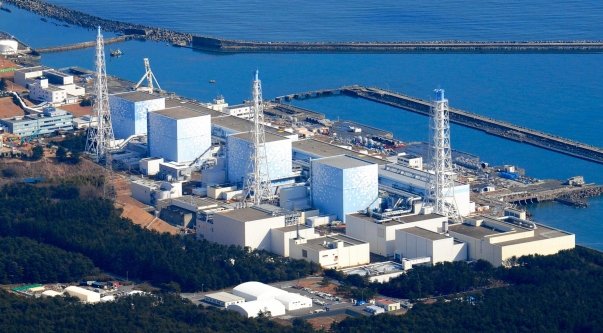
| Shoddy welding maintenance work at the Kashiwazaki-Kariwa nuclear power plant in Niigata Prefecture will push back moves to bring the facility back online by many months, perhaps longer, its operator Tokyo Electric Power Co. acknowledged. The No. 7 reactor has been plagued by problems to do with installing safeguards against terrorist attacks that required further work and a new round of inspections by the Nuclear Regulation Authority, the nation’s nuclear watchdog body. TEPCO announced Dec. 24 that it had uncovered 74 instances of defective welding that is essential to safe operations of the nuclear reactor. The utility said it had been tipped off anonymously on several occasions since March about shoddy welding work done by a subcontractor. In its latest announcement, TEPCO acknowledged the problem and said welding would have to be redone at 1,200 or so sections, a process that will likely take until next summer. Asahi Shimbun 25th Dec 2021 https://www.asahi.com/ajw/articles/14510525 |
Germany steadfast in rejecting nuclear power, aims for 100% renewables
The Germans persist and sign against nuclear power and for renewables. Across the Rhine, the debate pushed by France on nuclear power, presented as “green” energy, is clearly not taking hold. The consensus remains around the bet made by the new government that a direct switch to “all renewable” is possible and will ultimately pay off much more, even if it involves painful decisions. Mediapart 25th Dec 2021 https://www.mediapart.fr/journal/international/251221/les-allemands-persistent-et-signent-contre-le-nucleaire-et-pour-le-renouvelable |
Belgium to shut down all 7 nuclear reactors in 2025
Nuclear: the Belgian government confirms the shutdown in 2025 of the
country’s seven reactors. As planned, Belgium will shut down its two power
plants, but is not closing the door to new generation nuclear power. An
agreement was torn off on Thursday after a night of negotiations between
the partners of the government coalition.
Liberation 23rd Dec 2021
https://www.liberation.fr/environnement/nucleaire/nucleaire-le-gouvernement-belge-confirme-larret-en-2025-des-sept-reacteurs-du-pays-20211223_5HUXXHO645DKBPEHJZUGINMR3M/
Les Echos 23rd Dec 2021
A second great nuclear ice breaker for Russia to keep the Northern Sea Route open
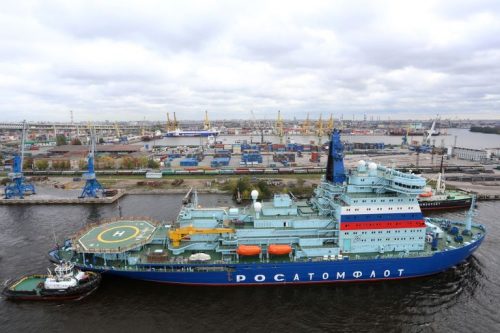
Second giant nuclear icebreaker handed over to Rosatomflot, The “Sibir”
will add to the rapidly growing fleet of powerful icebreakers tasked to
keep the Northern Sea Route open for year-round shipping. The acceptance
certificate was signed at a ceremony onboard the icebreaker at the Baltic
Shipyard in St. Petersburg on December 24, Rosatomflot informs.
Barents Observer 25th Dec 2021
Radiation Free Lakeland joins the call against watering down safety regulations for nuclear fusion reactors.
Radiation Free Lakeland add our voice to the call from Nuclear Free Local Authorities that the already inadequate nuclear regulations are not watered down when it comes to dangerous fusion reactors. Fusion experiments require enormous amounts of heat and energy. The nuclear wastes from the fusion experimental reactors already amounts to 3000 cubic metres of nuclear wastes from the Culham experimental reactor alone. Nuclear Free Local Authorities say the following and RaFL agree that: Public safety must come before profit: Nuclear Free Local Authorities call for ‘no watering down’ of nuclear regulation for fusion reactors. Radiation Free Lakeland 23rd Dec 2021 https://mariannewildart.wordpress.com/2021/12/23/fusion-licensed-to-kill/ |
France’s Environmental Authority requires a list of all the problems encountered in building the Flamanville EPR nuclear reactor
An inventory of incidents on the EPR required according to the
Environmental Authority. In its latest opinion, the Environmental Authority
recommends a listing of all the problems encountered during the
construction of the EPR, as well as an update on the various solutions
provided.
France Bleu 23rd Dec 2021
Science & Avenir 23rd Dec 2021
https://www.sciencesetavenir.fr/nature-environnement/nucleaire-l-autorite-environnementale-reclame-plus-d-informations-sur-flamanville_160059
Le Figaro 23rd Dec 2021
Belgian government to close its nuclear plants by 2025
The Belgian government agreed in principle on Thursday to close its
nuclear power plants by 2025, but left open the possibility of extending
the life of two reactors if it could not otherwise ensure energy supply.
The seven-party coalition has wrestled for months with the topic, with the
Greens adamant that a 2003 law setting out a nuclear exit be respected,
while the French-speaking liberals favoured extending the life of the two
newest reactors. The government had given itself an end-2021 deadline to
settle the matter.
Reuters 23rd Dec 2021
https://www.reuters.com/markets/commodities/belgian-government-reaches-deal-nuclear-exit-media-2021-12-23/
The Belgian government agreed in principle on Thursday to close its
nuclear power plants by 2025, but left open the possibility of extending
the life of two reactors if it could not otherwise ensure energy supply.
Globe and Mail 23rd Dec 2021
Euro News 23rd Dec 2021
https://www.euronews.com/2021/12/23/belgium-to-shut-down-all-seven-of-its-nuclear-reactors-by-2025
BBC 23rd Dec 2021
France short of electricity, as it shuts down 2 nuclear reactors due to safety concerns
In the face of a continent-wide energy
crisis, France has resorted to using fuel oil to meet its power needs in
order to avoid a blackout. Despite the fact that Paris is usually a major
power exporter, it has recently increased electricity imports and even
burned fuel oil to “keep the lights on” in the country.
This energy shortage has arisen as a result of EDF Energy’s decision to shut down two
nuclear power plants due to safety concerns. At its Civaux nuclear power
station, the state-owned energy company discovered flaws in a safety
system’s pipes. It also stated that another plant, which used the same
type of reactors, would be shut down. In the two reactors in Western
France, the problem was discovered near the welds on the pipes of the
safety injection-system circuit.
Brinkwire 22nd Dec 2021
USA is examining its ”nuclear declaratory policy”, while Biden considers how to reduce the role of nuclear weapons.
Nuclear declaratory policy examined as Biden eyes curbing nukes, By Ryohei Takagi, KYODO NEWS , 26 Dec 21, The United States is examining its “declaratory policy” on the use of nuclear arms under President Joe Biden’s commitment to seeking to reduce the role of such weaponry, the State Department’s top arms control official Bonnie Jenkins said recently.
Her remarks came as focus is increasing on whether the Biden administration will declare the “sole purpose” of U.S. nuclear forces is to deter or respond to nuclear attacks in its upcoming nuclear posture review, a guideline for American nuclear policy for the coming years………….
The U.S. nuclear declaratory policy has so far centered on what is known as “strategic ambiguity” regarding the exact circumstances that might lead to a nuclear response, though efforts have been seen in the past to offer clarification.
Former President Barack Obama, who pledged in 2009 to pursue a world free of nuclear weapons, considered adopting a “no first use” policy, which would mean limiting the U.S. use of nuclear weapons only in response to nuclear attacks on itself or allies.
But his administration gave up the idea in the face of objections from some allies including Japan.
The Financial Times reported early this month that U.S. officials have reassured allies in Europe and Asia that Biden, who was vice president during the Obama administration, will not adopt a “no first use” policy. The officials will provide the president with options for a “sole purpose” declaratory policy, the newspaper said.
The sole purpose posture could leave open the possibility of using nuclear weapons first, if it were the only way to preempt an imminent nuclear attack by a country such as North Korea, pundits say.
Still, it could demonstrate a more restrained approach toward the use of U.S. nuclear weapons compared with the 2018 nuclear posture review compiled under Biden’s predecessor Donald Trump. Under the former leader, the possibility remained nuclear weapons could be used not only against nuclear attacks but against “significant” non-nuclear attacks………………………… https://english.kyodonews.net/news/2021/12/3b69a0d35603-nuclear-declaratory-policy-examined-as-biden-eyes-curbing-nukes.html
Iran Simulated Attack On Israel’s Dimona Nuclear Site In Recent Wargames
Iran Simulated Attack On Israel’s Dimona Nuclear Site In Recent Wargames, Iran International, 26 Dec 21, Iran simulated an attack against Israel’s Dimona nuclear reactor during extensive military drills this week, that included launching multiple ballistic missiles.
Fars news agency, an affiliate of Iran’s Revolutionary Guard, published a video on Sunday that shows a mock-up of the Israeli nuclear site as the target of the simulated operation.
The Dimona reactor, officially known as the Shimon Peres Negev Nuclear Research Center, was marked as “WMD production center” in the high-resolution video.
Sixteen ballistic missiles and five suicide drones were launched against the mock target in the operation.
Rhetoric has intensified between Iran and Israel in recent weeks as nuclear talks between Tehran and world powers have stalled in Vienna. Israel has vowed that if Iran’s nuclear program reaches a statge close to production of weapons, it will act regardless of an agreement the United States and other world powers reach with Tehran……………. https://www.iranintl.com/en/202112260336
Iran: The chance for nuclear diplomacy shouldn’t be wasted
Mahmood Monshipouri, PhD. The chance for nuclear diplomacy shouldn’t be wasted, Tehran Times, ,December 26, 2021 – With negotiations over the Iran nuclear deal (also known as the Joint Comprehensive Plan of Actions—JCPOA) being disrupted and delayed for so long, the parties concerned cannot avoid very serious talks any longer. Given the ongoing the US-Russia tensions over Ukraine on the one hand and the US-China tensions over Taiwan on the other, the importance of the negotiations over Iran’s nuclear deal cannot be underestimated. Furthermore, regional cooperation between Iran and its oil-rich neighbors is likely to increase as the prospects for the gradual U.S. withdrawal from the Persian Gulf region seem all but certain.
It is worth noting that the UAE has facilitated selling Iranian oil to China, significantly reducing the risks of regional escalation with Iran. Many sources have recently indicated that a thaw in economic relations between Tehran and Abu Dhabi has already occurred even as U.S. sanctions on Iran continue to remain in place. In light of these new realities, the real question persists: Will the Biden administration stay on the current path of stalemate and trigger further tensions with Iran or will it instead act swiftly enough to avoid the very worst consequences of gamesmanship? A failed nuclear diplomacy could have profound and destabilizing consequences for the region and the rest of the world. Needless to say, such an eventuality must be avoided at all costs. …………………………………….
What is at stake is the global economy and peace. The likely consequences of failed diplomacy—both in the immediate future and over the longer term—include military conflicts, disruption of oil shipments, and an unprecedented rise in regional tensions. Aside from the dangers of military confrontation, which could have grave ramifications, disruption of the world’s most important oil chokepoint, the Strait of Hormuz—through which over 20 million barrels of oil flow per day, or the equivalent of nearly one-fifth of global petroleum consumption—could plunge the global economy into a depression of historic proportion. Increasing regional tensions between Iran and its neighbors and the possibility of Iranian military actions in retaliation to mounting economic and political pressures would have far worse consequences……………………. https://www.tehrantimes.com/news/468480/The-chance-for-nuclear-diplomacy-shouldn-t-be-wasted
European Commission experts call on EU not to label nuclear ‘green’.

Commission experts call on EU not to label nuclear ‘green’, https://euobserver.com/climate/153891, By WESTER VAN GAAL 22 Dec 21
BRUSSELS, Thirteen members of the EU Commission’s Technical Expert Group (TEG) put out a petition on Tuesday (21 December) calling on nuclear energy not to be labelled as ‘green’.
“We recommend that nuclear fission has no place on the EU taxonomy of sustainable activities,” the group, led by Dawn Slevin, a financial expert and core member of the commission’s financial stability TEG, wrote.
Dealing with the “do no significant harm” principle in the taxonomy, they concluded nuclear may damage the environment due to the need to store it in underground bunkers for thousands of years, and “because the risk of a severe nuclear accident cannot be excluded, even in the best commercially available nuclear power plants.”
They also warn against politicisation of the rules. “Proponents of nuclear energy use the taxonomy to put a ‘scientific’ stamp on what is primarily a political position on nuclear fission energy aiming to satisfy the few EU member states that wish to promote the associated technologies,” the petition states.
France is spearheading an alliance of 10 member states that argue that nuclear fission and gas-fired power plants should be included in the taxonomy.
The TEG members point out that France and Finland are currently the only EU countries actively building nuclear facilities.
The Finnish Olkiluoto-3 was meant to start generating power in 2009, followed by the French Flamanville-3 in 2012.
However, both are still not operational, tripling anticipated costs, the group wrote. The group includes Paolo Masoni, a nuclear engineer, and Eric Laes, a post-doctoral researcher specialising in atomic energy at the Technical University of Eindhoven.
Politicised debate
In recent months, the decision on whether to include nuclear and gas in the taxonomy has become politicised.
Last week, EU internal market commissioner Thierry Breton told five European newspapers, including Die Welt, that “it is a lie that the EU can become CO2-neutral without nuclear power.”
French president Emmanuel Macron said last week that France and Germany will try to find a compromise on whether the EU should label nuclear and gas as green investments.
But on Monday, the German Greens, part of the new ruling coalition, came out strongly against nuclear, reiterating their opposition to the inclusion of nuclear in the taxonomy.
“The German government’s stance is that nuclear power is not one of the sustainable forms of energy [that] remains,” environment minister Steffi Lemke told fellow EU environment ministers in Brussels on Monday.
German climate and economics minister Robert Habeck later echoed his colleague on German radio Deutschlandfunk, saying: “I do not think nuclear power is the right technology.”
However, chancellor Olaf Scholz (SPD) did not make such a clear statement at the last EU summit on Friday – and admitted Germany will probably not be able to stop the French push for nuclear.
“France is taking a different path [than Germany]. Other countries do as well,” he said.
“That is why it’s important that you can follow your paths and at the same time stay together across Europe,” he added.
The commission planned to present its decision on nuclear and gas on Wednesday, but this has been postponed until mid-January next year.
It now plans to consult a draft version of the taxonomy with member states before the end of the year or at the start of January 2022 – a process that will be clarified on Wednesday.
The Sustainable Finance Platform, a group of 57 NGOs, scientific and financial experts will also be consulted.
The commission has faced backlash in the past from some of its members, including one of the signatories of the petition, for allowing gas an nuclear to be considered in what was meant to be a science-led exercise.
1 This Month



19 November – Webinar – The Reality of Reprocessing
Time: 11:00 AM Pacific Time (US & Canada) / 2:00 PM Eastern / 7:00 PM UK / 8:00 PM CET
Register for the Zoom Event Here



Shut down the radiation-damaged Heysham nuclear reactors now
To see nuclear-related stories in greater depth and intensity – go to https://nuclearinformation.wordpress.com

Say No to NASA’s Reckless Nuclear Reactor on the Moon
Say No to NASA’s Reckless Nuclear Reactor on the Moon
-
Archives
- November 2026 (74)
- October 2026 (302)
- September 2026 (339)
- August 2026 (330)
- July 2026 (355)
- June 2026 (287)
- May 2026 (306)
- April 2026 (356)
- March 2026 (251)
- February 2026 (267)
- January 2026 (308)
- December 2025 (358)
-
Categories
- 1
- 1 NUCLEAR ISSUES
- business and costs
- climate change
- culture and arts
- ENERGY
- environment
- health
- history
- indigenous issues
- Legal
- marketing of nuclear
- media
- opposition to nuclear
- PERSONAL STORIES
- politics
- politics international
- Religion and ethics
- safety
- secrets,lies and civil liberties
- spinbuster
- technology
- Uranium
- wastes
- weapons and war
- Women
- 2 WORLD
- ACTION
- AFRICA
- Atrocities
- AUSTRALIA
- Christina's notes
- Christina's themes
- culture and arts
- Events
- Fuk 2022
- Fuk 2023
- Fukushima 2017
- Fukushima 2018
- fukushima 2019
- Fukushima 2020
- Fukushima 2021
- general
- global warming
- Humour (God we need it)
- Nuclear
- RARE EARTHS
- Reference
- resources – print
- Resources -audiovicual
- Weekly Newsletter
- World
- World Nuclear
- YouTube
-
RSS
Entries RSS
Comments RSS

