Russia’s secret nuclear waste city – Ozersk, City 40
Russian city hiding chilling Cold War secret from world https://www.9news.com.au/world/ozersk-city-40-secret-russian-city-cold-war-graveyard-of-the-earth/9644dcbb-e94f-44c6-b69e-4e3e4ca96455
By Richard Wood • Senior Journalist Jan 9, 2022 There has been a “slow-motion” disaster unfolding over the past 70 years at one of Russia’s most secretive sites. Ozersk, codenamed City 40, was the birthplace of the former Soviet Union’s nuclear weapons program at the dawn of the Cold War.

On the surface, it was a clean modern city that boasted good housing, spacious parks and high quality schools to attract the country’s top nuclear scientists.And its purpose was seen as so important that Russian authorities effectively hid it from the rest of the country and the world. But while, the work of Ozersk’s army of scientists developing Russia’s plutonium supplies was cloaked in secrecy, its environmental impact proved harder to contain.Today its legacy of radiation pollution has earned Ozersk the title ‘Graveyard of the Earth’.
Building Russia’s nuclear shield
Ozersk’s origins can be traced to the US dropping atomic bombs on the Japanese cities of Hiroshima and Nagasaki in 1945 at the end of World War II.
Alarmed at the terrifying new weapon of mass destruction, Russian leader Josef Stalin ordered his scientists to build a nuclear arsenal to combat the American threat.The Mayak plant deep in the Urals was founded in 1948 to develop essential large scale plutonium supplies for the Soviet atomic bomb. The work needed hundreds of workers.
Ozersk was founded nearby, initially as a sort of shanty town of wooden huts to house the workers. But over ensuing yeas, it grew to become a modern city of 100,000 people, with many of its citizens working at the Mayak plant.
‘Plutopias’

US environmental historian Kate Brown has described Ozersk and its counterpart nuclear cities in the US as “Plutopias”, a merging of the words plutonium and utopia. Professor Brown, who wrote Plutopia: Nuclear Families, Atomic Cities, and the Great Soviet and American Plutonium Disasters, told Nine.com.au that Ozersk residents were the envy of most Russians.
‘When I wrote about plutopia, I mean by that special, limited-access cities exclusively for plutonium plant operators who were well paid and lived comfortably. The people who lived in them were ‘chosen’,” Professor Brown said.”The plutonium cities such as Ozersk provided wonderful opportunities because not only was the housing very cheap and the wages very good, but the schools were good.”
But in Cold War Russia this all came at the price of intrusive security and curbs on personal freedom.Ozersk did not appear on maps and its citizens were struck from the national census.Residents were even forbidden to contact families and friends for up to years.
And for decades, the city was ringed by barbed wire fences and guard posts and entry was strictly controlled.
Lake of Death’
Professor Brown said both the Russians and American governments were prepared to cut corners in their dash to develop an edge in nuclear weapons.
And in 1957 one of the cooling systems at the Mayak plant, near Ozersk, failed, causing one of the tanks that contained the plant’s nuclear waste to overheat and explode.
While there were no casualties from the blast itself, more than 20 million curies of nuclear waste were swept up by the wind and scattered around the nearby countryside.The full effects of the Mayak radiation release and other incidents took years, even decades to become fully apparent, Professor Brown said.

The plutonium disasters were not big, explosive overnight affairs. They were slow-motion disasters that occurred over four decades,” she sai d.Officials from the Mayak plant also ordered the dumping of its waste into nearby lakes and rivers, which flow into the the Arctic Ocean.
Prof Brown said one of the lakes near Mayak has been so heavily contaminated by plutonium that local people have renamed it the ‘Lake of Death’.
‘Cover up’
The scale of the pollution was hushed up by Russian authorities for decades.
“Thanks to exhaustive efforts by the Soviet government and the already secretive nature of the location, for a long time, no one outside of the Ozersk area was even aware that it happened.
“It wasn’t until renegade Soviet scientists exposed the cover-up in the 1970s that scientists started to grasp the extent of the disaster.”
Radioactive spills have also happened at other secret Russian military and industry sites.In August 2019 a brief spike in radioactivity was recorded following a mysterious and deadly explosion at the Russian navy’s testing range in Nyonoksa on the White Sea.The explosion killed two servicemen and five nuclear engineers.
Campaigners expose contamination
Today the Mayak plant now serves the more peaceful purpose of reprocessing spent radioactive fuel.In Ozersk many restrictions have been eased, with residents free to leave when they want.
But the city is still surrounded by thick walls and guard fences, and entry by outsiders is strictly controlled by government officials.And while efforts have been made to clean up the environment, radiation pollution remains a threat to the health of residents.
A recent study showed that Ozersk residents are more than twice as likely to develop lung, liver, and skeletal cancers and far more likely to experience chronic radiation syndrome.Prof Brown says Russian environmental activists still face threats and persecution for exposing the radiation levels.
“They’ve paid a heavy price in terms of prosecution by the state and receiving threats of fines and even jail,” she said. “But they were determined to expose what really was disaster by design.”
Open Democracy busts the spin of nuclear front group ”Young Generation Network”

Why is support for nuclear power noisiest just as its failures become most clear? The UK government and mainstream media agree we need nuclear to avoid the worst climate change. They’re wrong – so why aren’t we hearing that? Open Democracy, Andrew Stirling, Phil Johnstone, 9 January 2022,
At Edinburgh’s Haymarket station, on the route used by COP26 delegates hopping across to Glasgow in November, a large poster displayed a vista from the head of Loch Shiel. In the foreground, a monument to the Jacobite rebellion towers from the spot where Bonnie Prince Charlie raised his standard. From there, the water sweeps back to a rugged line of hills.
This is one of Scotland’s most iconic views, famous for both its history and its role in the Harry Potter films.
On the poster, written in the sky above the loch are the words: “Keep nature natural: more nuclear power means more wild spaces like these.” At the bottom is a hashtag – #NetZeroNeedsNuclear – with no further mention of who might be behind this advert.
But it’s not hard to find a website for this group, which claims to be run by “a team of young, international volunteers made up of engineers, scientists and communicators”, all with the engagingly smiley profile pictures to be expected from citizen activists.
Only when you scroll to the end do you see these activities are ‘sponsored’ by nuclear companies EDF and Urenco. At the bottom, it is explained that Nuclear Needs Net Zero is part of the Young Generation Network (YGN) – “young members of the Nuclear Institute (NI), which is the professional body and learned society for the UK nuclear sector”. The website asserts that the Nuclear4Climate campaign – described as “grassroots” both on the site and in a presentation to an International Atomic Agency conference in 2019 – is in fact “coordinated via regional and national nuclear associations and technical societies”.
Of course, all this is par for the course in the creative world of PR. But there are more substantive grounds why nuclear advocates might wish to avoid too much public scrutiny at the moment. One reality, which can be agreed on from all sides, is that this is by far the worst period in the 70-year history of this ageing industry. So how come it is benefitting from growing and noisy support in mainstream and social media? Why are easily refuted arguments still being deployed to justify new nuclear power alongside renewables in the energy supply mix? And why has the media seized so enthusiastically on a few prominent converts to the nuclear cause?
Nuclear loses out to renewables
At current prices, atomic energy now costs around three times as much as wind or solar power. And that’s before you consider the full expense of waste management, elaborate security, anti-proliferation measures or periodic accidents. For more than a decade, nuclear has been plagued by escalating costs, expanding build times and crashing orders. Trends in recent years are all steeply in the wrong direction.
So the rising clamour of advocacy seems to be in inverse proportion to performance. Whatever view one takes, nuclear power is in a worse position than it’s ever been compared with low-carbon alternatives – and a position that is rapidly declining further.
Among those few countries still pursuing large-scale nuclear new-build programmes, most (like the UK) are either equipped with, or actively chasing, nuclear weapons. But even in the UK (home to one of the proportionally most ambitious nuclear programmes in the world), official data unequivocally shows that renewable energy seriously outpaces nuclear power as a pathway to zero-carbon energy.
Why are easily refuted arguments still being deployed to justify new nuclear power?
In fact, despite misleading suggestions to the contrary by senior figures, background government data has for decades shown that the massive scale of viable UK renewable resources is clearly adequate for all foreseeable needs. Even with storage and flexibility costs included, renewables are available far more rapidly and cost-effectively than nuclear power.
So, for all the breakdancing, it really is a conundrum why persistently bullish government and industry claims on nuclear power remain so seriously under-challenged in the wider debate. It is becoming ever more clear that nuclear plans are diverting attention, money and resources that could be far more effective if used in other ways.
One impact of this continuing official nuclear support is that climate action is being diminished and slowed. As a paper in Nature Energy (which one of us co-authored) showed last year, in worldwide data over the past three decades, the scales of national nuclear programmes do not tend to correlate with generally lower carbon emissions. The building of renewables does.
In fact, this study found “a negative association between the scales of national nuclear and renewables attachments. This suggests nuclear and renewables… tend to crowd each other out.”
The issues are, of course, complex. But this finding supports what the dire performance picture also predicts: that nuclear power diverts resources and attention away from more effective strategies, increasing costs to consumers and taxpayers. So it is even odder that loud voices continue to make naïve calls to ‘do everything’ – that nuclear must on principle be considered ‘part of the mix’ – as if expense, development time, limited resources and diverse preferable alternatives are not all crucial issues…… …. . https://www.opendemocracy.net/en/opendemocracyuk/why-is-support-for-nuclear-power-noisiest-just-as-its-failures-become-most-clear/
Very quietly, NRC plans mass shipments of high level radioactive waste.
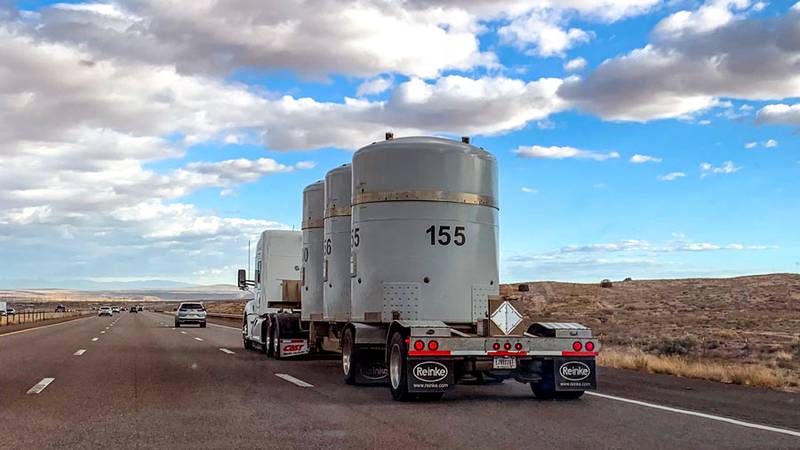
Critics of the proposed licensing are demanding that the Atomic Safety and Licensing Board halt the Holtec licensing because it is illegal.
Plans for Mass Shipments of High-Level Radioactive Waste Quietly Disclosed https://www.counterpunch.org/2022/01/07/plans-for-mass-shipments-of-high-level-radioactive-waste-quietly-disclosed/ BY JOHN LAFORGE
How far is your house or apartment from a major highway, or railroad line? Do you want to play Russian roulette with radioactive waste in transit for 40 years?
Last month US Nuclear Regulatory Commission (NRC) staff quietly reported preparing for tens of thousands of cross-country shipments of high-level radioactive waste from nuclear reactors to the desert Southwest. The oft-disparaged US infrastructure of decrepit of roads, faulty bridges, rickety rails, and rusty barges may not be ready for such an onrush of immensely heavy rad waste casks.
Continue readingAustria ready to take legal action against inclusion of nuclear power in Europe’s ”green taxonomy”
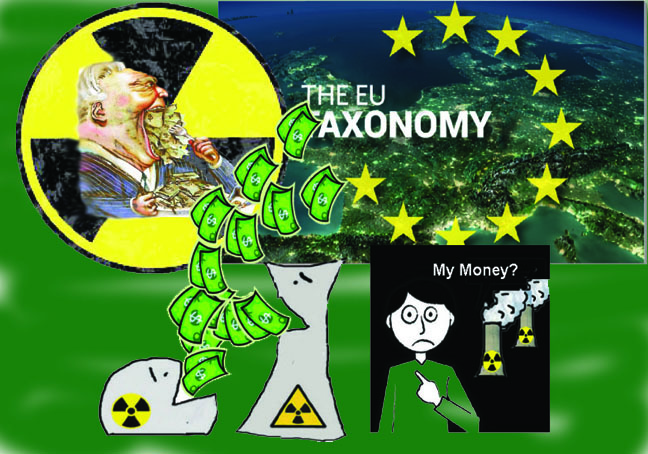
Austria is ready to contest if Europe grants the green label to nuclear and gas. Under pressure from certain European states, the latest version of its “green” label to attract private capital includes gas and nuclear.
Austria, which has banned the atom in its constitution, is negotiating to remove it from this classification and reserves the right “to take legal action” if it does not, confirms diplomat Wolfgang Wagner.
Ouest France 7th Jan 2022
New generation European nuclear power will need investment of 500 billion euros by 2030. Existing plants will require 50 billion.

New generation European nuclear power plants will require an investment of "500 billion [euros] by 2050," said in an interview in the Journal du dimanche (JDD) dated January 9 the European Commissioner for the Internal Market, Thierry Breton , which considers “crucial” to open the green labeling to nuclear power as part of the energy transition.

"Existing nuclear power plants alone will require 50 billion euros of investment by 2030. And 500 billion by 2050 for new generation ones! », Affirms the French commissioner.

European Commission unveiled a green labeling project for nuclear and gas power plants, which aims to facilitate the financing of installations contributing to the fight against climate change..........

Nuclear power is the subject of heated debates between the Twenty-Seven, a dozen countries - France in the lead - actively promoting nuclear power in the face of States very reluctant to the civilian atom, such as Germany or Austria. Le Monde 9th Jan 2022

 https://www.lemonde.fr/economie/article/2022/01/09/nucleaire-nouvelle-generation-l-ue-devra-investir-500-milliards-d-ici-a-2050-estime-thierry-breton_6108727_3234.html
Enormous Antarctic glacier becoming unstable

Boaty McBoatface craft to explore further beneath ‘Doomsday glacier’ than ever before
Glacier the size of the UK contains enough water to raise global sea levels by 65cm
Harry Cockburn, Environment Correspondent,
Antarctica’s enormous Thwaites glacier, AKA the “Doomsday glacier”, is the size of Britain, but is becoming increasingly unstable and poses a major risk to millions of people living on coastlines around the world.
Thwaites contains enough water to directly raise sea levels by 65cm if it collapses, but there are fears it could also spark a chain reaction leading to
even greater sea level rises of several metres. Now, a new research mission has been launched using a fleet of underwater robots, to further investigate the melting ice sheet which is – for now – holding the
glacier back.
Independent 6th Jan 2022
Nuclear Energy Financing Bill – a poisoned chalice for the UK public.
The UK & Ireland Nuclear Free Local Authorities (NFLA) is supporting calls to MPs to reject the Nuclear Energy Financing Bill when it comes back to the House of Commons for its Report Stage reading next Monday (10th January). The Chair of the NFLA Steering Committee, Councillor David
Blackburn, called the bill a ‘poisoned chalice’ for the British public:
“This bill will mean that consumers will ultimately pay the cost of developing any new ultra-expensive nuclear power plants through a surcharge applied to customers’ electricity bills. “Civil nuclear projects are
notorious for being delivered massively above budget and enormously behind time.
Consequently, there are only two main players in the nuclear market, and these have had their financial fingers burned. “The government wants to sweeten the pill by introducing a new method of financing nuclear plants called the Regulated Asset Base. This will mean that customers pay for cost
overruns and delays, and even the cost of abortive projects, whilst the developer and operator reap all of the rewards.”
NFLA 7th Jan 2022
The Nuclear Energy (Financing) Bill aims to provide for a new model for
financing new nuclear power stations in the UK. This briefing covers the
Bill’s progress through Parliament, through second reading and committee
stage.
House of Commons Library 7th Feb 2022
Nuclear weapons states like USA must end the hypocrisy
 |

Simple logic decries the hypocrisy that acknowledges the apocalyptic risk of the very existence of these weapons yet fails to acknowledge the continued pursuit of new and enhanced weapons.
Nuclear weapon states like US must end the hypocrisy https://thehill.com/opinion/national-security/588874-nuclear-weapon-states-like-us-must-end-the-hypocrisyBY ROBERT DODGE, OPINION CONTRIBUTOR — 01/08/22
In an open letter to President Biden over 1,000 physicians, health professionals and concerned citizens have called on the president to take bold action toward the complete elimination of nuclear weapons in anticipation of his administration’s Nuclear Posture Review expected to be released in the next month.
As first responders dealing with the ongoing global COVID-19 pandemic — and recognizing that there is no adequate medical or humanitarian response to nuclear war — they understand the only way to prevent catastrophic consequences is the complete elimination of nuclear weapons.
Their call joins recent initiatives for sensible nuclear policy called for by defense and disarmament experts, U.S. local and state elected officials, and scientists asking the U.S. to take a leadership role in the abolition of nuclear weapons, with immediate steps to defuse the global nuclear tensions that have moved humanity to 100 seconds until midnight, the graphic representation of nuclear Armageddon determined by the Bulletin of Atomic Scientists.
hese immediate steps outlined in the Back from the Brink Coalition include:
- Actively pursuing a verifiable agreement among nuclear-armed states to eliminate their nuclear arsenals
- Renouncing the option of using nuclear weapons first
- Ending the sole, unchecked authority of any U.S. president to launch a nuclear attack
- Taking U.S. nuclear weapons off hair-trigger alert
- Canceling the plan to replace the entire U.S. nuclear arsenal with enhanced weapons
Knowing the science of the climate devastation that would follow even a limited, regional nuclear war, it must be asked under what circumstances any nation is willing to commit collective suicide by launching a nuclear attack? The country, and indeed the world, awaits President Biden‘s Nuclear Posture Review, at which point the president will take ownership of U.S. nuclear policy and our future.
Thus far, little change is noted from the Trump era nuclear and defense policy. The current fiscal year has seen the United States spend over $74 billion on nuclear weapons programs alone. Initial indications are that the Biden defense budget will see this amount increase — at a time when the world struggles to get the entire planet vaccinated against COVID 19 with an estimated global cost of $50 billion according to the Organization for Economic Cooperation and Development.
This recent joint statement by the leaders of the five nuclear-weapon states on the eve of the COVID-postponed NPT Review Conference on “Preventing Nuclear War and Avoiding Arms Races” acknowledged avoidance of war between nuclear-weapon states and the reduction of strategic risks as our foremost responsibilities, while affirming the “Reagan/Gorbachev” principle that a nuclear war cannot be won and must never be fought. They stated that nuclear weapons exist to deter aggression — when in fact they are the most egregious aggressive threat to all of humanity.
The joint statement expresses the importance of arms control and nonproliferation treaties, including compliance with Article VI of the Nuclear Non-Proliferation Treaty (NPT) while — in fact — each nation is aggressively modernizing and growing their nuclear arsenals, spending billions of dollars in the process.
Simple logic decries the hypocrisy that acknowledges the apocalyptic risk of the very existence of these weapons yet fails to acknowledge the continued pursuit of new and enhanced weapons.
What will it take to deter these leaders in their false narrative of why these weapons continue to exist? We must demand bold and immediate action to make their closing statement credible: “We are resolved to pursue constructive dialogue with mutual respect and acknowledgment of each other’s security interests and concerns.”
Their actions alone will demonstrate their commitment to a world without nuclear weapons.
Argentina pressures UK over deployment of nuclear weapons in Malvinas conflict
Argentina pressures UK over deployment of nuclear weapons in Malvinas conflict https://batimes.com.ar/news/argentina/argentina-demands-answers-over-uk-deployment-of-nuclear-weapons-in-malvinas-conflict.phtml
Report reveals British warships carried at least 31 nuclear weapons to South Atlantic following invasion of disputed island in 1982.
Argentina’s government has called on the United Kingdom to provide detailed information about the alleged movement and use of nuclear weapons during the 1982 South Atlantic conflict, after a report revealed that as many as 31 depth charges were sent to sea near the disputed Malvinas (Falkland) Islands during the war.
Last week, the Declassified UK website reported that a number of British warships deployed to the South Atlantic following Argentina’s invasion of the disputed islands were armed with dozens of nuclear depth charges.
According to the report, aircraft carriers HMS Hermes, HMS Invincible and the Royal Fleet Auxiliary ship, Regent, carried 31 nuclear weapons in total to the region’s seas, though no ship encroached upon the “total exclusion zone” around the islands imposed by the UK government at the time.
The article, written by veteran defence and security journalist and author Richard Norton-Taylor, said that new files released to the National Archives revealed that the presence of nuclear weapons had “caused panic among officials in London” who were concerned by the potential damage the “nuclear depth bombs” could cause if they were “lost or damaged.”
‘Measures’
Responding to the revelations, Argentina’s Foreign Ministry warned this week that if it did not receive answers from the British authorities, it would take “measures” and “raise this situation before the competent international bodies.”
Despite the UK’s reluctance to provide detailed information on the matter, our country has on several occasions expressed its concern before different international fora about the possibility, confirmed in 2003, that the UK had introduced nuclear weapons into the South Atlantic,” said a statement from the Palacio de San Martín.
Raising the possibility that Britain may have breached the 1967 Treaty of Tlatelolco (which established a nuclear free zone in Latin America and its seas), the Foreign Ministry said that it is essential to “ensure that there are no nuclear weapons anywhere in the South Atlantic, either in sunken ships, on the seabed or under any other form or circumstance.
Argentina and the UK maintain a sovereignty dispute over the islands, over which they fought a war in 1982 that ended 74 days later with the surrender of Argentina, then ruled by a military dictatorship. During the war, 648 Argentines and 255 British died.
Russia’s nuclear submarine construction reaches a post-Soviet high.
Russia’s Nuclear Submarine Construction Reaches Post-Soviet High https://www.themoscowtimes.com/2022/01/07/russias-nuclear-submarine-construction-reaches-post-soviet-high-a75991 By The Barents Observer, Jan. 7, 2022
Russia’s Sevmash shipyard, the only one in the country that builds nuclear-powered submarines, saw a record year in 2021. Three subs were handed over to the Navy, two were put on water and construction started on another two.
Not since the late days of the Soviet Union have the workers at the building and repair yard Severodvinsk been busier than now. Moscow’s modernization program for its Navy over the last decade stands in sharp contrast to considerable neglect in the years after the disintegration of the Soviet Union.
2022 marks 10 years since the Russian Navy’s first fourth generation multi-purpose submarine, the Severodvinsk, successfully launched a Kalibr cruise missile from a submerged position in the White Sea. While it took nearly 20 years to complete construction of the Severodvinsk, later Yasen-M class vessels are being built faster.
Construction of the Novosibirsk, which was commissioned for the Navy in late December 2021, took 8 years. Similar construction times are also being seen for the new ballistic missile submarines of the Borei-A class in the wake of the Yury Dolgoruky, which took 16 years from being laid down in 1996 to commissioning for the Northern Fleet in 2012. The Knyaz Oleg, handed over to the Pacific Fleet just before Christmas last year took 7 years to build.
As of Jan. 1, 2022, 13 nuclear-powered submarines are at different stages of construction at the Sevmash yard and are all expected to be delivered to the navy before 2027.
While high-profile publicity is given to laying-down ceremonies, launching and commissioning of ballistic missile subs and multi-purpose subs, far less is known about special-purpose subs. The Barents Observer has on several occasions reported about the Belgord, the world’s longest submarine built on a modified Oscar-II class hull. The submarine will be the carrier of the new Poseidon nuclear-powered, nuclear-armed drones and likely be based with the Pacific Fleet later this year.
Two other carriers of the Poseidon drone are currently under construction at the Sevmash yard, the Khabarovsk and Ulyanovsk.
Other unconfirmed submarines that might be in the pipeline for construction in years to come are two more Borei-A class vessels, two more Poseidon carriers and one or two special-purpose mini-submarine to sail for GUGI, the Defense Ministry’s Main Directorate for Deep Sea Research.
Design work for fifth generation nuclear-powered submarines, referred to as the Husky class, is said to be underway, but so far no contracts have been signed.
In addition to new submarines, the Sevmash yard is busy working on repair and modernization of the large nuclear-powered battle cruiser Admiral Nakhimov. Originally commissioned into the Soviet Navy in 1988, the warship was rarely deployed to sea and has been in Severodvinsk for the last 23 years. If no further delays are announced, the battlecruiser will be re-commissioned for the Northern Fleet in 2023.
What ratepayers should know about the Plant Vogtle expansion
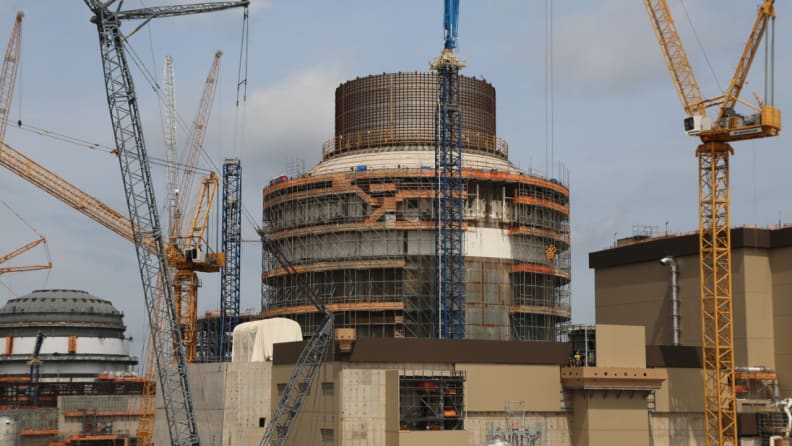
What ratepayers should know about the Plant Vogtle expansion January 6, 2022 By: Mary Landers , The Current
If you feel like you keep reading the same story about the expansion of Plant Vogtle, the only new nuclear power under construction in the U.S., you’re not exactly wrong.
Reactors No. 3 and 4 at Vogtle on the banks of the Savannah River near Waynesboro are more than five years overdue and $14 billion over budget. And that’s just a broad outline.
For more details, and for a take that’s sympathetic to consumers bearing these costs, read Georgia Conservation Voters‘ 32-page report “Ratepayer Robbery — The True Cost of Plant Vogtle.”
It includes timelines, data on expenses, and records of key decisions. The report reminds Georgia Power residential customers that they’ve been paying for Vogtle financing on their monthly bills for 10 years while industrial customers are exempt. It also spells out how Vogtle’s cost overruns actually increase Georgia Power’s profit. Footnotes link to news articles, and government and nonprofit documents.
“Plant Vogtle is a monumental example of failed leadership, oversight and lack of forethought,” said GCV Executive Director Brionté McCorkle. “What started out as an overpriced $14 billion project has ballooned into more than $30 billion, and that doesn’t take into account the future costs of completing the units.”
The report highlights the role of the Georgia Public Service Commission, an elected five-member panel, in moving the project forward. In a go/no go review of the project in 2017 after building contractor Westinghouse went bankrupt, expert witnesses and the PSC staff cautioned it wasn’t cost effective to continue. But the PSC voted to continue construction…………..
McCorkle is not against finishing the project, she said, but she is concerned about who will pay to finish it, residential ratepayers or Georgia Power shareholders.
“The responsible thing to do is to reassess the whole situation and reassess who’s picking up the tab for this and why customers are on the hook for paying for this energy,” she said.
Georgia Power, which owns 45.7% of the Vogtle expansion project, “has earned over $6 billion just from the delays of their own project,” the report states.
“They’re profiting, they’re making sky-high profits, while individual ratepayers are struggling to keep the lights on throughout a pandemic, people are losing family members,” McCorkle said. “And the squeeze is being felt everywhere. And our commissioners have a responsibility to do something about that.”
“Ratepayer Robbery — The True Cost of Plant Vogtle” concludes with a list of suggested actions. They are:
- The Georgia Public Service Commission should disallow Georgia Power from placing all of
these nuclear construction costs onto our bills and share rate increases more fully between
customer classes. - Voters should hold Commissioners accountable by ejecting them from their seats and electing pro-consumer candidates that commit to transparency.
- The Georgia State legislature should fully fund an independent Consumer Utility Counsel (CUC).
- The Georgia State legislature should create an independent study commission to document lessons learned.Read the entire report at https://www.scribd.com/document/550992905/Ratepayer-Robbery-The-True-Cost-of-Plant-Vogtle
- https://www.gpb.org/news/2022/01/06/what-ratepayers-should-know-about-the-plant-vogtle-expansion?fbclid=IwAR3zdntXhPLdXrqewGAw26Bt1FwsNXQSuLWXhN2cEvA3zJEyZyN5EZzgmyA
BBC Report on Closure of Hunterston B Fails to Mention that All the Nuclear Crapola will Come to Cumbria
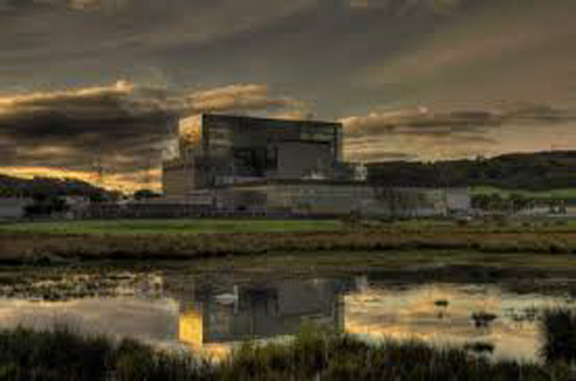
BBC Report on Closure of Hunterston B Fails to Mention that All the Nuclear Crapola will Come to Cumbria. Radiation Free Lakeland. JANUARY 8, 2022 BY MARIANNEWILDART Radiation Free Lakeland have long argued for the closure of the cracked nuclear plants that EDF are running long past their planned lifetimes. Yesterday one of these cancer factories, Hunterston B was closed down because of the dangerously cracked graphite cores. The BBC report below toots a trumpet about the electricity produced by Hunterston but makes no mention at all of the 46 years of radioactive emissions and the fact that the resulting nuclear wastes (low, intermediate and high level wastes) and “cleaned up” infrastructure ( heading to landfill, incineration, recycled radioactive scrap metal, Drigg and proposed Deep Nuclear Dump ) will be dangerous to all life on the biosphere for so many generations to come. Yes lets toot a trumpet for the closure of a dangerous nuclear plant but the massive radioactive footprint of Hunterston will live on long after the limited use of electricity!
Hunterston B nuclear power plant closes down after 46 years
By Kevin Keane
BBC Scotland’s energy correspondent 7th Jan 2022 The Hunterston B nuclear power plant in North Ayrshire has been shut down for the final time after generating electricity for 46 years.
The plant’s original 25-year lifespan was extended by more than two decades.
But the final closure was brought forward after cracks were found in the graphite bricks which make up the reactor cores.
A small group of former workers gathered at the power station at midday to see the final shut down.
The site, owned by EDF Energy, will now begin a three-year process of defueling with the spent nuclear fuel sent to Sellafield for reprocessing. After that, the site will be handed over to the Nuclear Decommissioning Authority…………
The cracks were first spotted in two graphite bricks in the reactor in 2014.
By 2018, a total of 350 bricks had been affected although the Office for Nuclear Regulation subsequently gave permission to operate at much greater numbers.
Each of the two reactor cores is made up of 3,000 bricks which form vertical channels for nuclear fuel and control rods to slide in and out.
The concern was that too many cracks, combined with a rare seismic event, could affect the structural integrity of the core and prevent it being shut down in an emergency.
The Hunterston A plant, which is already closed, comprised two 180MWe Magnox reactors.
It began operation in 1964. Reactor 2 shut down in December 1989 and Reactor 1 in March 1990.
Construction of Hunterston B began in 1968 and reactors 3 and 4 began operating in February 1976 and March 1977……
Reactor 3, a 490MWe advanced gas-cooled reactor (AGR), was permanently closed down on 26 November.
Hunterston Reactor 4 – also a 490MWe AGR – has now shut down……….
Similar cracks are expected to develop there and at several other similar sites in England. In December, EDF Energy announced that Torness would close two years earlier than planned in 2028 because of the issue. https://mariannewildart.wordpress.com/2022/01/08/bbc-report-on-closure-of-hunterston-fails-to-mention-that-all-the-nuclear-crapola-will-come-to-cumbria/
Hunterston nuclear power workers need a just transition to sustainable work. No more subsidies to the nuclear industry.
Workers are key to a just transition at the Hunterston nuclear plant,
which retires today, according to the Scottish Greens.
The nuclear sectorbhas used the occasion to call for more subsidies, despite the UK Government
already subsidising the sector and proposing to charge bill payers upfront
to pay for nuclear power stations that haven’t even been built yet, like
at Hinkley Point.
Commenting, Scottish Greens energy spokesperson Mark
Ruskell said: “Respect and thanks must go to the workers at Hunterston
who have kept our lights on over the decades and those who will continue
the important work of de-commissioning. “These communities deserve a just
transition away from an energy source that is expensive and neither clean
nor sustainable. The vast subsidies involved would be better spent
investing in modern renewable energy solutions that provide a long-term
future for workers and our planet.”
Scottish Greens 7th Jan 2021
https://greens.scot/news/greens-workers-key-to-hunterston-transition
What’s going on at Michigan’s nuclear power plants? A troublesome past, and present.
FIRE REPORTED AT CRUMBLING MICHIGAN NUCLEAR POWER PLANT, WHAT IS WRONG WITH MICHIGAN’S NUCLEAR PLANTS? https://futurism.com/the-byte/fire-michigan-nuclear
byABBY LEE HOOD 9 Dec 22,
What’s going on with Michigan’s nuclear power plants? Yesterday, local newspaper conglomerate MLive reported that a fire was detected at the Donald C. Cook Nuclear Plant in Berrien County, MI.
MLive reports that the “potential fire” was detected Thursday morning, complete with an alert from the United States Nuclear Regulatory Commission, though in the end no actual fire was found. And that’s extremely lucky, because MLive reports that the fire protection system for the vault where the fire was detected is currently out of service.
Add that to a local radio news outlet’s report last year that the nuclear facility had deactivated all its warning sirens in favor of mobile alerts, and the incident is a perfect illustration of the United States’ dilapidated nuclear infrastructure.
Some workers have died in gruesome ways at the Cook nuclear plant over the years, which has racked up fines and even briefly shut down entirely in 1997 for grave safety concerns.
Dig a little deeper and other nuclear incidents surface in the same state. Last year, Downtown Publications reported that Fermi 2, a nuclear station located in Newport, MI, suffered the longest nuclear refueling and maintenance outage in 2020, lasting from March until August — and its predecessor, Fermi 1, suffered a partial core meltdown back in the 1960s.
Nuclear power remains a tempting stopgap as the world trundles toward renewables, but in practice it might not actually be the most effective energy solution. The 2011 Fukushima disaster in Japan showed that even with modern safety precautions, events can still spin out of control. And we don’t have solid plans for containing radioactive waste, which stays toxic for hundreds of thousands of years. Uranium pollutes groundwater, and new plants costs a fortune.
In the face of all that, you’d at least expect currently operating plants to be on the top of their game, but the situation in Michigan sounds anything but.
Will we come up with truly effective strategies before another nuclear disaster? Only time will tell.
European citizens divided over nuclear energy

European citizens divided over nuclear energy – What Greeks believe, https://greekcitytimes.com/2022/01/07/european-citizens-nuclear-energy/A “tie” prevails in the European public opinion for the production of energy through nuclear power plants, as recorded by the latest relevant Eurobarometer survey.
The differences, however, are large from country to country, with the weight of “NO” prevailing in the EU’s largest population, Germany, where 69% are against this form of energy.
It is also striking that in France, where about 70% of energy is produced in individual plants, the disapproval rate is quite high at 45%.
This number is particularly important if one takes into account that at this time the French government, with the personal mobilisation of President Emmanuel Macron, seeks to classify nuclear energy in “environmentally friendly” technologies.
This issue has provoked several reactions, both from some countries and from political forces, with the European Greens declaring a few days ago that they are considering appealing to the European Court of Justice against the Commission for its proposal.
Austrian Environment Minister Leonore Gewessler had hinted at something similar, with experts in European law questioning whether such an appeal could be justified.
Overall in Europe and with a sample of around 27,000 respondents the acceptance and rejection rates were exactly the same, with 46%.
3% had no opinion and 5% did not answer.
Opinions on solar (92%) and wind energy (87%) are overwhelmingly positive.
The countries with the highest percentages of negative opinion after Germany and Austria (66%) included Greece and Luxembourg.
Citizens are divided in Belgium, Denmark, Spain and Portugal, where YES or NO does not prevail.
High levels of support were recorded where nuclear power is already being used – the Czech Republic with 79%, Bulgaria with 69%, Poland with 60%, as well as in Finland where a new nuclear reactor has recently started operating. The survey also recorded slightly higher acceptance rates among men surveyed than women.
1 This Month



19 November – Webinar – The Reality of Reprocessing
Time: 11:00 AM Pacific Time (US & Canada) / 2:00 PM Eastern / 7:00 PM UK / 8:00 PM CET
Register for the Zoom Event Here



Shut down the radiation-damaged Heysham nuclear reactors now
To see nuclear-related stories in greater depth and intensity – go to https://nuclearinformation.wordpress.com

Say No to NASA’s Reckless Nuclear Reactor on the Moon
Say No to NASA’s Reckless Nuclear Reactor on the Moon
-
Archives
- November 2026 (74)
- October 2026 (302)
- September 2026 (339)
- August 2026 (330)
- July 2026 (355)
- June 2026 (287)
- May 2026 (306)
- April 2026 (356)
- March 2026 (251)
- February 2026 (267)
- January 2026 (308)
- December 2025 (358)
-
Categories
- 1
- 1 NUCLEAR ISSUES
- business and costs
- climate change
- culture and arts
- ENERGY
- environment
- health
- history
- indigenous issues
- Legal
- marketing of nuclear
- media
- opposition to nuclear
- PERSONAL STORIES
- politics
- politics international
- Religion and ethics
- safety
- secrets,lies and civil liberties
- spinbuster
- technology
- Uranium
- wastes
- weapons and war
- Women
- 2 WORLD
- ACTION
- AFRICA
- Atrocities
- AUSTRALIA
- Christina's notes
- Christina's themes
- culture and arts
- Events
- Fuk 2022
- Fuk 2023
- Fukushima 2017
- Fukushima 2018
- fukushima 2019
- Fukushima 2020
- Fukushima 2021
- general
- global warming
- Humour (God we need it)
- Nuclear
- RARE EARTHS
- Reference
- resources – print
- Resources -audiovicual
- Weekly Newsletter
- World
- World Nuclear
- YouTube
-
RSS
Entries RSS
Comments RSS

