Commission for Independent Research and Information on Radioactivity (CRIIRAD) wants transparency on the safety of EPR nuclear reactor design.
Safety defect of the Taishan 1 EPR reactor, CRIIRAD asks the authorities to draw all the consequences on the other EPRs including the one under construction in Flamanville.
According to information sent to CRIIRAD by a whistleblower from the nuclear industry, a generic problem could jeopardize the safety of reactors in the EPR sector
The serious malfunctions at the level of the EPR reactor n°1 of the Taishan power plant (China) – revealed in June 2021 and having led to its early shutdown on July 30 – would be partly linked to a design problem of the EPR tank.
The problems linked to the design of the EPR vessel in terms of hydraulics have been known to manufacturers since at least the end of the 2000s (model tests). The poor distribution of the primary liquid in the vessel would generate high levels of vibration of the nuclear fuel assemblies. These vibrations would have been observed as soon as Taishan 1 was commissioned in 2018.
The vibrations at the level of the reactor core would be the cause of the degradation of the sheaths of the nuclear fuel rods, thus causing leaks of radioactive rare gases, but also of radioactive isotopes of iodine and cesium. They would also have weakened the retaining grids of certain assemblies.
These leaks were noted by operators as early as October 2020 and have steadily worsened over the weeks. Given the risks this represents for workers, residents and nuclear safety, CRIIRAD believes that the Taishan 1 reactor should have been shut down well before July 30.
The damage to the nuclear fuel of the Taishan 1 reactor would be considerable. The whistleblower told CRIIRAD that 70 pencils are damaged belonging to about thirty different assemblies. Many retaining springs broke.
What about the French and Chinese Nuclear Safety Authorities? What do the French and Chinese Nuclear Safety Authorities know? CRIIRAD requests clarification and full transparency in an email sent to the French ASN on November 27, 2021: http://www.criirad.org/actualites/dos...

This more than worrying situation must absolutely be assessed and the results must be made public: nuclear safety and the protection of populations are at stake.
Japan to join with NuScam, Bill Gates’ TerraPower, to develop plutonium fast reactors and small nuclear reactors
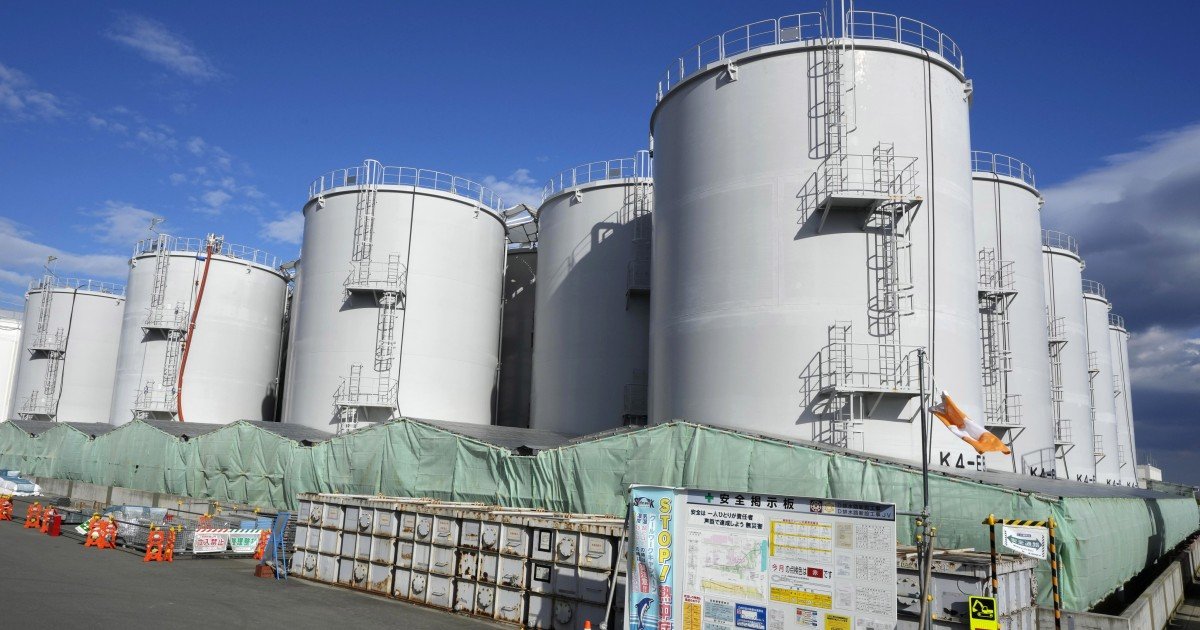
there is considerable skepticism of nuclear energy in Japan, and critics are concerned that the government is moving ahead with alliances with the United States to create new technologies while there are so many unanswered questions about safety
Next-Gen Nuclear Technology – US’ Ambitious Nuclear Power Pact With Tokyo Could Fuel Japanese Industry For Decades, BySakshi Tiwari, Eurasia Times, January 14, 2022 ”………………… (Japan) is set to give nuclear technology an all-new shot……………… Collaboration with scientists and companies in the United States will be a key component in the development of future nuclear energy technology
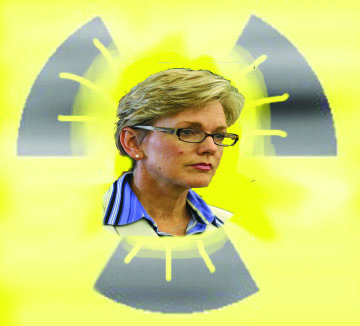
Japan’s Minister of Industry Koichi Hagiuda had a virtual meeting with US Energy Secretary Jennifer Granholm on January 6 during which they agreed to cooperate in the development of plutonium-burning fast reactors and advanced energy plants based on small modular reactors (SMRs).
Hagiuda told Granholm that Tokyo will encourage more local energy companies to join an international program to test fast reactors and small modular reactors, or SMRs, developed by US companies such as NuScale Power LLC and others.
The meeting, Hagiuda’s first since taking office last year, took place at a time when Japan is stepping up its efforts to develop advanced nuclear power technologies.
The Japanese government intends to promote domestic enterprises that participate in international tests incorporating such technology as part of its national energy plan. The United States and France are among the other international participants in the initiative…………………………..
in a noteworthy development that could now be seen as a premise for this new technology development, the Japanese government made it clear in its Sixth Strategic Energy Plan, released in October that it intends to move on from the events in northeast Japan………………..
In 2018, Japan and the United States had signed a memorandum of understanding to “advance the two countries’ worldwide leadership role” in civil nuclear energy.
“The Japan Atomic Energy Agency [JAEA] and Mitsubishi Heavy Industries are cooperating with US nuclear power start-up TerraPower simply because they have the required skills and knowledge on fast reactors,” says Tomoko Murakami, manager of the nuclear energy group at the Institute of Energy Economics Japan.
In the first stage of the alliance, Tokyo would spend 900 million yen ($7.8 million) on improving the AtheNa sodium experimental plant in Ibaraki prefecture for fast reactor development. The facility operated by Japan Atomic Energy Agency (JAEA) is already in operation, and an MoU on technological cooperation with TerraPower is expected to be inked by the end of January, SCMP reported.
In 2018, Japan and the United States had signed a memorandum of understanding to “advance the two countries’ worldwide leadership role” in civil nuclear energy.
“The Japan Atomic Energy Agency [JAEA] and Mitsubishi Heavy Industries are cooperating with US nuclear power start-up TerraPower simply because they have the required skills and knowledge on fast reactors,” says Tomoko Murakami, manager of the nuclear energy group at the Institute of Energy Economics Japan.
The system is meant to extract heat from a reactor core using liquid sodium to generate electricity. The facility will also be used in the cooperative development of a next-generation fast reactor with the United States, while work is also underway at another location, Joyo, to study the impact of neutrons on fuels and other equipment using sodium as a coolant……………………

With American experience in the technology and two of its companies deeply invested in it, Japan has a natural partner to cooperate with. Terrapower is a start-up, which is rigorously working on SMR technology and is partially funded by the American billionaire and philanthropist Bill Gates.
Another US giant working on this advanced next-generation technology is NuScale Power which has partnered with the US government on SMR development for third countries………….
Nonetheless, there is considerable skepticism of nuclear energy in Japan, and critics are concerned that the government is moving ahead with alliances with the United States to create new technologies while there are so many unanswered questions about safety, according to the SCMP.
“All the media coverage has become very positive about these new developments and the technology alliance with the US, but we must remember that at the moment fast reactor technology exists only on paper and there are no guarantees that it will be a success,” Hajime Matsukubo, secretary-general of the Tokyo-based Citizens’ Nuclear Information Centre (CNIC) was quoted as saying.

“Japan has already spent 1 trillion yen [US$8.7 billion] on fast reactor research and another 1 trillion yen on decommissioning the experimental Monju reactor, to say nothing of what is being spent on all the work at Fukushima and decommissioning all the other reactors around the country. So it’s ridiculous to spend even more on nuclear technology that so many people do not want and do not trust,” he added.
The billions spent on nuclear power, according to CNIC, would have been far better used in establishing a local renewable sector that could have tapped into geothermal, wind, wave, solar, and other sources — and would have been the envy of the world.
It also warns that due to Japan’s unstable geology, a replay of the Fukushima accident – or a situation far worse –always remains a possibility……
UK’s Advanced Gas Cooled (AGRs) reactors should be shut, as they are vulnerable to cracking

“The AGRs have already had a good run operating way beyond their intende 30-year lifecycle, but the fact is that as the reactors age so does the integrity of their graphite cores which moderate the nuclear reaction.
| EDF case for continued AGR reactor operations ‘cracking up’, says NFLA. The early closure of the final reactor at Hunterston B Nuclear Power Station last Friday (7 January) signalled yet another step towards the long-overdue demise of the outdated Advanced Gas Cooled (AGRs) reactors operated by EDF Energy, a subsidiary of French state owned EdF (Électricité de France), across the UK. After being shut down for much of 2019, EDF hoped to continue operations at Hunterston B until 2023 but increasing instances of cracks in the graphite cores of the reactor brought forward closure plans by a year. The problem of cracks in the graphite cores which compromises safety has long been an issue of concern to the Nuclear Free Local Authorities (NFLA). Councillor Blackburn said “The AGRs have already had a good run operating way beyond their intende 30-year lifecycle, but the fact is that as the reactors age so does the integrity of their graphite cores which moderate the nuclear reaction. Although EDF plans to close the last AGR in 2028, this is way too long and the timescale for closure needs to be brought forward in the interests of plant and public safety NFLA 12th Jan 2022 https://www.nuclearpolicy.info/news/edf-case-for-continued-agr-reactor-operations-cracking-up-says-nfla/ |
Nuclear: economically unsustainable, inherently dangerous and absolutely unfeasible as a solution to climate change

Nuclear: economically unsustainable, inherently dangerous and absolutely unfeasible as a solution to climate change.
A demolishing letter against those who postulate nuclear energy as part of the solution to the challenge
of climate change. The letter is signed by former top-level nuclear safety councils and regulatory authorities in France, Germany, the United Kingdom and the United States.
For nuclear power to contribute in a relevant way to the generation of energy on a global scale, the signatories maintain, it would take up to more than 10,000 new reactors, something that is “unsustainable from a financial point of view.”
Furthermore, nuclear power is still “subject to too many unresolved technical and safety problems” and
does not respond to the urgency of the challenge we face (climate change), given the construction times of the plants.
Energias Renovables 12th Jan 2022
Greenpeace France calls for a halt to Flamanville EPR nuclear project, to assess viability of EPR reactors.

EDF announced this morning that the start-up of the Flamanville EPR, which has been under construction for 15 years, has been postponed by several months, to mid-2023. The cost of this project, already multiplied by 6, increases again.
This umpteenth slippage of EPR technology questions the positioning of certain presidential candidates who promote it irresponsibly and disconnected from the facts.
Greenpeace France is calling for a moratorium on the work of the Flamanville EPR, in order to conduct an
independent assessment of the viability of EPR nuclear reactors. The incident that led to the shutdown of the world’s first EPR in Taishan,China, nearly 6 months ago, remains unresolved to this day. Beyond the
setbacks of construction sites, the EPR technology therefore proves to be faulty even in operation.
Greenpeace France 12th Jan 2022
A fifth French nuclear reactor affected by corrosion in safety system

Nuclear: a reactor at the Penly power plant also affected by a corrosion problem. This problem on a safety system has already been detected on four other EDF reactors currently shut down.
Nuclear: a reactor at the Penly power plant also affected by a corrosion problem. This problem on a safety system has already been detected on four other EDF reactors currently shut down. A nuclear reactor at the Penly power plant (Seine-Maritime) is also affected by a corrosion problem on a safety system already detected or suspected on four other EDF reactors currently shut down, AFP told on Thursday. Institute for Radiation Protection and Nuclear Safety (IRSN).
Le Figaro 13th Jan 2021
Why joint US-South Korean research on plutonium separation raises nuclear proliferation danger
Why joint US-South Korean research on plutonium separation raises nuclear
proliferation danger by Frank N. von Hippel. South Korea, like the United
States, has long relied on nuclear power as a major source of electric
power.
As a result, it has amassed large stores of spent nuclear fuel and,
as in the United States, has experienced political pushback from
populations around proposed central sites for the spent fuel. South Korea
also has a history of interest in nuclear weapons to deter North Korean
attack.
Bulletin of Atomic Scientists 13th Jan 2022
Why joint US-South Korean research on plutonium separation raises nuclear proliferation danger
Drop in EDF’s 2022 production target due to nuclear outages because of cracks

EDF has cut its 2022 nuclear production target by almost 10% to 300-330 TWh following outages extensions at five of its 56 nuclear reactors (7.3 GW). Previously, the French utility aimed to generate 330-360 TWh of atomic output this year.
The firm attributed the reduced production figure to outage extensions of up to nine months at its Civaux 1,2, Chooz 1,2 (1.5 GW each) and Penly 1 (1.3 GW) units due to ongoing checks on the pipes of their safety injection system (SIS) circuit, it said in a statement late on Thursday.
Last month, the firm unexpectedly shut down both its Chooz reactors for inspections following the discovery of cracks close to welding on the pipes at the Civaux plant. EDF said that preventive checks at Penly 1 revealed “similar defects on the SIS circuit”.
Montel News 14th Jan 2022
https://www.montelnews.com/news/1292773/edf-cuts-2022-nuclear-output-target-by-10-amid-outages
‘Nuclear obsession’: Tory bill to let firms charge customers to build plants
‘Nuclear obsession’: Tory bill to let firms charge customers to build plants https://www.thenational.scot/news/19837771.nuclear-obsession-tory-bill-let-firms-charge-customers-build-plants/?fbclid=IwAR2qOsgM6f-vP8Y1Ieh4N2fAPD-00KK5j2I8Megxd7BEfa0hlLs-FmBI2ss
Gregor Young, 14 Jan 22, ONLY independence will rid Scotland of Westminster’s nuclear obsession ahead of a bill that will allow energy companies to increase consumer bills to build nuclear plants, the SNP have warned.
The Tories’ Nuclear Energy (Financing) Bill, which received its third reading in the House of Commons yesterday, would allow energy companies to pass the cost of a future nuclear power station to their current consumers.
The bill comes amidst a Tory-made cost-of-living crisis as energy bills and food prices continue to soar, after a £1000 cut to Universal Credit, and ahead of a regressive National Insurance hike.
The SNP Scottish Government has made it clear that it is committed to opposing new nuclear power plants and prioritising renewable and low carbon sources of energy, with Scotland producing nearly all of its electricity from renewable sources.
SNP energy spokesperson Alan Brown MP said: “Scotland has made it clear time and again that we do not want nuclear power stations – yet we will foot the bill for them anyway as the Tory government hammer on with their nuclear obsession.
“It is madness that during a cost of living crisis, the Tories are pushing through a bill that could see energy bill consumers forced to pay for another Tory vanity project.
“We do not need nuclear energy to decarbonise and there are better, and cheaper, ways to produce energy. The experts have made this clear.
“The only way for Scotland to escape the Tories’ costly nuclear obsession is through independence.”
Germany’s admirable record in promoting renewable energy, as it leaves nuclear behind.

The nuclear shenanigans aren’t enough to take away Germany’s crown as a climate-forward country. The politics that sped up the nuclear phaseout also created room for a renewables boom. Starting with the Renewable Energy Sources Act in 2000, Germany’s energy policy, known as energiewende, created some of the most generous subsidies for solar power. ………..
Germany moved ahead with a plan to shut off nearly 50 per cent of its nuclear power plants, with the rest scheduled to close by the end of 2022. Some asked how a climate-forward country could lay waste to a source of zero-carbon power, [zero carbon? not so] especially when there’s a shortage of it. Others
pointed out that Germany’s renewables investments are for naught if it has to fill up the nuclear quota using dirty coal. Outrageous, right?
Not so fast, says Nikos Tsafos, an energy and climate analyst at the Center for Strategic and International Studies. “It’s very easy to solve climate change if I’m not politically constrained.” Any sensible climate plan
requires that clean energy replaces dirty sources quickly, while at the same time efficiency measures cut the demand for energy overall.
That, in theory, would result in a smooth decline in emissions as laid out in scientific models. Reality, however, is anything but smooth. The transition will inevitably be shaped by human particularities.
The nuclear shenanigans aren’t enough to take away Germany’s crown as a climate-forward country. The politics that sped up the nuclear phaseout also created room for a renewables boom. Starting with the Renewable Energy Sources Act in 2000, Germany’s energy policy, known as energiewende, created some of the most generous subsidies for solar power. These came in the form of guaranteed prices (or feed-in tariffs) for generating solar power. German taxpayers paid billions of euros to support a new technology. The demand created giant solar companies, including many in China, that progressively made the technology cheaper (with additional support in the form of Chinese subsidies) and thus more accessible to the rest of the world.
Financial Post 11th Jan 2022
The environmental impact of emissions from space launches: a comprehensive review
The environmental impact of emissions from space launches: A comprehensive review https://www.sciencedirect.com/science/article/abs/pii/S0959652620302560Author links open overlay panelJ.A.DallasabS.RavalbcJ.P.Alvarez GaitandS.SaydamabA.G.Dempsterae
a Australian Centre for Space Engineering Research, UNSW, Sydney, Australia
bSchool of Minerals and Energy Resources Engineering, UNSW, Sydney, Australia
cAustralian Centre for Sustainable Mining Practices, UNSW, Sydney, Australia
d School of Civil and Environmental Engineering, UNSW, Sydney, AustraliaeSchool of Electrical Engineering and Telecommunications, UNSW, Sydney, Australia
28 January 2020.
Highlights
•The environmental impact of space launches is becoming increasingly significant.•
Stratospheric ozone depletion is a key environmental concern for space launches.•
Environmental trade-offs exist between propellant types.•
Further study is required into the cumulative impact of launches.
Abstract
With the increasing accessibility of commercial space flight, the environmental impacts of space launches will become increasingly significant in the coming years. Here, for the first time, a review is presented of the environmental impacts of space launches, specifically of emissions from commonly used solid and liquid rocket propellants. While there are a number of environmental impacts resulting from the launch of space vehicles, the depletion of stratospheric ozone is the most studied and most immediately concerning. Solid rocket motors are the subject of most of the environmental studies on rocket launches, while the now more commonly used liquid rocket propellants are underrepresented in the literature. The limited studies of emissions from rocket engines using liquid propellent reveal that while they do result in stratospheric ozone loss, solid rocket motors are responsible for orders of magnitude greater loss. The comparison of commonly used propellants highlights the environmental trade-offs that must be made when selecting a launch system. This review highlights the need for further study of the cumulative impacts that frequent space launches have on all areas of the environment, including global climate, ecosystem toxicity, and human toxicity, and with consideration given to all commonly used propellants, to ensure that the impacts are well characterised and well understood before the number of launches greatly increases.
Biden is urged to eliminate land-based nuclear missiles, as US policy is revised.
 | |||
Biden Urged to Eliminate Land-Based Nuclear Missiles as US Policy Is Revised, https://truthout.org/articles/biden-urged-to-eliminate-land-based-nuclear-missiles-as-us-policy-is-revised/?eType=EmailBlastContent&eId=e59d913f-a733-43f1-8c81-c99670e89de9Mike Ludwig, Truthout,
As the Biden administration considers changes to Trump-era nuclear policy, 60 national and regional organizations released a statement this week calling for the elimination of 400 land-based intercontinental ballistic missiles (ICBMs) that are “now armed and on hair-trigger alert in the United States.”
“Intercontinental ballistic missiles are uniquely dangerous, greatly increasing the chances that a false alarm or miscalculation will result in nuclear war,” the statement reads. “There is no more important step the United States could take to reduce the chances of a global nuclear holocaust than to eliminate its ICBMs.”
Progressives, scientists and some Democrats in Congress are also pushing President Joe Biden, who has pledged to reduce U.S. reliance on nuclear weapons in its defense strategy, to adopt a “no first use” policy and declare that the U.S. will never be the first to launch a nuclear attack. Taking such a stance would strengthen the U.S. position in global nonproliferation talks, advocates say.
The White House is slowly pursuing such talks with other nuclear-armed governments including Russia, the United Kingdom and France, which recently issued a joint statement declaring that “nuclear war cannot be won and must never be fought.” Pakistan and India, two regional rivals armed with nuclear weapons, issued statements calling the joint statement a positive development in international arms control.
A “no first use” or “sole purpose” policy, advocates say, would also be consistent with the Democratic Party platform and Biden himself, who has said that nuclear weapons should only be used to deter nuclear attack. The Trump administration went in the opposite direction with its 2018 Nuclear Posture Review, which says that deterring a nuclear attack is not the “sole purpose” of nuclear weapons and nuclear war could be used to deter “non-nuclear” attacks and achieve “U.S. objectives” if deterrence fails.
The Biden administration is working on a new Nuclear Posture Review, which could be completed early this year, according to Politico. The administration would not comment on internal deliberations for the review, but unnamed officials told Politico it is unlikely to include deep cuts to nuclear weapons spending as the U.S. works to overhaul and modernize its vast nuclear arsenal.
Federal spending on nuclear forces is projected to reach $634 billion over the next decade, a 28 percent increase over 2019 projections, according to the Congressional Budget Office. Advocates for arms control said Biden should have — and still could — put the most controversial nuclear weapons projects approved under former President Donald Trump on pause until the new posture review is completed.
Writing for Defense One, Tom Collins, the policy director at the peace group Ploughshares, argues that Biden must act fast to rein in a Pentagon bureaucracy intent on keeping money flowing to the nuclear war machine, or his own policy will end up looking a lot like Trump’s:
The good news is that President Biden knows more about nuclear policy than any commander-in-chief in recent history. If Biden makes this a priority, there is every reason to think that he will approve new policies that will reduce the risk of nuclear war and make the nation and world safer.
Unfortunately, the president has left these crucial issues to officials who are not committed to his vision. A key strategy document — called the Nuclear Posture Review — has been drafted by an entrenched Pentagon bureaucracy that apparently wants to keep core elements of the Trump agenda intact, including new nuclear weapons and more ways to use them.
Biden is under pressure from conservative war hawks in Congress and the Pentagon to avoid cuts to new nuclear weapons programs approved under Trump, as Russia and China are thought to be bolstering their own arsenals. These proposed weapons systems are different than the existing ICBMs, which require billions of tax dollars for upkeep and sit ready to launch in silos located on the U.S. mainland.
The U.S. maintains a vast nuclear arsenal that can strike from the air, sea and land. The statement issued this week reports that 400 ICBM missile silos — relics of the arms race with the Soviet Union that first raised fears that global nuclear war that would lay waste of all of human civilization — are scattered across Colorado, Montana, Nebraska, North Dakota and Wyoming.
Citing a former Defense Secretary William Perry, the 60 peace and civil society groups issued the “call to eliminate ICBMs” on Wednesday. Perry has explained that the ICBMs are the weapons most likely to spark a catastrophic nuclear war. If enemy missiles were launched at the U.S., the president would only have about 30 minutes to decide whether to retaliate before the ICBMs are destroyed, a terrible decision that could result in “nuclear winter,” according to the statement.
“Rather than being any kind of deterrent, ICBMs are the opposite — a foreseeable catalyst for nuclear attack. ICBMs certainly waste billions of dollars, but what makes them unique is the threat that they pose to all of humanity,” the statement reads.
Even if the ICBMs facilities were closed, the U.S. would still retain a devastating nuclear arsenal that could respond to attacks across the world. Missiles carried on submarines and aircraft could kill millions of people. However, they are not subject to the same “use them or lose them” dilemma as the ICBMs.
“Until now, the public discussion has been almost entirely limited to the narrow question of whether to build a new ICBM system or stick with the existing Minuteman III missiles for decades longer,” said Norman Solomon, national director of RootsAction, one of the groups that signed the statement. “That’s like arguing over whether to refurbish the deck chairs on the nuclear Titanic. Both options retain the same unique dangers of nuclear war that ICBMs involve.”
It is time for Israel to come clean about its nuclear weapons.
It is time for Israel to come clean about its nuclear weapons, America The Jesuit Review, Drew Christiansen, January 14, 2022 Yet again, Covid-19 has led to the postponement of the 10th Nonproliferation Treaty (NPT) Review Conference, which was originally scheduled for 2020, the 50th anniversary of the treaty going into effect. The meeting of the state parties to the treaty is now delayed until this coming August. The treaty is the most important in the badly shredded network of arms control agreements that were drawn up in the Cold War and post-Cold War eras to prevent nuclear war and to set the world on the path to abolition of nuclear weapons.
The NPT is the one treaty to which the historic, or legacy, nuclear powers (China, France, the Russian Federation, the United Kingdom and the United States) all belong. All have opposed the 2017 Treaty on the Prohibition of Nuclear Weapons that explicitly aims for the abolition of nuclear weapons. But non-nuclear states largely support the TPNW, as they believe the legacy states have abused the NPT to defend their own interests and, particularly in the last decade, to evade their own commitments to nuclear disarmament.
Non-nuclear states also perceive legacy states as playing favorites with certain nations outside the NPT, including Israel. In today’s nuclear landscape, however, Israel can no longer justify its evasiveness about its nuclear status, and its aggressive policies toward potential nuclear states among its regional rivals have made it a destabilizing force, constraining progress toward disarmament. It is time for Israel to come clean about its nuclear capacity and to join the international system of arms control.
The new realities of a multipolar nuclear world
While the TPNW establishes a duty for member states to try to universalize the treaty, the NPT has no such requirement. Its members seem content to sustain the status quo with a divide between the legacy nuclear states and non-nuclear states, with four nuclear-armed states outside the treaty (Pakistan, India and North Korea, in addition to Israel). In recent years, however, the bipolar balance of power between the United States and the former Soviet Union that sustained the treaty, with lesser powers in subordinate roles, has evolved dramatically.
This means that in its 52nd year, the NPT, with its current membership, is less useful as a framework for nuclear disarmament than it was only a decade ago. New realities include the fact that China is vying to become a nuclear superpower on par with the United States and Russia by modernizing its nuclear arsenal. Also, North Korea has become a powerful rogue state, developing a variety of weapons and delivery systems, challenging the United States, and threatening America’s East Asian allies of South Korea and Japan.
As for Israel, it remains the sole (though undeclared) possessor of nuclear weapons in the Middle East and seems determined to remain so. Securing its nuclear superiority has become the driving force of its strategic policy. After bombing nuclear reactors in Iraq and Syria, it has reportedly conducted assassinations of nuclear scientists and sabotage operations, and it encouraged the Trump administration’s withdrawal from the 2015 international agreement designed to deny Iran the potential for developing its own bomb. Senior Israeli aides now regard those moves as a mistake because the Iranian program has shown surprising resilience. The situation in Iran is also a reminder that in a multipolar nuclear world, with major actors outside the NPT, that treaty fails to provide the nuclear peace it once promised……………….. https://www.americamagazine.org/politics-society/2022/01/14/israel-npt-nuclear-nonproliferation-treaty-242184
Claim that EDF contract for nuclear emergency generators was rigged.
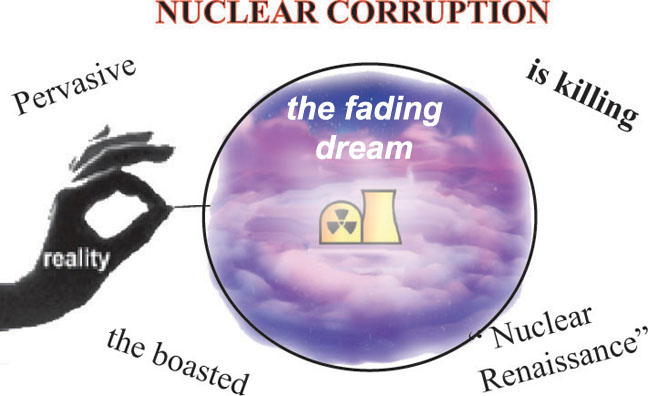
The contract for nuclear emergency generators was rigged, according to a former EDF top executive. This is what he told the judge of the financial investigations division who is investigating the matter. GRAND SLAM for EDF!
Not only do the emergency generators installed last year on some of the nuclear power plants catch fire when they are started, and not only has the national group had to compensate its supplier, Westinghouse, in secret, to the tune of 110 million euros (“Le Canard”, 8/12 and 15/12), but the contract is also said to have been rigged!
Be that as it may, this is what a former member of EDF’s procurement staff told the French National Financial Division in a statement. The latter is investigating the complaint for favouritism filed by an unsuccessful bidder, which has been joined by Greenpeace. Contacted on Monday, EDF’s management had not responded at the time the “Le Canard” went to press.
Le Canard Enchaine 22nd Dec 2021
Norway Activists Protest After Docking Of US Nuclear Submarine In Tromso: Reports
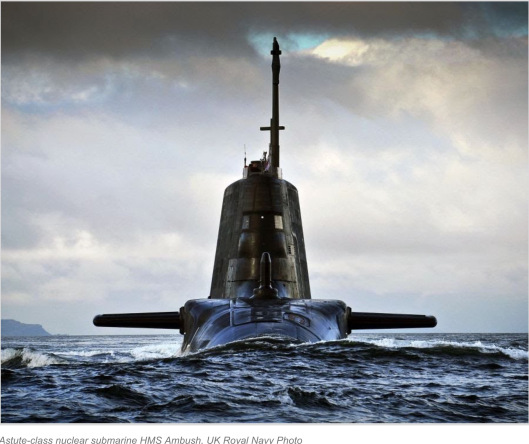
Norway Activists Protest After Docking Of US Nuclear Submarine In Tromso: Reports, https://www.republicworld.com/world-news/us-news/norway-activists-protest-after-docking-of-us-nuclear-submarine-in-tromso-reports-articleshow.html
Protest intensified in Norway as an American nuclear submarine has docked in Tromso– a city in northern Norway, news agency Sputnik reported.
By Ajeet Kumar 12 Jan 22, Protest intensified in Norway as an American nuclear submarine has docked in Tromso, a city in northern Norway. According to a report by news agency Sputnik, the US nuclear submarine was docked on January 11, the second time in a year. The media report said that the submarine was loaded with arms and missiles and tasked with patrolling the northern waters. As the news of an American submarine docked in Tromso hit headlines of several national media outlets, hundreds of protesters marched towards the guarded gates of the Tonsnes harbour. The protestors termed the recent move of America “a destructive game between superpowers.”
US nuclear submarine arrival in Norway sparks strong reactions
Hakon Elvenes, who represents the protestors, asserted the United States should not dock its submarine in Norway and added the act has a long “symbolic effect”. “This represents a dangerous mix of military and civilian purposes. It is a mixture that may be in conflict with international law, and which hasn’t been assessed well enough by the Norwegian authorities,” Sputnik quoted Elvenes as saying to the national broadcaster NRK. “There is always a risk that something can happen to any nuclear reactor, we have plenty of examples of that. And if something happens first, the consequences will be great,” added Hakon Elvenes.
Tension between two countries soar
Meanwhile, Alberta Tennoe Bekkhus, who represent, the youth wing of the Reds Party argued that the recent action by the US will contribute to unnecessary provocations and further conflict. “The fact that we invite American forces in the way we do makes us more insecure. It contributes to unnecessary provocations and further conflict,” Sputnik quoted Bekkrus as saying. “The way NATO is doing now, I believe it makes the world more insecure. This puts Norway in a more dangerous situation,” she added.
It is worth mentioning that the tension between US and Scandinavian countries has soared in the past few years due to action taken by the US Naval forces. Earlier in November last year, US Defense Secretary Lloyd Austin met with Norway’s new Defense Minister, Odd Roger Enoksen, in his first visit to the US since taking the position. According to AP, both said the commitment to NATO and the challenges posed by Russia would be topics high on the agenda during their meeting. The duo also discussed the recent activities of the US Navy in northern Norway and added the matter would be solved with discussions.
1 This Month



19 November – Webinar – The Reality of Reprocessing
Time: 11:00 AM Pacific Time (US & Canada) / 2:00 PM Eastern / 7:00 PM UK / 8:00 PM CET
Register for the Zoom Event Here



Shut down the radiation-damaged Heysham nuclear reactors now
To see nuclear-related stories in greater depth and intensity – go to https://nuclearinformation.wordpress.com

Say No to NASA’s Reckless Nuclear Reactor on the Moon
Say No to NASA’s Reckless Nuclear Reactor on the Moon
-
Archives
- November 2026 (74)
- October 2026 (302)
- September 2026 (339)
- August 2026 (330)
- July 2026 (355)
- June 2026 (287)
- May 2026 (306)
- April 2026 (356)
- March 2026 (251)
- February 2026 (267)
- January 2026 (308)
- December 2025 (358)
-
Categories
- 1
- 1 NUCLEAR ISSUES
- business and costs
- climate change
- culture and arts
- ENERGY
- environment
- health
- history
- indigenous issues
- Legal
- marketing of nuclear
- media
- opposition to nuclear
- PERSONAL STORIES
- politics
- politics international
- Religion and ethics
- safety
- secrets,lies and civil liberties
- spinbuster
- technology
- Uranium
- wastes
- weapons and war
- Women
- 2 WORLD
- ACTION
- AFRICA
- Atrocities
- AUSTRALIA
- Christina's notes
- Christina's themes
- culture and arts
- Events
- Fuk 2022
- Fuk 2023
- Fukushima 2017
- Fukushima 2018
- fukushima 2019
- Fukushima 2020
- Fukushima 2021
- general
- global warming
- Humour (God we need it)
- Nuclear
- RARE EARTHS
- Reference
- resources – print
- Resources -audiovicual
- Weekly Newsletter
- World
- World Nuclear
- YouTube
-
RSS
Entries RSS
Comments RSS

