EDF’s costly EPR nuclear reactor failures – in France, UK, China
Emmanuel Macron hammers EDF as Britain’s nuclear energy future hangs in
the balance. The energy giant is our last hope in the push for big new
reactors. But the French president has handed it an almighty financial
headache.
Macron ordered the company to sell more electricity at knock-down
prices to its competitors, in order to keep a lid on soaring energy bills.
For Macron, it makes complete political sense. Three months out from an
election, he is keen to temper voter anger over energy costs, which, as in
the UK, have been pushed higher by surging gas prices.
EDF is 84 per cent owned by the French state and has to bow to its will — even when the
government’s intervention is “painful and defies good economic
sense”, as newspaper Le Monde put it. EDF calculated that Macron’s
demand would cost it €8.4 billion (£7 billion).
The company had no choice but to scrap its profit guidance for the year and warned investors
that it may need to seek more capital. Shares in EDF, listed in Paris,
plunged. In a leaked memo, chief executive Jean-Bernard Levy claimed that
Macron’s demand was a “real shock”. “It is going to weigh very
heavily on our results,” he added.
Trade union members at EDF have called
for a strike this week in protest at the president’s order.
Macron’sedict could not have come at a worse time for EDF, which was already facing
huge demands on its capital. On the same day that Kwarteng toured Hinkley,
the company cut its expected output of nuclear power this year by 8 per
cent, after warning that five faulty reactors in France would have to stay
offline while being serviced for longer than expected. This pushed the
total number of EDF reactors currently offline to nine.
EDF is midway through a long, slow upgrade of France’s fleet of 56 ageing nuclear
reactors; this project could cost it at least €50 billion. And, earlier
this month, it pushed back the start date and nudged up the expected cost
for its new reactor at Flamanville in France; the project’s cost has
quadrupled from initial estimates in 2004.
Flamanville’s overruns havetheir parallels at Hinkley Point, which is also years late and over budget.
It uses the same type of European pressurised water reactor (EPR) as
Hinkley, too. Other EPRs designed by EDF have run into problems: the
much-delayed Olkiluoto nuclear power plant in Finland is now finally
looking to start up this year; and Taishan — in Guangdong province in
China — has been offline since July because of a fault.
Taishan was supposed to be EDF’s “proof of principle for the EPR design”, said
Paul Dorfman, associate fellow in the science policy research unit at
Sussex University. “But that has not been the case. To shut down the
reactor is hugely expensive in terms of power, reputation, and in potential
safety … The EPR reactor has failed miserably in terms of cost overruns
everywhere that it’s been built.”
EDF remains confident that Hinkley
will be completed by 2026. Five and a half years into construction, it is
now at the halfway point. When operational, it will supply 7 per cent of
the UK’s electricity. About half of the £23 billion earmarked for
Hinkley has already been spent, and the remainder is expected to come from
EDF’s €27.5 billion cash pile. Hinkley, in other words, should be
completed despite the company’s travails. The outlook for EDF’s
Sizewell B in Suffolk, the next big nuclear project in the queue, is less
clear.
Times 23rd Jan 2022
https://www.thetimes.co.uk/article/emmanuel-macron-hits-nuclear-button-edf-hinkley-point-cpcvtccn3
Nuclear weapons standout calls for US commitment to UN treaty
Nuclear weapons standout calls for US commitment to UN treaty, By CHRIS LARABEEStaff Writer, Greenfield REcorderPublished: 1/23/2022 11:05:01 AM
GREENFIELD — On the one-year anniversary of the United Nations Treaty on the Prohibition of Nuclear Weapons becoming international law, a group gathered on the Greenfield Common and in Northampton to celebrate the treaty and to raise awareness that the United States has not signed on.
“Fifty nations have signed on. … How can we face the world?” asked Greenfield resident Patricia Greene. “We’re here to say not all of us agree.”
Greene and several other residents called out the United States’ “pugnacious” stance toward many other countries and said America should focus on peace.
“I feel that the main thing our country needs to do is look at peaceful relations,” Greene said. “We’re so divided internally, maybe heal that over, too.”
The anniversary of the treaty comes days before a state Public Safety and Homeland Security hearing Jan. 26 on Bill H.3688, which was filed by Rep. Lindsay Sabadosa, D-Northampton, and would establish an 11-member commission to investigate and report on what measures may be necessary and appropriate to protect Massachusetts residents from the threat posed by nuclear weapons and to contribute toward the total elimination of these weapons from all countries.
According to the United Nations’ website, 59 countries have ratified the treaty, which recognizes the threat of nuclear weapons and requires their elimination. Among the countries that have yet to even sign the treaty include many world powers, such as the United States, China, Japan and the majority of the European Union and England.
Pat Hynes, who sits on the Traprock Center for Peace and Justice’s board of directors, said the 11-member commission, if it was created, would find many people in Massachusetts with similar sentiments to the group standing on the frozen Greenfield Common.
“They would certainly find a very high majority opposing nuclear weapons,” Hynes said. “I hope the committee and State House have the courage to pass the bill.”
Hynes recalled a quote from World War II Army Gen. Omar Bradley that the world contains “nuclear giants and ethical infants.” She added it’s been disappointing that nuclear weapons continue to be produced, even after the horrors of bombing Hiroshima and Nagasaki and the existential threat of the Cold War.
“I’d say it’s tragic, especially with all the other crises happening,” Hynes said, highlighting climate change and the COVID-19 pandemic as current threats. “We don’t need to add to them.”………………..
https://www.recorder.com/Nuclear-weapons-standout-calls-for-U-S-commitment-to-U-N-treaty-44696552
France’s Nuclear Safety Authority considers abandoning the reprocessing of nuclear waste.
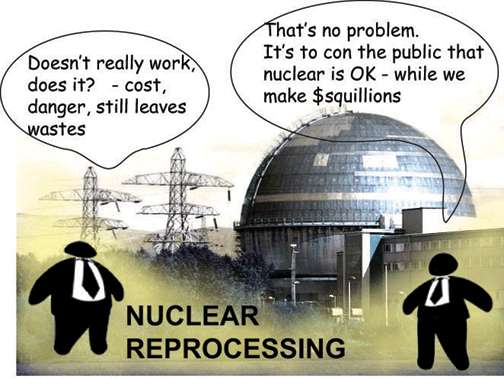
ASN is considering abandoning the reprocessing of nuclear waste, https://reporterre.net/L-ASN-envisage-l-abandon-du-retraitement-des-dechets-nucleaires The director of the Nuclear Safety Authority ( ASN ) described on January 19 the “ fragilities of the fuel cycle and the nuclear fleet ”. It opened up the possibility of eventually stopping the reprocessing of spent fuel, a particularity of French industry.
For the first time, to the knowledge of Reporterre , a nuclear manager in France is openly considering the end of the reprocessing of spent fuel at La Hague (Manche). On Wednesday January 19, during his back-to-school video press conference, Bernard Doroszczuk, Director of the Nuclear Safety Authority ( ASN ), said that this option had to be considered: ” It will be necessary either to provide for the renovation of the installations current if reprocessing is continued ; or anticipate the implementation of alternative solutions for the management of spent fuel, which should be available by 2040, if reprocessing is stopped. »
For the first time, to the knowledge of Reporterre , a nuclear manager in France is openly considering the end of the reprocessing of spent fuel at La Hague (Manche). On Wednesday January 19, during his back-to-school video press conference, Bernard Doroszczuk, Director of the Nuclear Safety Authority ( ASN ), said that this option had to be considered: ” It will be necessary either to provide for the renovation of the installations current if reprocessing is continued ; or anticipate the implementation of alternative solutions for the management of spent fuel, which should be available by 2040, if reprocessing is stopped. »
spent fuel, it has a whole series. Each poses a difficult management problem: plutonium (we can’t manage to use all the stock), minor actinides, reprocessed uranium, spent Mox, etc. By evoking the end of reprocessing, Mr. Doroszczuk therefore attacks a sacred cow of French nuclearists.
Why this new proposal ? Because, explained the director of the ASN , ” a series of events weakens the entire chain of the fuel cycle ” and several of its links are clogged:
• the pool at the La Hague plant (Manche), in which the spent fuel is currently stored, is reaching saturation point ;
• Orano’s Melox plant, in which part of the plutonium is recycled to make fuel, says Mox, works very poorly: “ We have too many breakdowns. Last year, we produced between 50 and 60 tonnes while the order book shows 120 tonnes per year , ” Régis Faure, spokesperson for the Orano Melox site , told Usine Nouvelle . Thus, the plutonium accumulates at the entrance, while at the exit, explained Mr. Doroszczuk, ” these problems that Orano has not mastered lead to the disposal of waste that contains more plutonium than expected. » ;
• finally, revealed the director of the ASN , “ the faster-than-expected corrosion of the evaporators at the Orano La Hague plant weakens the reprocessing capacities ” .
It therefore recommends anticipating the crisis, and either choosing to continue the reprocessing or to stop it. In both cases, this will involve very substantial investments, which we must think about now.
“ A nuclear accident is always possible ”
More generally, the ASN director underlined “ the absolute need to maintain margins so that there is no competition between production needs and safety decisions ” . Indeed, the nuclear situation is very tense, both currently, with ten reactors shut down, and in the future: it is not at all certain that the reactors will be able to operate beyond fifty years, indicated Mr Doroszczuk. And the sector lacks skills, both to manage the current fleet and its future dismantling and waste management: it would be necessary to “ train 4,000 engineers per year ” . We are far from it.The director of the ASN of course wants to stay out of the political debate. But it is clear that the “ messages ” he formulated on January 19 should be carefully listened to and understood by all presidential candidates who believe that nuclear power is the magic answer to climate change. He also repeated throughout his speech the requirement of security. ” A nuclear accident is always possible , ” he said.
13 wards in Cumbria recommended against their will, for UK’s nuclear waste dump
| This week our readers got talking about Allerdale potentially being the host to an underground disposal of nuclear waste. Having a Geological Disposal Facility (GDF) that would store higher level radioactive waste underground is hailed to be the safest and most secure method of disposal. The Allerdale GDF Working Group recommended a Search Area for consideration in 2021 comprised of 13 electoral wards: Aspatria; Broughton St Bridgets; Dalton; Ellen & Gilcrux; Flimby; Harrington & Salterbeck; Maryport North; Maryport South; Moorclose & Moss Bay; Seaton & Northside; St John’s; St Michael’s and Stainburn & Clifton. Cumbrian Lad added: “It is a very strange process which allows one individual, Andy Ross of GenR8 North, to volunteer the part of Allerdale in which he doesn’t live to be the burial site for the UK’s nuclear waste. The 13 wards who have been volunteered against their will, have no say in the matter until 15-20 years of investigations have taken place.” Carlisle News and Star 23rd Jan 2022 https://www.newsandstar.co.uk/news/19865839.nuclear-waste-disposal-allerdale-readers-talking/ |
The production, servicing and berthing of nuclear-powered submarines in or near population centres present unacceptable health risks.

Following revelations in freedom of information requests to Declassified UK records show 97,430 stable iodine tablets were pre-issued to people in Plymouth, Portland and Barrow-in-Furness from 2016-21 to protect them from radiation.
Kate Hudson, general secretary of the Campaign for Nuclear Disarmament (CND), said: “The production, servicing and berthing of nuclear-powered submarines in or near population centres present unacceptable health risks.
“Safeguarding our communities cannot be achieved through limited distribution of pills,” she said, adding that the vessels, some of which carry nuclear warheads, “need to be disarmed and decommissioned.” As Tim Deere-Jones has pointed out “I’m amazed at the way Governments and Regulators allow the “nuclear authorities” to mainstream on publicly highlighting the dangers of one or two radionuclides such as Iodine and Caesium and discuss them endlessly while avoiding the additional issues of the other 50/60 + nuclides that would be released by a meltdown or a LOCA or any other significant event.”
Radiation Free Lakeland 22nd Jan 2022
Electricite de France has become a nightmare for investors, and a danger to regional energy security.
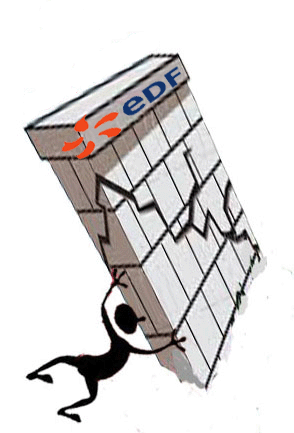
The long decline of Electricite de France SA isn’t only a political
crisis for the government in Paris, it’s a growing economic threat for
much of Europe
The giant nuclear operator, once a source of national pride
and reliable low-cost electricity, has become a nightmare for investors and
an increasingly wobbly pillar of regional energy security.
Technical problems at some of its largest reactors mean EDF is set to produce the
smallest amount of atomic power in three decades, slashing France’s
exports to neighboring countries. It’s a one-two punch for a region
that’s already reeling from record natural gas prices, and shows little
sign of abating.
Instead of helping EDF deal with its problems, the French
government is extracting billions of dollars from the company to shield
households from high energy costs. “The generic issue with EDF’s
reactors is leading to an unprecedented decline in production, which starts
being worrying,” said Nicolas Goldberg, a senior manager in charge of
energy at Colombus Consulting in Paris. “We’re going to have high
prices on the European market for a while. Everybody’s going to pay
more.”
Bloomberg 23rd Jan 2022
Hypocritical Scolding Won’t Stop a Russian War on Ukraine
 | |||
Peace cannot be found if the U.S. relies on the self-righteous assertion of principles that our government refuses to apply to itself.January 21, 2022 , Portside, Mitchell Zimmerman OTHERWORDS.ORG
As Moscow signals its apparent readiness for war over Ukraine, the U.S. government seems determined to ignore Russia’s not-so-ridiculous concerns over the military alliances of neighboring states and the prospect of nuclear weapons on its borders.
Should Americans worry about our country inserting itself into another war?
Ukraine is far away, and Russia isn’t directly threatening us. Nonetheless, the U.S. intends to arm and support Ukraine if it comes to war, and there can be no certainty whether a proxy war might escalate. Nuclear powers need to tread carefully around each other.
Let’s look at the U.S. response to Russia’s insistence that Ukraine not join NATO, the U.S.-dominated military alliance that Russia wants to keep out of its immediate periphery.
Washington rejects that demand. The U.S. representative at talks with Russia recently declared it to be among America’s “bedrock principles” that there be “no tolerance of overt or tacit spheres of influence, no restrictions on the sovereign right of nations to choose their own alliances.”
Contrary to these noble statements, America has long deemed it a bedrock principle that the United States has a sphere of influence: all of North and South America!………………
After the U.S. tried to overthrow its government, Cuba chose to ally with the Soviet Union and let the Russians put nuclear missiles in Cuba. The U.S. response was to bring the world to the brink of nuclear war rather than accept the Soviets’ move into our sphere of influence.
So much for “bedrock principles.”
The U.S. now proclaims it a “bedrock principle” that Ukraine, at least, can make an alliance with whomever they want, Russian sensibilities be damned. But suppose Mexico decided to join the Collective Security Treaty Organization, the Russian-sponsored counterpart to NATO?
Can anyone imagine the U.S. would quietly acknowledge Mexico’s right to do so?……………….
It is not unreasonable for the Russians not to want a hostile alliance — and potentially nuclear weapons — along their border. But Russia’s key interests do not reasonably include dismembering Ukraine.
Meanwhile the U.S. is not crazy for wanting Ukraine to be free to connect economically and culturally with Western Europe. But it’s not a key interest, requiring a confrontation between nuclear-armed states, to insist that Ukraine has the “right” to join NATO.
Peace cannot be found if the U.S. relies on the self-righteous assertion of principles that our government refuses to apply to itself. https://portside.org/2022-01-21/hypocritical-scolding-wont-stop-russian-war-ukraine
Design flaws in Flamanville EPR nuclear reactor vessel, and attempts to solve this
The EPR reactor vessel is not designed like the previous vessels, and the
water does not follow the flow movements observed on conventional reactors.
EDF engineers therefore had a piece of metal (deflector) installed in each
tank bottom to redirect the water correctly. But that would be
insufficient.
What solutions? The most logical solution would therefore be
to change this deflector “with the key to a work of development as
complex as ruinous, notes the weekly. And no one is sure, given the limited
space available in an EPR tank, that this repair is technically
possible”.
The other solution envisaged would therefore be to “reinforce
the fuel assemblies, reinforce the protective grids so that the blades
resist the flows”, mentioned Julien Collet.
EDF will present its plan to us
in February, so we can see if their proposals can solve the problem.
Another possibility mentioned at the end of the article: “To limit the
pressures of the water, it would be a question of running the EPR at only
60% of its power, Flamanville would then go from a capacity of 1,650
megawatts less than 1,000 and would end up, for a record bill of 13 billion
euros, less efficient than the reactors built 50 years ago.”
La Presse de la Manche 20th Jan 2022
Call for Japan to join nuclear ban treaty on first anniversary
Call for Japan to join nuclear ban treaty on 1st anniversary, https://www.asahi.com/ajw/articles/14528449
THE ASAHI SHIMBUN, January 23, 2022 Supporters of a U.N. treaty banning nuclear weapons gathered Jan. 22 in Hiroshima and Nagasaki to mark the first anniversary of the pact going into force, stepping up their calls on Japan to sign it.
Standing in front of the symbolic Atomic Bomb Dome in Hiroshima, 10 or so members of a Hiroshima-based group calling for the abolition of nuclear weapons hoisted a banner that read the “whole world should join the Treaty on the Prohibition of Nuclear Weapons.”
“Unless Japan, the only country in the world to have been ravaged by atomic bombing, speaks out in the international community, it will be impossible to eliminate nuclear weapons,” said Shuichi Adachi, a lawyer representing the group.
Participation in the rally was kept to a minimum as a safety precaution against the COVID-19 pandemic.
Tomoyuki Mimaki, a representative of the association of A- and H-bomb sufferers in Hiroshima Prefecture, expressed disappointment with a joint statement released Jan. 21 by Tokyo and Washington on the issue of nuclear weapons.
“They treated the question with kid gloves,” he said dismissively, noting that although the statement encouraged the world’s political leaders and youth to visit Hiroshima and Nagasaki, it made no reference to the treaty.
Mimaki, 72, said he sent a letter to Prime Minister Fumio Kishida, who is from a constituency in Hiroshima, urging Japanese representatives to attend the first meeting of signatory countries of the treaty in Austria in March as observers.
Attendance on the part of Japan, he said, is indispensable as Kishida has pledged that Tokyo will work as an intermediary between the nuclear and nonnuclear powers.
In Nagasaki, about 150 nuclear-bomb survivors and their supporters gathered in the Peace Park to press the Japanese government to join and ratify the treaty.
“The government continues to ignore the treaty even though many countries have signed it,” said Shigemitsu Tanaka, president of the Nagasaki Atomic-bomb Survivors Council. “We want to get the public become familiar with the treaty so we can join forces in applying pressure on the government.”
Fifty-nine countries and territories have ratified the treaty.
But the nuclear powers as well as Japan, which is protected under the U.S. nuclear umbrella for its defense purposes, have refrained from doing so.
According to the Japan Council against Atomic and Hydrogen Bombs, 627 assemblies, or 35 percent, of the 1,788 local governments, including those at the prefectural level, had adopted a resolution as of Jan. 12 calling on the Japanese government to sign and ratify the treaty.
The figure included 90 or so local governments that adopted the resolution after the treaty went into force in 2021.
“The resolution adopted by local governments reflects public opinion and thus is more visible,” said Shiro Maekawa, an official of the council who tracks the trend among local governments on the issue. “The Japanese government should hear what the public says.”
Row over plans to reform groups at nuclear sites.
Rob Edwards The Ferret, January 23, 2022,
New guidelines which campaigners say could benefit communities around nuclear sites have been boycotted by a UK Government nuclear agency.
Internal documents seen by The Ferret reveal that the Nuclear Decommissioning Authority (NDA) has rejected proposed reforms because they had caused “a great deal of bad feeling”
Guidelines aimed at making local meetings about safety at nuclear sites across the UK more transparent, accountable and representative were put forward in a nuclear industry report.
There are 29 licensed nuclear sites around the UK, six of them in Scotland. They include nuclear power stations operating and being decommissioned, nuclear submarine bases, waste and processing plants.
All of the sites have stakeholder or local liaison groups aimed at keeping local communities informed about events, including shutdowns, safety incidents and radiation leaks. But they differ greatly in how they are run…………………………..
In 2017 the 50-strong group of nuclear-free local authorities in the UK published a report questioning whether the stakeholder and local liaison groups were “fit for purpose”. It concluded that there was an “urgent need” to reform them.
This prompted the nuclear industry’s Safety Directors’ Forum, which brings together senior managers from all the civil and military nuclear sites, to commission a report. It was researched and written by the industry’s industry’s Young Nuclear Professionals’ Forum.
The resulting “Good Practice Guide” was circulated in November 2021. “Nuclear sites often have a reputation of being opaque, secretive and unwilling to engage with the public,” it said.
“This negative reputation is actively damaging, from open opposition to the site’s existence to a general lack of understanding. Active engagement is key to undoing this, the nuclear industry must be open and honest.”
The report argued that local liaison groups at several unidentified nuclear sites had “no accountability”. This included “no terms of reference being in place, no clear action management process, inadequate minute taking and infrequent meetings.”
It pointed out that while some meetings were open to the public, others were not. Some groups only invited “selected stakeholders” and “diversity and inclusion is not always encouraged”.
Some of the groups didn’t have websites. “Meetings are not always accessible and, in some cases, not comprehensible due to the extensive use of acronyms, particularly for those who do not work in the nuclear industry,” the report added.
The report recommended that the groups should all have websites, clear and published constitutions and a “diverse range of stakeholders”. There should be a co-chair independent of the industry and members of the public should be allowed to ask questions.
correspondence released under freedom of information law has disclosed how the report has upset the NDA and some of the existing groups………………………………… https://theferret.scot/nuclear-sites-reforms-row/
Washington pumping up war fever

Washington pumping up war fever http://space4peace.blogspot.com/2022/01/washington-pumping-up-war-fever.html It’s nonstop in the western media. The message – war with Russia is coming.
An American friend of mine, now living in Russia, has two sons in the US Army. One of them said to him today, “your two sons are going to be fighting your beloved Russia.” So the troops are obviously being told to prepare for war. One of those sons, an Army Special Forces soldier has been sent to western Ukraine several times to train the Nazi death squads that have been brought into the Ukrainian Army since the US orchestrated coup d’état in 2014.
Russia has repeatedly stated that they have no intention of invading Ukraine – unless Ukraine first strikes Crimea or the Donbass (eastern Ukraine that borders Russia where two Russian-ethnic republics are located that have continually been targets of the right-wing Kiev government since 2014).
Russia constantly says they have no desire to take over the failed Ukrainian state – in fact Moscow says that the US-NATO have driven that country into the ground since the 2014 coup and they should help it recover. But the Washington agenda is chaos – just like Iraq, Syria, Libya and other places US-NATO have destroyed with their ‘freedom war machine’.
Let’s take a moment and look at possible reasons for the US-NATO daily agitation for war.
- The western corporate powers see their reign as ‘global rulers’ rapidly vanishing and know this is the last chance to bring down Russia and China before the ‘multi-polar’ world comes into fruition in the next few years.
- The west is led by evil, psychopaths who thirst for war. The neo-cons come to mind.
- It’s all a big public relations scheme to create a rare ‘win’ for the west. If Russia does not invade Ukraine then the US-NATO can claim it was all because they stood up to the ‘Russian bear’, proving that their out-of-date alliance still has a role in the world today.
- Western oligarchs can’t stand to let Russia have all those natural resources in the Arctic that are becoming possible to extract due to melting ice. So Russia must be broken up into smaller nations giving Mr. Big the chance to make the grab. See the RAND Corporation study that lays out the plan to balkanize Russia here. Thus there is no stopping this rush to war.
- US-NATO are bluffing. It’s all a great distraction to help take the heat off Big Pharma’s global vaccine campaign and growing international economic problems.
- You pick – give us your take in the comments.
- Now let’s review some of the reasons why war might be avoided.
If the US-NATO really went to full blown war with Russia then it would likely go nuclear. China would probably be pulled in. If this happens forget covid – kiss your family good-bye. Is the US-NATO stupid enough to try this? Yes they are but there are some sensible leaders in Europe who know this would not be such a great idea. Let’s hope they have the stuff it takes to help shut down this insanity.- The US-NATO constant aggression is a big money maker for the military industrial complex so this current war talk is a cash cow for them. But they are not stupid and know that nuclear war does not help their profit line.
- Think back to 2003 and George W. Bush’s ill-fated ‘shock and awe’ attack on Iraq that turned that nation into a chaotic failed state. Prior to the US-UK attack there were massive protests around the world for peace.
This time, as Washington-Brussels do their daily war-prep media barrage, there are few global protests. In fact there are some in the ‘US peace movement’ who buy the hype and believe Russia wants to remake the Soviet Union by invading Europe. Anyone who is actually paying real attention at this moment knows that story line is bullshit. But sadly some who should be protesting US-NATO provocations and aggression are not doing so. This weakens our ability to stop WW III.
I hope and pray that more people will speak out – and soon. Our lives depend on your courage and your action.
Just a reminder. Russia did not INVADE Crimea.

Bruce Gagnon, 21 Jan 22, Russia did not invade Crimea. They had a long-term lease with Ukraine that allowed over 20,000 military personnel at the Russian navy and air bases there.
The Russian-ethnic people of Crimea self-organized a referendum and voted 96% to seek to rejoin Russia. They saw the 2014 Nazi-led take over in Kiev during the US orchestrated coup and wanted nothing to do with the ‘new Ukraine’ regime.
See this excellent film produced by Oliver Stone https://vimeo.com/252426896?ref=fb-share
Nuclear energy too costly for humans — and the planet

But this [France’s small nuclear reactor] plan has a whole range of shortcomings, not least because reaching the same capacity as a single large nuclear reactor requires a great deal of these small reactors.
This high number will increase the risk of a nuclear accident many time over,” the German Federal Office for the Safety of Nuclear Waste Management (BASE) recently warned
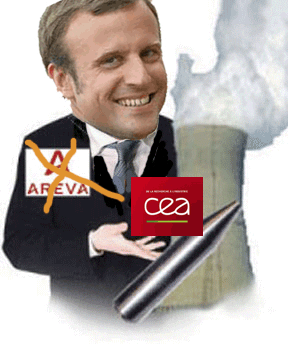
“Without civilian nuclear power, there is no military nuclear power, and without military nuclear power, there is no civilian nuclear power,” Macron said.
Nuclear energy too costly for humans — and the planet https://www.dw.com/en/opinion-nuclear-energy-too-costly-for-humans-and-the-planet/a-60390384 21 Jan 22
Nuclear power will soon be classified as environmentally friendly under the new EU taxonomy. But nothing about it is green or safe, says DW’s Jeannette Cwienk.
I can still clearly recall that spring afternoon in late April 1986. I had been out playing in the woods and building a fort with some friends, when a rain shower forced us back home. It was a fun, carefree day.
We had no idea that just hours earlier, reactor number 4 at the Chernobyl power plant near the Ukrainian city of Pripyat had exploded.
When the news came out days later, the Chernobyl catastrophe and fears of a radiation-filled future quickly came to define my younger years.
Such memories, however, are not the only reason for my concern about the European Commission’s proposal to include nuclear energy and natural gas as environmentally-friendly technology in the EU taxonomy.
Doing so would see nuclear energy classified as sustainable, and recommend it as an option for investors — making a mockery of environmental efforts.
Who will pay for nuclear accidents?
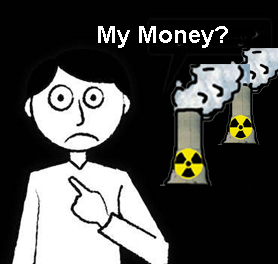
The EU Commission is completely ignoring the costs of nuclear energy. Quite apart from the funds required to build new nuclear power plants, even smaller ones, there is the far more important and apparently overlooked question of who would foot the bill in the event of an accident.
.
In Germany alone, the federal costs attached to the consequences of the Chernobyl catastrophe have been estimated at around €1 billion ($1.1 billion). Worldwide, the immediate economic ramifications of Chernobyl are estimated to have been more than €200 billion — and that doesn’t include the cost of widespread related illness.
Health costs were also not included in the €177-billion bill linked to the consequences of the March 2011 Fukushima nuclear disaster in Japan, as estimated by the Japanese government in 2017.
Most of these costs have since been covered by Japanese taxpayers, because the operating company, TEPCO, was de facto nationalized after the disaster to avoid insolvency.
Taxpayers will be forced to foot the bill
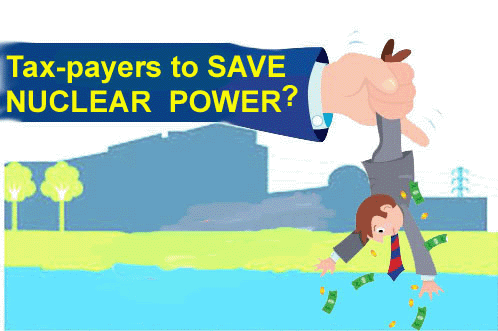
And this brings us to the heart of the problem: in Europe, the amounts that nuclear operators are required to set aside in case they’re found liable for a nuclear accident are laughably small. In the Czech Republic, nuclear power plant operators are required to have €74 million on hand in case of an accident; in Hungary, the figure is €127 million.
Even in France, the driving force for the planned “greening” of European nuclear energy and the largest consumer of nuclear energy worldwide — it makes up around 70% of its energy supply — operators are only required to set aside €700 million in case of an accident. A large nuclear accident in Europe could easily cost between €100 and 430 billion. And should that happen, the affected countries — along with their taxpayers — will be forced to foot the bill.
This situation has been met with criticism by Germany’s new finance minister and the leader of the neoliberal Free Democrat Party, Christian Lindner, who recently expressed skepticism about the place of nuclear energy in the new EU taxonomy.
“An energy source that can only be mainstream if the state is prepared to accept liability — that’s a sign from the market that it can’t be a sustainable energy source,” he said.
On Friday, the German government is likely to vote against the EU Commission’s plans — and rightly so. Austria and Luxembourg, on the other hand, have gone a courageous step further and have announced plans to take Brussels to court if the disputed sustainability plans go ahead.
Small modular reactors also a risk
In France, meanwhile, President Emmanuel Macron likes to describe nuclear power as a “stroke of luck” for climate protection. The fact that 10 of the country’s reactors are currently offline — three from the latest generation due to safety concerns — are apparently not an issue for the French government, which has been trying to allay the fears of a nuclear accident with new small modular reactors (SMR). These smaller power stations are only around one 10th of the size of a conventional nuclear site — and therefore are considered less dangerous, in the event of an accident.
But this plan has a whole range of shortcomings, not least because reaching the same capacity as a single large nuclear reactor requires a great deal of these small reactors.
“This high number will increase the risk of a nuclear accident many time over,” the German Federal Office for the Safety of Nuclear Waste Management (BASE) recently warned.
Is it really about climate protection?
BASE has also been critical of a report by the EU’s Joint Research Center, which the EU Commission has used to make its assessment about the environmental friendliness of civil nuclear power.
The EU report only partially considers the risks of nuclear energy use for humans and the environment, as well as for future generations, and some of the principles of scientific work are not correctly taken into account. According to BASE, the report cannot be relied on to comprehensively assess the sustainability of nuclear energy use.
This has raised doubts over the claim that Brussels wants to include nuclear power in the new EU taxonomy primarily for climate protection reasons. Instead, the decision seems to be down to political pressure, especially from Paris.
As a global nuclear power, France wants to hold on to its nuclear plants at all costs, as Macron clearly stated in December.
“Without civilian nuclear power, there is no military nuclear power, and without military nuclear power, there is no civilian nuclear power,” he said.
Small nuclear reactors a poor solution for UK’s and the world’s climate action.

it is difficult to see how a technology that will only be operational after the UK power system is supposed to be carbon-free will contribute to climate action in the next ten years or so. And the situation is similar globally.
Other questions around traditional nuclear power stations, such as the thorny issue of waste, would also still apply to SMRs…….
Is nuclear power the best solution to climate change? The UK, like China, the US and Canada, is attracted to nuclear power. But high costs and slow delivery means many energy experts remain unconvinced. New Statesman, By Philippa Nuttall 21 Jan 22, debate in the House of Commons on 19 January, led by a group of MPs known as the “atomic kittens”, suggested nuclear energy can be a panacea for all ills – including a solution for the climate crisis and the gas crunch. The facts suggest otherwise.
Isn’t nuclear energy a no-no after Chernobyl and Fukushima?
Disasters clearly reduce appetite among the public and policymakers for nuclear power………………
Today, new nuclear construction projects are few and far between, even in countries such as France and the US whose energy systems are heavily reliant on the technology, and the number of operational reactors is in decline globally.
Are any countries investing heavily in nuclear?
In addition to safety concerns, rising costs are a central reason why the number of new plants under construction remains limited. Since 2011, nuclear power construction costs globally have doubled or even tripled. China is, however, notable in its nuclear ambitions. The country is planning at least 150 new reactors in the next 15 years, more than the rest of the world has built in the past 35, though cost could ultimately change this direction of travel.
The price of nuclear generation has moved in the opposite direction to solar and wind
Mean levelised cost of energy in US$/MWh, 2009–20………..
Others countries such as the UK, the US and Canada also see a limited role for new nuclear as part of their response to climate change. The UK government in its 2021 net zero strategy talked about “cutting edge new nuclear power stations”, and plans to launch a £120m Future Nuclear Enabling Fund.
There are some big nuclear power stations on the cards – think Hinkley Point C or Sizewell C in the UK. But the major excitement among many nuclear enthusiasts, including plenty of UK MPs is around so-called small modular reactors (SMRs). If you believe the hype, they are the answer to all climate and energy ills………………
Rolls Royce, and companies working on the technology in other countries, argue that smaller solutions can be constructed more cheaply and come online more quickly as they can be built in a factory, transported in modules and fitted together “like meccano”, said Rolls Royce’s Alastair Evans. Large nuclear plants are built fully onsite. The idea is that the modules could then be mass produced. However, nothing is rolling off any conveyor belts yet. The only SMR up and running in the world is a 35 MW floating nuclear plant in Russia.
Sounds interesting. Are SMRs the solution to the climate crisis?
Unlikely.
“To meet the requirements of the sixth carbon budget, we will need all new cars, vans and replacement boilers to be zero carbon in operation by the early 2030s,” Virginia Crosbie, a Conservative MP from Wales and the original self-proclaimed “atomic kitten”, enthused to fellow MPs. “We must quickly move away from generating that electricity from fossil fuels… Nuclear power, which has been a neglected part of our energy mix, can bridge the gap.”
There is, however, no silver bullet to the climate crisis, and renewables, in conjunction with other existing technologies, look like a better, cheaper solution.
……….. traditional, big nuclear projects look likely to provide only a sliver of the world’s electricity in the future. They are hugely expensive to build, their construction runs over time, and they are frequently struck by technological issues. Moreover, they need to be built close to the sea or a large river for cooling reasons, highlighted Paul Dorfman from the University of Sussex. France has already had to curtail nuclear power output in periods of heatwaves and drought, which are only set to get worse as climate change takes hold. Greater storm surges and eroding coastlines also don’t make the prospect of building by the sea any easier.
SMRs solve few of these issues………… “The latest economic estimates available for SMRs are still quite expensive relative to other ‘clean’ energy alternatives, and it would be pure speculation to assume that will change dramatically until the concept has been more proven,” said Mike Hogan from the not-for-profit Regulatory Assistance Project.
……. the designs still need to get licensed, factories need to be built, orders placed, projects financed, etc,” said Hogan.
In short, it is difficult to see how a technology that will only be operational after the UK power system is supposed to be carbon-free will contribute to climate action in the next ten years or so. And the situation is similar globally.
Other questions around traditional nuclear power stations, such as the thorny issue of waste, would also still apply to SMRs…….
So what is the solution? Renewables, renewables and more renewables?
In short, yes. The costs of solar, wind power and storage continue to fall, and by 2026 global renewable electricity capacity is forecast to rise by more than 60 per cent, to a level that would equal the current total global power capacity of fossil fuels and nuclear combined, says the IEA.
Some argue nuclear can be a clean back-up option for when the wind doesn’t blow and the sun isn’t shining. But again, other options already exist, including demand response (for example, plugging in your electric car when there is lots of energy and not switching on your washing machine when the system is under strain), large-scale storage and interconnections between different countries.
Final word?
Craig Bennett, chief executive of the Wildlife Trusts, summed up the general mood of those less enthused by nuclear than Crosbie and her fans:
“If successive governments had given even half the love and attention they afford to nuclear power to scaling up home insulation, energy efficiency and smart storage technologies, it’s likely we wouldn’t be facing current challenges around energy and household bills, and we would have done a lot more good for the climate and nature.”….. https://www.newstatesman.com/environment/climate/2022/01/is-nuclear-power-a-genuine-solution-to-the-climate-crisis
France’s nuclear waste problem, and the lack of transparency on military wastes

“The lack of transparency on military nuclear waste poses a serious democratic problem” To guarantee access to the information that is lacking on the subject of the dismantling of the installations, “parliamentary involvement” is essential, believe the director of the Armaments Observatory, Patrice Bouveret, and the spokesperson for ICAN France, Jean -Marie Collin, in a forum in Le Monde.
Le Monde 20th Jan 2022
1 This Month



19 November – Webinar – The Reality of Reprocessing
Time: 11:00 AM Pacific Time (US & Canada) / 2:00 PM Eastern / 7:00 PM UK / 8:00 PM CET
Register for the Zoom Event Here



Shut down the radiation-damaged Heysham nuclear reactors now
To see nuclear-related stories in greater depth and intensity – go to https://nuclearinformation.wordpress.com

Say No to NASA’s Reckless Nuclear Reactor on the Moon
Say No to NASA’s Reckless Nuclear Reactor on the Moon
-
Archives
- November 2026 (74)
- October 2026 (302)
- September 2026 (339)
- August 2026 (330)
- July 2026 (355)
- June 2026 (287)
- May 2026 (306)
- April 2026 (356)
- March 2026 (251)
- February 2026 (267)
- January 2026 (308)
- December 2025 (358)
-
Categories
- 1
- 1 NUCLEAR ISSUES
- business and costs
- climate change
- culture and arts
- ENERGY
- environment
- health
- history
- indigenous issues
- Legal
- marketing of nuclear
- media
- opposition to nuclear
- PERSONAL STORIES
- politics
- politics international
- Religion and ethics
- safety
- secrets,lies and civil liberties
- spinbuster
- technology
- Uranium
- wastes
- weapons and war
- Women
- 2 WORLD
- ACTION
- AFRICA
- Atrocities
- AUSTRALIA
- Christina's notes
- Christina's themes
- culture and arts
- Events
- Fuk 2022
- Fuk 2023
- Fukushima 2017
- Fukushima 2018
- fukushima 2019
- Fukushima 2020
- Fukushima 2021
- general
- global warming
- Humour (God we need it)
- Nuclear
- RARE EARTHS
- Reference
- resources – print
- Resources -audiovicual
- Weekly Newsletter
- World
- World Nuclear
- YouTube
-
RSS
Entries RSS
Comments RSS

