NATO practices nuclear missile sorties near borders of the Russia-Belarus Union

NATO practices nuclear missile sorties near Union State borders — Belarus’ security chief
A breach of international norms and elementary rules of good neighborly relations by neighboring countries is already turning into an alarming trend, Alexander Volfovich stated
MINSK, January 28. /TASS/. The NATO Air Force is practicing sorties with cruise missiles, including with nuclear warheads, near the borders of the Russia-Belarus Union State, State Secretary of the Belarusian Security Council Alexander Volfovich said on Friday.
“The head of state drew attention to intensified flights by US strategic bombers near the borders of the Union State,” the BelTA news agency quoted Volfovich as saying.
“In our assessments, this means that the NATO Air Force is practicing employing cruise missiles, including those with nuclear warheads,” he said…………….. https://tass.com/defense/1394647
The Swedish government allows the nuclear industry to build an unsafe repository for spent nuclear fuel
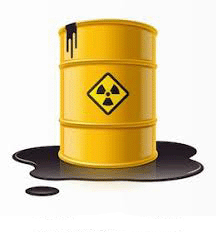
The method of disposal with copper canisters has received extensive criticism from eminent independent corrosion expertise.
https://www.mkg.se/en/the-swedish-government-allows-the-nuclear-industry-to-build-an-unsafe-repository-for-spent-nuclear 28 Jan 22, The Swedish government’s decision to say yes to repository for spent nuclear fuel in Forsmark is both regrettable and irresponsible. This is the opinion of the Swedish Society for Nature Conservation and the Swedish NGO Office for Nuclear Waste Review (MKG). The government has made its decision without the nuclear industry having shown that the copper canisters that are to guarantee safety for at least 100,000 years will work as intended.
– The government has today made a historic decision and I am afraid that they have made a historic mistake. It is directly irresponsible of the government to say yes to the repository for spent nuclear fuel. The method of disposal with copper canisters has received extensive criticism from eminent independent corrosion expertise. The nuclear waste can cause significant environmental damage in the Forsmark area ¬ perhaps already after a few hundred years, says Johanna Sandahl, chair of the Swedish Society for Nature Conservation.
The government has chosen to say yes to the spent fuel repository, despite the fact that during the government review additional knowledge has emerged that copper does not function as canister material. The copper canisters are to guarantee safety for humans and the environment for over 100 000 years. Independent corrosion researchers at the Royal Institute of Technology (KTH) have repeatedly warned that there is a risk that the canisters will break down – already after a few hundred years.
If the canisters break down and the extremely hazardous nuclear waste leaks out, it will contaminate the groundwater and the entire ecosystem. The marine environment is also affected. If this happens, a large area must be cordoned off as a zone with no access for a very long time and no one may eat or drink anything from the area.
The Government considers that it is sufficient that the Swedish Radiation Safety Authority (SSM) has said that the final repository can be sufficiently safe even if the copper canisters do not function as they should, thanks to the other barriers of rock and bentonite clay. The government has thus disregarded the fact that the Land and Environment Court clearly distanced itself from that view. The court held that the government must ensure that the copper canisters can really last for the long timespans involved.
Both the Swedish Council for Nuclear Waste, the government’s scientific advisory board on nuclear waste issues, and the researchers from KTH have stated that more research is needed in the repository environment to ensure that the canisters will work as intended.
The Swedish Society for Nature Conservation and MKG believe that the government’s decision both ignored the strong scientific warning signals and the need for more copper research. As science continues to work independently of political decisions, the associations believe that it is likely that the project will still be stopped in the future. The risk that the money needed to build a repository will be wasted on the wrong technology is evident.
– The government has decided to approve a repository that will not work, says Johan Swahn, director of MKG. Thus, money and time risks being wasted in the construction of a repository that must then be discarded.
Contact:
Johan Swahn, Director, MKG Swedish NGO Office for Nuclear Waste Review,
+4670-4673731
Nuclear waste storage in New Mexico would be blocked if Senate, House bill pass Legislature
Nuclear waste storage in New Mexico would be blocked if Senate, House bill pass Legislature, Adrian Hedden, Carlsbad Current-Argus 27 Jan 22, High-level spent nuclear fuel would be prohibited from being stored in New Mexico if lawmakers pass a pair of bills introduced during this year’s legislative session.
The bicameral effort comes as Holtec International proposed to build and operate a facility in southeast New Mexico to temporarily hold spent nuclear fuel rods from generator sites across the U.S.
Sponsored by New Mexico Sen. Jeff Steinborn (D-36), a frequent critic of the Holtec project, Senate Bill 54 would prohibit the kind of waste Holtec planned to store in New Mexico. It’s twin bill, House Bill 127, was sponsored by Rep. Matthew McQueen (D-50).
The state does have a facility for low-level waste. The Waste Isolation Pilot Plant is operated by the U.S. Department of Energy in the same region and permitted by the State of New Mexico
The Holtec site recently received approval from the federal Nuclear Regulatory Commission, which recommended Holtec be issued a license to build the facility and a final decision was expected this year.
Holtec would hold up to 100,000 metric tons of the waste in total on an interim basis until a permanent repository was available.
The U.S. does not presently have a permanent repository for the waste after such a project at Yucca Mountain, Nevada stalled amid opposition from leaders in that state.
In New Mexico, high-ranking state officials voiced their own opposition to the proposal with Gov. Michelle Lujan Grisham calling the project “economic malpractice” as she worried it could risk nearby oil and gas and agriculture industries in the region.
Last year, New Mexico Attorney General Hector Balderas filed a lawsuit against the NRC arguing its license recommendation ignored the environmental and safety impacts the site could have if built and operated.
SB 54 was awaiting a hearing in the Senate Conservation Committee, while HB 127 was to be considered in the House Energy, Environment and Natural Resources Committee.
Both bills added language to New Mexico’s Radioactive and Hazardous Materials Act that “no one” will store high-level waste or spent nuclear fuel in New Mexico, adding to a clause that already required state consent before such a facility could be built.
The bill would also amend requirements of the state’s Radioactive Waste Consultation Task Force to include private nuclear facilities like Holtec’s in its purview for analysis and require the committee meet at least annually.
“No person shall store or dispose of radioactive materials or radioactive waste (or spent fuel) in a disposal facility until the state has concurred in the creation of the disposal facility, except as specifically preempted by federal law; provided that spent fuel and high-level waste shall not be stored or disposed of in the state; and provided further that the state or a political subdivision of the state shall not issue or certify a permit for the construction or operation of a disposal facility for spent fuel or high-level waste,” read the language of the bills.
Local leaders in southeast New Mexico opposed the bill, believing the Holtec project was a safe way to diversify the region’s economy and insulate it from future up and downswings in the oil and gas markets.
Carlsbad Mayor Dale Janway, Eddy County Commission Chairman Steven McCutcheon, along with Hobbs Mayor Sam Cobb and Lea County Commissioner Jonathan Sena signed letters to Lujan Grisham opposing each bill and asking that she not sign them into law if passed.
The cities of Carlsbad and Hobbs and Eddy and Lea counties formed the Eddy Lea Energy Alliance which sited the project and recruited Holtec………………. https://www.currentargus.com/story/news/local/2022/01/27/nuclear-waste-storage-new-mexico-would-blocked-if-bills-pass/6578755001/
Fukushima nuclear radiation has had strange effects on plants and trees
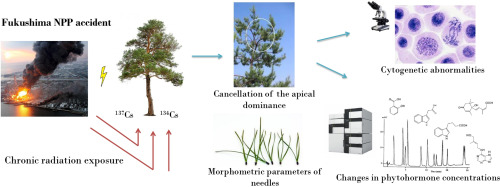
Fukushima Radiation Made Japanese Fir Trees Go Haywire After Nuclear Disaster Newsweek, BY ORLANDO JENKINSON ON 1/27/22 Plants in Fukushima are growing in abnormal ways because of the radiation left over from the 2011 nuclear accident, a study suggests.
In a study published on January 15 in the journal Plants, scientists described changes to the structure of plants and trees in areas close to where a partial meltdown occurred at Fukushima Dai-ichi Nuclear Power Plant (FNPP) after an earthquake caused a tsunami that overwhelmed the plant’s cooling systems.
………….. To come to their conclusion, researchers examined the whorls—the places on plants where foliage like leaves, petals or needles spread out from a central point.
Instead of branching out in the expected way, the whorls showed irregular growths and even elimination of some shoots in ways not seen on trees that avoided radiation.
What is more, the number of strange mutations like this corresponded with the amount of radiation the trees were hit with. Researchers said that the rate of mutations was “directly proportional to the dose of ionizing radiation to which the conifers had been exposed.”
The authors of the paper said that another abnormality they found was the “deletion” of shoots of Japanese fir and red pine trees. This happened most often after the spring of 2012, and peaked in 2013, though precisely why remains a mystery.
The paper consequently offered further evidence that ionizing radiation like that produced by nuclear accidents can alter the structure of conifer trees.
The authors noted that the abnormalities they uncovered were like those found on Scots Pine trees in the Chernobyl Exclusion Zone, the 18.6-mile radius surrounding the site of the Chernobyl nuclear disaster in the former Soviet Union in 1986. https://www.newsweek.com/fukushima-radiation-japanese-fir-trees-haywire-nuclear-disaster-1673577
”All options on the table” to punish Moscow -could bring about a nuclear conflict.
Repeated assertions that “all options are on the table” to punish Moscow should it reinvade Ukraine are seen as particularly troubling.
“In the nuclear age, ‘all options on the table’ in a conflict involving nuclear powers could be understood to mean the potential use of nuclear weapons, even if that wasn’t the intention in this instance,
Nuclear fears mount as Ukraine crisis deepens,
Officials and experts are warning that a Russian invasion could inadvertently trigger a nuclear exchange with the U.S. Politico By BRYAN BENDER, 01/27/2022, As Russian troops bear down on Ukraine and the United States prepares its own military buildup in Eastern Europe, concerns are growing across the ideological spectrum that the standoff could inadvertently escalate into the unthinkable: nuclear war.
President Joe Biden has insisted that he will not use American forces to directly defend Ukrainian territory against a possible Russian invasion. But that is no guarantee that the two sides won’t come to blows.
The world’s two largest nuclear powers could even stumble into nuclear confrontation if the situation spins out of control, current and former officials and experts on both sides of the Atlantic worry.
“At the point you unleash war in the modern environment, the one thing that is certain is the law of unintended consequences,” Des Browne, a member of the British Parliament and a former secretary of state for defense, told POLITICO. “If you are talking about a nuclear-armed environment, which is already fragile … then you are living in an environment [where] things could escalate quite quickly, by accident or miscalculation.”
“Nobody thinks any of these weapons are going to be used deliberately, but miscalculation is a significant chance,” added Browne, who chairs the Euro-Atlantic Security Leadership Group.
It’s a concern shared by current and former nuclear security officials who usually don’t agree on much — from disarmament advocates to nuclear hawks.
“I think the Ukraine conflict is demonstrating that the nuclear escalation scenario we’re worried about is not out of sight,” said Patty-Jane Geller, an expert on nuclear strategy at the hawkish Heritage Foundation.
Last week, the Bulletin of the Atomic Scientists cited the Ukraine conflict as contributing to its decision to keep the “Doomsday Clock” at 100 seconds to midnight, an indication of how close it assesses that the human race is to potential self-annihilation.
“Ukraine remains a potential flashpoint, and Russian troop deployments to the Ukrainian border heighten day-to-day tension,” it noted in citing the threat of a nuclear conflict.
A primary concern, according to Geller and others, is Russia’s arsenal of thousands of battlefield nuclear weapons, which are central to its military strategy.
“The Russians have something like 4,000 [tactical nuclear weapons] and they have an ‘escalate to win’ nuclear doctrine, which says ‘we use nuclear weapons first if the conventional conflict starts to spin out of our favor,’” said a former senior GOP government official who still works on nuclear security issues.
One Russian diplomat last month went so far as to publicly threaten the deployment of tactical nuclear weapons in the crisis.
The weapons have a lower “yield” than traditional atomic bombs and are designed to be used against conventional forces in battle. But they still have enormous explosive power and are considered particularly destabilizing to deterrent strategy.
The United States has reportedly been flying dedicated spy missions over in recent weeks to determine if Russia has deployed any of its tactical nuclear weapons along the border with Ukraine.
There’s also concern among Russian nuclear experts about the potential that the Ukraine crisis could escalate, according to former U.S. Ambassador Richard Burt, who negotiated arms control treaties with the Soviet Union…………
The situation is exacerbated by the growing number of U.S., NATO, and Russian military forces in close proximity, Burt said.
“One thing I think is useful to remember is people are not just putting their forces on alert in and around Ukraine, but you’ve got nuclear-capable naval forces in the Black Sea and in the Mediterranean,” he said. “In the Baltic Sea there also has been an intensification of activity as well. You have a lot more aircraft flying overflights.”………….
Others have taken issue with American rhetoric that they see as sowing unnecessary confusion about what military options might be under consideration to prevent a Russian invasion of Ukraine.
Repeated assertions that “all options are on the table” to punish Moscow should it reinvade Ukraine are seen as particularly troubling.
“In the nuclear age, ‘all options on the table’ in a conflict involving nuclear powers could be understood to mean the potential use of nuclear weapons, even if that wasn’t the intention in this instance,” two leading arms control advocates wrote last week.…..https://www.politico.com/news/2022/01/27/nuclear-fears-mount-ukraine-crisis-deepens-00003088
Elon Musk SpaceX rocket on collision course with moon.

Elon Musk SpaceX rocket on collision course with moon
By Georgina Rannard, BBC News, 28 Jan 22, A rocket launched by Elon Musk’s space exploration company is on course to crash into the Moon and explode.
The Falcon 9 booster was launched in 2015 but after completing its mission, it did not have enough fuel to return towards Earth and instead remained in space.
Astronomer Jonathan McDowell told BBC News it will be the first known uncontrolled rocket collision with the Moon……..
It was part of Mr Musk’s space exploration programme SpaceX, a commercial company that ultimately aims to get humans living on other planets.
Since 2015 the rocket has been pulled by different gravitational forces of the Earth, Moon and Sun, making its path somewhat “chaotic”, explains Prof McDowell from the US-based Harvard-Smithsonian Center for Astrophysics.
“It’s been dead – just following the laws of gravity.”
It’s joined millions of other pieces of space junk – machinery discarded in space after completing missions without enough energy to return to Earth.
“Over the decades there have been maybe 50 large objects that we’ve totally lost track of. This may have happened a bunch of times before, we just didn’t notice. This would be the first confirmed case,” Prof McDowell says…………………. https://www.bbc.com/news/science-environment-60148543
370,000 tonnes of highly radioactive, spent nuclear fuel in temporarystorage around the globe.
Sweden’s government gave the go-ahead on Thursday for the building of a storage facility to keep the country’s spent nuclear fuel safe for the next 100,000 years. What to do with nuclear waste has been a major headache since the world’s first nuclear plants came on line in the 1950s and 1960s. The International Atomic Energy Agency estimates that there is around 370,000 tonnes of highly radioactive, spent nuclear fuel in temporary storage around the globe. Nasdaq 27th Jan 2022 https://www.nasdaq.com/articles/sweden-approves-plan-to-bury-spent-nuclear-fuel-for-100000-years |
Nuclear-Testing ‘Downwinders’ Speak about History and Fear
Nuclear-Testing ‘Downwinders’ Speak about History and Fear. An archival project aims to document the experiences of people who suffered from U.S. nuclear weapons testing, Scientific American , By Sarah Scoles on January 27, 2022 When Sandra Evans Walsh was growing up in Parowan, Utah, her class would sometimes trek outside to a row of trees. They were about to watch history in the making, the teacher would tell them. The kids would then stare as an orange shroud spread across the sky. “I remember the clouds coming over our town and writing our names in the dust,” she said in an interview with Justin Sorensen, a geographical information systems (GIS) specialist at the University of Utah’s J. Willard Marriott Library.
That dust had traveled around 200 miles, all the way from what is now called the Nevada National Security Site, where scientists once tested nuclear weapons. Between 1945 and 1962, U.S. researchers detonated around 200 bombs aboveground—100 of them in Nevada. Fallout from the nuclear tests—radioactive particles that were swept into the atmosphere and fell back down to the earth—found their way into crops and livestock, whose radioactivity humans took on when they consumed milk, meat and produce. Fallout takes many different chemical forms, one of which is iodine-131: an isotope, or version, of iodine that has the usual 53 protons but 78 neutrons instead of the standard 74. Inside the body, the thyroid gland will absorb iodine-131, which eventually decays to produce radiation that can cause thyroid cancer and other problems.
People, such as Walsh, who lived “downwind” of nuclear development and open-air explosions are now called “downwinders.” Mary Dickson, another downwinder, told Sorensen and one of his colleagues that she thought the attitude toward those in Utah who were affected by nuclear testing was, “you know, ‘They were Mormons and cowboys and Indians—who cares?’ In general, she added, “they test where they think there are populations that don’t matter.”
Sorensen and his team spoke to both women and dozens of other people for a project called the Downwinders of Utah Archive. Hosted by the J. Willard Marriott Library, the archive is an attempt to qualify, quantify and make accessible people’s experiences of, and effects from, the American legacy of nuclear weapons testing. In 2011 the Senate unanimously designated January 27 as the National Day of Remembrance for Downwinders. “The downwinders paid a high price for the development of a nuclear weapons program for the benefit of the United States,” stated the resolution establishing the designation.
But when the tests were conducted, no one had done the research necessary to truly calculate what that price would be. Wanting to understand the potential link between regional health issues and fallout from nuclear tests, the National Cancer Institute (NCI) undertook a study on Americans exposed to iodine-131 from the Nevada tests. The results were released in 1997 in a report entitled “Estimated Exposures and Thyroid Doses Received by the American People from Iodine-131 in Fallout following Nevada Atmospheric Nuclear Bomb Tests.” It was this document that first led Sorensen to the archival project. “We were just kind of wondering, originally, ‘What does this data look like if you put it on a map?’” he says, “because a spreadsheet doesn’t really tell you a lot.” Sorensen’s background is in GIS and cartography, so he took the NCI’s fallout data and overlaid them onto his home state. “It just really grew from there,” he says. “We started seeing there’s a story to be told.”……………………..
Although no single illness can be conclusively tied to a test-site cause, investigations by the United Nations Scientific Committee on the Effects of Atomic Radiation and the International Physicians for the Prevention of Nuclear War and the Institute for Energy and Environmental Research, among others, have established links between radiation exposure and cancer occurrence. In the early 2000s a report by NCI and the Centers for Disease Control and Prevention estimated that fallout could have led to around 11,000 excess deaths. The NCI has also created a calculator that allows users to calculate their thyroid dose and risk of developing thyroid cancer from fallout. “We can’t know any individual’s cancer was caused by radioactivity,” explains Scott Williams, former executive director of HEAL Utah, a nonprofit advocacy group focused on the environment and public health, “but we do know that some people’s cancer risk was increased by radioactivity.”
Since 1990 the federal government has offered some recompense to downwinders and others affected by nuclear testing through the Radiation Exposure Compensation Act (RECA). Set to expire this summer unless a bill is passed to renew (and expand) it, RECA pays downwinders, test participants and uranium workers between $50,000 and $100,000—if they have specific ailments and can prove (with decades-old evidence that is sometimes hard to come by) they were in the wrong place at the wrong time. “We left a burden on unwitting citizens across the country without ever informing them,” Williams says. “We need to do the honorable thing and own the problem and not create these problems again.”
The Downwinders of Utah Archive is always expanding, and though Sorensen paused interviews during the pandemic, he plans to light the fuse again soon. He also hopes to expand the project to other Western states to preserve their history, too.
Making sure that information remains accessible is part of the point of the Downwinders of Utah Archive. The day of remembrance is, in its own way, an isotope of that openness. “Those kind of markers are really important…,” Dickson told Sorensen and his colleague. “Otherwise, you know, time marches on, and it’s like dipping a big spoon in the water. The rest of the water just fills in, and it’s like it was never there.”
This reporting was supported by the International Women’s Media Foundation’s Howard G Buffett Fund for Women Journalists. https://www.scientificamerican.com/article/nuclear-testing-downwinders-speak-about-history-and-fear/
Iran nuclear negotiations reaching final stage
 | |||
Iran nuclear talks reaching final stage – E3 negotiators https://www.reuters.com/world/middle-east/iran-nuclear-talks-reaching-final-stage-e3-negotiators-2022-01-28/Reuters LONDON, Jan 28, 22 (Reuters) – Nuclear talks between Iran and Western powers are reaching their final stage and now require political input, E3 negotiators said in a statement on Friday.
Iran nuclear talks reaching final stage – E3 negotiators https://www.reuters.com/world/middle-east/iran-nuclear-talks-reaching-final-stage-e3-negotiators-2022-01-28/Reuters LONDON, Jan 28 (Reuters) – Nuclear talks between Iran and Western powers are reaching their final stage and now require political input, E3 negotiators said in a statement on Friday.
aJnuary has been the most intensive period of these talks to date,” said the statement from the so-called E3: France, Britain and Germany.
“Everyone knows we are reaching the final stage, which requires political decisions. Negotiators are therefore returning to capitals for consultation.”
NB Power and New Brunswick government gamble on untested, non existent ”small” nuclear reactors (SMRs)

While the world is turning overwhelmingly toward renewable sources of
energy, currently about four times cheaper than new nuclear plants and with
an established track record, NB Power and the New Brunswick government
insist on gambling on two new unproven nuclear plants, misleadingly termed
“small modular nuclear reactors” (SMNRs or SMRs).
SMRs do not exist at all in Canada except on paper or as computerized plans. There is no
guarantee these new untested reactors will ever succeed in producing
electricity in Canada in a safe and affordable manner.
But public utilities across the country are being pressured to generate power without emitting
greenhouse gases during operation. Instead of investing big bucks in
negawatts (energy efficiency) or renewables, four provinces are promoting
new nuclear plants – SMRs – as their best strategy for combatting
climate change. Since these plants are not likely to materialize for more
than a decade, if ever, the nuclear strategy is another way of “kicking
the can down the road.”
NB Media Co-op 27th Jan 2022
The escalating costs of decommissioning UK’s nuclear reactors pose a warning about new nuclear reactors.
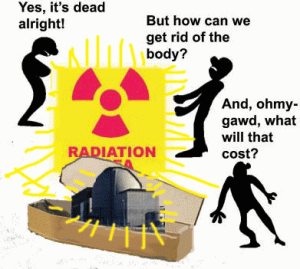
The history of the AGR fleet provides lessons for other long-term programmes carrying significant end‑of‑life liabilities, including new nuclear energy programmes.
| The government has entered into new arrangements to decommission seven AGR nuclear power stations. While the arrangements could deliver savings, their success will ultimately depend on the relevant parties working collaboratively to overcome risks, according to the National Audit Office (NAO). The Nuclear Liabilities Fund (the Fund) was established to meet the costs of decommissioning these eight stations, but significant additional taxpayer support has been required with more likely to be necessary. The UK government has provided a guarantee to underwrite the Fund in the event that its assets are insufficient to meet the total costs of decommissioning. In 2020, government contributed £5.1 billion to strengthen the Fund’s position and the Fund has recently requested a further £5.6 billion. The Fund’s assets were valued at £14.8 billion at the end of March 2021. The aim is that growth in the Fund’s investments will be sufficient to meet the long-term costs of decommissioning (£23.5 billion). However, cost estimates have doubled in real terms since 2004-05. If this upward trend is maintained and investment growth is not sufficient, there is a risk that the taxpayer will have to make further contributions. In June 2021, the AGR stations’ owner EDF Energy (EDFE) agreed to defuel each of the stations in an arrangement that the Department for Business Energy & Industrial Strategy (the Department) estimates could save the taxpayer around £1 billion. Once defueling is completed, ownership of the stations will transfer to the government’s Nuclear Decommissioning Authority (NDA) for its subsidiary Magnox Ltd to complete the rest of the decommissioning process, which is likely to take several decades. Initial ambitions that the existence of the Nuclear Liabilities Fund would help eliminate taxpayers’ exposure are being tested, with rapid increases in the estimates of decommissioning costs outstripping investment returns. The history of the AGR fleet provides lessons for other long-term programmes carrying significant end‑of‑life liabilities, including new nuclear energy programmes. National Audit Office 28th Jan 2022 https://www.nao.org.uk/report/the-decommissioning-of-the-agr-nuclear-power-stations/ |
Momentum building for nuclear ban treaty, with hopes that Japan will participate
Advocates of nuclear ban treaty try to build momentum for change, Koyama Shoko, NHK General Bureau for Europe Correspondent, Yoshida Mayu, 28 Jan 22 ”………………………….. The agreement entered into force on January 22, 2021, after securing 50 ratifications. That number has risen to 59 now, though it includes none of the countries that possess the weapons.
Delegates from states that are party to the treaty plan to hold a first meeting from March 22 to 24 in Vienna, although the schedule may change due to the COVID-19 pandemic. In addition, nine countries have notified the United Nations they will attend as observers. Some NATO members, including Germany and Norway, say they may attend too.
The chair hopes Japan will participate
The head of the Austrian Foreign Ministry’s disarmament department, Alexander Kmentt, will preside over the meeting, which he says will be “crucial in setting the future direction for the new treaty.”
Kmentt said support for victims of the weapons was one of the major items on the agenda, so he is hoping Japan will participate, as the only country to have experienced nuclear attacks.
“Whether or not to participate is for the Japanese government to decide,” he said. “But I hope that many states that have yet to ratify the TPNW will come to the meeting as observers.”
Hibakusha played a crucial role in the treaty
Elayne Whyte Gomez is a Costa Rican diplomat who was the chair of the negotiating conference for the prohibition treaty.
One of her first moves was to open the debate up to civil participation, allowing people not connected to governments or international organizations to attend the conference. She says the survivors of the Hiroshima and Nagasaki bombings, known as hibakusha, played a critical role in this process.
Let me put it this way, it’ll be very hard for me to envision that the treaty that prohibits nuclear weapons could have been achieved without the voices and the living testimonials of the survivors.”
International tensions heightening nuclear risk……….
Beatrice Fihn, Executive Director of the International Campaign to Abolish Nuclear Weapons (ICAN), an organization that played a major role in putting the prohibition treaty together, says the two agreements should not be considered mutually exclusive.
It’s just not true that the TPNW weakens the NPT,” she says, “and they are perfectly fine to coexist. The NPT is doing fine. The TPNW doesn’t harm the NPT. The only thing that harms their NPT is that the nuclear armed states refuse to implement the disarmament obligations, and that has nothing to do with the TPNW. Now that has to do with a nuclear armed state. So when the UK government increases their nuclear arsenal, there is a direct violation of the NPT. That’s harmful. When China increases its nuclear arsenals, it’s a direct violation of the NPT and it’s harming and undermining the NPT.”
Citizen activists have crucial role to play
ICAN has been urging nuclear-weapon states that have not ratified the prohibition treaty to attend the meeting in Vienna in March………..
Japanese youth play their part
In Japan, the hibakusha are inspiring some young people to get involved in the nuclear abolition movement…….. https://www3.nhk.or.jp/nhkworld/en/news/backstories/1879/
UK’s Green Party opposes £100 million government bailout for Sizewell C nuclear project

Responding to today’s news that energy company EDF will receive an
additional £100 million cash injection from the Government to help it
build the Sizewell C nuclear power plant, Green Party co-leader and MP
candidate in Suffolk Adrian Ramsay said
: “Nuclear power is a burden and a
risk, not a solution. The next decade is crucial for cutting carbon
emissions but nuclear will only slow the energy transition, not speed it
up. Even with constant injections of yet more taxpayers’ cash, the energy
from Sizewell C won’t come onstream for years, whereas more
cost-effective solar and wind can be deployed right now.
Green Party 27th Jan 2022
Sizewell C nuclear plant will have catastrophic effects on nature, and the Minsmere nature reserve.

RSPB officials have expressed dismay at the government’s decision to back the potential Sizewell C nuclear plant with £100million of funding. The proposed twin reactor development would be built next to Sizewell B, close to the RSPB Minsmere nature reserve. The RSPB and the Suffolk Wildlife Trust have long been opposed to the development because they say it will lead to a large loss of habitat for animals and could see millions of dead fish pumped into the sea each year. EDF has always maintained that the power station would help biodiversity by helping to tackle climate change. A spokesperson for the RSPB said: “The RSPB is shocked to hear that the government will be investing £100million of tax payer’s money in Sizewell C before a decision has been made to build it. The government claim to want to be a world leader in their response to the nature crisis. That’s a great ambition, but it is utterly incompatible with throwing £100m at a development that could have catastrophic impacts on nature. East Anglian Daily Times 27th Jan 2022 https://www.eadt.co.uk/news/business/suffolk-groups-react-to-sizewell-c-100m-8649412 |
France’s far-right Marine Le Pen has pro nuclear, anti-renewables policy for the coming election.
Le Pen’s climate programme: pro-nuclear and pro-hydrogen, but anti-wind
By Nelly Moussu | EURACTIV France | translated by Daniel Eck, 27 Jan 22,
Three months before the French presidential election, far-right candidate Marine Le Pen’s Rassemblement National presented its ‘economically viable’ climate policy project, which aims to be pro-nuclear and pro-hydrogen, but anti-wind. EURACTIV France reports.
Le Pen’s spokesperson, MEP Nicolas Bay, presented Le Pen’s climate and energy programme on Tuesday (25 January), insisting on the idea of “a model that is authentically ecological but economically viable”………….
Building six EPR reactors
On nuclear power, Le Pen plans to build six new European Pressurised Reactors (EPRs) and increase the life span of existing plants. EPR is a third-generation pressurised water reactor design…………. https://www.euractiv.com/section/energy/news/le-pens-climate-programme-pro-nuclear-and-pro-hydrogen-but-anti-wind/
1 This Month



19 November – Webinar – The Reality of Reprocessing
Time: 11:00 AM Pacific Time (US & Canada) / 2:00 PM Eastern / 7:00 PM UK / 8:00 PM CET
Register for the Zoom Event Here



Shut down the radiation-damaged Heysham nuclear reactors now
To see nuclear-related stories in greater depth and intensity – go to https://nuclearinformation.wordpress.com

Say No to NASA’s Reckless Nuclear Reactor on the Moon
Say No to NASA’s Reckless Nuclear Reactor on the Moon
-
Archives
- November 2026 (74)
- October 2026 (302)
- September 2026 (339)
- August 2026 (330)
- July 2026 (355)
- June 2026 (287)
- May 2026 (306)
- April 2026 (356)
- March 2026 (251)
- February 2026 (267)
- January 2026 (308)
- December 2025 (358)
-
Categories
- 1
- 1 NUCLEAR ISSUES
- business and costs
- climate change
- culture and arts
- ENERGY
- environment
- health
- history
- indigenous issues
- Legal
- marketing of nuclear
- media
- opposition to nuclear
- PERSONAL STORIES
- politics
- politics international
- Religion and ethics
- safety
- secrets,lies and civil liberties
- spinbuster
- technology
- Uranium
- wastes
- weapons and war
- Women
- 2 WORLD
- ACTION
- AFRICA
- Atrocities
- AUSTRALIA
- Christina's notes
- Christina's themes
- culture and arts
- Events
- Fuk 2022
- Fuk 2023
- Fukushima 2017
- Fukushima 2018
- fukushima 2019
- Fukushima 2020
- Fukushima 2021
- general
- global warming
- Humour (God we need it)
- Nuclear
- RARE EARTHS
- Reference
- resources – print
- Resources -audiovicual
- Weekly Newsletter
- World
- World Nuclear
- YouTube
-
RSS
Entries RSS
Comments RSS

